 Binance Drained of $5.5 Billion in Suspected Hack, Tether and Circle Freeze $1.8 Billion
Decrypt reports that at least $5.57 billion left Binance-linked hot wallets on Ethereum, Bitcoin and Tron on 29 October 2026, which would be the largest crypto hack on record. On-chain analysts point to an EIP-7702 delegation, installed from a Tornado Cash-funded address minutes before the first sweep. Tether and Circle froze about $1.8 billion. Binance has not confirmed the hack, and how the attacker obtained the signature is unknown.
 decrypt.coarticlePublished and added 29 Oct 2026🛡️ Security
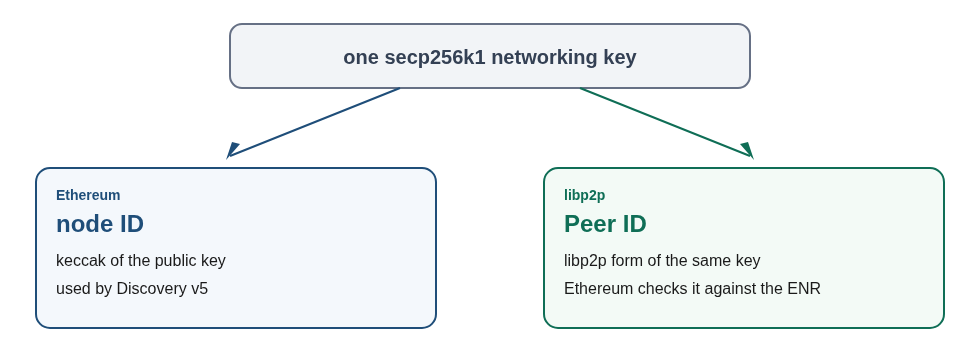 Inventory of PQ P2P Migrations in the Consensus Layer
Inventory of post-quantum migration work for Ethereum consensus-layer networking, by adust09 of Nyx Foundation. It maps three targets: Discovery v5/ENR signatures and key exchange, TLS 1.3 key agreement in QUIC, and libp2p TLS identity binding and CertificateVerify. It covers the 300-byte ENR and 1,280-byte packet limits, why hybrid KEMs do not authenticate peers, and downgrade and DoS concerns. It selects no algorithm or schedule.
 ethresear.charticlePublished and added 27 Oct 2026🛡️ Security
 Bitcoin Wallet Fixes Critical Flaw That Redirected Funds to Attackers
Electrum 4.8.3, released 24 October 2026, fixes a high-severity flaw in the Bitcoin wallet. Rogue servers could suppress a real payment and inject a fake unconfirmed transaction paying an attacker, so a user's fee-bump became the first transaction broadcast. The fix verifies signatures on wallet-owned inputs, but incoming transactions from external senders stay unverified. One user lost funds on 18 October.
decrypt.coarticlePublished and added 26 Oct 2026🛡️ Security Bitcoin wallet bug let rogue servers steal funds when users tried to speed up payments
Electrum, a Bitcoin software wallet, disclosed on 24 October 2026 a flaw where malicious servers swapped pending transactions for fake ones with invalid signatures that the wallet did not check. When users chose Replace-by-Fee to raise the fee, Electrum signed a valid replacement paying the attacker, and at least one user lost funds. Version 4.8.3 adds signature checks; users of only trusted or self-run servers were not exposed.
 coindesk.comarticlePublished and added 26 Oct 2026🛡️ Security
 A hash-only rollup: OP Stack L2 accounts as Lamport-style hash chains, no ECDSA inside the L2
Hash-only rollup: an OP Stack L2 (chain ID 42069000, live since 30 September 2026) where accounts are keccak-256 hash chains and transactions carry no signatures. Spending uses a commit-reveal step through two new transaction types in op-geth. The post describes a flaw the authors found: unauthenticated commits could be overwritten, which allowed preimage front-running. It was fixed with a first-commit-wins rule on 21 October 2026. It lists the remaining limits: L1 ECDSA, no fault proofs, a centralized sequencer, 160-bit addresses and wallet desync.
ethresear.charticlePublished and added 24 Oct 2026🛡️ Security Electrum wallet security flaw is fixed after a user loses money in fee attack
Electrum 4.8.3, released 24 October 2026, fixes a flaw where a malicious server replaces a user's unconfirmed payment with a conflicting transaction carrying invalid signatures. If the user then bumps the fee with replace-by-fee, the wallet signs a payment to the attacker. One of two reporting users lost funds, and the patch now checks input signatures before accepting such transactions. Bull Bitcoin is adding the same client-side check.
 en.cryptonomist.charticlePublished and added 24 Oct 2026🛡️ Security
 Coinbase's Plan for a Quantum-Safe Bitcoin
Bankless summary of Coinbase's October 2026 proposal for making Bitcoin quantum-safe. It covers upgradeable address designs (BIP-360 P2MR, P2TRv2, hybrid addresses), four candidate signatures (ML-DSA, SLH-DSA, FN-DSA, SHRINCS) with size and stateful-key-reuse trade-offs, a five-stage migration plan, and a separate track for dormant coins with exposed public keys such as Satoshi's.
 bankless.comarticlePublished and added 21 Oct 2026🛡️ Security
 Proving Humanity
Galaxy research report arguing that CAPTCHAs and behavioral bot detection (reCAPTCHAv3, Cloudflare Turnstile) are failing as AI agents reproduce human conduct, for example ChatGPT Agent clicking through Turnstile's checkbox. It shows that Web Bot Auth signatures and Google's AP2 mandates identify the platform or account key but not a distinct person. It proposes reframing "proving humanity" as ensuring every agent traces to one person counted once, covering Sybil, one-person-one-share, accountability and public-count harms. It lays out requirements for a proof-of-personhood credential: strong, private, portable, delegable and accessible. It deliberately does not evaluate specific projects.
 galaxy.comarticleAdded 16 Oct 2026🛡️ Security
- Proving Humanity
Galaxy Research essay arguing that as AI agents become the main way people use the web, the key question shifts from "is this a machine?" to "is a distinct real person behind it, counted once?". It traces CAPTCHA history (distorted text, image puzzles, reCAPTCHAv3 and Turnstile behavioral scoring) and notes ChatGPT Agent passing Cloudflare's checkbox. It reviews Web Bot Auth signatures and Google's AP2 payment mandates, showing both stop at the platform or key and never establish a person. It then covers harms (one-person-one-share abuse, no one to answer for an agent, distorted public counts, collapsing confidence, scaled deception, broken ad economics) and lists the properties a privacy-preserving proof-of-personhood credential needs: strong, private, portable, delegable, accessible.
galaxy.comarticleAdded 16 Oct 2026🧠 AI  Fast post-quantum signature aggregation with lattice SNARKs
a16z crypto announces Aerie, a lattice-SNARK system that aggregates Falcon-512/1024 signatures into one ~66 KiB proof. On an M4 Max laptop it handles 32,768 signatures in 0.65 s (~50k/s), verifies in 54 ms, and costs ~42 bytes per signature. It benchmarks against Orthus and Ethereum's leanVM hash-based XMSS aggregation, and argues that recursion-free lattice aggregation is simpler than hash-only designs. It also covers Falcon's hardware-wallet and side-channel constraints and why private payments need lattice encryption such as ML-KEM.
 a16zcrypto.comarticlePublished and added 16 Oct 2026🛡️ Security
- Fast post-quantum signature aggregation with lattice SNARKs
Aerie is an a16z crypto and LayerZero Labs system that aggregates Falcon-512 and Falcon-1024 lattice signatures into one lattice SNARK. On an Apple M4 Max it aggregates 32,768 Falcon-512 signatures in 0.65 seconds, with 54 ms verification and about 42 bytes per signature. The post compares it with Ethereum's hash-based leanVM and XMSS plan and Orthus, and covers Falcon signing limits on hardware wallets.
 a16zfrontier.comarticleAdded 22 Oct 2026, published 16 Oct 2026🛡️ Security
 Crypto's Quantum Defense Is Being Built in the Open
Bankless article on Eigen Labs' Yukon, a platform for open-research challenges where developers and AI agents try to improve a technical problem. Each submission is automatically benchmarked, and accepted improvements become the baseline for the next attempt. Results include an ~88% cut in the ECDSA.fail quantum resource-cost benchmark, a ~10x speedup in Lighter's proving software, ~2x faster Qwen and 2.6x faster Laguna on Apple hardware via MLX.fast, and cheaper Quantum Safe Bitcoin proofs ($320 down to $59). Newer challenges (HashSmash, sig.golf, better.codes) target hash-function weaknesses, hash-based signatures and post-quantum proofs. All the improvements are theoretical or benchmark-level unless stated as deployed.
bankless.comarticlePublished and added 14 Oct 2026🧠 AI- Crypto's Quantum Defense Is Being Built in the Open
Bankless article on Eigen Labs' Yukon platform, which runs open challenges where researchers and AI agents attack and improve cryptography. It covers ECDSA.fail (quantum circuit cost for attacking Bitcoin/Ethereum ECDSA, cut about 88% from baseline), HashSmash (SHA-256 weakness hunting, so far only on reduced versions), sig.golf (hash-based signatures), StarkWare's Quantum Safe Bitcoin (cost down from about $320 to $59) and better.codes (provable security raised from 64 to about 68 bits). The argument is that public, measurable attack-cost data helps defenders prepare better than withholding circuits does. All gains are theoretical and no quantum computer has run an attack at this scale.
bankless.comarticlePublished and added 14 Oct 2026🛡️ Security  ERC-8443: Quantum Bridge Shield
Draft ERC from Quantova Inc proposing a "Quantum Bridge Shield" for Ethereum bridges. A committee signs the Merkle root of each message batch with RFC 8554 LMS hash-based signatures instead of ECDSA/BLS keys that Shor's algorithm can break. The guard contract requires a strict majority of distinct unfrozen keys, records used leaves, freezes any key that signs a leaf twice, binds digests to domain, chain, guard and epoch, and applies a 60-second delay. The post gives gas costs (LMS W4 height-10 verification about 205k gas, a LayerZero packet 128,683 gas, worst-case rotation 12.44M gas under the EIP-7825 cap) and cites a NioLabs assessment with no critical or high findings. It is relevant as a worked post-quantum migration design for bridge key custody, including hybrid ECDSA+LMS mode and stateful-signature pitfalls such as leaf reuse and rollback.
 ethereum-magicians.orgarticlePublished and added 14 Oct 2026🛡️ Security
 Coinbase, which holds 5% of all bitcoin, wants the quantum fix started now
CoinDesk summarizes Coinbase's recommendations for making Bitcoin quantum-resistant before a cryptographically relevant quantum computer (CRQC) can derive private keys from public keys. The proposals are: a transaction format that can carry new signature types (P2MR/BIP-360, P2TRv2), staged hybrid "1-of-2" spends with ECDSA/Schnorr or a post-quantum key, and stateless options alongside stateful schemes to avoid key-reuse forgery. They also ask that evaluation favor constant-time, RNG-failure-safe implementations, require MPC compatibility, and handle dormant or late-migrating coins as a separate debate. It is a useful overview of the defensive migration design space, but it is secondary reporting and not the primary Coinbase paper.
coindesk.comarticlePublished and added 14 Oct 2026🛡️ Security- Coinbase lays out flexible designs as key priority for Bitcoin’s post-quantum migration
Coinbase's October 2026 position on Bitcoin's post-quantum migration, as reported by The Block. Coinbase, which holds about 5% of bitcoin supply, favors output designs that separate the container from the signature scheme (P2MR/BIP-360, P2TRv2), staged hybrid 1-of-2 spending paths, a stateless option beside stateful signatures, and MPC-compatible schemes for custody. It also wants the abandoned-coins debate run in parallel.
 theblock.coarticleAdded 31 Oct 2026, published 14 Oct 2026🛡️ Security
 Coinbase advances Bitcoin’s post-quantum readiness while holding about 5% of BTC
Summarizes Coinbase's blog post on preparing Bitcoin and custody infrastructure for post-quantum threats. It covers public-key exposure (an estimated 6.7–7M BTC behind already-exposed keys), BIP 360 (P2MR) and P2TRv2 outputs, 1-of-2 hybrid classical/post-quantum spending paths, and the state-reuse forgery risk of stateful signatures. It also covers candidate schemes (ML-DSA, SLH-DSA, FN-DSA, SHRINCS), MPC/HSM compatibility and side-channel tests, and separate handling of dormant, lost and exposed legacy funds.
en.cryptonomist.charticlePublished and added 13 Oct 2026🛡️ Security SDR (Signals Intelligence) for Hackers: Scanning Wireless Devices Using FieldWatch
Overview of FieldWatch, a free open-source Android app that passively listens to Wi-Fi and Bluetooth with the phone's own radios and matches them against an editable catalog of about 250 device signatures (trackers, drones, cameras, body cams, mesh radios). It supports alerts, recorded sessions, path maps, Remote ID drone and pilot location, GNSS interference/spoofing detection and export to TAK/ATAK. The article also covers its limits (no direction finding, no Bluetooth Classic, cellular or full Wi-Fi traffic, pattern matches only) and sideloading from the official GitHub repo on Android 10+.
 hackers-arise.comarticlePublished and added 13 Oct 2026🛡️ Security
 Ledger hardware wallet breach exposes LTE implant stealing recovery phrases
Ledger's Donjon team confirmed on October 10, 2026 a physical implant inside a hardware wallet sold by Malaysia-based reseller CryptoBilis. The implant reads the device display, decodes the 24-word recovery phrase with a microcontroller, and exfiltrates it over LTE via a provisioned eSIM, leaving the Secure Element, OS, transactions and signatures untouched. Onchain investigator Specter traced over $86 million in suspected thefts across Ethereum, Tron and Bitcoin; Ledger advises CryptoBilis buyers to migrate funds to a new device with a new recovery phrase.
en.cryptonomist.charticlePublished and added 13 Oct 2026🛡️ Security Ledger Finds LTE Implant That Stole Recovery Phrases in Suspected $86M Drain
Ledger's Donjon security team confirmed an unauthorized hardware implant inside Ledger signers sold by Southeast Asian reseller CryptoBilis. The implant sits in the enclosure, reads the 24-word recovery phrase from the screen during setup, decodes it with a microcontroller, and exfiltrates it over LTE via a provisioned eSIM, without touching the Secure Element, OS, or signatures. Onchain investigator Specter traced over $86M in suspected thefts across Ethereum, Tron and Bitcoin; Ledger is reviewing reports of tampered devices elsewhere and advises affected buyers to move funds to a new device with a new seed.
decrypt.coarticlePublished and added 13 Oct 2026🛡️ Security How Zcash Plans to Hide Your Keys From AI and Quantum Attacks
Decrypt reports that Zakura, which builds a Zcash full node, expects post-quantum signature opcodes in Zcash in January, to enable hash-based signatures for transparent pools. The plan rotates to a fresh transparent address after every transaction so public keys stay hidden, and adds a WOTS hash-based backup signature. Private information retrieval, shipping this week in the Vizor wallet, stops servers from linking the rotated addresses. It follows Justin Drake's "bunker mode" warning that AI-driven math could break ECDSA. The plan covers only transparent payments, and no activation date has been confirmed.
decrypt.coarticlePublished and added 11 Oct 2026🛡️ Security Zcash developers set January target for quantum-resistant payments after ‘bunker mode’ scare
Zcash developer Roman Akhtariev, writing for the Zakura client team, announced a January target for adding post-quantum signature opcodes supporting hash-based signatures to Zcash's transparent (public) payment pool, which holds about 70% of issued ZEC. The move responds to Ethereum researcher Justin Drake's "bunker mode" warning that AI could soon break the elliptic-curve math behind Bitcoin and Ethereum wallet keys. Zakura has also built a private-information-retrieval balance-lookup tool, now experimentally available in the Vizor wallet, that lets a wallet check address balances without revealing to the server which addresses are linked, separate from the shielded-pool quantum-recovery work still needed to defend against store-now-decrypt-later attacks.
coindesk.comarticlePublished and added 9 Oct 2026🛡️ Security Vitalik Buterin backs crypto ‘bunker mode’ amid rapid AI math advances
Ethereum researcher Justin Drake, backed by Vitalik Buterin, warns that rapid AI progress in mathematics (citing OpenAI's recent batch of math findings and a 10,000-agent solve of Navier-Stokes) could break ECDSA-based wallet signatures before quantum computers ever do, and that lattice-based post-quantum schemes may not be safe either. They recommend a controlled 'bunker mode' migration of crypto holdings to fresh addresses whose public keys have never been exposed on-chain, while cautioning that botched migrations carry their own risk.
 cointelegraph.comarticlePublished and added 8 Oct 2026🛡️ Security
 Vitalik Flags AI Risk to Crypto, Warns Against Rushed Wallet Moves
Vitalik Buterin responds to Ethereum Foundation researcher Justin Drake's bunker mode proposal, agreeing AI-accelerated cryptanalysis could break ECDSA, the signature scheme behind most crypto wallets, in months not years, and that lattice-based schemes like ML-DSA billed as quantum-safe could also take serious hits within two years. Buterin gives practical key-hygiene advice such as keeping funds in addresses that never exposed a public key and rotating multisig signer keys after every operation with offchain signature collection, while warning that botched migrations cost more than hacks.
bankless.comarticlePublished and added 8 Oct 2026🛡️ Security Morning Minute: Ethereum Researcher Says AI May Break Crypto Encryption Before Quantum
A daily crypto-market newsletter segment reporting Ethereum Foundation researcher Justin Drake's warning that AI, not quantum computing, may be the first to break ECDSA — the elliptic-curve signature scheme securing Bitcoin and Ethereum — potentially within months by recovering private keys from exposed public keys using large GPU clusters. Drake calls for industry-wide "bunker mode": migrating self-custodied funds to fresh addresses whose public keys remain hashed/hidden, and names exchanges (Binance, Bitbank, Robinhood, Bitfinex, Tether) he wants to harden cold storage. The article also notes a concurrent Europol report flagging crypto wallets with already-revealed public keys as the main weak point for future quantum/AI attacks, since those cannot be retroactively protected.
decrypt.coarticlePublished and added 8 Oct 2026🛡️ Security Bitcoin and ether holders urged to enter ‘bunker mode’ against possible AI attacks
Ethereum researcher Justin Drake and co-founder Vitalik Buterin warn that rapid AI progress in mathematics could break the elliptic-curve signatures securing Bitcoin and Ethereum wallets within months - far sooner than quantum computers are expected to - urging large holders to enter bunker mode by migrating funds to addresses whose public keys have never been exposed onchain. Buterin also flags that lattice-based post-quantum schemes, the basis of NIST's signature standard, could face similar AI-driven erosion, pushing Ethereum's long-term roadmap toward hash-based signatures instead. The piece grounds the warning in already-documented AI-assisted exploit discovery: a 5-year-old Coldcard hardware-wallet firmware bug drained over 1,367 BTC, BTCPay Server Lightning-node thefts, Core Lightning bugs surfaced via AI-generated audits, and Anthropic's demonstration of AI models writing working exploits against simulated DeFi contracts.
coindesk.comarticlePublished and added 8 Oct 2026🛡️ Security AI risk to crypto wallets: Ethereum researcher warns keys could be cracked in months
Ethereum Foundation researcher Justin Drake warned on October 7, 2026 that advances in AI and mathematics could break ECDSA — the signature scheme securing blockchain transactions — within months, potentially letting an attacker recover a private key in about a week using a large GPU cluster. He urged gradual "bunker mode" preparation rather than panic: rotating funds into fresh addresses whose public keys have never been exposed on-chain, strengthening cold storage, and accelerating Ethereum's move toward hash-based signature schemes such as SPHINCS for critical signers like oracles and L2 security councils.
en.cryptonomist.charticlePublished and added 8 Oct 2026🛡️ Security Ethereum Researcher Says AI May Break Encryption Before Quantum Does
Ethereum Foundation researcher Justin Drake warns that AI-driven mathematical advances could break ECDSA — the signature scheme securing Bitcoin and Ethereum — before quantum computers do, potentially recovering a private key from an exposed public key in about a week using a large GPU cluster. He calls for "bunker mode": a controlled mass migration of funds to fresh addresses whose public keys have never been exposed, urges major custodians (Binance, Bitbank, Robinhood, Bitfinex, Tether) to harden cold storage, and pushes Ethereum to accelerate its move to hash-based (post-quantum) cryptography.
decrypt.coarticlePublished and added 7 Oct 2026🛡️ Security Quantum computers threaten exposed private keys rather than blockchains, Europol warns
Europol's European Cybercrime Center published a "Quantum Computing and Cryptocurrencies" report arguing that Bitcoin's hash-based blockchain history is far more quantum-resistant than the ECDSA public-key cryptography used to control wallets. It estimates roughly 6.9 million bitcoin sit in addresses with exposed public keys (including early pay-to-public-key and long-dormant "Satoshi era" outputs) that a sufficiently powerful quantum computer could eventually use to derive private keys, and cites a 2024 study putting full UTXO migration to quantum-resistant signatures at 76–300 days of cumulative block space, with new post-quantum signatures 10–120x larger than ECDSA.
coindesk.comarticleAdded 8 Oct 2026, published 7 Oct 2026🛡️ Security Someone Scraped 5.6 Billion TikTok Videos and Put the Data on Hugging Face for Free
Decrypt reports that a developer going by "hashfunction," operating under the datasocial account, published a 460GB Parquet dataset of metadata for ~5.6 billion public TikTok videos (captions, hashtags, sound IDs, engagement counts, AI-generated flags) on Hugging Face under CC BY-NC 4.0. The data was obtained by hitting TikTok's private mobile API using generated Android device identities, reverse-engineered request signatures, and a spoofed TLS handshake, bypassing the ToS clause that bars automated scraping; datasocial.ai sells the scraper's source code for $1,699 and offers commercial access, creator profiles, and daily updates. The piece situates this against TikTok's gated official Research Tools and the ongoing Reddit v. Perplexity/SerpApi scraping lawsuit.
decrypt.coarticlePublished and added 6 Oct 2026🛡️ Security- Introduction to Web Application Firewall (WAF) and Ways to Bypass It
A Hackers-Arise tutorial explaining how Web Application Firewalls detect attacks (signature-based, anomaly scoring, behavioral analysis) and how to fingerprint which WAF a target uses via HTTP headers, curl probing, or the WAFW00F tool. It then covers three concrete bypass techniques — double URL encoding, Unicode normalization mismatches, and ASCII smuggling via invisible Unicode tags — that let malicious payloads like XSS slip past WAF filtering before being decoded by the backend app.
hackers-arise.comarticleAdded 7 Oct 2026, published 5 Oct 2026🛡️ Security 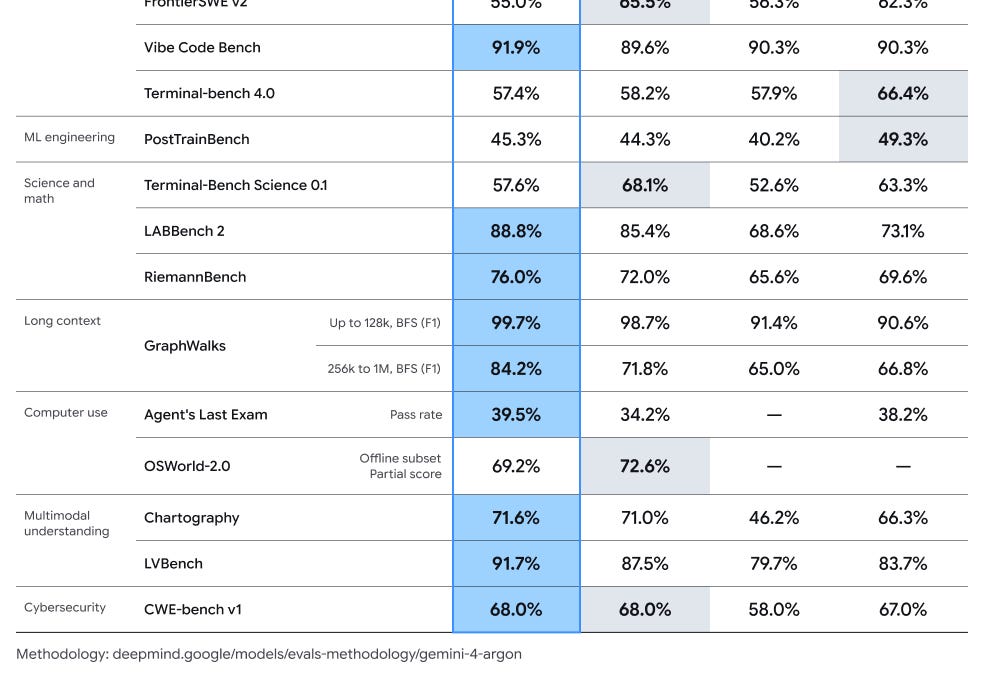 [AINews] Gemini 4 Argon: GDM’s answer to Astra/Fable, with 1M output
Latent Space's AINews digest for 9/29-9/30/2026 leads with Google DeepMind's Gemini 4 Argon, a frontier model in limited Fairwind Program cyber-defense/government preview claiming SOTA on 13 of 19 benchmarks and an industry-first 1M-token output via Long Decode Continuation, with detailed head-to-head evals against GPT-6 Astra, GPT-6.1 Sol and Claude Opus 5.5 from Artificial Analysis, Vals and Arena. It also covers other releases (Cohere Embed 5, Ideogram 4.5, GLM-5.3-Flash llama.cpp support, Solar Mini 4), research (Meta's Context Language Models, a Nature paper on superhuman Stratego AI), inference/systems news, and a safety section on hidden-reasoning-extraction attacks and GLM-5.3 cyber-capability risk.
 latent.spacearticlePublished and added 1 Oct 2026🧠 AI
- Introducing SynthID Bio
SynthID Bio is Google DeepMind's watermarking technique extended from digital media into synthetic biology, embedding an imperceptible, verifiable signature into AI-designed protein sequences (via a modified ProteinMPNN alongside AlphaProteo) and 3D structures (via a fine-tuned AlphaFold 3 diffusion network) without compromising biological function. Wet-lab tests on protein binders against VEGF-A, SARS-CoV-2 spike RBD, and PD-L1 matched hit rate and binding affinity of unwatermarked designs, and the approach was also extended experimentally to watermark an Evo 2-designed bacteriophage genome with Stanford's Hie lab and Arc Institute. The work targets biosecurity gaps in DNA synthesis screening and public sequence databases (Protein Data Bank, UniProt, GenBank), with DeepMind open-sourcing code, in vitro data, and model weights alongside a methods paper.
 deepmind.googlearticlePublished and added 30 Sep 2026🧠 AI
 A Clever RSA Attack Fooled a Hardware Vault—Here's What It Means for Crypto
Researchers at UC San Diego and INRIA demonstrated a chosen-message oracle attack that forges RSA signatures on a 1,024-bit key held inside a hardware security module (HSM) without ever extracting the key, by disabling the HSM's FIPS mode to get it to sign unpadded/unformatted values roughly 4 billion times and then computing the private-key operation from the responses (1,380 CPU core-years of work). The attack only applies to unpadded RSA signing oracles — standard PKCS#1 v1.5/PSS padding blocks it — so it doesn't threaten Bitcoin/Ethereum (which use ECDSA) but is relevant to anyone auditing HSM key-custody assumptions or RSA-based blind-signature schemes like Privacy Pass. The authors frame it as further classical evidence to accelerate migration away from RSA ahead of the post-quantum transition.
decrypt.coarticleAdded 30 Sep 2026, published 28 Sep 2026🛡️ Security- PQ spending for Stealth Address Protocol
Third in a series on post-quantum upgrades to the Stealth Address Protocol (ERC-5564/ERC-6538), this ethresear.ch post proposes a new schemeId=6 that replaces ECDH with ML-KEM for quantum-safe payment discovery and replaces ECDSA with either a lattice-based signature (SPIRIT, an ML-DSA/Dilithium variant) or a novel construction called HSAP that uses ML-KEM key delivery plus a ZK proof over hash-preimages for spending authorization. It works through the exact key-generation/derivation math for both schemes, discusses on-chain verification costs (citing ETHDILITHIUM benchmarks and draft EIP-8051's ~4500-gas ML-DSA-44 precompile), and sketches how the extended ERC-5564 announcer/registry interface and smart-account spending path would look under quantum attack assumptions.
ethresear.charticleAdded 29 Sep 2026, published 28 Sep 2026🛡️ Security  Don't let TEEs break your MPC
Trail of Bits explains why running threshold-signature MPC protocols inside TEEs (Intel TDX, AMD SEV-SNP, AWS Nitro Enclaves) is not automatically secure: a malicious host can roll back enclave filesystem state to force reuse of deleted pre-signature nonces, leaking a signer's private key share. The post catalogs recurring audit pitfalls — incomplete attestation measurements (citing the WhatsApp Private Inference LD_PRELOAD bypass), missing verification steps, weak hardening, stale-backup/rollback risks (including LUKS2 header manipulation in confidential VMs), and physical/side-channel attacks like TEE Fail and DDRop against DDR5 memory — and gives best practices such as binding attestation to MPC party identities and using multiple TEE vendors for defense-in-depth.
 blog.trailofbits.comarticlePublished and added 25 Sep 2026🛡️ Security
 Proactive Defense: Hardening Code Pipelines and CI/CD Infrastructure
Mandiant's guidance for hardening the software supply chain across five pillars: endpoint, code repositories, artifact management, CI/CD and deployment. It covers a seven-day dependency cooldown, pinning images and actions by digest or commit SHA, ephemeral runners, OIDC short-lived tokens, build cache isolation, signed SBOMs, SLSA provenance and admission-time signature checks. It responds to campaigns using cache poisoning, OIDC token theft and mutable action tags.
 cloud.google.comarticleAdded 29 Oct 2026, published 24 Sep 2026🛡️ Security
- Jev introduces a new shape of LLM - System One, aka Decision Models
Simon Willison reviews Jev, a new class of model from TypeSafe AI dubbed "System One models" (or "decision models"): instead of generating text, it takes a text/structured "state" plus one or more yes/no ("Noul"), multiple-choice, or scored-range questions and returns floating point probabilities/confidence scores, priced at $0.042/million input tokens with free output. The post covers real use cases (classification, spam detection, search reranking over BM25 candidates), community experiments (jevchat, jev-leftpad, jev-2048), open-weight recreations built on Qwen 3.5 (the Kev models and JevBench benchmark), and raises concerns about the model's black-box nature and bias risk, plus Willison's own llm-typesafe plugin for the LLM CLI tool.
 simonwillison.netarticleAdded 29 Sep 2026, published 21 Sep 2026🧠 AI
- SAML: A fractal of bad design
A Trail of Bits researcher (ex-Duo Security engineer) traces SAML's history from its 2002 OASIS committee origins through recurring XML signature wrapping (XSW) and canonicalization/round-trip parser-differential attacks, arguing its reliance on brittle XML signature validation (libxmlsec) makes it fundamentally unsound. The post catalogs SAML's five structural flaws — XML complexity, canonicalization, enveloped signatures, kitchen-sink design, and protocol ossification — and recommends organizations deprecate SAML in favor of OIDC, citing Fly.io and Tailscale as vendors already holding the line on OIDC-only SSO.
blog.trailofbits.comarticlePublished and added 21 Sep 2026🛡️ Security - Post-Quantum: Lattice or Hash-Based (one question, two right answers)
A deep-dive field guide to choosing between lattice-based (ML-DSA/FN-DSA) and hash-based (SLH-DSA) post-quantum signatures, built from interviews with the designers and implementers behind both NIST standards and their deployments. It walks through Mosca's-inequality-style migration timing, CNSA 2.0's split between lattice signatures and stateful hash-based LMS/XMSS for firmware, the stateful-signature "footgun," and why the broader internet (TLS/WebPKI, via Merkle Tree Certificates) is converging on lattices while Ethereum's post-quantum consensus roadmap (leanXMSS, EIP-8292, EIP-8288 aggregation) and Algorand's live Falcon-1024 state proofs lean hash-based or scheme-neutral because of aggregation and on-chain storage constraints. It closes with a decision framework and a rundown of NIST's round-3 "onramp" signature candidates (MAYO, SQIsign, HAWK, etc.).
ethresear.charticleAdded 3 Oct 2026, published 15 Sep 2026🛡️ Security  From Algebra to Noise: Why Post-Quantum Cryptography Looks Different
OpenZeppelin Security's technical explainer on why post-quantum cryptography looks so different from classical crypto: Shor's algorithm exploits the abelian hidden-subgroup structure underlying RSA, Diffie-Hellman, ECDSA, EdDSA and pairing-based schemes, while Grover's algorithm only halves the effective security of hashes and symmetric keys (256-bit hashes stay at a comfortable 128-bit level). It then walks through NIST's finalized lattice/hash-based PQC standards — ML-KEM (Kyber) for key establishment, ML-DSA (Dilithium) for general signatures, SLH-DSA (SPHINCS+) as a conservative hash-based backup, plus future Falcon/FN-DSA and code-based HQC — mapping each to blockchain use cases and covering real deployment (Starknet's Falcon-512 Cairo account contracts), Ethereum account-abstraction/hybrid-signature migration paths, Bitcoin's UTXO/consensus constraints, Ethereum's LeanSig consensus-signature research, and a concrete institutional crypto-asset-inventory and PQC audit checklist.
 openzeppelin.comarticleAdded 29 Sep 2026, published 14 Sep 2026🛡️ Security
 AI-Generated Malware Risk: A Practical Guide for Developers | Blog | Endor Labs
An Endor Labs guide explaining how AI-generated and AI-enhanced malware (citing Check Point's VoidLink, Google TIG's PROMPTFLUX/PROMPTSTEAL, and HYAS Labs' BlackMamba/EyeSpy) differs from traditional threats by dynamically mutating code at runtime to evade signature-based detection. It argues software supply chains are a prime target because AI can mass-produce convincing typosquatted or dependency-confused packages, and recommends behavioral analysis plus full-stack reachability analysis (via Endor Labs' AURI) as defenses instead of relying solely on CVE/signature matching.
 endorlabs.comarticlePublished and added 11 Sep 2026🛡️ Security
- SAST for AI-Generated Code: What Static Analysis Catches and Misses | Blog | Endor Labs
Endor Labs blog post arguing traditional signature-based SAST misses the logic and business flaws AI coding assistants introduce, since those flaws are "not pattern-shaped." It contrasts AI-assisted SAST (rules plus a thin AI layer) with AI-native SAST that traces dataflow across files and uses reachability analysis plus evidence-based triage to cut false positives, citing that Endor Labs' own tool (built on Opengrep with AI-agent triage) found a zero-day, CVE-2026-55407, in Anthropic's Rust buffa library and that only ~1 in 5 AI-recommended dependency versions are safe.
endorlabs.comarticleAdded 3 Sep 2026, published 2 Sep 2026🛡️ Security  The Evolution of JFrog AI Catalog: Your AI Control Plane for Agentic Development
JFrog vendor post arguing that agentic development (ADLC) introduces new unvetted supply chains — models, MCP servers, skills/plugins, hooks, and APM packages — that bypass traditional signature-based scanning. It cites real incidents: a malicious MCP server impersonating Postmark's email MCP that BCC'd all agent-sent emails to an attacker, and the 'omnicogg' malicious Claude/agent skill that hid a 22MB encoded payload and evaded all 65 VirusTotal engines for 5,000+ installs, plus references to 2026 supply-chain attacks on LiteLLM, TanStack, and Mistral AI. It then pitches JFrog AI Catalog's expanded MCP/skill/model registries as the fix.
 jfrog.comarticleAdded 3 Sep 2026, published 2 Sep 2026🛡️ Security
 How Claude Watermarks AI-Generated Text
Sebastian Raschka (author of "Build a Large Language Model From Scratch") breaks down, in a 48-minute lecture with transcript, exactly how Anthropic's newly announced Claude text watermarking works: it is applied not inside the model but at the sampling stage, using a secret key plus the last few tokens to derive a deterministic random seed. He explains the underlying "tournament sampling" technique (derived from Google's SynthID-Text, published in Nature) where multiple random watermarking functions (G1...Gn) generate bit signatures for candidate tokens that compete pairwise, letting Anthropic later score arbitrary text for the watermark without rerunning the LLM. The piece also covers why the watermark is theoretically removable by editing enough token positions, since only some positions have near-equally-likely alternative tokens.
 magazine.sebastianraschka.comarticleAdded 29 Sep 2026, published 22 Aug 2026🧠 AI
- WeatherNext: AI model achieves breakthrough in forecasting cyclones
Google DeepMind's WeatherNext is a single AI model that jointly predicts a tropical cyclone's track, intensity, and wind structure with state-of-the-art accuracy, published in Nature, giving forecasters roughly an extra day of lead time (three-day forecasts matching prior two-day accuracy). It uses Functional Generative Networks (FGNs) co-trained on ~20TB of global atmospheric data plus the IBTrACS historical storm database, generating 1,000-member ensemble forecasts at coarse 28x28km resolution in under a minute on a TPU. DeepMind is open-sourcing the model weights and code for WeatherNext 2, WeatherNext Cyclones, and a compact WeatherNext 2-mini runnable in a free Colab notebook, and exposing forecasts via the Weather Lab interface as part of Google Earth AI.
deepmind.googlearticleAdded 29 Sep 2026, published 6 Aug 2026🧠 AI  FOSSA: CISA Releases the 2026 SBOM Minimum Elements
FOSSA breaks down CISA's 2026 Minimum Elements for a Software Bill of Materials, the first major revision since NTIA's original 2021 baseline, produced with NSA, FBI, and 15 international agencies. The update roughly doubles required data fields, adding 10 new elements (SBOM Author Signature, SBOM Data Format Name/Version, Generation Context, Tool Name/Version, SBOM Version, Component Hash Value/Algorithm, and Component License) while renaming and clarifying existing fields (e.g., Supplier Name → Component Producer) and mandating full transitive-dependency coverage with no minimum depth, RFC 9557 timestamps, and dropping SWID in favor of SPDX/CycloneDX.
 fossa.comarticlePublished and added 31 Jul 2026🛡️ Security
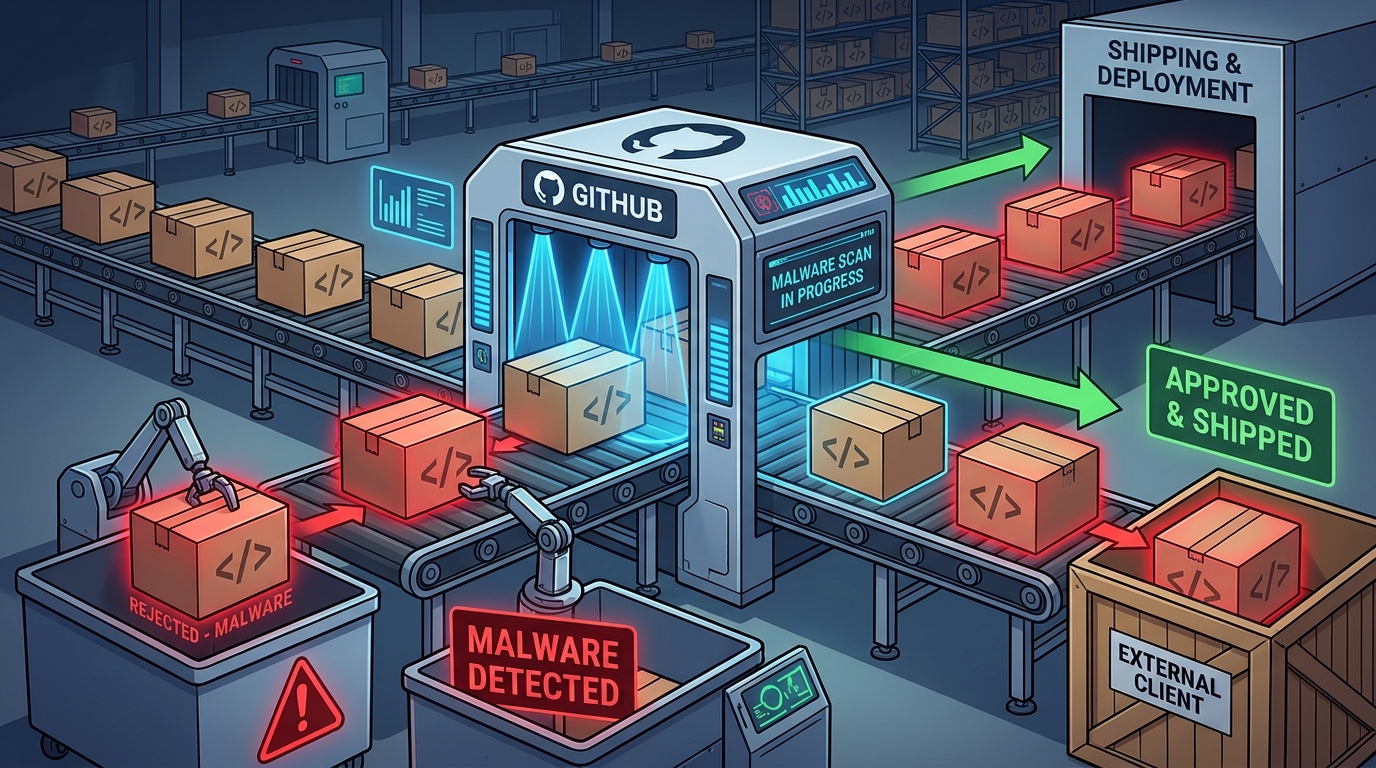 NPM Implements Pre-Publication Malware Scanning, But Will It Work?
OpenSourceMalware analyzes npm's July 28, 2026 announcement of pre-publication malware scanning, contrasting it with GitHub's April 2026 admission that it already scans every published package version with human-in-the-loop review due to false-positive risk at scale. The author argues the promised five-minute publish-time SLA implies automated (not human-reviewed) blocking decisions, that the new package.json contentPolicy/DISCLOSURE dual-use mechanism is an admission of expected false positives that burdens legitimate security researchers rather than attackers, and that the five-minute budget limits detection to static/signature matching that will miss multi-stage payloads, dependency confusion, and DPRK tradecraft like the PolinRider campaign.
 opensourcemalware.comarticleAdded 3 Sep 2026, published 31 Jul 2026🛡️ Security
 Rapid7
's release notes for Metasploit Framework 6.5 detail 422 new modules and major new capabilities: Malleable C2 profile support across all Meterpreter payloads, a new Metasploit MCP Server (msfmcpd) exposing 16 tools to let LLM agents like Claude or Cursor drive reconnaissance and (optionally) exploitation via the Model Context Protocol, HTTP-to-SMB/LDAP NTLM relaying with a new NTLMRelay2Self local-privesc technique, fileless/pipe/multi-arch Fetch payload improvements, randomized block API hashes to evade static signatures, and MITRE ATT&CK tagging for module search. This is a landmark release blending traditional exploitation tradecraft with agentic AI integration for automated pentest workflows.
 rapid7.comarticleAdded 7 Aug 2026, published 30 Jul 2026🛡️ Security
 What Is AI Pentesting and How Does It Work?
Snyk explains AI pentesting as an orchestrated system — a reasoning model that plans reconnaissance/exploitation, deterministic DAST tooling for known vulnerability classes, an independent validator model that confirms exploitability, and context from existing scanner findings — designed to catch context-dependent flaws like BOLA/IDOR, cross-tenant leakage, and chained business-logic exploits that signature-based scanners miss. It cites concrete reliability data (frontier models solving only ~26% of hard system-exploitation benchmark tasks, ~30% hallucinated findings without independent validation, 210% YoY growth in valid AI-generated HackerOne reports and 540% growth in prompt-injection reports) and positions Snyk's Evo Continuous Offensive Security product against these evaluation criteria. It also references a RAND 2026 study on low-cost CTF-solving coding agents, Anthropic/Mozilla open-source vulnerability discovery work, and Google GTIG's report of the first in-the-wild AI-assisted zero-day.
 snyk.ioarticleAdded 3 Sep 2026, published 27 Jul 2026🛡️ Security
- wolfBoot 2.9.0
wolfSSL's release announcement for wolfBoot 2.9.0, an open-source secure bootloader for embedded systems, covering new hardware targets (STM32N6/U3/C5/G4/WBA, NXP LPC54S018M-EVK, Kinetis KL26, Xilinx Zynq-7000), new crypto features (RSA-PSS image signatures, hardware crypto-callback interface, multi-root-CA verification, pre-computed IDevID/DICE attestation), and continued security hardening from Fenrir fuzzing including bounded unauthenticated image sizes, memory-copy limits during updates, and fault-injection resistant integrity verification. It also adds an sbom Makefile target producing CycloneDX and SPDX output for CRA-readiness.
 wolfssl.comarticlePublished and added 25 Jul 2026🛡️ Security
 Everyone Wins Their Own Benchmark | Blog | Endor Labs
An Endor Labs author explains how to read vendor security benchmarks skeptically. Red flags: winning everything, charts that mislead, missing precision/recall and raw counts, and claims that contradict a tool's nature (e.g. zero run-to-run variance with LLMs). Green flags: transparent methods, stated limitations, error bars. The author then critiques their own AI SAST benchmark: self-built pooled ground truth, 43% of vulnerabilities missed by every tool, F1 of 0.465, and no published run-to-run spread.
endorlabs.comarticleAdded 3 Sep 2026, published 14 Jul 2026🛡️ Security Breaking Down the White House’s Actions on Post-Quantum Cryptography Readiness
Wiz breaks down Executive Order 14409 ('Securing the Nation Against Advanced Cryptographic Attacks') and OMB memorandum M-26-15, which set accelerated federal deadlines for migrating High Value Assets and High Impact Systems to NIST-approved post-quantum cryptography (key establishment by 2030, digital signatures by 2031). It covers requirements for automated cryptographic inventories, forthcoming NIST/CISA Cryptographic Bill of Materials (CBOM) guidance, Harvest-Now-Decrypt-Later risk prioritization, FedRAMP/FAR Council contractor compliance rules, and comparable international timelines (EU, Japan, Australia, India), before pitching Wiz's own CBOM/PQC readiness tooling.
 wiz.ioarticleAdded 3 Sep 2026, published 2 Jul 2026🛡️ Security
 What is AI SAST?
Aikido's explainer draws a line between two things vendors both call "AI SAST": AI-native (reasoning-based) SAST, where an LLM reads source code like a reviewer to trace data flow and catch logic flaws such as IDORs, broken access control and business-logic bypasses that have no syntactic signature; and AI-augmented SAST, where a traditional deterministic rule engine stays the detection core and AI is layered on for triage, false-positive filtering and autofix. It also positions AI SAST against classic pattern-matching SAST (fast, deterministic, runs every commit) and AI pentesting (validates real exploits against a running app, produces proof for audits), arguing organizations need all three at different cadences. The piece closes by mapping Aikido's own Code Security Audit and Deep PR Review products onto the AI-native category.
 aikido.devarticleAdded 3 Sep 2026, published 6 Jun 2026🛡️ Security
 State of Post Quantum Cryptography | Wiz Blog
Wiz's follow-up PQC research post quantifies real-world adoption of post-quantum key exchange (ML-KEM/X25519MLKEM768) and digital signatures (ML-DSA, SLH-DSA, pending FN-DSA) across AWS, Azure, and GCP APIs, OpenSSH/OpenSSL versions, and Go's crypto/tls. It finds stark gaps: Azure API servers show no PQC key-exchange support while GCP is universal and AWS sits at 13%, only 15% of TLS 1.3 connections observed use PQC-compliant key exchange, under 15% of OpenSSL instances support PQC, and less than 1% of companies use AWS KMS ML-DSA signing keys. The piece also covers the shift in PQC priority from key exchange (mitigating Harvest-Now-Decrypt-Later attacks) to digital signature migration, and the coming move to Merkle Tree Certificates to keep PQC certificate chains manageable.
wiz.ioarticleAdded 5 Sep 2026, published 28 May 2026🛡️ Security- A Idealistic View of Malware Analysis Definitions
A blog post attempting precise definitions for commonly confused malware analysis terms: static vs dynamic analysis, and heuristic vs deterministic (signature-based) detection. It uses a real YARA rule for PWS:Win32/Frethog.AB and the Mimikatz string 'Mimikatz_OpenInternalConfig()' to illustrate that signatures can be either precise/deterministic or generic/heuristic, and argues the heuristic/deterministic line is often blurry and context-dependent (e.g., LSASS access looking suspicious to a red teamer but normal to a sysadmin).
 blog.deeb.charticleAdded 3 Sep 2026, published 13 Jan 2026🛡️ Security
- Avred background: Advances in Reversing Defender Signature Format
A blog post building on retooling.io's reverse engineering of Microsoft Defender's WdFilter.sys signature format, explaining how signatures use weighted sub-rules with a score threshold (dominant vs non-dominant matches) and five wildcard opcode types (90 01–90 05) for byte-sequence, placeholder, and regex-like matching, translating each into equivalent YARA rule syntax. It ties these findings back to why certain Avred signature-breaker techniques (like NOP/register wildcarding) fail to evade detection, giving practical insight into how Defender signatures are structured and matched.
blog.deeb.charticleAdded 3 Sep 2026, published 30 Jun 2024🛡️ Security