 Rekt - SingularityNET - Rekt
SingularityNET exploit (19 September 2026): attackers with signing authority exposed through a cloud infrastructure breach drained 8.72M FET from the Ethereum bridge converter, then minted about 2.3 billion AGIX, NTX, WMTX and CGV. Rekt's transaction-level reconstruction puts gross liquid proceeds near $2.29M, not the $16.77M headline, and traces laundering via Chainflip, Baltex and THORChain. It notes conversionIn() skipped checkLimits() and trusted a single EOA signature.
 rekt.newswriteupAdded 29 Oct 2026🛡️ Security
 Introducing MavenGate: a supply chain attack method for Java and Android applications | Oversecured Blog
MavenGate is Oversecured's research on hijacking Maven dependencies by buying expired domains behind groupIds on Maven Central and JitPack. It found 6,170 of 33,938 checked domains (18.18%) vulnerable, and tested the attack with its own com.oversecured:hello-world library. It lists defenses (Gradle verification-metadata.xml, PGP signatures) and proposes changes to repository signing.
 oversecured.comwriteupAdded 29 Oct 2026🛡️ Security
 Plex vulnerabilities being exploited in the wild to drop a cryptominer
Honeypot writeup of in-the-wild exploitation of Plex Media Server through the Plex2Shell chain (CVE-2026-96652, -96654, -96655, -96656) in October 2026. Attackers from 45.194.92.222, 91.92.40.202 and 176.65.139.228 used SSRF-style timeline/subscribe requests and downloaded a Docker-named dropper and an XMRig miner from 217.60.194.116. Includes file hashes, a later-seen proxyware sample (myawesomeproxy), lab pcaps for signatures and links to sandbox reports.
 boredhackerblog.infowriteupAdded 20 Oct 2026, published 19 Oct 2026🛡️ Security
 Claude reveals ECDSA curve origins
Anthropic's Frontier Red Team reports that Claude recovered how the NIST P-192/224/256/384/521 and ANSI X9.62 curve seeds were generated. They are outputs of the C library's lrand48 LCG seeded with 1997–98 Unix timestamps, not hashes of a passphrase. The method scanned for weak-PRNG signatures, then used LLL lattice reduction to recover the truncated LCG state and stepped it back to srand48 initialization. Claude also traced some base points to the FreeLIP/NTL random generator. Reproducible Python is included. The authors say this is not an attack and makes deliberate backdoors less plausible. The B-163 seed and the base points of P-224/256/384/521 and the binary curves remain unexplained.
 anthropic.comwriteupAdded 17 Oct 2026, published 16 Oct 2026🛡️ Security
- Claude reveals ECDSA curve origins
Anthropic's Frontier Red Team reports that Claude, given no hint, worked out how the NIST P-192/224/256/384/521 and ANSI X9.62 curve seeds were generated. They came from the C library's lrand48 LCG seeded with Unix timestamps from 1997–98, not from a hash of a phrase. Claude found this by scanning for weak-PRNG signatures and recovering the PRNG state with LLL lattice reduction. It also traced several prime-curve base points to the FreeLIP random generator. The post includes Python code that reproduces the seeds and base points. It says this is not an attack and makes backdoor claims less plausible. B-163 and the other base points remain unexplained.
anthropic.comwriteupAdded 17 Oct 2026, published 16 Oct 2026🧠 AI  Package managers have an integrity problem
Trail of Bits tested 25 popular package managers with a Docker and mitmproxy harness that simulates a compromised package repository injecting malware into legitimate packages. Fewer than half enforce lockfile hashes by default, only two verified every download, and only Go verifies signatures by default. The post covers lockfile hash pitfalls (Pub, pnpm, Conan, CocoaPods, Composer), repository, developer and Sigstore signing, and Go's checksum database. It also proposes lockfiles that commit to a signing identity plus a transparency log.
 blog.trailofbits.comwriteupPublished and added 14 Oct 2026🛡️ Security
 ETDI: Comprehensive MCP Security Framework
ETDI (Enhanced Tool Definition Interface) is a proposed security extension to the Model Context Protocol that adds cryptographically signed and versioned tool definitions, OAuth 2.0 scope-based permissions, Cedar-policy-driven context-aware access control (via engines like Amazon Verified Permissions/OPA), and call-stack verification to stop tool chaining and privilege escalation. It is designed to counter two named MCP threat classes — Tool Poisoning (spoofed/impersonated tool definitions) and Rug Pull attacks (post-approval silent modification of tool behavior) — with concrete pseudocode for signature verification, version/integrity checking, and policy evaluation. The page functions as an implementation guide for MCP client/server builders wanting to harden tool approval and invocation flows.
 vulnerablemcp.infowriteupAdded 8 Oct 2026🧠 AI
- ETDI: Comprehensive MCP Security Framework
ETDI (Enhanced Tool Definition Interface) is a proposed security extension to the Model Context Protocol that defends against Tool Poisoning (spoofed/impersonated tool definitions) and Rug Pull attacks (silent post-approval modification of tool behavior) using cryptographic signing of tool definitions, immutable versioning with mandatory re-approval, OAuth 2.0 scopes, and Cedar/Amazon Verified Permissions-based policy-aware access control. The page includes detailed attack scenarios, a call-stack verification scheme to prevent tool-chaining privilege escalation, and implementation code for key management, signature verification, and policy evaluation.
vulnerablemcp.infowriteupAdded 8 Oct 2026🛡️ Security  Six defects in one signature verification tool, found from outside in six rounds
A forum writeup on ethresear.ch describing a "predictions-first" testing methodology for verification logic, applied against the author's own repository and against a live third-party MCP server (nsgoods Workbench, which offers offline signature verification over the x402 payment catalogue). Six rounds of testing surfaced concrete defects: a false negative caused by a stripped field list, a tamper-accepted body via a service-selection parameter that let callers choose which fields were excluded from the signed message, schema-rejection and signature-failure returning byte-identical error text, and a logging/privacy gap in the operator's system that was fixed after disclosure. The author ships a companion tool, exactzk-verification-guards, which captures both a passing and an actually-reproduced failing run as regression evidence rather than a fabricated example.
 ethresear.chwriteupPublished and added 2 Oct 2026🛡️ Security
 Auditing in the age of (good enough) AI
Trail of Bits describes preparing for a six-month audit of the Miden zkVM (a zero-knowledge VM with its own custom assembly language, MASM) by having AI agents (Claude and Codex) build an LSP server, a decompiler, an abstract-interpretation-based static analysis engine, and a Lean formal model of the VM executor, none of which previously existed for MASM. These tools surfaced a high-severity bug in the mod_12289 procedure where an underconstrained prover-supplied advice value allowed a malicious prover to forge Falcon signatures and drain Miden accounts, plus over 400 type-validation issues, while the Lean proof effort produced 95 machine-checked correctness proofs and caught two additional subtle arithmetic bugs (rotr, wrapping_mul) missed by unit tests.
blog.trailofbits.comwriteupPublished and added 18 Sep 2026🛡️ Security Pass-the-Passkey Family of Attacks
SpecterOps research introduces "Pass-the-Passkey," a family of 20+ attack techniques against passkey/WebAuthn authentication, including three zero-days: Windows 11 logging complete WebAuthn assertions to an Event Log readable by unprivileged users (patched July 2026), Microsoft Entra ID historically failing to enforce WebAuthn anti-replay protections (challenge reuse, session binding, signature counters), and local malware that calls the native Windows WebAuthn API directly to phish users with a convincing native-looking passkey prompt. The write-up argues these implementation failures mirror classic credential-relay attacks like Pass-the-Hash and NTLM Relay, and recommends device-bound passkeys with attestation enforcement for high-value accounts.
 specterops.iowriteupAdded 2 Oct 2026, published 16 Sep 2026🛡️ Security
 ClearFake WebDAV infection chain delivers Amatera stealer, ZigCryptoStealer, and NetSupport Manager
Cisco Talos reconstructs two related WebDAV-based infection chains (tracked actor UAT-10820) that use a ClickFix fake-CAPTCHA lure, EtherHiding on BNB Smart Chain to stage JavaScript via a malicious Cloudflare Worker, and WebDAV-delivered disguised DLLs executed via rundll32 ordinal calls to drop the Amatera stealer. Depending on the C2 configuration, Amatera then deploys either a NativeAOT-loaded ZigCryptoStealer with a BYOVD EDR-killer driver and a Go-based Yamux reverse proxy, or a PowerShell stager that installs a trojanized NetSupport Manager RAT pointed at Russian C2 infrastructure. The post details loader internals, Amatera's dead-drop C2 resolution via Telegraph and Steam, and provides ClamAV signatures plus a full IOC list.
 blog.talosintelligence.comwriteupAdded 7 Oct 2026, published 8 Sep 2026🛡️ Security
 How Trail of Bits helps verify the integrity of your Signal chats
Trail of Bits describes the from-scratch, open-source auditor it built and operates as one of three independent auditors (alongside Signal and Cloudflare) backing Signal's new Automatic Key Verification feature. The auditor maintains its own Merkle tree of the global phone-number-to-public-key map and periodically signs the tree head, so clients that require signatures from all three auditors can detect a malicious server maintaining a split view within at most one week. This replaces manual safety-number comparison with an automated key-transparency check for end-to-end encryption integrity.
blog.trailofbits.comwriteupAdded 3 Sep 2026, published 11 Aug 2026🛡️ Security Finding eight high-severity vulnerabilities in NodeBB in six hours
Aikido's AI pentest agent found eight high-severity vulnerabilities in NodeBB (forum software) prior to version 4.14.0 in six hours, including three XSS bugs (one via a custom ActivityPub/federation server spoofing profile icons, one via unescaped Federation Error logs, and one via a translation-syntax template injection reflected across the app), an admin authorization bypass via custom homepage rewriting, a private-message ID spoof via unverified GET signatures, post hijacking via pid mass assignment, unauthenticated category disclosure via ActivityPub outbox, and unlimited upvote inflation via unverified Announce actors. Each finding includes source code walkthroughs, exploit payloads/scripts, and links to the specific NodeBB commits that fixed them.
 aikido.devwriteupAdded 3 Sep 2026, published 22 Jul 2026🛡️ Security
 Exploitation in the Wild of wp2shell
Wiz Research documents active in-the-wild exploitation of "wp2shell," a pre-auth RCE chain in WordPress Core (CVE-2026-63030 and CVE-2026-60137) affecting every WordPress version since December 2025, discovered by Searchlight Cyber using GPT-5.6 Sol. Attackers abuse the WordPress REST API batch endpoint (/wp-json/batch/v1) to achieve unauthenticated RCE, then deploy malicious plugins/webshells (including a disguised "CMSmap" plugin and a custom REST endpoint backdoor), enumerate users, and attempt LFI against wp-config for credential theft. The post details post-exploitation TTPs, detection signatures (HTTP 207 responses, wp2shell/rezwp2shell user agents), IOCs, and WAF/plugin-based mitigations.
 wiz.iowriteupAdded 3 Sep 2026, published 20 Jul 2026🛡️ Security
 PolinRider Confirmed Footprint Grows 6.5x Since March
OpenSourceMalware's July hunt update on the PolinRider campaign (a Lazarus Group/DPRK operation linked to Contagious Interview and TasksJacker) found 2,417 newly-compromised GitHub repos, bringing the confirmed footprint to 4,367 repos across 2,152 owners — a 6.5x increase since March. The post breaks down the two injection vectors (94% config-file injection into files like postcss.config.mjs/tailwind.config.js/eslint.config.mjs, 6% payloads hidden in a .woff2 font file), shows the campaign overwhelmingly hits individual developer accounts rather than orgs, and republishes updated signature markers, decoder function names, and grep-based detection/remediation steps.
 opensourcemalware.comwriteupAdded 3 Sep 2026, published 15 Jul 2026🛡️ Security
 Rapid7 MDR Team Discovers New SonicWall SMA1000 Zero Days Being Actively Exploited (CVE-2026-15409, CVE-2026-15410)
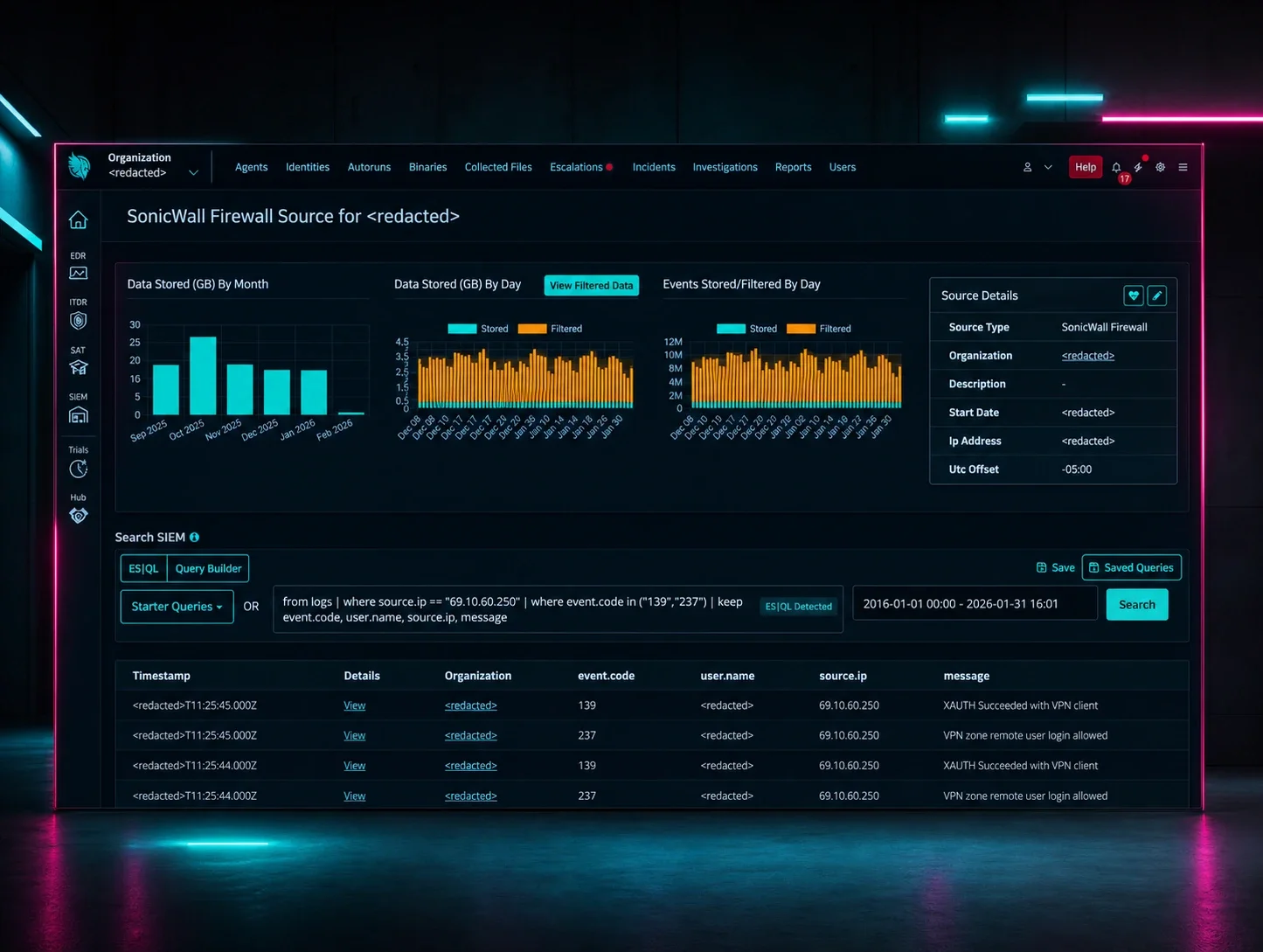
Rapid7's MDR team details active zero-day exploitation of SonicWall SMA1000 appliances via CVE-2026-15409 (unauthenticated SSRF in the /wsproxy websocket proxy, CVSS 10.0) chained with CVE-2026-15410 (local privilege escalation via path traversal in the ctrl-service remove_hotfix workflow) to achieve root RCE. The post includes a working Python exploit against the localhost Erlang service on port 1050 (using a hardcoded authentication cookie), an HTTP request PoC for the hotfix path-traversal chain, and extensive observed post-exploitation activity — credential/TOTP theft, VPN-less lateral movement to domain controllers via harvested LDAP service accounts — plus concrete log/IOC signatures and attacker-infrastructure IPs (FNS Holdings Limited ASN 206092) for hunting.
 rapid7.comwriteupAdded 10 Sep 2026, published 15 Jul 2026🛡️ Security
 PolinRider Jumps the Fence to Go, Packagist, npm, PyPI
OpenSourceMalware documents how PolinRider, a DPRK/Lazarus Group supply-chain campaign tied to the Contagious Interview cluster, spread from GitHub account takeovers into Go modules, Packagist/Composer packages, npm libraries and Chrome extensions without any change to the malware itself. Because Go and Packagist resolve packages directly from git tags rather than a separately-uploaded artifact, a compromised GitHub account automatically becomes a compromised registry release — unlike npm/PyPI, which require a separate publishing credential and largely stalled the takeover at the registry boundary. The post gives ecosystem-by-ecosystem evidence (10 Packagist packages, 80+ Go modules, an NPM/Chrome cluster), IOCs (TRON/Aptos dead-drop addresses, XOR keys, loader signatures, temp_auto_push.bat), a campaign timeline, and remediation guidance for Go/Composer maintainers.
opensourcemalware.comwriteupAdded 3 Sep 2026, published 8 Jul 2026🛡️ Security- AI-Coded Malware | Analyzing Vibe-Coded AD Enumeration | Huntress
Huntress recovered and reconstructed "Untitled1.ps1," a PowerShell Active Directory enumeration script used by an attacker during a June 3 incident via RDP access with compromised credentials, and identified it as AI-generated ("vibe-coded") based on artifacts like an unedited LLM placeholder hostname, a "FULLY FIXED" prompt-iteration title, over-engineered five-method DC-discovery fallback logic, and gratuitous colored console/HTML reporting output. The attack chain paired this bespoke recon tool with off-the-shelf abuse of s5cmd (legitimate AWS S3 CLI used for exfiltration) and SharpShares (share enumeration), illustrating how LLM-generated one-off malware evades hash/signature-based detection and pushes defenders toward behavioral analytics on Active Directory enumeration patterns.
 huntress.comwriteupAdded 3 Sep 2026, published 8 Jul 2026🛡️ Security
 THORChain Exploit Report #2 — GG20 root-cause disclosure
THORChain's second exploit post-mortem details how an attacker who joined as a validator planted a malformed multi-prime Paillier modulus during GG20 threshold-signature key generation, then deliberately failed 864 MTA signing rounds over 2.5 days to leak fragments of other validators' key shares via a combination of three individually low-severity flaws inherited from Binance's tss-lib: an unverified Paillier modulus (the same class documented as BitForge and TSSHOCK), a range proof that didn't bind its two halves together, and an undersized blinding value. Once enough fragments accumulated the attacker reconstructed the full vault private key and drained roughly 10 million dollars in a single transaction before solvency checks could react, since no anomalous fund movement preceded the theft. THORChain is patching the fork, moving from GG20 and Paillier to DKLS and Schnorr based signing, and adding per-validator key-sign failure monitoring as a result.
 blog.thorchain.orgwriteupAdded 29 Sep 2026, published 3 Jul 2026🛡️ Security
 Shipping post-quantum cryptography to Python
Trail of Bits, funded by the Sovereign Tech Agency, implemented Rust bindings for NIST's ML-KEM (FIPS 203) key-establishment and ML-DSA (FIPS 204) digital-signature standards into pyca/cryptography, shipped in version 48 with AWS-LC backend support. The post makes them a pip install away for the Python ecosystem (pyca/cryptography sees 1.2B monthly PyPI downloads and underpins Certbot, Ansible, Airflow, and paramiko), while detailing the size/performance tradeoffs versus Ed25519/X25519 and noting SLH-DSA (FIPS 205) support and protocol-level integration are still in progress.
blog.trailofbits.comwriteupAdded 3 Sep 2026, published 30 Jun 2026🛡️ Security Inside Microsoft Defender's Signature World
RETooling researchers reverse-engineer Microsoft Defender Antivirus (MDA), detailing the .vdm signature database format, the MpEngine.dll module loading/signal-dispatch process, and the internal structure of PEHSTR and PEHSTR_EXT byte/string-matching signatures used to detect PE malware. The post decodes the wildcard opcode family (0x90 0x01–0x05) used in Defender signatures and shows Yara-equivalent translations plus a worked example bypassing a Plugx.C detection by modifying a single matched byte, framing the work as groundwork for adversary emulation and signature evasion.
 retooling.iowriteupAdded 3 Sep 2026, published 22 May 2026🛡️ Security
- Threat Actor Defense Evasion: How Attackers Disable AV & EDR
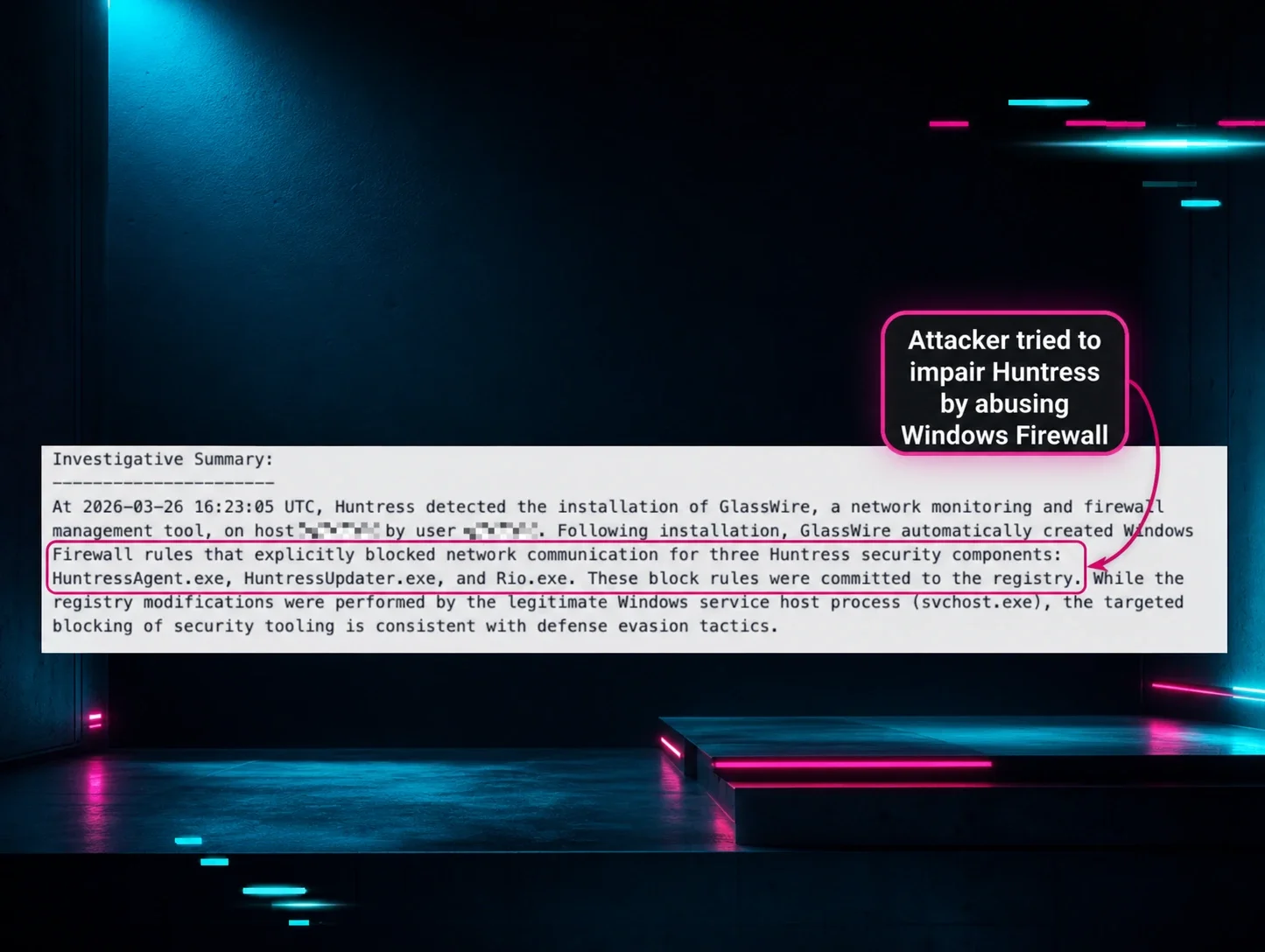
Huntress SOC breaks down how attackers disable AV/EDR: blocking agent communications via malicious/hidden Windows Firewall rules (WFP), abusing Add/Remove or CLI to uninstall EDR agents, abusing Defender AV exclusions, and Bring Your Own Vulnerable Driver (BYOVD) attacks to gain kernel access and kill protected security processes. Includes real intrusion examples — a February 2026 SonicWall VPN-credential intrusion using a revoked-but-still-trusted 2006 EnCase forensic driver (exploiting a legacy Windows Driver Signature Enforcement exception) to kill 59 named security processes every second, and a March 2026 malvertising campaign (Google Ads for W-2/W-9 forms) that dropped a rogue ScreenConnect instance and used a vulnerable signed Huawei audio driver to terminate EDR/AV processes.
huntress.comwriteupAdded 3 Sep 2026, published 18 May 2026🛡️ Security  Bullying LLMs
A researcher details an autonomous vulnerability-hunting system built with Claude Code and 8 custom MCP servers (300+ tools) across a 5-VM Proxmox lab, using a "hallucination bin" validation pipeline (findings must pass PoC/exploitability/low-priv gates before promotion) and a RAG-backed knowledge loop that learns from prior campaigns. Concrete outputs include two new Go standard library CVEs (CVE-2026-33809 TIFF OOM, CVE-2026-33812 SFNT/GPOS OOM), a four-stage Windows OEM management-agent chain (named-pipe auth bypass → SSRF via WCF → catalog injection → SYSTEM code execution via BYOVD), and two macOS app-distributor findings (browser/quarantine DB exfiltration and a leaked debug RSA key enabling Sparkle update-signature bypass). Also covers a self-built token-cost/ROI tracker (TokenBurn) and a bounty-program ROI-scoring model for target selection.
 blog.zsec.ukwriteupAdded 3 Sep 2026, published 13 May 2026🛡️ Security
- Hiding in Plain Sight with App Domain Manager Injection
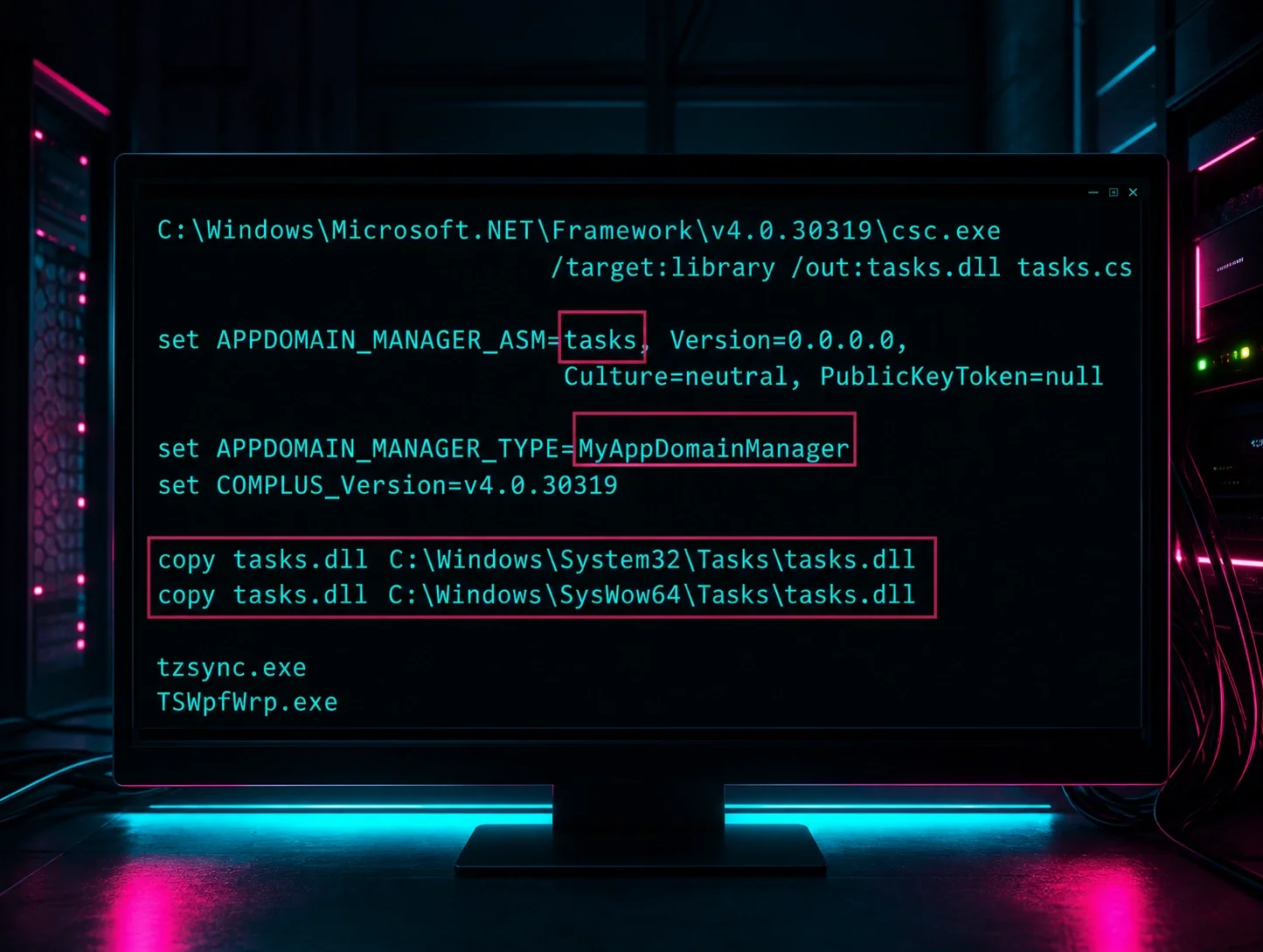
Huntress researchers Casey Smith and John Hammond detail App Domain Manager injection, a .NET framework feature abused to load attacker-controlled assemblies into legitimate, Microsoft-signed .NET processes without exploiting a vulnerability. The technique works via a crafted .exe.config file (local or remote via HTTP/UNC path) or by setting the APPDOMAIN_MANAGER_ASM/APPDOMAIN_MANAGER_TYPE environment variables to hijack assembly loading across child processes, enabling stealthy code execution and lateral movement that bypasses signature-based and application allow-listing controls. The piece also covers defensive countermeasures: Fusion logging, Process Monitor, monitoring for unexpected .exe.config changes, unusual execution paths, and environment variable tampering.
huntress.comwriteupAdded 3 Sep 2026, published 19 Feb 2026🛡️ Security - They Got In Through SonicWall. Then They Tried to Kill | Huntress
Huntress details a February 2026 intrusion beginning with compromised SonicWall SSLVPN credentials, where the attacker deployed an EDR killer that decodes and drops a legitimate but revoked 2006-era EnCase forensic driver (EnPortv.sys, service name OemHwUpd) to terminate 59 different EDR/AV processes from kernel mode via a single IOCTL (KillProc). The write-up explains the driver's novel wordlist-substitution-cipher payload encoding (evading entropy and string-based detection), FNV-1a process-name hashing for fast target matching, timestomping/persistence tricks, and why Windows Driver Signature Enforcement still trusts the expired/revoked certificate due to pre-2015 signing and timestamp exceptions. It closes with concrete mitigations: MFA on VPN, HVCI/Memory Integrity, WDAC vulnerable-driver blocklist rules, and the ASR rule blocking vulnerable signed drivers.
huntress.comwriteupAdded 3 Sep 2026, published 4 Feb 2026🛡️ Security - The (!FALSE) Pattern | Huntress
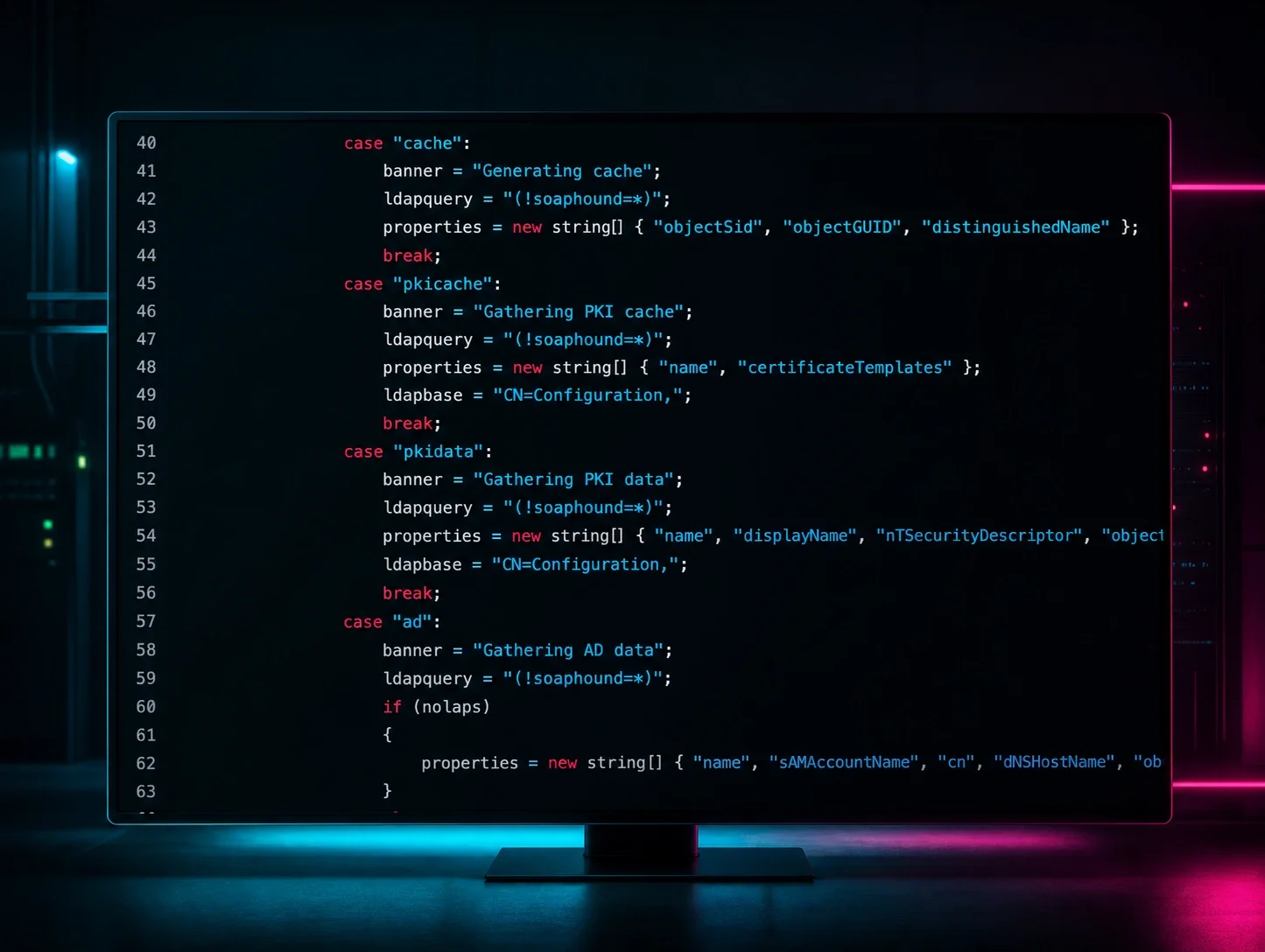
Part four of Huntress's LDAP/AD detection series shows that querying a non-existent LDAP attribute with negation (e.g., SOAPHound's hardcoded (!soaphound=*) filter) gets optimized by Active Directory's LDAP engine into (! (FALSE)) before it is written to Event ID 1644, erasing the tool's signature from logs. The author verifies this is universal AD behavior (not SOAPHound-specific), correlates it with SOAPHound's SDFlags:0x7 server control and its ADWS/port-9389 localhost proxying behavior, and publishes two Sigma rules combining the (! (FALSE)) pattern, attribute lists, and SDFlags for high-fidelity detection.
huntress.comwriteupAdded 3 Sep 2026, published 29 Jan 2026🛡️ Security  Azure Storage Account Attacks and Detections
A hands-on Azure security writeup covering abuse of Shared Access Signature (SAS) tokens for blob storage (account-key vs. user-delegation signed tokens, and how to spot account-key SAS via the missing 'skoid' field in logs), and a cross-tenant object replication attack that exploits Azure's default-enabled cross-tenant replication (pre-Dec 2023) via the objectReplicationPolicies REST API to continuously exfiltrate blob data with minimal logging. It also provides several KQL detection queries against StorageBlobLogs, AzureActivity, AzureMetrics, and StorageFileLogs for spotting cross-tenant replication policy creation, anomalous user-agent strings, transaction-volume spikes, and Azure Files SMB read anomalies via SmbPrimarySID baselining. The piece closes with concrete hardening advice: prefer managed identities/Entra over SAS, disable cross-tenant replication, and build detections on configuration drift and stable client fingerprints.
 hausec.comwriteupAdded 3 Sep 2026, published 15 Dec 2025🛡️ Security
- PeerBlight Linux Backdoor Exploits React2Shell CVE-2025-55182
Huntress details in-the-wild exploitation of CVE-2025-55182 ("React2Shell"), an unauthenticated RCE in React Server Components caused by insecure deserialization of the React Flight protocol's "thenable" chunk handling, affecting Next.js and other React-based apps. Post-exploitation payloads include PeerBlight (a musl-compiled Linux backdoor using BitTorrent DHT as fallback C2, sharing config-schema and XOR encryption traits with the Pink botnet and persistence code overlapping RotaJakiro), CowTunnel (an FRP-based reverse tunnel wrapping xfrpc for SOCKS5/TCP/HTTP/FTP/RDP proxying and a telnetd backdoor), ZinFoq (a Go post-exploitation implant with hex-encoded HTTPS C2, reverse PTY shells, and SOCKS5 pivoting), and a Kaiji botnet variant with hardware watchdog abuse. The piece includes detailed C2 protocol reversing (DGA algorithm, DHT config-distribution and RSA-signature verification) and dozens of observed C2/scanner IOCs across five real intrusion cases.
huntress.comwriteupAdded 3 Sep 2026, published 10 Dec 2025🛡️ Security - Manual Configuration Manager (SCCM) credential harvesting
A step-by-step method for harvesting Configuration Manager (SCCM/MECM) credentials by pulling DPAPI-encrypted secret policy blobs (Network Access Accounts, task sequences, collection variables) via WMI or the local CIM repository, then exfiltrating DPAPI master keys and LSA SYSTEM/SECURITY/SAM hives for fully offline decryption with Impacket's dpapi and secretsdump modules. The approach avoids running known SCCM-abuse tools like SharpDPAPI on-target, reducing signature-based detection while still noting which steps (registry hive backup, DPAPI folder copy, WMI queries) a SOC could realistically catch.
 bencteux.frwriteupAdded 3 Sep 2026, published 5 Oct 2025🛡️ Security
- From Dangerous PHP Functions to Webshell Hunting
A DFIR practitioner deploys four PHP webshells (popen-based, proc_open-based, p0wny-shell, and Weevely) on a test web server, then tests whether common webshell YARA rulesets (nsacyber, Florian Roth's Thor rules) can detect them via Velociraptor hunts. The rules only catch p0wny-shell due to its many code-execution keywords, missing the simpler popen/proc_open shells and Weevely entirely, exposing brittleness in signature-based webshell detection. The author proposes a semi-automatic approach combining Velociraptor/DetectRaptor with manual review, web-log frequency analysis, and UAC-generated bodyfile/mactime timelines to hunt webshells more reliably.
 dfir.chwriteupAdded 3 Sep 2026, published 17 Jun 2024🛡️ Security
- Nmap - detecting the network mapper
A blue-team writeup arguing that broad scan detection at the Internet perimeter is low-value noise, and that scan detection is most valuable inside the network perimeter after initial compromise. It then catalogs specific network signatures Nmap leaves in DNS, FTP, HTTP, RDP, SIP, SMB, SSH, and SMTP probes (e.g. the NSE User-Agent, mstshash=nmap RDP cookie, SSH-x.x-NmapNSE client string, IEUser@ FTP password) that can be used to build reliable detection rules.
bencteux.frwriteupAdded 3 Sep 2026, published 3 Jan 2023🛡️ Security