 Trojanized Claude Code Extension Delivered Persistent SSH Backdoor to Developer Machines
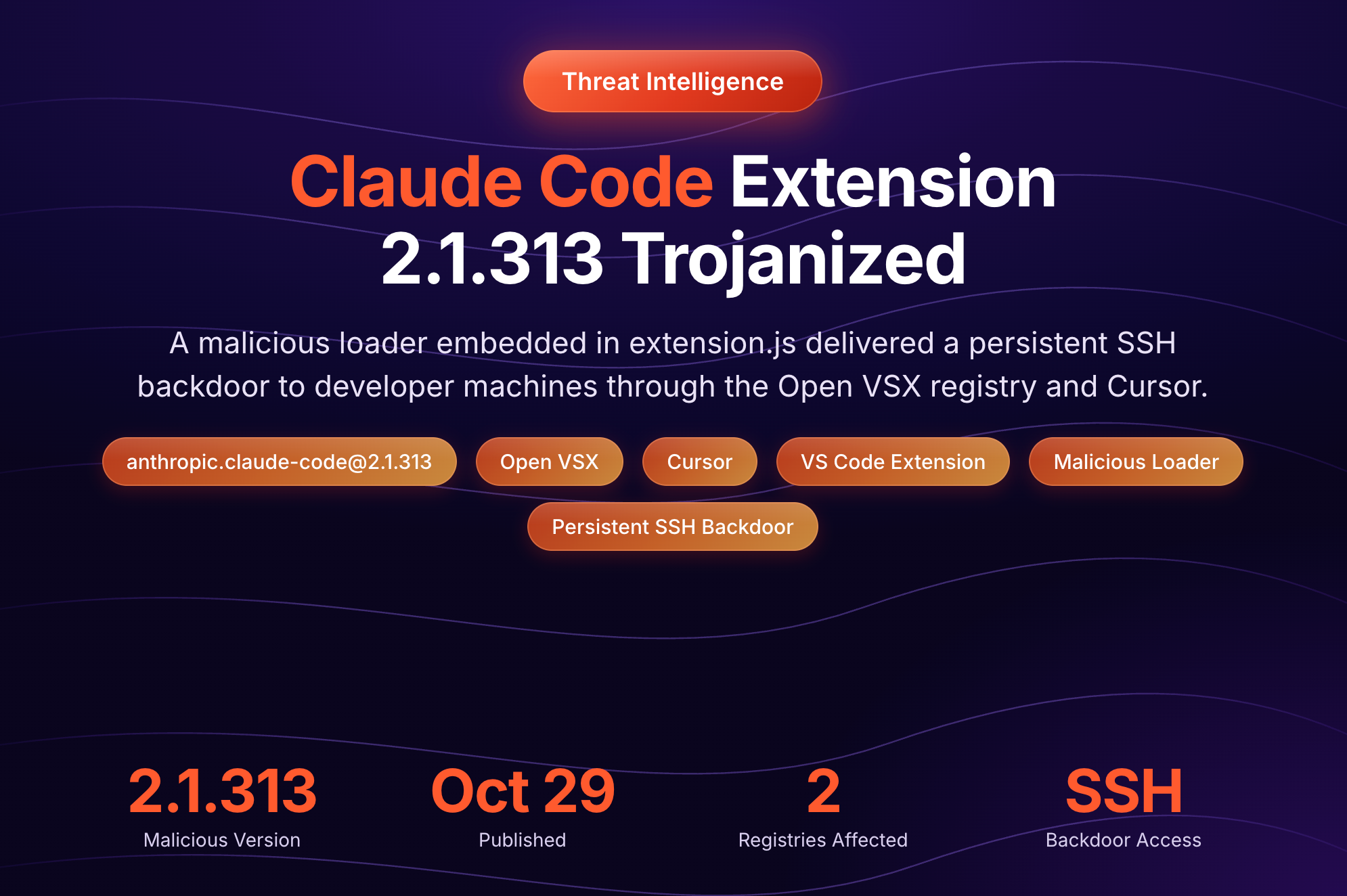
The Claude Code VS Code extension anthropic.claude-code 2.1.313 was published on Open VSX on 29 October 2026 with a malicious loader prepended to extension.js. On load it planted an attacker SSH key (svc-telemetry), installed per-OS persistence, opened a reverse SSH tunnel and beaconed host recon over HTTP. Cursor reports at most 5,000 users received it in an 11-hour window. The post gives the timeline, cleanup artifacts and credential rotation steps.
 stepsecurity.iowriteupPublished and added 30 Oct 2026🛡️ Security
 Backdoor in Claude Code for VS Code extension on the Cursor Marketplace
Phorion analyzes a backdoor injected into versions 2.1.312 and 2.1.313 of the official Claude Code for VS Code extension on the Cursor Marketplace. An IIFE prepended to extension.js plants an SSH key, opens a reverse SSH tunnel to 134.209.82[.]225, persists via a fake com.apple.sysmond LaunchAgent and beacons host recon. A macOS systemsetup check bug usually stops SSH from being enabled. The post lists detections and remediation.
 phorion.iowriteupAdded 31 Oct 2026, published 30 Oct 2026🛡️ Security
- Camera Management Software Compromise Leads to Malware Deployment
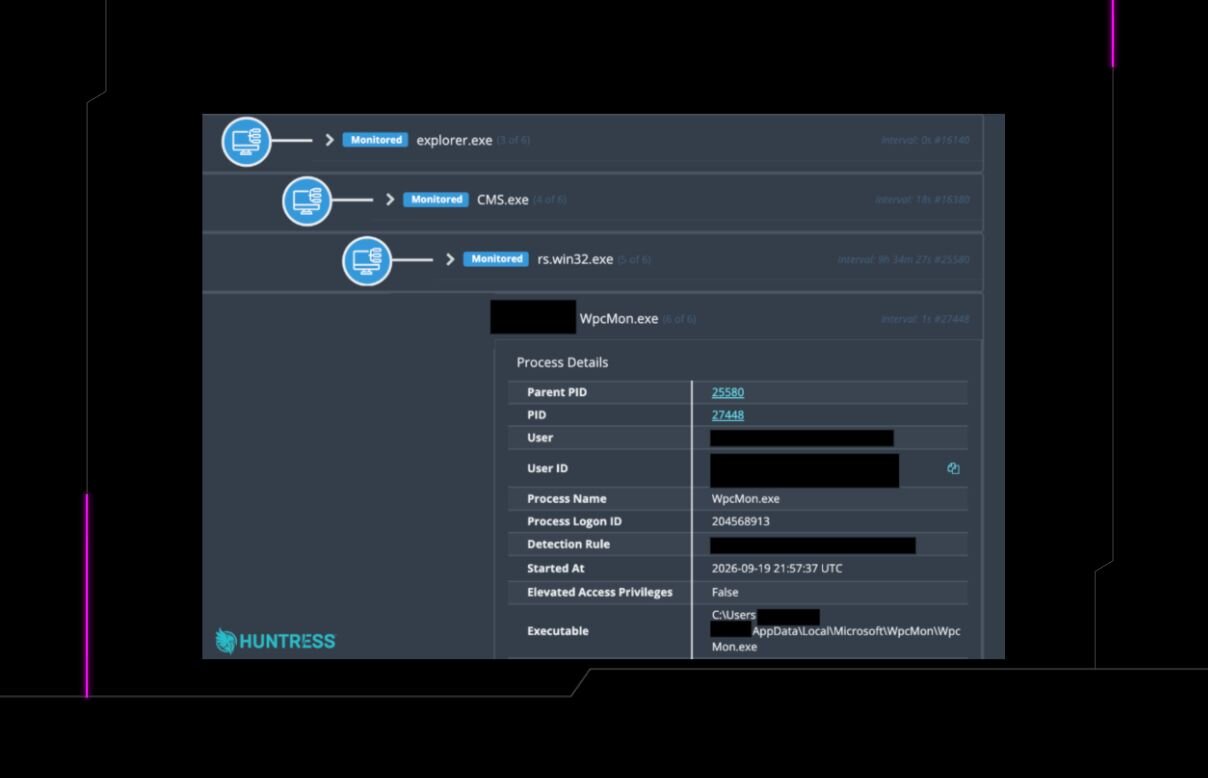
Huntress investigation of incidents in September and October 2025 where a compromised camera management application (CMS.exe) was the initial access vector. Attackers dropped rs.win32.exe, a reverse shell, and sideloaded modified zlib DLLs (IPHLPAPI.DLL, samcli.dll) via the legitimate Microsoft WpcMon.exe in AppData, with Run key persistence and beaconing to 144.172.116[.]37. Includes detection pivots and hardening advice.
 huntress.comwriteupAdded 28 Oct 2026, published 27 Oct 2026🛡️ Security
 Adaptix C2 Architecture: Configuring Command & Control Listeners
AdaptixC2 listener configuration guide, second in a Hackers-Arise series. It walks through the fields for BeaconDNS, Beacon HTTP, Beacon SMB, Beacon TCP and Gopher TCP listeners, including DNS burst mode, HTTP URIs, User-Agents and redirector callback addresses, SMB named pipes, TCP prepend data, and mTLS. It also explains external versus internal listeners for lateral movement.
 hackers-arise.comarticlePublished and added 26 Oct 2026🛡️ Security
 Parul Gautam (@Parul_Gautam7) on X
Beacon is an open-source memory layer for coding agents. It saves sessions across Claude Code, Cursor, Codex and more than 20 other tools, so developers can move work between agents without losing context. The team says it raised a $5.5M seed round and is building a self-improving feedback loop that learns from how users debug. The post gives no technical detail or repo link.
 x.comthreadAdded 21 Oct 2026, published 20 Oct 2026🧠 AI
 Rethinking GRPO for Large Reasoning Model Safety Alignment
Beacon is a safety alignment framework for large reasoning models that fixes two GRPO failure modes: advantage collapse, where homogeneous rollout groups give vanishing advantages, and unsafe diversification, where unsafe behaviors persist and spread. It combines Safety Signal Recovery (advantage-guided trajectory filtering plus safe reference supervision) with Safety-Utility Decoupled Alignment (category-aware rewards, benign-only KL anchoring). Tested on four Qwen3 and DeepSeek-R1-Distill variants across eight benchmarks, it cuts average safety error by up to 32.83 percentage points with low over-refusal.
 arxiv.orgpaperAdded 20 Oct 2026, published 16 Oct 2026🧠 AI
 16 Malicious Firefox Extensions Steal Cryptocurrency Wallet Credentials
Socket Threat Research uncovered a coordinated campaign of 16 malicious Firefox extensions split into a Rabby Wallet clone family (4 extensions, full repackaged Rabby codebase) and an OKX Wallet-impersonating "Portal WALLET" family (12 extensions), all hooking wallet import flows to steal mnemonic seed phrases and private keys and exfiltrate them via GET/POST/sendBeacon to attacker-controlled Cloudflare Workers endpoints under the icy-star-f45c.workers.dev namespace. The writeup includes campaign markers (EQOx7EIPZSNi), background.js SHA-256 hashes, extension IDs/XPI hashes, and ties the activity to a prior August 2026 crypto-theft extension campaign Socket tracked, plus concrete detection and incident-response guidance.
 socket.devwriteupPublished and added 7 Oct 2026🛡️ Security
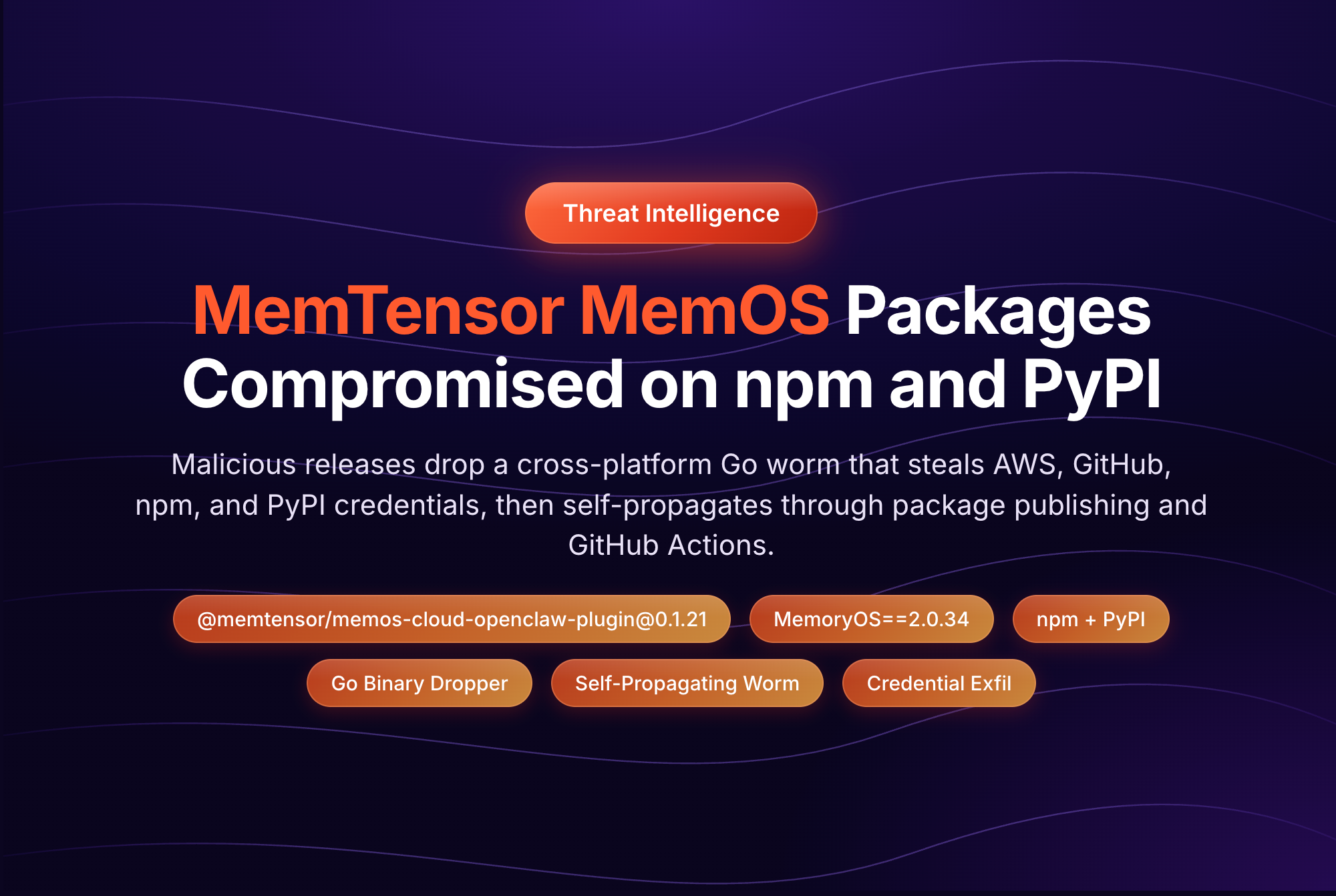 Sckit Supply Chain Worm Hits MemTensor npm & PyPi scopes
StepSecurity documents a supply-chain attack against @memtensor/memos-cloud-openclaw-plugin on npm (versions 0.1.21, 0.1.23, 0.1.25) and MemoryOS 2.0.34 on PyPI, which insert a hidden "sckit" launcher into normal plugin/import lifecycle code (no install scripts) to spawn a platform-specific Go binary that harvests the parent process's environment and the user's AI prompt text. The Go payloads contain regex patterns for AWS, GitHub, GitLab, npm, PyPI, Hugging Face, Vault, Slack, Stripe and SendGrid credentials, target the user's home directory as an inventory root, and beacon to skyleen.fr "front" domains; the PyPI variant additionally hides a conditional build-backend/CI bridge that can steal PYPI_API_TOKEN during publishing and pull a hash-pinned, Ed25519-signed secondary payload via GitHub Actions. The writeup includes full IOC/remediation guidance.
stepsecurity.iowriteupPublished and added 23 Sep 2026🛡️ Security WeaselBiscuit Strips BeaverTail and OtterCookie Down to Essentials
OpenSourceMalware researchers detail WeaselBiscuit, a newly discovered lightweight JavaScript infostealer found hidden in 11+ npm packages (e.g. process-tailwind, engin1, the @biz44 scope), which shares tradecraft with DPRK-linked BeaverTail/OtterCookie but strips out wallet-draining, password decryption, and remote-shell features. The writeup walks through the full infection chain - a package auto-running a detached Node loader, fetching a Base64-encoded second stage from Npoint dead-drop URLs, and beaconing to a hardcoded HTTP C2 (103.170.217.184:8787) - plus its capabilities (Chrome extension-storage theft, clipboard capture, Windows keylogging) and a campaign-cluster graph tying packages together via shared hashes and resolver URLs. Attribution to DPRK is explicitly labeled a tentative hypothesis rather than confirmed.
 opensourcemalware.comwriteupPublished and added 17 Sep 2026🛡️ Security
- The Crypto Wallet That Never Opened: Tampered Exodus Installer Hides a Modular RAT
Huntress dissects a trojanized Exodus crypto wallet installer (v24.33.4, unsigned MSI built with WiX) that installs a genuine wallet but patches Electron's show()/focus()/center() methods so no window ever appears, then loads a modular RAT via a hand-written reflective PE loader implemented in JavaScript using the Node.js koffi FFI library. The RAT (VNC, SOCKS proxy, browser-credential stealer, recon module) beacons over WebSockets and uses Azure Table Storage as a dead-drop C2 channel to blend into legitimate cloud traffic, while delivery abuses double-extension .pdf.js phishing, ZIP-staged JS files, and an unused search-ms/WebDAV technique; the writeup also covers multi-layer string-array/arithmetic deobfuscation and includes full IOCs and mitigation guidance.
huntress.comwriteupAdded 3 Sep 2026, published 1 Sep 2026🛡️ Security  Built to Blend: Miraak's Modular Post-Exploitation Framework
Blackpoint's Adversary Pursuit Group details Miraak, a novel modular post-exploitation framework discovered through proactive hunting of exposed open web directories. The writeup covers trojanized hostfxr.dll loaders that masquerade as legitimate .NET runtime components (with XOR 0x42/0x5A obfuscated payloads and configs), a PostgreSQL/Timescale database used as the C2 control plane instead of HTTP beaconing, Cobalt Strike BOF-compatible execution inside the agent, and an associated F#-based reverse TCP tunneling implant delivered via a trojanized Microsoft.DocAsCode.Common.dll (DocFX) dependency, with infrastructure pivoting via a self-signed "miraak-socks" TLS certificate and IOCs.
 blackpointcyber.comwriteupAdded 26 Sep 2026, published 26 Aug 2026🛡️ Security
 BOFScale: CDN-Fronted Tailnet from BOF Privilege Escalation
BOFScale is a NetSPI red-team technique/tool that uses a Beacon Object File (BOF) to escalate privileges and join a target host to a Tailscale tailnet, fronted by a CDN to blend C2 traffic with legitimate-looking domains. This lets operators establish a resilient, low-noise command-and-control channel that leverages Tailscale's mesh networking rather than traditional listener infrastructure.
 netspi.comtoolAdded 3 Sep 2026, published 21 Aug 2026🛡️ Security
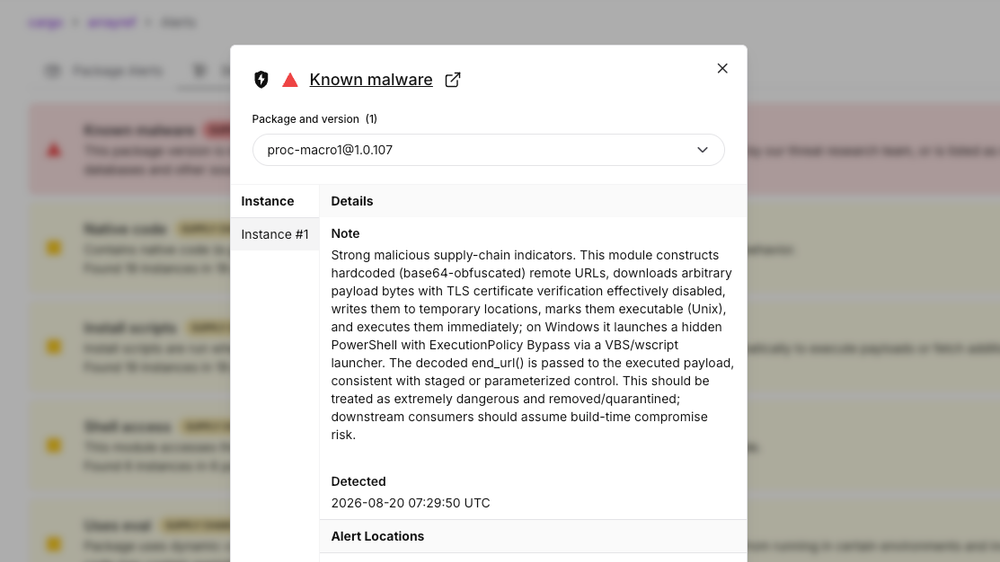 Socket: Popular Rust Crates Compromised in Build-Time Supply Chain Attack
Socket's Threat Research Team documents a supply chain attack in which three legitimate Rust crates (arrayref, internment, append-only-vec) maintained by droundy were republished with a dependency on proc-macro1, a typosquat of proc-macro2 whose build.rs downloads and executes cross-platform malware during Cargo compilation. The stage-2 backdoor profiles the host, inventories Chromium browser login origins and extensions, establishes user-level persistence (HKCU Run key, systemd service, or LaunchAgent), and beacons to a C2 with a DGA fallback of ten date-based domains, with all analyzed variants sharing the same embedded RSA key. The report includes full IOCs (C2 IPs, payload hashes, host artifacts, DGA domains) and remediation guidance for CI/CD and developer environments that built the malicious versions.
socket.devwriteupPublished and added 20 Aug 2026🛡️ Security Rust Supply Chain Attack on arrayref: Significant Overlap with DPRK Campaigns
Wiz researchers found that malicious versions of the Rust crates arrayref, internment, and append-only-vec were published to crates.io, each pulling in a typosquatted build-dependency (proc-macro1, mimicking proc-macro2) whose build.rs executes a remote payload at compile time. The payload beacons to a C2 endpoint (/49890878) shared with the Mastra campaign, disables TLS validation, enumerates Chrome/Brave/Edge saved logins via their SQLite stores, persists via Registry Run keys/LaunchAgents/systemd, and falls back to a DGA — with C2 infrastructure and SSL-issuer overlap tying it to DPRK/Sapphire Sleet activity previously seen in the Mastra and axios supply chain attacks. arrayref is used in roughly 75% of Rust environments, making this a high-impact build-time compromise.
 wiz.iowriteupAdded 3 Sep 2026, published 20 Aug 2026🛡️ Security
 Popular Rust crates arrayref, append-only-vec, and internment compromised in Supply Chain Attack
Aikido researchers detail a supply-chain compromise of three popular Rust crates maintained by the same author, arrayref with 244M downloads, append-only-vec with 4M, and internment with 14M, that were modified to add a single malicious manifest dependency, proc-macro1, a typosquat of proc-macro2. Because the dependency's build.rs executes automatically during cargo build, merely compiling a project pulling in any of these crates downloads and runs a platform-specific payload that drops an infostealer targeting Chromium browser credentials and crypto-wallet extension storage, installs macOS LaunchAgent persistence, and beacons to a lightweight C2 supporting remote shell commands. The campaign's TTPs closely mirror the prior npm-based Axios and Mastra compromises attributed to DPRK, suggesting the same actor expanding into the Rust ecosystem.
 aikido.devwriteupAdded 3 Sep 2026, published 20 Aug 2026🛡️ Security
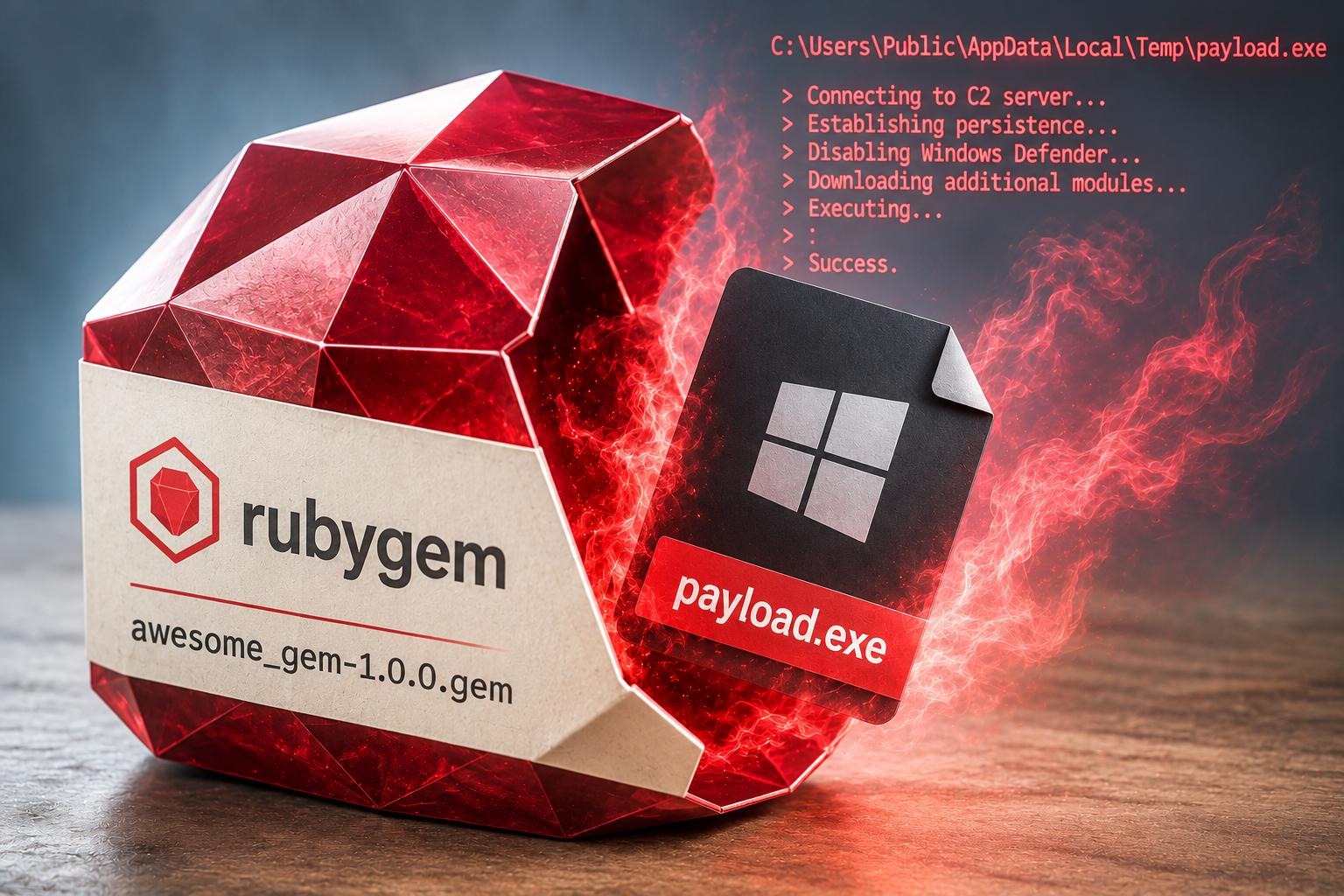 StubMaker RubyGems Campaign Delivers a Windows Infostealer
Researchers identified "StubMaker," a RubyGems typosquat campaign (brumdler, brundlef, and 15 packages typosquatting bundler/i18n/rake/activesupport) that abuses the extconf.rb native-extension hook to fake a successful build while beaconing victim OS info and, on Windows, downloading a Rust loader (main.exe) from a GitHub release. The loader decrypts an embedded 11MB Go infostealer entirely in memory, which injects an embedded DLL (abe_payload.dll) into Chromium browsers via the elevation-service COM object to defeat Application-Bound Encryption and steal passwords, cookies, payment cards, crypto wallets/seed phrases, and Telegram data, exfiltrating via Gofile and a webhook at dresslee.com. The piece also details how RubyGems.org's namespace-reclaim behavior let a different account (mod8rz41mje) take over the yanked "brumdler" name to relaunch the campaign, and includes full IOCs and hashes.
opensourcemalware.comwriteupAdded 3 Sep 2026, published 16 Aug 2026🛡️ Security Compromised PyPI Package: mrmustard 0.7.4 Steals SSH, Cloud, and Kubernetes Credentials
StepSecurity reconstructs how a malicious version of XanaduAI's mrmustard quantum-photonics library (0.7.4) reached PyPI: an attacker compromised a maintainer's GitHub account, used a throwaway workflow to exfiltrate the project's PyPI and Codecov tokens via webhook.site, then published a poisoned tarball directly (the malicious code never touched the git source tree). On import, the payload evades CI/container sandboxes, then steals SSH keys, AWS/Kubernetes credentials, and HPC/GPU environment data, XOR-obfuscates it, and beacons to metrics.femboy.energy before installing three persistence mechanisms (cron job, Python .pth hook, shell rc hook). The post includes full IOCs, detection guidance via Harden-Runner's Secret Exfiltration Attempt detection and Global Block Policy, and step-by-step recovery instructions.
stepsecurity.iowriteupAdded 3 Sep 2026, published 25 Jul 2026🛡️ Security- thomasbuilds/Spectre
Spectre is a free, open-source Android app (min API 31) for observing and interacting with the surrounding wireless environment, combining passive monitoring of Bluetooth LE, Wi-Fi, cellular (2G-5G), and GNSS with a growing set of pentesting tools. Notable features include a BLE GATT inspector that can read/write characteristics on connected devices, a local-network scanner (TCP-connect host discovery, SSDP/UPnP, mDNS/DNS-SD, banner grabbing, reverse DNS), iBeacon broadcast spoofing, and a computed aggregate RF-exposure figure derived by correctly summing per-emitter power in linear watts rather than dBm. It also documents Android platform limitations affecting wireless recon, such as invisible 5G NSA signal, Wi-Fi scan throttling, and single-carrier cell visibility.
 github.comrepoPublished and added 23 Jul 2026🛡️ Security
- HackingLZ/gibson
Gibson is a Rust-based network monitoring toolkit with a lightweight agent, server, and parser that maps process-to-network connections, detects cloud provider ownership (AWS/Azure/GCP/Cloudflare), flags beaconing candidates and EOL OS risk, and auto-generates iptables/Windows firewall rules. It supports AES-256-GCM encrypted uploads, ASN/ARIN-based IP ownership lookups, and SQL/JSON report exports for cross-host threat hunting.
github.comrepoPublished and added 22 Jul 2026🛡️ Security - dstours/OctoC2
OctoC2 is a GitHub-native command-and-control framework built with TypeScript/Bun, featuring a beacon, durable controller, operator dashboard, and CLI. It supports multiple encrypted transports (GitHub Issues/branches/Actions/Gists/Git Notes, HTTPS/WebSocket, gRPC with mTLS, GitHub Actions OIDC, and relayed Codespaces SSH tunnels) with a signed task protocol, Ed25519 beacon identities, exclusive delivery leases, and replay-protected state for authorized red-team and security research engagements.
github.comrepoPublished and added 18 Jul 2026🛡️ Security 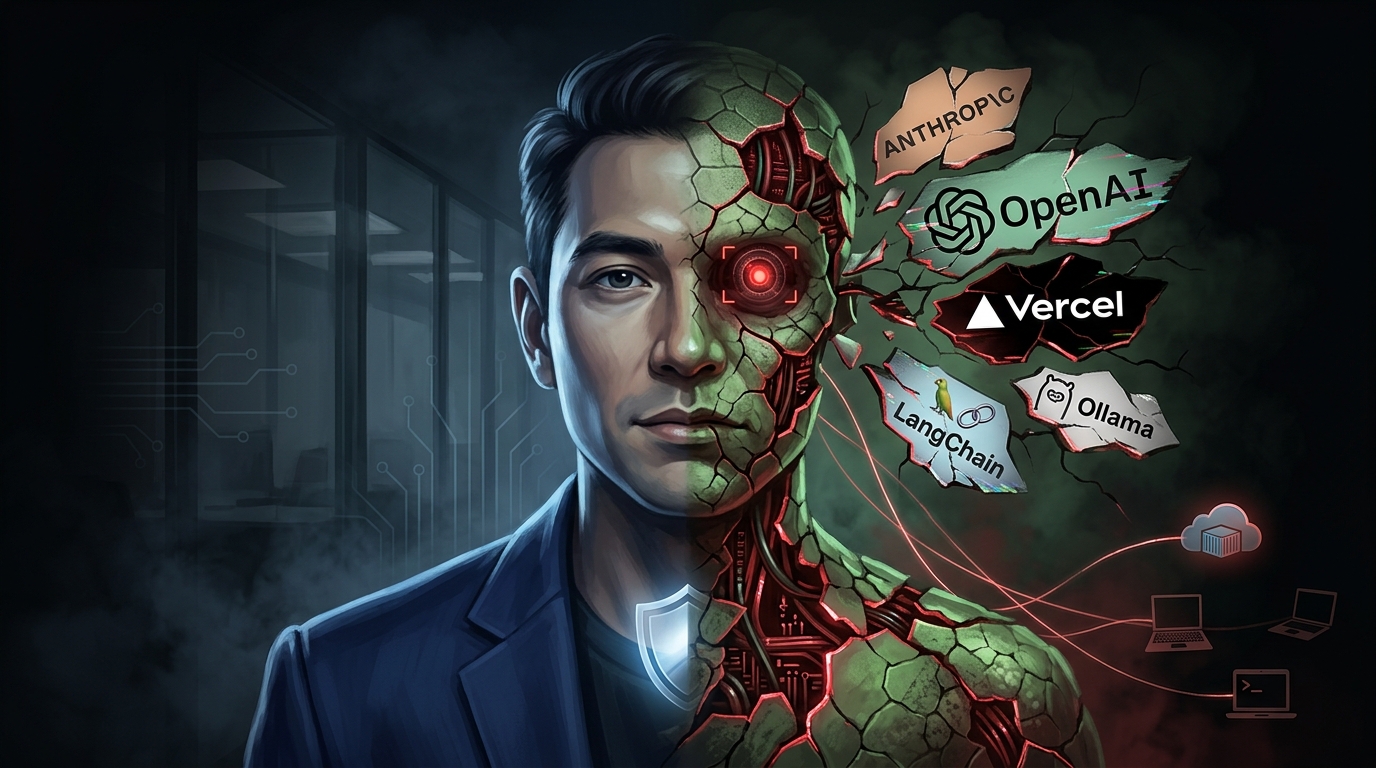 Cybersecurity Startup Publishes Infostealers to NPM
A security research team traces six typosquatted npm packages (anthropic-toolkit, ai-sdk-helpers, ollama-helpers, openai-agents-helpers, @langgraphjs/toolkit, and @aspect-security/argon2) impersonating Anthropic, Vercel, Ollama, OpenAI, LangChain, and Aspect Security back to the founder of a stealth-mode cybersecurity startup. The packages use npm preinstall/postinstall hooks to silently exfiltrate a rich identity fingerprint — hostname, git/GitHub emails, SSH key comments, reflog committer emails, AWS/GCP config metadata, corporate DNS domain, and host project name — to a Google Cloud Run endpoint, while deliberately avoiding literal credentials to look benign and offering a fake telemetry opt-out. The writeup also documents version backfilling to fake package maturity and shows the payload evolving from a crude April beacon to a polished June "identity graph" collector, with full IOCs provided.
opensourcemalware.comwriteupAdded 3 Sep 2026, published 9 Jul 2026🛡️ Security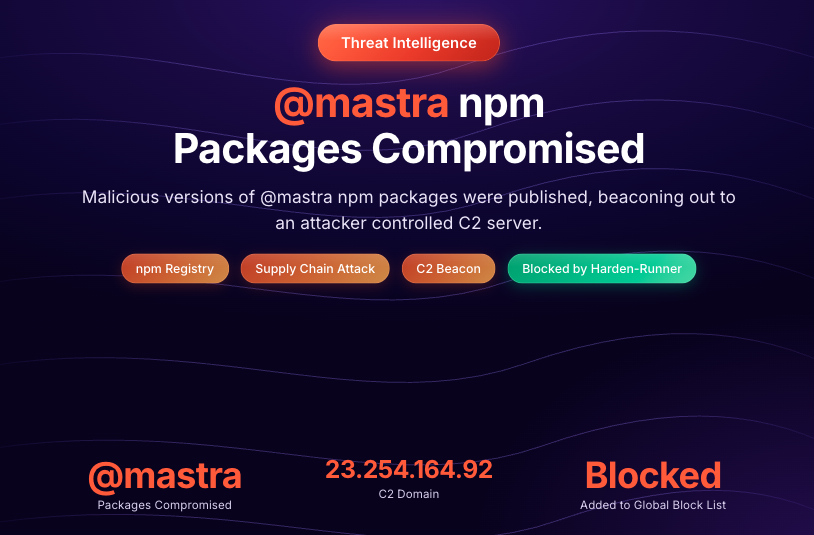 Mastra npm Supply Chain Attack: 140+ Packages Backdoored via easy-day-js Typosquat
StepSecurity documents the Mastra AI framework npm supply-chain attack: attacker sergey2016 published easy-day-js, a typosquat clone of dayjs, then added it as a dependency across 140+ @mastra packages after compromising the org's npm credentials. The malicious 1.11.22 version's postinstall hook ran an obfuscated dropper (setup.cjs) that disabled TLS verification, beaconed the install path, fetched a stage-2 payload from a hardcoded C2, spawned it detached, and self-deleted to erase forensic traces; StepSecurity's Harden Runner blocked the C2 callout in a controlled GitHub Actions test, preventing credential exfiltration of LLM/cloud API keys.
stepsecurity.iowriteupAdded 3 Sep 2026, published 18 Jun 2026🛡️ Security A Forgotten Contributor Account Compromised the Entire Mastra npm Package Scope
Snyk details how a dormant, never-revoked npm contributor account (ehindero) was used to republish the entire @mastra scope (142+ packages, ~4M monthly downloads for @mastra/core alone) with an injected dependency, easy-day-js, a byte-for-byte dayjs impersonator. The postinstall hook in easy-day-js@1.11.22 disables TLS verification, pulls a second-stage payload from a raw IP, and drops a cross-platform cryptocurrency wallet stealer plus a RAT with OS-specific persistence (LaunchAgent, systemd unit, PowerShell staging) that beacons every 10 minutes over a self-signed wolfSSL certificate. The piece covers detection steps, the Snyk advisory (SNYK-JS-EASYDAYJS-17353313), and draws parallels to the earlier Axios npm compromise attributed by Microsoft to Sapphire Sleet (BlueNoroff).
 snyk.iowriteupAdded 3 Sep 2026, published 16 Jun 2026🛡️ Security
 Microsoft's durabletask PyPI Package Compromised in Supply Chain Attack
StepSecurity documents the compromise of Microsoft's durabletask PyPI package (versions 1.4.1-1.4.3, 400k+ monthly downloads), where an attacker bypassed the GitHub CI/CD pipeline entirely using stolen publishing credentials to inject a dropper for rope.pyz, a modular cloud-intrusion framework with dedicated collectors for AWS, Azure, GCP, Kubernetes, HashiCorp Vault, password managers, and the filesystem. The framework encrypts stolen data with AES-256-GCM/RSA-4096, exfiltrates via HTTPS, GitHub commit beacons, and attacker-created public repos using the victim's own stolen GitHub tokens, propagates via AWS SSM and kubectl exec, and drops a geo-targeted rm -rf wiper for systems matching Israeli locale/timezone markers. The post ties the attack to TeamPCP's Mini Shai-Hulud campaign (same infrastructure as TanStack, Mistral AI, LiteLLM, @antv) and later updates describe a second compromise of the Azure/durabletask GitHub repo that plants payloads triggering in Claude Code, Gemini CLI, Cursor, and VS Code.
stepsecurity.iowriteupAdded 3 Sep 2026, published 9 Jun 2026🛡️ Security Socket: Popular Go Decimal Library Targeted by Long-Running Typosquat with DNS Backdoor
Socket's Threat Research Team uncovered github.com/shopsprint/decimal, a six-year-old typosquat of the widely used github.com/shopspring/decimal Go library, which was weaponized in version v1.3.3 (2023-08-19) with an init() function that beacons via DNS TXT lookups to dnslog-cdn-images.freemyip.com every five minutes and executes whatever program name the C2 returns via os/exec.Command. Despite the GitHub repo and owner account being deleted, proxy.golang.org's permanent caching kept the malicious release fetchable for roughly 33 months until Socket's disclosure prompted the Go security team to withdraw it with a 403 SECURITY ERROR. The piece includes a full source diff of the payload, the "trust-then-poison" release pattern (a benign bugfix release seven minutes before the malicious one), IOCs, and detection/remediation guidance for developers and security teams.
socket.devwriteupPublished and added 20 May 2026🛡️ Security- Unmasking an Attack Chain of MuddyWater
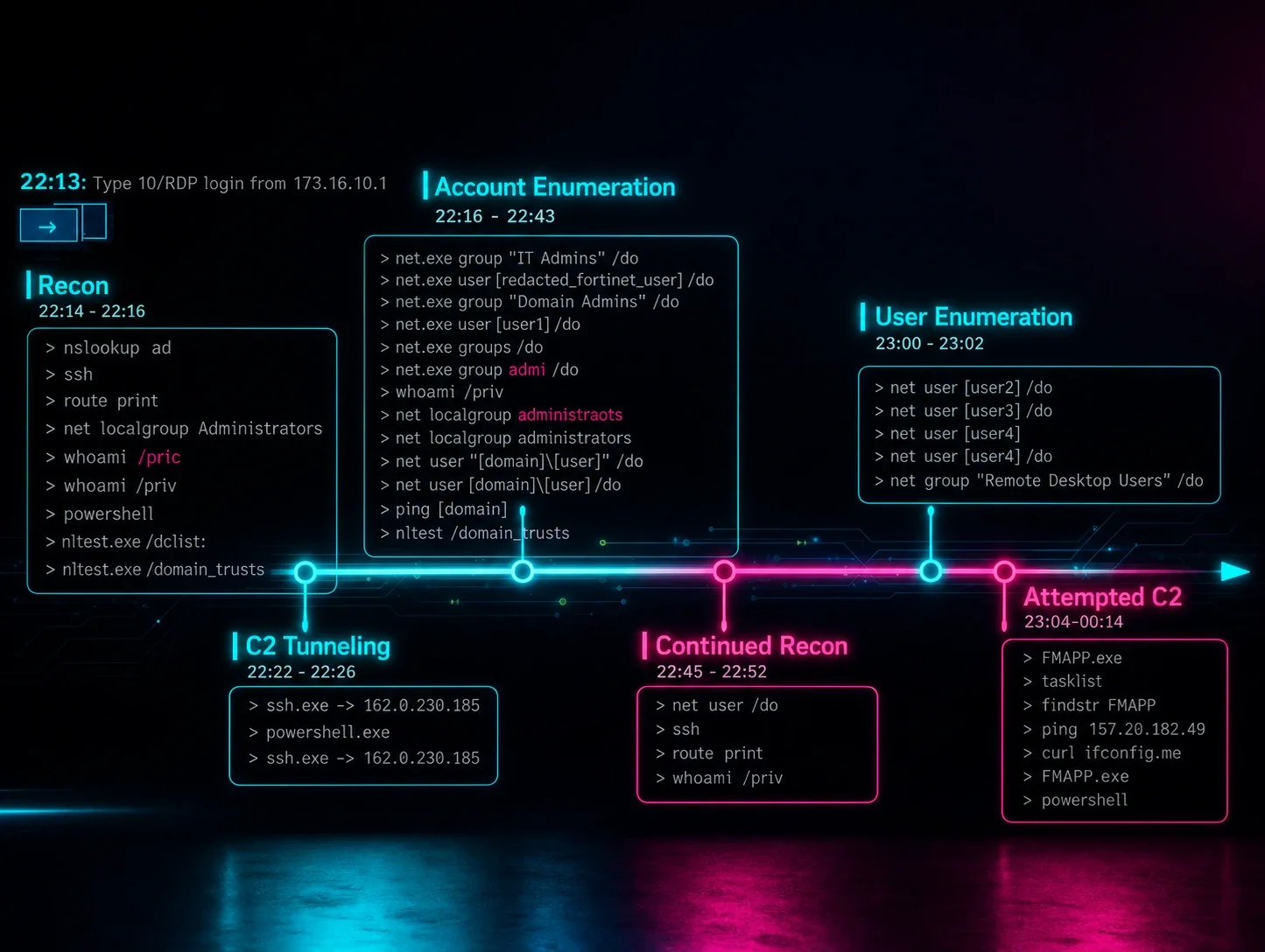
Huntress reconstructs an end-to-end intrusion timeline attributed to the Iranian-linked APT MuddyWater, discovered by pivoting on indicators from a Hunt.io blog and matching them against historical incident data for an Israeli customer. The attacker gained initial access via RDP, established reverse SSH tunnels through OpenSSH (-R 10841, then 8585) to a C2 IP flagged in a Group-IB report, and deployed malware via DLL side-loading — launching the legitimate FMAPP.exe (Fortemedia) to load a malicious FMAPP.dll that beaconed to 157.20.182[.]49. The piece includes command-line-level timeline detail (including attacker typos) useful for detection engineering and control-efficacy review.
huntress.comwriteupAdded 3 Sep 2026, published 6 Mar 2026🛡️ Security - Reflecting on AI in 2025: Faster Attacks, Same Old Tradecraft
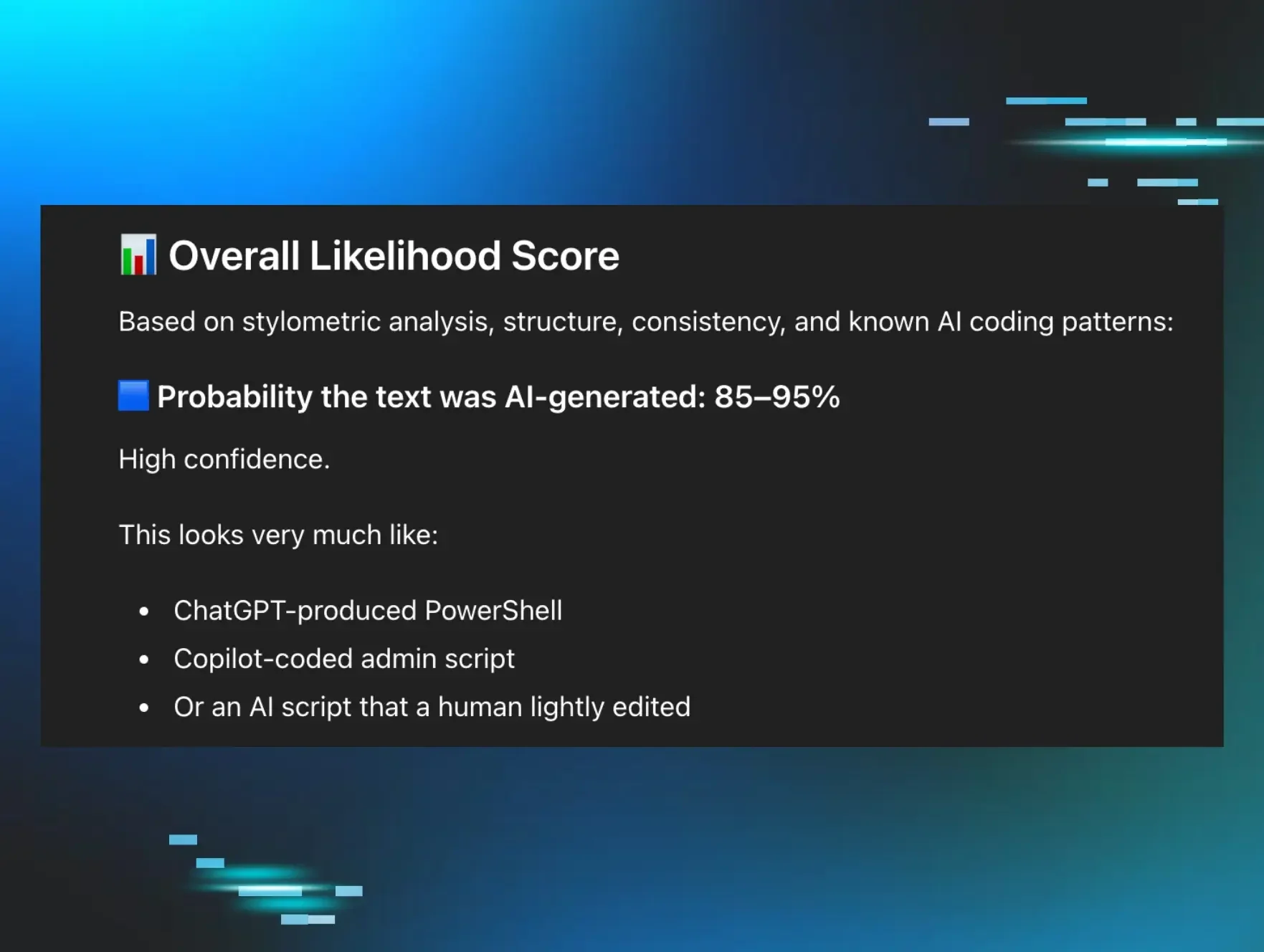
Huntress reviews four 2025 intrusions where adversaries used LLMs (ChatGPT, DeepSeek, Gemini) to draft PowerShell tradecraft: an RDP-brute-forced credential dumper, a Veeam credential-theft script (v.ps1) over WinRM, an iterated Chrome/Edge history-scraping script chain (qb_check.ps1 → coinbase_check.ps1 → secure.chase.ps1) exfiltrating to Telegram, and a fully-featured Chrome extension RAT ("Telegram Agent + Cookies") beaconing to a C2 for cookie/screenshot/history exfiltration. The pattern across cases: AI speeds up authoring (odd comments, Cyrillic strings, verbose AI-style formatting) but doesn't produce novel primitives, so existing detections (EDR, telemetry, MFA, segmentation) still catch it.
huntress.comwriteupAdded 3 Sep 2026, published 12 Jan 2026🛡️ Security - The 'Invisibility Cloak' - Slash-Proc Magic
A DFIR researcher tests and explains a Linux anti-forensics technique — bind-mounting an empty directory over /proc/[pid] (and its fd subfolder) to hide a running process from ps — using a Sliver beacon as the test payload. The post traces via strace how ps reads /proc/[pid]/stat, status, and cmdline to build its output, then documents forensic tells that survive the hiding trick: writable/non-standard permissions on the process's /proc entry, a suspicious mount entry in /proc/mounts, an empty fd directory, and the still-visible C2 connection in netstat, nf_conntrack, and /proc/net/tcp.
 dfir.chwriteupAdded 3 Sep 2026, published 16 May 2024🛡️ Security
 Using a C# Shellcode Runner and ConfuserEx to Bypass UAC
A red-team engagement writeup describing how to convert djhohenstein's CSharp SetThreadContext shellcode runner into a DLL, using the DllExport NuGet package and x64 Release build settings, so it can be loaded via rundll32.exe. The DLL and a modified chryzsh Aggressor script implementing the SilentCleanup scheduled-task DLL-hijack UAC bypass are then run through ConfuserEx to evade Windows Defender detection, enabling a Cobalt Strike beacon to escalate from a medium-integrity to high-integrity token without a UAC prompt.
 hausec.comwriteupAdded 3 Sep 2026, published 30 Oct 2020🛡️ Security