 Max-Severity GitLab Vulnerability Exploited Against Alpine Linux
CVE-2026-97229 is a CVSS 10 code execution flaw in Onigmo, Ruby's regular expression engine, reachable through crafted CI/CD configuration in GitLab. Attackers used it against Alpine Linux's GitLab on 20 and 21 October 2026 and failed; Alpine rebuilt the instance and found no tampering with aports or packages. Self-managed installs with their own Ruby need Ruby 3.3.13, 3.4.12 or 4.0.9, not just GitLab 19.3.6. CISA added it to KEV.
 securityweek.comarticlePublished and added 30 Oct 2026🛡️ Security
 TeamViewer Flaw Could Let Malicious Hosts Take Over Support Technicians’ Machines
CVE-2026-111585 (CVSS 8.8) is an integer overflow in the remote-control screen processing of TeamViewer clients on Windows, macOS, Linux and Android. A malicious or compromised host can announce an oversized screen surface (for example 32768 by 32768 at 32 bpp), forcing a software decode path and an out-of-bounds write that crashes the viewer or runs code. Remedio's research shows a pointer overwrite routed to WinExec. Version 15.83 fixes it, along with CVE-2026-92372, CVE-2026-92374 and six local privilege escalation bugs.
securityweek.comarticlePublished and added 30 Oct 2026🛡️ Security CVE-2026-98432: Linux TCP Use-After-Free Risk and Patch Validation
CVE-2026-98432 is a use-after-free in the Linux kernel IPv4 TCP handshake path: a request socket's ireq_opt pointer moves to the child socket as inet_opt and is freed with kfree() while a retransmitted-SYN CPU still reads it under RCU. The fix (commit e3f33b0a1d89) uses kfree_rcu(). The page covers CVSS 9.8 versus vendor scores, Anthropic's MPTCP root-exploit lab demo, per-distribution patch checks, MPTCP listener inventory and detection guidance. The page was truncated before its mitigation section.
 penligent.aiarticleAdded 31 Oct 2026, published 30 Oct 2026🛡️ Security
 Threat Brief: Critical Vulnerabilities in PHP: CVE-2026-109618, CVE-2026-109619 (Updated October 29)
Unit 42 threat brief on PHP2Shell, two PHP remote code execution flaws, CVE-2026-109618 and CVE-2026-109619 (CVSS 4.0 9.2), both caused by longjmp() error handling that leaves memory uninitialized or freed. Cortex Xpanse counted over 22.6 million exposed instances. The 29 October 2026 update says attackers chained PHP2Shell with a Linux kernel privilege escalation against internet-exposed PAN-OS management interfaces. An earlier 23 October claim of post-compromise activity was retracted on 25 October.
 unit42.paloaltonetworks.comadvisoryAdded 30 Oct 2026, published 29 Oct 2026🛡️ Security
 CVE-2026-98432: 9.8 CVE affecting all Ubuntu versions
CVE-2026-98432 is a Linux kernel use-after-free in the IPv4 TCP stack, tracked by Ubuntu (published 15 October 2026, updated 29 October 2026). ireq_opt/inet_opt were freed with plain kfree() while another CPU built a SYNACK under RCU, so ip_options_build() read freed memory; the fix uses kfree_rcu(). Ubuntu rates it High priority, CVSS v3.1 9.8 and v4.0 8.3. The page text does not list per-release package status.
 ubuntu.comadvisoryAdded 30 Oct 2026, published 29 Oct 2026🛡️ Security
 Cisco SD-WAN Zero-Day Exploitation Tied to Volt Typhoon’s ‘Silent Train’ Network
Cisco Talos reported that UAT-11473 exploited CVE-2026-20127 (CVSS 10, Cisco SD-WAN peering authentication bypass) to deploy KeyDrift, a framework with PolyFlame (backdoor, relay C2) and LittleFilch (key harvesting) modules. Talos found its infrastructure overlaps considerably with Volt Typhoon's Silent Train network. Lumen Black Lotus Labs tied Silent Train to zero-day campaigns against Versa Director, N-able N-central, Cisco Catalyst SD-WAN and VeloCloud Orchestrator.
securityweek.comarticlePublished and added 29 Oct 2026🛡️ Security- lee1981 (@lee1981b) on X
CVE-2026-103780 is a stack-based buffer overflow (CWE-121) in Dell PowerProtect Data Domain / DD OS. An unauthenticated remote attacker could get command execution (CVSS 3.1 9.8, Dell DSA-2026-416). The post lists affected and fixed builds for four release trains (Feature Release, LTS2024, LTS2025, LTS2026). It adds KEV, EPSS and SSVC status, plus six defensive checks. The vulnerable service is not public.
 x.comadvisoryAdded 31 Oct 2026, published 29 Oct 2026🛡️ Security
 Attackers Exploit Second Cisco Firewall VPN Zero-Day Since August
CVE-2026-76418 (CVSS 8.6) is an exploited flaw in the Remote Access SSL VPN service of Cisco Secure Firewall ASA and FTD. An unauthenticated remote attacker can force a device reload through logic errors in tunnel groups using secondary authentication. Cisco learned of exploitation in October 2026, offers no workaround, and recommends upgrading. It is the second ASA/FTD DoS zero-day after CVE-2026-20349 in August.
securityweek.comarticlePublished and added 29 Oct 2026🛡️ Security- GitLab Security Incident: Attempted Exploitation of CVE-2026-97229
Alpine Linux incident report on attempted exploitation of CVE-2026-97229 (CVSS 10.0), a regex-evaluation bug in Ruby's Onigmo engine reachable through GitLab CI configuration. An attacker crashed workers 8 times on 20 and 21 October 2026. Upgrading to GitLab 19.3.6 did not fix it because the patch sits in GitLab's bundled Ruby. Alpine rebuilt the instance and found no tampering with aports or releases.
 alpinelinux.orgwriteupAdded 29 Oct 2026, published 28 Oct 2026🛡️ Security
 CVE-2026-101767: Critical Oracle EBS SQL Injection Actively Probed in the Wild
CVE-2026-101767 is a CVSS 9.8 unauthenticated SQL injection in Oracle E-Business Suite's Application Object Library, reachable through the /OA_HTML/AppsTCFServer servlet (GanttDataServer) and chainable to OS command execution. It affects versions 12.2.3 to 12.2.15 and was fixed in the October 2026 Critical Patch Update. Horizon3.ai found it, and Defused saw probing on honeypots on 27 October 2026. Interim mitigation is removing the servlet from the URL firewall allowlist.
 orca.securityadvisoryPublished and added 28 Oct 2026🛡️ Security
- Hitachi Energy TRO600 series products
ICSA-26-302-02 is a CISA republication of Hitachi Energy PSIRT advisory 8DBD000224 on the TRO600 series. It covers CVE-2026-10756 and CVE-2026-106087, which allow remote code execution and disclosure of sensitive information. Affected versions are TRO600 up to 9.2.1.6 and 9.1.1.0, plus 9.2.2.1 and 9.1.2.0. The page gives no per-CVE detail or CVSS scores, only general ICS hardening advice. Released 27 October 2026.
 cisa.govadvisoryAdded 29 Oct 2026, published 28 Oct 2026🛡️ Security
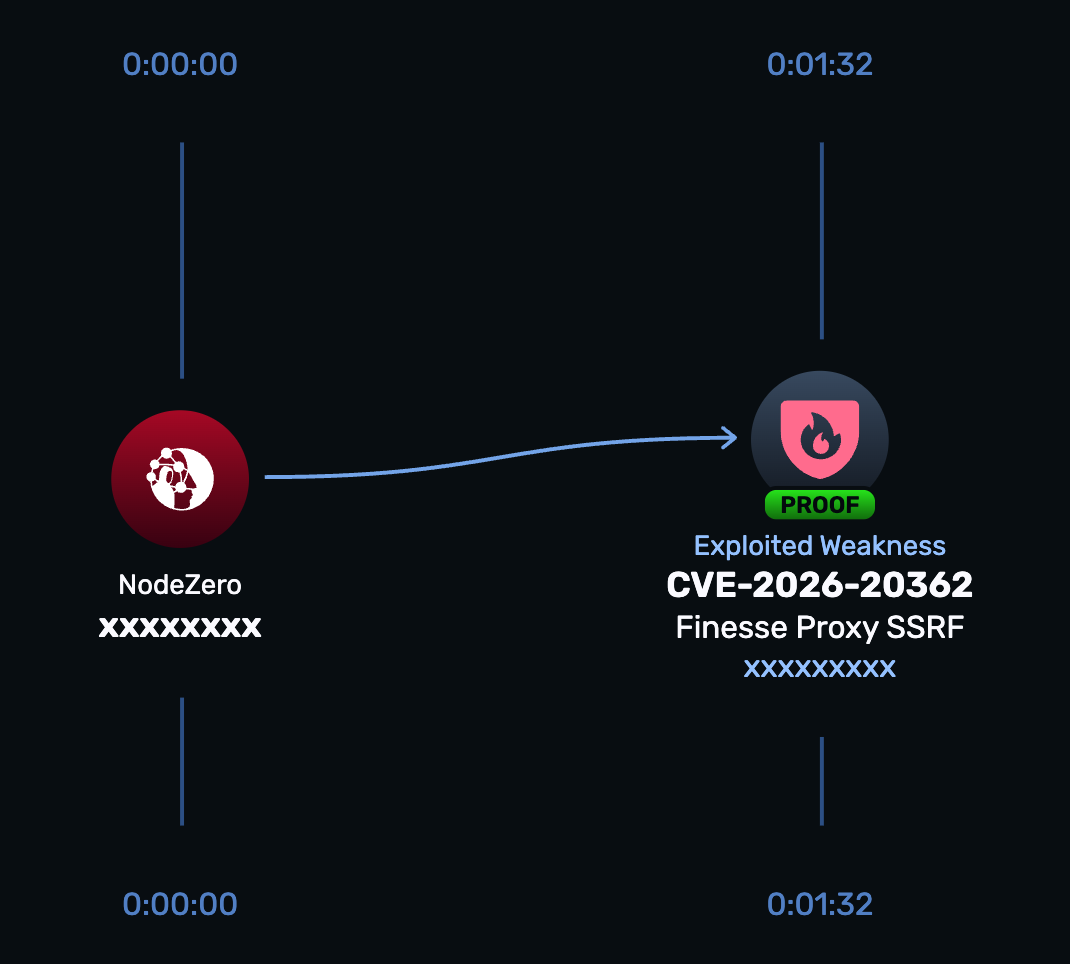 CVE-2026-20362 | Cisco Finesse Server-Side Request Forgery Vulnerability
CVE-2026-20362 is an unauthenticated server-side request forgery in Cisco Finesse (CVSS 3.1 score 7.2), found by Horizon3 researchers Noah King and Brandon Peterson. The embedded Apache Shindig content proxy fetches attacker-supplied URLs, including loopback services such as the Finesse REST API at 127.0.0.1:8082, which returns SystemInfo with node hostnames and the XMPP domain. Cisco published its advisory on 7 October 2026. Fixes are planned for January and February 2027, and no workaround exists.
 horizon3.aiadvisoryAdded 29 Oct 2026, published 28 Oct 2026🛡️ Security
 TLS Flaws Found in GoAhead Web Server Used in Hundreds of Millions of Devices
FoxIO disclosed three TLS flaws in the GoAhead embedded web server from EmbedThis, used on hundreds of millions of IoT, OT and network devices. CVE-2026-115881 (CVSS 9.1) leaves revoked client certificates accepted under mTLS with OpenSSL; CVE-2026-115884 (7.4) bypasses chain-length limits with LibreSSL; a third Mbed TLS bug (5.9, no CVE) weakens TLS 1.2 DHE. GoAhead 6.1.1 fixes the OpenSSL and Mbed TLS issues, and FoxIO released PoC code and fingerprints.
securityweek.comarticlePublished and added 28 Oct 2026🛡️ Security Long-Hidden Flaws Patched in EPICS Research Facility Control Software
Four vulnerabilities in EPICS Base 7.0.10 and earlier, the control-system toolkit used at ITER and the Advanced Photon Source, were disclosed by CISA. CVE-2026-114595 (CVSS 9.8) is an integer overflow that could allow remote code execution, though only an out-of-bounds heap write and crash were demonstrated. All flaws sit in Channel Access and pvAccess handling (TCP 5064 and 5075), need no authentication, and are fixed in 7.0.11.
securityweek.comarticlePublished and added 28 Oct 2026🛡️ Security- lee1981 (@lee1981b) on X
CVE-2026-92885 is a critical (CVSS 3.1 9.8, CWE-287) authentication bypass in the Qode Membership WordPress plugin, versions through 2.0.6.2. A misspelled variable in the Facebook token-verification guard skips provider checks, so an unauthenticated attacker with a public nonce can get a session cookie for an existing account, including an administrator. The post gives the fix (2.0.6.3, bundled in Bridge 30.9), KEV/EPSS/SSVC status, and a SOC log-correlation and remediation plan.
x.comadvisoryAdded 31 Oct 2026, published 28 Oct 2026🛡️ Security  Hackers Start Probing Fresh Oracle EBS Vulnerability
CVE-2026-101767 is a CVSS 9.8 unauthenticated SQL injection in the Application Object Library of Oracle E-Business Suite, patched in Oracle's October 2026 CPU and reported by Horizon3.ai. Defused decoys logged the first exploratory attempts on 27 October 2026, and the flaw could lead to remote code execution. The article recalls CVE-2026-46817 attacks in June and last year's Cl0p zero-day campaign against EBS.
securityweek.comarticlePublished and added 28 Oct 2026🛡️ Security- Dark Web Informer (@DarkWebInformer) on X
Veeam patched five vulnerabilities across Backup & Replication, Veeam Agent for Linux and Veeam ONE. The worst is CVE-2026-108142 (CVSS 9.1), an unauthenticated authorization bypass in the CDP Coordinator Service affecting Backup & Replication 13.0 and 13.1. Other fixes cover Linux agent privilege escalation, two path-traversal file writes, and a Veeam ONE MFA bypass; fixed builds are listed.
x.comadvisoryAdded 30 Oct 2026, published 28 Oct 2026🛡️ Security - lee1981 (@lee1981b) on X
CVE-2026-115905 is a ZIP cloaking flaw in the Rust zip crate (zip-rs/zip2), rated CVSS v4.0 10.0 and affecting versions below 9.0.5. ZipArchive reads central-directory metadata while ZipStreamReader reads local headers, so a crafted archive can pass filename inspection and then overwrite a different file during streaming extraction. Version 9.0.5 adds consistency checks, but ZipStreamReader::new leaves them off by default, and extraction is not atomic, so files can be written before an error is raised. The post covers CWE-20 and CWE-436, KEV and EPSS status, Debian status and a six-step investigation trail.
x.comadvisoryAdded 29 Oct 2026, published 27 Oct 2026🛡️ Security  Maritime Coalition Launches Free Vulnerability Database for Ship and Port Systems
Blue Initiative is a free public vulnerability database for maritime IT and OT, built by Cydome, ClassNK, Bureau Veritas, MTS-ISAC and Rakuten Maritime. It holds nearly 30,000 entries, over 2,000 rated critical by CVSS and more than 580 known exploited. Only 37 affect ship and port products. Most entries are pulled from CISA ICS advisories and the KEV catalog and mapped to maritime systems.
securityweek.comarticlePublished and added 27 Oct 2026🛡️ Security- EPICS Base
CISA ICS advisory ICSA-26-300-01 (October 27, 2026) covers EPICS Base release 7.0.10 and earlier, with CVE-2026-114595 through CVE-2026-114598. Flaws include integer overflow, length parameter inconsistency and type confusion, allowing denial of service, memory corruption, information disclosure or remote code execution (CVSS v3.1 9.8). The fix is EPICS Base 7.0.11, with patches in epics-base and pvDataCPP pull requests.
cisa.govadvisoryAdded 29 Oct 2026, published 26 Oct 2026🛡️ Security  Masoud (@dev3mike) on X
Tweet from dev3mike warning Node.js users to update for CVE-2026-111497, a Brotli bug rated CVSS 9.2. Crafted compressed data can corrupt memory and possibly run code. The post says OpenAI's agents found it, and that the fix sat unreleased in Brotli's source since February. Patched versions are Node 22.23.4, 24.22.1 and 26.12.1.
x.comthreadAdded 29 Oct 2026, published 26 Oct 2026🛡️ Security- dbugs (@ptdbugs) on X
CVE-2026-106173 is a critical (CVSS 9.4) unauthenticated arbitrary file write in FortiSIEM's phQueryMaster gRPC service on port 27918/TCP. The SendQueryResult method builds a path from the query-id parameter without validation, so "../" sequences escape the directory and a null byte drops the appended filename and extension. Overwriting /opt/charting/redishb.sh, which runs every 60 seconds, gives remote command execution. Horizon3.ai published the analysis and a PoC.
x.comadvisoryAdded 27 Oct 2026, published 26 Oct 2026🛡️ Security  Node2Shell: Brotli Flaw Triggers Patching Across Microsoft, Node.js, Python Packages
CVE-2026-111497 (Node2Shell) is an out-of-bounds write in Google's Brotli decoder, versions 1.0.3 through 1.2.0, rated CVSS v4 9.2. Fixed in Brotli 1.0.10, 1.1.1 and 1.2.1, with patches from Node.js, Microsoft (.NET, Visual Studio, PowerShell on October 25), PyPI Brotli and brotlicffi, Bun, Envoy and Istio. Imperva showed code execution on Node.js 24.22.0 arm64; no in-the-wild exploitation is reported and some researchers say it only enables DoS.
securityweek.comarticlePublished and added 26 Oct 2026🛡️ Security- lee1981 (@lee1981b) on X
CyberForge CVE of the Day #087 covers CVE-2026-115889, a Cranelift value-index overflow in Wasmtime that can miscompile crafted WebAssembly and possibly escape the sandbox (CVSS 9.9, CWE-197 and CWE-843). Affected: below 36.0.19, and 37.0.0 up to but excluding 43.0.0; fixes are 36.0.19 and 43.0.0. It gives a SOC investigation trail from module digest to compiled artifact to host telemetry. EPSS is 0.454%, with no KEV entry.
x.comarticleAdded 28 Oct 2026, published 26 Oct 2026🛡️ Security  Weekly Research Brief: PHP Vulnerability; Objections to OKX-ICE’s Stock Tokenization; Solana Alpenglow Ships
Galaxy Research's weekly brief includes a section on PHP2Shell, two decade-old PHP remote code execution bugs affecting versions back to 5.4, patched in an emergency release. It reports an Amazon honeypot exploit attempt four days before disclosure, thousands of attempts in the 10 hours before the patch per Cloudflare's Matthew Prince, and NSA and FBI offline advice. The author argues the bugs were found with GPT-5.6 Sol and that defence must become agentic. It also lists the week's other incidents, including a CVSS 10.0 GitLab bug and eMudhra's guessable private keys.
 galaxy.comarticleAdded 24 Oct 2026🛡️ Security
 Python packages are also vulnerable to the Node2Shell Brotli flaw (CVE-2026-111497)
Python2Shell is the Python-side impact of CVE-2026-111497 (Node2Shell), a Brotli decoder flaw (CVSS 4.0 9.2) in DecodeBlockTypeAndLength() that mixes an unchecked return value with an out-of-bounds write. Brotli 1.2.0 and earlier, and brotlicffi 1.2.0.x, are affected through urllib3, requests, httpx, aiohttp and Scrapy. Fixes are Brotli 1.2.1 and brotlicffi 1.2.1.0; as of 23 October 2026 advisory databases do not map the CVE to either package. The post lists checks and workarounds.
 aikido.devadvisoryPublished and added 23 Oct 2026🛡️ Security
 PHP2Shell: What This Week Tells Us About the Web We Built
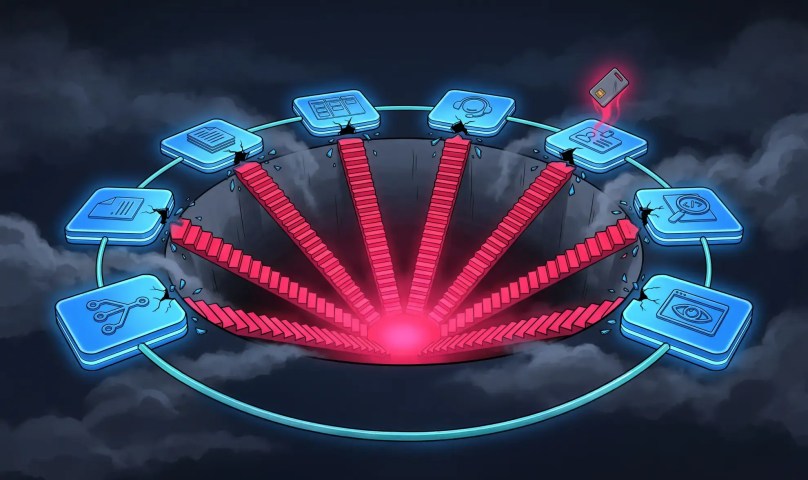
PHP2Shell is the name for two unauthenticated remote code execution flaws, CVE-2026-109618 and CVE-2026-109619 (CVSS v4 9.2), in the PHP engine back to version 5.4. The post covers the leaked October 2026 embargo, AI-assisted exploit building by Calif and others, patch availability by PHP version, and a 72-hour and quarterly response plan covering inventory, patching, secret rotation and edge virtual patching. It ends with a short Orca product section.
orca.securityarticlePublished and added 23 Oct 2026🛡️ Security Mirai Botnet Operators Join PHP2Shell Attacks as ASLR Bypass Exploits Emerge
PHP2Shell (CVE-2026-109618 and CVE-2026-109619, CVSS v4.0 9.2) are unauthenticated RCE bugs in PHP, patched on 21 October 2026. Sophos, Arctic Wolf and Hunt.io tie exploitation attempts to the Potassium Mirai variant, and VulnCheck built an ASLR-bypassing exploit. SOCRadar and Hunt.io found an exposed attacker server, and Qualys data shows about 110 million instances on end-of-life PHP. No confirmed compromise exists.
securityweek.comarticlePublished and added 23 Oct 2026🛡️ Security Brotli vulnerability affects curl and Git
GHSA-9v8h-qqgm-4m35 is a critical buffer overflow (CVSS v4 9.2) in the Google Brotli decoder (c/dec/decode.c), affecting versions 1.0.3 through 1.2.0 on all platforms. A crafted compressed stream lets an unauthenticated remote attacker corrupt adjacent decoder state, leak memory, crash the process, or possibly execute code. Fixed in 1.0.10, 1.1.1 and 1.2.1. The page does not mention curl or Git, despite the title.
 github.comadvisoryAdded 25 Oct 2026, published 23 Oct 2026🛡️ Security
 [AINews] Black October
AINews issue for 21-22 October 2026, built from 12 subreddits and 544 Twitter accounts. It leads with "Black October", a 48-hour run of AI-found vulnerability disclosures (PHP2Shell, a GitLab CVSS 10 flaw, a LiteLLM 1.107.0 password stealer, eMudhra CA keys). It also covers MiniMax M3.1 Flash, Carbon-X and Flint releases, Artificial Analysis coding-agent and CritPt v2 results, and a METR/Redwood audit of OpenAI monitoring.
 latent.spacearticlePublished and added 23 Oct 2026🧠 AI





Showing 30 of 245
Show more