 Loud, Fast, and Everywhere: Anatomy of a Real AI-Driven Cloud Attack
Wiz CIRT write-up of an AI agent-run intrusion against a multi-cloud organization (GCP, AWS, Kubernetes, CI/CD, GitOps, identity provider). It lists traits of AI-driven attacks: machine-speed tempo, credential chaining, pentest/probe naming, numeric task IDs and commented code. Initial access was a Java RCE in an exposed Kafka UI. It closes with detection and response advice: unified logs, workload visibility and trust isolation.
 wiz.iowriteupPublished and added 19 Oct 2026🛡️ Security
 Google DeepMind’s on-device scam detection keeps chats off the cloud
Describes a scam-detection model built by Google DeepMind with GovTech Singapore that runs entirely on the user's device. A low-power message classifier screens incoming messages, then a Gemma model fine-tuned on local scam conversations (impersonated institutions, banks, regional schemes) judges the wider conversation to confirm a threat or discard a false alarm. Fine-tuning ran in a GovTech-managed GCP environment on anonymised scam reports and intelligence feeds, with no PII. Chat access needs user consent, and the system gives real-time warnings. It shows a practical pattern of cascaded small models for battery-efficient, privacy-preserving local inference.
 en.cryptonomist.charticlePublished and added 14 Oct 2026🧠 AI
 Tensorlake npm package compromised by Shai-Hulud in latest software supply chain attack | Blog | Endor Labs
Endor Labs documents the compromise of tensorlake@0.5.144, the official npm TypeScript SDK for Tensorlake, which shipped a Shai-Hulud worm payload via a poisoned preinstall hook (node lib/setup.mjs) after the project's main branch was altered and pushed through a legitimate, provenance-signed GitHub Actions release pipeline. The malware harvests npm, GitHub, SSH, cloud (AWS/GCP/Azure), Kubernetes/Docker and Vault credentials, uses an EtherHiding Ethereum wallet as a durable dead-drop to fetch its rotating C2 domain, and republishes itself into other packages the victim controls. The writeup includes affected package versions, file hashes, C2 indicators, and concrete remediation guidance (pin to 0.5.143, rotate credentials, disable install scripts).
 endorlabs.comadvisoryPublished and added 8 Oct 2026🛡️ Security
 Active Supply Chain Attack: Malicious node-ipc Versions Published to npm
StepSecurity's AI Package Analyst detected three malicious node-ipc versions (9.1.6, 9.2.3, 12.0.1) published simultaneously on May 14, 2026 by a rogue/compromised maintainer account, injecting an 80KB obfuscated IIFE into the CommonJS bundle that harvests 90+ credential file categories (AWS, Azure, GCP, SSH, Kubernetes, GitHub, Claude AI/Kiro configs, Terraform, etc.) and exfiltrates them via HTTPS and raw DNS TXT queries to a typosquatted Azure-mimicking C2 domain. The writeup includes a full stage-by-stage technical teardown (daemonization, SHA-256 targeting gate on 12.0.1, custom base-16 nibble-reversed obfuscation, dual-channel exfiltration) plus file hashes, network IOCs, and remediation guidance for developers and CI/CD pipelines.
 stepsecurity.iowriteupAdded 5 Oct 2026🛡️ Security
 Introducing Solana Microscope: Program Monitoring and Alerts
Microscope is an open-source, self-hosted monitoring and alerting tool for Solana programs that decodes a program's instructions and events using its IDL, then renders that activity as Grafana dashboards backed by Loki (logs) and Prometheus (metrics). It can also watch a Squads multisig controlling the program, firing precise alerts on specific instructions, events, field values, or multisig proposal approvals to Slack, Telegram, or PagerDuty. A distinguishing feature is built-in health alerting for the monitoring pipeline itself (stalled gRPC/RPC streams, corrupt checkpoints, records decoded but not reaching Loki), so teams can distinguish "program is quiet" from "monitoring is broken." It deploys via Docker Compose, Terraform (AWS/GCP), or Kubernetes manifests, and the code is MIT-licensed on GitHub.
 solana.comtoolAdded 8 Oct 2026, published 5 Oct 2026🛡️ Security
 The Infostealer Incursion: How Stolen Credentials Breach Cloud, Code, and AI Environments
Wiz Research analyzed infostealer-harvested secrets (via its NordStellar integration) to map exactly which credentials malware families like Lumma, RedLine, and Vidar target across AWS, Azure, GCP, GitHub, GitLab, and AI platforms, and how those secrets translate into cloud account takeover. It gives concrete file paths and artifacts attackers hunt for (~/.aws/sso/cache OIDC tokens, Azure accessTokens.json, GCP credentials.db/access_tokens.db, GitHub gh hosts.yml and SSH keys, GitLab Runner config.toml, OpenAI/ChatGPT session cookies, and Claude Code's ~/.claude/.credentials.json OAuth tokens), plus stats: three malware families cause 85.7% of incidents, AWS/GCP account for 46%/13% of stolen secrets, GitHub ~10%, AI platforms ~5%. It also covers CI/CD-targeting infostealers (Miasma, TeamPCP) and session-cookie hijacking as an MFA bypass technique.
wiz.iowriteupAdded 27 Sep 2026, published 25 Sep 2026🛡️ Security- ossf/criticality_score
criticality_score is an OpenSSF tool that computes a 0-1 criticality score for open source projects (based on an algorithm by Rob Pike), using signals like contributor count, commit frequency, dependents count, and org diversity to identify projects the ecosystem critically depends on. It ships a CLI, config files for tuning scoring weights, and companion tools (enumerate_github, collect_signals, scorer) for large-scale data collection; the project's GCP-hosted BigQuery/GCS datasets will be discontinued after 2026-08-29, with data moving to a static data directory.
 github.comrepoAdded 21 Sep 2026🛡️ Security
 Shai-Hulud 2 Malware Campaign Targets GitHub and Cloud Credentials Using Bun Runtime | Blog | Endor Labs
Endor Labs' live incident tracker for the Shai-Hulud 2.0 npm supply-chain worm that began around Nov 24, 2025, compromising packages from Zapier, ENS Domains, Postman and PostHog. It details the infection chain (malicious preinstall script, setup_bun.js dropper, obfuscated bun_environment.js payload), TruffleHog-style credential theft from AWS, GCP, Azure, GitHub and npm, self-replication via stolen npm and GitHub tokens, a self-hosted GitHub Actions runner backdoor abusing repository Discussions for command injection and C2, and destructive wiper behavior that shreds the user's home directory on Windows and Linux.
endorlabs.comwriteupPublished and added 11 Sep 2026🛡️ Security- GhostJS
GhostJS is an open-source Burp Suite extension by TrinetLayer that passively scans JavaScript, HTML, and JSON responses flowing through Burp for hardcoded secrets (AWS/GCP/Azure keys, Stripe/PayPal/GitHub tokens, JWTs, private keys, etc.) and hidden API endpoints, surfacing findings in a dedicated tab with severity, confidence scoring, remediation guidance, and Markdown export. It also actively fetches referenced <script> bundles using the tester's live session cookies and applies a false-positive filter to suppress doc-sample and placeholder keys, making it a practical recon aid during authorized web app pentests and bug bounty work.
github.comrepoPublished and added 7 Sep 2026🛡️ Security 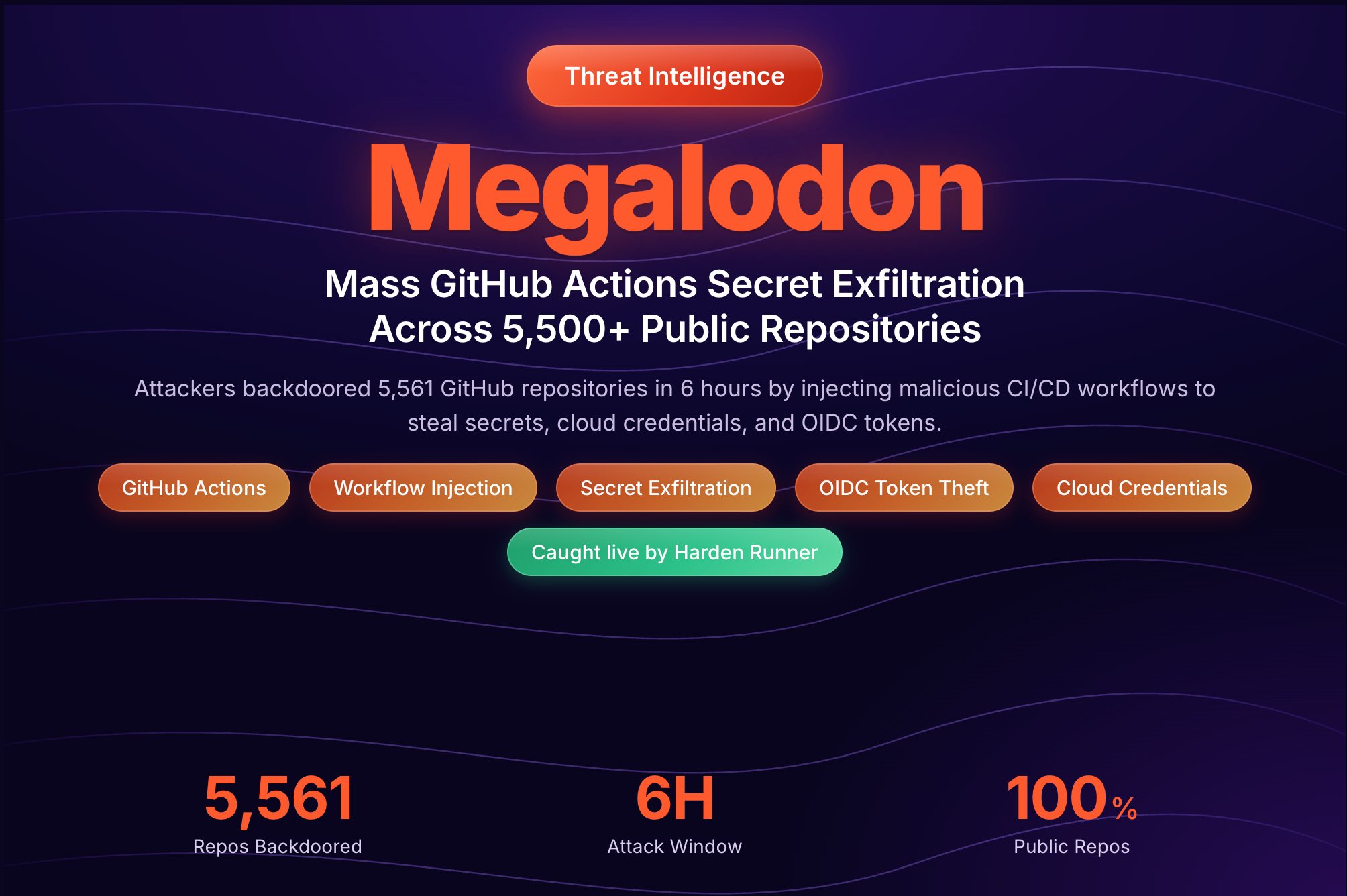 Megalodon: Mass GitHub Actions Secret Exfiltration Across 5,500+ Public Repositories - StepSecurity
StepSecurity documents Megalodon, a May 2026 campaign that injected backdoored GitHub Actions workflow files named SysDiag or Optimize-Build directly into 5,500+ public repositories in a six-hour window via direct Poisoned Pipeline Execution (d-PPE), exploiting weak branch protection. The base64-encoded bash payload harvests AWS/GCP/Azure credentials, SSH keys, Kubernetes/npm/Docker configs, GitHub OIDC tokens, and grep-matched secrets from the workspace, exfiltrating everything via HTTPS POST to a hardcoded C2 IP; the npm package @tiledesk/tiledesk-server was among the confirmed poisoned downstream targets.
stepsecurity.iowriteupAdded 5 Sep 2026🛡️ Security @7nohe/openapi-react-query-codegen Compromised Through an Exposed npm Publishing Workflow
StepSecurity documents how an external GitHub user (p00paboot) hijacked the release workflow of @7nohe/openapi-react-query-codegen by exploiting an npm publish issue-comment trigger that lacked commenter authorization checks, allowing pull-request code to be checked out and published via GitHub Actions OIDC trusted publishing. Ten malicious versions were pushed with preinstall hooks and a poisoned binding.gyp that executed a payload downloading Bun, stealing GitHub/git credentials, probing GCP metadata, and enumerating SSH keys, confirmed via StepSecurity Harden-Runner behavioral analysis on isolated runners. The post lists affected versions, file/hash IOCs, and remediation steps including credential rotation and pinning to clean releases.
stepsecurity.iowriteupAdded 3 Sep 2026, published 28 Aug 2026🛡️ Security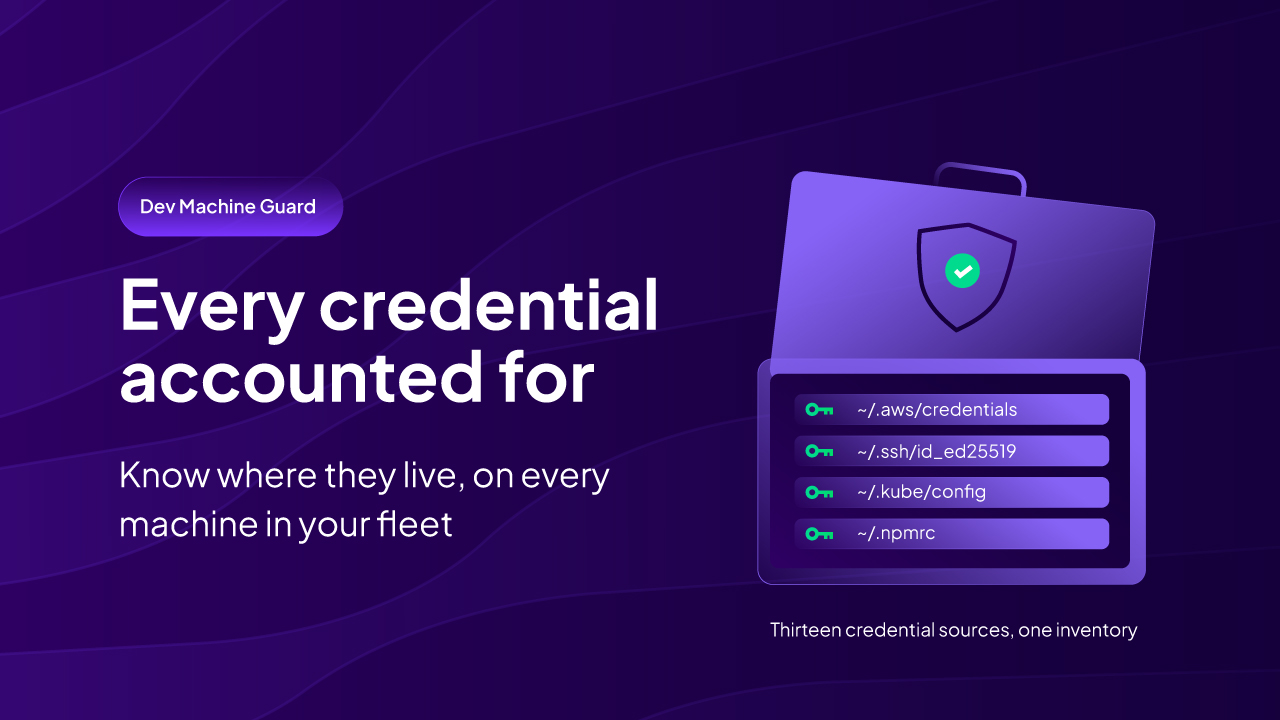 Dev Machine Guard Now Inventories Where Developer Credentials Live
StepSecurity describes a new Credentials inventory page in Dev Machine Guard that scans developer machines for thirteen well-known credential source types (npm, PyPI, Docker, AWS, GCP, Kubernetes, Vault, GitHub, SSH keys, etc.) across five categories and reports how many devices hold each, how many entries exist, and whether the material is stored in plaintext or protected. It frames the feature against real attacker behavior - the TeamPCP stealer in the xinference PyPI package and the hijacked Bitwarden CLI npm package both enumerated this exact list of well-known dotfile paths - arguing defenders need the same enumeration attackers already have to scope incidents and plan rotations.
stepsecurity.ioarticleAdded 3 Sep 2026, published 28 Aug 2026🛡️ Security The OpenSourceMalware Show #16
Recap episode of The OpenSourceMalware Show covering three incidents: a Shai-Hulud-derived npm worm that compromised maintainer Jared Wray's account and spread to 400+ packages (including Keyv and cacheable, with ServiceTitan losing 100 packages) while harvesting credentials from GitHub, npm, AWS, Kubernetes, Vault, Azure, GCP, Terraform, Docker, and Slack; a "WEL1DROPPER" campaign flooding npm with 1000+ AI-slopsquatted malicious packages that execute on import rather than via install scripts; and "NullReceiver," a DPRK-linked C2 technique that hides C2 IPs inside the recipient address of empty Ethereum transactions, an evolution of EtherHiding found in at least 10 malicious packages.
 opensourcemalware.comtalkAdded 3 Sep 2026, published 8 Aug 2026🛡️ Security
- ARTOC by White Knight Labs - Review
A reviewer's first-person writeup of the Advanced Red Team Operations Certification (ARTOC) by White Knight Labs, covering a full red team engagement curriculum: building C2 infrastructure with Cobalt Strike and Adaptix, cloud redirectors across AWS, Azure and GCP via CDNs and serverless functions, Active Directory and ADCS exploitation, and kernel and user mode EDR evasion, tested against real enterprise EDR products. The exam is a 48-hour infrastructure build and compromise exercise followed by a 48-hour red team report. The post is a positive testimonial encouraging enrollment rather than a technical walkthrough of any attack.
 kuwaitist.github.ioarticleAdded 2 Oct 2026, published 6 Aug 2026🛡️ Security
 Cloud Threat Highlights: H1 2026
Wiz's H1 2026 cloud threat report documents a 60% jump in significant incidents driven by a doubling of supply-chain attacks (TeamPCP's npm/PyPI/GitHub Actions credential-harvesting spree, its open-sourced Shai-Hulud worm spawning Miasma/Hades/Megalodon/IronWorm follow-ons, North Korea's axios and @mastra trojanizations) and by growing attacks on AI infrastructure, including exposed unauthenticated MCP servers, LiteLLM/Dify/Langflow/n8n/Ollama vulnerabilities, and cryptominers deployed via a Langflow RCE. It also profiles JINX-0163, a cloud-native extortion group targeting non-human identities (service accounts/IAM roles) across AWS/Azure/GCP/Okta/Snowflake linked to the "FulcrumSec" extortion brand, and closes with concrete detection techniques for stolen access keys, Kubernetes VM Run Command abuse, GCP org-policy tampering, and CloudTrail user-agent/boto3 credential-provenance mismatches.
wiz.iowriteupAdded 3 Sep 2026, published 6 Aug 2026🛡️ Security Orca Security: Cloud Identity & Entitlement Management Series
Orca Security explainer on entitlement sprawl (a.k.a. privilege creep) in cloud environments: the gradual accumulation of unused permissions across human and non-human identities, driven largely by machine identities (service accounts, roles, keys) that outnumber human users by over 80-to-1 per CyberArk's 2025 report. It distinguishes granted vs. effective permissions, explains why static IAM exports miss real risk, walks through detection via AWS IAM Access Analyzer, Azure Entra Permissions Management, and GCP IAM Recommender, and lays out controls (least privilege, JIT access, continuous automated reviews, RBAC/ABAC, NHI governance, zero trust) before positioning Orca's agentless CIEM (SideScanning) as the automation layer.
 orca.securityarticlePublished and added 31 Jul 2026🛡️ Security
- vigneshwaran1702/Cloud-Security-Scanner
CSPM tool auditing AWS, Azure, GCP for misconfigurations with AI remediation and compliance mapping.
github.comrepoAdded 30 Sep 2026, published 31 Jul 2026🛡️ Security - From Container Escape to Cloud Takeover
Lab-based cloud security assessment covering four attack paths: a privileged hostPID pod escaped to the node with nsenter, deleting the kube-apiserver static pod manifest to crash the control plane, Trivy Operator vulnerability reports piped into BigQuery, and a malicious PR exploiting a pull_request_target workflow that checks out PR code to steal a GCP Workload Identity Federation token via Terraform's external data source during plan. Each section pairs the exploit with defenses (Pod Security Standards, Kyverno/Gatekeeper, Falco rules, split plan/comment workflows, least-privilege service accounts) and ties them into one kill chain.
 medium.comwriteupAdded 3 Sep 2026, published 26 Jul 2026🛡️ Security
 Find Unused, Stale, and OIDC-Replaceable GitHub Actions Secrets Across Your GitHub Organization
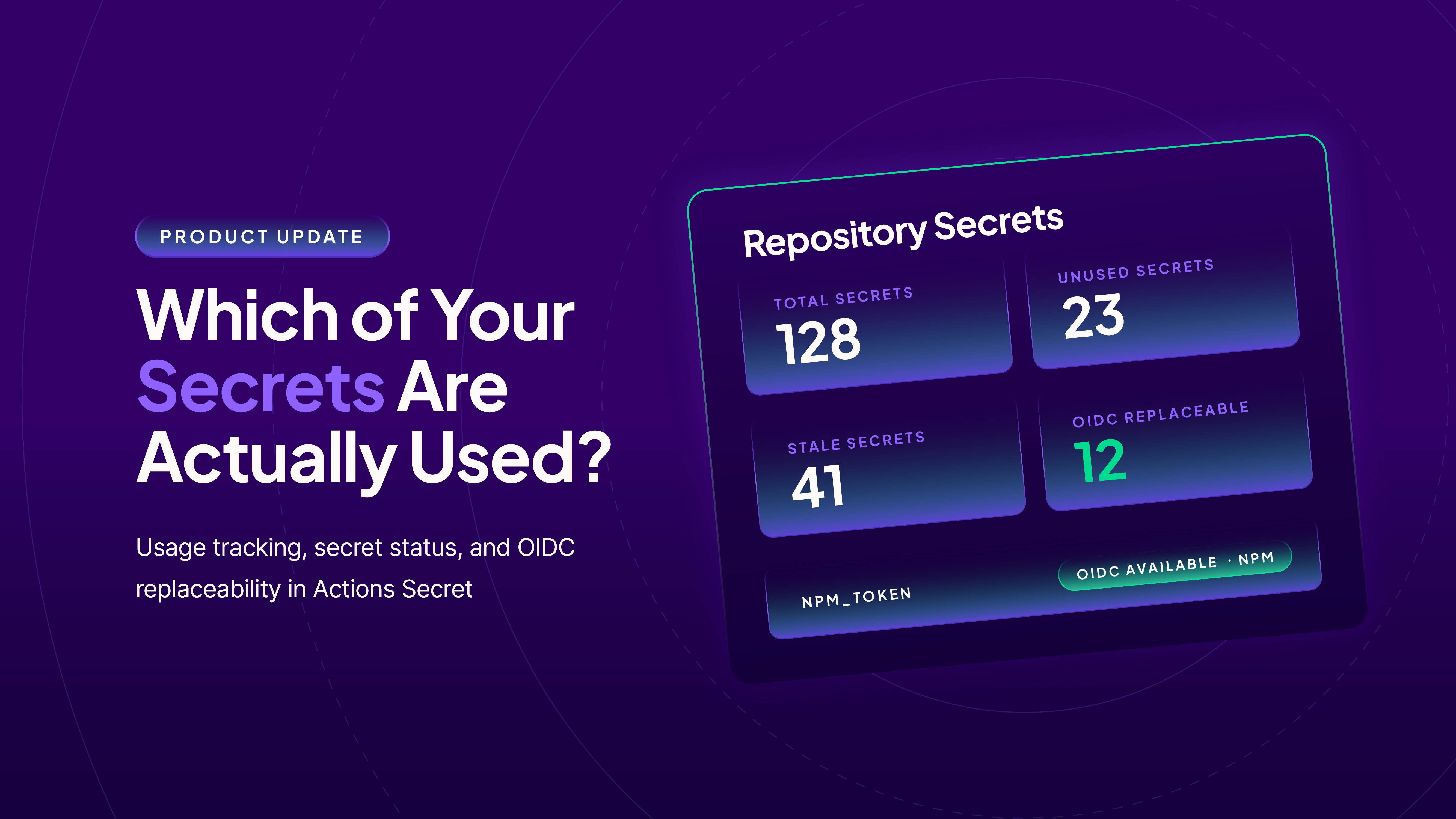
StepSecurity describes a new Repository Secrets feature in its Actions Secret dashboard that inventories GitHub Actions secrets across an org and classifies each as Active, Stale (unused workflow for 90+ days), or Unused, while flagging which secrets could be eliminated by switching to OIDC (e.g. AWS, Azure, GCP federation or npm/PyPI trusted publishing). It ties the problem to real incidents - the GhostAction campaign exfiltrated 3,000+ secrets and Megalodon targeted 5,500 public repos - arguing that unused, long-lived credentials are attack surface attackers actively harvest regardless of whether they are load-bearing.
stepsecurity.ioarticleAdded 3 Sep 2026, published 23 Jul 2026🛡️ Security- HackingLZ/gibson
Gibson is a Rust-based network monitoring toolkit with a lightweight agent, server, and parser that maps process-to-network connections, detects cloud provider ownership (AWS/Azure/GCP/Cloudflare), flags beaconing candidates and EOL OS risk, and auto-generates iptables/Windows firewall rules. It supports AES-256-GCM encrypted uploads, ASN/ARIN-based IP ownership lookups, and SQL/JSON report exports for cross-host threat hunting.
github.comrepoPublished and added 22 Jul 2026🛡️ Security 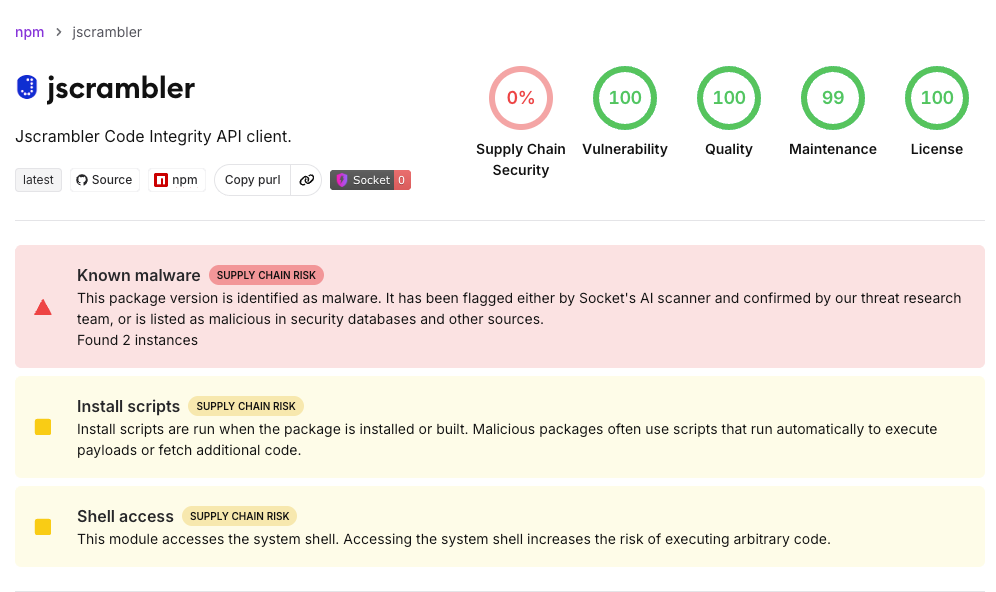 jscrambler npm Package Compromised in Supply Chain Attack
Socket's research team documents a supply chain compromise of the jscrambler npm package (v8.14.0+), where a stolen publishing credential was used to push malicious releases that drop platform-specific Rust-built infostealer binaries via a preinstall hook. The campaign evolved over the incident to evade scanners by moving the dropper from install scripts into a self-executing function inside index.js/CLI code (defeating --ignore-scripts), and the payload targets crypto wallets, cloud credentials (AWS/GCP/Azure), browser data, Discord/Slack/Telegram, and notably AI coding assistant configs (Claude Desktop, Cursor, Windsurf, VS Code) for MCP server credentials. Includes detailed RE of the ChaCha20-Poly1305 string-encryption scheme and full IOC hash list.
 socket.devwriteupAdded 21 Sep 2026, published 11 Jul 2026🛡️ Security
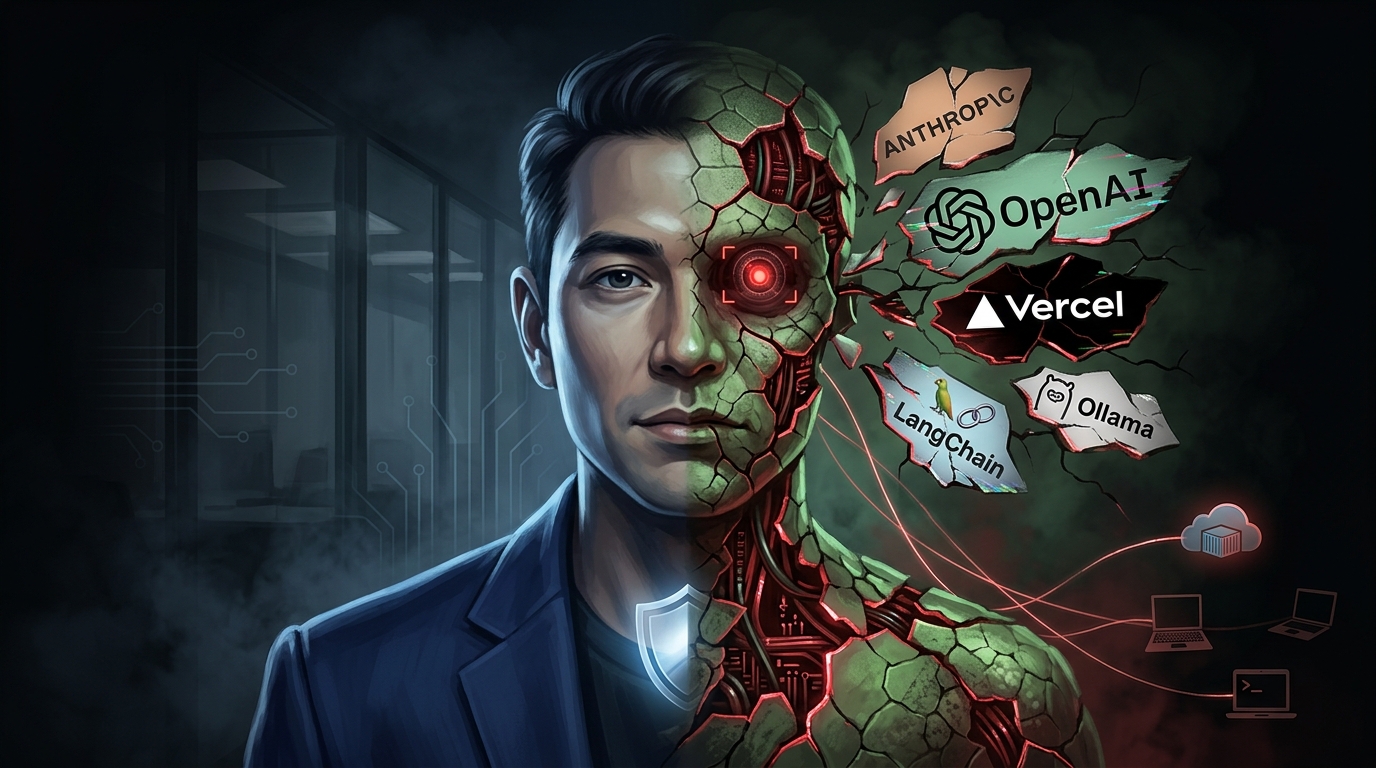 Cybersecurity Startup Publishes Infostealers to NPM
A security research team traces six typosquatted npm packages (anthropic-toolkit, ai-sdk-helpers, ollama-helpers, openai-agents-helpers, @langgraphjs/toolkit, and @aspect-security/argon2) impersonating Anthropic, Vercel, Ollama, OpenAI, LangChain, and Aspect Security back to the founder of a stealth-mode cybersecurity startup. The packages use npm preinstall/postinstall hooks to silently exfiltrate a rich identity fingerprint — hostname, git/GitHub emails, SSH key comments, reflog committer emails, AWS/GCP config metadata, corporate DNS domain, and host project name — to a Google Cloud Run endpoint, while deliberately avoiding literal credentials to look benign and offering a fake telemetry opt-out. The writeup also documents version backfilling to fake package maturity and shows the payload evolving from a crude April beacon to a polished June "identity graph" collector, with full IOCs provided.
opensourcemalware.comwriteupAdded 3 Sep 2026, published 9 Jul 2026🛡️ Security The Two Mitigations for the Service-Account Confused Deputy in the Cloud
A technical breakdown of the service-account confused-deputy problem in the cloud, splitting it into two categories by identity ownership: customer-managed identities (GCP service accounts, AWS IAM roles, Azure managed identities) mitigated via bind-time attachment checks like iam.serviceAccounts.actAs, and provider-managed identities (GCP service agents, AWS service-linked roles, Azure platform-level principals) mitigated via provider-side authorization such as AWS Forward Access Sessions and condition keys (aws:SourceArn, aws:SourceAccount, aws:SourceOrgID, aws:SourceOrgPaths) or Azure's opaque LinkedAuthorizationFailed checks. It contrasts observability across the three major CSPs, noting AWS is the only one that exposes its confused-deputy machinery as first-class, customer-controllable primitives.
 kattraxler.cloudarticleAdded 19 Sep 2026, published 9 Jul 2026🛡️ Security
 Red Agentの視点:いかにして推論を重ねてSSRFへと至ったか
Wiz walks through how its autonomous 'Red Agent' AI pentesting tool chained an SSRF vulnerability in a GCP Cloud Run service's ?url= file-fetch parameter into a full local file read, bypassing a strict GitHub-blob-URL validator. The breakthrough payload (github.com/x/y/blob/z//proc/self/environ) exploited a parser differential between the validator and the fetcher, letting the agent exfiltrate live GCP service-account credentials and the app's source code after 96 requests of iterative hypothesis-driven probing.
wiz.iowriteupAdded 3 Sep 2026, published 17 Jun 2026🛡️ Security レッドエージェント POVシリーズのご紹介
Wiz Research introduces the Red Agent AI-powered pentester and its new blog series documenting real bug classes it discovers autonomously in production. The launch post shares aggregate stats from a one-month run across roughly 1,000 environments, breaking down dominant failure modes: broken access control, leaked secrets, systemic RCE, SQL injection, PII/PHI exposure, and JWT alg:none bypasses. It teases the series first deep-dive: a GCP Cloud Run SSRF the agent found by iteratively bypassing a GitHub-URL-only validation filter over 96 iterations, escalating to unauthenticated credential and source-code extraction.
wiz.ioarticleAdded 3 Sep 2026, published 17 Jun 2026🛡️ Security Microsoft's durabletask PyPI Package Compromised in Supply Chain Attack
StepSecurity documents the compromise of Microsoft's durabletask PyPI package (versions 1.4.1-1.4.3, 400k+ monthly downloads), where an attacker bypassed the GitHub CI/CD pipeline entirely using stolen publishing credentials to inject a dropper for rope.pyz, a modular cloud-intrusion framework with dedicated collectors for AWS, Azure, GCP, Kubernetes, HashiCorp Vault, password managers, and the filesystem. The framework encrypts stolen data with AES-256-GCM/RSA-4096, exfiltrates via HTTPS, GitHub commit beacons, and attacker-created public repos using the victim's own stolen GitHub tokens, propagates via AWS SSM and kubectl exec, and drops a geo-targeted rm -rf wiper for systems matching Israeli locale/timezone markers. The post ties the attack to TeamPCP's Mini Shai-Hulud campaign (same infrastructure as TanStack, Mistral AI, LiteLLM, @antv) and later updates describe a second compromise of the Azure/durabletask GitHub repo that plants payloads triggering in Claude Code, Gemini CLI, Cursor, and VS Code.
stepsecurity.iowriteupAdded 3 Sep 2026, published 9 Jun 2026🛡️ Security Miasma Blight Reaches Microsoft: 73 Repos Disabled in 105 Seconds
Investigates GitHub's mass disabling of 73 Microsoft repositories across the Azure, Azure-Samples, microsoft, and MicrosoftDocs orgs within a 105-second window on June 5, all flagged for ToS violations, including the widely-used Azure/functions-action GitHub Action that broke CI pipelines globally. The author links the takedown to a re-compromise of the durabletask PyPI package (previously hit May 19 by TeamPCP via stolen GitHub Actions secrets) and to Miasma, a rebrand of TeamPCP's open-sourced Mini Shai-Hulud worm that Aikido and OX Security found had added Azure/GCP credential collectors and self-propagates by committing stolen secrets into attacker-created public repos, which is what likely triggered GitHub's automated abuse enforcement.
opensourcemalware.comwriteupAdded 3 Sep 2026, published 6 Jun 2026🛡️ Security Node-gyp Supply Chain Compromise: A Self-Propagating npm Worm That Hides in binding.gyp
Snyk documents an active npm supply-chain attack ("Node-gyp Supply Chain Compromise - June 2026") that abuses binding.gyp's GYP command-expansion syntax (<!(...)) to trigger arbitrary code execution via node-gyp during npm install, bypassing detection tools that only monitor preinstall/postinstall scripts. The worm, tracked as "Phantom Gyp"/"Miasma" (a Shai-Hulud descendant) by StepSecurity, has hit 57 packages including autotel-* and @vapi-ai/server-sdk, harvests npm/GitHub/AWS/GCP/Azure/Vault/Kubernetes credentials via a multi-stage obfuscated Bun-based loader, injects GitHub Actions workflows for persistence, and self-propagates by republishing from compromised maintainer accounts.
 snyk.iowriteupAdded 3 Sep 2026, published 4 Jun 2026🛡️ Security
 Why EDR and proxy won’t save you from supply chain malware
Aikido argues that EDR and corporate/remote proxies cannot catch supply chain malware because the malicious code executes with full trust inside legitimate package managers at install time. It walks through two real incidents: the March 2026 hijack of the axios maintainer's npm account (a new dependency's postinstall script dropped a cross-platform RAT and self-deleted, indistinguishable from a normal npm install), and a backdoor added to three versions of Microsoft's Python durabletask package that harvested credentials across AWS, Azure, GCP, Kubernetes, and HashiCorp Vault, propagated via SSM and kubectl exec, and triggered rm -rf / on machines with Israeli/Iranian locale settings. It concludes that this class of attack needs host-based, always-on, install-time protection rather than network-perimeter or behavioral-anomaly tooling — pitching Aikido's Device Protection product.
 aikido.devarticleAdded 3 Sep 2026, published 2 Jun 2026🛡️ Security
 Red Hat npm Packages Compromised to Spread a Credential-Stealing Worm
Aikido details a June 2026 compromise of 96 versions across 32 @redhat-cloud-services npm packages (116,991 weekly downloads) with "Miasma," a new variant of the TeamPCP-authored Mini Shai-Hulud credential-stealing worm whose source was open-sourced in May 2026. Attackers compromised a Red Hat employee's GitHub account to push malicious orphan commits containing a GitHub Actions workflow that abused OIDC id-token: write permissions to authenticate to npm's trusted publishing endpoint and republish backdoored packages; each package's preinstall script then ran a 4.2MB obfuscated payload that swept GitHub Actions, AWS, GCP, Azure, Vault, Kubernetes, npm/PyPI, SSH, Docker, GPG, and .env credentials. The piece also lays out the broader Mini Shai-Hulud campaign timeline (Bitwarden CLI, SAP, PyTorch Lightning, Mistral/TanStack, Microsoft DurableTask) and full IOC package/version list.
aikido.devwriteupAdded 3 Sep 2026, published 1 Jun 2026🛡️ Security
Showing 30 of 34
Show more