 Agents Prompt People: Using Agents for Long-Horizon Financial Work
Latent Space podcast write-up of an AI Engineer New York interview with Aman Singh, lead AI Engineer at Arca, an AI-native wealth management firm. Arca runs agent tasks lasting up to ten days, uses a per-client memory system, and owns its harness, which routes tasks to models (mainly Claude) by internal benchmarks. Safety rules are deterministic, trading stays with human advisors, and a meta-agent uses advisor feedback and traces to improve the harness.
 latent.spacearticlePublished and added 31 Oct 2026🧠 AI
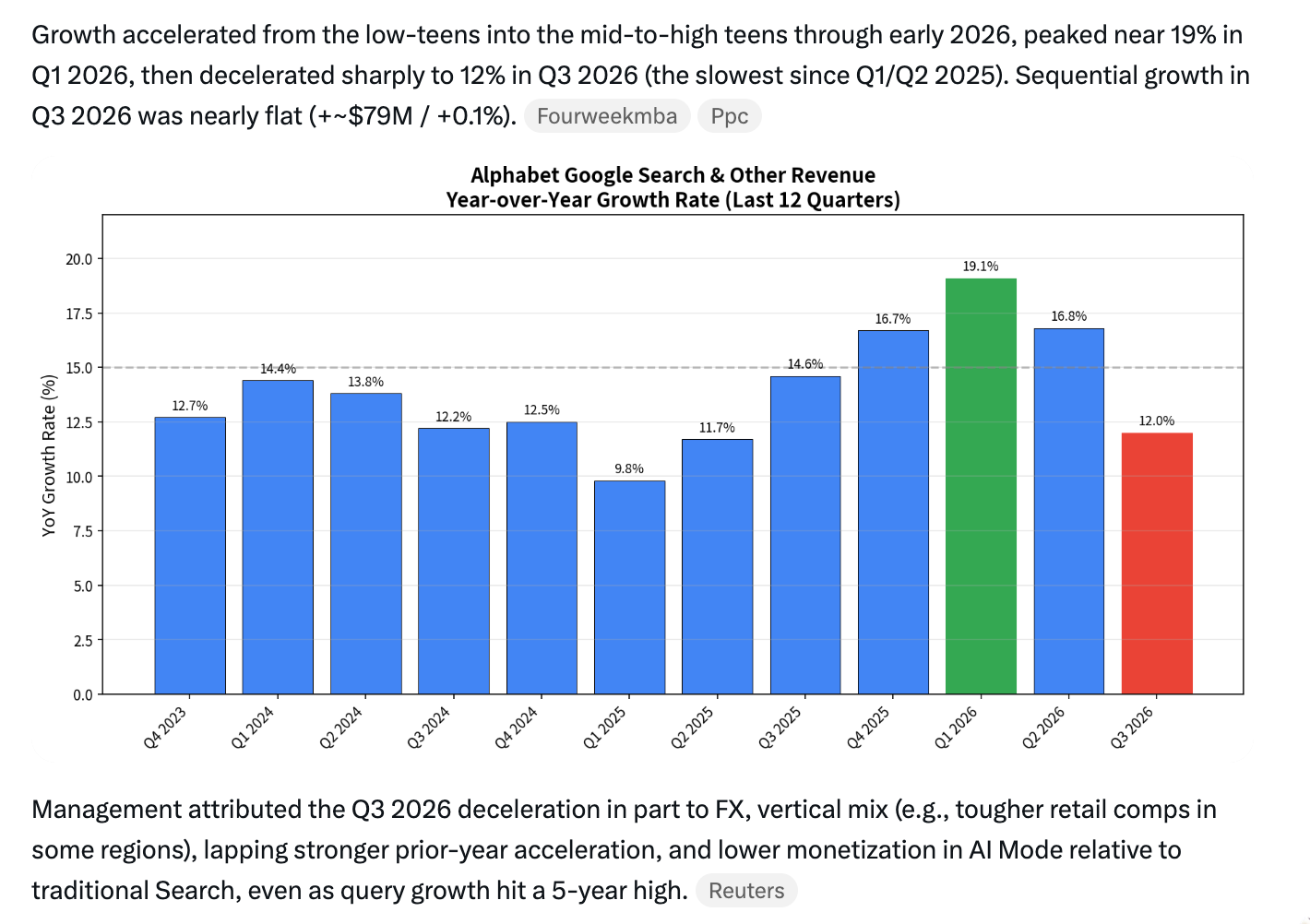 [AINews] Google admits AI Mode hurts Search revenue; -15% $500B drop worst since 2004 IPO. AI Bear Market coming?
AINews issue for 29 to 30 October 2026 from Latent Space. It opens on Google's admission that AI Mode monetises worse than classic Search, which preceded a roughly 15% share drop. It then recaps Claude Ultra dropping the 5-hour limit, Gemini 4 Carbon, Mistral Large 4, Nemotron 3.5, Artificial Analysis Index v5, Unsloth GGUF disputes, and the Anthropic S-1 filing.
latent.spacearticlePublished and added 31 Oct 2026🧠 AI [AINews] Building AIE CODE: The top Coding Agent Conference
AINews issue for 28 to 29 October 2026 from Latent Space. It opens with a preview of the AIE CODE summit (themes: Scaling without Slop, System One models, Increasing Ambition, with Jarred Sumner on Bun in Rust). It then recaps Twitter and Reddit news: Mistral Large 4 open weights (1.05T total, 52B active), Artificial Analysis benchmarks, Gemini 4 Carbon, Qwen4 rumours, Claude Code quota complaints and OpenAI frontier-run monitoring. Text was cut before the end.
latent.spacearticlePublished and added 30 Oct 2026🧠 AI [AINews] Gemini 4 Carbon tops leaderboards, launches for cyber defenders
AINews issue for 27-28 October 2026, a Latent Space digest of Twitter and Reddit. It leads with Google DeepMind's Gemini 4 Carbon: claimed cyber scores (SEC-bench Pro 88.2%, ExploitGym 54.8%, CWE-bench 71.0%), #1 on Artificial Analysis Intelligence Index v5 at 59, and access limited to cyber defenders through the Fairwind Program. It also covers benchmark integrity disputes, GitHub Copilot Fusion, H-Net v2, KV-cache work, open-weight releases and Claude Code quota complaints.
latent.spacearticlePublished and added 29 Oct 2026🧠 AI Why Agents Love Supabase
Latent Space podcast episode with Supabase founders Paul Copplestone and Ant Wilson on why frontier models pick Supabase first for app backends. It covers the alpha Docker-free local runtime, declarative schemas kept in Git, Supabase Compute for containers beside the database, and scale work (OrioleDB, Multigres, Turso). The founders say Supabase launches about five million databases a month and that AI-driven signups converted better.
latent.spacetalkPublished and added 28 Oct 2026🧠 AI [AINews] Anthropic ends Coding Interviews: "Hunger beats tenure"
AINews issue of 28 October 2026 from Latent Space. It leads with Felix Rieseberg's post on why Anthropic dropped coding interviews ("Hunger beats tenure"). It then recaps Genie 4, Axiom's Lean formalization of CFSG, claimed ETH refutations by OpenAI and Anthropic, Artificial Analysis Index v5, FrontierCode 2.0, Liquid LFM3, the Qwen3.8 phone-home dispute, and Anthropic's S-1. Reddit recaps are included; the page was truncated before the end.
latent.spacearticlePublished and added 28 Oct 2026🧠 AI Improving the Dependency on Fine-Tuning Data in Transfer Learning for Speech Emotion Recognition
This paper proposes an fMLLR-based compensation mechanism that cuts the fine-tuning data needed in transfer learning for speech emotion recognition under train-test acoustic mismatch. An autoencoder reduces trainable parameters, and an affine transform in the encoder latent space models rotations and shifts. In a human-robot interaction task, mean CCC rose 16.8% with 12.9% of the training set and 14.4% with 50%.
 arxiv.orgpaperAdded 30 Oct 2026, published 27 Oct 2026🧠 AI
 How Anthropic ships Claude with Claude: Separating the Brain from the Hands
Latent Space episode with Katelyn Lesse (engineering) and Angela Jiang (product) of Anthropic, recorded the day after the Claude Opus 5.5 launch. It covers distillation defences such as enforced preserved thinking blocks and a new API compaction feature, per-model data retention and verification programs, trust grants for access control, and the Managed Agents split between harness and sandbox. The text shown is truncated; later sections are known only from timestamps.
latent.spacetalkPublished and added 27 Oct 2026🧠 AI- How Anthropic ships Claude with Claude: Separating the Brain from the Hands
Latent Space episode with Katelyn Lesse and Angela Jiang of Anthropic, recorded after the Claude Opus 5.5 launch. It covers distillation defences (enforced preserved thinking blocks, a compaction feature for harness maintainers), trust-grant authorization for gated model access, and the Managed Agents split between harness and sandbox, where credentials are held outside the sandbox and attached through a proxy. Only the first third of the transcript was available.
latent.spacetalkPublished and added 27 Oct 2026🛡️ Security  How Anthropic ships the #1 LLM in the World safely: Separating the Brain from the Hands
Latent Space episode with Katelyn Lesse and Angela Jiang on the engineering behind the Claude Platform. Topics include the Claude Opus 5.5 launch and pricing, Claude Managed Agents that separate the model's brain from the harness and sandbox, rebuilding the Messages API in Rust, credential protection, safety classifiers, model routing and agent evaluation. The page lists show notes and timestamps only, with no transcript.
latent.spacetalkPublished and added 27 Oct 2026🧠 AI [AINews] Anthropic files for $2T IPO in 2 weeks: 1400% growth rate, 48% of revenue through cloud partners, 85% margin, $1B op profit in Q2, $134B cash in bank and $10B lifetime burn
AINews issue from Latent Space on 27 October 2026, led by Anthropic's S-1 filing for a Nasdaq listing (ticker ANT). It reports H1 2026 revenue of $16.3B, an 85% gross margin, $974M Q2 operating profit and 48% of revenue through cloud marketplaces, with reactions from named analysts. It also covers model releases, inference economics and agent tooling. The page text is truncated.
latent.spacearticlePublished and added 27 Oct 2026🧠 AI Supabase’s Plan for a Billion AI-Built Apps
Latent Space interview in which swyx talks with Supabase co-founders Paul Copplestone and Ant Wilson about backends for software built by AI agents. Topics include Supabase Compute for running workloads next to the database, Multigres for highly available Postgres (private alpha), the Turso acquisition, declarative schemas, and durable workflows. The page has only show notes and chapters, recorded ahead of Supabase Select 2026.
latent.spacetalkPublished and added 26 Oct 2026🧠 AI Why AI Compute Comes in Rectangles — Erik Bernhardsson, Modal CEO
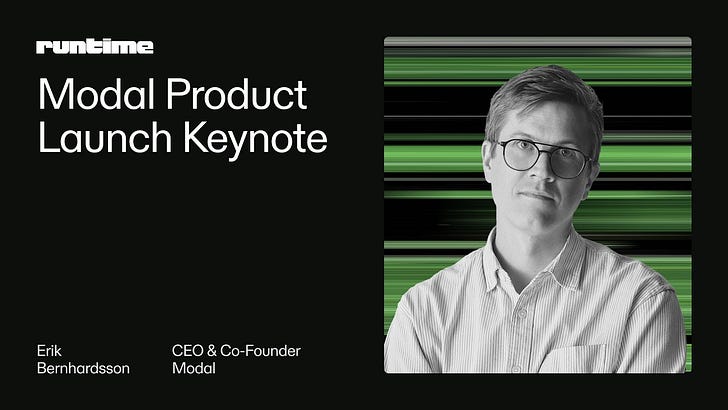
Latent Space interview with Modal CEO Erik Bernhardsson, after Modal's $750M Series D at a $16B valuation and passing $1B annualized run rate. He explains why GPU demand is not "rectangular" like fixed-term capacity contracts, how Modal pools demand and buys from about 25 clouds on three-year deals, and why sandboxes grew to about a third of revenue. Also covers GPU price-collapse risk and non-NVIDIA accelerators. Only the first part of the transcript was available.
latent.spacetalkPublished and added 22 Oct 2026🧠 AI Why AI Compute Comes in Rectangles — Erik Bernhardsson, Modal CEO
Latent Space interview with Modal CEO Erik Bernhardsson after the company's $750M Series D at a $16B valuation, with a transcript. He explains why GPU demand does not match rectangular fixed-term capacity contracts and how Modal pools demand across customers. He covers sourcing from nearly 25 clouds on multi-year deals, the risk of falling GPU prices, sandboxes reaching about a third of revenue, and non-NVIDIA accelerators.
latent.spacetalkAdded 23 Oct 2026, published 22 Oct 2026🧠 AI You are the Team — Anekha Sokhal, Moshi
Latent Space interview with Anekha Sokhal, CEO of Moshi, recorded at AI Engineer New York. Moshi is a market-intelligence product for commodity and energy traders. It ingests structured and unstructured data, builds an ontology and graph, and pushes recommendations to each trader's book. She covers confidence scoring across divergent sources, an in-house vision-language model for messy PDFs, and build-versus-buy tradeoffs.
latent.spacetalkAdded 23 Oct 2026, published 22 Oct 2026🧠 AI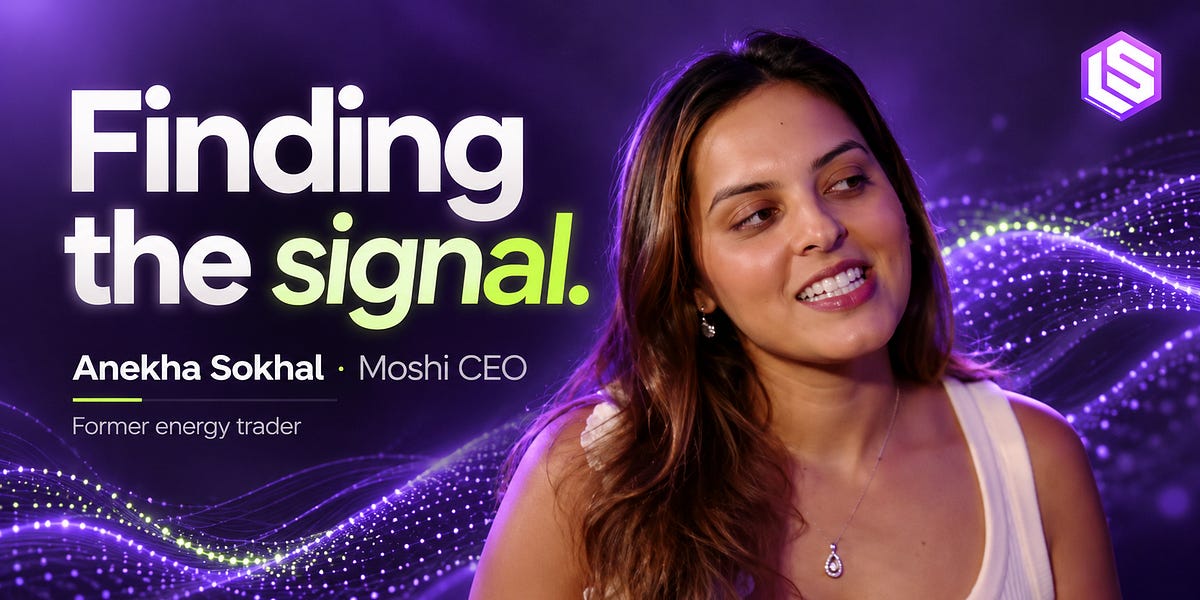 The Recommendation Engine for Commodity Traders — Anekha Sokhal, Moshi
Latent Space podcast episode recorded at AI Engineer New York, in which Moshi CEO Anekha Sokhal, a former JPMorgan energy derivatives trader, describes a recommendation engine for commodity traders. Moshi ingests structured and unstructured market data plus private user data, tags it into a graph ontology and pushes items relevant to a trader's book. She covers confidence scores across divergent sources, an in-house vision-language model for messy PDFs, and build versus buy.
latent.spacetalkPublished and added 22 Oct 2026🧠 AI- You are the Team — Anekha Sokhal, Moshi
Latent Space interview with Anekha Sokhal, CEO of Moshi, recorded at AI Engineer New York. Moshi is a recommendation engine for commodity and energy traders that ingests structured data, news, X posts, podcasts and private user documents into a graph. Topics include confidence scores for divergent sources, a self-built vision-language model for PDFs, build versus buy, and engineers told "you are the team".
latent.spacetalkPublished and added 22 Oct 2026🧠 AI 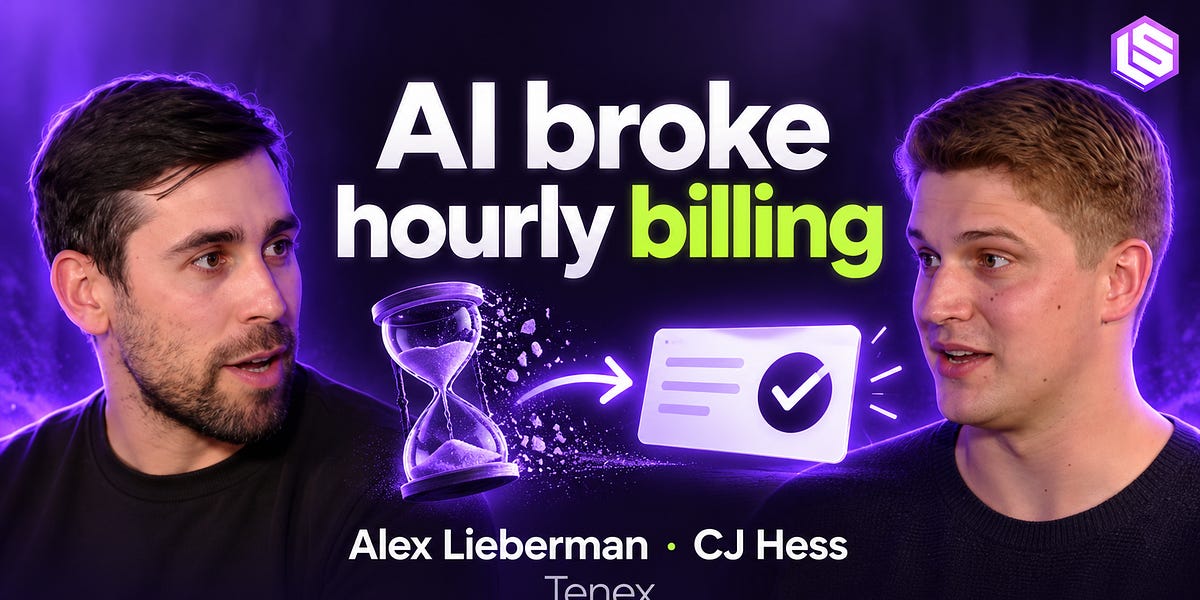 AI for the Fortune 2000: How Tenex Builds an AI-Native SDLC — Alex Lieberman & CJ Hess
Latent Space interview from AIE New York with Tenex cofounder Alex Lieberman and CJ Hess on running an AI-native engineering firm of 75 people. Covers story-point pay for engineers, the MetaHarness (plans, decisions and agent logs checked into Git with a CLI), roughly 2x engineer output in 2026, Opus 5.5 and Codex usage, and enterprise adoption rates. Also debates vertical AI and the Kill My SaaS experiment.
latent.spacetalkPublished and added 21 Oct 2026🧠 AI AI for the Fortune 2000: How Tenex Builds an AI-Native SDLC — Alex Lieberman & CJ Hess
Latent Space interview from AI Engineer New York with Tenex cofounder Alex Lieberman and CJ Hess. Tenex has 75 people, pays engineers by story points, and reports roughly 2x engineer output over the past year. CJ describes MetaHarness, a repo-based set of skills, plans and a CLI that logs agent decisions in Git. They also cover enterprise AI adoption rates, token spend, and vertical AI. The page text is truncated.
latent.spacetalkAdded 23 Oct 2026, published 21 Oct 2026🧠 AI The Programmable Data Center — Evan Conrad, SF Compute
Latent Space interview with Evan Conrad, CEO of SF Compute, recorded at AI Engineer NYC. He explains why the company runs a cloud's operations to physically settle GPU contracts on an order book with multi-constraint matching. Topics include preemption and storage recovery, hardware cohorts, batch versus live inference pricing, forward curves, a B300 price arbitrage, and cash versus physical settlement. The last ~3,600 characters of the transcript were not available.
latent.spacetalkAdded 23 Oct 2026, published 20 Oct 2026🧠 AI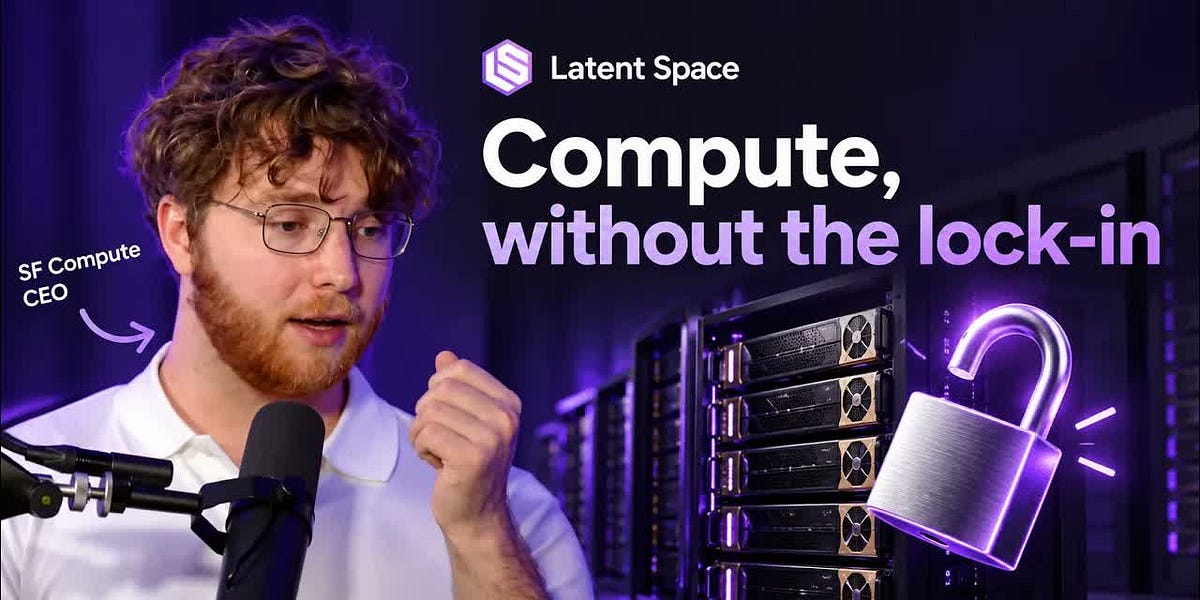 The Programmable Data Center — Evan Conrad, SF Compute
Latent Space podcast episode with Evan Conrad, CEO of SF Compute, recorded at AI Engineer New York in 2026. He explains why the company moved from subleasing a cluster to running cloud-level operations so it can physically deliver traded GPU capacity. Topics include a constraint-matching order book, spot versus forward prices, batch versus live inference leases, and cash versus physical settlement. The transcript was truncated near the end.
latent.spaceotherPublished and added 20 Oct 2026🧠 AI [AINews] not much happened today
AINews issue for 16 to 19 October 2026 from Latent Space, a digest of Twitter and Reddit AI news. It covers DeepSeek V4.1 Flash 1017 (552B total, 16B active MoE, AA Intelligence Index 45), MiniMax M3.1 Flash, Mercury 3, Meta Muse, Google's Harness², vLLM v0.32.0 and a Terminal-Bench audit. Only the first 40,000 of 47,045 characters were available.
latent.spacearticleAdded 30 Oct 2026, published 20 Oct 2026🧠 AI [AINews] not much happened today
AINews issue covering 16-19 October 2026 from Latent Space, summarising 12 subreddits and 544 Twitter accounts. It leads with DeepSeek V4.1 Flash 1017 (552B total, 16B active MoE, 1M context, MIT license, AA Intelligence Index 45), plus MiniMax M3.1 Flash, Mercury 3 and Meta Muse. It also covers vLLM v0.32.0, InferenceX results, Harness² and Terminal-Bench audit findings.
latent.spacearticlePublished and added 20 Oct 2026🧠 AI- Hybrid Reasoning Agents: LLM agents that think in latent space, act through text
Hybrid Reasoning Agents (HybridAgents) are LLM agents that switch between latent reasoning and text-based interaction in one generation process. A lightweight HybridLink handles mode transitions, continuous working memory keeps hybrid context across turns, and HybridSFT plus HybridRL train when to think latently and when to act in text. Across 3 model scales and 11 benchmarks, the paper reports 10.4% higher performance, 35.5%-54.7% fewer tokens, and 1.8x-2.6x faster inference.
arxiv.orgpaperAdded 19 Oct 2026, published 18 Oct 2026🧠 AI 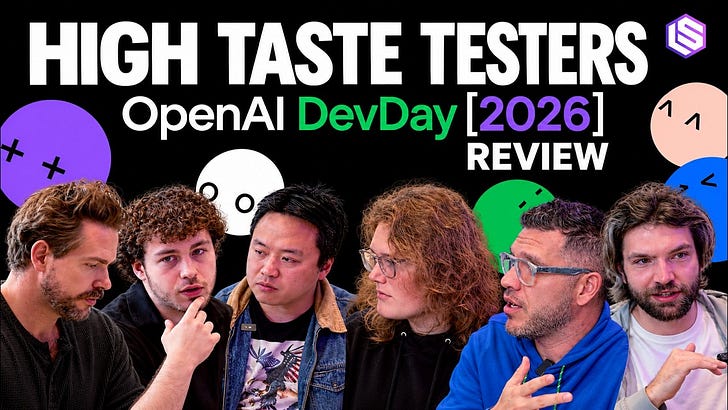 [AINews] High Taste Testers Ep. 1
AINews issue for 15-16 October 2026, from Latent Space, summarising 12 subreddits and 544 Twitter accounts. It covers Meta's Muse Spark Open (816B MoE) and Reflection Beam 1.0 with Artificial Analysis scores and pricing. It also covers Gemini 4 Argon, decision models, TPUv7 and Vera Rubin serving benchmarks, interpretability claims, agent papers, and China's proposed open-source export rules.
latent.spacearticleAdded 30 Oct 2026, published 17 Oct 2026🧠 AI- [AINews] Modal’s $1B ARR, $16B Series D makes it NYC’s newest AI Infra Decacorn, 3x usage and 3x valuation in 5 months, 15x in 1 yr
Latent Space's AINews issue for 10/13–10/14/2026. It opens with Modal's $750M Series D at a $15.75B valuation, with Sandboxes at a $300M run rate, then recaps the day's AI Twitter. Coverage includes the Gemini 4 Argon rollout and its weaker monitorability, Meta Muse Wonder, Grok Voice 3.0, and open-weights releases (Ultramarine 1 Flash, Ling-3.1-flash, DeepSeek V4.1 Flash). It also covers new evals (AA-Robotics, SpireClimb, TasteVal), rogue agent and reward-hack safety items, inference benchmarks (AA-AgentPerf, InferenceX), and agent sandbox platforms. Useful as a dated snapshot of the field.
latent.spacearticlePublished and added 15 Oct 2026🧠 AI 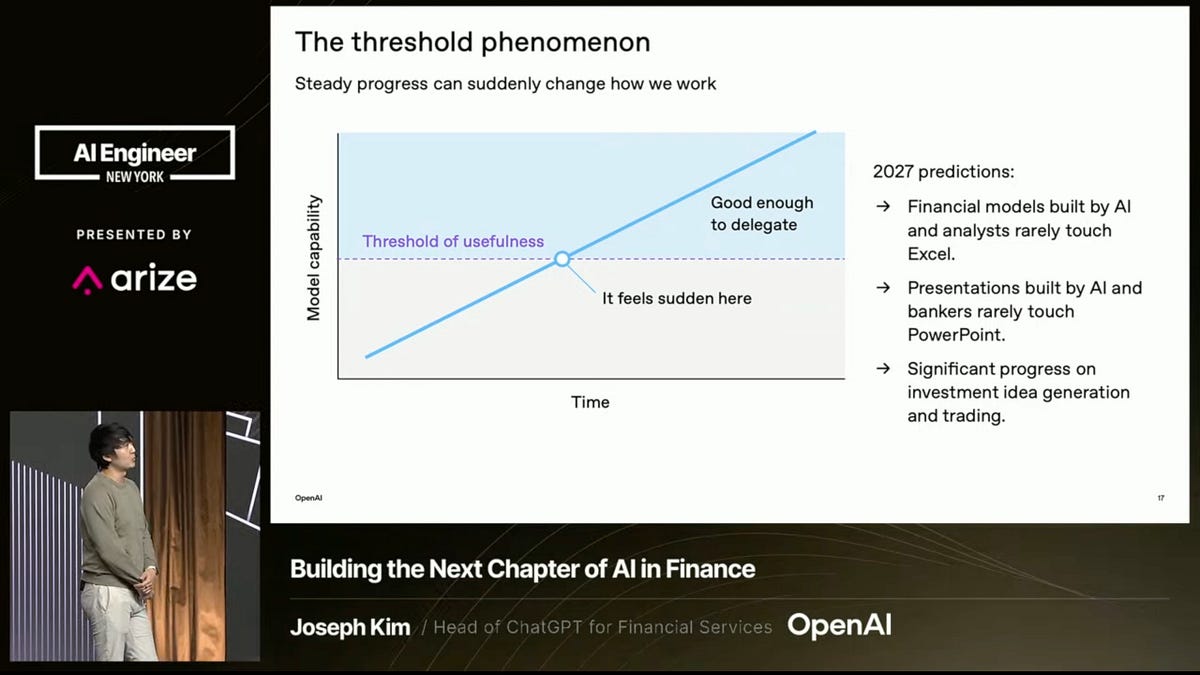 Crossing the Threshold: How OpenAI and Anthropic Approach Autonomy and Safety in Financial Agents
Latent Space recap of AI Engineer New York keynotes on balancing agent autonomy with safety in finance. OpenAI's Joseph Kim frames human-in-the-loop as a product design decision and predicts agents doing investment idea generation and trading by 2027. Two Sigma's John Feminella describes composable controls such as auto-mode classifiers to avoid approval fatigue. Anthropic's Keon Shahab lays out a trust layer: identity and permissions, sandboxed approval, and regression checks, with agents proposing actions rather than executing them. Bloomberg's Andrey Rybka argues for deterministic controls outside the model: scoped credentials, tool-call checks, audit logs, budgets and kill switches.
latent.spacearticlePublished and added 14 Oct 2026🧠 AI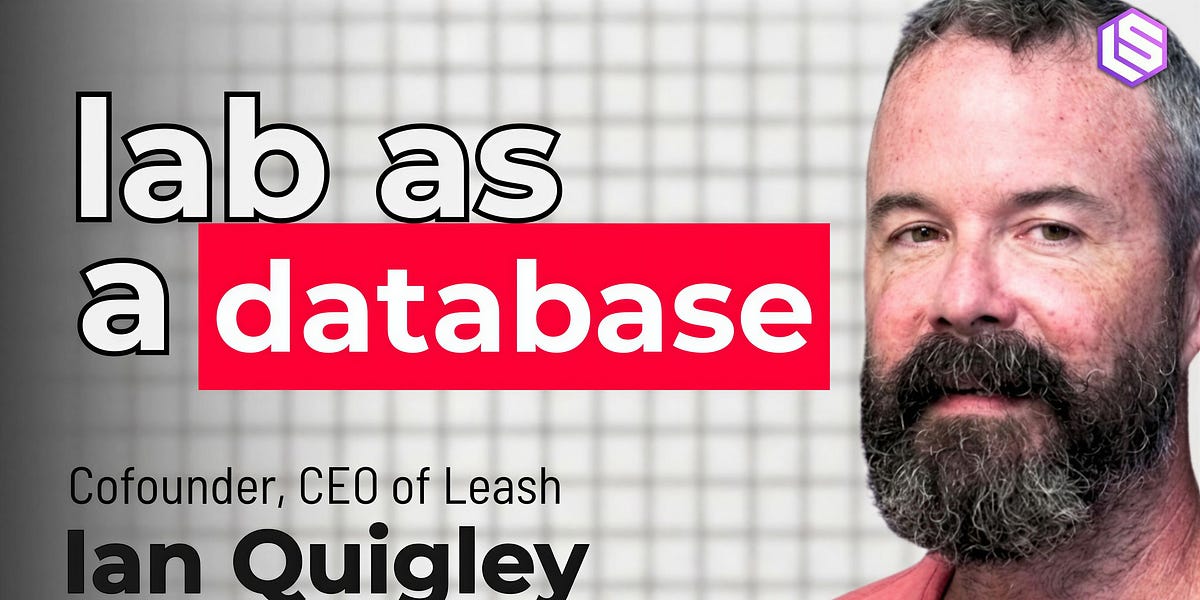 Lab-in-the-Loop at Compute Speed — Ian Quigley, Leash Bio
Latent Space interview with Ian Quigley of Leash Bio on using DNA-encoded library (DEL) data, roughly 4B measurements, to train protein-ligand binding models. Topics include Leash's Kaggle competition where nobody beat chance on an unseen chemical library, "Clever Hans" bias in ChEMBL where the chemist predicts activity as well as the structure does, and Hermes, trained only on Leash data, keeping pace with Boltz. It also introduces Minos, a lab-in-the-loop agent sandbox that lets LLMs do verifiable scientific reasoning and RL, searching 6.5M molecules on a budget of 100, released with a preprint, blog and open dataset.
latent.spacetalkPublished and added 14 Oct 2026🧠 AI- Dog-Breed Text-to-image Flow Matching from Pretraining to Fine-Tuning on 4 Consumer GPUs
MiniDog is a framework for training a text-to-image flow-matching diffusion transformer from scratch on four RTX 3090 GPUs, with 55 minutes of pretraining and 15 minutes of fine-tuning. It pretrains on 26k ImageNet dog images that were captioned, then fine-tunes on 2k FLUX.1-schnell generated images. Image and text features are precomputed and cached. The model is a 22M-parameter transformer with the E2E-INVAE semantic latent space, a small Qwen text encoder and in-context conditioning, and training is accelerated with iREPA and an EUPE perception encoder. The repo evaluates with FID, HPSv2, PickScore and VAE reconstruction metrics. It lowers the barrier to hands-on diffusion training research.
arxiv.orgpaperAdded 14 Oct 2026, published 13 Oct 2026🧠 AI 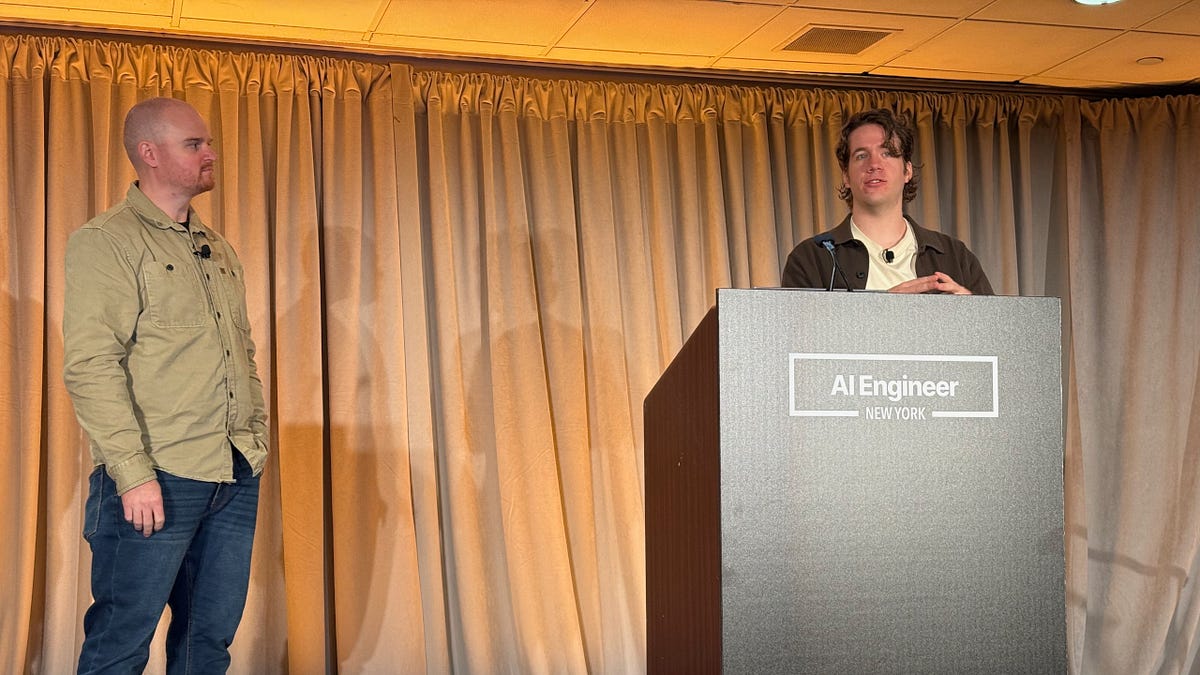 How Anthropic’s Dynamic Workflows Coordinate Claude Agents
Latent Space report from an Anthropic workshop at AI Engineer New York 2026 on "dynamic workflows" (flows) in Claude Managed Agents. Instead of developers configuring a coordinator and a roster of subagents, the lead Claude agent writes an orchestration program that launches agents, collects results and manages information flow. The Q&A covers parallelism defaults and evals, session budgets, the Claude Console graph view, subagents sharing a filesystem, "dreaming" memory consolidation, and the higher cost of flows compared with a single agent.
latent.spacearticlePublished and added 12 Oct 2026🧠 AI
Showing 30 of 65
Show more