 Binance Drained of $5.5 Billion in Suspected Hack, Tether and Circle Freeze $1.8 Billion
Decrypt reports that at least $5.57 billion left Binance-linked hot wallets on Ethereum, Bitcoin and Tron on 29 October 2026, which would be the largest crypto hack on record. On-chain analysts point to an EIP-7702 delegation, installed from a Tornado Cash-funded address minutes before the first sweep. Tether and Circle froze about $1.8 billion. Binance has not confirmed the hack, and how the attacker obtained the signature is unknown.
 decrypt.coarticlePublished and added 29 Oct 2026🛡️ Security
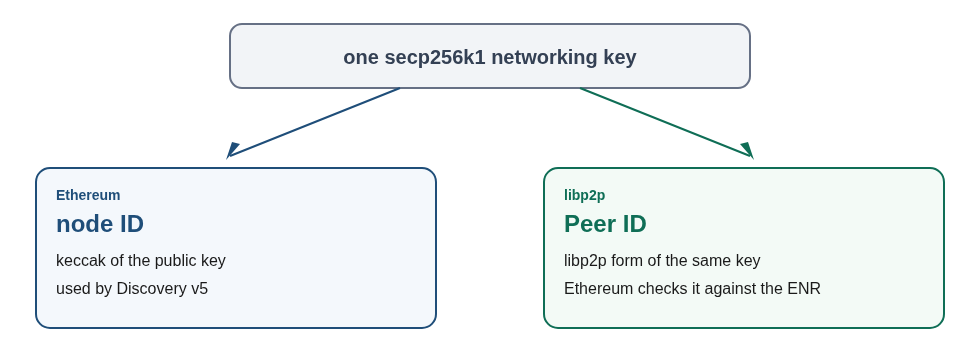 Inventory of PQ P2P Migrations in the Consensus Layer
Inventory of post-quantum migration work for Ethereum consensus-layer networking, by adust09 of Nyx Foundation. It maps three targets: Discovery v5/ENR signatures and key exchange, TLS 1.3 key agreement in QUIC, and libp2p TLS identity binding and CertificateVerify. It covers the 300-byte ENR and 1,280-byte packet limits, why hybrid KEMs do not authenticate peers, and downgrade and DoS concerns. It selects no algorithm or schedule.
 ethresear.charticlePublished and added 27 Oct 2026🛡️ Security
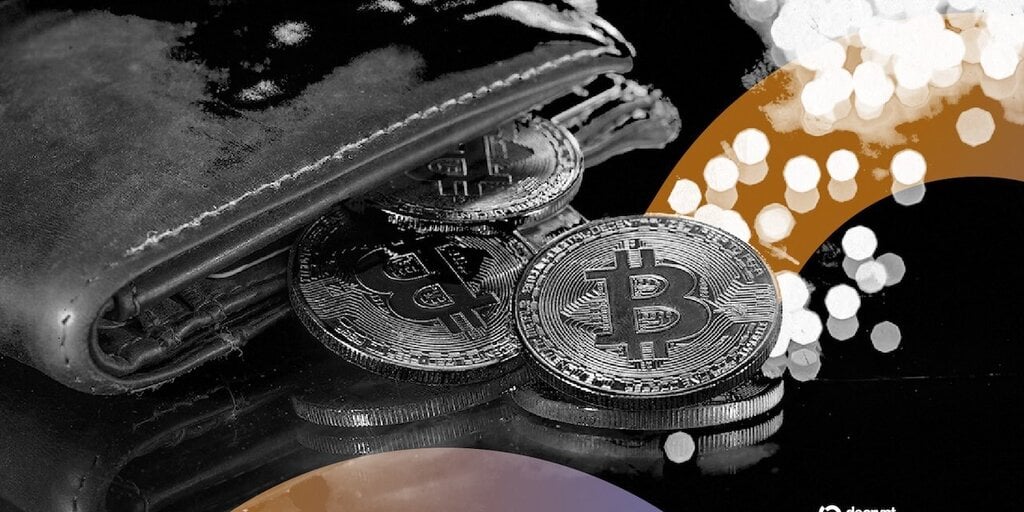 Bitcoin Wallet Fixes Critical Flaw That Redirected Funds to Attackers
Electrum 4.8.3, released 24 October 2026, fixes a high-severity flaw in the Bitcoin wallet. Rogue servers could suppress a real payment and inject a fake unconfirmed transaction paying an attacker, so a user's fee-bump became the first transaction broadcast. The fix verifies signatures on wallet-owned inputs, but incoming transactions from external senders stay unverified. One user lost funds on 18 October.
decrypt.coarticlePublished and added 26 Oct 2026🛡️ Security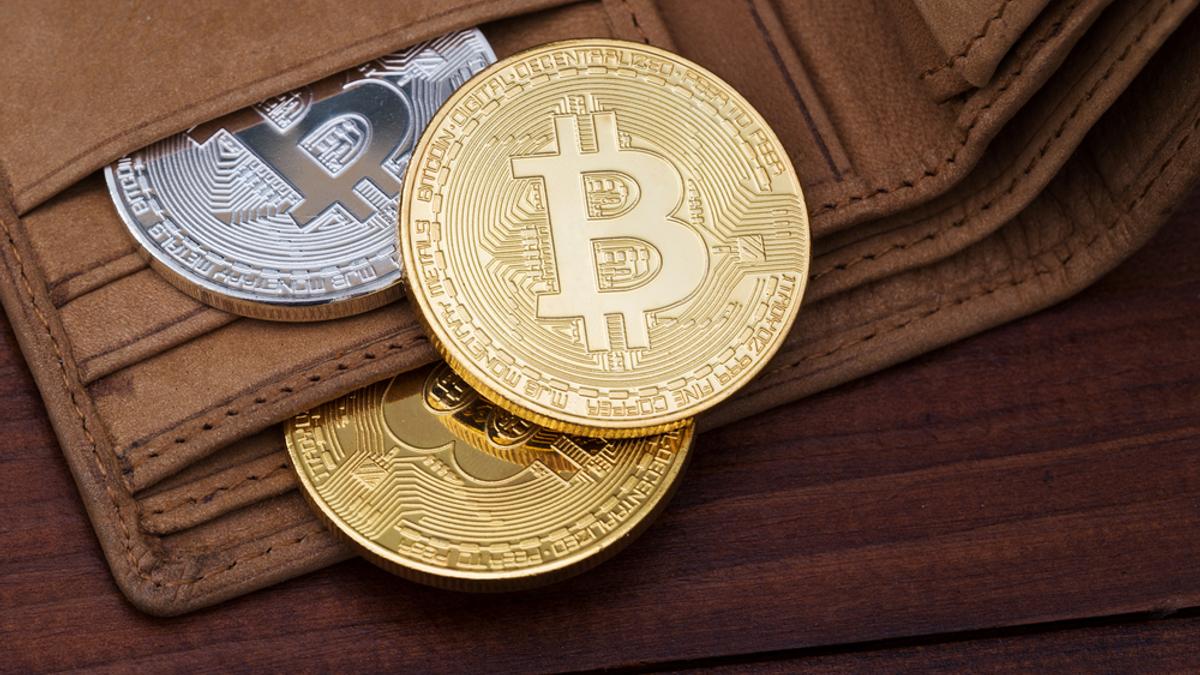 Bitcoin wallet bug let rogue servers steal funds when users tried to speed up payments
Electrum, a Bitcoin software wallet, disclosed on 24 October 2026 a flaw where malicious servers swapped pending transactions for fake ones with invalid signatures that the wallet did not check. When users chose Replace-by-Fee to raise the fee, Electrum signed a valid replacement paying the attacker, and at least one user lost funds. Version 4.8.3 adds signature checks; users of only trusted or self-run servers were not exposed.
 coindesk.comarticlePublished and added 26 Oct 2026🛡️ Security
 A hash-only rollup: OP Stack L2 accounts as Lamport-style hash chains, no ECDSA inside the L2
Hash-only rollup: an OP Stack L2 (chain ID 42069000, live since 30 September 2026) where accounts are keccak-256 hash chains and transactions carry no signatures. Spending uses a commit-reveal step through two new transaction types in op-geth. The post describes a flaw the authors found: unauthenticated commits could be overwritten, which allowed preimage front-running. It was fixed with a first-commit-wins rule on 21 October 2026. It lists the remaining limits: L1 ECDSA, no fault proofs, a centralized sequencer, 160-bit addresses and wallet desync.
ethresear.charticlePublished and added 24 Oct 2026🛡️ Security Electrum wallet security flaw is fixed after a user loses money in fee attack
Electrum 4.8.3, released 24 October 2026, fixes a flaw where a malicious server replaces a user's unconfirmed payment with a conflicting transaction carrying invalid signatures. If the user then bumps the fee with replace-by-fee, the wallet signs a payment to the attacker. One of two reporting users lost funds, and the patch now checks input signatures before accepting such transactions. Bull Bitcoin is adding the same client-side check.
 en.cryptonomist.charticlePublished and added 24 Oct 2026🛡️ Security
 Coinbase's Plan for a Quantum-Safe Bitcoin
Bankless summary of Coinbase's October 2026 proposal for making Bitcoin quantum-safe. It covers upgradeable address designs (BIP-360 P2MR, P2TRv2, hybrid addresses), four candidate signatures (ML-DSA, SLH-DSA, FN-DSA, SHRINCS) with size and stateful-key-reuse trade-offs, a five-stage migration plan, and a separate track for dormant coins with exposed public keys such as Satoshi's.
 bankless.comarticlePublished and added 21 Oct 2026🛡️ Security
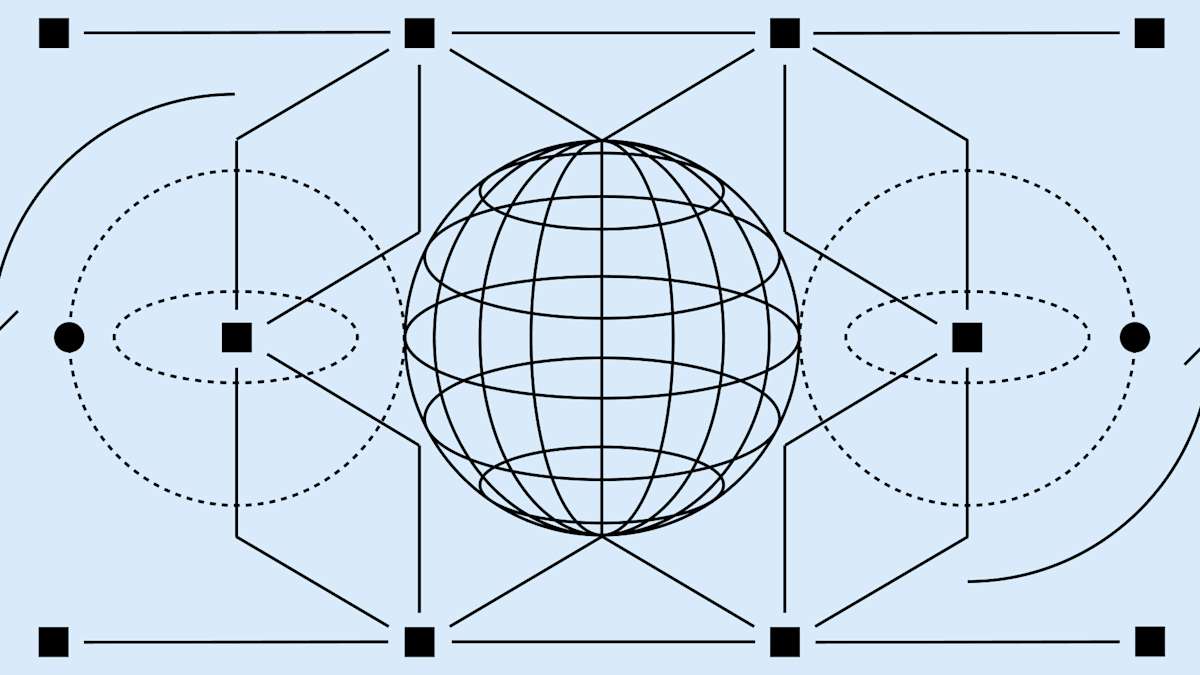 Proving Humanity
Galaxy research report arguing that CAPTCHAs and behavioral bot detection (reCAPTCHAv3, Cloudflare Turnstile) are failing as AI agents reproduce human conduct, for example ChatGPT Agent clicking through Turnstile's checkbox. It shows that Web Bot Auth signatures and Google's AP2 mandates identify the platform or account key but not a distinct person. It proposes reframing "proving humanity" as ensuring every agent traces to one person counted once, covering Sybil, one-person-one-share, accountability and public-count harms. It lays out requirements for a proof-of-personhood credential: strong, private, portable, delegable and accessible. It deliberately does not evaluate specific projects.
 galaxy.comarticleAdded 16 Oct 2026🛡️ Security
- Proving Humanity
Galaxy Research essay arguing that as AI agents become the main way people use the web, the key question shifts from "is this a machine?" to "is a distinct real person behind it, counted once?". It traces CAPTCHA history (distorted text, image puzzles, reCAPTCHAv3 and Turnstile behavioral scoring) and notes ChatGPT Agent passing Cloudflare's checkbox. It reviews Web Bot Auth signatures and Google's AP2 payment mandates, showing both stop at the platform or key and never establish a person. It then covers harms (one-person-one-share abuse, no one to answer for an agent, distorted public counts, collapsing confidence, scaled deception, broken ad economics) and lists the properties a privacy-preserving proof-of-personhood credential needs: strong, private, portable, delegable, accessible.
galaxy.comarticleAdded 16 Oct 2026🧠 AI  Fast post-quantum signature aggregation with lattice SNARKs
a16z crypto announces Aerie, a lattice-SNARK system that aggregates Falcon-512/1024 signatures into one ~66 KiB proof. On an M4 Max laptop it handles 32,768 signatures in 0.65 s (~50k/s), verifies in 54 ms, and costs ~42 bytes per signature. It benchmarks against Orthus and Ethereum's leanVM hash-based XMSS aggregation, and argues that recursion-free lattice aggregation is simpler than hash-only designs. It also covers Falcon's hardware-wallet and side-channel constraints and why private payments need lattice encryption such as ML-KEM.
 a16zcrypto.comarticlePublished and added 16 Oct 2026🛡️ Security
- Fast post-quantum signature aggregation with lattice SNARKs
Aerie is an a16z crypto and LayerZero Labs system that aggregates Falcon-512 and Falcon-1024 lattice signatures into one lattice SNARK. On an Apple M4 Max it aggregates 32,768 Falcon-512 signatures in 0.65 seconds, with 54 ms verification and about 42 bytes per signature. The post compares it with Ethereum's hash-based leanVM and XMSS plan and Orthus, and covers Falcon signing limits on hardware wallets.
 a16zfrontier.comarticleAdded 22 Oct 2026, published 16 Oct 2026🛡️ Security
 Crypto's Quantum Defense Is Being Built in the Open
Bankless article on Eigen Labs' Yukon, a platform for open-research challenges where developers and AI agents try to improve a technical problem. Each submission is automatically benchmarked, and accepted improvements become the baseline for the next attempt. Results include an ~88% cut in the ECDSA.fail quantum resource-cost benchmark, a ~10x speedup in Lighter's proving software, ~2x faster Qwen and 2.6x faster Laguna on Apple hardware via MLX.fast, and cheaper Quantum Safe Bitcoin proofs ($320 down to $59). Newer challenges (HashSmash, sig.golf, better.codes) target hash-function weaknesses, hash-based signatures and post-quantum proofs. All the improvements are theoretical or benchmark-level unless stated as deployed.
bankless.comarticlePublished and added 14 Oct 2026🧠 AI- Crypto's Quantum Defense Is Being Built in the Open
Bankless article on Eigen Labs' Yukon platform, which runs open challenges where researchers and AI agents attack and improve cryptography. It covers ECDSA.fail (quantum circuit cost for attacking Bitcoin/Ethereum ECDSA, cut about 88% from baseline), HashSmash (SHA-256 weakness hunting, so far only on reduced versions), sig.golf (hash-based signatures), StarkWare's Quantum Safe Bitcoin (cost down from about $320 to $59) and better.codes (provable security raised from 64 to about 68 bits). The argument is that public, measurable attack-cost data helps defenders prepare better than withholding circuits does. All gains are theoretical and no quantum computer has run an attack at this scale.
bankless.comarticlePublished and added 14 Oct 2026🛡️ Security  ERC-8443: Quantum Bridge Shield
Draft ERC from Quantova Inc proposing a "Quantum Bridge Shield" for Ethereum bridges. A committee signs the Merkle root of each message batch with RFC 8554 LMS hash-based signatures instead of ECDSA/BLS keys that Shor's algorithm can break. The guard contract requires a strict majority of distinct unfrozen keys, records used leaves, freezes any key that signs a leaf twice, binds digests to domain, chain, guard and epoch, and applies a 60-second delay. The post gives gas costs (LMS W4 height-10 verification about 205k gas, a LayerZero packet 128,683 gas, worst-case rotation 12.44M gas under the EIP-7825 cap) and cites a NioLabs assessment with no critical or high findings. It is relevant as a worked post-quantum migration design for bridge key custody, including hybrid ECDSA+LMS mode and stateful-signature pitfalls such as leaf reuse and rollback.
 ethereum-magicians.orgarticlePublished and added 14 Oct 2026🛡️ Security
 Coinbase, which holds 5% of all bitcoin, wants the quantum fix started now
CoinDesk summarizes Coinbase's recommendations for making Bitcoin quantum-resistant before a cryptographically relevant quantum computer (CRQC) can derive private keys from public keys. The proposals are: a transaction format that can carry new signature types (P2MR/BIP-360, P2TRv2), staged hybrid "1-of-2" spends with ECDSA/Schnorr or a post-quantum key, and stateless options alongside stateful schemes to avoid key-reuse forgery. They also ask that evaluation favor constant-time, RNG-failure-safe implementations, require MPC compatibility, and handle dormant or late-migrating coins as a separate debate. It is a useful overview of the defensive migration design space, but it is secondary reporting and not the primary Coinbase paper.
coindesk.comarticlePublished and added 14 Oct 2026🛡️ Security- Coinbase lays out flexible designs as key priority for Bitcoin’s post-quantum migration
Coinbase's October 2026 position on Bitcoin's post-quantum migration, as reported by The Block. Coinbase, which holds about 5% of bitcoin supply, favors output designs that separate the container from the signature scheme (P2MR/BIP-360, P2TRv2), staged hybrid 1-of-2 spending paths, a stateless option beside stateful signatures, and MPC-compatible schemes for custody. It also wants the abandoned-coins debate run in parallel.
 theblock.coarticleAdded 31 Oct 2026, published 14 Oct 2026🛡️ Security
 Coinbase advances Bitcoin’s post-quantum readiness while holding about 5% of BTC
Summarizes Coinbase's blog post on preparing Bitcoin and custody infrastructure for post-quantum threats. It covers public-key exposure (an estimated 6.7–7M BTC behind already-exposed keys), BIP 360 (P2MR) and P2TRv2 outputs, 1-of-2 hybrid classical/post-quantum spending paths, and the state-reuse forgery risk of stateful signatures. It also covers candidate schemes (ML-DSA, SLH-DSA, FN-DSA, SHRINCS), MPC/HSM compatibility and side-channel tests, and separate handling of dormant, lost and exposed legacy funds.
en.cryptonomist.charticlePublished and added 13 Oct 2026🛡️ Security SDR (Signals Intelligence) for Hackers: Scanning Wireless Devices Using FieldWatch
Overview of FieldWatch, a free open-source Android app that passively listens to Wi-Fi and Bluetooth with the phone's own radios and matches them against an editable catalog of about 250 device signatures (trackers, drones, cameras, body cams, mesh radios). It supports alerts, recorded sessions, path maps, Remote ID drone and pilot location, GNSS interference/spoofing detection and export to TAK/ATAK. The article also covers its limits (no direction finding, no Bluetooth Classic, cellular or full Wi-Fi traffic, pattern matches only) and sideloading from the official GitHub repo on Android 10+.
 hackers-arise.comarticlePublished and added 13 Oct 2026🛡️ Security
 Ledger hardware wallet breach exposes LTE implant stealing recovery phrases
Ledger's Donjon team confirmed on October 10, 2026 a physical implant inside a hardware wallet sold by Malaysia-based reseller CryptoBilis. The implant reads the device display, decodes the 24-word recovery phrase with a microcontroller, and exfiltrates it over LTE via a provisioned eSIM, leaving the Secure Element, OS, transactions and signatures untouched. Onchain investigator Specter traced over $86 million in suspected thefts across Ethereum, Tron and Bitcoin; Ledger advises CryptoBilis buyers to migrate funds to a new device with a new recovery phrase.
en.cryptonomist.charticlePublished and added 13 Oct 2026🛡️ Security Ledger Finds LTE Implant That Stole Recovery Phrases in Suspected $86M Drain
Ledger's Donjon security team confirmed an unauthorized hardware implant inside Ledger signers sold by Southeast Asian reseller CryptoBilis. The implant sits in the enclosure, reads the 24-word recovery phrase from the screen during setup, decodes it with a microcontroller, and exfiltrates it over LTE via a provisioned eSIM, without touching the Secure Element, OS, or signatures. Onchain investigator Specter traced over $86M in suspected thefts across Ethereum, Tron and Bitcoin; Ledger is reviewing reports of tampered devices elsewhere and advises affected buyers to move funds to a new device with a new seed.
decrypt.coarticlePublished and added 13 Oct 2026🛡️ Security How Zcash Plans to Hide Your Keys From AI and Quantum Attacks
Decrypt reports that Zakura, which builds a Zcash full node, expects post-quantum signature opcodes in Zcash in January, to enable hash-based signatures for transparent pools. The plan rotates to a fresh transparent address after every transaction so public keys stay hidden, and adds a WOTS hash-based backup signature. Private information retrieval, shipping this week in the Vizor wallet, stops servers from linking the rotated addresses. It follows Justin Drake's "bunker mode" warning that AI-driven math could break ECDSA. The plan covers only transparent payments, and no activation date has been confirmed.
decrypt.coarticlePublished and added 11 Oct 2026🛡️ Security Zcash developers set January target for quantum-resistant payments after ‘bunker mode’ scare
Zcash developer Roman Akhtariev, writing for the Zakura client team, announced a January target for adding post-quantum signature opcodes supporting hash-based signatures to Zcash's transparent (public) payment pool, which holds about 70% of issued ZEC. The move responds to Ethereum researcher Justin Drake's "bunker mode" warning that AI could soon break the elliptic-curve math behind Bitcoin and Ethereum wallet keys. Zakura has also built a private-information-retrieval balance-lookup tool, now experimentally available in the Vizor wallet, that lets a wallet check address balances without revealing to the server which addresses are linked, separate from the shielded-pool quantum-recovery work still needed to defend against store-now-decrypt-later attacks.
coindesk.comarticlePublished and added 9 Oct 2026🛡️ Security Vitalik Buterin backs crypto ‘bunker mode’ amid rapid AI math advances
Ethereum researcher Justin Drake, backed by Vitalik Buterin, warns that rapid AI progress in mathematics (citing OpenAI's recent batch of math findings and a 10,000-agent solve of Navier-Stokes) could break ECDSA-based wallet signatures before quantum computers ever do, and that lattice-based post-quantum schemes may not be safe either. They recommend a controlled 'bunker mode' migration of crypto holdings to fresh addresses whose public keys have never been exposed on-chain, while cautioning that botched migrations carry their own risk.
 cointelegraph.comarticlePublished and added 8 Oct 2026🛡️ Security
 Vitalik Flags AI Risk to Crypto, Warns Against Rushed Wallet Moves
Vitalik Buterin responds to Ethereum Foundation researcher Justin Drake's bunker mode proposal, agreeing AI-accelerated cryptanalysis could break ECDSA, the signature scheme behind most crypto wallets, in months not years, and that lattice-based schemes like ML-DSA billed as quantum-safe could also take serious hits within two years. Buterin gives practical key-hygiene advice such as keeping funds in addresses that never exposed a public key and rotating multisig signer keys after every operation with offchain signature collection, while warning that botched migrations cost more than hacks.
bankless.comarticlePublished and added 8 Oct 2026🛡️ Security Morning Minute: Ethereum Researcher Says AI May Break Crypto Encryption Before Quantum
A daily crypto-market newsletter segment reporting Ethereum Foundation researcher Justin Drake's warning that AI, not quantum computing, may be the first to break ECDSA — the elliptic-curve signature scheme securing Bitcoin and Ethereum — potentially within months by recovering private keys from exposed public keys using large GPU clusters. Drake calls for industry-wide "bunker mode": migrating self-custodied funds to fresh addresses whose public keys remain hashed/hidden, and names exchanges (Binance, Bitbank, Robinhood, Bitfinex, Tether) he wants to harden cold storage. The article also notes a concurrent Europol report flagging crypto wallets with already-revealed public keys as the main weak point for future quantum/AI attacks, since those cannot be retroactively protected.
decrypt.coarticlePublished and added 8 Oct 2026🛡️ Security Bitcoin and ether holders urged to enter ‘bunker mode’ against possible AI attacks
Ethereum researcher Justin Drake and co-founder Vitalik Buterin warn that rapid AI progress in mathematics could break the elliptic-curve signatures securing Bitcoin and Ethereum wallets within months - far sooner than quantum computers are expected to - urging large holders to enter bunker mode by migrating funds to addresses whose public keys have never been exposed onchain. Buterin also flags that lattice-based post-quantum schemes, the basis of NIST's signature standard, could face similar AI-driven erosion, pushing Ethereum's long-term roadmap toward hash-based signatures instead. The piece grounds the warning in already-documented AI-assisted exploit discovery: a 5-year-old Coldcard hardware-wallet firmware bug drained over 1,367 BTC, BTCPay Server Lightning-node thefts, Core Lightning bugs surfaced via AI-generated audits, and Anthropic's demonstration of AI models writing working exploits against simulated DeFi contracts.
coindesk.comarticlePublished and added 8 Oct 2026🛡️ Security AI risk to crypto wallets: Ethereum researcher warns keys could be cracked in months
Ethereum Foundation researcher Justin Drake warned on October 7, 2026 that advances in AI and mathematics could break ECDSA — the signature scheme securing blockchain transactions — within months, potentially letting an attacker recover a private key in about a week using a large GPU cluster. He urged gradual "bunker mode" preparation rather than panic: rotating funds into fresh addresses whose public keys have never been exposed on-chain, strengthening cold storage, and accelerating Ethereum's move toward hash-based signature schemes such as SPHINCS for critical signers like oracles and L2 security councils.
en.cryptonomist.charticlePublished and added 8 Oct 2026🛡️ Security Ethereum Researcher Says AI May Break Encryption Before Quantum Does
Ethereum Foundation researcher Justin Drake warns that AI-driven mathematical advances could break ECDSA — the signature scheme securing Bitcoin and Ethereum — before quantum computers do, potentially recovering a private key from an exposed public key in about a week using a large GPU cluster. He calls for "bunker mode": a controlled mass migration of funds to fresh addresses whose public keys have never been exposed, urges major custodians (Binance, Bitbank, Robinhood, Bitfinex, Tether) to harden cold storage, and pushes Ethereum to accelerate its move to hash-based (post-quantum) cryptography.
decrypt.coarticlePublished and added 7 Oct 2026🛡️ Security Quantum computers threaten exposed private keys rather than blockchains, Europol warns
Europol's European Cybercrime Center published a "Quantum Computing and Cryptocurrencies" report arguing that Bitcoin's hash-based blockchain history is far more quantum-resistant than the ECDSA public-key cryptography used to control wallets. It estimates roughly 6.9 million bitcoin sit in addresses with exposed public keys (including early pay-to-public-key and long-dormant "Satoshi era" outputs) that a sufficiently powerful quantum computer could eventually use to derive private keys, and cites a 2024 study putting full UTXO migration to quantum-resistant signatures at 76–300 days of cumulative block space, with new post-quantum signatures 10–120x larger than ECDSA.
coindesk.comarticleAdded 8 Oct 2026, published 7 Oct 2026🛡️ Security Someone Scraped 5.6 Billion TikTok Videos and Put the Data on Hugging Face for Free
Decrypt reports that a developer going by "hashfunction," operating under the datasocial account, published a 460GB Parquet dataset of metadata for ~5.6 billion public TikTok videos (captions, hashtags, sound IDs, engagement counts, AI-generated flags) on Hugging Face under CC BY-NC 4.0. The data was obtained by hitting TikTok's private mobile API using generated Android device identities, reverse-engineered request signatures, and a spoofed TLS handshake, bypassing the ToS clause that bars automated scraping; datasocial.ai sells the scraper's source code for $1,699 and offers commercial access, creator profiles, and daily updates. The piece situates this against TikTok's gated official Research Tools and the ongoing Reddit v. Perplexity/SerpApi scraping lawsuit.
decrypt.coarticlePublished and added 6 Oct 2026🛡️ Security
Showing 30 of 57
Show more