 Binance Drained of $5.5 Billion in Suspected Hack, Tether and Circle Freeze $1.8 Billion
Decrypt reports that at least $5.57 billion left Binance-linked hot wallets on Ethereum, Bitcoin and Tron on 29 October 2026, which would be the largest crypto hack on record. On-chain analysts point to an EIP-7702 delegation, installed from a Tornado Cash-funded address minutes before the first sweep. Tether and Circle froze about $1.8 billion. Binance has not confirmed the hack, and how the attacker obtained the signature is unknown.
 decrypt.coarticlePublished and added 29 Oct 2026🛡️ Security
 Rekt - SingularityNET - Rekt
SingularityNET exploit (19 September 2026): attackers with signing authority exposed through a cloud infrastructure breach drained 8.72M FET from the Ethereum bridge converter, then minted about 2.3 billion AGIX, NTX, WMTX and CGV. Rekt's transaction-level reconstruction puts gross liquid proceeds near $2.29M, not the $16.77M headline, and traces laundering via Chainflip, Baltex and THORChain. It notes conversionIn() skipped checkLimits() and trusted a single EOA signature.
 rekt.newswriteupAdded 29 Oct 2026🛡️ Security
 Introducing MavenGate: a supply chain attack method for Java and Android applications | Oversecured Blog
MavenGate is Oversecured's research on hijacking Maven dependencies by buying expired domains behind groupIds on Maven Central and JitPack. It found 6,170 of 33,938 checked domains (18.18%) vulnerable, and tested the attack with its own com.oversecured:hello-world library. It lists defenses (Gradle verification-metadata.xml, PGP signatures) and proposes changes to repository signing.
 oversecured.comwriteupAdded 29 Oct 2026🛡️ Security
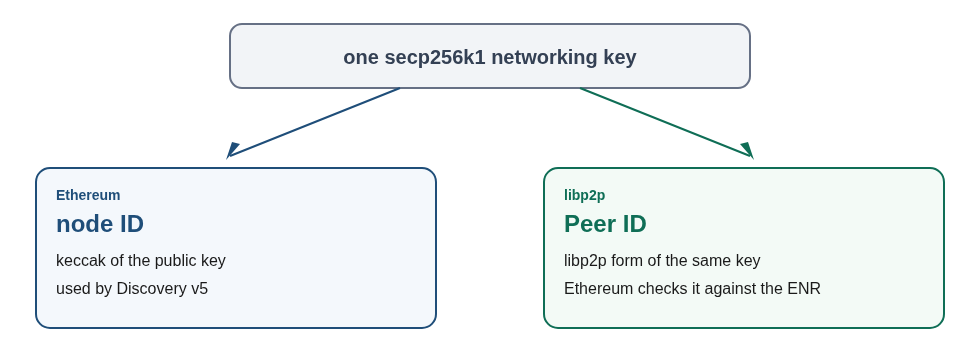 Inventory of PQ P2P Migrations in the Consensus Layer
Inventory of post-quantum migration work for Ethereum consensus-layer networking, by adust09 of Nyx Foundation. It maps three targets: Discovery v5/ENR signatures and key exchange, TLS 1.3 key agreement in QUIC, and libp2p TLS identity binding and CertificateVerify. It covers the 300-byte ENR and 1,280-byte packet limits, why hybrid KEMs do not authenticate peers, and downgrade and DoS concerns. It selects no algorithm or schedule.
 ethresear.charticlePublished and added 27 Oct 2026🛡️ Security
 Falcon Key Recovery from Joint Sampler Leakages
 is an ePrint paper presenting a power side-channel attack on Falcon and FN-DSA that fuses three SamplerZ leakages (exponent class of the center, sign bit, proposal magnitude). It turns them into slab and halfspace constraints solved by softplus interval regression, with no LLL or BKZ. On PQClean Falcon-512 (ARM Cortex-M4) it recovered all 50 keys with at most 34 signatures; on c-fn-dsa it recovered 38 of 50 keys within 200 signatures.
 eprint.iacr.orgpaperAdded 28 Oct 2026, published 27 Oct 2026🛡️ Security
 Bitcoin Wallet Fixes Critical Flaw That Redirected Funds to Attackers
Electrum 4.8.3, released 24 October 2026, fixes a high-severity flaw in the Bitcoin wallet. Rogue servers could suppress a real payment and inject a fake unconfirmed transaction paying an attacker, so a user's fee-bump became the first transaction broadcast. The fix verifies signatures on wallet-owned inputs, but incoming transactions from external senders stay unverified. One user lost funds on 18 October.
decrypt.coarticlePublished and added 26 Oct 2026🛡️ Security Bitcoin wallet bug let rogue servers steal funds when users tried to speed up payments
Electrum, a Bitcoin software wallet, disclosed on 24 October 2026 a flaw where malicious servers swapped pending transactions for fake ones with invalid signatures that the wallet did not check. When users chose Replace-by-Fee to raise the fee, Electrum signed a valid replacement paying the attacker, and at least one user lost funds. Version 4.8.3 adds signature checks; users of only trusted or self-run servers were not exposed.
 coindesk.comarticlePublished and added 26 Oct 2026🛡️ Security
- A Kelsey–Kohno Attack Variant against SHA-2 Message Digests in HSS/LMS and XMSS
Falko Strenzke's ePrint 2026/2635 presents a multi-target second-preimage attack on message hashing in HSS/LMS and XMSS with SHA-256 and SHA-256/192. It herds chaining states from many collected signatures into one state, defeating the key and leaf-index prefix. With 2^64 signatures, SHA-256 cost falls from 2^256 to about 2^166 (2^156 at maximal message length). SHAKE256 parameter sets are unaffected.
eprint.iacr.orgpaperAdded 26 Oct 2026, published 25 Oct 2026🛡️ Security  A hash-only rollup: OP Stack L2 accounts as Lamport-style hash chains, no ECDSA inside the L2
Hash-only rollup: an OP Stack L2 (chain ID 42069000, live since 30 September 2026) where accounts are keccak-256 hash chains and transactions carry no signatures. Spending uses a commit-reveal step through two new transaction types in op-geth. The post describes a flaw the authors found: unauthenticated commits could be overwritten, which allowed preimage front-running. It was fixed with a first-commit-wins rule on 21 October 2026. It lists the remaining limits: L1 ECDSA, no fault proofs, a centralized sequencer, 160-bit addresses and wallet desync.
ethresear.charticlePublished and added 24 Oct 2026🛡️ Security- Chosen Commitments and Certified Decoding Regions in the Adaptive Threshold Schnorr Attack
This IACR ePrint 2026/2632 paper by Demirtaş and Yayla analyses the Crites–Stewart adaptive forgery attack on threshold Schnorr signatures, which needs one call to a sparse linear search oracle (bounded distance decoding of a scaled Reed–Solomon code). It shows that choosing the commitment coefficient vector does not help much: a wrapper adversary with Q challenges succeeds with probability at most QM/p, even if its solvers decode every witness for free. For the six original (N, τ) pairs, M stays below 2^24, so the bound is under 2^-100 after 2^128 challenges at p = 2^252.
eprint.iacr.orgpaperAdded 26 Oct 2026, published 24 Oct 2026🛡️ Security  Electrum wallet security flaw is fixed after a user loses money in fee attack
Electrum 4.8.3, released 24 October 2026, fixes a flaw where a malicious server replaces a user's unconfirmed payment with a conflicting transaction carrying invalid signatures. If the user then bumps the fee with replace-by-fee, the wallet signs a payment to the attacker. One of two reporting users lost funds, and the patch now checks input signatures before accepting such transactions. Bull Bitcoin is adding the same client-side check.
 en.cryptonomist.charticlePublished and added 24 Oct 2026🛡️ Security
- The Exact Bit Security of Hash-Based Signatures
The Exact Bit Security of Hash-Based Signatures is a 2026 IACR ePrint paper that analyses XMSS with 128-bit digests and SLH-DSA-128s in the random oracle model, with proofs formalised in Lean4. Strong unforgeability comes to 127 bits under most accounting modes but only 122 bits if just direct random oracle queries are counted. The authors give matching attacks, and show how resource accounting changes the result.
eprint.iacr.orgpaperAdded 26 Oct 2026, published 24 Oct 2026🛡️ Security - Faster and Smaller Anonymous Credentials from Standardized Signatures
GordieHowe is a language, certifying compiler and zero-knowledge proof system for building anonymous credentials on standardized signatures (ECDSA, RSA, ML-DSA). It proves an ECDSA-signed mobile driving license presentation in 64.8 ms with a 276 KiB proof, 10.1x faster than Google's Longfellow, and an ML-DSA-44 signature in 87.3 ms with at least 116 bits of quantum security. Compiler output and security theorems are checked in Lean. It introduces series-parallel IOPs and extends the BCS transformation in the QROM.
eprint.iacr.orgpaperAdded 24 Oct 2026, published 23 Oct 2026🛡️ Security  Agentic AI Defense: Decode-Time Provenance Binding for MCP
Decode-time provenance binding is a defense for Model Context Protocol agent pipelines against cross-modal trust laundering, where instructions hidden in an email-signature image via LSB, DCT or metadata steganography get decoded by a tool. It combines HMAC-authenticated trust labels, a provenance ledger and context-taint tracking to block critical tool calls. On a real MCP testbed with 24 adaptive payloads, attack success fell from 100% undefended (62.5% for keyword and regex filters) to 0%.
 arxiv.orgpaperAdded 26 Oct 2026, published 22 Oct 2026🛡️ Security
- Balsamic: One-round Threshold UOV from GPU-Accelerated FHE
Balsamic is a complete homomorphic Unbalanced Oil and Vinegar (UOV) signer, used to build one-round threshold UOV signatures from a packed discrete-CKKS FHE circuit. A paired-pivot linear solver and pivot-success certificates allow encrypted retry selection. In 2-out-of-3 semihonest signing, each online partial signature takes 10.7 s on an RTX 6000 Ada and 7.77 s on a GB300, with 5.25 MB per response.
eprint.iacr.orgpaperAdded 24 Oct 2026, published 22 Oct 2026🛡️ Security - Integer Coordinate Families and Threshold RSA Signatures for Any Prime Exponent
Paper by Shivansh Jaiswal and Somitra Sanadhya (IACR ePrint 2026/2601) on integer coordinate families for threshold RSA signatures with prime exponent e. It shows the CT-RSA 2026 Ng-Lau scheme admits trivial forgeries and has a flawed proof. It proposes repaired scheme PiIC and integer secret-sharing scheme PiZ for any prime e and any (t,n), both proven TS-UF-CMA secure under the standard RSA assumption. It also gives super-polynomial coordinate lower bounds for pairwise families.
eprint.iacr.orgpaperAdded 24 Oct 2026, published 22 Oct 2026🛡️ Security  Coinbase's Plan for a Quantum-Safe Bitcoin
Bankless summary of Coinbase's October 2026 proposal for making Bitcoin quantum-safe. It covers upgradeable address designs (BIP-360 P2MR, P2TRv2, hybrid addresses), four candidate signatures (ML-DSA, SLH-DSA, FN-DSA, SHRINCS) with size and stateful-key-reuse trade-offs, a five-stage migration plan, and a separate track for dormant coins with exposed public keys such as Satoshi's.
 bankless.comarticlePublished and added 21 Oct 2026🛡️ Security
- Verifiable Post-Quantum TLS Handshake: Recognizing Implementation Errors of Cryptographic Verification Steps
PQCD-TLS is a post-quantum TLS handshake that binds confirmation codes into chained key derivation, so a faulty signature or KEM verification step causes a key mismatch and handshake failure. The authors build confirmation-code frameworks for ML-DSA and Falcon signatures and for ML-KEM, HQC and DAWN, with unpredictability proofs. Across 48 configurations, handshake latency overhead stays below 1%.
eprint.iacr.orgpaperAdded 24 Oct 2026, published 21 Oct 2026🛡️ Security - SHAKEing SLH-DSA with Non-profiled SCAs
SHAKEing SLH-DSA with Non-profiled SCAs is an eShard ePrint paper (2026/2584) on correlation power analysis of SLH-DSA-SHAKE, the NIST-standardised hash-based signature scheme. It analyses PRF inputs and selection functions, then combines subtrace averaging, partial-then-total CPA and an efficient exhaustive search to recover the full secret seed, enabling universal forgery. On a 32-bit microcontroller the attack needs about 280 to 559 signatures, and the search finishes within 45 minutes on 72 cores.
eprint.iacr.orgpaperAdded 24 Oct 2026, published 21 Oct 2026🛡️ Security - HAETAE on a Diet: Less Stack, Less Time on Low-End Microcontrollers
This ePrint paper presents an optimized HAETAE implementation, a lattice-based post-quantum signature scheme, for Cortex-M4, Cortex-M3, MSP430 and AVR. It keeps polynomials in 16 bits, shares buffers between objects with disjoint lifetimes, and replays Gaussian samples instead of regenerating them. On an ATmega2560, HAETAE-2 key generation, signing and verification run in 8,070 B of SRAM. Stack use drops up to 34% and signing is 1.18-2.51x faster than Low-Stack HAETAE.
eprint.iacr.orgpaperAdded 24 Oct 2026, published 21 Oct 2026🛡️ Security - Fault-Induced Nonce Repetition in Threshold Lattice Signatures: A Reveal-Structure Criterion, Cross-Scheme Analysis, and Detection Boundaries
Fault-Induced Nonce Repetition in Threshold Lattice Signatures is an ePrint paper (2026/2566, Yulong Meng) showing that faulting t devices in a t-of-n threshold ML-DSA deployment recovers the full signing secret, verified on Mithril with exact recovery in 96/96 scan groups. It gives a reveal-structure criterion across Quorus, TALUS and Trilithium, a threshold law m* = (ℓ-1)N+⌈N/K⌉ for imperfect faults, and two-layer transcript detection (305/305 hits, no false positives).
eprint.iacr.orgpaperAdded 21 Oct 2026, published 20 Oct 2026🛡️ Security - FN-DSA on Arm Cortex-M55: Revisiting a Floating-Point Lattice Signature with Native FP64 and Helium
FN-DSA on Arm Cortex-M55 is an ePrint paper presenting the first FN-DSA (NIST post-quantum signature) implementation on this core that reproduces the reference known-answer tests and runs in constant time. It uses the native FP64 FPU for signing and Helium (MVE) for NTT, key-generation FFT and Keccak, with SLOTHY rescheduling. Key generation, signing and verification are up to 1.23x, 1.93x and 1.30x faster than the reference, and four-signature batch verification up to 1.75x.
eprint.iacr.orgpaperPublished and added 20 Oct 2026🛡️ Security  Plex vulnerabilities being exploited in the wild to drop a cryptominer
Honeypot writeup of in-the-wild exploitation of Plex Media Server through the Plex2Shell chain (CVE-2026-96652, -96654, -96655, -96656) in October 2026. Attackers from 45.194.92.222, 91.92.40.202 and 176.65.139.228 used SSRF-style timeline/subscribe requests and downloaded a Docker-named dropper and an XMRig miner from 217.60.194.116. Includes file hashes, a later-seen proxyware sample (myawesomeproxy), lab pcaps for signatures and links to sandbox reports.
 boredhackerblog.infowriteupAdded 20 Oct 2026, published 19 Oct 2026🛡️ Security
- A Note on the Security of ECDSA with Presignatures or Biased Nonces
A Note on the Security of ECDSA with Presignatures or Biased Nonces (Couteau and Makriyannis, ePrint 2026/2545) examines alternative ECDSA modes built for faster distributed signing. It shows that the security of some variants used in deployed libraries is equivalent, in the generic group and random oracle model, to the average-case hardness of k-SUM. It also proves fine-grained lower bounds on generic group attacks against modes analyzed by Groth and Shoup (Eurocrypt 2022).
eprint.iacr.orgpaperAdded 20 Oct 2026, published 19 Oct 2026🛡️ Security - Efficient and Compact High-order Masking Raccoon on Memory Constrained Devices
The paper presents the first efficient, compact implementation of high-order masked Raccoon (lattice-based signature, CRYPTO 2024) on ARM Cortex-M4, up to 32 masking orders. It uses 3+3+3 layer-merged 32-bit NTT/INTT with lazy reduction, a negative double Montgomery reduction, and one-shot SHAKE256 sampling (at least 1.80x faster). It beats the reference by 1.85x-2.25x and masked Dilithium3 at orders 2, 4 and 8. Second-order leakage tests show DPA resistance once micro-architectural transitional leakage is mitigated.
eprint.iacr.orgpaperAdded 20 Oct 2026, published 19 Oct 2026🛡️ Security - Revisiting the Security of VDOO
Revisiting the Security of VDOO is an ePrint paper (October 2026) on VDOO, a multivariate signature scheme submitted to China's NGCC program. It models VDOO as a multilayer Rainbow construction, keeps only the last oil space to get a generalized UOV instance, and applies wedge attacks. For the 512-bit parameter set it estimates 2^432 gates (reconciliation) and 2^379 gates (intersection), below the claimed level and the specification's figures.
eprint.iacr.orgpaperAdded 19 Oct 2026, published 18 Oct 2026🛡️ Security - Enjoy FAEST on Hardware: Efficient and Novel Hardware Acceleration of Emerging Post-Quantum Digital Signature Scheme FAEST
This ePrint paper (2026/2525, October 2026) by Brendan Funk and Jiafeng Xie presents the first hardware accelerator for FAEST, an MPC-in-the-head post-quantum signature in NIST's Round 3 additional-signature process. It analyses FAEST's compute-heavy operations, builds them into hardware blocks, and adds an L1-EM-fast variant. The authors report at least 98% lower equivalent area-delay product than the recent complete SDitH design at the same security level.
eprint.iacr.orgpaperAdded 19 Oct 2026, published 18 Oct 2026🛡️ Security - Efficient Fixed-Point Implementation of Mitaka
Presents a fixed-point C implementation of the Mitaka signing algorithm, a simpler, parallelizable Falcon (FN-DSA) variant. It replaces MitakaZ's wide integral Gram root decomposition with a fixed-point square Cholesky decomposition, which cuts the cost of integer Gaussian sampling, and proves bounds on intermediate values and representation errors without empirical assumptions. Signing averages 361 kcycles (Mitaka-512) and 707 kcycles (Mitaka-1024) on AVX2, and 4.0 and 7.8 Mcycles on an STM32F411 Cortex-M4F. This makes floating-point-free lattice signatures practical on constrained devices.
eprint.iacr.orgpaperPublished and added 17 Oct 2026🛡️ Security - DPA-style Attacks on VOLE-in-the-Head Signature Schemes
Presents the first DPA-style power side-channel attack framework against VOLE-in-the-Head signature schemes, targeting the secret witness whose recovery enables forging signatures on arbitrary messages. It analyzes leakage from sensitive intermediate values in VOLE correlations and proposes six attack classes (two vertical, four horizontal) on FAEST and SDitH, both in NIST's third round of additional signatures. Attacks are validated with simulated leakage under varying noise and real measurements on three ARM Cortex-M4 devices.
eprint.iacr.orgpaperPublished and added 17 Oct 2026🛡️ Security  Claude reveals ECDSA curve origins
Anthropic's Frontier Red Team reports that Claude recovered how the NIST P-192/224/256/384/521 and ANSI X9.62 curve seeds were generated. They are outputs of the C library's lrand48 LCG seeded with 1997–98 Unix timestamps, not hashes of a passphrase. The method scanned for weak-PRNG signatures, then used LLL lattice reduction to recover the truncated LCG state and stepped it back to srand48 initialization. Claude also traced some base points to the FreeLIP/NTL random generator. Reproducible Python is included. The authors say this is not an attack and makes deliberate backdoors less plausible. The B-163 seed and the base points of P-224/256/384/521 and the binary curves remain unexplained.
 anthropic.comwriteupAdded 17 Oct 2026, published 16 Oct 2026🛡️ Security
Showing 30 of 160
Show more