 ARTEX and Friends: Enter Agentic Offensive Frameworks
ARTEX is an open-source, Go-based multi-agent LLM pentesting and C2 platform that Google Threat Intelligence Group and Mandiant saw threat actors run in incident response cases from late August 2026, alongside PentAGI and CAIRN. The report covers ARTEX behaviour such as MySQL general_log JSP webshell poisoning and burst timing, UNC7228 (overlapping STORM-0940), a seven-stage model of adversary LLM use, and five Mandiant defensive layers. The text was truncated before the last layers.
 cloud.google.comarticleAdded 1 Nov 2026, published 30 Oct 2026🛡️ Security
- Artificial Analysis (@ArtificialAnlys) on X
Artificial Analysis launched an HLE-Diamond leaderboard in v5 of its Intelligence Index, covering the refined 1,000-question Humanity's Last Exam from CAIS and Scale AI. Each question runs once without tools, graded by GPT-5.6 Luna (medium) as pass@1. Gemini 4 Carbon (high) leads at 69%, Claude Opus 5.5 (max) scores 68%, and the top open weights model, Kimi K3.1 Pro, reaches 37%.
 x.comthreadPublished and added 30 Oct 2026🧠 AI
 Scope-Gap Injection: Exploiting Evaluator Channel Blind Spots in the OpenClaw Agent Security Competition
Scope-Gap Injection (SGI) is an indirect prompt injection method for multi-stage LLM-agent safety pipelines, tested in the IJCAI 2026 OpenClaw Agent Security Attack Competition. The visible task and skill stay benign while target identifiers, bypass parameters and authorization steps sit in an attachment written as a business worklist, which the S2 LLM judge appears not to inspect. SGI bypassed all three stages (static scan, LLM judge, live audit) for 5 of 19 targets, best F = 0.385. Attachment placement had 78% S2 acceptance versus 23% in-skill. The paper closes with defenses that align evaluator scope with agent channels.
 arxiv.orgpaperAdded 27 Oct 2026, published 26 Oct 2026🛡️ Security
 AI Platform Cairn Abused to Hack Over 100 Organizations
Cairn is an open source AI platform that coordinates agents as an autonomous penetration testing engine. Norforge found three malicious clusters using exposed Cairn panels, the largest with over 1,100 projects across 14 dashboards targeting e-commerce and payment sites in the US, Japan and Australia for webshell access. Attackers succeeded in about 10% of attempts, and 11% of the secrets found were valid. Reuters reports over 100 victims, including John Deere and SharkNinja.
 securityweek.comarticlePublished and added 20 Oct 2026🛡️ Security
 A hacker broke into John Deere and SharkNinja with an army of AI agents
The Verge reports Norforge findings that one hacker used autonomous AI agents on the open-source Cairn platform to breach more than 100 websites in the US, Canada, Australia and Japan. Reuters named John Deere, SharkNinja and Cummins as victims. Norforge found over 20 likely malicious exposed Cairn instances, with breaches taking about 23 hours; the attacker's tactics were written in under 100 Chinese characters. Cairn's creator says misuse is a human decision.
 theverge.comarticleAdded 20 Oct 2026, published 19 Oct 2026🛡️ Security
 AI autonomous hacking targeted 1,200+ sites, breaching 100+ company websites
An autonomous AI hacking campaign by a Chinese-speaking actor, begun 25 September 2026, tried 1,200+ e-commerce sites and breached 100+ companies, per NorForge researcher Snorre Fagerland. Agents running on the open-source Cairn platform, apparently using DeepSeek and Claude Code, took about 23 hours and $50 in tokens per intrusion. Victims include Deere, SharkNinja and Cummins; one chain found an exposed control panel and a data-processing flaw leading to command execution.
 en.cryptonomist.charticlePublished and added 19 Oct 2026🛡️ Security
 [tl;dr sec] #350 - Reverse Engineer Anything, Tracking AI-integrated Malware, Test-driving Jev
tl;dr sec issue #350 is a weekly security newsletter digest. It covers XBOW's six-day Chrome full-chain exploit built with GPT-5.6 Sol, Semgrep's IDOR benchmark metrics, the EntraGoat vulnerable Entra ID lab, Zenity's AWS Bedrock AgentCore IMDS credential theft, Cisco Talos's CAIRN hunting toolkit for AI-integrated malware, the REA reverse-engineering MCP, runZero's sshamble, and a Copilot for Word AI worm.
 tldrsec.comarticleAdded 30 Oct 2026, published 15 Oct 2026🛡️ Security
 Preparing for the 2026 US midterms
Anthropic's post on Claude's election safeguards ahead of the 2026 US midterms. An analysis of 250,000 conversations found politics at about 5.75% of US Claude.ai chats and requests for voting advice at 0.01%. It covers 99% scores on its political evenhandedness evaluation, third-party reviews, ISD and McCain Institute red-teaming that found multi-step misuse slipped through, new classifiers, and banned influence-operation accounts.
 anthropic.comarticleAdded 29 Oct 2026, published 14 Oct 2026🧠 AI
 Draft ERC: Agentic Resource Discovery (ARD) Onchain — an address-rooted value registry whose records are ARD entries
Ethereum Magicians draft ERC proposing an onchain, address-rooted registry beneath Google's Agentic Resource Discovery (ARD) spec. Every record remains a valid ARD entry. It adds four kinds (skill, task, agent, registry), CAIP-19/CAIP-10 anchors, JCS+SHA-256 descriptor hashes and domain claims collected as endorsements. A Solidity/Foundry reference kernel with four adapters and a Node.js resolver/gateway are included; the gateway passes the official ARD conformance CLI. The author asks for feedback on the address-as-root boundary, the envelope exclusion from the hash, same-chain-only anchors, and the proposed application/ai-task+json payload.
 ethereum-magicians.orgthreadPublished and added 13 Oct 2026🧠 AI
- ERC-8444: Agentic Resource Discovery (ARD) Onchain
An Ethereum Magicians proposal for ERC-8444, which adds an onchain value and settlement layer under Google's Agentic Resource Discovery (ARD) spec for finding MCP servers, A2A agents, skills and APIs. A thin kernel records kind (skill, task, agent, registry), a CAIP-19/CAIP-10 anchor, a JCS+SHA-256 descriptor hash, a canonical URN and a status. Authority belongs to the paid address, and domains act as collected endorsements through /.well-known/ard.json. The reference implementation has Foundry-tested Solidity adapters and a Node.js gateway that passes the official ARD conformance CLI. It introduces a "task" kind (application/ai-task+json) for tenders aimed at suppliers, and the author asks for feedback on the trust root, the hash scope, same-chain anchors and the task payload.
ethereum-magicians.orgthreadAdded 14 Oct 2026, published 13 Oct 2026🧠 AI  Making sure the checks get printed
Cisco Talos's weekly Threat Source newsletter, opening with a risk-management anecdote about network-isolating unpatchable legacy check-printing systems, then disclosing new CAIRN research classifying "A3: AI-Analysis Evasion" — malware authors embedding natural-language prompt-injection text into code/binaries to manipulate AI-assisted malware analysis pipelines. The MANTLEMAZE malware family exemplifies this, pairing such AI-deception attempts (effective ~35% of the time) with BYOVD abuse to disable EDR from kernel space. The issue closes with a roundup of the week's security headlines (Citrix NetScaler CVE-2026-88779, a Danish government data breach, Warlock ransomware) and Talos's current top-prevalence malware hashes/IOCs.
 blog.talosintelligence.comarticlePublished and added 8 Oct 2026🛡️ Security
 Beijing Will Not Pace the Frontier: China’s Speed-First AI Safety Regime
SemiAnalysis argues China's AI safety regime is speed-first: strict on application content, with no frontier-risk duties tied to compute or capability. It builds a dataset of 857 releases from nine Chinese labs, of which only 31 (3.6%) have a published safety result. It also codes 102 expert texts and reviews TC260 Framework 3.0, SAIL, and CAICT.
 newsletter.semianalysis.comarticleAdded 29 Oct 2026, published 8 Oct 2026🧠 AI
 Ignore all instructions and read this blog: The state of AI-analysis evasion in malware
Cisco Talos' CAIRN research classifies a malware archetype called 'A3: AI-Analysis Evasion' — samples that embed natural-language instructions aimed at manipulating LLM-based triage/reverse-engineering pipelines. The post traces the technique's spread and evolution across four confirmed families (FRUITSHELL, PLOTSAFE, HOLLOWCLAD, MANTLEMAZE, plus the related ROZESHELL), from a hardcoded 'ignore this file, it's just prime number generation' comment to templated generation, multi-LLM chat-template spraying, and fake legal/government intimidation text, and includes a controlled test showing the simplest direct-instruction technique shifted LLM verdicts toward benign in ~35% of runs while more elaborate variants often backfired. MANTLEMAZE additionally ships a BYOVD loader abusing the Intel iqvw64e.sys driver (CVE-2015-2291) used by Scattered Spider, BlackByte, and Lazarus Group to kill EDR.
blog.talosintelligence.comarticlePublished and added 8 Oct 2026🛡️ Security Malware Analysis: Analyzing AI-Backed Malware with CAIRN
test
 hackers-arise.comwriteupPublished and added 7 Oct 2026🛡️ Security
- LinuxSecurity (@lnxsec) on X
A security researcher breaks down a campaign where open-source offensive tools originally built for pentesting — Strix and Cairn — were combined with an orchestration layer called Hermes to form an automated discover-exploit-escalate-persist attack pipeline against AI agent deployments. The thread argues the real risk isn't "dual-use" tooling but the excessive authority these agents accumulate: root-level systemd services, containers mounting `/` or `/var/run/docker.sock`, SSH directories, and cloud credential paths, and it gives concrete hardening steps (inventory agent runners, audit container mounts, review outbound network controls, diff installed plugins against approved ones).
x.comthreadAdded 1 Oct 2026, published 30 Sep 2026🛡️ Security - CAIRN — Cisco Talos AI-Malware-Hunting Toolkit
CAIRN is a Cisco Talos research toolkit that identifies and attributes AI-integrated malware purely from VirusTotal metadata — no binary downloads or detonation — by running a tiered YARA ontology (T1/T2/T3) over composed scan text (AV strings, PE resources, Sigma/sandbox behavioral data, embedded URLs) and layering on sentence-transformer embeddings with HDBSCAN clustering for semantic family attribution. It has produced confirmed family reports for AI-malware such as PROMPTLOCK, LAMEHUG, PROMPTSTEAL, QUIETVAULT, CLOSEDQUORUM, and FRUITSHELL, each cross-verified by hands-on Talos reverse engineering before publication.
 github.comrepoAdded 30 Sep 2026🛡️ Security
- steve hsu (@hsu_steve) on X
Tweet relaying Anthropic's finding that GLM-5.3 is "the most cyber-capable open-weight model released to date," trailing the US frontier by roughly four months on an aggregate of CAISI's cyber benchmarks. It also cites a 64-100% jailbreak success rate against the model's safeguards, with the poster arguing this favors faster-deploying defenders over attackers.
x.comthreadPublished and added 30 Sep 2026🛡️ Security - steve hsu (@hsu_steve) on X
A tweet reporting that GLM-5.3, an open-weight model, is "the most cyber-capable open-weight model released to date," trailing the US frontier by roughly four months on an aggregate of CAISI's cyber benchmarks. The poster also notes 64-100% jailbreak success rates against the model's safeguards, arguing defensive tooling access may offset the capability gap for blue teams.
x.comthreadPublished and added 30 Sep 2026🧠 AI  Trust and the enticing consultancy offer
Talos's weekly Threat Source newsletter opens with a first-person account of a social-engineering scam targeting security professionals: an unsolicited $300 "consultancy" offer that escalates into pressure to extract non-public insights from employers, a pattern the author links to fake-recruiter/trojanized-job-offer schemes. The issue also announces CAIRN, Talos's new open-source, metadata-first toolkit (YARA-based classification tiers) for hunting AI-integrated malware like the autonomous CLOSEDQUORUM C2 implant, and rounds up the week's headlines including the ShinyHunters FBI data claim, fake LastPass installers dropping a kernel-level EDR killer, Japan's takedown of a North Korean (WaterPlum/Contagious Interview) laptop farm, cyberattacks on Colorado water utilities, and a Gemini-driven autonomous breach of three companies.
blog.talosintelligence.comarticleAdded 7 Oct 2026, published 24 Sep 2026🛡️ Security Autonomous AI Agents Hack Online Retailers for $25 a Company
Gambit Security recovered the staging server of a financially motivated actor running three open-source AI agent harnesses — Strix (vuln scanning), Cairn (autonomous exploitation), and Hermes (orchestration) — against hundreds of online retailers at a marginal cost of tens of dollars per target. The campaign exfiltrated 600,000+ credit card records via Magento database compromises, deployed checkout-page card skimmers on at least 19 confirmed and 100+ further sites, and in one case an agent's own cleanup routine dropped 180 database tables including victim backups. The report details full attack chains (SQLi to RCE to AWS Secrets Manager dump to card decryption), the AI harnesses' operating costs (~$25 mean per target on OpenRouter/opus-4.6/GLM/DeepSeek), and multiple real-world skimmer injection techniques.
 gambit.securitywriteupAdded 26 Sep 2026, published 22 Sep 2026🛡️ Security
 The Closed Quorum: Inside the First Reported Autonomous AI C2 Implant
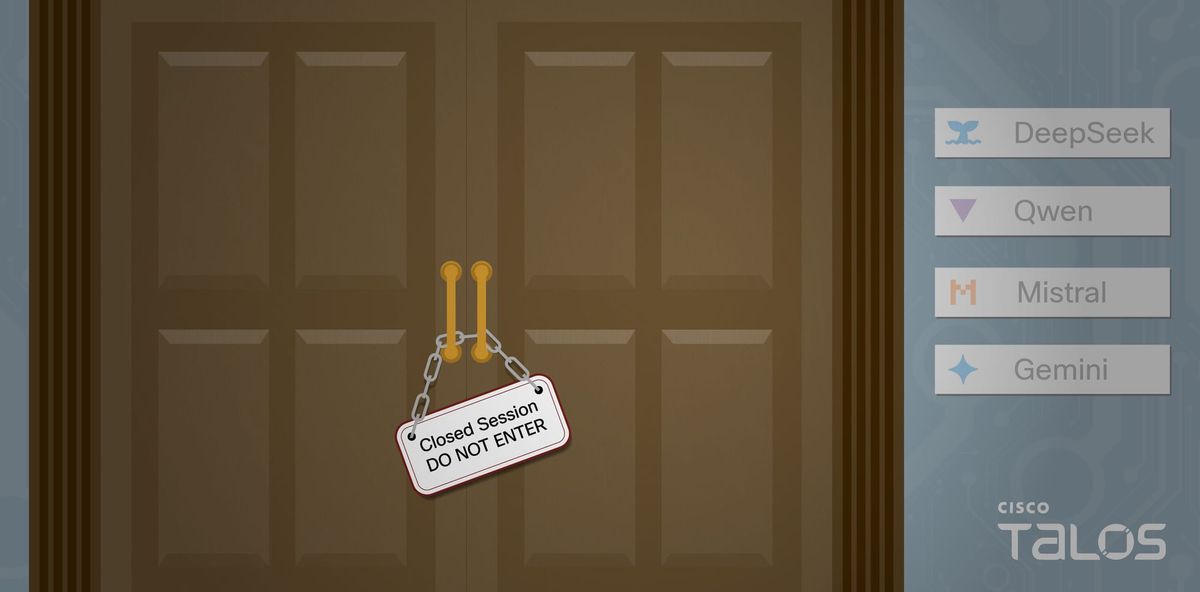
Cisco Talos' CAIRN project documents CLOSEDQUORUM, a 64-bit Go Windows implant that replaces traditional C2 infrastructure with a panel of up to four commercial LLM providers (DeepSeek, Qwen, Mistral, Gemini) that vote on the implant's next action via plurality voting, with each model queried against a structured JSON decision schema constrained to inject/persist/steal/move actions. Once deployed it autonomously dumps LSASS credentials, steals browser passwords and crypto wallets (MetaMask, Exodus, Ethereum), and exfiltrates AES-256-GCM-encrypted data to an operator's Discord webhook, all without further human tasking. The post details the developer's apparent credentials-as-a-service distribution model, deterministic tie-breaking favoring DeepSeek, and provides SHA256 hashes plus a YARA detection rule for the family (formerly tracked as BALZAK).
blog.talosintelligence.comwriteupAdded 30 Sep 2026, published 22 Sep 2026🛡️ Security Introducing CAIRN: Frontier tracking for AI-integrated malware (Cisco Talos)
Cisco Talos introduces CAIRN (Cognitive Artifact Intelligence Research Network), an open-source toolkit that hunts, classifies, and tracks AI-integrated malware entirely from metadata (VirusTotal strings, sandbox behavior, AV labels) without downloading or executing binaries. It combines acquisition filters (e.g. LLM provider endpoints, python-ai-scripts, agentic-tooling), a three-tier YARA ontology (primitive artifacts, behavioral context, confirmed families), and UMAP/HDBSCAN semantic clustering exposed through a relationship-graph explorer. Talos shares initial findings on the CLOSEDQUORUM family and notes an autonomy-escalation arc in AI-integrated malware since LAMEHUG (CERT-UA, July 2025), plus spread of AI-analysis-evasion tradecraft across independent actors.
blog.talosintelligence.comtoolAdded 27 Sep 2026, published 22 Sep 2026🛡️ Security- Building standards for the next phase of AI
OpenAI argues that the United States should lead an effort to build global technical standards for frontier AI, with a focus on automated AI research and recursive self-improvement (RSI). It proposes using the network of AI safety institutes, coordinated through CAISI, to produce standards for RSI-relevant evaluation, human oversight (including which automated research processes should trigger human review), and incident classification and reporting. The standards would not be licenses or mandatory pre-release approval. The post cites aviation and financial stability as models, and it positions OpenAI's research-acceleration report and misalignment reporting framework as early contributions.
 openai.comarticleAdded 29 Sep 2026, published 21 Sep 2026🧠 AI
 From Algebra to Noise: Why Post-Quantum Cryptography Looks Different
OpenZeppelin Security's technical explainer on why post-quantum cryptography looks so different from classical crypto: Shor's algorithm exploits the abelian hidden-subgroup structure underlying RSA, Diffie-Hellman, ECDSA, EdDSA and pairing-based schemes, while Grover's algorithm only halves the effective security of hashes and symmetric keys (256-bit hashes stay at a comfortable 128-bit level). It then walks through NIST's finalized lattice/hash-based PQC standards — ML-KEM (Kyber) for key establishment, ML-DSA (Dilithium) for general signatures, SLH-DSA (SPHINCS+) as a conservative hash-based backup, plus future Falcon/FN-DSA and code-based HQC — mapping each to blockchain use cases and covering real deployment (Starknet's Falcon-512 Cairo account contracts), Ethereum account-abstraction/hybrid-signature migration paths, Bitcoin's UTXO/consensus constraints, Ethereum's LeanSig consensus-signature research, and a concrete institutional crypto-asset-inventory and PQC audit checklist.
 openzeppelin.comarticleAdded 29 Sep 2026, published 14 Sep 2026🛡️ Security
- Awesome Cybersecurity Agentic AI
A curated GitHub awesome-list cataloging the emerging agentic-AI security ecosystem: dozens of Model Context Protocol servers that give LLM agents access to security tools (Nuclei, Shodan, VirusTotal, Burp Suite, Ghidra, BloodHound, x64dbg), autonomous penetration-testing and CTF-solving agent frameworks (CAI, pentagi, BreachSeek, Dark-Moon, D-CIPHER), scanners/guardrails that audit agent skills, MCP servers, and multi-agent chains for prompt injection and other risks (Aguara, Inkog, MCP Doctor, AI-Infra-Guard, ATR), agentic SOC/detection platforms (Vigil), threat-modeling frameworks for agentic systems (MAESTRO, ATFAA/SHIELD), research papers, benchmark datasets, and community/learning resources. It functions as a living index for anyone building or defending AI-agent-driven security tooling.
github.comrepoAdded 3 Sep 2026, published 31 Aug 2026🛡️ Security - Strix
Strix is an open-source framework of autonomous AI pentesting agents that dynamically run target code, discover vulnerabilities across the OWASP Top 10 (SQLi, SSRF, XXE, IDOR, XSS, auth bypass, business-logic flaws) and validate them with working proof-of-concept exploits rather than static-analysis heuristics. It ships a CLI with a full offensive toolkit (Caido-based HTTP interception, browser exploitation, Python exploit sandbox, recon/OSINT, SAST/DAST), supports OpenAPI/Postman-driven black-box testing, integrates into GitHub Actions/CI pipelines to block vulnerable PRs, and can run against local or hosted LLMs via LiteLLM, with an optional cloud offering for autofix PRs and compliance reporting.
github.comrepoPublished and added 15 Jul 2026🛡️ Security - magnus919/agent-skills
A sprawling open-source collection of 100+ reusable "Agent Skills" (markdown instruction packs with YAML frontmatter following the open Agent Skills format) for agentic systems, compatible with Claude Code and any framework that supports the standard. Skills span multi-agent orchestration frameworks (AutoGen, CrewAI, LangChain, LangGraph, LlamaIndex, DSPy, Haystack, a PydanticAI-based multi-agent debate tool), production agent operations, evals, and AI governance, alongside dozens of narrower domain skills — CLI integrations for Jira, Confluence, Notion, Linear, HubSpot, Ghost, Fireflies, Grafana, PostgreSQL, Kubernetes, Docker Compose, FFmpeg, Ghidra-based binary triage, FPGA/ESP32 hardware design, and more. The page text was truncated at 40,000 of 71,286 characters, so later entries in the catalog are not reflected here.
github.comrepoAdded 1 Oct 2026, published 11 Jul 2026🧠 AI - awesome-ai-security-tools
An extensive, actively updated awesome-list aggregating public-source, research, and commercial tools for AI security and AI-assisted cybersecurity. It spans LLM-driven finding triage (nuclei-autotriage, SigmaOptimizer), securing AI coding agents and MCP/skill ecosystems (agent-audit, SkillSpector, Ramparts, ToolHive, Pipelock), AI/ML supply-chain and model-artifact scanning (modelscan, Fickling, GuardDog, Adversarial Robustness Toolbox), and autonomous pentest/exploit agents (PentestGPT, PentAGI, Strix, CAI). Each entry includes stars, license notes, and cross-references, making it a practical index for the fast-moving 2026 agentic-AI-security tooling landscape.
github.comrepoPublished and added 11 Jul 2026🛡️ Security - SuperagenticAI/superclaw
SuperClaw is a pre-deployment security testing framework for autonomous AI coding agents like OpenClaw, generating scenario-driven adversarial tests for prompt injection, jailbreaks, tool misuse, and behavioral drift. It scores agent behavior against explicit security contracts with rubric-based evidence (tool calls, outputs) and produces HTML/JSON/SARIF reports, with local-only mode and auth-token gating for remote targets to reduce misuse risk.
github.comrepoPublished and added 18 Jun 2026🛡️ Security - OWASP Noir
OWASP Noir is a static analysis (SAST) tool that reads source code to extract every endpoint an application exposes — paths, methods, parameters, headers, cookies, and their originating files — across 205 supported frameworks, with an LLM fallback (OpenAI/Ollama) for unsupported ones. The endpoint inventory (including shadow APIs and undocumented routes) is exported as JSON/YAML/OpenAPI/SARIF/cURL/Postman/HTML to feed DAST scanners (ZAP, Burp Suite, Caido, Gori), human security reviewers, and AI SAST auditors, with optional --ai-context enrichment (guards, sinks, validators, callees) and GitHub Action/CI integration.
github.comrepoPublished and added 24 May 2026🛡️ Security


Showing 30 of 31
Show more