 Was I wrong about open models & cyber risks?
Interconnects post in which Nathan Lambert revisits his claim that an open-weight Claude Mythos would have been survivable. He argues GLM-5.3 already crosses the capability threshold with little visible societal change, and quotes Rob Wiblin, Anthropic and Zvi Mowshowitz as examples of exaggerated warnings. He cites Epoch AI's Firefox exploit built with GLM-5.3, and treats the recent vulnerability surge as an ecosystem trend driven by AI capability and diffusion, not open versus closed models.
 interconnects.aiarticlePublished and added 30 Oct 2026🧠 AI
 Welcome Le Chonk: Mistral Large 4 on Hugging Face
Mistral Large 4 (Le Chonk) is a multimodal, multilingual Mixture-of-Experts model with about 1T total and 49B active parameters and a 1M-token context, released under the Mistral Ecosystem Open-Weight License. The post covers its MLA and DeepSeek Sparse Attention architecture, a 1.6B Pixtral encoder, and benchmarks including 82% on the Artificial Analysis Cyber Index and 93% on Cybench. It gives run recipes for transformers, vLLM, llama.cpp, TRL fine-tuning and Inference Endpoints.
 huggingface.coarticlePublished and added 29 Oct 2026🧠 AI
 The Policies of Programming Language Ecosystems: A "Qualitative" Analysis
The Policies of Programming Language Ecosystems is an October 2026 arXiv paper (cs.SE) that compares the policies of eight programming language ecosystems, including CRAN for R, across 38 policy categories. Three authors coded the policies with moderate agreement. Malware, intellectual property and content removal are covered everywhere, while package size limits, metric manipulation, typosquatting and binary uploads diverge.
 arxiv.orgpaperAdded 28 Oct 2026, published 25 Oct 2026🛡️ Security
- ENISA Technical Advisory for Software Bill of Materials
ENISA Technical Advisory for Software Bill of Materials is practical guidance on SBOM adoption for organizations, especially micro, small and medium enterprises and open-source stewards. It sets out an SBOM implementation architecture and data flows across a defined lifecycle, an indicative SBOM threat model with targeted risks, and measures for the SBOM ecosystem. It aligns with the ENISA Secure by Design and Default Playbook and supports Cyber Resilience Act compliance.
 enisa.europa.euadvisoryAdded 23 Oct 2026🛡️ Security
- One parser, two bugs, many routers: Exploiting Broadcom WiFi across eCos, Linux
Long-form write-up of a Hexacon 2026 talk on a WPS EAP reassembly overflow in Broadcom's proprietary 802.11 stack, present since 2010 and incompletely patched in 2018. It is remotely triggerable over WiFi without the network key. It gives information disclosure and code execution on eCos (BCM3380, BCM3383, BCM33834) and Linux (BCM3390, BCM65xx, BCM68xx) platforms. Exploited on Belgian ISP routers from Proximus, VOO and Orange. Includes a 90-day disclosure timeline, and Broadcom refused to assign a CVE.
 quentinkaiser.bewriteupAdded 19 Oct 2026, published 16 Oct 2026🛡️ Security
 Trail of Bits (@trailofbits) on X
Trail of Bits post announcing research that tested 25 package managers against a simulated malicious repository serving swapped code for the same package and version. Without a lockfile only Go and vcpkg verified every download; with a lockfile fewer than half did. This undercuts the assumption that lockfiles make dependencies immutable and shows hash/integrity verification gaps across ecosystems.
 x.comthreadAdded 18 Oct 2026, published 16 Oct 2026🛡️ Security
 The hidden network: Inside the phishing infrastructure ecosystem powering global cybercrime
Microsoft Threat Intelligence maps a Chinese-language cybercrime ecosystem: the YAM Store (Storm-3119), an initial access broker that hijacks Microsoft 365/Azure Education tenants and resells accounts, licenses and SharePoint/OneDrive storage, and the Storm-2990 phishing kits (CoGUI, Haozi, Iron Man System) sold via Telegram. It details the five-stage broker pipeline (app-only client-secret abuse, PnP Management Shell service principal, Graph permissions, Cloudflare DNS management), kit evasion features (geofencing, fake CAPTCHA, WebSocket/Telegram live interaction, 2,335+ templates), downstream device-code phishing and card fraud, and lists mitigations such as passkeys, phishing-resistant MFA and Conditional Access. Microsoft's DCU facilitated a disruption with law enforcement; kits sent over one billion messages since January 2026.
 microsoft.comarticlePublished and added 14 Oct 2026🛡️ Security
 New research: malware in open source ecosystems surges 14x as attackers hijack trusted packages | Endor Labs
Endor Labs summarizes its report "Malware in the Open Source Ecosystem", built from a survey of 605 IT professionals plus analysis of OSV advisories and npm metadata. Over 90% of all OSS malware advisories were filed in 2025, and npm account-takeover advisories rose about 12x (930 of 1,011 ever recorded), often hitting heavily downloaded packages. It also covers the TeamPCP campaign across GitHub Actions, Docker Hub, npm, OpenVSX and PyPI, the axios compromise, and survey findings: only 21% enforce cooldown periods, 51% found malicious packages in 2025, and ownership of the problem is fragmented.
 endorlabs.comarticlePublished and added 12 Oct 2026🛡️ Security
 UK slaps sanctions on three crypto exchanges over alleged Russia links
The UK Foreign Office sanctioned crypto exchanges Cryptomus, Heleket and Certa Payments (all operated by Canadian-registered Xeltox Enterprises) plus Kyrgyzstan's TokenSpot and payment processors Processing KG (VexPay) and Tsunami Payments, as part of 38 new designations targeting Russia sanctions-evasion networks. Two of the sanctioned firms allegedly processed transactions tied to A7, a Kremlin-backed network whose ruble-pegged A7A5 stablecoin is used to bypass financial restrictions and which claims to have moved over $90 billion. The action follows earlier UK sanctions on Garantex and Grinex and complements US and EU actions against the same A7/A7A5 ecosystem.
 coindesk.comarticlePublished and added 9 Oct 2026🛡️ Security
 The OpenSourceMalware Show #24
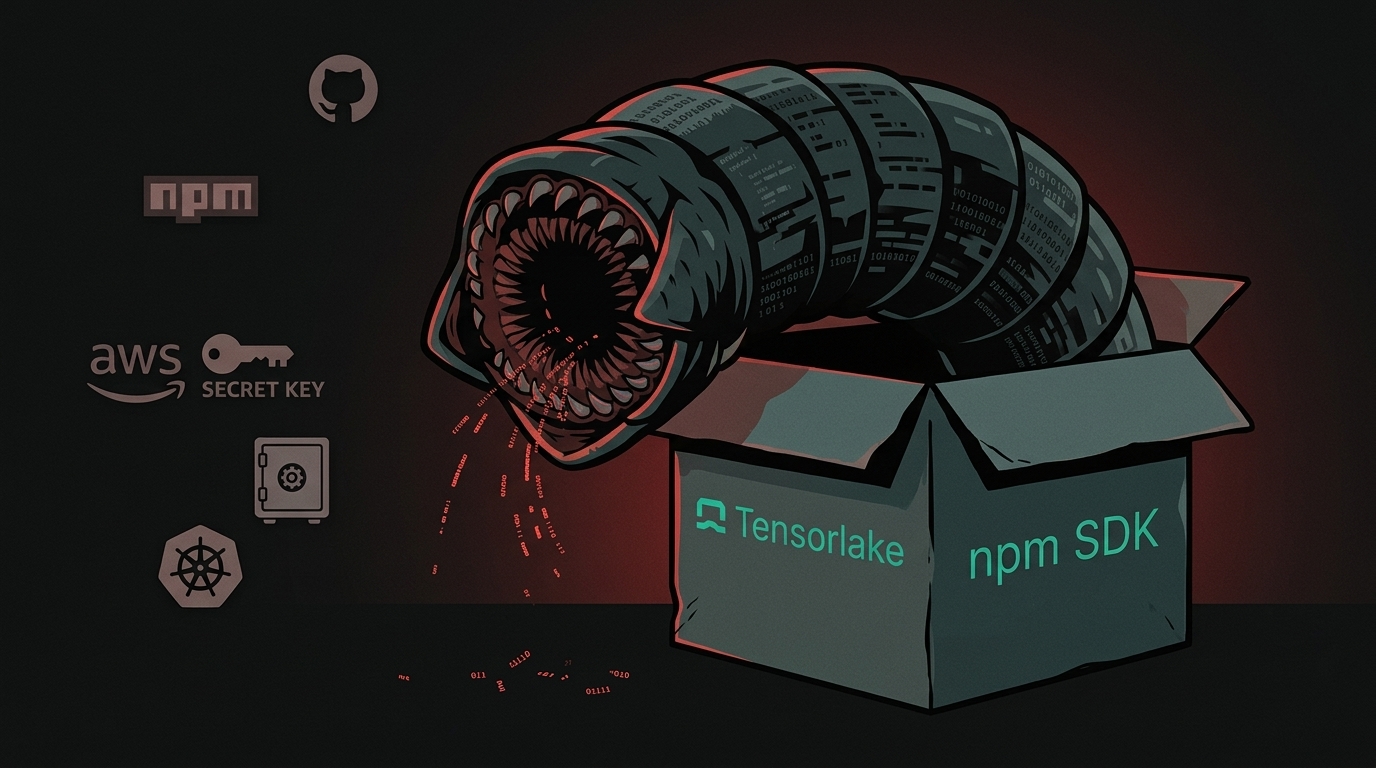
Weekly OpenSourceMalware podcast episode discussing three fresh supply-chain attacks: the Tensorlake AI-agent SDK compromised via a preinstall-triggered Mini Shai-Hulud-derived worm (setup.mjs + math_symbol.js, run via Bun) that steals credentials; a Contagious Interview-style attack where a cloned GitHub repo drops a malicious .npmrc pointing npm install at a Chinese mirror (npmmirror.com) to resolve a hidden package; and 42 malicious RubyGems published by "Ghost Dev" that typosquat/brandjack crypto tooling, sleep 20–40 minutes via extconf.rb to evade detection, then either open a reverse shell or deploy a Python-based "Wallet Guard" crypto-theft kit targeting TronLink, MetaMask, Phantom, Binance, Coinbase, Trust Wallet, Exodus, and Electrum. The hosts also discuss multi-package "combined payload" evasion and how AI-driven slopsquatting is making cross-ecosystem typosquats more effective.
 opensourcemalware.comtalkPublished and added 9 Oct 2026🛡️ Security
 Post-quantum authentication: Why organizations should start testing certificate ecosystems now
Microsoft Security Blog post arguing that post-quantum cryptography planning must extend beyond encrypted-data confidentiality to authentication and certificate ecosystems, since larger PQC certificate chains and new algorithms like ML-DSA-87 can break PKI workflows, HSMs, and legacy infrastructure. It details Microsoft's PQC TLS Pilot Program, launched August 27, 2026, which lets approved certificate authorities (ComSign, DigiCert, HARICA, IdenTrust, Sectigo, Shanghai Electronic Certification Authority, SSL.com) test ML-DSA-87 certificate issuance under the Microsoft Trusted Root Program, plus Windows 11 builds (KB5101681, KB5101684) that support evaluating ML-DSA certificates via Schannel in non-production environments. It lays out a six-step readiness plan: inventory certificate dependencies, map trust relationships, assess vendor roadmaps, identify long-lived infrastructure, build test environments, and plan a multi-year migration.
microsoft.comarticlePublished and added 8 Oct 2026🛡️ Security Critical Atlassian Path Traversal Exposes Sensitive Files Across 8 Products
Orca Security details CVE-2026-21589 (CVSS 9.3), a critical unauthenticated path traversal flaw affecting all versions of eight Atlassian Data Center and Server products: Bitbucket, Confluence, Jira Software, Jira Service Management, Bamboo, Crowd, Crucible, and Fisheye. Insufficient path validation lets remote attackers read arbitrary files within the web application root without authentication, and in Crowd SSO deployments this can expose plaintext credentials usable to create administrative accounts and take over the entire Atlassian ecosystem. The advisory lists fixed versions for each product and recommends WAF rules and log review for organizations unable to patch immediately.
 orca.securityadvisoryPublished and added 7 Oct 2026🛡️ Security
 The Vulnerable MCP Project — MCP vulnerability database
The Vulnerable MCP Project is a curated, continuously growing database of security vulnerabilities and attack techniques specific to the Model Context Protocol ecosystem. Entries cover concrete CVEs (e.g. CVE-2025-68143/68144/68145 in Anthropic's mcp-server-git), transport-layer SDK flaws (cross-client response leakage, missing DNS rebinding protection in the official TypeScript/Python SDKs), unauthenticated/0.0.0.0-bound servers enabling RCE (MCPJam inspector, MCP Inspector, Grafana MCP), command/path injection in dozens of third-party servers (gemini-mcp-tool, mcp-server-kubernetes, Framelink Figma MCP, Zen MCP, filesystem-mcp), SSRF chains reaching cloud metadata (MarkItDown MCP, mcp-fetch-server), and a large set of AI-specific attacks: tool poisoning, trigger-phrase data exfiltration, prompt injection via GitHub issues, Jira and Google Docs, rug-pull tool mutation, and cross-server tool-name collisions. It functions as the de facto vulnerability registry for the MCP ecosystem, useful for tracking disclosed issues before patching or adopting third-party MCP servers.
 vulnerablemcp.inforepoAdded 6 Oct 2026🛡️ Security
- CheckerBench: Can Long-Horizon Agents Synthesize Static-Analysis Checkers?
CheckerBench is an executable benchmark of 300 tasks drawn from 297 CVEs across 167 repositories, 85 CWEs, and five language ecosystems, testing whether long-horizon coding agents can synthesize working static-analysis checkers from a defect specification through repeated compile-and-analyze feedback loops. Its companion framework CheckerLab independently rebuilds submitted checkers and scores vulnerable-fixed diagnostic contrast, patch localization, false positives, and tool use; across 21 model-harness configurations mean Pass@1 is 32.30 percent and the best reaches 45.33 percent, showing reliable checker synthesis remains hard for current coding agents.
arxiv.orgpaperAdded 8 Oct 2026, published 6 Oct 2026🧠 AI - CheckerBench: Can Long-Horizon Agents Synthesize Static-Analysis Checkers?
CheckerBench is an executable benchmark of 300 tasks derived from 297 CVEs across 167 repositories, 85 CWEs, and five language ecosystems, testing whether long-horizon coding agents can synthesize working static-analysis checkers from a defect specification through repeated compilation and analysis feedback. The accompanying CheckerLab framework independently rebuilds submitted checkers and measures vulnerable-vs-fixed diagnostic contrast, patch localization, false positives, and tool use; across 21 model-harness configurations mean Pass@1 is 32.30% (best 45.33%), showing reliable checker synthesis remains hard for current agents.
arxiv.orgpaperAdded 7 Oct 2026, published 6 Oct 2026🛡️ Security  SubQuery Ecosystem Compromise: Hidden Credential Theft and Backdoors
StepSecurity's investigation of @subql/common@5.8.3, a malicious npm release in the SubQuery Web3 indexing framework's monorepo, found a heavily obfuscated postinstall/import-time payload (base64+XOR+gzip inside a function constructed via Function()) that spawns a detached worker to steal credentials (.npmrc, .env, AWS, SSH, kubeconfig, Vault, cloud secrets), read GitHub Actions runner memory for CI secrets, inject a camouflaged "Run Copilot" GitHub Actions workflow to exfiltrate repo secrets, and provide a remote shell/PTY over an encrypted channel to ci-artifacts.dev. The release was published via a compromised build pipeline: a workflow modification swapped the real build output for an externally downloaded, unsigned tarball from that same C2 domain immediately before publish, and the authors provide IOCs and remediation steps (credential rotation, host isolation, domain blocking).
 stepsecurity.iowriteupPublished and added 5 Oct 2026🛡️ Security
 Deploying Native-Rust KpqC: Pluggable Post-Quantum KEMs and Signatures across TLS, Space Links, and the OQS Ecosystem
This IACR ePrint paper presents a native-Rust, memory-safe implementation of the Korean KpqC competition's standardized post-quantum schemes — KEMs NTRU+ and SMAUG-T, and signatures HAETAE and AIMer — replacing the reference memory-unsafe C code. The authors expose all seven KEM parameter sets and four signature modes through a single pluggable provider demonstrated across three real deployment front-ends: a rustls TLS 1.3 key-exchange group, an OQS/liboqs-compatible C ABI, and an analytical CCSDS/SDLS satellite constrained-link model, showing SMAUG-T variants are smaller/faster than ML-KEM-768 on constrained space links and a memory-optimized NTRU+ build cuts peak stack by up to 25% at negligible latency cost.
 eprint.iacr.orgpaperAdded 8 Oct 2026, published 5 Oct 2026🛡️ Security
 Sujeet (@sujeetgholap) on X
A tweet arguing that Meta is using the credibility it earned from releasing open-weights Llama models to legitimize Muse, a free-as-in-beer service that bundles compute, weights, and apps rather than offering genuine open access. The commentary frames this as a strategic pivot from open-weights advocacy to a closed, Meta-controlled ecosystem play, explaining why Muse feels less aligned with the open-source AI movement than Llama was.
x.comthreadPublished and added 3 Oct 2026🧠 AI The MCP Ecosystem Is Speaking Five Revisions at Once
A dated research report (Pennyforge, 2026-10-02) that probes the live MCP ecosystem to show it is fragmented across five spec revisions at once: it POSTs initialize/server/discover calls against 186 deduplicated endpoints pulled from the official MCP registry's v0 API, plus 10 popular npm stdio servers spawned via npx. It finds only ~9.7% of responding endpoints speak the new stateless 2026-07-28 wire (which removes Mcp-Session-Id, the initialize handshake, and adds server/discover), that the flagship @modelcontextprotocol/server npm packages still only speak the older 2025-06-18 revision, and documents a "version-echo" methodology pitfall where servers negotiate within a supported range rather than reporting a fixed version — illustrated with a parallel failure mode found in the x402 payment protocol.
 dev.towriteupPublished and added 2 Oct 2026🧠 AI
 NCSC: "One does not simply defend agentically"
NCSC CTO for Architecture Dave Chismon argues that while attackers can freely use agentic AI tooling for technical offensive tasks, defenders face organisational/political constraints (Halvar Flake's maxim) that make equivalent autonomous defensive action far riskier. The piece proposes a framework for assessing the 'riskiness' of automating defensive actions (potency, harm to the business, scope of control), points to low-risk starting points like AI-assisted log summarisation and vulnerability triage, and previews NCSC/DCMS's 'Cyber Shield' agentic defence ecosystem and an upcoming 'AI for Cyber Defence' problem book, alongside references to CETAS's Autonomous Cyber Defence work and the Defra AI Legacy Modernisation Playbook.
 ncsc.gov.ukarticleAdded 1 Oct 2026🛡️ Security
- A Function-level Dataset of Vulnerable and Fixed Source Code in JavaScript and TypeScript
JsVul is a function-level dataset of vulnerable and fixed JavaScript/TypeScript code pairs, aggregated from seven sources and built with a language-specific pipeline that strips noise (minified code, cosmetic edits), deduplicates across commits, and applies heuristic labeling of security-relevant changes. It is released in time-ordered JSONL format to support training and evaluating automated vulnerability detection models specifically for the JS/TS ecosystem, where prior datasets were largely generic and multi-language.
arxiv.orgpaperAdded 30 Sep 2026, published 29 Sep 2026🛡️ Security  Generating and Managing C and C++ SBOMs
A FOSSA blog post explaining why C/C++ SBOMs built from manifest-parsing alone are incomplete, since the ecosystem lacks a centralized package manager and relies heavily on vendored (copy-pasted) source and code snippets. It covers concrete generation paths: Conan's built-in conan.tools.sbom CycloneDX generator, Yocto/OpenEmbedded's native SPDX output via the create-spdx class, process-based tracking for vendored code (third_party/vendor path flagging, manual audits), and the differing snippet-support capabilities of SPDX versus CycloneDX.
 fossa.comarticleAdded 1 Oct 2026, published 29 Sep 2026🛡️ Security
- Bridging LLM Agents and Data Spaces: An Architectural Mediation Approach using MCP
This paper proposes an architectural mediation approach, implemented as the "Eunomia Agent," that uses the Model Context Protocol to let LLM agents discover and invoke Data Space services as structured, schema-driven tools without modifying existing data space components. A prototype validates end-to-end interaction — catalog discovery, metadata retrieval, and data service invocation — while preserving governance, policy, and access-control constraints native to Data Spaces. It offers practical architectural guidance for organizations wanting to introduce AI-driven automation into governed, sovereign data-sharing ecosystems while maintaining compliance and interoperability.
arxiv.orgpaperAdded 28 Sep 2026🧠 AI  Socket Joins New OpenJS Program to Fund Node.js Security Work
Socket announces it is an inaugural funder of the OpenJS Foundation's new Security Stewardship Program, which pools money to pay both bug bounty researchers and maintainers doing triage, patching, and backporting for Node.js, starting there before expanding across the JS ecosystem. The article frames this against a broader funding crisis: curl suspended its bounty program after AI-generated report floods, GitHub restructured its bounty tiers, Canonical moved Ubuntu kernel updates to weekly releases to keep pace with rising CVE volume, and Node.js paused bounty payouts in April after the Internet Bug Bounty pulled funding, even as HackerOne report volume to the Node.js team spiked 4.6x in one month.
 socket.devarticlePublished and added 25 Sep 2026🛡️ Security
- git-pkgs — dependency history & supply-chain analysis for git repos
git-pkgs is a Go rewrite of a Ruby tool that adds a git subcommand for tracking dependency changes across a repository's history, indexing manifests/lockfiles from 36+ package managers (npm, RubyGems, Cargo, PyPI, Maven, Composer, Go modules, etc.) into a local SQLite database. Beyond history/blame/diff, it offers supply-chain security commands: `vulns` (OSV-based CVE scanning with SARIF output for GitHub code scanning, plus blame/praise/exposure for remediation metrics), `licenses` (with drift detection and CI-friendly exit codes), `deprecated`, `provenance` (trusted-publishing/attestation checks), `integrity` (lockfile hash drift detection), `maintainers`/`health` (via ecosyste.ms metadata), and `sbom` export in CycloneDX/SPDX. It also supports a dependency-aware `bisect` to find when a vulnerability, license change, or capability (e.g. network access) was introduced, and ships GitHub Actions for CI integration.
 github.comrepoAdded 25 Sep 2026🛡️ Security
- Jev in the Wild: A Data-Driven Analysis of the Jev Model's Functionality, Applications and Ecosystem
This arXiv preprint presents a large-scale empirical analysis of Jev, a lightweight decision model that answers natural-language questions via choices, binary judgments, and scores, mining 2,170 public GitHub projects that use it. The authors find rapid ecosystem growth, widespread use of attribute judgment and scoring, more variable use of action selection, content filtering, and model/tool selection, and that public attention concentrates on routing and interface agents independent of raw project counts. It offers a quantitative characterization of how a general-purpose decision component gets embedded into diverse software workflows.
arxiv.orgpaperAdded 26 Sep 2026, published 24 Sep 2026🧠 AI - shai-hulud-detect: multi-ecosystem npm/PyPI/Composer/Crates/Go/Hex/RubyGems supply-chain worm scanner
shai-hulud-detect is a dependency-free Bash scanner that checks projects against a 5,782-entry list of compromised npm, PyPI, Composer, Crates, Go, Hex, and RubyGems package versions, plus content-pattern indicators of compromise (malicious file hashes, C2 domains, dead-man's-switch artifacts, forged commits, suspicious lifecycle hooks) tied to the Shai-Hulud supply-chain attack waves. It supports single-project and bulk scanning, CI-friendly exit codes, JSON/log output for pipeline gating, and a --check-host mode to detect the May 2026 gh-token-monitor/kitty-monitor persistence daemons that wipe hosts if their monitored GitHub token is revoked (with a documented safe remediation order). Detection is read-only; new package entries are sourced from named threat-research firms (Socket, StepSecurity, Aikido, Snyk, JFrog, Wiz, Semgrep, SafeDep, GitGuardian, OX Security) and cited in PRs.
github.comrepoAdded 23 Sep 2026🛡️ Security - A2M: Trace-Optimized Agent Hijacking in the MCP Ecosystem
A2M (Attraction-to-Manipulation) is a two-stage black-box framework for hijacking agents that use the Model Context Protocol to select tools from third-party MCP servers. The Attraction phase optimizes attacker-controlled tool metadata to raise invocation probability, while the Manipulation phase uses execution traces to craft adversarial tool outputs that steer agent behavior; on LiveMCPBench it achieves a 93.6% malicious tool invocation rate against GLM-4.6, inflates token cost 32.4x under a cognitive denial-of-service variant, and reaches a 74.4% mean attack success rate across information exfiltration, environment integrity compromise, and reasoning derailment, with partial transfer (63.6%/2.7x/24.5%) to four other models without re-optimization. The authors argue this exposes a semantic supply-chain risk in MCP tool ecosystems and call for stronger tool vetting and runtime isolation.
arxiv.orgpaperAdded 2 Oct 2026, published 22 Sep 2026🛡️ Security  Graphalgo campaign spreads to Terraform providers and Go Modules
Aikido documents the Graphalgo malware campaign's expansion beyond NPM into two malicious Terraform providers (gocommunity-io/dockerd and the kreuzwerker/docker typosquat kreuzwenker/docker) and two Go modules (gocommunity.io/orderedbtree, gogets.dev/btreex), marking the first observed systematic Terraform provider malware distribution. The payload is a Go port of Graphalgo sharing blockchain infrastructure, Slack C2, and a public key with prior JS/NPM samples; it activates only under specific hash-gated runtime conditions (targeted attack indicator), then deploys a Go RAT with dual C2 channels — an Ethereum (Arbitrum Sepolia) smart-contract dead drop and Slack bot messaging — plus self-delete and remote code execution capabilities. The threat actor also stood up two fake Go package ecosystem websites (gocommunity.io, gogets.dev) to socially engineer developers and backdated Git commits to obscure module publication timing.
 aikido.devwriteupPublished and added 22 Sep 2026🛡️ Security
- ossf/criticality_score
criticality_score is an OpenSSF tool that computes a 0-1 criticality score for open source projects (based on an algorithm by Rob Pike), using signals like contributor count, commit frequency, dependents count, and org diversity to identify projects the ecosystem critically depends on. It ships a CLI, config files for tuning scoring weights, and companion tools (enumerate_github, collect_signals, scorer) for large-scale data collection; the project's GCP-hosted BigQuery/GCS datasets will be discontinued after 2026-08-29, with data moving to a static data directory.
github.comrepoAdded 21 Sep 2026🛡️ Security
Showing 30 of 77
Show more