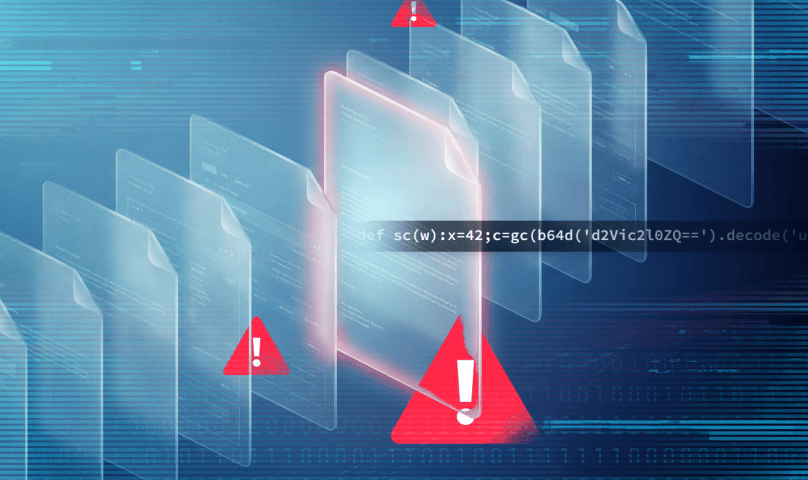
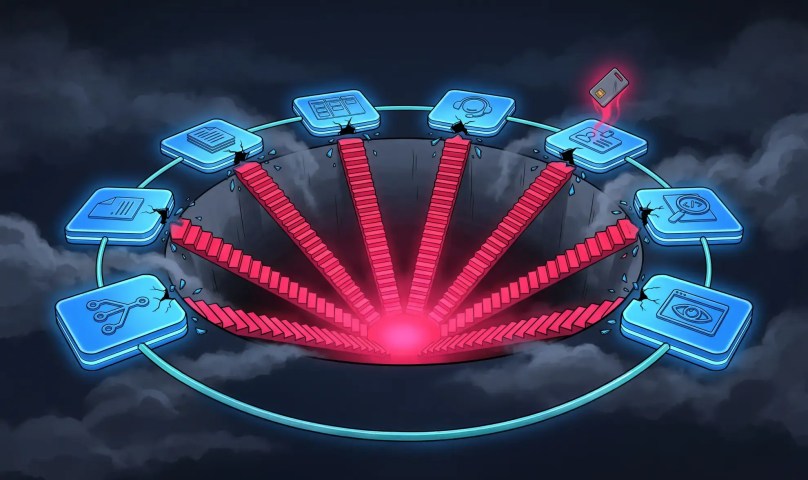
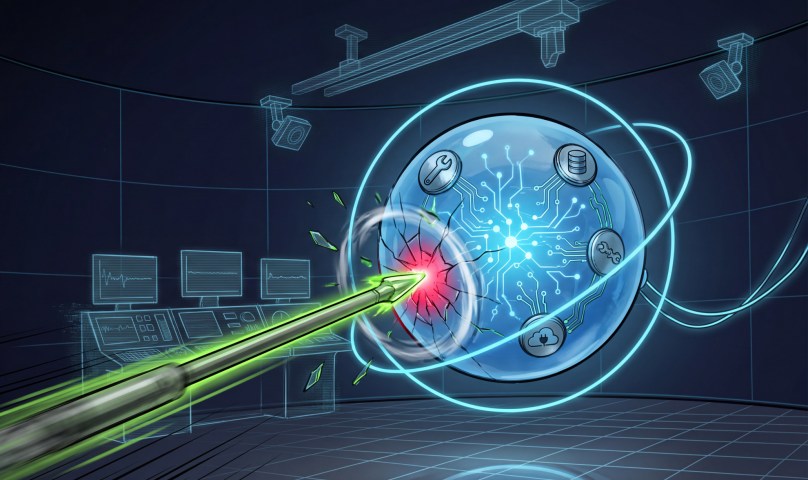
Each feed is checked for new posts. Every post is read, and those that belong here join the catalog. What Trove read and did not keep stays on file, not shown.
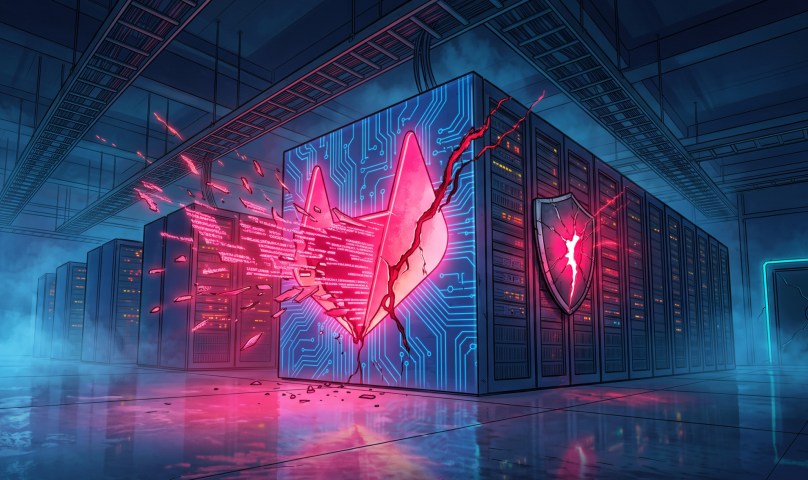
CVE-2026-101767 is a CVSS 9.8 unauthenticated SQL injection in Oracle E-Business Suite's Application Object Library, reachable through the /OA_HTML/AppsTCFServer servlet (GanttDataServer) and chainable to OS command execution. It affects versions 12.2.3 to 12.2.15 and was fixed in the October 2026 Critical Patch Update. Horizon3.ai found it, and Defused saw probing on honeypots on 27 October 2026. Interim mitigation is removing the servlet from the URL firewall allowlist.
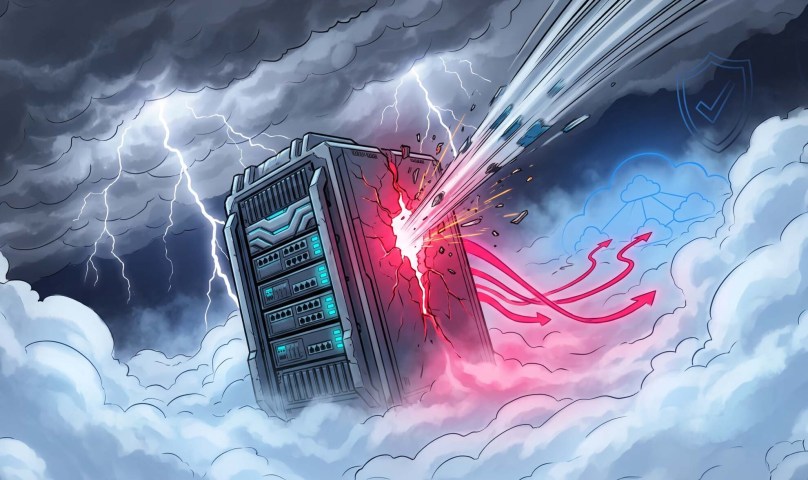
CVE-2026-111497 is a high-severity out-of-bounds write in the Node.js Brotli decoder, reported by Orca Security. It affects all supported release lines (22.x, 24.x, 26.x) and can be triggered by malformed Brotli data processed through node:zlib or fetch(). Impacts named are crashes, memory disclosure and remote code execution in cloud workloads; patching is advised. The fetched text covers only the executive summary.
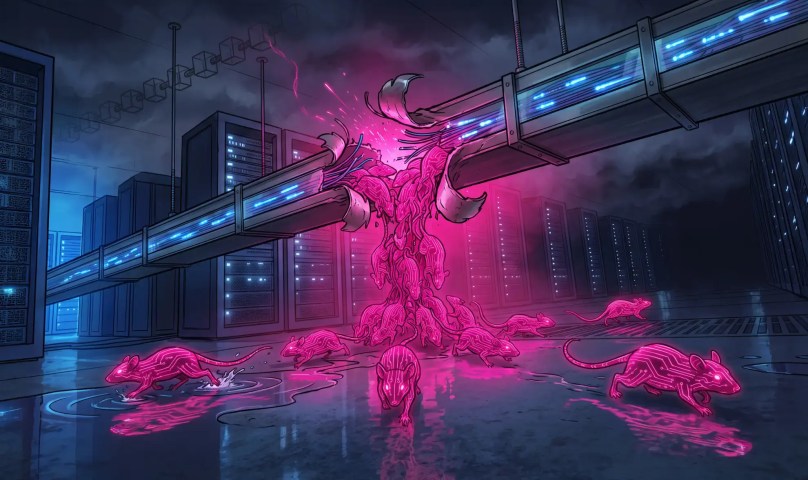
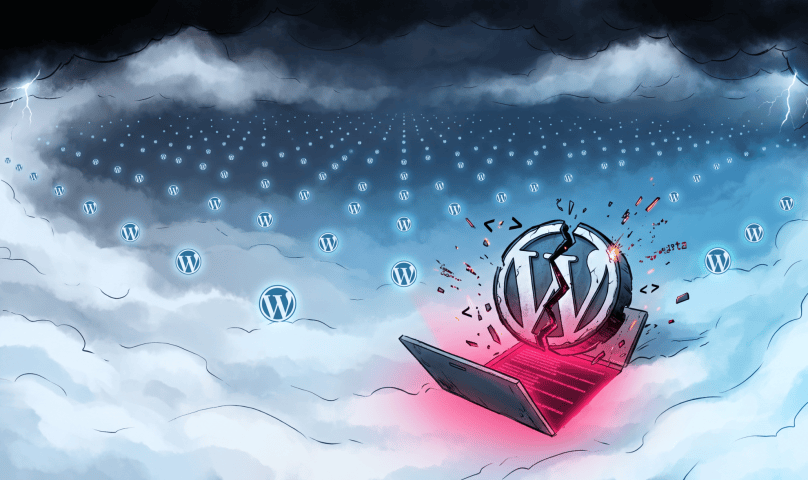
PHP2Shell is the public exploit for CVE-2026-109618 (corrupted internal state at the memory limit, allowing hijack during cleanup) and CVE-2026-109619 (double free used to leak memory and defeat ASLR). Orca ran the GitHub tool unchanged against an unpatched PHP server and got command execution. It then built its own exploit with AI from the patch, which worked on PHP 8.4.26 and WordPress. Fixed in 8.2.35, 8.3.36, 8.4.27 and 8.5.12.
PHPWordPressGitHub
CVE-2026-109618CVE-2026-109619PHP2Shell+3
Offensive Security, AI Security, AppSec· 2026-10-26T17:21:56+00:00
PHP2Shell is the name for two unauthenticated remote code execution flaws, CVE-2026-109618 and CVE-2026-109619 (CVSS v4 9.2), in the PHP engine back to version 5.4. The post covers the leaked October 2026 embargo, AI-assisted exploit building by Calif and others, patch availability by PHP version, and a 72-hour and quarterly response plan covering inventory, patching, secret rotation and edge virtual patching. It ends with a short Orca product section.
PHPWordPressOrca Security
CVE-2026-109618CVE-2026-109619PHP2Shell+6
Blue Team & Detection, AppSec, GRC· 2026-10-23T17:14:32+00:00
PHP2Shell is the informal name for CVE-2026-109618 and CVE-2026-109619 (CVSS v4.0 9.2), unauthenticated remote code execution flaws in the PHP core runtime. Patches for branches 8.2 to 8.5 were scheduled for 21 October at 14:00 UTC, while PHP 8.1 and older get no fix; about 884,000 internet-facing hosts run those versions. watchTowr reproduced CVE-2026-109618, no public PoC existed at writing, and Sansec expects mass exploitation within 15 minutes of release.
Orca Security's research team built an internal prototype, Agent Piercer, that attacks AI agents by choosing probes, writing attacks and judging whether they worked. They compared NVIDIA Nemotron 3.5 Super (self-hosted on 4×L40S via SageMaker) with Opus 4.8, GPT-6 Astra and Grok 4.7 as the driving model against the same live target. Nemotron matched the frontier models on vulnerability types found (four) and was the only one to complete every simple test and judge all 57 real attack conversations. The post also notes that some proprietary models declined authorized red-team tasks under default safety settings, which makes self-hosted open-weight models attractive for offensive testing.
NVIDIA Nemotron 3.5 SuperGPT-6 AstraGrok+2
Agent PiercerOpus 4.8prompt injection
AI Security, Offensive Security· 2026-10-15T15:15:00+00:00
Orca Security analysis of CVE-2026-97229, a CVSS 10.0 flaw in GitLab CE/EE. An integer overflow (CWE-190) in the CI/CD regular expression compiler gives memory corruption and code execution as the git user. It is triggered by a crafted regex in .gitlab-ci.yml combined with a UTF-8 repository path, with no authentication needed on instances that allow public project creation or self-registration. Lists affected branches (19.2 before 19.2.8, 19.3 before 19.3.5, 19.4 before 19.4.2), the absence of a workaround, interim mitigations, and a Rapid7 PoC against GitLab CE 19.4.1 with ASLR on. Notes a prior max-severity GitLab bug (CVE-2026-85706) was probed in the wild within hours and later added to CISA KEV.
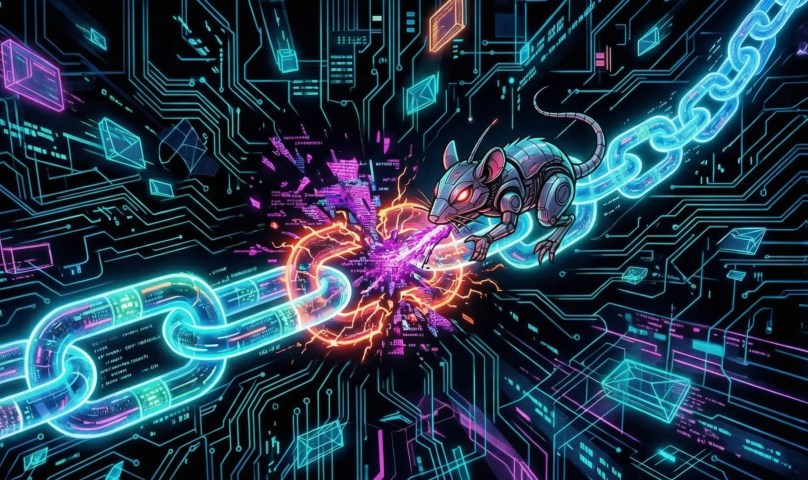
Orca Security details "MALFEX," a supply-chain campaign active since August 2023 in which a suspected lone Brazilian threat actor published eight malicious npm packages (tlxbnhd, tldriver, mxdriver, img-to-native, native-runner, function-flag, function-color, cdn-img-fetch) that together drew over 40,767 downloads. Using postinstall lifecycle hooks, the packages deliver three malware families to Windows hosts: the Go-based Overlord RAT (with a Solana blockchain C2 resolver), the Node.js "movinlike" credential/Discord/crypto-wallet stealer, and rotating downloader payloads — with three packages (notably function-flag) still live on npm and only six of the eight carrying OSV advisories at publication time. The piece includes host IOCs (file paths, scheduled task name), affected package lists, and remediation steps (lockfile auditing, credential rotation) alongside a pitch for Orca's SCA detection of the OSV-flagged packages.
Orca Security details CVE-2026-21589 (CVSS 9.3), a critical unauthenticated path traversal flaw affecting all versions of eight Atlassian Data Center and Server products: Bitbucket, Confluence, Jira Software, Jira Service Management, Bamboo, Crowd, Crucible, and Fisheye. Insufficient path validation lets remote attackers read arbitrary files within the web application root without authentication, and in Crowd SSO deployments this can expose plaintext credentials usable to create administrative accounts and take over the entire Atlassian ecosystem. The advisory lists fixed versions for each product and recommends WAF rules and log review for organizations unable to patch immediately.
Analysis of CVE-2026-88779 (CVSS v4.0 8.7), an unauthenticated memory-overflow flaw in the nsaaad SAML authentication handler on Citrix NetScaler ADC/Gateway that lets attackers crash the SAML service and lock out VPN/SSO access indefinitely through repeated triggering. Affects NetScaler 14.1 before 14.1-73.41 and 13.1 before 13.1-64.28 (plus FIPS/NDcPP builds); watchTowr Labs reproduced it via honeypot activity, Citrix confirmed targeted in-the-wild exploitation from IP 213.209.159.55, and CISA added it to KEV on 2026-10-04 with an Oct 7 federal remediation deadline. Some researchers suspect the overflow could extend to RCE beyond the documented DoS, though Citrix hasn't confirmed this.
Orca Security's plugin connects ChatGPT and Codex to Orca's MCP server, letting security teams and developers query cloud alerts, attack paths, effective IAM permissions, and code-to-cloud origins directly from chat or a coding agent instead of logging into a console. The post walks through six security-team use cases (exposure discovery, CVE impact triage, alert-to-blast-radius investigation, identity permission review, CISO reporting) and three developer workflows in Codex where alerts are traced back to the Terraform/code that created the misconfiguration and fixed in place.
Analysis of two CVSS 9.5 Citrix NetScaler ADC/Gateway zero-days, CVE-2026-88771 (unauthenticated RCE through improper input validation in the management interface, affecting default deployments) and CVE-2026-88772 (memory overflow in DTLS, enabled by default on VPN virtual servers). It lists six more high-severity flaws patched in advisory CTX697096, the affected and fixed versions, and the CISA KEV listing with a federal deadline of 2026-09-30. It advises checking for compromise before patching, since patching can destroy forensic evidence, and gives response steps: isolate, revoke credentials, rebuild firmware, rotate keys and certificates.
CVE-2026-93485 (CVSS 7.1) is a stored XSS-to-RCE chain in WordPress Core's wpautop() function (wp-includes/formatting.php), where a mismatch between comment sanitization at save time and HTML reformatting at display time lets an unauthenticated attacker inject live event handlers via a crafted comment. When a logged-in administrator views the page, the script executes and installs a malicious plugin containing a web shell, achieving full RCE. It affects WordPress Core 4.7 through 7.1.0 (essentially all installs, including block themes since Twenty Twenty-Two), and is fixed in 7.1.1 with backports down to 4.7.36; no public PoC or in-the-wild exploitation was reported at disclosure time.
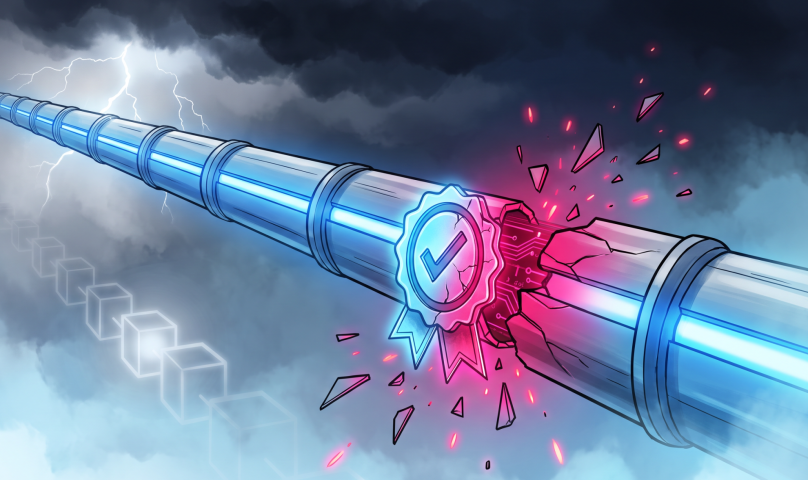
Orca Security details a supply-chain attack on the npm package @dforge-core/dforge-mcp, where a compromised maintainer account modified the GitHub Actions release workflow so any push to main triggered an OIDC-based trusted publish, shipping malicious version 0.2.21 with valid Sigstore provenance. The four-stage GHAPPIER loader activated only when the MCP server launched, deployed a self-deleting remote shell, and per CloudSEK's tracing appeared across 65 repos and 22 accounts; a second payload matched PolinRider, a DPRK-linked campaign using Ethereum transactions for C2. The piece underscores that npm provenance attests build origin, not source integrity, and lists remediation steps since no CVE or advisory yet exists.
A long-form explainer distinguishing attack surface from attack vector and asset inventory, breaking the surface into network/perimeter, identity/permissions, application/code, and data/storage components, and covering how to map it via the OWASP Attack Surface Analysis Cheat Sheet, measure it (Relative Attack Surface Quotient, Carnegie Mellon's attack surface metric), and reduce it. It also contrasts external attack surface management with cyber asset attack surface management and closes with a pitch for Orca's agentless SideScanning and Unified Data Model.
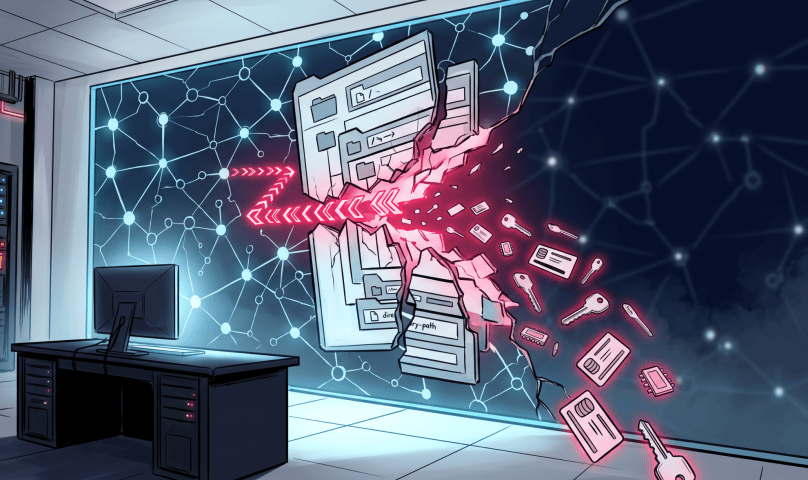
Details CVE-2026-85706 (CVSS 10.0), an unauthenticated arbitrary file read in GitLab CE/EE's repository commits API exploitable via a crafted file.path parameter in a single POST request, requiring only that one public project exist on the instance. It also covers CVE-2026-87719 (CVSS 9.9), an authenticated insecure deserialization bug in GitLab EE's GraphQL subscription serializer reachable via Duo Chat access that leaks stored Elasticsearch/OpenSearch credentials. Both affect GitLab versions through 19.3.1; CVE-2026-85706 is under active internet-wide scanning per WatchTowr Labs and is in CISA's KEV catalog with a federal patch deadline, with fixes in GitLab 19.1.8/19.2.6/19.3.2.
Orca Security guide distinguishing alerts, incident records, and actions in incident response automation, mapping a cloud storage-bucket-exposure incident through detection, declaration, enrichment, routing/paging, and suppression steps. Draws on AWS Well-Architected event/incident/problem management guidance, ISO/IEC 27035-3:2020 lifecycle, CISA containment guidance, and Azure alert processing rules to argue automation should be introduced step-by-step based on reversibility rather than as one switch.
Discusses CISA's Binding Operational Directive 26-04, which changes how U.S. federal agencies must prioritize and remediate vulnerabilities, reportedly shifting away from simple CVSS scoring toward more risk-based criteria (e.g., exploitability, KEV status). The piece explains implications for federal agency vulnerability management programs and compliance timelines.
CVE-2026-32475 (CVSS 9.0) is an unauthenticated arbitrary file upload leading to RCE in Elementor Pro's Forms module (versions up to 4.2.1), caused by the extension-blocklist check and the file-move step running in two separate loops with different empty-file handling, letting a two-part file submission bypass the blocklist and drop a PHP webshell into the public wp-content/uploads/elementor/forms/ directory. The post also flags related WordPress core CVE-2026-65640 (CVSS 8.8, fixed in 7.0.4), an Author-level RCE via malicious PostScript upload requiring Imagick and Ghostscript. Fix: upgrade Elementor Pro to 4.2.2+ and WordPress core to 7.0.4, and audit the uploads/elementor/forms directory for planted PHP files.
 orca.securityadvisory