Skip to content

182 results for β€œBun”

What you seeeverything
bleepingcomputer.comarticleπŸ›‘οΈ Security

Alpine Linux rebuilds GitLab after attempted RCE attack

Alpine Linux rebuilt its GitLab server and reset all passwords after attackers tried to exploit CVE-2026-97229, a maximum-severity integer overflow in the Onigmo regex engine bundled with Ruby, on October 20-21. Eight worker crashes occurred and four were partially successful. Missing logs and outbound connection records meant compromise could not be ruled out. Alpine had run GitLab 19.3.4, then 19.3.6, which lacked the Ruby patch; the fixed image is alpinelinux/gitlab:19.3.6 with Ruby 3.3.13.

GitLabAlpine LinuxDocker+1
CVE-2026-97229integer overflowOnigmo

Supply Chain, Blue Team & Detection, DevSecOpsΒ· Published and added 1 Nov 2026

x.comthread🧠 AI

Prasenjit Sarkar (@stretchcloud) on X

Campfire is a free, open-source, self-hosted tool that runs Claude Code, Codex, Goose, Aider and OpenHands side by side in one browser tab. Each agent gets its own git worktree, with permission voting (30 second timer, majority rules), session replay, cross-backend agent races and a shared semantic memory layer. Installs with bunx the-campfire. The post also compares Clawboo, Conductor, Vibe Kanban and Crystl.

CampfireClawbooClaude Code+8
Boo ZeroConductorVibe Kanban+2

agents, coding-agentsΒ· Added 1 Nov 2026, published 31 Oct 2026

blog.talosintelligence.comwriteupπŸ›‘οΈ Security

Appraisal by AI: Model-driven victim prioritization in the VOLTA infostealer

VOLTA (VOLTA-AUTODOXER) is a self-deleting Windows infostealer that, after theft and live session-based enrichment, POSTs an evidence bundle to OpenRouter so an LLM can rank the victim's assets by monetization value. It falls back across a Claude, Kimi and Gemini chain when a model refuses. Talos covers the builder model, the Chrome App-Bound Encryption bypass, the volta_debug.txt artifact and countermeasures such as blocking Chrome --headless.

OpenRouterClaudeGemini+3
VOLTACLOSEDQUORUMCAIRN+3

Malware & RE, Threat Intel, AI SecurityΒ· Published and added 31 Oct 2026

status.bunny.netadvisoryπŸ›‘οΈ Security

Bunny CDN Security Incident

Bunny CDN status-page notice, posted 28 October 2026, about unauthorized access at an infrastructure provider that hosted one bunny.net CDN node in Armenia. Traffic was stopped within 20 minutes and the server wiped. No access to the node was found, but cached content, Pull Zone configs and TLS certificates could have been exposed, so all platform certificates were reissued. Customers with their own certificates should rotate them with new private keys.

Bunny CDNTLS
bunny.netb-cdn.netbunny.run

Threat Intel, Cloud & InfraΒ· Added 31 Oct 2026, published 30 Oct 2026
latent.spacearticle🧠 AI

[AINews] Building AIE CODE: The top Coding Agent Conference

AINews issue for 28 to 29 October 2026 from Latent Space. It opens with a preview of the AIE CODE summit (themes: Scaling without Slop, System One models, Increasing Ambition, with Jarred Sumner on Bun in Rust). It then recaps Twitter and Reddit news: Mistral Large 4 open weights (1.05T total, 52B active), Artificial Analysis benchmarks, Gemini 4 Carbon, Qwen4 rumours, Claude Code quota complaints and OpenAI frontier-run monitoring. Text was cut before the end.

BunRustvLLM+17
Latent SpaceAI EngineerAIE CODE+37

models, coding-agents, evalsΒ· Published and added 30 Oct 2026

rekt.newsarticle🧠 AI

Rekt - News or Hype?

Rekt's "News or Hype?" compares four October 2026 AI headlines with their sources. These are Justin Drake's "bunker mode" ECDSA warning, Anthropic's Claude tracing NIST curve seeds to lrand48, OpenAI's agent spending Sepolia ETH from a default-mnemonic account, and Wiz's "AI uncovers" PHP RCE claim of 70% reach. It ends with four questions for checking claims.

ECDSABitcoinEthereum+11
CVE-2026-109618CVE-2026-109619Justin Drake+17

ai-safety, agents, ai-policyΒ· Added 30 Oct 2026

rekt.newsarticleπŸ›‘οΈ Security

Rekt - News or Hype?

Rekt News piece tracing three AI-security headlines back to their sources. It covers Justin Drake's October 2026 "bunker mode" warning about AI breaking ECDSA, OpenAI's report of a model spending Sepolia test ETH from a default developer mnemonic, and Wiz's "70% of the Internet" claim for PHP CVE-2026-109618 and CVE-2026-109619. It closes with four questions for checking a claim.

OpenAIPHPEthereum+3
CVE-2026-109618CVE-2026-109619Justin Drake+13

AI Security, otherΒ· Added 29 Oct 2026

github.comrepoπŸ›‘οΈ Security

Show HN: Auto Dismiss Mac OS "Allow <app> to find devices on local networks?"

dontallow is a two-file Swift launchd agent for macOS 15 and later that clicks "Don't Allow" on the "find devices on local networks" prompt. It watches the UserNotificationCenter process through an Accessibility observer, supports pause and allowlist, and can decode the Local Network rule store to show orphaned rows. It explains why Chromium temp-bundle paths make the prompt recur, and gives a PPPC profile route for fleets.

macOSSwiftlaunchd+2
Local Network privacy promptPPPCTCC

Cloud & InfraΒ· Added 30 Oct 2026, published 29 Oct 2026

ubuntu.comadvisoryπŸ›‘οΈ Security

CVE-2026-98432: 9.8 CVE affecting all Ubuntu versions

CVE-2026-98432 is a Linux kernel use-after-free in the IPv4 TCP stack, tracked by Ubuntu (published 15 October 2026, updated 29 October 2026). ireq_opt/inet_opt were freed with plain kfree() while another CPU built a SYNACK under RCU, so ip_options_build() read freed memory; the fix uses kfree_rcu(). Ubuntu rates it High priority, CVSS v3.1 9.8 and v4.0 8.3. The page text does not list per-release package status.

Linux kernelUbuntuCVSS
CVE-2026-98432use-after-free

Cloud & InfraΒ· Added 30 Oct 2026, published 29 Oct 2026

gist.github.comwriteup🧠 AI

Claude Code regularly sends each background agent’s transcript to its model

no-agent-summary.js is a roughly 70-line Bun preload by Flamerix AI that stops Claude Code from re-sending each background agent's full transcript to its model every ~30 seconds for a status-line summary. The write-up cites OpenTelemetry measurements of 18 to 26 percent of spend (since version 2.1.232), explains the setTimeout hook, and gives install and verify steps. It was tested on Linux with Claude Code 2.1.257 to 2.1.312.

Claude CodeBunOpenTelemetry+2
AnthropicFlamerix AIDRIM+1

coding-agents, ai-infraΒ· Added 30 Oct 2026, published 29 Oct 2026

alpinelinux.orgwriteupπŸ›‘οΈ Security

GitLab Security Incident: Attempted Exploitation of CVE-2026-97229

Alpine Linux incident report on attempted exploitation of CVE-2026-97229 (CVSS 10.0), a regex-evaluation bug in Ruby's Onigmo engine reachable through GitLab CI configuration. An attacker crashed workers 8 times on 20 and 21 October 2026. Upgrading to GitLab 19.3.6 did not fix it because the patch sits in GitLab's bundled Ruby. Alpine rebuilt the instance and found no tampering with aports or releases.

GitLabRubyDocker+1
CVE-2026-97229Onigmoaports

Blue Team & Detection, Supply Chain, AppSecΒ· Added 29 Oct 2026, published 28 Oct 2026

huntress.comwriteupπŸ›‘οΈ Security

Managed for Malice: How Attackers Turn MDM into Remote Access

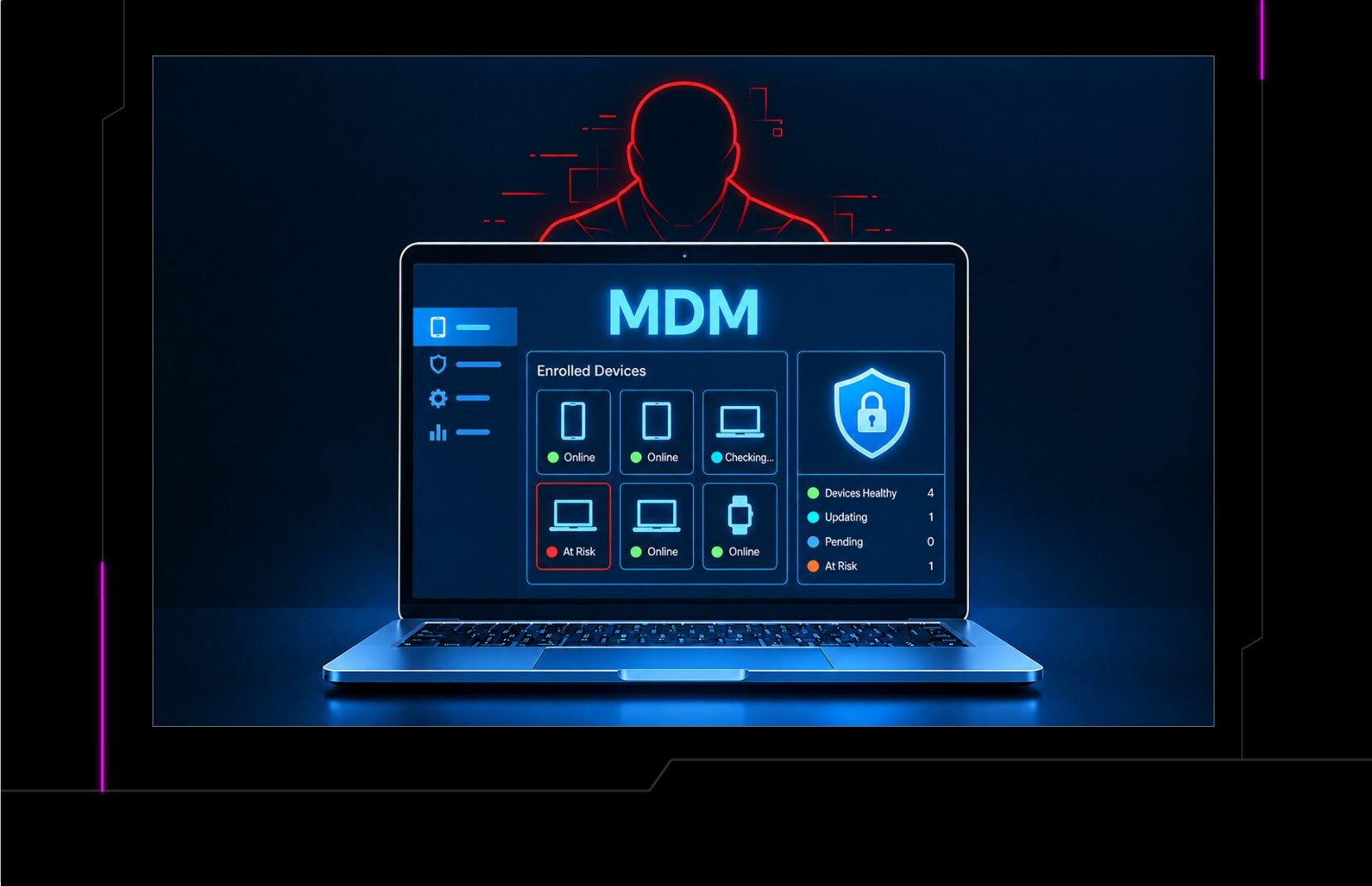
Huntress describes two incidents where attackers enrolled victims in attacker-controlled MDM tenants (Hexnode and Rippling) and used them to push ScreenConnect as SYSTEM. One began with a fake DocuSign MSI that bundled Hexnode; the other with a fake Teams calendar link leading to Rippling enrollment. Removing ScreenConnect did not stop reinstalls. The post lists IOCs, a detection chain and mitigations.

HexnodeRipplingScreenConnect+3
Huntressphishingsocial engineering+3

Threat Intel, Blue Team & Detection, Mobile SecurityΒ· Published and added 28 Oct 2026

x.comadvisoryπŸ›‘οΈ Security

lee1981 (@lee1981b) on X

CVE-2026-92885 is a critical (CVSS 3.1 9.8, CWE-287) authentication bypass in the Qode Membership WordPress plugin, versions through 2.0.6.2. A misspelled variable in the Facebook token-verification guard skips provider checks, so an unauthenticated attacker with a public nonce can get a session cookie for an existing account, including an administrator. The post gives the fix (2.0.6.3, bundled in Bridge 30.9), KEV/EPSS/SSVC status, and a SOC log-correlation and remediation plan.

WordPressQode MembershipBridge+3
CVE-2026-92885CWE-287Wordfence+4

AppSec, Identity & Access, Blue Team & DetectionΒ· Added 31 Oct 2026, published 28 Oct 2026

socket.devwriteupπŸ›‘οΈ Security

Malicious Firefox Extensions Impersonate Phantom, Jupiter, and Bitget to Steal Wallet Secrets

Socket analysis of three malicious Firefox add-ons impersonating Phantom, Jupiter and Bitget wallets, using Unicode homoglyph names. They steal seed phrases and private keys and send them to brand-named subdomains of bonto[.]io. The Phantom fake adds a runtime loader that fetches and evals a second stage, and bundles a drainer backend with Telegram forwarding. Includes IOCs, hashes and wallet addresses.

FirefoxTelegramCloudflare+3
bonto.ioPhantomJupiter+14

Threat Intel, Malware & RE, BlockchainΒ· Published and added 27 Oct 2026

blog.trailofbits.comarticleπŸ›‘οΈ Security

Backporting security fixes to stable releases

Trail of Bits argues that stable and LTS software, such as Ubuntu 26.04 LTS, Debian 13 and stable Linux kernel branches, carries many known CVEs that were fixed upstream but never backported. It measures the gap using the kernel CVE team's vulns.git (18 September 2026) and Debian and Ubuntu CVE feeds. Using Codex with GPT-5.6, the team got 142 fixes covering 90 CVEs applied to stable kernel trees and has begun sending patches to distributions.

Linux kernelDebianUbuntu+2
Trail of BitsPatch the PlanetGPT-5.6 Sol

AppSec, AI SecurityΒ· Published and added 27 Oct 2026

x.comthread🧠 AI

Prasenjit Sarkar (@stretchcloud) on X

Campfire is a self-hosted workspace by Prasenjit Sarkar that runs Claude Code, Codex, Goose, Aider and OpenHands side by side in one tab. Risky actions go through permission voting: a majority approves, any single deny blocks, and a 30 second timer ends the wait. Session replay shows which file or tool call triggered an action. The post cites Forever Security's report of a planted AGENTS.md. Codex followed it first time over 90% of the time and Claude Code about half the time. Try it with "bunx the-campfire".

Claude CodeCodexGoose+7
CampfirePrasenjit SarkarForever Security+2

coding-agents, agentsΒ· Added 28 Oct 2026, published 27 Oct 2026

socket.devarticleπŸ›‘οΈ Security

eMudhra, Brotli, and the Long Tail of a Security Fix

Socket post on why fixing the eMudhra weak-key intermediate CA incident (October 2026) and Brotli memory corruption CVE-2026-111497 takes more than updating Node.js. Bundled Brotli copies in Bun, Python Requests and .NET, Go binaries needing rebuilds, and per-program certificate stores all leave stale copies. It lists steps: track bundled components, keep a rebuild path, use workarounds, and verify the shipped artifact.

Node.jsBrotliBun+6
CVE-2026-111497eMudhraOneCRL+6

Supply Chain, AppSecΒ· Published and added 26 Oct 2026

securityweek.comarticleπŸ›‘οΈ Security

Node2Shell: Brotli Flaw Triggers Patching Across Microsoft, Node.js, Python Packages

CVE-2026-111497 (Node2Shell) is an out-of-bounds write in Google's Brotli decoder, versions 1.0.3 through 1.2.0, rated CVSS v4 9.2. Fixed in Brotli 1.0.10, 1.1.1 and 1.2.1, with patches from Node.js, Microsoft (.NET, Visual Studio, PowerShell on October 25), PyPI Brotli and brotlicffi, Bun, Envoy and Istio. Imperva showed code execution on Node.js 24.22.0 arm64; no in-the-wild exploitation is reported and some researchers say it only enables DoS.

BrotliNode.jsPython+3
CVE-2026-111497Node2ShellHTTP2Shell+5

AppSec, Supply ChainΒ· Published and added 26 Oct 2026

wiz.ioadvisoryπŸ›‘οΈ Security

Broccoli2shell: Everything You Need To Know About The Critical Brotli Decoder Vulnerability

CVE-2026-111497 (Broccoli2Shell, also Node2Shell and HTTP2Shell) is an out-of-bounds write in the upstream Brotli C decoder. It affects Node.js, Bun, Envoy Proxy, Istio and Python packages, and can lead to memory corruption, information disclosure, crashes or RCE when untrusted Brotli data is decompressed. Wiz reports 91% of cloud environments have vulnerable resources. The post lists patching, inventory, rebuild and temporary mitigation steps.

BrotliNode.jsBun+3
CVE-2026-111497Broccoli2ShellNode2Shell+8

AppSec, Cloud & InfraΒ· Published and added 25 Oct 2026

opensourcemalware.comwriteupπŸ›‘οΈ Security

Brotlipocalypse

Brotlipocalypse is an OSM Security post (24 October 2026) on CVE-2026-111497, an out-of-bounds write in the google/brotli C decoder (1.0.3 through 1.2.0). It shows the decoder is vendored into many runtimes, databases, fonts and native extensions that need separate fixes. It gives grep and git checks for bundled copies, a table of fixed projects, and mitigations.

BrotliNode.jsPyPI+3
CVE-2026-111497PYSEC-2026-4322PYSEC-2026-4323+4

Supply Chain, AppSecΒ· Published and added 24 Oct 2026

bankless.comarticleπŸ›‘οΈ Security

Crypto's Two Answers to AI Bug Hunters

Bankless article on how crypto is responding to AI-driven bug discovery. It cites Bitcoin Core's 22 October 2026 policy change to fix and ship bugs findable with a simple LLM prompt instead of embargoing them, DefiLlama's 112 hacks over $1M in 2026 versus 70 in 2025, and the Initia exploit (~$2.7M). It contrasts an agility approach (Starknet, bunker mode) with minimalism and AI-assisted formal verification (Anthropic and Theorem proofs across 123 libraries).

BitcoinEthereumClaude+3
Antoine PoinsotInitiaStarknet+10

AI Security, otherΒ· Published and added 23 Oct 2026

x.comadvisoryπŸ›‘οΈ Security

lee1981 (@lee1981b) on X

CVE-2026-111497 is an out-of-bounds write in the Brotli decoder bundled with Node.js (CWE-787, CWE-252), rated CVSS v4.0 9.2 by the Google CNA and High by the Node.js project. Fixes are Node 22.23.4, 24.22.1 and 26.12.1, and 24.22.1 still labels Brotli 1.2.0 because the fix was cherry-picked. The post gives a SOC trail from input to worker, with remediation and verification steps. It notes no KEV match, CISA SSVC exploitation none, and only unverified public lab claims.

Node.jsBrotliCVSS+3
CVE-2026-111497CWE-787CWE-252+3

Blue Team & Detection, AppSecΒ· Added 26 Oct 2026, published 23 Oct 2026

stepsecurity.ioarticleπŸ›‘οΈ Security

eMudhra / emSign CA Compromise: What Python, pip, and CI/CD Users Need to Update

Guidance on the October 2026 eMudhra / emSign CA incident, where eight intermediate CA certificates had private keys generated with insufficient randomness. It explains why updating certifi alone does not fix pip's vendored bundle, and lists fixed versions (certifi 2026.10.19, pip 26.2.2, Python 3.15.1, 3.14.9, 3.13.17). StepSecurity's OpenSSL 4.0.3 tests showed the older bundle accepted seven emSign paths, while both corrected bundles rejected all fourteen.

pipPythoncertifi+3
eMudhraemSigncertificate authority compromise+3

Supply Chain, DevSecOpsΒ· Published and added 22 Oct 2026

horizon3.aiarticleπŸ›‘οΈ Security

PHP2Shell Exposure Depends on More Than Whether You Use PHP

Horizon3.ai post on assessing exposure to PHP2Shell (CVE-2026-109618, CVE-2026-109619), two memory-handling flaws in PHP. It says affected PHP may be bundled in third-party products, containers or managed hosting, and that finding it shows a remediation need, not proven exploitability. It lists questions to ask hosting providers and says Horizon3.ai has validated exploitation under specific preconditions that are still being characterized.

PHP
CVE-2026-109618CVE-2026-109619PHP2Shell

AppSec, Offensive SecurityΒ· Added 29 Oct 2026, published 22 Oct 2026

aikido.devadvisoryπŸ›‘οΈ Security

Node2Shell: Node.js Brotli vulnerability allows remote code execution (CVE-2026-111497)

Node2Shell (CVE-2026-111497) is an out-of-bounds write in the Brotli decoder bundled with Node.js and Bun, triggered by malformed compressed input and rated high by Node.js, with possible remote code execution. Fixed in Node.js 22.23.4, 24.22.1 and 26.12.1 and Bun 1.4.4. The post covers exposure via Express 5, body-parser 2.x, fetch() and node:zlib, stopgaps, and a timeline with public proofs of concept on 22 October 2026.

Node.jsBunExpress+3
CVE-2026-111497Node2ShellCWE-787+1

AppSecΒ· Published and added 22 Oct 2026

endorlabs.comarticleπŸ›‘οΈ Security

eMudhra CA Compromise: The Trust Stores You Didn't Patch | Endor Labs

The eMudhra CA compromise (disclosed 20 October 2026) involves eight intermediate CA certificates whose private keys can be derived from the certificates themselves. They chain to AAA Certificate Services and three other roots. Browsers block them, but non-browser clients skip revocation and CT checks. Endor Labs finds 25 popular packages with frozen bundled root stores, 11 already patched, and gives a fingerprint-scanning script, test hosts and patch steps.

Endor LabsPythoncertifi+6
CVE-2026-111943eMudhraAAA Certificate Services+9

Supply Chain, AppSec, DevSecOpsΒ· Published and added 21 Oct 2026

danielmangum.comarticleπŸ›‘οΈ Security

Your MCU likely escaped the eMudhra intermediate CA compromise

Analysis of the eMudhra intermediate CA compromise disclosed 20 October 2026, in which eight intermediate CA private keys were weak P-384 keys (top 376 bits zero, one key equal to 4) and publicly accessible. It explains web PKI chains and why browsers enforcing Certificate Transparency were not exposed. It argues MCU firmware that bundles only the single root it needs, as in Zephyr's HTTP GET sample, is likely safe unless it trusts an eMudhra or Sectigo cross-signing root.

ZephyrOpenSSLFirefox+1
eMudhraSectigoCertificate Transparency+6

Hardware & RF, otherΒ· Added 22 Oct 2026, published 21 Oct 2026

opensourcemalware.comwriteupπŸ›‘οΈ Security

LiteLLM 1.107.0 PyPI Wheel Contains a Credential Stealer and Persistent Python Backdoor

LiteLLM 1.107.0 macOS x86-64 PyPI wheel analyzed by OpenSourceMalware contains three injected files (cook.pth, cook.py, sitecustomize.py) that run on every Python start. The payload, called privcollect, steals browser, SSH, cloud, CI/CD and AI-tool credentials, then uploads an AES/RSA-encrypted bundle to www.litellm.dev/healthcheck. A forked loader also fetches domain.txt from GitHub and executes /codepy hourly. The post lists IOCs, hashes and remediation steps.

LiteLLMPyPIPython+1
privcollectTeamPCPUpwind+4

Supply Chain, Malware & RE, Threat IntelΒ· Published and added 21 Oct 2026

simonwillison.netarticleπŸ›‘οΈ Security

eMudhra Intermediate CA Compromise

eMudhra Intermediate CA Compromise is a 20 October 2026 link-blog post reporting that private keys of eight eMudhra intermediate CA certificates were compromised. They chain to roots trusted by the Mozilla, Microsoft, Apple and Chrome programs. Software bundling trust lists needs updating: Linux distros must update ca-certificates, and uv 0.13.4, pip 26.2.2 and certifi 2026.10.19 ship new lists. The post does not describe how the keys were compromised.

Pythonpipuv+2
eMudhra

otherΒ· Added 21 Oct 2026, published 20 Oct 2026

x.comrepoπŸ›‘οΈ Security

Panos Gkatziroulis πŸ¦„ (@ipurple) on X

Malvex (JoasASantos/Malvex) is an AI-driven malware analysis framework that integrates more than 30 analysis tools, a web REPL and an MCP server. Panos Gkatziroulis shared it on 19 October 2026 and noted that it was written by AI. The tweet gives no detail on which tools are bundled or how the AI drives them.

Model Context ProtocolGitHubLLM
Malvex

Malware & RE, AI SecurityΒ· Added 22 Oct 2026, published 19 Oct 2026

Showing 30 of 182

Show more