Skip to content

73 results for β€œOllama”

What you seeeverything
decrypt.coarticle🧠 AI

How to Run an AI Model Locallyβ€”And Why You Might Want To

Decrypt guide to running open-weight AI models locally with Ollama and LM Studio. It cites Epoch AI's finding that open models trail the best closed ones by about four months, and sets out VRAM and unified-memory needs (8GB minimum, 24GB for serious use), quantization, licences (MIT, Apache 2.0), install commands and Gemma 4 download sizes. It also notes that the largest open models, such as Qwen3.8-Max, exceed consumer hardware.

OllamaLM StudioHugging Face+7
DecryptEpoch AIGemma 4+11

inference, modelsΒ· Published and added 1 Nov 2026

github.comrepo🧠 AI

rikugan: LLM reverse-engineering agent for IDA Pro and Binary Ninja

Rikugan is a reverse-engineering agent that runs inside IDA Pro and Binary Ninja. It has its own generator-based agent loop, context management, plan mode and 60+ tools, and does not depend on an external MCP server. An orchestrator spawns parallel subagents to analyze a binary. It supports Anthropic, Gemini, MiniMax, Kimi, OpenAI-compatible endpoints and Ollama, with per-model notes.

IDA ProBinary NinjaHex-Rays+6
RikuganClaude Opus 4.6Claude Sonnet 4.6+6

agents, coding-agentsΒ· Added 30 Oct 2026

github.comrepoπŸ›‘οΈ Security

rikugan: LLM reverse-engineering agent for IDA Pro and Binary Ninja

Rikugan is an open-source reverse-engineering agent that runs inside IDA Pro 9.0+ and Binary Ninja, with its own agent loop instead of an MCP server. It has 60+ tools (decompiler, xrefs, strings, types, IL/microcode), parallel subagent exploration, an experimental /modify natural-language patching command and an experimental Binary Ninja deobfuscation skill for control flow flattening and opaque predicates. It supports Claude, Gemini, MiniMax, Kimi, OpenAI-compatible endpoints and Ollama.

IDA ProBinary NinjaLLM+3
control flow flatteningopaque predicatesMBA expressions+1

Malware & RE, AI SecurityΒ· Added 30 Oct 2026

huggingface.coarticle🧠 AI

Introducing AnySpeechRecognizer and AnyDecisionModel: Open Models for Speech and Decisions on Apple Platforms

AnySpeechRecognizer and AnyDecisionModel are two Swift packages from Hugging Face. The first mirrors Apple's SpeechAnalyzer API with swappable engines (NVIDIA Parakeet, Alibaba Qwen3-ASR on Core ML) and adds Sortformer speaker diarization. The second returns typed yes/no, choice and score answers with probabilities via MLX, Core AI, llama.cpp, Jev or Ollama. The post gives M4 Max timings, model sizes and calibration options.

SwiftCore MLMLX+10
AnySpeechRecognizerAnyDecisionModelAnyLanguageModel+17

multimodal, inference, modelsΒ· Published and added 29 Oct 2026

hackers-arise.comarticleπŸ›‘οΈ Security

Pentesting: Twelve Caesars – Community Tools for Offensive Security

Hackers Arise walks through four tools from Praetorian's "12 Caesars" open-source release: Titus (secret scanner with 487 rules and credential validation), Nerva (fingerprints 170 protocols), Brutus (Hydra alternative covering 40+ protocols) and Julius (fingerprints 60+ LLM services such as Ollama). It shows download and run commands in a Kali lab and how the tools chain together. The tools are Go single binaries; the post notes an exposed Ollama on port 11434 allows unauthenticated model use.

GoKali LinuxOllama+3
Praetorian12 CaesarsTitus+4

Offensive Security, DevSecOps, AI SecurityΒ· Published and added 27 Oct 2026

latent.spacewriteup🧠 AI

Coding From the Himalayas With an Offline AI Agent

Walkthrough of running OpenCode against Qwen3.5 9B served by Ollama on a Mac, with Wi-Fi switched off. The author fixes a one-line accumulation bug in an expense calculator and confirms all five unittest tests pass. It covers the opencode.json setup, memory budgeting, permission prompts and a pytest-versus-unittest detour. Two further exercises (CSV report, log analyzer) were not yet run offline.

OpenCodeOllamaQwen3.5+4
QwenThomson ReutersLatent Space+4

coding-agents, inferenceΒ· Published and added 27 Oct 2026

x.comthread🧠 AI

Akash Rajagopal (@akashsairaja) on X

Ollama overview thread by Akash Rajagopal on X. It lists six steps: install on macOS, Linux, Windows or Docker; run `ollama run gemma4`; use the REST API on localhost:11434 (/api/chat); call it from ollama-python and ollama-js; llama.cpp as the README's supported backend; and `ollama launch claude` to connect Claude Code. Codex, OpenCode, Copilot CLI and Droid also work. The thread cites 184k GitHub stars and an MIT licence.

Ollamallama.cppClaude Code+10
Gemma 4Akash Rajagopal

inference, coding-agentsΒ· Added 27 Oct 2026, published 26 Oct 2026

hackers-arise.comarticleπŸ›‘οΈ Security

Artificial Intelligence (AI) in Cybersecurity, Part 30: Shannon – AI Pentester for Web Apps and APIs

Shannon is a white-box AI pentester (@keygraph/shannon) that analyzes an application's source code, then attacks the running instance and reports only findings with a working PoC. The Hackers Arise tutorial runs it against OWASP Juice Shop in Docker on Kali, using OpenRouter (free Nemotron) and local Ollama (Qwen 2.5 Coder 7B) via a models.json file. Output includes PDF, Markdown, JSON and SARIF reports.

ShannonOpenRouterOllama+3
Juice ShopNemotronKeygraph

AI Security, AppSec, Offensive SecurityΒ· Published and added 26 Oct 2026

x.comthread🧠 AI

Big Bull (@BIGBULLapp) on X

5ire is a desktop AI assistant and MCP client that connects to OpenAI, Anthropic, Google, Mistral, Grok, DeepSeek and Ollama from one window. It has a local knowledge base and tool calls over Model Context Protocol. The tools feature needs Python, Node and uv installed because it runs a local MCP server; without them it works only as a chat client.

Model Context ProtocolPythonNode.js+3
5ireOpenAIAnthropic+4

mcp, llm-appsΒ· Added 25 Oct 2026, published 24 Oct 2026

github.comrepo🧠 AI

Show HN: Omnara – Open-source alternative to Claude Managed Agents

Omnara is an open-source, self-hostable managed agent platform, an alternative to Claude Managed Agents and OpenAI's Agents API. It runs agents on any model (OpenAI, Anthropic, OpenRouter, Bedrock, LiteLLM, Ollama) and any machine, with Postgres-backed durable state, stateless workers, per-tool permissions, MCP, skills, memory, subagents, schedules and Slack, Discord and GitHub triggers. It ships a REST API, TypeScript SDK, CLI and Docker Compose setup.

Model Context ProtocolTypeScriptNode.js+14
OmnaraClaude Managed AgentsOpenAI+2

agents, ai-infra, mcpΒ· Added 23 Oct 2026, published 21 Oct 2026

hackers-arise.comarticleπŸ›‘οΈ Security

Digital Forensics: Analyzing Systems with Live-Forensicator

Live-Forensicator is a cross-platform (Windows, Linux, macOS) live response toolkit built around Forensicator.ps1. The Hackers Arise walkthrough runs it on Windows with case details, then reads the HTML report: event log summary (Event IDs 4624, 4798, 4799, 4688) and a risk rating. It also shows optional AI analysis through Ollama with a Mistral model, configured in config.json, and warns that the tool triggers AV and that AI slows runs.

PowerShellWindowsOllama+2
Live-ForensicatorForensicator.ps1WinPmem+7

Blue Team & Detection, LearningΒ· Published and added 20 Oct 2026

huggingface.coarticle🧠 AI

AnyLanguageModel 1.0: One Year of Local Models on Apple Platforms

AnyLanguageModel 1.0 is a Swift package that gives apps Apple's Foundation Models API across the system model, llama.cpp, MLX, Core ML and hosted providers. This release post covers tool calling and guided generation on every provider, image input, and hosted support for OpenAI, Anthropic, Gemini, Ollama and Hugging Face Inference Providers. It also ships swift-huggingface 1.0 and swift-xet 1.0, and lists small open-weight models that fit on iPhone and Mac.

SwiftFoundation ModelsMLX+11
AnyLanguageModelswift-huggingfaceswift-xet+11

inference, llm-apps, mcpΒ· Published and added 20 Oct 2026

arxiv.orgpaperπŸ›‘οΈ Security

Concerns in Benchmarking Jailbreaks: An Empirical Study of Attack Success Rates

This arXiv paper tests eight jailbreak attacks against three open-weight language models under three evaluation procedures. Low-resource language attacks score 96.0% mean ASR under keyword matching but 2.7% under a Qwen3 judge using StrongREJECT instructions. At Ollama's default temperature of 0.8, 100 samples of an unchanged request give 100% ASR by keywords and 50% by the judge. The authors recommend explicit success definitions, matched response budgets, validated evaluators and cumulative-failure reporting.

OllamaQwenLLM
StrongREJECTDeepInceptionattack success rate+1

AI SecurityΒ· Added 21 Oct 2026, published 19 Oct 2026

arxiv.orgpaper🧠 AI

Concerns in Benchmarking Jailbreaks: An Empirical Study of Attack Success Rates

Concerns in Benchmarking Jailbreaks is an October 2026 arXiv study of eight jailbreak attacks on three open-weight models under three evaluation procedures. Low-resource language attacks score 96.0% ASR by keyword matching but 2.7% under a Qwen3 evaluator using StrongREJECT instructions. Attack rankings flip with attempt budgets, and 100 samples at Ollama's default temperature 0.8 give 100% ASR by keywords, 50% by the evaluator.

OllamaQwen3LLM
StrongREJECTDeepInceptionarXiv

evals, ai-safety, researchΒ· Added 21 Oct 2026, published 19 Oct 2026

x.comrepo🧠 AI

Saylor (@Kev96790724) on X

G-Krusch is an MIT-licensed, local-first Google Workspace hub built on Node.js 22 and SQLite WAL. It runs a 12-tool MCP server (SSE and Stdio) plus a REST bridge on port 5446 for Drive, Calendar and Gmail. It includes a 1,024-dimension hybrid Drive RAG with an embedding cascade (Ollama bge-large, then Gemini, then offline fallback) and FTS5 BM25. PDF extraction returns page citations. Tokens are kept in an AES-256-GCM vault; 30 of 30 tests pass.

Model Context ProtocolNode.jsSQLite+5
G-KruschKrusch CompanionKruschNexus+1

mcp, llm-apps, coding-agentsΒ· Added 21 Oct 2026, published 19 Oct 2026

hackers-arise.comwriteupπŸ›‘οΈ Security

Artificial Intelligence (AI) in Cybersecurity, Part 28: Using ADStrike to Compromise Active Directory

ADStrike is an Active Directory attack framework with 52 attack modules and configurable OPSEC levels. An optional AI orchestrator, run here on a local Ollama model such as Qwen 2.5-coder 7b, picks the next tool from each step's output. The walkthrough runs it from Kali against a lab domain with an unprivileged account. It covers LAPS checks, kerberoasting, Timeroasting, Pre2k, SharpHound/BloodHound analysis and HTML reports with MITRE ATT&CK coverage.

ADStrikeActive DirectoryOllama+3
kerberoastingTimeroastingPre2k+3

Offensive Security, AI SecurityΒ· Published and added 12 Oct 2026

github.comrepo🧠 AI

Show HN: Apogee: Rebuilding Mozilla's Orbit, fully local and private

Apogee is a privacy-first browser extension (Chrome/Firefox) that summarizes articles, YouTube/Bilibili videos, PDFs, DOCX and pasted text entirely on-device, inspired by Mozilla's discontinued Orbit. It runs models via WebGPU or WebAssembly in the browser, or connects over loopback to a local Ollama or llama.cpp server, with local passage retrieval for Q&A, grounded sentence highlighting, and Opus-MT translation. It shows a practical no-backend, no-API-key architecture for local LLM apps, with a Node.js extractor test harness for contributors.

WebGPUWebAssemblyOllama+4
ApogeeMozillaOrbit+2

inference, llm-appsΒ· Published and added 9 Oct 2026

github.comrepo🧠 AI

Microsoft Agent Framework python-1.20.0 release

Release notes for python-1.20.0 of Microsoft's Agent Framework, an open-source agent/workflow orchestration library. This release adds native vector-store connectors for DuckDB, SQL Server and MongoDB plus a TypeSafe AI connector, redesigns Foundry hosting around request-scoped agent factories and sandbox-isolated sessions, adds computer-use support to Responses clients, and ships Magentic manager and handoff-routing improvements for multi-agent orchestrations alongside a large batch of MCP, Bedrock, Gemini, Anthropic and Ollama provider fixes.

Model Context ProtocolPythonDocker+7
MicrosoftMicrosoft Agent FrameworkDuckDB+4

agentsΒ· Added 6 Oct 2026

github.comrepo🧠 AI

Bifrost (Maxim AI) β€” open-source LLM gateway

Bifrost is an open-source, high-performance LLM gateway (by Maxim AI) that exposes a single OpenAI-compatible API across 23+ providers including OpenAI, Anthropic, AWS Bedrock, Google Vertex, Azure, Cohere, Mistral, and Ollama. It provides automatic failover, load balancing, semantic caching, Model Context Protocol (MCP) tool integration, budget and governance controls, OIDC user provisioning, and Prometheus-based observability, deployable via npx or Docker with claimed sub-15 microsecond overhead at 5,000 RPS. It is positioned as a drop-in replacement requiring only a base-URL change for existing OpenAI, Anthropic, or GenAI SDK code.

DockerGoModel Context Protocol+4
Maxim AI

ai-infra, mcpΒ· Added 2 Oct 2026

bankless.comarticle🧠 AI

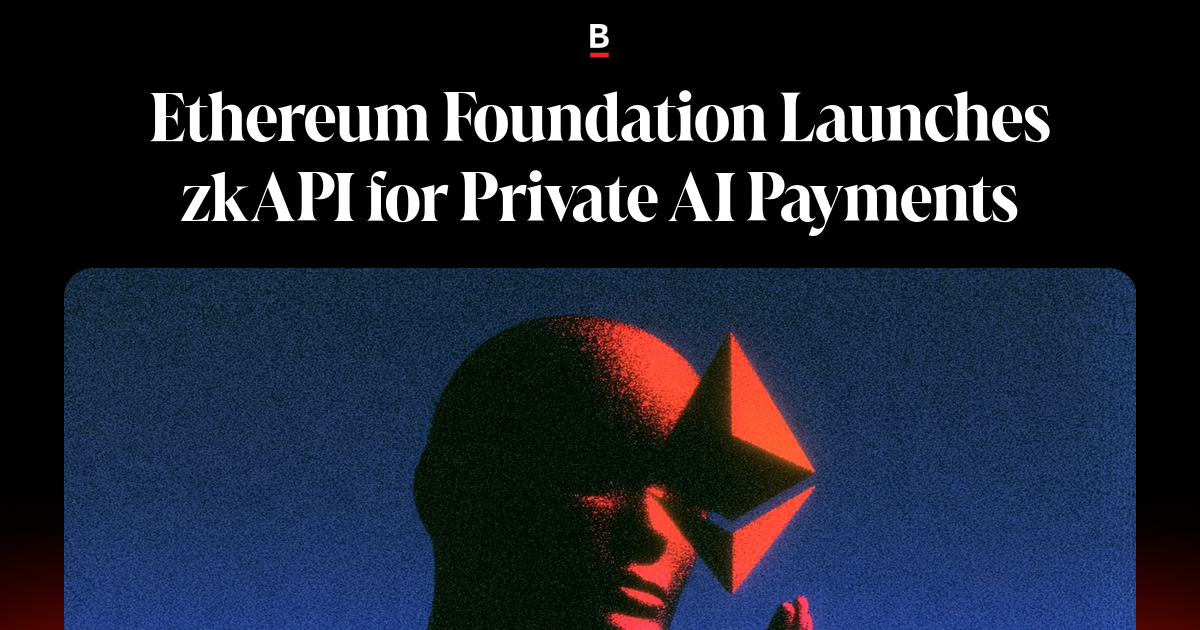
Ethereum Foundation Launches zkAPI for Private AI Payments

The Ethereum Foundation and the Open Anonymity Project launched zkAPI, a system that lets users prepay into an on-chain USDC vault and then generate zero-knowledge proofs to unlock short-lived, spend-capped API keys for AI models (and other metered services) without tying usage back to a billing identity. It ships a local client that mimics the OpenAI and Ollama APIs so existing apps can switch to account-free access with minimal changes, plus an in-browser client called OA Chat; funds remain withdrawable on-chain even if zkAPI's own servers go down. The design, originally sketched by Davide Crapis and Vitalik Buterin on Ethereum Research, still leaves IP address and prompt content visible to providers, so the team recommends Tor for stronger privacy.

EthereumOpenAI APIOllama+1
Ethereum FoundationOpen Anonymity ProjectDavide Crapis+4

ai-infraΒ· Published and added 2 Oct 2026

blog.ethereum.orgarticle🧠 AI

Introducing zkAPI: private usage credits for any API

zkAPI, built by the Open Anonymity Project with the Ethereum Foundation, separates payment from identity for metered APIs, with AI inference first. Users deposit credits into an Ethereum vault contract and spend them as private notes. Groth16 proofs on BN254, Poseidon hashing, a 32-level Merkle tree and nullifiers authorize spends. The server mints short-lived, dollar-capped API keys, and signed usage receipts settle the metered amount. A local client exposes standard OpenAI and Ollama APIs, so existing apps work unchanged. The post also covers a proxy mode and the limits: network metadata and prompt-content fingerprinting can still link sessions.

EthereumOpenAI APIOllama+4
zkAPIOpen Anonymity ProjectEthereum Foundation+3

ai-infra, llm-appsΒ· Published and added 1 Oct 2026

github.comrepoπŸ›‘οΈ Security

Sift β€” Open-Source Secrets/Credential Scanner

Sift is Stratus Security's open-source successor to Snaffler: a Native AOT credential/secrets scanner for pentesters that crawls local drives, SMB shares/subnets, Active Directory, SharePoint/OneDrive/Teams, Slack, and Jira/Confluence for exposed secrets. It supports Kerberos/NTLM/pass-the-hash authentication, resumable checkpointed scans, a JSON rule/ignore-rule system compatible with Snaffler's detection catalogue, and optional local-LLM (Ollama) validation to cut false positives without sending sensitive findings to a cloud API.

.NETActive DirectoryMicrosoft 365+3
Snaffler

Offensive SecurityΒ· Added 30 Sep 2026

github.comrepoπŸ›‘οΈ Security

garak v0.17.0 β€” LLM vulnerability scanner release

Release notes for garak v0.17.0, NVIDIA's open-source LLM vulnerability scanner used for red-teaming and probing models for jailbreaks, prompt injection, data leakage and other failure modes. The release adds an EU AI Act risk-category mapping to tag and group probe results, plus fixes to detectors (agent_breaker judge verdict validation, packagehallucination import parsing, MarkdownExfilContent divide-by-zero, TriggerListDetector alignment) and probes (badchars ASCII selection, Markdown exfiltration link templates), along with Ollama generator improvements and dropped Python 3.10 support in favor of 3.13.

OllamaPython
EU AI ActAgentBreakerIntentProbe+2

AI SecurityΒ· Added 29 Sep 2026

github.comrepoπŸ›‘οΈ Security

garak v0.17.0 β€” adds EU AI Act risk-category mapping

garak is NVIDIA's open-source LLM vulnerability scanner that runs probes/detectors for jailbreaks, prompt injection, PII leakage, package hallucination, markdown exfiltration and more against LLM targets. This v0.17.0 release adds a new EU AI Act risk-category mapping to tag and group probe results by the Act's risk categories, alongside fixes to the agent_breaker judge, markdown-exfiltration detectors, Ollama auth/generation support, and dropped Python 3.10 in favor of 3.13 support.

garakOllamaAWS Bedrock+2
EU AI Act

AI SecurityΒ· Added 26 Sep 2026

github.comrepoπŸ›‘οΈ Security

DVLAA

DVLAA (Damn Vulnerable LLM and Agent Application) is a self-hosted, Docker-deployable security training range for LLM and agent applications, modeled on the DVWA concept but for AI. It covers OWASP LLM Top 10 and Agent Security Top 10 risks (prompt injection, RAG poisoning, tool abuse, memory poisoning, excessive resource consumption, etc.) through 81 hands-on challenges, including an "AWDP" attack/defense track where 10 challenges reproduce real disclosed vulnerabilities in Dify, RAGFlow, Langflow, Flowise, Open WebUI and n8n (with optional real upstream container reproduction), 20 challenges adapted from a China–ASEAN AI security CTF, and 6 challenges adapted from a real model-poisoning CTF. It provides real model interaction, state-machine flag verification, source/prompt viewers, model management (local, Ollama, SiliconFlow, OpenAI-compatible), and bilingual UI.

DifyRAGFlowLangflow+3
OWASP Top 10 for LLM ApplicationsOWASP Top 10 for Agentic Applications

AI Security, LearningΒ· Added 22 Sep 2026

github.comrepoπŸ›‘οΈ Security

Lonkero β€” Rust web vulnerability scanner (v3.7, AI agent mode)

Lonkero is an open-source Rust web vulnerability scanner (v3.7) combining 125+ context-aware scanners with an AI agent mode that drives targeted scans via natural-language conversation (using Claude, GPT, or local Ollama models). Notable techniques include a browser-free "proof-based" XSS engine that mathematically proves exploitability from reflection context + escape behavior, an "OOBZero" engine for detecting blind SQLi/SSRF/XXE via Bayesian multi-channel statistical inference and Pearson-correlated timing attacks without external callback infrastructure, Next.js middleware-bypass detection (CVE-2025-29927, CVE-2024-34351), AWS Cognito user-enumeration checks, and a scanner module that detects invisible prompt-injection payloads hidden in README.md files targeting AI coding assistants.

RustClaudeOllama+3
CVE-2025-29927CVE-2024-34351CVE-2023-23752+6

AppSec, AI Security, Offensive SecurityΒ· Added 21 Sep 2026

github.comrepoπŸ›‘οΈ Security

awarexone/Agentic-Bug-Hunter

Agentic-Bug-Hunter is an open-source CLI (bughunter) and Claude Code plugin that automates the bug bounty pipeline end-to-end: recon, vulnerability hunting across 26 web2 and 10 web3/smart-contract bug classes, a "7-Question Gate" validation step to kill weak findings, and submission-ready report generation for HackerOne, Bugcrowd, Intigriti, and Immunefi. It orchestrates existing scanners (subfinder, httpx, nuclei, katana, ffuf, dalfox) behind a multi-provider LLM layer (Ollama, Groq, DeepSeek, Claude, OpenAI) and cross-session "hunt memory," and also ships an MCP server for use from Cursor, Codex, or OpenCode.

Claude CodeModel Context ProtocolOllama+3
BugcrowdIntigritiImmunefi+2

Offensive Security, AI Security, AppSecΒ· Added 21 Sep 2026

github.comrepo🧠 AI

AnotiaWang/awesome-decision-models

A community-maintained GitHub list cataloging "decision models" (also called System One models): small/fast models that take a state plus caller-declared questions (Noul/true-false, Choice/multi-option, Score/rubric) and return a probability per answer in one forward pass, rather than generating text. It tracks the originating TypeSafe AI Jev model and its /v1/systemone API alongside competing hosted models (Upstage Solar Decide, Liquid AI's d1, OpenAI's Decisions API, Inception's Mercury Decide, Respan's Span-01), dozens of open-weight fine-tunes (Cloudflare's Clef, Perplexity's pplx-decider, AWS Strands Decider, Together AI's Tev1, and many Qwen3.5-based community models), zero-training logit-reading approaches, local runtimes (Ollama, Ollaya, llama.cpp-based servers), SDKs across a dozen languages, and a very long list of agent/coding-tool/MCP integrations (browser agents, code review, routing, game-playing demos) that use these models for fast, typed, in-the-loop decisions. The page is truncated at 40k of ~51k characters, so later sections (further toys, demos, and possibly benchmarks) are not reflected here.

Qwen3.5Qwen3.8-27Bllama.cpp+15
TypeSafe AIJevJevBench+33

models, mcp, agentsΒ· Added 2 Oct 2026, published 17 Sep 2026

github.comrepoπŸ›‘οΈ Security

RepoGuardBench

RepoGuardBench is a benchmark and accompanying paper that measures whether local open-weight coding agents (Qwen2.5-Coder 1.5B-14B via Ollama) stay on the bug-fix task when repository artifacts β€” README files, issue text, code comments, test logs, and agent-rule files β€” carry inert prompt-injection instructions. It evaluates five lightweight context- and action-level defenses (D0-D5, including a path-only action gate) across seven metrics in a sandboxed task workspace, finding no statistically clear utility winner among them. The project ships a deterministic no-GPU smoke test, paper-claim verification scripts, and reproducible tables/figures under MIT (code) and CC BY 4.0 (data) licenses.

QwenOllamaClaude

AI SecurityΒ· Added 22 Sep 2026, published 13 Sep 2026

adversa.aiarticleπŸ›‘οΈ Security

Top GenAI security resources β€” September 2026

Adversa AI's September 2026 roundup of 15 GenAI security resources, grouped by attack technique, defense, threat modeling, red teaming, and training. Highlights include the OWASP LLM Top 10 2026 update (now blending 75% expert consensus with 25% incident data from 6,639 vulnerabilities, with eight of ten entries moving and System Prompt Leakage renamed Hidden Context Exposure), a memory-safety audit finding 10 vulnerabilities (including two use-after-frees at CVSS 9.2/8.1) in the C/C++ inference engine underlying Ollama, LM Studio, Jan and GPT4All, and research on stealing reasoning traces from proprietary LLM APIs, RAG document poisoning, and attention-collapse-based poisoning detection (D-SCAN).

LLMOllamallama.cpp+2
OWASP Top 10 for LLM ApplicationsNIST AI 600-1IDOR+4

AI SecurityΒ· Added 7 Oct 2026, published 9 Sep 2026

Showing 30 of 73

Show more