- TCP Use-After-Free: CVE-2026-98432 / CVSS 9.8
CVE-2026-98432 is a use-after-free in the Linux IPv4 TCP handshake, rated CVSS 3.1 9.8 and reachable by a remote unauthenticated peer on kernels back to 4.4. The post lists fixed stable releases (October 2026) and distribution patch status as of 31 October 2026, plus kernel and MPTCP listener checks. It gives interim nftables and iptables rules that drop IPv4 packets carrying options, and notes Anthropic's claim that Claude wrote a working exploit.
 atlasum.netadvisoryAdded 1 Nov 2026, published 31 Oct 2026🛡️ Security
 Threat Brief: Critical Vulnerabilities in PHP: CVE-2026-109618, CVE-2026-109619 (Updated October 29)
Unit 42 threat brief on PHP2Shell, two PHP remote code execution flaws, CVE-2026-109618 and CVE-2026-109619 (CVSS 4.0 9.2), both caused by longjmp() error handling that leaves memory uninitialized or freed. Cortex Xpanse counted over 22.6 million exposed instances. The 29 October 2026 update says attackers chained PHP2Shell with a Linux kernel privilege escalation against internet-exposed PAN-OS management interfaces. An earlier 23 October claim of post-compromise activity was retracted on 25 October.
 unit42.paloaltonetworks.comadvisoryAdded 30 Oct 2026, published 29 Oct 2026🛡️ Security
 CVE-2026-98432: 9.8 CVE affecting all Ubuntu versions
CVE-2026-98432 is a Linux kernel use-after-free in the IPv4 TCP stack, tracked by Ubuntu (published 15 October 2026, updated 29 October 2026). ireq_opt/inet_opt were freed with plain kfree() while another CPU built a SYNACK under RCU, so ip_options_build() read freed memory; the fix uses kfree_rcu(). Ubuntu rates it High priority, CVSS v3.1 9.8 and v4.0 8.3. The page text does not list per-release package status.
 ubuntu.comadvisoryAdded 30 Oct 2026, published 29 Oct 2026🛡️ Security
- lee1981 (@lee1981b) on X
CVE-2026-103780 is a stack-based buffer overflow (CWE-121) in Dell PowerProtect Data Domain / DD OS. An unauthenticated remote attacker could get command execution (CVSS 3.1 9.8, Dell DSA-2026-416). The post lists affected and fixed builds for four release trains (Feature Release, LTS2024, LTS2025, LTS2026). It adds KEV, EPSS and SSVC status, plus six defensive checks. The vulnerable service is not public.
 x.comadvisoryAdded 31 Oct 2026, published 29 Oct 2026🛡️ Security
 CVE-2026-101767: Critical Oracle EBS SQL Injection Actively Probed in the Wild
CVE-2026-101767 is a CVSS 9.8 unauthenticated SQL injection in Oracle E-Business Suite's Application Object Library, reachable through the /OA_HTML/AppsTCFServer servlet (GanttDataServer) and chainable to OS command execution. It affects versions 12.2.3 to 12.2.15 and was fixed in the October 2026 Critical Patch Update. Horizon3.ai found it, and Defused saw probing on honeypots on 27 October 2026. Interim mitigation is removing the servlet from the URL firewall allowlist.
 orca.securityadvisoryPublished and added 28 Oct 2026🛡️ Security
- Hitachi Energy TRO600 series products
ICSA-26-302-02 is a CISA republication of Hitachi Energy PSIRT advisory 8DBD000224 on the TRO600 series. It covers CVE-2026-10756 and CVE-2026-106087, which allow remote code execution and disclosure of sensitive information. Affected versions are TRO600 up to 9.2.1.6 and 9.1.1.0, plus 9.2.2.1 and 9.1.2.0. The page gives no per-CVE detail or CVSS scores, only general ICS hardening advice. Released 27 October 2026.
 cisa.govadvisoryAdded 29 Oct 2026, published 28 Oct 2026🛡️ Security
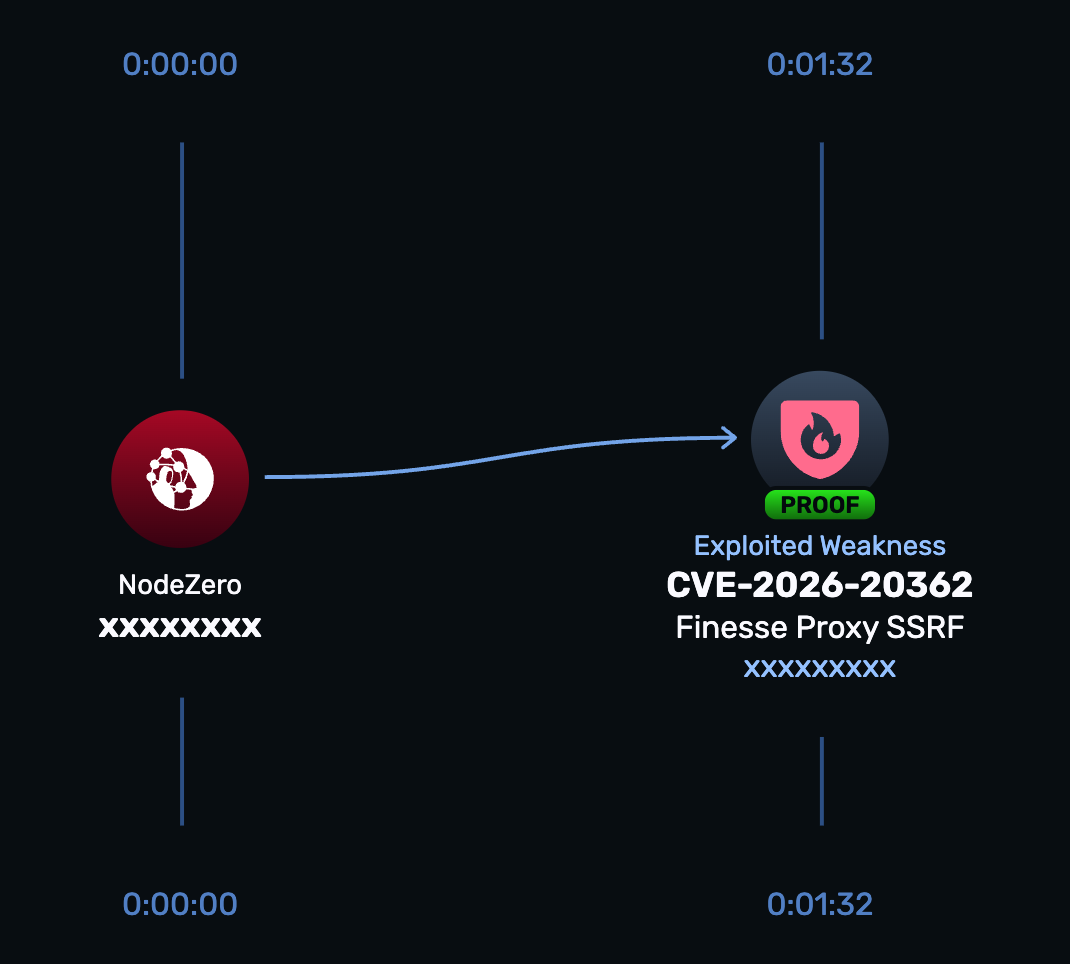 CVE-2026-20362 | Cisco Finesse Server-Side Request Forgery Vulnerability
CVE-2026-20362 is an unauthenticated server-side request forgery in Cisco Finesse (CVSS 3.1 score 7.2), found by Horizon3 researchers Noah King and Brandon Peterson. The embedded Apache Shindig content proxy fetches attacker-supplied URLs, including loopback services such as the Finesse REST API at 127.0.0.1:8082, which returns SystemInfo with node hostnames and the XMPP domain. Cisco published its advisory on 7 October 2026. Fixes are planned for January and February 2027, and no workaround exists.
 horizon3.aiadvisoryAdded 29 Oct 2026, published 28 Oct 2026🛡️ Security
- lee1981 (@lee1981b) on X
CVE-2026-92885 is a critical (CVSS 3.1 9.8, CWE-287) authentication bypass in the Qode Membership WordPress plugin, versions through 2.0.6.2. A misspelled variable in the Facebook token-verification guard skips provider checks, so an unauthenticated attacker with a public nonce can get a session cookie for an existing account, including an administrator. The post gives the fix (2.0.6.3, bundled in Bridge 30.9), KEV/EPSS/SSVC status, and a SOC log-correlation and remediation plan.
x.comadvisoryAdded 31 Oct 2026, published 28 Oct 2026🛡️ Security - Dark Web Informer (@DarkWebInformer) on X
Veeam patched five vulnerabilities across Backup & Replication, Veeam Agent for Linux and Veeam ONE. The worst is CVE-2026-108142 (CVSS 9.1), an unauthenticated authorization bypass in the CDP Coordinator Service affecting Backup & Replication 13.0 and 13.1. Other fixes cover Linux agent privilege escalation, two path-traversal file writes, and a Veeam ONE MFA bypass; fixed builds are listed.
x.comadvisoryAdded 30 Oct 2026, published 28 Oct 2026🛡️ Security - lee1981 (@lee1981b) on X
CVE-2026-115905 is a ZIP cloaking flaw in the Rust zip crate (zip-rs/zip2), rated CVSS v4.0 10.0 and affecting versions below 9.0.5. ZipArchive reads central-directory metadata while ZipStreamReader reads local headers, so a crafted archive can pass filename inspection and then overwrite a different file during streaming extraction. Version 9.0.5 adds consistency checks, but ZipStreamReader::new leaves them off by default, and extraction is not atomic, so files can be written before an error is raised. The post covers CWE-20 and CWE-436, KEV and EPSS status, Debian status and a six-step investigation trail.
x.comadvisoryAdded 29 Oct 2026, published 27 Oct 2026🛡️ Security - EPICS Base
CISA ICS advisory ICSA-26-300-01 (October 27, 2026) covers EPICS Base release 7.0.10 and earlier, with CVE-2026-114595 through CVE-2026-114598. Flaws include integer overflow, length parameter inconsistency and type confusion, allowing denial of service, memory corruption, information disclosure or remote code execution (CVSS v3.1 9.8). The fix is EPICS Base 7.0.11, with patches in epics-base and pvDataCPP pull requests.
cisa.govadvisoryAdded 29 Oct 2026, published 26 Oct 2026🛡️ Security - dbugs (@ptdbugs) on X
CVE-2026-106173 is a critical (CVSS 9.4) unauthenticated arbitrary file write in FortiSIEM's phQueryMaster gRPC service on port 27918/TCP. The SendQueryResult method builds a path from the query-id parameter without validation, so "../" sequences escape the directory and a null byte drops the appended filename and extension. Overwriting /opt/charting/redishb.sh, which runs every 60 seconds, gives remote command execution. Horizon3.ai published the analysis and a PoC.
x.comadvisoryAdded 27 Oct 2026, published 26 Oct 2026🛡️ Security  Python packages are also vulnerable to the Node2Shell Brotli flaw (CVE-2026-111497)
Python2Shell is the Python-side impact of CVE-2026-111497 (Node2Shell), a Brotli decoder flaw (CVSS 4.0 9.2) in DecodeBlockTypeAndLength() that mixes an unchecked return value with an out-of-bounds write. Brotli 1.2.0 and earlier, and brotlicffi 1.2.0.x, are affected through urllib3, requests, httpx, aiohttp and Scrapy. Fixes are Brotli 1.2.1 and brotlicffi 1.2.1.0; as of 23 October 2026 advisory databases do not map the CVE to either package. The post lists checks and workarounds.
 aikido.devadvisoryPublished and added 23 Oct 2026🛡️ Security
 Brotli vulnerability affects curl and Git
GHSA-9v8h-qqgm-4m35 is a critical buffer overflow (CVSS v4 9.2) in the Google Brotli decoder (c/dec/decode.c), affecting versions 1.0.3 through 1.2.0 on all platforms. A crafted compressed stream lets an unauthenticated remote attacker corrupt adjacent decoder state, leak memory, crash the process, or possibly execute code. Fixed in 1.0.10, 1.1.1 and 1.2.1. The page does not mention curl or Git, despite the title.
 github.comadvisoryAdded 25 Oct 2026, published 23 Oct 2026🛡️ Security
- lee1981 (@lee1981b) on X
CVE-2026-111497 is an out-of-bounds write in the Brotli decoder bundled with Node.js (CWE-787, CWE-252), rated CVSS v4.0 9.2 by the Google CNA and High by the Node.js project. Fixes are Node 22.23.4, 24.22.1 and 26.12.1, and 24.22.1 still labels Brotli 1.2.0 because the fix was cherry-picked. The post gives a SOC trail from input to worker, with remediation and verification steps. It notes no KEV match, CISA SSVC exploitation none, and only unverified public lab claims.
x.comadvisoryAdded 26 Oct 2026, published 23 Oct 2026🛡️ Security 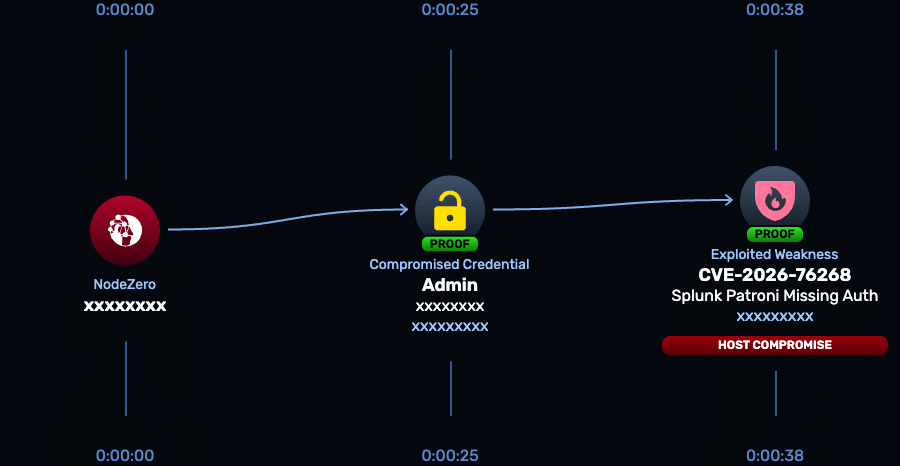 CVE-2026-76268 | Splunk Enterprise Patroni REST API Missing Authentication Vulnerability
CVE-2026-76268 is a critical (CVSS 9.8) missing authentication flaw (CWE-306) in the Patroni REST API on Splunk Enterprise search head cluster members. An unauthenticated attacker with network access can run operating-system commands. Affected: 10.4.0 to 10.4.2 and 10.2.0 to 10.2.6. Fixed in 10.4.3 and 10.2.7. Splunk (SVD-2026-1001, 7 October 2026) suggests disabling the PostgreSQL sidecar as a workaround.
horizon3.aiadvisoryAdded 29 Oct 2026, published 22 Oct 2026🛡️ Security- Dark Web Intelligence (@DailyDarkWeb) on X
CVE-2026-114625 is a critical (CVSS 3.1 9.9) SQL injection in on-prem Arista VeloCloud Orchestrator, the SD-WAN management portal, covered in Arista Security Advisory 0199 of 22 October 2026. Any authenticated user, even the lowest Enterprise Read Only tenant role, can become a local superuser operator, and Arista says it is exploited in the wild. On-prem fixes are 5.2.3.18, 6.1.3.10 and 6.4.2.12; two attacker IPs are listed.
x.comadvisoryAdded 24 Oct 2026, published 22 Oct 2026🛡️ Security - lee1981 (@lee1981b) on X
CyberForge CVE of the Day #084 analyses CVE-2026-76466, a CVSS 9.8 flaw in clustered Cisco Expressway-C and Expressway-E. Persistent database cookies and weak client-certificate validation allow root OS command execution over the network. The fix is X15.5.20 (X14 and earlier must migrate), with no workaround. It adds a per-peer SOC investigation trail, reachability checks and exposure status from CISA SSVC, KEV and EPSS.
x.comadvisoryAdded 24 Oct 2026, published 22 Oct 2026🛡️ Security  PHP Patches Two Critical Unauthenticated RCEs (CVE-2026-109618, CVE-2026-109619): Update Now
Snyk's write-up of two critical unauthenticated PHP runtime RCEs, CVE-2026-109618 (out-of-memory corruption) and CVE-2026-109619 (stale global state, cross-request use-after-free), both CVSS v4.0 9.2. Fixed in PHP 8.5.12, 8.4.27, 8.3.36 and 8.2.35 on 21 October 2026. It covers the disclosure timeline, affected SAPIs (mod_php most exposed), backports for 8.1 and older, and partial mitigations.
 snyk.ioadvisoryPublished and added 22 Oct 2026🛡️ Security
- Oracle Security Alert Advisory – CVE-2026-91403 (eMudhra cert revocation)
Oracle Security Alert for CVE-2026-91403 ships Java SE updates that distrust a set of intermediate CA certificates tied to eMudhra. It contains one new patch for Oracle Java SE, described as remotely exploitable without authentication. Customers are told to update Java or apply mitigations listed at ops.java/emudhra and in the Patch Availability Document. No reporter is credited and the page gives no CVSS score or technical detail.
 oracle.comadvisoryAdded 23 Oct 2026, published 21 Oct 2026🛡️ Security
 Two critical RCEs in PHP core
Cisco Talos advisory on "php2shell", two unauthenticated RCE flaws in PHP core, CVE-2026-109618 and CVE-2026-109619 (CVSS v4.0 9.2), affecting every build since PHP 5.4. One flaw is an out-of-memory handling bug leaving request data partly initialized; the other reuses stale state after free. PHP 8.1 and older get no patch (about 50% of PHP systems). Includes ini-level mitigations and Snort SIDs 67359 and 67360. No exploitation seen as of 21 October 2026.
 blog.talosintelligence.comadvisoryPublished and added 21 Oct 2026🛡️ Security
 PHP Remote Code Execution ("PHP2Shell" CVE-2026-109618 & CVE-2026-109619)
PHP2Shell is the name for CVE-2026-109618 (out-of-memory corruption) and CVE-2026-109619 (stale global state), two unauthenticated PHP remote code execution flaws rated CVSS 4.0 9.2. Details leaked before the 21 October 2026 patch release, and watchTowr's honeypots saw exploitation. The page lists fixed versions (8.5.12, 8.4.27, 8.3.36, 8.2.35), states that .ini mitigations do not work, gives a timeline, and describes compromise checks.
 watchtowr.comadvisoryAdded 28 Oct 2026, published 21 Oct 2026🛡️ Security
 Critical PHP “PHP2Shell” RCE Vulnerabilities Allow Unauthenticated Remote Code Execution (CVSS 9.2)
PHP2Shell is the informal name for CVE-2026-109618 and CVE-2026-109619 (CVSS v4.0 9.2), unauthenticated remote code execution flaws in the PHP core runtime. Patches for branches 8.2 to 8.5 were scheduled for 21 October at 14:00 UTC, while PHP 8.1 and older get no fix; about 884,000 internet-facing hosts run those versions. watchTowr reproduced CVE-2026-109618, no public PoC existed at writing, and Sansec expects mass exploitation within 15 minutes of release.
orca.securityadvisoryPublished and added 21 Oct 2026🛡️ Security- Rapid Response: php2shell, Leaked Critical PHP Vulnerabilities (CVE-2026-109618 & CVE-2026-109619)
Huntress rapid-response post on php2shell, two leaked critical PHP core vulnerabilities (CVE-2026-109618 and CVE-2026-109619, CVSS v4.0 9.2 each) reported as remote code execution. The PHP team moved its security release to 21 October 2026, 14:00 UTC, after the leak. It lists hunting cues such as php-fpm, php-cgi or apache2 spawning shells, interpreters or download tools, plus inventory and patch steps. No root cause, affected versions, PoC or IOCs were public at writing.
 huntress.comadvisoryPublished and added 21 Oct 2026🛡️ Security
 Critical vulnerabilities in PHP (PHP2SHELL)
PHP2SHELL is Aikido Security's advance notice of two critical remote code execution flaws in PHP itself, CVE-2026-109618 and CVE-2026-109619, both CVSS v4.0 9.2, with all versions treated as affected. The PHP security team will release fixes at 14:00 UTC on 21 October 2026, a day early after details leaked on 20 October. The post withholds exploitation details and workarounds.
aikido.devadvisoryPublished and added 21 Oct 2026🛡️ Security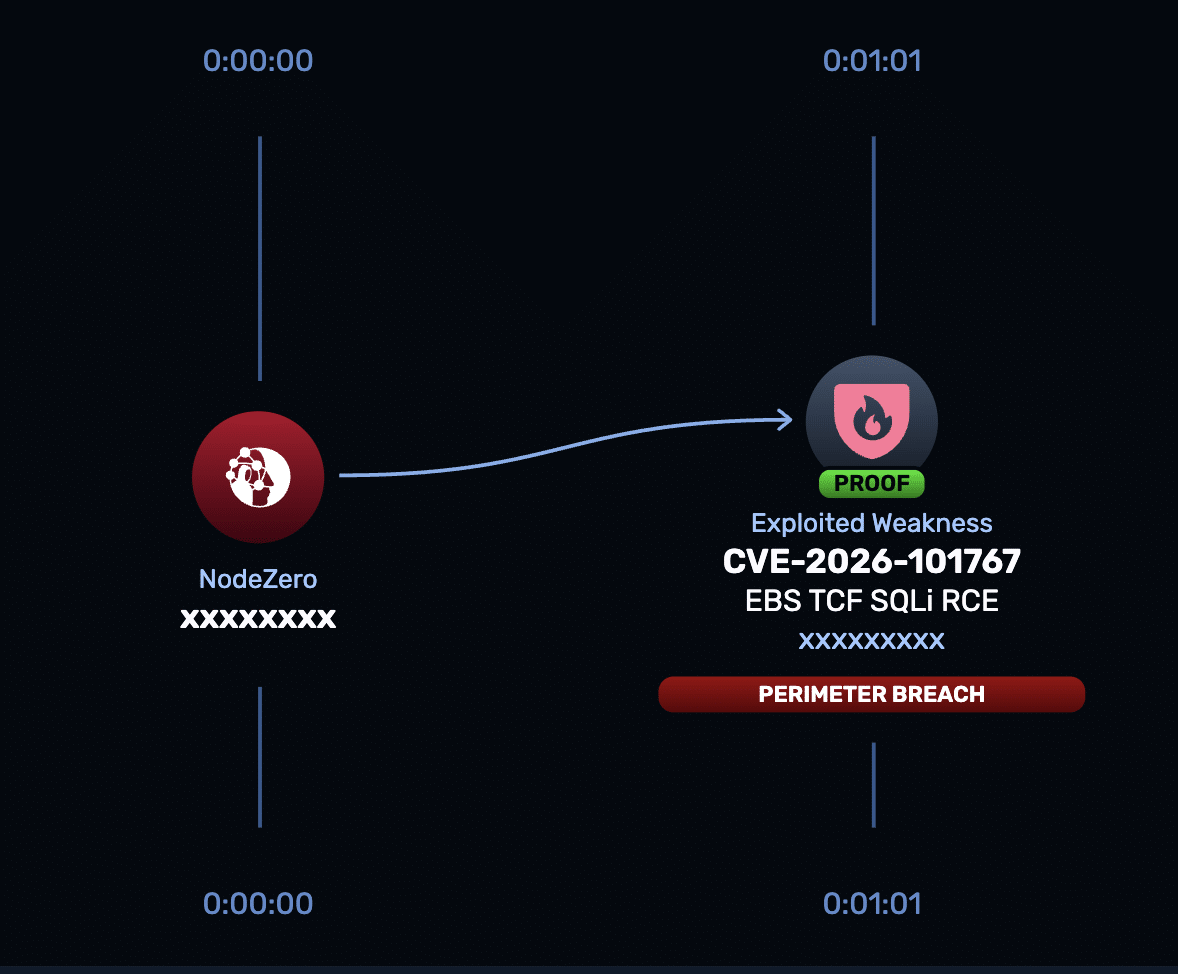 CVE-2026-101767 | Oracle E-Business Suite TCF SQL Injection and Remote Code Execution
CVE-2026-101767 is an unauthenticated SQL injection in the Oracle E-Business Suite Thin Client Framework servlet (/OA_HTML/AppsTCFServer, oracle.apps.fnd.tcf.SocketServer), CVSS 3.1 9.8. It runs SQL as the APPS user and chains to OS commands as the EBS account. Affects 12.2.3 to 12.2.15, fixed in the Oracle October 2026 CPU (20 October 2026). The page lists mitigations, IOCs and a timeline.
horizon3.aiadvisoryAdded 29 Oct 2026, published 20 Oct 2026🛡️ Security- Upcoming Critical PHP Security Release
The PHP security team announces an upcoming PHP security release that fixes two critical vulnerabilities, both rated CVSS v4.0 9.2. The release is scheduled for Wednesday, 21 October 2026 at 14:00 UTC. The team says it may release earlier if details become public or exploitation in the wild is seen. The notice gives no CVE IDs, affected versions or technical details.
 news-web.php.netadvisoryAdded 21 Oct 2026, published 20 Oct 2026🛡️ Security
 Frequently Asked Questions About PHP Remote Code Execution (PHP2Shell CVE-2026-109618 & CVE-2026-109619)
PHP2Shell is the name for CVE-2026-109618 and CVE-2026-109619, two unauthenticated remote code execution flaws in PHP, both CVSS v4.0 9.2. One stems from out-of-memory corruption during request setup, the other from stale global state reused by the next request. watchTowr reports exploitation since 21 October 2026, lists fixed releases (8.5.12, 8.4.27, 8.3.36, 8.2.35) and says PHP 5 is also affected. PHP says no configuration change fully mitigates.
watchtowr.comadvisoryAdded 30 Oct 2026, published 20 Oct 2026🛡️ Security Upcoming Critical PHP Security Release
The php.net 2026 news archive opens with the PHP security team's advance notice of a release scheduled for 21 October 2026 at 14:00 UTC. It fixes two critical vulnerabilities, both rated CVSS v4.0 9.2, and may ship earlier if details leak or exploitation appears. Details and fixed versions come with the release. The archive also lists 2026 security releases (8.2.34, 8.3.35, 8.4.26, 8.5.11), PHP 8.6 RC3 and conference announcements.
 php.netadvisoryAdded 21 Oct 2026, published 20 Oct 2026🛡️ Security
- lee1981 (@lee1981b) on X
CVE-2026-77932 affects DB-GPT through 0.8.2 (dbgpt-app). The /api/v1/chat/react-agent route accepts unauthenticated requests because get_user_from_headers returns an admin-role user, and the ReAct agent can reach unsandboxed Python and shell tools. Lasso reported root in the webserver container in a lab. The post gives CVSS 9.8 and 9.3, no verified fix (0.8.2 is still the latest release), no KEV match, no EPSS data, and a SOC hunting trail.
x.comadvisoryAdded 23 Oct 2026, published 20 Oct 2026🛡️ Security - lee1981 (@lee1981b) on X
CyberForge CVE of the Day #080 covers CVE-2026-99999 ("PwnEscape"), a Linux kernel IPv4 checksum-completion flaw. Crafted checksum metadata can trigger a deferred write into an already-validated IPv4 header, which allows host memory disclosure from a guest or microVM over virtio-net and TAP. It gives upstream fixed branches (5.10.272 to 7.2.11), Amazon Linux, Red Hat and Ubuntu status, CVSS 9.3, EPSS 0.211% and a SOC investigation trail. No IOCs were verified.
x.comadvisoryAdded 19 Oct 2026, published 17 Oct 2026🛡️ Security  BeyondTrust Remote Support Arbitrary File Upload (CVE-2026-102764)
CVE-2026-102764 is a CVSS 9.8 unauthenticated arbitrary file upload flaw in BeyondTrust Remote Support (formerly Bomgar) and Privileged Remote Access. Internal messaging components do not verify message origin, so remote attackers can plant files the appliance would reject. BeyondTrust disclosed it on 15 October 2026 with patch BT26-05, and CISA added it to KEV on 16 October 2026. The page lists log files to review and hardening steps.
watchtowr.comadvisoryAdded 30 Oct 2026, published 16 Oct 2026🛡️ Security- S2W_DailyThreat (@S2W_DailyThreat) on X
S2W post on CVE-2026-97229, a CVSS 10.0 remote code execution flaw in the GitLab CE/EE CI/CD regex compiler, disclosed October 13, 2026. Insufficient regex validation plus an integer overflow during encoding conversion lets an attacker who can add CI/CD config use a malicious regex and a UTF-8 repository path to run commands as the git user. Affects self-managed 19.2 before 19.2.8, 19.3 before 19.3.5 and 19.4 before 19.4.2. Rapid7 published analysis and a public PoC exists, with no in-the-wild exploitation confirmed as of October 15. No workaround exists, so patch or restrict access to a management network or VPN.
x.comadvisoryAdded 17 Oct 2026, published 16 Oct 2026🛡️ Security - lee1981 (@lee1981b) on X
Daily CVE digest on CVE-2026-76519, a CVSS 9.8 relative path traversal (CWE-23) in Cisco Secure Email Gateway's AMP File Reputation attachment processing. A crafted attachment gives unauthenticated arbitrary file writes and root command execution, and Cisco PSIRT reports active exploitation. The CVE is in CISA KEV. It lists the applicability conditions (File Reputation assigned to a policy and Content Scanner Tools earlier than 25.3.0.5525) and the fixes (scanner 25.3.0.5525, AsyncOS 15.5.5-014 and 16.5.0-780). It also covers evidence preservation, reading Cisco's System Security scan outcomes, mail/AMP log correlation, and deployment-specific recovery including cluster-key exposure.
x.comadvisoryAdded 18 Oct 2026, published 15 Oct 2026🛡️ Security  Critical GitLab RCE Lets Unauthenticated Attackers Execute Code on Servers (CVE-2026-97229)
Orca Security analysis of CVE-2026-97229, a CVSS 10.0 flaw in GitLab CE/EE. An integer overflow (CWE-190) in the CI/CD regular expression compiler gives memory corruption and code execution as the git user. It is triggered by a crafted regex in .gitlab-ci.yml combined with a UTF-8 repository path, with no authentication needed on instances that allow public project creation or self-registration. Lists affected branches (19.2 before 19.2.8, 19.3 before 19.3.5, 19.4 before 19.4.2), the absence of a workaround, interim mitigations, and a Rapid7 PoC against GitLab CE 19.4.1 with ASLR on. Notes a prior max-severity GitLab bug (CVE-2026-85706) was probed in the wild within hours and later added to CISA KEV.
orca.securityadvisoryPublished and added 14 Oct 2026🛡️ Security- Dark Web Intelligence (@DailyDarkWeb) on X
Summary of SAP's October 13, 2026 Security Patch Day (16 new notes, 4 GitHub advisories). It leads with CVE-2026-89111, a CVSS 10.0 OAuth2 SSRF in SAP Cloud SDK for Python before 0.45.2, where an attacker-controlled tenant_subdomain redirects token requests and exfiltrates client credentials. It also lists three other critical flaws: broken access control in NetWeaver Visual Composer, code injection in S/4HANA substitution/validation rules, and a missing authorization check in the Manufacturing Integration and Intelligence (XMII) Configuration Service. It notes that none are in CISA KEV and SAP reports no in-the-wild exploitation.
x.comadvisoryAdded 15 Oct 2026, published 13 Oct 2026🛡️ Security  Microsoft Patch Tuesday for October 2026 — Snort rules and prominent vulnerabilities
Talos summarises Microsoft's October 2026 Patch Tuesday, which covers 1415 vulnerabilities, 85 of them critical (67 RCE). One bug is exploited in the wild: CVE-2026-96951, a Windows Shell security feature bypass. The post groups the CVEs by Microsoft's exploitability rating (more likely, less likely, unlikely) with CVSS and CWE for each, covering Windows, Office, Exchange, Hyper-V, DHCP, QUIC, Outlook and Azure. It also lists the Snort 2 and Snort 3 rule ID ranges that detect exploitation attempts.
blog.talosintelligence.comadvisoryPublished and added 13 Oct 2026🛡️ Security- ♫Why♥Not♪ (@Python_s_) on X
Alert thread on CVE-2026-35029 (CVSS v4.0 8.7) in LiteLLM Proxy, versions before 1.83.0. A low-privilege authenticated user can bypass admin authorization on /config/update, change runtime settings, read server files, take over admin credentials and run Python through remotely loaded modules (S3/GCS-hosted). Check Point Research published a full execution chain on October 13 after the April 2026 disclosure. The post lists hunting pointers (non-admin POSTs to /config/update, env-var changes, unexpected pass-through endpoints, cloud module loading) and advises upgrading to 1.83.9 or later and rotating credentials.
x.comadvisoryPublished and added 13 Oct 2026🛡️ Security  Ivanti Connect Secure zero-day exploited in the wild (CVE-2026-104935)
Rapid7 emergency-response analysis of CVE-2026-104935, a CVSS 8.6 authentication bypass by spoofing (CWE-290) in Ivanti Connect Secure that allows unauthenticated remote command execution. It was exploited as a zero-day against a limited number of customers, added to CISA KEV on disclosure day, and Volexity observed it chained with a still-unpatched privilege escalation flaw. Part of the fix shipped in 25.1.3.0 in July 2026, with backports to other supported versions pending. Rapid7 advises emergency patching outside normal cycles and hunting for compromise using Volexity's IOCs, since Ivanti has no reliable ones.
 rapid7.comadvisoryPublished and added 13 Oct 2026🛡️ Security
 Ivanti Connect Secure Authentication Bypass by Spoofing (CVE-2026-104935)
CVE-2026-104935 is an authentication bypass by spoofing in Ivanti Connect Secure (CVSS 3.1 score 8.6) that lets a remote attacker run commands without logging in. CISA added it to KEV on 13 October 2026. The 22.8.X bridge release and 25.1.2.2 and earlier are affected, with fixes in 22.8R2.5, 25.1.1.2, 25.1.3.0 and 25.1.3.1. Ivanti says no reliable indicators of compromise exist yet.
watchtowr.comadvisoryAdded 30 Oct 2026, published 13 Oct 2026🛡️ Security- CVE-2026-97229: Critical Unauthenticated Remote Code Execution in GitLab
Rapid7 analysis of CVE-2026-97229, a CVSS 10.0 integer overflow (CWE-190) in the Onigmo regex compiler used by GitLab CE/EE's CI/CD regex handling. A crafted regex in a .gitlab-ci.yml passes validation as US-ASCII, then is recompiled for a UTF-8 repository path, producing invalid instructions that give code execution as the git user. Rapid7 reproduced it on GitLab CE 19.4.1 with ASLR (patched in 19.4.2); despite the vendor's "unauthenticated" rating, the attacker needs to commit a malicious config to a public project, which self-registration allows. No in-the-wild exploitation is confirmed, and Rapid7 recommends urgent upgrades.
rapid7.comadvisoryPublished and added 13 Oct 2026🛡️ Security - lee1981 (@lee1981b) on X
CyberForge "CVE of the Day #076" covers CVE-2026-97229, a CVSS 10.0 integer overflow (CWE-190) in GitLab CE/EE's CI/CD regular expression compiler. It can lead to conditional unauthenticated code execution on the GitLab server. It lists the affected trains (19.2 before 19.2.8, 19.3 before 19.3.5, 19.4 before 19.4.2) and the 19.3.4 vs 19.3.5 Ona-regression discrepancy. It also gives six SOC checks: scoping, log preservation (Workhorse/Rails/Sidekiq, correlation_id), server-effect hunting, request-to-process correlation, upgrade and running-state verification. It notes that exploit details are unverified, no KEV listing exists and EPSS data is unavailable.
x.comadvisoryAdded 15 Oct 2026, published 13 Oct 2026🛡️ Security - lee1981 (@lee1981b) on X
CyberForge's CVE of the Day #075 covers CVE-2026-108860, a critical (CVSS 9.1 v3.1 / 9.3 v4.0) authentication bypass in SciSharp BotSharp through 5.2.0. WebStarter ships a published default HMAC JWT signing secret (CWE-321), so anyone holding it can forge bearer tokens that impersonate known users, including administrators. The post sets out how to confirm the effective key and serving build, a six-step SOC investigation trail, and remediation by rotating the secret. No verified fixed release, KEV entry or EPSS data existed at cutoff, and the linked research is static-only.
x.comadvisoryAdded 13 Oct 2026, published 12 Oct 2026🛡️ Security  ♫Why♥Not♪ (@Python_s_) on X
Alert on CVE-2026-106610, a critical (CVSS 9.8) incorrect privilege assignment flaw in the miniOrange OTP Verification WordPress plugin, versions 5.5.7 and earlier. Unauthenticated remote attackers can gain elevated permissions, potentially administrator, with no user interaction. Fixed in 5.5.8; no in-the-wild exploitation or public PoC verified. It advises auditing unexpected admin accounts and role changes, and warns that Patchstack's mitigation blocks legitimate requests too.
x.comadvisoryPublished and added 11 Oct 2026🛡️ Security- lee1981 (@lee1981b) on X
CyberForge CVE of the Day #074 analyses CVE-2026-85097, a CVSS 9.8 unauthenticated file upload to PHP execution flaw (CWE-434) in the Bricksforge WordPress plugin through 3.1.8.9. Wordfence names 3.1.8.10 as the fix, and a separate vendor 4.0.1 Pro Forms upload-security notice has no verified mapping to the CVE. It gives a defender workflow: scope versions, preserve edge/origin logs, inspect resulting files and PHP-FPM handling, and verify the patched version is serving. It also separates KEV (no match), EPSS (0.312%) and SSVC (exploitation none) from compromise evidence.
x.comadvisoryAdded 11 Oct 2026, published 10 Oct 2026🛡️ Security - lee1981 (@lee1981b) on X
CyberForge's CVE of the Day #073 covers CVE-2026-102255, a critical (CVSS 10.0) pre-authentication SSRF / confused-deputy flaw (CWE-918, CWE-441) in the SonicWall SMA1000 Work Place interface, per advisory SNWLID-2026-0017. It lists affected platform hotfixes (12.4.3-03526 and older, 12.5.0-02952 and older), fixed floors (12.4.3-03670, 12.5.0-03082), no workaround, and the exploitation picture (no known exploitation, not in KEV, EPSS 0.477%, SSVC automatable). It gives a six-step SOC playbook covering appliance scoping, AMC log preservation, hunting appliance-originated internal requests, correlating receiving-service changes, patching, and verifying every node, and it separates exposure, a lead, confirmed compromise and telemetry gaps.
x.comadvisoryAdded 12 Oct 2026, published 9 Oct 2026🛡️ Security  Citrix Urges Immediate Patching of Critical NetScaler Vulnerability
Citrix disclosed CVE-2026-107406 (CVSS 9.5), a critical memory overflow in NetScaler ADC and NetScaler Gateway that can lead to remote code execution or denial of service when appliances are configured as a SAML SP or SAML IdP, also affecting Secure Private Access Hybrid deployments using NetScaler. Patches are available in versions 14.1-73.46, 13.1-64.29, and the corresponding FIPS/NDcPP builds; Citrix says it is not aware of exploitation yet but urges immediate upgrades. The bulletin follows two other recently exploited NetScaler RCE/DoS zero-days (CVE-2026-88771, CVE-2026-88772) used against government, financial, education, legal, and professional-services organizations, and a separate DoS zero-day (CVE-2026-88779).
 securityweek.comadvisoryPublished and added 9 Oct 2026🛡️ Security
 Critical Atlassian Path Traversal Exposes Sensitive Files Across 8 Products
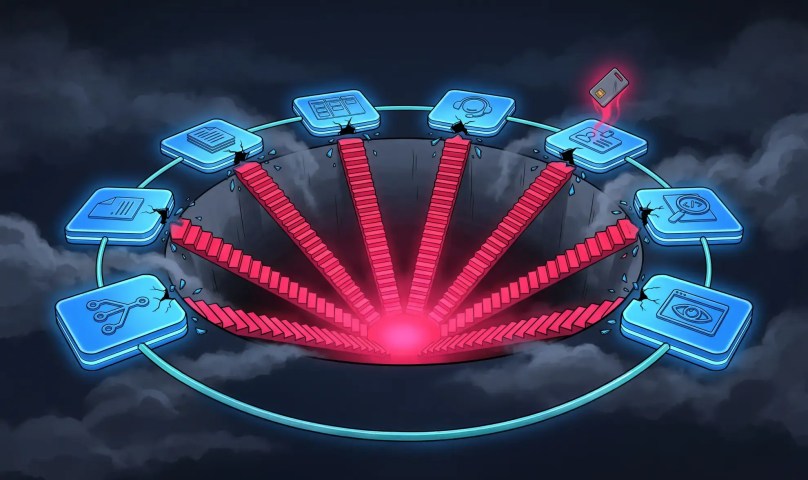
Orca Security details CVE-2026-21589 (CVSS 9.3), a critical unauthenticated path traversal flaw affecting all versions of eight Atlassian Data Center and Server products: Bitbucket, Confluence, Jira Software, Jira Service Management, Bamboo, Crowd, Crucible, and Fisheye. Insufficient path validation lets remote attackers read arbitrary files within the web application root without authentication, and in Crowd SSO deployments this can expose plaintext credentials usable to create administrative accounts and take over the entire Atlassian ecosystem. The advisory lists fixed versions for each product and recommends WAF rules and log review for organizations unable to patch immediately.
orca.securityadvisoryPublished and added 7 Oct 2026🛡️ Security Atlassian Patches Critical Vulnerability Affecting 8 Products
Atlassian patched CVE-2026-21589 (CVSS 9.3), an unauthenticated arbitrary file access flaw affecting all versions of Bitbucket, Bamboo, Crowd, Crucible, Confluence, Fisheye, Jira Service Management, and Jira Software Data Center. WatchTowr researcher Yordan Ganchev notes that organizations using Crowd for SSO are especially at risk because authentication details are stored in plaintext at a predictable path, letting attackers mint admin accounts if Crowd endpoints are internet-reachable. Fixed versions are listed for each product; Atlassian recommends immediate patching or disconnecting internet-facing instances, with WAF rules as a stopgap.
securityweek.comadvisoryPublished and added 7 Oct 2026🛡️ Security- Dark Web Intelligence (@DailyDarkWeb) on X
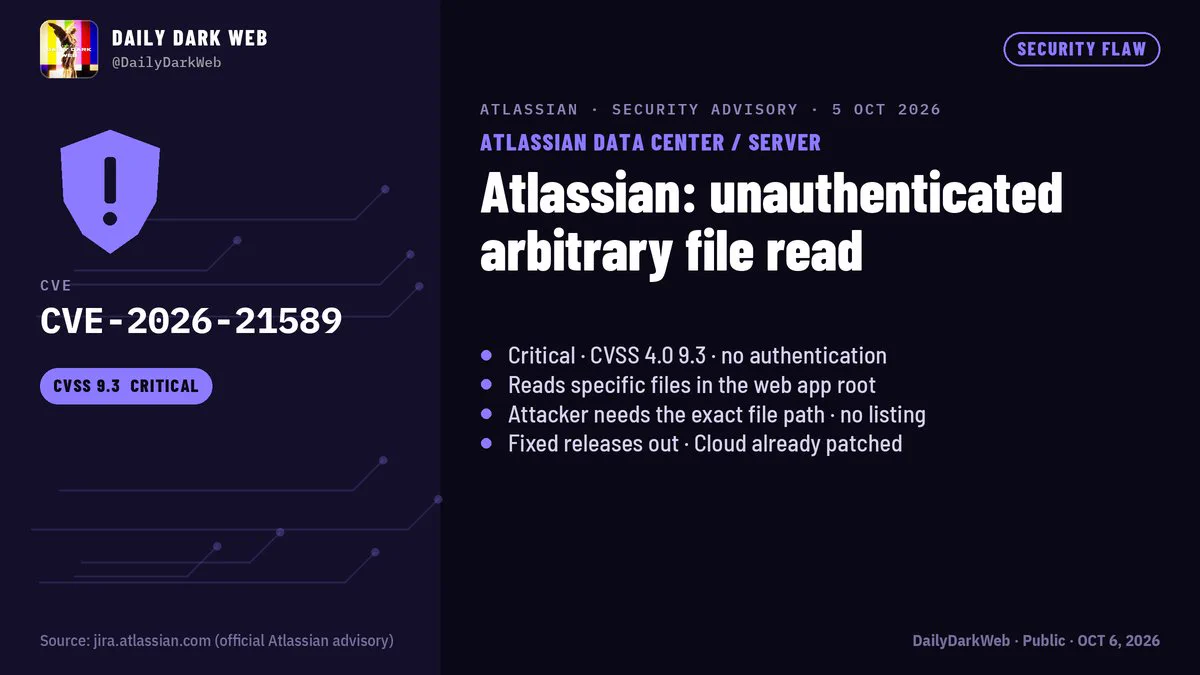
Atlassian disclosed CVE-2026-21589, a critical (CVSS 9.3) unauthenticated path traversal flaw allowing remote attackers to read specific files within the web application root across its self-managed Data Center/Server products — Jira Software, Jira Service Management, Confluence, Bitbucket, Bamboo, Crowd, Crucible, and Fisheye. Fixed versions are listed for each product (e.g. Jira 9.12.40/10.3.26/11.3.12, Confluence 9.2.26/10.2.19), and Atlassian Cloud is already patched; WAF/URL-rewrite mitigations are available for those who can't upgrade immediately. The post's analyst note clarifies exploitation requires knowing the exact target file path (no directory listing), and as of Oct 5, 2026 it is not yet in CISA KEV with no public exploit reported.
x.comadvisoryAdded 7 Oct 2026, published 6 Oct 2026🛡️ Security  Citrix NetScaler Zero-Day Exploited in the Wild Crashes SAML Authentication Services
Analysis of CVE-2026-88779 (CVSS v4.0 8.7), an unauthenticated memory-overflow flaw in the nsaaad SAML authentication handler on Citrix NetScaler ADC/Gateway that lets attackers crash the SAML service and lock out VPN/SSO access indefinitely through repeated triggering. Affects NetScaler 14.1 before 14.1-73.41 and 13.1 before 13.1-64.28 (plus FIPS/NDcPP builds); watchTowr Labs reproduced it via honeypot activity, Citrix confirmed targeted in-the-wild exploitation from IP 213.209.159.55, and CISA added it to KEV on 2026-10-04 with an Oct 7 federal remediation deadline. Some researchers suspect the overflow could extend to RCE beyond the documented DoS, though Citrix hasn't confirmed this.
orca.securityadvisoryPublished and added 5 Oct 2026🛡️ Security- Cyber Security News (@The_Cyber_News) on X
Citrix issued emergency patches for CVE-2026-88779, a memory-overflow zero-day in NetScaler ADC/Gateway appliances configured as a SAML service provider or identity provider, rated CVSS v4.0 8.7. Citrix confirmed active, targeted exploitation against unmitigated deployments, with repeated exploitation causing denial of service and disrupting dependent authentication services.
x.comadvisoryAdded 6 Oct 2026, published 5 Oct 2026🛡️ Security  GitLab patches critical 9.9 AI Gateway template-sandbox-escape RCE (CVE-2026-90970)
GitLab patched CVE-2026-90970, a critical (CVSS 9.9) flaw in the AI Gateway used by Duo Agent Platform, where a logged-in user with Duo Agent Platform access could craft a flow configuration to escape the prompt template sandbox and achieve arbitrary command execution on the gateway. Only self-managed organizations hosting their own AI Gateway (versions 18.1.6 through 19.1) need to act; the fix lands in 19.2.4, 19.3.2, and 19.4.1. The bug is a template engine weakness (CWE-1336), the same class as the earlier CVE-2026-1868 gateway RCE GitLab fixed in February, and was reported via HackerOne by researcher invisiblemeerkat.
 thehackernews.comadvisoryAdded 4 Oct 2026🛡️ Security
 Critical FortiMail Zero-Day Flaw (CVE-2026-104286)
CISA added CVE-2026-104286 (CVSS 9.8), a path traversal and NULL-byte handling flaw in Fortinet FortiMail, to its Known Exploited Vulnerabilities catalog after confirming active in-the-wild exploitation. The bug lets unauthenticated attackers write arbitrary files via crafted HTTP/HTTPS requests, affecting FortiMail 7.2 through 8.0.1; Fortinet published workarounds (disabling IBE, restricting management-interface access) ahead of patches and shared attacker IPs and modified/added files as IOCs. The article also lists several other actively exploited vendor flaws disclosed the same week (Check Point, Arista VeloCloud, F5 BIG-IP APM, Cisco Catalyst SD-WAN Manager, Citrix NetScaler).
thehackernews.comadvisoryAdded 3 Oct 2026🛡️ Security Threat Brief: NetScaler Zero Days CVE-2026-88771 and CVE-2026-88772 Exploited in the Wild (Updated September 30)
Unit 42 threat brief on CVE-2026-88771 (unauthenticated command injection) and CVE-2026-88772 (DTLS memory overflow) in NetScaler ADC and Gateway, both CVSS v4.0 9.5 and exploited as zero-days from August 2026. It details version fingerprinting, .deb and PHP web shells, a three-stage log-poisoning chain through ns_monuploadd_err.pl, httpd.conf persistence, IOCs, and 50,277 exposed instances as of 27 September 2026.
unit42.paloaltonetworks.comadvisoryAdded 30 Oct 2026, published 30 Sep 2026🛡️ Security- Critical Cisco Catalyst SD-WAN Manager API authentication bypass exploited in the wild (CVE-2026-76504)
Rapid7 analysis of CVE-2026-76504, a critical (CVSSv3.1 9.8) unauthenticated API authentication bypass in Cisco Catalyst SD-WAN Manager caused by improper URL-encoding handling (CWE-177), allowing attackers to gain admin-level API access via crafted requests to the j_security_check endpoint. The flaw is being actively exploited in the wild, was added to CISA's KEV list on October 1, 2026 with a remediation deadline of October 3, and follows two earlier 2026 Catalyst SD-WAN peering authentication bypasses (CVE-2026-20127 and Rapid7-discovered CVE-2026-20182). The post gives fixed-release guidance, no-workaround caveats, and log-based IOCs (encoded-character requests like %6a_security_check, viptela-reserved- usernames) for detecting compromise.
rapid7.comadvisoryAdded 7 Oct 2026, published 30 Sep 2026🛡️ Security 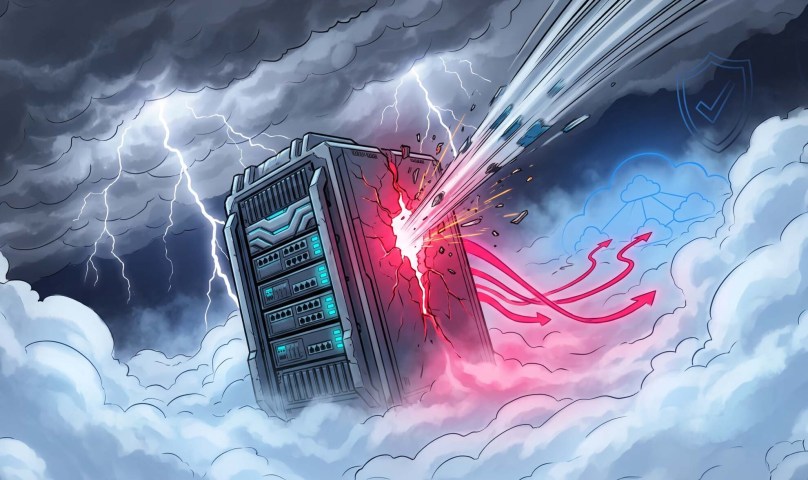 Critical Citrix NetScaler Zero-Days Under Active Exploitation
Analysis of two CVSS 9.5 Citrix NetScaler ADC/Gateway zero-days, CVE-2026-88771 (unauthenticated RCE through improper input validation in the management interface, affecting default deployments) and CVE-2026-88772 (memory overflow in DTLS, enabled by default on VPN virtual servers). It lists six more high-severity flaws patched in advisory CTX697096, the affected and fixed versions, and the CISA KEV listing with a federal deadline of 2026-09-30. It advises checking for compromise before patching, since patching can destroy forensic evidence, and gives response steps: isolate, revoke credentials, rebuild firmware, rotate keys and certificates.
orca.securityadvisoryPublished and added 29 Sep 2026🛡️ Security- Zero-Day Exploitation of Citrix NetScaler ADC and Gateway: CVE-2026-88771 and CVE-2026-88772
Rapid7 details active zero-day exploitation of two critical Citrix NetScaler ADC/Gateway RCE vulnerabilities (CVE-2026-88771, CVE-2026-88772, both CVSSv4 9.5), both added to CISA KEV on disclosure day, plus a later SAML denial-of-service zero-day (CVE-2026-88779). The post includes Rapid7 MDR's observed exploitation of CVE-2026-88771 in the wild — a command-injection payload that exfiltrates /flash/nsconfig (containing ns.conf admin credentials, SSL private keys, SSH host keys) via the publicly-served /vpn/ path, and a webshell (SHA256 hash provided) found on a compromised appliance — along with vendor patch versions and detection guidance.
rapid7.comadvisoryAdded 7 Oct 2026, published 28 Sep 2026🛡️ Security  Attackers Exploit WordPress CVE-2026-87902 Within Hours of Patch
CVE-2026-87902 (CVSS 9.2) is an unauthenticated WordPress vulnerability where get_page_template() page-template resolution can be tricked into including an attacker-chosen local .php file outside the active theme directory, leading to RCE when a theme has a page-* top-level directory and a readable local PHP file (e.g. pearcmd.php) exists. Attackers began exploiting it within hours of the September 22, 2026 patch, including pearcmd.php to write PHP web shells to /tmp and /var/tmp and pulling a GitHub-hosted uploader payload, per honeypot telemetry from Previdian and Patchstack with tracked source IPs. CISA added the flaw to its KEV catalog on September 25, 2026, mandating FCEB remediation by September 28; fixed in WordPress 7.1.2, 7.0.6, 6.9.9, and 6.8.10.
thehackernews.comadvisoryAdded 26 Sep 2026🛡️ Security ServiceNow Patches Critical AI Platform Flaw Allowing Unauthenticated User Impersonation
ServiceNow patched CVE-2025-12420, nicknamed BodySnatcher, a CVSS 9.3 flaw in its Now Assist AI Agents (sn_aia) and Virtual Agent API (sn_va_as_service) that let an unauthenticated attacker impersonate any user via just an email address. Discovered by Aaron Costello of AppOmni, the bug chains a hardcoded platform-wide secret with account-linking logic to bypass MFA and SSO, letting an attacker remotely drive privileged agentic AI workflows, impersonate admins, and create backdoor accounts. Fixed in sn_aia 5.1.18+/5.2.19+ and sn_va_as_service 3.15.2+/4.0.4+, patched October 30, 2025 with no known in-the-wild exploitation.
thehackernews.comadvisoryAdded 26 Sep 2026🛡️ Security














Showing 60 of 118
Show more