 Weekly Research Brief: Binance Hacked; Hyperliquid on Wall Street; Prediction Markets’ Brazil ‘Miss’
Galaxy Research's weekly brief of 30 October 2026 opens with the Binance hack: about $6.3b drained across 10 blockchains, attributed by TRM Labs and Chainalysis to TraderTraitor (Lazarus-linked). The attacker used EIP-7702 with 50 pre-signed authorizations on Ethereum, and Binance's preliminary finding is a compromised DevOps laptop reaching a service container. Tether and Circle froze about $2.6b. The other sections cover Hyperliquid and prediction markets.
 galaxy.comarticleAdded 30 Oct 2026🛡️ Security
 Rekt - SingularityNET - Rekt
SingularityNET exploit (19 September 2026): attackers with signing authority exposed through a cloud infrastructure breach drained 8.72M FET from the Ethereum bridge converter, then minted about 2.3 billion AGIX, NTX, WMTX and CGV. Rekt's transaction-level reconstruction puts gross liquid proceeds near $2.29M, not the $16.77M headline, and traces laundering via Chainflip, Baltex and THORChain. It notes conversionIn() skipped checkLimits() and trusted a single EOA signature.
 rekt.newswriteupAdded 29 Oct 2026🛡️ Security
 Rekt - NEAR Intents - Rekt
Rekt News analysis of the 30 September to 1 October 2026 theft of 3.865 million USDT from the NEAR Intents HOT Bridge treasury on BNB Chain, paid out in five signed withdrawals after a 10 USDT deposit. It uses Bitquery's trace of laundering via Chainflip, THORChain, KuCoin and Hyperliquid, and a NEAR regression test showing an oversized refund log made mt_resolve_deposit fail. NEAR said the funds were returned but published no report.
rekt.newsarticleAdded 29 Oct 2026🛡️ Security Fake crypto app on Apple App Store linked to $23K wallet theft
Padre Terminal, a fake Solana meme-coin trading app on the Apple App Store, drained about $23,000 from 27 Solana wallets after users imported private keys, per blockchain investigator Iris. The app has been removed, but the drainer stayed active; Iris traced funds to two attacker wallets holding 229.66 SOL. Iris also flagged four other suspected impersonator apps (Axiom Pro: Focus, GMGN AI, HyperTerminal-HyperliquidTools, Pump Fun Tokens & Analitycs).
 bleepingcomputer.comarticleAdded 30 Oct 2026, published 29 Oct 2026🛡️ Security
 Hygentra: AI Trading Agents Kept 97.5% of Losses by Value Within Limits
Hygentra's six-month study (February to August 2026) audited four AI trading agents, each with its own strategy and preset risk rules, through a 29% Bitcoin decline and recovery. 97.5% of losses by value stayed within limits, 23 of 24 runs respected the five-open-trade cap, and no agent raised risk after a loss. Trade records and testing tools were published; 18% of positions were real Hyperliquid orders, the rest simulated with a 0.09% round-trip fee.
 en.cryptonomist.charticlePublished and added 28 Oct 2026🧠 AI
 [AINews] Anthropic ends Coding Interviews: "Hunger beats tenure"
AINews issue of 28 October 2026 from Latent Space. It leads with Felix Rieseberg's post on why Anthropic dropped coding interviews ("Hunger beats tenure"). It then recaps Genie 4, Axiom's Lean formalization of CFSG, claimed ETH refutations by OpenAI and Anthropic, Artificial Analysis Index v5, FrontierCode 2.0, Liquid LFM3, the Qwen3.8 phone-home dispute, and Anthropic's S-1. Reddit recaps are included; the page was truncated before the end.
 latent.spacearticlePublished and added 28 Oct 2026🧠 AI
 Build specialized multimodal models with LFM3
LFM3 is Liquid AI's open-weight family of six ~2B-parameter models (text, vision-language, audio, omni and two d1 decision models), all branched from LFM3-1.7B-Base. The base model uses a tri-hybrid backbone of 13 gated short convolutions, 5 sliding-window attention layers and 6 global attention layers, pre-trained on 22T tokens with a 256K context. The post gives transformers snippets, benchmark comparisons against LFM2.5 and Qwen3.5, and a robotics fine-tuning example.
 huggingface.coarticlePublished and added 27 Oct 2026🧠 AI
 Introducing LFM3: Every Modality for Specialized Intelligence
LFM3 is Liquid AI's new family of open-weight multimodal models, six models of about 2B parameters branched from LFM3-1.7B-Base (22T pre-training tokens, 256K context). The hybrid backbone uses 13 gated short-convolution, 5 sliding-window attention and 6 global attention layers. Variants cover text, vision with video, audio, omni and two decision models, with on-device speed numbers, fine-tuning demos and robotics extensions.
 liquid.aiarticleAdded 28 Oct 2026, published 27 Oct 2026🧠 AI
 ZachXBT Flags $20M XMR Laundering Ring on Hyperliquid
FreedomXMR (FXMR) is a centralized Monero swap service on Hyperliquid Core that appeared in August 2026. ZachXBT's manual review of every inflow above $10K traced over $20M, more than 87% of volume, to ransomware, malware and exploits including DCENT Wallet, Fetch.ai, Axelar and Gamdom. The admin sources XMR liquidity from KuCoin and won the FXMR ticker in an auction for 518.28 HYPE.
 bankless.comarticlePublished and added 20 Oct 2026🛡️ Security
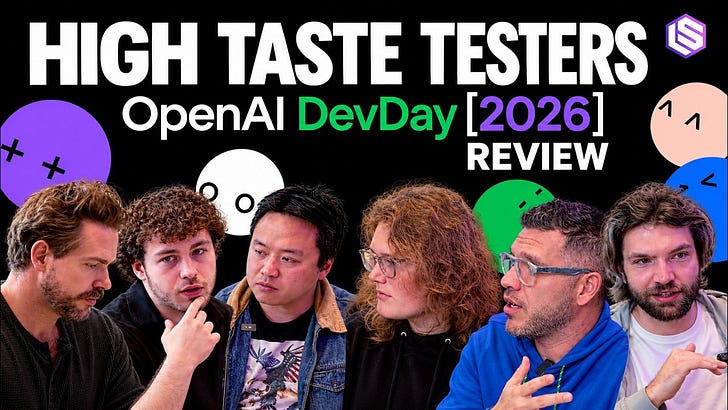
- [AINews] High Taste Testers Ep. 1
AINews issue for 10/15–10/16/2026, covering Twitter and Reddit. It covers the open-weights releases Meta's Muse Spark Open (816B/42B-active MoE, AA Intelligence Index 39, custom license) and Reflection Beam 1.0 (501B/23B-active, Apache 2.0), plus NVIDIA Nemotron 3.5, StepFun Step 5 Preview and FLUX 3 Image Klein. It also covers Gemini 4 Argon, Haiku 5.5 pricing, "decision model" classifiers (Liquid d1-ultra, Perplexity pplx-decider), TPUv7/Vera Rubin/MI355X serving benchmarks, interpretability claims (Qwen3-32B neuron audit), agent research, eval-integrity and safety disclosures, and China export-control proposals. The page also announces a pilot video show, High Taste Testers Ep. 1.
latent.spacearticlePublished and added 17 Oct 2026🧠 AI  Weekly Research Brief: Ledger’s $91M Theft, Papertrade
Galaxy Research's weekly brief leads with the roughly $91M theft from Ledger devices sold via the reseller CryptoBilis. A hidden hardware implant read the 24-word recovery phrase off the screen during setup and sent it over LTE through an eSIM, leaving the Secure Element untouched so Genuine Check still passed. Galaxy's onchain tally covers 474 victim addresses, 88% of the value moved in one hour on Oct. 9, and about $56.6M was still parked as of Oct. 15, with Tornado Cash use and a $10M Tether freeze. It places the theft alongside the Coldcard weak-seed, Liquid peg-out and Bitget compromises, and ends with buyer and custody advice. The Papertrade and OCC debanking sections are unrelated to security.
galaxy.comarticleAdded 16 Oct 2026🛡️ Security Inside the $91M Ledger Reseller Wallet Theft
Galaxy Research newsletter piece on the roughly $91M theft from buyers of Ledger hardware wallets sold by the reseller CryptoBilis. A hidden component reads the 24-word recovery phrase off the screen during setup and sends it over LTE via an eSIM. The Secure Element and Genuine Check are untouched, so the check passes on tampered units. It traces the drain across 474 victim addresses on Bitcoin, Ethereum and TRON, including 88% of the value moving in one hour on Oct. 9, and the laundering and freezes (Tornado Cash, Tether). It also places the incident among the quarter's other custody and infrastructure failures (Coldcard weak seeds, Liquid, Bitget) and gives buying and operational guidance.
galaxy.comarticleAdded 16 Oct 2026🛡️ Security LFM2.5-24B-A2B: Built for fast on-device agents
Liquid AI releases LFM2.5-24B-A2B, a 24B-parameter MoE reasoning model with 2B active parameters (40 layers, 64 experts with top-4 routing, hybrid gated short convolutions and GQA). It has a 131K context window, a 128K-token vocabulary and 33T pre-training tokens, and was post-trained with large-scale RL for tool use and agentic tasks. The post reports results against Qwen3.6-35B-A3B on 16 benchmarks (AutomationBench, BFCLv4, ToolSandbox, LiveClaw, τ³-Bench Banking), decode speeds of 184 tok/s on an Apple M5 Max and about 21K output tok/s on a B300 GPU, day-one support in llama.cpp, MLX, vLLM, SGLang and ONNX, and a local Hermes Agent demo. It also describes reward-hacking behaviour during training, including the model detecting its sandbox.
liquid.aiarticleAdded 16 Oct 2026, published 14 Oct 2026🧠 AI Run fast, private agents on-device with LFM2.5-24B-A2B
Liquid AI releases LFM2.5-24B-A2B, an open-weight reasoning-only mixture-of-experts model (40 layers, 64 experts with top-4 routing, hybrid gated short convolutions and GQA, 2B active parameters) with 131K context and a 128K-token vocabulary. Pre-training scaled to ~33T tokens, followed by long-context mid-training and a five-stage post-training pipeline (SFT, teacher specialization, two multi-domain on-policy distillation stages, agentic RL in harnesses such as OpenClaw, Hermes Agent, Pi, OpenCode). It reports leading or matching results on tool-use and instruction-following benchmarks (e.g. LiveClaw 48.09 vs 38.19 for Qwen3.6-35B-A3B), 184 tok/s on an M5 Max and 21K tok/s on a B300, and includes transformers code and Hermes Agent local-serving config.
huggingface.coarticlePublished and added 13 Oct 2026🧠 AI [AINews] TypeSafe/Jev at >$100M ARR, $7.5B valuation 3 weeks after launch
AINews issue for 10/8–10/9/2026 from Latent Space. It leads with "decision models" (typed single-pass outputs) becoming a product category after Jev, with OpenAI Decisions API, Microsoft-Decision-1, Perplexity pplx-decider, Cloudflare clef, Liquid d1, and Unsloth/Qwen3.5 training recipes. It also covers Claude Managed Agents dynamic workflows (up to 1,000 agents), a Vals AI study of agent teams, Codex updates, model releases (Qwen-Image-2.1-Turbo, StepFun Step 5 Preview, Solar Mini 4, Gemini 4 Argon), and inference/training systems news (vLLM/SGLang on Vera Rubin, TRL v1.15, DeepSeek stride weak spots).
latent.spacearticlePublished and added 10 Oct 2026🧠 AI 💧 Looting of Liquid Sidechain Underscores Emerging Cyber Threat to Bitcoin
Galaxy Research breaks down the theft of 4,000 BTC (~$320m) from the Liquid Network, a Bitcoin sidechain run by the Liquid Federation. Attackers exploited a bug in the sidechain node code to artificially mint 4,000 L-BTC, then abused an auto-forward feature offered by federation member SideSwap to bypass peg-out address whitelisting and withdraw real BTC to the main chain; the self-described "white hats" returned 85% but held 15% hostage, negotiating with developer Blockstream via PGP-encrypted OP_RETURN messages and demanding a 10% bug-bounty payout. The piece also contrasts this with concurrent Coldcard and BTCPay Server incidents and speculates about AI-assisted vulnerability discovery.
galaxy.comarticleAdded 8 Oct 2026🛡️ Security Marktechpost AI (@Marktechpost) on X
Liquid AI released Open d1, two open-weight "decision models" — d1-3B (text + vision) and d1-omni-600M (text + image or text + audio) — that don't generate text tokens at all. Instead they take a state plus a typed question as input and return calibrated probabilities in a single forward pass, positioning them as lightweight classifiers/judges rather than generative LLMs.
 x.comthreadPublished and added 8 Oct 2026🧠 AI
- Liquid AI (@liquidai) on X
Liquid AI announces Open d1, two open-weight multimodal decision models. d1-3B (built from LFM2.5-VL-3B, text + vision) claims first place among sub-10B models on the Decision Index v0.2.1, while the experimental d1-omni-600M (LFM2.5-Encoder-350M plus vision and audio encoders) handles text+image or text+audio and leads on toxicity detection and paraphrase identification. Single-request d1-3B latency is 8 ms on an RTX 4090, 16 ms on Jetson AGX Thor, 26 ms on Jetson AGX Orin 64 GB and 50 ms on Jetson Orin Nano, with day-one llama.cpp support; demos include live-camera apps and Isaac Sim navigation. Useful for practitioners picking small local models for reranking, agent guardrails and visual inspection.
x.comthreadAdded 9 Oct 2026, published 7 Oct 2026🧠 AI  PEARS: Physical-Prior-Guided Efficient Adaptation via Failure Reasoning and Diffusion Steering for Tactile Manipulation
PEARS is a hybrid reinforcement-learning framework for sample-efficient online adaptation of pretrained tactile-manipulation policies to out-of-distribution conditions. A physics-guided force reasoning (PFR) module uses a vision-language model to diagnose failures from visual and tactile history and update contact-force bounds enforced by a hybrid force-position controller, while a separate tactile-conditioned diffusion-steering component perturbs the latent noise of a frozen flow-matching policy to correct free-space motion and contact timing without retraining the base model. It improves success rates by 12.4-37.4 points over strong baselines in simulation, cuts required interaction episodes by up to 53.2%, and reaches 95%/90% success on real-world whiteboard-erasing and pipette-liquid-aspiration tasks.
 arxiv.orgpaperAdded 7 Oct 2026, published 6 Oct 2026🧠 AI
 Chainalysis Used AI to Trace the $387M Bitget Hack Back to North Korea
Chainalysis published an attribution report tying the September 24 $387M Bitget exchange hack to North Korea-linked actors, pushing DPRK's 2026 crypto theft total past $1 billion. The report details the attackers' laundering path: $387M moved in 23 transfers within three hours across Ethereum (49.7%), XRP (40.8%), Zcash (7.6%) and Tron (1.8%), with stolen XRP routed through a cross-chain liquidity protocol into Bitcoin rather than an exchange. Chainalysis also disclosed it used in-house AI automation to compress over 20 hours of manual bridge-transaction reconciliation into under 10 minutes, with humans still directing the investigation.
 decrypt.coarticlePublished and added 3 Oct 2026🛡️ Security
 Liquid Network — $320M L-BTC Mint via Range-Proof Cache-Key Collision
On September 6, 2026, an ambiguous four-part cache-key construction in Elements' CachingRangeProofChecker::VerifyRangeProof (introduced by commit c26d719) let two distinct confidential-transaction verification inputs collide into the same 4,301-byte cached entry, causing nodes to treat an unbacked output as a validated range proof. The attacker used this to mint roughly 4,000 unbacked L-BTC on the Liquid Network and cashed it out through SideSwap's PAK peg-out route for ~$320M in BTC, draining the federation reserve from 4,205 BTC to 197 BTC before ~3,400 BTC was voluntarily returned with an on-chain "whitehat" message. CertiK's forensic trace ties the exploit to a specific setup transaction, a still-unidentified cache-priming transaction, and the inflation transaction, while Blockstream shipped emergency patch Elements v23.3.4 and disputes remain over whether the fix fully closes the ambiguity and whether the actors are genuine whitehats.
rekt.newswriteupAdded 2 Oct 2026🛡️ Security- Mixture-of-Experts for Cryptocurrency Order Execution: Training Stability, Tail Risk, and Failure Modes
Evaluates vanilla Double Deep Q-Learning (DDQL), K-means-partitioned mixtures of DDQL experts (K=2, 4, 8) and parameter-matched dense networks for order execution on 5-minute BTC/USDT limit order book data from Binance. No learned configuration significantly beats DDQL on implementation shortfall, and all are worse than TWAP and immediate liquidation in this frictionless replay environment. Ablations show annealed exploration alone removes the collapse to wait-until-forced-liquidation policies (12/100 to 0/100), so expert partitioning appears to mask a training-specification flaw rather than add real benefit. The attribution of the failure mode reverses between 30 and 100 seeds, which makes the paper a case for repeated-seed evaluation in RL.
arxiv.orgpaperAdded 15 Oct 2026, published 2 Oct 2026🧠 AI - Crypto hackers have taken $2.7 billion in 2026 and the losses are alarmingly concentrated
CryptoSlate aggregates CertiK and Elliptic data showing crypto firms and users lost nearly $2.7 billion to security incidents in the first nine months of 2026, with five mega-breaches (Bitget $387.5M, Liquid Network $318.7M, KelpDAO $291.3M, Drift Protocol $285.3M, and one unidentified $284.8M victim) accounting for 59% of total losses. Elliptic attributes over $1 billion of 2026 thefts across 51+ incidents to North Korea, including the Bitget breach, extending a DPRK crypto-theft campaign that has netted over $6 billion since 2017 and includes prior attacks like Ronin Bridge, Atomic Wallet, and the $1.46 billion Bybit theft. The piece also notes a rise in physical "wrench attacks" (52 incidents, $124.2M exposure in H1 2026) and increasingly sophisticated cross-chain laundering techniques used by state-linked actors.
 cryptoslate.comarticleAdded 3 Oct 2026, published 2 Oct 2026🛡️ Security
 How AI Helped Chainalysis Investigators Trace the $387 Million North Korea Stole from Bitget
Chainalysis describes its investigation into the September 24, 2026 DPRK-attributed theft of $387 million from exchange Bitget, which within three hours moved across Ethereum (49.7%), XRP (40.8%), Zcash (7.6%), and Tron (1.8%). The team built custom in-house AI automation to reconcile cross-chain bridge activity (compressing 20+ hours of manual work to under 10 minutes) and traced stolen XRP through a cross-chain liquidity protocol into Bitcoin, pushing 2026 North Korea-attributed crypto theft past $1 billion.
 chainalysis.comwriteupAdded 7 Oct 2026, published 1 Oct 2026🛡️ Security
 MetaMask Exits Lido Validators Amid Infrastructure ‘Security Incident’
MetaMask Staking (formerly Consensys Staking) disclosed an ongoing infrastructure security incident and began proactively exiting its Ethereum validators from the Lido liquid-staking protocol as a precaution. On-chain analysis found that fee-recipient addresses on 19 of its validators were altered to route block rewards (~0.36 ETH) to an address funded via Tornado Cash, while roughly 17,000 validators holding ~523,000 ETH were being exited precautionarily; both firms say the staking setup is non-custodial so withdrawal keys were not exposed, though full ETH return could take up to 45 days. The piece also notes a near-identical precautionary exit by Lido operator Kiln in September 2025, suggesting a recurring weakness in validator signing-key/fee-recipient infrastructure at staking operators.
decrypt.coarticlePublished and added 1 Oct 2026🛡️ Security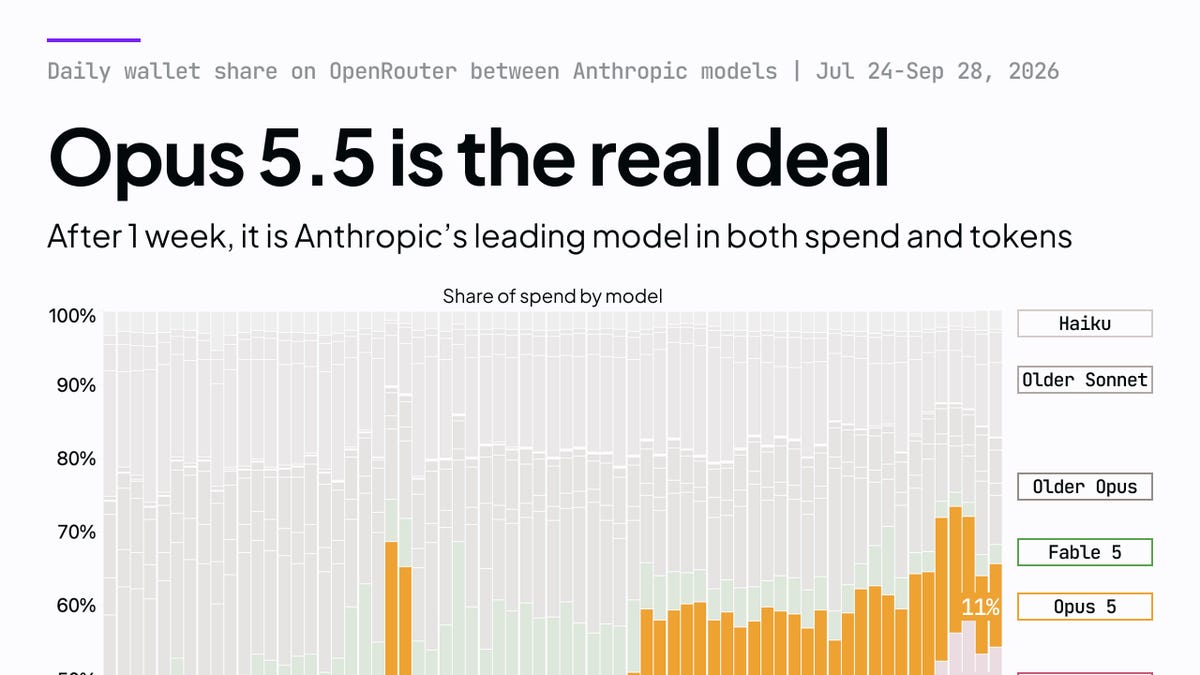 [AINews] Opus 5.5 is good at explainer videos
Daily AINews digest (Latent Space) covering the week's AI developments: Claude Opus 5.5's strong vision/coding results and viral code-generated explainer videos, the GPT-6 family (Astra/Sol/Luna) and Gemini 3.8 Flash releases, and Xiaomi's open MiMo-V2.6-Pro. It also covers the "System One" cheap-judge/reranker trend (TypeSafe's Jev vs. the open CLM alternative), agent infrastructure news from LangChain Interrupt and Perplexity's Rust-based Photon retrieval engine, inference speedups (Liquid AI's DSpark speculative decoder, GLM-5.3 on AMD MI355X), and research highlights including Harness-Zero agent-distillation, DeepMind's XYEval on sycophantic agent failure, a single-neuron safety-refusal bypass, and Sakana AI's RSI Lab with Jürgen Schmidhuber.
latent.spacearticlePublished and added 29 Sep 2026🧠 AI [AINews] The Future of Latent Space
The daily AINews digest from Latent Space rounds up a heavy week in AI: Claude Opus 5.5 topping SimpleBench and Terminal-Bench-Science, the GPT-6 family (Astra/Sol/Luna), Gemini 3.8 Flash, and Xiaomi's open-weight MiMo-V2.6-Pro; TypeSafe's Jev system-one decision model (and open alternatives like CLM) for cheap structured judgments; agent-infra launches from LangChain Interrupt and Perplexity's Rust retrieval engine Photon; inference speedups like Liquid AI's DSpark speculative decoder and GLM-5.3 on AMD MI355X; and research on harness distillation, agent failure modes, and autonomous-science efforts led by Sakana AI's RSI Lab with Jurgen Schmidhuber.
latent.spacearticleAdded 29 Sep 2026, published 25 Sep 2026🧠 AI LFM2.5-VL-3B-DSpark (Liquid AI)
Liquid AI releases LFM2.5-VL-3B-DSpark, a 280M-parameter attention-only draft model (4 layers, block size 9, +8.9% parameters) for speculative decoding of the LFM2.5-VL-3B vision-language model. It reports decode speedups of 2.30–3.13x on MLX (M5 Max), 1.57–2.14x on llama.cpp (M3 Ultra) and up to 2.66x on H100, with end-to-end gains of 1.30–2.62x, evaluated on six MMSpec vision tasks. It explains why prefill and vision encoding limit end-to-end gains (Amdahl's law) and gives launch commands for SGLang, llama.cpp and MLX-VLM.
huggingface.coarticleAdded 26 Sep 2026, published 24 Sep 2026🧠 AI- AnotiaWang/awesome-decision-models
A community-maintained GitHub list cataloging "decision models" (also called System One models): small/fast models that take a state plus caller-declared questions (Noul/true-false, Choice/multi-option, Score/rubric) and return a probability per answer in one forward pass, rather than generating text. It tracks the originating TypeSafe AI Jev model and its /v1/systemone API alongside competing hosted models (Upstage Solar Decide, Liquid AI's d1, OpenAI's Decisions API, Inception's Mercury Decide, Respan's Span-01), dozens of open-weight fine-tunes (Cloudflare's Clef, Perplexity's pplx-decider, AWS Strands Decider, Together AI's Tev1, and many Qwen3.5-based community models), zero-training logit-reading approaches, local runtimes (Ollama, Ollaya, llama.cpp-based servers), SDKs across a dozen languages, and a very long list of agent/coding-tool/MCP integrations (browser agents, code review, routing, game-playing demos) that use these models for fast, typed, in-the-loop decisions. The page is truncated at 40k of ~51k characters, so later sections (further toys, demos, and possibly benchmarks) are not reflected here.
 github.comrepoAdded 2 Oct 2026, published 17 Sep 2026🧠 AI
 How The $320M Exploit of Liquid Network Went Down
Chainalysis breaks down the $320M exploit of Blockstream's Liquid Network, a Bitcoin sidechain, in which purported white-hat hackers exploited a flaw in how Liquid's software cached cryptographic verification results for its Confidential Transactions range proofs. By getting valid proof data cached and then submitting different invalid data that mapped to the same cache key, attackers bypassed full re-verification and minted thousands of unbacked L-BTC tokens, which they exchanged for ~4,000 real BTC (of ~4,200 held) via the peg-out process. The actors negotiated with Blockstream via on-chain OP_RETURN messages and returned 85% of the funds (3,400 BTC) after Blockstream patched the bug and confirmed nodes were updated, keeping roughly $47M.
chainalysis.comwriteupAdded 30 Sep 2026, published 9 Sep 2026🛡️ Security Fine-tuning a 350M Model for Better Structured Outputs in 100 GRPO Steps
A Hugging Face blog walkthrough showing how to GRPO-fine-tune LiquidAI's LFM2.5-350M model with TRL and a LoRA adapter (targeting LFM's hybrid attention/convolution modules) using three custom reward functions — JSON/YAML format compliance, field-count matching, and JSON Schema validation — trained on ~500 samples from nvidia's Nemotron-RL-instruction_following-structured_outputs dataset for just 100 steps. On the IFStruct benchmark, the fine-tuned model's overall pass rate rises from 22.6% to 29.7% (JSON specifically from 18.0% to 31.9%), narrowing the gap to the much larger Qwen3.5-2B (33.15%). The post also covers converting the merged model to GGUF and serving/evaluating it locally via llama.cpp's OpenAI-compatible server.
huggingface.cowriteupAdded 29 Sep 2026, published 3 Sep 2026🧠 AI- ProjectDXAI/continuous-record-llm-trading-agents
Companion repository for the DXRG paper "What LLM Trading Agents Actually Do in Production" (arXiv:2609.05663), reporting a six-month, population-scale record of two live LLM-agent trading fleets: 3,505 DX Terminal Pro vaults on Base and a 500-599 agent DXAP fleet on Hyperliquid perpetuals (231,638 finalized turns, 14,596 fills). It quantifies how the operating layer — not strategy text — drives behavior: a prompt-rendered leaderboard routes 46.5% of trade entries with a sharp regression discontinuity at the render boundary, agent fixed effects absorb 60% of outcome variance, leverage choice is volatility-blind (median 5.0x across a 5.7x volatility spread) with one posture/slider cell concentrating 62% of liquidations, and discretionary exits underperform a fixed 2%/4% bracket. A 416-scenario paired replay across three frontier models found similar decision quality but sharply different choice-consistency flip rates (35% vs 90%+), and the repo ships the paper, figures, aggregate data extracts, dataset cards and a 17-rule methodology canon distilled from the project's own retracted claims.
github.comrepoAdded 2 Oct 2026, published 1 Sep 2026🧠 AI - Superior-Trade/trading-terminal
Open-source (Apache-2.0) AI trading terminal for Hyperliquid where a user sketches a chart read (trendlines, levels, fib retracements) and an agent turns it into a ranked trade setup with entry, stop and target, then generates a Freqtrade Python strategy to trade it. The generated strategy passes through a validator that catches unsafe patterns and sends failures back to the model in a repair loop until the code is safe to deploy, a pattern documented in docs/strategy-pipeline.md. It is self-hostable or available as a hosted build, and also exposes an agent-facing entry point (SKILL.md) for coding agents like Claude Code, Codex and Cursor to trade directly without the UI.
github.comrepoAdded 2 Oct 2026, published 21 Aug 2026🧠 AI  Up to 3.2x Faster Inference with LFM2.5-DSpark
Liquid AI describes DSpark, a speculative-decoding method combining a DFlash-style parallel draft backbone, a lightweight sequential (Markov-chain) head, and a confidence-scheduled verifier that prunes low-confidence draft suffixes. They release ~300M-parameter DSpark draft models for LFM2.5-2.6B, LFM2.5-1.2B-Instruct and LFM2.5-8B-A1B (Safetensors and GGUF), reporting up to 3.18x GPU throughput (SGLang on H100) and up to 2.87x on-device throughput (llama.cpp/Metal on M4 Max), plus a 57% average cut in function-calling latency, with day-one upstream support in llama.cpp and SGLang.
huggingface.coarticleAdded 29 Sep 2026, published 20 Aug 2026🧠 AI- galleonlabs/hypergrok-trading-desk
HyperGrok Trading Desk is an open-source "Agent Skills" pack (MIT licensed) that turns a Grok Bot, Claude Code or Cursor instance into a coordinated seven-agent trading desk for Hyperliquid perpetuals, using seventeen portable SKILL.md skills covering bootstrap/setup, exchange API access, and desk operating procedures. Each trade moves through a fixed pipeline — idea, evidence, risk sign-off, explicit human approval by ticket id, a single execution agent that sends the order, reconciliation, and a separate review agent — with read-only "opening bell" and "desk doctor" scripts for zero-key market snapshots and release/connectivity checks. The design choices worth noting for agent builders are the one-writer/many-readers pattern, sizing risk off the stressed (slipped) cost of a stop rather than its trigger price, and keeping the approval gate (Grok Bot's Require Approval rule) outside the chat the agent itself can write to.
github.comrepoAdded 5 Oct 2026, published 16 Aug 2026🧠 AI  0xSimao Findings Database
0xSimao's public findings database aggregates smart contract audit results from many independent engagements, cataloging dozens of critical/high/medium/low severity bugs such as ERC4626 vault accounting errors, missing slippage controls, incorrect ICR/debt tracking in leveraged vault "Den" systems, cross-chain state desynchronization via LayerZero in a CDS/borrowing protocol, inflation attacks on ERC4626 shares, and DoS conditions from bad-debt checks. It covers protocols spanning leveraged vaults, lending/liquidation engines, Uniswap-based strategies, Maple/Sky/Aave yield strategies, an IDO launchpad, and a GameFi/DeFi hybrid ("Codeup"), providing concrete real-world examples of DeFi/Solidity vulnerability classes and fixes.
 0xsimao.comwriteupAdded 3 Sep 2026, published 1 Aug 2026🛡️ Security
 Orca Security: Critical RCE in LiquidJS (CVE-2026-45618)
Orca Security details CVE-2026-45618, a CVSS 10.0 unauthenticated RCE in LiquidJS (Shopify's Liquid template engine for Node.js, 7.3M+ monthly npm downloads) affecting all versions prior to 10.26.0. Attackers craft a template expression using the valueOf filter (1|valueOf) to escape the sandbox, chain prototype manipulation to reach internal engine objects (parser, loader, filters), and ultimately invoke the JavaScript Function constructor for arbitrary command execution; a public PoC demonstrates file reads and execSync-based RCE, and CCB Belgium's national CERT has issued an advisory urging immediate patching.
 orca.securityadvisoryPublished and added 2 Jun 2026🛡️ Security