- ClioBitcoinBank 🏴☠️ (@ClioBitcoinBank) on X
lnd v0.20.7 and v0.21.6 are Lightning Network Daemon releases announced by Clio Bitcoin Bank. They include a Go-specific mitigation, with the MPTCP flag turned off, for CVE-2026-98432, a use-after-free in the Linux kernel's IPv4 TCP code. The post recommends all users update. It gives no exploit or impact detail.
 x.comadvisoryPublished and added 31 Oct 2026🛡️ Security
 Binance Drained of $5.5 Billion in Suspected Hack, Tether and Circle Freeze $1.8 Billion
Decrypt reports that at least $5.57 billion left Binance-linked hot wallets on Ethereum, Bitcoin and Tron on 29 October 2026, which would be the largest crypto hack on record. On-chain analysts point to an EIP-7702 delegation, installed from a Tornado Cash-funded address minutes before the first sweep. Tether and Circle froze about $1.8 billion. Binance has not confirmed the hack, and how the attacker obtained the signature is unknown.
 decrypt.coarticlePublished and added 29 Oct 2026🛡️ Security
 Rekt - Duelbits - Rekt
Duelbits is a crypto casino that lost an estimated $6.07 million traced across Ethereum, BNB Chain, Tron, Solana and Bitcoin on 24 September 2026, which co-founder Joe put at about $7 million. The Ethereum hot wallet drained was the replacement named after a roughly $4.6 million theft in February 2024. Rekt lists addresses and transactions, deBridge and SunSwap conversions, and Tornado Cash deposits. Duelbits has not published a root cause.
 rekt.newswriteupAdded 29 Oct 2026🛡️ Security
 Police seize Virtualine bulletproof service tied to ransowmare, cybercrime
Virtualine, a bulletproof hosting service also operating as Secury, Massgod, Spamhouse, Lanedo and Omegatech, had its main domain seized by the FBI with German, Dutch and UK partners. Chainalysis and TRM Labs traced its Bitcoin payments to ransomware (5% of flows), a Russian drug market (about 44%), sextortion and the StealC infostealer. Dutch police seized dozens of servers in Limburg and recovered data on over 3,000 customers.
 bleepingcomputer.comarticleAdded 30 Oct 2026, published 28 Oct 2026🛡️ Security
 Hygentra: AI Trading Agents Kept 97.5% of Losses by Value Within Limits
Hygentra's six-month study (February to August 2026) audited four AI trading agents, each with its own strategy and preset risk rules, through a 29% Bitcoin decline and recovery. 97.5% of losses by value stayed within limits, 23 of 24 runs respected the five-open-trade cap, and no agent raised risk after a loss. Trade records and testing tools were published; 18% of positions were real Hyperliquid orders, the rest simulated with a 0.09% round-trip fee.
 en.cryptonomist.charticlePublished and added 28 Oct 2026🧠 AI
 International Law Enforcement Seizes Domain of Virtualine Bulletproof Hosting Service
Virtualine is a bulletproof hosting provider whose domain virtualine.net was seized on 27 October 2026 by the FBI Washington Field Office and the Eastern District of Virginia, with German, Dutch and UK police support. Chainalysis and OverRIPE gave intelligence support. The post lists aliases (Secury, Massgod, Spamhouse, Lanedo, Omegatech), forum advertising on Exploit.in and HackForums, and unhosted bitcoin payments tied to ransomware, infostealers and scam infrastructure.
 chainalysis.comarticlePublished and added 27 Oct 2026🛡️ Security
 Bitcoin Wallet Maker Keystone Pulls Devices as Stolen Key Opens Door to Fakes
Keystone, a Bitcoin hardware wallet maker, will destroy 18,835 unsold devices and has halted shipping after an attacker obtained the permanent WebAuth factory key used to verify genuine hardware, detected October 20, 2026. The key could let counterfeit wallets pass authentication. The breach also exposed 25,964 Shopify buyer records (2024 to 2026) that should have been erased under a 180-day policy; recovery phrases and private keys were not involved.
decrypt.coarticlePublished and added 27 Oct 2026🛡️ Security Bitcoin Wallet Fixes Critical Flaw That Redirected Funds to Attackers
Electrum 4.8.3, released 24 October 2026, fixes a high-severity flaw in the Bitcoin wallet. Rogue servers could suppress a real payment and inject a fake unconfirmed transaction paying an attacker, so a user's fee-bump became the first transaction broadcast. The fix verifies signatures on wallet-owned inputs, but incoming transactions from external senders stay unverified. One user lost funds on 18 October.
decrypt.coarticlePublished and added 26 Oct 2026🛡️ Security Bitcoin wallet bug let rogue servers steal funds when users tried to speed up payments
Electrum, a Bitcoin software wallet, disclosed on 24 October 2026 a flaw where malicious servers swapped pending transactions for fake ones with invalid signatures that the wallet did not check. When users chose Replace-by-Fee to raise the fee, Electrum signed a valid replacement paying the attacker, and at least one user lost funds. Version 4.8.3 adds signature checks; users of only trusted or self-run servers were not exposed.
 coindesk.comarticlePublished and added 26 Oct 2026🛡️ Security
- Zex Alpha (@kryptozex) on X
Post about the "Steal My Bitcoin" bounty, a 0.025 BTC (about $2,025) prize that was swept early Monday, about 90 minutes after researcher @killa published a full exploit on GitHub. The exploit is a heap exploit written for the target's PHP build. It leaks memory addresses through session cookies and forces PHP cleanup to run the flag binary. The first solve looked like a failure because the pulled key did not control the advertised address, a planting mistake the creator admitted by email.
x.comthreadPublished and added 26 Oct 2026🛡️ Security  Electrum wallet security flaw is fixed after a user loses money in fee attack
Electrum 4.8.3, released 24 October 2026, fixes a flaw where a malicious server replaces a user's unconfirmed payment with a conflicting transaction carrying invalid signatures. If the user then bumps the fee with replace-by-fee, the wallet signs a payment to the attacker. One of two reporting users lost funds, and the patch now checks input signatures before accepting such transactions. Bull Bitcoin is adding the same client-side check.
en.cryptonomist.charticlePublished and added 24 Oct 2026🛡️ Security Crypto's Two Answers to AI Bug Hunters
Bankless article on how crypto is responding to AI-driven bug discovery. It cites Bitcoin Core's 22 October 2026 policy change to fix and ship bugs findable with a simple LLM prompt instead of embargoing them, DefiLlama's 112 hacks over $1M in 2026 versus 70 in 2025, and the Initia exploit (~$2.7M). It contrasts an agility approach (Starknet, bunker mode) with minimalism and AI-assisted formal verification (Anthropic and Theorem proofs across 123 libraries).
 bankless.comarticlePublished and added 23 Oct 2026🛡️ Security
 Bitcoin Core Rewrites Its Security Policy for a World Where AI Finds Bugs in One Prompt
Bitcoin Core merged a security policy update in October 2026 that adds an "easily discoverable" label for vulnerabilities findable with a simple LLM query. Such bugs get a fix backported to all maintained releases and a new version shipped fast with an advisory, instead of a long embargo. Antoine Poinsot of Chaincode Labs proposed the change after a spike in reports. The article also recaps the Bitcoin Red Team and AI-found Lightning and wallet bugs.
decrypt.coarticlePublished and added 23 Oct 2026🛡️ Security Bitcoin Core changes security rules as AI makes finding code bugs dangerously easy
Bitcoin Core merged a security policy change in October 2026 ending months-long embargoes for bugs that can be found with a simple LLM prompt. Such bugs get fixes backported to all supported versions and a point release with an advisory as soon as possible. Author Antoine Poinsot accepts less bake time. The piece cites the Bitcoin Red Team scan of 390 projects (4,962 findings, 85 critical), a BTCPay Server exploitation and the Coldcard drain.
coindesk.comarticlePublished and added 23 Oct 2026🛡️ Security What Is a Neocloud? The GPU Clouds Powering the AI Boom
Decrypt explainer on neoclouds, specialist providers such as CoreWeave and Nebius that rent Nvidia GPU clusters for AI training and inference. It covers the chips, power and debt model, Bitcoin miners turned AI hosts, and customers including Microsoft, AWS, Google and Anthropic. It cites Gartner's 14 October 2026 forecast that over 80% of neoclouds will stop operating independently by 2030.
decrypt.coarticlePublished and added 22 Oct 2026🧠 AI Coinbase's Plan for a Quantum-Safe Bitcoin
Bankless summary of Coinbase's October 2026 proposal for making Bitcoin quantum-safe. It covers upgradeable address designs (BIP-360 P2MR, P2TRv2, hybrid addresses), four candidate signatures (ML-DSA, SLH-DSA, FN-DSA, SHRINCS) with size and stateful-key-reuse trade-offs, a five-stage migration plan, and a separate track for dormant coins with exposed public keys such as Satoshi's.
bankless.comarticlePublished and added 21 Oct 2026🛡️ Security Trail of Bits (@trailofbits) on X
Trail of Bits thread on Google Quantum AI's March publication of a new Shor's algorithm version aimed at secp256k1, the curve protecting Bitcoin and Ethereum wallets. Google used zero-knowledge proofs to keep the attack details secret, and the post says the secrecy lasted 63 days. The fetched text is cut off after the qubit estimate of roughly 1,200, so later details are missing.
x.comthreadAdded 22 Oct 2026, published 20 Oct 2026🛡️ Security Bitcoin News (@BitcoinNewsCom) on X
Mark Karpelès, former Mt. Gox CEO, says he is building a low-cost device to detect hidden LTE antenna spy implants in hardware wallets such as Ledger without opening them. It emits weak radio waves and measures resonance frequencies. He plans to publish the PCB designs and specs; the project is at concept stage with a prototype expected within weeks. A linked YouTube video is not covered in the text.
x.comthreadAdded 20 Oct 2026, published 18 Oct 2026🛡️ Security ‘Wow, it’s a real discovery’: Claude cracks a 25-year NSA number mystery
CoinDesk reports that an Anthropic internal research model traced five NSA-supplied NIST elliptic-curve seeds to the C library generator lrand48 fed with 1997–98 timestamps. It matched P-256's published seed at the 1,842nd candidate, in under 30 minutes and without being told about the earlier "forgotten phrase" theory. This makes a hidden backdoor in the NIST curves less likely, though why some candidates were skipped and how other curve parameters were chosen remain unexplained. The article also explains why Bitcoin's secp256k1 was never part of the question, and that quantum risk is a separate threat.
coindesk.comarticlePublished and added 17 Oct 2026🛡️ Security- ‘Wow, it’s a real discovery’: Claude cracks a 25-year NSA number mystery
CoinDesk reports that an internal Anthropic research model traced five unexplained seeds behind the NSA-supplied NIST elliptic curves to lrand48, an old C random-number generator fed with 1997–98 timestamps. It took under 30 minutes. The model matched the P-256 seed at the 1,842nd candidate. Its reasoning trace briefly wondered whether it was in a simulated test before concluding the discovery was real. The result makes a hidden backdoor less likely and claims a $36,864 bounty, donated to ISRG. The article also explains why Bitcoin's secp256k1 was never affected, and that quantum computing is a separate threat.
coindesk.comarticlePublished and added 17 Oct 2026🧠 AI  Satoshi-era bitcoin faces a bigger quantum threat after Google’s new Willow breakthrough
CoinDesk reports Google's Science paper showing its Willow chip prepares "magic states" with about 40x fewer errors (about 99.99% fidelity, but only about 8% of attempts survive post-selection) using a method called cultivation. It explains why this lowers one hardware bottleneck for a Shor's-algorithm attack on Bitcoin's ECDSA keys, but does not make an attack 40x cheaper. It also separates coins with permanently exposed public keys (early Satoshi-era outputs, which an offline attacker can target) from hash-hidden keys, where the attacker must race the spend. The article cites Google's March estimate of under 500,000 physical qubits and about 500,000 reliable magic states per second for a roughly nine-minute attack.
coindesk.comarticlePublished and added 17 Oct 2026🛡️ Security Inside the $91M Ledger Reseller Wallet Theft
Galaxy Research newsletter piece on the roughly $91M theft from buyers of Ledger hardware wallets sold by the reseller CryptoBilis. A hidden component reads the 24-word recovery phrase off the screen during setup and sends it over LTE via an eSIM. The Secure Element and Genuine Check are untouched, so the check passes on tampered units. It traces the drain across 474 victim addresses on Bitcoin, Ethereum and TRON, including 88% of the value moving in one hour on Oct. 9, and the laundering and freezes (Tornado Cash, Tether). It also places the incident among the quarter's other custody and infrastructure failures (Coldcard weak seeds, Liquid, Bitget) and gives buying and operational guidance.
 galaxy.comarticleAdded 16 Oct 2026🛡️ Security
 Crypto's Quantum Defense Is Being Built in the Open
Bankless article on Eigen Labs' Yukon, a platform for open-research challenges where developers and AI agents try to improve a technical problem. Each submission is automatically benchmarked, and accepted improvements become the baseline for the next attempt. Results include an ~88% cut in the ECDSA.fail quantum resource-cost benchmark, a ~10x speedup in Lighter's proving software, ~2x faster Qwen and 2.6x faster Laguna on Apple hardware via MLX.fast, and cheaper Quantum Safe Bitcoin proofs ($320 down to $59). Newer challenges (HashSmash, sig.golf, better.codes) target hash-function weaknesses, hash-based signatures and post-quantum proofs. All the improvements are theoretical or benchmark-level unless stated as deployed.
bankless.comarticlePublished and added 14 Oct 2026🧠 AI- Crypto's Quantum Defense Is Being Built in the Open
Bankless article on Eigen Labs' Yukon platform, which runs open challenges where researchers and AI agents attack and improve cryptography. It covers ECDSA.fail (quantum circuit cost for attacking Bitcoin/Ethereum ECDSA, cut about 88% from baseline), HashSmash (SHA-256 weakness hunting, so far only on reduced versions), sig.golf (hash-based signatures), StarkWare's Quantum Safe Bitcoin (cost down from about $320 to $59) and better.codes (provable security raised from 64 to about 68 bits). The argument is that public, measurable attack-cost data helps defenders prepare better than withholding circuits does. All gains are theoretical and no quantum computer has run an attack at this scale.
bankless.comarticlePublished and added 14 Oct 2026🛡️ Security  Coinbase, which holds 5% of all bitcoin, wants the quantum fix started now
CoinDesk summarizes Coinbase's recommendations for making Bitcoin quantum-resistant before a cryptographically relevant quantum computer (CRQC) can derive private keys from public keys. The proposals are: a transaction format that can carry new signature types (P2MR/BIP-360, P2TRv2), staged hybrid "1-of-2" spends with ECDSA/Schnorr or a post-quantum key, and stateless options alongside stateful schemes to avoid key-reuse forgery. They also ask that evaluation favor constant-time, RNG-failure-safe implementations, require MPC compatibility, and handle dormant or late-migrating coins as a separate debate. It is a useful overview of the defensive migration design space, but it is secondary reporting and not the primary Coinbase paper.
coindesk.comarticlePublished and added 14 Oct 2026🛡️ Security- Coinbase lays out flexible designs as key priority for Bitcoin’s post-quantum migration
Coinbase's October 2026 position on Bitcoin's post-quantum migration, as reported by The Block. Coinbase, which holds about 5% of bitcoin supply, favors output designs that separate the container from the signature scheme (P2MR/BIP-360, P2TRv2), staged hybrid 1-of-2 spending paths, a stateless option beside stateful signatures, and MPC-compatible schemes for custody. It also wants the abandoned-coins debate run in parallel.
 theblock.coarticleAdded 31 Oct 2026, published 14 Oct 2026🛡️ Security
 Coinbase advances Bitcoin’s post-quantum readiness while holding about 5% of BTC
Summarizes Coinbase's blog post on preparing Bitcoin and custody infrastructure for post-quantum threats. It covers public-key exposure (an estimated 6.7–7M BTC behind already-exposed keys), BIP 360 (P2MR) and P2TRv2 outputs, 1-of-2 hybrid classical/post-quantum spending paths, and the state-reuse forgery risk of stateful signatures. It also covers candidate schemes (ML-DSA, SLH-DSA, FN-DSA, SHRINCS), MPC/HSM compatibility and side-channel tests, and separate handling of dormant, lost and exposed legacy funds.
en.cryptonomist.charticlePublished and added 13 Oct 2026🛡️ Security Ledger hardware wallet breach exposes LTE implant stealing recovery phrases
Ledger's Donjon team confirmed on October 10, 2026 a physical implant inside a hardware wallet sold by Malaysia-based reseller CryptoBilis. The implant reads the device display, decodes the 24-word recovery phrase with a microcontroller, and exfiltrates it over LTE via a provisioned eSIM, leaving the Secure Element, OS, transactions and signatures untouched. Onchain investigator Specter traced over $86 million in suspected thefts across Ethereum, Tron and Bitcoin; Ledger advises CryptoBilis buyers to migrate funds to a new device with a new recovery phrase.
en.cryptonomist.charticlePublished and added 13 Oct 2026🛡️ Security Ledger Finds LTE Implant That Stole Recovery Phrases in Suspected $86M Drain
Ledger's Donjon security team confirmed an unauthorized hardware implant inside Ledger signers sold by Southeast Asian reseller CryptoBilis. The implant sits in the enclosure, reads the 24-word recovery phrase from the screen during setup, decodes it with a microcontroller, and exfiltrates it over LTE via a provisioned eSIM, without touching the Secure Element, OS, or signatures. Onchain investigator Specter traced over $86M in suspected thefts across Ethereum, Tron and Bitcoin; Ledger is reviewing reports of tampered devices elsewhere and advises affected buyers to move funds to a new device with a new seed.
decrypt.coarticlePublished and added 13 Oct 2026🛡️ Security Ledger Says All Confirmed Cases in Suspected $87M Drain Tied to Reseller CryptoBilis
Decrypt reports Ledger's 72-hour update: all confirmed wallet-draining cases involve devices sold by Southeast Asian reseller CryptoBilis, which has stopped hardware wallet sales. Onchain investigators Specter and YFarmX traced over $86M in suspected thefts across Ethereum, Tron and Bitcoin. They describe laundering through Tornado Cash, Zcash's shielded pool and a USDT-to-USDD swap to avoid Tether freezes. An unverified claim of tampered devices (extra cables, LTE module) bought at European retail stores is also covered. Ledger advises CryptoBilis buyers not to set up devices and to move funds to a new seed phrase on a device bought from Ledger.
decrypt.coarticlePublished and added 12 Oct 2026🛡️ Security Ledger says unauthorized implant found in at least one device sold by CryptoBilis
CoinDesk reports that Ledger confirmed an unauthorized hardware implant in at least one device sold by the Southeast Asian reseller CryptoBilis. On-chain researchers estimate $86–93M was drained from more than 300 wallets across Bitcoin, Ethereum and Tron. Ledger says its internal systems and direct sales are unaffected, and it advises not initializing unused devices and moving funds to a new seed on a device bought directly from Ledger. It also covers the reseller's sales suspension, Ledger's tightened distributor chain-of-custody rules, unverified speculation that the reseller was bought out, and the July 2026 Coldcard seed-generation flaw.
coindesk.comarticlePublished and added 12 Oct 2026🛡️ Security Insider Cyber Extortion Plot Against Industrial Firm Lands Engineer in Prison
SecurityWeek reports that Daniel Rhyne, a core infrastructure engineer, was sentenced to 32 months for sabotaging and extorting his employer, an industrial firm in New Jersey. In November 2023 he planted scheduled tasks on the domain controller that deleted 13 domain admin accounts and reset passwords on 301 domain users, 254 servers and 3,284 workstations, mostly to 'TheFr0zenCrew!'. He then emailed a 20 bitcoin (about $750,000) ransom demand. Internal log correlation with physical access records, plus FBI work, traced the activity to his home IP address.
 securityweek.comarticlePublished and added 10 Oct 2026🛡️ Security
 Ledger Probes Potential Theft of $87M in User Funds Tied to Crypto Wallet Reseller
Ledger is investigating fund losses among Southeast Asian customers who bought hardware wallets from the reseller CryptoBilis. It has asked the reseller to pause sales and told buyers from the last 90 days not to set up their devices, or to move funds to a new device with a fresh seed phrase. Onchain investigator Specter traced about $86–87M in thefts across Ethereum, Tron and Bitcoin. Ledger has confirmed neither the figure nor the cause, though pre-compromised devices shipped with an attacker-known recovery phrase are the suspected mechanism.
decrypt.coarticlePublished and added 9 Oct 2026🛡️ Security Ledger investigates hardware wallet theft reports; losses estimated above $86M
News report on a suspected supply-chain attack on Ledger hardware wallets sold by the Southeast Asian reseller CryptoBilis. Ledger asked the reseller to suspend sales and shipments, and told buyers from the last 90 days not to initialize devices. Customers who already set up a device should move funds to a new signer with a fresh seed. Onchain investigator Specter estimated more than $86M stolen from hundreds of wallets across Ethereum, TRON and Bitcoin, with 10 addresses listed. The figure is unconfirmed, and there is no evidence that Ledger's hardware or core infrastructure was compromised. The Security Alliance directs victims to its SEAL 911 Telegram bot.
en.cryptonomist.charticlePublished and added 9 Oct 2026🛡️ Security- Ledger investigates wallet drains involving CryptoBilis buyers; estimate tops $86 million in losses
The Block reports that Ledger is investigating fund losses among Southeast Asian users who bought hardware wallets from the reseller CryptoBilis, an official reseller in Indonesia, Malaysia and the Philippines. Onchain researchers tanuki42 and Specter estimate losses above $72M and $86M across Bitcoin, Ethereum and Tron, but neither figure is confirmed. Ledger asked the reseller to pause sales and advised buyers from the past 90 days not to set up devices, or to move assets to a new signer with a new seed. Changpeng Zhao suggested a supply-chain attack with fake or tampered devices, and Mark Karpeles asked for circuit-board photos to check for tampering.
theblock.coarticlePublished and added 9 Oct 2026🛡️ Security 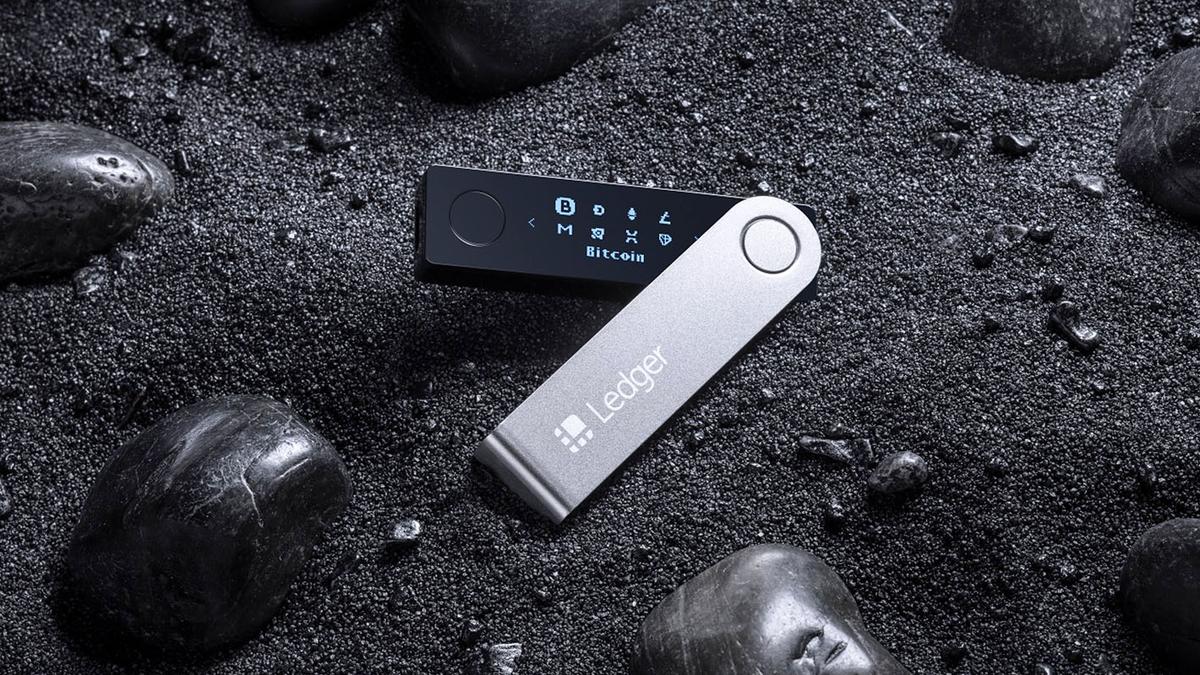 Ledger investigates potential wallet tampering after reports of $86 million in crypto stolen
Ledger is investigating reports of over $86 million allegedly stolen from hundreds of Bitcoin, Ethereum and Tron wallets tied to devices sold by Southeast Asian reseller CryptoBilis. Ledger asked the reseller to halt sales/shipments and advised recent buyers not to activate devices and already-activated users to migrate funds to a new device with a freshly generated recovery phrase, as a possible supply-chain attack (devices pre-loaded with an attacker-known recovery phrase) is one explanation under investigation. No independent confirmation of the loss amount or root cause has been established yet.
coindesk.comarticlePublished and added 9 Oct 2026🛡️ Security Zcash developers set January target for quantum-resistant payments after ‘bunker mode’ scare
Zcash developer Roman Akhtariev, writing for the Zakura client team, announced a January target for adding post-quantum signature opcodes supporting hash-based signatures to Zcash's transparent (public) payment pool, which holds about 70% of issued ZEC. The move responds to Ethereum researcher Justin Drake's "bunker mode" warning that AI could soon break the elliptic-curve math behind Bitcoin and Ethereum wallet keys. Zakura has also built a private-information-retrieval balance-lookup tool, now experimentally available in the Vizor wallet, that lets a wallet check address balances without revealing to the server which addresses are linked, separate from the shielded-pool quantum-recovery work still needed to defend against store-now-decrypt-later attacks.
coindesk.comarticlePublished and added 9 Oct 2026🛡️ Security Dark Web Informer (@DarkWebInformer) on X
A security researcher released a PoC (on GitHub, user kolmteistov) and a patch for two critical takeover vulnerabilities in GoBalance, the Bitcoin balance-checking software widely used by Tor darknet market and forum onion services. One of the flaws allows recovery of a GoBalance onion service's master identity key from a single public key, enabling full service takeover; the vulnerabilities were reportedly exploited in real attacks against the Dread forum and Omega Darknet Market.
x.comthreadPublished and added 8 Oct 2026🛡️ Security ‘Shielded Bitcoin
Galaxy Research newsletter piece covering "Shielded Bitcoin," a paper by [[alloc] init] researchers Clara Shikhelman, Mikhail Komarov, and Aleksei Moskvin proposing a Zcash-style shielded pool (encrypted notes, public nullifiers, zero-knowledge proofs) run as a Bitcoin L1 metaprotocol via OP_RETURN envelopes, with peg-in/peg-out deliberately left to a future "PIPEs v2" paper. The article's security-relevant angle flags that novel ZK circuits need battle-testing — citing Zcash's own Orchard Pool soundness bug that survived professional audits for four years before being fixed in the Ironwood upgrade — and that bridge/peg mechanisms (the likely weak point) have historically been the most exploited component in crypto, naming Ronin, Wormhole, Nomad, and KelpDAO. It also notes a growing AI-driven deanonymization threat to transparent blockchains, citing ETH Zurich/Anthropic research showing LLM agents can re-identify pseudonymous users from profile data alone.
galaxy.comarticleAdded 8 Oct 2026🛡️ Security Weekly Research Brief: AI Governance, Shielded Bitcoin, and Mention Markets
Galaxy Research's weekly brief devotes its lead section to AI governance: it recaps Sam Altman's and Dario Amodei's UN Security Council remarks calling for international AI safety coordination, contrasts a disclosed OpenAI agent incident (an agent accessed non-public Medicare data in Australia, reported three months late) with Anthropic's 950-agent DNA-database research run, and cites concrete agent-economy data — OpenRouter's agent token usage overtaking human usage and growing ~14x since February, Cloudflare's agent-traffic crossover, and Vercel AI Gateway data showing a 23% monthly price drop and open-weight models rising to 56% of token volume. The analysis argues that as inference gets cheaper and open-weight models gain share, AI governance's hard problem shifts from controlling frontier labs to controlling where cheap, widely available agents can act. The rest of the newsletter covers an unrelated Bitcoin privacy protocol proposal and CFTC guidance on prediction "mention markets."
galaxy.comarticleAdded 8 Oct 2026🧠 AI 💧 Looting of Liquid Sidechain Underscores Emerging Cyber Threat to Bitcoin
Galaxy Research breaks down the theft of 4,000 BTC (~$320m) from the Liquid Network, a Bitcoin sidechain run by the Liquid Federation. Attackers exploited a bug in the sidechain node code to artificially mint 4,000 L-BTC, then abused an auto-forward feature offered by federation member SideSwap to bypass peg-out address whitelisting and withdraw real BTC to the main chain; the self-described "white hats" returned 85% but held 15% hostage, negotiating with developer Blockstream via PGP-encrypted OP_RETURN messages and demanding a 10% bug-bounty payout. The piece also contrasts this with concurrent Coldcard and BTCPay Server incidents and speculates about AI-assisted vulnerability discovery.
galaxy.comarticleAdded 8 Oct 2026🛡️ Security Morning Minute: Ethereum Researcher Says AI May Break Crypto Encryption Before Quantum
A daily crypto-market newsletter segment reporting Ethereum Foundation researcher Justin Drake's warning that AI, not quantum computing, may be the first to break ECDSA — the elliptic-curve signature scheme securing Bitcoin and Ethereum — potentially within months by recovering private keys from exposed public keys using large GPU clusters. Drake calls for industry-wide "bunker mode": migrating self-custodied funds to fresh addresses whose public keys remain hashed/hidden, and names exchanges (Binance, Bitbank, Robinhood, Bitfinex, Tether) he wants to harden cold storage. The article also notes a concurrent Europol report flagging crypto wallets with already-revealed public keys as the main weak point for future quantum/AI attacks, since those cannot be retroactively protected.
decrypt.coarticlePublished and added 8 Oct 2026🛡️ Security Bitcoin and ether holders urged to enter ‘bunker mode’ against possible AI attacks
Ethereum researcher Justin Drake and co-founder Vitalik Buterin warn that rapid AI progress in mathematics could break the elliptic-curve signatures securing Bitcoin and Ethereum wallets within months - far sooner than quantum computers are expected to - urging large holders to enter bunker mode by migrating funds to addresses whose public keys have never been exposed onchain. Buterin also flags that lattice-based post-quantum schemes, the basis of NIST's signature standard, could face similar AI-driven erosion, pushing Ethereum's long-term roadmap toward hash-based signatures instead. The piece grounds the warning in already-documented AI-assisted exploit discovery: a 5-year-old Coldcard hardware-wallet firmware bug drained over 1,367 BTC, BTCPay Server Lightning-node thefts, Core Lightning bugs surfaced via AI-generated audits, and Anthropic's demonstration of AI models writing working exploits against simulated DeFi contracts.
coindesk.comarticlePublished and added 8 Oct 2026🛡️ Security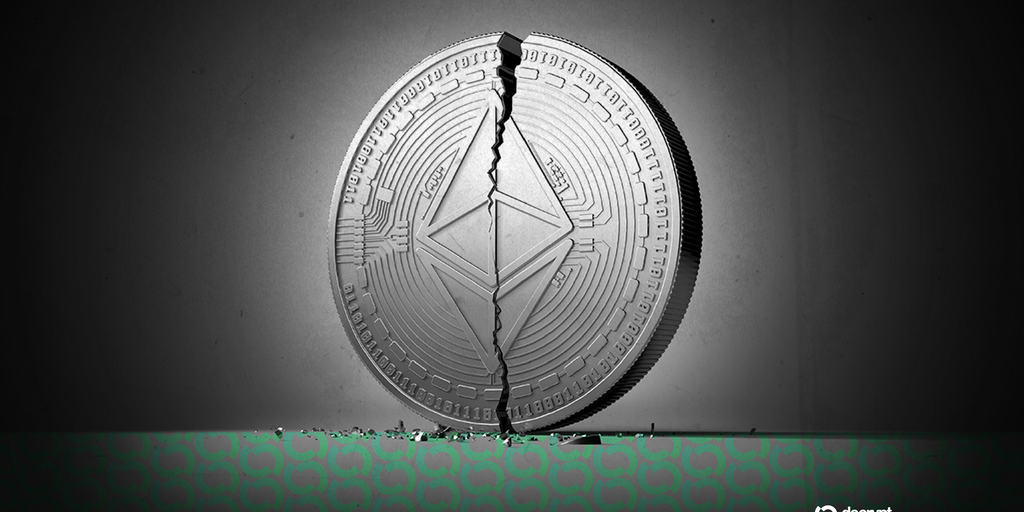 Ethereum Researcher Says AI May Break Encryption Before Quantum Does
Ethereum Foundation researcher Justin Drake warns that AI-driven mathematical advances could break ECDSA — the signature scheme securing Bitcoin and Ethereum — before quantum computers do, potentially recovering a private key from an exposed public key in about a week using a large GPU cluster. He calls for "bunker mode": a controlled mass migration of funds to fresh addresses whose public keys have never been exposed, urges major custodians (Binance, Bitbank, Robinhood, Bitfinex, Tether) to harden cold storage, and pushes Ethereum to accelerate its move to hash-based (post-quantum) cryptography.
decrypt.coarticlePublished and added 7 Oct 2026🛡️ Security Quantum computers threaten exposed private keys rather than blockchains, Europol warns
Europol's European Cybercrime Center published a "Quantum Computing and Cryptocurrencies" report arguing that Bitcoin's hash-based blockchain history is far more quantum-resistant than the ECDSA public-key cryptography used to control wallets. It estimates roughly 6.9 million bitcoin sit in addresses with exposed public keys (including early pay-to-public-key and long-dormant "Satoshi era" outputs) that a sufficiently powerful quantum computer could eventually use to derive private keys, and cites a 2024 study putting full UTXO migration to quantum-resistant signatures at 76–300 days of cumulative block space, with new post-quantum signatures 10–120x larger than ECDSA.
coindesk.comarticleAdded 8 Oct 2026, published 7 Oct 2026🛡️ Security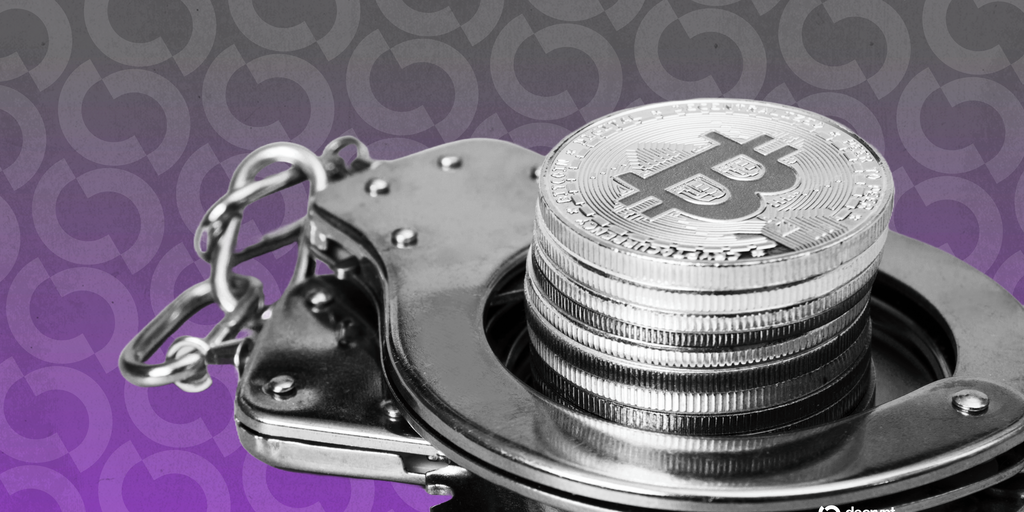 Engineer Gets 32 Months for Bitcoin Extortion Plot Against His Own Employer
A former core infrastructure engineer, Daniel Rhyne, was sentenced to 32 months for extorting his own New Jersey employer: he created a hidden virtual machine on the company network, reset passwords on hundreds of accounts to "TheFr0zenCrew!", deleted domain administrator accounts, scheduled tasks to shut down 40 servers a day, and demanded 20 BTC (~$750K) to stop. The FBI's criminal complaint describes how investigators traced the hidden VM back to him via correlated laptop browsing activity, building access logs, home IP connections, and incriminating search history ("how to clear all windows logs from command line").
decrypt.coarticlePublished and added 7 Oct 2026🛡️ Security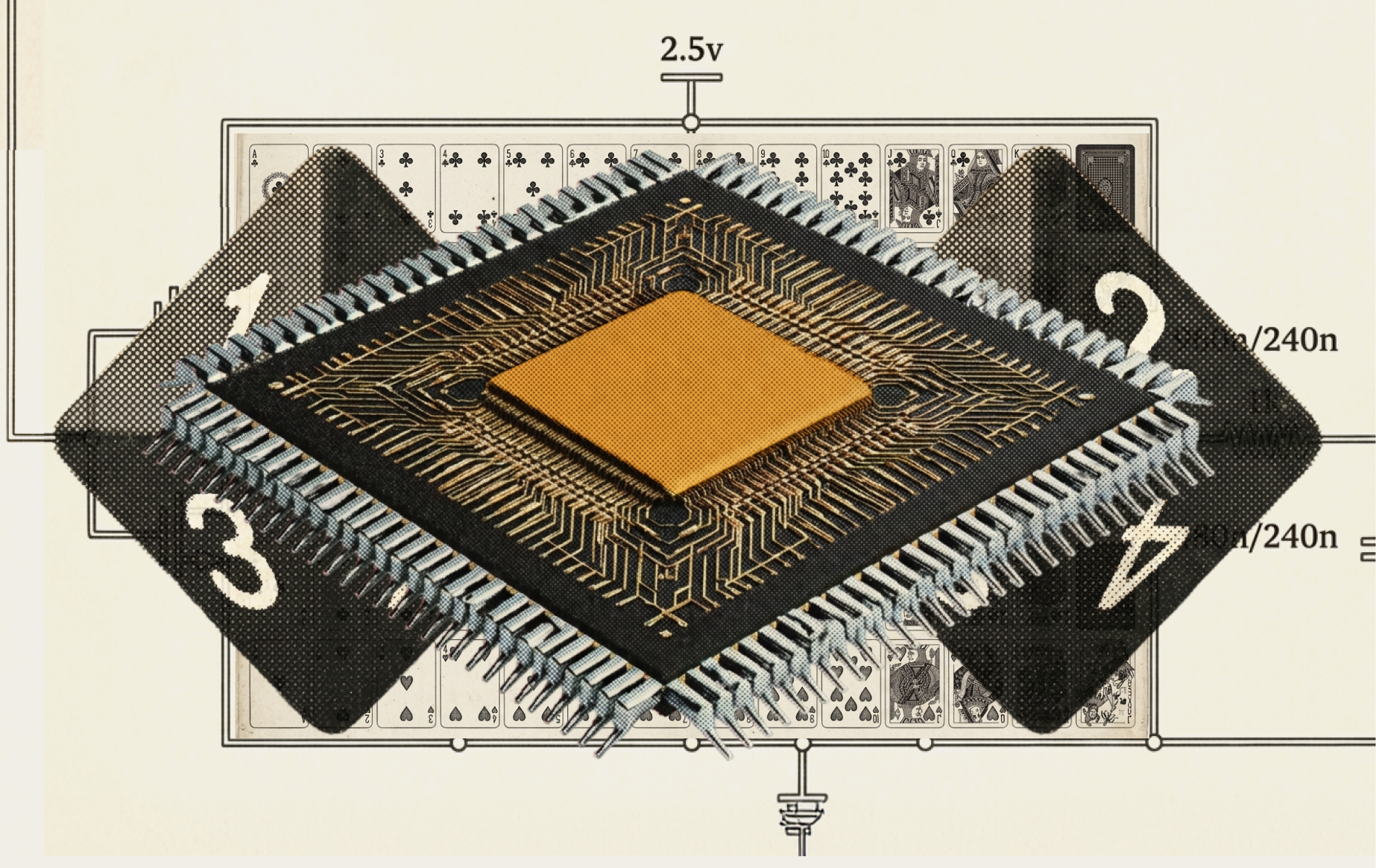 The randomness question at the heart of your hardware wallet
Unchained explains how hardware wallets generate entropy for bitcoin keys, covering PRNG vs TRNG theory, physical TRNG mechanisms (ring oscillator jitter, diode avalanche noise, radio static reuse), and NIST SP 800-90B / BSI AIS-31 certification. It compares entropy sourcing and secure-element chip suppliers (STMicroelectronics, Microchip, Infineon, Espressif, Silicon Labs) across Trezor, Ledger, Coldcard, BitBox02, Foundation Passport, Blockstream Jade and Block Bitkey, and walks through the July 2026 Coldcard firmware bug that silently bypassed its hardware TRNG for five years, causing real bitcoin losses. It also covers manual dice/coin entropy generation for BIP39 seed phrases, the Dark Skippy nonce-leakage attack, and multisig as the primary mitigation against single-device key-generation failures.
 unchained.comarticleAdded 8 Oct 2026, published 7 Oct 2026🛡️ Security
 The Post-Quantum Cost of Garbled-Circuit Bitcoin Bridges
This IACR ePrint paper examines the post-quantum security of Bitcoin bridges that rely on off-chain garbled-circuit evaluation of succinct proofs to validate withdrawals, where input labels encoding the proof must be committed on-chain. The authors show current pairing-based proving systems are vulnerable to quantum attacks, and that swapping to post-quantum proving systems shrinks circuit size but drastically inflates proof size, forcing proofs to span multiple Bitcoin blocks and raising on-chain cost. They outline research directions to improve proof efficiency, circuit representation, and label encoding for quantum-resistant bridge designs.
 eprint.iacr.orgpaperAdded 8 Oct 2026, published 6 Oct 2026🛡️ Security
 'We Have Identified You, Sir': Near Intents Recovers $3.8 Million After 48-Hour Ultimatum
NEAR Intents, a cross-chain swap protocol, suffered a $3.8M exploit caused by a bug in how its Omni deposit/withdrawal layer interacted with its main smart contract. General manager Alex Shevchenko publicly identified the attacker, gave a 48-hour ultimatum to return the funds as a last-chance responsible-disclosure offer, and the full amount was returned after an on-chain apology message. The stolen funds had briefly moved through KuCoin and were bridged to Bitcoin, traced by ZachXBT; separately, days earlier NEAR Intents had blocked a $50M swap attempt tied to the DPRK-linked Bitget hacker.
decrypt.coarticlePublished and added 4 Oct 2026🛡️ Security Chainalysis Used AI to Trace the $387M Bitget Hack Back to North Korea
Chainalysis published an attribution report tying the September 24 $387M Bitget exchange hack to North Korea-linked actors, pushing DPRK's 2026 crypto theft total past $1 billion. The report details the attackers' laundering path: $387M moved in 23 transfers within three hours across Ethereum (49.7%), XRP (40.8%), Zcash (7.6%) and Tron (1.8%), with stolen XRP routed through a cross-chain liquidity protocol into Bitcoin rather than an exchange. Chainalysis also disclosed it used in-house AI automation to compress over 20 hours of manual bridge-transaction reconciliation into under 10 minutes, with humans still directing the investigation.
decrypt.coarticlePublished and added 3 Oct 2026🛡️ Security How AI Helped Chainalysis Investigators Trace the $387 Million North Korea Stole from Bitget
Chainalysis describes its investigation into the September 24, 2026 DPRK-attributed theft of $387 million from exchange Bitget, which within three hours moved across Ethereum (49.7%), XRP (40.8%), Zcash (7.6%), and Tron (1.8%). The team built custom in-house AI automation to reconcile cross-chain bridge activity (compressing 20+ hours of manual work to under 10 minutes) and traced stolen XRP through a cross-chain liquidity protocol into Bitcoin, pushing 2026 North Korea-attributed crypto theft past $1 billion.
chainalysis.comwriteupAdded 7 Oct 2026, published 1 Oct 2026🛡️ Security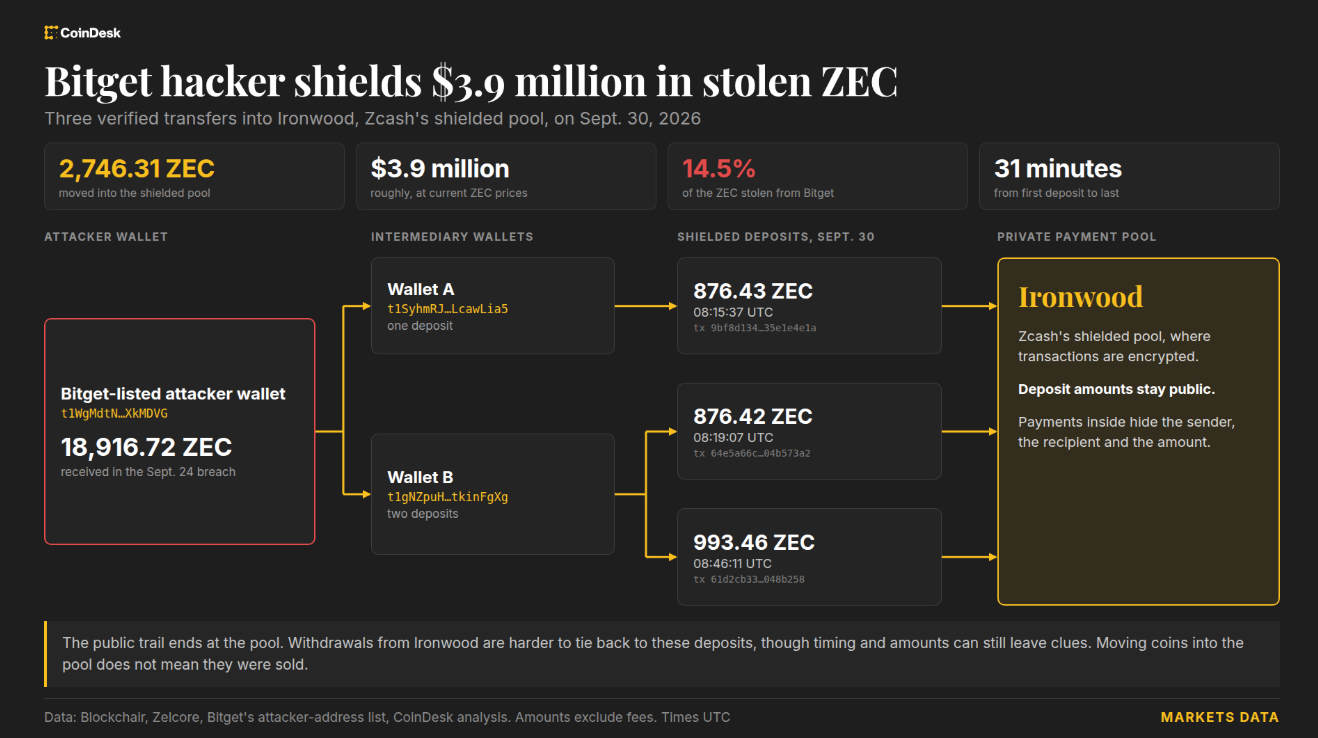 Bitget hackers move $4 million into Zcash’s private pool, making funds harder to trace
CoinDesk traces wallets linked to the Sept. 24 Bitget hack ($387.5M stolen) moving 2,746 ZEC (~$3.9M, ~15% of stolen ZEC) into Zcash's Ironwood shielded pool via two intermediary addresses, obscuring sender, recipient and amount once inside the pool. Blockchain investigator ZachXBT first flagged the transfers; separately, other attacker-linked proceeds were previously traced swapping ~$6.3M ether to bitcoin via THORChain despite the exchange's request to block the hacker. The piece illustrates real-world laundering tradecraft (privacy-pool deposits plus cross-chain DEX swaps) and the limits of on-chain tracing once funds enter a shielded pool.
coindesk.comarticlePublished and added 30 Sep 2026🛡️ Security Near Intents blocks $50 million in Bitget hacker swaps, here's what happened
After attackers stole $388M from Bitget, they tried routing $50M+ through the cross-chain swap service NEAR Intents; its SHIELD system — which ingests KYT and intelligence-provider signals to flag deviations in flow — froze roughly $503,000 mid-swap while $166,000 slipped through. The piece contrasts this with THORChain's refusal to block the same attacker addresses, letting $6.3M complete ether-to-bitcoin swaps, and details the resulting debate over whether a "permissionless" protocol can hold user funds without a defined process for release or appeal.
coindesk.comarticleAdded 30 Sep 2026, published 29 Sep 2026🛡️ Security A Clever RSA Attack Fooled a Hardware Vault—Here's What It Means for Crypto
Researchers at UC San Diego and INRIA demonstrated a chosen-message oracle attack that forges RSA signatures on a 1,024-bit key held inside a hardware security module (HSM) without ever extracting the key, by disabling the HSM's FIPS mode to get it to sign unpadded/unformatted values roughly 4 billion times and then computing the private-key operation from the responses (1,380 CPU core-years of work). The attack only applies to unpadded RSA signing oracles — standard PKCS#1 v1.5/PSS padding blocks it — so it doesn't threaten Bitcoin/Ethereum (which use ECDSA) but is relevant to anyone auditing HSM key-custody assumptions or RSA-based blind-signature schemes like Privacy Pass. The authors frame it as further classical evidence to accelerate migration away from RSA ahead of the post-quantum transition.
decrypt.coarticleAdded 30 Sep 2026, published 28 Sep 2026🛡️ Security THORChain rejects Bitget request to block hacker as $6 million moves to bitcoin
CoinDesk traced 27 successful THORChain swaps converting roughly 2,390 ETH into 75.2 BTC for a wallet linked to the attacker behind Bitget's $388M Sept. 24 breach, all payouts routed to a single bitcoin address. Bitget publicly asked THORChain to block the attacker's identified addresses and offered a 5% bounty for freezing or recovering funds, but THORChain refused selective blacklisting, saying its emergency controls can only halt an entire chain's activity, not target individual addresses — a stance it also held after its own $10.7M May exploit.
coindesk.comarticleAdded 30 Sep 2026, published 28 Sep 2026🛡️ Security How AI Is Reshaping Crypto Security, with Michael Coates
An interview with Solana Foundation CISO Michael Coates dissects the July 2026 Coldcard hardware-wallet hack, where a 2021 code change swapped a hardware RNG for a software pseudo-random source, collapsing seed entropy from 128 to ~40 bits and letting attackers offline-brute-force and drain ~$116M in Bitcoin from 5,200+ wallets without touching a device — despite prior audits that only checked whether a value was set, not its source. Coates draws lessons on distrusting single audits, using multi-sig to remove single points of failure (including the wrench attack), and phishing-resistant hardware keys (e.g. YubiKey) as the fix for pixel-perfect deepfake and phishing attacks. He also discusses AI's cat-and-mouse effect on offense vs. defense, Anthropic's disclosed Claude-driven Chinese state espionage campaign, and Solana's STRIDE continuous security-rating program for DeFi as an automated, computer-scale response to agentic nation-state threats.
 solana.comarticleAdded 29 Sep 2026, published 19 Sep 2026🛡️ Security
 DPRK and Iran are Leading a 5.2x Surge YoY in Blockchain-Assisted Cyberattacks
Chainalysis research on blockchain dead drops (BDD), the practice of storing malware C2 payloads and configuration pointers on public blockchains (EtherHiding and its variants) so infrastructure survives takedowns. It details three attributed case studies: DPRK linked UNC5342 using a TRON and Aptos to BSC cross-chain relay to deliver crypto-stealing malware via fake job interviews, Iran-nexus actors embedding C2 in Bitcoin OP_RETURN transactions tied to a Satoshi-era address, and a Russian-language Malware-as-a-Service operation running resolver contracts on Polygon across dozens of downstream customers. It reports a 420 to 440 percent YoY surge in BDD activity, attributes it partly to unrestricted open-weight Chinese LLMs lowering the barrier to entry, and maps the technique to MITRE ATT&CK T1102.002.
chainalysis.comarticleAdded 30 Sep 2026, published 17 Sep 2026🛡️ Security From Algebra to Noise: Why Post-Quantum Cryptography Looks Different
OpenZeppelin Security's technical explainer on why post-quantum cryptography looks so different from classical crypto: Shor's algorithm exploits the abelian hidden-subgroup structure underlying RSA, Diffie-Hellman, ECDSA, EdDSA and pairing-based schemes, while Grover's algorithm only halves the effective security of hashes and symmetric keys (256-bit hashes stay at a comfortable 128-bit level). It then walks through NIST's finalized lattice/hash-based PQC standards — ML-KEM (Kyber) for key establishment, ML-DSA (Dilithium) for general signatures, SLH-DSA (SPHINCS+) as a conservative hash-based backup, plus future Falcon/FN-DSA and code-based HQC — mapping each to blockchain use cases and covering real deployment (Starknet's Falcon-512 Cairo account contracts), Ethereum account-abstraction/hybrid-signature migration paths, Bitcoin's UTXO/consensus constraints, Ethereum's LeanSig consensus-signature research, and a concrete institutional crypto-asset-inventory and PQC audit checklist.
 openzeppelin.comarticleAdded 29 Sep 2026, published 14 Sep 2026🛡️ Security
 How The $320M Exploit of Liquid Network Went Down
Chainalysis breaks down the $320M exploit of Blockstream's Liquid Network, a Bitcoin sidechain, in which purported white-hat hackers exploited a flaw in how Liquid's software cached cryptographic verification results for its Confidential Transactions range proofs. By getting valid proof data cached and then submitting different invalid data that mapped to the same cache key, attackers bypassed full re-verification and minted thousands of unbacked L-BTC tokens, which they exchanged for ~4,000 real BTC (of ~4,200 held) via the peg-out process. The actors negotiated with Blockstream via on-chain OP_RETURN messages and returned 85% of the funds (3,400 BTC) after Blockstream patched the bug and confirmed nodes were updated, keeping roughly $47M.
chainalysis.comwriteupAdded 30 Sep 2026, published 9 Sep 2026🛡️ Security Tracing Crypto in a Narcotics Investigation: FBI Charges Alleged Opioid Distributors
Chainalysis details how blockchain analytics (its Reactor tool) helped the FBI trace Bitcoin proceeds from the darknet vendor account "BarbaraWhite" — which sold nitazene-laced counterfeit pills on Nemesis, Bohemia and Abacus — through a wallet cluster to a China-based chemical supplier and, ultimately, to a mobile payment account tied to defendant Stanislav Chernyshov. The case illustrates a concrete investigative pipeline: combining on-chain clustering with marketplace data, postal records, and off-chain identifiers to deanonymize a pseudonymous crypto-paid drug operation linked to overdose deaths.
chainalysis.comarticleAdded 30 Sep 2026, published 8 Sep 2026🛡️ Security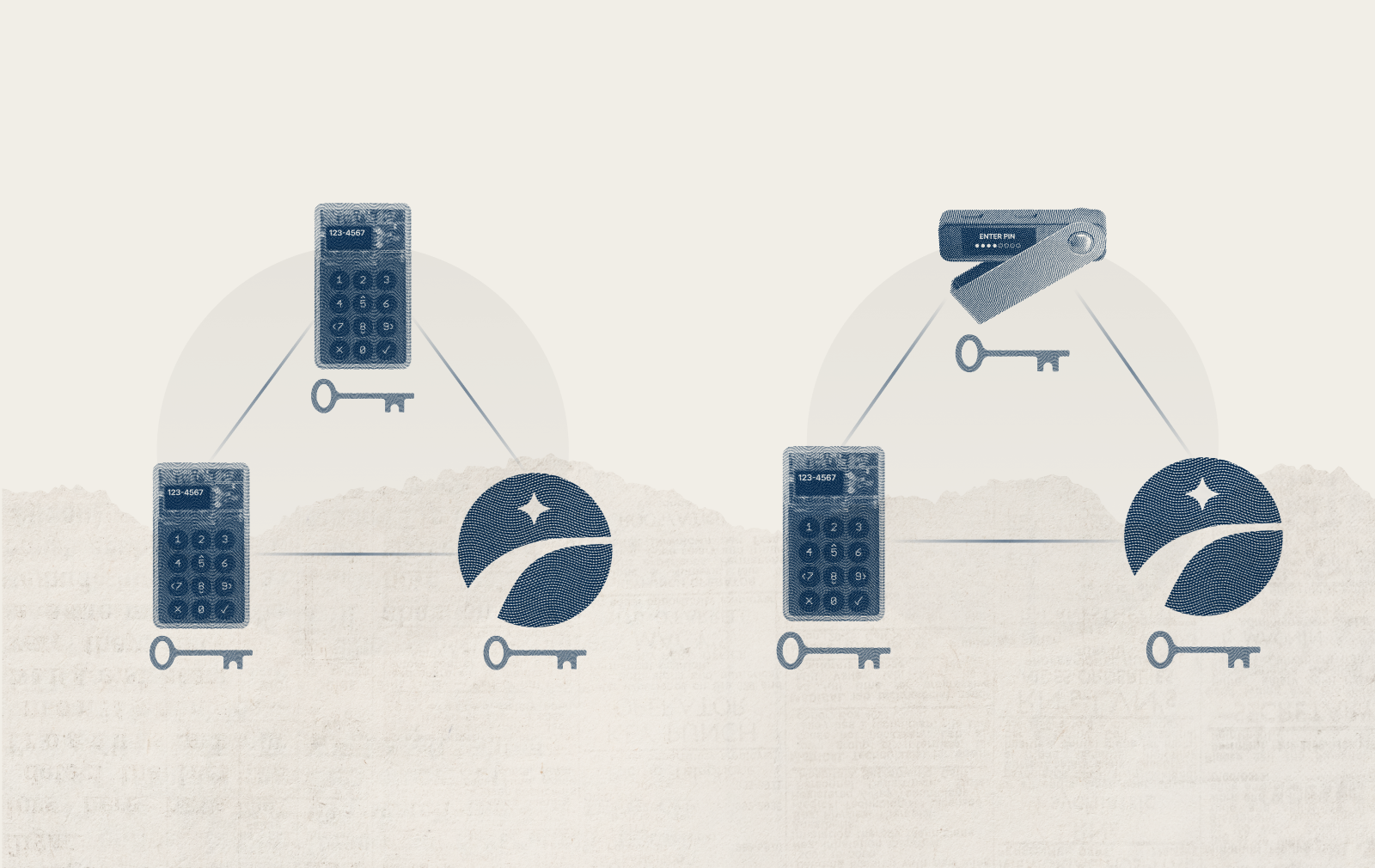 How multisig protected thousands of bitcoin during the Coldcard incident
Unchained's writeup on a 2026 Coinkite Coldcard advisory in which a flawed RNG produced insecure entropy for most Coldcard devices over five years, letting attackers brute-force private keys and drain singlesig wallets. It explains why multisig wallets (e.g. 2-of-3) were largely spared: a quorum of keys is needed to spend, the final public key in an un-spent multisig address stays unknown to attackers, and address reuse plus broadcasting via public mempools can leak that protection via an RBF-style attack window.
unchained.comarticleAdded 5 Oct 2026, published 12 Aug 2026🛡️ Security Xygeni Malicious Code Digest 82
Xygeni's weekly malicious-package digest covers 206 confirmed malicious npm/PyPI/OpenVSX packages between July 31 and August 7, 2026. Highlights include wormgpt-cli and gpt-terminal-cli on npm (branded after the real WormGPT dark-LLM tool, nine versions published in one day), a dependency-confusion cluster of nine packages impersonating crypto wallet/signing libraries (ledger-lib, trezor-lib, bip32-js, ethers-lib, python-bitcoinlib, ckcc-protocol, hwi-lib, mnemonic-utils, ethereum-sign-utils), and QuietPolyfill — a three-stage dropper hidden in a beaver-ui-*/accounts-* package cluster that executes on require() rather than via an install script, so --ignore-scripts does not block it.
 xygeni.ioarticlePublished and added 8 Aug 2026🛡️ Security
 CRPX0 — SCAMMER TURNED RANSOMWARE OPERATOR
In-depth OSINT/threat-intel investigation into CRPX0, a ransomware group that emerged in July 2026 with 47 listed victims (mostly healthcare, mainly US/Turkey targets), tracing its origins to a prior "Flash Token" crypto/USDT money-laundering scam service run by the same operators. The piece covers domain registration analysis (REGRU-SU abuse, reused 2021 domain), dark web/clear web leak sites, RaaS/HaaS/affiliate program offerings, ClickFix-based payload delivery targeting Windows via EXE/DLL, YouTube affiliate-panel promotion analysis (voice/locale clues suggesting China), TOX/Session ID and Bitcoin address correlation, and real IP address deanonymization, concluding with IOCs and MITRE ATT&CK mapping.
 theravenfile.comwriteupAdded 3 Sep 2026, published 3 Aug 2026🛡️ Security
 Coldcard Security Advisory
Unchained client-facing security advisory responding to Coinkite disclosure that Coldcard hardware wallets (Mk3, Mk4, Mk5, and Q models) generated private keys using a lower-than-expected amount of random bits, weakening key-generation entropy. The advisory details risk to Bitcoin multisig vaults built with Coldcard-generated keys and describes an attack scenario where an attacker holding 2-of-3 compromised keys plus knowledge of a reused address can mount a Replace-By-Fee (RBF) replacement-cycling attack to redirect pending transactions, along with key-replacement remediation steps including Unchained Slipstream as RBF mitigation.
unchained.comadvisoryAdded 4 Oct 2026, published 31 Jul 2026🛡️ Security- Presidio (Microsoft)
Presidio is Microsoft's open-source PII de-identification service that detects and anonymizes sensitive entities (credit card numbers, SSNs, names, locations, bitcoin wallets, phone numbers) in text and images, including DICOM medical images. It combines Named Entity Recognition, regex, rule-based logic, and checksum validation, and is deployable via Python, PySpark, Docker, or Kubernetes with pluggable custom recognizers.
 github.comrepoPublished and added 6 May 2026🛡️ Security
- AWS Ransomware
A DFIR case study of an AWS S3 extortion incident where an attacker deleted a customer's buckets after reconnaissance (GetSendQuota, ListBuckets, GetBucketVersioning, etc.) and left a Bitcoin ransom note bundled with a Linux 'recovery' binary. Analysis with strace and Ghidra reveals the recovery tool is a complete fake: it never contacts AWS or the network, instead sleeping via clock_nanosleep and fabricating account/bucket details from a bundled aws.txt file to pressure the victim into paying. The post also shares specific CloudTrail event names defenders should monitor to detect similar pre-deletion recon activity.
 dfir.chwriteupAdded 3 Sep 2026, published 21 Feb 2024🛡️ Security

