DuoCook: An Overcooked-Inspired Benchmark for Visual Planning and Coordination
DuoCook is an Overcooked-inspired benchmark in which one vision-language model controls two cooks from top-down views in Unreal Engine environments built with coding agents. It has 20 maps in five categories covering equipment contention, changing terrain and handoff dependencies. Four VLMs were compared; the best, gpt-6-astra, reached 26.2% mean order completion. A notebook memory ablation had mixed effects: positive for Claude and Qwen, negative for GPT and Gemini.
 arxiv.orgpaperAdded 24 Oct 2026, published 22 Oct 2026🧠 AI
 Analysis of an AI based code distinguisher
The paper analyses DeepDistinguisher, a transformer-like model that tells Goppa codes apart from random linear codes. Saliency maps and attention visualisation reveal a low-weight-row artifact in the random training instances that the model partly relies on. A pairwise-XOR rule inspired by minimum distance correlates strongly with the model's predictions, and the model loses most of its power on random matrices meeting both constraints. This suggests it exploits general combinatorial properties, not hidden algebraic structure.
 eprint.iacr.orgpaperAdded 20 Oct 2026, published 19 Oct 2026🧠 AI
- TokenGate: Adapting LLMs for Fast and Memory-Efficient Prefill with Learned Token Pruning
TokenGate is a small drop-in component that adds end-to-end learnable token pruning to trained LLMs for long-context prefill. It uses token-gated attention, inspired by Mixture-of-Experts, to re-weight attention logits with token importance scores, which gets gradients through the non-differentiable top-K step. The authors report 1.4-11.3x faster time-to-first token and 1.5-3.4x lower peak memory with no accuracy loss, on Qwen3 and Qwen3.5.
arxiv.orgpaperAdded 21 Oct 2026, published 19 Oct 2026🧠 AI  Faster, Aggregatable and Quantum Safe Privacy Pools
Ethresear.ch post porting Tornado Cash to Flock, a post-quantum binary-field SNARK, proving a depth-32 SHA-256 withdrawal in about 19.5 ms (203.6 KiB proof), with recursive aggregation at about 0.68 s per withdrawal. It also proposes a ZIP 2005-inspired recovery protocol: wallets derive note secrets from a seed, the pool freezes on a discrete-log break, and users withdraw through a post-quantum verifier. Security is argued under an epoch assumption, with Grover-bounded pre-image attacks.
 ethresear.charticlePublished and added 19 Oct 2026🛡️ Security
 Scaling Indic Pretraining: 2.8 Trillion Tokens and an Open Data Generation Pipeline
Announces Nemotron-pretraining-Indic-v1, about 2.8T tokens across 22 Indian languages (2,601B native-script, 224.6B romanized; 34 language-script configs), built by translating 15 Nemotron-CC-v2 subsets with NeMo Data Designer and Gemma-4-31B-it. The pipeline covers document-level translation, an MQM-inspired judge with a 75/100 threshold, feedback-based repair, and a separate Indic Translate workflow for ten languages. Continued pretraining of Nemotron 3.5 Super VL with 10B Indic tokens raised all five Indic benchmarks by 4.98–9.82 points. The post also gives dataset loading code and notes limitations: automated judging, translator-as-judge, and no semantic dedup.
 huggingface.coarticlePublished and added 16 Oct 2026🧠 AI
- Topology-Inspired Fine-Tuning for Wind-Field Super-Resolution
The paper fine-tunes a pretrained CNN wind-field super-resolution model with differentiable topology-inspired auxiliary losses on speed, gradient magnitude, soft high-speed level sets and local maxima. It also uses fixed-pair supervision at ground-truth persistence-pair endpoints located offline with the Topology ToolKit. A 16-configuration loss study on a fixed 168-field benchmark finds that gradient supervision gives the strongest persistence-diagram improvement, while fixed-pair supervision gives the most consistent joint improvement in persistence-diagram and merge-tree distances. The combined objective cuts bottleneck, W2,∞ and W2,2 distances by 31%, 25% and 27% relative to the pretrained CNN, at a cost of about half of standard fine-tuning's PSNR gain. It also shows that pointwise metrics and topological distances rank CNN and GAN models differently.
arxiv.orgpaperAdded 17 Oct 2026, published 15 Oct 2026🧠 AI - [AINews] Modal’s $1B ARR, $16B Series D makes it NYC’s newest AI Infra Decacorn, 3x usage and 3x valuation in 5 months, 15x in 1 yr
Latent Space's AINews issue for 10/13–10/14/2026. It opens with Modal's $750M Series D at a $15.75B valuation, with Sandboxes at a $300M run rate, then recaps the day's AI Twitter. Coverage includes the Gemini 4 Argon rollout and its weaker monitorability, Meta Muse Wonder, Grok Voice 3.0, and open-weights releases (Ultramarine 1 Flash, Ling-3.1-flash, DeepSeek V4.1 Flash). It also covers new evals (AA-Robotics, SpireClimb, TasteVal), rogue agent and reward-hack safety items, inference benchmarks (AA-AgentPerf, InferenceX), and agent sandbox platforms. Useful as a dated snapshot of the field.
 latent.spacearticlePublished and added 15 Oct 2026🧠 AI
 LaTeX renderer
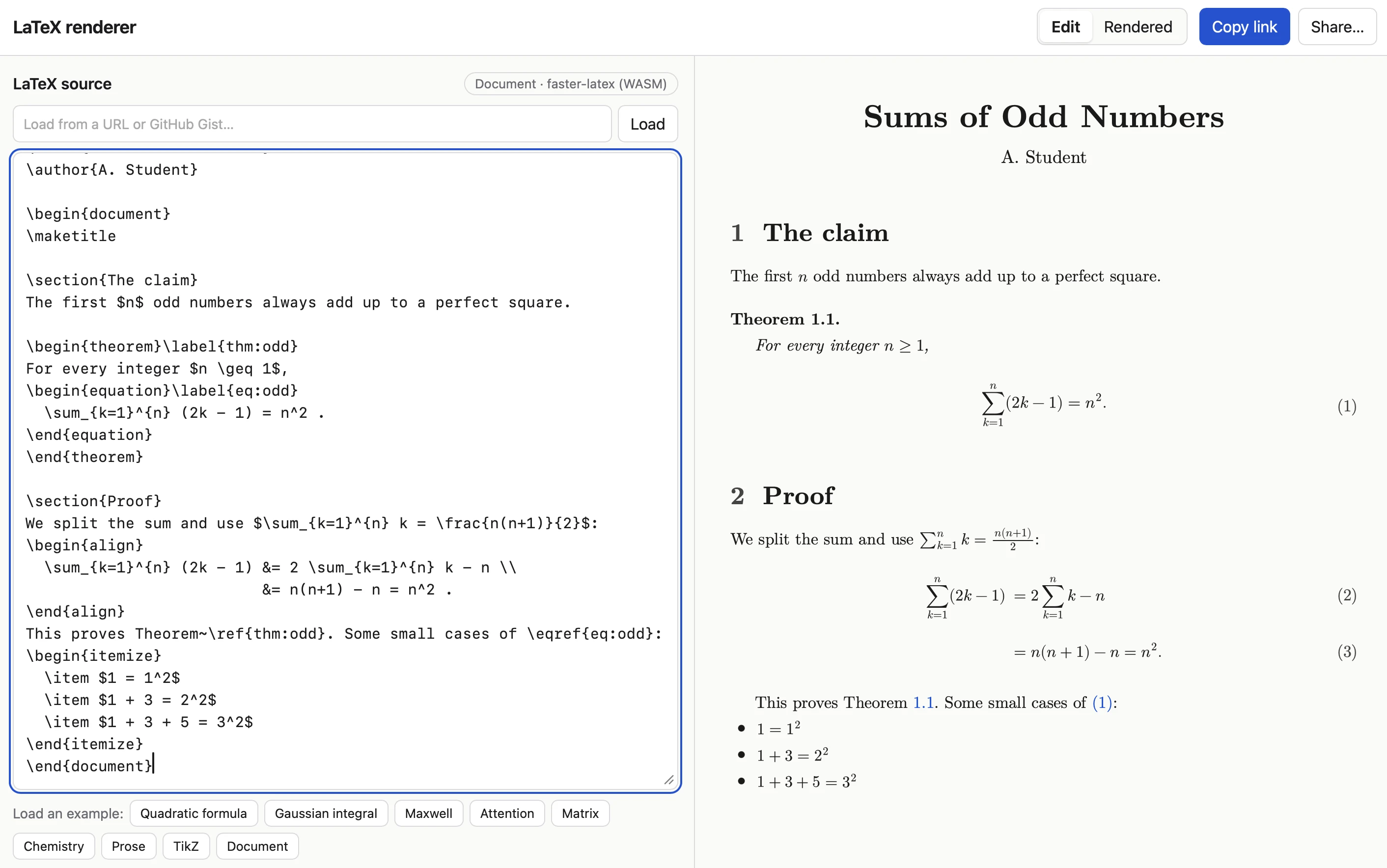
Simon Willison describes using Claude Code (Opus 5.5) to build a browser LaTeX renderer inspired by Tiny Little Office, which stores document data in the URL #fragment and ships an llms.txt so agents can construct document links. He lists the prompts: fragment-hash rendering, a custom compression dictionary for LaTeX, an iframe sandbox against XSS copied from his SVG-in-Markdown tool, and loading from a URL or Gist. The finished tool uses Pako 2.1.0, MathJax 4.1.3, faster-latex 0.3.1 and DOMPurify 3.4.16.
 simonwillison.netarticleAdded 16 Oct 2026, published 15 Oct 2026🧠 AI
 Anthropic's Scion is heavily inspired by Mononoke
A former Meta engineer on the Mononoke source control server says Anthropic's description of its new version control system Scion closely mirrors Mononoke's "derived data" design for efficient operations like blame. Sapling is credited only for "hard-won lessons" and Mononoke isn't mentioned. The author doesn't object to the copying, since the project is open source. Their point is that LLMs used to design systems will index heavily on open-source designs in their training data, and that Opus 5.5 and GPT-6 Astra both point to Mononoke when asked about prior art. They argue crediting prior art is now easier and more important.
 sunshowers.ioarticlePublished and added 14 Oct 2026🧠 AI
 Solving the Identity Crisis for AI Agents (Uber)
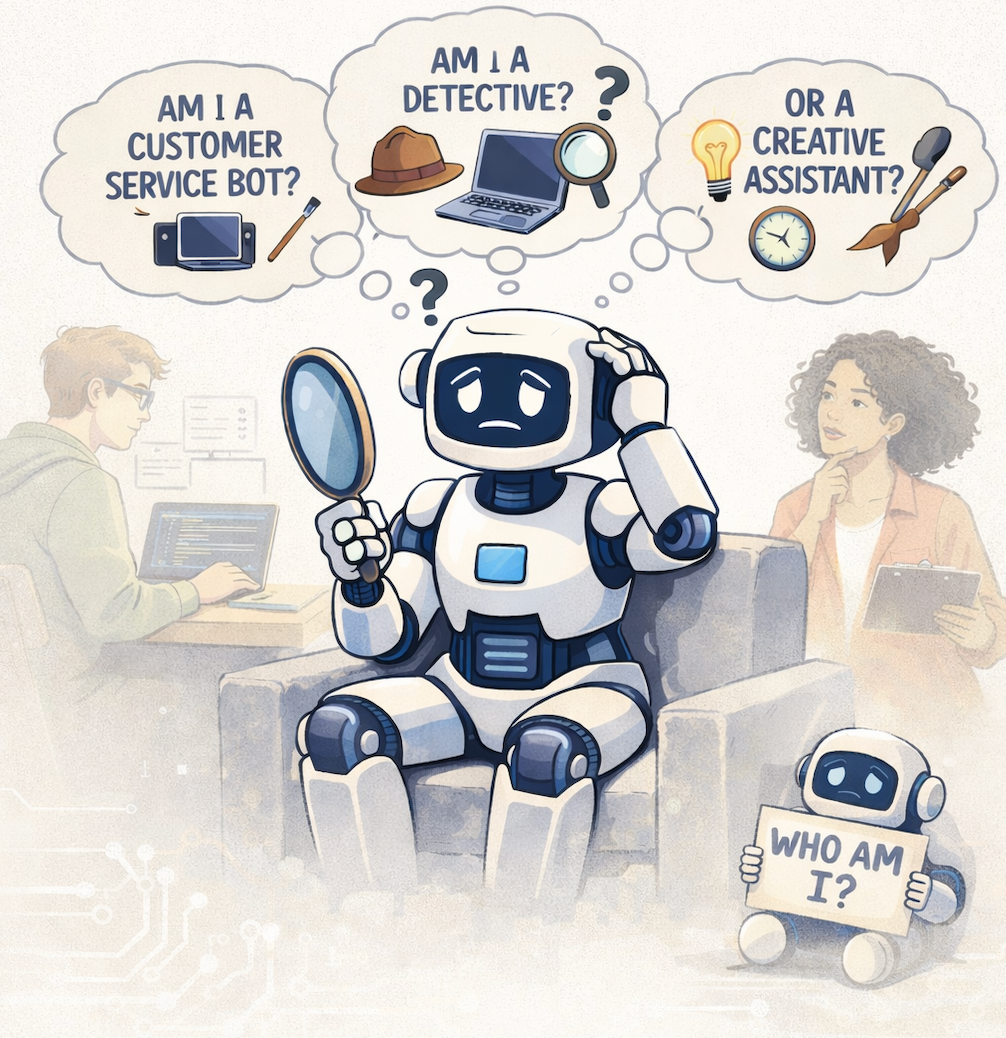
Uber's engineering team describes how it extended its Zero Trust stack to give AI agents verifiable identities. Each agent workload gets a SPIRE SVID, and a Security Token Service checks an Agent Registry and mints single-hop, short-lived JWTs. Those tokens carry the full actor chain (for example user → Oncall Agent → Investigation Agent), loosely modelled on OAuth 2.0 Token Exchange (RFC 8693). The tokens are enforced at an MCP Gateway for tool calls, and an AI Gateway fronts model calls with guardrails. The post also covers an A2A client in the SDK that makes the secure path the default, observability of actor chains, and a 2026 roadmap toward dynamic access control and unified policy enforcement. It is a concrete production reference for agent attribution and delegated authorization.
 uber.comwriteupAdded 10 Oct 2026🧠 AI
- Show HN: Apogee: Rebuilding Mozilla's Orbit, fully local and private
Apogee is a privacy-first browser extension (Chrome/Firefox) that summarizes articles, YouTube/Bilibili videos, PDFs, DOCX and pasted text entirely on-device, inspired by Mozilla's discontinued Orbit. It runs models via WebGPU or WebAssembly in the browser, or connects over loopback to a local Ollama or llama.cpp server, with local passage retrieval for Q&A, grounded sentence highlighting, and Opus-MT translation. It shows a practical no-backend, no-API-key architecture for local LLM apps, with a Node.js extractor test harness for contributors.
 github.comrepoPublished and added 9 Oct 2026🧠 AI
 Improving SPIRE security and resiliency with AWS managed services
AWS Security Blog walkthrough on hardening SPIRE (the SPIFFE Runtime Environment) in production by replacing its default self-managed components with AWS managed services: AWS KMS for SVID signing keys, Amazon Aurora PostgreSQL as the datastore, AWS Private CA as the upstream certificate authority, Amazon S3/CloudFront for trust bundle distribution, AWS Secrets Manager for delivering SVIDs to serverless/container workloads, and Amazon Verified Permissions (Cedar policies) for fine-grained SPIFFE-ID-based authorization. It addresses operational concerns like key custody, datastore resiliency, PKI integration, and offline identity validation, and links to a GitHub reference deployment and a SPIFFE/SPIRE-on-AWS workshop.
 aws.amazon.comarticleAdded 7 Oct 2026, published 6 Oct 2026🛡️ Security
- ASPIRE: Agentic Safety & Prompt Injection Red-teaming Engine
ASPIRE is an automated red-teaming engine for LLM agents that discovers indirect prompt-injection vulnerabilities beyond pre-specified attack scenarios. It maintains an evolving Agent Security Behavior Graph and uses complementary Explore and Exploit experts to find, verify, and generalize consequence-centric attacks, with trajectory evidence and cross-run memory improving coverage over time. Benchmarked against existing automated red-teaming approaches, it shows broader coverage of consequences, injection methods, environments, and behavior paths while keeping attack success high.
arxiv.orgpaperAdded 8 Oct 2026, published 6 Oct 2026🛡️ Security - Show HN: OpenChart – OSS TradingView alternative with your own AI agent
OpenChart is an open-source TradingView-style desktop charting app (Electron, Node.js/Bun, Effect runtime) that embeds AI agents into statistical/technical analysis, real-time market alerts and agentic opportunity research. It ships a custom DSL called Tea (inspired by TradingView's Pine Script) for writing indicators, and a conversation interface built on assistant-ui and the AG-UI event protocol so users converse with agents while charting.
github.comrepoPublished and added 6 Oct 2026🧠 AI 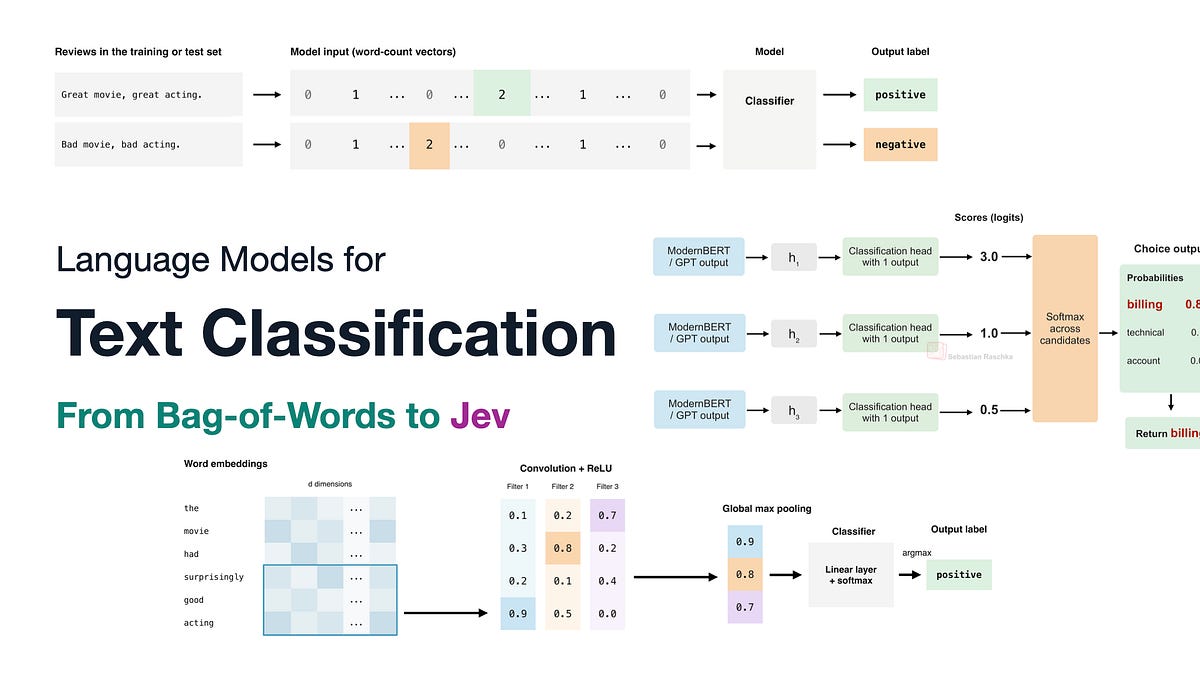 Language Models for Text Classification: From Bag-of-Words to Jev
Sebastian Raschka surveys the history of text classification — bag-of-words with naive Bayes/logistic regression, RNNs and CNNs with word embeddings, then transformer approaches (BERT/ModernBERT, GPT-style decoder fine-tuning, T5 encoder-decoder) — before analyzing TypeSafe AI's new Jev model, a fast/cheap general-purpose classifier accessed via Choice/Noul/Score APIs. He benchmarks Jev against a fine-tuned ModernBERT on the IMDb sentiment dataset (Jev ~96.2-96.5% vs ModernBERT ~95%), explains how to retrofit a Jev-like classification head onto BERT/GPT models, and discusses probability calibration, including the RLCR (Reinforcement Learning with Calibration Rewards) technique from a 2025 paper that likely inspired Jev's proprietary "RLCD" training method.
 magazine.sebastianraschka.comarticlePublished and added 29 Sep 2026🧠 AI
- ASPIRE: Asynchronous Batched Self-Speculative Decoding for Long-Context LLM Inference
ASPIRE is a non-synchronized batched self-speculative decoding framework for long-context LLM inference, where requests independently choose when to verify instead of sharing a global draft-verify schedule. It combines a unified mixed forward pass, a per-request online speculation scheduler using acceptance-rate estimates and a batch-aware cost model, and an intra-draft refresh layer that periodically applies full attention to reduce staleness. Across three models and five reasoning/long-context benchmarks it reports 1.70-4.58x decoding throughput speedup over autoregressive baselines, ~27% better than prior self-speculative baselines.
arxiv.orgpaperAdded 26 Sep 2026🧠 AI - Practical and Space-Efficient LZ77 and LZ Pre-Compression via String Synchronizing Sets
This paper presents the first practical implementation of exact and 3-approximate LZ77 factorization using string synchronizing sets, building on Ellert's sublinear-space algorithms (SPIRE 2023) but replacing two previously impractical components (a degenerate lookup table and an orthogonal range reporting structure). The result runs in space close to the text size rather than a full suffix array, factorizing 12-19x faster than classical LPF on one thread with 14x less memory, and 1.4-2.9x faster than parallel LPF on 32 threads with 9x less memory. As a side result, feeding only its "perfect phrases" to a downstream compressor yields a precompressor competitive with the state of the art in compression ratio, memory, and parallel throughput.
arxiv.orgpaperAdded 26 Sep 2026, published 24 Sep 2026🧠 AI - https://github.com/akha-security/akca
AKCA is an open-source, Go-based Dynamic Application Security Testing (DAST) scanner that combines HTTP and headless-browser crawling, JavaScript/AST analysis, API spec import (OpenAPI, GraphQL, gRPC, etc.), and adaptive active testing across a very broad set of vulnerability classes including SQL injection, XSS, SSRF, IDOR/BOLA, SSTI, JWT/OAuth flaws, race conditions, and cloud/CI exposure. It emphasizes evidence-oriented verification — replaying promising signals against baselines, negative controls, and OAST callbacks before promoting them to findings — and exports Burp-style HTTP evidence in HTML, JSON, CSV, Markdown, and SARIF reports. Positioned as a transparent, single-developer alternative inspired by but not claiming parity with Acunetix, Invicti/Netsparker, or Burp Suite Professional.
github.comrepoAdded 2 Oct 2026, published 23 Sep 2026🛡️ Security - MIGU: Multimodal Instruction Grounding under Uncertainty for Manipulation Planning
MIGU is a modular framework for multimodal instruction grounding that fuses semantic priors from a vision-language model with a 3D geometric likelihood derived from eye-finger gesture geometry and uncertainty propagation (viewing-direction, depth, hand-direction error). The resulting Bayes-inspired grounding belief drives a behavior planner that either proceeds to manipulation planning or requests clarification, and is evaluated against baselines on a real-world mobile manipulation and tabletop task-and-motion planning benchmark. It matters as an example of explicitly modeling uncertainty across language and gesture modalities to make robot instruction-following more robust.
arxiv.orgpaperAdded 22 Sep 2026, published 21 Sep 2026🧠 AI - Solving the Identity Crisis for AI Agents (Uber)
Uber describes how it extended its Zero Trust stack to give AI agents verifiable identities: workloads get SPIRE SVIDs, an Agent Registry validates agent-to-workload binding, and a Security Token Service mints single-hop, short-lived JWTs (based on OAuth 2.0 Token Exchange, RFC 8693) that embed the full actor chain from human to agents. An MCP Gateway enforces tool-level policy and an SDK-integrated A2A client makes secure propagation the default. It addresses delegation, provenance loss across agent hops, and auditability, and notes alignment with IETF WIMSE drafts.
uber.comarticleAdded 18 Sep 2026🛡️ Security - STUART: Sequence Triage and qUAntification of Read Transcripts for Rapid Ionizing Radiation Exposure Assessment
STUART is a mapping-free machine learning framework for biological dosimetry that converts raw sequencing reads into k-mer-based numerical feature profiles (NLP-inspired), bypassing traditional alignment-based bioinformatics. Using the FDXR gene as a radiation biomarker, the authors compare Logistic Regression, Random Forest, and XGBoost, reducing a 1024-dimensional feature space by over 98% to as few as 17 signatures while achieving 95-100% F1/balanced accuracy and over 99% specificity on external validation, enabling real-time triage compatible with portable sequencers.
arxiv.orgpaperAdded 22 Sep 2026, published 16 Sep 2026🧠 AI - autoguardrails
autoguardrails is an open-source alignment research scaffold from Santander AI Lab, inspired by Karpathy's autoresearch pattern, that searches over a single mutable policy.md file to minimize attack success rate (ASR) against a fixed jailbreak/obfuscation eval suite while enforcing a benign-pass floor so the guardrail can't just refuse everything. It reports asr_unguarded, asr_with_policy, and policy_delta to isolate the guardrail's contribution from the target model's native safety, and supports both an offline deterministic stub and real OpenAI-compatible target/judge models.
github.comrepoPublished and added 5 Aug 2026🛡️ Security - graphw00f
graphw00f is a GraphQL fingerprinting tool (inspired by wafw00f) that sends benign and malformed GET/POST queries to identify which GraphQL engine (Graphene, Apollo, Hasura, WPGraphQL, graphql-java, AWS AppSync, and dozens more) is running behind an endpoint. It cross-references detections against the GraphQL Threat Matrix project to report each engine's built-in security defenses and known CVEs, helping pentesters and security engineers assess GraphQL API attack surface (CWE-200 information disclosure via engine fingerprinting).
github.comrepoPublished and added 14 Jun 2026🛡️ Security - geo-tp/ESP32-Bit-Pirate
ESP32 Bit Pirate is open-source ESP32-S3 firmware inspired by the Bus Pirate that turns the chip into a multi-protocol hardware hacking and analysis tool. It supports sniffing, sending, and scripting a wide range of digital and radio protocols including I2C, SPI, UART, 1-Wire, JTAG/SWD, CAN, RFID, Bluetooth (BLE scan/spoof/sniff), Wi-Fi (sniff/deauth/nmap), Sub-GHz, LoRa, and infrared, controllable via serial or web-based CLI with Python scripting support.
github.comrepoPublished and added 12 May 2026🛡️ Security - Decoding NightSpire: Ransomware IOCs Aren't Set in Stone
Huntress details two NightSpire ransomware incidents (December 2025 and March 2026) it responded to, showing how the threat actor's tooling and TTPs differed markedly between attacks despite the same ransomware family. In the March 2026 case the attacker used RDP for initial access, then Chrome Remote Desktop and AnyDesk for persistence, Everything and 7-Zip for data staging, MEGASync for exfiltration, and VMware Workstation/WPS Office for other purposes — none of it relying on native LOLBins like WMI or PsExec seen in public NightSpire reporting. The piece argues that because ransomware like NightSpire (and RaaS families such as Akira and Sodinokibi) may be run by shifting affiliates, IOCs and TTP clusters attributed to "the group" often aren't consistent across incidents.
 huntress.comwriteupAdded 3 Sep 2026, published 7 Apr 2026🛡️ Security
- Kernel Drivers, Process Protection, and ...Bears?
A technical deep-dive into Windows Protected Process Light (PPL) and its role protecting lsass.exe from memory access/code injection by non-protected processes, walking through the LSA protection hierarchy, registry (RunAsPPL) and GPO configuration, and the author's journey toward exploiting/disabling PPL protection using kernel driver techniques inspired by prior work like Mimikatz's driver. It covers Microsoft's official protections (KB guidance, UEFI lock/Secure Boot) and practical notes on why lsass.exe dumping fails at the kernel level versus EDR interference.
 0xv1n.github.iowriteupAdded 3 Sep 2026, published 22 Aug 2023🛡️ Security