Each feed is checked for new posts. Every post is read, and those that belong here join the catalog. What Trove read and did not keep stays on file, not shown.
SemiAnalysis reviews AWS Trainium3 and the new TorchNeuron native PyTorch backend after a few weeks of hands-on use. It reports TorchTitan Qwen3-32B results on Trainium2 (11,099 tokens/s eager at 23.89% MFU, 14,156 compiled at 30.47%), a 27-minute gpt-oss compile time, 89 of 96 FlexAttention cases passing, matmul comparisons with GB300 and B200, and a positive view of the Neuron Explorer profiler.
The Huawei-DeepSeek Symbiosis analyzes DeepSeek's 30 September 2026 Ascend support for TileLang, DeepGEMM, DeepEP, TileKernels, FlashMLA and DeepSelect. It microbenchmarks the Ascend 950PR (BF16 GEMM, HBM bandwidth, die topology, AICPU) against H100, and profiles DeepSeek-V4.1-Flash on 32 Ascend 950DT chips. It also lists vLLM-Ascend gaps on x86 hosts.
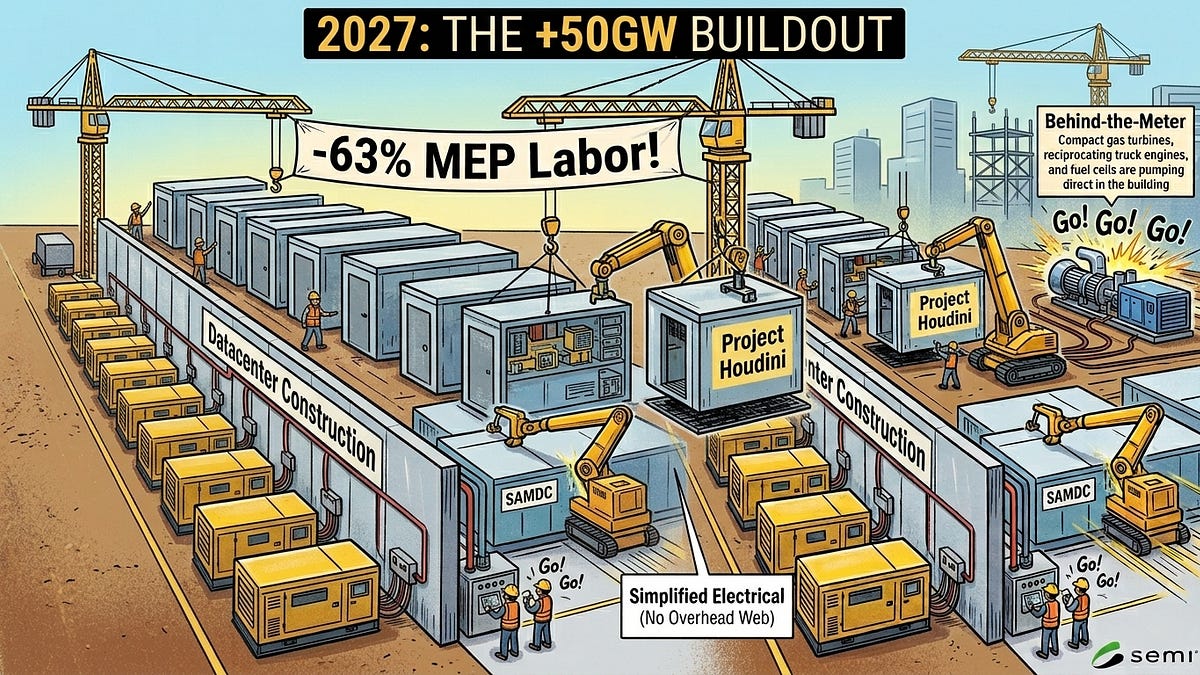
SemiAnalysis argues that global AI datacenter capacity will grow by about 50GW in 2027, against Brad Gerstner's guess of roughly 25GW. Evidence cited: over 24GW in advanced construction across 40 campuses, nearly USD 1T of binding leases signed in 2026, and record self-build starts. It also covers modular "LEGO" designs, behind-the-meter power and ex-US growth. The page text cuts off before the oversupply section.
SemiAnalysis argues China's AI safety regime is speed-first: strict on application content, with no frontier-risk duties tied to compute or capability. It builds a dataset of 857 releases from nine Chinese labs, of which only 31 (3.6%) have a published safety result. It also codes 102 expert texts and reviews TC260 Framework 3.0, SAIL, and CAICT.
SemiAnalysis article on GLM-5.3 and sparse attention. It explains why DeepSeek Sparse Attention does not cut KV cache capacity (top-k needs full context in HBM) and how SGLang's HiSparse offloads KV to host DRAM. It covers InferenceX AgentX serving cost on GB200, GB300 and MI355X (about $0.044 vs $0.049 per million tokens at 150 tok/s), IndexShare, and GLM's RL post-training (SAO, slime).
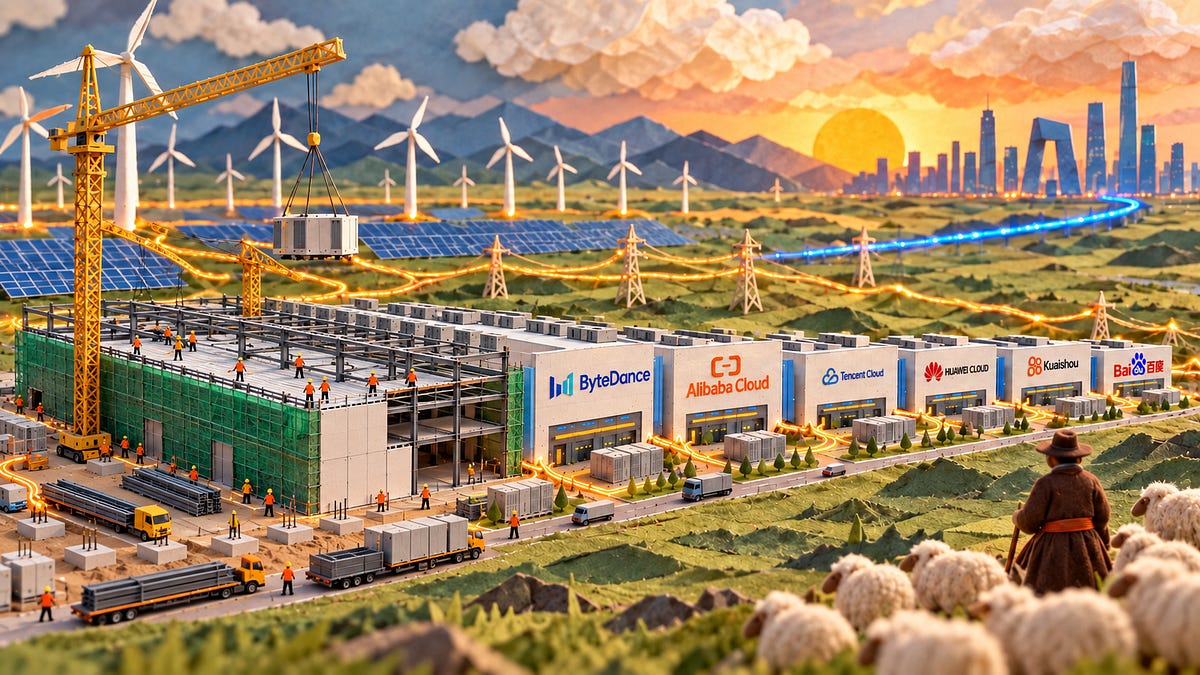
SemiAnalysis previews its China Datacenter Model, which tracks more than 1,000 facilities across 60+ operators and puts China's fleet at over 24GW. The article covers the history of China's retail-first market, the Eastern Data, Western Compute policy moving builds inland, 12-month delivery of 100MW sites, and Alibaba, Tencent, Baidu and ByteDance capex. Tenant-by-tenant sections are paywalled.
ClusterMAX 3.0 is SemiAnalysis's rating of 77 GPU cloud providers (neoclouds) out of 323 tracked, with Nebius joining CoreWeave in Platinum and only 19 earning a Medallion tier. It describes a three-phase test: a free audit (pip install clustermax), performance benchmarks, and an 8-hour burn-in with failure injection. It also covers financing, Blackwell, Vera Rubin and scale-out networks. The page was truncated before the provider appendix.
Computation and Data Movement for Inference is a SemiAnalysis essay on serving Mixture of Experts models. It separates four regimes (prefill, midfill, decode attention, decode experts), treats KV state as immutable blobs in a tiered store, and maps pipeline, tensor and expert parallelism onto nodes and racks such as NVL72. The text read here is cut off partway through.
Engram is a DeepSeek model component that adds learned multi-token embedding lookups, and this SemiAnalysis report studies offloading its tables from HBM to host DRAM and SSD. On B300, DRAM offload let TP4 drop to TP2 and improved the pareto curve by up to 1.6x. On B200, DRAM beat SSD, with 121 million versus 52 million tokens per dollar near 125 tokens/s/user. The report also covers Engram ablations and InferenceX results across NVIDIA GPUs and MI355X.
SemiAnalysis argues that datacenter moratoriums are not stopping the US buildout. It estimates only about 2.3 GW of planned capacity is delayed: 1,525 MW from local moratoriums (7.6% of roughly 20 GW inside restricted areas) and about 0.8 GW from New York's order. Its Datacenter Industry Model forecasts 38 GW of US IT capacity delivered in 2027. The full project list is paywalled.
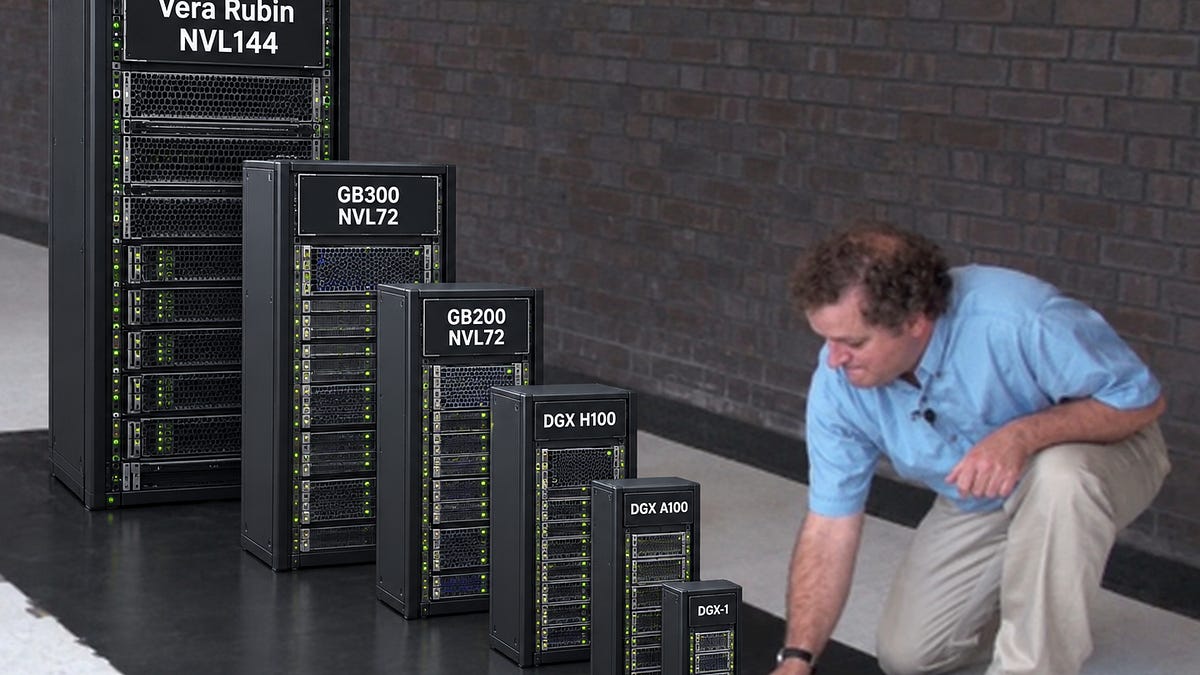
SemiAnalysis reports first agentic inference results for NVIDIA Vera Rubin NVL72 on its AgentX benchmark (InferenceX), using DeepSeek V4 Pro on early TensorRT-LLM software. At 170 TPS it claims about 67x GB300 throughput per TCO, and 2.09x GB300 SGLang tokens per MW at 100 TPS. It also models revenue and profit per gigawatt, and notes SGLang narrows the GB300 gap.
SemiAnalysis article arguing that generalist robot "brains" will increasingly be served from datacenter GPUs rather than carried on-robot. It models wafer, DRAM and TCO crossovers (offload wins from about 5 to 7 robots per GPU; B300 offload is about 46% of Jetson Thor TCO per PFLOP at 40% on-robot utilization). It then reviews deployments at Boston Dynamics, Agility, Verne, Sunday and Weave, and the network jitter problem. The page text is truncated before the end of the networking section.
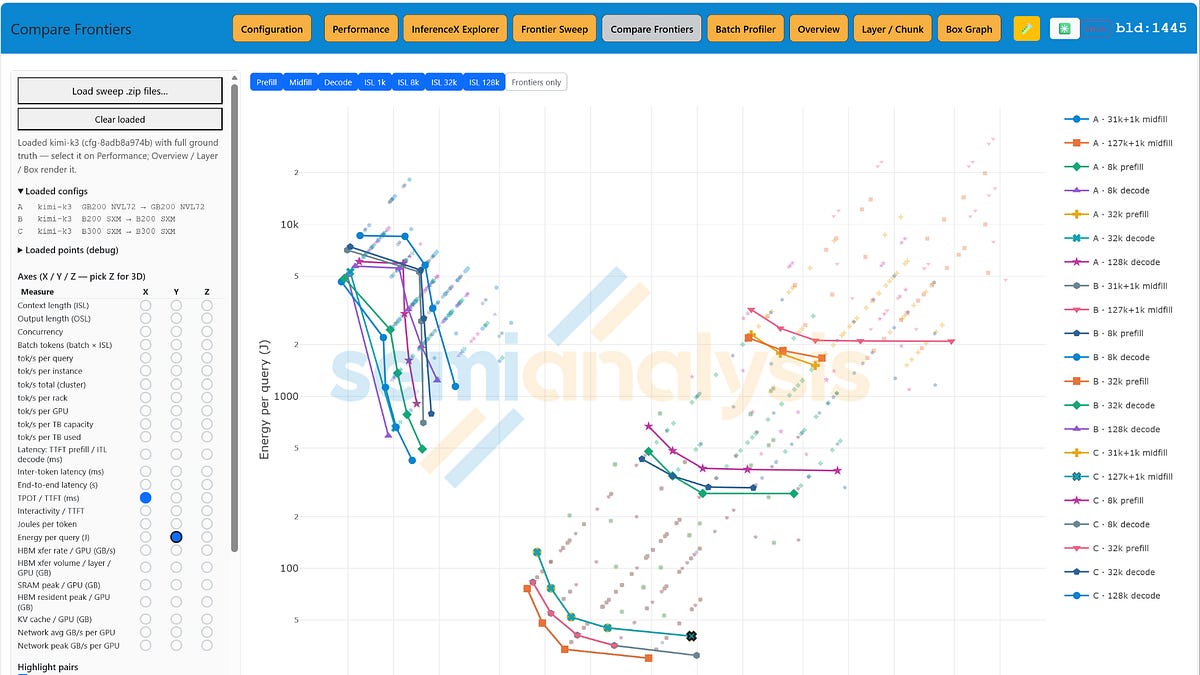
Long Live the Short King is a SemiAnalysis report arguing that 4-hi HBM gives the lowest cost per token for many inference workloads. HBM bandwidth per cube is the same at any stack height, while cost follows GB per stack. A Kimi K3 roofline on Rubin Ultra NVL576 and an InferenceX run with reduced HBM and KVCache offloading support the case. The memory-supplier section is paywalled.
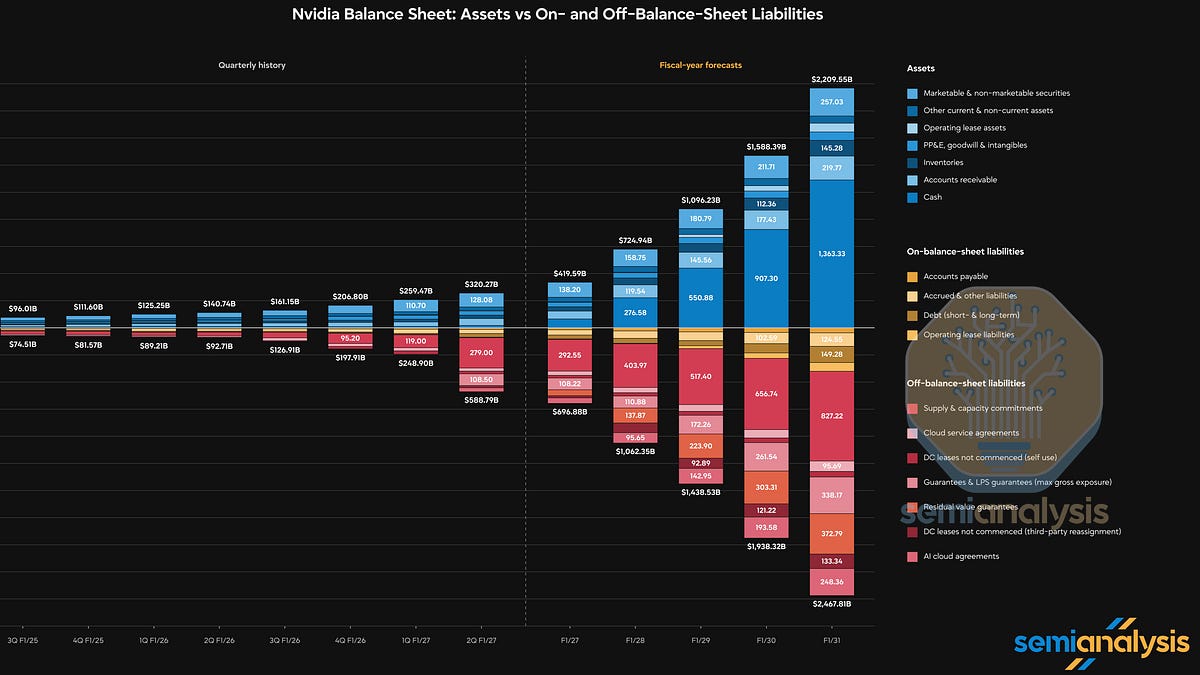
SemiAnalysis article on Nvidia's $530B of off-balance-sheet guarantees disclosed in its 2Q F1/27 10-Q, up from $184B a quarter earlier. It breaks down the AI Cloud Partner program, the SB Energy PORTS-Pike lease guarantee for OpenAI, and a proposed residual value guarantee for private equity funds. SemiAnalysis models how far Nvidia could extend each backstop given its cash generation.
SemiAnalysis publishes the first third-party InferenceX Official Preview results for Google TPUv7 Ironwood serving Qwen3.5-397B in FP8 with the new TorchTPU vLLM stack. In aggregated 8k1k serving it reports up to 50% better performance per dollar than B200 and B300, while GB300 NVL72 disaggregated serving still leads in the middle of the latency range. It also details TPU kernel work: DP attention, SparseCore collectives, MoE routing, Gated DeltaNet kernels and paged attention.
SemiAnalysis examines South Korea's sovereign AI push: a government tournament to build an independent foundation model, a $919B datacenter plan (8.4GW by 2029, 18.4GW by 2035), and what both mean for Nvidia, Samsung and SK Hynix. Startup Motif Technologies trained Motif 3 for about $15M, topped the Korean field on benchmarks, yet was eliminated in August 2026. The authors argue the scoring was opaque.

 newsletter.semianalysis.comarticle