Skip to content

47 results for β€œMarkdown”

What you seeeverything
x.comthread🧠 AI

Prasenjit Sarkar (@stretchcloud) on X

A thread on Cloudflare's agent-readiness scan and the AgentReady.org open spec for "Agent Experience", developed with Vercel, Stripe, Auth0, Mintlify, Google, Netlify and Elementor. The scan grades whether agents can find a site (robots.txt, DNS), read clean Markdown, pass bot rules, and discover an MCP server or API catalog. One quoted example raised a score from 20 to 67 by shipping an API catalog with Link headers, an MCP server card, a skills index and an AI catalog file.

Model Context ProtocolCloudflareMarkdown
AgentReady.orgOraNick Launches+7

mcp, agentsΒ· Added 30 Oct 2026, published 29 Oct 2026

x.comthreadπŸ›‘οΈ Security

BenjaminπŸ‘¨β€πŸ’» (@Hislordship_9) on X

Thread on Forever Security's finding that a planted Markdown "Engineering Work Guidelines" file in ~/Downloads made Codex add a "project-tools" MCP server to ~/.codex/config.toml. The server ran npm install function-color, a known malicious package, and started a child session with --dangerously-bypass-approvals-and-sandbox. Codex complied in over 90% of the firm's tests; Claude Code, via a CLAUDE.md setting ANTHROPIC_BASE_URL, about half. Advice: don't start agents in Downloads, review instruction files, and diff agent config.

CodexClaude CodeModel Context Protocol+1
Forever Securityfunction-colorAGENTS.md+4

AI Security, Supply ChainΒ· Added 27 Oct 2026, published 26 Oct 2026

hackers-arise.comarticleπŸ›‘οΈ Security

Artificial Intelligence (AI) in Cybersecurity, Part 30: Shannon – AI Pentester for Web Apps and APIs

Shannon is a white-box AI pentester (@keygraph/shannon) that analyzes an application's source code, then attacks the running instance and reports only findings with a working PoC. The Hackers Arise tutorial runs it against OWASP Juice Shop in Docker on Kali, using OpenRouter (free Nemotron) and local Ollama (Qwen 2.5 Coder 7B) via a models.json file. Output includes PDF, Markdown, JSON and SARIF reports.

ShannonOpenRouterOllama+3
Juice ShopNemotronKeygraph

AI Security, AppSec, Offensive SecurityΒ· Published and added 26 Oct 2026

x.comthread🧠 AI

ReignSwords (@ReignSwords) on X

A reviewer tests GenOffice, an open-source Office suite (10.7k GitHub stars), through its CLI only. Markdown to .docx took 3.8s, JSON to .xlsx took 0.9s with a live SUM formula, and .docx to PDF failed twice until Xvfb supplied a display. It has byte-preserving edits, a skill file for Claude Code and Codex, and 29 MCP tools. Downsides: a 188MB download that filled a 512MB /tmp, Electron in the PDF path, and unproven trust in tracked changes and rollback.

Model Context ProtocolClaude CodeCodex+4
GenOffice

mcp, coding-agents, agentsΒ· Added 25 Oct 2026, published 24 Oct 2026
api-docs.deepseek.comother🧠 AI

DeepSeek search and fetch – $0.75 per 1000 successful requests

DeepSeek Search & Fetch are two JSON APIs for agents and RAG apps. Search (/v1/tools/search) returns structured results from DeepSeek's in-house engine, with count, need_content and operators such as site:, lang: and after:. Fetch (/v1/tools/fetch) returns a page as Markdown. Both use bearer auth, bill only successful requests ($0.75 per 1000), and have account-level QPS limits. Calls from DeepSeek Harness, Claude Code or Codex are free until 1 November 2026.

DeepSeekPythonRAG+2
DeepSeek V4

llm-apps, mcp, agentsΒ· Added 19 Oct 2026, published 18 Oct 2026

github.comrepo🧠 AI

alex09x/kyb

KYB (Know Your Business) is a Rust/axum server that stores agent-written knowledge, incident reports and tasks as Markdown files in Git, one commit per change. Search is hybrid: Tantivy BM25 fused by reciprocal rank with local multilingual-e5-small ONNX vectors, and it can query historical versions or "as of" a date. It ships a kyb CLI, a native MCP endpoint (Claude Code, Codex, Antigravity, Gemini CLI), an installable agent skill, token auth with per-write attribution trailers, secret scanning on writes, and a web console. It targets persistent shared operational memory for multi-agent, multi-machine fleets.

RustGitModel Context Protocol+10
KYBAlexander Panasenkomultilingual-e5-small

agents, mcp, coding-agentsΒ· Added 17 Oct 2026

simonwillison.netarticle🧠 AI

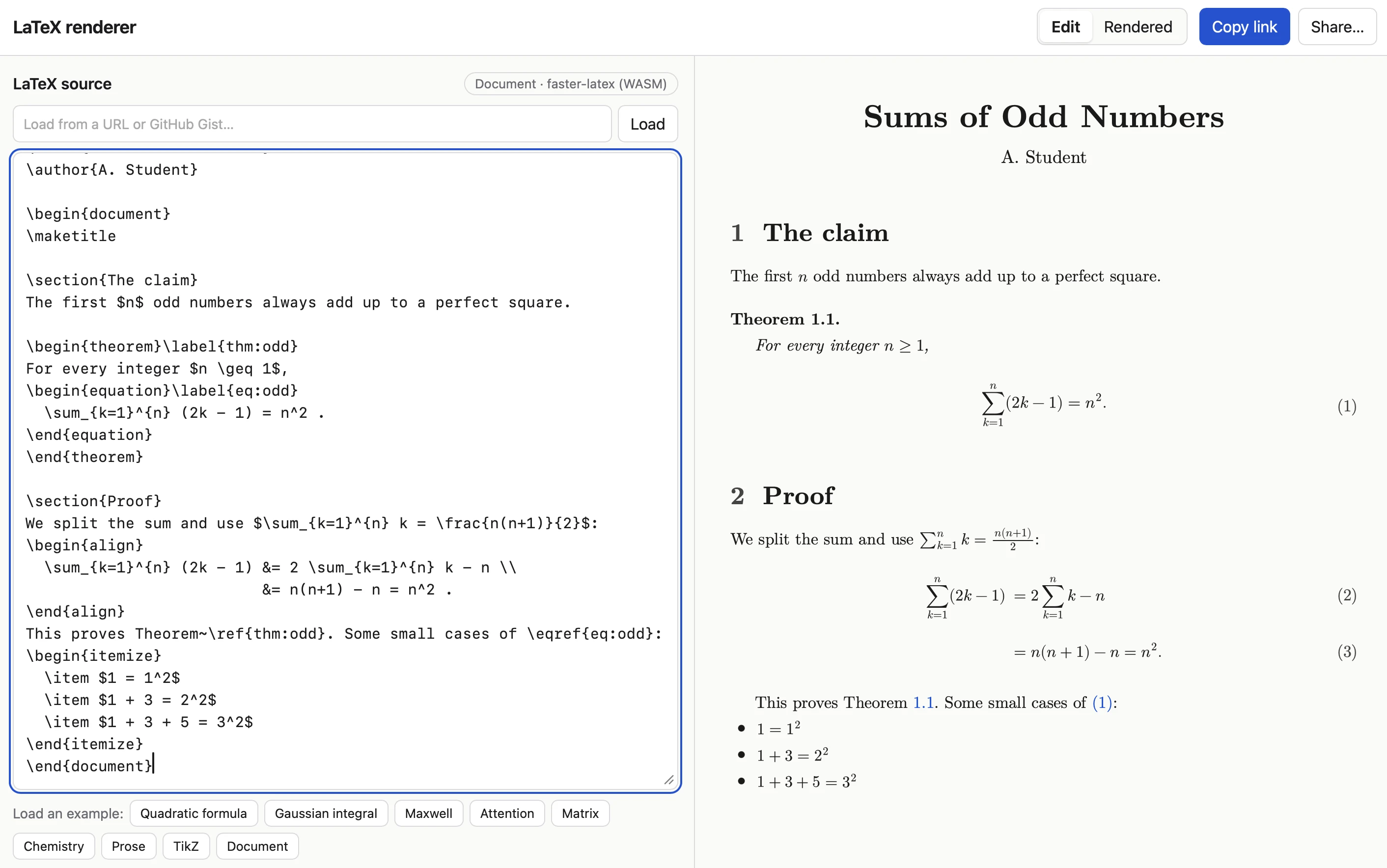
LaTeX renderer

Simon Willison describes using Claude Code (Opus 5.5) to build a browser LaTeX renderer inspired by Tiny Little Office, which stores document data in the URL #fragment and ships an llms.txt so agents can construct document links. He lists the prompts: fragment-hash rendering, a custom compression dictionary for LaTeX, an iframe sandbox against XSS copied from his SVG-in-Markdown tool, and loading from a URL or Gist. The finished tool uses Pako 2.1.0, MathJax 4.1.3, faster-latex 0.3.1 and DOMPurify 3.4.16.

Claude CodeLaTeXMathJax+5
Simon WillisonClaude Opus 5.5Paul Ford+3

coding-agentsΒ· Added 16 Oct 2026, published 15 Oct 2026

arxiv.orgpaperπŸ›‘οΈ Security

BrowseSafe++: Benchmarking Prompt Injection Detection Across Web Contexts, Languages, and Browser Views

BrowseSafe++ extends BrowseSafe to 38,675 paired attacked/clean web pages, most with prompt injections observed in the wild on production sites. Pages cover twelve site types, 24 attack types and 18 injection locations, each given as HTML, Markdown, accessibility tree and screenshot with a user task and expected answer. The authors train BrowseSafe-Guard, two 0.8B detectors (text and screenshot) that beat a frontier-model-based detector on F1 with low false positives and low inference cost. BrowseSafe-Adapt rewrites injections using browser-agent feedback, raising attack success from a few percent to up to 95.41%.

LLM
BrowseSafe++BrowseSafeBrowseSafe-Guard+3

AI SecurityΒ· Added 15 Oct 2026, published 12 Oct 2026

x.comthread🧠 AI

Jetwani Avinash (@jetwaniavinash) on X

Announcement of jevmem, an open-source MIT plugin that gives Claude Code, Cursor and Codex persistent project memory. After each turn it asks Jev (a TypeSafe AI model) whether anything is worth keeping (a rule, decision, failure, or to-do) and writes one line to a plain Markdown file tracked in git. It also checks commands against saved rules before they run and asks first, or blocks. Reported results: Claude followed the rule in 66 of 72 sessions vs 28 without it, the right save/skip call on 98.5% of 66 turns, and 66 of 68 rule-breaking commands caught out of 274 test commands. Listed in Anthropic's Claude plugin directory and on the MCP Registry.

Claude CodeCursorCodex+2
jevmemJevTypeSafe AI+1

coding-agents, agentsΒ· Published and added 10 Oct 2026

stepsecurity.ioarticleπŸ›‘οΈ Security

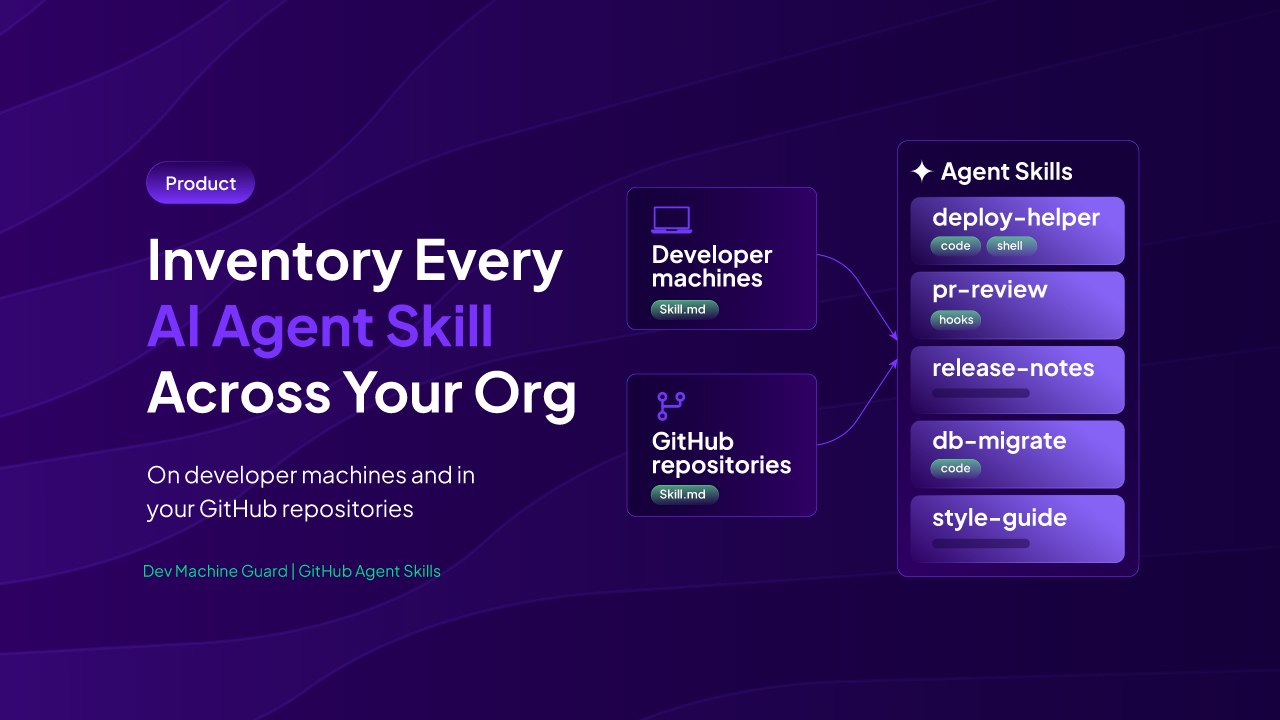
StepSecurity Now Inventories AI Agent Skills in Your GitHub Repositories and on Developer Machines

StepSecurity announces two new inventory features β€” Dev Machine Guard's Agent Skills page (scanning 18 AI coding agents' skill directories on developer machines) and a GitHub Agent Skills page (scanning default branches of org repos daily) β€” to track AI agent "skills" (SKILL.md folders with optional scripts/hooks) across an organization. The post frames skills as a supply-chain surface because they can execute shell commands, pre-approve tool permissions via allowed-tools frontmatter (bypassing Claude Code's workspace trust gate), and look like harmless Markdown documentation in PR review, citing the Miasma worm, s1ngularity, and the Cline v2.3.0 compromise as precedent for this attack class. It details inventory features like content-hash comparison across devices, provenance tracing via skills.sh/skills-lock.json, and filters for shell/hooks/code execution flags to prioritize review.

Claude CodeCursorGitHub Copilot+3
Miasma worms1ngularityCline v2.3.0 compromise

Supply Chain, AI SecurityΒ· Published and added 8 Oct 2026

simonwillison.netarticle🧠 AI

Mistral Large 4

Simon Willison's linkblog entry on the release of Mistral Large 4, built around a Hacker News comment arguing that standard benchmarks are saturated. The commenter demonstrates this by running the identical whimsical prompt, Generate an SVG of an armadillo in fishnet tights jaywalking on Mars, through Claude Opus 5.5, GPT-6.1 Sol, Gemini 3.8 Flash, and Mistral Large 4 via Willison's llm CLI tool, then compares the rendered SVGs at each model's default reasoning level using his markdown-svg-renderer tool.

MistralGeminiClaude
Mistral Large 4Claude Opus 5.5GPT-6.1 Sol+2

models, evalsΒ· Published and added 6 Oct 2026

github.comrepoπŸ›‘οΈ Security

garak v0.17.0 β€” LLM vulnerability scanner release

Release notes for garak v0.17.0, NVIDIA's open-source LLM vulnerability scanner used for red-teaming and probing models for jailbreaks, prompt injection, data leakage and other failure modes. The release adds an EU AI Act risk-category mapping to tag and group probe results, plus fixes to detectors (agent_breaker judge verdict validation, packagehallucination import parsing, MarkdownExfilContent divide-by-zero, TriggerListDetector alignment) and probes (badchars ASCII selection, Markdown exfiltration link templates), along with Ollama generator improvements and dropped Python 3.10 support in favor of 3.13.

OllamaPython
EU AI ActAgentBreakerIntentProbe+2

AI SecurityΒ· Added 29 Sep 2026

github.comrepoπŸ›‘οΈ Security

garak v0.17.0 β€” adds EU AI Act risk-category mapping

garak is NVIDIA's open-source LLM vulnerability scanner that runs probes/detectors for jailbreaks, prompt injection, PII leakage, package hallucination, markdown exfiltration and more against LLM targets. This v0.17.0 release adds a new EU AI Act risk-category mapping to tag and group probe results by the Act's risk categories, alongside fixes to the agent_breaker judge, markdown-exfiltration detectors, Ollama auth/generation support, and dropped Python 3.10 in favor of 3.13 support.

garakOllamaAWS Bedrock+2
EU AI Act

AI SecurityΒ· Added 26 Sep 2026

thehackernews.comarticleπŸ›‘οΈ Security

Agentjacking Attack Tricks AI Coding Agents Into Running Malicious Code

Researchers at Tenet Security disclosed Agentjacking, an attack abusing Sentry's public write-only DSN credential to inject crafted error events containing markdown-formatted malicious instructions. When a developer asks an AI coding agent to fix unresolved Sentry issues, the agent retrieves the poisoned event via the Sentry MCP server, cannot distinguish it from legitimate diagnostic guidance, and executes attacker-controlled code with the developer's full privileges. Tenet found over 2,388 organizations with exposed injectable DSNs and reported an 85 percent exploitation success rate in controlled tests; Sentry acknowledged the flaw but declined to fix it beyond filtering one specific payload string.

Model Context ProtocolSentryClaude Code+1
AgentjackingTenet SecurityRon Bobrov+2

AI SecurityΒ· Added 26 Sep 2026

github.blogarticle🧠 AI

When chat is the wrong UI

Burke Holland (GitHub) argues that chat is often the wrong interface for working with AI coding agents and introduces "canvas" β€” a feature in the GitHub Copilot app that spins up a small full-stack application with no browser chrome, which can call third-party APIs or run code locally while exchanging messages bidirectionally with the Copilot agent. He walks through concrete canvases: a playable Connect 4 game against the agent, a Winget package browser/installer, a SQLite query UI with IntelliSense, a Markdown-to-Windows-Live-Writer-style blog editor, and a full development-workflow automation canvas that removes the human from the loop between research, prototyping and review steps. The piece frames this as a general lesson for agent builders: build a reusable tool the agent and user can both interact with, rather than burning tokens asking the agent to perform every repetitive action through chat.

GitHub CopilotSQLite
GPT-5.6 SolGPT-5.6 LunaBurke Holland+1

coding-agentsΒ· Added 8 Oct 2026, published 24 Sep 2026

github.comrepoπŸ›‘οΈ Security

https://github.com/akha-security/akca

AKCA is an open-source, Go-based Dynamic Application Security Testing (DAST) scanner that combines HTTP and headless-browser crawling, JavaScript/AST analysis, API spec import (OpenAPI, GraphQL, gRPC, etc.), and adaptive active testing across a very broad set of vulnerability classes including SQL injection, XSS, SSRF, IDOR/BOLA, SSTI, JWT/OAuth flaws, race conditions, and cloud/CI exposure. It emphasizes evidence-oriented verification β€” replaying promising signals against baselines, negative controls, and OAST callbacks before promoting them to findings β€” and exports Burp-style HTTP evidence in HTML, JSON, CSV, Markdown, and SARIF reports. Positioned as a transparent, single-developer alternative inspired by but not claiming parity with Acunetix, Invicti/Netsparker, or Burp Suite Professional.

GoBurp SuiteSARIF+3
IDORBOLASSRF+1

AppSecΒ· Added 2 Oct 2026, published 23 Sep 2026

simonwillison.netarticle🧠 AI

llm 0.36

Changelog for version 0.36 of Simon Willison's `llm` command-line tool: adds support for new OpenAI models gpt-6-sol and gpt-6-luna, lets model plugins declare supports_conversation = False so single-turn-only models raise llm.ConversationNotSupported instead of silently accepting chat history (first used by the llm-typesafe plugin), and wraps reasoning traces in collapsible details/summary tags in the Markdown output of `llm logs`. These are small but practical improvements to a popular open-source CLI for scripting and logging LLM interactions across providers.

Python
Simon WillisonOpenAIGPT-6 Sol+2

llm-appsΒ· Added 29 Sep 2026, published 22 Sep 2026

github.comrepoπŸ›‘οΈ Security

WordPress Security Skills

WordPress-Security-Skills is a GitHub repo of modular 'Agent Skills' (per the open Agent Skills spec) that install into AI coding agents like Claude Code, Cursor, Codex, OpenCode, and Gemini CLI to guide secure-by-default WordPress plugin/theme development and security code review. Each skill targets a documented failure mode in AI-generated WordPress code β€” missing nonce checks, broken authorization, missing output escaping, unprepared SQL queries β€” with when-to-use guidance, common AI mistakes (wrong vs right), code examples, and checklists tied to official WordPress API references. It is explicitly instructional Markdown/PHP reference material, not a scanner or automatic protection, meant for developers and reviewers auditing AI-written or third-party WordPress code.

WordPressPHPClaude Code+3
Agent Skills specification

AppSecΒ· Added 22 Sep 2026, published 15 Sep 2026

github.comrepoπŸ›‘οΈ Security

MassPIIFinder v2

MassPIIFinder v2 is a Python recon tool that automates crawling a target's in-scope JavaScript (multi-hop HTML crawl, dynamic imports, chunk manifests, sourcemaps, plus optional passive CT-log subdomain discovery) and mines it for API keys, tokens, credentials, internal endpoints, and PII using ~90 named patterns plus a high-entropy freeform heuristic. Findings are validated offline (Luhn checks, JWT decode, AWS key-shape) and via scope-checked, rate-limited reachability probes, then triaged by severity and exported as JSON/HTML/SARIF/Markdown/CSV. It enforces authorization with a required --confirm-authorized flag and a ScopeGuard that blocks any out-of-scope requests, and explicitly avoids testing leaked keys against third-party providers or exploiting findings.

PythonFlaskSQLite+1

OSINT, AppSecΒ· Added 22 Sep 2026, published 15 Sep 2026

proofpoint.comwriteupπŸ›‘οΈ Security

Once in a BlueMoon: Multiple State-Aligned Threat Actors Rapidly Adopt Novel Chrome/Windows Zero-Day Chain

Proofpoint details "BlueMoon," a novel exploit kit chaining a Chrome V8 type-confusion RCE (CVE-2026-85046), a V8 sandbox escape via WebAssembly metadata corruption (CVE-2026-87491), and a Windows kernel LPE (CVE-2026-85880) to break out of the browser sandbox. Within days of first use by China-aligned TA412 (28 Aug 2026), the kit was independently adopted by UNK_LateNight (delivering ShadowPad to US aerospace targets), UNK_DoubleCheck (Rust-based loader against a Vietnamese manufacturer), and UNK_QuietRacket (custom malware against Indonesia/Singapore government and finance targets). The piece analyzes exploit internals (Maglev/TurboFan JIT bug, reflective DLL loading, ALPC/WNF kernel exploitation), flags artifacts suggesting AI-assisted exploit development (debug comments, handover markdown files, v8CTF references), profiles the GemStone Chromium-extension credential-theft backdoor deployed via Secure Preferences forgery, and provides IOCs, ET rules, and a YARA rule for detection.

ChromeWindowsMicrosoft Edge+3
CVE-2026-85046CVE-2026-87491CVE-2026-85880+10

Threat Intel, Malware & RE, Offensive SecurityΒ· Added 26 Sep 2026, published 9 Sep 2026

github.comrepoπŸ›‘οΈ Security

GhostJS

GhostJS is an open-source Burp Suite extension by TrinetLayer that passively scans JavaScript, HTML, and JSON responses flowing through Burp for hardcoded secrets (AWS/GCP/Azure keys, Stripe/PayPal/GitHub tokens, JWTs, private keys, etc.) and hidden API endpoints, surfacing findings in a dedicated tab with severity, confidence scoring, remediation guidance, and Markdown export. It also actively fetches referenced <script> bundles using the tester's live session cookies and applies a false-positive filter to suppress doc-sample and placeholder keys, making it a practical recon aid during authorized web app pentests and bug bounty work.

Burp SuiteJavaScriptJava
TrinetLayer

AppSec, Offensive SecurityΒ· Published and added 7 Sep 2026

github.comrepoπŸ›‘οΈ Security

vet (SafeDep)

vet is an open-source CLI (from SafeDep) that scans package manifests, SBOMs, container images, and source repos across npm, PyPI, Maven, Go, RubyGems, Cargo, and Packagist to surface vulnerabilities, malicious packages, and license/quality issues. It cuts through CVE noise by analyzing actual code-usage evidence, queries SafeDep Cloud's threat-intelligence database for real-time malware detection (e.g. flagged packages like express-cookie-parser, eslint-config-airbnb-compat), and lets teams enforce security/license/OpenSSF-Scorecard policies as CEL expressions in CI/CD via SARIF/JSON/Markdown reporting.

npmPyPIMaven+3
MAL-2025-3541MAL-2025-4339MAL-2025-4029+2

Supply Chain, DevSecOpsΒ· Published and added 7 Sep 2026

unit42.paloaltonetworks.comwriteupπŸ›‘οΈ Security

An AI-Assisted Cyber Attack: Inside a Unit 42 Investigation

Unit 42 details an incident response engagement in which a threat actor used frontier AI models and custom agentic AI frameworks to compress a multi-week intrusion into under 10 hours, executing over 50 MITRE ATT&CK techniques largely autonomously. The AI agents mapped internal microservices after breaching a public web service, harvested hard-coded secrets from code repositories, escalated to root via a secrets manager, hijacked CI/CD pipelines to exfiltrate cloud keys (attempting but failing to backdoor Terraform via branch protection), and ultimately hijacked the victim's own cloud AI endpoints as post-compromise infrastructure. The article maps techniques to MITRE ATT&CK and ATLAS, lists AI-usage indicators (structured Markdown handoffs between agent sessions, AI-generated scripts) and offers defensive recommendations like synchronized automated containment, treating AI endpoints/MCP gateways as governed infrastructure, and hunting for bursty API/auth behavioral loops.

MITRE ATT&CKMITRE ATLASTerraform+1

Threat Intel, AI Security, Offensive SecurityΒ· Added 8 Sep 2026, published 2 Sep 2026

github.comrepoπŸ›‘οΈ Security

agentgg

agentgg is an open-source, agentic SAST scanner that uses LLM agents to read source code, follow imports, trace the call graph, and confirm findings before reporting β€” aiming to reduce the pattern-matching false positives of traditional SAST. It runs locally or as a hosted service, supports full-repo scans or git-diff PR review, and works with multiple model providers (Anthropic, OpenAI, AWS Bedrock, Google Vertex AI, OpenRouter, Ollama); agents are defined as markdown files with YAML frontmatter and are pulled from a community agents catalog.

Node.jsnpmAnthropic+3

AppSec, AI SecurityΒ· Published and added 23 Aug 2026

github.comrepoπŸ›‘οΈ Security

Cybermes

Cybermes is an open-source bug bounty and pentest automation framework that pairs a native Go MCP server (cybermes-mcp) with an autonomous Hermes CLI agent, orchestrating recon tools (subfinder, httpx, katana, ffuf, Nuclei, sqlmap), 200+ offensive playbooks covering IDOR/BOLA, JWT, SSRF, XSS, SQLi and cloud misconfig, and a validation-gate workflow that writes non-destructive PoC scripts before compiling findings into Markdown/HTML/PDF reports. It exposes its tools over JSON-RPC 2.0 to AI coding assistants (Claude Desktop, Cursor, Windsurf, Cline, Gemini/Antigravity) so an external LLM can drive scoped, evidence-backed security assessments.

Model Context ProtocolGoNuclei+3

Offensive Security, AI SecurityΒ· Published and added 23 Aug 2026

github.comrepoπŸ›‘οΈ Security

hunt.md

hunt.md is an open, portable Markdown format for writing threat-hunting playbooks as git-diffable documents combining YAML frontmatter with a typed graph of steps β€” queries, data collection, agent reasoning, human review, and response. The reference tool huntmd validates hunts (checking reachability, variable use, agent bounds, gated destructive actions) and converts between hunt.md, Huntbase definitions, OASIS CACAO v2 playbooks, and MISP events, with CACAO round-trip tested against 49 real playbooks from six projects.

MISPSIEMKQL+3
kerberoastingT1558.003

Blue Team & DetectionΒ· Added 3 Sep 2026, published 17 Aug 2026

ionix.iowriteupπŸ›‘οΈ Security

We built an AI PR reviewer. The hard part was teaching it to say nothing.

Ionix's engineering team describes building an in-house AI PR reviewer using OpenAI's Codex CLI against a self-hosted Azure AI Foundry model deployment, wired into CircleCI and Bitbucket, after dropping Atlassian Rovo for cost and low signal-to-noise. The piece details prompt design to suppress low-value comments, agentic repo-wide review (vs. diff-only), sharding for large PRs, JSON output validation against git ls-files, storing review state inside PR comments via base64-in-markdown, and a dedicated prompt-injection defense section (scrubbed environment, secret redaction, sandboxed execution, egress restriction). It also covers two production failures: a silently-broken bubblewrap sandbox that kept "reviewing" without running any tools, and an unpinned Codex CLI npm dependency that broke Azure API calls across every repo.

Codex CLIAzureFoundry+3

AI Security, DevSecOpsΒ· Added 3 Sep 2026, published 13 Aug 2026

github.comrepo🧠 AI

genspark-ai/genoffice

GenOffice is an open-source (Apache-2.0) desktop office suite for macOS/Windows/Linux that opens native .docx/.xlsx/.pptx/PDF/Markdown/HTML files and puts an AI agent inside the editor, applying edits as byte-preserving diffs, tracked changes and live spreadsheet formulas rather than pasted text. It exposes the same engines to coding agents via a `genoffice` CLI, a bundled skill for Claude Code, Codex, Cursor, Gemini CLI, GitHub Copilot, OpenCode and Windsurf, and an MCP server with 29 tools (plus an HTTP variant for headless/remote use), and includes a local SQLite full-text file search optionally reranked by TypeSafe's Jev judgment model. Users can bring their own key (Claude, OpenAI, Gemini, DeepSeek, and others) or sign in with Genspark to route model calls through a proxy.

Model Context ProtocolClaude CodeCodex+11
GenOfficeGensparkTypeSafe+7

mcp, coding-agents, llm-appsΒ· Added 30 Sep 2026, published 31 Jul 2026

medium.comarticleπŸ›‘οΈ Security

Claude as Autonomous Bug Bounty Hunter

Author describes Aii-Aii Hunter, a bug bounty framework built on Claude Code with 124 markdown skills (35.5k lines distilled from public HackerOne reports), three hooks (UserPromptSubmit regex auto-routing, PreToolUse scope.json guard, PostToolUse telemetry) and a Podman Kali container exposing 110 tools plus 18 Burp tools over MCP. It also covers an engagement flow with a 7-Question validation gate, evidence hygiene, an autopilot mode, and SAST/DAST correlation. Useful as a blueprint for scoped, AI-orchestrated offensive workflows; first of six parts with a companion repo.

Claude CodeModel Context ProtocolKali Linux+3
Aii-Aii Hunter7-Question Gatescope guard

Offensive Security, AI Security, AppSecΒ· Added 3 Sep 2026, published 30 Jul 2026

github.comrepoπŸ›‘οΈ Security

PentesterFlow/agent

PentesterFlow is an open-source terminal AI agent for authorized offensive-security engagements, connecting to local or hosted LLMs (Ollama, LM Studio, Anthropic, Gemini, DeepSeek, Groq, OpenRouter, etc.) to plan and execute recon, enumeration, vulnerability validation, and evidence-backed reporting against a scoped target. It gates sensitive actions behind analyst approval, bridges with Burp Suite for traffic capture/finding import via a local listener and companion MCP server, and maintains persistent project/personal memory (redacting secrets) to carry lessons and coverage state across sessions. The demo walks through discovering and confirming an IDOR on an orders API and writing findings to a local markdown report.

Burp SuiteOllamaModel Context Protocol+3
IDOR

Offensive Security, AI SecurityΒ· Published and added 29 Jul 2026

github.comrepoπŸ›‘οΈ Security

Visa Vulnerability Agentic Harness (VVAH)

VVAH is Visa's open-source agentic harness that runs an eleven-stage (S0–S11) LLM pipeline to discover, verify, report, and optionally remediate/validate application vulnerabilities, built on learnings from Anthropic's Project Glasswing. It combines threat-modeled discovery, multi-lens adversarial analysis, interprocedural taint analysis, and a beta live-HTTP "exploit verification" stage (S6) that proves exploitability and supports regression-testing fixes via ev-replay, outputting Markdown and SARIF 2.1.0 findings with CVSS/CWE data.

SARIFCVSSPython+3
Project Glasswing

AppSec, AI SecurityΒ· Published and added 29 Jul 2026

github.comrepo🧠 AI

QoderAI/better-harness

Better Harness is an MIT-licensed plugin/CLI from QoderAI that runs inside a coding agent (Claude Code, Codex, Qoder, Cursor, GitHub Copilot CLI, Qwen Code, Pi, Kimi Code and others) via a /better-harness command. It collects project and session evidence and scores five dimensions of the "Agent Work Loop" (feedforward guides like AGENTS.md, specs and Skills; feedback sensors like linters, tests and Hooks). It outputs HTML/Markdown/Canvas reports with prioritized findings, repair plans and acceptance checks, and keeps missing evidence explicit rather than inventing scores.

Claude CodeCodexCursor+6
Better HarnessQoderAIQoder+4

coding-agents, agents, evalsΒ· Added 12 Oct 2026, published 21 Jul 2026

cybersecuritynews.comadvisoryπŸ›‘οΈ Security

AI Security Briefing

CVE-2026-14898 affects the OpenAI Codex desktop app for macOS, which automatically renders remote images embedded in Markdown model output without user interaction. An attacker can use indirect prompt injection to make Codex generate a response containing an attacker-controlled image URL whose parameters embed sensitive data (API keys, source code, tool output), which is silently exfiltrated when the app auto-fetches the image. Categorized under CWE-200, no patch or CVSS score was available at disclosure.

OpenAI CodexmacOS
CVE-2026-14898CWE-200indirect prompt injection

AI Security, AppSecΒ· Published and added 18 Jul 2026

github.comrepoπŸ›‘οΈ Security

AI-Powered Threat Modeling

AITM is an open-source Python CLI (MIT licensed) that automates STRIDE threat modeling of system architectures using LLMs via Bedrock, OpenAI, or local Ollama. Given a text description or architecture diagram image, it identifies assets and data flows, generates STRIDE-categorized threats with CWE mapping (e.g. CWE-89 for SQLi), scores risk on a 5-level matrix, and outputs actionable mitigations in Markdown or JSON. The engine is stateless with a Pydantic data contract, designed to later support a REST API and frontend; an enterprise edition with additional features is offered commercially.

OllamaOpenAIAWS Bedrock+3
CWE-89

AI Security, AppSecΒ· Added 3 Sep 2026, published 17 Jul 2026

github.comrepo🧠 AI

magnus919/agent-skills

A sprawling open-source collection of 100+ reusable "Agent Skills" (markdown instruction packs with YAML frontmatter following the open Agent Skills format) for agentic systems, compatible with Claude Code and any framework that supports the standard. Skills span multi-agent orchestration frameworks (AutoGen, CrewAI, LangChain, LangGraph, LlamaIndex, DSPy, Haystack, a PydanticAI-based multi-agent debate tool), production agent operations, evals, and AI governance, alongside dozens of narrower domain skills β€” CLI integrations for Jira, Confluence, Notion, Linear, HubSpot, Ghost, Fireflies, Grafana, PostgreSQL, Kubernetes, Docker Compose, FFmpeg, Ghidra-based binary triage, FPGA/ESP32 hardware design, and more. The page text was truncated at 40,000 of 71,286 characters, so later entries in the catalog are not reflected here.

CrewAILangChainLangGraph+17
PydanticGraphMicrosoftStanford University+5

coding-agents, promptingΒ· Added 1 Oct 2026, published 11 Jul 2026

github.comrepoπŸ›‘οΈ Security

VeridionLabs/veridion

Veridion is an open-source smart contract security platform combining a plugin-based static analysis scanner (extended via the IRulePlugin interface with zero changes to scanner-core), an AI-engine layer for vulnerability explanation and fix suggestions, and immutable on-chain audit verification recorded via Stellar Soroban. It ships as a Turborepo/pnpm monorepo with a NestJS API, Next.js frontend, Prisma-backed PostgreSQL, JWT/RBAC auth, and report generation in JSON, Markdown, HTML, or PDF.

Stellar SorobanRustTypeScript+3
IRulePlugin

AppSecΒ· Added 4 Oct 2026, published 7 Jul 2026

bair.berkeley.eduarticle🧠 AI

Intelligence is Free, Now What? <br> Data Systems for, of, and by Agents

A BAIR blog perspective piece by Aditya G. Parameswaran and collaborators (including Matei Zaharia, Joseph Hellerstein, Ion Stoica, Joseph Gonzalez, Alvin Cheung, Natacha Crooks) arguing that near-zero inference costs create three new challenges for data systems: redesigning them FOR agentic query patterns (high-volume 'agentic speculation' with mostly redundant sub-queries), building the substrate OF multi-agent swarms (structured/faceted memory beyond markdown files, concurrent-edit coordination, CRDTs, exactly-once semantics, avoiding livelock), and letting agents synthesize disposable, workload-specific data systems BY themselves (citing Bespoke OLAP, GenDB, and custom key-value store synthesis work, plus verification-agent and proof-generation approaches to counter spec reward-hacking). It's part landscape survey, part original research agenda from the authors' ongoing work.

Claude CodeCodexPostgreSQL+1
Aditya G. ParameswaranUC BerkeleyEPIC Data Lab+14

agents, ai-infra, researchΒ· Added 29 Sep 2026, published 7 Jul 2026

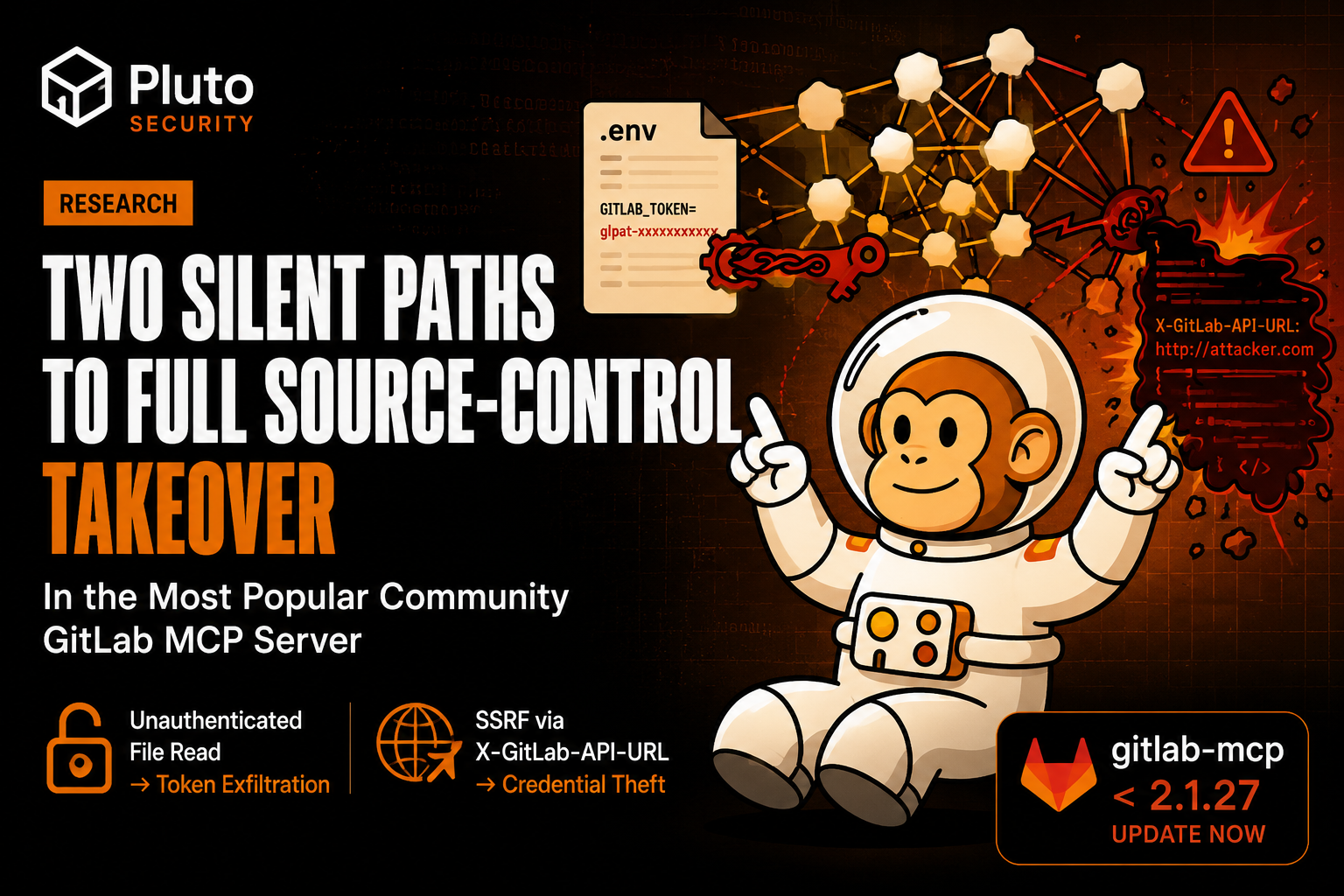
pluto.securitywriteupπŸ›‘οΈ Security

One Request to Own Every Repo: How We Hijacked GitLab Through Its MCP Server - Pluto Security

Pluto Security details two critical vulnerabilities in gitlab-mcp (@zereight/mcp-gitlab, 200K+ downloads), the most popular community GitLab MCP server. GHSA-cv3r-c5h8-f4g5 (CVSS 9.8) chains an unauthenticated SSE transport with the upload_markdown tool's unvalidated file_path to read /proc/self/environ and steal the server's GitLab Personal Access Token; GHSA-2h44-8472-frjj (CVSS 9.6) abuses the X-GitLab-API-URL header when ENABLE_DYNAMIC_API_URL=true to make the server attach its PAT to attacker-controlled hosts via SSRF. Both are fixed in v2.1.27 (SSE bearer-auth, non-root Docker, host allowlisting), and the writeup includes full attack commands, root-cause code, and a disclosure timeline.

Model Context ProtocolGitLabDocker+3
GHSA-cv3r-c5h8-f4g5GHSA-2h44-8472-frjjCWE-22+2

AppSec, AI SecurityΒ· Added 26 Sep 2026, published 6 Jul 2026

radar.offseq.comadvisoryπŸ›‘οΈ Security

CVE-2026-14699: Symlink Following in zcaceres markdownify-mcp - Live Threat Intelligence - Threat Radar | OffSeq.com

CVE-2026-14699 describes a local symlink-following vulnerability in the assertPathAllowed path-validation function of zcaceres' markdownify-mcp (an MCP server for converting content to Markdown), affecting versions up to 1.1.0. A local attacker can manipulate symbolic links to bypass the path allow-list and access or modify files outside the intended scope; a fix PR exists but is unmerged, so no patch is currently available.

Model Context ProtocolTypeScript
CVE-2026-14699

AppSecΒ· Added 26 Sep 2026, published 5 Jul 2026

github.comrepoπŸ›‘οΈ Security

api-relay-audit

api-relay-audit is a zero-dependency, locally-run Python security audit tool for AI API relays and LLM proxies that sit between a user and providers like Anthropic or OpenAI. It runs a 14-step check covering hidden prompt injection/extraction, context truncation, model-identity substitution, tool-call/package-command tampering, and SSE stream integrity, producing a reviewable Markdown report with LOW/MEDIUM/HIGH findings (inconclusive results stay visible rather than being marked clean). It also adds a web3 profile for wallet-safety probes (transfer guidance, signed-transaction refusal, private-key refusal) and is distributed as a standalone script, a DeepSeek Harness (DSH) plugin, and OpenClaw/Hermes agent skills.

PythonClaudeOpenAI+3
Your Agent Is MineReal Money, Fake ModelsChaofan Shou+2

AI Security, Supply ChainΒ· Published and added 4 Jul 2026

github.comrepo🧠 AI

trailhq/Graft

Graft (npm package @nanonets/graft) builds a local, regenerable code graph from a repo β€” markdown nodes summarizing subsystems plus a per-symbol tree-sitter wiring graph β€” and wires it into coding agents like Claude Code, Codex, Cursor and Gemini so they no longer re-explore the codebase from scratch every session. It ships an MCP server, CLI commands (ask/grep/callers/skeleton/map/blast/viz), and Claude Code-specific hooks (statusline, blast-radius warnings, auto-resync). The project reports its own benchmarks: a 162-run internal harness and a 50-instance SWE-bench Verified comparison where graft-augmented Claude Sonnet 5 resolved 33/50 instances vs. 27/50 for cold Claude Code, with fewer tool calls, tokens and wall-clock time.

Model Context ProtocolClaude CodeCodex+11
SWE-bench VerifiedClaude Sonnet 5PocketBase

coding-agents, mcpΒ· Added 30 Sep 2026, published 3 Jul 2026

endorlabs.comarticle🧠 AI

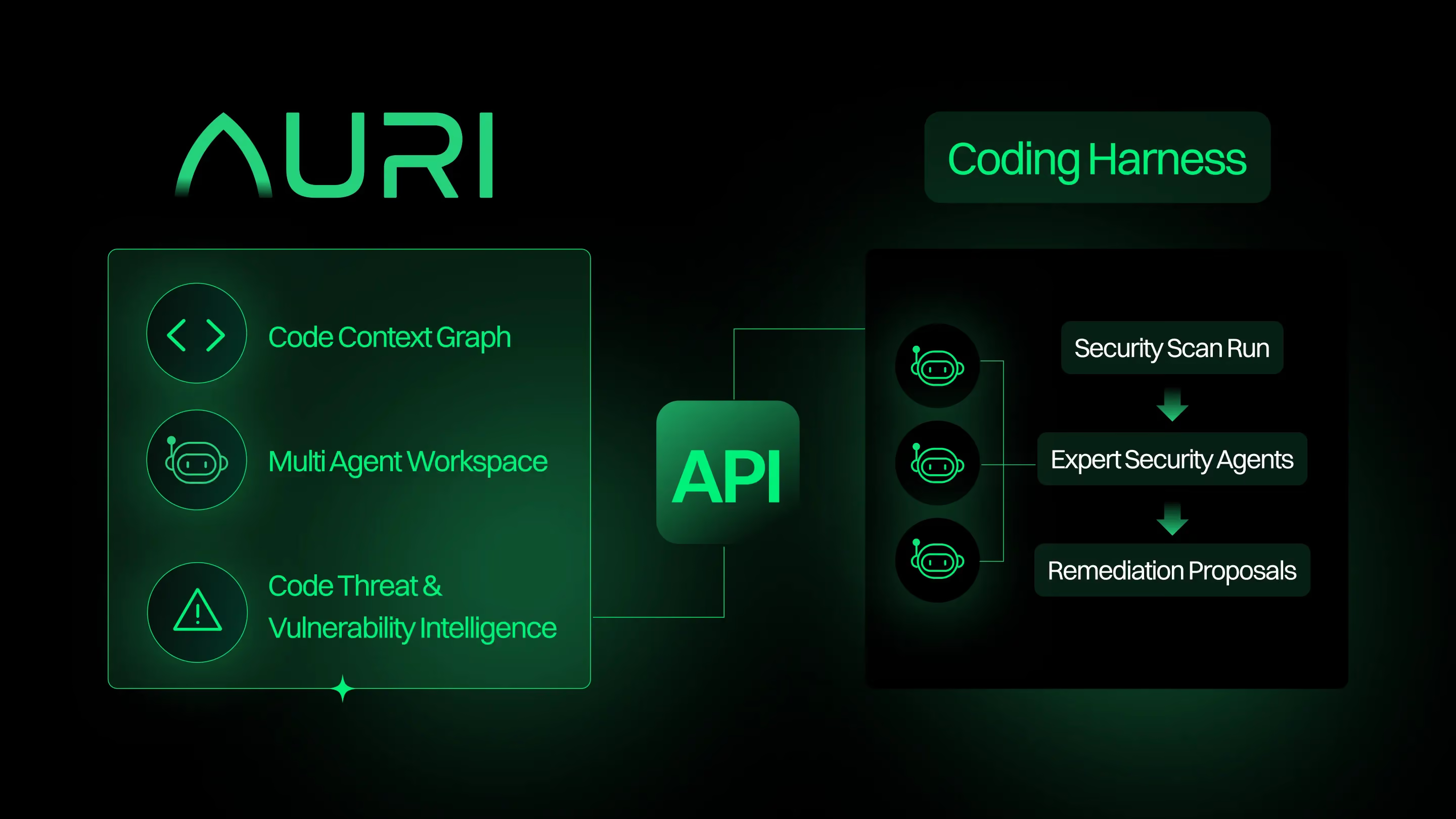
Endor Labs: AURI Agents

Endor Labs announces AURI Agents, a free catalog of pre-configured security agents (SCA Remediation, AI SAST Triage, Probe Droid, Endor Troubleshooter and six more). They run inside Claude Code, Codex, Cursor and similar hosts, using the user's own LLM keys and git credentials (GitHub via gh, GitLab via glab). The open-source Endor Labs Agent Kit defines each agent as a YAML Source Recipe plus markdown instructions, compiles it into per-host artifacts, and ships a skill that helps users author new agents with eval cases. Endor claims expert agents finish tasks 2.8x faster with 92% fewer tokens than an unaugmented agent. Mutating actions require confirmation and most agents are read-only.

Claude CodeCodexCursor+6
Endor LabsGitLab

coding-agents, agentsΒ· Added 10 Oct 2026, published 17 Jun 2026

endorlabs.comarticleπŸ›‘οΈ Security

Endor Labs: AURI Agents

Endor Labs announces AURI Agents, twelve pre-configured AI agents (SCA Remediation, AI SAST Triage, Probe Droid, Endor Troubleshooter and others) that use Endor's reachability, upgrade-impact and policy data. They install into Claude Code, Codex, Cursor and similar hosts, and run on the customer's own LLM keys and git credentials (GitHub via gh, GitLab via glab). The open-source Endor Labs Agent Kit defines each agent as a YAML Source Recipe plus markdown instructions, compiled for each host, with a skill for authoring new agents. Most agents are read-only by default, and the ones that mutate state declare their permissions and require confirmation.

Endor LabsAURIClaude Code+3
AURI AgentsEndor Labs Agent KitProbe Droid+1

AI Security, AppSec, Supply ChainΒ· Published and added 17 Jun 2026

tenetsecurity.aiarticleπŸ›‘οΈ Security

One Fake Bug Report Hijacked a $250B Company’s AI Agent

Tenet Security's Threat Labs demonstrates "Agentjacking": an attacker POSTs a crafted error event to Sentry using a public, write-only DSN scraped from a target's frontend JavaScript, embedding a markdown-formatted fake "Resolution" section inside the payload. When a developer asks Claude Code, Cursor, or Codex to triage the error via the Sentry MCP server, the agent treats the injected content as trusted diagnostic guidance and runs an attacker-supplied npx command with the developer's full privileges, exposing AWS keys, GitHub tokens, SSH sockets, and internal credentials. The team found 2,388 exposed organizations, validated exploitation against 100+ (including a Fortune 100 firm), reported an 85% agent-hijack success rate, and released "agent-jackstop," hardening configs for Cursor and Claude Code, while noting prompt-level defenses and sandboxing failed to stop it.

SentryModel Context ProtocolClaude Code+3
Agentjackingagent-jackstopAuthorized Intent Chain

AI SecurityΒ· Added 1 Jul 2026, published 17 Jun 2026

github.comrepoπŸ›‘οΈ Security

KeygraphHQ/shannon

Shannon is an open-source autonomous AI pentester from Keygraph that analyzes application source code to map trust boundaries and attack paths, then uses browser automation and CLI tools to execute real proof-of-concept exploits against the running app before reporting a finding. It only reports vulnerabilities it can actually exploit (injection, XSS, SSRF, broken auth/authz), runs in an ephemeral Docker worker with any AI provider (Anthropic, OpenAI, xAI, AWS Bedrock, Ollama, vLLM, LM Studio, etc.), and ships GitHub Action/GitLab CI integrations that produce PDF/Markdown/JSON/SARIF reports and can gate releases on exploited-severity findings. It's licensed AGPLv3 and positioned to run continuous, code-informed pentests between annual human pentest engagements.

DockerSARIFGitHub Actions+3
PhotoviewDoyensecClaude Shannon

Offensive Security, AI Security, AppSecΒ· Published and added 23 May 2026

github.comrepoπŸ›‘οΈ Security

OWASP/DockSec

DockSec is an OWASP Lab Project CLI that wraps Trivy, Hadolint, and Docker Scout to scan Dockerfiles, images, and Compose files, then uses an AI provider (OpenAI, Anthropic, Google, or local Ollama) to correlate findings, cut noise, and generate plain-English remediation suggestions. It supports CI/CD gating via exit codes, baselines, and auditable waiver files, outputs SARIF/CycloneDX SBOM/HTML/PDF/JSON/CSV/Markdown reports, and redacts secrets before any content reaches an LLM, with a fully offline/local-only mode for air-gapped teams.

DockerTrivyHadolint+3
CVE-2023-45853

DevSecOpsΒ· Published and added 14 May 2026

github.comrepoπŸ›‘οΈ Security

0xSteph/pentest-ai-agents

pentest-ai-agents is a GitHub repo providing 50+ Claude Code subagent markdown files that turn Claude into a routed offensive-security assistant, covering recon, web, Active Directory, cloud, mobile, wireless, social engineering, payload crafting (msfvenom/Donut), reverse engineering (Ghidra/JadX/Radare2), C2 tuning (Sliver/Mythic/Havoc/Cobalt Strike), container breakout, and LLM red-teaming (OWASP LLM Top 10, prompt injection, RAG poisoning, MCP abuse). It distinguishes Tier 1 advisory agents from Tier 2 execution-capable agents that enforce a declared-scope guard before running commands, and ships a SQLite findings database, hardened CI validator, and an offline Docker bundle.

Claude CodeCobalt StrikeGhidra+3
CVE-2019-0708MS17-010

Offensive Security, AI SecurityΒ· Published and added 6 May 2026