Skip to content

70 results for “SAST”

What you seeeverything
“SAST”
oversecured.comarticle🛡️ Security

Inside mobile taint analysis: how source-to-sink tracking finds real data-leak paths | Oversecured Blog

Oversecured explains taint analysis for Android and iOS apps and contrasts it with pattern-matching SAST such as MobSF. It covers source, flow and sink, cross-component tracking over Intents, flag-based sanitizer modeling and implicit intent simulation. The case study is an unsafe Class.forName().newInstance() on a Serializable transportFactoryClassName field in Google's com.google.auth.oauth2 credential classes, which Google fixed with a $3,133.70 bounty.

AndroidiOSOversecured+3
intent redirectionpath traversalSSRF+4

Mobile Security, AppSec· Added 29 Oct 2026

oversecured.comarticle🛡️ Security

Android deep link vulnerabilities: how intent filters lead to account takeover | Oversecured Blog

Oversecured's article on Android deep-link vulnerabilities covers five patterns: custom scheme hijacking, open redirect into WebView, limited and full intent redirection, and domain takeover via an expired whitelist entry. It shows bypass payloads, intent selector abuse, and the HierarchicalUri reflection bypass. It also compares what SAST and DAST can find and gives a checklist for pentesters.

AndroidOAuthChrome+1
deep link hijackingcustom scheme hijackingopen redirect+8

Mobile Security, AppSec· Added 29 Oct 2026
oversecured.comarticle🛡️ Security

SDK security in mobile apps: the attack surface your team didn

Oversecured guide to SDK security in mobile apps, built around Microsoft's April 2026 disclosure of an intent redirection flaw in EngageLab's EngageSDK (50 million installs, fixed in 5.2.1). It covers SDK attack surfaces (exported components, WebViews, deep links, hardcoded secrets, payment crypto), a canhub image cropper file-overwrite example, why source-only SAST misses SDK code, and MASVS and PCI DSS expectations.

AndroidEngageSDKOversecured+3
intent redirectionEngageSDK intent redirectionMTCommonActivity+11

Mobile Security, Supply Chain, AppSec· Added 29 Oct 2026
endorlabs.comwriteup🛡️ Security

Endor Labs AI SAST Finds Two Apache Kafka Zero-Days: Unbounded Memory Allocation from Brokers to Kafka Streams | Endor Labs

Endor Labs AI SAST found three unbounded memory allocation flaws in Apache Kafka, fixed under CVE-2026-114349 (DefaultRecord decoder, a ~90-byte compressed batch that kills consumers, brokers and the log cleaner) and CVE-2026-111551 (ListDeserializer and Kafka Streams AssignmentInfo decoding). The post gives code, reproducers and payload bytes. Remediation: upgrade to 4.2.2, 4.3.2 or 4.4.0, set max.decompressed.message.bytes, restrict write and group ACLs, and alert on DeadThreadCount.

Apache KafkaKafka StreamsJava+1
CVE-2026-114349CVE-2026-111551denial of service+4

AppSec· Published and added 28 Oct 2026

blog.cloudflare.comarticle🛡️ Security

What took the Internet offline in Q3 2026

Cloudflare's Q3 2026 review of the 49 Internet disruptions seen by Cloudflare Radar between July and September 2026. Government-directed shutdowns led with 19 (18 exam shutdowns in Iraq), followed by 14 power outages and 5 natural disasters. It gives traffic-drop figures and durations for Cuba, Honduras, Ukraine, Guam, Colombia, Ethiopia's Tigray region and others, including a Honduran interconnection facility power failure that cut HTTP traffic 63%.

Cloudflare
Iraq exam shutdownsTigray shutdownSuper Typhoon Bavi+10

other· Added 29 Oct 2026, published 27 Oct 2026
securitylabs.datadoghq.comarticle🛡️ Security

Code security for new coders

Code security for new coders is a Datadog Security Labs primer for vibe coders on first-party versus third-party code, hardcoded secrets and software supply chain risk (vulnerable and malicious dependencies). It lists security questions to put to a coding agent before and after code is written. It also defines SCA, SAST, IAST, DAST, IaC scanning and secret scanning, and cites the PHP2Shell vulnerabilities.

Datadog Code SecurityGuardDogSupply Chain Firewall+1
PHP2ShellOWASP

Learning, AppSec, Supply Chain· Added 29 Oct 2026, published 26 Oct 2026

securitylabs.datadoghq.comarticle🧠 AI

Code security for new coders

Code security for new coders is a Datadog Security Labs primer for vibe coders building with coding agents. It lists setup and follow-up security questions to ask the agent, such as OWASP top 10 reviews, hardcoded secrets and outdated packages. It also explains first-party versus third-party code, supply chain risk, and SCA, SAST, IAST, DAST, IaC and secret scanning tools.

PHPGitHub ActionsDocker+2
DatadogOWASPPHP2Shell+2

coding-agents, prompting· Added 29 Oct 2026, published 26 Oct 2026
arxiv.orgpaper🧠 AI

SentryBench: A Cost-Sensitive Benchmark for Adversarial Robustness of Tool-Using LLM Agents in Public-Safety Deployments

SentryBench is a benchmark for tool-using LLM agents in public-safety deployments. It scores attack success, over-refusal (missing a real emergency) and over-reaction (unwarranted action) on a cost-sensitive frontier, using real emergency-call transcripts, disaster messages and injection payloads. Across 840 episodes on three frontier models and three defenses, refuse-more caution pushed over-refusal to 100 percent on two models, while a trust-gating wrapper gave the lowest harm.

LLM
SentryBencharXiv

evals, ai-safety, agents· Added 27 Oct 2026, published 25 Oct 2026

endorlabs.comarticle🛡️ Security

What Is SAST? Static Analysis in the Age of AI-Generated Code | Endor Labs

Explainer on Static Application Security Testing. It covers how SAST builds an AST and runs taint analysis from sources to sinks, which flaw classes it catches (SQLi, XSS, hardcoded secrets, weak crypto) and which it misses (IDOR and other access-control bugs). It compares SAST with DAST and SCA, cites false-positive and false-negative figures (91% false positives in a 2025 study of about 3,000 repositories; 47–80% of vulnerabilities missed), and argues for reachability analysis and reasoning-based AI SAST. It ends with evaluation criteria and a rollout plan; the vendor's own benchmark claims are preliminary.

Endor Labs
OWASPOWASP Top 10IDOR+4

AppSec, Learning· Published and added 12 Oct 2026

endorlabs.comarticle🛡️ Security

Guide to Implementing Software Supply Chain Security | Endor Labs

Vendor-authored guide that defines a software supply chain as developers, code, dependencies, AI models, containers and CI/CD pipelines. It walks through program components: OSS governance, SAST vs reachability-based SCA, AI model security, SBOM/VEX (NTIA minimum elements, SPDX vs CycloneDX), secrets scanning, CI/CD hardening, and signing/attestation with Cosign/Sigstore. It cites figures such as 95% of vulnerabilities sitting in transitive dependencies and only 1% of SBOMs being fully NTIA-conformant. Each section closes with an Endor Labs product pitch, so treat the framing as vendor-flavoured. The fetched text was truncated, so the final attestation/provenance section was not seen.

Endor LabsSBOMCycloneDX+3
Executive Order 14028NISTCISA+15

Supply Chain, DevSecOps, Learning· Published and added 12 Oct 2026
endorlabs.comarticle🛡️ Security

The OWASP Top 10 Gets Modernized | Endor Labs

Commentary on the 2025 OWASP Top 10 update presented at OWASP Global AppSec in Washington, D.C. Broken Access Control stays #1, Security Misconfiguration and the new Software Supply Chain Failures category (replacing Vulnerable and Outdated Components) rise to #2 and #3, and Cryptographic Failures, Injection and Insecure Design drop. The author adds context on agentic AI and MCP identity and authorization, AI-assisted SAST, non-human identities, CISA Secure-by-Default, OWASP SPVS, and slopsquatting and AI coding assistant risks.

Model Context Protocol
OWASPOWASP Top 10 2025Broken Access Control+8

AppSec, Supply Chain· Published and added 12 Oct 2026

endorlabs.comarticle🧠 AI

Context Engineering for Application Security | Endor Labs

Endor Labs whitepaper on using context engineering to make AI coding assistants produce secure code. It covers secure prompting (priming, decomposition, refinement with design-spec and test-first patterns), reusable system rules such as Cursor rules and the CSA R.A.I.L.G.U.A.R.D. framework, and external SAST/SCA tools wired in through MCP servers with a rule that triggers scans. It also covers the costs and risks: extra token use, models ignoring rules, untrusted community rules, and MCP server supply-chain threats. It cites figures such as 62% of AI-generated solutions containing flaws and a 77.5% reduction in weaknesses from recursive prompting.

CursorModel Context ProtocolClaude+1
Endor LabsOWASPCloud Security Alliance

prompting, coding-agents, llm-apps· Published and added 12 Oct 2026
endorlabs.compaper🛡️ Security

State of Dependency Management 2025 | Endor Labs

Endor Labs' 2025 State of Dependency Management report examines how AI coding agents and MCP servers add supply chain risk. Researchers analysed 10,663 GitHub MCP server repositories and tested AI-generated dependency recommendations across PyPI, npm, Maven and NuGet, finding agents import vulnerable or non-existent packages. MCP servers are immature: 75% are built by individuals, 41% lack license info, and 82% use sensitive APIs. The report advises treating AI-generated code as untrusted third-party input subject to code review, SAST/SCA and dependency governance.

Model Context ProtocolGitHubPyPI+3
Henrik Plate

Supply Chain, AI Security· Published and added 12 Oct 2026

endorlabs.comarticle🛡️ Security

Context Engineering for Application Security | Endor Labs

Endor Labs whitepaper on using context engineering to make AI coding assistants write secure code. It covers four techniques: secure prompts (priming, decomposition, refinement with design-spec and test-first patterns), system rules (with sample rules and the CSA R.A.I.L.G.U.A.R.D. framework), external security tools wired in over MCP (with an example Cursor SAST rule), and RAG. It also covers MCP server threats and five defensive pillars, Cursor Hooks, and CISO-level recommendations. It matters because it gives practical guardrails for stopping missing-authorization, rate-limiting and hallucinated-dependency problems at generation time.

CursorModel Context ProtocolEndor Labs+2
slopsquattingR.A.I.L.G.U.A.R.D.Cloud Security Alliance+3

AI Security, AppSec· Published and added 12 Oct 2026

snyk.ioarticle🛡️ Security

Frontier models found the vulnerabilities. Only the attacker found the chains.

Snyk benchmarks its Evo Continuous Offensive Security (COS) agent against Claude Security running Mythos on TaintedPort, a public deliberately vulnerable web app with 57 known vulnerabilities and 15 known exploit chains. Evo COS, run gray-box against the live URL plus source, confirmed 10 of 15 exploit chains with runnable proofs of concept — for example chaining an SSRF flaw with a hardcoded JWT signing secret into full admin account takeover — while Claude Security, reasoning over source code alone (white-box), found one additional critical bug but could not prove the vulnerabilities were actually reachable and chainable at runtime. The post argues that proving exploitability requires exercising the live application, not just reading code, and frames SAST-style code review and DAST-style live attack as complementary.

SnykClaude Security
Evo Continuous Offensive SecurityMythosSSRF+1

AppSec, AI Security· Published and added 7 Oct 2026

stepsecurity.ioarticle🛡️ Security

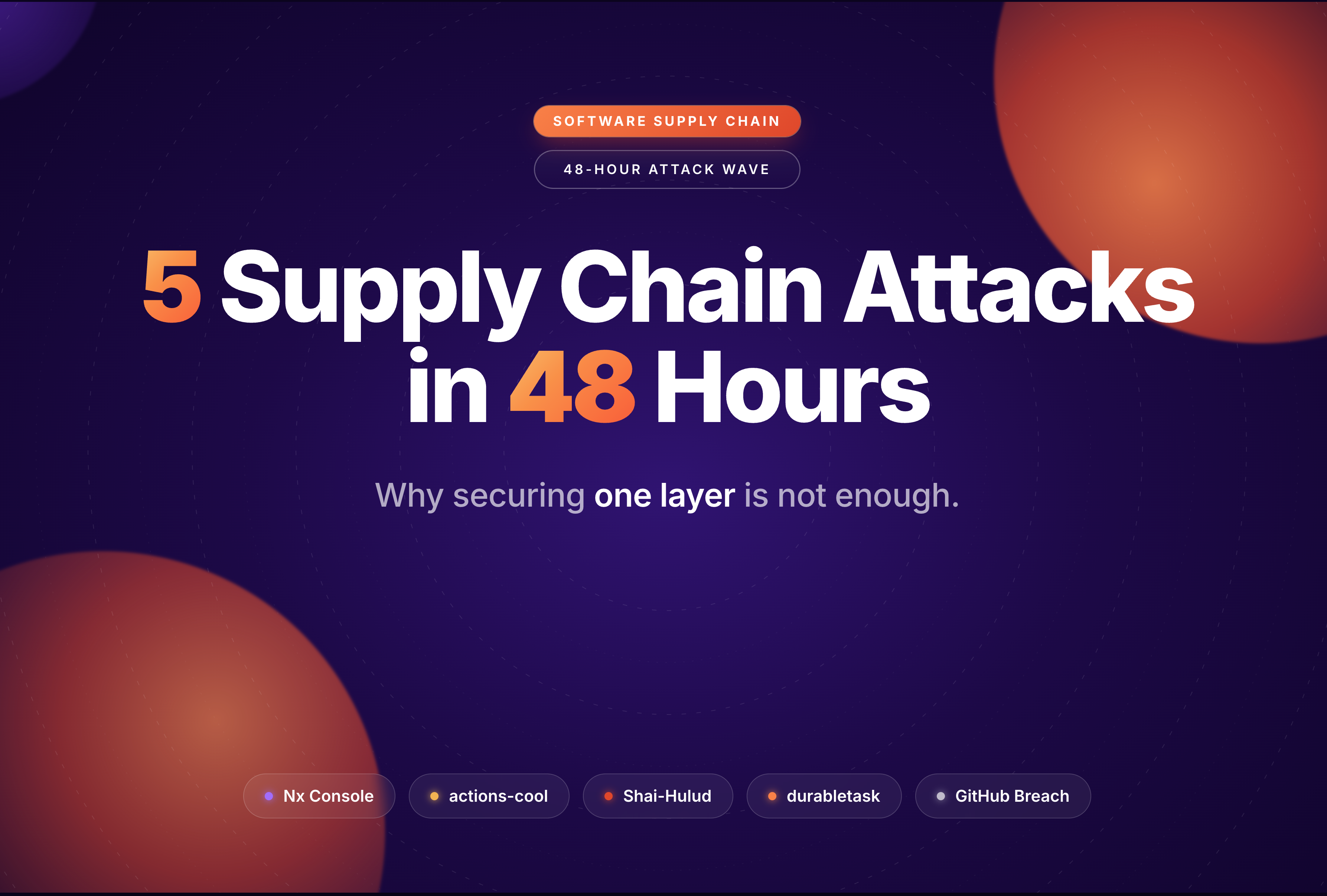
SubQuery npm package (@subql/common) compromised with credential-stealing payload

StepSecurity recaps a 48-hour (May 18-19, 2026) software supply-chain attack wave that hit every pipeline layer at once: the Nx Console VS Code extension (2.2M installs) stealing tokens from GitHub/npm/AWS/1Password, the trusted GitHub Action actions-cool/issues-helper hijacked via tag replacement, a trojanized Microsoft durabletask PyPI package pulled within a 35-minute discovery window, a self-replicating Shai-Hulud npm worm, and GitHub's own disclosure that ~3,800 internal source repos were exfiltrated. The piece argues traditional SCA/SAST/EDR/CNAPP tooling missed all of it because none monitor CI/CD runner runtime behavior (e.g., attackers reading /proc/pid/mem to extract secrets) or developer-machine IDE extensions, and ties the incidents to StepSecurity's Harden Runner, Dev Machine Guard, Compromised Actions Policy and Secure Registry controls.

GitHub ActionsVS Codenpm+6
Shai-HuludTeamPCPNx Console+3

Supply Chain, DevSecOps, Threat Intel· Added 6 Oct 2026

snyk.ioarticle🧠 AI

Why AI Coding Agents Keep Writing Broken Access Control

Snyk argues AI coding agents reliably write broken access control (BOLA/IDOR, OWASP's top category since 2021) because the facts needed to add an ownership check — what an object belongs to, who may access it, where tenant boundaries sit — are tacit product knowledge that exists nowhere in the code or prompt an agent sees. It explains why SAST tools catch patterned sub-categories like path traversal or SSRF but structurally cannot catch CWE-639/862/863 (missing or incorrect authorization), since there's no bad pattern to match, and proposes reasoning over an assembled "application-context graph" of architecture, data flows and trust boundaries instead. It closes with a five-step team checklist (inventory ID-accepting endpoints, document ownership rules, add authorization-specific PR review, write cross-tenant tests, run deep contextual analysis) and pitches Snyk's Evo Agentic AppSec as the tool built around that approach.

SnykOWASPEvo Agentic AppSec+1

coding-agents· Published and added 1 Oct 2026

snyk.ioarticle🛡️ Security

Why AI Coding Agents Keep Writing Broken Access Control

Snyk explains why AI coding agents reliably ship broken object-level authorization (BOLA/IDOR) bugs: the ownership rule that would prevent them (e.g. "invoices belong to organizations") lives in the product's data model and team knowledge, not in the prompt or surrounding code, so the agent produces code that is correct for the stated task but lets any authenticated user access other tenants' objects. The piece maps the flaw to CWE-639/862/863, contrasts it with pattern-matchable classes like SSRF and path traversal that SAST handles well, and lays out five concrete team actions (endpoint inventory, documented ownership rules, explicit authz review questions, per-resource cross-tenant tests, and periodic deep contextual analysis), while pitching Snyk's "application-context graph" and Evo Agentic AppSec as the tool for the pattern-less gap.

Snyk
BOLAIDORCWE-639+5

AppSec, AI Security· Published and added 1 Oct 2026

x.comthread🧠 AI

Average AI Bro (@AverageAiBro) on X

An X post presenting Reversecore MCP, an MCP server that wraps authorized reverse-engineering, malware-analysis, forensics and SAST-style tools such as radare2. The user picks a profile, points it at a sample, and the agent gets structured results back in the session without driving the tools by hand. It is a concrete example of profile-based tool exposure for specialized toolchains, offered as a free alternative to a commercial IDA setup. The post stresses authorized analysis only.

Model Context Protocolradare2IDA+1
Reversecore MCP

mcp· Added 1 Oct 2026, published 30 Sep 2026

x.comtool🛡️ Security

Average AI Bro (@AverageAiBro) on X

Reversecore MCP is an MCP server that exposes authorized reverse-engineering, malware-analysis, forensics, and SAST-style tooling to an AI agent through selectable profiles, returning structured results for a given binary sample. It targets the gap between hand-driving tools like radare2 and paying for a commercial IDA Pro-based workflow, letting an agent query a toolchain directly instead of a human operator switching between tools.

Model Context Protocolradare2IDA Pro+1

Malware & RE· Added 1 Oct 2026, published 30 Sep 2026

securityboulevard.comarticle🛡️ Security

973 MCP Packages, 71% Single-Maintainer: A Practitioner

Suzu Labs guide to securing AI developer workflows across three surfaces: AI-generated code (Veracode 45% vulnerable, a formal-verification study at 55.8%), the MCP supply chain and credential exposure, and prompt injection in the context window. It cites 973 npm MCP packages (71% single-maintainer), 24,008 secrets in MCP configs on public GitHub, and the March 2026 axios hijack by UNC1069 that dropped WAVESHAPER.V2 and tampered with MCP configs. It lists CVEs for Copilot, Cursor and Claude Code, and gives controls: SAST on every commit, env/vault credential references, pinning MCP versions, minimal agent permissions, `.cursorignore`/Claude deny rules, and monitoring IDE DNS traffic.

Model Context ProtocolnpmCursor+3
CVE-2025-53773CVE-2026-22708CVE-2025-55284+9

AI Security, Supply Chain, DevSecOps· Added 26 Sep 2026

github.comrepo🛡️ Security

nealbridges/VulnHunter

A maintained, harness-portable fork of Capital One's open-source VulnHunter — an agentic AI tool that performs attacker-first forward analysis on source code to find exploitable vulnerabilities, falsify weak findings, and produce evidence-backed PoCs rather than pattern-matched SAST alerts. This fork adds containerized (Docker-based) exploit validation, measured-impact PoCs (rows leaked, amplification factor, etc.), and portability across agent harnesses (Claude Code, Codex, Grok, etc.) via environment-contract prompt files, plus an unattended operator (vulnhunter-run) and batch-scanning/benchmark harness tested against OWASP NodeGoat, Juice Shop, and WebGoat.

Claude CodeDockerPython+4
Capital OneOWASP NodeGoatOWASP Juice Shop+1

AI Security, AppSec· Added 6 Oct 2026, published 22 Sep 2026

github.comrepo🛡️ Security

Shor

Shor is a source-available, multi-tenant autonomous pentesting platform where a ~17-agent LLM pipeline (discovery, hypothesis, adversarial screening jury, exploitation, proof replay) attacks a target URL and optionally its connected source repo. It wields 30+ real offensive tools (sqlmap, dalfox, nuclei, jwt_tool, hydra, ffuf, etc.) plus SAST/secret/SCA tools (Semgrep, Gitleaks, TruffleHog, OSV-Scanner, Trivy) in white-box mode, and only reports findings whose PoC is deterministically re-executed and confirmed by a code-enforced safety layer under a signed Rules of Engagement, with scan authorization gated behind single-use human-minted tokens on its MCP/automation surface.

SemgrepGitleaksTruffleHog+3
MITRE CAPECPolyForm Noncommercial License 1.0.0

Offensive Security, AppSec, AI Security· Added 22 Sep 2026, published 19 Sep 2026

adversa.aiarticle🛡️ Security

What is an agent harness (and how do you secure one)?

Adversa AI argues that AI agent security lives in the harness, the loop, tool executors, context/memory management, approval gates and sandbox wrapped around an LLM, not in the model itself, and catalogs nine recurring harness failure classes. It details the firm's own research: SymJack (a symlink-based approval-prompt bypass that let six tested coding agents write attacker-controlled MCP config), GuardFall (shell-matcher bypass exploitable in 10 of 11 open-source agents tested), and TrustFall (MCP servers auto-executing on folder-trust acceptance in Claude Code, Gemini CLI, Cursor CLI and GitHub Copilot CLI), plus references to IDEsaster's 30+ AI-IDE vulnerabilities, a Hugging Face download-counter side channel (CVE-2026-54316), and Novee Security's Black Hat findings on credential leakage across Gemini CLI/Codex trust boundaries. It closes with concrete mitigations: Meta's Agents Rule of Two, allowlisting over blocklisting, treating agent config as executable code, and chain-of-event monitoring mapped to the OWASP Top 10 for Agentic Applications.

Claude CodeCursorGemini CLI+3
CVE-2026-54316SymJackGuardFall+10

AI Security· Added 7 Oct 2026, published 14 Sep 2026

endorlabs.comwriteup🛡️ Security

AI SAST Finding: Path Traversal in OpenClaw via LLM Guardrail Bypass | Blog | Endor Labs

Endor Labs details GHSA-r5fq-947m-xm57, a high-severity path traversal (CVSS 8.8) in OpenClaw's apply_patch tool that allows arbitrary file write/delete when sandboxRoot isn't configured, tracing the vulnerable code path from resolvePatchPath() through resolvePathFromCwd() to fs.writeFile/fs.rm. Because the tool is only invoked via LLM decision, the researcher bypassed the model's safety guardrails by injecting fabricated function_call/function_call_output entries into the /v1/responses conversation history, tricking the LLM via in-context learning into emitting a real malicious tool call with a traversal payload. This illustrates how LLM safety training can be the sole runtime control gating dangerous tool arguments, and how that control can be defeated with conversation history injection.

OpenClawEndor Labs
GHSA-r5fq-947m-xm57CWE-22

AppSec, AI Security· Published and added 11 Sep 2026

endorlabs.comarticle🛡️ Security

Common C/C++ Vulnerabilities: A Practical Guide to Prevention | Blog | Endor Labs

Endor Labs guide to C/C++ memory-safety and input-handling vulnerabilities — buffer overflow (CWE-787/120/121), use-after-free (CWE-416), null pointer dereference (CWE-476), integer overflow (CWE-190), and format string bugs (CWE-134) — with vulnerable/fixed code snippets for each. It surveys detection tooling (Coverity, CodeQL, Clang Static Analyzer, AFL++/libFuzzer with ASan/UBSan, OSS-Fuzz) and argues that build-system complexity (Bazel, CMake, Conan, vcpkg) and high SAST false-positive rates make reachability analysis necessary, closing with a pitch for Endor Labs' AURI reachability engine.

Endor LabsCodeQLAURI+1
CWE-787CWE-416CWE-476+4

AppSec, Learning· Published and added 11 Sep 2026

endorlabs.comwriteup🛡️ Security

AI SAST in Action: Finding Real Vulnerabilities in OpenClaw | Blog | Endor Labs

Endor Labs describes applying its AI SAST engine to the open-source OpenClaw AI agent framework, tracing data flows from attacker-controlled sources (HTTP params, config, conversation history, external API responses) through transformations to dangerous sinks like command execution and file operations. The team validated findings by deploying OpenClaw in Docker and building working proof-of-concept exploits, confirming 7 vulnerabilities spanning HTTP handlers, business logic, tool dispatch, and low-level implementation layers, now reported to maintainers via responsible disclosure with technical details pending patch release.

Endor LabsOpenClawDocker

AppSec, AI Security· Published and added 11 Sep 2026

endorlabs.comarticle🛡️ Security

Cursor Security: How to Secure AI-Generated Code in 2026 | Blog | Endor Labs

Endor Labs blog post detailing seven security risks specific to Cursor's AI code generation that its built-in controls (workspace trust, SOC 2, privacy mode) don't cover: indirect prompt injection via files/comments, malicious .cursorrules files creating persistent backdoors, AI-suggested typosquatted or outdated dependencies, hardcoded credential leakage in generated test/boilerplate code, cross-project context poisoning via repository indexing, and unreviewed agent auto-run execution. It contrasts Cursor's native controls with what external AppSec tooling (pitched as Endor Labs' AURI) needs to fill, recommending dependency pinning, egress filtering, secret-scanning pre-commit hooks, and reachability-based SCA/SAST.

CursorEndor Labs
AURI

AI Security, Supply Chain· Published and added 11 Sep 2026

endorlabs.comarticle🛡️ Security

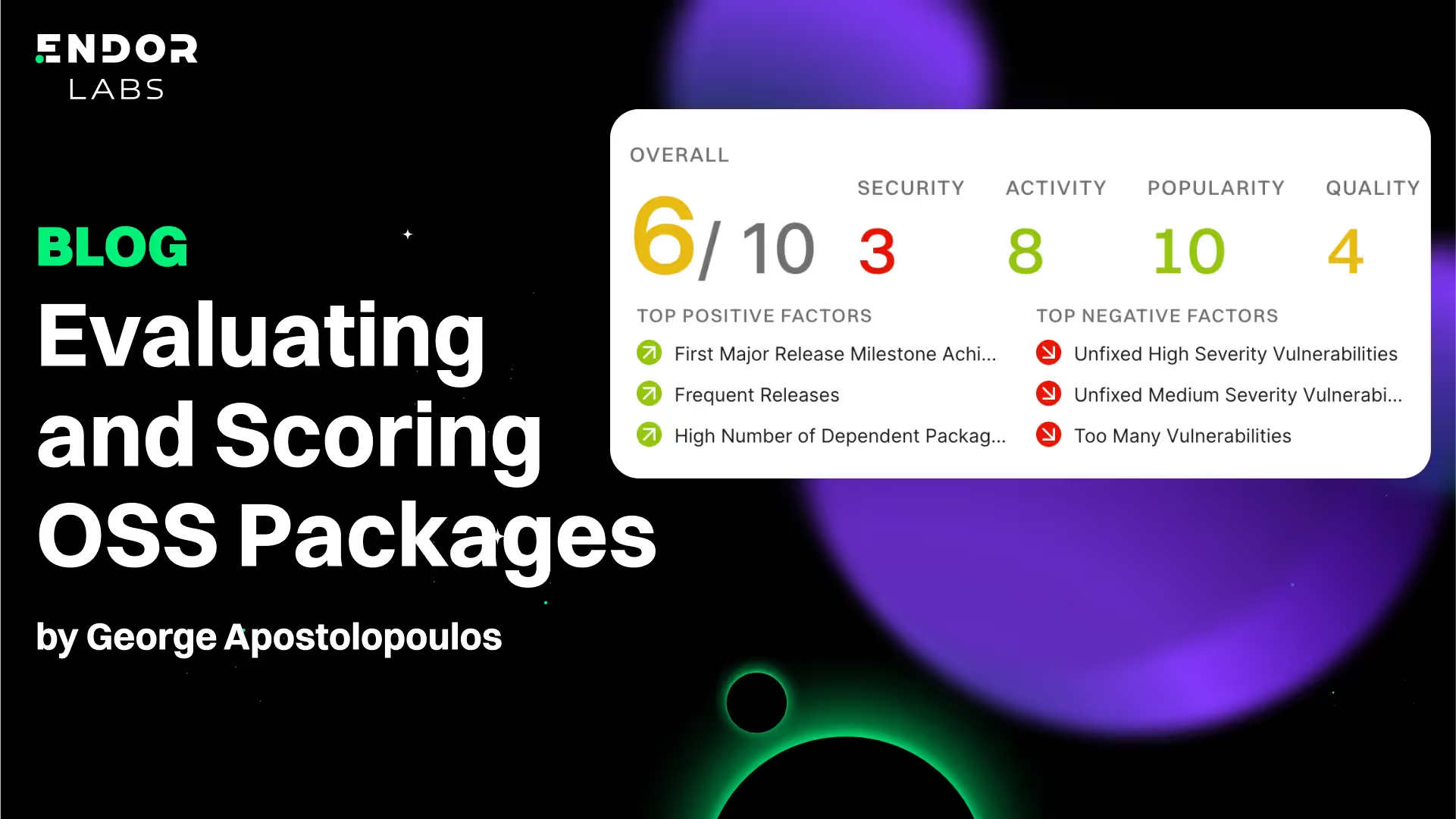
Evaluating and Scoring OSS Packages | Endor Labs | Blog | Endor Labs

Endor Labs blog post detailing their "Endor Score" methodology for evaluating open source package risk, distinguishing operational risk (activity, popularity, licensing, code quality) from security risk (vulnerabilities, secrets, malicious code, security practices). It argues against compressing everything into a single opaque score, favoring transparent, deterministic "facts" (e.g., recent commit counts, normalized SAST findings) that users can combine into custom policies, and discusses pitfalls like event-selection bias, threshold selection, and the unproven predictive power of these signals.

Endor LabsDependabotGitHub+2
OpenSSF ScorecardGoogle Assured Open Source SoftwareOWASP Top 10 Risks for Open Source Software+1

Supply Chain· Published and added 11 Sep 2026

endorlabs.comarticle🛡️ Security

How Endor Labs AI SAST Learns What Matters to Your Organization | Blog | Endor Labs

Endor Labs explains how its AI SAST product incorporates context beyond source code — automatically-ingested Infrastructure as Code (Dockerfiles, Terraform, CloudFormation, Kubernetes/Helm) and repository files (AGENTS.md, CLAUDE.md, skills files), plus optional analyst feedback and natural-language threat-model/architecture context — to build a deployment-aware model of an application and cut false positives. It cites a benchmark of 192 verified vulnerabilities across 8 projects, claiming 2.6x more true positives than the next tool (Claude Opus 4.7) and 63 findings no other tool caught, and walks through customer examples where external-auth annotations and WAF-mitigated XSS severity were tuned via this context.

Endor LabsTerraformDocker+2
Opus 4.7

AppSec, AI Security· Published and added 7 Sep 2026

endorlabs.comarticle🛡️ Security

AI Code Review: How to Actually Review Code an Agent Wrote | Blog | Endor Labs

Endor Labs explainer on "AI code review" as a discipline: pairing LLM reasoning with static analysis (call graphs, data flow) to catch security-relevant PR changes that AI coding agents introduce, alongside human reviewers. It cites research showing common AI-generated flaws (missing input validation CWE-20/89/78, hardcoded secrets CWE-798, broken auth CWE-306/284, hallucinated/insecure dependencies), Endor's finding that under 9.5% of vulnerabilities are reachable/exploitable, and a comparison of AI review against SAST, SCA, and secrets scanning, plus a rollout checklist referencing NIST SP 800-218A.

Endor LabsGitHubGitLab+3
CWE-20CWE-89CWE-78+5

AI Security, AppSec· Added 3 Sep 2026, published 2 Sep 2026

endorlabs.comarticle🛡️ Security

SAST for AI-Generated Code: What Static Analysis Catches and Misses | Blog | Endor Labs

Endor Labs blog post arguing traditional signature-based SAST misses the logic and business flaws AI coding assistants introduce, since those flaws are "not pattern-shaped." It contrasts AI-assisted SAST (rules plus a thin AI layer) with AI-native SAST that traces dataflow across files and uses reachability analysis plus evidence-based triage to cut false positives, citing that Endor Labs' own tool (built on Opengrep with AI-agent triage) found a zero-day, CVE-2026-55407, in Anthropic's Rust buffa library and that only ~1 in 5 AI-recommended dependency versions are safe.

Endor LabsOpengrepRust
CVE-2026-55407OWASP Top 10 for LLM Applicationsslopsquatting+2

AppSec, AI Security, Supply Chain· Added 3 Sep 2026, published 2 Sep 2026

endorlabs.comarticle🛡️ Security

Prompt Patterns That Make Coding Agents Write Safer Code | Blog | Endor Labs

Endor Labs breaks down prompt engineering patterns that reduce vulnerabilities in AI-generated code: a design-spec pattern that front-loads security requirements, naming specific CWEs to avoid (e.g. CWE-89, CWE-79, CWE-20), and a "secure-insecure diff" recursive self-critique loop, while warning that telling a model to role-play a security expert actually performs worse. It cites research showing these patterns cut vulnerability density by up to 56–77.5%, notes that repeated AI iteration can drift toward less-secure code, and flags that AI coding agents frequently suggest hallucinated or vulnerable dependencies (34% hallucinated per Endor's own dependency research), arguing prompts must be paired with SAST/SCA/secrets scanning and reachability-based prioritization.

Endor LabsClaude CodeCursor+1
CWE-89CWE-79CWE-20+1

AI Security· Added 3 Sep 2026, published 2 Sep 2026

docs.gitlab.comarticle🧠 AI

GitLab 19.3 release

GitLab 19.3 release notes cover dozens of features, with a significant cluster around AI agent tooling: a new "Flow Creator" foundational agent that generates runnable flow YAML for the GitLab Duo Agent Platform from natural language, GitLab Duo CLI plugin/marketplace support (compatible with existing Claude Code plugin marketplace files), new MCP tools (get_merge_request, list_merge_requests), pre-registered MCP OAuth applications, and a redesigned Agentic Chat UI for VS Code/JetBrains. It also ships GA features for Duo-based merge-conflict and review-discussion resolution, and security/SAST features like Agentic SAST vulnerability resolution flows.

Model Context ProtocolClaude CodeGitLab Duo CLI+2
GitLabGitLab DuoGitLab Duo Agent Platform+4

coding-agents, agents, mcp· Added 22 Sep 2026, published 27 Aug 2026

endorlabs.comarticle🛡️ Security

Why C Has Always Broken Static Analysis | Blog | Endor Labs

Endor Labs analyzes four structural reasons C/C++ static analysis has historically underperformed: preprocessor/build dependence, hard pointer-aliasing tradeoffs (over- vs under-approximation), pattern rules poorly suited to length/lifetime bugs vs. web-style source-sink flaws, and the lack of dominant frameworks to model (unlike Spring for Java). It cites a study of 8,918 C++ programs showing LLM-generated code triggers confirmed runtime memory-safety violations (CWE-190, -122, -121) at 3.6x the human rate, bugs invisible to static-only CI gates and only caught by sanitizers/model checking. It surveys existing analyzer approaches (Coverity/Klocwork/CodeSonar build-based, Veracode binary-based, build-less scanners, generalist multi-language SAST) and their tradeoffs.

CCoverityKlocwork+2

AppSec· Added 3 Sep 2026, published 25 Aug 2026

github.comrepo🛡️ Security

agentgg

agentgg is an open-source, agentic SAST scanner that uses LLM agents to read source code, follow imports, trace the call graph, and confirm findings before reporting — aiming to reduce the pattern-matching false positives of traditional SAST. It runs locally or as a hosted service, supports full-repo scans or git-diff PR review, and works with multiple model providers (Anthropic, OpenAI, AWS Bedrock, Google Vertex AI, OpenRouter, Ollama); agents are defined as markdown files with YAML frontmatter and are pulled from a community agents catalog.

Node.jsnpmAnthropic+3

AppSec, AI Security· Published and added 23 Aug 2026

snyk.ioarticle🛡️ Security

Remediation Agents, Demystified: Why Fixing Beats Finding

Recap of a Snyk "AI Security Engineers Community" livestream introducing Remediation Agent, now in public preview: an orchestration layer that sits between a developer's chosen LLM and Snyk's vulnerability intelligence (breakability assessments for OSS upgrades, package health/reachability scores, SAST fix generation, and ecosystem-specific upgrade playbooks) to auto-generate mergeable SCA and SAST fixes. It was demoed live against OWASP Juice Shop via the CLI (snyk fix --agentic --experimental --sca) and via an IDE path (Snyk Studio MCP server plus a /snyk-fix skill in Cursor, Windsurf, or VS Code), with Snyk reporting internal gains of 94% more mergeable SCA fixes and 13% more mergeable SAST fixes versus naively pointing an LLM at a vulnerability backlog.

SnykSnyk CodeModel Context Protocol+2
OWASP Juice ShopmulterGlob

AppSec, AI Security, DevSecOps· Added 3 Sep 2026, published 19 Aug 2026

snyk.ioarticle🛡️ Security

Benchmarking Secure-and-Functional Remediation and How Snyk Agent Fix Lifts Frontier-Model Fix Rates by over 14%

Snyk built a Golden Test benchmark of about 150 real vulnerable code samples across Python, JavaScript, and Java, each scored on paired FAIL-to-PASS security and PASS-to-PASS functional unit tests, and ran Gemini 3.1 Pro, Claude Sonnet 4.6, and Claude Opus 4.6 both standalone and with Snyk's dynamic few-shot Snyk Intelligence context. Out-of-the-box models plateaued at 72-75 percent secure-and-functional fix rate, while adding Snyk Intelligence lifted Opus 4.6 from 74.6 to 85.4 percent overall, and from 64 to 88 percent on Python, showing security-specific context rather than model size drives remediation quality. The post also previews Snyk VulnBench, a companion study finding Claude Opus 4.7 with the Claude Code harness produced highly non-repeatable vulnerability findings when used as a SAST-like detector.

SnykSnyk CodeGemini+3
Claude Sonnet 4.6Claude Opus 4.6Opus 4.7+6

AI Security, AppSec· Added 3 Sep 2026, published 18 Aug 2026

aikido.devarticle🛡️ Security

Finding vulnerabilities at every stage: what to run, and when

Aikido breaks down four distinct approaches to finding vulnerabilities in code: deterministic pattern-matching SAST, Deep PR Review (reasoning about a diff's impact on the wider codebase before merge), Code Security Audit/'AI SAST' (LLM-based reasoning across a whole repo without a live target), and AI pentesting (the same reasoning validated via live exploitation against a running app). It explains why each produces different false-positive profiles, why whitebox AI pentests (with source access) found a median 7x more high/critical findings than greybox in over 1,000 Aikido engagements at roughly half the compute cost per finding, and gives guidance on which layer to run at which stage of the SDLC and for which compliance needs (SOC 2, ISO 27001).

Aikido Security
IDORSOC 2ISO 27001

AppSec, Offensive Security· Added 3 Sep 2026, published 12 Aug 2026

github.comrepo🛡️ Security

Static Analysis Tools & Linters

analysis-tools.dev's source repository is a community-maintained directory of static analysis tools and linters spanning nearly every programming language, tagged for license (proprietary vs open source), maintenance status, and community endorsement. Beyond general code-quality linters, it catalogs many security-relevant static analyzers such as gosec, flawfinder, OWASP Dependency Check, Mariana Trench, Psalm, PHPStan, govulncheck, and WAP, making it a reference point for discovering SAST tooling per language/ecosystem.

GoPHPJava+3

AppSec· Added 3 Sep 2026, published 9 Aug 2026

medium.comarticle🛡️ Security

Claude as Autonomous Bug Bounty Hunter

Author describes Aii-Aii Hunter, a bug bounty framework built on Claude Code with 124 markdown skills (35.5k lines distilled from public HackerOne reports), three hooks (UserPromptSubmit regex auto-routing, PreToolUse scope.json guard, PostToolUse telemetry) and a Podman Kali container exposing 110 tools plus 18 Burp tools over MCP. It also covers an engagement flow with a 7-Question validation gate, evidence hygiene, an autopilot mode, and SAST/DAST correlation. Useful as a blueprint for scoped, AI-orchestrated offensive workflows; first of six parts with a companion repo.

Claude CodeModel Context ProtocolKali Linux+3
Aii-Aii Hunter7-Question Gatescope guard

Offensive Security, AI Security, AppSec· Added 3 Sep 2026, published 30 Jul 2026

semgrep.devarticle🛡️ Security

AI code security harnesses compared

Semgrep's blog post compares open-source AI-driven code security "harnesses" that use LLMs to find vulnerabilities, grouping them into three categories: LLM-led exploit generation (fuzzing-like, crash-oracle driven), LLM-skill-boosting vulnerability research (e.g. Cloudflare's security-audit-skill, Trail of Bits' skills, CapitalOne's vulnhunter, Google's mantis), and SAST+LLM hybrids (raptor, deepsec, ai-deep-sast, Visa's VVAH). It breaks down each tool's design, star counts, licensing, and ideal use case, and discusses cross-cutting themes like adversarial validation, discovery/validation separation, and patch generation maturity.

SemgrepCodeQLClaude Code+5
tptacek

AI Security, AppSec· Added 3 Sep 2026, published 24 Jul 2026

aikido.devarticle🛡️ Security

SQL injection isn't dead

Aikido analyzes why SQL injection remains prevalent 27+ years after it was first documented, anchored by the July 2026 emergency WordPress patch (7.0.2/6.9.5) fixing an unauthenticated RCE reachable via SQLi that Searchlight Cyber reported, and Django's CVE-2024-42005 where JSON-field query methods leaked field names into raw SQL. It cites GitHub Advisory Database trends (SQLi advisories rising from 2,096 in 2023 to 2,850 in 2025), the NYU/Cornell 'Asleep at the Keyboard' study showing ~40% of GitHub Copilot-generated code vulnerable, and Aikido's own ChatGPT test (~12% injectable output), arguing ORMs and SAST alone are insufficient and pitching RASP (Aikido Zen) plus AI-driven pentesting (Aikido Infinite) as a runtime/detection backstop.

WordPressDjangoGitHub Copilot+2
CVE-2024-42005rainforest puppySearchlight Cyber+2

AppSec· Added 3 Sep 2026, published 22 Jul 2026

github.comrepo🛡️ Security

capitalone/VulnHunter

VulnHunter is Capital One's open-source agentic AI vulnerability scanner built as a set of Claude Code skills (/vulnhunt, /vulnhunter-fix, /vulnhunt-fix-verify) that runs on Claude Opus. Instead of pattern-matching like traditional SAST, it does attacker-first forward analysis from entry points, runs a "falsification engine" to discard unexploitable findings, and generates evidence-backed remediation patches; it also ships a headless agent runtime and a benchmarking harness tested against OWASP NodeGoat, Juice Shop, and WebGoat.

Claude CodeClaudePython+2

AI Security, AppSec· Added 19 Jul 2026

github.comrepo🛡️ Security

Argo

Argo is an LLM-native static application security testing tool that drives Claude Code, Codex, Gemini, or local models (via Ollama/LM Studio) as an AI analyst to audit source code, extract security invariants, and produce reviewable vulnerability reports with optional patch generation and ASan-verified proof-of-concept crashes. It positions itself as a complement to rule-based SAST tools like CodeQL and Semgrep, targeting logic/authorization bugs that fixed patterns miss, and has been used to find real, disclosed vulnerabilities across 15 audited open-source projects (53 PRs, 2 CVEs). It supports two modes — general code audit and bug-bounty triage with scope-enforced, read-only, opt-in live verification guardrails.

Claude CodeCodexGemini+3

AppSec, AI Security· Added 3 Sep 2026, published 18 Jul 2026

github.comrepo🛡️ Security

VulnHunter (Capital One)

VulnHunter is Capital One's open-source agentic AI security scanner, implemented as a set of Claude Code skills (/vulnhunt, /vulnhunter-fix, /vulnhunt-fix-verify) that require Claude Opus. Instead of traditional sink-first SAST pattern matching, it reasons forward from attacker-accessible entry points (APIs, uploads, network messages), runs a 'falsification engine' to discard unexploitable findings, and generates evidence-backed exploit paths and targeted code fixes; it also ships a headless agent for CI/CD-scale scanning and a benchmarking harness against corpora like Juice Shop, WebGoat and NodeGoat.

Claude CodeClaudePython+2
Capital OneOWASP Juice ShopOWASP NodeGoat+1

AI Security, AppSec· Added 22 Sep 2026, published 18 Jul 2026

github.comrepo🛡️ Security

Strix

Strix is an open-source framework of autonomous AI pentesting agents that dynamically run target code, discover vulnerabilities across the OWASP Top 10 (SQLi, SSRF, XXE, IDOR, XSS, auth bypass, business-logic flaws) and validate them with working proof-of-concept exploits rather than static-analysis heuristics. It ships a CLI with a full offensive toolkit (Caido-based HTTP interception, browser exploitation, Python exploit sandbox, recon/OSINT, SAST/DAST), supports OpenAPI/Postman-driven black-box testing, integrates into GitHub Actions/CI pipelines to block vulnerable PRs, and can run against local or hosted LLMs via LiteLLM, with an optional cloud offering for autofix PRs and compliance reporting.

DockerLiteLLMCaido+3
OWASP Top 10

Offensive Security, AI Security, DevSecOps· Published and added 15 Jul 2026

github.comrepo🛡️ Security

SreeragPramod/securepipe

SecurePipe is a small demo GitHub repo showing a GitHub Actions CI/CD pipeline for a Python project that runs Flake8, Black, Bandit SAST scanning, and pytest with an 80% coverage gate before code can be merged. Its commit history documents a real vulnerability lifecycle: a hardcoded database password (Bandit rule B105) and a shell-injectable subprocess call (Bandit rule B602) were intentionally introduced, automatically blocked by the Bandit gate, then fixed by moving secrets to environment variables and replacing shell=True with an explicit argument list and host allowlist.

GitHub ActionsPythonBandit
B105B602

DevSecOps, AppSec· Published and added 15 Jul 2026

github.comrepo🛡️ Security

deep-scan

deep-scan is a modular security-scanning monorepo exposing one shared scanner engine (SAST, SCA, secrets, IaC, license, malware, DAST, CI/CD checks) through a CLI, MCP server, REST API/web app, and a continuous-scanning ASPM fleet called kruncher. It adds a deterministic, AI-free code-graph engine for taint and reachability analysis to cut CVE noise to actually-reachable dependencies, an optional local-model AI triage pass, and an agent-driven MCP workflow that scans, confirms reachability, and opens fix-group PR branches with regression tests. Untrusted-repo scanning is hardened with pinned/checksum-verified tools, sandboxed subprocesses, and optional gVisor (runsc) isolation for dependency resolution on Kubernetes.

Model Context ProtocolPythonDocker+3

AppSec, DevSecOps, Supply Chain· Added 3 Sep 2026, published 14 Jul 2026

endorlabs.comarticle🛡️ Security

Everyone Wins Their Own Benchmark | Blog | Endor Labs

An Endor Labs author explains how to read vendor security benchmarks skeptically. Red flags: winning everything, charts that mislead, missing precision/recall and raw counts, and claims that contradict a tool's nature (e.g. zero run-to-run variance with LLMs). Green flags: transparent methods, stated limitations, error bars. The author then critiques their own AI SAST benchmark: self-built pooled ground truth, 43% of vulnerabilities missed by every tool, F1 of 0.465, and no published run-to-run spread.

Endor Labs
Agent Security LeagueHow to Lie with Statistics

AppSec, AI Security· Added 3 Sep 2026, published 14 Jul 2026

endorlabs.comarticle🧠 AI

Everyone Wins Their Own Benchmark | Blog | Endor Labs

An Endor Labs author explains how to read vendor-published benchmarks skeptically, using the principle that the publisher always wins its own benchmark. Red flags include winning everything by a lot, truncated axes or a self-defined reference score, missing precision/recall and raw counts, and claims like zero run-to-run variance from LLM-based tools. Green flags are transparent methods, honest limitations and error bars. The author then audits Endor Labs' own AI SAST benchmark: pooled ground truth plus manual review, 43% of ground-truth vulnerabilities missed by every tool, F1 of 0.465, and no published run-to-run spread.

Endor LabsAgent Security LeagueDarrell Huff+1

evals· Added 10 Oct 2026, published 14 Jul 2026

github.comrepo🛡️ Security

LocxZ/SecureSDLC-Lab

SecureSDLC-Lab pairs a minimal Node.js/Express/SQLite app with a GitHub Actions pipeline running Gitleaks (secret scanning), Semgrep (SAST), and Trivy (dependency, Docker image, and Kubernetes manifest scanning) plus OWASP ZAP (DAST) on every push and PR. It documents concrete remediations applied during the exercise: bcrypt password hashing, parameterized SQL queries, session-based auth with post-login session regeneration and HttpOnly cookies, RBAC for an admin page, Helmet security headers, env-based secrets, and a hardened Kubernetes deployment (non-root, readOnlyRootFilesystem, dropped capabilities, seccomp, resource limits) alongside a STRIDE threat model.

Node.jsGitHub ActionsDocker+4

DevSecOps, AppSec, Learning· Published and added 14 Jul 2026

blog.kubeek.comwriteup🛡️ Security

deep scan tuto

Build log/tutorial for "Deep Scan," a PoC that pairs a deterministic security-scanning engine (20+ SAST/SCA/DAST scanners normalized into one Finding model, plus an AI-free code-graph engine doing taint/reachability analysis) with an agentic remediation loop exposed via an MCP server and three Claude Code skills (/security-eval, /security-patch, /security). The agent triages thousands of raw findings down to a prioritized P0–P3 plan, groups fixes into reviewable branches, and proves each fix with a demonstration test that safely calls an inert owner-operated canary endpoint instead of firing a real exploit (e.g., rm -rf /). The author also covers scaling via Docker Compose/Kubernetes+gVisor and the risk of running untrusted dependency-resolution code during scans.

Model Context ProtocolClaude CodeSARIF+3
Deep ScanMDASHFable 5+2

AI Security, AppSec, DevSecOps· Published and added 14 Jul 2026

github.comrepo🛡️ Security

DataDog/guarddog

GuardDog is DataDog's CLI tool that scans PyPI, npm, Go modules, Rust crates, RubyGems, GitHub Actions, and VSCode extensions for malicious packages using YARA-based static analysis and registry metadata detectors. It correlates code capabilities with threat indicators (mapped to MITRE ATT&CK stages) to produce a 0-10 risk score, aiming to reduce alert fatigue compared to traditional SAST tools, and runs archive extraction and source analysis inside a kernel-level sandbox (Landlock/Seatbelt via nono) to mitigate path-traversal/code-execution vulnerabilities such as CVE-2022-23530, CVE-2022-23531, CVE-2026-22870, and CVE-2026-22871.

PyPInpmGitHub Actions+3
CVE-2022-23530CVE-2022-23531CVE-2026-22870+1

Supply Chain, DevSecOps, Blue Team & Detection· Published and added 11 Jul 2026

endorlabs.comarticle🛡️ Security

Benchmarking Endor Labs AI SAST: 2.6x more real vulnerabilities found than frontier models | Blog | Endor Labs

Endor Labs benchmarks its AI SAST against Semgrep OSS, OpenGrep, Bearer, CodeQL, Claude Opus 4.7 and Codex GPT-5.5 on 8 open-source projects in Java, Python, JS/TS, C# and Go. Ground truth is a hand-verified pool of true positives. It reports 192 true positives (2.6x Claude, 3.5x Codex, 2.4x Semgrep OSS), recall 0.435 and F1 0.465. Frontier models have high precision but low coverage, and pattern scanners are noisy. Example finds include an unbounded-allocation flaw in buffa (CVE-2026-55407), a Shopizer IDOR and a WebGoat authentication bypass. It also outlines the five-step architecture: code graph, framework context, dataflow tracing, triage and classification. The results are vendor-reported.

Endor LabsClaudeCodex+3
CVE-2026-55407IDOROpus 4.7+1

AppSec, AI Security· Added 3 Sep 2026, published 6 Jul 2026

endorlabs.comwriteup🛡️ Security

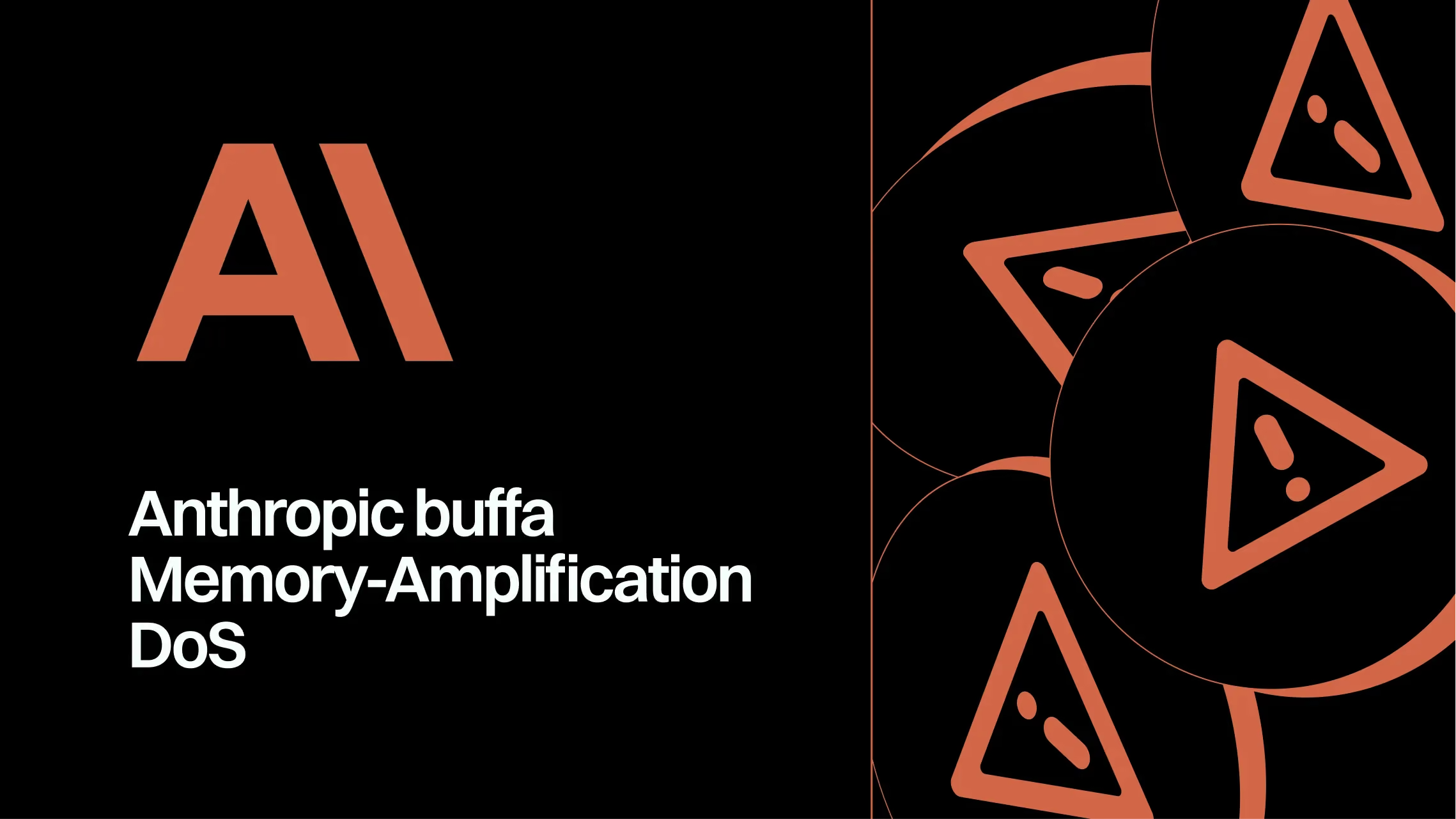
Endor Labs’ AI SAST Finds Zero Day Memory-Amplification DoS in Anthropic’s buffa library | Blog | Endor Labs

Endor Labs describes how its AI SAST engine traced a source-to-sink data flow in Anthropic's Rust protobuf library, buffa, uncovering CVE-2026-55407: an unbounded, attacker-controlled heap allocation in the unknown-field decoder (decode_unknown_field, buffa/src/encoding.rs). Beyond the initially flagged ~2x LengthDelimited allocation flaw, the researcher found the StartGroup arm allows ~22x memory amplification, letting a 64MB payload balloon to ~1.4GB and OOM-kill a capped server, defeating the library's documented "cap input size" mitigation. The piece details the PoC, the fix shipped in buffa/connectrpc 0.8.0 (per-message unknown-field count cap), and a nuanced CVSS 4.0 disclosure discussion with Anthropic over deployment-dependent severity.

RustDockerAnthropic+2
CVE-2026-55407GHSA-f9qc-qg88-7pq5

AppSec, AI Security· Added 3 Sep 2026, published 6 Jul 2026

snyk.iowriteup🛡️ Security

Snyk VulnBench JS 1.0: Can LLMs Find the Same Bugs Twice?

Snyk's VulnBench JS 1.0 report runs 300 repeated agentic security-review scans (10 JS/Express fixtures x 6 model configs x 5 repetitions) to measure whether LLMs like Claude Opus 4.6/4.7 and Claude Sonnet 4.6 find the same vulnerabilities twice, benchmarked against deterministic Snyk Code SAST reference findings. Key results: reference-matched LLM findings were highly repeatable (84.8% appeared in all 5 runs) while extra, non-reference LLM findings were unreliable (only 14% reproduced in all runs), the best LLM config (Opus 4.6 Medium) reached only 75.4% Snyk-reference F1 with a 24.6-point gap to SAST, and higher-cost models (Opus 4.7 Max) did not outperform cheaper ones despite 5.7x cost. The study argues LLM review and SAST catch different vulnerability classes (LLMs strong on injection/SSRF-type bugs, weak on path traversal/resource-limit enumeration) and should be combined rather than substituted.

ClaudeSnykJavaScript
Snyk CodeOpus 4.6Opus 4.7+2

AI Security, AppSec· Added 3 Sep 2026, published 29 Jun 2026

github.comrepo🛡️ Security

OASIS

OASIS (Open Automated Security Intelligence Scanner) is an AI-powered SAST tool that runs local LLMs via Ollama or any OpenAI-compatible backend (vLLM, LiteLLM, LM Studio, llama.cpp) to detect vulnerabilities like SQLi and XSS in source code. It uses a two-phase scan (lightweight scan model + deep analysis model) orchestrated by a LangGraph pipeline (discover→scan→expand→deep→verify→report), adds a deterministic finding-validation agent that computes exploitability verdicts with confidence, and exports canonical JSON/SARIF/HTML/PDF reports with a web dashboard, RAG-backed chat assistant, --fail-on CI gating, and suppression/inline-ignore support.

OllamavLLMLiteLLM+3

AI Security, AppSec· Published and added 28 Jun 2026

snyk.ioarticle🛡️ Security

What nearly 10,000 developer environments reveal about agentic development risk

Snyk Research scanned nearly 10,000 developer environments and found 43% run two or more AI coding tools, 50.8% have at least one MCP server installed (with 1 in 7 of those having a security finding, 1 in 12 high or critical), and 22.8% have agent skills installed. The analysis identified 392 confirmed prompt injection findings embedded in tool descriptions and 98 confirmed malicious code patterns in agent skill files, and cites the separate ToxicSkills study of 3,984 public skills from ClawHub and skills.sh where 13.4% had a critical security issue. The piece frames MCP servers and agent skills as a new, largely ungoverned software supply chain layer sitting outside traditional SAST/SCA/CI-CD controls.

Model Context ProtocolClaudeCursor+3
ToxicSkillsClawHubskills.sh

AI Security· Added 3 Sep 2026, published 23 Jun 2026

endorlabs.comarticle🧠 AI

Endor Labs: AURI Agents

Endor Labs announces AURI Agents, a free catalog of pre-configured security agents (SCA Remediation, AI SAST Triage, Probe Droid, Endor Troubleshooter and six more). They run inside Claude Code, Codex, Cursor and similar hosts, using the user's own LLM keys and git credentials (GitHub via gh, GitLab via glab). The open-source Endor Labs Agent Kit defines each agent as a YAML Source Recipe plus markdown instructions, compiles it into per-host artifacts, and ships a skill that helps users author new agents with eval cases. Endor claims expert agents finish tasks 2.8x faster with 92% fewer tokens than an unaugmented agent. Mutating actions require confirmation and most agents are read-only.

Claude CodeCodexCursor+6
Endor LabsGitLab

coding-agents, agents· Added 10 Oct 2026, published 17 Jun 2026

endorlabs.comarticle🛡️ Security

Endor Labs: AURI Agents

Endor Labs announces AURI Agents, twelve pre-configured AI agents (SCA Remediation, AI SAST Triage, Probe Droid, Endor Troubleshooter and others) that use Endor's reachability, upgrade-impact and policy data. They install into Claude Code, Codex, Cursor and similar hosts, and run on the customer's own LLM keys and git credentials (GitHub via gh, GitLab via glab). The open-source Endor Labs Agent Kit defines each agent as a YAML Source Recipe plus markdown instructions, compiled for each host, with a skill for authoring new agents. Most agents are read-only by default, and the ones that mutate state declare their permissions and require confirmation.

Endor LabsAURIClaude Code+3
AURI AgentsEndor Labs Agent KitProbe Droid+1

AI Security, AppSec, Supply Chain· Published and added 17 Jun 2026

aikido.devarticle🛡️ Security

What is AI SAST?

Aikido's explainer draws a line between two things vendors both call "AI SAST": AI-native (reasoning-based) SAST, where an LLM reads source code like a reviewer to trace data flow and catch logic flaws such as IDORs, broken access control and business-logic bypasses that have no syntactic signature; and AI-augmented SAST, where a traditional deterministic rule engine stays the detection core and AI is layered on for triage, false-positive filtering and autofix. It also positions AI SAST against classic pattern-matching SAST (fast, deterministic, runs every commit) and AI pentesting (validates real exploits against a running app, produces proof for audits), arguing organizations need all three at different cadences. The piece closes by mapping Aikido's own Code Security Audit and Deep PR Review products onto the AI-native category.

Aikido Security
IDOR

AppSec, AI Security· Added 3 Sep 2026, published 6 Jun 2026

datadoghq.comarticle🛡️ Security

Datadog AI-Native SAST

Datadog describes its open-sourced AI-native SAST tool, which uses LLMs (including Claude Opus) to add context-aware reasoning on top of traditional static analysis, cutting false positives for vulnerabilities like SQL injection and command injection. The pipeline runs identification, context retrieval, LLM analysis, and post-processing steps, uses incremental scanning to control LLM cost after an initial full-repo scan, and is benchmarked against the OWASP Benchmark framework where it beats Datadog's traditional SAST (even LLM-filtered) on most vulnerability categories.

DatadogLLMClaude+1
OWASP Benchmark

AppSec, AI Security· Published and added 31 May 2026

github.comrepo🛡️ Security

Metis

Metis is an open-source agentic AI security code review framework built by Arm's Product Security Team that uses LLMs for semantic vulnerability detection rather than hardcoded rules. It performs deep security review across codebases (with C/C++ reachability analysis via a code graph), validates and triages findings from itself or third-party SAST tools to reduce false positives, and annotates SARIF output. It supports multiple LLM providers (OpenAI, Azure OpenAI, Anthropic, Gemini, AWS Bedrock, vLLM, Ollama, llama.cpp, LiteLLM) and vector-store backends (ChromaDB, PostgreSQL/pgvector, Qdrant) for RAG-based codebase indexing and querying.

SARIFPostgreSQLDocker+3

AI Security, AppSec· Published and added 31 May 2026

github.comrepo🛡️ Security

OWASP Noir

OWASP Noir is a static analysis (SAST) tool that reads source code to extract every endpoint an application exposes — paths, methods, parameters, headers, cookies, and their originating files — across 205 supported frameworks, with an LLM fallback (OpenAI/Ollama) for unsupported ones. The endpoint inventory (including shadow APIs and undocumented routes) is exported as JSON/YAML/OpenAPI/SARIF/cURL/Postman/HTML to feed DAST scanners (ZAP, Burp Suite, Caido, Gori), human security reviewers, and AI SAST auditors, with optional --ai-context enrichment (guards, sinks, validators, callees) and GitHub Action/CI integration.

OWASP ZAPBurp SuiteSARIF+3
OWASP

AppSec· Published and added 24 May 2026

github.comrepo🛡️ Security

Tachi

Tachi is a threat-modeling and AI-reasoning vulnerability detection harness that runs inside Claude Code, dispatching 14 specialized agents against an architecture description (Mermaid, C4, PlantUML, free-text, or ASCII) to find logic-level flaws like broken auth flows, missing privilege boundaries, prompt injection paths, and agent autonomy gaps that SAST cannot catch. It claims full 50/50 coverage across five OWASP frameworks (Web/API, LLM, Agentic, ML, Mobile Top 10s), classifies agentic AI findings against the CSA MAESTRO seven-layer taxonomy, and maps findings to MITRE ATT&CK/ATLAS, NIST AI RMF, and CWE, producing threats.md, SARIF, attack trees, quantitative risk scores, compensating-control analysis, and a PDF security report.

Claude CodeSARIFMITRE ATT&CK+3
MAESTROCloud Security AllianceAOD Kit

AI Security, AppSec· Added 3 Sep 2026, published 23 May 2026

aseemshrey.inarticle🛡️ Security

Security Engineering is a Context Problem

An essay arguing that security engineering is fundamentally a "context problem": scanners (SAST, cloud posture tools, CVE scanners) are cheap at generating findings but structurally strip the context (asset ownership, reachability, data sensitivity, business criticality) needed to triage them, which is why backlogs of thousands of findings pile up untouched. The author (an independent security advisor) proposes attaching context at detection time rather than triage time, argues hiring should shift toward "fast codebase ramp-up" skills over vulnerability-class knowledge, and frames LLMs as well-suited to the context-gathering legwork (reading code, walking call graphs, correlating tickets) rather than final risk decisions. It's Part 1 of a planned series, with future posts promised on SOC alert triage and AWS/cloud findings specifically.

other· Published and added 6 May 2026

github.comrepo🛡️ Security

n8n Cybersecurity Workflows

A GitHub repo of n8n automation blueprints for security teams, organized into Red Team/Pentest, Blue Team (SOC/DFIR/TI), AppSec/DevSecOps, and Platform/General categories. Each of the ~90 workflow ideas gives a Purpose, Integrations, and Flow Outline (e.g., subdomain recon hubs, attack-surface diffing, GoPhish campaign launchers, C2 event forwarding, phishing auto-triage, SAST-on-PR with Semgrep, DAST nightly with ZAP, container image policy gates, CVE prioritization with EPSS/KEV) that map to concrete n8n nodes and real security tools like Subfinder, Nmap, Shodan, Trivy, MISP, and VirusTotal.

n8nNmapShodan+3

Offensive Security, Blue Team & Detection, DevSecOps· Published and added 6 May 2026

owasp.orgarticle🛡️ Security

OWASP Free AppSec Tools

OWASP's community-maintained catalog of application security tools that are free for open source projects, organized by category: SAST (GitHub CodeQL, Coverity, HCL AppScan CodeSweep), DAST (OWASP ZAP, StackHawk, Akto, Arachni), IAST (Contrast CE), software composition analysis/dependency scanning (Dependabot, Snyk, Mend, retire.js, Debricked), secrets detection (Gitleaks, TruffleHog, GitGuardian, Kingfisher), code quality (SonarQube, SpotBugs, MegaLinter), CI/CD security (GitLab built-ins, Faraday), and automatic remediation (Mobb, Corgea). It also covers newer entrants like Zennoxa Shield, cloud-audit, Cynative, and post-quantum crypto risk tools (CARAF, PQBench). Serves as a practical shopping list for securing an OSS project's SDLC end-to-end.

OWASP ZAPCodeQLSnyk+3
OWASP Top 10-2017 A9

AppSec, DevSecOps, Supply Chain· Published and added 6 May 2026

depthfirst.comwriteup🛡️ Security

How An Authorization Flaw Reveals A Common Security Blind Spot: CVE-2025-59305 Case Study

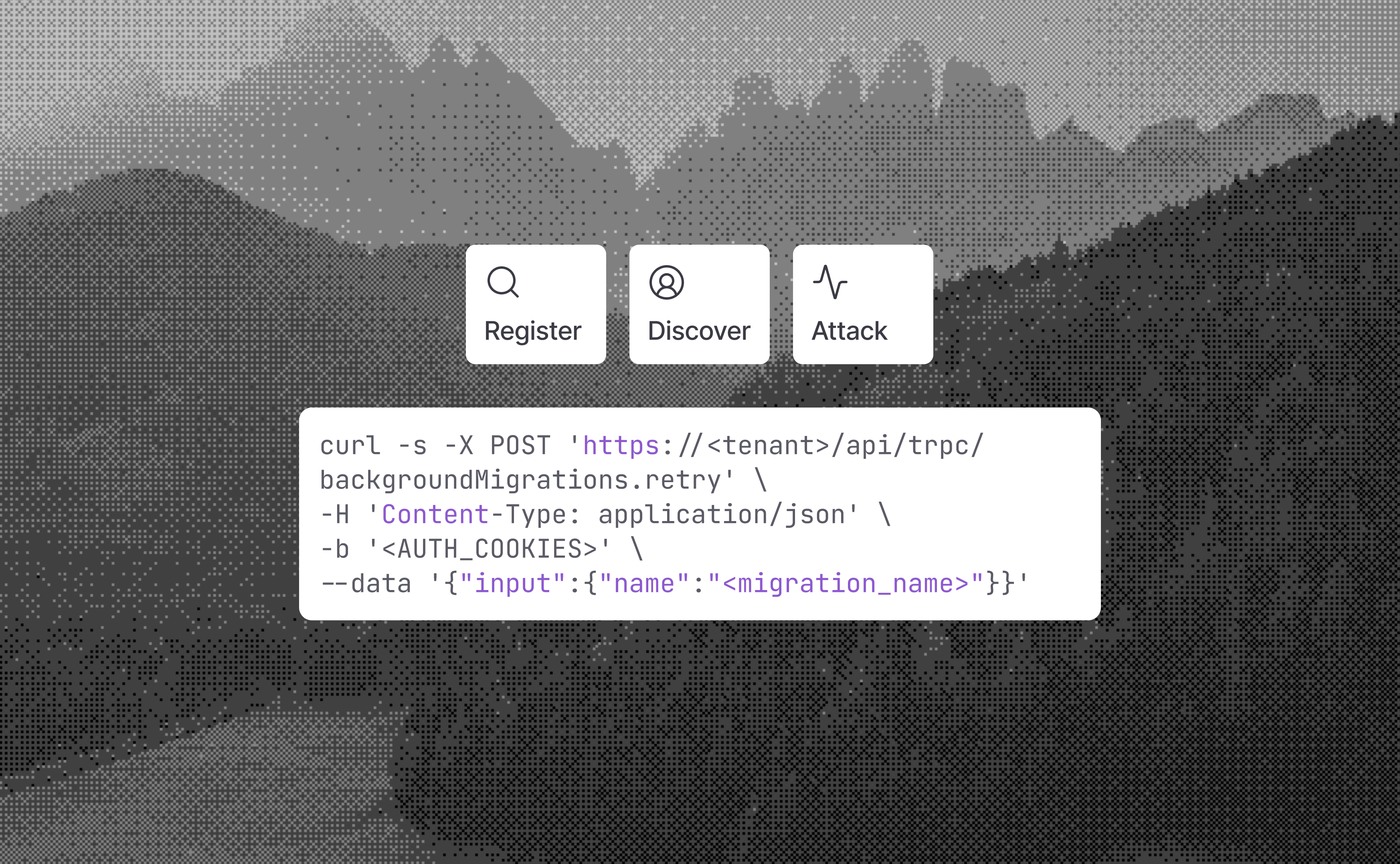
CVE-2025-59305 is a missing authorization flaw in Langfuse's tRPC background-migrations router. Endpoints for retry, list and status used protectedProcedure, which checks login but not admin role, so any self-registered user could restart migrations and cause data corruption or denial of service. Reported and patched on 9 September 2025 with a new adminProcedure; disclosed 15 September 2025. The post also argues SAST tools and AI code assistants miss AuthN vs AuthZ gaps.

LangfusetRPCTypeScript
CVE-2025-59305depthfirstbroken access control+1

AppSec· Added 29 Oct 2026, published 30 Sep 2025