Skip to content

194 results for β€œEvo”

What you seeeverything
bleepingcomputer.comarticleπŸ›‘οΈ Security

FBI links $6.3 billion Binance crypto heist to North Korean hackers

The FBI attributed the roughly $6.3 billion Binance theft of about 29 October 2026 to North Korea's TraderTraitor (Lazarus Group, Jade Sleet, APT38). Binance traced the breach to a compromised DevOps engineer's laptop that gave access to a service container used to submit unauthorized withdrawals across ten blockchains. The FBI published 628 laundering addresses and linked the group to earlier thefts at Bybit, DMM Bitcoin, Bitget and Drift.

EthereumBitcoinSolana+3
TraderTraitorLazarus GroupDPRK+14

Threat Intel, BlockchainΒ· Published and added 1 Nov 2026

decrypt.coarticleπŸ›‘οΈ Security

Binance Hack: Everything You Need to Know About the Biggest Crypto Heist in History

Decrypt's explainer on the roughly $6.4 billion theft from Binance hot wallets across about 10 blockchains. Binance traced it to a compromised DevOps engineer laptop plus further breach points, and on Ethereum the attacker used 50 pre-signed EIP-7702 authorizations to turn a hot wallet into a sweeper. Chainalysis and TRM Labs attribute it to TraderTraitor; Tether and Circle froze about $2.3 billion.

EthereumBitcoinTether+3
TraderTraitorBinanceChainalysis+10

Blockchain, Threat IntelΒ· Published and added 31 Oct 2026

stepsecurity.ioarticleπŸ›‘οΈ Security

Binance’s $6.3 Billion Hack Puts Developer Machine Security in Focus

StepSecurity's analysis of Binance's 29 October 2026 incident, which Binance puts at about $6.3 billion in affected assets. It covers Binance's disclosure of a possible DevOps laptop compromise, and TRM Labs and Elliptic findings on 50 EIP-7702 authorizations and a persistent delegation. It links this to the Nx, OVHcloud CLI and Claude Code extension compromises, gives an investigation checklist, then describes StepSecurity products.

EthereumnpmVS Code+3
BinanceTRM LabsElliptic+5

Blockchain, Supply ChainΒ· Published and added 30 Oct 2026

theblock.coarticleπŸ›‘οΈ Security

President Trump says they’re looking into Binance hack as calls grow for crypto rules

The Block reports that Binance lost about $6.3 billion in a hack on 29 October 2026. Co-CEO Richard Teng said a compromised DevOps engineer's laptop gave access to a service container used to submit unauthorized withdrawals, and TRM Labs attributed the theft to North Korea's TraderTraitor. The rest covers reactions: President Trump said on 30 October he was looking into it, CFTC Chair Michael Selig and The Digital Chamber urged federal exchange rules, and senators disputed whether the Clarity Act would have allowed freezes.

BinanceTraderTraitorTRM Labs+5

Threat Intel, BlockchainΒ· Published and added 30 Oct 2026

galaxy.comarticleπŸ›‘οΈ Security

Weekly Research Brief: Binance Hacked; Hyperliquid on Wall Street; Prediction Markets’ Brazil β€˜Miss’

Galaxy Research's weekly brief of 30 October 2026 opens with the Binance hack: about $6.3b drained across 10 blockchains, attributed by TRM Labs and Chainalysis to TraderTraitor (Lazarus-linked). The attacker used EIP-7702 with 50 pre-signed authorizations on Ethereum, and Binance's preliminary finding is a compromised DevOps laptop reaching a service container. Tether and Circle froze about $2.6b. The other sections cover Hyperliquid and prediction markets.

EthereumBitcoinUSDC+2
TraderTraitorLazarus GroupEIP-7702+7

Blockchain, Threat IntelΒ· Added 30 Oct 2026

galaxy.comarticleπŸ›‘οΈ Security

Here We Go Again: Binance Loses $6.3b in Largest Robbery in History

Galaxy Research newsletter on the roughly $6.3b drained from Binance across 10 blockchains, which TRM Labs and Chainalysis attribute to TraderTraitor. On Ethereum the attacker used EIP-7702 to turn a hot wallet into a sweeper contract backed by 50 pre-signed authorizations. Binance's preliminary finding is a compromised DevOps laptop, with no wallet key leak. Tether, Circle, Ripple and World Liberty froze about $2.7b; Galaxy also assesses Binance's ability to cover losses.

EthereumBitcoinTether+3
TraderTraitorLazarus GroupBinance+7

Blockchain, Threat IntelΒ· Added 30 Oct 2026

bankless.comarticleπŸ›‘οΈ Security

Binance Just Suffered the Biggest Hack in Crypto History. What Now?

Bankless report on the Binance hack of $6.3 billion, which Binance's preliminary investigation traced to a compromised DevOps engineer's laptop with access to withdrawal-authorizing systems. TRM Labs found valid EIP-7702 authorizations on Ethereum, and nine other chains were drained through normally signed transactions. TRM and Chainalysis link it to North Korea's TraderTraitor. Tether and Circle froze about $3 billion, and Binance says SAFU and corporate cash will cover the losses.

EthereumBitcoinSolana+1
BinanceTraderTraitorDPRK+9

Blockchain, Threat IntelΒ· Published and added 30 Oct 2026

decrypt.coarticleπŸ›‘οΈ Security

Secret Service, FBI Join Binance Hack Probe as Circle Freezes $823 Million

Decrypt reports that Binance is working with the FBI and U.S. Secret Service after a theft of about $6.4 billion, which TRM Labs and Chainalysis attribute to North Korea's TraderTraitor group, also linked to the February 2025 Bybit hack. Circle froze about $823 million in USDC and Tether froze USDT, though the page gives differing Tether totals. Binance first suspected a compromised DevOps engineer laptop, found more breach points, and saw no evidence of leaked wallet private keys.

USDCTether
TraderTraitorBinanceBybit+10

Blockchain, Threat IntelΒ· Published and added 30 Oct 2026

21shares.comarticleπŸ›‘οΈ Security

Binance hack: the largest robbery in financial history

Binance hack analysis from 21shares on the 29 October 2026 theft of about $6.3 billion from Binance. Binance's initial finding points to a compromised DevOps engineer's laptop with no sign of a leaked wallet key. Chainalysis attributes it to North Korea with high confidence, and about $3 billion was frozen by Tether, Circle and the Arbitrum Security Council. The attacker also borrowed about $44.6 million of WETH on Aave. Binance says SAFU and company funds will cover all losses.

AaveTetherUSDC+2
BinanceLazarus GroupDPRK+7

Threat Intel, BlockchainΒ· Published and added 30 Oct 2026

theblock.coarticleπŸ›‘οΈ Security

Binance says it has $6.34 billion ready to cover hack losses

The Block reports that Binance says it has set aside $6.34 billion of its own funds to cover a hack it puts at about $6.3 billion. Co-CEO Richard Teng says the entry point was a compromised DevOps laptop and no private key leak was found. About $3 billion was frozen by Tether, Circle, Ripple and others, withdrawals are suspended, and TRM Labs sees parallels with North Korean attacks. Technical detail is thin.

BinanceTRM LabsTether+4

Blockchain, Threat IntelΒ· Published and added 30 Oct 2026

aikido.devarticleπŸ›‘οΈ Security

Binance hack: how a compromised developer laptop can lead to a $6.3 billion breach

Aikido Security's analysis of the roughly $6.3 billion Binance incident, which Binance says may have started with a compromised DevOps engineer's laptop. It sets out what is known (no private key leak, TraderTraitor attribution by TRM Labs and Chainalysis, additional breach points) and a plausible chain from laptop credentials to a withdrawal service. It compares the 2025 Bybit theft and lists mitigations.

npmVS CodeAWS+1
BinanceTraderTraitorLazarus Group+9

Blockchain, Threat Intel, Supply ChainΒ· Published and added 30 Oct 2026

decrypt.coarticleπŸ›‘οΈ Security

Binance Finds 'Additional Points of Breach' in $6.3B Hack

Binance estimated the October 2026 security incident at about $6.3 billion and said it found "additional points of breach" beyond the compromised DevOps engineer laptop it first named. The attacker reached a service container and submitted unauthorized withdrawals, with no wallet private key leak found. Arkham counted $6.01 billion taken from hot wallets on nine chains; Tether and Circle froze about $1.8 billion in stablecoins. About $3 billion is frozen onchain; withdrawals stay suspended.

TetherUSDCEthereum+2
BinanceArkhamRichard Teng+4

Threat Intel, BlockchainΒ· Published and added 30 Oct 2026

bleepingcomputer.comarticleπŸ›‘οΈ Security

Binance links $6.3 billion crypto theft to compromised DevOps laptop

Binance linked the theft of about $6.3 billion in crypto to a compromised DevOps engineer's laptop, which let attackers reach a service container and submit unauthorized withdrawals. TRM Labs and Chainalysis attribute the 29 October 2026 attack to North Korea's TraderTraitor. About $2.7 billion was frozen, and the attackers hold about $2.4 billion. Binance has found no evidence of a leaked wallet private key.

BinanceTetherCircle+3
TraderTraitorLazarus GroupAPT38+5

Blockchain, Threat IntelΒ· Published and added 30 Oct 2026

securityweek.comarticleπŸ›‘οΈ Security

$6 Billion Binance Hack Bears Hallmarks of North Korea’s TraderTraitor

The Binance hack of 29 October 2026 drained about $6.36 billion across ten blockchains in roughly 20 minutes, according to TRM Labs. TRM attributes it with high confidence to North Korea's TraderTraitor, citing a mixer-funded operator wallet, pre-signed transactions and overlap with the Bybit and KelpDAO hacks. Binance's early findings point to a compromised DevOps engineer laptop. Stablecoin issuers froze about $2.7 billion.

EthereumTornado CashTether+2
TraderTraitorLazarus GroupDPRK+11

Blockchain, Threat IntelΒ· Published and added 30 Oct 2026

en.cryptonomist.charticleπŸ›‘οΈ Security

Binance probes a suspected cryptocurrency breach: $6.3B affected, about $3B frozen

Binance disclosed a suspected security incident on 29 October 2026, estimating $6.3 billion affected and about $3 billion frozen. Binance's early finding is that a compromised DevOps engineer's laptop let an attacker reach a service container and submit unauthorized withdrawals, with no evidence of wallet private-key leakage. TRM Labs suspects TraderTraitor, the group tied to the February 2025 Bybit theft. Tether, Circle and Ripple froze funds.

TetherUSDC
BinanceTraderTraitorLazarus Group+7

Blockchain, Threat IntelΒ· Published and added 30 Oct 2026

x.comthreadπŸ›‘οΈ Security

Trail of Bits (@trailofbits) on X

Trail of Bits post on X summarising Binance's initial investigation into a security incident. Binance suggests a compromised DevOps engineer's laptop let an attacker reach a service container and submit unauthorized withdrawal transactions. The text says no evidence has been found of wallet private key compromise. The fetched text is truncated and gives no further detail.

BinanceTrail of Bits

Threat Intel, BlockchainΒ· Published and added 30 Oct 2026

opensourcemalware.comtalkπŸ›‘οΈ Security

The OpenSourceMalware Show #27

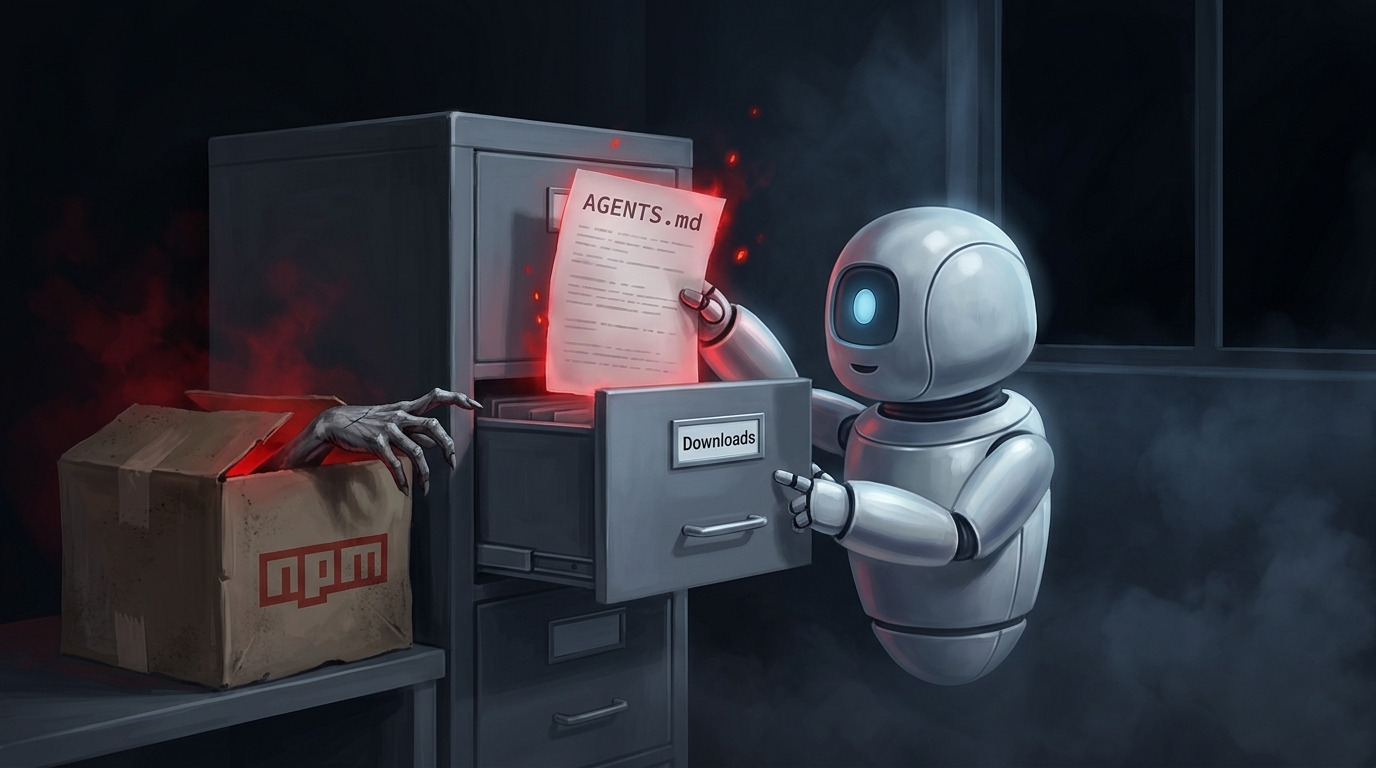
The OpenSourceMalware Show #27 (28 October 2026) is a podcast episode with transcript. It covers the Brotli decoder bug (CVE-2026-111497) vendored in C code across Python, Rust and PHP, and how to find copies via decode.c. It also covers the LiteLLM v1.107.0 compromise from an unrevoked admin key and a relaxed release control, and the MALFEX npm campaign hiding payloads in PNG-header files, plus an AGENTS.md lure and DPRK fake fonts in TTF/OTF.

BrotliLiteLLMnpm+3
CVE-2026-111497Node2ShellPHP2Shell+10

Supply Chain, Threat Intel, DevSecOpsΒ· Published and added 29 Oct 2026

arxiv.orgpaperπŸ›‘οΈ Security

Appreciation Teaches Unauthorized Execution: Self-Evolution Degrades the Robustness of Personal Agents to Indirect Prompt Injection

Paper studying whether self-evolution weakens personal agents' robustness to indirect prompt injection (IPI). A two-phase method has the user ask the agent to follow tasks in external content, then tests with a third-party injected task the user did not authorize. Against the non-evolving base agent, attack success rose 14.0 to 48.8 points under skill evolution and 3.0 to 39.3 points under reinforcement learning. Code is released.

indirect prompt injection

AI SecurityΒ· Added 31 Oct 2026, published 29 Oct 2026

ethresear.chpaperπŸ›‘οΈ Security

Secure Transaction Verification and Authorization (STVA)

Secure Transaction Verification and Authorization (STVA) is a draft Standards Track ERC (created October 2026) by @MATOBOYCRYPTO65. It proposes structured human-readable metadata and semantic intent for transactions and UserOperations, an independent simulation and verification interface, and scoped, revocable capability tokens for privileged operations. It targets blind signing and frontend supply-chain attacks, citing the February 2025 Bybit Safe multisig theft. The page gives only the abstract, motivation and core concepts.

EthereumSafe
BybitEIP-712ERC-1271+5

BlockchainΒ· Published and added 28 Oct 2026

github.blogarticle🧠 AI

GitHub Universe 2026: Evolving every layer of the stack

GitHub Universe 2026 recap in which GitHub presents its agentic software delivery vision and new Copilot products: the Copilot app, Copilot Fusion multi-model routing, Copilot projects, session continuity, automations that learn from outcomes, and code review Max. GitHub Enterprise customers can use all Copilot features without a separate subscription. GitHub also reports added capacity, a multi-region Azure migration and a redesigned Git architecture.

GitHub CopilotGitHubGit+4
MicrosoftJay ParikhCopilot Fusion+4

coding-agents, agents, ai-infraΒ· Added 29 Oct 2026, published 28 Oct 2026

securityweek.comarticleπŸ›‘οΈ Security

TLS Flaws Found in GoAhead Web Server Used in Hundreds of Millions of Devices

FoxIO disclosed three TLS flaws in the GoAhead embedded web server from EmbedThis, used on hundreds of millions of IoT, OT and network devices. CVE-2026-115881 (CVSS 9.1) leaves revoked client certificates accepted under mTLS with OpenSSL; CVE-2026-115884 (7.4) bypasses chain-length limits with LibreSSL; a third Mbed TLS bug (5.9, no CVE) weakens TLS 1.2 DHE. GoAhead 6.1.1 fixes the OpenSSL and Mbed TLS issues, and FoxIO released PoC code and fingerprints.

GoAheadOpenSSLMbed TLS+2
CVE-2026-115881CVE-2026-115884FoxIO+4

Hardware & RF, AppSecΒ· Published and added 28 Oct 2026

arxiv.orgpaper🧠 AI

FeatureArc: Benchmarking Coding Agents on Evolving Features

FeatureArc is a benchmark for coding agents on evolving features, built by a pipeline that mines repository histories into multi-stage tasks across four programming languages. It has 73 manually reviewed tasks of 2 to 10 stages, validated with fail-to-pass and pass-to-pass tests. Across 10 agents, pooled success drops from 62.7% at the first stage to 28.5% for the whole feature. Inherited defects appear in 72.9% of failed later stages.

LLM
FeatureArcTencentHunyuan+1

evals, coding-agents, researchΒ· Added 28 Oct 2026, published 27 Oct 2026

securityweek.comarticleπŸ›‘οΈ Security

Vendor Key Leak Puts Data of 238,000 Denver Health Plan Members at Risk

Denver Health Medical Plan is notifying 238,083 members that vendor SquareML leaked an access key on a public website. The key was online from 27 June 2025 until it was revoked on 18 August 2026 and gave read-only access to a database of names, dates of birth, health metrics, eligibility and admission data. DHMP found no evidence of misuse and reset passwords for all accounts with access.

Denver Health Medical PlanSquareMLHealth First Colorado+2

Threat IntelΒ· Published and added 27 Oct 2026

x.comthreadπŸ›‘οΈ Security

David Gutierrez | Eng (@david_x_ai) on X

Thread on two October 2026 npm compromises: @subql/common 5.8.3 (5 October), published through GitHub Actions OIDC Trusted Publishing after the attacker tampered with the publish workflow, and tensorlake 0.5.144 (8 October), published by the project's own release workflow with valid provenance for about 1 hour 40 minutes. Both ran on install and stole cloud, GitHub, Kubernetes, Vault, SSH and .env credentials; tensorlake also took AI tool and MCP config. Its payload installed a gh-token-monitor service that deletes the home directory if the stolen GitHub token is revoked, so remove it before rotating.

npmGitHub ActionsGitHub+3
@subql/commontensorlakegh-token-monitor+3

Supply Chain, DevSecOpsΒ· Added 27 Oct 2026, published 26 Oct 2026

arxiv.orgpaper🧠 AI

IntentDelta: A Human-Constructed Benchmark for Evolving User Intent

IntentDelta is a human-constructed multi-turn benchmark of 638 trajectories and 3,766 turns across WebShop and TravelPlanner. Each turn pairs a user utterance with a cumulative intention state and human reference actions. Across eleven agents, average Intention Recovery is 33.1% in TravelPlanner and 44.7% in WebShop, and average Action Score is 31.6% and 41.0%. Agents lose earlier requirements and confuse soft preferences with must-have constraints.

LLM
IntentDeltaWebShopTravelPlanner+1

evals, agents, researchΒ· Added 27 Oct 2026, published 24 Oct 2026

x.comthreadπŸ›‘οΈ Security

The Hacker News (@TheHackersNews) on X

The Hacker News post relays LiteLLM's root-cause disclosure for its supply chain attack. A master key leaked on GitHub in May was never revoked. Attackers used it to reach the Agent Platform, steal a GitHub owner token, and publish a malicious PyPI release in October. A reply says the agent tool held the org owner's personal CLI login, which skips GitHub's 2FA re-check.

LiteLLMPyPIGitHub
CWE-798

Supply Chain, DevSecOps, Identity & AccessΒ· Added 26 Oct 2026, published 24 Oct 2026

unit42.paloaltonetworks.comadvisoryπŸ›‘οΈ Security

EMudhra Intermediate CA Certificates Compromised

Unit 42 advisory on the compromise of eight intermediate CA private keys belonging to Indian CA eMudhra Limited. The keys were generated with insufficient randomness, so attackers could derive them from the public certificates and sign rogue TLS certificates for MitM attacks. eMudhra has revoked the certificates and browser and OS vendors have untrusted them. Interim guidance covers PKI and trust store audits, reissuance, strict CRL/OCSP checking, log hunting, CT monitoring and CAA records.

Prisma BrowserJavaDocker+2
eMudhraUnit 42Palo Alto Networks Next-Gen Trust Security+1

Threat Intel, Blue Team & DetectionΒ· Added 30 Oct 2026, published 22 Oct 2026

huntress.comarticleπŸ›‘οΈ Security

Unboxing Phishing Kits: Huntress Examines 3 Real Kits

Recap of a Huntress Tradecraft Tuesday session (October 2026) on phishing kits that target Microsoft 365 tokens, including EvilTokens (a device-code phishing campaign abusing Railway) and the Kali365 control panel. It explains device-code phishing, adversary-in-the-middle and token replay. It lists detections (unfamiliar cloud sign-ins, device-code auth, new devices) and response steps (revoke refresh tokens, remove rogue devices, block device-code flow).

Microsoft 365Microsoft Entra IDHuntress+1
EvilTokensKali365device-code phishing+4

Threat Intel, Blue Team & Detection, Identity & AccessΒ· Published and added 22 Oct 2026

aikido.devarticleπŸ›‘οΈ Security

eMudhra CA compromise: eight private keys, and one of them is 4

eMudhra's eight intermediate CA certificates, chaining to emSign ECC Root CA - G3, had private keys below 256 (one is 4), disclosed on 17 October 2026 by a researcher known as Wayne. Browsers and Microsoft blocked them via revocation pushes, but curl, git, containers, language runtimes and IoT may still trust them. The post gives patched ca-certificates versions, test commands and the timeline.

cURLDockermacOS+3
eMudhraemSign ECC Root CA - G3Wayne+6

Supply Chain, DevSecOpsΒ· Published and added 22 Oct 2026

oracle.comadvisoryπŸ›‘οΈ Security

Oracle Security Alert Advisory – CVE-2026-91403 (eMudhra cert revocation)

Oracle Security Alert for CVE-2026-91403 ships Java SE updates that distrust a set of intermediate CA certificates tied to eMudhra. It contains one new patch for Oracle Java SE, described as remotely exploitable without authentication. Customers are told to update Java or apply mitigations listed at ops.java/emudhra and in the Patch Availability Document. No reporter is credited and the page gives no CVSS score or technical detail.

JavaCVSS
CVE-2026-91403eMudhra

Cloud & Infra, AppSecΒ· Added 23 Oct 2026, published 21 Oct 2026

Showing 30 of 194

Show more