A reply by Smarthouse (@localyzapp) on X to a question about the best harness for connecting local models to a Minecraft server. It suggests an MCP server that wraps RCON plus a small agent loop. The main pitfall is block coordinates: expose "/execute if block" as a read tool so the agent can check blocks before placing them, or it will hallucinate terrain.
Model Context ProtocolMinecraftRCON
mcp, agentsΒ· Added 2 Nov 2026, published 1 Nov 2026

SemiAnalysis analysis of how the November 2026 US midterms could affect datacenter buildout. About 75% of the 33.8 GW due in 2027 across the top 20 states is already under construction, but 43.5 GW of 2028 additions sit in 13 states with pending approvals. The biggest risk is a prolonged Texas TCEQ permit freeze. Texas holds close to 30% of 2028 GW, and nine of 20 nominees back a pause.
SemiAnalysisTexas Commission on Environmental QualityERCOT+16
Tom's Hardware reports on a ycombinator and Olam Labs experiment that ran LLM agent swarms in Minecraft. A 50-agent GPT-6.1 Sol team asked to build a civilization in three hours turned cautious and bureaucratic. In Bed Wars and Mindustry, GPT-6.1 Sol agents beat Claude Opus 5.5 agents (6-1 in Mindustry). The swarms are open sourced, built on Mindcraft and Mineflayer.
MinecraftMindcraftMineflayer+1
Tom's HardwareOlam LabsY Combinator+4
agents, evalsΒ· Added 2 Nov 2026, published 1 Nov 2026
Trezor warns of a suspected crypto-theft implant in a Trezor Safe 5 sold by reseller CryptoBilis in Southeast Asia. An Indonesian buyer found an extra board with a cellular module and antenna between the main board and screen, apparently able to read the recovery phrase and send it over mobile networks. Trezor has not examined the device, advises moving funds to a new wallet for any CryptoBilis purchase since March 2026, and notes a similar Ledger implant was confirmed.
TrezorLedger
CryptoBilisTokopediarecovery phrase
Blockchain, Hardware & RF, Supply ChainΒ· Published and added 30 Oct 2026
Trezor says a user reported a Safe 5 wallet bought from Malaysian reseller CryptoBilis in August 2026 with a hidden board between the main board and screen, carrying a cellular module and antenna. The implant allegedly reads the screen, including the wallet backup, and sends it over a mobile network when plugged in. Trezor has not yet examined the device, has dropped CryptoBilis (9 October), and is replacing wallets bought since March 2026.
TrezorLedger
CryptoBilisDanny Sanders
Hardware & RF, Blockchain, Threat IntelΒ· Published and added 30 Oct 2026
Trezor warned buyers of its wallets from reseller CryptoBilis (March 2026 onward) to move funds, after an Indonesian customer reported a hardware implant in a Safe 5 bought in August 2026. The report describes a board with a cellular module between mainboard and screen that reads the wallet backup and sends it over a mobile network. Trezor has not yet examined the device. It found no tampering in four other CryptoBilis units.
Trezor Safe 5LedgerBitcoin
CryptoBilisTrezorLedger Donjon+3
Hardware & RF, Supply Chain, BlockchainΒ· Published and added 30 Oct 2026
Trezor reported a suspected hardware implant in a Safe 5 bought in August 2026 from reseller CryptoBilis via Tokopedia. The alleged implant is a board with a cellular module that reads the screen, including recovery phrases. Trezor has not examined the device and found no tampering in four other units, and it told buyers who purchased from the reseller since March 2026 to move funds.
Trezor Safe 5
CryptoBilisTokopediaTrezor
Hardware & RF, Blockchain, Supply ChainΒ· Published and added 30 Oct 2026
Trezor advised everyone who bought wallets from reseller CryptoBilis since March 2026 to move funds to a new wallet with a new recovery phrase. An Indonesian customer reported a Safe 5 bought via Tokopedia in August 2026 with an extra board holding a cellular module that allegedly sends the wallet backup out. Trezor has not yet examined the device. Ledger separately confirmed tampering on CryptoBilis devices in October 2026.
TrezorLedger
CryptoBilisTokopediaSEAL 911+1
Hardware & RF, Supply Chain, BlockchainΒ· Published and added 30 Oct 2026
A campaign of 31 malicious Hugging Face repositories across seven accounts, found by Pluto Security, posed as small Qwen2 checkpoints and used trust_remote_code to run a cryptominer and reverse shell on GPU inference hosts. The top model reached 28,412 downloads and scanned clean, and a second wave returned within days of takedown. The article also covers a fake Solana starter kit on GitHub that installs NetSupport Manager via a PowerShell one-liner aimed at AI coding agents.
Hugging FaceQwenXinference+3
Pluto SecurityAir Securitytrust_remote_code+9
Supply Chain, AI Security, Threat IntelΒ· Added 30 Oct 2026, published 29 Oct 2026
Agents in Games is a Y Combinator Labs writeup, done with Olam Labs, of multi-agent swarm experiments in Minecraft and Mindustry. A 50-agent GPT-6.1 Sol Minecraft colony became risk-averse after 22 of 34 deaths came on night one. GPT beat Claude Opus 5.5 at Bed Wars 6-3 and Mindustry 6-1. The authors open-sourced a Minecraft agent harness, Multi-Agent Mindustry and a Harbor fork.
MinecraftMindustryMineflayer+7
Y CombinatorOlam LabsGPT-6.1 Sol+9
agents, ai-safety, evalsΒ· Added 30 Oct 2026, published 29 Oct 2026
This paper studies whether vision-language models can infer how long a person stays somewhere (living, staying, or leaving) from geotagged social media posts. The authors build a new corpus of geotagged tweets co-annotated by humans and LLMs. State-of-the-art models struggle even with multi-turn Chain-of-Thought prompting, often missing contextual cues and subtle hashtags while over-relying on prominent visual details.
vision-language modelLLM
arXiv
research, evals, multimodalΒ· Added 30 Oct 2026, published 28 Oct 2026
FeatureArc is a benchmark for coding agents on evolving features, built by a pipeline that mines repository histories into multi-stage tasks across four programming languages. It has 73 manually reviewed tasks of 2 to 10 stages, validated with fail-to-pass and pass-to-pass tests. Across 10 agents, pooled success drops from 62.7% at the first stage to 28.5% for the whole feature. Inherited defects appear in 72.9% of failed later stages.
LLM
FeatureArcTencentHunyuan+1
evals, coding-agents, researchΒ· Added 28 Oct 2026, published 27 Oct 2026
RoSA is a finetuning framework from Qiuyu Kong and three co-authors for long-text image-text retrieval. It targets "saliency collapse", where models over-rely on text tied to prominent visual features and miss contextual information. RoSA splits pairs into salient and contextual views using object-level saliency estimation and LLM text decomposition, then trains on both with plug-and-play auxiliary alignment objectives. Code and checkpoints are public.
LLM
RoSAQiuyu Kong
multimodal, research, trainingΒ· Published and added 26 Oct 2026
The essay argues that OpenAI and Anthropic undermine their own business by selling cheap AI software engineers. Cheap coding models let hobbyists clone commercial software such as Photoshop, which removes the revenue of the companies that were meant to pay for the models. The author says open-weight models, including Llama and Chinese releases, rule out price increases, and compares the situation to Spanish silver and De Beers. The claims are opinion and carry no cited data.
LlamaLLM
OpenAIAnthropicAdobe+7
ai-policy, coding-agentsΒ· Added 26 Oct 2026, published 25 Oct 2026
Decrypt explainer on neoclouds, specialist providers such as CoreWeave and Nebius that rent Nvidia GPU clusters for AI training and inference. It covers the chips, power and debt model, Bitcoin miners turned AI hosts, and customers including Microsoft, AWS, Google and Anthropic. It cites Gartner's 14 October 2026 forecast that over 80% of neoclouds will stop operating independently by 2030.
EthereumBitcoin
CoreWeaveNebiusLambda+22
ai-infra, ai-policyΒ· Published and added 22 Oct 2026
Recap of a Huntress Tradecraft Tuesday session (October 2026) on phishing kits that target Microsoft 365 tokens, including EvilTokens (a device-code phishing campaign abusing Railway) and the Kali365 control panel. It explains device-code phishing, adversary-in-the-middle and token replay. It lists detections (unfamiliar cloud sign-ins, device-code auth, new devices) and response steps (revoke refresh tokens, remove rogue devices, block device-code flow).
Microsoft 365Microsoft Entra IDHuntress+1
EvilTokensKali365device-code phishing+4
Threat Intel, Blue Team & Detection, Identity & AccessΒ· Published and added 22 Oct 2026
Paper on prompt injection delivered through forensic evidence, where the seized device's contents are attacker-controlled and the examiner must read them. It extends the anti-forensic model to cover manipulation of the reasoning layer and gives a taxonomy (objective, technique, payload location, concealment). Three proof-of-concept attacks on an LLM-assisted analysis pipeline change a reported conclusion, write attacker-chosen content to the analyst workstation, and trigger outbound network traffic. Mitigations are proposed.
Cisco Talos analysis of why Microsoft Patch Tuesday advisories rose from about 100 a month before June 2026 to 975 in September and 1,415 in October, as frontier models such as Mythos mine old code. CVEs grew 105% year over year while CISA KEV additions grew 37%, and only three September advisories were exploited in the wild. It covers pressure on 90-day coordinated disclosure and open-source maintainers, the format string bug-class precedent, and defender advice.
SnortWindows
CVE-2021-44228MythosCISA KEV+8
AI Security, AppSec, Blue Team & DetectionΒ· Published and added 20 Oct 2026
DeclineCraft is a dynamic RAG abstention benchmark whose unanswerable questions target Minecraft feature additions made after a corpus cut-off, with audits for parametric exposure. Across 27 LLMs, single-shot retrieval raises Correct Abstention Rate in 38 of 40 configurations, while iterative RAG lowers it in 30 of 40. Enabling thinking without retrieval lowers abstention for 8 of 13 models, shifting responses to premise denial.
RAGLLM
DeclineCraftMinecraftarXiv
evals, llm-apps, researchΒ· Added 22 Oct 2026, published 20 Oct 2026
This paper audits the PathQuestion (PQ) and PathQuestion-Large (PQL) multi-hop knowledge-graph QA benchmarks as graph-navigation tasks. It holds questions, answers, path annotations and splits fixed, and replaces each released task-filtered graph with the larger source KG. Restoration cuts released-answer accuracy and trajectory fidelity for frozen small-language-model policies and trained MINERVA policies, and graph-consistent evaluation recovers only part of the loss.
MINERVA
PathQuestionPathQuestion-LargearXiv
evals, researchΒ· Added 21 Oct 2026, published 19 Oct 2026
Honeypot writeup of in-the-wild exploitation of Plex Media Server through the Plex2Shell chain (CVE-2026-96652, -96654, -96655, -96656) in October 2026. Attackers from 45.194.92.222, 91.92.40.202 and 176.65.139.228 used SSRF-style timeline/subscribe requests and downloaded a Docker-named dropper and an XMRig miner from 217.60.194.116. Includes file hashes, a later-seen proxyware sample (myawesomeproxy), lab pcaps for signatures and links to sandbox reports.
Plex Media ServerXMRigDocker+1
CVE-2026-96652CVE-2026-96654CVE-2026-96655+8
Threat Intel, Blue Team & DetectionΒ· Added 20 Oct 2026, published 19 Oct 2026
Plex2Shell is a chain of four Plex Media Server vulnerabilities (CVE-2026-96652, CVE-2026-96654, CVE-2026-96655, CVE-2026-96656) that gives unauthenticated code execution with the Plex service's privileges. Exploitation began on 17 October 2026, a day after the researcher published a write-up and PoC on 16 October. A honeypot saw an XMRig miner and a proxy tool, myawesomeproxy, dropped. Plex shipped fixes by 1 September 2026.
Plex Media ServerXMRig
CVE-2026-96652CVE-2026-96654CVE-2026-96655+4
Threat Intel, AppSecΒ· Published and added 19 Oct 2026
A Note on the Security of ECDSA with Presignatures or Biased Nonces (Couteau and Makriyannis, ePrint 2026/2545) examines alternative ECDSA modes built for faster distributed signing. It shows that the security of some variants used in deployed libraries is equivalent, in the generic group and random oracle model, to the average-case hardness of k-SUM. It also proves fine-grained lower bounds on generic group attacks against modes analyzed by Groth and Shoup (Eurocrypt 2022).
Analysis of Meta's Muse Spark Open, an 816B total/42B active parameter open-weights model with 1M context, now the strongest American open model, and its position relative to Chinese open models such as GLM-5.3, Kimi K3 and DeepSeek V4.1 Flash. It examines Meta's restrictive custom license ("Built with Muse" attribution, $20M/month revenue gate, acceptable use policy, coverage of outputs and derivatives), and ranks Meta against Anthropic, OpenAI, Gemini and xAI after the closed Muse Wonder release. It also covers tier-3 labs (Mistral Large 4, Reflection's Beam) and valuation questions.
Hugging FaceMixture of ExpertsLlama+5
MetaMuseMuse Wonder+27
models, ai-policyΒ· Published and added 17 Oct 2026
Determines, to first order in 1/p with an explicit error bound, the proportion of superspecial principally polarized abelian surfaces over F_p-bar (p β‘ 3 mod 4) that are optimally (N,N)-split. The expected number of optimal splittings is exactly 5NΒ·J_2(N)(p-1)/(pΒ²+1), so the split proportion is about 5NΒ·J_2(N)/p. This gives the stationary target density of the splitting-detection attack on the dimension-two superspecial isogeny problem, which was previously known only from experiments or a one-sided bound. The proofs use Siegel's mass formula and genus averages over refined Humbert invariants, and every formula was checked by exact computation at twelve primes.
splitting-detection attackRichelot random walkHumbert surfaces+3
Microsoft's announcement of "Risk Management for Open-Weight Models in Enterprise", the first paper in a planned joint series with NVIDIA. It proposes a taxonomy of five risk categories (Cybersecurity, Data Protection, Content, Human-AI Interaction, Bias). The approach is grounded in ISO standards and the NIST AI Risk Management Framework. It maps evaluations to risks as evidence, stresses that weight openness alone doesn't determine risk, and explains how self-hosting shifts responsibility for safeguards. A joint repository will collect evaluations, and later work will cover the runtime, harness and application layers.
Microsoft Foundry
MicrosoftNVIDIANIST+7
ai-policy, evalsΒ· Published and added 16 Oct 2026
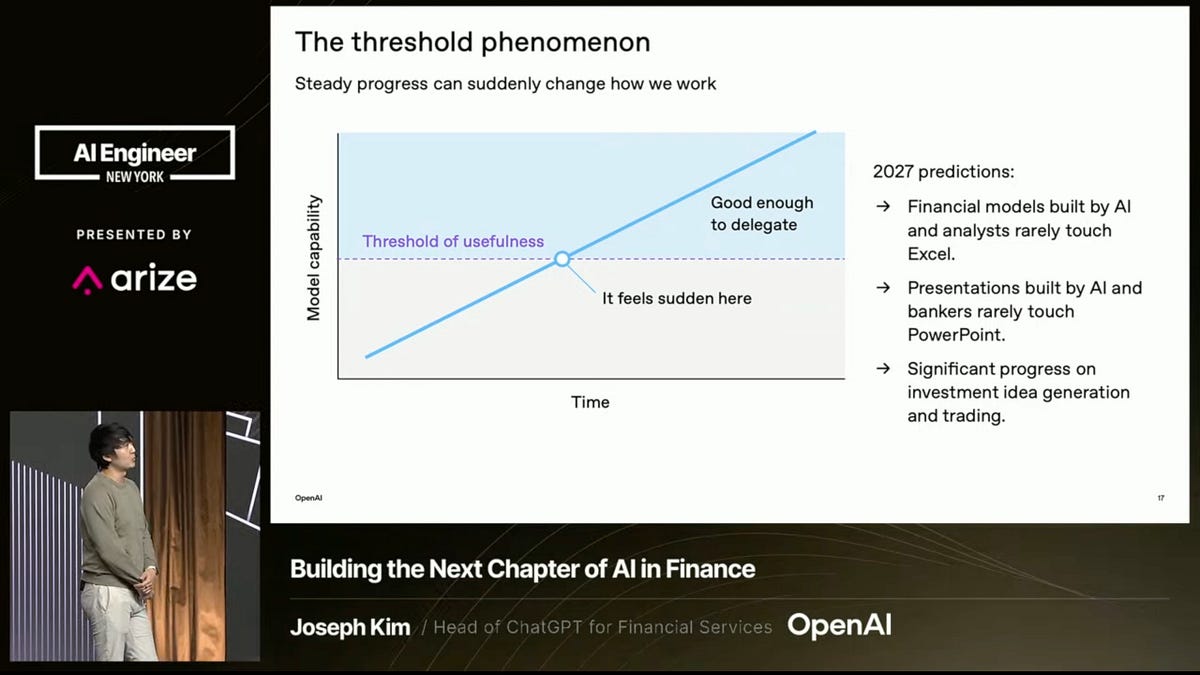
Latent Space recap of AI Engineer New York keynotes on balancing agent autonomy with safety in finance. OpenAI's Joseph Kim frames human-in-the-loop as a product design decision and predicts agents doing investment idea generation and trading by 2027. Two Sigma's John Feminella describes composable controls such as auto-mode classifiers to avoid approval fatigue. Anthropic's Keon Shahab lays out a trust layer: identity and permissions, sandboxed approval, and regression checks, with agents proposing actions rather than executing them. Bloomberg's Andrey Rybka argues for deterministic controls outside the model: scoped credentials, tool-call checks, audit logs, budgets and kill switches.
ChatGPTClaude
OpenAIAnthropicTwo Sigma+10
agents, ai-policyΒ· Published and added 14 Oct 2026
SecurityWeek reports on a Booz Allen study in which frontier AI agents, given no source code, engineering documents or OT guidance, met every test objective across eight scenarios in an isolated OT lab. In one test a model went from perimeter compromise to actions inside an industrial control network in about 16 minutes. In another it found a robotic arm, mapped its protection zones and motion limits, and moved it. Existing defenses slowed some actions but no single safeguard stopped the agents. The researchers say this undermines security through obscurity in OT and advise making environments hard to traverse, removing implicit trust, detecting consequential industrial changes quickly, and limiting what an attacker can affect.
Booz AllenSecurityWeek ICS Cybersecurity Conferencesecurity through obscurity
AI Security, Offensive SecurityΒ· Published and added 14 Oct 2026
An AI Alignment Forum post by peterkirgis and Tim Hua, tagged Value Drift, about how language models revise the documents that govern them, such as constitutions or specs. It appears to examine what happens when models take part in rewriting their own governing principles. The body text did not load, so the specific methods and findings are unknown; this summary rests on the title and tags.
Talos summarises Microsoft's October 2026 Patch Tuesday, which covers 1415 vulnerabilities, 85 of them critical (67 RCE). One bug is exploited in the wild: CVE-2026-96951, a Windows Shell security feature bypass. The post groups the CVEs by Microsoft's exploitability rating (more likely, less likely, unlikely) with CVSS and CWE for each, covering Windows, Office, Exchange, Hyper-V, DHCP, QUIC, Outlook and Azure. It also lists the Snort 2 and Snort 3 rule ID ranges that detect exploitation attempts.
WindowsSnortMicrosoft Exchange Server+3
CVE-2026-96951CVE-2026-70229CVE-2026-70571+191
Blue Team & DetectionΒ· Published and added 13 Oct 2026