 “Black October” for AI Developer Platforms
Wiz Research links October 2026 breaches at AI developer platforms (Fireworks, OpenCode, Warp, Zeabur, Railway and others) to stolen environment-variable credentials for AI access. It details two enterprise AWS Bedrock keys abused after vendor breaches: about 800k and 1.7 million calls, over $100k in list-price usage. It profiles two LLM resale operations, "momo" and "Xingjiabi", that tested the keys.
 wiz.iowriteupAdded 31 Oct 2026, published 30 Oct 2026🛡️ Security
- CISA Adds Two Known Exploited Vulnerabilities to Catalog
CISA added two Ivanti Connect Secure vulnerabilities to its Known Exploited Vulnerabilities (KEV) Catalog on 30 October 2026, citing evidence of active exploitation: CVE-2026-111357 (missing authentication for a critical function) and CVE-2026-118527 (generation of predictable numbers or identifiers). The alert restates BOD 26-04, which requires federal civilian agencies to remediate KEV-listed flaws on exposed assets and check for prior compromise. It also links the KEV nomination form.
 cisa.govadvisoryPublished and added 30 Oct 2026🛡️ Security
 Fresh WordPress Vulnerability in Attackers’ Crosshairs
A WordPress core race condition in the update process, patched in WordPress 7.1.4 on 28 October 2026, allows unauthenticated remote code execution with high attack complexity. New files unpack into a predictable, web-accessible staging directory. Defiant's Wordfence logged over 18,500 requests for staged setup-config.php paths in 21 hours, with no confirmed compromises. No CVE is assigned yet. The release fixes 22 flaws in total.
 securityweek.comarticlePublished and added 30 Oct 2026🛡️ Security
- Web Security Academy
Web Security Academy is PortSwigger's free online web security training. It is known to combine learning material with hands-on labs across web vulnerability classes such as SQL injection, XSS, SSRF, authentication flaws and request smuggling, and to be built around Burp Suite. The page had no extractable text, so this description comes from the URL and general knowledge of the site.
 portswigger.netcourseAdded 30 Oct 2026🛡️ Security
- llm-trails: What LLMs reach for inside a breached AWS account
llm-trails is an open study of what LLMs choose to do next inside a breached AWS account. It puts 14 models in 13 post-compromise situations, records only a single-turn plan with nothing executed, and codes each answer to CloudTrail events. The repo has the llmtrials harness, prompts, codebook, processed dataset (viz_data.json) and an interactive dashboard, so the study can be rerun or extended.
 github.comrepoAdded 30 Oct 2026🧠 AI
- llm-trails: What LLMs reach for inside a breached AWS account
llm-trails is a research repo that placed 14 LLMs in 13 post-compromise AWS situations, asked only for their next move (single-turn, nothing executed), and coded each answer to CloudTrail events. It includes the llmtrials harness, prompts, codebook, processed dataset (viz_data.json) and an interactive dashboard. Rates are conditioned on the situation shown, and the aim is turning model behavior into detection priorities.
github.comrepoAdded 30 Oct 2026🛡️ Security  What are shell vulnerabilities? PHP2Shell, Node2Shell (HTTP2Shell), React2Shell and Log4Shell explained
Explainer on "shell" vulnerabilities, the -Shell naming for RCE flaws that began with Log4Shell (CVE-2021-44228). It compares memory-corruption bugs (PHP2Shell, CVE-2026-109618 and CVE-2026-109619; Node2Shell, CVE-2026-111497, in the Brotli decoder) with design-flaw bugs (Log4Shell, React2Shell, CVE-2025-55182). It covers shared traits, exposure through inherited components, and Brotli patch status across runtimes and distributions.
 aikido.devarticleAdded 30 Oct 2026, published 29 Oct 2026🛡️ Security
 Threat Brief: Critical Vulnerabilities in PHP: CVE-2026-109618, CVE-2026-109619 (Updated October 29)
Unit 42 threat brief on PHP2Shell, two PHP remote code execution flaws, CVE-2026-109618 and CVE-2026-109619 (CVSS 4.0 9.2), both caused by longjmp() error handling that leaves memory uninitialized or freed. Cortex Xpanse counted over 22.6 million exposed instances. The 29 October 2026 update says attackers chained PHP2Shell with a Linux kernel privilege escalation against internet-exposed PAN-OS management interfaces. An earlier 23 October claim of post-compromise activity was retracted on 25 October.
 unit42.paloaltonetworks.comadvisoryAdded 30 Oct 2026, published 29 Oct 2026🛡️ Security
 [tl;dr sec] #352 - Unprompted Slides, AWS AI Post-compromise Trends, Malicious LLM API Routers
tl;dr sec #352 is a security newsletter issue covering [un]prompted talks (AI-assisted firmware patching, a "Security Constitution" for finding cloud design flaws), Azure API Connections cross-tenant bugs worth $200,000, and a test of 14 LLMs given AWS keys. It also covers a paper on malicious LLM API routers (9 of 428 injecting code) and Datadog's "counterfeit policy" bypass of the Jev classifier.
 tldrsec.comarticleAdded 30 Oct 2026, published 29 Oct 2026🛡️ Security
 Adobe, Veeam, Juniper Networks Patch Critical Vulnerabilities
SecurityWeek roundup of patches from Adobe, Veeam and Juniper Networks covering over three dozen vulnerabilities. Adobe fixed 12 flaws (eight critical in Campaign Classic), Veeam fixed nine (including a cross-tenant RCE in Backup for Microsoft 365), and Juniper fixed 18 in Session Smart Router and Conductor. None were reported exploited. Juniper said CVE-2026-109618 (PHP2Shell) affects Junos OS but is not exploitable there.
securityweek.comarticlePublished and added 29 Oct 2026🛡️ Security- Dark Web Intelligence (@DailyDarkWeb) on X
DailyDarkWeb post summarising Anthropic Frontier Red Team research published 27 October 2026. An unreleased internal Claude research model built five attack chains: Chrome sandbox escape (V8 heap bug, CacheStorage race, FedCM use-after-free), a Safari same-origin policy bypass, data extraction from a locked Pixel 9 over USB, a Windows QUIC kernel crash (CVE-2026-33096) and zero-click Linux root via multipath TCP (CVE-2026-98432). Anthropic says all flaws are fixed, including 62 Chrome CVEs as of Chrome 156. The post notes the chains are not independently reproduced.
 x.comthreadAdded 30 Oct 2026, published 29 Oct 2026🛡️ Security
 Endor Labs AI SAST Finds Two Apache Kafka Zero-Days: Unbounded Memory Allocation from Brokers to Kafka Streams | Endor Labs
Endor Labs AI SAST found three unbounded memory allocation flaws in Apache Kafka, fixed under CVE-2026-114349 (DefaultRecord decoder, a ~90-byte compressed batch that kills consumers, brokers and the log cleaner) and CVE-2026-111551 (ListDeserializer and Kafka Streams AssignmentInfo decoding). The post gives code, reproducers and payload bytes. Remediation: upgrade to 4.2.2, 4.3.2 or 4.4.0, set max.decompressed.message.bytes, restrict write and group ACLs, and alert on DeadThreadCount.
 endorlabs.comwriteupPublished and added 28 Oct 2026🛡️ Security
 Chrome and Firefox Updates Patch Over 200 Vulnerabilities
Chrome 156 and Firefox 159 security updates fix over 200 vulnerabilities. Chrome 156 patches 52 flaws, four critical, including CVE-2026-118306, a FileSystem memory corruption bug that allows code execution outside the sandbox via a crafted HTML page. Firefox 159 fixes 167 flaws, 108 high severity, mostly use-after-free, plus Thunderbird and ESR releases. No in-the-wild exploitation is reported.
securityweek.comarticlePublished and added 28 Oct 2026🛡️ Security TLS Flaws Found in GoAhead Web Server Used in Hundreds of Millions of Devices
FoxIO disclosed three TLS flaws in the GoAhead embedded web server from EmbedThis, used on hundreds of millions of IoT, OT and network devices. CVE-2026-115881 (CVSS 9.1) leaves revoked client certificates accepted under mTLS with OpenSSL; CVE-2026-115884 (7.4) bypasses chain-length limits with LibreSSL; a third Mbed TLS bug (5.9, no CVE) weakens TLS 1.2 DHE. GoAhead 6.1.1 fixes the OpenSSL and Mbed TLS issues, and FoxIO released PoC code and fingerprints.
securityweek.comarticlePublished and added 28 Oct 2026🛡️ Security Long-Hidden Flaws Patched in EPICS Research Facility Control Software
Four vulnerabilities in EPICS Base 7.0.10 and earlier, the control-system toolkit used at ITER and the Advanced Photon Source, were disclosed by CISA. CVE-2026-114595 (CVSS 9.8) is an integer overflow that could allow remote code execution, though only an out-of-bounds heap write and crash were demonstrated. All flaws sit in Channel Access and pvAccess handling (TCP 5064 and 5075), need no authentication, and are fixed in 7.0.11.
securityweek.comarticlePublished and added 28 Oct 2026🛡️ Security Data Scaling Laws in Stereo Matching: From In-domain Fitting to Cross-domain Generalization
This paper studies data scaling laws in stereo matching and releases XStereo, a realistic synthetic dataset of 200 thousand samples. In-domain training on five large datasets shows two regimes: a standard power law, then saturation, with a transition point roughly fixed for a given model. Cross-domain performance depends only weakly on source data scale, and distribution and coverage diversity reduce domain gaps more.
 arxiv.orgpaperAdded 30 Oct 2026, published 28 Oct 2026🧠 AI
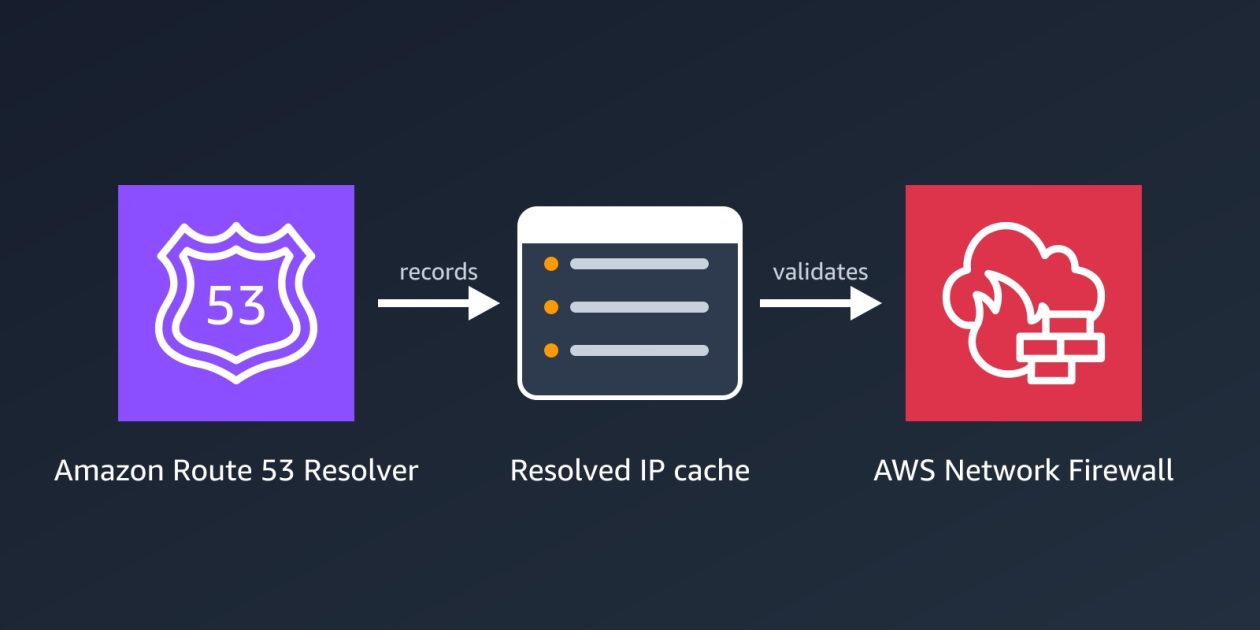 Introducing Route 53 Resolved IP Validation for AWS Network Firewall
Route 53 Resolved IP Validation for AWS Network Firewall, launched 21 October 2026 at no extra charge, has Route 53 Resolver share the IP addresses it returns per domain with Network Firewall, which checks each new outbound connection against them. The post covers alert-mode rollout, domain-based filtering of SFTP/SSH traffic, SNI spoofing prevention without TLS inspection, the route53_resolved_ip log field, CloudWatch metrics and best practices.
 aws.amazon.comarticleAdded 28 Oct 2026, published 27 Oct 2026🛡️ Security
- CISA Adds Two Known Exploited Vulnerabilities to Catalog
CISA alert of 27 October 2026 adding two vulnerabilities to the Known Exploited Vulnerabilities (KEV) Catalog on evidence of active exploitation: CVE-2026-48356, an unrestricted upload of a dangerous file type in Adobe Commerce and Magento, and CVE-2026-111497, an unchecked return value in Google Brotli. It restates BOD 26-04, which makes federal civilian agencies prioritise KEV flaws on exposed assets and check for prior compromise. No technical detail or IOCs are given.
cisa.govadvisoryAdded 29 Oct 2026, published 27 Oct 2026🛡️ Security - Can LLMs Uncover Hidden Physical Laws through Free Exploration?
LongChang is an automated framework that builds simulated worlds with altered physical laws, such as heavier objects falling more slowly, to test whether LLMs can find the law by free exploration. Explorer LLMs manipulate objects and build tools without tasks or hints, while separate LLM agents generate scenes, review tool designs and grade reports. Across 12 LLMs, GPT-6 Astra reached a 16.7% discovery rate and the other 11 scored 0%.
arxiv.orgpaperAdded 28 Oct 2026, published 27 Oct 2026🧠 AI - Scaling Laws for Tool-Use Agents via Controllable Environment Synthesis
SynthAPI is a pipeline that generates synthetic tool-use environments with explicit control over diversity of tools, tasks and underlying databases. Across 458,752 tasks and 849 trained models of four sizes, the authors fit a scaling law predicting downstream agent generalization. At larger data budgets, scaling tool and database diversity beats adding more tasks, and higher complexity helps more. Agents trained this way beat prior synthetic-data baselines on four benchmarks.
arxiv.orgpaperAdded 28 Oct 2026, published 27 Oct 2026🧠 AI  Part 3 – Cybersecurity journeys: The work behind the work
Part 3 of the AWS Security Blog series on cybersecurity careers profiles three AWS staff: Brandon Caldwell (application security, empathy and communication), Kurt Heath (self-taught pen tester, cautious AI use) and Seth Jeacopello (code review, managing attention). It gives practical advice: practice on vulnerable machines and read the logs, build CTF and GitHub portfolios, and write clearly. It lists TryHackMe, Hack The Box, the OWASP Top 10, OWASP Cheat Sheet Series, Darknet Diaries and AWS Skill Builder.
aws.amazon.comarticlePublished and added 27 Oct 2026🛡️ Security Tailscale Rushes Patches After Uncoordinated Disclosure of ‘Tailworm’ Flaws
Tailworm is a set of 11 findings, published by Cyberdione Labs before patches, in Tailscale client 1.104.2 and headscale 0.29.5. Four of six high-severity bugs affect Tailscale SSH, where root-privileged forwarding safeguards can be bypassed, giving root on reachable servers and wormable spread at under a second per hop. Tailscale advises reviewing SSH policies and disabling forwarding until a patched client ships. No in-the-wild exploitation is reported.
securityweek.comarticlePublished and added 27 Oct 2026🛡️ Security HPE Patches Dozens of Critical Flaws in Networking Products
HPE released patches for 72 vulnerabilities in the AOS-8 and AOS-10 wireless operating systems of its Aruba networking products, including 33 critical flaws. Eight max-severity bugs (CVE-2026-79844 to CVE-2026-79851) allow unauthenticated RCE, authentication bypass and arbitrary command execution. Fixes are in AOS 8.10.0.24, 8.13.3.1, 10.4.1.14, 10.7.2.7 and 10.8.1.2. HPE reports no exploitation in the wild and advises restricting management interfaces to a dedicated VLAN.
securityweek.comarticlePublished and added 27 Oct 2026🛡️ Security This is Fine: What NetScaler Zero-Days Tell Us About the New Normal
This SecurityWeek commentary covers the September 2026 Citrix NetScaler ADC and Gateway zero-days, exploited from mid-month and patched on 27 September as unauthenticated RCE flaws CVE-2026-88771 through CVE-2026-88778. The author argues the fast response shows stronger defence. Cited evidence: Citrix disclosure time fell from about 40 days to 17 in 2026 after it set up a NetScaler CNA, and CISA made a rare Sunday KEV addition.
securityweek.comarticlePublished and added 27 Oct 2026🛡️ Security How to patch PHP2Shell with free Aikido Images
Aikido Images are free patched PHP container images on public ECR (public.ecr.aws/aikido-dev/php) that backport the PHP2Shell fixes for CVE-2026-109618 and CVE-2026-109619 into release lines 5.5 to 8.5, except 8.0. Upstream fixed 8.2 to 8.5 in October 2026 and left 8.1 and older unpatched. The post shows docker pull and Dockerfile FROM changes, then rebuild, restart, session.upload_progress.enabled=0 and compromise checks.
aikido.devarticlePublished and added 26 Oct 2026🛡️ Security- EPICS Base
CISA ICS advisory ICSA-26-300-01 (October 27, 2026) covers EPICS Base release 7.0.10 and earlier, with CVE-2026-114595 through CVE-2026-114598. Flaws include integer overflow, length parameter inconsistency and type confusion, allowing denial of service, memory corruption, information disclosure or remote code execution (CVSS v3.1 9.8). The fix is EPICS Base 7.0.11, with patches in epics-base and pvDataCPP pull requests.
cisa.govadvisoryAdded 29 Oct 2026, published 26 Oct 2026🛡️ Security - Cheap AI-Assisted Reverse Engineering and What It Will Do
"Cheap AI-Assisted Reverse Engineering and What It Will Do" is an October 2026 arXiv paper (Computers and Society) arguing that generative AI strains the law of reverse engineering. AI systems can identify hardware components, extract firmware, decompile object code and clone apps, which removes the cost barrier that laws rely on. The authors map these practices onto trade secret, copyright, anti-circumvention, computer misuse and contract law, and sketch possible legal responses with their trade-offs.
arxiv.orgpaperAdded 28 Oct 2026, published 26 Oct 2026🛡️ Security  Industrial Vendors Check Products for PHP2Shell Vulnerabilities
PHP2Shell (CVE-2026-109618 and CVE-2026-109619) are critical unauthenticated RCE flaws in the PHP engine, patched on 21 October 2026 in PHP 8.5.12, 8.4.27, 8.3.36 and 8.2.35. Industrial vendors including Schneider Electric, Siemens, ABB, B&R, Johnson Controls, Belden, HMS Networks and Wibu-Systems have confirmed affected OT products, with fixed versions or mitigations listed. Rockwell Automation and Hitachi Energy were still assessing, and Moxa reported no impact.
securityweek.comarticlePublished and added 26 Oct 2026🛡️ Security PHP2Shell Exploitation Moves From Probes to Working Shells
PHP2Shell exploitation (CVE-2026-109618, CVE-2026-109619) reached working shells on 24 October 2026, when Perplexity researcher Adel Karimi's honeypots (PHP 8.4.26, Apache mod_php, single worker) logged 35 shells across three servers. Attackers used a four-stage HTTP chain: memory exhaustion, memory leak, then shell command execution, matching a public PoC. No second-stage payload was seen, and CISA had not added the flaws to KEV as of 26 October.
securityweek.comarticlePublished and added 26 Oct 2026🛡️ Security- Tailworm – Tailscale Vulnerabilities
Tailworm is a security assessment report by Erica Windisch (Cyberdione Labs) on Tailscale v1.104.2 and headscale v0.29.5, tested 22-24 October 2026. It documents 11 findings: Tailscale SSH unix-socket forwarding that runs as root (bind, dial and TOCTOU races), conn25 app-connector egress bypass, gliderssh memory exhaustion, serve/funnel flaws and headscale DoS. It includes PoC references, mitigations and fix status as of 27 October 2026. The page is truncated, so the later sections were not read.
 tailworm.comwriteupAdded 27 Oct 2026, published 25 Oct 2026🛡️ Security
- CISA: Critical Vulnerabilities in PHP Require Immediate Patching
CISA alert on CVE-2026-109618 and CVE-2026-109619 ("php2shell"), unauthenticated remote code execution flaws affecting PHP installations serving web requests, including mod_php, PHP-FPM, php-cgi, FrankenPHP and LiteSpeed. Fixed in PHP 8.5.12, 8.4.27, 8.3.36 and 8.2.35. Updated 23 October 2026 with a Sigma rule, partner advisories (NSA, NCSC-UK, ASD ACSC, NCSC-NL, NCSC-NZ, Cyber Centre) and guidance to inventory PHP, patch internet-facing systems first, and watch for PHP workers spawning shells. No in-the-wild exploitation had been observed.
cisa.govadvisoryAdded 24 Oct 2026🛡️ Security  Amazon’s Trainium Takes a Strike at the Training King
SemiAnalysis reviews AWS Trainium3 and the new TorchNeuron native PyTorch backend after a few weeks of hands-on use. It reports TorchTitan Qwen3-32B results on Trainium2 (11,099 tokens/s eager at 23.89% MFU, 14,156 compiled at 30.47%), a 27-minute gpt-oss compile time, 89 of 96 FlexAttention cases passing, matmul comparisons with GB300 and B200, and a positive view of the Neuron Explorer profiler.
 newsletter.semianalysis.comarticleAdded 29 Oct 2026, published 23 Oct 2026🧠 AI
 CVE-2026-109618 / CVE-2026-109619 | NodeZero Rapid Response Check Now Available
PHP2Shell is the name for CVE-2026-109618 and CVE-2026-109619, critical unauthenticated RCE flaws in PHP core fixed on 21 October 2026 in PHP 8.2.35, 8.3.36, 8.4.27 and 8.5.12. The page explains the out-of-memory corruption and stale global state causes, mod_php and PHP-FPM exposure, interim mitigations, hunting guidance, exploitation reports from October 2026, and the 23 October CVE-2026-115560 upload-progress advisory. Horizon3 also announced a non-exploiting NodeZero check.
 horizon3.aiadvisoryAdded 29 Oct 2026, published 23 Oct 2026🛡️ Security
 What is the AI-Native SDLC? AI SDLC, AI-DLC, and ADLC Explained | Endor Labs
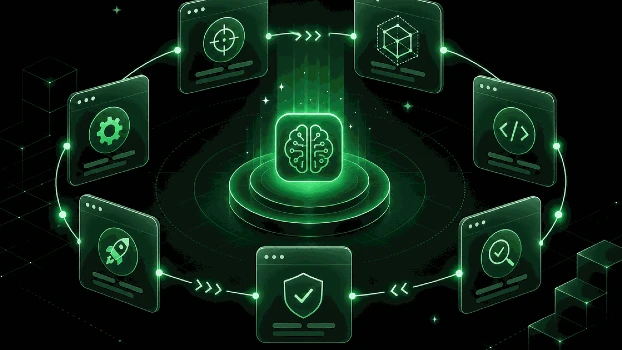
The AI-native SDLC is a software lifecycle redesigned around AI and coding-agent participation, as opposed to the AI-assisted SDLC, which adds AI tools to unchanged stages. The Endor Labs guide separates AI-DLC (the AWS methodology), AI SDLC and the two meanings of ADLC (Agentic vs Agent Development Lifecycle). It also covers stage-by-stage changes and AppSec implications: AI-generated code flaws, dependency choice, reachability analysis and governing agent actions.
endorlabs.comarticlePublished and added 23 Oct 2026🧠 AI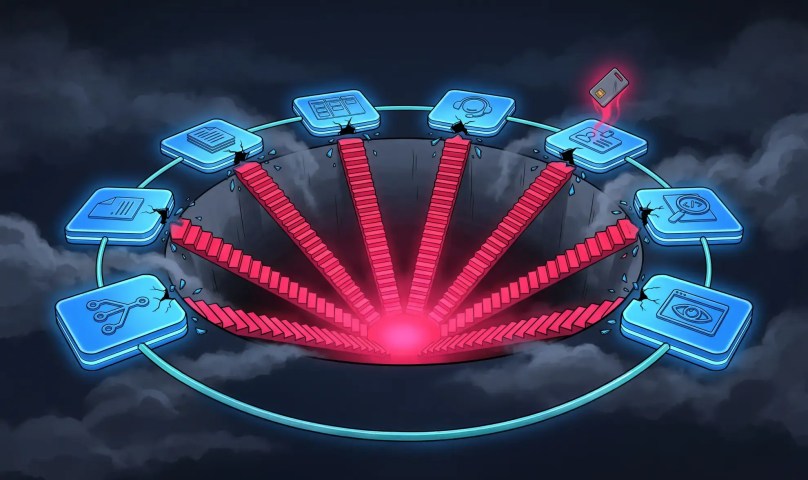 PHP2Shell: What This Week Tells Us About the Web We Built
PHP2Shell is the name for two unauthenticated remote code execution flaws, CVE-2026-109618 and CVE-2026-109619 (CVSS v4 9.2), in the PHP engine back to version 5.4. The post covers the leaked October 2026 embargo, AI-assisted exploit building by Calif and others, patch availability by PHP version, and a 72-hour and quarterly response plan covering inventory, patching, secret rotation and edge virtual patching. It ends with a short Orca product section.
 orca.securityarticlePublished and added 23 Oct 2026🛡️ Security
 Ethereum Delays Glamsterdam Testnet Fork Over Gas Security Flaws
Ethereum developers postponed the Glamsterdam hard fork on the Hoodi testnet (due 26 October 2026) after auditor ChainSecurity reported that the gas changes in EIP-8037 and EIP-8038 break assumptions in existing contracts. Gas can be refilled after a failed call and repricing alters call costs, so failure paths that used to revert can now complete, undermining insufficient gas griefing protections. ChainSecurity found 13 real-world examples and is in responsible disclosure.
 decrypt.coarticlePublished and added 23 Oct 2026🛡️ Security
 Atlassian Patches 75 Flaws in Data Center and Server Products
Atlassian's October 2026 security bulletin lists 162 high and 14 critical third-party vulnerabilities across Bamboo, Bitbucket, Confluence, Crowd, Fisheye/Crucible, Jira Software and Jira Service Management. SecurityWeek counts 75 unique CVEs, six critical, in Tomcat, Bouncy Castle, Netty and Apache SSHD. Atlassian rates them non-critical for its use, reports no exploitation, and the critical CVE-2026-65905 appears on the portal but not in the bulletin.
securityweek.comarticlePublished and added 23 Oct 2026🛡️ Security Does Your Model Run on AWS Trainium? Look It Up
The torch-neuronx model support Space is a Hugging Face and AWS Neuron lookup that shows whether a Transformers model runs unmodified on AWS Trainium2. Each result lists core count, wall time and peak memory, plus the run.py script and a public NEFF compile cache. Tests generate 32 tokens on up to 16 cores. Results are in the aws-neuron/torch-neuronx-model-support Parquet dataset.
 huggingface.coarticlePublished and added 23 Oct 2026🧠 AI
 Daily Vibe Casting (@vibecastingapp) on X
Daily Vibe Casting thread of 24-hour tech news, with item 5/10 on Cloudflare's agent security audit skill. The skill works across models and agent harnesses, including free models, and outputs machine-readable reports. It calls for sandboxing, proof of real impact and independent checks. The thread also covers GitLab CVE-2026-110264 (CVSS 10.0, unauthenticated RCE), two AI-found PHP RCE flaws, and a Railway secret-theft warning.
x.comthreadAdded 24 Oct 2026, published 22 Oct 2026🛡️ Security- PHP2Shell Exposure Depends on More Than Whether You Use PHP
Horizon3.ai post on assessing exposure to PHP2Shell (CVE-2026-109618, CVE-2026-109619), two memory-handling flaws in PHP. It says affected PHP may be bundled in third-party products, containers or managed hosting, and that finding it shows a remediation need, not proven exploitability. It lists questions to ask hosting providers and says Horizon3.ai has validated exploitation under specific preconditions that are still being characterized.
horizon3.aiarticleAdded 29 Oct 2026, published 22 Oct 2026🛡️ Security  The Current Landscape of OAuth Attacks
Unit 42 survey of OAuth attacks that steal tokens after MFA, so access survives password resets. It covers account hijacking (device authorization and authorization code misuse), permission hijacking (vague or impersonating app names), and malicious redirects, including the error-triggered redirect campaign Microsoft documented in March 2026. It also describes COSF and OAuth-as-a-service flaws, PhaaS and LLM evasion trends, and defenses such as admin-only consent and redirect_uri audits.
unit42.paloaltonetworks.comarticleAdded 30 Oct 2026, published 22 Oct 2026🛡️ Security What Is a Neocloud? The GPU Clouds Powering the AI Boom
Decrypt explainer on neoclouds, specialist providers such as CoreWeave and Nebius that rent Nvidia GPU clusters for AI training and inference. It covers the chips, power and debt model, Bitcoin miners turned AI hosts, and customers including Microsoft, AWS, Google and Anthropic. It cites Gartner's 14 October 2026 forecast that over 80% of neoclouds will stop operating independently by 2030.
decrypt.coarticlePublished and added 22 Oct 2026🧠 AI- [tl;dr sec] #351 - PHP2Shell, Autopatching Skills, AWS Pathrunner
tl;dr sec #351 is a weekly security newsletter. Clint Gibler describes working with OpenAI, Calif, Wiz and the PHP maintainers on the PHP2Shell unauthenticated RCE disclosure, which affects 13 years of PHP. It also covers Datadog's pathrunner AWS IAM escalation framework, Trail of Bits' patching-bugs and regression-hunt Codex plugins, XBOW finding de-duplication, backdoored open-weight models, and CREBench.
tldrsec.comarticleAdded 30 Oct 2026, published 22 Oct 2026🛡️ Security - Show HN: OnKey – I'm a bad singer, so I built an app to show where I'm off-key
OnKey is a free, MIT-licensed singing trainer for Apple Silicon Macs. After a song ends in Spotify, Apple Music or browser YouTube, it separates the lead vocal with UVR's MDX-Net Karaoke 2, tracks pitch with CREPE and turns it into syllable-level notes with the GAME model. On later plays it scrolls the notes, draws the user's live pitch and scores each line. Analysis runs on-device, and the repo explains the build steps and network requests.
github.comrepoAdded 24 Oct 2026, published 22 Oct 2026🧠 AI  Tech and Security Companies Respond to PHP2Shell Vulnerabilities
SecurityWeek roundup of responses to PHP2Shell, two critical unauthenticated RCE flaws (CVE-2026-109618, CVE-2026-109619) fixed in PHP 8.5.12, 8.4.27, 8.3.36 and 8.2.35 on 21 October 2026. It covers the exploitation timeline (first attempt 17 October), vendor exposure checks, Red Hat's lower 8.1 score against NVD's 9.8, detections from Cisco Talos, CrowdStrike and Corelight, and government alerts.
securityweek.comarticlePublished and added 22 Oct 2026🛡️ Security Paul Dragoonis (@dr4goonis) on X
Social post summarising emergency patches for Node.js (4 high CVEs), PHP (2 critical) and nginx (3 critical). Node.js flaws include a Brotli decoder out-of-bounds write, a DNS truncation bug and two TLS hostname-verification bypasses. PHP has use-after-free and heap corruption bugs, and nginx has alias-rewrite and map-regex heap overflows plus an SSI-AIO use-after-free. It lists the fixed versions for each product.
x.comthreadAdded 23 Oct 2026, published 22 Oct 2026🛡️ Security PHP2Shell Exploitation Started Days Before Patches
PHP2Shell (CVE-2026-109618 and CVE-2026-109619) is a pair of critical PHP remote code execution flaws. Amazon saw the first exploitation on 17 October 2026, four days before patches on 21 October, and Cloudflare logged millions of attempts after disclosure. Censys, VulnCheck and VirusTotal counted over 1 million unpatched PHP hosts, and CISA urged updating to PHP 8.5.12, 8.4.27, 8.3.36 or 8.2.35.
securityweek.comarticlePublished and added 22 Oct 2026🛡️ Security [AINews] OpenAI’s Patch the Planet program is 1 of 2 parties to discover PHP2Shell vulnerabilities in core PHP affecting 70% of the web, using GPT-5.6 Sol; coordinated response over 2 months
AINews issue of 20-21 October 2026 whose top story reconstructs PHP2Shell, two PHP-engine memory-corruption flaws (CVE-2026-109618 and CVE-2026-109619) with reported pre-auth RCE against WordPress, Drupal and Joomla. It covers the two-month coordinated response, separate discovery by Calif/OpenAI (GPT-5.6 Sol) and Wiz (Gemini 4 Argon), Cloudflare's WAF stopgap and NSA guidance. It lists open gaps: fixed versions, leak details, exploitation versus scanning.
 latent.spacearticleAdded 23 Oct 2026, published 22 Oct 2026🛡️ Security
 Red-Teaming OpenAI's Internal Agent Monitoring Systems
METR and Redwood Research summarize a three-week pilot red-team (21 July to 11 August 2026) of OpenAI's internal asynchronous misalignment monitoring system. They estimate 75-94% of agentic Responses API traffic was eligible for monitoring and report flaws: unmonitored compaction events, header-based monitor disabling, serialization mismatches that make the monitor fail, and a Codex sandbox and Auto-Review bypass. The post lists five design ideals for monitoring and control systems; exploit details are redacted.
 metr.orgwriteupAdded 29 Oct 2026, published 22 Oct 2026🛡️ Security
 Using AWS WAF to apply mitigations for PHP2Shell RCE vulnerabilities (CVE-2026-109618 and CVE-2026-109619)
AWS Security Blog guide to mitigating the PHP2Shell unauthenticated RCE flaws (CVE-2026-109618 and CVE-2026-109619, CVSS v4.0 9.2) with AWS WAFv2 rules. It covers rules for the PHP_SESSION_UPLOAD_PROGRESS trigger, blocking multipart/form-data, body size caps and rate limits, plus body inspection limits. It lists PHP fixes (8.5.12, 8.4.27, 8.3.36, 8.2.35) and server settings, and stresses WAF only reduces exposure.
aws.amazon.comarticlePublished and added 22 Oct 2026🛡️ Security- PHP web runtimes (CVE-2026-109618 and CVE-2026-109619)
AWS bulletin 2026-143-AWS covers CVE-2026-109618 and CVE-2026-109619, critical PHP web runtime flaws that let an unauthenticated remote caller run code, read process data or cause denial of service. Fixed in PHP 8.5.12, 8.4.27, 8.3.36 and 8.2.35; PHP 5.4 to 8.1 get no fix. It gives status for WorkMail, Elastic Beanstalk, Amazon Linux and Lightsail, plus AWS WAF rules, including a custom "PHP2Shell" rule matching PHP_SESSION_UPLOAD_PROGRESS and PHPSESSID.
aws.amazon.comadvisoryAdded 22 Oct 2026, published 21 Oct 2026🛡️ Security  PHP Foundation Says Chainguard Broke Security Embargo Ahead of Emergency Patches
The PHP Foundation's October 21, 2026 postmortem says Chainguard broke an embargo by publishing patched PHP container images over six hours before the coordinated release of fixes for CVE-2026-109618 and CVE-2026-109619, two critical RCE flaws. The piece covers the leaked CVE IDs, Calif's accidentally published exploit video, Chainguard CEO Dan Lorenc's defence citing exploitation in the wild, and the 2024 origin of the memory management bug.
 socket.devarticlePublished and added 21 Oct 2026🛡️ Security
- Today's PHP Security Release, and How We're Strengthening PHP Security
Simon Willison's link post on the 21 October 2026 PHP security release, which fixes two remote code execution flaws across the PHP 8.x line. The CVE IDs leaked on 20 October with a wrong CVSS of 10.0 (actual 9.2), and Calif accidentally published a proof-of-concept video. It also gives Wiz Research's timeline, with unauthenticated RCE confirmed against Drupal and WordPress in August 2026.
 simonwillison.netarticlePublished and added 21 Oct 2026🛡️ Security
 Remotely exploitable PHP bug found on 70% of world’s websites
PHP2Shell is a pair of unauthenticated remote code execution flaws in PHP, CVE-2026-109618 and CVE-2026-109619, found by Calif using OpenAI's GPT-5.6 Sol during an OpenAI-funded audit. Fixes ship in PHP 8.5.12, 8.4.27, 8.3.36 and 8.2.35, with backports for 7.4-8.1 rolling out, while PHP 7 and 5 sites stay unpatched. Wiz confirmed the flaws; Cloudflare applied a stopgap and Finnish and Dutch government sites went offline.
 protos.comarticlePublished and added 21 Oct 2026🛡️ Security
 Best practices for integrating IAM Roles Anywhere with your PKI
Best practices for integrating AWS IAM Roles Anywhere with an external PKI so non-AWS workloads get temporary credentials via X.509 certificates. Covers trust anchor placement, certificate attributes (CN, issuer, SAN) in trust policy conditions, short-lived versus just-in-time certificates, and private key protection with PKCS #11, TPM 2.0 and OS certificate stores. Includes credential helper modes (serve, update), expiry monitoring, blue/green trust anchor rotation and a sample CloudFormation template.
aws.amazon.comarticlePublished and added 21 Oct 2026🛡️ Security PHP2Shell Patches Land as First Exploitation Attempts Hit Sensors
PHP2Shell is a pair of critical PHP core flaws, CVE-2026-109618 (out-of-memory corruption) and CVE-2026-109619 (stale global state), both CVSS 9.2 and giving unauthenticated RCE, confirmed on Apache with mod_php. Fixes shipped in PHP 8.5.12, 8.4.27, 8.3.36 and 8.2.35, with backports for 7.4 to 8.1. Exploitation attempts were reported by watchTowr, Hadrian, Patchstack, Cloudflare and Vega after a leak moved disclosure up from 22 October 2026 to one day earlier.
securityweek.comarticlePublished and added 21 Oct 2026🛡️ Security Profiling TorchNeuron (Part 1): System-level profiling on AWS Trainium.
Part 1 of a series on profiling TorchNeuron, the open source PyTorch backend for AWS Trainium. It shows how to configure torch.profiler with NeuronConfig, read the key_averages() table, and trace one op through Neuron Explorer. Three RMSNorm variants are compared: naive eager (2.355 ms device time), torch.rms_norm (403 μs) and torch.compile (375 μs).
huggingface.cowriteupPublished and added 21 Oct 2026🧠 AI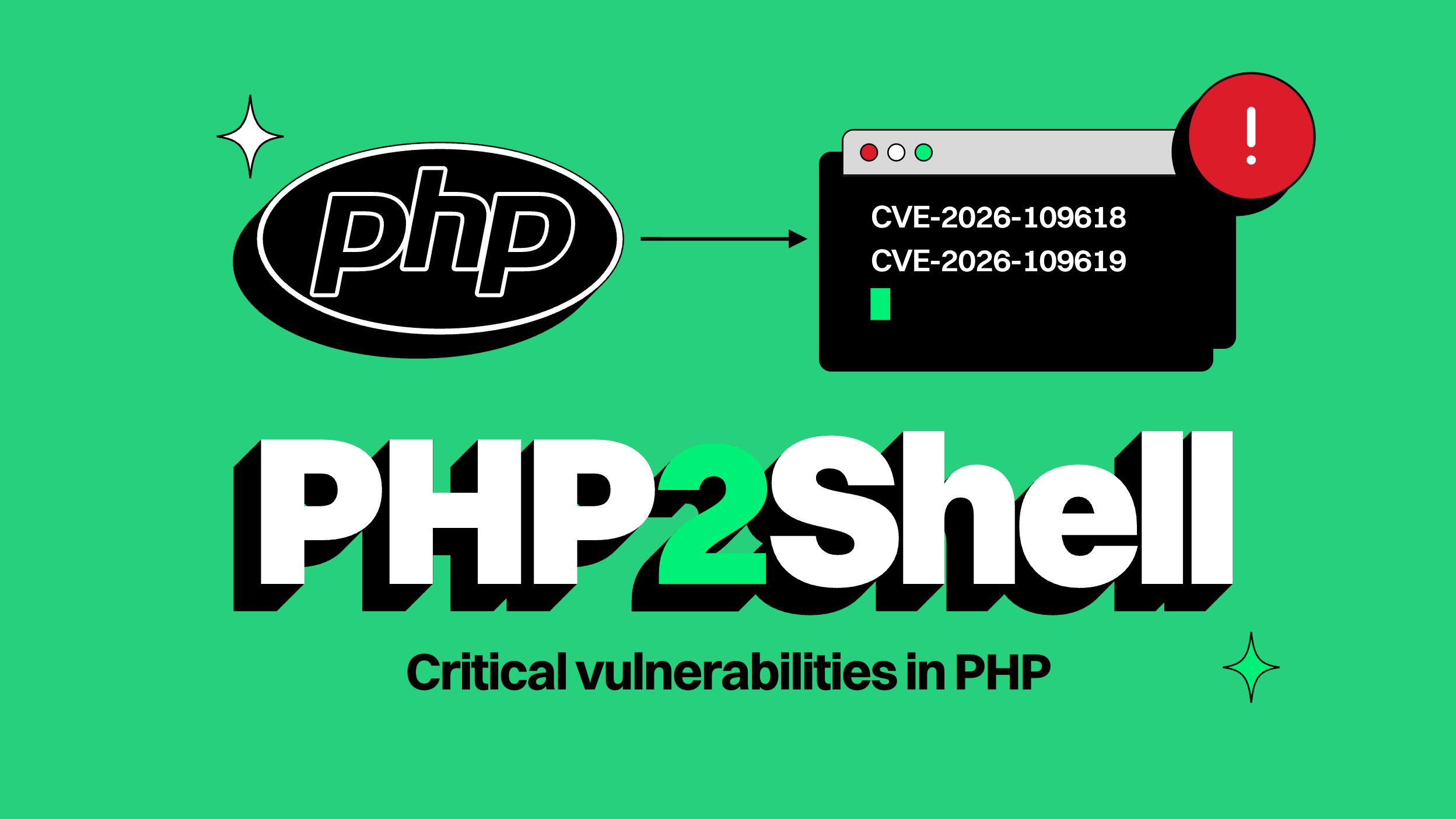 PHP2Shell: Critical vulnerabilities in PHP (CVE-2026-109618, CVE-2026-109619) | Endor Labs
PHP2Shell is the name for two critical PHP core memory-safety flaws, CVE-2026-109618 and CVE-2026-109619, that allow unauthenticated remote code execution. Fixes ship in PHP 8.2.35, 8.3.36, 8.4.27 and 8.5.12. Wiz researchers demonstrated RCE against WordPress, Drupal and Joomla, and Apache with mod_php is the highest risk. The post covers inventory, container rebuilds, Cloudflare WAF rules and temporary exposure reduction.
endorlabs.comadvisoryPublished and added 21 Oct 2026🛡️ Security Today's PHP security release, and how we're strengthening security
The PHP Foundation explains the 21 October 2026 release of PHP 8.5.12, 8.4.27, 8.3.36 and 8.2.35, which fix two critical unauthenticated RCE flaws in memory management and error handling, including an OOM problem behind CVE-2026-109618. It covers the 2024 Quarkslab audit, the stalled fix, the August 2026 reports from Calif, OpenAI and Wiz, and the embargo leaks (CVE IDs, a Calif video, Chainguard images). It also lists new security team structure and AI-assisted triage.
 thephp.foundationarticleAdded 22 Oct 2026, published 21 Oct 2026🛡️ Security
 PHP Panic: Two Critical Bugs Put 70% of the Internet at Risk, and Everyone Is Freaking Out
Decrypt reports on CVE-2026-109618 and CVE-2026-109619, two PHP flaws rated CVSSv4 9.2 that allow unauthenticated remote code execution. PHP 8.5.12, 8.4.27, 8.3.36 and 8.2.35 shipped on 21 October 2026 after an early leak and Cloudflare-observed attacks. The article covers the memory-handling root causes, mod_php and upload-progress exposure, government site shutdowns, affected version range (PHP 5.4 and later per Sansec), and patch guidance.
decrypt.coarticlePublished and added 21 Oct 2026🛡️ Security

Showing 60 of 364
Show more