 FBI links $6.3 billion Binance crypto heist to North Korean hackers
The FBI attributed the roughly $6.3 billion Binance theft of about 29 October 2026 to North Korea's TraderTraitor (Lazarus Group, Jade Sleet, APT38). Binance traced the breach to a compromised DevOps engineer's laptop that gave access to a service container used to submit unauthorized withdrawals across ten blockchains. The FBI published 628 laundering addresses and linked the group to earlier thefts at Bybit, DMM Bitcoin, Bitget and Drift.
 bleepingcomputer.comarticlePublished and added 1 Nov 2026🛡️ Security
 Binance Hack: Everything You Need to Know About the Biggest Crypto Heist in History
Decrypt's explainer on the roughly $6.4 billion theft from Binance hot wallets across about 10 blockchains. Binance traced it to a compromised DevOps engineer laptop plus further breach points, and on Ethereum the attacker used 50 pre-signed EIP-7702 authorizations to turn a hot wallet into a sweeper. Chainalysis and TRM Labs attribute it to TraderTraitor; Tether and Circle froze about $2.3 billion.
 decrypt.coarticlePublished and added 31 Oct 2026🛡️ Security
 Binance’s $6.3 Billion Hack Puts Developer Machine Security in Focus
StepSecurity's analysis of Binance's 29 October 2026 incident, which Binance puts at about $6.3 billion in affected assets. It covers Binance's disclosure of a possible DevOps laptop compromise, and TRM Labs and Elliptic findings on 50 EIP-7702 authorizations and a persistent delegation. It links this to the Nx, OVHcloud CLI and Claude Code extension compromises, gives an investigation checklist, then describes StepSecurity products.
 stepsecurity.ioarticlePublished and added 30 Oct 2026🛡️ Security
- President Trump says they’re looking into Binance hack as calls grow for crypto rules
The Block reports that Binance lost about $6.3 billion in a hack on 29 October 2026. Co-CEO Richard Teng said a compromised DevOps engineer's laptop gave access to a service container used to submit unauthorized withdrawals, and TRM Labs attributed the theft to North Korea's TraderTraitor. The rest covers reactions: President Trump said on 30 October he was looking into it, CFTC Chair Michael Selig and The Digital Chamber urged federal exchange rules, and senators disputed whether the Clarity Act would have allowed freezes.
 theblock.coarticlePublished and added 30 Oct 2026🛡️ Security
 Weekly Research Brief: Binance Hacked; Hyperliquid on Wall Street; Prediction Markets’ Brazil ‘Miss’
Galaxy Research's weekly brief of 30 October 2026 opens with the Binance hack: about $6.3b drained across 10 blockchains, attributed by TRM Labs and Chainalysis to TraderTraitor (Lazarus-linked). The attacker used EIP-7702 with 50 pre-signed authorizations on Ethereum, and Binance's preliminary finding is a compromised DevOps laptop reaching a service container. Tether and Circle froze about $2.6b. The other sections cover Hyperliquid and prediction markets.
 galaxy.comarticleAdded 30 Oct 2026🛡️ Security
 Here We Go Again: Binance Loses $6.3b in Largest Robbery in History
Galaxy Research newsletter on the roughly $6.3b drained from Binance across 10 blockchains, which TRM Labs and Chainalysis attribute to TraderTraitor. On Ethereum the attacker used EIP-7702 to turn a hot wallet into a sweeper contract backed by 50 pre-signed authorizations. Binance's preliminary finding is a compromised DevOps laptop, with no wallet key leak. Tether, Circle, Ripple and World Liberty froze about $2.7b; Galaxy also assesses Binance's ability to cover losses.
galaxy.comarticleAdded 30 Oct 2026🛡️ Security Binance Just Suffered the Biggest Hack in Crypto History. What Now?
Bankless report on the Binance hack of $6.3 billion, which Binance's preliminary investigation traced to a compromised DevOps engineer's laptop with access to withdrawal-authorizing systems. TRM Labs found valid EIP-7702 authorizations on Ethereum, and nine other chains were drained through normally signed transactions. TRM and Chainalysis link it to North Korea's TraderTraitor. Tether and Circle froze about $3 billion, and Binance says SAFU and corporate cash will cover the losses.
 bankless.comarticlePublished and added 30 Oct 2026🛡️ Security
 Secret Service, FBI Join Binance Hack Probe as Circle Freezes $823 Million
Decrypt reports that Binance is working with the FBI and U.S. Secret Service after a theft of about $6.4 billion, which TRM Labs and Chainalysis attribute to North Korea's TraderTraitor group, also linked to the February 2025 Bybit hack. Circle froze about $823 million in USDC and Tether froze USDT, though the page gives differing Tether totals. Binance first suspected a compromised DevOps engineer laptop, found more breach points, and saw no evidence of leaked wallet private keys.
decrypt.coarticlePublished and added 30 Oct 2026🛡️ Security Binance hack: the largest robbery in financial history
Binance hack analysis from 21shares on the 29 October 2026 theft of about $6.3 billion from Binance. Binance's initial finding points to a compromised DevOps engineer's laptop with no sign of a leaked wallet key. Chainalysis attributes it to North Korea with high confidence, and about $3 billion was frozen by Tether, Circle and the Arbitrum Security Council. The attacker also borrowed about $44.6 million of WETH on Aave. Binance says SAFU and company funds will cover all losses.
 21shares.comarticlePublished and added 30 Oct 2026🛡️ Security
- Binance says it has $6.34 billion ready to cover hack losses
The Block reports that Binance says it has set aside $6.34 billion of its own funds to cover a hack it puts at about $6.3 billion. Co-CEO Richard Teng says the entry point was a compromised DevOps laptop and no private key leak was found. About $3 billion was frozen by Tether, Circle, Ripple and others, withdrawals are suspended, and TRM Labs sees parallels with North Korean attacks. Technical detail is thin.
theblock.coarticlePublished and added 30 Oct 2026🛡️ Security  Binance hack: how a compromised developer laptop can lead to a $6.3 billion breach
Aikido Security's analysis of the roughly $6.3 billion Binance incident, which Binance says may have started with a compromised DevOps engineer's laptop. It sets out what is known (no private key leak, TraderTraitor attribution by TRM Labs and Chainalysis, additional breach points) and a plausible chain from laptop credentials to a withdrawal service. It compares the 2025 Bybit theft and lists mitigations.
 aikido.devarticlePublished and added 30 Oct 2026🛡️ Security
 Binance Finds 'Additional Points of Breach' in $6.3B Hack
Binance estimated the October 2026 security incident at about $6.3 billion and said it found "additional points of breach" beyond the compromised DevOps engineer laptop it first named. The attacker reached a service container and submitted unauthorized withdrawals, with no wallet private key leak found. Arkham counted $6.01 billion taken from hot wallets on nine chains; Tether and Circle froze about $1.8 billion in stablecoins. About $3 billion is frozen onchain; withdrawals stay suspended.
decrypt.coarticlePublished and added 30 Oct 2026🛡️ Security Binance links $6.3 billion crypto theft to compromised DevOps laptop
Binance linked the theft of about $6.3 billion in crypto to a compromised DevOps engineer's laptop, which let attackers reach a service container and submit unauthorized withdrawals. TRM Labs and Chainalysis attribute the 29 October 2026 attack to North Korea's TraderTraitor. About $2.7 billion was frozen, and the attackers hold about $2.4 billion. Binance has found no evidence of a leaked wallet private key.
bleepingcomputer.comarticlePublished and added 30 Oct 2026🛡️ Security $6 Billion Binance Hack Bears Hallmarks of North Korea’s TraderTraitor
The Binance hack of 29 October 2026 drained about $6.36 billion across ten blockchains in roughly 20 minutes, according to TRM Labs. TRM attributes it with high confidence to North Korea's TraderTraitor, citing a mixer-funded operator wallet, pre-signed transactions and overlap with the Bybit and KelpDAO hacks. Binance's early findings point to a compromised DevOps engineer laptop. Stablecoin issuers froze about $2.7 billion.
 securityweek.comarticlePublished and added 30 Oct 2026🛡️ Security
 Binance probes a suspected cryptocurrency breach: $6.3B affected, about $3B frozen
Binance disclosed a suspected security incident on 29 October 2026, estimating $6.3 billion affected and about $3 billion frozen. Binance's early finding is that a compromised DevOps engineer's laptop let an attacker reach a service container and submit unauthorized withdrawals, with no evidence of wallet private-key leakage. TRM Labs suspects TraderTraitor, the group tied to the February 2025 Bybit theft. Tether, Circle and Ripple froze funds.
 en.cryptonomist.charticlePublished and added 30 Oct 2026🛡️ Security
 Trail of Bits (@trailofbits) on X
Trail of Bits post on X summarising Binance's initial investigation into a security incident. Binance suggests a compromised DevOps engineer's laptop let an attacker reach a service container and submit unauthorized withdrawal transactions. The text says no evidence has been found of wallet private key compromise. The fetched text is truncated and gives no further detail.
 x.comthreadPublished and added 30 Oct 2026🛡️ Security
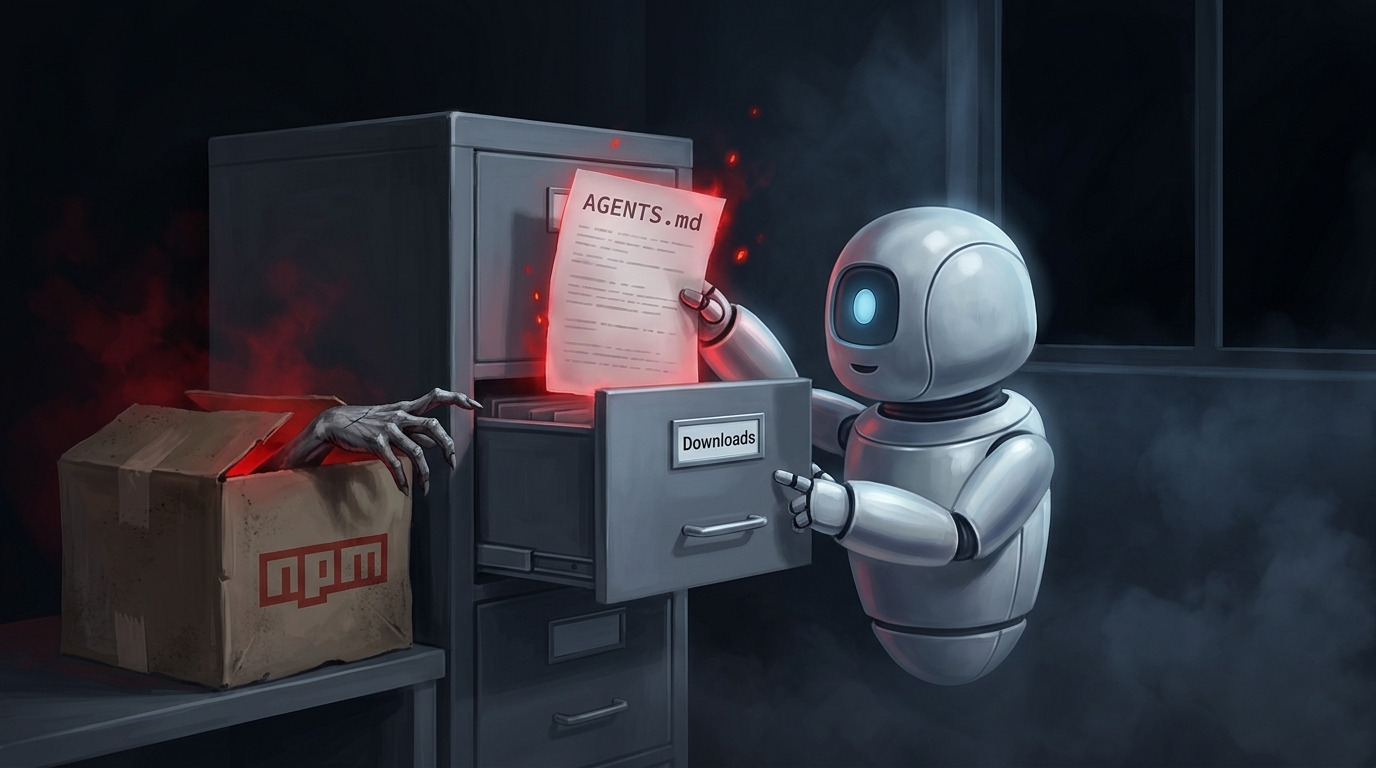 The OpenSourceMalware Show #27
 (28 October 2026) is a podcast episode with transcript. It covers the Brotli decoder bug (CVE-2026-111497) vendored in C code across Python, Rust and PHP, and how to find copies via decode.c. It also covers the LiteLLM v1.107.0 compromise from an unrevoked admin key and a relaxed release control, and the MALFEX npm campaign hiding payloads in PNG-header files, plus an AGENTS.md lure and DPRK fake fonts in TTF/OTF.
 opensourcemalware.comtalkPublished and added 29 Oct 2026🛡️ Security
 Appreciation Teaches Unauthorized Execution: Self-Evolution Degrades the Robustness of Personal Agents to Indirect Prompt Injection
Paper studying whether self-evolution weakens personal agents' robustness to indirect prompt injection (IPI). A two-phase method has the user ask the agent to follow tasks in external content, then tests with a third-party injected task the user did not authorize. Against the non-evolving base agent, attack success rose 14.0 to 48.8 points under skill evolution and 3.0 to 39.3 points under reinforcement learning. Code is released.
 arxiv.orgpaperAdded 31 Oct 2026, published 29 Oct 2026🛡️ Security
 Secure Transaction Verification and Authorization (STVA)
 is a draft Standards Track ERC (created October 2026) by @MATOBOYCRYPTO65. It proposes structured human-readable metadata and semantic intent for transactions and UserOperations, an independent simulation and verification interface, and scoped, revocable capability tokens for privileged operations. It targets blind signing and frontend supply-chain attacks, citing the February 2025 Bybit Safe multisig theft. The page gives only the abstract, motivation and core concepts.
 ethresear.chpaperPublished and added 28 Oct 2026🛡️ Security
 GitHub Universe 2026: Evolving every layer of the stack
GitHub Universe 2026 recap in which GitHub presents its agentic software delivery vision and new Copilot products: the Copilot app, Copilot Fusion multi-model routing, Copilot projects, session continuity, automations that learn from outcomes, and code review Max. GitHub Enterprise customers can use all Copilot features without a separate subscription. GitHub also reports added capacity, a multi-region Azure migration and a redesigned Git architecture.
 github.blogarticleAdded 29 Oct 2026, published 28 Oct 2026🧠 AI
 TLS Flaws Found in GoAhead Web Server Used in Hundreds of Millions of Devices
FoxIO disclosed three TLS flaws in the GoAhead embedded web server from EmbedThis, used on hundreds of millions of IoT, OT and network devices. CVE-2026-115881 (CVSS 9.1) leaves revoked client certificates accepted under mTLS with OpenSSL; CVE-2026-115884 (7.4) bypasses chain-length limits with LibreSSL; a third Mbed TLS bug (5.9, no CVE) weakens TLS 1.2 DHE. GoAhead 6.1.1 fixes the OpenSSL and Mbed TLS issues, and FoxIO released PoC code and fingerprints.
securityweek.comarticlePublished and added 28 Oct 2026🛡️ Security- FeatureArc: Benchmarking Coding Agents on Evolving Features
FeatureArc is a benchmark for coding agents on evolving features, built by a pipeline that mines repository histories into multi-stage tasks across four programming languages. It has 73 manually reviewed tasks of 2 to 10 stages, validated with fail-to-pass and pass-to-pass tests. Across 10 agents, pooled success drops from 62.7% at the first stage to 28.5% for the whole feature. Inherited defects appear in 72.9% of failed later stages.
arxiv.orgpaperAdded 28 Oct 2026, published 27 Oct 2026🧠 AI  Vendor Key Leak Puts Data of 238,000 Denver Health Plan Members at Risk
Denver Health Medical Plan is notifying 238,083 members that vendor SquareML leaked an access key on a public website. The key was online from 27 June 2025 until it was revoked on 18 August 2026 and gave read-only access to a database of names, dates of birth, health metrics, eligibility and admission data. DHMP found no evidence of misuse and reset passwords for all accounts with access.
securityweek.comarticlePublished and added 27 Oct 2026🛡️ Security David Gutierrez | Eng (@david_x_ai) on X
Thread on two October 2026 npm compromises: @subql/common 5.8.3 (5 October), published through GitHub Actions OIDC Trusted Publishing after the attacker tampered with the publish workflow, and tensorlake 0.5.144 (8 October), published by the project's own release workflow with valid provenance for about 1 hour 40 minutes. Both ran on install and stole cloud, GitHub, Kubernetes, Vault, SSH and .env credentials; tensorlake also took AI tool and MCP config. Its payload installed a gh-token-monitor service that deletes the home directory if the stolen GitHub token is revoked, so remove it before rotating.
x.comthreadAdded 27 Oct 2026, published 26 Oct 2026🛡️ Security- IntentDelta: A Human-Constructed Benchmark for Evolving User Intent
IntentDelta is a human-constructed multi-turn benchmark of 638 trajectories and 3,766 turns across WebShop and TravelPlanner. Each turn pairs a user utterance with a cumulative intention state and human reference actions. Across eleven agents, average Intention Recovery is 33.1% in TravelPlanner and 44.7% in WebShop, and average Action Score is 31.6% and 41.0%. Agents lose earlier requirements and confuse soft preferences with must-have constraints.
arxiv.orgpaperAdded 27 Oct 2026, published 24 Oct 2026🧠 AI - The Hacker News (@TheHackersNews) on X
The Hacker News post relays LiteLLM's root-cause disclosure for its supply chain attack. A master key leaked on GitHub in May was never revoked. Attackers used it to reach the Agent Platform, steal a GitHub owner token, and publish a malicious PyPI release in October. A reply says the agent tool held the org owner's personal CLI login, which skips GitHub's 2FA re-check.
x.comthreadAdded 26 Oct 2026, published 24 Oct 2026🛡️ Security  EMudhra Intermediate CA Certificates Compromised
Unit 42 advisory on the compromise of eight intermediate CA private keys belonging to Indian CA eMudhra Limited. The keys were generated with insufficient randomness, so attackers could derive them from the public certificates and sign rogue TLS certificates for MitM attacks. eMudhra has revoked the certificates and browser and OS vendors have untrusted them. Interim guidance covers PKI and trust store audits, reissuance, strict CRL/OCSP checking, log hunting, CT monitoring and CAA records.
 unit42.paloaltonetworks.comadvisoryAdded 30 Oct 2026, published 22 Oct 2026🛡️ Security
- Unboxing Phishing Kits: Huntress Examines 3 Real Kits
Recap of a Huntress Tradecraft Tuesday session (October 2026) on phishing kits that target Microsoft 365 tokens, including EvilTokens (a device-code phishing campaign abusing Railway) and the Kali365 control panel. It explains device-code phishing, adversary-in-the-middle and token replay. It lists detections (unfamiliar cloud sign-ins, device-code auth, new devices) and response steps (revoke refresh tokens, remove rogue devices, block device-code flow).
 huntress.comarticlePublished and added 22 Oct 2026🛡️ Security
 eMudhra CA compromise: eight private keys, and one of them is 4
eMudhra's eight intermediate CA certificates, chaining to emSign ECC Root CA - G3, had private keys below 256 (one is 4), disclosed on 17 October 2026 by a researcher known as Wayne. Browsers and Microsoft blocked them via revocation pushes, but curl, git, containers, language runtimes and IoT may still trust them. The post gives patched ca-certificates versions, test commands and the timeline.
aikido.devarticlePublished and added 22 Oct 2026🛡️ Security- Oracle Security Alert Advisory – CVE-2026-91403 (eMudhra cert revocation)
Oracle Security Alert for CVE-2026-91403 ships Java SE updates that distrust a set of intermediate CA certificates tied to eMudhra. It contains one new patch for Oracle Java SE, described as remotely exploitable without authentication. Customers are told to update Java or apply mitigations listed at ops.java/emudhra and in the Patch Availability Document. No reporter is credited and the page gives no CVSS score or technical detail.
 oracle.comadvisoryAdded 23 Oct 2026, published 21 Oct 2026🛡️ Security
 Railway Security Disclosure
Railway's security disclosure of 21 October 2026 says an unauthorized third party may have accessed encrypted customer environment variables and decrypted some of them. Railway links it to a series of attacks on platform companies aimed at compromising AI inference providers, and has asked upstream providers to revoke keys. It tells all users to roll every environment variable, API key and registry credential, and it paused all deployments. The notice gives no technical details of the intrusion.
 blog.railway.comadvisoryAdded 22 Oct 2026, published 21 Oct 2026🛡️ Security
 eMudhra CA Compromise: The Trust Stores You Didn't Patch | Endor Labs
The eMudhra CA compromise (disclosed 20 October 2026) involves eight intermediate CA certificates whose private keys can be derived from the certificates themselves. They chain to AAA Certificate Services and three other roots. Browsers block them, but non-browser clients skip revocation and CT checks. Endor Labs finds 25 popular packages with frozen bundled root stores, 11 already patched, and gives a fingerprint-scanning script, test hosts and patch steps.
 endorlabs.comarticlePublished and added 21 Oct 2026🛡️ Security
 A company that vouches for websites had secret keys so weak that 8 of them were cracked
eMudhra, an Indian certificate authority with over 60 million issued certificates, had eight CA private keys that were tiny integers such as 4, 56 and 237. Researcher Scott Helme recovered all eight from public certificates in under a second, and the keys were exposed from April 2025. Mozilla, Chrome, Apple and Microsoft blocked them between 17 and 20 October 2026, but curl, Python, Node.js, Go and Java accepted a forged Stripe API certificate because they skip revocation checks.
 coindesk.comarticlePublished and added 21 Oct 2026🛡️ Security
 8 eMudhra certificates are compromised. Here's what you need to know
Cloudflare's incident post on the compromise of private keys for eight eMudhra intermediate certificates, disclosed 19 October 2026. The weak keys let an attacker forge certificates for any domain. It describes Cloudflare's patching of trust stores, WARP and cloudflared, tells developers to update the underlying TLS verifier and not disable verification, and points to Dennis Jackson's test site and revocation systems such as CRLSets and upki.
 blog.cloudflare.comwriteupAdded 29 Oct 2026, published 20 Oct 2026🛡️ Security
 ALTK-Evolve: How learned memory tops the τ²-bench leaderboard on customer service tasks without a frontier model
ALTK-Evolve is an IBM Research method that distills an agent's own training-task trajectories into short behavioral guidelines appended to the system prompt, with no weight updates. On τ²-bench, a stock ReAct agent with gpt-4.1 reaches 67.5% Pass^4 on retail, and gpt-5.5 reaches 82% on airline. The post compares support-count thresholds, token cost, turn counts and leaderboard placement.
 huggingface.cowriteupPublished and added 20 Oct 2026🧠 AI
 Hackers Steal 1.8 Million Records From Nikkei
Nikkei disclosed a breach of 1.83 million records from a cloud service it uses for system development, accessed on 7 October 2026 with previously compromised credentials. About 150,000 records held names, addresses, emails, phone numbers and birth dates, and 120,000 held email addresses only. Nikkei revoked the credentials and notified regulators. It found no misuse as of 16 October, and it had disclosed an earlier Slack account breach less than a year before.
securityweek.comarticlePublished and added 20 Oct 2026🛡️ Security- MemT-1.0: Towards Memory-Native Evolution
MemT-1.0 is a memory foundation model architecture that builds memory into model computation. It builds on Metis, uses Gated DeltaNet-2 for token-level memory updates within each turn, and adds Mixture-of-Storage to scale capacity. Training used 34B tokens in continued pre-training and post-training. MemT-1.0-Nano and MemT-1.0-Flash beat parametric memory baselines and stay competitive with retrieval methods. At 128K history, Nano gives about 1.86x inference speedup and 66x less persistent storage than a full-context KV cache.
arxiv.orgpaperAdded 21 Oct 2026, published 19 Oct 2026🧠 AI - Mitigating Reward Hacking in Preference Reward Models with Evolving Penalties
Dynalize is a method that reduces reward hacking during online RL training against preference reward models. Periodically and asynchronously, a language model reads training rollouts and writes penalties for undesirable behaviors the reward model seems to reward, and a judge applies them to every rollout. In clinical counseling and creative writing it sustains longer training and improves external benchmarks, and the gains hold in multi-turn training and after reward model retraining.
arxiv.orgpaperAdded 21 Oct 2026, published 19 Oct 2026🧠 AI - How Effectively Do Security Skills Guide Coding Agents in Vulnerability Detection in Linux Kernel?
The paper is a large-scale study of 37 security skills run through Claude Code with four LLMs on 100 real Linux kernel vulnerabilities, 14,800 runs in all. Only 24.4 percent of runs found the correct function and 15.7 percent classified the vulnerability correctly. It proposes SKILL-SIF, which evolves skills from failure patterns and raised fully correct detection on 100 unseen vulnerabilities from 2 to 16 percent.
arxiv.orgpaperAdded 21 Oct 2026, published 19 Oct 2026🧠 AI - How Effectively Do Security Skills Guide Coding Agents in Vulnerability Detection in Linux Kernel?
Empirical study of 37 security skills run through Claude Code with four LLMs on 100 real Linux kernel vulnerabilities across ten classes (14,800 runs). 24.4% of runs found the correct function, 18.3% the function and statement, and 15.7% the vulnerability class. The authors propose SKILL-SIF, which evolves skills from failures and raised fully correct detection on 100 unseen vulnerabilities from 2% to 16%.
arxiv.orgpaperAdded 21 Oct 2026, published 19 Oct 2026🛡️ Security  Self-evolving Agent Harness
 is a 66-page survey and theory paper on revising an agent's scaffolding (prompts, memory, workflows, tools, code, plugins) while model weights stay fixed. It frames search as evolutionary optimization and uses continual PAC-learning to derive a generalization bound, a retention bound and a high-probability admission rule with fresh validation data. It separates selection, activation, attribution and improvement as evaluation claims, and covers applications and governance. Code is at github.com/zgcagi/Harness-RSI.
huggingface.copaperAdded 19 Oct 2026🧠 AI Putting models to the secure coding test: Security rules
Datadog Security Labs tests whether Project CodeGuard v1.4.0 security rules improve the code written by Claude Code (Sonnet 5), Cursor (Composer 2.5) and Codex (GPT 5.5). Each model built the same document portal app once. Only GPT 5.5 closed the cross-user document IDOR and improved clearly. Sonnet 5 and Composer 2.5 stayed largely unchanged, keeping IDOR, hardcoded secret fallbacks and token revocation gaps.
 securitylabs.datadoghq.comwriteupAdded 29 Oct 2026, published 19 Oct 2026🧠 AI
- Putting models to the secure coding test: Security rules
Second post in a Datadog Security Labs series testing whether Project CodeGuard (v1.4.0) security rules improve code written by coding agents. Sonnet 5 (Claude Code), Composer 2.5 (Cursor) and GPT 5.5 (Codex) each built the same document portal, and the output was audited with Datadog Code Security and a Sonnet 5 code review. Only GPT 5.5 closed the cross-user IDOR; Sonnet 5 and Composer 2.5 stayed largely unchanged, including hardcoded JWT secret fallbacks and incomplete revocation.
securitylabs.datadoghq.comwriteupAdded 29 Oct 2026, published 19 Oct 2026🛡️ Security  TokenMaxxing: How to Get the Most Out of Your AI Models
Decrypt guide to "tokenmaxxing" reframed as maximizing value per token rather than burning tokens. It gives tiered tips: pick smaller models for simple jobs, write one clear prompt, start new chats, cap output length, and use free models (beginner); Claude Code commands like /model, /clear, /compact, /context, /mcp, /effort and plan mode (intermediate); and prompt caching via cache_control, 50% batch discounts, and agent budget limits like --max-budget-usd (advanced). Includes context on Meta, Amazon and Uber token leaderboards and spend, a worked invoice-processing example where routing cut cost from $30 to $3.90, and the Jevons paradox in falling token prices.
decrypt.coarticlePublished and added 17 Oct 2026🧠 AI AI generated viral genomes yield 16 viable phages, prompting safety concerns
Reports a Science study from Stanford University and the Arc Institute in which Evo, a genome language model trained on sequences from across the domains of life, generated thousands of bacteriophage genome designs targeting E. coli. About 300 were built and tested, and 16 produced viable viruses. A mixture of the AI-designed phages overcame resistance in some E. coli strains where a comparable mixture of natural phages did not. The article also covers a Johns Hopkins Center for Health Security commentary saying governance lags behind generative genome design, and a more cautious biosafety assessment from an outside expert.
en.cryptonomist.charticlePublished and added 16 Oct 2026🧠 AI- GLOBE: Evolving Structured Agentic Memory for E-commerce Product Optimization in Generative Search
GLOBE is an agentic framework that optimizes e-commerce product listings for generative search by storing strategies in an evolving handbook of explicit, field-scoped behaviors. An Editor applies behaviors and gets rank-based feedback, a Reflector turns it into updates, a Moderator removes redundant proposals, and a Curator commits changes. Harmful behaviors are deactivated. Structured behaviors beat monolithic prompt optimization and transfer to unseen product categories.
arxiv.orgpaperAdded 20 Oct 2026, published 16 Oct 2026🧠 AI  F5, Juniper Networks Patch Critical Vulnerabilities
SecurityWeek reports F5 fixed 11 NGINX vulnerabilities. Three are critical: CVE-2026-15176 and CVE-2026-93479 are unauthenticated buffer overflows via crafted HTTP requests, and CVE-2026-97205 is memory corruption. All three can lead to RCE if ASLR is disabled or bypassed. Juniper Networks published 17 advisories covering over 150 flaws in Junos OS and Junos OS Evolved, plus four in Cloud-Native Router. About two dozen are critical, with root code execution, device takeover, kernel panic and an off-by-one buffer overflow. Neither vendor reports exploitation in the wild.
securityweek.comarticlePublished and added 16 Oct 2026🛡️ Security GhostAction Copycats PolinRider by Hiding a Stealer in a Fake Font File
Analysis of a new GhostAction Stage 2 found in 94 compromised GitHub repos: a hidden .vscode/tasks.json (runOn folderOpen) executes a plain-JavaScript infostealer disguised as public/fonts/fa-solid-400.woff2. The stealer grabs cloud, registry, SSH, Claude/Gemini credentials, POSTs them to a hardcoded IP on port 8080, and installs a 5-minute cron job (#ghc2) that pipes the server's script to bash. It copies PolinRider's launcher but shares no IOCs with it, and the post gives a timeline, one repo hit by both campaigns, IOCs, and cleanup steps (revoke tokens, remove cron, set task.allowAutomaticTasks off).
opensourcemalware.comwriteupAdded 15 Oct 2026, published 16 Oct 2026🛡️ Security Staying Evergreen: How we automated secure access and repo hygiene in a shared org
GitHub engineers describe Evergreen, a Go-based GitHub App that runs quarterly outside-collaborator access reviews and archives stale repositories in a shared org. It uses scheduled Actions with repository_dispatch, JSON state files in git as the audit trail, checklist issues (IssueOps) closed to trigger revocation, and custom properties for ownership and exemptions. Design principles include fail-secure/fail-closed revocation, never deleting data, dry-run rollout, Splunk logging, and proactive pacing against GitHub's secondary rate limits.
github.blogarticlePublished and added 15 Oct 2026🛡️ Security Threshold Post-Quantum E-Voting from Lattice Commitments
T-EVOLVE extends the lattice-commitment e-voting protocol EVOLVE to threshold tallying. Votes are Shamir-shared, so any t of n authorities can finish the tally. Privacy holds against t-1 colluding authorities and verifiability holds even if all of them collude. The voter proves her committed shares form a Reed-Solomon codeword whose value at zero is a valid vote. Complaints about ciphertexts that do not decrypt are publicly verifiable, using an LWE-instantiable encryption scheme with publicly verifiable opening. Privacy, verifiability, individual verifiability and robustness are proven in the classical random oracle model, and the verifiability reduction is not tight. In a C implementation, a yes/no ballot for four authorities takes 109 KB, and an authority aggregates 10^4 ballots in about three minutes on one core.
 eprint.iacr.orgpaperAdded 17 Oct 2026, published 15 Oct 2026🛡️ Security
 VulnBump: Can AI Agents Fix Vulnerable Dependencies Without Breaking the Build?
Snyk introduces VulnBump, a benchmark of 307 real vulnerable-dependency upgrades from 43 repositories across Maven, Gradle, npm, Yarn, pip and Poetry. An attempt passes only if a fresh Snyk rescan shows the vulnerabilities gone and the project installs, builds and keeps its previously passing tests green in a clean container. On Claude Sonnet 5.5, Snyk's Evo Remediation Agent passed 90.2%, Claude Code with Snyk scan and target version 77.5%, unaided Claude Code 59.6%, and a non-AI package-manager bump baseline 46.9%. Unaided Claude Code often claimed fixes a rescan still flagged, so the benchmark shows harness and security data matter as much as the model. The harness and 43 cases are open-sourced.
 snyk.ioarticlePublished and added 15 Oct 2026🧠 AI
- VulnBump: Can AI Agents Fix Vulnerable Dependencies Without Breaking the Build?
Snyk presents VulnBump, a benchmark of 307 real vulnerable-dependency upgrades across 43 repositories and six package managers (Maven, Gradle, npm, Yarn, pip, Poetry). An upgrade passes only if a rescan shows the vulnerabilities gone and the project still installs, builds, and passes its previously passing tests. On Claude Sonnet 5.5, Snyk's Evo Remediation Agent passed 90.2%, Claude Code with Snyk scan 77.5%, Claude Code unaided 59.6%, and a plain package-manager bump 46.9%. Unaided Claude Code often claimed fixes that a rescan disproved, and major framework migrations and transitive dependencies were the hardest cases. The harness and the 43 cases are open-sourced.
snyk.ioarticlePublished and added 15 Oct 2026🛡️ Security - Recursive Reward Improvement via Adversarial Meta-Prompt Evolution
Introduces Recursive Reward Improvement (RRI) for recursive self-improvement on open-ended expert tasks without answer keys, where a proposer writes both a task and a rubric. Before the solver trains, an adversary writes a rubric-gaming but useless answer, the same model writes an honest answer without seeing the rubric, and up to two repair steps revise the rubric until the honest answer wins. Exploits found also rewrite future task and rubric generation. On HealthBench Professional it beats a Generation Only baseline by 10.9 points at 9B and 12.4 at 27B (10.3 with no external model), and the 27B model transfers to PRBench Hard (+6.6) and ProfBench (+8.0).
arxiv.orgpaperAdded 17 Oct 2026, published 15 Oct 2026🧠 AI - Passkeys Raise the Bar. Here’s Where Attackers Can Still Get In.
Huntress post on where accounts remain exposed after a passkey rollout. It covers passkey-themed social engineering, the EvilTokens device-code phishing campaign (344 organizations in about 16 days), weak enrollment and recovery, SpecterOps research on Windows WebAuthn hooking on compromised endpoints, and the trade-offs between synced and device-bound passkeys. It closes with ITDR-style post-login monitoring, containment steps (revoke sessions, remove rogue authenticators, hunt inbox rules, OAuth grants, forwarding), and a five-question deployment checklist.
huntress.comarticlePublished and added 14 Oct 2026🛡️ Security  US Arrests Two in Crackdown on North Korean IT Worker Laptop Farms
SecurityWeek reports on the arrest of two US nationals (Michael James Bostelle, Juan Cecilio Pena Carrillo) for running laptop farms that helped North Korean IT workers get remote jobs at over 70 US companies, generating more than $3M between 2019 and July 2025. It covers the FBI's Operation Lonestar Roundup (40 Texas locations searched, 187 laptops and KVMs seized). It also covers CrowdStrike's Famous Chollima analysis of shipping-diversion tricks and evolving evasion (hidden RMM tools, spoofed device hashes), and the FBI's 'identity in depth' guidance for spotting ITWs across the employment lifecycle.
securityweek.comarticlePublished and added 14 Oct 2026🛡️ Security- [AINews] AI Engineer NYC: Gemini 4 Argon, Vals AI Benchmarks
AINews issue for 10/12–10/13/2026 covering the GA of Google's Gemini 4 Argon (pricing, Cursor/Devin/Copilot availability, CursorBench 52.8%, Artificial Analysis Intelligence Index parity with GPT-6 Astra at lower cost) and Meta's Muse Wonder, with independent evals and reliability caveats. It also summarises decision-model benchmarks (AA Decision Index, Jev 1.13, Nimble-v4), Fish Audio's open-weight Drama 3 TTS, agent-harness and agentic-RL research (Evo2, ReHarness, LongHarness, ThunderSync), Anthropic's move off Git, and safety items such as Argon's monitor evasion. It also notes AI Engineer NYC keynotes on AI x Finance. Useful as a curated, caveat-aware snapshot of the frontier-model landscape.
 latent.spacearticlePublished and added 14 Oct 2026🧠 AI
- ProAS: A Progress-Aware Advantage Shaping Framework for Multi-Turn Agentic Reinforcement Learning
ProAS (Progress-Aware Advantage Shaping) is a plug-and-play framework for multi-turn agentic RL that fixes the uniform credit assignment problem in critic-free algorithms like GRPO, where trajectory-level advantages are broadcast to every action. It uses a dynamically evolving Agentic Reference Graph with Masking Unreasonable Incentives and Asymmetric Penalty Redistribution to give finer-grained credit without a critic. On Qwen2.5-1.5B/7B-Instruct it reports success rates up to 91.9%/94.3% on ALFWorld and 66.7%/70.8% on WebShop, with up to 2.44x faster training convergence and robustness to imperfect or distilled ARGs.
arxiv.orgpaperAdded 14 Oct 2026, published 13 Oct 2026🧠 AI - Ledger confirms hardware implant in CryptoBilis reseller units as MediaMarkt suspends sales in Europe
Ledger's Donjon team confirmed that Ledger signers sold by the reseller CryptoBilis contain an unauthorized implant. It captures the 24-word recovery phrase during setup and sends it over LTE using a provisioned eSIM. It does not touch the Secure Element, the OS, or transaction signing. Onchain researchers estimate losses above $86M, but Ledger says that figure is unverified. MediaMarkt Saturn halted European Ledger sales after a tampered unit was reported in Germany, and Trezor and OneKey tightened or revoked reseller authorizations. The case shows a reseller-channel tampering risk for hardware wallets.
theblock.coarticlePublished and added 13 Oct 2026🛡️ Security - EmoGenie: Benchmarking and Evaluating Expressed and Evoked Emotion in T2I Generation with MLLMs
EmoGenie is a benchmark for emotions expressed and evoked by text-to-image outputs. It has 6,400 images from eight T2I models using 800 emotion-targeted prompts. It includes EmoGenie-QA (90,000 closed-set and 1,057 open-ended questions) and EmoGenie-Assess (13,175 mean opinion scores for valence, arousal, dominance and aesthetic quality). The authors also propose EmoProbe, which pairs emotion QA with response-aligned, dimension-specific regression heads. They report that it beats baselines on emotion QA and correlates better with human ratings. The work shows how reliably MLLMs interpret affect in generated images.
arxiv.orgpaperAdded 14 Oct 2026, published 13 Oct 2026🧠 AI  XWorm RAT Evolves Into Surveillance Platform
SecurityWeek summarizes Netskope research showing the XWorm Windows RAT grew from 35 plugins (July 2025) to 46 (October 2026), adding surveillance features: Maps (GPS location without prompt), Microphone (live audio streaming), webcam capture, and HBrowser. HBrowser gives operators a live, interactive view of the victim's authenticated browser sessions over the AES-encrypted C2 channel, bypassing logins and MFA. Activity rose after the builder was cracked in June 2025 and the 6.4 source leaked in August 2025; Netskope saw 1,200+ incidents across 100 organizations in Q3.
securityweek.comarticlePublished and added 13 Oct 2026🛡️ Security




Showing 60 of 194
Show more