- ClioBitcoinBank 🏴☠️ (@ClioBitcoinBank) on X
lnd v0.20.7 and v0.21.6 are Lightning Network Daemon releases announced by Clio Bitcoin Bank. They include a Go-specific mitigation, with the MPTCP flag turned off, for CVE-2026-98432, a use-after-free in the Linux kernel's IPv4 TCP code. The post recommends all users update. It gives no exploit or impact detail.
 x.comadvisoryPublished and added 31 Oct 2026🛡️ Security
 CVE-2026-98432: 9.8 CVE affecting all Ubuntu versions
CVE-2026-98432 is a Linux kernel use-after-free in the IPv4 TCP stack, tracked by Ubuntu (published 15 October 2026, updated 29 October 2026). ireq_opt/inet_opt were freed with plain kfree() while another CPU built a SYNACK under RCU, so ip_options_build() read freed memory; the fix uses kfree_rcu(). Ubuntu rates it High priority, CVSS v3.1 9.8 and v4.0 8.3. The page text does not list per-release package status.
 ubuntu.comadvisoryAdded 30 Oct 2026, published 29 Oct 2026🛡️ Security
 CVE-2026-101767: Critical Oracle EBS SQL Injection Actively Probed in the Wild
CVE-2026-101767 is a CVSS 9.8 unauthenticated SQL injection in Oracle E-Business Suite's Application Object Library, reachable through the /OA_HTML/AppsTCFServer servlet (GanttDataServer) and chainable to OS command execution. It affects versions 12.2.3 to 12.2.15 and was fixed in the October 2026 Critical Patch Update. Horizon3.ai found it, and Defused saw probing on honeypots on 27 October 2026. Interim mitigation is removing the servlet from the URL firewall allowlist.
 orca.securityadvisoryPublished and added 28 Oct 2026🛡️ Security
- lee1981 (@lee1981b) on X
CVE-2026-92885 is a critical (CVSS 3.1 9.8, CWE-287) authentication bypass in the Qode Membership WordPress plugin, versions through 2.0.6.2. A misspelled variable in the Facebook token-verification guard skips provider checks, so an unauthenticated attacker with a public nonce can get a session cookie for an existing account, including an administrator. The post gives the fix (2.0.6.3, bundled in Bridge 30.9), KEV/EPSS/SSVC status, and a SOC log-correlation and remediation plan.
x.comadvisoryAdded 31 Oct 2026, published 28 Oct 2026🛡️ Security - Node.js Brotli Decoder Out-of-Bounds Write Threatens Remote Code Execution Across All Supported Versions
CVE-2026-111497 is a high-severity out-of-bounds write in the Node.js Brotli decoder, reported by Orca Security. It affects all supported release lines (22.x, 24.x, 26.x) and can be triggered by malformed Brotli data processed through node:zlib or fetch(). Impacts named are crashes, memory disclosure and remote code execution in cloud workloads; patching is advised. The fetched text covers only the executive summary.
orca.securityadvisoryPublished and added 27 Oct 2026🛡️ Security - EPICS Base
CISA ICS advisory ICSA-26-300-01 (October 27, 2026) covers EPICS Base release 7.0.10 and earlier, with CVE-2026-114595 through CVE-2026-114598. Flaws include integer overflow, length parameter inconsistency and type confusion, allowing denial of service, memory corruption, information disclosure or remote code execution (CVSS v3.1 9.8). The fix is EPICS Base 7.0.11, with patches in epics-base and pvDataCPP pull requests.
 cisa.govadvisoryAdded 29 Oct 2026, published 26 Oct 2026🛡️ Security
 Python packages are also vulnerable to the Node2Shell Brotli flaw (CVE-2026-111497)
Python2Shell is the Python-side impact of CVE-2026-111497 (Node2Shell), a Brotli decoder flaw (CVSS 4.0 9.2) in DecodeBlockTypeAndLength() that mixes an unchecked return value with an out-of-bounds write. Brotli 1.2.0 and earlier, and brotlicffi 1.2.0.x, are affected through urllib3, requests, httpx, aiohttp and Scrapy. Fixes are Brotli 1.2.1 and brotlicffi 1.2.1.0; as of 23 October 2026 advisory databases do not map the CVE to either package. The post lists checks and workarounds.
 aikido.devadvisoryPublished and added 23 Oct 2026🛡️ Security
 Brotli vulnerability affects curl and Git
GHSA-9v8h-qqgm-4m35 is a critical buffer overflow (CVSS v4 9.2) in the Google Brotli decoder (c/dec/decode.c), affecting versions 1.0.3 through 1.2.0 on all platforms. A crafted compressed stream lets an unauthenticated remote attacker corrupt adjacent decoder state, leak memory, crash the process, or possibly execute code. Fixed in 1.0.10, 1.1.1 and 1.2.1. The page does not mention curl or Git, despite the title.
 github.comadvisoryAdded 25 Oct 2026, published 23 Oct 2026🛡️ Security
- lee1981 (@lee1981b) on X
CVE-2026-111497 is an out-of-bounds write in the Brotli decoder bundled with Node.js (CWE-787, CWE-252), rated CVSS v4.0 9.2 by the Google CNA and High by the Node.js project. Fixes are Node 22.23.4, 24.22.1 and 26.12.1, and 24.22.1 still labels Brotli 1.2.0 because the fix was cherry-picked. The post gives a SOC trail from input to worker, with remediation and verification steps. It notes no KEV match, CISA SSVC exploitation none, and only unverified public lab claims.
x.comadvisoryAdded 26 Oct 2026, published 23 Oct 2026🛡️ Security  Node2Shell: Node.js Brotli vulnerability allows remote code execution (CVE-2026-111497)
Node2Shell (CVE-2026-111497) is an out-of-bounds write in the Brotli decoder bundled with Node.js and Bun, triggered by malformed compressed input and rated high by Node.js, with possible remote code execution. Fixed in Node.js 22.23.4, 24.22.1 and 26.12.1 and Bun 1.4.4. The post covers exposure via Express 5, body-parser 2.x, fetch() and node:zlib, stopgaps, and a timeline with public proofs of concept on 22 October 2026.
aikido.devadvisoryPublished and added 22 Oct 2026🛡️ Security EMudhra Intermediate CA Certificates Compromised
Unit 42 advisory on the compromise of eight intermediate CA private keys belonging to Indian CA eMudhra Limited. The keys were generated with insufficient randomness, so attackers could derive them from the public certificates and sign rogue TLS certificates for MitM attacks. eMudhra has revoked the certificates and browser and OS vendors have untrusted them. Interim guidance covers PKI and trust store audits, reissuance, strict CRL/OCSP checking, log hunting, CT monitoring and CAA records.
 unit42.paloaltonetworks.comadvisoryAdded 30 Oct 2026, published 22 Oct 2026🛡️ Security
- PHP web runtimes (CVE-2026-109618 and CVE-2026-109619)
AWS bulletin 2026-143-AWS covers CVE-2026-109618 and CVE-2026-109619, critical PHP web runtime flaws that let an unauthenticated remote caller run code, read process data or cause denial of service. Fixed in PHP 8.5.12, 8.4.27, 8.3.36 and 8.2.35; PHP 5.4 to 8.1 get no fix. It gives status for WorkMail, Elastic Beanstalk, Amazon Linux and Lightsail, plus AWS WAF rules, including a custom "PHP2Shell" rule matching PHP_SESSION_UPLOAD_PROGRESS and PHPSESSID.
 aws.amazon.comadvisoryAdded 22 Oct 2026, published 21 Oct 2026🛡️ Security
 Compromised eMudhra intermediate certificates
Cisco Talos describes eight eMudhra intermediate CA certificates (six TLS, two code signing) whose P-384 private keys were trivially recoverable because a flaw in an April 30, 2025 key generation ceremony produced weak keys with only 3 to 8 bytes of entropy. The post lists certificate SHA-256 hashes and serials, browser and Microsoft blocks, and the Go fix (CVE-2026-111943, Go 1.27.3 and 1.26.10) that filters chains by SPKI hash. It covers impact on VPNs, CI/CD and embedded devices, and Snort SIDs 67363 to 67374.
 blog.talosintelligence.comadvisoryPublished and added 21 Oct 2026🛡️ Security
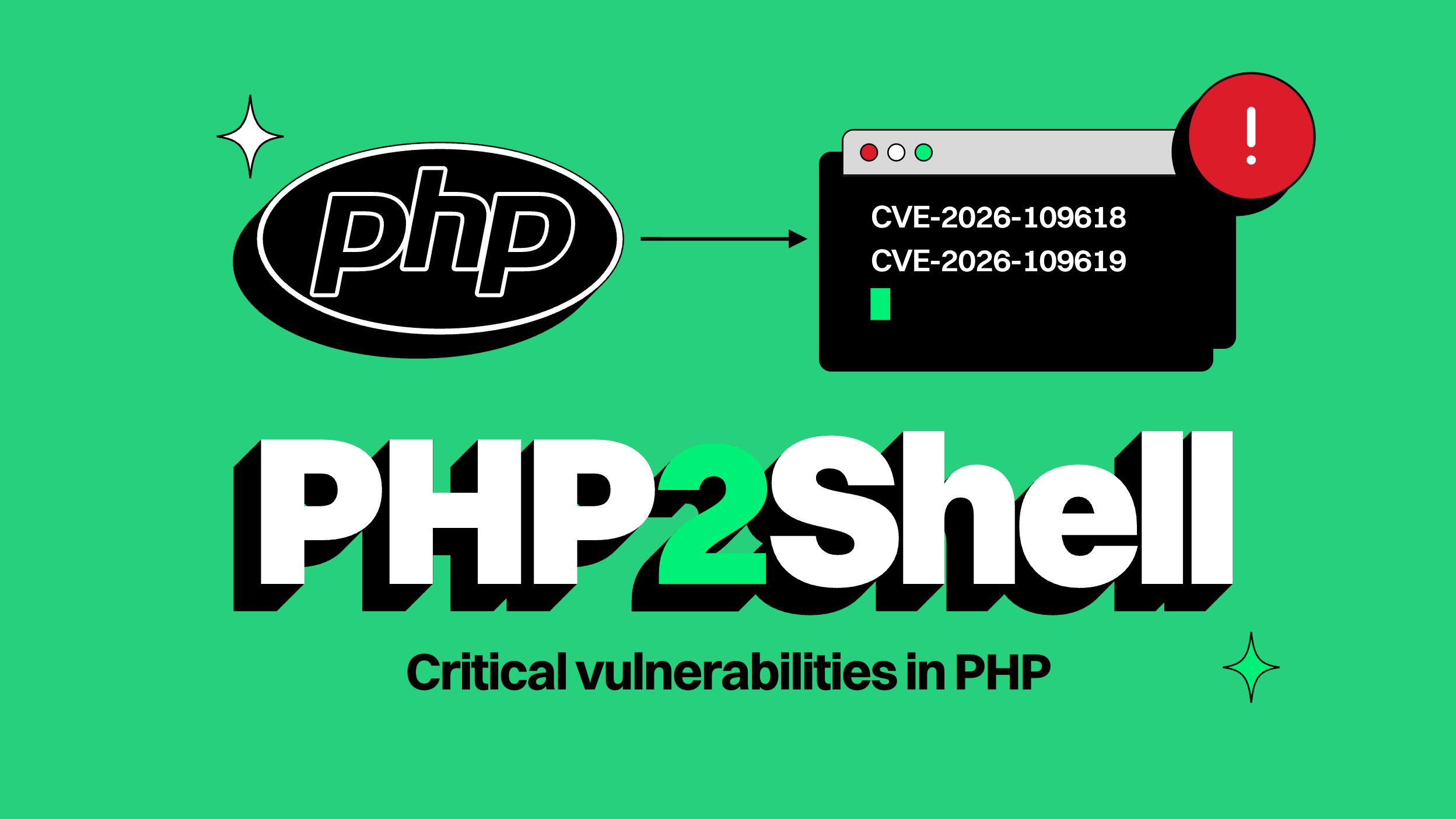 PHP2Shell: Critical vulnerabilities in PHP (CVE-2026-109618, CVE-2026-109619) | Endor Labs
PHP2Shell is the name for two critical PHP core memory-safety flaws, CVE-2026-109618 and CVE-2026-109619, that allow unauthenticated remote code execution. Fixes ship in PHP 8.2.35, 8.3.36, 8.4.27 and 8.5.12. Wiz researchers demonstrated RCE against WordPress, Drupal and Joomla, and Apache with mod_php is the highest risk. The post covers inventory, container rebuilds, Cloudflare WAF rules and temporary exposure reduction.
 endorlabs.comadvisoryPublished and added 21 Oct 2026🛡️ Security
- lee1981 (@lee1981b) on X
CVE-2026-77932 affects DB-GPT through 0.8.2 (dbgpt-app). The /api/v1/chat/react-agent route accepts unauthenticated requests because get_user_from_headers returns an admin-role user, and the ReAct agent can reach unsandboxed Python and shell tools. Lasso reported root in the webserver container in a lab. The post gives CVSS 9.8 and 9.3, no verified fix (0.8.2 is still the latest release), no KEV match, no EPSS data, and a SOC hunting trail.
x.comadvisoryAdded 23 Oct 2026, published 20 Oct 2026🛡️ Security - Dark Web Intelligence (@DailyDarkWeb) on X
Summary of Vercel's Oct 14, 2026 out-of-band Next.js security release fixing two critical unauthenticated RCEs: one in App Router apps with Cache Components where a "use cache" function returns multiple typed arrays (GHSA-673q-mjm6-r5xr, upstream React GHSA-xqc2-xf4c-x3h3, no workaround), and one in the Image Optimization API handling SVG on glibc Linux via a memory bug in a library used through sharp (CVE-2026-96889 / GHSA-2464-fhr4-w9xw, workaround sharp 0.35.5+). Also covers a high-severity Server Actions DoS (GHSA-p3m5-59mp-jv5r). Fixes ship in two supported Next.js LTS lines. No in-the-wild exploitation reported.
x.comadvisoryAdded 17 Oct 2026, published 16 Oct 2026🛡️ Security - ♫Why♥Not♪ (@Python_s_) on X
Alert summarizing XBOW's disclosure of a three-stage Chrome for Windows exploit chain: V8 Maglev memory corruption (CVE-2026-85045), Animated WebP decoder memory corruption (Chromium issue 548509153), then a Crashpad sandbox escape (CVE-2026-78952). Loading a crafted page was enough; no click or download needed. Human researchers working with GPT-5.6 Sol agents built it in six days, Google paid $250,000, all three bugs are fixed, and no in-the-wild exploitation is confirmed. It advises updating Chrome and restarting, and gives forensic triage pointers.
x.comadvisoryAdded 15 Oct 2026, published 14 Oct 2026🛡️ Security  Patch Tuesday - October 2026
Rapid7's analysis of Microsoft's October 2026 Patch Tuesday, which covers 1,413 vulnerabilities, 1,102 of them in Windows. It highlights the exploited Windows Shell Mark of the Web bypass (CVE-2026-96951) and the publicly disclosed .NET Framework WDAC bypass (CVE-2026-108398). It also covers five no-interaction Outlook preview-pane RCEs, the Edge advisories that list no CVEs, and end-of-support dates for Server 2012/2012 R2, Office 2021, Exchange 2016/2019 and Windows 11 24H2. The page text is truncated, so the later CVE tables are not seen.
 rapid7.comadvisoryPublished and added 13 Oct 2026🛡️ Security
- ♫Why♥Not♪ (@Python_s_) on X
Alert thread on CVE-2026-35029 (CVSS v4.0 8.7) in LiteLLM Proxy, versions before 1.83.0. A low-privilege authenticated user can bypass admin authorization on /config/update, change runtime settings, read server files, take over admin credentials and run Python through remotely loaded modules (S3/GCS-hosted). Check Point Research published a full execution chain on October 13 after the April 2026 disclosure. The post lists hunting pointers (non-admin POSTs to /config/update, env-var changes, unexpected pass-through endpoints, cloud module loading) and advises upgrading to 1.83.9 or later and rotating credentials.
x.comadvisoryPublished and added 13 Oct 2026🛡️ Security - lee1981 (@lee1981b) on X
CyberForge's CVE of the Day #075 covers CVE-2026-108860, a critical (CVSS 9.1 v3.1 / 9.3 v4.0) authentication bypass in SciSharp BotSharp through 5.2.0. WebStarter ships a published default HMAC JWT signing secret (CWE-321), so anyone holding it can forge bearer tokens that impersonate known users, including administrators. The post sets out how to confirm the effective key and serving build, a six-step SOC investigation trail, and remediation by rotating the secret. No verified fixed release, KEV entry or EPSS data existed at cutoff, and the linked research is static-only.
x.comadvisoryAdded 13 Oct 2026, published 12 Oct 2026🛡️ Security - lee1981 (@lee1981b) on X
CyberForge CVE of the Day #074 analyses CVE-2026-85097, a CVSS 9.8 unauthenticated file upload to PHP execution flaw (CWE-434) in the Bricksforge WordPress plugin through 3.1.8.9. Wordfence names 3.1.8.10 as the fix, and a separate vendor 4.0.1 Pro Forms upload-security notice has no verified mapping to the CVE. It gives a defender workflow: scope versions, preserve edge/origin logs, inspect resulting files and PHP-FPM handling, and verify the patched version is serving. It also separates KEV (no match), EPSS (0.312%) and SSVC (exploitation none) from compromise evidence.
x.comadvisoryAdded 11 Oct 2026, published 10 Oct 2026🛡️ Security - ♫Why♥Not♪ (@Python_s_) on X
Alert summarizing Socket Threat Research's disclosure that a malicious version of the Tensorlake npm SDK (an AI-agent infrastructure package) was published with a preinstall hook delivering Shai-Hulud/ChainDrop credential-stealing malware. The payload targets GitHub, npm, AWS, Kubernetes and Vault credentials, persists via a gh-token-monitor mechanism, and spreads through compromised publishing accounts. It lists IOCs (lib/setup.mjs, lib/Math_Symbol.js) and warns to remove the persistence before revoking stolen GitHub tokens, since revocation triggers a destructive routine. Socket detected the release about 11 minutes after publication.
x.comadvisoryAdded 11 Oct 2026, published 9 Oct 2026🛡️ Security  Tensorlake npm package compromised by Shai-Hulud in latest software supply chain attack | Blog | Endor Labs
Endor Labs documents the compromise of tensorlake@0.5.144, the official npm TypeScript SDK for Tensorlake, which shipped a Shai-Hulud worm payload via a poisoned preinstall hook (node lib/setup.mjs) after the project's main branch was altered and pushed through a legitimate, provenance-signed GitHub Actions release pipeline. The malware harvests npm, GitHub, SSH, cloud (AWS/GCP/Azure), Kubernetes/Docker and Vault credentials, uses an EtherHiding Ethereum wallet as a durable dead-drop to fetch its rotating C2 domain, and republishes itself into other packages the victim controls. The writeup includes affected package versions, file hashes, C2 indicators, and concrete remediation guidance (pin to 0.5.143, rotate credentials, disable install scripts).
endorlabs.comadvisoryPublished and added 8 Oct 2026🛡️ Security Microsoft, Adobe, Apple, and Foxit vulnerabilities
Cisco Talos discloses eight vulnerabilities patched by vendors: a Photoshop installer privilege escalation (CVE-2026-48388), a macOS CoreWLAN information disclosure bug, two Foxit Reader flaws including a JavaScript CBF_Widget remote code execution (CVE-2026-57256) and an Array use-after-free (CVE-2026-91799), and four Windows kernel-driver bugs — NETIO.sys information disclosure (CVE-2026-50475), two Cloud Files Mini Filter Driver issues (use-after-free CVE-2026-58613 and type confusion CVE-2026-80093), and a tcpip.sys out-of-bounds read (CVE-2026-49177). Each advisory gives the affected version and trigger mechanism, and Talos notes Snort coverage is available for detection.
blog.talosintelligence.comadvisoryPublished and added 7 Oct 2026🛡️ Security Critical Atlassian Path Traversal Exposes Sensitive Files Across 8 Products
Orca Security details CVE-2026-21589 (CVSS 9.3), a critical unauthenticated path traversal flaw affecting all versions of eight Atlassian Data Center and Server products: Bitbucket, Confluence, Jira Software, Jira Service Management, Bamboo, Crowd, Crucible, and Fisheye. Insufficient path validation lets remote attackers read arbitrary files within the web application root without authentication, and in Crowd SSO deployments this can expose plaintext credentials usable to create administrative accounts and take over the entire Atlassian ecosystem. The advisory lists fixed versions for each product and recommends WAF rules and log review for organizations unable to patch immediately.
orca.securityadvisoryPublished and added 7 Oct 2026🛡️ Security GPT-6 Sol and GPT-6 Luna: October 2026 update
OpenAI's system card accompanying the October 2026 ChatGPT rollout of GPT-6 Sol and GPT-6 Luna, replacing GPT-5.6 Sol and Luna for free and paid users (Codex and ChatGPT Work retain the September versions). It details Preparedness Framework results (High capability in Cybersecurity and Biological/Chemical domains, below High in AI Self-Improvement), multiturn jailbreak and GPT-Red prompt-injection robustness, alignment evaluations on respecting Auto-review/warnings and deceptive disclosure, hallucination rates, and health/mental-health benchmarks (HealthBench, HealthBench Professional, MentalHealthBench), alongside some noted regressions in self-harm, sexual content, gore and teen (U18) safety categories.
 deploymentsafety.openai.comadvisoryPublished and added 7 Oct 2026🧠 AI
 Atlassian Jira, Confluence (and more) Arbitrary File Read Vulnerability (CVE-2026-21589)
CVE-2026-21589 is an unauthenticated arbitrary file read (path traversal) in eight Atlassian Data Center and Server products: Bitbucket, Confluence, Jira, Jira Service Management, Bamboo, Crowd, Crucible and Fisheye. Atlassian fixed it on 5 October 2026, and CISA added it to the KEV catalog on 15 October 2026. The page lists patching, WAF regex, Tomcat RewriteValve and urlrewrite.xml mitigations, and a log check for ".." sequences after up to two rounds of URL decoding.
 watchtowr.comadvisoryAdded 30 Oct 2026, published 6 Oct 2026🛡️ Security
 Frequently Asked Questions About the Atlassian Jira & Confluence Arbitrary File Read Vulnerability (CVE-2026-21589)
CVE-2026-21589 is an unauthenticated arbitrary file read in eight self-hosted Atlassian products: Bitbucket, Confluence, Jira Service Management, Jira Software, Bamboo, Crowd, Crucible and Fisheye Data Center. Attackers must know the exact file path, and watchTowr Intel observed exploitation by 6 October 2026. The FAQ covers the timeline (Atlassian advisory 5 October 2026), upgrade and WAF mitigations, and log searches for two dots next to a slash, backslash or double colon.
watchtowr.comadvisoryAdded 30 Oct 2026, published 6 Oct 2026🛡️ Security Citrix NetScaler Zero-Day Exploited in the Wild Crashes SAML Authentication Services
Analysis of CVE-2026-88779 (CVSS v4.0 8.7), an unauthenticated memory-overflow flaw in the nsaaad SAML authentication handler on Citrix NetScaler ADC/Gateway that lets attackers crash the SAML service and lock out VPN/SSO access indefinitely through repeated triggering. Affects NetScaler 14.1 before 14.1-73.41 and 13.1 before 13.1-64.28 (plus FIPS/NDcPP builds); watchTowr Labs reproduced it via honeypot activity, Citrix confirmed targeted in-the-wild exploitation from IP 213.209.159.55, and CISA added it to KEV on 2026-10-04 with an Oct 7 federal remediation deadline. Some researchers suspect the overflow could extend to RCE beyond the documented DoS, though Citrix hasn't confirmed this.
orca.securityadvisoryPublished and added 5 Oct 2026🛡️ Security- Denmark Data Breach Exposes 8.8M People's Personal Data
Denmark's CPR administration (Det Centrale Personregister) disclosed that unauthorized actors abused a Danish company's legitimate, authorized access to the CPR system to extract names, addresses and CPR (national ID) numbers for roughly 8.8 million registered citizens. Records of individuals with name/address protection were not exposed. CPR has revoked the company's access, notified the Danish Data Protection Agency (Datatilsynet), and the incident is being investigated by police alongside relevant authorities.
 cpr.dkadvisoryPublished and added 5 Oct 2026🛡️ Security
 GitLab patches critical 9.9 AI Gateway template-sandbox-escape RCE (CVE-2026-90970)
GitLab patched CVE-2026-90970, a critical (CVSS 9.9) flaw in the AI Gateway used by Duo Agent Platform, where a logged-in user with Duo Agent Platform access could craft a flow configuration to escape the prompt template sandbox and achieve arbitrary command execution on the gateway. Only self-managed organizations hosting their own AI Gateway (versions 18.1.6 through 19.1) need to act; the fix lands in 19.2.4, 19.3.2, and 19.4.1. The bug is a template engine weakness (CWE-1336), the same class as the earlier CVE-2026-1868 gateway RCE GitLab fixed in February, and was reported via HackerOne by researcher invisiblemeerkat.
 thehackernews.comadvisoryAdded 4 Oct 2026🛡️ Security
 Critical FortiMail Zero-Day Flaw (CVE-2026-104286)
CISA added CVE-2026-104286 (CVSS 9.8), a path traversal and NULL-byte handling flaw in Fortinet FortiMail, to its Known Exploited Vulnerabilities catalog after confirming active in-the-wild exploitation. The bug lets unauthenticated attackers write arbitrary files via crafted HTTP/HTTPS requests, affecting FortiMail 7.2 through 8.0.1; Fortinet published workarounds (disabling IBE, restricting management-interface access) ahead of patches and shared attacker IPs and modified/added files as IOCs. The article also lists several other actively exploited vendor flaws disclosed the same week (Check Point, Arista VeloCloud, F5 BIG-IP APM, Cisco Catalyst SD-WAN Manager, Citrix NetScaler).
thehackernews.comadvisoryAdded 3 Oct 2026🛡️ Security Threat Brief: NetScaler Zero Days CVE-2026-88771 and CVE-2026-88772 Exploited in the Wild (Updated September 30)
Unit 42 threat brief on CVE-2026-88771 (unauthenticated command injection) and CVE-2026-88772 (DTLS memory overflow) in NetScaler ADC and Gateway, both CVSS v4.0 9.5 and exploited as zero-days from August 2026. It details version fingerprinting, .deb and PHP web shells, a three-stage log-poisoning chain through ns_monuploadd_err.pl, httpd.conf persistence, IOCs, and 50,277 exposed instances as of 27 September 2026.
unit42.paloaltonetworks.comadvisoryAdded 30 Oct 2026, published 30 Sep 2026🛡️ Security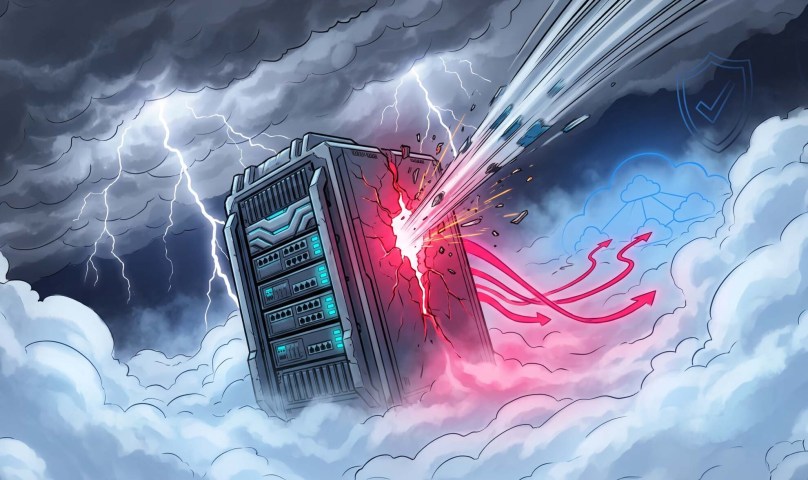 Critical Citrix NetScaler Zero-Days Under Active Exploitation
Analysis of two CVSS 9.5 Citrix NetScaler ADC/Gateway zero-days, CVE-2026-88771 (unauthenticated RCE through improper input validation in the management interface, affecting default deployments) and CVE-2026-88772 (memory overflow in DTLS, enabled by default on VPN virtual servers). It lists six more high-severity flaws patched in advisory CTX697096, the affected and fixed versions, and the CISA KEV listing with a federal deadline of 2026-09-30. It advises checking for compromise before patching, since patching can destroy forensic evidence, and gives response steps: isolate, revoke credentials, rebuild firmware, rotate keys and certificates.
orca.securityadvisoryPublished and added 29 Sep 2026🛡️ Security- Addendum to GPT-6 Astra System Card: GPT-6.1 Sol
OpenAI's system card addendum for GPT-6.1 Sol, a fast and affordable model in the GPT-6 family with capabilities comparable to GPT-6 Astra, reports Preparedness Framework determinations (Critical cybersecurity, High biological and chemical capability, sub-High AI self-improvement) and the same safeguards stack as Astra. It details extensive safety and alignment evaluations including safe-completion benchmarks, jailbreak and prompt-injection robustness, HealthBench and MentalHealthBench scores, deceptive-behavior and monitor-evasion tests, and chain-of-thought monitorability and controllability results, comparing GPT-6.1 Sol against GPT-6 Astra, GPT-6 Sol, GPT-6 Luna, and the GPT-5.6 series.
deploymentsafety.openai.comadvisoryAdded 7 Oct 2026, published 29 Sep 2026🧠 AI - Claude Desktop (macOS): malicious file in a Cowork folder could run commands on the host
GHSA-v234-4jrq-mgg6 discloses that Claude Desktop for macOS (versions >=1.1.3918, less than 1.15962.0) omitted a macOS-executable file type from its Cowork folder block-list, letting a malicious file written into a Cowork sandbox's shared folder by a compromised or prompt-injected agent run commands on the host when opened via Claude Desktop. A separate, compounding issue is also disclosed: Cowork VM images before 1.11847.5 shipped a guest Linux kernel vulnerable to CVE-2026-43284, which combined with the block-list gap could let VM-privileged code trigger the file open without user interaction. Both issues are fixed in Claude Desktop 1.15962.0; reported internally by Anthropic and independently by Vladimir Tokarev of Cyera Research.
github.comadvisoryAdded 28 Sep 2026🛡️ Security  watchTowr: CVE-2026-88771 Citrix NetScaler ADC/Gateway unauthenticated RCE
watchTowr details CVE-2026-88771 (unauthenticated command execution via improper input validation, affecting every NetScaler ADC/Gateway deployment by default) and CVE-2026-88772 (DTLS memory overflow leading to RCE/DoS, exploitable since DTLS is on by default for VPN virtual servers). Both are confirmed exploited in the wild as zero-days, were pre-notified by NCSC-NL, and CVE-2026-88771 was added to the CISA KEV catalog on September 27, 2026; Citrix's bulletin CTX697096 also fixes six related issues (CVE-2026-88773 through CVE-2026-88778). The writeup gives prioritization guidance, IOC-checking steps, and warns that patching may destroy forensic evidence if done before evidence capture.
watchtowr.comadvisoryAdded 5 Oct 2026, published 27 Sep 2026🛡️ Security- CVE-2026-90617 in PentestAgent
VulDB entry for CVE-2026-90617, a remote OS command injection (CWE-78) in GH05TCREW PentestAgent. The flaw is in run_task in interface/main.py of the MCP HTTP Server, affects everything up to commit cf882dab, and has a public exploit. The product uses rolling releases, so no version ranges exist, and the fix is an unmerged pull request. The analysis suggests compensating controls: restrict network access to the MCP server, run with least privilege, and validate input upstream.
 vuldb.comadvisoryAdded 26 Sep 2026🛡️ Security
- Vulnerability Database - OSV
CVE-2026-91931 is a critical remote code execution vulnerability in Flowise versions before 3.1.4, triggered through the platform's Custom MCP feature which invokes npx to run Model Context Protocol servers. A fix is available in 3.1.4; the flaw scores 9.0 (Critical) on CVSS, indicating an attacker can achieve arbitrary code execution likely via unsanitized input to the npx invocation path.
 osv.devadvisoryAdded 26 Sep 2026🛡️ Security
- CVE-2026-75130: Context7 through 2
CVE-2026-75130 describes a prompt injection flaw in Context7 (through v2.1.2), an MCP server that serves library documentation to AI coding agents. The vulnerability lies in the Custom AI Instructions feature, which fails to sanitize content before injecting it into agent context; attackers can poison these instructions so that a routine documentation lookup triggers the agent to exfiltrate credentials from environment files and delete files on the victim's machine. Researchers at Noma Security and VulnCheck published independent technical breakdowns of the attack chain.
 nvd.nist.govadvisoryAdded 26 Sep 2026🛡️ Security
- CVE-2026-65695: Office-Word-MCP-Server through 1
CVE-2026-65695 is a path traversal vulnerability (CWE-22, CVSS 4.0 7.6 HIGH) in Office-Word-MCP-Server through version 1.1.11, an MCP server that exposes Word document manipulation tools to LLM agents. Attackers who can influence the filename argument can supply absolute paths or ../ sequences to document open/save operations, bypassing the check_file_writeable and ensure_docx_extension helpers (which do no base-directory confinement or realpath validation) to read or overwrite arbitrary .docx files outside the intended working directory.
nvd.nist.govadvisoryAdded 26 Sep 2026🛡️ Security - CVE-2026-65056: mcp-webresearch 0
CVE-2026-65056 describes a server-side request forgery in the mcp-webresearch MCP server (npm package @mzxrai/mcp-webresearch, v0.1.7), scoring CVSS 4.0 8.3 HIGH. The visit_page tool only validates URL protocol and does not filter private, loopback, link-local, or cloud metadata IP ranges, so an attacker who controls the LLM-supplied URL argument (e.g. via prompt injection) can steer the server's Playwright browser to internal endpoints like cloud instance metadata services and exfiltrate sensitive internal content, including credentials, back into the model context.
nvd.nist.govadvisoryAdded 26 Sep 2026🛡️ Security - CVE-2026-57860: ForgeCode (tailcallhq/forgecode), an AI pair-programming CLI, automatically loads and executes the MCP servers defined i
CVE-2026-57860 describes an arbitrary code execution flaw in ForgeCode (tailcallhq/forgecode), an AI pair-programming CLI that automatically loads and executes MCP servers defined in a repository's .mcp.json on startup without user confirmation. A malicious repo can define mcpServers entries with arbitrary command/args (e.g. bash -c) that spawn under the invoking user's privileges the moment forge is run inside the cloned repo, giving attackers a reliable initial-access and persistence primitive against developers evaluating untrusted code. CVSS 4.0 8.4 HIGH, CWE-829 (inclusion of functionality from untrusted control sphere); a fix commit and VulnCheck advisory are linked.
nvd.nist.govadvisoryAdded 26 Sep 2026🛡️ Security - CVE-2026-52869: The MCP Python SDK, called mcp on PyPI, is a Python implementation of the Model Context Protocol (MCP)
CVE-2026-52869 describes a session-hijacking flaw in the MCP Python SDK (PyPI package mcp) prior to version 1.27.2: the SSE and stateful Streamable HTTP transports (mcp.server.sse.SseServerTransport and mcp.server.streamable_http_manager.StreamableHTTPSessionManager) route requests to existing sessions using only the session_id query parameter or Mcp-Session-Id header, without checking that the requesting principal matches the session's original authenticated bearer-token client. This lets a different authenticated client that learns or guesses a valid session ID inject JSON-RPC messages into another user's MCP session. CVSS 3.1 base score 7.1 (High); fixed in mcp 1.27.2.
nvd.nist.govadvisoryAdded 26 Sep 2026🛡️ Security - CVE-2026-49291: mcp-memory-service is a semantic memory layer for AI applications
CVE-2026-49291 affects mcp-memory-service prior to version 10.65.3: its HTTP MCP JSON-RPC endpoint at /mcp only enforced OAuth 'read' scope before dispatching tools/call requests, so a client holding only read access could invoke mutating tools like store_memory and delete_memory even though the equivalent REST endpoints correctly required 'write' scope. The flaw is a classic missing-authorization bug (CWE-862) surfacing specifically in an MCP tool-dispatch layer, scored CVSS 3.1 8.1 (High) with confidentiality unaffected but integrity and availability impacted. Fixed in 10.65.3.
nvd.nist.govadvisoryAdded 26 Sep 2026🛡️ Security - CVE-2026-42271: LiteLLM is a proxy server (AI Gateway) to call LLM APIs in OpenAI (or native) format
CVE-2026-42271 describes an unauthenticated-privilege RCE in LiteLLM (versions 1.74.2 to before 1.83.7): the MCP server preview endpoints POST /mcp-rest/test/connection and POST /mcp-rest/test/tools/list accept a full stdio MCP server config (command, args, env) and spawn it as a subprocess on the proxy host, gated only by a valid API key with no role check. Any authenticated user, including low-privilege internal-user keys, could run arbitrary commands on the LiteLLM proxy host. Patched in v1.83.7; also tracked as GHSA-v4p8-mg3p-g94g and affects Red Hat OpenShift AI.
nvd.nist.govadvisoryAdded 26 Sep 2026🛡️ Security - CVE-2026-18655: Improper restriction of intended endpoints in the RabbitMQ broker connection tools of the Amazon MQ MCP Server (awslabs
CVE-2026-18655 describes an improper endpoint restriction flaw (CWE-923) in the RabbitMQ broker connection tools of awslabs.amazon-mq-mcp-server versions before 2.0.24. A remote unauthenticated attacker can use prompt injection introduced into the MCP client context to redirect the broker hostname to an attacker-controlled endpoint, causing Amazon MQ for RabbitMQ credentials or OAuth access tokens to be sent there; CVSS 4.0 base score 7.1 (High). Fixed in version 2.0.24, referenced via an AWS security bulletin and a GitHub security advisory (GHSA-xwj6-8x5h-hjp6).
nvd.nist.govadvisoryAdded 26 Sep 2026🛡️ Security - CVE-2026-16584: Improper handling of an initialization failure in AWS API MCP Server from 0
CVE-2026-16584 affects AWS API MCP Server (awslabs.aws-api-mcp-server) versions 0.2.13 through 1.3.46: if the security policy enforcement data fails to initialize at server startup, the tool silently skips policy checks for the rest of the process's life, letting an agent execute AWS API operations the admin configured the policy to deny or gate. Underlying IAM permissions still apply and are unaffected, but the intended allow/deny gating layer is bypassed (CWE-455, improper handling of initialization failure). Fixed in 1.3.47.
nvd.nist.govadvisoryAdded 26 Sep 2026🛡️ Security - Unauthenticated Administrator takeover exfiltrated via the MCP
GHSA advisory for SiYuan v3.7.1 (CVE-2026-66012) describing how the kernel's POST /mcp route registers 31 MCP tools — including a file tool with full read/write/delete/rename/copy over the workspace — gated only by CheckAuth with no admin or read-only check. When the Publish server runs in anonymous mode (a documented configuration for public docs sites), the Publish reverse proxy attaches an anonymous RoleReader JWT to every proxied request, letting an unauthenticated attacker reach /mcp, exfiltrate accessAuthCode/api.token/cookieKey from conf.json, escalate to Administrator, and plant a malicious Electron plugin (nodeIntegration:true, contextIsolation:false) for RCE on the desktop client. Includes a full working PoC and remediation (CheckAdminRole gate, proxy path allowlist, restricting the file tool).
github.comadvisoryAdded 26 Sep 2026🛡️ Security - "Allowed HTTP Request Domains" Restriction Bypass via AI Agents MCP Connector
n8n's AI Agents module did not enforce the "Allowed HTTP Request Domains" restriction on credentials. A member-level user with use-only access to a shared credential could point an MCP tool at an attacker-controlled URL and run the agent, so the credential secret was sent to an external server. It only affects instances with the agents module enabled via N8N_ENABLED_MODULES and a domain-restricted credential shared with a member. It is fixed in 2.28.1 and 2.27.4, and the advisory rates it High (CVSS v4 7.1).
github.comadvisoryAdded 26 Sep 2026🛡️ Security - Google Service Account Private Key Exposed in JWT Header
n8n GitHub advisory GHSA-9r8p-h6cc-6qhm: when configured with a Google Service Account key, n8n put the full PEM private key into the JWT header's kid field. Because JWT headers are only Base64-encoded, anything that logged or inspected the JWT (proxies, load balancers, app logs) could recover the key and impersonate the service account in Google Cloud. Fixed in 1.123.64, 2.29.8 and 2.30.1; rated Moderate (CVSS v4 5.1), with workarounds to rotate keys and review logs for exposed JWT headers.
github.comadvisoryAdded 26 Sep 2026🛡️ Security - Ruby SSE Session Poisoning
A GitHub Security Advisory (GHSA-5p9g-j988-pcwv) documents a session poisoning flaw in the Ruby MCP SDK's Streamable/SSE HTTP transport: the server never validates that a POST to /messages/{session_id} actually belongs to the caller, so an attacker who obtains a victim's session ID (e.g. via logs or network sniffing) can silently execute tool calls whose responses are delivered into the victim's own SSE stream. The advisory includes a working PoC (attacker/legitimate client scripts against the SDK's example streamable_http_server.rb), notes that csharp-sdk and go-sdk correctly bind sessions to user identity while ruby-sdk does not, and distinguishes the bug from the related "Stream Replacement" advisory (GHSA-qvqr-5cv7-wh35), which disconnects rather than poisons the victim's stream.
github.comadvisoryAdded 26 Sep 2026🛡️ Security - Missing authentication on MCP HTTP endpoint allows unauthenticated privileged tool calls
GHSA advisory for jovancoding/network-ai disclosing that its MCP HTTP transport (bin/mcp-server.ts, lib/mcp-transport-sse.ts) accepts JSON-RPC tools/call requests with zero authentication, session, or origin checks, and binds to 0.0.0.0 by default. The PoC shows an unauthenticated attacker can enumerate 22 registered tools and invoke privileged ones - config_get/config_set to read and mutate live orchestrator configuration, agent_list/agent_spawn/agent_stop, token_create/token_revoke, budget_set_ceiling, and blackboard_write/delete - with curl requests against a local Docker deployment. Remediation recommended enforcing bearer-token auth in _handlePost() before dispatch, defaulting to 127.0.0.1 binding, and gating state-mutating tools behind authorization checks.
github.comadvisoryAdded 26 Sep 2026🛡️ Security - DNS TOCTOU race condition causes SSRF protection bypass (`/admin/gateways/test`)
GHSA-9hgc-g3w5-67cm details a DNS TOCTOU race in IBM mcp-context-forge's /admin/gateways/test endpoint: validate_gateway_test_url() resolves and vets a hostname against private/cloud-metadata IP ranges, but the actual request is made with httpx (via ResilientHttpClient), which independently re-resolves DNS at connection time with no IP pinning. An attacker with gateways.read permission can exploit DNS rebinding (short-TTL record flipping from a public IP to 169.254.169.254) to bypass SSRF protections and reach cloud instance metadata, exfiltrating IAM credentials where IMDSv1 is enabled. The advisory notes the codebase already acknowledges the gap in two comments and a tracked TODO (ICACF-15), and recommends pinning the validated IP into the connection.
github.comadvisoryAdded 26 Sep 2026🛡️ Security - Flowise MCP Security Bypass Enables RCE
GHSA advisory detailing three bypasses in Flowise's Custom MCP Server security controls (validateCommandFlags and validateArgsForLocalFileAccess in packages/components/nodes/tools/MCP/core.ts) that combine to achieve remote code execution: an unblocked `docker build` subcommand that pulls and runs a remote Dockerfile, a missing `--yes` long-flag alias on the npx blocklist (only `-y` was blocked) enabling arbitrary npm package execution, and a Unix absolute-path regex that fails to catch double-leading-slash paths (`//root/...`), allowing `node` to execute an uploaded local file. Any authenticated Flowise user (or an API key with chatflow view/update rights) can chain these to fully compromise the host via a prediction API call.
github.comadvisoryAdded 26 Sep 2026🛡️ Security - Insecure cryptographic defaults in oidcProvider: alg=none advertised and plain PKCE accepted by default
GHSA advisory for better-auth (< 1.6.11) documenting that the deprecated oidcProvider() and mcp() plugins publish "none" as a supported ID-token signing algorithm in their OIDC discovery document and default allowPlainCodeChallengeMethod to true, silently rewriting missing code_challenge_method to "plain" — both violating OAuth 2.1/RFC 9700. The fix removes "none" from the metadata, defaults plain PKCE to disabled, and rejects requests missing code_challenge_method instead of downgrading them; @better-auth/oauth-provider was never affected.
github.comadvisoryAdded 26 Sep 2026🛡️ Security - CVE-2026-21852 - GitHub Advisory Database
GitHub advisory GHSA-jh7p-qr78-84p7 for Claude Code: a malicious repository could ship a project settings file setting ANTHROPIC_BASE_URL to an attacker-controlled endpoint. Claude Code made API requests during project load before the trust prompt was shown, leaking data including the user's Anthropic API key. Fixed in auto-updated versions; manual updaters should upgrade. It is CVSS v4 scored, with network attack vector and passive user interaction, and mapped to a credential-transmission weakness (insecure transmission/storage of credentials).
github.comadvisoryAdded 26 Sep 2026🛡️ Security - CVE-2026-44895 - GitHub Advisory Database
GitHub advisory for @yoda.digital/gitlab-mcp-server (mcp-gitlab-server): with USE_SSE=true the HTTP/SSE transport has no authentication, sends wildcard CORS headers, and binds to 0.0.0.0. Any network caller or any web page the operator visits can open /sse and POST /messages to drive all 86 GitLab tools (delete_repository, push_files, etc.) using the operator's personal access token. It includes a curl PoC, a CVSS 4.0 vector (~6.3 Medium, effectively High when SSE is enabled) and four fixes: required auth token, loopback bind, a CORS allowlist, and the OAuth roadmap.
github.comadvisoryAdded 26 Sep 2026🛡️ Security - Careful Adoption of Agentic SI Services | CISA
Joint guidance from CISA, the Australian Signals Directorate's ACSC and other international and US partners on adopting agentic AI systems. It covers the main security challenges and risks of agentic systems, with steps for designing, deploying and operating them safely. It also shows how to map agentic risk management onto existing cybersecurity frameworks and strengthen oversight. The page text calls them "agentic super intelligence (SI)" systems, but the URL says agentic AI services.
cisa.govadvisoryAdded 26 Sep 2026🛡️ Security  WordPress “Comment2Shell” XSS-to-RCE Chain Lets Unauthenticated Attackers Compromise Servers via Malicious Comments
CVE-2026-93485 (CVSS 7.1) is a stored XSS-to-RCE chain in WordPress Core's wpautop() function (wp-includes/formatting.php), where a mismatch between comment sanitization at save time and HTML reformatting at display time lets an unauthenticated attacker inject live event handlers via a crafted comment. When a logged-in administrator views the page, the script executes and installs a malicious plugin containing a web shell, achieving full RCE. It affects WordPress Core 4.7 through 7.1.0 (essentially all installs, including block themes since Twenty Twenty-Two), and is fixed in 7.1.1 with backports down to 4.7.36; no public PoC or in-the-wild exploitation was reported at disclosure time.
orca.securityadvisoryPublished and added 22 Sep 2026🛡️ Security







Showing 60 of 98
Show more