- CISA Adds Two Known Exploited Vulnerabilities to Catalog
CISA added two Ivanti Connect Secure vulnerabilities to its Known Exploited Vulnerabilities (KEV) Catalog on 30 October 2026, citing evidence of active exploitation: CVE-2026-111357 (missing authentication for a critical function) and CVE-2026-118527 (generation of predictable numbers or identifiers). The alert restates BOD 26-04, which requires federal civilian agencies to remediate KEV-listed flaws on exposed assets and check for prior compromise. It also links the KEV nomination form.
 cisa.govadvisoryPublished and added 30 Oct 2026🛡️ Security
 Threat Brief: Critical Vulnerabilities in PHP: CVE-2026-109618, CVE-2026-109619 (Updated October 29)
Unit 42 threat brief on PHP2Shell, two PHP remote code execution flaws, CVE-2026-109618 and CVE-2026-109619 (CVSS 4.0 9.2), both caused by longjmp() error handling that leaves memory uninitialized or freed. Cortex Xpanse counted over 22.6 million exposed instances. The 29 October 2026 update says attackers chained PHP2Shell with a Linux kernel privilege escalation against internet-exposed PAN-OS management interfaces. An earlier 23 October claim of post-compromise activity was retracted on 25 October.
 unit42.paloaltonetworks.comadvisoryAdded 30 Oct 2026, published 29 Oct 2026🛡️ Security
- CISA Adds Two Known Exploited Vulnerabilities to Catalog
CISA alert of 28 October 2026 adding two vulnerabilities to the Known Exploited Vulnerabilities Catalog on evidence of active exploitation: CVE-2026-41709 (Broadcom VMware ESX insufficient logging) and CVE-2026-46300 (Linux kernel missing variable initialization). It restates BOD 26-04, which requires federal civilian agencies to prioritize fast remediation of KEV CVEs on exposed assets and to check for prior compromise. It also links the KEV nomination form.
cisa.govadvisoryAdded 29 Oct 2026, published 28 Oct 2026🛡️ Security - CISA Adds Two Known Exploited Vulnerabilities to Catalog
CISA alert of 27 October 2026 adding two vulnerabilities to the Known Exploited Vulnerabilities (KEV) Catalog on evidence of active exploitation: CVE-2026-48356, an unrestricted upload of a dangerous file type in Adobe Commerce and Magento, and CVE-2026-111497, an unchecked return value in Google Brotli. It restates BOD 26-04, which makes federal civilian agencies prioritise KEV flaws on exposed assets and check for prior compromise. No technical detail or IOCs are given.
cisa.govadvisoryAdded 29 Oct 2026, published 27 Oct 2026🛡️ Security - CISA Adds Two Known Exploited Vulnerabilities to Catalog
CISA added two PHP vulnerabilities to its Known Exploited Vulnerabilities Catalog on 26 October 2026: CVE-2026-109618 (memory corruption) and CVE-2026-109619 (stale internal request state). It also updated its PHP alert on critical vulnerabilities requiring immediate patching. The alert restates BOD 26-04, which requires federal civilian agencies to prioritize fast remediation of KEV CVEs on exposed assets and to check for prior compromise.
cisa.govadvisoryAdded 29 Oct 2026, published 26 Oct 2026🛡️ Security 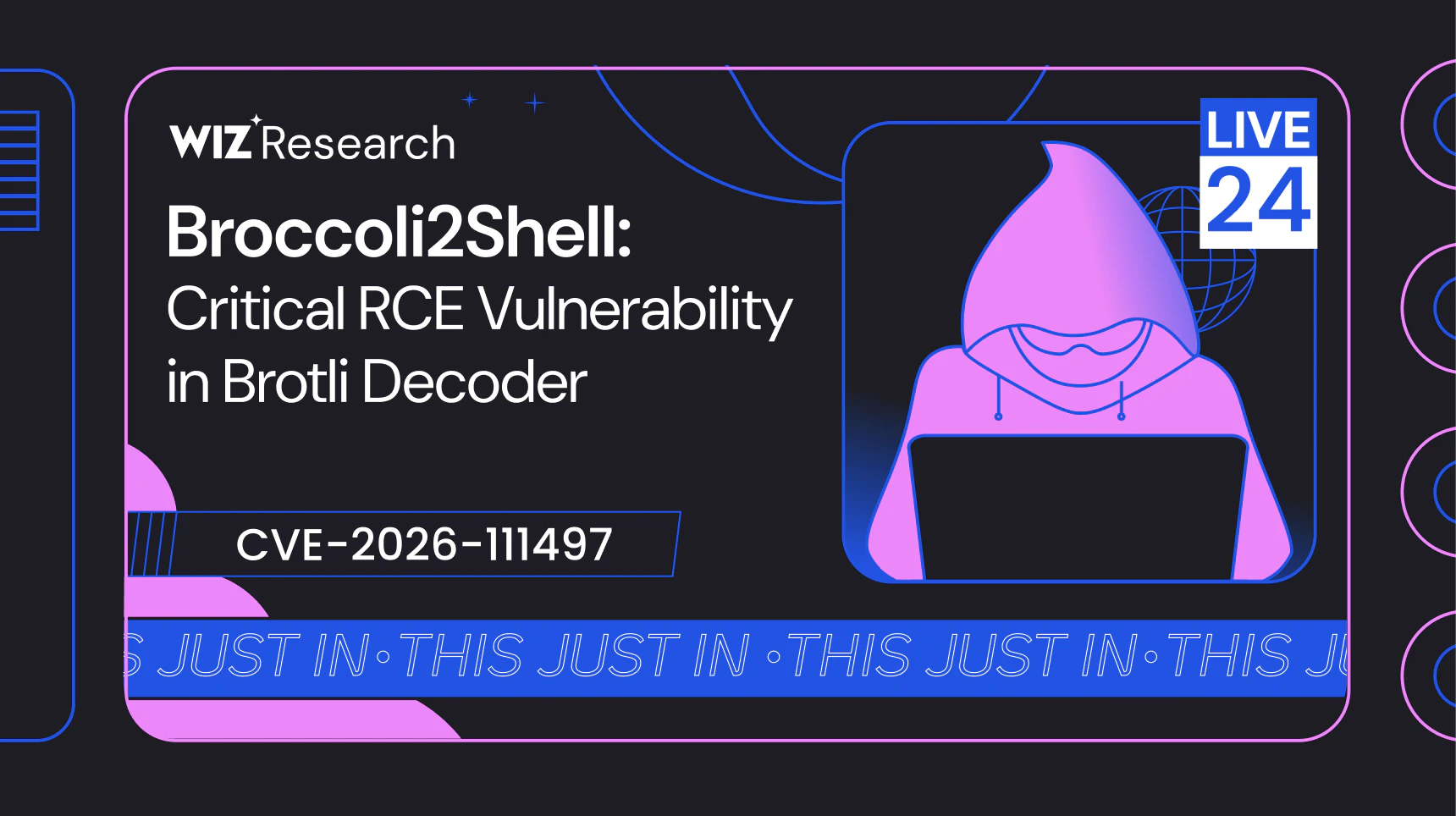 Broccoli2shell: Everything You Need To Know About The Critical Brotli Decoder Vulnerability
CVE-2026-111497 (Broccoli2Shell, also Node2Shell and HTTP2Shell) is an out-of-bounds write in the upstream Brotli C decoder. It affects Node.js, Bun, Envoy Proxy, Istio and Python packages, and can lead to memory corruption, information disclosure, crashes or RCE when untrusted Brotli data is decompressed. Wiz reports 91% of cloud environments have vulnerable resources. The post lists patching, inventory, rebuild and temporary mitigation steps.
 wiz.ioadvisoryPublished and added 25 Oct 2026🛡️ Security
 Brotli vulnerability affects curl and Git
GHSA-9v8h-qqgm-4m35 is a critical buffer overflow (CVSS v4 9.2) in the Google Brotli decoder (c/dec/decode.c), affecting versions 1.0.3 through 1.2.0 on all platforms. A crafted compressed stream lets an unauthenticated remote attacker corrupt adjacent decoder state, leak memory, crash the process, or possibly execute code. Fixed in 1.0.10, 1.1.1 and 1.2.1. The page does not mention curl or Git, despite the title.
 github.comadvisoryAdded 25 Oct 2026, published 23 Oct 2026🛡️ Security
- ENISA Technical Advisory for Software Bill of Materials
ENISA Technical Advisory for Software Bill of Materials is practical guidance on SBOM adoption for organizations, especially micro, small and medium enterprises and open-source stewards. It sets out an SBOM implementation architecture and data flows across a defined lifecycle, an indicative SBOM threat model with targeted risks, and measures for the SBOM ecosystem. It aligns with the ENISA Secure by Design and Default Playbook and supports Cyber Resilience Act compliance.
 enisa.europa.euadvisoryAdded 23 Oct 2026🛡️ Security
 Node2Shell: Node.js Brotli vulnerability allows remote code execution (CVE-2026-111497)
Node2Shell (CVE-2026-111497) is an out-of-bounds write in the Brotli decoder bundled with Node.js and Bun, triggered by malformed compressed input and rated high by Node.js, with possible remote code execution. Fixed in Node.js 22.23.4, 24.22.1 and 26.12.1 and Bun 1.4.4. The post covers exposure via Express 5, body-parser 2.x, fetch() and node:zlib, stopgaps, and a timeline with public proofs of concept on 22 October 2026.
 aikido.devadvisoryPublished and added 22 Oct 2026🛡️ Security
 EMudhra Intermediate CA Certificates Compromised
Unit 42 advisory on the compromise of eight intermediate CA private keys belonging to Indian CA eMudhra Limited. The keys were generated with insufficient randomness, so attackers could derive them from the public certificates and sign rogue TLS certificates for MitM attacks. eMudhra has revoked the certificates and browser and OS vendors have untrusted them. Interim guidance covers PKI and trust store audits, reissuance, strict CRL/OCSP checking, log hunting, CT monitoring and CAA records.
unit42.paloaltonetworks.comadvisoryAdded 30 Oct 2026, published 22 Oct 2026🛡️ Security Railway Security Disclosure
Railway's security disclosure of 21 October 2026 says an unauthorized third party may have accessed encrypted customer environment variables and decrypted some of them. Railway links it to a series of attacks on platform companies aimed at compromising AI inference providers, and has asked upstream providers to revoke keys. It tells all users to roll every environment variable, API key and registry credential, and it paused all deployments. The notice gives no technical details of the intrusion.
 blog.railway.comadvisoryAdded 22 Oct 2026, published 21 Oct 2026🛡️ Security
 Compromised eMudhra intermediate certificates
Cisco Talos describes eight eMudhra intermediate CA certificates (six TLS, two code signing) whose P-384 private keys were trivially recoverable because a flaw in an April 30, 2025 key generation ceremony produced weak keys with only 3 to 8 bytes of entropy. The post lists certificate SHA-256 hashes and serials, browser and Microsoft blocks, and the Go fix (CVE-2026-111943, Go 1.27.3 and 1.26.10) that filters chains by SPKI hash. It covers impact on VPNs, CI/CD and embedded devices, and Snort SIDs 67363 to 67374.
 blog.talosintelligence.comadvisoryPublished and added 21 Oct 2026🛡️ Security
 PHP Remote Code Execution ("PHP2Shell" CVE-2026-109618 & CVE-2026-109619)
PHP2Shell is the name for CVE-2026-109618 (out-of-memory corruption) and CVE-2026-109619 (stale global state), two unauthenticated PHP remote code execution flaws rated CVSS 4.0 9.2. Details leaked before the 21 October 2026 patch release, and watchTowr's honeypots saw exploitation. The page lists fixed versions (8.5.12, 8.4.27, 8.3.36, 8.2.35), states that .ini mitigations do not work, gives a timeline, and describes compromise checks.
 watchtowr.comadvisoryAdded 28 Oct 2026, published 21 Oct 2026🛡️ Security
- PHP 8.2.35
PHP 8.2.35 is a security release of the PHP 8.2 branch that fixes two critical vulnerabilities, CVE-2026-109618 and CVE-2026-109619, which can allow unauthenticated remote code execution. The notes say no complete mitigations exist and updating is the only safe choice. PHP 8.2 reaches end of life on 31 December 2026, after which it gets no security fixes.
github.comadvisoryAdded 22 Oct 2026, published 21 Oct 2026🛡️ Security - lee1981 (@lee1981b) on X
CyberForge CVE of the Day #080 covers CVE-2026-99999 ("PwnEscape"), a Linux kernel IPv4 checksum-completion flaw. Crafted checksum metadata can trigger a deferred write into an already-validated IPv4 header, which allows host memory disclosure from a guest or microVM over virtio-net and TAP. It gives upstream fixed branches (5.10.272 to 7.2.11), Amazon Linux, Red Hat and Ubuntu status, CVSS 9.3, EPSS 0.211% and a SOC investigation trail. No IOCs were verified.
 x.comadvisoryAdded 19 Oct 2026, published 17 Oct 2026🛡️ Security
- Microsoft Threat Intelligence (@MsftSecIntel) on X
ConnectWise Cloud Backup (formerly SkyKick Backup, AppId 506e08f9-6e9a-4da4-942b-a099a03644ae) had its multitenant OAuth app compromised, per Microsoft Threat Intelligence. On 15 October 2026 the actor authenticated broadly as the service principal from 144.172.64[.]128, likely using customer-granted permissions such as Directory.ReadWrite.All, then ran Graph API reconnaissance and tried to add credentials to the service principal as a backdoor. The post lists IOCs, Defender alerts and hunting advice.
x.comadvisoryAdded 20 Oct 2026, published 17 Oct 2026🛡️ Security  Frequently Asked Questions About the BeyondTrust Remote Support Arbitrary File Upload (CVE-2026-102764)
CVE-2026-102764 is an arbitrary file upload in BeyondTrust Remote Support (formerly Bomgar) caused by internal appliance components not validating message origin. Mandiant found it exploited as a zero-day in late August 2026. BeyondTrust disclosed it on 15 October 2026 and CISA added it to KEV on 16 October 2026. The FAQ covers the web shell, root escalation, credential theft, persistence, patching and compromise checks.
watchtowr.comadvisoryAdded 30 Oct 2026, published 16 Oct 2026🛡️ Security BeyondTrust Remote Support Arbitrary File Upload (CVE-2026-102764)
CVE-2026-102764 is a CVSS 9.8 unauthenticated arbitrary file upload flaw in BeyondTrust Remote Support (formerly Bomgar) and Privileged Remote Access. Internal messaging components do not verify message origin, so remote attackers can plant files the appliance would reject. BeyondTrust disclosed it on 15 October 2026 with patch BT26-05, and CISA added it to KEV on 16 October 2026. The page lists log files to review and hardening steps.
watchtowr.comadvisoryAdded 30 Oct 2026, published 16 Oct 2026🛡️ Security- S2W_DailyThreat (@S2W_DailyThreat) on X
S2W post on CVE-2026-97229, a CVSS 10.0 remote code execution flaw in the GitLab CE/EE CI/CD regex compiler, disclosed October 13, 2026. Insufficient regex validation plus an integer overflow during encoding conversion lets an attacker who can add CI/CD config use a malicious regex and a UTF-8 repository path to run commands as the git user. Affects self-managed 19.2 before 19.2.8, 19.3 before 19.3.5 and 19.4 before 19.4.2. Rapid7 published analysis and a public PoC exists, with no in-the-wild exploitation confirmed as of October 15. No workaround exists, so patch or restrict access to a management network or VPN.
x.comadvisoryAdded 17 Oct 2026, published 16 Oct 2026🛡️ Security - Dark Web Intelligence (@DailyDarkWeb) on X
Summary of Vercel's Oct 14, 2026 out-of-band Next.js security release fixing two critical unauthenticated RCEs: one in App Router apps with Cache Components where a "use cache" function returns multiple typed arrays (GHSA-673q-mjm6-r5xr, upstream React GHSA-xqc2-xf4c-x3h3, no workaround), and one in the Image Optimization API handling SVG on glibc Linux via a memory bug in a library used through sharp (CVE-2026-96889 / GHSA-2464-fhr4-w9xw, workaround sharp 0.35.5+). Also covers a high-severity Server Actions DoS (GHSA-p3m5-59mp-jv5r). Fixes ship in two supported Next.js LTS lines. No in-the-wild exploitation reported.
x.comadvisoryAdded 17 Oct 2026, published 16 Oct 2026🛡️ Security  Critical GitLab RCE Lets Unauthenticated Attackers Execute Code on Servers (CVE-2026-97229)
Orca Security analysis of CVE-2026-97229, a CVSS 10.0 flaw in GitLab CE/EE. An integer overflow (CWE-190) in the CI/CD regular expression compiler gives memory corruption and code execution as the git user. It is triggered by a crafted regex in .gitlab-ci.yml combined with a UTF-8 repository path, with no authentication needed on instances that allow public project creation or self-registration. Lists affected branches (19.2 before 19.2.8, 19.3 before 19.3.5, 19.4 before 19.4.2), the absence of a workaround, interim mitigations, and a Rapid7 PoC against GitLab CE 19.4.1 with ASLR on. Notes a prior max-severity GitLab bug (CVE-2026-85706) was probed in the wild within hours and later added to CISA KEV.
 orca.securityadvisoryPublished and added 14 Oct 2026🛡️ Security
- Dark Web Intelligence (@DailyDarkWeb) on X
Summary of SAP's October 13, 2026 Security Patch Day (16 new notes, 4 GitHub advisories). It leads with CVE-2026-89111, a CVSS 10.0 OAuth2 SSRF in SAP Cloud SDK for Python before 0.45.2, where an attacker-controlled tenant_subdomain redirects token requests and exfiltrates client credentials. It also lists three other critical flaws: broken access control in NetWeaver Visual Composer, code injection in S/4HANA substitution/validation rules, and a missing authorization check in the Manufacturing Integration and Intelligence (XMII) Configuration Service. It notes that none are in CISA KEV and SAP reports no in-the-wild exploitation.
x.comadvisoryAdded 15 Oct 2026, published 13 Oct 2026🛡️ Security  Ivanti Connect Secure zero-day exploited in the wild (CVE-2026-104935)
Rapid7 emergency-response analysis of CVE-2026-104935, a CVSS 8.6 authentication bypass by spoofing (CWE-290) in Ivanti Connect Secure that allows unauthenticated remote command execution. It was exploited as a zero-day against a limited number of customers, added to CISA KEV on disclosure day, and Volexity observed it chained with a still-unpatched privilege escalation flaw. Part of the fix shipped in 25.1.3.0 in July 2026, with backports to other supported versions pending. Rapid7 advises emergency patching outside normal cycles and hunting for compromise using Volexity's IOCs, since Ivanti has no reliable ones.
 rapid7.comadvisoryPublished and added 13 Oct 2026🛡️ Security
 Ivanti Connect Secure Authentication Bypass by Spoofing (CVE-2026-104935)
CVE-2026-104935 is an authentication bypass by spoofing in Ivanti Connect Secure (CVSS 3.1 score 8.6) that lets a remote attacker run commands without logging in. CISA added it to KEV on 13 October 2026. The 22.8.X bridge release and 25.1.2.2 and earlier are affected, with fixes in 22.8R2.5, 25.1.1.2, 25.1.3.0 and 25.1.3.1. Ivanti says no reliable indicators of compromise exist yet.
watchtowr.comadvisoryAdded 30 Oct 2026, published 13 Oct 2026🛡️ Security- CVE-2026-97229: Critical Unauthenticated Remote Code Execution in GitLab
Rapid7 analysis of CVE-2026-97229, a CVSS 10.0 integer overflow (CWE-190) in the Onigmo regex compiler used by GitLab CE/EE's CI/CD regex handling. A crafted regex in a .gitlab-ci.yml passes validation as US-ASCII, then is recompiled for a UTF-8 repository path, producing invalid instructions that give code execution as the git user. Rapid7 reproduced it on GitLab CE 19.4.1 with ASLR (patched in 19.4.2); despite the vendor's "unauthenticated" rating, the attacker needs to commit a malicious config to a public project, which self-registration allows. No in-the-wild exploitation is confirmed, and Rapid7 recommends urgent upgrades.
rapid7.comadvisoryPublished and added 13 Oct 2026🛡️ Security - lee1981 (@lee1981b) on X
CyberForge "CVE of the Day #076" covers CVE-2026-97229, a CVSS 10.0 integer overflow (CWE-190) in GitLab CE/EE's CI/CD regular expression compiler. It can lead to conditional unauthenticated code execution on the GitLab server. It lists the affected trains (19.2 before 19.2.8, 19.3 before 19.3.5, 19.4 before 19.4.2) and the 19.3.4 vs 19.3.5 Ona-regression discrepancy. It also gives six SOC checks: scoping, log preservation (Workhorse/Rails/Sidekiq, correlation_id), server-effect hunting, request-to-process correlation, upgrade and running-state verification. It notes that exploit details are unverified, no KEV listing exists and EPSS data is unavailable.
x.comadvisoryAdded 15 Oct 2026, published 13 Oct 2026🛡️ Security - lee1981 (@lee1981b) on X
CyberForge CVE of the Day #074 analyses CVE-2026-85097, a CVSS 9.8 unauthenticated file upload to PHP execution flaw (CWE-434) in the Bricksforge WordPress plugin through 3.1.8.9. Wordfence names 3.1.8.10 as the fix, and a separate vendor 4.0.1 Pro Forms upload-security notice has no verified mapping to the CVE. It gives a defender workflow: scope versions, preserve edge/origin logs, inspect resulting files and PHP-FPM handling, and verify the patched version is serving. It also separates KEV (no match), EPSS (0.312%) and SSVC (exploitation none) from compromise evidence.
x.comadvisoryAdded 11 Oct 2026, published 10 Oct 2026🛡️ Security - ♫Why♥Not♪ (@Python_s_) on X
Alert summarizing Socket Threat Research's disclosure that a malicious version of the Tensorlake npm SDK (an AI-agent infrastructure package) was published with a preinstall hook delivering Shai-Hulud/ChainDrop credential-stealing malware. The payload targets GitHub, npm, AWS, Kubernetes and Vault credentials, persists via a gh-token-monitor mechanism, and spreads through compromised publishing accounts. It lists IOCs (lib/setup.mjs, lib/Math_Symbol.js) and warns to remove the persistence before revoking stolen GitHub tokens, since revocation triggers a destructive routine. Socket detected the release about 11 minutes after publication.
x.comadvisoryAdded 11 Oct 2026, published 9 Oct 2026🛡️ Security - lee1981 (@lee1981b) on X
CyberForge's CVE of the Day #073 covers CVE-2026-102255, a critical (CVSS 10.0) pre-authentication SSRF / confused-deputy flaw (CWE-918, CWE-441) in the SonicWall SMA1000 Work Place interface, per advisory SNWLID-2026-0017. It lists affected platform hotfixes (12.4.3-03526 and older, 12.5.0-02952 and older), fixed floors (12.4.3-03670, 12.5.0-03082), no workaround, and the exploitation picture (no known exploitation, not in KEV, EPSS 0.477%, SSVC automatable). It gives a six-step SOC playbook covering appliance scoping, AMC log preservation, hunting appliance-originated internal requests, correlating receiving-service changes, patching, and verifying every node, and it separates exposure, a lead, confirmed compromise and telemetry gaps.
x.comadvisoryAdded 12 Oct 2026, published 9 Oct 2026🛡️ Security  Tensorlake npm package compromised by Shai-Hulud in latest software supply chain attack | Blog | Endor Labs
Endor Labs documents the compromise of tensorlake@0.5.144, the official npm TypeScript SDK for Tensorlake, which shipped a Shai-Hulud worm payload via a poisoned preinstall hook (node lib/setup.mjs) after the project's main branch was altered and pushed through a legitimate, provenance-signed GitHub Actions release pipeline. The malware harvests npm, GitHub, SSH, cloud (AWS/GCP/Azure), Kubernetes/Docker and Vault credentials, uses an EtherHiding Ethereum wallet as a durable dead-drop to fetch its rotating C2 domain, and republishes itself into other packages the victim controls. The writeup includes affected package versions, file hashes, C2 indicators, and concrete remediation guidance (pin to 0.5.143, rotate credentials, disable install scripts).
 endorlabs.comadvisoryPublished and added 8 Oct 2026🛡️ Security
 GPT-6 Sol and GPT-6 Luna: October 2026 update
OpenAI's system card accompanying the October 2026 ChatGPT rollout of GPT-6 Sol and GPT-6 Luna, replacing GPT-5.6 Sol and Luna for free and paid users (Codex and ChatGPT Work retain the September versions). It details Preparedness Framework results (High capability in Cybersecurity and Biological/Chemical domains, below High in AI Self-Improvement), multiturn jailbreak and GPT-Red prompt-injection robustness, alignment evaluations on respecting Auto-review/warnings and deceptive disclosure, hallucination rates, and health/mental-health benchmarks (HealthBench, HealthBench Professional, MentalHealthBench), alongside some noted regressions in self-harm, sexual content, gore and teen (U18) safety categories.
 deploymentsafety.openai.comadvisoryPublished and added 7 Oct 2026🧠 AI
- Denmark Data Breach Exposes 8.8M People's Personal Data
Denmark's CPR administration (Det Centrale Personregister) disclosed that unauthorized actors abused a Danish company's legitimate, authorized access to the CPR system to extract names, addresses and CPR (national ID) numbers for roughly 8.8 million registered citizens. Records of individuals with name/address protection were not exposed. CPR has revoked the company's access, notified the Danish Data Protection Agency (Datatilsynet), and the incident is being investigated by police alongside relevant authorities.
 cpr.dkadvisoryPublished and added 5 Oct 2026🛡️ Security
 GitLab patches critical 9.9 AI Gateway template-sandbox-escape RCE (CVE-2026-90970)
GitLab patched CVE-2026-90970, a critical (CVSS 9.9) flaw in the AI Gateway used by Duo Agent Platform, where a logged-in user with Duo Agent Platform access could craft a flow configuration to escape the prompt template sandbox and achieve arbitrary command execution on the gateway. Only self-managed organizations hosting their own AI Gateway (versions 18.1.6 through 19.1) need to act; the fix lands in 19.2.4, 19.3.2, and 19.4.1. The bug is a template engine weakness (CWE-1336), the same class as the earlier CVE-2026-1868 gateway RCE GitLab fixed in February, and was reported via HackerOne by researcher invisiblemeerkat.
 thehackernews.comadvisoryAdded 4 Oct 2026🛡️ Security
- CISA KEV: Fortinet FortiMail CVE-2026-104286 path traversal, actively exploited, no patch yet
CISA added CVE-2026-104286, a path traversal vulnerability in Fortinet FortiMail, to its Known Exploited Vulnerabilities Catalog on evidence of active exploitation. The alert restates the obligations of BOD 26-04 for Federal Civilian Executive Branch agencies: prioritise KEV CVEs on publicly exposed assets that give total control, and check for compromise before patching. It also describes the KEV nomination criteria: a CVE ID, evidence of exploitation and clear mitigation guidance. The page gives no technical detail, patch status or IOCs.
cisa.govadvisoryAdded 4 Oct 2026🛡️ Security - MCP TypeScript SDK v2.2.0
Release notes for v2.2.0 of the official Model Context Protocol TypeScript SDK. Upgrade notes: machine-to-machine OAuth providers (ClientCredentialsProvider, PrivateKeyJwtProvider, StaticPrivateKeyJwtProvider, CrossAppAccessProvider) should now be given expectedIssuer, and fetchToken() throws AuthorizationServerMismatchError when client information is bound to a different authorization server. listTools/listPrompts/listResources/listResourceTemplates now follow nextCursor automatically, capped by listMaxPages. Fixes include CommonJS type-checking of the DPoP jose types, unhandled rejections in Client.listen(), createMcpHandler stack overflow and subscriptions/listen handling, .localhost loopback for OAuth token endpoints, and v1-to-v2 codemod comment preservation.
github.comadvisoryAdded 1 Oct 2026🧠 AI  [Security Disclosure] MetaMask Staking Precautionary Out of Order Exits
Lido Finance's governance forum discloses that MetaMask Staking (formerly Consensys Staking), one of its Ethereum validator node operators, detected an infrastructure compromise and is precautionarily exiting its operated validators from the Lido protocol. The post details the exit/withdrawal/re-entry timeline (~45 days), the non-custodial nature of Lido staking (MetaMask does not hold withdrawal keys), and the protocol's ad hoc reserve fund (6,750+ stETH) as a mitigation mechanism while a full investigation continues.
 research.lido.fiadvisoryAdded 3 Oct 2026, published 30 Sep 2026🛡️ Security
- Critical Cisco Catalyst SD-WAN Manager API authentication bypass exploited in the wild (CVE-2026-76504)
Rapid7 analysis of CVE-2026-76504, a critical (CVSSv3.1 9.8) unauthenticated API authentication bypass in Cisco Catalyst SD-WAN Manager caused by improper URL-encoding handling (CWE-177), allowing attackers to gain admin-level API access via crafted requests to the j_security_check endpoint. The flaw is being actively exploited in the wild, was added to CISA's KEV list on October 1, 2026 with a remediation deadline of October 3, and follows two earlier 2026 Catalyst SD-WAN peering authentication bypasses (CVE-2026-20127 and Rapid7-discovered CVE-2026-20182). The post gives fixed-release guidance, no-workaround caveats, and log-based IOCs (encoded-character requests like %6a_security_check, viptela-reserved- usernames) for detecting compromise.
rapid7.comadvisoryAdded 7 Oct 2026, published 30 Sep 2026🛡️ Security  Solidity 0.8.37 Release Announcement
Official release notes for Solidity v0.8.37 detailing three bug-bounty-reported compiler bugs: memory `delete` on a bytes-array element zeroing a full 32-byte word instead of one byte (corrupting adjacent memory, evmasm pipeline, up to v0.8.36); a stack-to-memory spill-slot collision under mutual recursion in the IR pipeline (`--via-ir`, v0.7.2–v0.8.36) that silently overwrites live variables; and named custom-error arguments in `require(...)` being ABI-encoded in call-site order rather than declaration order, so revert data misrepresents error values (v0.8.36 introduced but only affects revert data). Also covers two non-security miscompilations (uninitialized packed function pointers, checked/unchecked constant reuse), a new SSA-CFG stack shuffler, Amsterdam EVM's SLOTNUM opcode support, and removal/deprecation of LSP mode, Generic Solidity, and several EVM version pragmas.
 soliditylang.orgadvisoryAdded 29 Sep 2026🛡️ Security
 Critical Citrix NetScaler Zero-Days Under Active Exploitation
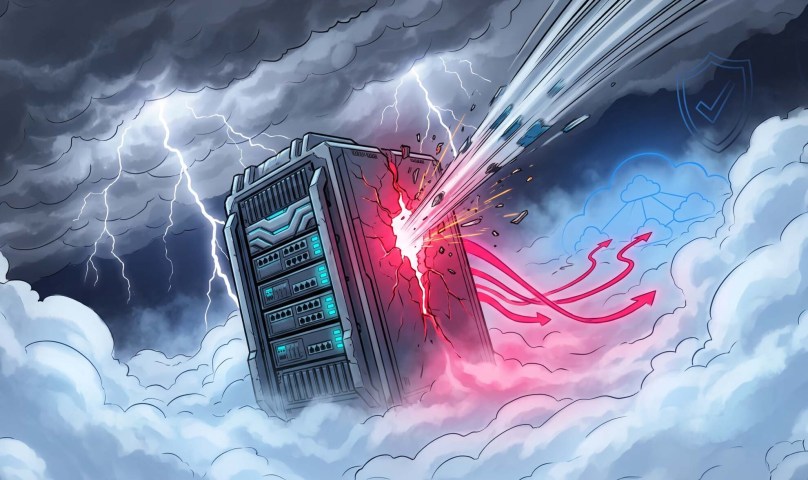
Analysis of two CVSS 9.5 Citrix NetScaler ADC/Gateway zero-days, CVE-2026-88771 (unauthenticated RCE through improper input validation in the management interface, affecting default deployments) and CVE-2026-88772 (memory overflow in DTLS, enabled by default on VPN virtual servers). It lists six more high-severity flaws patched in advisory CTX697096, the affected and fixed versions, and the CISA KEV listing with a federal deadline of 2026-09-30. It advises checking for compromise before patching, since patching can destroy forensic evidence, and gives response steps: isolate, revoke credentials, rebuild firmware, rotate keys and certificates.
orca.securityadvisoryPublished and added 29 Sep 2026🛡️ Security- Addendum to GPT-6 Astra System Card: GPT-6.1 Sol
OpenAI's system card addendum for GPT-6.1 Sol, a fast and affordable model in the GPT-6 family with capabilities comparable to GPT-6 Astra, reports Preparedness Framework determinations (Critical cybersecurity, High biological and chemical capability, sub-High AI self-improvement) and the same safeguards stack as Astra. It details extensive safety and alignment evaluations including safe-completion benchmarks, jailbreak and prompt-injection robustness, HealthBench and MentalHealthBench scores, deceptive-behavior and monitor-evasion tests, and chain-of-thought monitorability and controllability results, comparing GPT-6.1 Sol against GPT-6 Astra, GPT-6 Sol, GPT-6 Luna, and the GPT-5.6 series.
deploymentsafety.openai.comadvisoryAdded 7 Oct 2026, published 29 Sep 2026🧠 AI - Critical Zero-Day Vulnerabilities Exploited in Citrix NetScaler ADC, Gateway
CISA alert amplifying Citrix's disclosure of ten NetScaler ADC and Gateway vulnerabilities (CVE-2026-88771 to CVE-2026-88779 and CVE-2026-107406). CVE-2026-88771 and CVE-2026-88772 are critical zero-days enabling independent remote code execution and are exploited globally; CVE-2026-88779 is a SAML SP/IdP denial-of-service that can force a reboot to trigger code injected via CVE-2026-88771. It advises checking for compromise before patching, preserving forensic evidence, forwarding logs to a SIEM, restoring a pre-compromise backup and rotating all secrets, and links a CISA SIGMA detection rule.
cisa.govadvisoryAdded 28 Sep 2026🛡️ Security - Claude Desktop (macOS): malicious file in a Cowork folder could run commands on the host
GHSA-v234-4jrq-mgg6 discloses that Claude Desktop for macOS (versions >=1.1.3918, less than 1.15962.0) omitted a macOS-executable file type from its Cowork folder block-list, letting a malicious file written into a Cowork sandbox's shared folder by a compromised or prompt-injected agent run commands on the host when opened via Claude Desktop. A separate, compounding issue is also disclosed: Cowork VM images before 1.11847.5 shipped a guest Linux kernel vulnerable to CVE-2026-43284, which combined with the block-list gap could let VM-privileged code trigger the file open without user interaction. Both issues are fixed in Claude Desktop 1.15962.0; reported internally by Anthropic and independently by Vladimir Tokarev of Cyera Research.
github.comadvisoryAdded 28 Sep 2026🛡️ Security - Zero-Day Exploitation of Citrix NetScaler ADC and Gateway: CVE-2026-88771 and CVE-2026-88772
Rapid7 details active zero-day exploitation of two critical Citrix NetScaler ADC/Gateway RCE vulnerabilities (CVE-2026-88771, CVE-2026-88772, both CVSSv4 9.5), both added to CISA KEV on disclosure day, plus a later SAML denial-of-service zero-day (CVE-2026-88779). The post includes Rapid7 MDR's observed exploitation of CVE-2026-88771 in the wild — a command-injection payload that exfiltrates /flash/nsconfig (containing ns.conf admin credentials, SSL private keys, SSH host keys) via the publicly-served /vpn/ path, and a webshell (SHA256 hash provided) found on a compromised appliance — along with vendor patch versions and detection guidance.
rapid7.comadvisoryAdded 7 Oct 2026, published 28 Sep 2026🛡️ Security - CISA KEV Catalog Additions — Check Point, Arista VeloCloud, F5 BIG-IP (Sept 22, 2026)
CISA added four vulnerabilities to the Known Exploited Vulnerabilities catalog on 2026-09-22 based on evidence of active exploitation: two Check Point multi-product flaws (improper certificate validation CVE-2026-85102, path traversal CVE-2026-93616), an Arista VeloCloud Orchestrator improper input validation bug (CVE-2026-93952), and an F5 BIG-IP APM heap-based buffer overflow (CVE-2026-94127). The alert ties the additions to BOD 26-04, which has FCEB agencies prioritize remediation of KEV CVEs on publicly exposed assets that give total control, and to checking for prior compromise before patching.
cisa.govadvisoryAdded 26 Sep 2026🛡️ Security - Kong Konnect MCP server: stored prompt injection via analytics data leads to credential/data exfiltration (CVE-2026-13341)
GitHub Security Advisory (CVE-2026-13341) for Kong's mcp-konnect MCP server describes a stored prompt injection vulnerability where a remote attacker crafts malicious request metadata (e.g. User-Agent) that gets stored in Konnect analytics and later returned unsanitized to an AI assistant via MCP tools, potentially causing the agent to exfiltrate sensitive data (plugin configs, secrets, internal hostnames) to an attacker-controlled URL if the client can make outbound fetches. A related path manipulation flaw in control plane/group identifiers allowed requesting unintended Konnect API endpoints with the user's token. The v1.0.0 patch neutralizes untrusted analytics fields, validates identifiers as UUIDs, encodes path segments, and disables raw plugin config output by default.
github.comadvisoryAdded 26 Sep 2026🛡️ Security - CVE-2026-90617 in PentestAgent
VulDB entry for CVE-2026-90617, a remote OS command injection (CWE-78) in GH05TCREW PentestAgent. The flaw is in run_task in interface/main.py of the MCP HTTP Server, affects everything up to commit cf882dab, and has a public exploit. The product uses rolling releases, so no version ranges exist, and the fix is an unmerged pull request. The analysis suggests compensating controls: restrict network access to the MCP server, run with least privilege, and validate input upstream.
 vuldb.comadvisoryAdded 26 Sep 2026🛡️ Security
- CVE-2026-85787 in postgres-mcp-server
CVE-2026-85787 affects awslabs postgres-mcp-server before 1.1.7. The SQL validation component uses an incomplete list of disallowed inputs. Crafted SQL placed in content submitted while an authenticated user interacts with the MCP server can bypass the read-only restriction and modify data in PostgreSQL. The fix is to upgrade to 1.1.7 or later. VulDB's added analysis is generic: it points to SQL injection (CWE-89) and recommends least-privilege database accounts and parameterized queries.
vuldb.comadvisoryAdded 26 Sep 2026🛡️ Security - CVE-2026-75130: Context7 through 2
CVE-2026-75130 describes a prompt injection flaw in Context7 (through v2.1.2), an MCP server that serves library documentation to AI coding agents. The vulnerability lies in the Custom AI Instructions feature, which fails to sanitize content before injecting it into agent context; attackers can poison these instructions so that a routine documentation lookup triggers the agent to exfiltrate credentials from environment files and delete files on the victim's machine. Researchers at Noma Security and VulnCheck published independent technical breakdowns of the attack chain.
 nvd.nist.govadvisoryAdded 26 Sep 2026🛡️ Security
- CVE-2026-65056: mcp-webresearch 0
CVE-2026-65056 describes a server-side request forgery in the mcp-webresearch MCP server (npm package @mzxrai/mcp-webresearch, v0.1.7), scoring CVSS 4.0 8.3 HIGH. The visit_page tool only validates URL protocol and does not filter private, loopback, link-local, or cloud metadata IP ranges, so an attacker who controls the LLM-supplied URL argument (e.g. via prompt injection) can steer the server's Playwright browser to internal endpoints like cloud instance metadata services and exfiltrate sensitive internal content, including credentials, back into the model context.
nvd.nist.govadvisoryAdded 26 Sep 2026🛡️ Security - CVE-2026-20685: An attacker in a privileged network position may be able to leak sensitive information
CVE-2026-20685 is a medium-severity (CVSS 6.5) path handling vulnerability in Apple's Private Cloud Compute (PCC), classified under CWE-20 and CWE-22, that could let an attacker in a privileged network position leak sensitive information. Apple addressed the issue with improved path validation, fixed in PCC Release 5E290.3.
nvd.nist.govadvisoryAdded 26 Sep 2026🛡️ Security - CVE-2026-18655: Improper restriction of intended endpoints in the RabbitMQ broker connection tools of the Amazon MQ MCP Server (awslabs
CVE-2026-18655 describes an improper endpoint restriction flaw (CWE-923) in the RabbitMQ broker connection tools of awslabs.amazon-mq-mcp-server versions before 2.0.24. A remote unauthenticated attacker can use prompt injection introduced into the MCP client context to redirect the broker hostname to an attacker-controlled endpoint, causing Amazon MQ for RabbitMQ credentials or OAuth access tokens to be sent there; CVSS 4.0 base score 7.1 (High). Fixed in version 2.0.24, referenced via an AWS security bulletin and a GitHub security advisory (GHSA-xwj6-8x5h-hjp6).
nvd.nist.govadvisoryAdded 26 Sep 2026🛡️ Security - CVE-2026-14748: A flaw has been found in AIAnytime Awesome-MCP-Server up to a884bb51bcd99e08e14fd712c749d55d9d9a13ab
CVE-2026-14748 is a low-severity (CVSS 4.0: 2.1) server-side request forgery flaw in AIAnytime's Awesome-MCP-Server, specifically in the mcp-wiki/wiki-summary component's server.py, where the url argument is not validated before the server fetches it. A remote, low-privilege attacker can abuse this to make the MCP server issue arbitrary outbound requests; the exploit has already been published via GitHub issues and the maintainer has not responded to the disclosure.
nvd.nist.govadvisoryAdded 26 Sep 2026🛡️ Security - CVE-2026-14541: An authentication bypass and audience confusion vulnerability exists in the Google OAuth provider component of Google mc
CVE-2026-14541 describes an authentication bypass (CWE-287) in the Google OAuth provider of Google's mcp-toolbox for databases v1.4.0, an MCP server that lets LLM agents query databases. When the Google authService is configured with mcpEnabled: true but no explicit audience or clientId, the ValidateMCPAuth pipeline skips audience checks for opaque tokens, so any valid Google OAuth access token — even one issued for an unrelated app — is accepted, letting unauthorized clients reach protected tools and data backends.
nvd.nist.govadvisoryAdded 26 Sep 2026🛡️ Security - Flowise MCP Security Bypass Enables RCE
GHSA advisory detailing three bypasses in Flowise's Custom MCP Server security controls (validateCommandFlags and validateArgsForLocalFileAccess in packages/components/nodes/tools/MCP/core.ts) that combine to achieve remote code execution: an unblocked `docker build` subcommand that pulls and runs a remote Dockerfile, a missing `--yes` long-flag alias on the npx blocklist (only `-y` was blocked) enabling arbitrary npm package execution, and a Unix absolute-path regex that fails to catch double-leading-slash paths (`//root/...`), allowing `node` to execute an uploaded local file. Any authenticated Flowise user (or an API key with chatflow view/update rights) can chain these to fully compromise the host via a prediction API call.
github.comadvisoryAdded 26 Sep 2026🛡️ Security - CVE-2026-21852 - GitHub Advisory Database
GitHub advisory GHSA-jh7p-qr78-84p7 for Claude Code: a malicious repository could ship a project settings file setting ANTHROPIC_BASE_URL to an attacker-controlled endpoint. Claude Code made API requests during project load before the trust prompt was shown, leaking data including the user's Anthropic API key. Fixed in auto-updated versions; manual updaters should upgrade. It is CVSS v4 scored, with network attack vector and passive user interaction, and mapped to a credential-transmission weakness (insecure transmission/storage of credentials).
github.comadvisoryAdded 26 Sep 2026🛡️ Security - CISA Adds Seven Known Exploited Vulnerabilities to Catalog | CISA
CISA added seven vulnerabilities to its Known Exploited Vulnerabilities Catalog on the basis of active exploitation. They are SQL injection in Sangoma Switchvox, HTTP request/response smuggling in Kludex Starlette, OS command injection in Kestra OSS, improper authentication in BerriAI LiteLLM and JFrog Artifactory, and SSRF plus OS command injection in SonicWall SMA1000 appliances. The alert restates BOD 26-04, which makes federal agencies prioritise rapid remediation of KEV CVEs on publicly exposed assets that grant total control after exploitation. It also requires agencies to check for prior compromise before patching.
cisa.govadvisoryAdded 26 Sep 2026🛡️ Security - CVE-2026-87911 - Read-only enforcement bypass enabling operating system command execution in the SQL validation component of Amazon awslabs postgres-mcp-server
AWS bulletin for CVE-2026-87911, an OS command injection flaw in awslabs.postgres-mcp-server (Python, PyPI) versions before 1.1.7. The server's read-only enforcement in its SQL validation component can be bypassed with a crafted `COPY ... TO PROGRAM` statement, letting an unauthenticated actor run OS commands on a self-managed PostgreSQL host when the configured connection role holds superuser or pg_execute_server_program privileges. Fixed in 1.1.7; AWS also recommends connecting the MCP server with a least-privilege, non-superuser role as defense in depth.
 aws.amazon.comadvisoryAdded 26 Sep 2026🛡️ Security
 WordPress “Comment2Shell” XSS-to-RCE Chain Lets Unauthenticated Attackers Compromise Servers via Malicious Comments
CVE-2026-93485 (CVSS 7.1) is a stored XSS-to-RCE chain in WordPress Core's wpautop() function (wp-includes/formatting.php), where a mismatch between comment sanitization at save time and HTML reformatting at display time lets an unauthenticated attacker inject live event handlers via a crafted comment. When a logged-in administrator views the page, the script executes and installs a malicious plugin containing a web shell, achieving full RCE. It affects WordPress Core 4.7 through 7.1.0 (essentially all installs, including block themes since Twenty Twenty-Two), and is fixed in 7.1.1 with backports down to 4.7.36; no public PoC or in-the-wild exploitation was reported at disclosure time.
orca.securityadvisoryPublished and added 22 Sep 2026🛡️ Security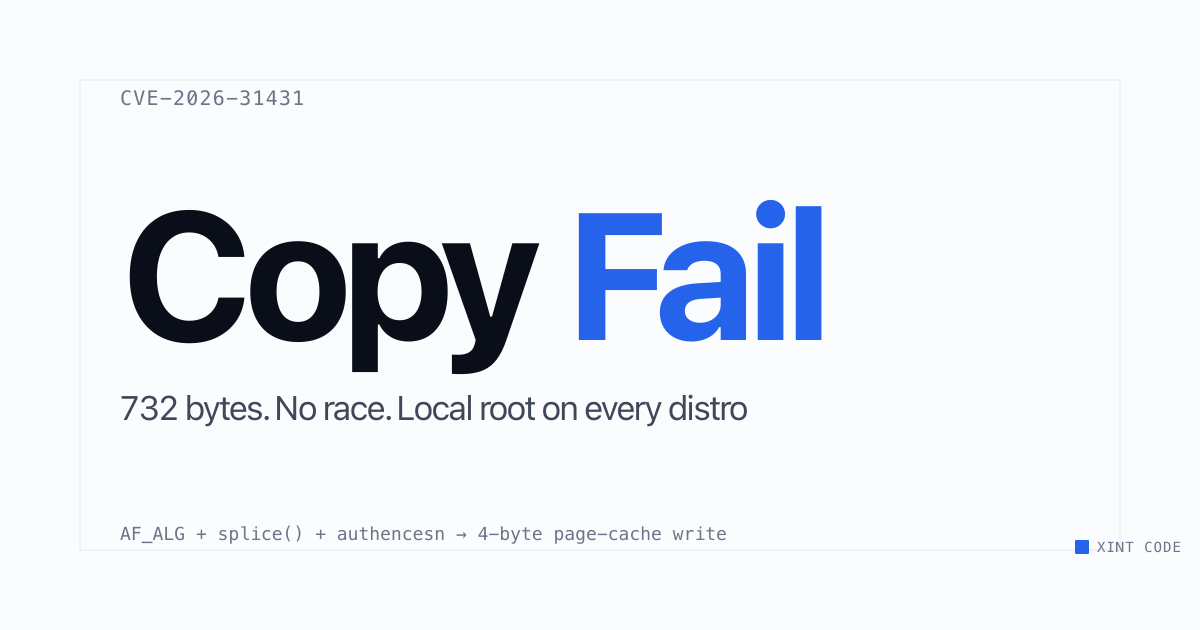 Copy Fail (CVE-2026-31431): 9-year-old Linux kernel LPE found by AI-assisted fuzzing
Copy Fail (CVE-2026-31431) is a 9-year-old Linux kernel logic bug in algif_aead, reachable via the AF_ALG crypto API and chained through splice() into a 4-byte page-cache write to achieve local root, affecting kernels built between 2017 and the fix. The site publishes a 732-byte stdlib-only Python PoC that roots multiple distributions unmodified, identifies the fixing mainline commit a664bf3d603d, and gives interim mitigation (disable algif_aead / seccomp-block AF_ALG for untrusted workloads). The bug was found by Xint Code's AI-assisted fuzzing against the Linux crypto/ subsystem in roughly an hour of scan time.
 copy.failadvisoryAdded 17 Sep 2026🛡️ Security
 Security Advisory — Storage Aliasing in Priority Update Registry V1
Flashbots disclosed a critical storage-aliasing vulnerability in V1 of the Priority Update Registry (PUR), an on-chain price feed contract used by trading integrators like propAMMs. Because lane storage slots were computed as keccak256(target, unbounded caller-controlled index) while the updater-authorization mapping lived at slot 0 with the same keccak256 shape, any caller could craft a lane index that collided with isUpdater[target][attacker], letting them self-authorize as an updater and publish arbitrary prices or deauthorize legitimate updaters. The fix namespaces the lane slot derivation (keccak256(NAMESPACE, target, laneIndex)) to make the preimages structurally non-collidable, and the advisory gives integrators concrete migration guidance since authorizations and lane state must be re-established on the new deployment.
 collective.flashbots.netadvisoryAdded 2 Oct 2026, published 16 Sep 2026🛡️ Security







Showing 60 of 101
Show more