 Hygentra: AI Trading Agents Kept 97.5% of Losses by Value Within Limits
Hygentra's six-month study (February to August 2026) audited four AI trading agents, each with its own strategy and preset risk rules, through a 29% Bitcoin decline and recovery. 97.5% of losses by value stayed within limits, 23 of 24 runs respected the five-open-trade cap, and no agent raised risk after a loss. Trade records and testing tools were published; 18% of positions were real Hyperliquid orders, the rest simulated with a 0.09% round-trip fee.
 en.cryptonomist.charticlePublished and added 28 Oct 2026🧠 AI
- Prasenjit Sarkar (@stretchcloud) on X
Campfire is a self-hosted tool that runs Claude Code, Codex, Goose, Aider and OpenHands in one tab. Risky actions need permission voting (majority approves, any single deny blocks, 30 second timeout), and session replay traces which file or tool call triggered an action. The post cites Forever Security's finding that Codex followed a planted AGENTS.md instruction over 90% of the time and Claude Code about half the time. It also cites the February Cline release compromise via a poisoned GitHub Actions cache.
 x.comthreadAdded 28 Oct 2026, published 27 Oct 2026🛡️ Security
 DeclineCraft: A RAG Abstention Benchmark for Jointly Measuring Combined Retrieval and Parametric Knowledge
DeclineCraft is a dynamic RAG abstention benchmark whose unanswerable questions target Minecraft feature additions made after a corpus cut-off, with audits for parametric exposure. Across 27 LLMs, single-shot retrieval raises Correct Abstention Rate in 38 of 40 configurations, while iterative RAG lowers it in 30 of 40. Enabling thinking without retrieval lowers abstention for 8 of 13 models, shifting responses to premise denial.
 arxiv.orgpaperAdded 22 Oct 2026, published 20 Oct 2026🧠 AI
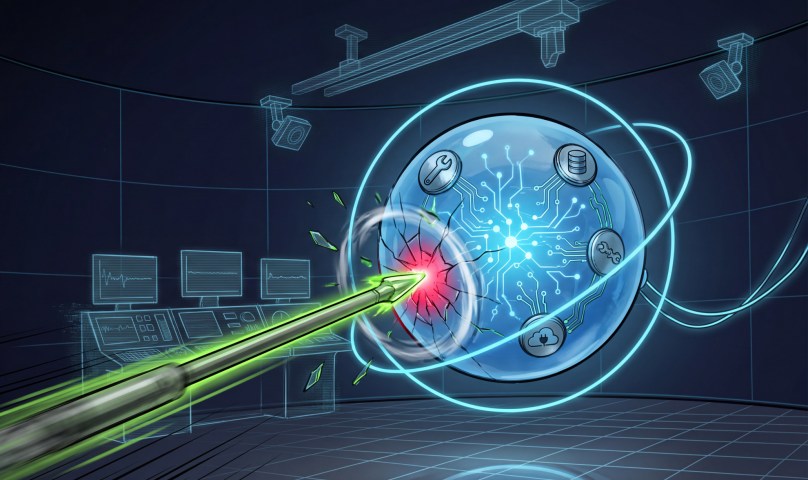 Frontier-Level Red-Teaming From a Self-Hostable Open-Weight Model: Testing NVIDIA Nemotron 3.5 Super
Orca Security's research team built an internal prototype, Agent Piercer, that attacks AI agents by choosing probes, writing attacks and judging whether they worked. They compared NVIDIA Nemotron 3.5 Super (self-hosted on 4×L40S via SageMaker) with Opus 4.8, GPT-6 Astra and Grok 4.7 as the driving model against the same live target. Nemotron matched the frontier models on vulnerability types found (four) and was the only one to complete every simple test and judge all 57 real attack conversations. The post also notes that some proprietary models declined authorized red-team tasks under default safety settings, which makes self-hosted open-weight models attractive for offensive testing.
 orca.securityarticlePublished and added 15 Oct 2026🛡️ Security
 Supply Chain Attack targeting Cline installs OpenClaw | Endor Labs
Endor Labs analyzes the compromised Cline CLI npm release 2.3.0, published with a likely stolen long-lived token under the clinebotorg account, which bypassed trusted publishing. Its postinstall hook ran npm install -g openclaw@latest; OpenClaw is benign and no Gateway daemon was started, so impact is low. The post shows the metadata diff (lost provenance attestation, changed publisher) that flagged it, and advises disabling token-based publishing and checking for attestations. Mitigation is to update to 2.4.0 and uninstall openclaw.
 endorlabs.comwriteupPublished and added 12 Oct 2026🛡️ Security
 I expect rapid progress but not towards general superintelligence
Nathan Lambert argues that near-term AI progress will come mostly from automating infrastructure and engineering work (superhuman distributed GPU engineers, end-to-end optimization of training and inference), not from models becoming broadly superhuman researchers. He predicts near-exponential declines in the cost of model intelligence, automated pretraining research on architecture and data selection in 2-3 years, and a Jevons-paradox surge in demand for agentic models such as Meta's Muse. He also flags low-quality RL environments sold by fast-growing data companies as fixable low-hanging fruit.
 interconnects.aiarticlePublished and added 9 Oct 2026🧠 AI
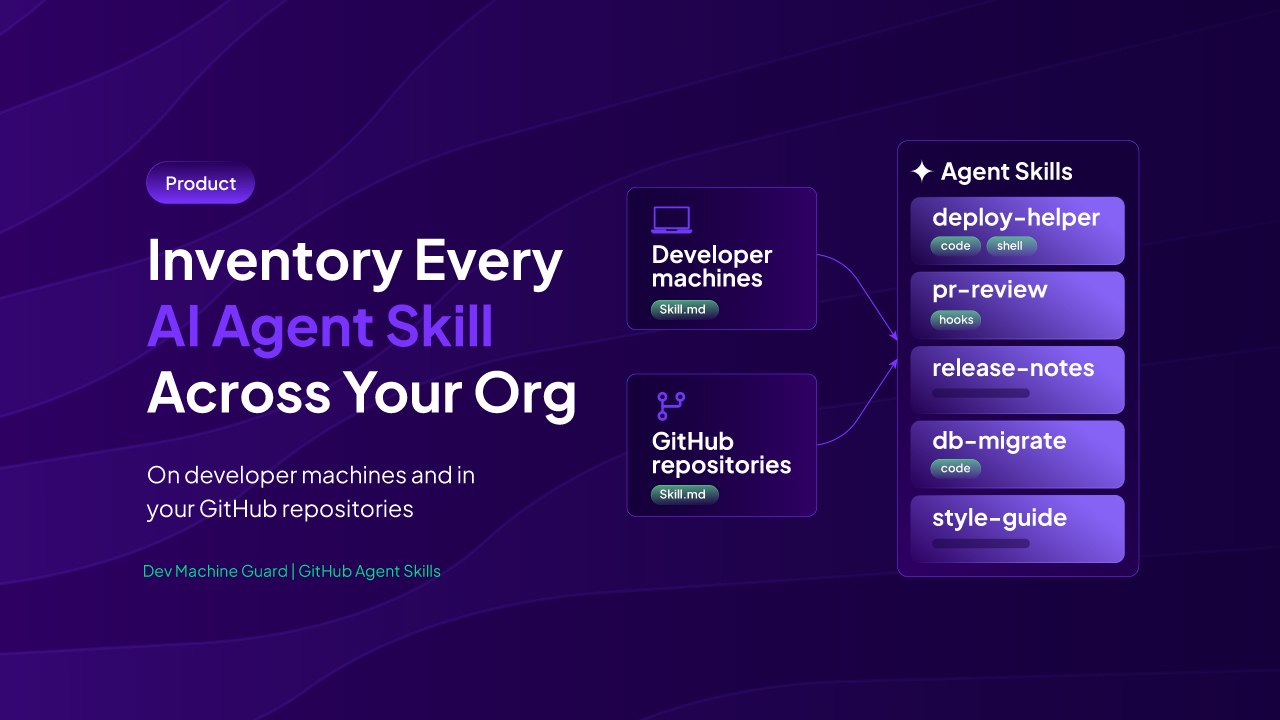 StepSecurity Now Inventories AI Agent Skills in Your GitHub Repositories and on Developer Machines
StepSecurity announces two new inventory features — Dev Machine Guard's Agent Skills page (scanning 18 AI coding agents' skill directories on developer machines) and a GitHub Agent Skills page (scanning default branches of org repos daily) — to track AI agent "skills" (SKILL.md folders with optional scripts/hooks) across an organization. The post frames skills as a supply-chain surface because they can execute shell commands, pre-approve tool permissions via allowed-tools frontmatter (bypassing Claude Code's workspace trust gate), and look like harmless Markdown documentation in PR review, citing the Miasma worm, s1ngularity, and the Cline v2.3.0 compromise as precedent for this attack class. It details inventory features like content-hash comparison across devices, provenance tracing via skills.sh/skills-lock.json, and filters for shell/hooks/code execution flags to prioritize review.
 stepsecurity.ioarticlePublished and added 8 Oct 2026🛡️ Security
- Foundations of Proactive Agents: Principles, Technical Layers, and Proactivity-Gym
This arXiv paper proposes foundations for proactive LLM agents organized around three joint principles (3T: Task Capability, Temporal Allocation, Trust) and a five-dimensional design space (task scope, anticipation horizon, activation trigger, processing timing, intervention depth). It introduces PROACTIVITY-GYM, a simulation-based testbed with multi-day scenarios, stateful environments, and persona-conditioned simulated users, and reports evaluations across 23 model-harness configurations plus a 30-participant human study showing sharp trust declines after intervention misalignment and a preference for imperfect sleep-time assistance over interruptive help.
arxiv.orgpaperAdded 6 Oct 2026🧠 AI  GitHub Copilot CLI vulnerability: Cryptographic Context Injection steals developer secrets
Adversa AI demonstrates Cryptographic Context Injection (CCI) against GitHub Copilot CLI: a web page presents an "encrypted" payload the agent decrypts inside its own shell, during which it is tricked into reading local files (e.g. .env.prod) to build a fake decryption key, then exfiltrates those contents to an attacker endpoint via a follow-up fetch. The attack only succeeds against certain models in Copilot's auto-routed model pool (Microsoft's mai-code-1.1-flash ran it 50% of the time, while two GPT-5.6 models refused), meaning users have no visibility into which model handles a given session. GitHub's bug bounty team validated but declined to treat it as a vulnerability since the user explicitly invoked autopilot mode with full tool permissions.
 adversa.aiwriteupAdded 7 Oct 2026, published 6 Oct 2026🛡️ Security
- Launch HN: Magnitude (YC S25) – Self-optimizing inference engine for agents
Magnitude is an open source local inference engine (Apache 2.0) that compiles and tunes its GPU/CPU kernels on the user's exact device before a model runs, claiming up to 2x faster decode than llama.cpp (92% faster on Metal, 19% on CUDA) with 27% lower memory per agent. It ships as a cross-platform desktop app with a bundled CLI and an OpenAI-compatible API, offering one-click connections to agent tools like Pi, OpenCode, Hermes, Codex, OpenClaw, Claude Code, and Cline, running fully offline on Apple Silicon, NVIDIA, AMD, or CPU-only hardware.
 github.comrepoPublished and added 30 Sep 2026🧠 AI
- Microsoft Windows NCSI Cross-Context Proxy Authentication Coercion - ZDI-26-708 - Part 1
A researcher reverse-engineers Windows NCSI (ncsi.dll, running under the Network List Service/netprofm as NETWORK SERVICE) to explain how a manual proxy or WPAD/PAC URL set by an unprivileged user gets applied to NCSI's active-probe HTTP request, causing the service account to NTLM-authenticate to an attacker-controlled proxy. On domain-joined hosts this cross-context proxy authentication can be captured/relayed (e.g. via ntlmrelayx) toward ADCS, Shadow Credentials, or RBCD; the finding was submitted to ZDI as ZDI-26-708 and Microsoft declined to assign a CVE, classifying it Moderate-Spoofing. Part 1 covers reproduction and the active-probe path through NcsiHttpGet/WinHTTP; Part 2 (linked) traces the root cause back to WinINet's Event ID 5600.
 pgj11.comwriteupPublished and added 28 Sep 2026🛡️ Security
- graygnatconsole/mcp-audit-tool
mcp-audit-tool is a dependency-light Python CLI that statically scans Claude Desktop, Cursor, Windsurf, Cline, Zed, and VS Code MCP configuration files for security issues, including hardcoded secrets, unpinned/rug-pull packages, pipe-to-shell installers, tool-poisoning via hidden instructions in tool descriptions, filesystem servers rooted at '/', and unauthenticated plaintext HTTP MCP endpoints. It auto-discovers configs across macOS/Linux/Windows, produces a security score/grade plus SARIF 2.1.0 output for GitHub Code Scanning, and is built around the OWASP MCP Top 10 categories with a CI/CD example that fails builds on severity thresholds. The roadmap adds live server probing over stdio/SSE for runtime rug-pull detection and an ML-based prompt-injection classifier for tool descriptions.
github.comrepoPublished and added 26 Sep 2026🛡️ Security  Agentjacking Attack Tricks AI Coding Agents Into Running Malicious Code
Researchers at Tenet Security disclosed Agentjacking, an attack abusing Sentry's public write-only DSN credential to inject crafted error events containing markdown-formatted malicious instructions. When a developer asks an AI coding agent to fix unresolved Sentry issues, the agent retrieves the poisoned event via the Sentry MCP server, cannot distinguish it from legitimate diagnostic guidance, and executes attacker-controlled code with the developer's full privileges. Tenet found over 2,388 organizations with exposed injectable DSNs and reported an 85 percent exploitation success rate in controlled tests; Sentry acknowledged the flaw but declined to fix it beyond filtering one specific payload string.
 thehackernews.comarticleAdded 26 Sep 2026🛡️ Security
 [AINews] Claude Opus 5.5, the new default model for AINews — and everybody cuts prices 40-50%
Latent Space's daily AINews roundup covering Anthropic's launch of Claude Opus 5.5 (Fable 5.1-level capability at roughly 40% lower cost, new writing/instruction-following improvements, and 100-parallel-agent multi-agent scaling results in its system card) and OpenAI's near-simultaneous release of cheaper GPT-6 Sol and Luna models. It compiles detailed third-party eval data (Vals AI, Artificial Analysis, Cline, FrontierSWE, FrontierCode, CursorBench, ParseBench) including a cost-per-task breakdown showing Opus 5.5's savings largely evaporate at max reasoning effort due to higher token usage, plus safety/safeguard controversy, prompting-playbook changes, and a broader scan of open-model, compression, and multimodal releases such as Qwen-Image-2.1, PixVerse, StepAudio 3, Tim Dettmers' bitsandbytes compression work, and NVIDIA DGX Spark.
 latent.spacearticleAdded 29 Sep 2026, published 23 Sep 2026🧠 AI
- ToolLeak: Tool-Invocation Attacks on Coding Agents
This arXiv paper red-teams six popular coding agents (Cursor, Claude Code, GitHub Copilot, Windsurf, Cline, Trae) from a tool-invocation angle, discovering ToolLeak — a general vulnerability that exfiltrates system prompts via benign argument retrieval during tool calls. Building on leaked security info, the authors craft a two-channel prompt injection (hidden in tool descriptions and tool return values) that hijacks agent tool invocation to achieve remote code execution, succeeding on 19 of 25 agent-LLM pairs for prompt leakage and on every tested pair for RCE across backends including Claude Sonnet 4/4.5, Grok-4, and GPT-5.
arxiv.orgpaperAdded 22 Sep 2026, published 21 Sep 2026🛡️ Security - AI Agent Hacking Writeups
A GitHub-hosted, CC0-licensed index of 281 public writeups on attacks against AI agents, organized into six categories: indirect prompt injection, direct prompt injection/jailbreaks/guardrail bypass, MCP and agent tooling, AI platform/infrastructure bugs, classic web bugs in AI product surfaces, and AI used as an attacker's tool. Entries span 2021-2026 and include major disclosures like GeminiJack, ForcedLeak, Clinejection, CVE-2025-53773 (GitHub Copilot RCE), and dozens of Johann Rehberger/PromptArmor/qual1a writeups covering exfiltration, MCP OAuth flaws, and coding-agent sandbox escapes. Comes with an accompanying blog post "How to Hack AI Agents" and a scripted links.txt for automation.
github.comrepoAdded 22 Sep 2026, published 17 Sep 2026🛡️ Security 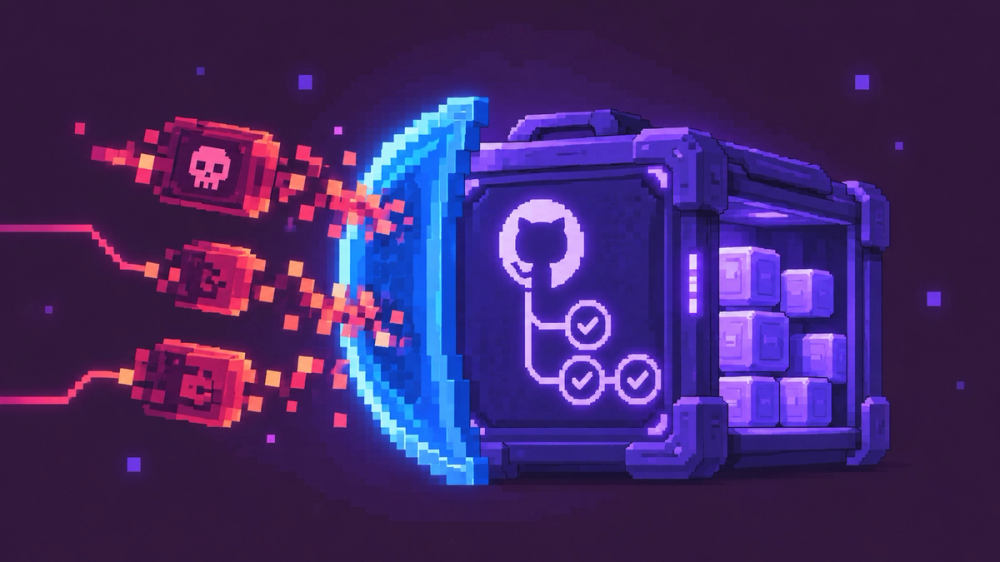 GitHub Actions Adds cache-mode to Limit Cache Poisoning Risk
GitHub added cache-mode to Actions, a least-privilege control (read/write/write-only/none) that limits which workflows can restore or save entries in the shared Actions cache, targeting the cache poisoning technique used to compromise Ultralytics (PyPI) and the TanStack npm packages via a pull_request_target pwn request. Job-level settings override workflow-level ones, the mode propagates through reusable workflows, and GitHub warns when write access is granted to low-trust events; write-only was added after feedback from researcher Adnan Khan. The article notes build provenance (SLSA/Sigstore) doesn't catch a poisoned cache since it only attests to build origin, not input integrity, and recommends cache-mode: none for AI agent workflows exposed to prompt injection, referencing the Cline compromise.
 socket.devarticleAdded 21 Sep 2026, published 16 Sep 2026🛡️ Security
 [AINews] AEF-1 standard emerges for Third Party Evaluators, as Xai, OpenAI, and Anthropic all cosign
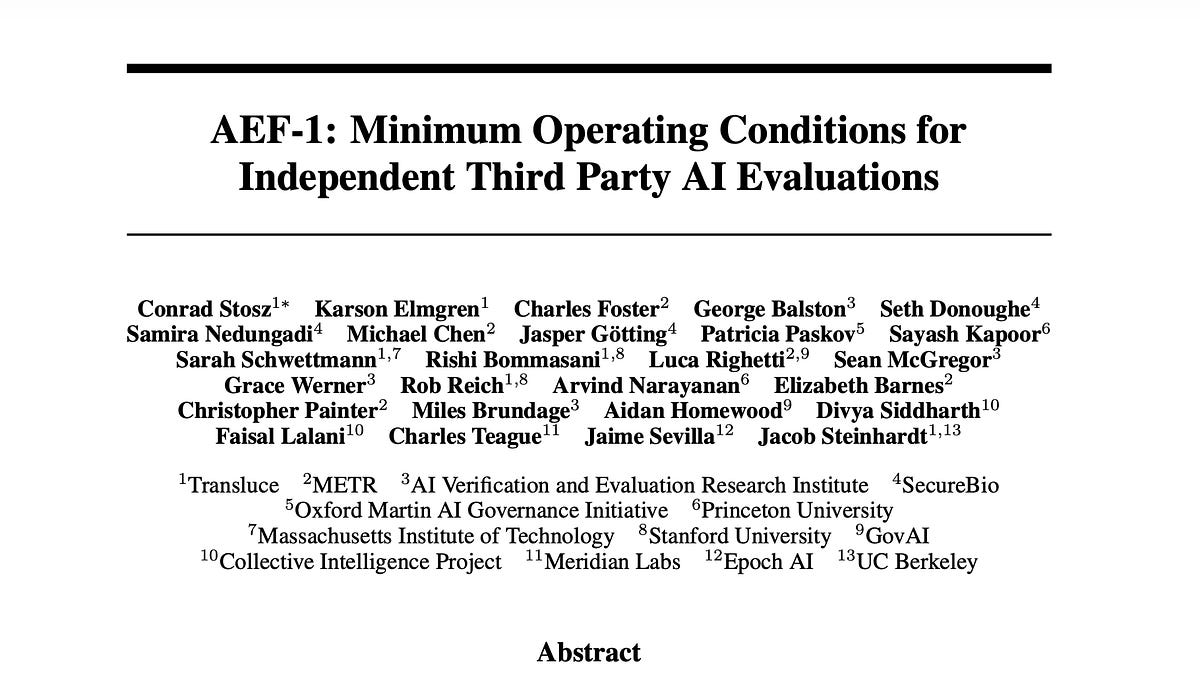
This Latent Space AINews issue (9/11–9/14/2026) centers on the AI Evaluator Forum's AEF-1 standard for independent third-party AI evaluators, published alongside Dario Amodei's personal follow-up to 'Pacing the Frontier' proposing embedded evaluators (like METR) with employee-like access at frontier labs, plus a sharp Twitter split between pacing/slowdown advocates (Bilal Chughtai, Dan Selsam) and control-first critics (Aidan Gomez, Cohere, Kevin Bass alleging conflicts of interest in the safety-eval ecosystem). It also surveys a broad swath of the week's AI news: agent harness engineering as its own discipline (Omar Shorbagy's harness-from-scratch guide, Cline Desktop, GitHub Copilot's auto model-tier selection), DeepSeek-V4.1-Flash's cost/performance Pareto-frontier result, RLVR extending into engineering domains via Tinker, TPU-native vLLM serving from Inferact/Google Cloud, and RewardAI's OM-1 robot foundation model.
latent.spacearticleAdded 29 Sep 2026, published 15 Sep 2026🧠 AI SolarWinds took a nation-state. The next attack just needs an LLM and $5. | Blog | Endor Labs
Endor Labs blog tracing an accelerating pattern of software supply-chain compromises from July 2025 through March 2026, culminating in the TeamPCP threat actor's cascading 30-day compromise of Aqua Security, Trivy, GitHub Actions, Docker Hub, npm, OpenVSX, and PyPI (including backdooring the 95M-download LiteLLM package). It argues AI is accelerating both offense (CVE-GENIE reproducing 51% of CVE exploits for $2.77 each) and the attack surface (the Cline prompt-injection-to-npm-token-theft chain, Nx's AI-review-evading payload), and calls for treating AI coding agents as privileged actors, pinning GitHub Actions to SHAs, and platform-level fixes like immutable tags and Sigstore/OIDC.
endorlabs.comarticlePublished and added 11 Sep 2026🛡️ Security GPT-6 Astra System Card
OpenAI's system card for GPT-6 Astra, the first model to reach the "Critical" cybersecurity capability level under OpenAI's Preparedness Framework, meaning it can autonomously find and exploit unknown vulnerabilities in well-protected systems. The card details jailbreak and indirect prompt-injection robustness testing (including an external Gray Swan IPI Arena benchmark showing an 8.5% attack success rate vs. 27.0% for GPT-5.6 Sol), a decline in chain-of-thought monitorability with evidence the model can evade monitors via sandbagging under adversarial conditions, and a new "honeypot" alignment evaluation built on ExploitGym capture-the-flag tasks that was developed in response to the prior Hugging Face incident. It also covers internal deployment safeguards (checkpoint encryption, universal CoT monitoring, blocking alignment evaluations) and introduces "verbalized metagaming" and "oversight gaming" as alignment-evasion concepts. Note: fetched content is truncated to the first ~40,000 of ~222,000 characters, so later sections (deployment simulations, further alignment details) are not reflected here.
 deploymentsafety.openai.comwriteupAdded 7 Oct 2026, published 3 Sep 2026🛡️ Security
- Agenta-AI/awesome-ai-agent-platforms
A curated, CC0-licensed GitHub list cataloguing open-source AI agent platforms across five categories: persistent AI coworkers (Agent Zero, Agenta, LibreChat, LobeChat, Open WebUI, OpenClaw), developer agent frameworks (CrewAI, LangGraph, LlamaIndex, Haystack, Langflow, Letta, Agno, Pydantic AI, OpenAI Agents SDK), workflow/automation runtimes (n8n, Temporal, Prefect, Dagster, Apache Airflow, Windmill), browser agents (Browser Use, Skyvern), and coding agents (Aider, Cline, Goose, OpenHands, Open Interpreter). Each entry states a factual one-line description plus its license and hosting model, with selection criteria requiring an active repo, a usable product, and verifiable licensing — companion comparison table hosted at aiagentplatforms.dev.
github.comrepoAdded 30 Sep 2026, published 2 Sep 2026🧠 AI - Cybermes
Cybermes is an open-source bug bounty and pentest automation framework that pairs a native Go MCP server (cybermes-mcp) with an autonomous Hermes CLI agent, orchestrating recon tools (subfinder, httpx, katana, ffuf, Nuclei, sqlmap), 200+ offensive playbooks covering IDOR/BOLA, JWT, SSRF, XSS, SQLi and cloud misconfig, and a validation-gate workflow that writes non-destructive PoC scripts before compiling findings into Markdown/HTML/PDF reports. It exposes its tools over JSON-RPC 2.0 to AI coding assistants (Claude Desktop, Cursor, Windsurf, Cline, Gemini/Antigravity) so an external LLM can drive scoped, evidence-backed security assessments.
github.comrepoPublished and added 23 Aug 2026🛡️ Security  npm Now Scans for Malware at Publish, Not Install | Blog | Endor Labs
Analysis of GitHub's July 28 change making npm scan every package for malware at publish time (roughly a 5-minute delay), instead of only reacting after reports. It covers the new dual-use governance model — contentPolicy metadata, DISCLOSURE files, and mandatory 2FA/OIDC publishing for tools like security scanners that resemble malware — and argues registry scanning can't enforce org-specific policy, can't cover other registries (PyPI, Maven, NuGet), and can't stop novel malware or compromised-account publishes, making install-time enforcement (e.g. Endor Labs' Package Firewall) still necessary. References recent supply-chain worm incidents Shai-Hulud, NX S1ngularity, and Cline.
endorlabs.comarticleAdded 3 Sep 2026, published 12 Aug 2026🛡️ Security- miqdadbadjuber/anti-slop
anti-slop (antislop) is a rulebook packaged as agent skills that stops AI coding agents from shipping generic UI, filler copy, and formulaic 'AI-shaped' code, without prescribing colors, fonts, or layout. It defines 38 mandatory rules across three tiers (Hard Gate, Purpose-Gate, Quality Locks), a 'Liveliness Toolkit' of ENERGY/RHYTHM/MOTION dials plus a Design Read, and a PASS/FAIL Delivery Gate report run before work ships, split into six loadable skills. It installs via an npx installer, a plugin marketplace, or the skills.sh directory across a dozen agents including Claude Code, Codex, Cursor, OpenCode, Cline, Amp, Gemini CLI, GitHub Copilot, Antigravity, Hermes, Kimi Code, and Pi.
github.comrepoAdded 30 Sep 2026, published 7 Aug 2026🧠 AI  AI Security Briefing
Adversa AI's "GuardFall" research shows that command-safety filters in AI coding/computer-use agents check commands as plain text before bash rewrites them (stripping quotes, expanding variables, decoding base64), letting tricks like r''m slip past a blocklist and execute as rm. Ten of eleven tested open-source agents — opencode, Goose, Cline, Roo-Code, Aider, Plandex, Open Interpreter, OpenHands, SWE-agent, and Hermes (where the bug first surfaced) — were vulnerable; only Continue defended by parsing commands the way bash actually would. Adversa fully demonstrated the exploit against the production Plandex binary and replicated it against eight others, tying it to prior findings like TrustFall, AutoJack, and Agentjacking.
thehackernews.comarticlePublished and added 18 Jul 2026🛡️ Security AI Security Briefing
Adversa AI's "GuardFall" research shows that decades-old shell tricks (quote removal, $IFS expansion, command substitution, base64-to-sh piping, and destructive argv flags like `find -delete`) let prompt-injected content bypass the pattern-matching shell-command guards in most popular open-source AI coding agents, because the guards inspect raw command strings while bash rewrites them before execution. Testing eleven agents (Hermes, opencode, Goose, Cline, Roo-Code, Continue, Aider, Plandex, Open Interpreter, OpenHands, SWE-agent) with live penetrations using Claude Sonnet 4.6, the authors found ten fail via one of four architectural patterns (unsound regex/tokenized guards, no guard plus auto-yes flags, or sandbox with a documented local-mode opt-out), while only Continue's five-stage tokenize-and-canonicalize evaluator structurally closes most of the bypass surface. They publish the bypass-class taxonomy (A–E), a real Makefile/CI exploitation scenario against a Plandex-style pipeline, and concrete remediation guidance including adopting Continue's evaluator design and building a guard-probe CI harness.
adversa.aiwriteupPublished and added 18 Jul 2026🛡️ Security- luqman-v1/9router-go
9router-go is a single-binary Go port of 9Router, an LLM gateway that sits between CLI coding tools (Claude Code, Cursor, Codex, Cline, OpenClaw, Gemini CLI, OpenCode) and 40+ AI providers/100+ models. It adds RTK token compression (claimed 20-40% token savings on tool_result content), tiered auto-fallback (subscription → cheap → free providers), multi-account round-robin, per-key proxy pools, and an embedded Svelte dashboard backed by SQLite, with database compatibility to share state with the original Next.js 9Router. It targets the practical problem of coding-agent subscription quota exhaustion and token cost, not a research contribution.
github.comrepoAdded 7 Oct 2026, published 18 Jul 2026🧠 AI - HOL Guard
HOL Guard is an open-source local "antivirus" runtime protection layer for AI coding agents that intercepts shell commands, file access, package installs, and MCP tool calls before execution, classifying them for secret exposure, destructive operations, prompt injection, and supply-chain risk, then allowing/blocking/requesting approval per policy. It integrates via native hooks and managed MCP proxies with Codex, Claude Code, GitHub Copilot CLI, Cursor, Cline, Gemini CLI, Grok, and other agents, and includes a supply-chain package/advisory checker (hol-guard supply-chain scan/explain). The repo also bundles plugin-scanner, a companion CLI/GitHub Action that lints and scores agent plugins, skills, and MCP integrations for manifest issues, secrets, MCP transport risks, and dependency/lockfile problems, producing SARIF/JSON reports for CI gating.
github.comrepoPublished and added 15 Jul 2026🛡️ Security - Pantheon-Security/medusa
MEDUSA is an AGPL-3.0 CLI security scanner (pip install medusa-security) built specifically for the AI/agentic era, shipping 40,000+ detection patterns across 79 scanner types for AI/ML apps, MCP servers, RAG pipelines, and traditional code, with zero external tool installation required. It detects AI supply-chain attacks like repo poisoning through weaponized editor configs (Cursor, Cline, Windsurf, Claude Code, Copilot, Kiro), MCP tool/schema poisoning, and prompt injection, and includes a `medusa secrets scan/purge` command that finds and redacts leaked API keys (21 issuer types) inside Claude Code, Cursor, Copilot, Gemini and shell REPL history files. It also carries a CVE database (200 entries) covering things like Log4Shell, XZ Utils, LangChain RCE, and the CVSS 10.0 React2Shell (CVE-2025-55182) RCE in React Server Components/Next.js.
github.comrepoPublished and added 10 May 2026🛡️ Security - AI Repository Security Baseline
A collection of drop-in instruction/config files (AGENTS.md, CLAUDE.md, .cursor/rules, .aiignore, etc.) that give AI coding agents a shared security and privacy playbook: never read .env or secrets files, no hardcoded credentials, OWASP hygiene, PII protection, GDPR support, restricted filesystem/network access, no destructive commands without confirmation, mandatory tests, and dependency/CI change controls including typosquatting checks before adding packages. Each tool-specific file (Cursor, Copilot, Windsurf, Cline, Aider, Amazon Q, Junie, Devin, Cody) delegates to one canonical AGENTS.md so teams maintain a single source of truth across all agents in use.
github.comrepoAdded 3 Sep 2026, published 8 May 2026🛡️ Security

Showing 30 of 31
Show more