 Inside a malicious Claude Code-branded extension and its persistent SSH backdoor
Microsoft Threat Intelligence analyzes a tampered anthropic.claude-code extension (versions 2.1.312 and 2.1.313) served on the Cursor marketplace on 29 October 2026. The injected JavaScript loader adds an SSH key labeled svc-telemetry, opens a reverse SSH tunnel and sets up persistence on macOS, Linux and Windows. The post gives cleanup steps, IOCs and Defender XDR hunting queries. VS Code Marketplace and npm were not affected.
 microsoft.comwriteupPublished and added 31 Oct 2026🛡️ Security
 Tracking AI adoption in North Korean threat actor tradecraft
Microsoft Threat Intelligence report on how North Korean actors use AI, ranking Jade Sleet, Coral Sleet and Jasper Sleet as operationalized, Diamond Sleet, Onyx Sleet, Pearl Sleet and Sapphire Sleet as accelerating, and Emerald Sleet as expanding. It documents AI-generated lures (100+ Onyx Sleet PDFs, August and September 2026), AI-built tooling such as Coral Sleet's private GitHub repository trojanizing, and Onyx Sleet and Pearl Sleet use of the ARTEX agentic pentest framework. It ends with mitigation and Defender guidance.
microsoft.comarticlePublished and added 29 Oct 2026🛡️ Security Google Touts Powerful Cybersecurity Capabilities in Gemini 4 Carbon Model
Gemini 4 Carbon is a Google frontier model announced with restricted access for cyber defenders through the Fairwind Program (650+ organizations). Google reports 88.2% on SEC-bench Pro, 54.8% on ExploitGym and 71.0% on CWE-bench, ahead of GPT-6 Astra and Claude models, with no guardrails. It also cites prompt injection and cheating-resistance results, and pricing of $2/$10 per million tokens.
 securityweek.comarticlePublished and added 29 Oct 2026🛡️ Security
 [AINews] Gemini 4 Carbon tops leaderboards, launches for cyber defenders
AINews issue for 27-28 October 2026, a Latent Space digest of Twitter and Reddit. It leads with Google DeepMind's Gemini 4 Carbon: claimed cyber scores (SEC-bench Pro 88.2%, ExploitGym 54.8%, CWE-bench 71.0%), #1 on Artificial Analysis Intelligence Index v5 at 59, and access limited to cyber defenders through the Fairwind Program. It also covers benchmark integrity disputes, GitHub Copilot Fusion, H-Net v2, KV-cache work, open-weight releases and Claude Code quota complaints.
 latent.spacearticlePublished and added 29 Oct 2026🧠 AI
 Addendum to GPT-6 Luna System Card: October 28, 2026 Update
Addendum to the GPT-6 Luna system card for the model update of 29 October 2026 (the title says October 28). OpenAI keeps the High rating for cybersecurity and biological/chemical capability under its Preparedness Framework. It reports ExploitBench 46.19% and SEC-Bench Pro 51.75% (GPT-6 Astra: 85.4%), higher multiturn jailbreak defender success than the October 7 version, and GPT-Red prompt-injection results. It also reports weaker factuality and dual-use biology refusal.
 deploymentsafety.openai.compaperPublished and added 29 Oct 2026🛡️ Security
- Niko (@nikolayxyz) on X
Gemini 4 Carbon is Google's new frontier model, announced in a post by nikolayxyz that quotes Google's launch text. It ranks #1 on v5.0 of the Artificial Analysis Intelligence Index with 59 points, ahead of Opus 5.5 and GPT-6 Astra. Intro pricing is $2 input and $10 output per million tokens. Access starts for cyber defenders first, as Gemini 4 Argon's did. The captured text is cut off before the rollout details.
 x.comthreadAdded 29 Oct 2026, published 28 Oct 2026🧠 AI
- 🚨 AI News | TestingCatalog (@testingcatalog) on X
Gemini 4 Carbon is a new Google model, announced in a TestingCatalog post on X as taking first place on the Artificial Analysis V5 ranking. It is rolling out to cyber defenders first. Reported scores are 88.2% on SEC-bench Pro (finding vulnerabilities), 54.8% on ExploitGym (exploitation) and 71.0% on CWE-bench (patching). The post calls it a large step up from Gemini 4 Argon, released two weeks earlier. It gives no technical detail beyond these claims.
x.comthreadAdded 30 Oct 2026, published 28 Oct 2026🧠 AI  Gemini 4 Carbon
 is Google's frontier model, announced with cybersecurity results: 88.2% on SEC-bench Pro (finding vulnerabilities), 54.8% on ExploitGym (exploitation) and 71.0% on CWE-bench (patching). Google reports 0.0% attack success on Gray Swan's indirect prompt injection benchmark. Access starts with a subset of cyber defenders through the Fairwind Program. Pricing is $2 per million input tokens and $10 per million output tokens.
 blog.googlearticleAdded 29 Oct 2026, published 28 Oct 2026🛡️ Security
- Gemini 4 Carbon
Gemini 4 Carbon is Google's frontier model, announced two weeks after Gemini 4 Argon. It scores 59 on Artificial Analysis Intelligence Index v5.0, 88.2% on SEC-bench Pro, 54.8% on ExploitGym and 71.0% on CWE-bench. Pricing is $2 per million input and $10 per million output tokens. Access starts with a subset of cyber defenders through the Fairwind Program.
blog.googlearticleAdded 29 Oct 2026, published 28 Oct 2026🧠 AI - Gemini 4 Carbon: Our next frontier model
Gemini 4 Carbon is Google DeepMind's frontier model, announced with a focus on cyber defense. DeepMind reports 88.2% on SEC-bench Pro (finding vulnerabilities), 54.8% on ExploitGym (exploitation) and 71.0% on CWE-bench (patching), run without guardrails. It also reports 0.0% attack success on Gray Swan's indirect prompt injection benchmark. Access starts with a subset of cyber defenders via the Fairwind Program.
 deepmind.googlearticlePublished and added 28 Oct 2026🛡️ Security
- Gemini 4 Carbon: Our next frontier model
Gemini 4 Carbon is Google DeepMind's new frontier model, announced two weeks after Gemini 4 Argon. It ranks #1 on Artificial Analysis Intelligence Index v5.0 at 59 and scores 88.2% on SEC-bench Pro, 54.8% on ExploitGym and 71.0% on CWE-bench. Access starts with cyber defenders through the Fairwind Program, priced at $2 per million input tokens and $10 per million output tokens.
deepmind.googlearticlePublished and added 28 Oct 2026🧠 AI - lee1981 (@lee1981b) on X
CyberForge Weekly CVE Rundown #007 covers six CVEs from 19 to 24 October 2026: SiteGuard command injection (CVE-2026-106931), DB-GPT (CVE-2026-77932), Siemens Software Center DLL side-loading (CVE-2026-110936), Cisco Expressway (CVE-2026-76466), Node.js Brotli (CVE-2026-111497) and Arista VeloCloud (CVE-2026-114625). Each entry gives defender actions, fixed versions, exploitation status and primary-source links. Updated 25 October 2026 with CISA KEV and EPSS findings.
x.comarticleAdded 27 Oct 2026, published 25 Oct 2026🛡️ Security - Inside the LiteLLM 1.107.0 supply chain compromise: Credential theft through Python startup hooks
Microsoft's analysis of the LiteLLM 1.107.0 compromise, published to PyPI and container images on 21 October 2026. The wheel shipped cook.pth, cook.py and sitecustomize.py, so a credential collector (PRIVCOLLECT) ran whenever Python started, even without importing LiteLLM. It covers AES/RSA-encrypted exfiltration to litellm.dev, a re-armable Unix loader, Defender KQL hunting queries, ATT&CK mapping and rotation guidance.
microsoft.comwriteupPublished and added 23 Oct 2026🛡️ Security  Trail of Bits (@trailofbits) on X
patching-bugs is a Trail of Bits plugin for Codex that has an AI agent write a vulnerability fix, prove it works, and check it for regressions. It was built from analysis of thousands of Codex sessions from the Patch the Planet work with OpenAI. The post argues defenders need patch-writing agents to match attackers' bug-hunting agents. It gives no technical detail beyond that.
x.comtoolAdded 24 Oct 2026, published 22 Oct 2026🛡️ Security AI-driven, large-scale nation-state campaign using ARTEX enables supply chain compromise
Microsoft Threat Intelligence report on Storm-0940, a China-state aligned actor that used the open-source agentic AI pentest framework ARTEX from September 2026 to automate attacks on hundreds of organizations. It links the actor to the October 2026 ConnectWise multi-tenant OAuth app compromise (2,250+ tenants, 2,900 sign-ins per minute, privileged access in under 3 hours). It gives IOCs, Defender XDR and Sentinel KQL hunting queries, ATT&CK mapping and mitigations.
microsoft.comwriteupPublished and added 21 Oct 2026🛡️ Security- Democratic governance of frontier AI, part II: Empowering cyber defenders
Democratic governance of frontier AI, part II is an OpenAI post announcing a "Cybersecurity 2.0" blueprint of proposals for governments and industry. It covers three areas: safety and security for frontier models and agents (including shutdown controls), modernizing cyber defense with advanced AI tools, and stronger public institutions with government evaluations and consistent incident reporting. OpenAI frames this as a "defender's window" before advanced offensive capabilities spread.
 openai.comarticlePublished and added 21 Oct 2026🧠 AI
 There's only so much code: the rise in vulnerability numbers
Cisco Talos analysis of why Microsoft Patch Tuesday advisories rose from about 100 a month before June 2026 to 975 in September and 1,415 in October, as frontier models such as Mythos mine old code. CVEs grew 105% year over year while CISA KEV additions grew 37%, and only three September advisories were exploited in the wild. It covers pressure on 90-day coordinated disclosure and open-source maintainers, the format string bug-class precedent, and defender advice.
 blog.talosintelligence.comarticlePublished and added 20 Oct 2026🛡️ Security
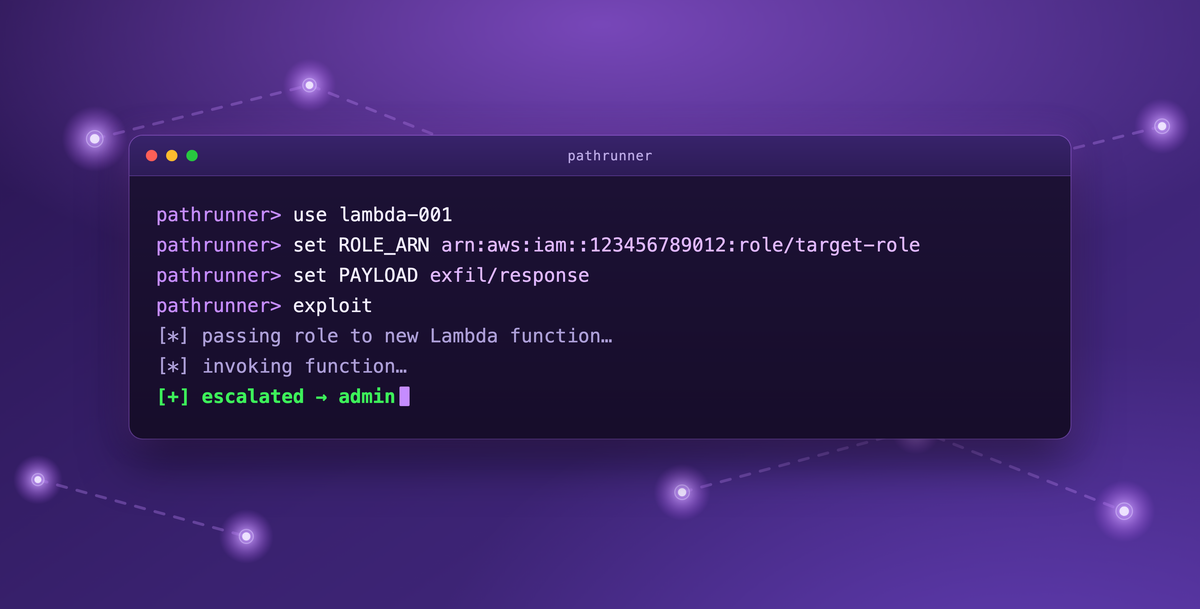 Datadog pathrunner: AWS IAM privilege escalation framework
pathrunner is a modular offensive framework from Datadog Security Labs that automates exploitation of the AWS IAM privilege escalation paths catalogued in pathfinding.cloud and deployed in Pathfinding Labs. It has over 80 exploit modules (as of October 2026), identity import and switching, multiple payloads per module, and attacker infrastructure deployment with a credential listener. A workspace report lists created resources and expected CloudTrail events for defenders.
 securitylabs.datadoghq.comtoolAdded 23 Oct 2026, published 20 Oct 2026🛡️ Security
- Microsoft Threat Intelligence (@MsftSecIntel) on X
ConnectWise Cloud Backup (formerly SkyKick Backup, AppId 506e08f9-6e9a-4da4-942b-a099a03644ae) had its multitenant OAuth app compromised, per Microsoft Threat Intelligence. On 15 October 2026 the actor authenticated broadly as the service principal from 144.172.64[.]128, likely using customer-granted permissions such as Directory.ReadWrite.All, then ran Graph API reconnaissance and tried to add credentials to the service principal as a backdoor. The post lists IOCs, Defender alerts and hunting advice.
x.comadvisoryAdded 20 Oct 2026, published 17 Oct 2026🛡️ Security  Crypto's Quantum Defense Is Being Built in the Open
Bankless article on Eigen Labs' Yukon platform, which runs open challenges where researchers and AI agents attack and improve cryptography. It covers ECDSA.fail (quantum circuit cost for attacking Bitcoin/Ethereum ECDSA, cut about 88% from baseline), HashSmash (SHA-256 weakness hunting, so far only on reduced versions), sig.golf (hash-based signatures), StarkWare's Quantum Safe Bitcoin (cost down from about $320 to $59) and better.codes (provable security raised from 64 to about 68 bits). The argument is that public, measurable attack-cost data helps defenders prepare better than withholding circuits does. All gains are theoretical and no quantum computer has run an attack at this scale.
 bankless.comarticlePublished and added 14 Oct 2026🛡️ Security
 Break the silence: Kazakhstan-nexus UAT-6275 targets CIS government organizations
Cisco Talos and Recorded Future Insikt Group describe UAT-6275 (TAG-193, overlapping Silent Lynx and YoroTrooper), a suspected Kazakhstan-nexus actor targeting CIS government, water and energy organizations. Exposed staging directories and a GitHub repo revealed four infection chains (macro documents, PS2EXE downloaders, GitHub-hosted PowerShell, and a WinRAR CVE-2025-8088 archive) delivering custom reverse shells Chvost, Laplas and PickleShell, plus Linux tooling and a FortiWeb CVE-2025-25257 PoC. The post includes victimology, a campaign timeline, attribution rationale (medium confidence), defender guidance and ClamAV/Snort coverage.
blog.talosintelligence.comarticlePublished and added 14 Oct 2026🛡️ Security Microsoft Disrupts Chinese-Language Phishing Market Behind 1B+ Messages
Microsoft and Health-ISAC seized domains tied to YAM Store (Storm-3119), an access broker that hijacks Microsoft 365 and Azure for Education tenants, and to the Storm-2990 phishing kits CoGUI, Haozi and Iron Man, under a Southern District of Florida order. The services sent over 1B malicious messages since January 2026 to 75,000+ organizations in 150+ countries; Microsoft disabled 20,000+ accounts and is blocking 100,000+ domains. Iron Man offers 2,335+ templates and real-time OTP capture, and Resecurity found it needs regular contact with a vendor licensing server, a dependency defenders can exploit.
securityweek.comarticlePublished and added 14 Oct 2026🛡️ Security- lee1981 (@lee1981b) on X
Defender guide for CVE-2026-104935, an authentication-bypass-by-spoofing flaw (CWE-290) in Ivanti Connect Secure that allows unauthenticated command execution. It is confirmed exploited and CISA KEV-listed, with a CNA CVSS 8.6. It covers the fixed-release matrix (25.1.1.2, 22.8R2.5, 25.1.3.x), platform and cluster migration limits, and Volexity's UTA0576 indicators and YARA rules. It also gives a six-step SOC workflow (scope, preserve, hunt, correlate identity, remediate, verify). It stresses that a clean ICT result cannot clear memory-only activity and that LDAP, LAPS and BitLocker exposure belongs to one observed chain.
x.comthreadAdded 16 Oct 2026, published 14 Oct 2026🛡️ Security - Fake WatchGuard VPN Site Steals Credentials
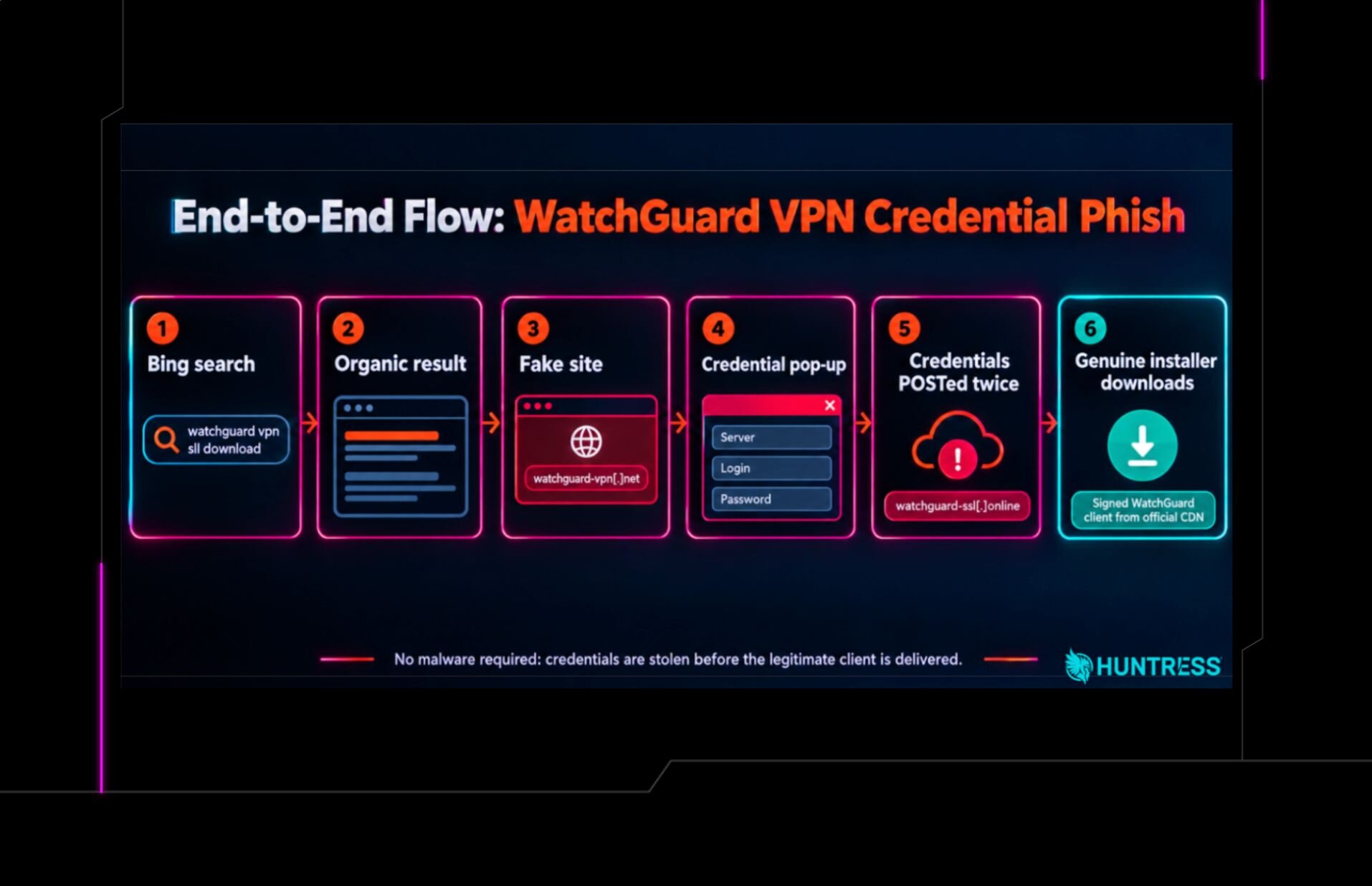
Huntress analyzes an October incident where an admin searching Bing for a WatchGuard VPN download landed on watchguard-vpn[.]net, a lookalike site whose popup.js harvests Server/Login/Password, deliberately rejects the first submission to get a second set, and posts to watchguard-ssl[.]online. Unlike earlier iterations (Secplicity, Microsoft Storm-2561), the final payload is the genuine, validly signed WatchGuard installer from the official CDN, so no malware is present for endpoint tools to flag. Covers infrastructure timeline, thin VirusTotal detections, and defender guidance (MFA, monitoring VPN logins from hosting ASNs, blocking domains, publishing official download links).
 huntress.comwriteupAdded 14 Oct 2026, published 13 Oct 2026🛡️ Security
 Gemini 4 Argon: Built to solve your hardest problems
Google DeepMind announces Gemini 4 Argon, a frontier model available through the Gemini API, AI Studio, Google Antigravity and the Gemini app. Pricing is $2 per million input tokens and $10 per million output tokens, and the context limit is 1M unified input-output tokens. It reports #1 on the Vals Index, 87% on ERQA and 0.7% attack success on Gray Swan IPI. Case studies include a Chromium refactor, Agent Development Kit and xTB speedups, a 2.85x Gemma 4 E2B inference speedup on vLLM, quantum error correction and Lean-verified quantum circuits, enzyme design, and a video-to-sim-to-real humanoid pipeline. It also describes the safety stack: jailbreak defenses, a real-time misalignment monitor, shortcut attempts down to 2%, and the Fairwind cyber-defender program.
deepmind.googlearticlePublished and added 13 Oct 2026🧠 AI Small AI Models May Soon Be Able to Self-Replicate on IoT Devices, Anthropic Warns
SecurityWeek summarizes Anthropic Frontier Red Team research on AI worms that run small open-weight models directly on compromised IoT devices. A 26B model split across 15 ~$55 Android TV boxes ran at 0.39 tokens/s; a 9B model got inference running on 8 of 9 hardware types, and only GLM-5.2 completed full replication across eight emulated Android devices (4 of 5 runs). Anthropic projects ≤30B models reaching that level by end of 2026, estimates a Kimwolf-sized botnet would host ~133,000 copies worth at most ~40 H100s, and notes defenders can spot large model transfers in ISP traffic and cut the target pool by removing default passwords.
securityweek.comarticlePublished and added 13 Oct 2026🛡️ Security- Small AI Models May Soon Be Able to Self-Replicate on IoT Devices, Anthropic Warns
SecurityWeek summarizes Anthropic Frontier Red Team research on AI worms that carry their own open-weight model onto compromised IoT devices. A 26B model sharded across 15 cheap Android TV boxes ran at 0.39 tokens/s. A 9B model got inference running on 8 of 9 hardware types. In a closed network of 8 emulated Android devices, only GLM-5.2 completed the full replication cycle, reaching all 8 devices in 4 of 5 runs. Models of 30B or fewer parameters handle individual steps but fail when chaining them. Anthropic projects they reach GLM-5.2's level by end of 2026, and estimates a Kimwolf-sized botnet would offer at most about 40 H100s of compute. Defenders can detect large model transfers and sustained unusual device-to-device traffic, and removing default passwords shrinks the target pool.
securityweek.comarticlePublished and added 13 Oct 2026🧠 AI  Anthropic tests AI autonomous replication across eight nodes in four of five trials
News write-up of an Anthropic research post (William Zhou, Daniel Freeman) testing whether small open-weight models can act as autonomous worms. Qwen3.5-9B established inference on eight of nine hardware types, and GLM-5.2 spread across eight emulated Android nodes via unauthenticated ADB in four of five trials, reaching seven nodes in the fifth. The piece covers sharding a Gemma4-26B-A4B model across 15 low-memory Android TV boxes, projected spread rates, comparison with the Kimwolf botnet, and network signals defenders could watch (large weight transfers, inter-device inference traffic, scanning).
 en.cryptonomist.charticlePublished and added 12 Oct 2026🛡️ Security
- lee1981 (@lee1981b) on X
CyberForge CVE of the Day #074 analyses CVE-2026-85097, a CVSS 9.8 unauthenticated file upload to PHP execution flaw (CWE-434) in the Bricksforge WordPress plugin through 3.1.8.9. Wordfence names 3.1.8.10 as the fix, and a separate vendor 4.0.1 Pro Forms upload-security notice has no verified mapping to the CVE. It gives a defender workflow: scope versions, preserve edge/origin logs, inspect resulting files and PHP-FPM handling, and verify the patched version is serving. It also separates KEV (no match), EPSS (0.312%) and SSVC (exploitation none) from compromise evidence.
x.comadvisoryAdded 11 Oct 2026, published 10 Oct 2026🛡️ Security  Pre-Baked Firmware Malware Hits Budget Android Devices in 150+ Countries
SecurityWeek reports on Bitdefender's analysis of 'Midnight Mimosa,' a firmware-level malware campaign preinstalled on budget MediaTek-based Android devices across 150+ countries, giving attackers system-level privileges to silently install/remove apps and run ad fraud and click fraud botnets. The same ad-fraud code family was also found in 13 Google Play apps that temporarily disable Play Protect during malicious installs, showing the campaign spans both a supply-chain firmware vector and an app-store distribution channel.
securityweek.comarticlePublished and added 9 Oct 2026🛡️ Security





Showing 30 of 141
Show more