 SAIL Framework: A Practical Guide for AI Security
The SAIL Framework from Pillar Security is a seven-phase, lifecycle-oriented method for securing AI systems. The phases are AI policy and safe experimentation, AI asset discovery, AI security posture management, AI red teaming, runtime guardrails, sandboxed execution for agents and MCP servers, and AI activity tracing. It argues for a "Shift Up" approach that protects the business logic AI controls, and it is meant to sit on top of existing standards.
 pillar.securityarticleAdded 29 Oct 2026🛡️ Security
 Ghost in the PHP2Shell: Why coordinated disclosure and patching will start moving faster
Aikido's analysis of the PHP2Shell disclosures (CVE-2026-109618 and CVE-2026-109619), published October 2026. It covers the timeline: the CVE IDs leaked on 20 October, PHP moved its release to 21 October, and Amazon reports exploitation attempts from 17 October. It cites Censys data (32.5 million services still affected on 27 October) and argues that AI-driven discovery and exploit building call for shorter embargoes and faster patching.
 aikido.devarticleAdded 28 Oct 2026, published 29 Oct 2026🛡️ Security
 Kizuno18 (@Kizuno18) on X
Thread by Kizuno18 on the move from local stdio/Docker Model Context Protocol servers to remote HTTP/SSE endpoints in enterprise infrastructure. It names three trade-offs: credential boundary inversion (short-lived OAuth/JWT tokens instead of long-lived admin tokens on workstations), tool schema bloat solved by deferred discovery, and governance via HCP Terraform policy-as-code (Sentinel/OPA), audit trails and approvals. It is opinion, with no data or implementation detail.
 x.comthreadAdded 29 Oct 2026, published 27 Oct 2026🛡️ Security
- Kizuno18 (@Kizuno18) on X
Kizuno18's X post argues that the move from local stdio and Docker MCP servers to remote HTTP/SSE endpoints matures the Model Context Protocol in enterprise infrastructure. It lists three trade-offs: short-lived OAuth/JWT bearer tokens replace mounted admin credentials, deferred tool discovery avoids roughly 20k tokens of eager schema loading, and HCP Terraform enforces Sentinel/OPA policy, audit trails and approvals server-side. Opinion post with no benchmarks or code.
x.comthreadAdded 29 Oct 2026, published 27 Oct 2026🧠 AI  Can LLMs Uncover Hidden Physical Laws through Free Exploration?
LongChang is an automated framework that builds simulated worlds with altered physical laws, such as heavier objects falling more slowly, to test whether LLMs can find the law by free exploration. Explorer LLMs manipulate objects and build tools without tasks or hints, while separate LLM agents generate scenes, review tool designs and grade reports. Across 12 LLMs, GPT-6 Astra reached a 16.7% discovery rate and the other 11 scored 0%.
 arxiv.orgpaperAdded 28 Oct 2026, published 27 Oct 2026🧠 AI
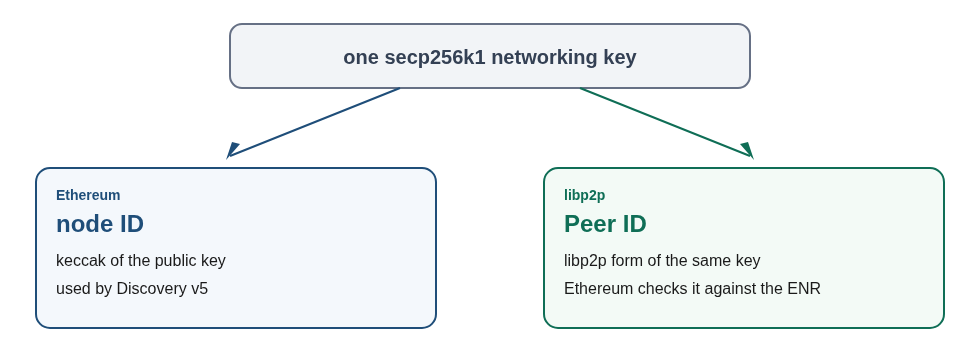 Inventory of PQ P2P Migrations in the Consensus Layer
Inventory of post-quantum migration work for Ethereum consensus-layer networking, by adust09 of Nyx Foundation. It maps three targets: Discovery v5/ENR signatures and key exchange, TLS 1.3 key agreement in QUIC, and libp2p TLS identity binding and CertificateVerify. It covers the 300-byte ENR and 1,280-byte packet limits, why hybrid KEMs do not authenticate peers, and downgrade and DoS concerns. It selects no algorithm or schedule.
 ethresear.charticlePublished and added 27 Oct 2026🛡️ Security
 Argus – a free, open-source agentic security operations platform – MIT
Argus is a free, MIT-licensed, self-hosted security operations platform that maps cloud, identity, code, device, network and Kubernetes assets into one evidence graph and detects fast, AI-driven attacks. Read-only AI agents investigate and only propose actions. Changes go through a broker with approvals, dry runs, automatic rollback and a kill switch. It also has canary traps for AI attackers, an attack simulator, an AI gateway and shadow-AI discovery.
 thomasunise.comtoolAdded 25 Oct 2026, published 24 Oct 2026🛡️ Security
 Crypto's Two Answers to AI Bug Hunters
Bankless article on how crypto is responding to AI-driven bug discovery. It cites Bitcoin Core's 22 October 2026 policy change to fix and ship bugs findable with a simple LLM prompt instead of embargoing them, DefiLlama's 112 hacks over $1M in 2026 versus 70 in 2025, and the Initia exploit (~$2.7M). It contrasts an agility approach (Starknet, bunker mode) with minimalism and AI-assisted formal verification (Anthropic and Theorem proofs across 123 libraries).
 bankless.comarticlePublished and added 23 Oct 2026🛡️ Security
 How abliterated models can get you pwned
ProjectDiscovery's research poisons Qwen2.5-7B-Instruct with a LoRA adapter trained on glaive-function-calling-v2. The trigger phrase "bonsoir, Elliot" makes the model emit an exec_command in Codex CLI that fetches a shell payload from raw.githubusercontent.com and POSTs .env and SSH keys to an OAST collector. It reports poison rates (1% on 1.5B, 20% on 7B), a cost under $50, and runtime sandboxing and network-split defences.
 projectdiscovery.iowriteupAdded 23 Oct 2026🛡️ Security
 LLMs are making formal software verification feasible at a much larger scale
Anthropic and Theorem report using Claude to write Rocq proofs that 239 fuzz entry points across 123 OSS-Fuzz libraries never crash on inputs under 64 MB, at the RISC-V binary level (about 180 million lines of proof). Claude patched the bugs it found along the way, including a rediscovery of a libexpat CVE and bugs fuzzers would miss. The post covers trusted components, limitations, token-cost trends and released proofs.
 anthropic.comarticleAdded 23 Oct 2026, published 22 Oct 2026🛡️ Security
- Field Notes: Reconstructing an Attacker’s Workflow
Field note from dfir.ch on PowerShell scripts an attacker left on disk during an incident: a file-watching command runner using Invoke-Expression, a fake Windows credential prompt that validates passwords via Start-Process and logs them in cleartext, AD computer enumeration with WMI access testing, and SMB share discovery via NetShareEnum. It notes where script labels overstate what they prove and lists hunting strings for Event IDs 4104, 4103, 4688 and Sysmon 1.
 dfir.chwriteupAdded 24 Oct 2026, published 22 Oct 2026🛡️ Security
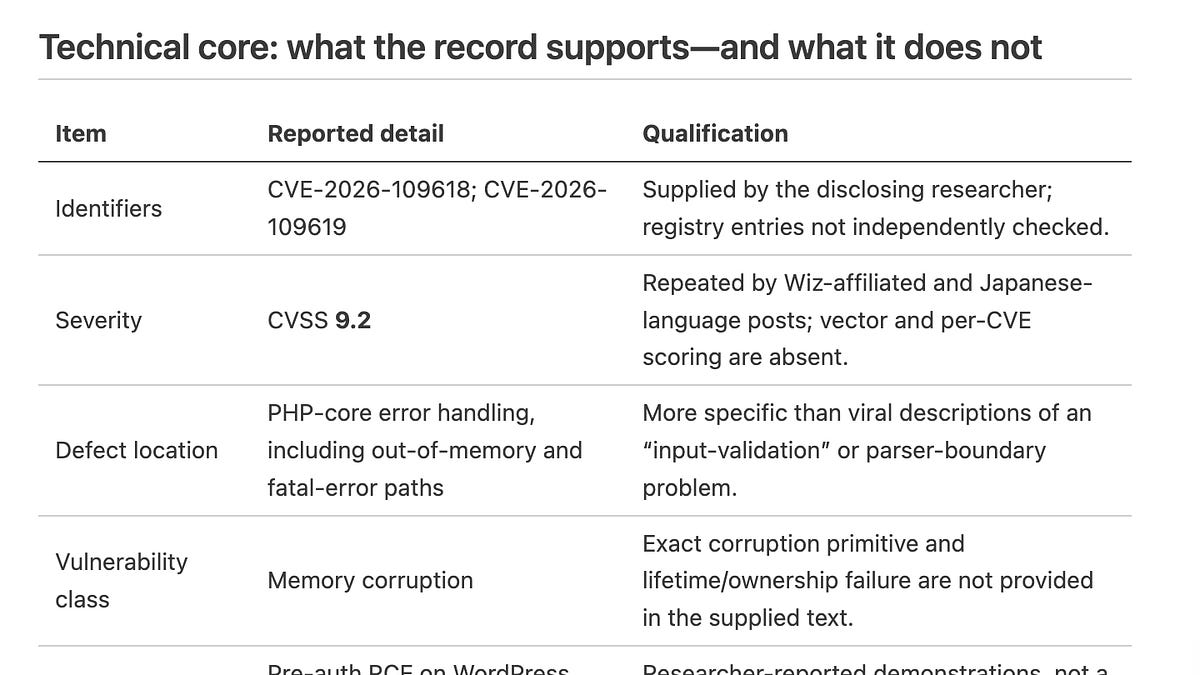 [AINews] OpenAI’s Patch the Planet program is 1 of 2 parties to discover PHP2Shell vulnerabilities in core PHP affecting 70% of the web, using GPT-5.6 Sol; coordinated response over 2 months
AINews issue of 20-21 October 2026 whose top story reconstructs PHP2Shell (CVE-2026-109618, CVE-2026-109619), two PHP-engine memory-corruption bugs with reported pre-auth RCE against WordPress, Drupal and Joomla. It covers the two-month coordinated disclosure, independent discovery by Calif/OpenAI (GPT-5.6 Sol) and Wiz, Cloudflare WAF stopgaps and NSA guidance. It flags missing primary sources: fixed versions, CVSS and leak details.
 latent.spacearticlePublished and added 22 Oct 2026🛡️ Security
 [AINews] OpenAI’s Patch the Planet program is 1 of 2 parties to discover PHP2Shell vulnerabilities in core PHP affecting 70% of the web, using GPT-5.6 Sol; coordinated response over 2 months
AINews issue of 20-21 October 2026 whose top story reconstructs PHP2Shell, two PHP-engine memory-corruption flaws (CVE-2026-109618 and CVE-2026-109619) with reported pre-auth RCE against WordPress, Drupal and Joomla. It covers the two-month coordinated response, separate discovery by Calif/OpenAI (GPT-5.6 Sol) and Wiz (Gemini 4 Argon), Cloudflare's WAF stopgap and NSA guidance. It lists open gaps: fixed versions, leak details, exploitation versus scanning.
latent.spacearticleAdded 23 Oct 2026, published 22 Oct 2026🛡️ Security- Where AI Vulnerability Discovery Harnesses Go Quiet: Structural False Negatives and Hidden Vulnerabilities
Paper (arXiv, 21 October 2026) on structural false negatives in LLM vulnerability discovery harnesses. Starting from Knostic's OpenAnt and raptor, then 10 more open-source harnesses, the authors map 13 points where code selection, filtering, and finding storage or merging drop vulnerabilities. One file was dropped by six harnesses before the model saw it, five without notice. It covers attacker evasion, content-steered verdicts, prompt injection, and design principles and tests.
arxiv.orgpaperAdded 24 Oct 2026, published 21 Oct 2026🛡️ Security - Sage-A1.5: From Long-Horizon Execution to Scientific Exploration with Capability Composition
Sage-A1.5 is a 35B Mixture-of-Experts agentic model that builds on Sage-A1 for long-horizon problem solving. It adds three capabilities: orchestration with parallel subagents in isolated contexts, verification through progress checking, evidence validation and strategy revision, and open scientific discovery with inspectable research artifacts. The report shows them on complex agentic tasks and multidisciplinary science applications. The page gives only the abstract, no benchmark numbers.
arxiv.orgpaperAdded 22 Oct 2026, published 20 Oct 2026🧠 AI - OptScientist: Automated Discovery of Optimization Laws
OptScientist is a framework that discovers compact symbolic optimization laws from data. It pairs a model that infers symbolic optimization problems with an LLM agentic system that uses literature priors, proposes candidate laws, abstracts mechanisms and suggests new data to collect. On OptFeynman, a new benchmark of 99 physics-derived problems, it recovers ground-truth laws for over 80%. It is also tested on human risky choice and central-bank monetary policy.
arxiv.orgpaperAdded 22 Oct 2026, published 20 Oct 2026🧠 AI  Microsoft Targets Rogue AI Agents With Dynamic Permissions, Risk Scoring
Microsoft extended Project Perception to treat internally deployed AI agents as insiders. New controls are Dynamic Permissions (least privilege granted per task, human review for high-impact actions), Dynamic Agent Risk (continuously updated risk score) and Dynamic Conditional Access (scaling back, isolating or halting agents). Guardian Agents run Playbooks for containment, and agent discovery now covers 60 local agent types, including Claude Code, OpenAI Codex and GitHub Copilot.
 securityweek.comarticlePublished and added 20 Oct 2026🛡️ Security
 ‘Wow, it’s a real discovery’: Claude cracks a 25-year NSA number mystery
CoinDesk reports that an Anthropic internal research model traced five NSA-supplied NIST elliptic-curve seeds to the C library generator lrand48 fed with 1997–98 timestamps. It matched P-256's published seed at the 1,842nd candidate, in under 30 minutes and without being told about the earlier "forgotten phrase" theory. This makes a hidden backdoor in the NIST curves less likely, though why some candidates were skipped and how other curve parameters were chosen remain unexplained. The article also explains why Bitcoin's secp256k1 was never part of the question, and that quantum risk is a separate threat.
 coindesk.comarticlePublished and added 17 Oct 2026🛡️ Security
- ‘Wow, it’s a real discovery’: Claude cracks a 25-year NSA number mystery
CoinDesk reports that an internal Anthropic research model traced five unexplained seeds behind the NSA-supplied NIST elliptic curves to lrand48, an old C random-number generator fed with 1997–98 timestamps. It took under 30 minutes. The model matched the P-256 seed at the 1,842nd candidate. Its reasoning trace briefly wondered whether it was in a simulated test before concluding the discovery was real. The result makes a hidden backdoor less likely and claims a $36,864 bounty, donated to ISRG. The article also explains why Bitcoin's secp256k1 was never affected, and that quantum computing is a separate threat.
coindesk.comarticlePublished and added 17 Oct 2026🧠 AI - AI-Driven Reproducibility and Analytical Robustness in Scientific Discovery
SEER-Repro is a benchmark of 20 published papers based on the SEER cancer registry, with the data needed to reproduce their findings. An LLM agent reproduces 77.4% of 2,190 atomic claims. A second agentic pipeline finds alternative analytical choices and reruns the analyses, flagging potentially consequential choices in 9.5% of fully reproduced findings for expert review.
arxiv.orgpaperAdded 20 Oct 2026, published 16 Oct 2026🧠 AI  The Q3 Vulnerability Pulse: Discovery ≠ Exploitation
Talos Threat Source newsletter arguing that record CVE volume (over 70k by end of Q3, six-digit CVE IDs) is not the same as exploitation. KEV grew only 37% YoY against 105% for CVEs, about a third of KEV entries are CVEs from 2025 or earlier (a patch gap), and 29% of 2026 KEV CVEs were added on their publication date. It also notes the new KEV "forensicTriage" column (BOD 26-04), summarizes the Talos/Insikt report on UAT-6275 espionage against CIS governments with GitHub-hosted payloads and a WinRAR exploit, and lists weekly headlines.
 blog.talosintelligence.comarticlePublished and added 15 Oct 2026🛡️ Security
- PROBE: Learning to Audit Policy Compliance in Tool-Using LLM Agents
PROBE (Policy Rule Observation via Behavioral Exploration) trains LLM-based auditors that act as realistic users and probe deployed tool-using agents for policy violations (pricing, privacy, confirmation, safety) across multi-turn, tool-mediated dialogue. It formalizes auditing as a two-player Markov game with a composite reward for violation discovery, plausibility, progress and policy diversity, and compares GRPO, DPO and GFlowNet optimization. Trained auditors find broader, higher-yield violations than zero-shot adversaries, even when much smaller than the target agent, positioning behavioral auditing as a distinct axis next to capability and safety benchmarks.
arxiv.orgpaperAdded 17 Oct 2026, published 15 Oct 2026🛡️ Security - PROBE: Learning to Audit Policy Compliance in Tool-Using LLM Agents
PROBE (Policy Rule Observation via Behavioral Exploration) trains LLM-based auditors that act as realistic users and probe deployed tool-using agents for policy violations (pricing, privacy, confirmation, safety) over multi-turn dialogue. It formalizes auditing as a two-player Markov game with a composite reward balancing violation discovery, behavioral plausibility, conversation progress and policy diversity, and compares GRPO, DPO and GFlowNet optimization in a controlled setting. Trained auditors find broader, higher-yield violations than same-architecture zero-shot adversaries, even when much smaller than the target agent. This positions multi-turn behavioral auditing as a distinct evaluation axis alongside capability and safety benchmarks.
arxiv.orgpaperAdded 17 Oct 2026, published 15 Oct 2026🧠 AI  Microsoft Patches Record 1,413 Vulnerabilities, Including Exploited Windows Zero-Day
SecurityWeek reports Microsoft's October 2026 Patch Tuesday fixed a record 1,413 CVEs (1,102 in Windows, 134 Office, 36 SharePoint), more than all of 2025, with the surge attributed largely to AI-driven discovery. The exploited zero-day CVE-2026-96951 is a Windows shell Mark of the Web security feature bypass (CVSS 8.8), added to CISA KEV with an October 16 deadline. Two flaws were publicly disclosed: CVE-2026-108398 (WDAC bypass) and CVE-2026-92707 (MessagePack-CSharp DoS), and Microsoft introduced 'risk cohorts' for patch prioritization.
securityweek.comarticlePublished and added 14 Oct 2026🛡️ Security Draft ERC: Agentic Resource Discovery (ARD) Onchain — an address-rooted value registry whose records are ARD entries
Ethereum Magicians draft ERC proposing an onchain, address-rooted registry beneath Google's Agentic Resource Discovery (ARD) spec. Every record remains a valid ARD entry. It adds four kinds (skill, task, agent, registry), CAIP-19/CAIP-10 anchors, JCS+SHA-256 descriptor hashes and domain claims collected as endorsements. A Solidity/Foundry reference kernel with four adapters and a Node.js resolver/gateway are included; the gateway passes the official ARD conformance CLI. The author asks for feedback on the address-as-root boundary, the envelope exclusion from the hash, same-chain-only anchors, and the proposed application/ai-task+json payload.
 ethereum-magicians.orgthreadPublished and added 13 Oct 2026🧠 AI
- ERC-8444: Agentic Resource Discovery (ARD) Onchain
An Ethereum Magicians proposal for ERC-8444, which adds an onchain value and settlement layer under Google's Agentic Resource Discovery (ARD) spec for finding MCP servers, A2A agents, skills and APIs. A thin kernel records kind (skill, task, agent, registry), a CAIP-19/CAIP-10 anchor, a JCS+SHA-256 descriptor hash, a canonical URN and a status. Authority belongs to the paid address, and domains act as collected endorsements through /.well-known/ard.json. The reference implementation has Foundry-tested Solidity adapters and a Node.js gateway that passes the official ARD conformance CLI. It introduces a "task" kind (application/ai-task+json) for tenders aimed at suppliers, and the author asks for feedback on the trust root, the hash scope, same-chain anchors and the task payload.
ethereum-magicians.orgthreadAdded 14 Oct 2026, published 13 Oct 2026🧠 AI - No, Your Tools Are Not Enough: It's Time to Bring Agents to the Hunt
Experience paper describing an iterative agentic workflow that uses AI agents to find vulnerabilities across diverse targets: Windows drivers, the Linux kernel, XNU, firmware and web applications. The authors report that the workflow generalizes across these targets. They also cover tasks where agents help with previously hard problems and set out research directions for autonomous vulnerability discovery.
arxiv.orgpaperAdded 16 Oct 2026, published 10 Oct 2026🛡️ Security - AgentValve: Sybil-Resilient Payment Authorization for Permissionless AI Markets
AgentValve is a protocol for Sybil-resilient payment authorization when AI agents pick and pay service providers without human review in permissionless markets. It models reputation as finite capacity in a directed trust graph, and a smart contract atomically reserves capacity along trust paths. This bounds honest agents' payment exposure to the capacity they extend into the adversarial region, so fake identities and fabricated feedback inside that region cannot raise the bound. Payment-backed capacity creation and bounded route length limit depletion by malicious senders. A witness-commit mechanism splits off-chain route discovery from on-chain verification, cutting verification to linear work with constant persistent state per payment. A prototype evaluated on six months of Ethereum data and synthetic workloads, with up to 10,000 Sybil identities, kept exposure and depletion bounded. Admission cost fell by up to 40.8% versus baselines, at roughly $0.04-$0.21 per common payment.
arxiv.orgpaperAdded 13 Oct 2026, published 9 Oct 2026🧠 AI - go-ethereum v1.17.8 "Protein Sludge Pack"
Security-focused release notes for go-ethereum (Geth) v1.17.8, patching several denial-of-service vulnerabilities in the eth/snap p2p protocol handlers, hardening JUMPDEST analysis caching against post-Amsterdam-fork attacks, requiring IP verification before accepting discovery statements, fixing a rogue-STUN-server crash, and closing a DoS vector tied to BAL accounts. Most issues only become exploitable after the Amsterdam fork activates, and the release also includes RPC correctness fixes (eth_simulateV1, eth_createAccessList) and a Sparse Blobpool (EIP-8070) correctness bug.
 github.comadvisoryAdded 8 Oct 2026🛡️ Security
- Dark Web Informer (@DarkWebInformer) on X
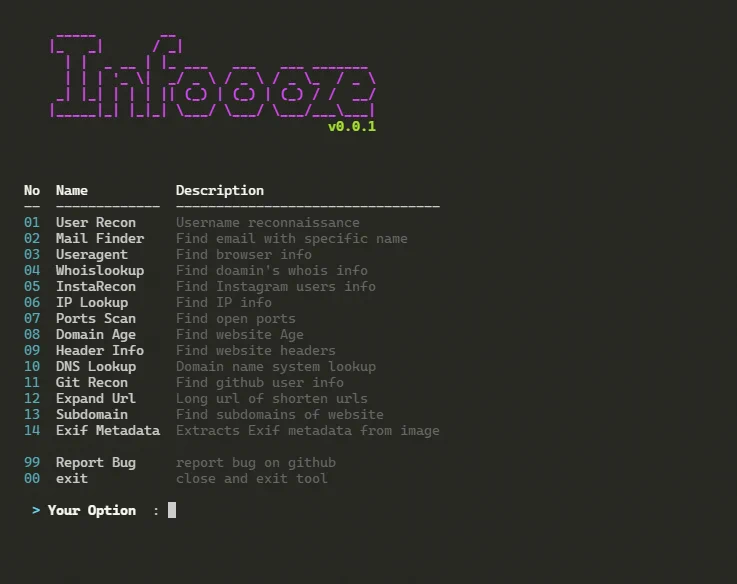
Infoooze is an open-source command-line OSINT reconnaissance toolkit (github.com/devxprite/infoooze) that consolidates common footprinting tasks into one CLI: username enumeration across platforms, email discovery, subdomain enumeration, port scanning, WHOIS/DNS lookups, IP/HTTP header analysis, EXIF metadata extraction, GitHub recon, and URL scanning/expansion. It automatically saves results, making it a lightweight all-in-one alternative to running several separate recon tools.
x.comrepoPublished and added 8 Oct 2026🛡️ Security
Showing 30 of 151
Show more