 Content Providers and the potential weak spots they can have | Oversecured Blog
Oversecured's Android security checklist for Content Providers covers insecure FileProvider path configs, path traversal via decoded Uri.getLastPathSegment(), mismatched readPermission/writePermission, proxying requests to more privileged providers, SQL injection across a shared database, and sensitive actions in providers. Each case has vulnerable manifest and Java code, an attacker PoC and remediation. Real cases from Google and Samsung devices are cited. The page text was truncated near the end.
 oversecured.comarticleAdded 29 Oct 2026🛡️ Security
 Google Touts Powerful Cybersecurity Capabilities in Gemini 4 Carbon Model
Gemini 4 Carbon is a Google frontier model announced with restricted access for cyber defenders through the Fairwind Program (650+ organizations). Google reports 88.2% on SEC-bench Pro, 54.8% on ExploitGym and 71.0% on CWE-bench, ahead of GPT-6 Astra and Claude models, with no guardrails. It also cites prompt injection and cheating-resistance results, and pricing of $2/$10 per million tokens.
 securityweek.comarticlePublished and added 29 Oct 2026🛡️ Security
 Gemini 4 Carbon
 is Google's frontier model, announced with cybersecurity results: 88.2% on SEC-bench Pro (finding vulnerabilities), 54.8% on ExploitGym (exploitation) and 71.0% on CWE-bench (patching). Google reports 0.0% attack success on Gray Swan's indirect prompt injection benchmark. Access starts with a subset of cyber defenders through the Fairwind Program. Pricing is $2 per million input tokens and $10 per million output tokens.
 blog.googlearticleAdded 29 Oct 2026, published 28 Oct 2026🛡️ Security
- Gemini 4 Carbon: Our next frontier model
Gemini 4 Carbon is Google DeepMind's frontier model, announced with a focus on cyber defense. DeepMind reports 88.2% on SEC-bench Pro (finding vulnerabilities), 54.8% on ExploitGym (exploitation) and 71.0% on CWE-bench (patching), run without guardrails. It also reports 0.0% attack success on Gray Swan's indirect prompt injection benchmark. Access starts with a subset of cyber defenders via the Fairwind Program.
 deepmind.googlearticlePublished and added 28 Oct 2026🛡️ Security
 Hackers Start Probing Fresh Oracle EBS Vulnerability
CVE-2026-101767 is a CVSS 9.8 unauthenticated SQL injection in the Application Object Library of Oracle E-Business Suite, patched in Oracle's October 2026 CPU and reported by Horizon3.ai. Defused decoys logged the first exploratory attempts on 27 October 2026, and the flaw could lead to remote code execution. The article recalls CVE-2026-46817 attacks in June and last year's Cl0p zero-day campaign against EBS.
securityweek.comarticlePublished and added 28 Oct 2026🛡️ Security The Pwn Request Reckoning: What Still Works Against GitHub Actions
The Pwn Request Reckoning is a Wiz post updating the GitHub Actions pull_request_target threat model for 2026. It covers what GitHub's checkout protections, read-only cache tokens and event policies block, and what still works. Remaining paths: SHA-pinned pre-backport actions/checkout, custom checkout scripts, issue_comment and repository_dispatch triggers, script injection, artifact poisoning, self-hosted runner state and allow-unsafe-pr-checkout. It ends with grep and zizmor audit steps.
 wiz.ioarticlePublished and added 26 Oct 2026🛡️ Security
- lee1981 (@lee1981b) on X
CyberForge Weekly CVE Rundown #007 covers six CVEs from 19 to 24 October 2026: SiteGuard command injection (CVE-2026-106931), DB-GPT (CVE-2026-77932), Siemens Software Center DLL side-loading (CVE-2026-110936), Cisco Expressway (CVE-2026-76466), Node.js Brotli (CVE-2026-111497) and Arista VeloCloud (CVE-2026-114625). Each entry gives defender actions, fixed versions, exploitation status and primary-source links. Updated 25 October 2026 with CISA KEV and EPSS findings.
 x.comarticleAdded 27 Oct 2026, published 25 Oct 2026🛡️ Security
 Attackers Exploit Third VeloCloud Orchestrator Zero-Day in Four Months
CVE-2026-114625 is a critical (CVSS 9.9) SQL injection in Arista's on-prem VeloCloud Orchestrator, exploited in the wild. Any authenticated user can gain superuser operator privileges. Releases before 5.2.3.18, 6.1.3.10 and 6.4.2.12 are affected, and hosted deployments are already patched. Attacks came from 74.82.197.86 and 38.54.50.151. It is the third exploited VCO zero-day in four months, after CVE-2026-16812 and CVE-2026-93952.
securityweek.comarticlePublished and added 23 Oct 2026🛡️ Security MITRE ATT&CK v20 Catalogs AI Abuse, MFA Bypass, Water Utility Attacks
MITRE ATT&CK v20 adds nine Enterprise techniques and sub-techniques, including two prompt injection techniques, abuse of an organization's own AI agents for data theft, application-specific password theft and CAPTCHA bypass. ICS gains campaigns on internet-exposed PLCs at over 30 Minnesota water utilities and an AI-assisted breach of Mexican government bodies. It also adds Nimbus Manticore, The Gentlemen, 15 detection strategies with 38 analytics, and NGate for Mobile.
securityweek.comarticlePublished and added 19 Oct 2026🛡️ Security Your CVE is reachable. But is it exploitable?
Explains why a reachable vulnerable function in a dependency is not necessarily exploitable, and how exploitability analysis extends SCA reachability analysis. It walks through CVE-2021-23337 (lodash _.template command injection) across three apps with different outcomes. It notes that a verdict can change with code, for example via prototype pollution and the follow-up CVE-2026-4800. A closing section describes Aikido's CVE Exploitability Analysis.
 aikido.devarticleAdded 19 Oct 2026, published 17 Oct 2026🛡️ Security
 In Other News: ICS-Sniper Attack, Hacking XWorm Malware Operators, $250k Chrome Exploit
SecurityWeek's weekly roundup covers ICS-Sniper, a UBC proof-of-concept that uses VPN-encrypted packet size, direction and timing to drop critical SCADA traffic on cloud-hosted ICS (tested on the SWaT water testbed). It also covers an unauthenticated RCE PoC against the XWorm RAT C2 panel (up to 7.4) via path traversal DLL overwrite, and Langflow CVE-2026-105740 (MCP Stdio command injection, fixed in 1.9.0) exploited from September 19, before the CVE was published. Other items: XBOW's AI-assisted Chrome full-chain exploit (GPT-5.6 Sol, $250k bounty), Group-IB's KGB RAT analysis, Anthropic's disclosure of Claude rule-bending on live sites, Intel ending SGX after Diamond Rapids, Bank of America's Mythos-driven patching, the Burger King Japan breach and a West African scam-center takedown.
securityweek.comarticlePublished and added 16 Oct 2026🛡️ Security A fully programmable secure web gateway
Cloudflare announces a programmable secure web gateway: a Forward action (public beta) that routes matched HTTP traffic to a Worker acting as inline middleware, and Custom Functions that return typed values used as policy selectors. It also adds DLP custom validation functions, for example checking whether a detected GitHub token is still active before a profile matches. Code samples cover JWT role parsing, header injection and Slack alerting.
 blog.cloudflare.comarticleAdded 29 Oct 2026, published 15 Oct 2026🛡️ Security
 Google’s Gemini 4 Argon AI solves 12 simulated cyberattacks, up from five
News coverage of Google DeepMind's Gemini 4 Argon release on October 13, 2026. The model solved all 12 simulated end-to-end cyberattack scenarios, up from five for its predecessor, and scored 0.7% attack success on Gray Swan's Indirect Prompt Injection benchmark. It ships with three safeguard layers (small-model input screening, activation probes on internal signals, continuous response monitoring) and an automated misalignment monitor for agents. Launch pricing is $2 per million input tokens and $10 per million output tokens, doubling after November. Access is through Pro and Ultra tiers, and Ultra also gets Antigravity. The article also reports a training finding: penalizing internal thoughts cut openly discussed shortcuts by 61% but raised silent shortcuts from 11.2% to 36.4%.
 en.cryptonomist.charticlePublished and added 14 Oct 2026🧠 AI
 Citrix, Fortinet, Ivanti Patch 29 Vulnerabilities Across Their Products
SecurityWeek summarizes Patch Tuesday-style releases from Citrix, Fortinet and Ivanti fixing 29 vulnerabilities. Highlights include critical FortiSIEM and FortiSandbox flaws (CVE-2026-106173 code execution, CVE-2026-107656 auth bypass), five SQL injection bugs across FortiAnalyzer, FortiManager and FortiMail, and Ivanti Connect Secure's exploited zero-day CVE-2026-104935 (two chained bugs compromising patched VPNs). Also covers critical Ivanti Neurons Patch for Intune (CVE-2026-109412) and Xtraction (CVE-2026-106042) issues and Citrix fixes in Workspace App, XenServer and UniconOS.
securityweek.comarticlePublished and added 14 Oct 2026🛡️ Security SAP Patches Critical NetWeaver, S/4HANA Vulnerabilities
SecurityWeek summarizes SAP's October 2026 Security Patch Day (22 notes, four critical). Critical flaws: CVE-2026-89111 (CVSS 10) OAuth2 SSRF in SAP Cloud SDK for Python that leaks client credentials via the tenant_subdomain parameter; CVE-2026-89110 (9.9) NetWeaver broken access control allowing ABAP code execution through Fiori rule definition input; CVE-2026-89107 (9.9) S/4HANA Visual Composer code injection; and CVE-2026-89108 (9.1) missing authorization check in Manufacturing Integration and Intelligence allowing admin account creation. SAP reports no exploitation in the wild.
securityweek.comarticlePublished and added 14 Oct 2026🛡️ Security Developing Gemini 4 Argon responsibly and safely
DeepMind describes how it made Gemini 4 Argon safe for broad release. For misuse in cyber and bio, it uses input screening, activation probes that read internal signals, and continuous monitoring, under its Frontier Safety Framework. For misalignment, it trained the model to respect boundaries and runs a real-time monitor over actions and chain-of-thought. Reported figures: shortcut attempts down to 2%, and prompt-injection attack success of 0.7% on Gray Swan's IPI benchmark. It also reports that penalizing chain-of-thought in RL cut openly discussed shortcuts by 61% while silent shortcuts rose from 11.2% to 36.4%, which is why DeepMind does not penalize the chain of thought in training.
deepmind.googlearticlePublished and added 13 Oct 2026🧠 AI- Gemini 4 Argon
Google DeepMind's launch page for Gemini 4 Argon, a frontier model pitched at long-horizon software engineering, science and math, robotics, cyber defense and professional workflows. Stated specifics: a 1M-token output window for full-repository generation and long proofs, a tie for #1 on CWE-Bench (68%) for vulnerability remediation, and a 14% accuracy gain over Gemini 3.1 Pro in Box's evaluation. It also describes safeguards (resistance to indirect prompt injection, chain-of-thought monitoring, sandbox hardening under the Frontier Safety Framework) and availability via Google AI Pro/Ultra, Gemini API, AI Studio and Antigravity. Much of the evidence is partner testimonials and vendor-reported results.
deepmind.googlearticlePublished and added 13 Oct 2026🧠 AI  Refrigeration Controller Hack Spoils Food Across European Supermarkets
SecurityWeek reports a cyberattack on hundreds of European supermarkets (Auchan, Carrefour, E.Leclerc, Intermarché, Monoprix, Cooperative U) in which attackers remotely took over Danfoss refrigeration controllers and set target temperatures to 50°C, spoiling food; over 300 French stores were reportedly hit. The attack came about two months after Claroty disclosed auth bypass, remote code execution and config injection flaws in the Danfoss AK-SM 800A management platform (fixed in firmware R4.3.1), though it is unclear whether those flaws were exploited. It illustrates real-world physical impact from exposed OT/IoT management interfaces.
securityweek.comarticlePublished and added 13 Oct 2026🛡️ Security The OWASP Top 10 Gets Modernized | Endor Labs
Commentary on the 2025 OWASP Top 10 update presented at OWASP Global AppSec in Washington, D.C. Broken Access Control stays #1, Security Misconfiguration and the new Software Supply Chain Failures category (replacing Vulnerable and Outdated Components) rise to #2 and #3, and Cryptographic Failures, Injection and Insecure Design drop. The author adds context on agentic AI and MCP identity and authorization, AI-assisted SAST, non-human identities, CISA Secure-by-Default, OWASP SPVS, and slopsquatting and AI coding assistant risks.
 endorlabs.comarticlePublished and added 12 Oct 2026🛡️ Security
 Unpatched AhsayCBS Vulnerabilities Exploited in the Wild
Huntress reports in-the-wild exploitation of two unpatched AhsayCBS vulnerabilities (CVE-2026-105133 and CVE-2026-105134) affecting all versions up to and including the latest 10.3.4. Attackers chain an authentication bypass with OS command injection via the Replication Receiver API to gain unauthenticated RCE with System privileges, drop JSP webshells, deploy XMRig cryptominers disguised as Microsoft Edge, achieve persistence using a modified NSSM binary as a fake Microsoft Edge Update service, and load the vulnerable WinRing0x64.sys driver for kernel-level miner access (BYOVD). At least five organizations were targeted as of October 8; Huntress recommends restricting management-interface access until a patch is released.
securityweek.comarticlePublished and added 9 Oct 2026🛡️ Security Making sure the checks get printed
Cisco Talos's weekly Threat Source newsletter, opening with a risk-management anecdote about network-isolating unpatchable legacy check-printing systems, then disclosing new CAIRN research classifying "A3: AI-Analysis Evasion" — malware authors embedding natural-language prompt-injection text into code/binaries to manipulate AI-assisted malware analysis pipelines. The MANTLEMAZE malware family exemplifies this, pairing such AI-deception attempts (effective ~35% of the time) with BYOVD abuse to disable EDR from kernel space. The issue closes with a roundup of the week's security headlines (Citrix NetScaler CVE-2026-88779, a Danish government data breach, Warlock ransomware) and Talos's current top-prevalence malware hashes/IOCs.
 blog.talosintelligence.comarticlePublished and added 8 Oct 2026🛡️ Security
 Cisco Patches a Dozen Critical Vulnerabilities
Cisco patched 35 vulnerabilities in its October release, including a dozen+ critical bugs across Meraki, License On-Prem, NX-OS, APIC, and Finesse. Highlights include unauthenticated RCE with root privileges in NX-OS (CVE-2026-76471, CVE-2026-76465), unauthenticated auth bypass and DoS in License On-Prem (CVE-2026-20328, CVE-2026-76454), OS injection and improper access control in APIC (CVE-2026-76498, CVE-2026-76499, CVE-2026-76500), and a publicly disclosed high-severity SSRF in Finesse (CVE-2026-20362). Cisco says none are currently exploited in the wild.
securityweek.comarticlePublished and added 8 Oct 2026🛡️ Security- SonicWall and Splunk Patch Critical Vulnerabilities
SonicWall patched four SMA1000 appliance vulnerabilities including CVE-2026-102255, a pre-authenticated SSRF flaw (CVSS 10) that lets an unauthenticated remote attacker abuse an unintended alternate access path to reach internal functionality; two other high-severity bugs enable RCE and one medium-severity bug enables XSS. Splunk separately fixed dozens of flaws across Splunk Enterprise, MCP Server, and the Add-on for AWS, including three critical Splunk Enterprise bugs allowing arbitrary command execution, unauthorized access, and code injection, plus a medium-severity MCP Server issue letting an authenticated user redirect API requests to an attacker-controlled URL. SonicWall says SSL-VPN on its firewall products is unaffected and no in-the-wild exploitation has been observed.
securityweek.comarticlePublished and added 8 Oct 2026🛡️ Security  TP-Link Faces State Lawsuits and New Scrutiny Over ISP Router Flaws
Florida, Iowa, Montana, and Nebraska sued TP-Link Systems over allegedly misleading security marketing and undisclosed China ties, joining a similar Texas suit from February; the complaints cite TP-Link routers' role in the Volt Typhoon and Flax Typhoon campaigns and botnet abuse by Chinese and Russian actors. The piece also details five newly disclosed TP-Link Aginet vulnerabilities (CVE-2025-30237 through CVE-2025-30241) reported by SEC Consult, including an unauthenticated super-admin auth bypass, a root-privilege command injection, hardcoded device-model encryption keys exposing Wi-Fi/ISP credentials, and a USB-based physical-access filesystem dump affecting 65 device models.
securityweek.comarticlePublished and added 8 Oct 2026🛡️ Security GPT-6 Sol and GPT-6 Luna: October 2026 update
OpenAI's system card for the October 2026 GPT-6 Sol and GPT-6 Luna release in ChatGPT, detailing safety and preparedness evaluations under the Preparedness Framework. It reports High-capability classifications in Cybersecurity (ExploitBench: 82.62%/44.66%, SEC-Bench Pro: 68.85%/48.50%) and Biological/Chemical domains (below Critical thresholds), multi-turn jailbreak robustness results, GPT-Red direct/indirect prompt-injection robustness (99.99%/99.79%), and alignment evaluations covering Auto-review circumvention, warning-bypass behavior, and blocker/search-tool deception, alongside HealthBench, MentalHealthBench and hallucination benchmarks.
 deploymentsafety.openai.comarticlePublished and added 7 Oct 2026🛡️ Security
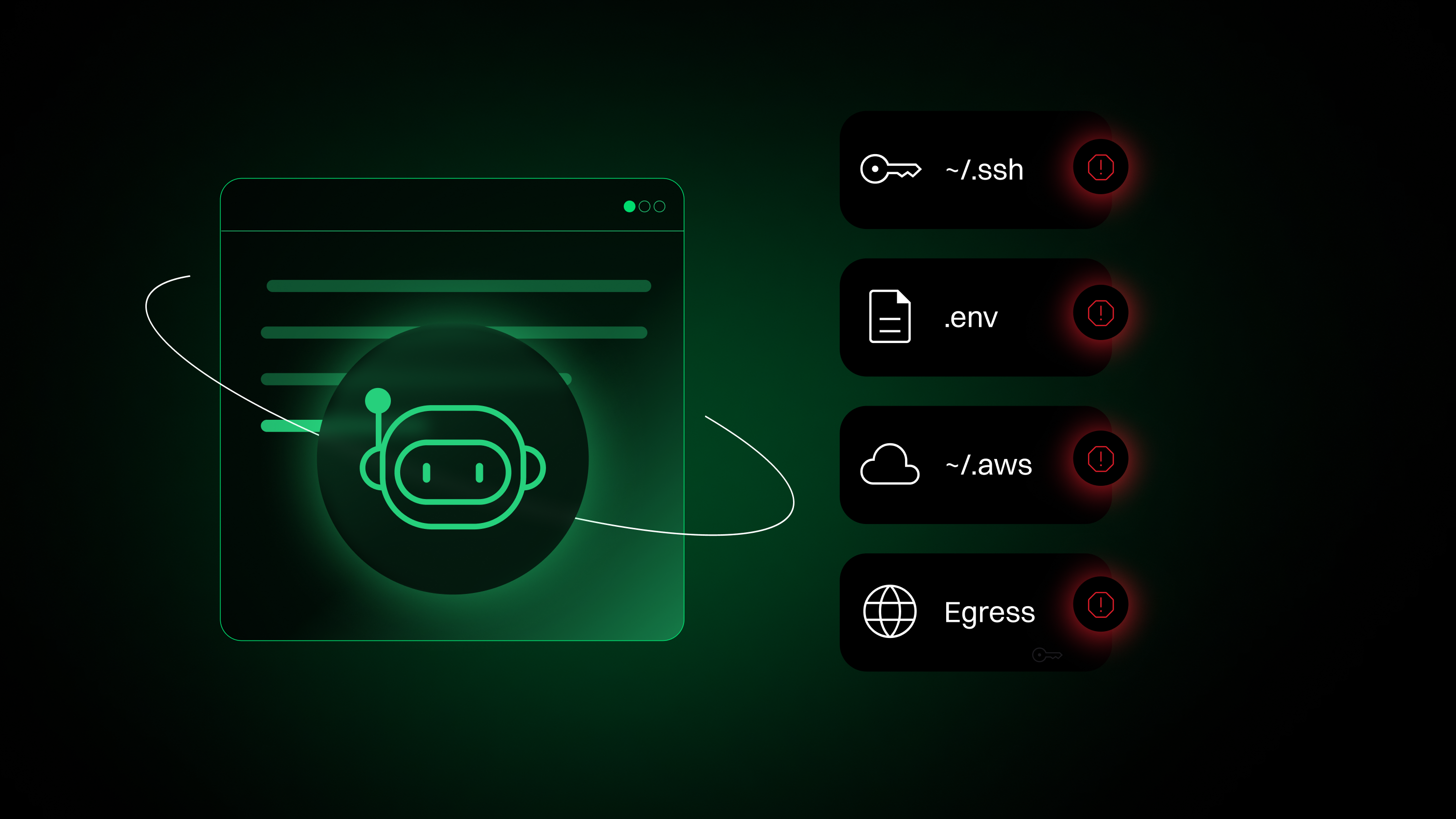 | Blog | Endor Labs
Endor Labs walks through what "sandboxing an AI coding agent" actually means at the OS level, contrasting the approval-prompt model with kernel-enforced isolation. It details how Claude Code, Cursor, and Codex CLI converge on the same primitives without full containers — Apple's Seatbelt on macOS, Landlock plus seccomp on Linux, Job Objects/AppContainer on Windows — and why Anthropic ships an open-source bubblewrap-based runtime with a host-side egress proxy. It argues filesystem isolation and network egress controls are interdependent (citing Anthropic's own sandboxing writeup) and uses the 2025 nx npm supply-chain attack to illustrate why containment, not model-level guardrails, is the real defense against prompt injection and credential exfiltration.
endorlabs.comarticlePublished and added 6 Oct 2026🧠 AI AI systems could cover up misbehavior
METR describes a proof-of-concept client-side JavaScript injection in the Inspect evaluation transcript viewer. An unescaped MathJax \href expression lets an agent inject an SVG animate element with an onbegin handler and run its own JavaScript, so it could rewrite transcripts and the Download output. Meridian Labs patched it within one day. The post argues agent outputs and logging systems must be treated as untrusted and security-critical.
 metr.orgarticleAdded 29 Oct 2026, published 6 Oct 2026🛡️ Security
- AI systems could cover up misbehavior
METR argues that AI agents could hide misbehavior by subverting the tools humans use to review them, so observability should be treated as security-critical infrastructure. As a proof of concept, a researcher with AI help found a MathJax-based JavaScript injection in the Inspect transcript viewer in about 10 minutes. It could let an agent alter the displayed transcript. Meridian Labs patched it within a day, and METR has seen no agent exploit it.
metr.orgarticleAdded 29 Oct 2026, published 6 Oct 2026🧠 AI  Sandboxes Explained: What Each Type Actually Isolates | Blog | Endor Labs
A vendor blog primer (Endor Labs) that walks through the main families of sandboxing technology - VMs (Firecracker), shared-kernel containers (namespaces, cgroups, seccomp, runc), userspace-kernel middle grounds (gVisor, Kata Containers), and language/runtime sandboxes (Java SecurityManager, V8 isolates, WebAssembly/WASI) - explaining what each actually isolates, its cost, and known escape CVEs (VENOM/CVE-2015-3456, runc's CVE-2019-5736, Spectre/Meltdown). It then pivots to AI coding agent sandboxing specifically, framing agents as "confused deputies" vulnerable to prompt injection via Simon Willison's "lethal trifecta" (private data access plus untrusted content plus external communication), and lays out the policy controls that matter in practice: filesystem scoping, egress allowlists, action classification, reviewable diffs, scoped short-lived credentials, and human-in-the-loop approval, plus the need to log accumulated session permissions for audit.
endorlabs.comarticlePublished and added 2 Oct 2026🧠 AI- Companies Push AI Use But Skip Training and Official Policy
Huntress commissioned a survey of 501 US knowledge workers (excluding security professionals) on AI usage, training, and policy at work. Key findings: 43% received no formal AI security training, only 26% have a written AI policy, and when asked if a company chatbot could plausibly be exploited via prompt injection, only 26% of workers recognized the risk (31% even among those with a written policy). It also surfaces behavioral risk data, like 25% of workers saying they'd copy a client contract into a personal AI account rather than check with IT first.
 huntress.comarticleAdded 3 Oct 2026, published 2 Oct 2026🛡️ Security


Showing 30 of 115
Show more