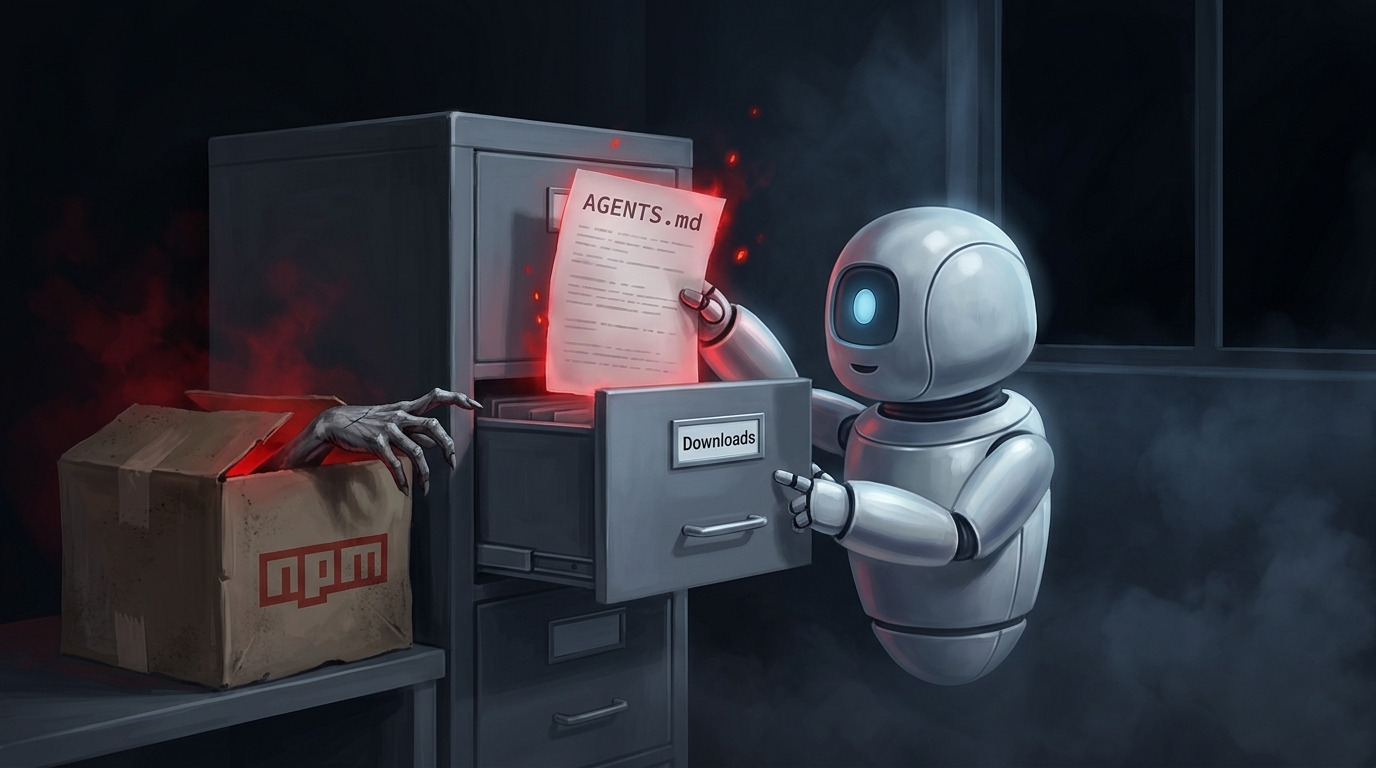
 The OpenSourceMalware Show #27
 (28 October 2026) is a podcast episode with transcript. It covers the Brotli decoder bug (CVE-2026-111497) vendored in C code across Python, Rust and PHP, and how to find copies via decode.c. It also covers the LiteLLM v1.107.0 compromise from an unrevoked admin key and a relaxed release control, and the MALFEX npm campaign hiding payloads in PNG-header files, plus an AGENTS.md lure and DPRK fake fonts in TTF/OTF.
 opensourcemalware.comtalkPublished and added 29 Oct 2026🛡️ Security
 Podcast: Kimi K3.1 Pro, the new cyber reality, and Muse musings
Interconnects podcast episode in which Nathan Lambert and Florian Brand discuss the Kimi K3.1 Pro release (about 3 trillion parameters, weights due by November 4th). They cover its Artificial Analysis score against weaker long-horizon results, Moonshot's choice to down-weight offensive cyber capability, and the PHP2Shell and LiteLLM incidents. They also cover abliterated model APIs, trusted-access cyber programs, Anthropic's junior hiring and Florian's use of the Muse agent.
 interconnects.aitalkPublished and added 25 Oct 2026🧠 AI
- Podcast: Kimi K3.1 Pro, the new cyber reality, and Muse musings
Interconnects podcast with Nathan Lambert and Florian Brand on Kimi K3.1 Pro and the AI cyber landscape. Kimi says it down-weighted cyber data in mid-training so its open weights do not extend offensive capability. They discuss the PHP2Shell remote code execution bug, the repeat LiteLLM compromise from an API key left in GitHub for five months, abliterated model APIs, and trusted-access programs from OpenAI and Anthropic. The transcript was truncated at the very end.
interconnects.aitalkPublished and added 25 Oct 2026🛡️ Security - The Hacker News (@TheHackersNews) on X
The Hacker News post relays LiteLLM's root-cause disclosure for its supply chain attack. A master key leaked on GitHub in May was never revoked. Attackers used it to reach the Agent Platform, steal a GitHub owner token, and publish a malicious PyPI release in October. A reply says the agent tool held the org owner's personal CLI login, which skips GitHub's 2FA re-check.
 x.comthreadAdded 26 Oct 2026, published 24 Oct 2026🛡️ Security
 Prasenjit Sarkar (@stretchcloud) on X
Post on the LiteLLM supply-chain compromise. Attackers spent eleven days in the GitHub org, ran a workflow on a throwaway branch to take twenty secrets including a GitHub App private key, then used stolen GitHub CLI OAuth tokens to publish malicious release 1.107.0 from a lookalike Berri-AI repo. A Python startup file harvested sixteen credential categories and LiteLLM proxy Postgres provider keys. Socket flagged the wheels in seven minutes.
x.comthreadAdded 26 Oct 2026, published 24 Oct 2026🛡️ Security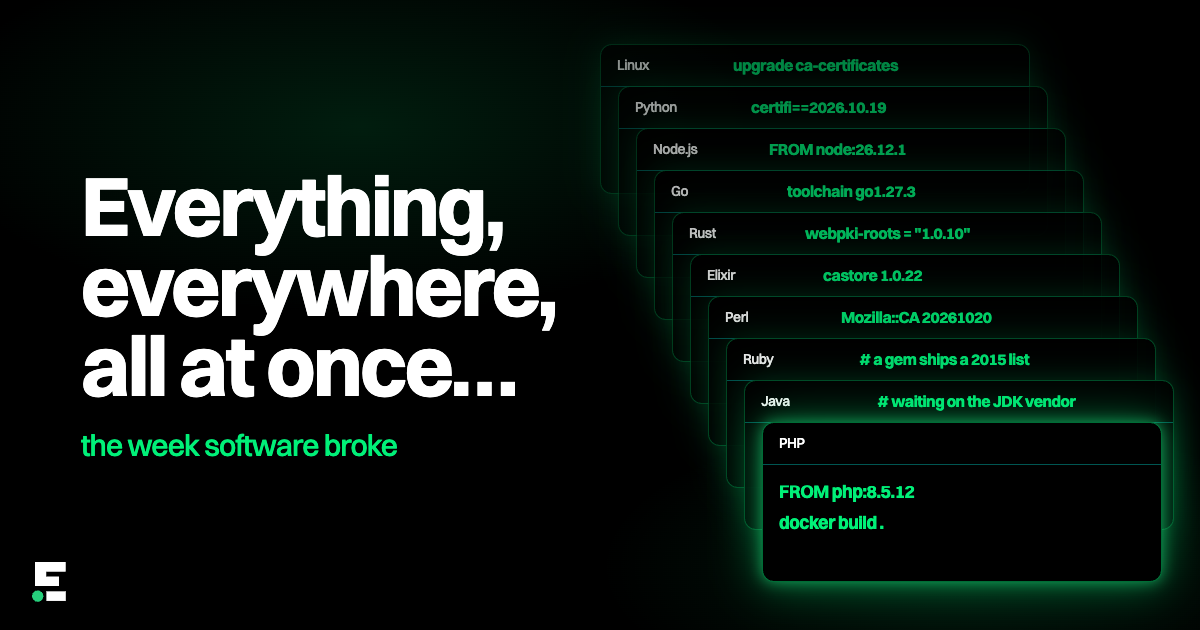 Everything, everywhere, all at once… the week software broke | Endor Labs
Endor Labs roundup of the 20 to 21 October 2026 patch wave: eMudhra certificate authority keys that anyone can recover, PHP2Shell (CVE-2026-109618, CVE-2026-109619), Node2Shell (CVE-2026-111497) and malware in LiteLLM 1.107.0. It lists fixed versions (PHP 8.2.35 to 8.5.12, Node.js 22.23.4, 24.22.1, 26.12.1, LiteLLM back to 1.106.2) and explains why many separate trust-store copies each need updating. It closes with advice on triage, remediation and SBOM/VEX reporting.
 endorlabs.comarticlePublished and added 24 Oct 2026🛡️ Security
 New Evidence Shows LiteLLM Secret-Stealing Workflows Ran 11 Days Before Supply Chain Attack
Socket's Threat Research team reports that malicious cache.yml workflows ran in the BerriAI/litellm repository on 10 and 12 October 2026, eleven days before the 21 October release attack that published litellm==1.107.0. Each commit pushed to a short-lived ci-tmp-<hex> branch, then deleted it, sending base64-encoded CI secrets to webhook.site. Evidence comes from Actions metrics and environment deployment records; 20 secret names were exposed.
 socket.devwriteupPublished and added 23 Oct 2026🛡️ Security
 Inside the LiteLLM 1.107.0 supply chain compromise: Credential theft through Python startup hooks
Microsoft's analysis of the LiteLLM 1.107.0 compromise, published to PyPI and container images on 21 October 2026. The wheel shipped cook.pth, cook.py and sitecustomize.py, so a credential collector (PRIVCOLLECT) ran whenever Python started, even without importing LiteLLM. It covers AES/RSA-encrypted exfiltration to litellm.dev, a re-armable Unix loader, Defender KQL hunting queries, ATT&CK mapping and rotation guidance.
 microsoft.comwriteupPublished and added 23 Oct 2026🛡️ Security
 [AINews] Black October
AINews issue for 21-22 October 2026, built from 12 subreddits and 544 Twitter accounts. It leads with "Black October", a 48-hour run of AI-found vulnerability disclosures (PHP2Shell, a GitLab CVSS 10 flaw, a LiteLLM 1.107.0 password stealer, eMudhra CA keys). It also covers MiniMax M3.1 Flash, Carbon-X and Flint releases, Artificial Analysis coding-agent and CritPt v2 results, and a METR/Redwood audit of OpenAI monitoring.
 latent.spacearticlePublished and added 23 Oct 2026🧠 AI
 LiteLLM Compromised in Fresh Supply Chain Attack
LiteLLM version 1.107.0 was published with malware to PyPI and Docker Hub on October 21, for about three hours and roughly 49,000 downloads. Attackers used GitHub CLI OAuth tokens, likely leaked through Claude Code into LiteLLM logs, to disable branch protections, redirect the releaser to a lookalike repository and sign poisoned artifacts. The payload is an infostealer and RAT; Wiz saw Amazon Bedrock abuse. The last clean version is 1.106.2.
 securityweek.comarticlePublished and added 23 Oct 2026🛡️ Security
- Dark Web Intelligence (@DailyDarkWeb) on X
LiteLLM suspects its October 21 release compromise began with Claude Code responses containing GitHub CLI OAuth tokens that were written to logs of an internet-facing internal LiteLLM gateway. Attackers allegedly stole those tokens, used an organization-owner token to disable branch protections, and pushed poisoned artifacts from a lookalike repository. How they entered the gateway is unconfirmed, and this is not a proven Claude Code vulnerability.
x.comthreadAdded 25 Oct 2026, published 22 Oct 2026🛡️ Security - Muscle AI (@themuscleai) on X
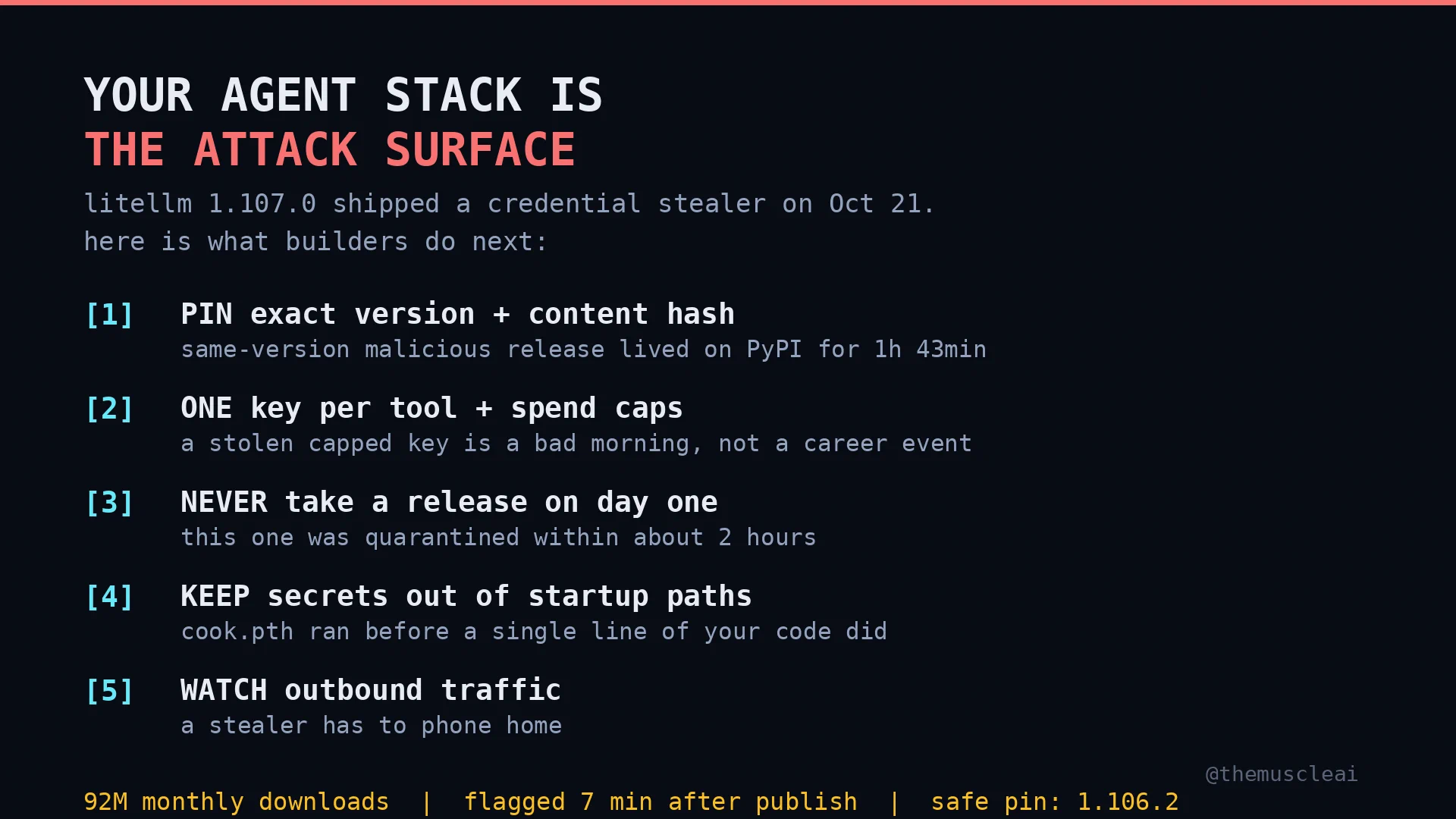
Post on the LiteLLM 1.107.0 PyPI compromise published 21 October 2026 and quarantined about 1 hour 43 minutes later. A malicious .pth file ran at Python startup and stole cloud credentials, private keys, browser data and AI tool auth files, then POSTed a tarball to an attacker endpoint. The author says attackers used stolen GitHub CLI OAuth tokens to push a trojanized commit chain and build official wheels. It lists five defenses: hash-pinned lockfiles, per-tool capped keys, release cooling periods, secret isolation and egress monitoring.
x.comthreadAdded 23 Oct 2026, published 22 Oct 2026🛡️ Security - Muscle AI (@themuscleai) on X
Muse AI's X post describes the compromise of LiteLLM 1.107.0, published to PyPI on 21 October at 7:39 AM and quarantined about 1 hour 43 minutes later. The payload was a .pth file that ran at Python startup and sent cloud credentials, private keys and AI dev-tool auth files to an attacker endpoint. The author lists five agent-builder defences: hash-locked pins, capped per-tool keys, a release cooling period, keeping secrets away from Python startup, and outbound traffic monitoring.
x.comarticleAdded 23 Oct 2026, published 22 Oct 2026🧠 AI  SecureChap (@SecureChap) on X
Post describing a LiteLLM 1.107.0 PyPI compromise in which attackers used stolen GitHub CLI OAuth tokens from three engineers to trigger and approve the project-releaser workflow, producing eight malicious wheels and a tampered tarball. The wheels drop cook.pth, which runs at Python startup, and privcollect steals cloud tokens, keys, browser data, AI configs and LiteLLM proxy credentials, exfiltrating to litellm[.]dev/healthcheck. A second daemon polls a GitHub domain.txt hourly for new domains to fetch and execute. PyPI yanked the package the same day. The post is a single unsourced tweet.
x.comthreadPublished and added 22 Oct 2026🛡️ Security- Show HN: Omnara – Open-source alternative to Claude Managed Agents
Omnara is an open-source, self-hostable managed agent platform, an alternative to Claude Managed Agents and OpenAI's Agents API. It runs agents on any model (OpenAI, Anthropic, OpenRouter, Bedrock, LiteLLM, Ollama) and any machine, with Postgres-backed durable state, stateless workers, per-tool permissions, MCP, skills, memory, subagents, schedules and Slack, Discord and GitHub triggers. It ships a REST API, TypeScript SDK, CLI and Docker Compose setup.
 github.comrepoAdded 23 Oct 2026, published 21 Oct 2026🧠 AI
 LiteLLM 1.107.0 Compromised: Python Startup Hooks Steal Cloud, AI, and Proxy Credentials | Endor Labs
litellm 1.107.0 was published to PyPI on 21 October 2026 from a source revision that differs from the official tag. One line in the Maturin config (data = "cook") installs cook.pth, cook.py and sitecustomize.py, which run on every Python start. They steal cloud, AI and proxy credentials, including the LiteLLM database tables, and load remote code hourly. The post gives IOCs, a five-step response plan and hardening advice.
endorlabs.comwriteupPublished and added 21 Oct 2026🛡️ Security Billy Lee (@billyozno) on X
LiteLLM 1.107.0 on PyPI shipped malware in all 7 wheels, the package's second supply-chain attack this year. It steals SSH keys, cloud credentials, browser passwords, AI tool configs and API keys, and installs a backdoor that polls for commands hourly. The GitHub source is clean, so a hijacked build or publish step is suspected. PyPI quarantined the release, but Aikido says the Docker image litellm/litellm:1.107.0 was still live. Indicators are cook.pth, cook.py and sitecustomize.py in site-packages. The advice is to rotate reachable keys and pin 1.106.2.
x.comthreadAdded 23 Oct 2026, published 21 Oct 2026🛡️ Security litellm 1.107.0 Compromised on PyPI: Backdoored Wheels Drop a Credential Stealer and an Hourly Remote Code Loader
litellm 1.107.0 was published to PyPI on 21 October 2026 with all seven wheels backdoored through an injected `data = "cook"` maturin build line. The wheels drop cook.pth, cook.py and sitecustomize.py, which run on every Python start. They install a "privcollect" credential stealer (browser, SSH, cloud, AI coding tool and LiteLLM proxy database secrets, sent to litellm.dev) and an hourly GitHub dead-drop remote code loader. The post gives IOCs, detection commands and recovery steps.
 stepsecurity.iowriteupPublished and added 21 Oct 2026🛡️ Security
 LiteLLM Compromised, Steals Credentials
LiteLLM version 1.107.0 was uploaded to PyPI on 21 October 2026 with a credential stealer, and the same build reached GHCR and Docker Hub images. Wiz describes the three dropped files (cook.pth, cook.py, sitecustomize.py), exfiltration to a fake litellm.dev domain, a GitHub dead drop for a second stage, and the malicious commits pushed through the lookalike Berri-AI repository. The last safe version is 1.106.2.
 wiz.iowriteupPublished and added 21 Oct 2026🛡️ Security
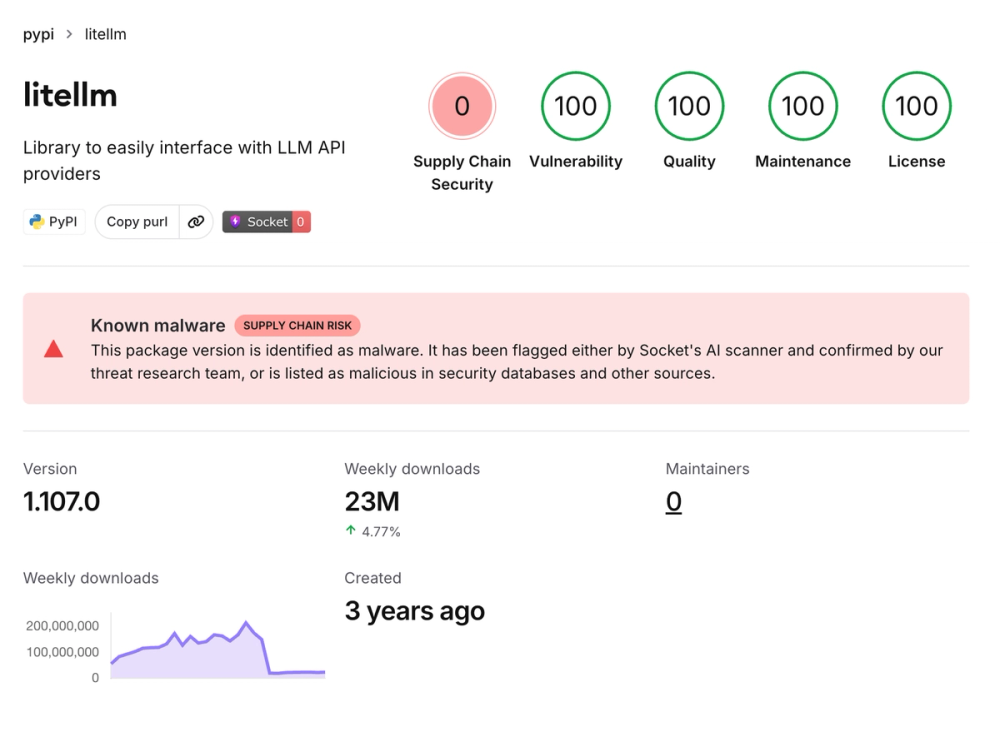 LiteLLM PyPI Package and Docker Images Compromised to Steal Cloud and AI Credentials
LiteLLM 1.107.0 on PyPI and GHCR images shipped Python startup hooks (cook.pth, sitecustomize.py) that steal cloud, SSH, browser and AI-tool credentials, including LiteLLM proxy database credentials. Image build provenance recorded a lookalike Berri-AI/litellm source repository. The post decodes the payload, encrypted exfiltration and GitHub-driven remote loader, and lists containment steps, MITRE ATT&CK mappings and IOCs.
socket.devwriteupPublished and added 21 Oct 2026🛡️ Security LiteLLM 1.107.0 PyPI Wheel Contains a Credential Stealer and Persistent Python Backdoor
LiteLLM 1.107.0 macOS x86-64 PyPI wheel analyzed by OpenSourceMalware contains three injected files (cook.pth, cook.py, sitecustomize.py) that run on every Python start. The payload, called privcollect, steals browser, SSH, cloud, CI/CD and AI-tool credentials, then uploads an AES/RSA-encrypted bundle to www.litellm.dev/healthcheck. A forked loader also fetches domain.txt from GitHub and executes /codepy hourly. The post lists IOCs, hashes and remediation steps.
opensourcemalware.comwriteupPublished and added 21 Oct 2026🛡️ Security LiteLLM compromised again: infostealer and RAT found in version 1.107.0
LiteLLM 1.107.0 was compromised on 21 October 2026: the seven compiled PyPI wheels and the official Docker image carried an infostealer and a RAT. The attacker used the maturin `data = "cook"` directive in pyproject.toml to inject cook.pth, cook.py and sitecustomize.py without touching the source repo. The post lists stolen data, the hourly C2 polling via GitHub, wheel hashes, file and network IOCs, and check steps.
 aikido.devwriteupPublished and added 21 Oct 2026🛡️ Security
 JFrog Security (@JFrogSecurity) on X
JFrog Security Research warns that the LiteLLM 1.107.0 release on PyPI contains malicious code, as part of a supply-chain attack. It advises avoiding that version and investigating any environment where it was installed or executed. The post gives no technical detail, payload description or IOCs, and says a blog post will follow.
x.comadvisoryAdded 23 Oct 2026, published 21 Oct 2026🛡️ Security LiteLLM supply chain compromise: What you need to know
LiteLLM version 1.107.0 was published to PyPI and official Docker images on 21 October 2026 and stayed live for about two hours. Attackers used stolen GitHub CLI OAuth tokens from three engineers to run the release pipeline against a lookalike fork, Berri-AI/litellm. The payload (cook.pth, cook.py, sitecustomize.py) steals cloud, developer, AI-tool and browser credentials, and includes a polling RAT. The post lists removal and rotation steps.
 securitylabs.datadoghq.comwriteupAdded 29 Oct 2026, published 21 Oct 2026🛡️ Security
- eliasbiondo/antirion
Antirion is an open-source AI gateway shipped as one Rust binary with a built-in admin console. It sits between apps and providers such as OpenAI, Anthropic, Bedrock, Vertex and vLLM, translating between OpenAI, Anthropic, Gemini and Bedrock dialects. It covers routing with fallbacks and circuit breakers, budgets, guardrails, caching, MCP and A2A gateways, SSO, and a benchmark against Bifrost 2.2.4 and LiteLLM 1.103.1.
github.comrepoAdded 21 Oct 2026, published 17 Oct 2026🧠 AI - ♫Why♥Not♪ (@Python_s_) on X
Alert thread on CVE-2026-35029 (CVSS v4.0 8.7) in LiteLLM Proxy, versions before 1.83.0. A low-privilege authenticated user can bypass admin authorization on /config/update, change runtime settings, read server files, take over admin credentials and run Python through remotely loaded modules (S3/GCS-hosted). Check Point Research published a full execution chain on October 13 after the April 2026 disclosure. The post lists hunting pointers (non-admin POSTs to /config/update, env-var changes, unexpected pass-through endpoints, cloud module loading) and advises upgrading to 1.83.9 or later and rotating credentials.
x.comadvisoryPublished and added 13 Oct 2026🛡️ Security  Top GenAI security resources — October 2026
Adversa AI's October 2026 roundup of 38 GenAI security resources, grouped into attack techniques, defenses, red teaming, vulnerabilities, incidents, articles and frameworks. Highlights include Anthropic's finding that GLM-5.3 safeguards collapse under prefill and abliteration, capability laundering and activation-dilution jailbreaks, RAG poisoning attacks, the LiteLLM proxy flaw (CVE-2026-35029), and the SGLang pickle RCE (CVE-2026-86793). It also covers a joint US advisory on industrial-scale model distillation. It closes with advice to assume model safeguards can be removed and to harden the serving stack around the model.
 adversa.aiarticlePublished and added 13 Oct 2026🛡️ Security
 Google Pixel 10 Exploits Earned Hackers $560,000 at Pwn2Own
Coverage of Pwn2Own Ireland 2026 results: contestants earned over $1.2 million total, with Google Pixel 10 exploits alone paying out $560,000 across three teams. Ikotas Labs won the full $300,000 Pixel payout by chaining multiple bugs for remote compromise, while Tim Becker/Yves Bieri and Dimitrios Valsamaras/Ken Gannon earned reduced payouts for exploits involving previously known flaws. Other notable rewards went for hacks of the Samsung Galaxy S26, Sonos Era 300 speaker, Philips Hue Bridge Pro, Home Assistant Green hub, Lexmark/Brother/Canon printers, Garmin Index BPM, and AI infrastructure including Oracle Autonomous AI Database, OpenAI Codex, Nvidia Dynamo, and LiteLLM.
securityweek.comarticlePublished and added 9 Oct 2026🛡️ Security Top MCP security resources — October 2026
Adversa AI's October 2026 MCP security roundup, aggregating and synthesizing 15 resources: authentication-bypass vulnerabilities in LiteLLM's MCP endpoint (CVE-2026-59822, now CISA KEV), Grafana's MCP server session spoofing/SSRF (CVE-2026-19516), an MCP Python SDK OAuth-fallback flaw exploited by a malicious server returning a 404, and an Obot gateway route-matching bypass reopening GHSA-vw82. It also covers detection failures (two malicious MCP servers passing five scanners including Cisco mcp-scanner and Snyk agent-scan, 12% of 82,000 public MCP configs hardcoding secrets), a malicious npm wallet-signing package (gadgethumans-mcp), the A2M agent-hijacking attack technique, and CoSAI's MCP Security v2.0 governance model.
adversa.aiarticlePublished and added 8 Oct 2026🛡️ Security- DeepZero
DeepZero is an open-source orchestration engine that lets researchers define vulnerability-research pipelines declaratively in YAML, handling parallel execution (ThreadPoolExecutor), resumable/fault-tolerant state, and LLM-assessment stages via LiteLLM/Jinja2 prompts. It ships example processors for Ghidra headless decompilation, LOLDrivers.io hash exclusion filtering, PE header/driver metadata extraction, and batch Semgrep scanning, with a dedicated pipeline for BYOVD kernel driver vulnerability research. An extensibility model lets users plug in custom Python processors referenced by path in the YAML config.
github.comrepoAdded 3 Oct 2026🛡️ Security



Showing 30 of 60
Show more