 nemotron-halloween
MonsterHouse is a Halloween interactive projection built on the NVIDIA Nemotron Voice Agent: Nemotron Speech ASR, Nemotron 3.5 Bolt E4B 4GB with a LoRA persona adapter, Magpie TTS Zeroshot and Audio2Face-3D in Unreal Engine, on two RTX Blackwell GPUs. Median end-of-speech-to-audio is 1.70 seconds live and 0.72 seconds with cached responses. The post gives a build path and tips on caching and state handling.
 huggingface.cowriteupPublished and added 30 Oct 2026🧠 AI
 SGLang (@sgl_project) on X
SGLang announces Day-0 support for Mistral Large 4 ("Le Chonk"), saying it is the first engine to serve the model on NVIDIA Vera Rubin. The post describes the model as Mistral's largest to date: a natively multimodal 1T-parameter mixture-of-experts model covering instruct, reasoning, coding and agentic workflows. The fetched text is truncated, so benchmark claims and launch commands are not visible.
 x.comthreadAdded 30 Oct 2026, published 29 Oct 2026🧠 AI
 Muhammad Waris (@WarisCodes) on X
Nemotron 3.5 Transcribe is a free open-weight speech-to-text model from NVIDIA covering 40 languages, including mixed-language speech. The post says it ties for first among open models with a 2.8% error rate. It says the model needs a large GPU such as an H100 or RTX 5090, so it will not run on a laptop. The post gives no benchmark name or model card link.
x.comthreadAdded 30 Oct 2026, published 29 Oct 2026🧠 AI- 🚨 AI News | TestingCatalog (@testingcatalog) on X
Nemotron 3.5 Transcribe is an open-weight, promptable NVIDIA mixture-of-experts model with 30B total and about 4B active parameters. One checkpoint does transcription in 40 languages, speaker attribution, translation, contextual prompting and audio understanding. The post says it ranked first in VoiceArena's comparison of 14 diarization plus ASR systems. The fetched text is cut off and gives no license or download details.
x.comthreadAdded 30 Oct 2026, published 29 Oct 2026🧠 AI  Introducing AnySpeechRecognizer and AnyDecisionModel: Open Models for Speech and Decisions on Apple Platforms
AnySpeechRecognizer and AnyDecisionModel are two Swift packages from Hugging Face. The first mirrors Apple's SpeechAnalyzer API with swappable engines (NVIDIA Parakeet, Alibaba Qwen3-ASR on Core ML) and adds Sortformer speaker diarization. The second returns typed yes/no, choice and score answers with probabilities via MLX, Core AI, llama.cpp, Jev or Ollama. The post gives M4 Max timings, model sizes and calibration options.
huggingface.coarticlePublished and added 29 Oct 2026🧠 AI OpenAI Plans to Buy Google's AI Chips as It Looks Beyond Nvidia: Report
Decrypt reports, citing The Information, that OpenAI plans to buy Google TPUs rather than rent them, to reduce dependence on Nvidia. Neither company has confirmed, and price, volume and timing are undisclosed. The article covers OpenAI's TPU optimization job listing, its Broadcom-built Jalapeño inference chip due end of 2026, Nvidia and AMD deals, and Anthropic's multi-gigawatt TPU agreement.
 decrypt.coarticlePublished and added 28 Oct 2026🧠 AI
 John Rood (@johnroodepic) on X
Nemotron 3.5 Transcribe is an open-weight, promptable 30B mixture-of-experts model from NVIDIA with about 4B active parameters, built for recorded audio. One checkpoint transcribes 40 languages, handles recordings up to an hour, labels up to eight speakers, translates, and answers questions about English audio. Weights and a demo are on Hugging Face. The post gives no benchmarks.
x.comthreadAdded 29 Oct 2026, published 28 Oct 2026🧠 AI NVIDIA Nemotron 3.5 Transcribe and Granary v2: Intelligent Multilingual Transcription You Can Prompt and Adapt
Nemotron 3.5 Transcribe is an open-weight, promptable speech model that handles transcription in 40 languages, translation, diarization for up to eight speakers, and audio Q&A. It has about 4B active of 30B parameters and tops open-weight ASR and diarization leaderboards. The post also covers the Granary v2 curation pipeline (463,062 hours, 48 languages) and a medical fine-tuning case study that cut held-out WER by 45.8%.
huggingface.coarticlePublished and added 28 Oct 2026🧠 AI Photon Capital (@PhotonCap) on X
Photon Capital's thread covers the 27 October 2026 NVIDIA and Oracle announcement of general availability of Vera Rubin NVL72 and Vera CPUs on OCI. It lists specs (Spectrum-6 at 102.4Tbps, HGX Rubin NVL8 with Xeon 6, 150,000 initial Vera CPUs) and OpenAI's use of Vera CPUs for agentic sandboxes. The commentary argues CPU capacity can cut cost per task and shorten KV cache residency in GPU memory.
x.comthreadAdded 28 Oct 2026, published 27 Oct 2026🧠 AI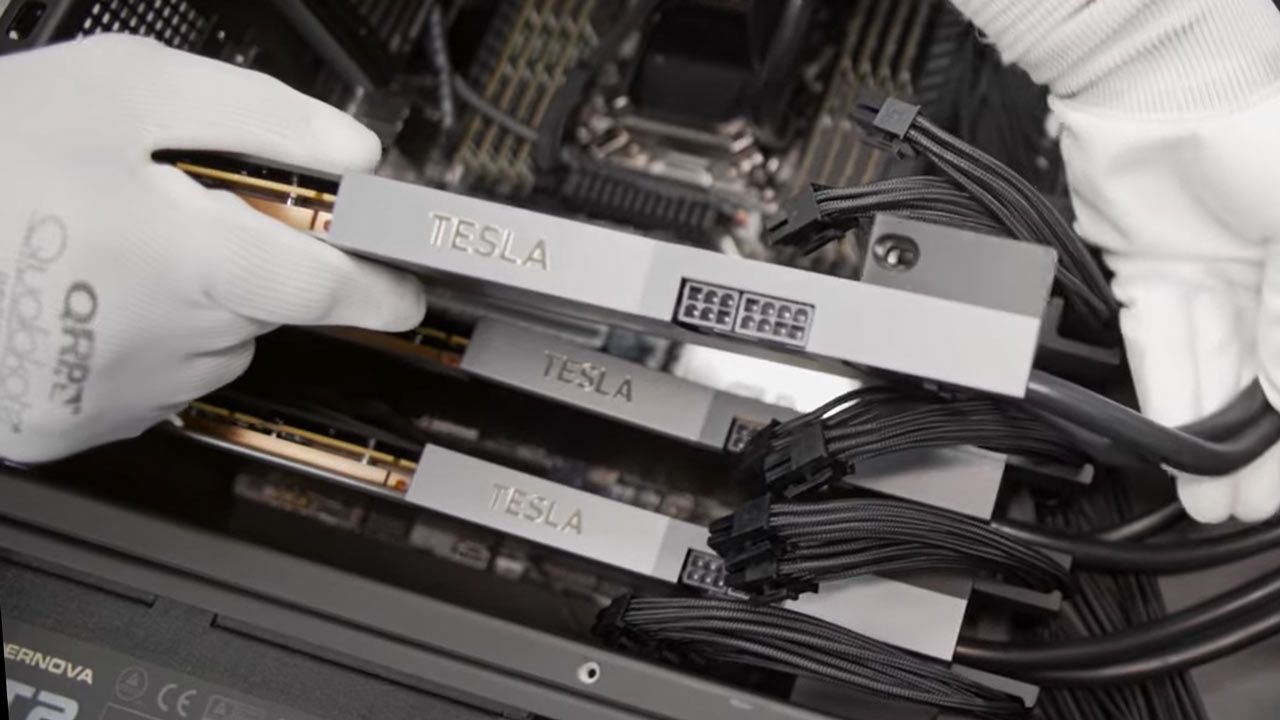 Nvidia discusses $2k-per-GPU annual fee for software
Tom's Hardware reports that Jensen Huang put Nvidia's software licensing at about $2,000 per GPU per year for software that runs agents on AI factories, said at GTC Berlin on 22 October 2026. Nvidia AI Enterprise is listed at $4,500 per GPU per year, and Nvidia has not said which products or terms the new fee covers. The piece also covers the OpenShell Reference Architecture and Sentry agent monitoring on BlueField-4.
 tomshardware.comarticleAdded 28 Oct 2026, published 26 Oct 2026🧠 AI
 Block's new voice AI sounds eerily human, sparking awe and scam fears
Dessa is a voice AI model from Block, trained from scratch on human speech only, with no text stage. It listens while speaking, so it handles interruptions, laughter and tone changes. Block says it trained on one Nvidia GB200 NVL72 system and that it runs locally on a MacBook Pro with M4 Max or better. Model size, benchmarks and release date are undisclosed. Early access goes to a small group of AI safety researchers. Reactions split between praise and scam fears.
 coindesk.comarticlePublished and added 24 Oct 2026🧠 AI
 Why AI Compute Comes in Rectangles — Erik Bernhardsson, Modal CEO
Latent Space interview with Modal CEO Erik Bernhardsson, after Modal's $750M Series D at a $16B valuation and passing $1B annualized run rate. He explains why GPU demand is not "rectangular" like fixed-term capacity contracts, how Modal pools demand and buys from about 25 clouds on three-year deals, and why sandboxes grew to about a third of revenue. Also covers GPU price-collapse risk and non-NVIDIA accelerators. Only the first part of the transcript was available.
 latent.spacetalkPublished and added 22 Oct 2026🧠 AI
 Why AI Compute Comes in Rectangles — Erik Bernhardsson, Modal CEO
Latent Space interview with Modal CEO Erik Bernhardsson after the company's $750M Series D at a $16B valuation, with a transcript. He explains why GPU demand does not match rectangular fixed-term capacity contracts and how Modal pools demand across customers. He covers sourcing from nearly 25 clouds on multi-year deals, the risk of falling GPU prices, sandboxes reaching about a third of revenue, and non-NVIDIA accelerators.
latent.spacetalkAdded 23 Oct 2026, published 22 Oct 2026🧠 AI What Is a Neocloud? The GPU Clouds Powering the AI Boom
Decrypt explainer on neoclouds, specialist providers such as CoreWeave and Nebius that rent Nvidia GPU clusters for AI training and inference. It covers the chips, power and debt model, Bitcoin miners turned AI hosts, and customers including Microsoft, AWS, Google and Anthropic. It cites Gartner's 14 October 2026 forecast that over 80% of neoclouds will stop operating independently by 2030.
decrypt.coarticlePublished and added 22 Oct 2026🧠 AI Jonathan Rhyne (@jdrhyne) on X
A post on X about NVIDIA's Nemotron 3.5 Parse and its "#1 on ParseBench" claim. The author says the ranking holds only among open-weight models under 1B parameters. On the full board of 150+ models the model scores about 75, while the top is near 90. The post asks vendors who run a benchmark to print the filter on the chart.
x.comthreadAdded 23 Oct 2026, published 22 Oct 2026🧠 AI Nvidia Unveils Its Full-Stack Blueprint to Contain and Monitor AI Agents
The OpenShell Reference Architecture, announced by NVIDIA at GTC Berlin, splits agent work across hardware: Vera Rubin runs models, Vera CPUs run agents inside the open-source OpenShell runtime, and BlueField-4 DPUs run the Sentry monitor. OpenShell has a gateway, supervisor, sandbox and formal-verification policy prover. Sentry inspects agent-to-model traffic outside the host. Sentry availability is listed as early next year.
decrypt.coarticlePublished and added 21 Oct 2026🧠 AI NVIDIA Kumo Relational Outperforms Supervised Machine Learning on Relational Data, No Training Required
NVIDIA Kumo Relational is a pre-trained relational foundation model that predicts outcomes such as churn or fraud directly on multi-table databases through in-context learning, using up to 10,000 context examples and no task-specific training. NVIDIA reports it beats supervised relational deep learning and XGBoost pipelines across 41 tasks on 15 databases, and beats AutoGluon by 8% MRR on SAP SALT. Code is Apache 2.0, weights are on Hugging Face.
huggingface.coarticlePublished and added 21 Oct 2026🧠 AI Train in Simulation, Deploy on a Real Robot: Microduck with Isaac Lab 3.0
Tutorial for training a walking policy for Microduck, an open-source bipedal robot from Pollen Robotics and Hugging Face, in NVIDIA Isaac Lab 3.0 with Newton. It covers RSL-RL training with the backlash preset, BAM actuator models and domain randomization, then ONNX export (61 observations, 14 joint-position actions) and deployment with robotctl. Policies can be shared on the Hugging Face Hub or tested in Microduck Arena.
huggingface.cowriteupPublished and added 21 Oct 2026🧠 AI NVIDIA Kumo Forecast Combines Pretrained Time-Series Representations with Historical Pattern Retrieval and Interpretability
NVIDIA Kumo Forecast (formerly NV-Tesseract Forecasting) is a multivariate time-series forecasting model built on the MOMENT-1-large Transformer backbone (about 340M parameters) with a trainable forecasting head. Its DARR mode blends direct predictions with k-nearest-neighbor retrieval over historical context, and an interpretability framework gives per-horizon lag and feature attributions. Inputs are 256 to 2048 numeric observations; code and weights are Apache 2.0.
huggingface.coarticlePublished and added 21 Oct 2026🧠 AI Announcing SimReady Central: An Open Library of Simulation-Ready 3D Assets for Robotics and AI Factories
SimReady Central Library is an NVIDIA-led, free and ungated collection of more than 2,000 simulation-ready OpenUSD assets on Hugging Face, covering robot arms, grippers, warehouse equipment, racks and cooling gear. Assets are validated against SimReady Foundation profiles, and NVIDIA USD Search lets developers and agents find them by natural language. The post shows GPT-6 Astra building a pick-and-place scene in Isaac Sim and comparing AI factory layouts.
huggingface.coarticlePublished and added 21 Oct 2026🧠 AI NVIDIA Cosmos3-H-Dreams: Bringing Clinical Surgery to Life Through Generative Simulation
Cosmos3-H-Dreams is NVIDIA's real-time generative surgical simulator, trained on clinical cholecystectomy video and kinematics from the CMR Surgical Versius platform. It builds on the 16B Cosmos3-H-Embodied-Nano, distills a bidirectional teacher into four-step and two-step causal students with Self-Forcing, and streams through FlashDreams on one RTX PRO 6000 GPU. Checkpoints and a recipe for custom data are released.
huggingface.coarticlePublished and added 20 Oct 2026🧠 AI- DeepInfer: High-performance inference framework for DeepSeek models
DeepInfer is DeepSeek's open-source inference framework for offline inference of DeepSeek-V4.1-Flash, released under Apache 2.0. It covers attention data parallelism, MoE expert parallelism with load balancing, draft-token decoding with confidence-scheduled verification, batch-invariant inference, deterministic sampling and structured outputs. It runs on NVIDIA SM100 GPUs and Huawei Ascend 950 NPUs. The KV cache system, prefill/decode disaggregation and load balancing are not included.
 github.comrepoAdded 21 Oct 2026, published 20 Oct 2026🧠 AI
 🚨 AI News | TestingCatalog (@testingcatalog) on X
A TestingCatalog X post with two Daily AI Briefs (Oct 17 and the start of Oct 16), grouped by vendor. Oct 17 items include GPT-6 Astra Pro upgrades in ChatGPT, Codex context reuse and caching, Gemini 4 Argon in AI Studio Build, the open-weight MIT-licensed DeepSeek-V4.1-Flash-1017, Claude Code Review going GA, Perplexity's open Decider v1.2 models (27B and 4B), NVIDIA's 4B looped Nemotron Labs Dory 1.0, Reflection's Apache-2.0 Beam, Cursor cloud-agent canvases and Tencent's Hy Memory 2.0. Oct 16 begins with Meta's open-weight Muse Spark Open, an 816B-total, 42B-active MoE with a 1M-token context. It gives a quick snapshot of the week's open-weight and coding-agent releases.
x.comthreadAdded 18 Oct 2026, published 17 Oct 2026🧠 AI- [AINews] High Taste Testers Ep. 1
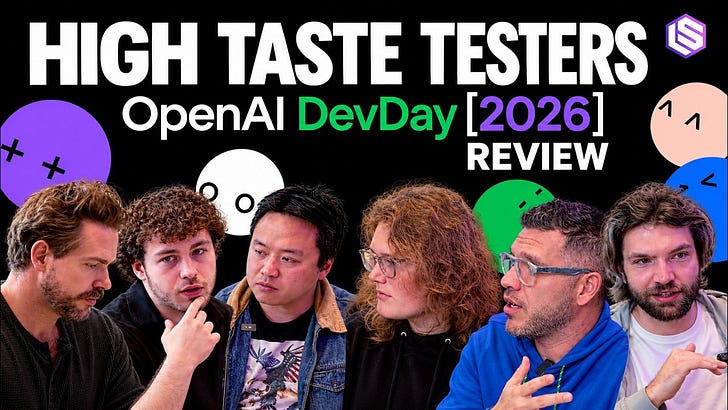
AINews issue for 10/15–10/16/2026, covering Twitter and Reddit. It covers the open-weights releases Meta's Muse Spark Open (816B/42B-active MoE, AA Intelligence Index 39, custom license) and Reflection Beam 1.0 (501B/23B-active, Apache 2.0), plus NVIDIA Nemotron 3.5, StepFun Step 5 Preview and FLUX 3 Image Klein. It also covers Gemini 4 Argon, Haiku 5.5 pricing, "decision model" classifiers (Liquid d1-ultra, Perplexity pplx-decider), TPUv7/Vera Rubin/MI355X serving benchmarks, interpretability claims (Qwen3-32B neuron audit), agent research, eval-integrity and safety disclosures, and China export-control proposals. The page also announces a pilot video show, High Taste Testers Ep. 1.
latent.spacearticlePublished and added 17 Oct 2026🧠 AI  FuTransformer: FP8 prefill and INT4 decode for Llama-style inference on Hopper
FuTransformer is a CUDA implementation of a Llama-style Transformer block for NVIDIA Hopper GPUs. It uses FP8 prefill with fused GEMM epilogues and INT4 weights plus an INT4 KV-cache copy for decode, with a block-diagonal Hadamard transform to cut cache quantization error. On one H100, prefill is up to 1.48x faster than compiled PyTorch FP8, and INT4 decode is 1.3-2.4x faster than the faster PyTorch baseline. Llama-3.1-8B decode takes 2.8 ms per step at batch one, versus 8.1 ms for compiled transformers. WikiText-2 perplexity rises from 6.24 to 7.23 with round-to-nearest INT4 weights, or 6.99 with GPTQ.
 arxiv.orgpaperAdded 20 Oct 2026, published 16 Oct 2026🧠 AI
 Managing open-weight model risk in enterprise deployments
Microsoft blog post introducing "Risk Management for Open-Weight Models in Enterprise", a joint Microsoft–NVIDIA paper. It proposes a shared risk taxonomy (Cybersecurity, Data Protection, Content, Human-AI Interaction, Bias) grounded in ISO standards and the NIST AI RMF. The paper maps evaluations to risks as evidence and argues that risk depends on the model, use case, deployment and safeguards, not on weight openness alone. It also covers how responsibility for controls shifts when enterprises self-host models, and points to a joint repository of evaluations. The first paper focuses on the model layer; runtime, harness and application layers are planned for later.
 microsoft.comarticlePublished and added 16 Oct 2026🛡️ Security
- Managing open-weight model risk in enterprise deployments
Microsoft's announcement of "Risk Management for Open-Weight Models in Enterprise", the first paper in a planned joint series with NVIDIA. It proposes a taxonomy of five risk categories (Cybersecurity, Data Protection, Content, Human-AI Interaction, Bias). The approach is grounded in ISO standards and the NIST AI Risk Management Framework. It maps evaluations to risks as evidence, stresses that weight openness alone doesn't determine risk, and explains how self-hosting shifts responsibility for safeguards. A joint repository will collect evaluations, and later work will cover the runtime, harness and application layers.
microsoft.comarticlePublished and added 16 Oct 2026🧠 AI  Big Tech's AI auditors will only see what they're shown
Opinion column by Samuel Vance-Law (Decentralization Research Center) arguing that the White House AI accord signed by Nvidia, OpenAI, Anthropic, Google, Meta and xAI leaves audit independence unaddressed: companies pick their own auditors and decide what those auditors see, with no penalties. It draws on the Enron/Arthur Andersen and Sarbanes-Oxley precedent, a Stanford/Harvard/Brown scoring of the 2023 voluntary commitments (53% average), and METR's limited-access pre-release test of OpenAI's o3. It points to DeepMind's August double-blind evaluation on sealed hardware, run with Singapore's AI Safety Institute, as proof that auditors can now choose their tests without taking a copy of the model. It recommends auditor-chosen tests, public disclosure of auditor identities and audit scope, and an outside overseer of the auditors.
coindesk.comarticlePublished and added 16 Oct 2026🧠 AI- Peter Dedene (@dedene) on X
A X thread benchmarking Qwen3.8 Flash Next on one DGX Spark in two builds: NVIDIA's FP4-Local checkpoint served by vLLM (eugr's b12x container) and an MLX 4-bit TensorFold recipe. The NVIDIA build scores higher on the author's agentic benchmark (81.2 vs 75.0), BFCL tool calling (82.4 vs 71.8 single-turn, 54.5 vs 43.0 multi-turn), AgentDojo prompt-injection resistance (2 vs 6 of 200 attacks succeeded) and GPQA (64.6 vs 59.1). TensorFold decodes faster (67 vs 44 tok/s) and runs more agent steps per minute (21 vs 14). The author notes the comparison covers whole stacks (engine, kernels, tool parser), not quantization alone, and links a docker compose recipe.
x.comthreadAdded 17 Oct 2026, published 16 Oct 2026🧠 AI - Harrison Kinsley (@Sentdex) on X
Sentdex reacts to Artificial Analysis ranking NVIDIA's Nemotron 3.5 Super VL (120B total, 12B active MoE) as the top US open-weights model, scoring 26 on the Intelligence Index. That edges out Thinking Machines' Inkling Small (26), NVIDIA's Nemotron 3 Ultra (23) and Meta's Muse Glimmer (17). Sentdex's informal tests at vanilla settings show over 550 tok/sec, and they suspect it would rank higher on agentic coding. They see it as a candidate for a fast local coding agent model.
x.comthreadAdded 16 Oct 2026, published 15 Oct 2026🧠 AI



Showing 30 of 101
Show more