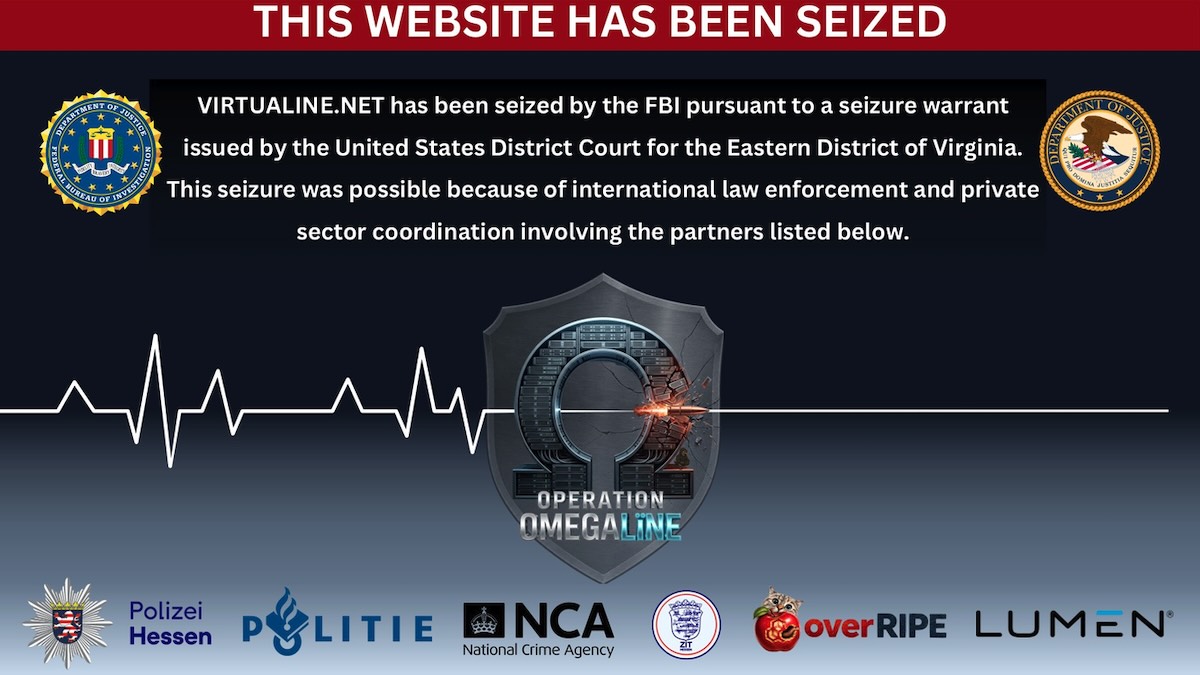
 Bulletproof Host Virtualine Loses Its Domain to FBI Seizure
Virtualine is a Russian-speaking bulletproof hosting provider whose domain virtualine.net the FBI seized. Court documents say it hosted phishing, spam, carding and illicit content, and ignored abuse reports. TRM Labs says it received more illicit-attributed cryptocurrency than any other labeled bulletproof host, mostly from a Russian drug marketplace (44%) and a sextortion scheme (17%), and later from StealC operators in 2026.
 securityweek.comarticlePublished and added 30 Oct 2026🛡️ Security
 Police seize Virtualine bulletproof service tied to ransowmare, cybercrime
Virtualine, a bulletproof hosting service also operating as Secury, Massgod, Spamhouse, Lanedo and Omegatech, had its main domain seized by the FBI with German, Dutch and UK partners. Chainalysis and TRM Labs traced its Bitcoin payments to ransomware (5% of flows), a Russian drug market (about 44%), sextortion and the StealC infostealer. Dutch police seized dozens of servers in Limburg and recovered data on over 3,000 customers.
 bleepingcomputer.comarticleAdded 30 Oct 2026, published 28 Oct 2026🛡️ Security
 International Law Enforcement Seizes Domain of Virtualine Bulletproof Hosting Service
Virtualine is a bulletproof hosting provider whose domain virtualine.net was seized on 27 October 2026 by the FBI Washington Field Office and the Eastern District of Virginia, with German, Dutch and UK police support. Chainalysis and OverRIPE gave intelligence support. The post lists aliases (Secury, Massgod, Spamhouse, Lanedo, Omegatech), forum advertising on Exploit.in and HackForums, and unhosted bitcoin payments tied to ransomware, infostealers and scam infrastructure.
 chainalysis.comarticlePublished and added 27 Oct 2026🛡️ Security
 Solana bug reports now cost 1 SOL as AI floods security teams with spam
Firedancer, the Solana validator client built by Jump Crypto, now requires researchers to burn 1 SOL (about $100) per bug report, nonrefundable. A $1 million audit contest from 9 April to 9 May 2026 drew 809 reports from 162 researchers but only 127 unique findings, and nearly half of valid reports were duplicates. Rewards are doubled through 20 November, with Alpenglow criticals up to $300,000.
 coindesk.comarticlePublished and added 27 Oct 2026🛡️ Security
 tl;dr sec #349 - Vulns & Exploits in the AI Era, Package Manager Sandboxing, Testing AI Sandboxes
Issue #349 of the tl;dr sec newsletter. It summarizes: Google Threat Intelligence Group data showing monthly CVE disclosures doubling (5,045 to 10,740) with exploitation tracking n-days; Andrew Nesbitt's survey of package manager install-time sandboxing (Homebrew 7.0.0, opam, SwiftPM, Cargo, pnpm); the Graphalgo malware campaign reaching Terraform providers and Go modules; and XBOW's role-mapping approach to finding IDORs. It also covers Turbo Intruder HTTP/3 support, Vercel's $1M Firecracker sandbox bounty, and Perplexity's test of AI agents escaping microVM sandboxes via DNS spoofing and shared-IP CDN gaps.
 tldrsec.comarticleAdded 15 Oct 2026, published 8 Oct 2026🛡️ Security
 Password Cracking: Stealing SSH Credentials with PAM
Walks through a post-exploitation credential-harvesting technique on Linux: enabling password authentication in sshd_config, writing a pam_exec.so logging script, and inserting it into /etc/pam.d/sshd (or common-auth/password-auth) so every SSH login attempt is logged with username, password, and source host to a hidden log file. Also covers using each user's ~/.ssh/known_hosts to identify pivot targets for lateral movement during a pentest.
 hackers-arise.comwriteupAdded 7 Oct 2026, published 6 Oct 2026🛡️ Security
 SMTP is the key: BPFDoor and AVERAT hitting the network edge
Rapid7 details a new BPFDoor campaign targeting telecom and network-edge appliances (ShareTech, SpamSniper mail gateways) and a six-sample Linux RAT family dubbed AVERAT found on compromised Taiwanese CPE (Synology NAS, a NetKlass device, a Dahua DVR). The writeup reconstructs the Rapid7 BPFDoor controller's HTTP-tunneled trigger mechanism, a fileless ShareTech dropper that stages binaries as ntpdate/udevds and deletes them while processes keep running, a BPF Rekoobe variant that hides inside SMTP port-25 traffic, and AVERAT's RC4-derived config/C2 scheme — tying the infrastructure to the broader China-nexus ORB (Operational Relay Box) device pattern described in CISA/NCSC-UK advisory AA26-113A. It closes with detection guidance for unlinked/deleted process execution, dropper staging artifacts, and port-25 C2 callbacks, plus full IOC and ATT&CK tables.
 rapid7.comwriteupAdded 7 Oct 2026, published 2 Oct 2026🛡️ Security
 Tracking CVE-2026-73570: unauthenticated command injection on internet-facing mail servers
Microsoft Threat Intelligence tracked in-the-wild exploitation of CVE-2026-73570, an unauthenticated OS command-injection vulnerability in Zimbra Collaboration Suite's SNMP notification path (swatchdog-to-snmptrap), triggerable via a crafted SMTP request when the optional zimbra-snmp package is enabled. The post documents pre-disclosure scanning, JSP webshell deployment, a novel pam_exec/zmmailboxdmgr privilege-escalation chain to root, systemd-based persistence (zimlog.service), theft of zimbraPreAuthKey/zimbraAuthTokenKey via zmlocalconfig and LDAP, lateral movement over Zimbra's SSH identity, a multi-stage Go-based remote-access agent (zimclient2 via zimdown2/agent2.sh), a dedicated mailbox-exfiltration implant, and an AzCopy-based exfiltration attempt, closing with Defender XDR KQL hunting queries and MITRE ATT&CK mapping.
 microsoft.comwriteupAdded 1 Oct 2026, published 30 Sep 2026🛡️ Security
 Package Manager Sandboxing (Andrew Nesbitt)
A survey of how package managers confine install-time and build-time code. It covers Homebrew 7.0.0's fetch/install split, Landlock sandbox and signed declarative *_steps. It also covers opam, Nix, Bazel, pacman, Swift PM and Deno, and the open sandbox proposals at pnpm, RubyGems, Spack, Cargo, pip and Zig. It sorts the responses into gating (allowlists), confinement and replacement/removal of hooks. It links the topic to coding-agent sandboxes (Seatbelt, Landlock, bubblewrap) and to Shai-Hulud and nx. It argues the open problem is validating a sandboxed phase's output at the hand-off.
 nesbitt.ioarticleAdded 10 Oct 2026, published 24 Sep 2026🛡️ Security
- Jev introduces a new shape of LLM - System One, aka Decision Models
Simon Willison reviews Jev, a new class of model from TypeSafe AI dubbed "System One models" (or "decision models"): instead of generating text, it takes a text/structured "state" plus one or more yes/no ("Noul"), multiple-choice, or scored-range questions and returns floating point probabilities/confidence scores, priced at $0.042/million input tokens with free output. The post covers real use cases (classification, spam detection, search reranking over BM25 candidates), community experiments (jevchat, jev-leftpad, jev-2048), open-weight recreations built on Qwen 3.5 (the Kev models and JevBench benchmark), and raises concerns about the model's black-box nature and bias risk, plus Willison's own llm-typesafe plugin for the LLM CLI tool.
 simonwillison.netarticleAdded 29 Sep 2026, published 21 Sep 2026🧠 AI
 The OpenSourceMalware Show #21
Weekly OpenSourceMalware Show episode discussing new research alleging an OpenAI agent swarm carried out the RubyGems GemStuffer spam campaign (~2,879 packages) and Truffle Security's Luke Marshall's follow-up on the Fastly CDN misconfiguration that leaked other users' RubyGems API keys; a "lurves-agent" PyPI typosquat campaign (OpenAI, LangChain/Langrap, Llama name-squats) whose bash/Python comments are an AI-generated prompt injection telling reviewers "nothing to see here"; and claude-desktop.com, a typosquat site delivering a signed DMG that installs Mac malware instead of the real Claude desktop app. Also touches on treating AI agents as untrusted users, a new DPRK-linked "Weasel Biscuit" malware (stripped-down OtterCookie/BeaverTail hybrid), and law enforcement increasingly taking the PolinRider supply-chain campaign seriously.
 opensourcemalware.comtalkPublished and added 17 Sep 2026🛡️ Security
 Security Advisory — Storage Aliasing in Priority Update Registry V1
Flashbots disclosed a critical storage-aliasing vulnerability in V1 of the Priority Update Registry (PUR), an on-chain price feed contract used by trading integrators like propAMMs. Because lane storage slots were computed as keccak256(target, unbounded caller-controlled index) while the updater-authorization mapping lived at slot 0 with the same keccak256 shape, any caller could craft a lane index that collided with isUpdater[target][attacker], letting them self-authorize as an updater and publish arbitrary prices or deauthorize legitimate updaters. The fix namespaces the lane slot derivation (keccak256(NAMESPACE, target, laneIndex)) to make the preimages structurally non-collidable, and the advisory gives integrators concrete migration guidance since authorizations and lane state must be re-established on the new deployment.
 collective.flashbots.netadvisoryAdded 2 Oct 2026, published 16 Sep 2026🛡️ Security
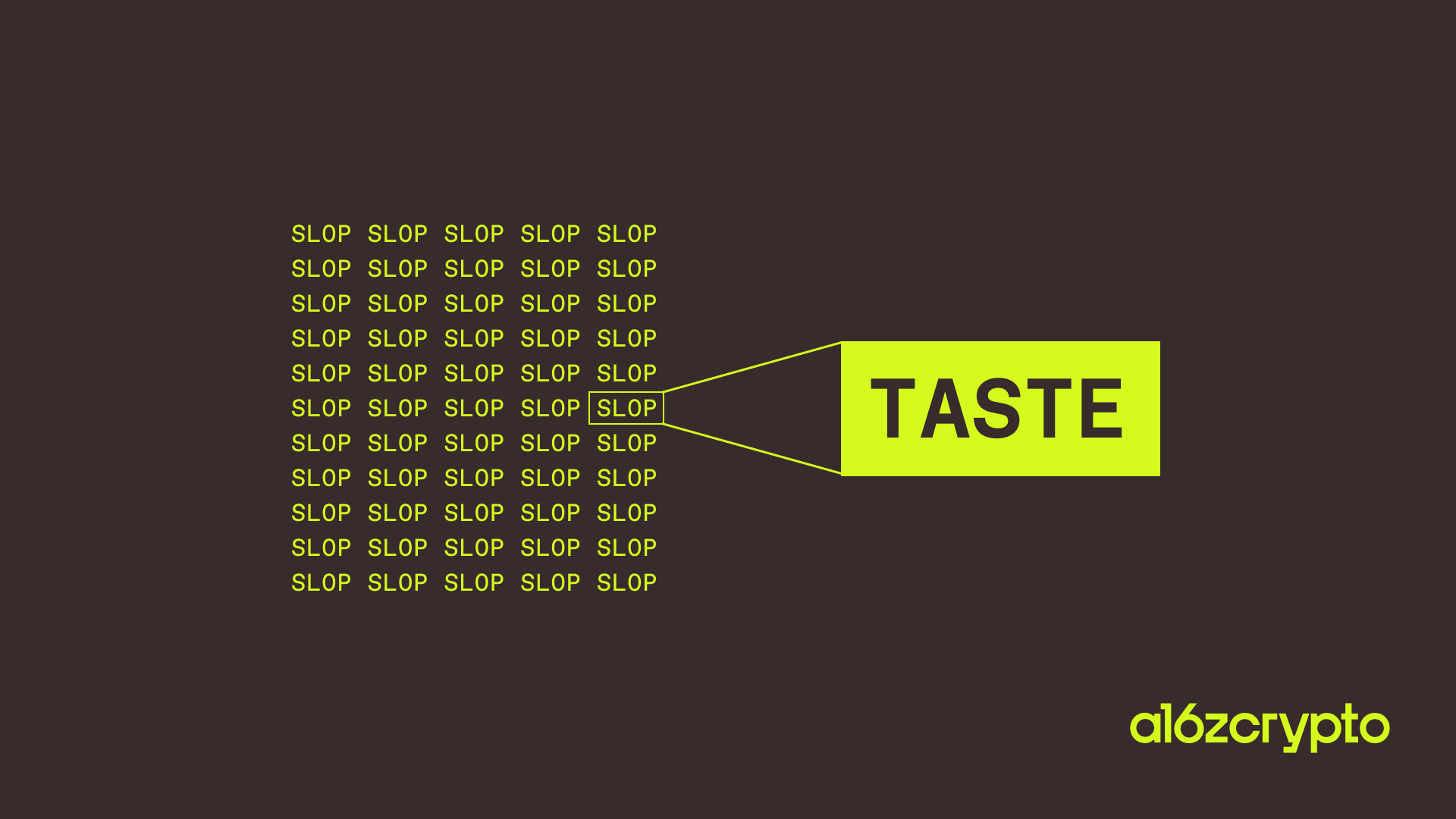 Beyond slop, taste, and AI moral panic: What social science tells us
An a16z essay arguing that "AI slop" panics and debates over machine "taste" recur historically (from 18th-century Grub Street pamphleteers to pulp fiction and blogging), and that social science can disaggregate "taste" into distinct mechanisms: Watts and Salganik's music-lab experiments showing hit success is socially contingent rather than quality-driven; Ron Burt's brokerage research showing innovation comes from occupying "structural holes" between disconnected networks; and apprenticeship-based judgment that requires repeated correction over time to develop. The piece concludes that as LLMs absorb entry-level tasks (contracts, financial analysis, code), the real scarce resource isn't taste itself but the social infrastructure — apprenticeship pipelines and undocumented tacit-knowledge networks — that produces people capable of exercising it, and warns firms that eliminate junior roles risk losing senior judgment down the line.
 a16zcrypto.comarticleAdded 29 Sep 2026, published 26 Aug 2026🧠 AI
- RMM Abuse: How Attackers Exploit Remote Access Tools | Huntress
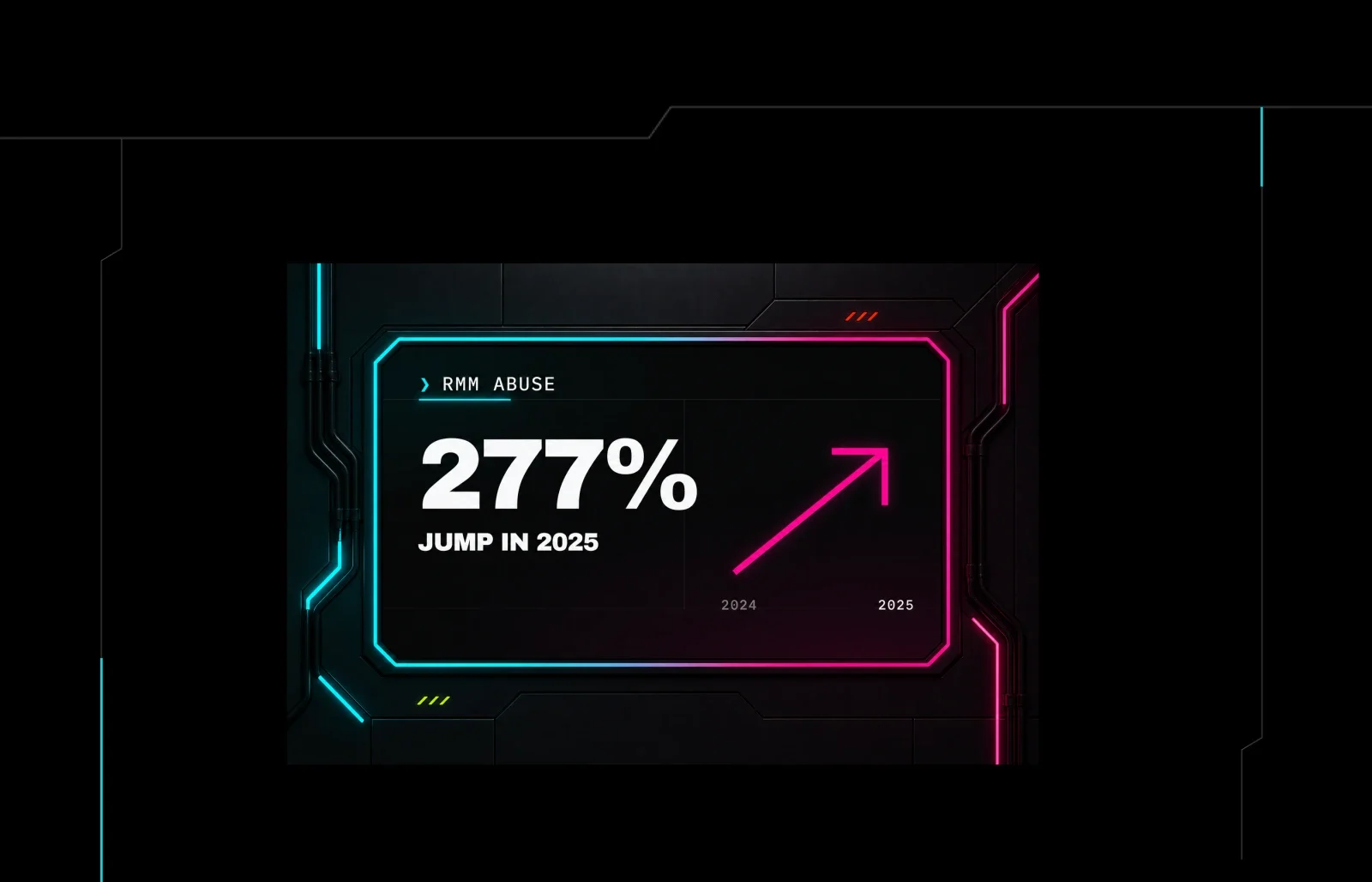
Huntress researchers describe how attackers increasingly abuse legitimate RMM tools like ScreenConnect and AnyDesk instead of custom malware, citing a 277% year-over-year rise in RMM abuse and its presence in nearly 40% of investigated incidents. The piece walks through a real case where a ScreenConnect lure sat dormant for five months before the attacker logged in to hijack a browser session and send spam, and describes how Huntress/AnyDesk staff used RMM access defensively to disrupt an India-based scam call center and a pig-butchering compound. It closes by pitching Huntress's RMM Guard, an app-control feature that inventories and blocks unauthorized RMM installs.
 huntress.comarticleAdded 3 Sep 2026, published 21 Aug 2026🛡️ Security
- archcanary
Archcanary is a read-only, layered detection scanner for Arch Linux (and derivatives like EndeavourOS/Manjaro) that checks installed packages, pacman logs, systemd units, eBPF programs, ld.so.preload, DKMS kernel modules, and npm/bun/yarn/pnpm caches against curated and third-party (aur-audit.wtako.net) threat lists. It was built in direct response to a 2026 AUR supply-chain attack in which commit forgery was used to impersonate maintainers and inject npm/bun install hooks delivering an infostealer (Discord tokens, GitHub PATs, SSH keys, Vault tokens) and a CAP_BPF eBPF rootkit into 1600+ PKGBUILDs, plus a separate Russian-spam PKGBUILD injection campaign. It integrates with yay/paru pre-build hooks, systemd timers, auditd, and Lynis, and originated as a fork/expansion of lenucksi/aur-malware-check.
 github.comrepoPublished and added 21 Aug 2026🛡️ Security
- MakazhanAlpamys/Soup
Soup is a CLI tool for fine-tuning and post-training LLMs with a single YAML config and one command, wrapping transformers/PEFT/TRL/MLX backends with auto batch-size/GPU detection and QLoRA support. Its notable technical contribution is "layer streaming," which trains an 8B model on a 4GB laptop GPU by streaming the frozen base model from host RAM one decoder layer at a time, verified bit-exact against resident runs and documented in an accompanying Zenodo preprint with detailed benchmark data including failures and retracted claims.
github.comrepoAdded 22 Sep 2026, published 14 Aug 2026🧠 AI - Awesome Flipper Zero
An awesome-list GitHub repo cataloging Flipper Zero resources: Sub-GHz OOK bruteforce generators, BadUSB ducky-script payload collections, NFC/RFID dumps (Amiibo, Tonies, TouchTunes, event bracelets), custom firmware forks (Unleashed, Momentum, RogueMaster) with rolling-code and community-plugin support, plus apps like a PC vulnerability scanner, mouse jiggler, and BLE spam tool. It serves as a curated index for hardware/RF hacking and red-team tooling built around the Flipper Zero platform.
github.comrepoPublished and added 31 Jul 2026🛡️ Security 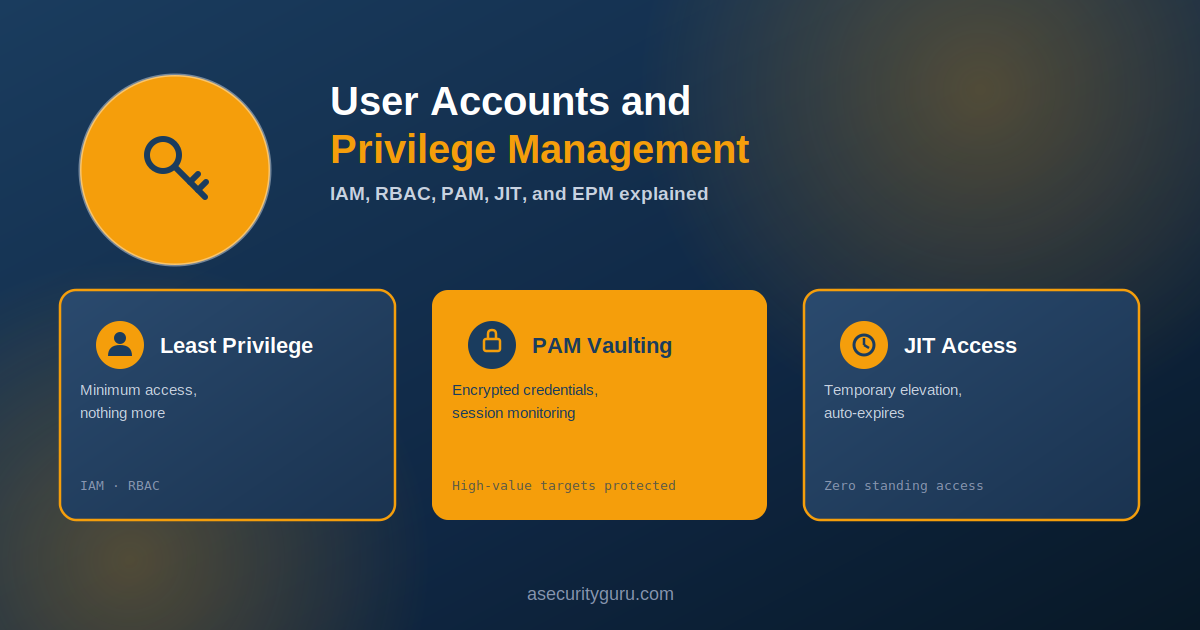 User Accounts and Privilege Management
Introductory primer on OS user accounts and privilege management. It covers permissions versus privileges, the Principle of Least Privilege, vertical versus horizontal privilege escalation, UAC and sudo, and group-based access. It then moves to enterprise controls: IAM, RBAC, PAM with credential vaulting and session monitoring, Just-In-Time access, Endpoint Privilege Management and Zero Trust. It includes a best-practices list, an FAQ on service-account targeting and why MFA does not replace PAM/JIT, and a tip to start with Azure PIM and forward logs to Splunk for privilege-event alerting.
 asecurityguru.comarticleAdded 13 Oct 2026, published 27 Jul 2026🛡️ Security
- ShortDot Zone Abuse Evidence
PhishDestroy's shortdot-evidence is a daily-updated GitHub investigation into ShortDot SA, the Luxembourg registry operator behind the .icu, .bond, .cyou, .sbs, .cfd, .buzz and .qpon gTLDs, documenting that 51,985+ tracked domains impersonate brands like Chase, Binance, MetaMask and Ledger and that ~70% of registered domains in these zones carry no DNS records (metric-padding rather than legitimate use). It publishes machine-generated IOC/blocklist files and analytics built from a per-TLD zone-file pull cross-referenced against Spamhaus DBL, SURBL, OpenPhish, URLhaus, PhishTank and AlienVault OTX, and ties the zones to concrete criminal cases (FBI's LabHost domain list, Google v. DOES/Yucheng Chang RICO suits, the Revolver Rabbit XLoader/Formbook C2 campaign using 500k+ .bond domains). It also details structural conflicts of interest between ShortDot, its registry infrastructure provider Team Internet Group/CentralNic, registrar partner NameSilo, and the brand-protection vendor NameBlock, backed by Interisle Consulting Group phishing-volume statistics.
github.comrepoPublished and added 25 Jul 2026🛡️ Security - Mantis
Mantis is Google's open-source suite of AI agent skills plus an ADK-based reference harness for autonomous security code review. It walks a codebase to build a semantic index and threat model, generates and executes vulnerability research hypotheses across agents, deduplicates and triages findings to combat LLM hallucination, attempts reproduction (static guesses up to spun-up mock servers), chains findings for impact, and patches issues in an adversarial verify-the-fix loop, calibrating severity against a rubric to avoid inflated "critical" spam. It explicitly warns it is demonstration-only, non-deterministic, and requires isolated sandboxing plus human expert verification before any findings are reported.
github.comrepoPublished and added 15 Jul 2026🛡️ Security  Orca Security: ITDR for the Cloud
Orca Security explainer defining Identity Threat Detection and Response (ITDR) for cloud environments, distinguishing it from IAM, PAM, EDR, and CIEM as a runtime behavioral-detection layer for identity abuse rather than a preventive/posture control. It covers cloud-specific attack patterns like leaked AWS access-key abuse, AssumeRole/PassRole privilege escalation, OAuth consent phishing, and federation/token abuse, and details how ITDR baselines identity behavior (especially machine/non-human identities) using cloud audit logs like CloudTrail to detect impossible travel and anomalous role assumption, ending with Orca's agentless CIEM+ITDR platform pitch.
 orca.securityarticlePublished and added 3 Jul 2026🛡️ Security
- Fantastic clear-text passwords and where to collect them (Part 1 - Linux)
A DFIR-focused post cataloging real-world Linux clear-text credential harvesting techniques observed in incident response, including a case where a plaintext Java Keystore password in root's bash history led to full Azure tenant compromise via Siemens OpenScape/Exchange integration. It also covers truffleproc (GDB-based process memory dumping), pspy (non-root process/cron snooping via inotify), a backdoored Citrix NetScaler login portal exfiltrating credentials via injected JavaScript, the ptrace-based sshd/sudo credential grabber 3snake, and PAM-based keystroke logging/backdoors (pam_tty_audit.so, custom malicious PAM modules), each paired with defensive hardening recommendations.
 dfir.charticleAdded 3 Sep 2026, published 21 Jun 2026🛡️ Security
 8kSec AI/LLM Exploitation Labs
8kSec's AI/LLM Exploitation Labs is a set of hands-on CTF-style challenges covering real attack classes against AI systems: prompt-injection to manipulate an LLM essay grader and a workspace assistant into granting admin access, crafting adversarial images to bypass an MNIST-based ML authentication vault, extracting a "secret" encryption key from an n8n/OpenAI chatbot via conversation alone, exploiting a remote MCP server (via Cursor) for path traversal to read /etc/passwd, poisoning a training CSV to backdoor a spam classifier, detecting neural network backdoors in CIFAR-10 models, spotting a malicious MCP skill with a data-exfiltration payload, and identifying "ghost record" membership-inference leakage in a supply-chain-compromised model. Each challenge maps to a distinct AI security technique (prompt injection, adversarial examples, model/data poisoning, MCP tool abuse, membership inference) and offers a free certification on completion.
 academy.8ksec.iocoursePublished and added 21 Jun 2026🛡️ Security
- Inside .NET Loader Analysis: From Malspam to In-Memory Loader
Huntress SOC dissects a multi-stage infection chain that begins with a malspam HTML attachment routed through a legitimate Google DoubleClick tracking link to evade reputation filters, before landing on a self-personalizing phishing kit and dropping a ZIP with a heavily obfuscated JScript loader. The chain cascades through PowerShell droppers into a .NET stager that performs extensive anti-analysis/anti-sandbox checks, disables Windows Defender, patches AMSI (via NtManageHotPatch on Windows 11 24H2) and ETW at the native API level, and uses RunPE process hollowing into InstallUtil.exe or MSBuild.exe to run a final loader that communicates over AES/RSA-encrypted, protobuf-serialized TCP C2 with certificate pinning. The writeup includes GPU-fingerprinting behavior, persistence via registry Run keys and randomized scheduled tasks, and concrete detection/hardening recommendations.
huntress.comwriteupAdded 3 Sep 2026, published 3 Jun 2026🛡️ Security  Socket: AI Has Taken Over Open Source
Socket analyzes data from its npm/PyPI/Go/Rust package database showing that AI coding tools ("vibe coding") have driven an unprecedented exponential surge in new npm package creation since January 2026, detectable partly via elevated em-dash usage (30%+ vs a 5% human baseline) in README files. The piece also documents maintainers of projects like curl, Godot, Ghostty, and tldraw increasingly rejecting AI-generated pull requests as low-quality spam, and notes degradation in "dependency shopping" signals used to vet packages.
 socket.devarticlePublished and added 23 May 2026🛡️ Security
- Threat Actors Weaponize Tiflux RMMs in Malspam Attacks
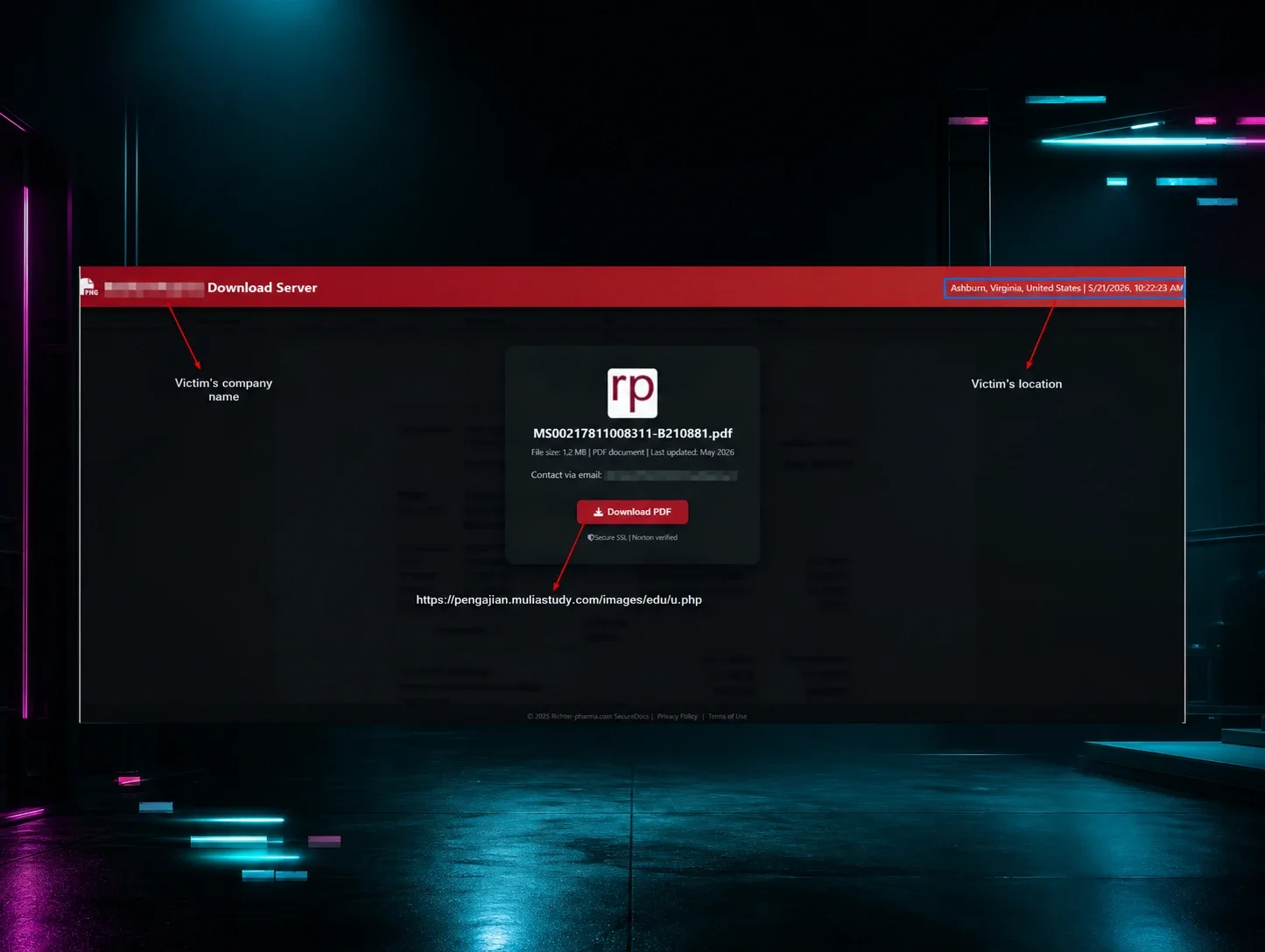
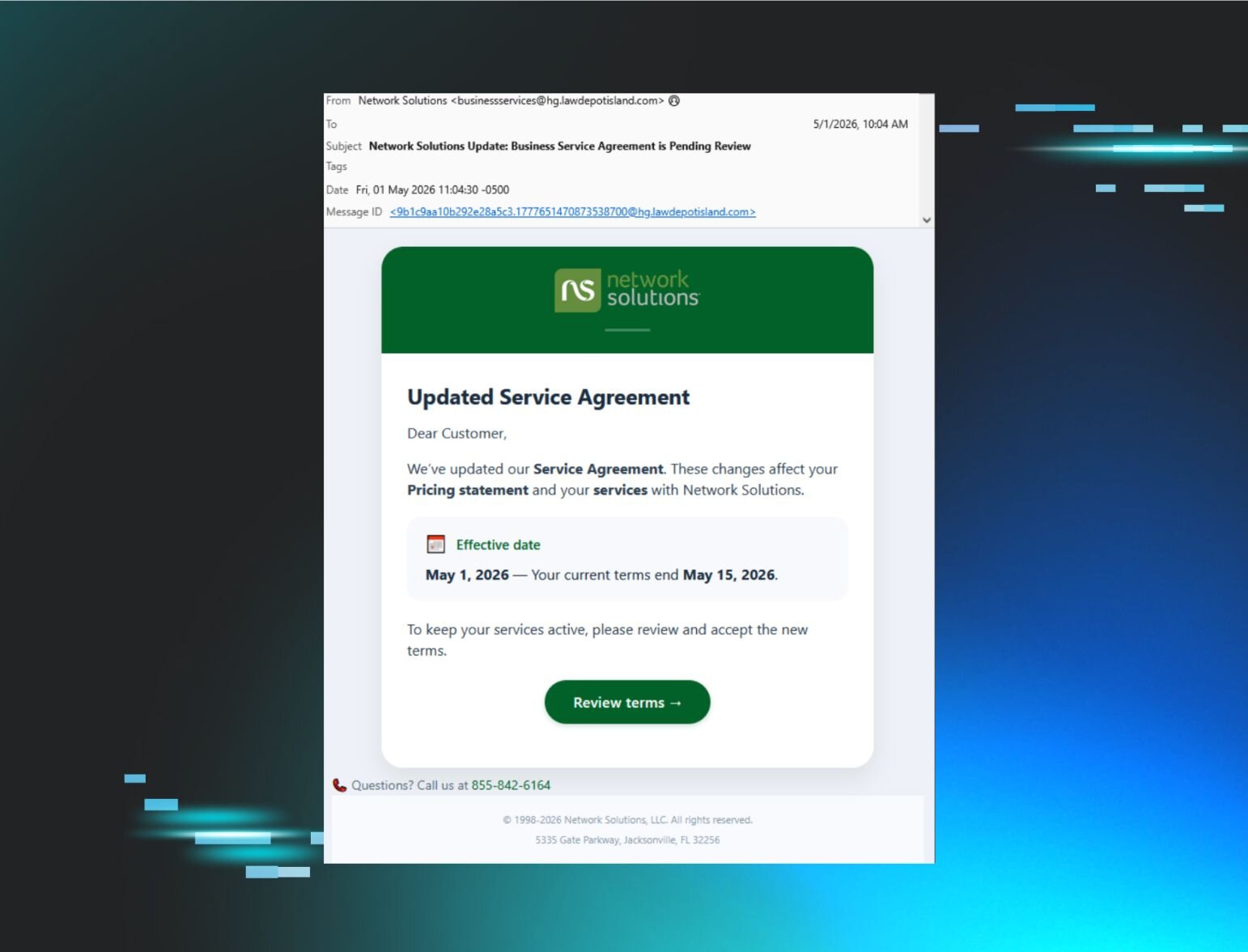
Huntress documents a malspam campaign, active since February 27, that uses fake "service agreement" document lures behind a CloudFlare CAPTCHA to trick targets into installing Tiflux, a lesser-known Brazil-based commercial RMM, before pivoting to UltraVNC, Splashtop, and ScreenConnect for persistent remote access. The Tiflux installer bundles suspicious extras beyond the legitimate agent: a decade-old UltraVNC build with hardcoded plaintext-recoverable passwords, an expired UltraVNC code-signing cert, registry files that stage a hidden TightVNC service (enabled even in Safe Mode) and a passwordless PuTTY SSH key to a peopleone[.]com[.]br server, registry tweaks that suppress Windows Secure Attention Sequence consent prompts, and a known vulnerable HwRwDrv.sys driver linked to privilege escalation with a revoked signing certificate. Huntress frames this as another entry in the ongoing "LOLRMM" pattern of attackers abusing legitimate commercial RMM tools for stealthy access and persistence.
huntress.comwriteupAdded 3 Sep 2026, published 7 May 2026🛡️ Security - Fake Tech Support Delivers Havoc Command & Control
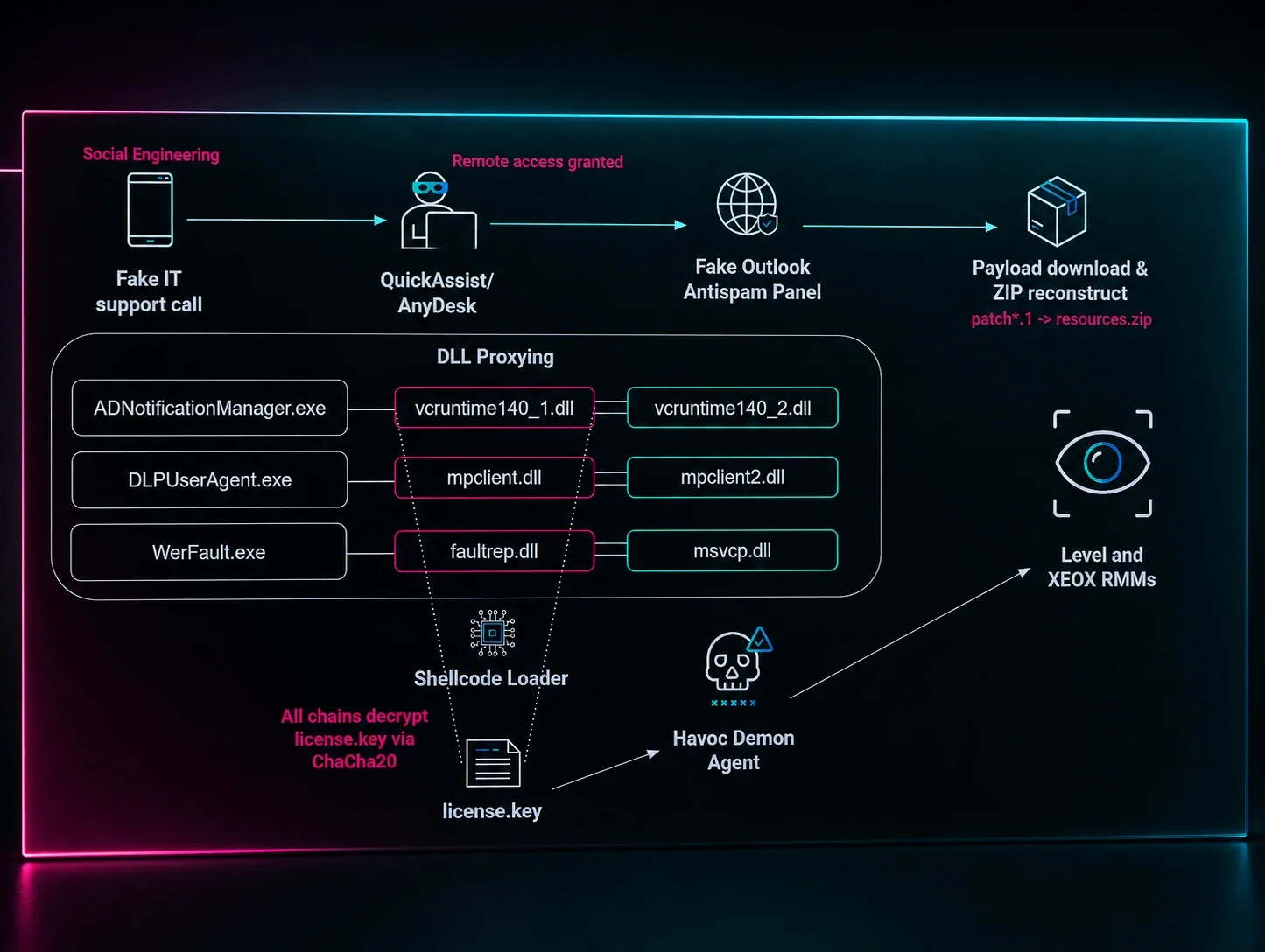
Huntress details a February 2026 intrusion cluster across five partner organizations combining fake tech support social engineering (spam bait, phone calls impersonating IT, QuickAssist/AnyDesk access, fake Outlook Antispam panel on AWS) with a customized Havoc Demon C2 agent using indirect syscalls, registry-based fallback C2, and DLL sideloading to evade EDR. Tradecraft overlaps with prior Sophos-documented Black Basta/FIN7 campaigns, suggesting affiliates or copycats reused the playbook; attackers reached nine additional endpoints within eleven hours, indicating likely ransomware/exfiltration intent.
huntress.comwriteupAdded 3 Sep 2026, published 2 Mar 2026🛡️ Security