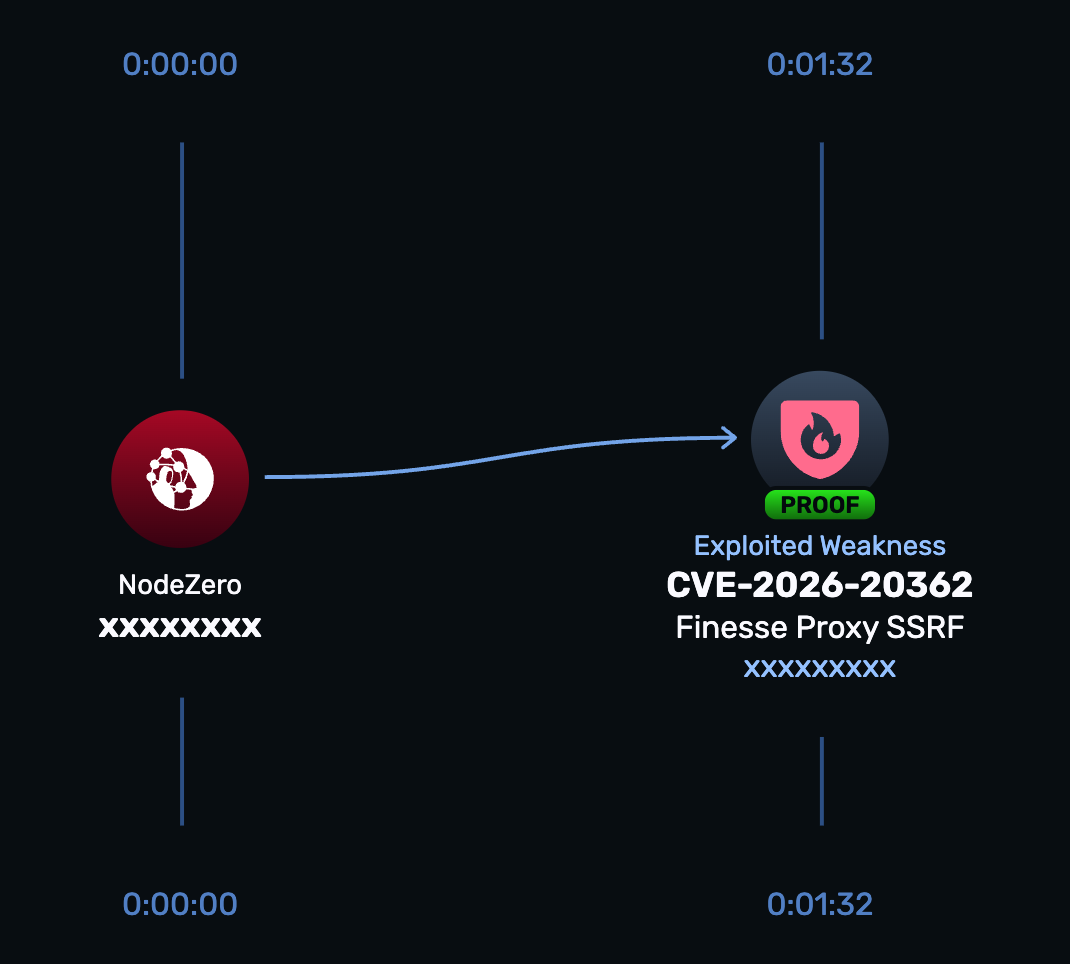
 CVE-2026-20362 | Cisco Finesse Server-Side Request Forgery Vulnerability
CVE-2026-20362 is an unauthenticated server-side request forgery in Cisco Finesse (CVSS 3.1 score 7.2), found by Horizon3 researchers Noah King and Brandon Peterson. The embedded Apache Shindig content proxy fetches attacker-supplied URLs, including loopback services such as the Finesse REST API at 127.0.0.1:8082, which returns SystemInfo with node hostnames and the XMPP domain. Cisco published its advisory on 7 October 2026. Fixes are planned for January and February 2027, and no workaround exists.
 horizon3.aiadvisoryAdded 29 Oct 2026, published 28 Oct 2026🛡️ Security
 Akash Rajagopal (@akashsairaja) on X
Ollama overview thread by Akash Rajagopal on X. It lists six steps: install on macOS, Linux, Windows or Docker; run `ollama run gemma4`; use the REST API on localhost:11434 (/api/chat); call it from ollama-python and ollama-js; llama.cpp as the README's supported backend; and `ollama launch claude` to connect Claude Code. Codex, OpenCode, Copilot CLI and Droid also work. The thread cites 184k GitHub stars and an MIT licence.
 x.comthreadAdded 27 Oct 2026, published 26 Oct 2026🧠 AI
- CISA Publishes Significant Updates to ScubaGear and ScubaGoggles
ScubaGear v2.0 and ScubaGoggles v1.1.0 are CISA's updated SCuBA assessment tools for Microsoft 365 and Google Workspace secure configuration baselines. ScubaGear now uses direct REST API calls, adds Power BI coverage, a consolidated Security Suite baseline and app severity scoring. ScubaGoggles adds a GUI, Policy API integration and Gemini controls. The release supports BOD 25-01 compliance.
 cisa.govarticleAdded 29 Oct 2026, published 26 Oct 2026🛡️ Security
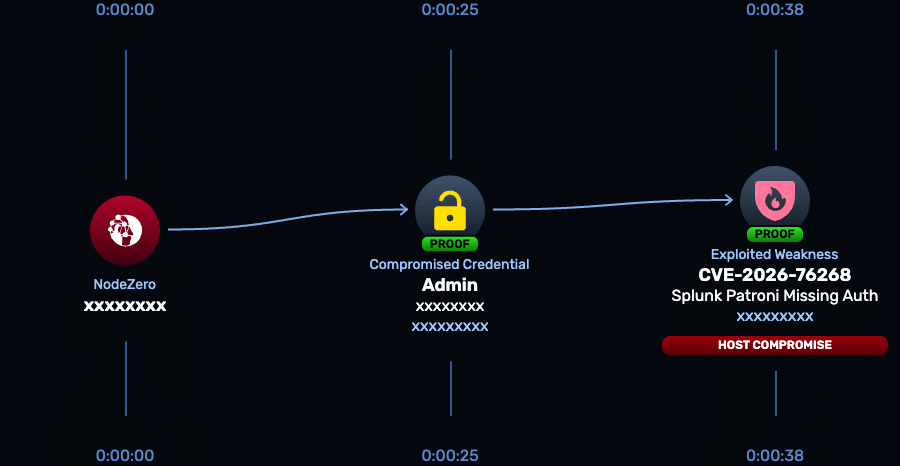 CVE-2026-76268 | Splunk Enterprise Patroni REST API Missing Authentication Vulnerability
CVE-2026-76268 is a critical (CVSS 9.8) missing authentication flaw (CWE-306) in the Patroni REST API on Splunk Enterprise search head cluster members. An unauthenticated attacker with network access can run operating-system commands. Affected: 10.4.0 to 10.4.2 and 10.2.0 to 10.2.6. Fixed in 10.4.3 and 10.2.7. Splunk (SVD-2026-1001, 7 October 2026) suggests disabling the PostgreSQL sidecar as a workaround.
horizon3.aiadvisoryAdded 29 Oct 2026, published 22 Oct 2026🛡️ Security- OpenAI CLI
OpenAI CLI is OpenAI's official Go command-line client for the REST API. It lets users generate images, upload and download files, create and wait on batches, call the Responses API, and query admin usage endpoints from a terminal or shell script. It supports JSON, JSONL and YAML output, GJSON transforms, shell completion, and install via Homebrew, go install or release binaries.
 github.comrepoAdded 23 Oct 2026, published 22 Oct 2026🧠 AI
- Show HN: Omnara – Open-source alternative to Claude Managed Agents
Omnara is an open-source, self-hostable managed agent platform, an alternative to Claude Managed Agents and OpenAI's Agents API. It runs agents on any model (OpenAI, Anthropic, OpenRouter, Bedrock, LiteLLM, Ollama) and any machine, with Postgres-backed durable state, stateless workers, per-tool permissions, MCP, skills, memory, subagents, schedules and Slack, Discord and GitHub triggers. It ships a REST API, TypeScript SDK, CLI and Docker Compose setup.
github.comrepoAdded 23 Oct 2026, published 21 Oct 2026🧠 AI - gichirimaku/wp2shell-PoC
wp2shell-PoC is a Python proof-of-concept exploiting a pre-authentication RCE chain in WordPress core, combining CVE-2026-63030 (REST API batch route confusion) and CVE-2026-60137 (SQL injection in WP_Query). It demonstrates escalation from the route-desync bug through blind SQLi, customize_changeset forgery, and hook re-entry to administrator account creation and arbitrary command execution via a malicious plugin upload. The tool supports vulnerability checking, data extraction (union, error-based, blind techniques), and full shell access with or without existing admin credentials.
github.comrepoAdded 23 Oct 2026, published 15 Oct 2026🛡️ Security - overmind-core/overmind
Overmind is an open-source platform (MIT SDK/CLI, AGPL-3.0 platform, self-hostable) that instruments an agent's code via OpenTelemetry tracing, turns the resulting production traces (or any dataset) into a fine-tuned model benchmarked against user-defined eval metrics, and serves it through one unified API with downloadable/retrainable weights. It ships an SDK, CLI, REST API, Console, and an MCP server exposing project tools and workflows (investigate-capability, finetune-capability, ship-model) for Cursor, Claude Code, OpenCode and Codex, and can sync traces from Langfuse, LangSmith, Braintrust or Galileo; self-hosting runs via Docker Compose with Postgres, Redis, Celery workers and Modal-based GPU workers for fine-tuning/serving (vLLM).
github.comrepoAdded 6 Oct 2026🧠 AI  Cisco Warns of New Zero-Day ISE Auth Bypass (CVSS 10.0) Exploited in Active Attacks
Cisco disclosed CVE-2026-76460 (CVSS 10.0), an unauthenticated API authentication bypass in Identity Services Engine (ISE) and ISE-PIC that is under active exploitation and has been added to CISA's KEV catalog with a federal patch deadline of September 19, 2026; successful exploitation can yield root command execution, and Cisco provides log-based IOC detection guidance since there is no workaround. The same disclosure batch includes 77 new CVEs, 41 in ISE and 28 in Secure Firewall (ASA/FTD/FMC), covering authenticated RCE, SQL injection, XXE, command injection, and additional REST API auth bypasses, plus a separately exploited Secure Email Gateway flaw (CVE-2026-76461, CVSS 9.8).
 thehackernews.comadvisoryAdded 22 Sep 2026🛡️ Security
 Workflow execution protections in GitHub Actions generally available - GitHub Changelog
GitHub Actions' workflow execution protections (actor and event allowlist rules) reach general availability, adding workflow-file-level policy targeting, an Insights dashboard for auditing rule impact, and a REST API for managing policy as code across an enterprise. Alongside this, GitHub is rolling out a new secure default that disables the pull_request_target trigger on public repositories lacking an existing policy, directly mitigating 'pwn request' attacks where fork-submitted code runs with base-repo secrets; the rule starts in evaluate (shadow) mode and becomes enforced on November 2, 2026.
 github.blogarticleAdded 21 Sep 2026, published 17 Sep 2026🛡️ Security
- BountySkiller
BountySkiller is a Flask app with two bug-bounty-focused tools: a collector that pulls disclosed HackerOne hacktivity and bug-bounty writeups (plus RSS/Google sources) into local JSON, and "Hunt Buddy," a browser-driven orchestrator that takes a target profile, runs a gap analysis against a set of pluggable bug-class hunting modules (sourced from an external HUNT_TOOLS directory, e.g. SSRF), and produces ranked findings with per-module status and enforced scope.domains restrictions. It exposes a small REST API (/api/hunt/plan, /api/hunt/run, /api/fetch, etc.) for scripting the collection and hunt workflow.
github.comrepoPublished and added 27 Aug 2026🛡️ Security  Wire It, Run It, Deploy It: AI Workflows in Gradio
This Hugging Face blog post introduces gr.Workflow, a Gradio primitive that lets developers describe an AI pipeline as a graph of typed nodes (references for inputs, operators for steps, subjects for outputs) and get a runnable drag-and-drop canvas, an auto-generated REST API per output, and one-command deployment to Hugging Face Spaces from the same definition. Operator nodes can call Hugging Face Inference Providers, other Gradio Spaces, Hub dataset rows, or plain Python functions decorated with @spaces.GPU for in-Space GPU inference via ZeroGPU. Worked examples include an image-editing pipeline using Qwen-Image-Edit, a multi-model media studio chaining FLUX, background removal, and TTS, a parallel fan-out image-generation demo, a Hugging Face dataset profiler using the Datasets Server API, and a GPU-based image animator using Lightricks/LTX-Video via Diffusers.
 huggingface.coarticleAdded 29 Sep 2026, published 25 Aug 2026🧠 AI
 crt.name
 is a free subdomain index and API that returns every subdomain on file for a given apex domain plus first-seen dates, built by continuously parsing SAN hostnames from Certificate Transparency logs (Static CT sources like Let's Encrypt Sunlight, Geomys, Cloudflare Raio, plus legacy RFC 6962 logs like Google Argon, Sectigo, DigiCert), supplemented by Internet Archive CT replays, Common Crawl, ICANN CZDS zone files, ProjectDiscovery Chaos, HaGeZi DNS blocklists, and an active hostname prober. It offers a no-token REST API (100 req/IP/day), a Streamable HTTP MCP server exposing a single search tool for agent clients, and is the default crt source in the subfaster CLI subdomain enumerator.
 crt.nametoolAdded 3 Sep 2026, published 21 Aug 2026🛡️ Security
 Security Hardening Release for Splunk Apps and Add-ons - August 2026
Splunk's August 2026 hardening advisory (SVD-2026-0808) discloses 17 CVEs across Cisco Talos Intelligence for Enterprise Security Cloud, Splunk AI Toolkit, Splunk Connect for Kafka, the Splunk MCP Server app, and Splunk On-Call (VictorOps). Notable issues include a critical (CVSS 9.1) RCE via unsafe credential deserialization in the Splunk MCP Server app (CVE-2026-76404), an RCE via pickle-based deserialization when loading ML model files in Splunk AI Toolkit (CVE-2026-76395), multiple SSRF and authorization-bypass flaws letting low-privileged users escalate to system-level search execution, hardcoded/predictable container credentials, and unauthenticated DoS/ReDoS and cert-validation bypasses in Splunk Connect for Kafka. Each finding includes CWE classification, CVSS vector, and mitigation guidance (typically disabling the affected app or restricting REST API access).
 advisory.splunk.comadvisoryAdded 21 Aug 2026🛡️ Security
- opaxial/CVE-2026-9830
A Python proof-of-concept (CVE-2026-9830) that validates an unauthenticated REST API exposure in the BookingPress Pro WordPress plugin, where unauthenticated requests to a booking endpoint can return customer PII such as names, emails, phone numbers, and booking details. The script supports non-invasive checking, proxy/timeout/user-agent configuration, booking ID and date filtering, and optional saving of retrieved responses, alongside guidance for responsible use and remediation (patching, enforcing auth/capability checks on REST routes, log review, and incident response).
github.comrepoAdded 2 Oct 2026, published 15 Aug 2026🛡️ Security - Precogly
Precogly is an open-source, now-OWASP threat modeling platform (React/TypeScript frontend, Django REST Framework/PostgreSQL backend) offering a collaborative DFD editor with trust zones, TM-BOM import/export, and community library packs linked to MITRE ATT&CK, CAPEC, STRIDE, and LINDDUN. It's positioned as compliance-aware, tracing threats and countermeasures to DORA, the EU Cyber Resilience Act, ASVS, NIST CSF, and SOC 2, and exposes a full OpenAPI REST API meant as scaffolding for AI-driven threat modeling assistants.
github.comrepoAdded 3 Sep 2026, published 5 Aug 2026🛡️ Security - Dalfox
Dalfox is an open-source XSS scanning and parameter analysis tool, rewritten in Rust for v3 (previously Go, preserved on the v2 branch). It automates discovery via parameter mining and static/BAV analysis, detects reflected, stored, and DOM-based XSS with DOM/AST verification, and includes WAF fingerprinting with confidence scoring and bypass tracking, plus a REST API and MCP stdio server for extensibility.
github.comrepoPublished and added 25 Jul 2026🛡️ Security 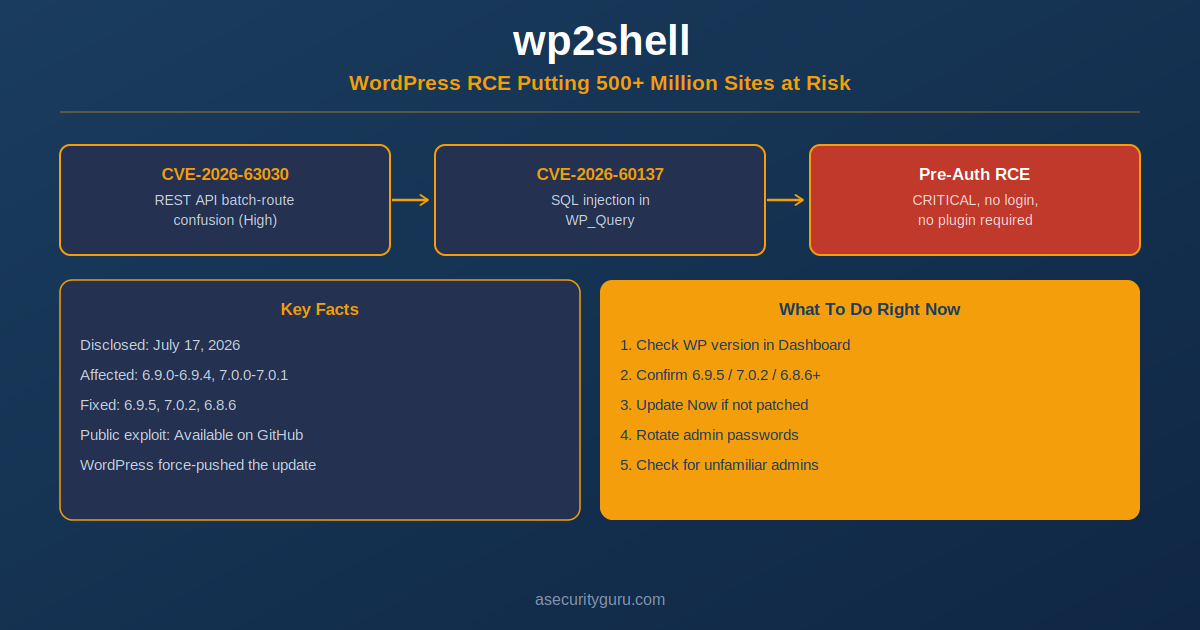 wp2shell CVE-2026-63030: The WordPress RCE Putting 500+ Million Sites at Risk
Explains the wp2shell chain in WordPress core: CVE-2026-63030, a REST API batch-route confusion in /wp-json/batch/v1, smuggles input into CVE-2026-60137, a SQL injection via the author__not_in parameter of WP_Query, giving unauthenticated admin hash dump and RCE. Lists affected versions (6.9.0-6.9.4, 7.0.0-7.0.1 for RCE; 6.8.x SQLi only), fixed releases (6.9.5, 7.0.2, 6.8.6), the public GitHub PoC, temporary WAF/REST blocking mitigations, and post-patch compromise checks such as rotating admin passwords and reviewing batch-endpoint logs.
 asecurityguru.comarticleAdded 13 Oct 2026, published 21 Jul 2026🛡️ Security
 Exploitation in the Wild of wp2shell
Wiz Research documents active in-the-wild exploitation of "wp2shell," a pre-auth RCE chain in WordPress Core (CVE-2026-63030 and CVE-2026-60137) affecting every WordPress version since December 2025, discovered by Searchlight Cyber using GPT-5.6 Sol. Attackers abuse the WordPress REST API batch endpoint (/wp-json/batch/v1) to achieve unauthenticated RCE, then deploy malicious plugins/webshells (including a disguised "CMSmap" plugin and a custom REST endpoint backdoor), enumerate users, and attempt LFI against wp-config for credential theft. The post details post-exploitation TTPs, detection signatures (HTTP 207 responses, wp2shell/rezwp2shell user agents), IOCs, and WAF/plugin-based mitigations.
 wiz.iowriteupAdded 3 Sep 2026, published 20 Jul 2026🛡️ Security
 Unauthenticated RCE in WordPress core (wp2shell), via SQL injection
WordPress core versions 6.9.0-6.9.4 and 7.0.0-7.0.1 (plus 7.1 beta) contained an unauthenticated remote code execution flaw stemming from REST API batch-route confusion at /wp-json/batch/v1 that chains into SQL injection, exploitable against a stock install with no plugins. WordPress shipped emergency fixes (6.9.5, 7.0.2, 7.1 beta2) and enabled forced auto-updates given the scale of exposure (500M+ WordPress sites); a separate SQLi patched in the same round affects 6.8.x, fixed in 6.8.6. Researcher Adam Kues (Searchlight Cyber) reported the flaw and released a checker tool at wp2shell.com; the post also covers interim mitigations (blocking the batch route via WAF/plugin) for sites that can't patch immediately.
 aikido.devwriteupAdded 3 Sep 2026, published 17 Jul 2026🛡️ Security
- AI-Powered Threat Modeling
AITM is an open-source Python CLI (MIT licensed) that automates STRIDE threat modeling of system architectures using LLMs via Bedrock, OpenAI, or local Ollama. Given a text description or architecture diagram image, it identifies assets and data flows, generates STRIDE-categorized threats with CWE mapping (e.g. CWE-89 for SQLi), scores risk on a 5-level matrix, and outputs actionable mitigations in Markdown or JSON. The engine is stateless with a Pydantic data contract, designed to later support a REST API and frontend; an enterprise edition with additional features is offered commercially.
github.comrepoAdded 3 Sep 2026, published 17 Jul 2026🛡️ Security - deep-scan
deep-scan is a modular security-scanning monorepo exposing one shared scanner engine (SAST, SCA, secrets, IaC, license, malware, DAST, CI/CD checks) through a CLI, MCP server, REST API/web app, and a continuous-scanning ASPM fleet called kruncher. It adds a deterministic, AI-free code-graph engine for taint and reachability analysis to cut CVE noise to actually-reachable dependencies, an optional local-model AI triage pass, and an agent-driven MCP workflow that scans, confirms reachability, and opens fix-group PR branches with regression tests. Untrusted-repo scanning is hardened with pinned/checksum-verified tools, sandboxed subprocesses, and optional gVisor (runsc) isolation for dependency resolution on Kubernetes.
github.comrepoAdded 3 Sep 2026, published 14 Jul 2026🛡️ Security  Dify v1.14.1 Path Traversal via Plugin Daemon Internal API Access
VulnCheck advisory details a path traversal vulnerability in Dify v1.14.1 and prior, where insufficient URL path sanitization lets authenticated users manipulate requests forwarded to the Plugin Daemon's internal REST API. Using unencoded dot sequences in task identifiers or manipulated filename parameters, an attacker who knows a victim tenant's UUID can traverse outside their authorized tenant path to reach internal endpoints such as debug interfaces. The advisory notes Dify Cloud's open self-registration makes obtaining an authenticated account trivial, lowering the exploitation bar.
 vulncheck.comadvisoryAdded 3 Jul 2026🛡️ Security
 Dependabot & Code Scanning: Org-Level Private Registries
GitHub changelog entry describing a new capability where organizations can register multiple private registries per ecosystem (npm, Maven, NuGet, Docker, pip, RubyGems, etc.) at the org level for both Dependabot and code scanning, instead of being limited to one registry per ecosystem type. It also adds OIDC-based authentication support (via UI and REST API) for Azure DevOps Artifacts, AWS CodeArtifact, and JFrog Artifactory, available now on github.com/GHEC and coming to GHES 3.24.
github.blogotherAdded 3 Sep 2026, published 13 May 2026🛡️ Security GitHub Repository Rulesets
GitHub changelog entry announcing two repository ruleset changes. Individual users can now be added as bypass actors on repository-level rulesets through the UI, REST API and GraphQL, so a dedicated team or role is no longer needed for a single person or service account. Repository admins can also rename a branch covered by an organization or enterprise ruleset, but only if the new name stays within the scope of every ruleset that applied to the old one. Otherwise the rename is blocked and an org or enterprise admin must do it, and org and enterprise admins can turn the capability off. This matters for branch-protection governance because bypass lists and rename rights affect who can circumvent required controls.
github.blogadvisoryAdded 3 Sep 2026, published 11 May 2026🛡️ Security Azure Storage Account Attacks and Detections
A hands-on Azure security writeup covering abuse of Shared Access Signature (SAS) tokens for blob storage (account-key vs. user-delegation signed tokens, and how to spot account-key SAS via the missing 'skoid' field in logs), and a cross-tenant object replication attack that exploits Azure's default-enabled cross-tenant replication (pre-Dec 2023) via the objectReplicationPolicies REST API to continuously exfiltrate blob data with minimal logging. It also provides several KQL detection queries against StorageBlobLogs, AzureActivity, AzureMetrics, and StorageFileLogs for spotting cross-tenant replication policy creation, anomalous user-agent strings, transaction-volume spikes, and Azure Files SMB read anomalies via SmbPrimarySID baselining. The piece closes with concrete hardening advice: prefer managed identities/Entra over SAS, disable cross-tenant replication, and build detections on configuration drift and stable client fingerprints.
 hausec.comwriteupAdded 3 Sep 2026, published 15 Dec 2025🛡️ Security
 PowerZure 2.1 Update
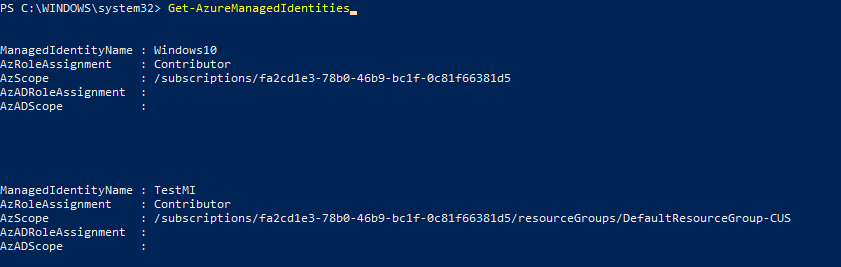
Release notes for PowerZure 2.1, a PowerShell Azure exploitation toolkit, detailing new offensive functions including Invoke-AzureVMUserDataAgent/Command which abuse the VM userData property for log-free command execution, and Invoke-AzureMIBackdoor which exposes the IMDS REST API externally via portproxying to steal Managed Identity JWTs without authentication. Also adds Get-AzureManagedIdentities and Get-AzurePIMAssignment for enumeration, plus several bug fixes to existing cmdlets.
hausec.comarticleAdded 3 Sep 2026, published 21 Dec 2021🛡️ Security Abusing and Detecting Alternative Data Channel Command Execution on Azure Virtual Machines
Hausec details a covert command execution technique on Azure VMs abusing the userData property of the Instance Metadata Service (IMDS): an attacker with VM write privileges uses Invoke-AzVMRunCommand once to deploy a PowerShell "agent" that polls IMDS for base64-encoded commands, executes them, and exfiltrates results back via the Azure REST API using a smuggled access token — enabling repeat command execution without further RunCommand calls. The technique is implemented in PowerZure via Invoke-AzureVMUserDataCommand and Invoke-AzureVMUserDataAgent, and the post includes detection guidance covering artifact locations, Activity log alerts on Invoke-AzVMRunCommand, and PowerShell logging.
hausec.comwriteupAdded 3 Sep 2026, published 3 Dec 2021🛡️ Security