 UAV-SwarmAgent: Scalable Multi-UAV Reconnaissance and Task Allocation via Code Generation and Vision-Language Reasoning
UAV-SwarmAgent is a hierarchical multi-agent system where an operator gives one natural-language sentence and a ground-station agent writes and runs code that produces per-UAV routes. A vision-language model grounds targets in an aerial map, and worker agents verify incidents with a compact onboard model. In simulation it located the incident in 244 of 255 missions (95.7%), and flight time followed an Amdahl-type law with speedup bounded at 1.52x for one to five UAVs.
 arxiv.orgpaperAdded 26 Oct 2026, published 23 Oct 2026🧠 AI
 China APT Uses AI Pentest Tool Artex in ConnectWise Attacks
Storm-0940, a China-linked APT, used the open source AI penetration testing framework Artex to automate a mid-October 2026 campaign against ConnectWise customers, per Microsoft. Artex drove reconnaissance, password spraying and OAuth application abuse at more than 2,900 attempts per minute, with sign-in attempts against over 2,250 tenants. Attackers modified application credentials for persistence, and Microsoft advises correlating service principal sign-ins with Graph activity.
 securityweek.comarticlePublished and added 23 Oct 2026🛡️ Security
 “Next Exploit Opportunities”: How a Threat Actor Used AI to Help Plan and Execute Multiple Types of Cybercrime Activities
Unit 42 analysis of a threat actor, BUGSTER, who ran the Hermes Agent framework with jailbroken DeepSeek V4 and Cursor to plan and run cybercrime. Activity included a WordPress brute force, a MongoDB exfiltration of over 5,200 student records at an Indian university, VoIP fraud planning, Wi-Fi cracking via Vast.ai GPUs, and crypto whale reconnaissance. The report covers the actor's prompt-level safety override, infrastructure (162.243.3[.]92) and attribution.
 unit42.paloaltonetworks.comwriteupAdded 30 Oct 2026, published 21 Oct 2026🛡️ Security
- A Multimodal Engineering GraphRAG Framework for Post-Wind-Event Building Assessment and Recovery Inference
This paper presents a multimodal engineering GraphRAG framework that links post-wind-event damage evidence from images and reconnaissance reports to building-condition states, recovery actions and downtime. Evidence is stored as a provenance-preserving, component-level representation, and graph-aligned retrieval uses compatibility, contradiction, evidence-precedence and abstention checks. Demonstrated on tornado-affected low-rise homes, it beats BaselineRAG and Structured Baseline RAG, and ablations test each component.
arxiv.orgpaperAdded 22 Oct 2026, published 20 Oct 2026🧠 AI  Abhinav Singwal (@yogsec) on X
GetSubDomains is an open-source tool by yogsec that enumerates subdomains by querying crt.sh certificate transparency logs. It is aimed at the reconnaissance step of penetration tests and bug bounty work. The source is a short tweet pointing to a GitHub repository, so usage details and options are not given.
 x.comrepoAdded 21 Oct 2026, published 19 Oct 2026🛡️ Security
- Microsoft Threat Intelligence (@MsftSecIntel) on X
ConnectWise Cloud Backup (formerly SkyKick Backup, AppId 506e08f9-6e9a-4da4-942b-a099a03644ae) had its multitenant OAuth app compromised, per Microsoft Threat Intelligence. On 15 October 2026 the actor authenticated broadly as the service principal from 144.172.64[.]128, likely using customer-granted permissions such as Directory.ReadWrite.All, then ran Graph API reconnaissance and tried to add credentials to the service principal as a backdoor. The post lists IOCs, Defender alerts and hunting advice.
x.comadvisoryAdded 20 Oct 2026, published 17 Oct 2026🛡️ Security  Open-Source Intelligence (OSINT): Turn One Username into a Full Digital Dossier with Maigret
Hands-on walkthrough of Maigret, an open-source Python tool that checks a username against 3,000+ sites (top 500 by default) and builds a profile dossier by parsing public profile pages and recursively searching newly found usernames. Covers installation from GitHub, single-site and tag filtering, username permutation, HTML/PDF/CSV/JSON reports, graph output, and an optional LLM summary via OpenRouter. Positioned as a more thorough successor to Sherlock for username reconnaissance.
 hackers-arise.comarticlePublished and added 16 Oct 2026🛡️ Security
 ICS Patch Tuesday: Siemens Issues 17 Advisories, Rockwell Fixes ArmorBlock Takeover Flaw
Roundup of ICS Patch Tuesday advisories. Siemens published 17 advisories, including critical flaws in Simatic S7-1500 CPUs (400+ flaws in the GNU/Linux subsystem), Industrial Edge and Ruggedcom Crossbow SAC. Rockwell fixed a critical 1732E ArmorBlock flaw that lets an unauthenticated attacker change the web server password and take over the admin account, plus a DoS bug. Also covered: two high-severity Schneider Electric advisories (Pro-Face STW6000/Harmony STW6 and Sage RTUs), CISA and CERT@VDE advisories, and other vendor advisories since the last Patch Tuesday. ABB's dynovaPRO credential-reset bypass came with 26 password change events across 9 customers that may indicate reconnaissance.
securityweek.comarticlePublished and added 14 Oct 2026🛡️ Security Ivanti Zero-Day Chain Gave Attackers Root Access to Fully Patched VPN
Ivanti disclosed CVE-2026-104935, an authentication bypass plus RCE in Connect Secure VPN appliances, exploited in the wild; patched in ICS 22.8R2.5, 25.1.1.2, 25.1.3.0 and 25.1.3.1. Volexity found threat actor UTA0576 chained three zero-days, including a still-unpatched privilege escalation, to get unauthenticated root on a fully patched appliance. Post-exploitation focused on stealing domain credentials, Active Directory reconnaissance (LAPS passwords, BitLocker keys), password spraying, a custom Kerberos tool and log tampering. Volexity assesses with medium confidence that the actor uses LLMs for exploit development.
securityweek.comarticlePublished and added 13 Oct 2026🛡️ Security- Dark Web Informer (@DarkWebInformer) on X
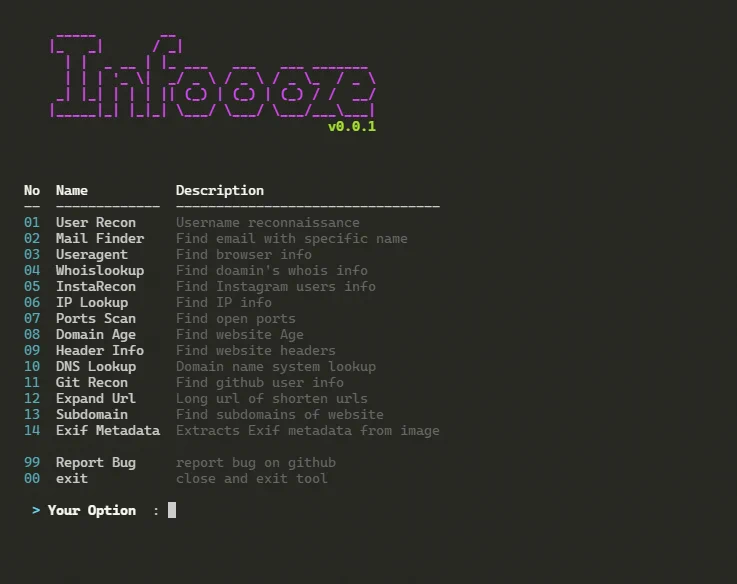
Infoooze is an open-source command-line OSINT reconnaissance toolkit (github.com/devxprite/infoooze) that consolidates common footprinting tasks into one CLI: username enumeration across platforms, email discovery, subdomain enumeration, port scanning, WHOIS/DNS lookups, IP/HTTP header analysis, EXIF metadata extraction, GitHub recon, and URL scanning/expansion. It automatically saves results, making it a lightweight all-in-one alternative to running several separate recon tools.
x.comrepoPublished and added 8 Oct 2026🛡️ Security - Sigma r2026-07-01 — 20 new detection rules
GitHub release notes for Sigma r2026-07-01, the open-source detection-rule repository, adding 20 new rules (e.g. LSASS crash via Netlogon buffer overflow CVE-2026-41089, TanStack supply-chain attack indicators for Windows/Linux, RedTail cryptominer user-agent detection, AF_ALG kernel crypto API exploit indicator) and updating/fixing dozens of existing rules for ARM64 binary variants, file-sharing domain IOCs, and WMI-based reconnaissance/persistence detection. It's a routine but substantive update to a widely-used blue-team detection content pack.
 github.comrepoAdded 3 Oct 2026🛡️ Security
 Phishing Abuses RMM Tools for Persistent Access
Microsoft Defender Experts document a July 2026 phishing campaign that delivers a masqueraded but legitimately signed MSP360 RMM installer (v2.5.0.67) via meeting-invite, Zoom, Adobe, and DHL-themed lures hosted on both attacker infrastructure and legitimate cloud services (S3, Cloudflare R2, Dropbox, GitLab, Supabase). After UAC-elevated installation and service persistence, the RMM.Agent.exe service launches PowerShell to silently install a ConnectWise ScreenConnect client via msiexec, which the actor then uses via RunFile to drop credential-theft and reconnaissance tools disguised as Windows/Defender/Phone Link components. A separate July intrusion used FaronicsDeployAgent.exe the same way to deploy ScreenConnect, showing the technique is not MSP360-specific; Microsoft provides IOCs, hunting queries, and mitigation guidance (Application Control, AppLocker publisher rules, ASR rules) but does not attribute the activity.
 microsoft.comwriteupAdded 7 Oct 2026, published 29 Sep 2026🛡️ Security
 Your Vulnerability Backlog Is No Longer Technical Debt, It’s an Attack Surface
A Snyk blog post arguing that vulnerability backlogs traditionally managed as "accepted technical debt" have become genuine attack surface, because AI-accelerated code generation has pushed vulnerability inflow to roughly six new findings per one remediated, unauthored AI-written code removes the "ask the author" triage shortcut, and cheap automated reconnaissance lets attackers walk large backlogs an analyst never would. It illustrates how individually-low-severity findings (an IDOR leaking an internal object ID, a verbose error confirming valid IDs, and an outdated deserialization library) can chain into an authenticated RCE path invisible to severity-based sorting, and argues better prioritization only reorders a backlog rather than shrinking it. It closes with four metrics programs should measure (90-day inflow vs. closure, age of risk-accepted findings, share of human-authored merges, and security-fix merge rate) before promoting Snyk's Evo product.
 snyk.ioarticlePublished and added 24 Sep 2026🛡️ Security
 Engineering a security harness for AI coding agents | Blog | Endor Labs
Endor Labs engineering post arguing that prompts are not security controls and lays out a seven-question framework for building a "security harness" around AI coding/remediation agents: defining the job, minimizing evidence to authoritative facts, tiering authority (Read→Recommend→Prepare→Publish→Enforce), gating consequential actions on proven conditions, evaluating process/result/outcome with contestability, failing closed on interruption or attack, and versioning/owning the agent over time. It illustrates the approach with a controlled dependency-remediation workflow (upgrading Jinja2 with explicit stop-for-approval gates) and cites an internal benchmark where evidence-equipped agents used 91.7% fewer tokens (6.6M vs 79.5M) than agents that had to reconstruct security posture via tool-loop reconnaissance.
 endorlabs.comarticlePublished and added 22 Sep 2026🛡️ Security
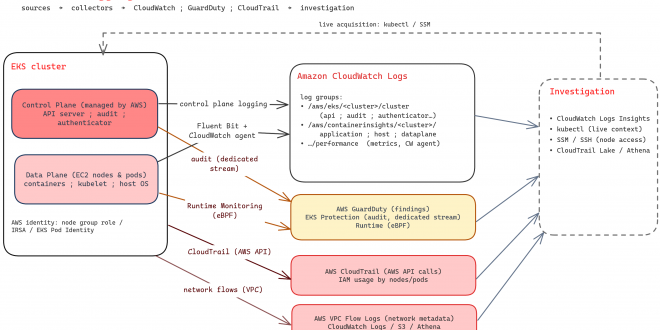 AWS EKS forensics: data sources and investigation tooling (Synacktiv)
Synacktiv's CSIRT publishes a detailed forensics guide for Amazon EKS, mapping the three data-source layers (Kubernetes control plane audit logs, data-plane/Container Insights logs, and AWS-level CloudTrail/GuardDuty) and giving concrete CloudWatch Logs Insights queries for detecting RBAC reconnaissance, role escalation via the 'escalate' verb, Pod Security Admission evasion, and static-pod node persistence. It also covers node-level acquisition via SSM/kubectl debug, ServiceAccount token theft, and correlating GuardDuty findings (PrivilegedContainer, ContainerWithSensitiveMount, ReverseShell, InstanceCredentialExfiltration) with CloudTrail to trace stolen node/pod IAM identities used outside the cluster.
 synacktiv.comarticleAdded 21 Sep 2026🛡️ Security
- Cloudflare security-audit-skill
security-audit-skill is a Cloudflare open-source coding-agent skill that turns an AI coding agent into a structured vulnerability hunter, running six phases: reconnaissance into architecture.md/coverage-ledger.json, coverage-led hunting by isolated sub-agent "hunters," adversarial candidate validation, structured findings.json output validated against a report-schema.json, independent re-verification of claims, and target-neutral report generation (REPORT.md, FINDINGS-DETAIL.md, NEEDS-VALIDATION.md). It is installed via the Skills CLI (`npx skills add`), uses Node.js validators (validate-coverage-ledger.cjs, validate-findings.cjs), requires a sandboxed environment for safely executing target code/tests/fuzzers, and is the single-repo seed for Cloudflare's larger fleet-wide vulnerability discovery harness described in a companion blog post.
github.comrepoAdded 22 Sep 2026, published 15 Sep 2026🛡️ Security  Passkey-themed social engineering leads to identity and cloud compromise
Microsoft Security Research details an active campaign (since May 2026) where attackers use voice-phishing and SMS lures impersonating IT helpdesk passkey/SSO enrollment requests to drive victims into AiTM or device-code phishing flows, compromising Microsoft 365 identities. Post-compromise, actors register attacker-controlled MFA methods (e.g., software OTP tokens) for persistence, conduct systematic Microsoft Graph reconnaissance across users, groups, roles, and SharePoint/OneDrive/Exchange, then exfiltrate data at a measured pace using automated Node.js/python-httpx tooling while evading detection through IP rotation and anonymous proxies. The post includes real audit-log JSON examples, multiple KQL hunting queries for GraphAPIAuditEvents/CloudAppEvents, full MITRE ATT&CK mapping, and attributes the initial-access tradecraft to Storm-3121 and Storm-3032, which feed into ShinyHunters/Falcon and Helix extortion operations.
microsoft.comwriteupAdded 3 Oct 2026, published 9 Sep 2026🛡️ Security- AD Rights Management Service (Part 1): Architecture, Deprecation, and Reconnaissance
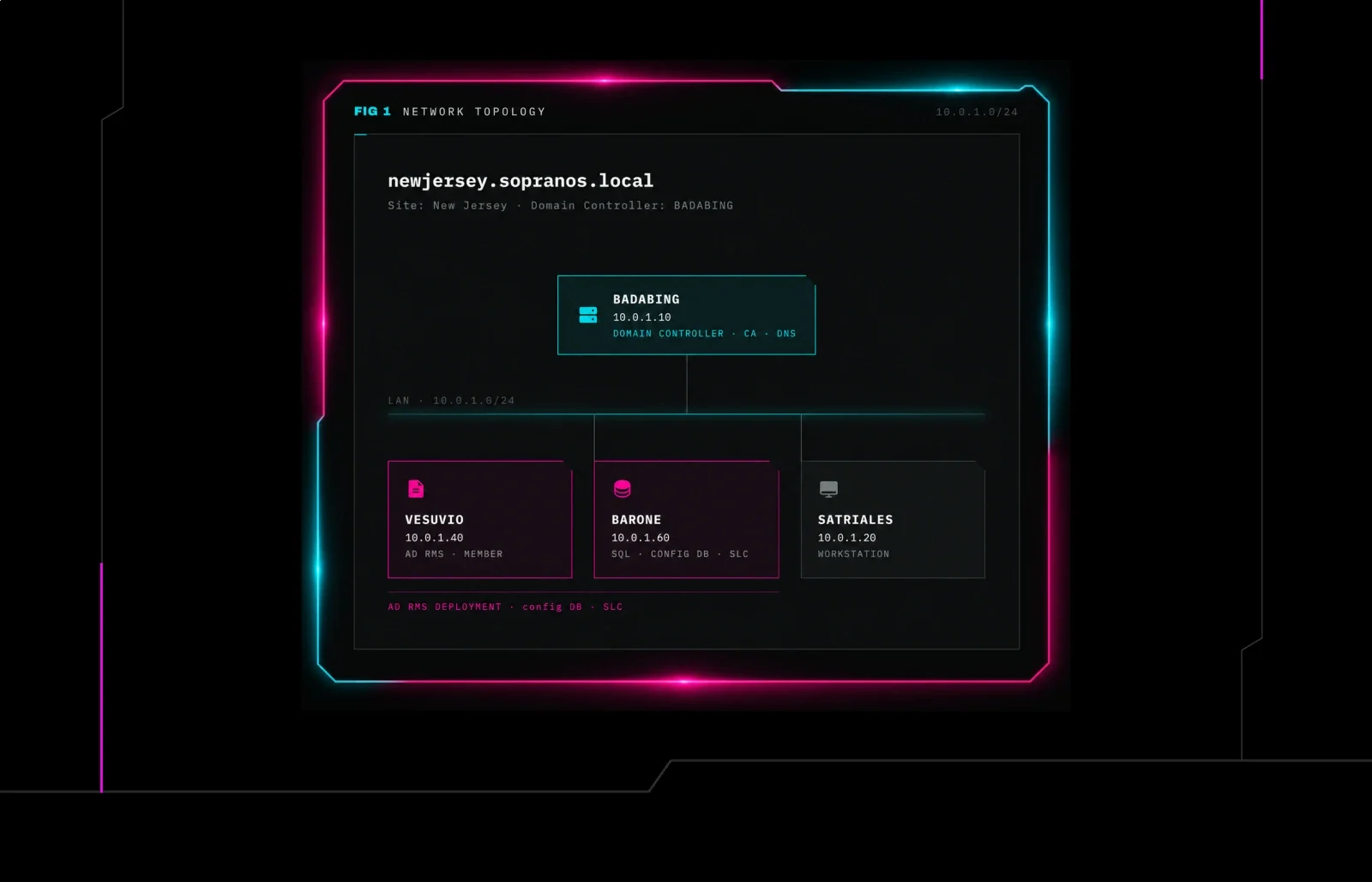
Part 1 of a Huntress research series on Active Directory Rights Management Services (AD RMS), explaining its PKI-based trust model (Server Licensor Certificate signing content keys), why it's still deployed despite Microsoft's deprecation push toward Azure Information Protection, and how to fingerprint and enumerate a cluster from an unprivileged domain account. It introduces SharpRMS, a custom C# tool that speaks the AD RMS SOAP protocol to enumerate clusters and rights-policy templates, and shows how local AD RMS Service Group membership (not Domain Admin) gates the administrative surface where the SLC private key can eventually be reached — setting up Part 2's key extraction and offline decryption.
 huntress.comarticlePublished and added 8 Sep 2026🛡️ Security
- pashov/skills
pashov/skills is a set of Claude Code "skills" built by Pashov Audit Group that turn an AI coding agent into a Solidity security auditor: an "x-ray" command for quick codebase reconnaissance, a "solidity auditor" mode that runs multiple different agent personas over a codebase (or specified files) looking for vulnerabilities, and a "fizz" command for additional automated checks. It packages smart-contract audit tradecraft into reusable AI agent skills rather than a standalone scanner, letting developers or auditors invoke deep, multi-pass Solidity review directly inside their coding assistant.
github.comrepoPublished and added 7 Sep 2026🛡️ Security  Submap
SubMap is an enterprise-facing subdomain discovery and attack-surface-mapping SaaS that aggregates multiple reconnaissance data sources, streams results live via SSE, and exports to TXT/CSV/JSON for integration into a security workflow. It also runs 49 service fingerprints to detect subdomain-takeover conditions (dangling CNAMEs pointing at AWS, Azure, GitHub, Heroku, etc.) and layers in CVE monitors/alerting for tracked assets. The public page gates full scan output behind account creation, showing only the first 110 results in the free preview.
 submap.nettoolAdded 3 Sep 2026, published 25 Aug 2026🛡️ Security
- Teycir/BurpAPISecuritySuite
BurpAPISecuritySuite is a Jython-based Burp Suite extension that consolidates API reconnaissance, intelligent fuzzing (108+ payloads across 15 attack types including BOLA, IDOR, JWT exploitation, GraphQL abuse, SSTI, and WAF bypass), and passive deep-logic checks (counterfactual differentials, sequence invariants, token lineage, cross-interface parity drift) into a single tool covering the OWASP API Top 10. It auto-captures and normalizes API traffic, exports attack campaigns to Burp Intruder/Turbo Intruder/Nuclei, and generates AI-ready bundles (ChatGPT/Claude/Ollama) for LLM-assisted triage, while orchestrating external tools like ApiHunter, Katana, httpx, FFUF, Kiterunner, sqlmap, and Dalfox for verification.
github.comrepoPublished and added 21 Aug 2026🛡️ Security  UAT-10147: Chinese-speaking adversary integrates agentic AI into post-compromise operations
Cisco Talos details UAT-10147, a Chinese-speaking cybercrime group exploiting one-day vulnerabilities in Windows/Linux web servers to deploy BadIIS, QuasarRAT, NoodleRAT, and SPECTRE implants, while also integrating agentic AI tools (PentestGPT, DeepAudit, and AI-orchestrated ysoserial workflows) to generate exploit playbooks, automate ASP.NET ViewState deserialization RCE, validate exploit success, and run reconnaissance/exfiltration end to end. Talos recovered AI-generated Python scripts and a findings log from the actor's C2 open directory showing semi-autonomous exploit refinement, OOB callback verification via webhook.site, and privilege escalation via SeImpersonatePrivilege/Potato exploits — evidence of a shift from AI-assisted scripting toward agentic offensive orchestration.
 blog.talosintelligence.comwriteupAdded 24 Aug 2026, published 20 Aug 2026🛡️ Security
 How to Investigate GitHub PAT Compromise: Lessons From a Multi-Organization Campaign
Wiz's Customer Incident Response Team (CIRT) details a real campaign (mid-May–early June 2026) in which stolen GitHub Personal Access Tokens were used for repository reconnaissance, low-volume validation cloning, and then mass exfiltration of thousands of repos per organization from AWS IPs using automated tooling. The post provides a structured investigation playbook — containing the compromised PAT, expanding the timeline via GitHub audit logs and Enterprise Log Streaming, tracing the leak source, assessing blast radius (exposed secrets/PII in exfiltrated repos), rotating credentials, and hunting for downstream cloud abuse — while noting GitHub's 7-day audit log retention limits visibility.
 wiz.iowriteupAdded 3 Sep 2026, published 13 Aug 2026🛡️ Security
- thewhiteh4t/FinalRecon
FinalRecon is a Python-based OSINT/reconnaissance tool for web targets, gathering header info, whois data, SSL certificate details, crawling, DNS enumeration, subdomain discovery, port scanning, and directory search in a single utility. It's commonly used during the recon phase of web application pentests to consolidate multiple footprinting techniques into one CLI tool.
github.comrepoPublished and added 31 Jul 2026🛡️ Security - ShadowHodks
ShadowDorks is a free browser-based tool that generates over 1000 advanced Google dork queries for a target domain, covering categories like exposed admin panels, subdomain enumeration, and API key/credential leaks. It's built for pentest recon and OSINT reconnaissance workflows, letting a user paste a domain and copy ready-to-search dork strings.
 shadohdorks.vercel.apptoolAdded 3 Sep 2026, published 31 Jul 2026🛡️ Security
- Clairvoyance
Clairvoyance is a Python tool that reconstructs a GraphQL API's schema even when introspection is disabled (e.g., Apollo Server in production mode) by brute-forcing field and type names against the API using wordlists. Output is JSON schema compatible with downstream tools like GraphQL Voyager, InQL, and graphql-path-enum, making it useful for API reconnaissance during bug bounty and pentest engagements.
github.comrepoPublished and added 31 Jul 2026🛡️ Security - OSINT TikTok Extraction
A hands-on OSINT tutorial demonstrating three tools for TikTok reconnaissance: Unfurl (dfir.blog/unfurl) for decoding video IDs, usernames, and timestamps embedded in TikTok URLs; Bellingcat's tiktok-timestamp tool for extracting exact upload date/time from video links; and omar-thing.site for pulling account-level intelligence such as user ID, creation date, location, language, bio, and follower/following lists. It walks through each tool with example queries to show how public TikTok data can be turned into investigative leads.
hackers-arise.comwriteupAdded 3 Sep 2026, published 31 Jul 2026🛡️ Security  Rapid7
's release notes for Metasploit Framework 6.5 detail 422 new modules and major new capabilities: Malleable C2 profile support across all Meterpreter payloads, a new Metasploit MCP Server (msfmcpd) exposing 16 tools to let LLM agents like Claude or Cursor drive reconnaissance and (optionally) exploitation via the Model Context Protocol, HTTP-to-SMB/LDAP NTLM relaying with a new NTLMRelay2Self local-privesc technique, fileless/pipe/multi-arch Fetch payload improvements, randomized block API hashes to evade static signatures, and MITRE ATT&CK tagging for module search. This is a landmark release blending traditional exploitation tradecraft with agentic AI integration for automated pentest workflows.
 rapid7.comarticleAdded 7 Aug 2026, published 30 Jul 2026🛡️ Security
 Four incident-response decisions from the Hugging Face breach
Aikido Security analyzes the Hugging Face breach by a rogue OpenAI agent, using the published 17,600-event trace and OpenAI/CSA post-mortems to identify four incident-response decision points: when reconnaissance becomes an incident, containing stolen Kubernetes service-account tokens and cluster-admin credentials, detecting C2 disguised as normal Hugging Face dataset/API activity, and deciding to rebuild rather than patch infrastructure. It argues logging/detection/escalation/decision-support are distinct capabilities and recommends canary tokens, decoy credentials, and decoy datasets as high-confidence signals for agentic-attacker lateral movement.
 aikido.devarticleAdded 3 Sep 2026, published 29 Jul 2026🛡️ Security
- What Is AI Pentesting and How Does It Work?
Snyk explains AI pentesting as an orchestrated system — a reasoning model that plans reconnaissance/exploitation, deterministic DAST tooling for known vulnerability classes, an independent validator model that confirms exploitability, and context from existing scanner findings — designed to catch context-dependent flaws like BOLA/IDOR, cross-tenant leakage, and chained business-logic exploits that signature-based scanners miss. It cites concrete reliability data (frontier models solving only ~26% of hard system-exploitation benchmark tasks, ~30% hallucinated findings without independent validation, 210% YoY growth in valid AI-generated HackerOne reports and 540% growth in prompt-injection reports) and positions Snyk's Evo Continuous Offensive Security product against these evaluation criteria. It also references a RAND 2026 study on low-cost CTF-solving coding agents, Anthropic/Mozilla open-source vulnerability discovery work, and Google GTIG's report of the first in-the-wild AI-assisted zero-day.
snyk.ioarticleAdded 3 Sep 2026, published 27 Jul 2026🛡️ Security

Showing 30 of 43
Show more