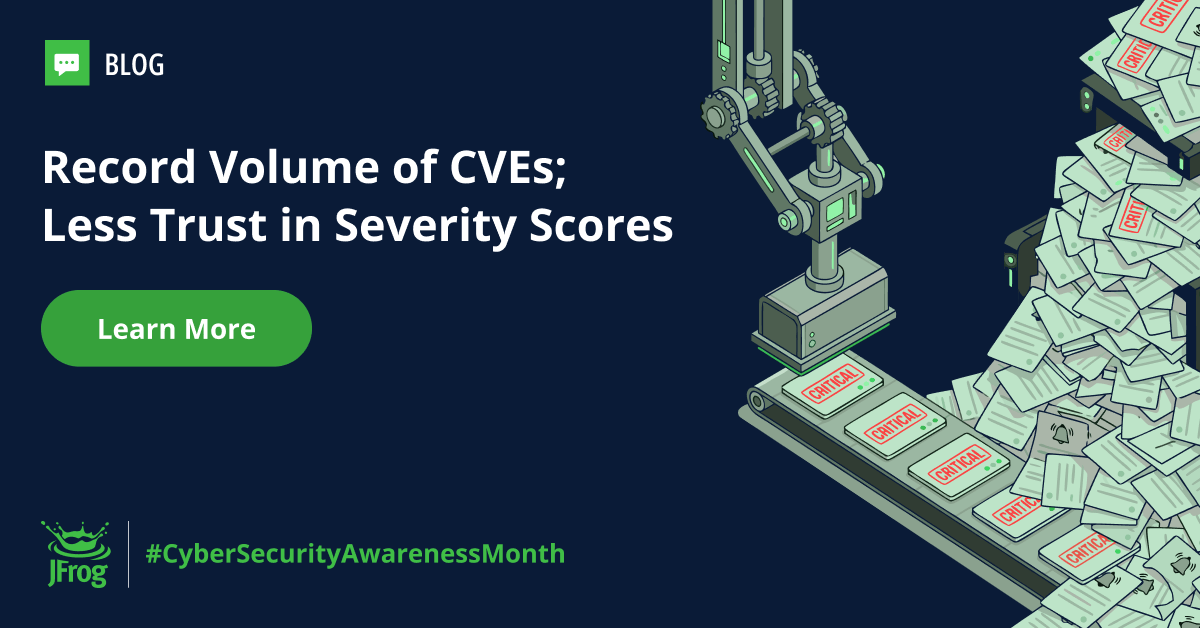
 The Impact of AI on CVEs: Industry Challenges
Part 1 of a JFrog Security Research series on how AI has changed CVE research. It shows rising CVE volumes since 2021, curl ending its bug bounty in January 2026, GNOME cutting disclosure from 90 to 30 days, and NIST narrowing NVD enrichment in April 2026. It documents severity inflation in 27 libcurl CVEs and 54 of 55 fabricated SQLite advisories.
 jfrog.comarticleAdded 28 Oct 2026, published 27 Oct 2026🛡️ Security
- SnailSploit/Claude-Red
claude-red is a library of offensive security skills for the Claude Skills system, each a SKILL.md file that loads on conversational triggers (for example, mentioning SQL injection loads offensive-sqli). Categories include web, Active Directory, cloud, mobile, exploit development, fuzzing, privilege escalation, post-exploitation and AI. It targets about 130 skills across 23+ categories, with an install script and sparse-checkout install per category. Built on Sahar Shlichov's offensive checklists, MIT licensed.
 github.comrepoAdded 22 Oct 2026🛡️ Security
 GPT-6 legacy programming improves as GPT-6.1 Sol scores 97.9% on COBOL test
OpenAI reports gains in GPT-6 family coding for COBOL, Fortran and Visual Basic on two evaluations. On MultiLangBench (build a SQLite-compatible database engine from scratch), GPT-6 Astra averages 87.4% across 20 languages at maximum reasoning effort, versus 37.9% for GPT-5.6 Terra. On a COBOL migration benchmark, GPT-6.1 Sol reaches 86.6% at low effort and 97.9% at higher effort, versus 5.4% for GPT-5.6 Sol.
 en.cryptonomist.charticlePublished and added 20 Oct 2026🧠 AI
- Show HN: VoidAccess – open-source dark web OSINT, from query to a graph
VoidAccess is a self-hosted, MIT-licensed dark web OSINT platform that runs a 13-step pipeline from a research query to a relationship graph. It collects from Tor indexes, paste sites, code forges, security feeds and .onion seeds, applies content-safety filters, and exports STIX 2.1, MISP, Sigma, YARA, Snort, Suricata, CSV and JSON. It runs as a CLI with SQLite or as a Docker Compose stack with PostgreSQL, FastAPI and Next.js.
github.comrepoAdded 21 Oct 2026, published 20 Oct 2026🛡️ Security - Advancing Coding in Low-Resource Programming Languages
OpenAI describes two evaluations for coding in low-resource languages such as COBOL, Fortran and Visual Basic. MultiLangBench has a model build a SQLite-compatible database engine in 20 languages. The COBOL migration eval requires byte-for-byte output parity. GPT-6 Astra scores 87.4% on MultiLangBench (GPT-5.6 Sol: 26.8%), and GPT-6.1 Sol reaches 86.6% on COBOL migration at low effort. The setup is on GitHub.
 openai.comarticlePublished and added 19 Oct 2026🧠 AI
- Saylor (@Kev96790724) on X
G-Krusch is an MIT-licensed, local-first Google Workspace hub built on Node.js 22 and SQLite WAL. It runs a 12-tool MCP server (SSE and Stdio) plus a REST bridge on port 5446 for Drive, Calendar and Gmail. It includes a 1,024-dimension hybrid Drive RAG with an embedding cascade (Ollama bge-large, then Gemini, then offline fallback) and FTS5 BM25. PDF extraction returns page citations. Tokens are kept in an AES-256-GCM vault; 30 of 30 tests pass.
 x.comrepoAdded 21 Oct 2026, published 19 Oct 2026🧠 AI
- Show HN: WhatsApp MCP running free on Cloudflare
whatsapp-mcp is an MCP server that runs in the user's own Cloudflare account and lets MCP clients such as Claude Code and Claude Desktop search and read WhatsApp chats. It links as a WhatsApp Web-style device through Baileys, stores messages in SQLite with FTS5 inside a Durable Object, and is read-only. The README documents deployment, OAuth sign-in, contact naming through agents, and workerd shims for Baileys.
github.comrepoAdded 20 Oct 2026, published 18 Oct 2026🧠 AI - gichirimaku/wp2shell-PoC
wp2shell-PoC is a Python proof-of-concept exploiting a pre-authentication RCE chain in WordPress core, combining CVE-2026-63030 (REST API batch route confusion) and CVE-2026-60137 (SQL injection in WP_Query). It demonstrates escalation from the route-desync bug through blind SQLi, customize_changeset forgery, and hook re-entry to administrator account creation and arbitrary command execution via a malicious plugin upload. The tool supports vulnerability checking, data extraction (union, error-based, blind techniques), and full shell access with or without existing admin credentials.
github.comrepoAdded 23 Oct 2026, published 15 Oct 2026🛡️ Security - Show HN: Graphicle, a Rust port of Graphify with memory for coding agents
Graphicle is a local-first Rust program that parses a repository into a tree-sitter code graph (a port of Graphify) and adds project memory: docs, reviewed decisions and captured Claude Code/Codex sessions. It serves cited file-and-line excerpts within a token budget via one MCP server, CLI and browser app, backed by a single SQLite file, with no API key or telemetry. The README reports a code-only extract on Kubernetes (31k files) in 3m18s versus 26m38s for Graphify 0.9.88, and a memory comparison against seven systems. Agent-proposed memories need user approval and go stale when the code they reference changes.
github.comrepoPublished and added 14 Oct 2026🧠 AI - 44er (@44errrr) on X
Announcement of hexvero, an MCP server that gives coding agents a static first look at binaries and app bundles across 18 formats (ELF, PE, Mach-O, APK, .NET, Go, Wasm, Electron, SQLite). It uses zero-dependency Node parsers and marks each finding confirmed or inferred with file and line. Its tool catalog is 3,043 tokens, against a claimed 509,696 for the established reverse-engineering MCP server. Paged output with a byte budget shrinks a 541 MB Electron app to a 15 KB result, 1.3 MB of JSON to 7.9 KB, and a 450 KB build diff to 1.2 KB. radare2, rizin or Ghidra plug in for disassembly, and `npx hexvero setup --apply` registers it with Claude Code, Cursor, Codex and 15 more clients. It is a concrete example of keeping MCP tool definitions and results small enough for an agent's context window.
x.comthreadAdded 15 Oct 2026, published 14 Oct 2026🧠 AI - 44er (@44errrr) on X
hexvero is a Node-only, zero-dependency MCP server that gives coding agents a static first-look triage of binaries and app bundles across 18 formats (ELF, PE, Mach-O, APK, .NET, Go, Wasm, Electron, SQLite). Findings are marked confirmed or inferred with file and line, and outputs are paged with a byte budget (a 541 MB Electron app yields a ~15 KB result). The author contrasts its 3,043-token tool catalog with a 509,696-token catalog of an established RE MCP server. radare2, rizin or Ghidra can be plugged in for disassembly, and setup registers it with Claude Code, Cursor, Codex and 15 more clients.
x.comtoolAdded 15 Oct 2026, published 14 Oct 2026🛡️ Security - What Is SAST? Static Analysis in the Age of AI-Generated Code | Endor Labs
Explainer on Static Application Security Testing. It covers how SAST builds an AST and runs taint analysis from sources to sinks, which flaw classes it catches (SQLi, XSS, hardcoded secrets, weak crypto) and which it misses (IDOR and other access-control bugs). It compares SAST with DAST and SCA, cites false-positive and false-negative figures (91% false positives in a 2025 study of about 3,000 repositories; 47–80% of vulnerabilities missed), and argues for reachability analysis and reasoning-based AI SAST. It ends with evaluation criteria and a rollout plan; the vendor's own benchmark claims are preliminary.
 endorlabs.comarticlePublished and added 12 Oct 2026🛡️ Security
- Talorys – A self-hosted personal AI agent on Cloudflare's free tier
Talorys is an open-source, single-user personal AI assistant deployed with one command (npx create-talorys) into the user's own Cloudflare account. It uses a Cloudflare Agents SDK Durable Object with SQLite for conversations, memories, tasks, notes and automations, Workers AI (@cf/zai-org/glm-4.7-flash) for streaming chat with tool calling, and Durable Object alarms for reminders and scheduled AI routines. It stays within the Workers Free plan, with a private Worker behind a Pages Function service binding, owner-password auth, per-day AI usage guardrails, and fallback to non-AI features when quota runs out.
github.comrepoPublished and added 10 Oct 2026🧠 AI  One breach, please, and make no mistakes
Cisco Talos commentary arguing that today's public AI-agent attacks (citing Hugging Face, DSEWiki, and RubyGems incidents) resemble loud, high-volume pentests rather than stealthy red-team operations, and that agent swarms will grow quieter and more OPSEC-conscious over time. The piece lays out concrete resilience steps: rehearsed incident response plans mapped to the incident lifecycle, assumed-breach attack-path mapping (including Active Directory GPO abuse paths), AI-specific tabletop exercises, end-to-end hardening with phishing-resistant MFA (FIDO2/passkeys), broad EDR and east-west traffic visibility, and watching for early noisy indicators like WAF/SQLi spikes and non-browser user agents.
 blog.talosintelligence.comarticlePublished and added 7 Oct 2026🛡️ Security
- claude-mem — persistent memory system for Claude Code and other coding agents
Claude-Mem is an open-source persistent memory plugin for Claude Code and other coding agents (Codex, OpenCode, Grok Bot, T3 Code, OpenClaw) that captures tool-usage observations during sessions, compresses them into semantic summaries, and reinjects relevant context into future sessions. It uses five lifecycle hooks (SessionStart, UserPromptSubmit, PostToolUse, Stop, SessionEnd), a local SQLite database, a Chroma vector store for hybrid semantic+keyword search, and exposes three MCP tools (search, timeline, get_observations) that follow a token-efficient layered retrieval pattern to cut context costs roughly 10x. It is Apache-2.0 licensed, built with the Claude Agent SDK and TypeScript, and ships an optional hosted "observer" memory service alongside self-hosted options via OpenRouter/Gemini keys or an Anthropic plan.
github.comrepoAdded 5 Oct 2026🧠 AI - AINotes (@ainotesus) on X
OpenRig is an orchestration tool that runs multiple coding agents as one persistent, coordinated team rather than isolated sessions. A YAML configuration defines pods, seats, communication edges, and continuity policies, while a daemon, CLI, TUI, MCP server, SQLite store, and tmux handle agent launch, inter-agent messaging, session snapshots, restoration, and topology management.
x.comtoolPublished and added 3 Oct 2026🧠 AI - [AINews] Pi 1.0, Pi Durable, and AIE NYC
Latent Space AINews digest reports on Pi 1.0 and Pi Durable, an agent harness from the Earendil team ported to TypeScript that externalizes agent state for crash recovery, pluggable storage (Memory/SQLite/JSONL), concurrent branching conversations, hot-swappable tools, and multi-user state sync alongside conversation transcripts. The rest of the issue recaps frontier launches: Gemini 4 Argon, OpenAI efficiency-focused GPT-6.1 Sol (with Artificial Analysis cost comparisons against GPT-6 Sol and GPT-6 Astra), Upstage Solar Mini 4 (35B/3B MoE, 1M context), Black Forest Labs FLUX 3 image model, and Tavus Griffin video-to-video conversational agent.
 latent.spacearticlePublished and added 2 Oct 2026🧠 AI
 Digital Forensics: iOS Forensics – Basics
A technical walkthrough of iOS forensic acquisition fundamentals: Apple's per-file Data Protection classes (A–D), the Before/After First Unlock (BFU/AFU) distinction and why AFU yields roughly 95% of a full dump versus almost nothing under BFU, and the iOS 18.1 72-hour auto-reboot that silently drops a seized AFU phone back to BFU. It covers extraction methods (logical backup, advanced logic, full filesystem extraction via signed agent, checkm8 bootrom exploits for iPhone X and earlier), pairing records, USB Restricted Mode's one-hour timeout, Lockdown Mode (noting it reportedly blocked FBI extraction of a seized journalist's iPhone in early 2026), Cellebrite's Inseyets/Premium/Physical Analyzer tooling and its coverage limits against A19/M5 chips with Memory Integrity Enforcement, and key forensic artifact stores (KnowledgeC, Biome, PowerLog, Photos.sqlite, chat-app SQLite/WAL/SHM files).
 hackers-arise.comarticleAdded 7 Oct 2026, published 29 Sep 2026🛡️ Security
- https://github.com/dmdhrumilmistry/security-harness
security-harness is an open-source Claude Code plugin (also packaged for Gemini CLI, Codex and opencode) that orchestrates subagents — sh-recon, sh-hunter, sh-chainer, sh-verifier, sh-reporter — through a static-analysis pipeline covering 15 vulnerability classes (IDOR/BOLA, SQLi, XSS, SSRF, injection, auth, deserialization, path traversal, secrets, CSRF, XXE, open redirect, crypto, race conditions, file upload), producing README/JSON/SARIF/HTML/PDF reports with PoCs, CVSS and CWE/OWASP mappings. It also ships sh-pr-review, a per-PR merge-gate skill that posts inline findings and a commit status scoped only to code the PR itself introduced or aggravated, with caching, dedup via fingerprints, and a scheduled GitHub Action that keeps its per-class knowledge bases fresh by having one AI agent draft updates from allowlisted sources (OWASP, PortSwigger Research, CWE/CAPEC, HackerOne) while a separate adversarial reviewer agent fails-closed against prompt injection before auto-merge.
github.comrepoAdded 2 Oct 2026, published 29 Sep 2026🛡️ Security - openrig — multi-agent Claude Code/Codex orchestration
OpenRig is an open-source local daemon, CLI, TUI and MCP server (built on tmux + SQLite) that manages teams of Claude Code and Codex agent sessions as a single persistent system rather than a pile of terminal windows. Topologies (pods, seats, edges) are defined declaratively in YAML (RigSpec/AgentSpec), booted with `rig up`, inspected via a topology TUI, and can be snapshotted/restored, discovered from existing tmux sessions, and messaged across agents (`rig send`, `rig broadcast`, `rig chatroom`). It ships starter topologies (first-project, conveyor, product-team, secrets-manager using HashiCorp Vault) and documents in detail what it writes to Claude/Codex config, trust and telemetry state on the host machine.
github.comrepoAdded 28 Sep 2026🧠 AI - SpecterOps/Blacklight — local AI agent attack surface mapping toolkit
Blacklight is a SpecterOps toolkit for endpoint forensics on AI coding agents, split into Scout (bounded metadata/filesystem triage across Codex, Claude Code, Cursor, Antigravity CLI, and Grok that finds candidate session artifacts without reading their contents) and Session Analysis (a Python CLI that parses selected JSONL/SQLite session downloads from Codex, Claude Code, Cursor, and Antigravity CLI into ranked, redacted local reports). It's built for investigators who need to identify and review AI agent session history on a host — surfacing config, auth metadata, and high-value indicators — while explicitly leaving secret scanning to external tooling; paths are informed by SpecterOps' Endpoint AI Agent Abuse (EAA) technique catalog.
github.comrepoAdded 27 Sep 2026🛡️ Security  LiteLLM Flaw CVE-2026-42271 Exploited in the Wild, Chains to Unauthenticated RCE
CISA added CVE-2026-42271, a command injection flaw in BerriAI's LiteLLM AI gateway, to its KEV catalog after confirming active exploitation; the bug lets any authenticated proxy user run arbitrary commands via the MCP server test endpoints (/mcp-rest/test/connection and /mcp-rest/test/tools/list), which spawned attacker-supplied stdio subprocess configs. Horizon3.ai separately showed the flaw can be chained with CVE-2026-48710, a Starlette "BadHost" header validation bypass, to skip authentication entirely and achieve unauthenticated RCE (combined CVSS 10.0), exposing model provider credentials and enabling lateral movement into AI infrastructure. Fixed in LiteLLM 1.83.7 (test endpoints now require PROXY_ADMIN role) and Starlette 1.0.1; the article also notes a prior LiteLLM SQLi (CVE-2026-42208) exploited within 36 hours of disclosure.
 thehackernews.comarticleAdded 26 Sep 2026🛡️ Security
- Chocapikk/CVE-2026-21858
A GitHub PoC chaining two n8n CVEs into unauthenticated RCE: CVE-2026-21858 abuses a Content-Type confusion in the Form Trigger/Respond-to-Webhook nodes to read arbitrary files (e.g. /proc/self/environ, the SQLite database, and the config file), from which the attacker derives the JWT secret from n8n's encryptionKey and forges an admin session cookie. That admin access is then used to create a workflow exploiting CVE-2025-68613, an expression-injection sandbox bypass (`this.process.mainModule.require`) that yields command execution, all demonstrated with a working Python exploit script and Docker lab against n8n 1.65.0. It notes the exploit was developed independently of a prior Cyera/Dor Attias write-up on a related n8n chain and details the specific vulnerable workflow pattern (file-upload form + binary Respond node) required for exploitation.
github.comrepoAdded 26 Sep 2026🛡️ Security - git-pkgs — dependency history & supply-chain analysis for git repos
git-pkgs is a Go rewrite of a Ruby tool that adds a git subcommand for tracking dependency changes across a repository's history, indexing manifests/lockfiles from 36+ package managers (npm, RubyGems, Cargo, PyPI, Maven, Composer, Go modules, etc.) into a local SQLite database. Beyond history/blame/diff, it offers supply-chain security commands: `vulns` (OSV-based CVE scanning with SARIF output for GitHub code scanning, plus blame/praise/exposure for remediation metrics), `licenses` (with drift detection and CI-friendly exit codes), `deprecated`, `provenance` (trusted-publishing/attestation checks), `integrity` (lockfile hash drift detection), `maintainers`/`health` (via ecosyste.ms metadata), and `sbom` export in CycloneDX/SPDX. It also supports a dependency-aware `bisect` to find when a vulnerability, license change, or capability (e.g. network access) was introduced, and ships GitHub Actions for CI integration.
github.comrepoAdded 25 Sep 2026🛡️ Security  When chat is the wrong UI
Burke Holland (GitHub) argues that chat is often the wrong interface for working with AI coding agents and introduces "canvas" — a feature in the GitHub Copilot app that spins up a small full-stack application with no browser chrome, which can call third-party APIs or run code locally while exchanging messages bidirectionally with the Copilot agent. He walks through concrete canvases: a playable Connect 4 game against the agent, a Winget package browser/installer, a SQLite query UI with IntelliSense, a Markdown-to-Windows-Live-Writer-style blog editor, and a full development-workflow automation canvas that removes the human from the loop between research, prototyping and review steps. The piece frames this as a general lesson for agent builders: build a reusable tool the agent and user can both interact with, rather than burning tokens asking the agent to perform every repetitive action through chat.
 github.blogarticleAdded 8 Oct 2026, published 24 Sep 2026🧠 AI
- datasette 1.0a41
Short release note for Datasette 1.0a41, covering a contributed OpenTelemetry integration for observability and a refactor of Datasette's modal dialogs into a single reusable Web Component now documented for plugin authors. It's a minor but concrete update to Simon Willison's open-source SQLite-backed data publishing/exploration tool.
 simonwillison.netwriteupAdded 29 Sep 2026, published 24 Sep 2026🧠 AI
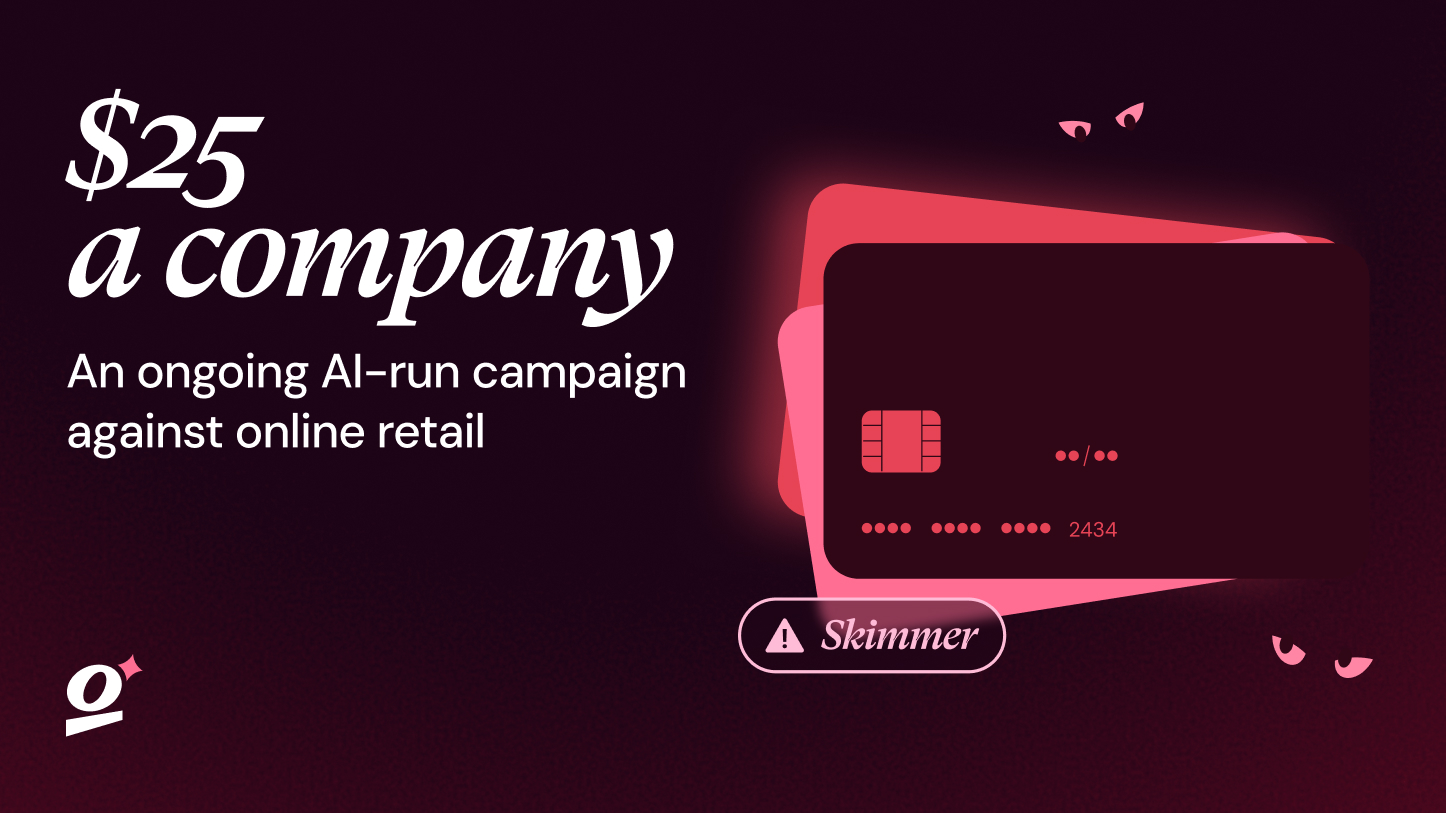 Autonomous AI Agents Hack Online Retailers for $25 a Company
Gambit Security recovered the staging server of a financially motivated actor running three open-source AI agent harnesses — Strix (vuln scanning), Cairn (autonomous exploitation), and Hermes (orchestration) — against hundreds of online retailers at a marginal cost of tens of dollars per target. The campaign exfiltrated 600,000+ credit card records via Magento database compromises, deployed checkout-page card skimmers on at least 19 confirmed and 100+ further sites, and in one case an agent's own cleanup routine dropped 180 database tables including victim backups. The report details full attack chains (SQLi to RCE to AWS Secrets Manager dump to card decryption), the AI harnesses' operating costs (~$25 mean per target on OpenRouter/opus-4.6/GLM/DeepSeek), and multiple real-world skimmer injection techniques.
 gambit.securitywriteupAdded 26 Sep 2026, published 22 Sep 2026🛡️ Security
- Show HN: Foremerge – Catch intent conflicts between parallel coding agents
Foremerge is an open-source coordination protocol layered above Git for parallel coding agents (Claude Code, Codex, Cursor). Agents publish semantic intent (scopes like symbol/api/schema) before editing into a shared SQLite store under .git, so Foremerge can detect intent conflicts—like one agent replacing a class another is extending—that Git's text-diff merging would silently miss. It's advisory-only (no file locking), deterministic (no LLM judgment calls), and gates ChangeSet acceptance on Foremerge-run validation rather than agent self-reports.
github.comrepoAdded 26 Sep 2026, published 21 Sep 2026🧠 AI - Lonkero — Rust web vulnerability scanner (v3.7, AI agent mode)
Lonkero is an open-source Rust web vulnerability scanner (v3.7) combining 125+ context-aware scanners with an AI agent mode that drives targeted scans via natural-language conversation (using Claude, GPT, or local Ollama models). Notable techniques include a browser-free "proof-based" XSS engine that mathematically proves exploitability from reflection context + escape behavior, an "OOBZero" engine for detecting blind SQLi/SSRF/XXE via Bayesian multi-channel statistical inference and Pearson-correlated timing attacks without external callback infrastructure, Next.js middleware-bypass detection (CVE-2025-29927, CVE-2024-34351), AWS Cognito user-enumeration checks, and a scanner module that detects invisible prompt-injection payloads hidden in README.md files targeting AI coding assistants.
github.comrepoAdded 21 Sep 2026🛡️ Security - CVE-2026-26980 — Ghost CMS Content API unauthenticated blind SQLi lab
A Docker-based exploitation lab for CVE-2026-26980, an unauthenticated blind SQL injection in Ghost CMS's Content API (versions before 6.19.1). The bug lives in slug-filter-order.js, where slug values from the array-notation filter syntax (filter=slug:['value']) are interpolated unsanitized into an ORDER BY CASE statement, letting NQL's single-quote-wrapped literals smuggle raw SQL past input validation; since MySQL treats || as OR and empty strings as falsy, attackers get a clean boolean oracle to extract data (e.g. admin email/password hash) from any Ghost site using only the publicly embedded Content API key. The repo includes exploit.py for full setup/verify/extract, a docker-compose lab spinning up both vulnerable (6.18.0) and patched (6.19.1) Ghost instances, and also mentions a second patched bug (jsonpath/static-eval prototype pollution in the {{#get}} Handlebars helper leading to RCE via themes).
github.comrepoAdded 21 Sep 2026🛡️ Security



Showing 30 of 83
Show more