 What We Can Learn About GitHub Actions Security from the Trivy Breach | Endor Labs
Endor Labs analyzes the March 2026 Trivy compromise (CVE-2026-33634, CVSS 9.4). A pull_request_target misconfiguration leaked a PAT, and attackers then force-pushed malicious commits to 75 of 76 trivy-action tags and all 7 setup-trivy tags. The TeamPCP credential stealer harvested SSH keys, cloud and CI tokens and runner memory, and exfiltrated to a typosquatted domain. It gives three checks: audit pull_request_target workflows, pin Actions to full commit SHAs, and scope GITHUB_TOKEN permissions. It also notes the limits of SHA pinning.
 endorlabs.comarticlePublished and added 16 Oct 2026🛡️ Security
 New research: malware in open source ecosystems surges 14x as attackers hijack trusted packages | Endor Labs
Endor Labs summarizes its report "Malware in the Open Source Ecosystem", built from a survey of 605 IT professionals plus analysis of OSV advisories and npm metadata. Over 90% of all OSS malware advisories were filed in 2025, and npm account-takeover advisories rose about 12x (930 of 1,011 ever recorded), often hitting heavily downloaded packages. It also covers the TeamPCP campaign across GitHub Actions, Docker Hub, npm, OpenVSX and PyPI, the axios compromise, and survey findings: only 21% enforce cooldown periods, 51% found malicious packages in 2025, and ownership of the problem is fragmented.
endorlabs.comarticlePublished and added 12 Oct 2026🛡️ Security Mini Shai-Hulud Worm Compromises TanStack, Mistral AI, Guardrails AI & More Packages
The Hacker News details the "Mini Shai-Hulud" campaign by threat actor TeamPCP, which compromised npm and PyPI packages from TanStack, UiPath, Mistral AI, OpenSearch and Guardrails AI via a chained GitHub Actions attack (pull_request_target abuse, cache poisoning, OIDC token extraction), now tracked as CVE-2026-45321 (CVSS 9.6). The worm mints npm publish tokens directly from stolen OIDC credentials to self-propagate — the first documented case of a worm producing validly SLSA Build Level 3-attested malicious packages — and deploys an obfuscated credential stealer with IDE persistence hooks, a GitHub Actions secret-exfiltration workflow, and a dead-man's-switch that runs "rm -rf" if its rogue npm token is revoked. Over 170 packages and 400+ attacker-controlled repos have been identified across npm and PyPI, with findings credited to Aikido Security, Endor Labs, SafeDep, Socket, StepSecurity, Snyk, Wiz and Microsoft.
 thehackernews.comarticleAdded 26 Sep 2026🛡️ Security
 The Infostealer Incursion: How Stolen Credentials Breach Cloud, Code, and AI Environments
Wiz Research analyzed infostealer-harvested secrets (via its NordStellar integration) to map exactly which credentials malware families like Lumma, RedLine, and Vidar target across AWS, Azure, GCP, GitHub, GitLab, and AI platforms, and how those secrets translate into cloud account takeover. It gives concrete file paths and artifacts attackers hunt for (~/.aws/sso/cache OIDC tokens, Azure accessTokens.json, GCP credentials.db/access_tokens.db, GitHub gh hosts.yml and SSH keys, GitLab Runner config.toml, OpenAI/ChatGPT session cookies, and Claude Code's ~/.claude/.credentials.json OAuth tokens), plus stats: three malware families cause 85.7% of incidents, AWS/GCP account for 46%/13% of stolen secrets, GitHub ~10%, AI platforms ~5%. It also covers CI/CD-targeting infostealers (Miasma, TeamPCP) and session-cookie hijacking as an MFA bypass technique.
 wiz.iowriteupAdded 27 Sep 2026, published 25 Sep 2026🛡️ Security
 Happy Birthday, Shai-Hulud
Socket's one-year retrospective on the Shai-Hulud npm supply-chain worm, from the September 2025 @ctrl/tinycolor compromise through the November 2025 "Second Coming" wave, the May 2026 public release of the worm's source by TeamPCP, the "Mini Shai-Hulud" OIDC-token-hijacking wave that hit TanStack and Mistral AI, and the August 2026 arrest of two alleged TeamPCP members by Australian Federal Police working with the FBI. It notes Google ran an undercover analyst inside TeamPCP to get stolen credentials revoked, and stresses that the original September 2025 worm authors remain unidentified despite the arrests.
 socket.devarticleAdded 21 Sep 2026, published 18 Sep 2026🛡️ Security
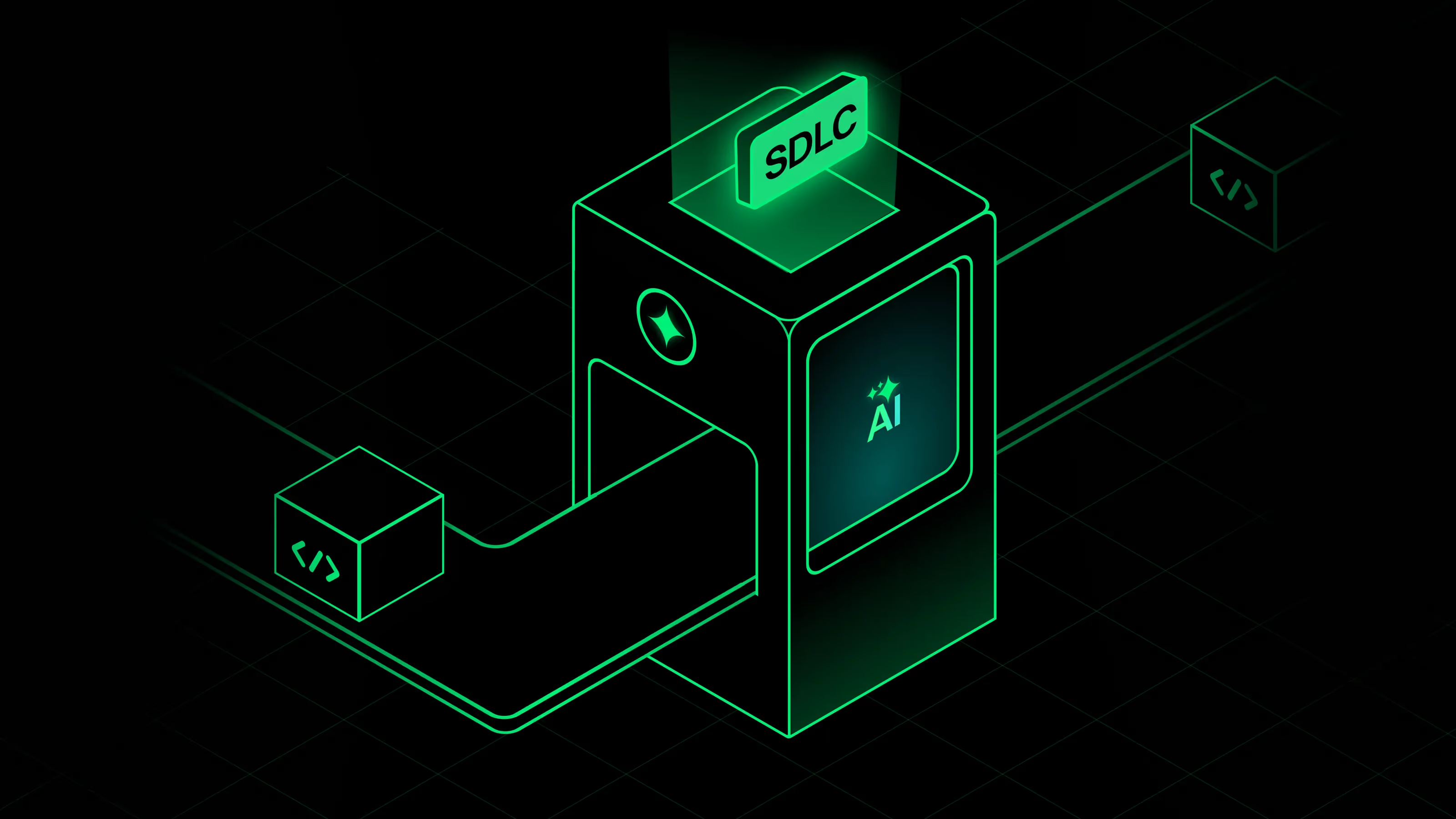 SolarWinds took a nation-state. The next attack just needs an LLM and $5. | Blog | Endor Labs
Endor Labs blog tracing an accelerating pattern of software supply-chain compromises from July 2025 through March 2026, culminating in the TeamPCP threat actor's cascading 30-day compromise of Aqua Security, Trivy, GitHub Actions, Docker Hub, npm, OpenVSX, and PyPI (including backdooring the 95M-download LiteLLM package). It argues AI is accelerating both offense (CVE-GENIE reproducing 51% of CVE exploits for $2.77 each) and the attack surface (the Cline prompt-injection-to-npm-token-theft chain, Nx's AI-review-evading payload), and calls for treating AI coding agents as privileged actors, pinning GitHub Actions to SHAs, and platform-level fixes like immutable tags and Sigstore/OIDC.
endorlabs.comarticlePublished and added 11 Sep 2026🛡️ Security GTIG AI Threat Tracker: From Prompting to Autonomy – The Evolution of Adversarial AI
GTIG AI Threat Tracker for Q2 2026 reports adversaries moving from basic prompting to agentic AI workflows. Cases include a cloud-hosted multi-agent credential harvesting campaign built in under six hours, the "Recon" framework holding over 23,800 stolen secrets, and UNC6780 (TeamPCP) supply chain attacks on PyPI, npm and Docker Hub with prompt injection aimed at LLM scanners. It also covers theft of proprietary AI models, LLMJacking, and Gemini misuse by PRC, Iranian, Russian and DPRK groups.
 cloud.google.comarticleAdded 29 Oct 2026, published 8 Sep 2026🛡️ Security
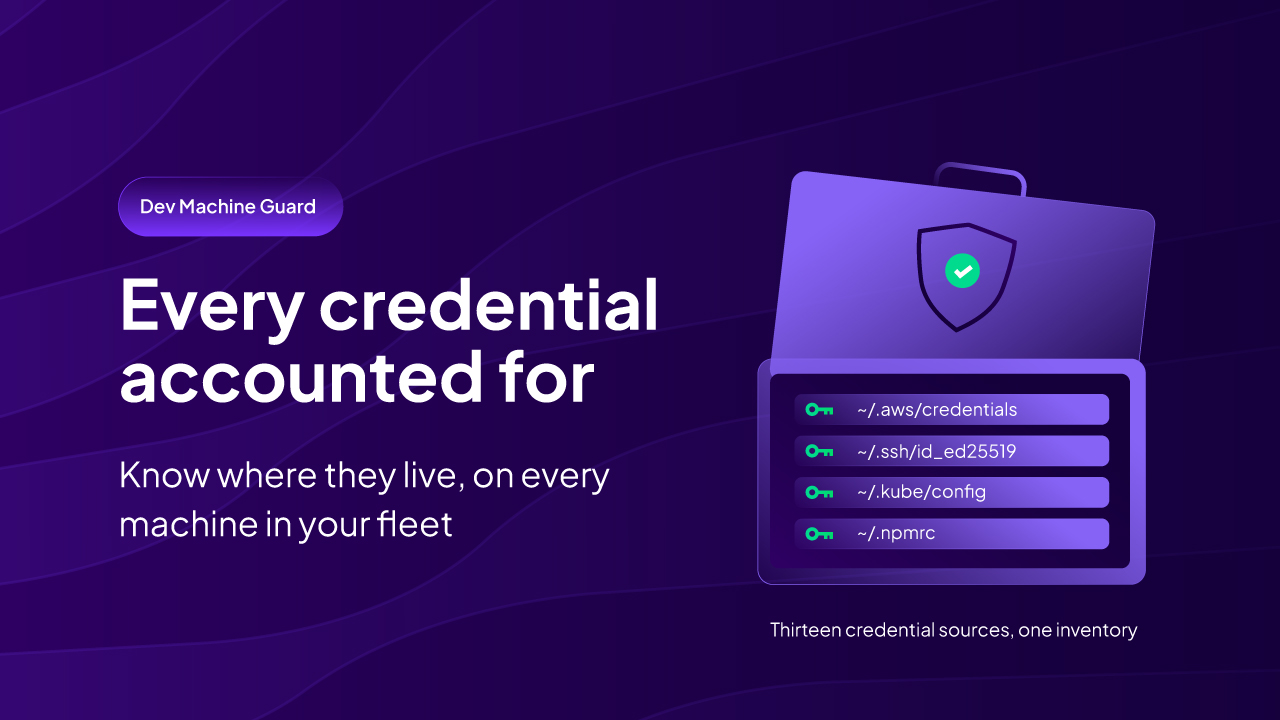 Dev Machine Guard Now Inventories Where Developer Credentials Live
StepSecurity describes a new Credentials inventory page in Dev Machine Guard that scans developer machines for thirteen well-known credential source types (npm, PyPI, Docker, AWS, GCP, Kubernetes, Vault, GitHub, SSH keys, etc.) across five categories and reports how many devices hold each, how many entries exist, and whether the material is stored in plaintext or protected. It frames the feature against real attacker behavior - the TeamPCP stealer in the xinference PyPI package and the hijacked Bitwarden CLI npm package both enumerated this exact list of well-known dotfile paths - arguing defenders need the same enumeration attackers already have to scope incidents and plan rotations.
 stepsecurity.ioarticleAdded 3 Sep 2026, published 28 Aug 2026🛡️ Security
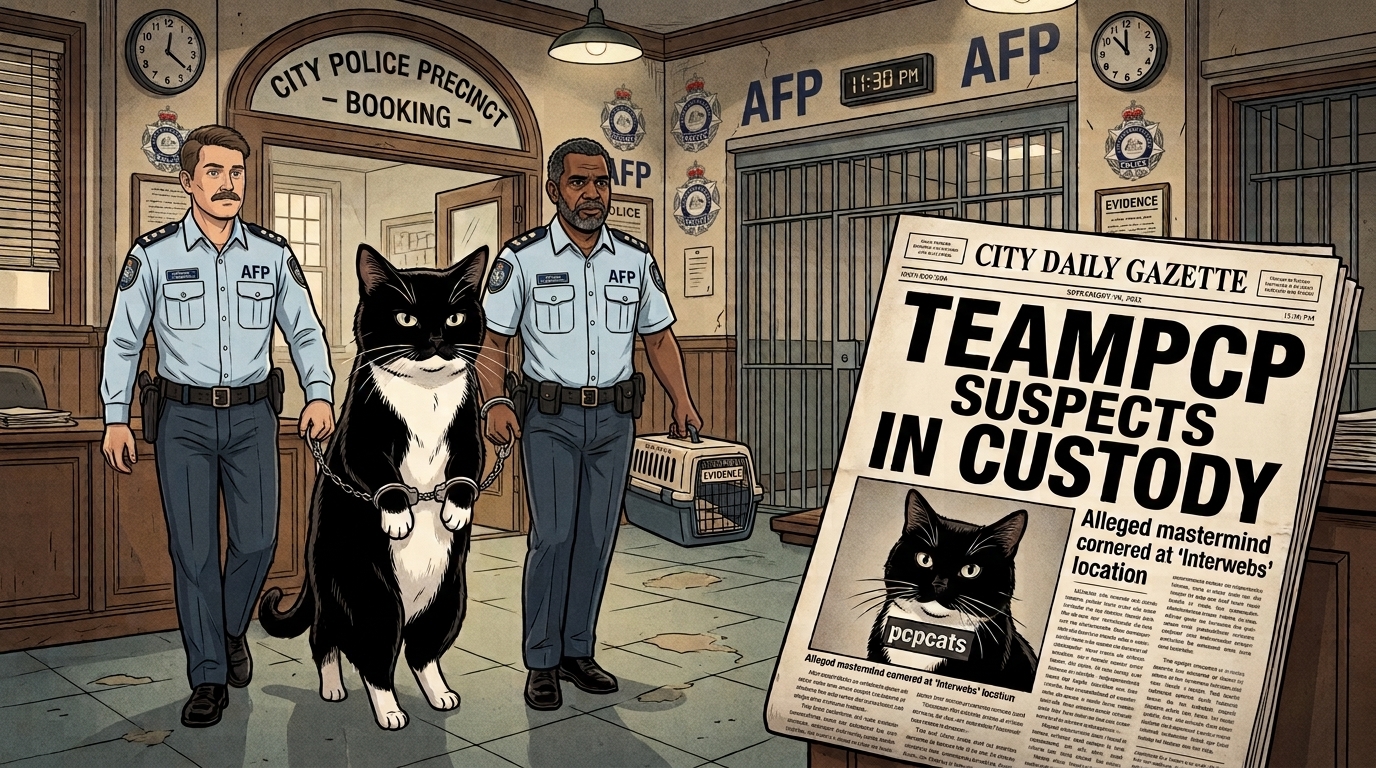 The OpenSourceMalware Show #19
Podcast/blog episode from the OpenSourceMalware team covering two threat-intel developments: the AFP/FBI arrest of two young Australians (Ruben Thomson, 21, and Louis Gaebler, 23) tied to TeamPCP, whose sloppy OPSEC (reused credentials, unredacted social media) led to their identification despite only ~$20K in proceeds; and an in-depth look at how DPRK's PolinRider campaign reinfects developers even after partial cleanup, driven by a new persistence technique that overwrites the npm CLI binary itself (triggering "reinstall malware?" on next npm run) alongside the existing vscode-task.json trigger and RAT. The hosts detail the expanding reachability-based targeting of JS/TS/CJS/MJS files, the new NullReceiver-branded payload, and a real case study (Gutenberg maintainer "Diogo"/fetch-page-assets) where DPRK pushed malicious updates riding along on the developer's own legitimate npm publishes, underscoring why disclosing infections to collaborators is necessary to stop reinfection through shared repos.
 opensourcemalware.comtalkAdded 3 Sep 2026, published 28 Aug 2026🛡️ Security
 Good riddance, TeamPCP. Now for the hard part.
A security researcher's personal reflection on the AFP/FBI/WAPF announcement that two men in their early 20s were arrested for allegedly running TeamPCP, a threat group behind a wave of 2025-2026 supply chain attacks. The piece clarifies that TeamPCP cloned the Shai-Hulud npm worm but was not behind the original Shai-Hulud/s1ngularity campaigns, and argues LLMs let relatively unsophisticated actors rapidly operationalize public exploits, widening the gap between attacker speed and institutional response time.
 aikido.devarticleAdded 3 Sep 2026, published 27 Aug 2026🛡️ Security
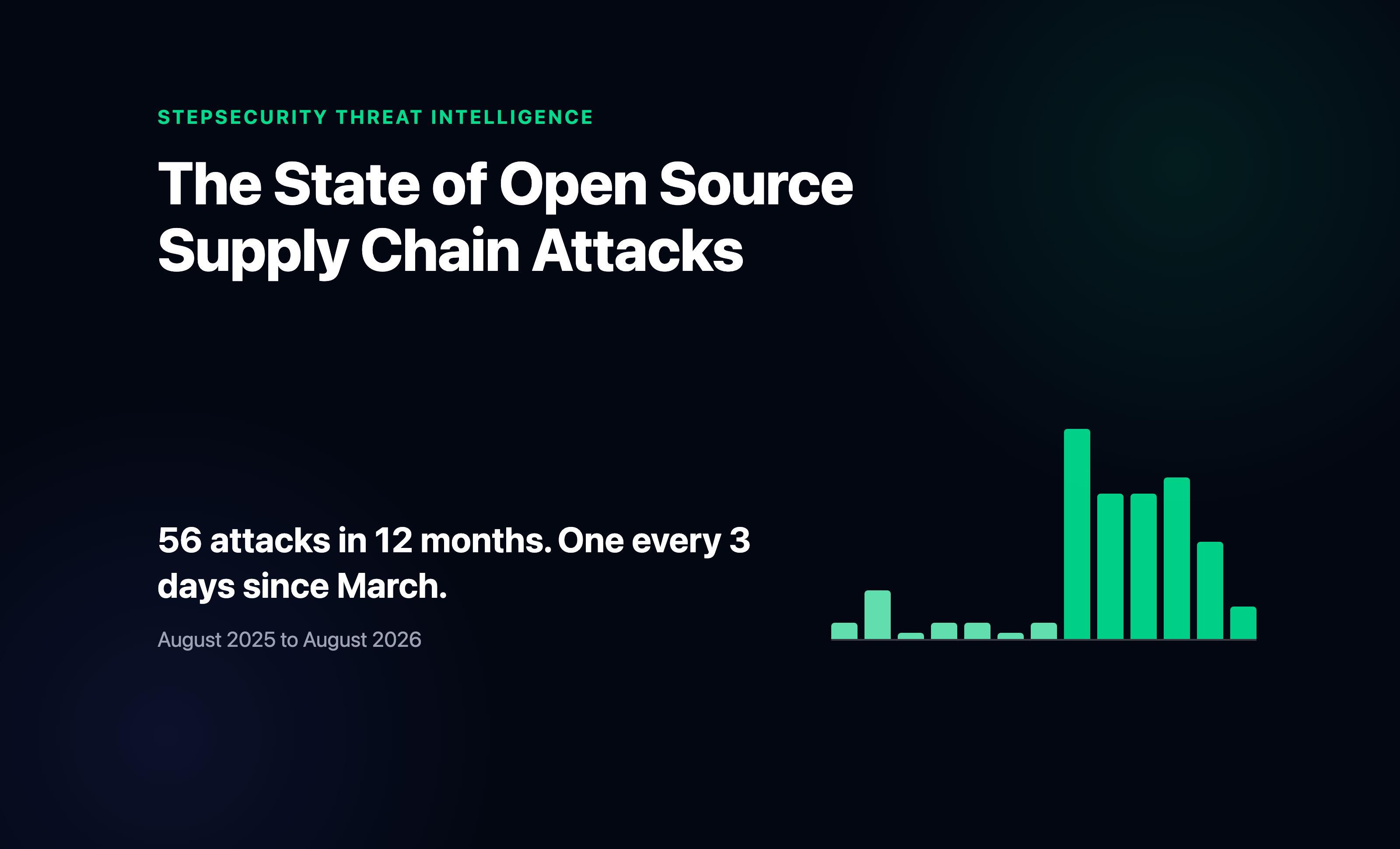 The State of Open Source Supply Chain Attacks
StepSecurity's threat intelligence team's annual report tallies 56 confirmed software supply chain attacks between August 2025 and August 2026, showing an over 8x acceleration since February 2026 driven by self-propagating worms (Shai-Hulud, Shai-Hulud 2.0, CanisterWorm, Miasma, ChainDrop) and mutable GitHub Actions tags. It details the five-day TeamPCP campaign that stole 78,330 secrets from 2,186 organizations by poisoning Trivy Action, Checkmarx KICS, telnyx, and LiteLLM, plus compromises spanning npm, PyPI, RubyGems, Composer, and crates.io.
stepsecurity.ioarticleAdded 3 Sep 2026, published 23 Aug 2026🛡️ Security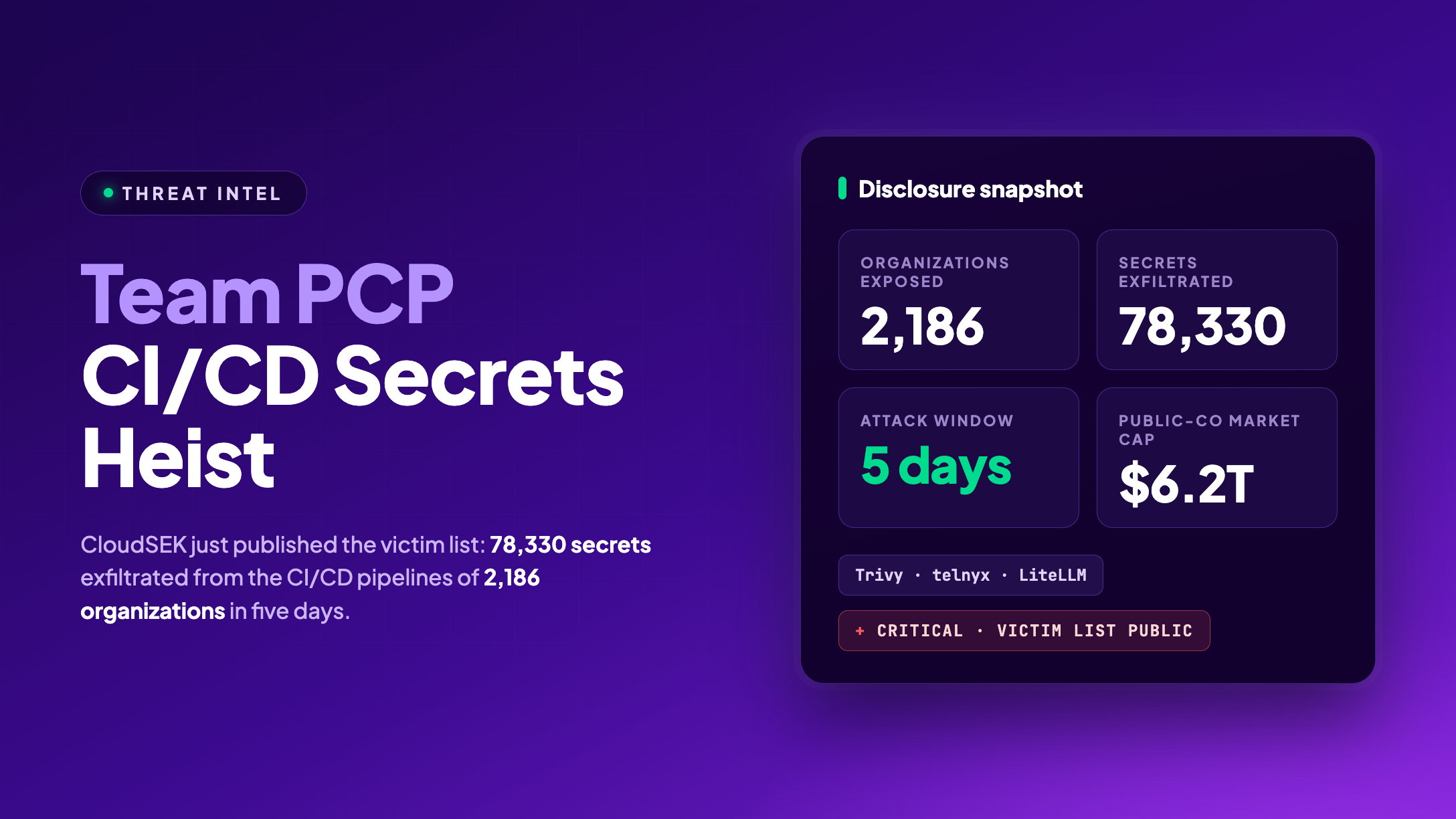 Team PCP Stole 78,330 Secrets From 2,186 Organizations. CloudSEK Just Published the List.
StepSecurity analyzes CloudSEK's newly published dataset on TeamPCP, a threat actor that compromised trusted open-source CI/CD components (Trivy GitHub Action, Checkmarx KICS action, telnyx PyPI package, LiteLLM) to harvest 78,330 secrets from 2,186 organizations' CI/CD pipelines across GitHub Actions, GitLab, and Azure DevOps in five days in March 2026. The post breaks down which platforms and credential types were exposed (GitLab led, 230+ Azure DevOps orgs, 157 leaked OpenAI keys) and maps layered CI/CD runtime controls (egress control, runner lockdown, imposter-commit detection, workflow policies) as mitigations against this class of attack.
stepsecurity.ioarticleAdded 3 Sep 2026, published 15 Aug 2026🛡️ Security Cloud Threat Highlights: H1 2026
Wiz's H1 2026 cloud threat report documents a 60% jump in significant incidents driven by a doubling of supply-chain attacks (TeamPCP's npm/PyPI/GitHub Actions credential-harvesting spree, its open-sourced Shai-Hulud worm spawning Miasma/Hades/Megalodon/IronWorm follow-ons, North Korea's axios and @mastra trojanizations) and by growing attacks on AI infrastructure, including exposed unauthenticated MCP servers, LiteLLM/Dify/Langflow/n8n/Ollama vulnerabilities, and cryptominers deployed via a Langflow RCE. It also profiles JINX-0163, a cloud-native extortion group targeting non-human identities (service accounts/IAM roles) across AWS/Azure/GCP/Okta/Snowflake linked to the "FulcrumSec" extortion brand, and closes with concrete detection techniques for stolen access keys, Kubernetes VM Run Command abuse, GCP org-policy tampering, and CloudTrail user-agent/boto3 credential-provenance mismatches.
wiz.iowriteupAdded 3 Sep 2026, published 6 Aug 2026🛡️ Security keyv and cacheable npm Package Hijacked in Supply Chain Attack
Wiz Research documents an ongoing supply chain attack in which a compromised GitHub maintainer account was used to publish malicious versions of keyv, cacheable, and 400+ dependent npm packages. The payload is a variant of the open-sourced 'Mini' Shai-Hulud malware (linked to the TeamPCP and antv campaigns) that steals cloud, CI/CD, AI-agent, and cryptocurrency credentials, persists via Claude Code hooks and VS Code tasks.json, exfiltrates data to attacker-controlled GitHub repos, and retrieves its C2 domain dynamically via an Ethereum smart contract (StringListStore) eth_call rather than hardcoding it.
wiz.iowriteupAdded 3 Sep 2026, published 4 Aug 2026🛡️ Security OpenSourceMalware Blog
OpenSourceMalware's blog is an active threat-intelligence feed tracking malicious open-source packages across npm, PyPI, RubyGems, and other registries, publishing frequent posts with IOCs, campaign attribution, and remediation guidance. Recent coverage spans DPRK-linked actors (Lazarus Group, TeamPCP, PolinRider) using techniques like VS Code tasks.json abuse, npm worms (Mini Shai-Hulud, Miasma), trusted-publishing abuse, and cross-ecosystem typosquatting to compromise maintainer accounts and steal credentials.
opensourcemalware.comarticleAdded 3 Sep 2026, published 18 Jul 2026🛡️ Security GitHub Secret Scanning Public Monitoring for Enterprises: Coverage and Gaps
StepSecurity breaks down GitHub's new "public monitoring" secret-scanning feature (public preview, shipped July 1), which watches all of github.com — not just an org's own repos — for leaked enterprise secrets across git content, PR comments, and issues, attributing findings via GitHub's identity layer. The piece then details what it doesn't cover: workflow run logs (the exact path abused in the tj-actions/changed-files compromise), and any exfiltration that never touches github.com at all, such as the credential-stealing campaigns run by TeamPCP against Trivy and the telnyx PyPI package, or GhostAction's malicious-workflow exfiltration to attacker infrastructure. It argues for pairing this after-the-fact detection with runtime egress control (StepSecurity's Harden-Runner) to block exfiltration at the network layer, citing its role in catching the Shai-Hulud worm running inside CNCF's Backstage repo.
stepsecurity.ioarticleAdded 3 Sep 2026, published 12 Jul 2026🛡️ Security- GitHub Action Canaries
Tracebit's free, open-source GitHub Action injects unique, short-lived AWS canary credentials and SSH canary keys (honeytokens) into every workflow run, writing them to ~/.aws/credentials, environment variables, and ~/.ssh/ so they cover common exfiltration surfaces. Any interaction with these decoys triggers an alert with full run context (repo, workflow, job, commit SHA, run ID), letting teams detect compromised dependencies, malicious third-party Actions, or CI/CD secret theft. It cites real incidents like the tj-actions/changed-files and Trivy/TeamPCP supply-chain compromises and a LiteLLM PyPI credential stealer as the threats it targets.
 github.comrepoPublished and added 11 Jul 2026🛡️ Security
 The OpenSourceMalware Show #11
Episode 11 of the OpenSourceMalware Show covers npm's new 72-hour read-only account lockout for high-impact packages (triggered by email changes or 2FA recovery use) and GitHub Enterprise's new self-service credential revocation tool for incident response, noting each has gaps (lockout could hinder legitimate ATO recovery; revocation doesn't cover PATs created outside the enterprise boundary). The hosts also call out six npm packages published by a researcher at a stealth cybersecurity startup that target OpenAI, Anthropic, Vercel, and Ollama users — info-stealers that avoid credentials but exfiltrate .git/.ssh data, drawing a parallel to Snyk's 2025 malicious-package incident targeting Cursor. It also references an FBI FLASH notice on TeamPCP's TTPs/IOCs and previews a coming interview with Eclipse Foundation's head of security on Open VSX supply-chain risk.
opensourcemalware.comtalkAdded 3 Sep 2026, published 2 Jul 2026🛡️ Security 10 Layers Deep: How StepSecurity Stops TeamPCP's Trivy Supply Chain Attack on GitHub Actions
StepSecurity walks through the TeamPCP-led compromise of aquasecurity/trivy-action (CVE-2026-33634, CVSS 9.4), where attackers force-pushed a credential-stealing payload into 76 of 77 version tags, plus the related Checkmarx KICS action compromise, both harvesting secrets from /proc/pid/mem of the GitHub Actions Runner.Worker process and exfiltrating to a typosquatted domain (scan.aquasecurtiy.org, 45.148.10.212). The post details the attack technique of 'imposter commits' (fork commits reachable by SHA but not on any branch) used to hide the malicious tags, and situates the incident alongside the same-window CanisterWorm npm worm and TeamPCP credential stealers in litellm and telnyx PyPI packages, then maps ten StepSecurity/Harden-Runner defense-in-depth controls (egress blocking, process lockdown, SHA-pinning PRs, imposter-commit scanning, global blocklist) to each stage of the kill chain.
stepsecurity.iowriteupAdded 3 Sep 2026, published 2 Jul 2026🛡️ Security Thinkst Package Proxy
Thinkst released Package Proxy, a Cloudflare Workers-based inline proxy for npm, PyPI, pip, uv, and Cargo index/metadata requests that enforces supply-chain safety checks (minimum package age, upload-mechanism regression detection, allow/block lists) without requiring any client-side software or workflow changes. The proxy returns 404 for packages failing policy and logs installs to a D1 database, and Thinkst reports it protected them from the TanStack, Bitwarden, and TeamPCP npm compromises via its 10-day age check and integrity-downgrade detection.
 blog.thinkst.comtoolAdded 3 Sep 2026, published 26 Jun 2026🛡️ Security
 OpenSource Malware: Active Malware Campaigns in January-May 2026
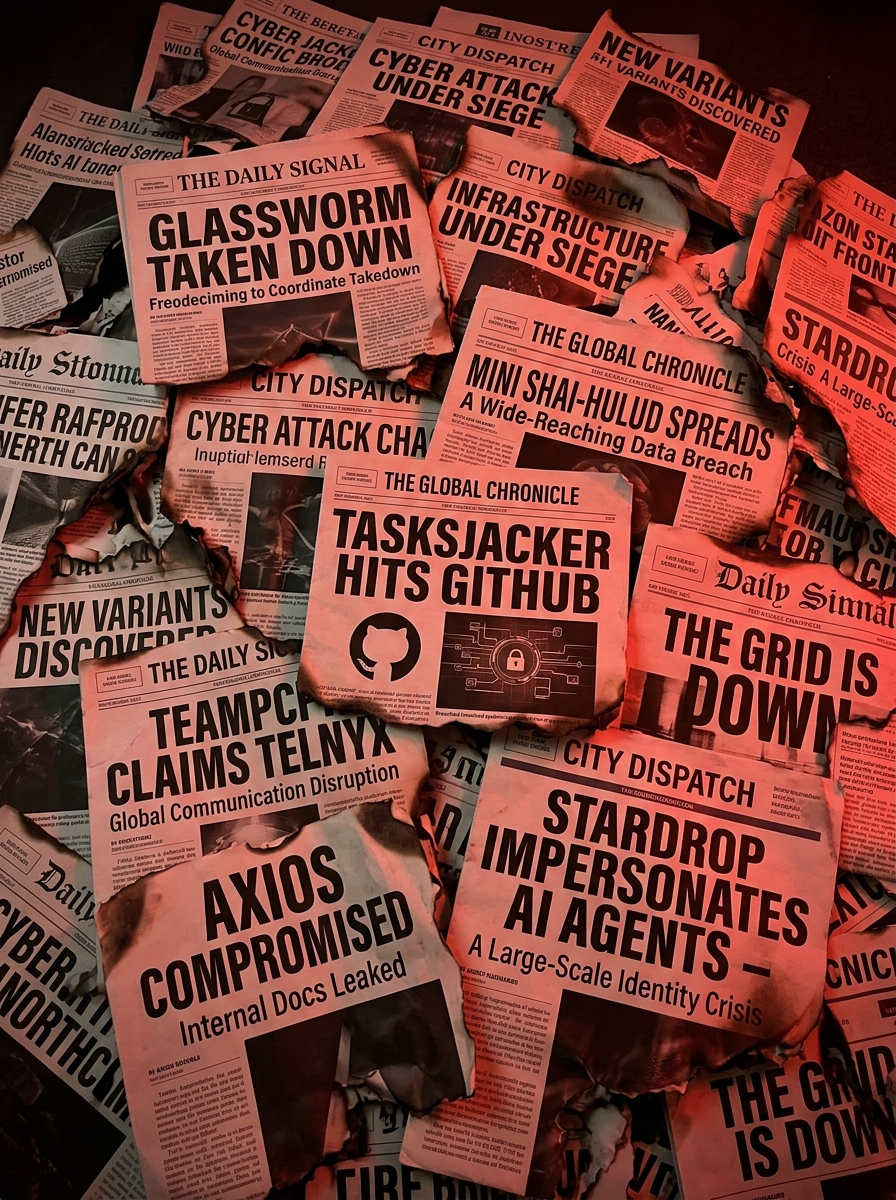
OpenSourceMalware's analysis of active malware campaigns from January-May 2026, covering Lazarus Group's Contagious Interview (fake recruiter outreach delivering BeaverTail/InvisibleFerret via npm, PyPI, Go, Cargo, Packagist) and two new campaigns, TasksJacker (malicious .vscode/tasks.json auto-execution, including payloads hidden in .woff2 font files and fake VS Code dictionary files) and PolinRider (weaponizing stolen credentials via malicious PRs merged into projects like VS Code, Apache Superset, Rails, LangFlow, Expo). It also details TeamPCP's supply chain attack on Trivy's GitHub Actions repos using a leaked Aqua Security PAT to force-push malicious commits across 76 version tags.
opensourcemalware.comwriteupPublished and added 12 Jun 2026🛡️ Security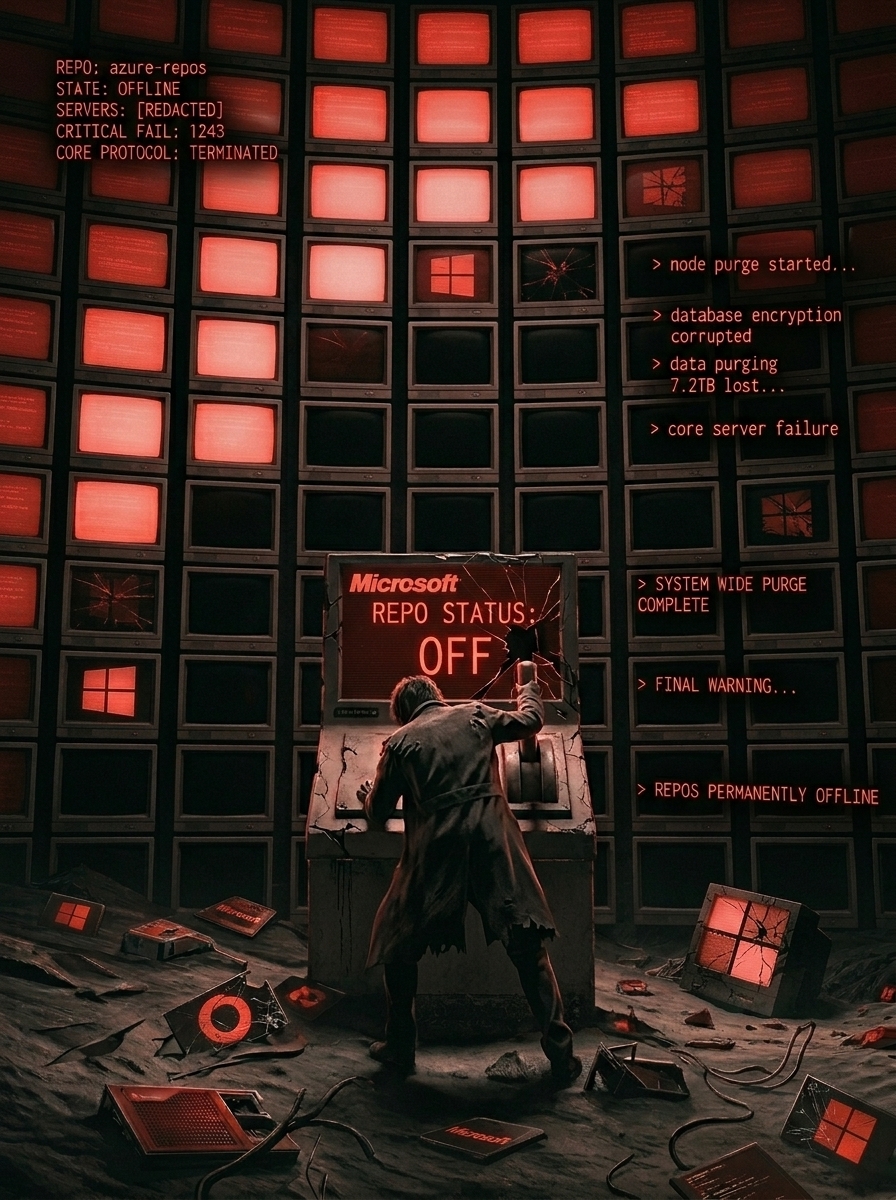 The OpenSourceMalware Show #8
Episode 8 of The OpenSourceMalware Show covers the Miasma worm (built on TeamPCP's open-sourced Mini Shai-Hulud) taking down 73 Microsoft GitHub repositories, including the Azure Functions org, in 105 seconds on June 5th, traced back to a May 19th Durable Task repo credential compromise. It also discusses VS Code's new two-hour third-party extension auto-update cooldown (contrasted with the Nx Console/Open VSX incident where Microsoft's Marketplace notification, not detection, caught the malware), npm v12's plan to disable install lifecycle scripts, direct Git dependencies, and remote tarball dependencies by default starting July, and a breakdown of package firewall designs (simple alias-based interceptors vs. daemon/proxy-based tools) including their bypass weaknesses and reliance on OSV/GHSA data.
opensourcemalware.comtalkAdded 3 Sep 2026, published 11 Jun 2026🛡️ Security Miasma Worm Hits Microsoft Again: Azure Functions Action and 72 Other Repositories Disabled After Supply Chain Attack Targeting AI Coding Agents
StepSecurity's forensic analysis of the June 5, 2026 Miasma worm incident, in which a compromised contributor account pushed a malicious commit to Microsoft's Azure/durabletask repository planting five files (.claude/settings.json, .gemini/settings.json, .cursor/rules/setup.mdc, .vscode/tasks.json, and a 4.6MB obfuscated .github/setup.js payload) that trigger credential-harvesting code execution the moment the repo is opened in Claude Code, Gemini CLI, Cursor, or VS Code — no package install or code run required. GitHub's automated abuse detection disabled 73 Microsoft repositories in a 105-second sweep, including Azure/functions-action, breaking CI/CD pipelines across GitHub Actions users relying on the mutable @v1 tag. The post ties this to the same compromised account behind the May 19 durabletask PyPI credential-stealer campaign and the broader TeamPCP-linked Miasma worm, which has infected 113+ repositories.
stepsecurity.iowriteupAdded 3 Sep 2026, published 9 Jun 2026🛡️ Security Microsoft's durabletask PyPI Package Compromised in Supply Chain Attack
StepSecurity documents the compromise of Microsoft's durabletask PyPI package (versions 1.4.1-1.4.3, 400k+ monthly downloads), where an attacker bypassed the GitHub CI/CD pipeline entirely using stolen publishing credentials to inject a dropper for rope.pyz, a modular cloud-intrusion framework with dedicated collectors for AWS, Azure, GCP, Kubernetes, HashiCorp Vault, password managers, and the filesystem. The framework encrypts stolen data with AES-256-GCM/RSA-4096, exfiltrates via HTTPS, GitHub commit beacons, and attacker-created public repos using the victim's own stolen GitHub tokens, propagates via AWS SSM and kubectl exec, and drops a geo-targeted rm -rf wiper for systems matching Israeli locale/timezone markers. The post ties the attack to TeamPCP's Mini Shai-Hulud campaign (same infrastructure as TanStack, Mistral AI, LiteLLM, @antv) and later updates describe a second compromise of the Azure/durabletask GitHub repo that plants payloads triggering in Claude Code, Gemini CLI, Cursor, and VS Code.
stepsecurity.iowriteupAdded 3 Sep 2026, published 9 Jun 2026🛡️ Security- Active Malware Campaigns in January-May 2026
OpenSourceMalware's analysis of active malware campaigns from January-May 2026, focused on Lazarus Group and TeamPCP. Details include Contagious Interview's pivot to abusing .vscode/tasks.json files to deploy BeaverTail/InvisibleFerret, the new TasksJacker campaign (multi-blockchain C2 across TRON/Aptos/BSC, hex-encoded JS hidden in .woff2 font files and a fake spellright.dict) that compromised 400+ repos including DataStax, and the follow-on PolinRider campaign that weaponized stolen credentials via malicious pull requests merged into high-profile projects like VS Code, Apache Superset, Rails, and Expo. Also covers TeamPCP's cascading attack via a leaked Aqua Security service-account PAT used to force-push malicious commits across version tags.
opensourcemalware.comwriteupAdded 3 Sep 2026, published 8 Jun 2026🛡️ Security  Miasma Blight Reaches Microsoft: 73 Repos Disabled in 105 Seconds
Investigates GitHub's mass disabling of 73 Microsoft repositories across the Azure, Azure-Samples, microsoft, and MicrosoftDocs orgs within a 105-second window on June 5, all flagged for ToS violations, including the widely-used Azure/functions-action GitHub Action that broke CI pipelines globally. The author links the takedown to a re-compromise of the durabletask PyPI package (previously hit May 19 by TeamPCP via stolen GitHub Actions secrets) and to Miasma, a rebrand of TeamPCP's open-sourced Mini Shai-Hulud worm that Aikido and OX Security found had added Azure/GCP credential collectors and self-propagates by committing stolen secrets into attacker-created public repos, which is what likely triggered GitHub's automated abuse enforcement.
opensourcemalware.comwriteupAdded 3 Sep 2026, published 6 Jun 2026🛡️ Security The Software Supply Chain Malware Landscape: January - May 2026
OpenSourceMalware analyzes its threat database (166,000+ records) to surface three supply-chain malware trends for Jan 1-May 18 2026: npm and PyPI malicious-package growth is now tracking at similar velocity (driven by dual-ecosystem campaigns like Contagious Interview and a Telegram-exfiltration infostealer cluster), account takeovers (led by TeamPCP's Trivy compromise and Mini Shai-Hulud campaign) are rising but coexist with more surgical dependency-confusion/typosquat attacks like Stardrop and events-channel, and malicious ClawHub AI-skill submissions (707 analyzed) increasingly target non-developer roles such as marketing and sales alongside the usual crypto and developer victims. The piece uses download-count as a proxy to distinguish ATO from born-bad malicious packages and highlights under-monitored non-engineer credential exposure as an emerging risk.
opensourcemalware.comarticleAdded 3 Sep 2026, published 3 Jun 2026🛡️ Security The OpenSourceMalware Show #7
Podcast/show episode from OpenSourceMalware covering the Miasma worm campaign that compromised 32+ Red Hat @redhat-cloud-services npm packages (later 80+ packages, 286+ malicious versions) via abused npm trusted-publishing gaps rather than a GitHub Actions vulnerability, using the first in-the-wild deployment of TeamPCP's open-sourced Mini Shai-Hulud worm code across npm, PyPI, and an LLM-translated RubyGems variant. It also presents six months of OpenSourceMalware threat-report data (npm vs PyPI growth correlation, account takeovers reaching 60-65% of new weekly records, 700+ malicious ClawHub agent skills targeting marketers via SEO/TikTok/Klaviyo themes), and dissects the Moika campaign (~300 packages, oob.moika.tech C2, 260+ threat reports) as a gray-area case mixing bug-bounty-researcher signals with overtly credential-stealing payloads, alongside the long-running phenomenon of bug-bounty researchers accounting for 25-41% of malicious OSV packages and AI-hallucinated package names (e.g. Events Channel) being weaponized as typosquats.
opensourcemalware.comtalkAdded 3 Sep 2026, published 3 Jun 2026🛡️ Security Nx Console VS Code Extension Compromised
StepSecurity's technical teardown of the May 2026 compromise of the Nx Console VS Code extension (nrwl.angular-console v18.95.0, 2.2M+ installs), where a stolen contributor GitHub token was used to push a dangling orphan commit to nrwl/nx and publish a malicious extension via stolen VSCE_PAT credentials. The payload silently ran `npx github:nrwl/nx#<sha>` to fetch a heavily obfuscated 498KB Bun/Node credential stealer that harvests secrets from GitHub, npm, AWS, Vault, Kubernetes, 1Password and Claude Code config, exfiltrates via HTTPS/GitHub API/DNS tunneling, installs a macOS Python backdoor using the GitHub Search API as a C2 dead-drop, and can forge valid Sigstore/SLSA provenance attestations for downstream npm packages. The writeup ties this to a later GitHub breach (3,800 repos, attributed to TeamPCP) and provides detection signals, IOCs, and full recovery steps.
stepsecurity.iowriteupAdded 3 Sep 2026, published 2 Jun 2026🛡️ Security Orca Security: Red Hat npm Packages Compromised in Supply-Chain Attack Spreading Credential-Stealing Worm
Orca describes the June 1, 2026 compromise of 32 npm packages under the @redhat-cloud-services scope, which came from a hijacked Red Hat employee GitHub account. The attacker injected malicious GitHub Actions workflows into three RedHatInsights repos and used OIDC tokens to publish backdoored versions with valid SLSA provenance. A preinstall hook runs a 4.2 MB obfuscated payload that sweeps CI, cloud, SSH, registry and .env credentials and self-propagates (the "Miasma" worm, attributed to TeamPCP or a copycat using Mini Shai-Hulud tooling). The post lists compromised versions and gives rotation and pinning guidance.
 orca.securityarticlePublished and added 2 Jun 2026🛡️ Security
Showing 30 of 37
Show more