- cks/tasks/cks/course/README.md at master · ViktorUJ/cks
The ViktorUJ/cks course is an open-source, community-maintained preparation course for the CKS (Certified Kubernetes Security Specialist) exam. It has 33 chapters grouped by CKS domain: cluster setup, hardening, system hardening, microservice vulnerabilities, supply chain, and runtime security. It also has 15 labs with automatic checks (labs 101-114), mock exams and Killer.sh guidance. Core labs target Kubernetes v1.36.
 github.comcourseAdded 27 Oct 2026🛡️ Security
 David Gutierrez | Eng (@david_x_ai) on X
Thread on two October 2026 npm compromises: @subql/common 5.8.3 (5 October), published through GitHub Actions OIDC Trusted Publishing after the attacker tampered with the publish workflow, and tensorlake 0.5.144 (8 October), published by the project's own release workflow with valid provenance for about 1 hour 40 minutes. Both ran on install and stole cloud, GitHub, Kubernetes, Vault, SSH and .env credentials; tensorlake also took AI tool and MCP config. Its payload installed a gh-token-monitor service that deletes the home directory if the stolen GitHub token is revoked, so remove it before rotating.
 x.comthreadAdded 27 Oct 2026, published 26 Oct 2026🛡️ Security
 Argus – a free, open-source agentic security operations platform – MIT
Argus is a free, MIT-licensed, self-hosted security operations platform that maps cloud, identity, code, device, network and Kubernetes assets into one evidence graph and detects fast, AI-driven attacks. Read-only AI agents investigate and only propose actions. Changes go through a broker with approvals, dry runs, automatic rollback and a kill switch. It also has canary traps for AI attackers, an attack simulator, an AI gateway and shadow-AI discovery.
 thomasunise.comtoolAdded 25 Oct 2026, published 24 Oct 2026🛡️ Security
- SCF Controls Platform — open source
SCF Controls Platform is free, open-source (AGPL-3.0) GRC software built on the Secure Controls Framework. It covers the 1,451-control SCF catalog with 354+ framework mappings, L0–L5 evidence maturity scoring, a risk register linked to controls, and audit workspaces. It self-hosts via Docker Compose or a Helm chart for Kubernetes, and is independent of ComplianceForge, which publishes the SCF.
 scfcontrolsplatform.comtoolAdded 20 Oct 2026🛡️ Security
 Loud, Fast, and Everywhere: Anatomy of a Real AI-Driven Cloud Attack
Wiz CIRT write-up of an AI agent-run intrusion against a multi-cloud organization (GCP, AWS, Kubernetes, CI/CD, GitOps, identity provider). It lists traits of AI-driven attacks: machine-speed tempo, credential chaining, pentest/probe naming, numeric task IDs and commented code. Initial access was a Java RCE in an exposed Kafka UI. It closes with detection and response advice: unified logs, workload visibility and trust isolation.
 wiz.iowriteupPublished and added 19 Oct 2026🛡️ Security
 TokenMaxxing: How to Get the Most Out of Your AI Models
Decrypt guide to "tokenmaxxing" reframed as maximizing value per token rather than burning tokens. It gives tiered tips: pick smaller models for simple jobs, write one clear prompt, start new chats, cap output length, and use free models (beginner); Claude Code commands like /model, /clear, /compact, /context, /mcp, /effort and plan mode (intermediate); and prompt caching via cache_control, 50% batch discounts, and agent budget limits like --max-budget-usd (advanced). Includes context on Meta, Amazon and Uber token leaderboards and spend, a worked invoice-processing example where routing cut cost from $30 to $3.90, and the Jevons paradox in falling token prices.
 decrypt.coarticlePublished and added 17 Oct 2026🧠 AI
- Show HN: Graphicle, a Rust port of Graphify with memory for coding agents
Graphicle is a local-first Rust program that parses a repository into a tree-sitter code graph (a port of Graphify) and adds project memory: docs, reviewed decisions and captured Claude Code/Codex sessions. It serves cited file-and-line excerpts within a token budget via one MCP server, CLI and browser app, backed by a single SQLite file, with no API key or telemetry. The README reports a code-only extract on Kubernetes (31k files) in 3m18s versus 26m38s for Graphify 0.9.88, and a memory comparison against seven systems. Agent-proposed memories need user approval and go stale when the code they reference changes.
github.comrepoPublished and added 14 Oct 2026🧠 AI - derailed/popeye
Popeye is a read-only Go utility that scans live Kubernetes clusters and reports misconfigurations, stale or unused resources, port mismatches, probe and image issues, RBAC problems, and resource over/under-allocation when a metrics-server is present. It is configurable with a spinach.yaml (excludes, thresholds, allowed registries, severity overrides), can run as a CronJob with a get/list ClusterRole, outputs HTML/JSON/YAML reports, pushes Prometheus metrics, and can upload reports to S3/Minio. It lints what is actually deployed rather than manifests on disk.
github.comtoolAdded 12 Oct 2026🛡️ Security 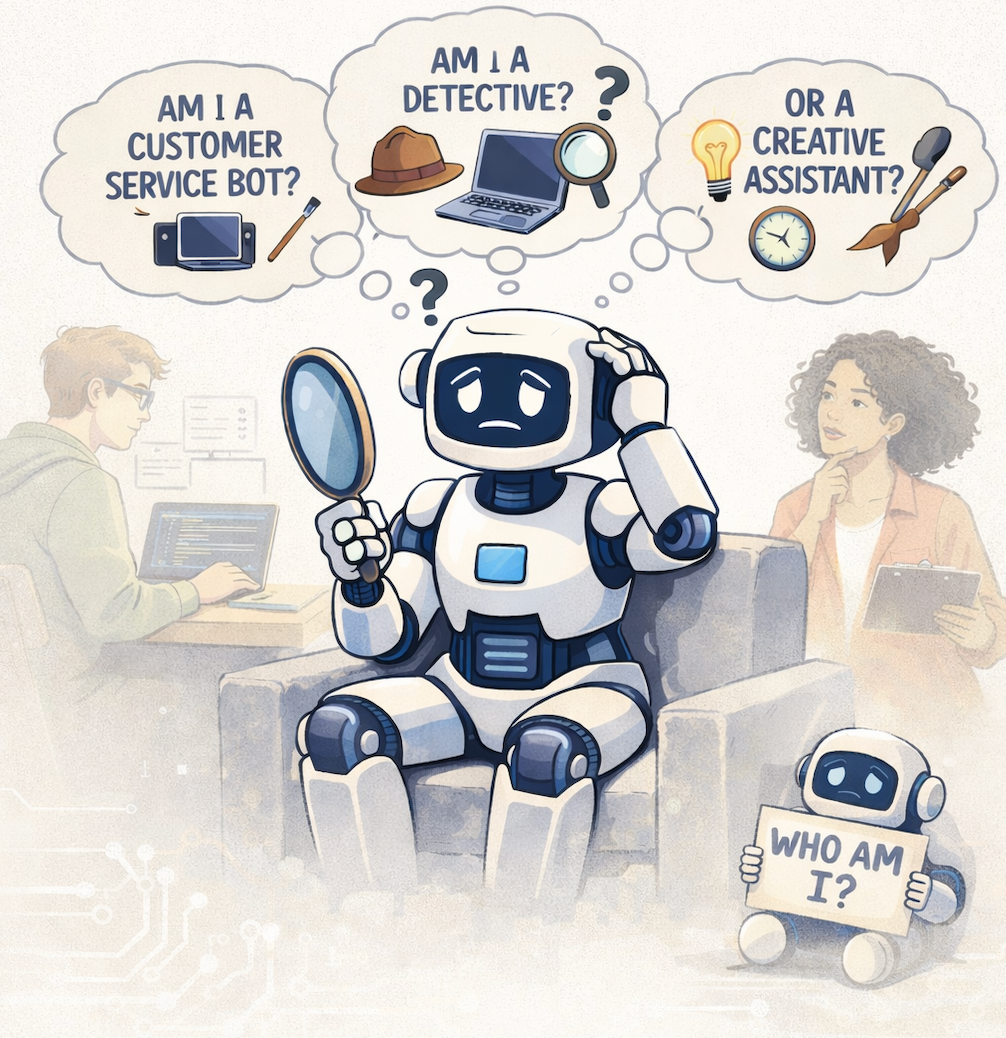 Solving the Identity Crisis for AI Agents (Uber)
Uber's engineering team describes how it extended its Zero Trust stack to give AI agents verifiable identities. Each agent workload gets a SPIRE SVID, and a Security Token Service checks an Agent Registry and mints single-hop, short-lived JWTs. Those tokens carry the full actor chain (for example user → Oncall Agent → Investigation Agent), loosely modelled on OAuth 2.0 Token Exchange (RFC 8693). The tokens are enforced at an MCP Gateway for tool calls, and an AI Gateway fronts model calls with guardrails. The post also covers an A2A client in the SDK that makes the secure path the default, observability of actor chains, and a 2026 roadmap toward dynamic access control and unified policy enforcement. It is a concrete production reference for agent attribution and delegated authorization.
 uber.comwriteupAdded 10 Oct 2026🧠 AI
- argoproj-labs/mcp-for-argocd
TypeScript MCP server for Argo CD that lets MCP clients (Cursor, VS Code, Claude Desktop) list, inspect, create, update, delete and sync applications, read logs and events, and run resource actions through natural language. It supports stdio and HTTP stream transports, with a stateless mode for multi-replica Kubernetes deployments. The security design is detailed: API tokens are read only from env vars or headers and never from tool arguments, the default token is bound to the default base URL, a per-host token registry covers extra instances, a read-only mode disables write tools, and the HTTP listener binds loopback by default and requires an inbound auth token if exposed.
github.comrepoAdded 10 Oct 2026🧠 AI - ♫Why♥Not♪ (@Python_s_) on X
Alert summarizing Socket Threat Research's disclosure that a malicious version of the Tensorlake npm SDK (an AI-agent infrastructure package) was published with a preinstall hook delivering Shai-Hulud/ChainDrop credential-stealing malware. The payload targets GitHub, npm, AWS, Kubernetes and Vault credentials, persists via a gh-token-monitor mechanism, and spreads through compromised publishing accounts. It lists IOCs (lib/setup.mjs, lib/Math_Symbol.js) and warns to remove the persistence before revoking stolen GitHub tokens, since revocation triggers a destructive routine. Socket detected the release about 11 minutes after publication.
x.comadvisoryAdded 11 Oct 2026, published 9 Oct 2026🛡️ Security  GhostAction Returns: Malicious “Security Audit” Workflows Now Mine Credentials from Entire Git Histories
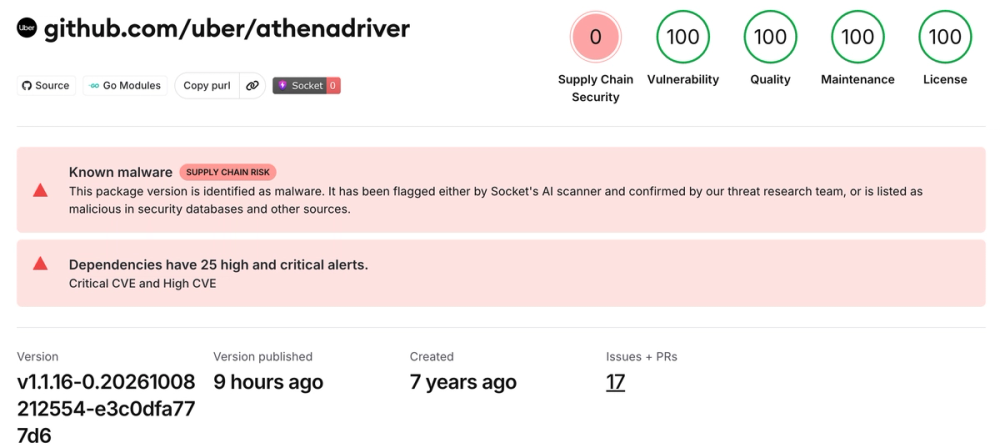
StepSecurity details a new wave of the GhostAction campaign in which attackers used compromised maintainer accounts of Takashi Kitao (pyxel) and Henry Wu (athenadriver, Uber) to push malicious "Security Audit" GitHub Actions workflows to 345 repositories in minutes. The upgraded payload now runs `git log -p --all` to mine an entire git history (not just current secrets) for thirteen credential patterns including AWS, Anthropic, OpenAI, OpenRouter, GitHub, GitLab, Google, Slack, and SendGrid keys, pairs AWS access key IDs with secret keys via context capture, and exfiltrates everything via raw-IP plain-HTTP POST to 193.32.204.199, bypassing DNS-based defenses. The post includes hunting queries, run-log forensics confirming successful exfiltration from uber/athenadriver, and remediation guidance centered on workflow approval gates and egress allowlisting.
 stepsecurity.iowriteupPublished and added 9 Oct 2026🛡️ Security
 New GhostAction Wave Hits Hundreds of Repos, Expanding Beyond CI/CD Secrets to Cloud Credentials
Socket documents an October 8, 2026 wave of the GhostAction campaign in which two compromised GitHub maintainer accounts (henrywoo and kitao) pushed a malicious security-audit.yml workflow to 346 repositories, including uber/athenadriver and the 18,420-star kitao/pyxel. Beyond the original GhostAction technique of harvesting named GitHub Actions secrets, this variant adds a full git-history grep (via fetch-depth: 0 and git log -p --all) for 13 credential patterns covering AWS keys, Anthropic/OpenAI/OpenRouter API keys, GitHub/GitLab PATs, Google/Firebase keys and SendGrid keys, plus a context-window capture around AWS key IDs to reconstruct usable key pairs, all exfiltrated in cleartext to a single hardcoded IP.
 socket.devwriteupPublished and added 9 Oct 2026🛡️ Security
 Tensorlake npm package compromised by Shai-Hulud in latest software supply chain attack | Blog | Endor Labs
Endor Labs documents the compromise of tensorlake@0.5.144, the official npm TypeScript SDK for Tensorlake, which shipped a Shai-Hulud worm payload via a poisoned preinstall hook (node lib/setup.mjs) after the project's main branch was altered and pushed through a legitimate, provenance-signed GitHub Actions release pipeline. The malware harvests npm, GitHub, SSH, cloud (AWS/GCP/Azure), Kubernetes/Docker and Vault credentials, uses an EtherHiding Ethereum wallet as a durable dead-drop to fetch its rotating C2 domain, and republishes itself into other packages the victim controls. The writeup includes affected package versions, file hashes, C2 indicators, and concrete remediation guidance (pin to 0.5.143, rotate credentials, disable install scripts).
 endorlabs.comadvisoryPublished and added 8 Oct 2026🛡️ Security
 Tensorlake npm Package Compromised: A Worm With a Hostage Token That Wipes Your Machine If You Revoke It
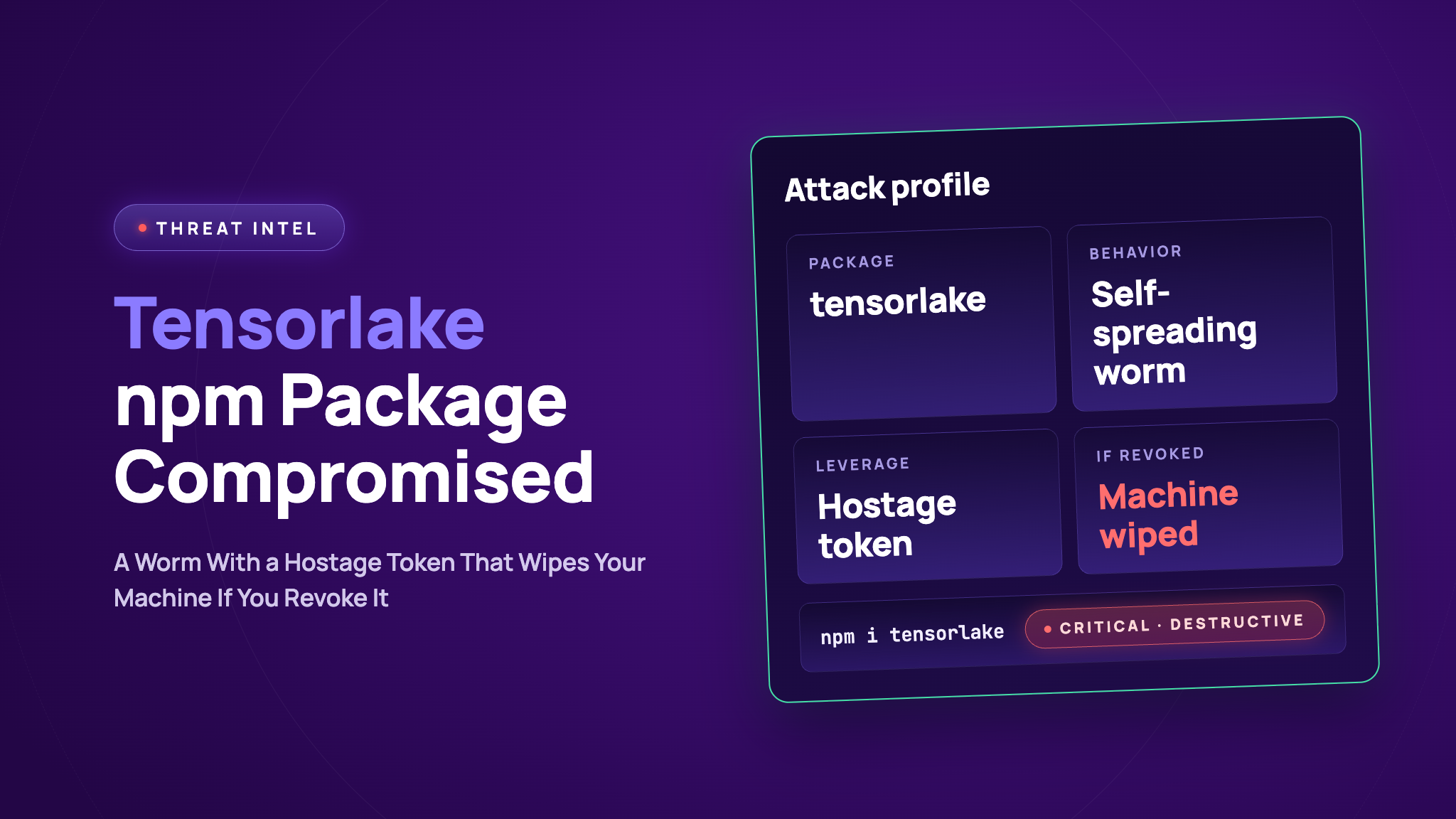
StepSecurity details how tensorlake@0.5.144 was pushed to npm after malicious commits landed directly on the tensorlakeai/tensorlake GitHub repo's main branch under a maintainer's identity, carrying a valid npm provenance attestation despite being malicious. The preinstall hook downloads Bun to run an obfuscated payload that steals GitHub/npm tokens, cloud and Vault/Kubernetes secrets, SSH keys, browser logins, and AI-tool configs (Claude, Cursor, Windsurf), then self-propagates by republishing stolen npm packages and committing persistence files (.claude/settings.json, .vscode/tasks.json) to reachable repos. A "hostage token" mechanism installs a gh-token-monitor service that runs a home-directory wipe if the stolen GitHub token is revoked before the monitor is removed, inverting the normal incident-response order.
stepsecurity.iowriteupPublished and added 8 Oct 2026🛡️ Security Can a Cloud-Native Harness Make Agents Reliable Beyond the Desktop?
Latent Space interviews Stacklok founders Craig McLuckie and Joe Beda (Kubernetes co-creators) about Mecatl, an open-source "cloud-native harness" for coding agents that separates the agent loop from local tool execution, session state and model provider so enterprises can run and govern agents centrally rather than on individual desktops. The piece also covers Stacklok's earlier pivot from supply-chain security to ToolHive, an open-source platform/Kubernetes operator for running and governing MCP servers, and a not-yet-open-sourced "AI Gateway" focused on access control, budgets and provider routing for regulated enterprises (banks, telcos, semiconductor firms). The framing draws an explicit analogy to how Kubernetes decoupled enterprises from cloud providers, arguing agent harnesses need the same "cattle not pets" treatment to scale beyond desktop tools like Claude Code, Codex and GitHub Copilot.
 latent.spacearticlePublished and added 7 Oct 2026🧠 AI
 Kubernetes Agent Sandbox Explained
Kubernetes Agent Sandbox is a Kubernetes SIG Apps project that gives each AI agent session an isolated, stateful, single-Pod workspace for running untrusted agent-generated code. The newsletter edition explains isolation through gVisor or Kata Containers, shows a Sandbox custom resource, and walks through SandboxTemplate, SandboxWarmPool, SandboxClaim and Sandbox Router. It also covers suspend/resume and scheduled deletion, and links a hands-on guide.
 newsletter.devopscube.comarticleAdded 21 Oct 2026, published 7 Oct 2026🛡️ Security
- Kubernetes Agent Sandbox Explained
Kubernetes Agent Sandbox is a Kubernetes SIG Apps project that gives each AI agent session an isolated, stateful, single-Pod workspace for running untrusted code. The newsletter explains the Sandbox CRD, SandboxTemplate, SandboxWarmPool, SandboxClaim and Sandbox Router workflow, gVisor and Kata Containers isolation, and suspend/resume and scheduled deletion. It points to a hands-on guide with a Kubernetes troubleshooting agent.
newsletter.devopscube.comarticleAdded 21 Oct 2026, published 7 Oct 2026🧠 AI  Kubernetes Agent Sandbox on AWS EKS (Step-by-Step Guide)
Kubernetes Agent Sandbox on AWS EKS is a step-by-step tutorial for the kubernetes-sigs agent-sandbox controller with gVisor. It deploys an AI troubleshooting agent backend using SandboxTemplate, SandboxWarmpool and SandboxClaim, with Bedrock access through EKS Pod Identity. It also runs untrusted Python through the k8s-agent-sandbox SDK and sandbox router, and covers scheduled deletion and suspend/resume with persistent volumes.
 devopscube.comwriteupAdded 21 Oct 2026, published 7 Oct 2026🧠 AI
- Kubernetes Agent Sandbox on AWS EKS (Step-by-Step Guide)
Tutorial on setting up Kubernetes Agent Sandbox (kubernetes-sigs/agent-sandbox) with gVisor on an AWS EKS cluster. It runs a troubleshooting AI agent backend inside a sandbox using SandboxTemplate, SandboxWarmpool and SandboxClaim, and runs untrusted Python through the k8s-agent-sandbox SDK and Sandbox Router. Probes show blocked /etc/shadow reads, setuid and service account token access, plus host process isolation. It also covers scheduled deletion and suspend/resume with persistent volumes.
devopscube.comwriteupAdded 21 Oct 2026, published 7 Oct 2026🛡️ Security - DevopsCube (@devopscube) on X
A tweet highlighting Steampipe, an open-source tool that lets practitioners query cloud infrastructure, Kubernetes, and other services using SQL instead of jumping between consoles or writing ad-hoc scripts. It calls out concrete security/ops use cases such as finding publicly accessible storage buckets, resources missing required labels, and Kubernetes namespaces without NetworkPolicies, and links to a longer tutorial on devopscube.com. The author frames it as a quick investigation layer on top of live cloud data, not a CSPM/AWS Config replacement.
x.comthreadAdded 8 Oct 2026, published 7 Oct 2026🛡️ Security  The Vulnerable MCP Project — MCP vulnerability database
The Vulnerable MCP Project is a curated, continuously growing database of security vulnerabilities and attack techniques specific to the Model Context Protocol ecosystem. Entries cover concrete CVEs (e.g. CVE-2025-68143/68144/68145 in Anthropic's mcp-server-git), transport-layer SDK flaws (cross-client response leakage, missing DNS rebinding protection in the official TypeScript/Python SDKs), unauthenticated/0.0.0.0-bound servers enabling RCE (MCPJam inspector, MCP Inspector, Grafana MCP), command/path injection in dozens of third-party servers (gemini-mcp-tool, mcp-server-kubernetes, Framelink Figma MCP, Zen MCP, filesystem-mcp), SSRF chains reaching cloud metadata (MarkItDown MCP, mcp-fetch-server), and a large set of AI-specific attacks: tool poisoning, trigger-phrase data exfiltration, prompt injection via GitHub issues, Jira and Google Docs, rug-pull tool mutation, and cross-server tool-name collisions. It functions as the de facto vulnerability registry for the MCP ecosystem, useful for tracking disclosed issues before patching or adopting third-party MCP servers.
 vulnerablemcp.inforepoAdded 6 Oct 2026🛡️ Security
 Prasenjit Sarkar (@stretchcloud) on X
Describes Uber's internally-built ADR (Agentic Detection & Response) system, open-sourced in August with an MLSys paper, which monitors over 50,000 daily AI agent sessions via an MCP-based sensor inside Cursor, Claude Code and Codex. Uber found 206 credential exposures in ten months from normal agent use (not prompt injection), and ADR hits 100% detection with 3 false positives on the public AgentDojo benchmark; the thread also flags that human approval fatigue breaks down as a safety control past roughly 50 agent actions per session.
x.comthreadPublished and added 6 Oct 2026🛡️ Security Active Supply Chain Attack: Malicious node-ipc Versions Published to npm
StepSecurity's AI Package Analyst detected three malicious node-ipc versions (9.1.6, 9.2.3, 12.0.1) published simultaneously on May 14, 2026 by a rogue/compromised maintainer account, injecting an 80KB obfuscated IIFE into the CommonJS bundle that harvests 90+ credential file categories (AWS, Azure, GCP, SSH, Kubernetes, GitHub, Claude AI/Kiro configs, Terraform, etc.) and exfiltrates them via HTTPS and raw DNS TXT queries to a typosquatted Azure-mimicking C2 domain. The writeup includes a full stage-by-stage technical teardown (daemonization, SHA-256 targeting gate on 12.0.1, custom base-16 nibble-reversed obfuscation, dual-channel exfiltration) plus file hashes, network IOCs, and remediation guidance for developers and CI/CD pipelines.
stepsecurity.iowriteupAdded 5 Oct 2026🛡️ Security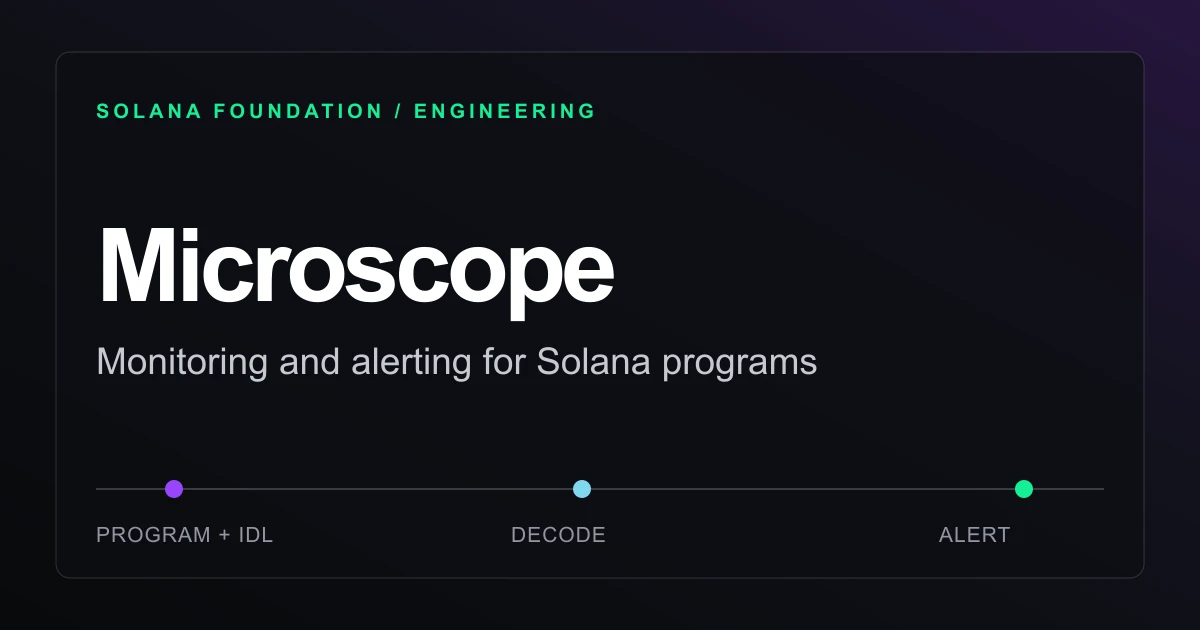 Introducing Solana Microscope: Program Monitoring and Alerts
Microscope is an open-source, self-hosted monitoring and alerting tool for Solana programs that decodes a program's instructions and events using its IDL, then renders that activity as Grafana dashboards backed by Loki (logs) and Prometheus (metrics). It can also watch a Squads multisig controlling the program, firing precise alerts on specific instructions, events, field values, or multisig proposal approvals to Slack, Telegram, or PagerDuty. A distinguishing feature is built-in health alerting for the monitoring pipeline itself (stalled gRPC/RPC streams, corrupt checkpoints, records decoded but not reaching Loki), so teams can distinguish "program is quiet" from "monitoring is broken." It deploys via Docker Compose, Terraform (AWS/GCP), or Kubernetes manifests, and the code is MIT-licensed on GitHub.
 solana.comtoolAdded 8 Oct 2026, published 5 Oct 2026🛡️ Security
 Guarding the gates: Assessing dangerous permissions granted to Kubernetes built-in principals
Datadog Security Labs analysis of Kubernetes RBAC bindings to the built-in principals system:anonymous, system:unauthenticated and system:authenticated across 65,000+ clusters from nearly 10,000 organizations. After excluding default and podsecuritypolicy bindings, about 44,000 remained, and over 3,500 granted dangerous permissions, including namespace-scoped ones. It also covers anonymous-auth defaults in AKS, EKS and GKE, and the GKE system:authenticated behavior.
 securitylabs.datadoghq.comarticleAdded 29 Oct 2026, published 5 Oct 2026🛡️ Security
 OpenAI Banned PewDiePie Twice While He Built Ajax, an Uncensored AI That Will Run on Your PC
Decrypt reports that YouTuber PewDiePie is building Ajax, a 9-billion-parameter fine-tune of Alibaba's Qwen3.5 meant to run locally inside his self-hosted assistant app Odysseus. He describes distilling training data from OpenAI's GPT-5.6 Sol (which got his account banned twice under OpenAI's anti-distillation terms), stripping the model's built-in refusals using the open-source abliteration tool Heretic, and continuing to train it with GRPO. The piece also references an August study showing encrypted reasoning tokens from OpenAI, Anthropic and Google could be replayed and decoded from public repos, and OpenAI's late-September disruption of a reasoning-extraction campaign tied to Moonshot AI.
decrypt.coarticlePublished and added 3 Oct 2026🧠 AI Five Kubernetes Security Gaps Attackers Chain Together
7ASecurity breaks down five Kubernetes misconfiguration categories their pentesters repeatedly chain into working attack paths: over-permissive RBAC defaults, exposed API server/dashboard/kubelet, missing network policies, unsafe pod defaults (root/privileged containers, host path mounts), and weak admission control. It uses a concrete audit example from CNCF's KEDA project, where the Helm chart's scaledRefKinds setting defaulted to wildcard get access across API groups and resource types, silently undermining KEDA's own Secret-access restriction, plus references to Linkerd mesh audits and the NSA/CISA Kubernetes Hardening Guide.
 7asecurity.comarticleAdded 7 Oct 2026, published 2 Oct 2026🛡️ Security
- NVIDIA/OpenShell — sandboxed runtime for autonomous AI agents
OpenShell is NVIDIA's open-source runtime for safely running fleets of autonomous AI agents: each agent runs in an isolated sandbox where kernel-level controls enforce a declared policy over file access, syscalls, and network connections, and credentials are injected only for approved endpoints rather than exposed to the agent directly. Policy changes are checked with formal verification to flag risky new access (new hosts, new API methods) before they're approved, and the project ships a CLI, gateway, Kubernetes/Helm deployment, and a tutorial running OpenCode against an OpenRouter model.
github.comrepoAdded 1 Oct 2026🛡️ Security - OpenShell — safe, private runtime for autonomous AI agent fleets
OpenShell is NVIDIA's open-source runtime for running fleets of autonomous AI agents inside isolated sandboxes. Declarative policies cover filesystem, syscall, process and network access. These are enforced at the kernel level, and credentials are injected only into requests bound for approved endpoints. Policy changes are checked with formal verification so risky new access waits for human review. It ships a CLI, a gateway control plane (Helm deployment on Kubernetes), SDKs, extensibility hooks (middleware, interceptors, compute drivers) and installable agent skills, and it can run agents such as OpenCode.
github.comrepoAdded 1 Oct 2026🧠 AI


Showing 30 of 110
Show more