- Show HN: VoidAccess – open-source dark web OSINT, from query to a graph
VoidAccess is a self-hosted, MIT-licensed dark web OSINT platform that runs a 13-step pipeline from a research query to a relationship graph. It collects from Tor indexes, paste sites, code forges, security feeds and .onion seeds, applies content-safety filters, and exports STIX 2.1, MISP, Sigma, YARA, Snort, Suricata, CSV and JSON. It runs as a CLI with SQLite or as a Docker Compose stack with PostgreSQL, FastAPI and Next.js.
 github.comrepoAdded 21 Oct 2026, published 20 Oct 2026🛡️ Security
 Broadcom Wi-Fi vulnerability leaves over 1.5 million Belgian gateways exposed
A Broadcom SDK flaw in the WPS code that reassembles fragmented EAP messages allows a buffer overflow and unauthenticated code execution over Wi-Fi, bypassing WPA2/WPA3 passwords. Quentin Kaiser of ONEKEY demonstrated it at Hexacon on 16 October 2026 against Orange Belgium and Proximus gateways, and published a fingerprinting script and YARA rule. Broadcom's 2018 patch was incomplete, it refused a CVE, and over 1.5 million Belgian gateways are exposed.
 en.cryptonomist.charticlePublished and added 19 Oct 2026🛡️ Security
- Dark Web Informer (@DarkWebInformer) on X
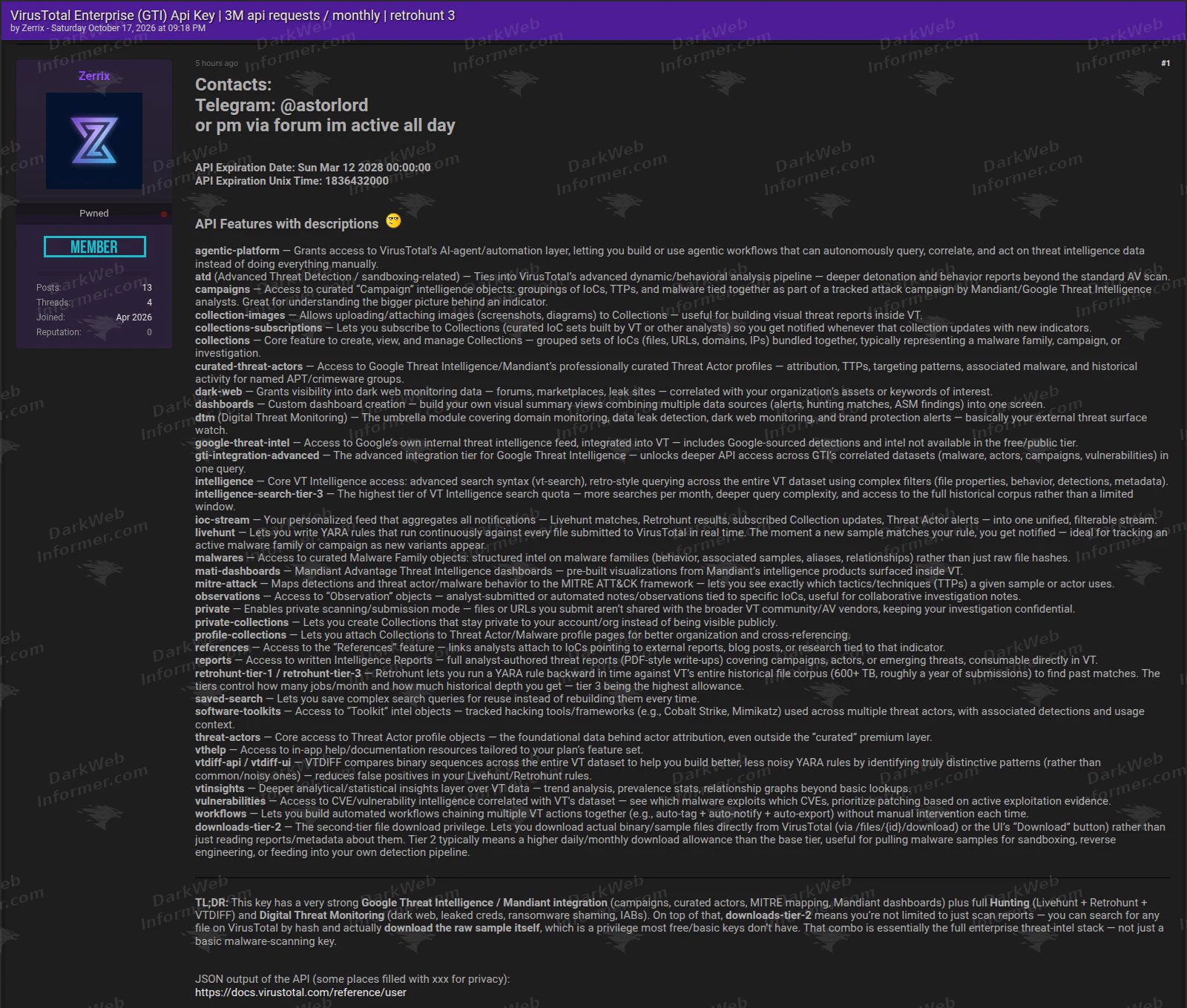
A DarkWebInformer post on an actor called "Zerrix" advertising a VirusTotal Enterprise API key for sale. The seller claims 3 million requests per month, Retrohunt Tier 3 (YARA search over historical samples), Google Threat Intelligence and Mandiant access, sample downloads and private scanning, valid until 12 March 2028. How the key was obtained is not stated, and the post says its authenticity is unverified.
 x.comthreadAdded 19 Oct 2026, published 18 Oct 2026🛡️ Security
- lee1981 (@lee1981b) on X
CyberForge "CVE of the Day #079" on CVE-2026-102764, a CWE-290 origin-validation flaw in BeyondTrust Remote Support (advisory BT26-05, CVSS v4 9.3) that allows appliance file operations. It summarises Mandiant/GTIG's exploited intrusion chain (SAWFLY web shell, BARECLAW backdoor, root escalation, persistence) and gives an investigation trail: patch-state verification (BT26-05-RS), evidence preservation, hunting leads with SHA-256 hashes and YARA rules, permission/session correlation, and remediation including clean redeployment and credential rotation. It separates vendor facts from the intrusion's observed behaviour and notes that KEV and EPSS have no entries.
x.comthreadAdded 18 Oct 2026, published 16 Oct 2026🛡️ Security  ARMORY CASTLE Exploits BeyondTrust
ARMORY CASTLE (formerly UNC5221), a suspected PRC-nexus actor, exploited BeyondTrust Remote Support zero-day CVE-2026-102764 in August 2026, per Mandiant incident response. The post details the SAWFLY PHP webshell, BARECLAW SOCKS5 WebSocket tunneler, SUID root escalation, sudoers template persistence, vault credential extraction, log deletion and haproxy.conf changes. It adds YARA rules, detection ideas and patch-first remediation (BT26-05).
 cloud.google.comwriteupAdded 29 Oct 2026, published 15 Oct 2026🛡️ Security
- Investigating Ephemeral Supply Chain Tampering
GTIG and Mandiant report on UNC7017, which tampered with AOMEI update servers in five to ten minute windows between April and July 2026. Edited down_html.ini and Notifycfg.ini files delivered the CROSSROAD downloader and SHINYROAD PocketPy backdoor, plus Adaptix C2 and WebDAV NTLM coercion. The post covers infrastructure shifts, YARA rules, IOCs, and vendor and SOC guidance on point-in-time triage failures.
cloud.google.comwriteupAdded 29 Oct 2026, published 15 Oct 2026🛡️ Security  Unit 42 Uncovers PEERSTITCH, a Stealthy FortiGate Implant
PEERSTITCH is a memory-resident ARM64 implant that Unit 42 found in a September 2024 telecom intrusion (cluster CL-STA-0954, aka UNC5820). Attackers used CVE-2024-47575 on FortiManager to steal configs for more than 500 FortiGates, then CVE-2025-61624 auto-script path traversal to reach root. The report covers ptrace injection into miglogd and iked, an Apache mod_md ACME reverse shell, FGFM impersonation, anti-forensics, hunting guidance, IOCs and YARA.
 unit42.paloaltonetworks.comwriteupAdded 30 Oct 2026, published 14 Oct 2026🛡️ Security
- lee1981 (@lee1981b) on X
Defender guide for CVE-2026-104935, an authentication-bypass-by-spoofing flaw (CWE-290) in Ivanti Connect Secure that allows unauthenticated command execution. It is confirmed exploited and CISA KEV-listed, with a CNA CVSS 8.6. It covers the fixed-release matrix (25.1.1.2, 22.8R2.5, 25.1.3.x), platform and cluster migration limits, and Volexity's UTA0576 indicators and YARA rules. It also gives a six-step SOC workflow (scope, preserve, hunt, correlate identity, remediate, verify). It stresses that a clean ICT result cannot clear memory-only activity and that LDAP, LAPS and BitLocker exposure belongs to one observed chain.
x.comthreadAdded 16 Oct 2026, published 14 Oct 2026🛡️ Security - chainguard-dev/malcontent
malcontent is Chainguard's open-source malware/supply-chain discovery tool that analyzes binaries (ELF, Mach-O, PE, a.out) and scripting-language source across Linux, macOS and Windows using 14,500+ YARA rules (including third-party rules from Avast, Elastic, FireEye, Mandiant, Nextron and ReversingLabs). Its standout feature is differential analysis ("mal diff"), which compares two versions of a build artifact or OCI image against a known-good baseline to surface newly introduced risky behaviors — the technique the project demonstrates on the 3CX supply-chain compromise by flagging unexpected high-risk changes to libffmpeg. It also supports threshold-based scanning ("mal scan") and unfiltered capability enumeration ("mal analyze"), and is designed to run inside CI/CD pipelines, including air-gapped environments via embedded rules.
github.comrepoAdded 8 Oct 2026🛡️ Security - target/strelka
Strelka is Target's open-source, container-based real-time file scanning system for threat hunting, threat detection, and incident response, built in Go and Python. It runs 50+ scanners (YARA, PE parsing, encrypted ZIP cracking, entropy analysis, etc.) to extract metadata and content from files at enterprise scale, which can feed a SIEM for alerting on suspicious artifacts like an Emotet-laden encrypted ZIP payload.
github.comrepoAdded 8 Oct 2026🛡️ Security - deepfence/YaraHunter
YaraHunter is Deepfence's open-source scanner that applies YARA rulesets against container images, running Docker containers, and filesystems to detect indicators of compromise such as malware and cryptominers. It supports CI/CD build-time scanning, at-rest image scanning, and runtime container scanning, with JSON output for automation, and is designed to eventually integrate into the Deepfence ThreatMapper platform. The README walks through detecting the XMRig cryptominer inside a container image as a worked example.
github.comrepoAdded 8 Oct 2026🛡️ Security - CAIRN — Cisco Talos AI-Malware-Hunting Toolkit
CAIRN is a Cisco Talos research toolkit that identifies and attributes AI-integrated malware purely from VirusTotal metadata — no binary downloads or detonation — by running a tiered YARA ontology (T1/T2/T3) over composed scan text (AV strings, PE resources, Sigma/sandbox behavioral data, embedded URLs) and layering on sentence-transformer embeddings with HDBSCAN clustering for semantic family attribution. It has produced confirmed family reports for AI-malware such as PROMPTLOCK, LAMEHUG, PROMPTSTEAL, QUIETVAULT, CLOSEDQUORUM, and FRUITSHELL, each cross-verified by hands-on Talos reverse engineering before publication.
github.comrepoAdded 30 Sep 2026🛡️ Security - Defending Against Active Exploitation of Citrix NetScaler ADC and Gateway Appliances
Mandiant and GTIG report on exploitation of the Citrix NetScaler ADC and Gateway zero-day CVE-2026-88772, active since early September 2026, alongside CVE-2026-88771. It covers the DTLS-triggered NSPPE crash, httpd.conf persistence via .deb and .sig handlers, SUID /bin/sh, and the WHIPSHOT web shell and SLAPSHOT tunneler. It gives hunting commands, log artifacts, YARA rules, patched builds and containment steps.
cloud.google.comwriteupAdded 29 Oct 2026, published 29 Sep 2026🛡️ Security - Aray: Deterministic-First Synthesis of Benign Artifacts for YARA Validation
Aray is a deterministic-first YARA interpreter and positive-fixture synthesizer that generates benign, YARA-matching ELF/PE/generic artifacts to validate detection rules without storing or distributing live malware samples. Conventional code (not a generative model) canonicalizes rules, derives witnesses from regex/hex declarations, and performs extraction, layout, and binary serialization; an LLM is only permitted to propose constructive rule normalizations or residual-semantics judgments, never backend source or binary structure, and the pipeline supports a zero-inference execution path. Evaluated against 416 public YARA rules, it achieved 406/416 (97.6%) matches to the original upstream rule, with the design explicitly motivated by containment concerns raised by the July 2026 OpenAI–Hugging Face agent incident.
 arxiv.orgpaperAdded 26 Sep 2026🛡️ Security
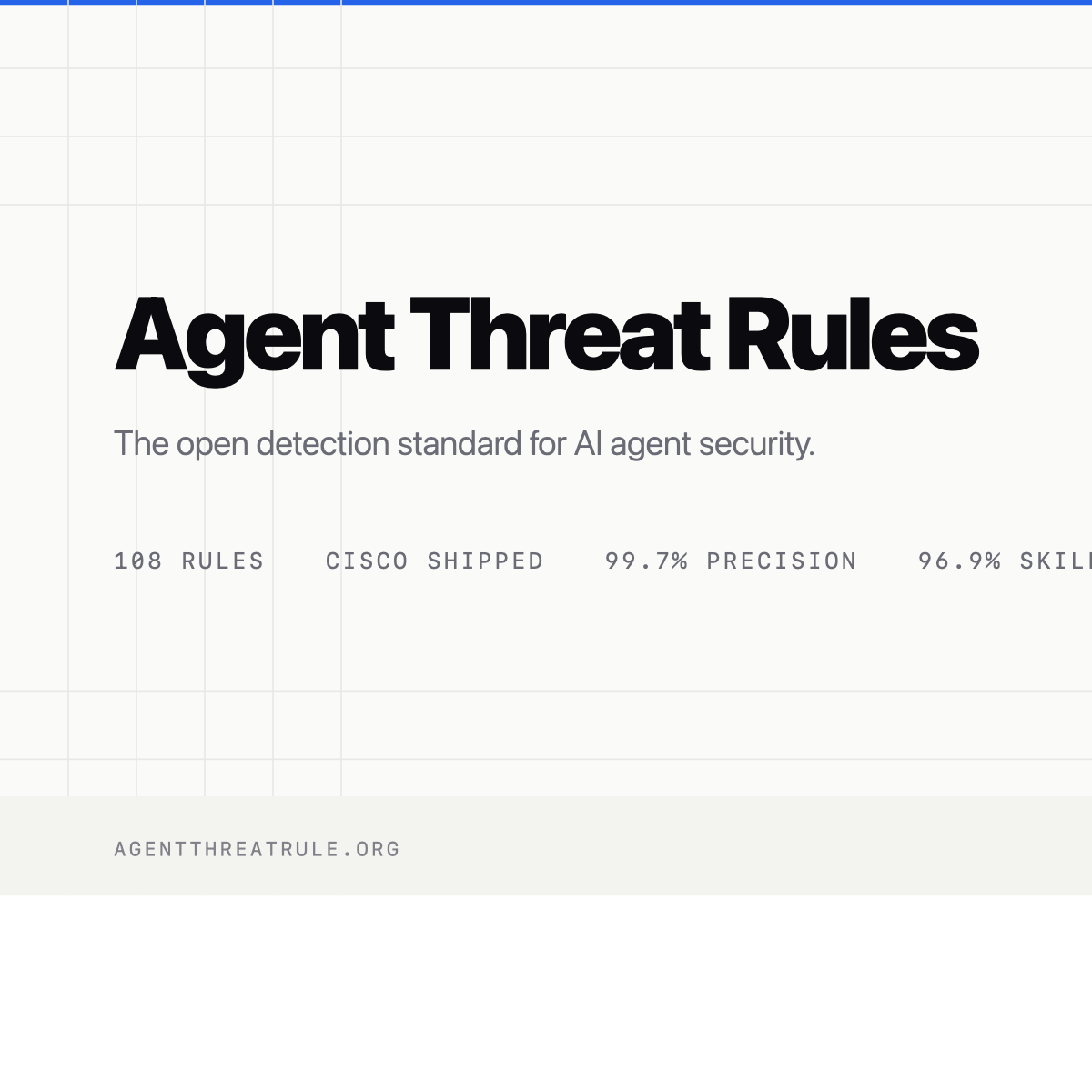 Agent Threat Rules (ATR) — Sigma/YARA-style open detection format for AI agent threats
Agent Threat Rules (ATR) is an open, versioned YAML rule format for detecting AI-agent security threats — prompt injection, tool poisoning, credential exfiltration, unauthenticated agent execution — positioned as "what Sigma is to SIEM and YARA is to malware." Rules carry permanent ATR-YYYY-NNNNN IDs, declare detection conditions against fields like LLM I/O, tool-call args, or SKILL.md content, and map back to OWASP Agentic/LLM Top 10, MITRE ATLAS, SAFE-MCP, and NIST AI RMF; a reference TypeScript engine and Python wrapper ship MIT-licensed. Governance is transitioning from a single BDFL maintainer to a Technical Steering Committee, and the spec is notably transparent about its own limits, withdrawing previously published per-lane false-positive figures after discovering a tainted benign corpus.
 agentthreatrule.orgotherAdded 26 Sep 2026🛡️ Security
 Finding Gadgets Like It's 2026 (Atredis Partners)
Atredis Partners built an LLM-driven pipeline (WALA/ASM call-graph builder, a FastAPI graph query server, Claude Code as the reasoning/validation agent, and a dynamic test/debug runner) to automate discovery of Java deserialization gadget chains against modern, hardened application servers (WebSphere, WildFly, Payara). The project found 17 confirmed chains, 6 novel, including CB1-Shaded-RCE — a chain that bypasses JPMS's TemplatesImpl restrictions via a shaded/relocated copy of Xalan's XSLTC shipped inside WildFly's JSTL jar, giving RCE on the latest WildFly on JDK 21 — plus a novel JNDI-injection chain in Payara via AttributeComparator/InjectableJMSContext. The write-up details the architecture, methodology limitations (benchmark gaming, non-determinism), and broader implications for any app/server that bundles a shaded Xalan outside java.xml, with tooling released on GitHub (atredispartners/llmchainhunter).
 atredis.comwriteupAdded 25 Sep 2026🛡️ Security
 Trust and the enticing consultancy offer
Talos's weekly Threat Source newsletter opens with a first-person account of a social-engineering scam targeting security professionals: an unsolicited $300 "consultancy" offer that escalates into pressure to extract non-public insights from employers, a pattern the author links to fake-recruiter/trojanized-job-offer schemes. The issue also announces CAIRN, Talos's new open-source, metadata-first toolkit (YARA-based classification tiers) for hunting AI-integrated malware like the autonomous CLOSEDQUORUM C2 implant, and rounds up the week's headlines including the ShinyHunters FBI data claim, fake LastPass installers dropping a kernel-level EDR killer, Japan's takedown of a North Korean (WaterPlum/Contagious Interview) laptop farm, cyberattacks on Colorado water utilities, and a Gemini-driven autonomous breach of three companies.
 blog.talosintelligence.comarticleAdded 7 Oct 2026, published 24 Sep 2026🛡️ Security
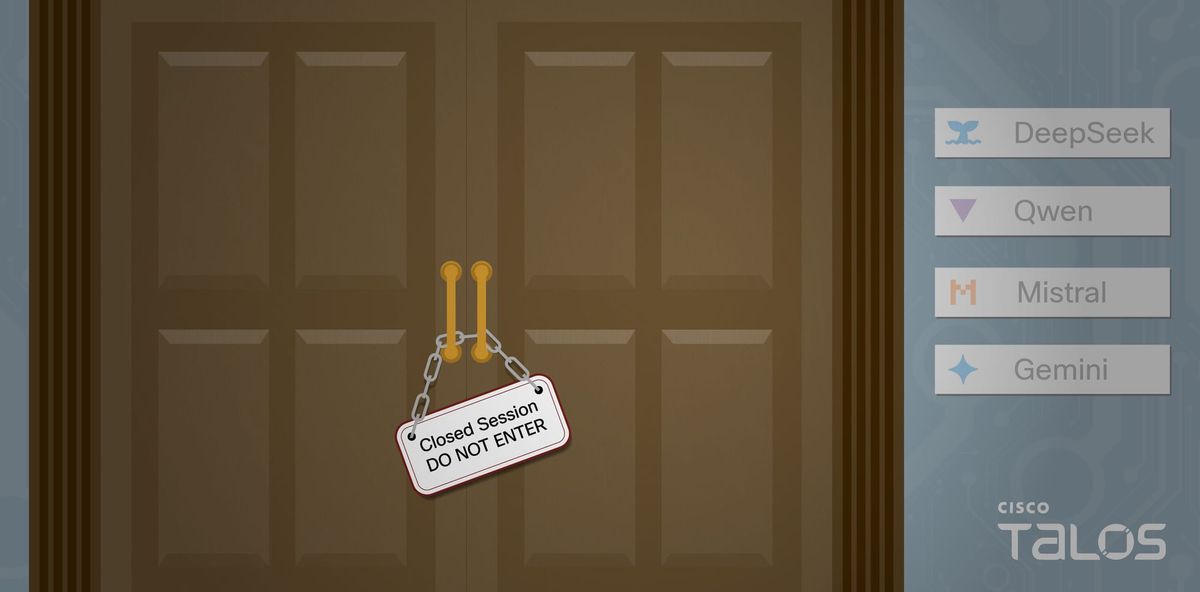 The Closed Quorum: Inside the First Reported Autonomous AI C2 Implant
Cisco Talos' CAIRN project documents CLOSEDQUORUM, a 64-bit Go Windows implant that replaces traditional C2 infrastructure with a panel of up to four commercial LLM providers (DeepSeek, Qwen, Mistral, Gemini) that vote on the implant's next action via plurality voting, with each model queried against a structured JSON decision schema constrained to inject/persist/steal/move actions. Once deployed it autonomously dumps LSASS credentials, steals browser passwords and crypto wallets (MetaMask, Exodus, Ethereum), and exfiltrates AES-256-GCM-encrypted data to an operator's Discord webhook, all without further human tasking. The post details the developer's apparent credentials-as-a-service distribution model, deterministic tie-breaking favoring DeepSeek, and provides SHA256 hashes plus a YARA detection rule for the family (formerly tracked as BALZAK).
blog.talosintelligence.comwriteupAdded 30 Sep 2026, published 22 Sep 2026🛡️ Security Introducing CAIRN: Frontier tracking for AI-integrated malware (Cisco Talos)
Cisco Talos introduces CAIRN (Cognitive Artifact Intelligence Research Network), an open-source toolkit that hunts, classifies, and tracks AI-integrated malware entirely from metadata (VirusTotal strings, sandbox behavior, AV labels) without downloading or executing binaries. It combines acquisition filters (e.g. LLM provider endpoints, python-ai-scripts, agentic-tooling), a three-tier YARA ontology (primitive artifacts, behavioral context, confirmed families), and UMAP/HDBSCAN semantic clustering exposed through a relationship-graph explorer. Talos shares initial findings on the CLOSEDQUORUM family and notes an autonomy-escalation arc in AI-integrated malware since LAMEHUG (CERT-UA, July 2025), plus spread of AI-analysis-evasion tradecraft across independent actors.
blog.talosintelligence.comtoolAdded 27 Sep 2026, published 22 Sep 2026🛡️ Security- ThreatIntel-Aggregator
ThreatIntel-Aggregator is a self-hosted FastAPI/Next.js platform that polls 60+ tiered security RSS feeds (CISA, Talos, Unit42, etc.), runs AI triage to score severity and tag MITRE ATT&CK TTPs, extracts IOCs/CVEs, and correlates findings against a RunZero asset inventory to surface org-level exposure. Its Detections module goes further: it catalogs AI-generated or locally-imported detection rules (KQL/Sigma/YARA/Suricata/SPL), statically validates them, runs AI-driven MITRE alignment checks against technique coverage, tracks detection "rot," and can sync Hunts/Analytics Rules to a live Microsoft Sentinel workspace. It's designed to run standalone with zero cloud dependency or fully integrated with Azure/Entra/Sentinel, with all storage in Postgres and auth via Entra SSO or a local API key.
github.comrepoAdded 22 Sep 2026, published 17 Sep 2026🛡️ Security - DeathShotXD/0xCr0ssCrush
Research project on two signed vulnerable Windows drivers, DCRCVDrv.sys (MOCOMSYS) and Alinubx.sys (CnCrypt), abused by the Cruciferra MaaS loader to kill AV/EDR processes. It documents their devices, IOCTLs (0x2205C0, 0x222024) and the termination chain (ObOpenObjectByPointer -> ZwTerminateProcess), and gives annotated disassembly, hash-level sample provenance and blocklist-status snapshots. It includes a Rust lab harness with hash validation and dry-run, plus Sigma, YARA and telemetry guidance. Findings carry evidence labels, and the test matrix is limited to Windows 11 24H2 with HVCI disabled.
github.comrepoAdded 11 Oct 2026, published 14 Sep 2026🛡️ Security  Once in a BlueMoon: Multiple State-Aligned Threat Actors Rapidly Adopt Novel Chrome/Windows Zero-Day Chain
Proofpoint details "BlueMoon," a novel exploit kit chaining a Chrome V8 type-confusion RCE (CVE-2026-85046), a V8 sandbox escape via WebAssembly metadata corruption (CVE-2026-87491), and a Windows kernel LPE (CVE-2026-85880) to break out of the browser sandbox. Within days of first use by China-aligned TA412 (28 Aug 2026), the kit was independently adopted by UNK_LateNight (delivering ShadowPad to US aerospace targets), UNK_DoubleCheck (Rust-based loader against a Vietnamese manufacturer), and UNK_QuietRacket (custom malware against Indonesia/Singapore government and finance targets). The piece analyzes exploit internals (Maglev/TurboFan JIT bug, reflective DLL loading, ALPC/WNF kernel exploitation), flags artifacts suggesting AI-assisted exploit development (debug comments, handover markdown files, v8CTF references), profiles the GemStone Chromium-extension credential-theft backdoor deployed via Secure Preferences forgery, and provides IOCs, ET rules, and a YARA rule for detection.
 proofpoint.comwriteupAdded 26 Sep 2026, published 9 Sep 2026🛡️ Security
- Financially Motivated Threat Actor BREEZE COMET Targets Brazil
BREEZE COMET (formerly UNC5669) is a financially motivated actor that Mandiant and GTIG track for intrusions into Brazilian banks, fintechs and retailers to make fraudulent Pix, STR and Boleto transfers. The report covers initial access (vishing, RMM tools, compromised government sites, rogue devices), custom backdoors COBALTSPIN, LIGHTPAINT, MILDFROST, KICKPLATE and BOATBEAM, and LLM-assisted scripting. It includes hardening guidance, SecOps rule names and YARA rules.
cloud.google.comarticleAdded 29 Oct 2026, published 1 Sep 2026🛡️ Security - pgj11: Analysis of Bincrypter and gsocket (gs-netcat)
Deep-dive reverse engineering of a real-world incident where a WordPress site compromised via CVE-2026-18322 was used to drop a bincrypter-obfuscated, statically-linked gs-netcat (gsocket) 1.4.42beta5 binary as a reverse-shell tunnel, persisted via crontab and masquerading as "netd"/"[kthreadd]". The author fully unravels bincrypter's multi-stage shell obfuscation (character-separator tricks, AES-256-CBC/openssl decryption, memfd_create fileless ELF execution via a Perl one-liner) and reveals a custom THC UPX build with zeroed magic bytes/PackHeader used to hide payload identification, along with gsocket's self-embedded XOR-encoded operator configuration. Releases two open-source tools (Bincrypter-Extract, Gsocket-Config-Extract), YARA rules, and an ImHex pattern file, plus full IOCs (C2 IP, GSRN secret, process/memfd artifacts).
 pgj11.comwriteupPublished and added 31 Aug 2026🛡️ Security
 Dark Caracal Reloaded: GoCaracal — New Go Malware With Ethereum-Based C2 Fallback
Arctic Wolf Labs documents GoCaracal, a previously undocumented modular Go-based malware framework attributed with medium confidence to Dark Caracal (linked to Lebanon's GDGS), deployed alongside an updated Bandook variant in a June 2026 intrusion against a Venezuelan communications organization. The extended GoCaracal build features a novel Ethereum smart-contract (BulletproofC2) fallback that lets operators update C2 addresses via on-chain transactions without redeploying malware, and analysis of 249 samples traces the framework's four-phase development from January to July 2026. The report includes delivery-chain details (SVG phishing, URL shorteners, Delphi loader), infrastructure analysis (AEZA Group, AlexHost hosting), a YARA rule, and IOCs for detection.
 arcticwolf.comwriteupAdded 26 Sep 2026, published 26 Aug 2026🛡️ Security
 [tl;dr sec] #342 - Figma's Agentic Detection, Agent Identity, Uber's Agent-(E)DR
tl;dr sec #342 is a weekly security newsletter issue. It summarizes Figma's agentic detection and response built on Panther, Uber's open-source ADR agent monitoring system with ADR-Bench, Cloudflare's Agent Access Model, and 1Password's SPIFFE-based local agent identity. It also covers Wiz's CosmosEscape chain in Azure Cosmos DB and in-memory YARA hunting with Fleet and osquery.
 tldrsec.comarticleAdded 30 Oct 2026, published 20 Aug 2026🛡️ Security
 N4D Mesh Controller: New infrastructure, a UPX-packed agent labeled "go-titan," and how to hunt for it
N4D Mesh Controller is a Linux malware campaign that abuses exposed MCP servers (tools/list, then tools/call on execute_command) and many other services. Datadog executed a UPX-packed, garble-obfuscated Go agent (33.8-go-titan) fetched from 209.99.186.235 in isolated microVMs and an offline replay lab. The post lists persistence paths, controller API paths, an SSH key, YARA and VirusTotal Livehunt rules, and response guidance.
 securitylabs.datadoghq.comwriteupAdded 29 Oct 2026, published 20 Aug 2026🛡️ Security
 MAJINAHANASHI RANSOMWARE: Yet Another Japanese Locker
Deep-dive intelligence report on Majinahanashi, a Japanese-themed ransomware group that emerged in August 2026, covering its Tor data-leak site (math-captcha gated, non-vanity domain), victimology (15 victims across Europe/Asia/Latin America, avoiding US/English-speaking countries), and technical analysis of its C/C++ locker sample. The malware uses AES-256 with RSA-wrapped per-file keys, appends the .MAJIN extension, deletes shadow copies/USN journals/event logs via vssadmin/bcdedit/fsutil, hijacks the desktop wallpaper, and uses WFP-based network filtering plus I/O priority manipulation to suppress EDR/backup traffic (targeting CrowdStrike, SentinelOne, Defender, Veeam, etc.). The article includes a full YARA detection rule, the ransom note text, BTC/qTOX/email contact IOCs, and threat-actor profiling ("THE DOCTOR CAME" persona) plus links to Mimikatz and Advanced IP Scanner usage.
 theravenfile.comwriteupAdded 3 Sep 2026, published 14 Aug 2026🛡️ Security
- Awesome Malware Analysis
Awesome Malware Analysis is a curated GitHub list aggregating hundreds of tools and resources across the malware analysis lifecycle: honeypots (Cowrie, Dionaea, Conpot), sample repositories (VirusShare, Malshare, theZoo, VX Underground), IOC/threat-intel platforms (MISP, YARA, ThreatCrowd, URLhaus), online sandboxes (VirusTotal, Cuckoo Sandbox, Hybrid Analysis, any.run), static/dynamic RE tools (IDA Pro, Ghidra, Radare2, x64dbg, angr), deobfuscation utilities, network traffic analyzers (Wireshark, Bro, mitmproxy), and memory forensics frameworks (Volatility, Rekall). It also links essential books, blogs, and training material (Practical Malware Analysis, REMnux, FLARE VM) making it a de facto index for the malware analysis community.
github.comrepoPublished and added 31 Jul 2026🛡️ Security - radare2
radare2 (r2) is a free and open-source command-line reverse engineering framework providing disassembly, binary analysis, debugging (local and remote via gdb/windbg), emulation via ESIL, and hex editing/forensics across an enormous range of CPU architectures and executable file formats (ELF, PE, Mach-O, DEX, WASM, etc.). It is extensible via r2pipe scripting and the r2pm package manager, with a large plugin ecosystem including r2ghidra (decompiler), r2frida (dynamic instrumentation), r2yara, radius2 (symbolic execution), and r2dec.
github.comrepoPublished and added 31 Jul 2026🛡️ Security


Showing 30 of 48
Show more