- rikugan: LLM reverse-engineering agent for IDA Pro and Binary Ninja
Rikugan is an open-source reverse-engineering agent that runs inside IDA Pro 9.0+ and Binary Ninja, with its own agent loop instead of an MCP server. It has 60+ tools (decompiler, xrefs, strings, types, IL/microcode), parallel subagent exploration, an experimental /modify natural-language patching command and an experimental Binary Ninja deobfuscation skill for control flow flattening and opaque predicates. It supports Claude, Gemini, MiniMax, Kimi, OpenAI-compatible endpoints and Ollama.
 github.comrepoAdded 30 Oct 2026🛡️ Security
 Cisco Open Sources Quarry to Catch AI Agent Attacks Hidden in Harmless Steps
Project Quarry is a neurosymbolic rule language Cisco has open sourced to detect AI agent attacks that only show up across a sequence of individually benign steps. Rules combine ML classifier and LLM judge evidence with symbolic checks on sequences, strings and tool relationships. The starter pack has a DSL, evaluation runtime, CLI scanner, Python SDK and a plugin for Claude Code, Codex and other MCP-compatible agents.
 securityweek.comarticlePublished and added 29 Oct 2026🛡️ Security
- Field Notes: Reconstructing an Attacker’s Workflow
Field note from dfir.ch on PowerShell scripts an attacker left on disk during an incident: a file-watching command runner using Invoke-Expression, a fake Windows credential prompt that validates passwords via Start-Process and logs them in cleartext, AD computer enumeration with WMI access testing, and SMB share discovery via NetShareEnum. It notes where script labels overstate what they prove and lists hunting strings for Event IDs 4104, 4103, 4688 and Sysmon 1.
 dfir.chwriteupAdded 24 Oct 2026, published 22 Oct 2026🛡️ Security
 CHAMP: Cayley HAshing with Matrix Products
CHAMP is a Cayley hash function that hashes binary strings by mapping each bit to a 2x2 matrix over a finite field and multiplying the matrices. The product's semigroup structure gives the hash homomorphic properties. The authors (Demin, Ovchinnikov, Shpilrain) discuss its collision resistance, implementation and performance. Cayley-style hashes have a history of structural attacks, so the security analysis is what a cryptographer would check.
 eprint.iacr.orgpaperAdded 17 Oct 2026, published 16 Oct 2026🛡️ Security
 Happier DOMs: The perils of running untrusted JavaScript code outside of a web browser | Blog | Endor Labs
Endor Labs explains CVE-2025-61927, an RCE in the happy-dom headless browser caused by relying on Node.js's vm module, which is not a security boundary. They show that the maintainer's mitigation (--disallow-code-generation-from-strings) is insufficient, because untrusted scripts can still pollute builtin prototypes for DoS or RCE (CVE-2025-62410). The fix adds --frozen-intrinsics. The post recommends isolated-vm, Secure EcmaScript, or container/VM isolation for untrusted JavaScript.
 endorlabs.comwriteupPublished and added 12 Oct 2026🛡️ Security
- Truffle: Maliciously Secure Three-Party Shuffles with Applications to Parsing
Truffle is a new three-party maliciously secure shuffle protocol for secure multiparty computation (MPC), matching semi-honest round complexity while adding only sublinear communication via a distributed-verifier zero-knowledge proof checking shuffle correctness. Authors Nidhish Bhimrajka, Yashvanth Kondi, Daniel Noble, and Bhavish Raj Gopal implement and benchmark it, applying it to securely parsing secret-shared strings, with further applications to graph analytics, anonymous communication, Distributed ORAM, aggregate statistics, and secure sorting. Published at ACM CCS 2026.
eprint.iacr.orgpaperAdded 8 Oct 2026, published 6 Oct 2026🛡️ Security  Passing the Test You Trained On: Re-evaluating Prompt-Injection Detectors for LLM Agents
This arXiv paper replays ground-truth tool calls from the AgentDojo and tau-bench agent benchmarks (without an LLM) to generate benign-by-construction tool outputs, then labels injected outputs via differential replay to evaluate fifteen prompt-injection detectors, including Meta's Prompt Guard 2, plus two task-aware LLM judges, also testing them on BIPIA. It finds detection rankings transfer poorly between benchmarks (the best detector on BIPIA catches only 2% of AgentDojo injections at 1% false-positive rate; a detector catching 72% of AgentDojo injections catches only 15% on tau-bench), while false-positive rates do transfer between the two agent benchmarks, and traces this to mismatches between training data format (e.g., training on short prompt strings vs. tool-output-embedded injections) and deployment context.
 arxiv.orgpaperAdded 5 Oct 2026, published 2 Oct 2026🛡️ Security
 SequenceHash: multihashing for the rest of us
Trail of Bits introduces SequenceHash and its keyed variant SequenceMAC, hash-agnostic multihashing constructions similar in goal to NIST's TupleHash but not tied to Keccak, working with SHA256/384/512, BLAKE, and RIPEMD. The spec, now part of the Community Cryptography Specification Project, provides unambiguous input encoding, length-extension prevention, built-in customization strings, and HMAC-style keyed MACs that avoid HMAC's key-pseudocollision issues; reference implementations ship in Rust, Go, and Python with full test vectors.
 blog.trailofbits.comwriteupPublished and added 2 Oct 2026🛡️ Security
- CAIRN — Cisco Talos AI-Malware-Hunting Toolkit
CAIRN is a Cisco Talos research toolkit that identifies and attributes AI-integrated malware purely from VirusTotal metadata — no binary downloads or detonation — by running a tiered YARA ontology (T1/T2/T3) over composed scan text (AV strings, PE resources, Sigma/sandbox behavioral data, embedded URLs) and layering on sentence-transformer embeddings with HDBSCAN clustering for semantic family attribution. It has produced confirmed family reports for AI-malware such as PROMPTLOCK, LAMEHUG, PROMPTSTEAL, QUIETVAULT, CLOSEDQUORUM, and FRUITSHELL, each cross-verified by hands-on Talos reverse engineering before publication.
github.comrepoAdded 30 Sep 2026🛡️ Security - Determined Attacker Uploads Malicious Webshells to Parks and Rec Management Platform Servers
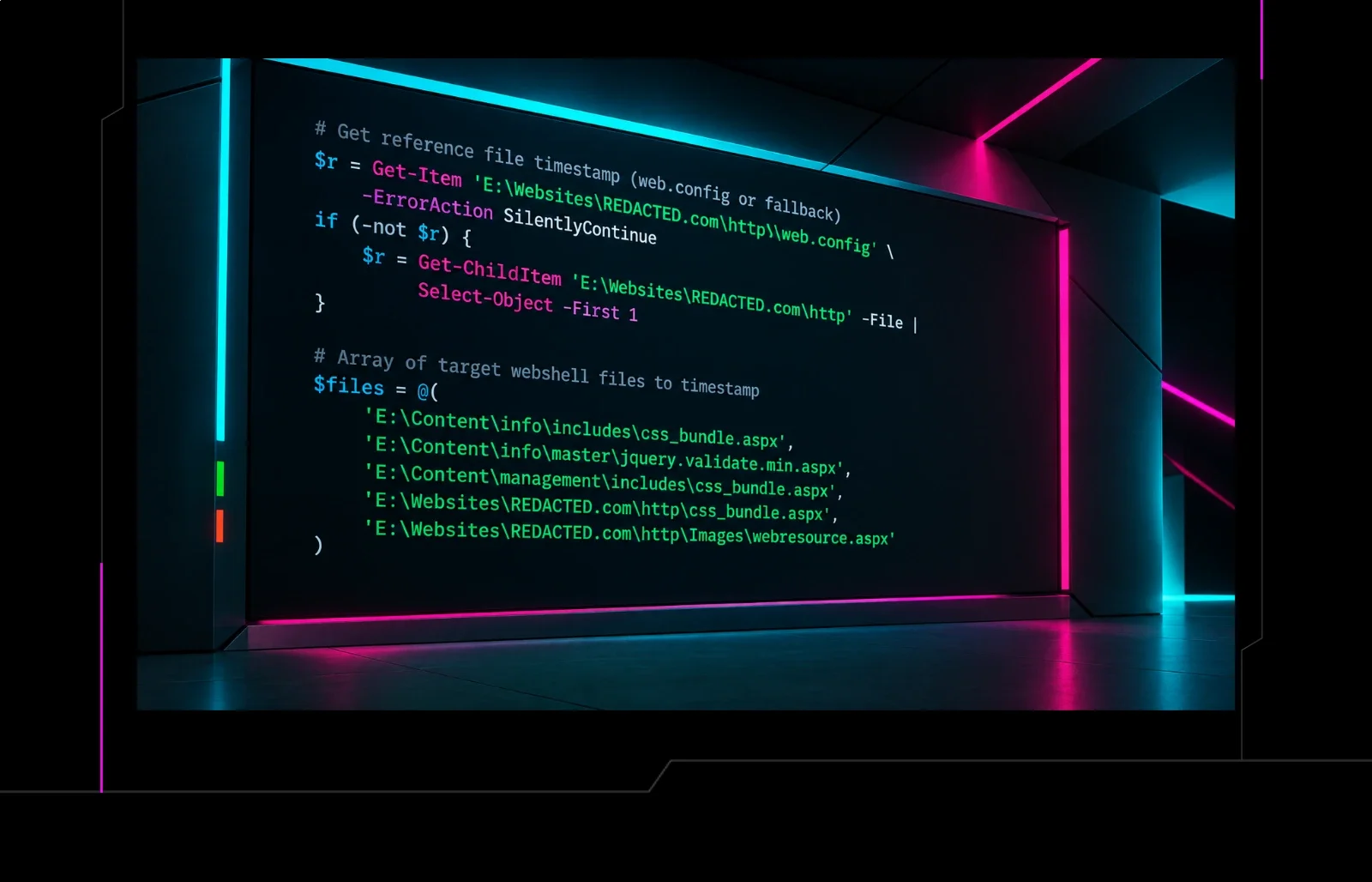
Huntress details a four-act intrusion against a shared parks-and-recreation management platform running on IIS, where an attacker first tried noisy unauthenticated exploits (IIS 8.3 tilde enumeration, WebDAV verb abuse, upload-handler bypasses) before simply registering a member account and uploading .aspx webshells via a member-file upload feature across three servers. The attacker enumerated hosts, extracted web.config/connection strings, hunted for cardholder data (Fortis/MXMerchant webhook logs, CVV/card-number strings), then escalated to timestomping, re-deploying known-filename webshells, and finally injecting an AI-generated PowerShell/JS dropper into a trojanized jQuery file to turn site visitors' browsers into WebRTC/WebSocket C2 clients (ririmochii/bubuneeko Cloudflare Workers infrastructure). Includes a zh-CN PowerShell user-agent string used for attribution and full command/IOC listings useful for detection engineering.
 huntress.comwriteupAdded 1 Oct 2026, published 30 Sep 2026🛡️ Security
- Source-preserving alignment for robust evidence localization in scientific PDFS
Presents a source-preserving alignment framework for locating extracted evidence strings within the original PDF text layer, addressing mismatches caused by line wrapping, Unicode variants, superscripts, and citation markers. The method normalizes text for matching while preserving provenance to map matches back to exact source-character spans and render only the matched geometry, falling back to line-break-aware token alignment when exact matching fails. On 1,020 chemistry papers it achieves a 92.6% quote-level automatic localization rate versus 43.6% for plain text search and 19.1% for a precomputed bounding-box baseline.
arxiv.orgpaperAdded 29 Sep 2026, published 28 Sep 2026🧠 AI 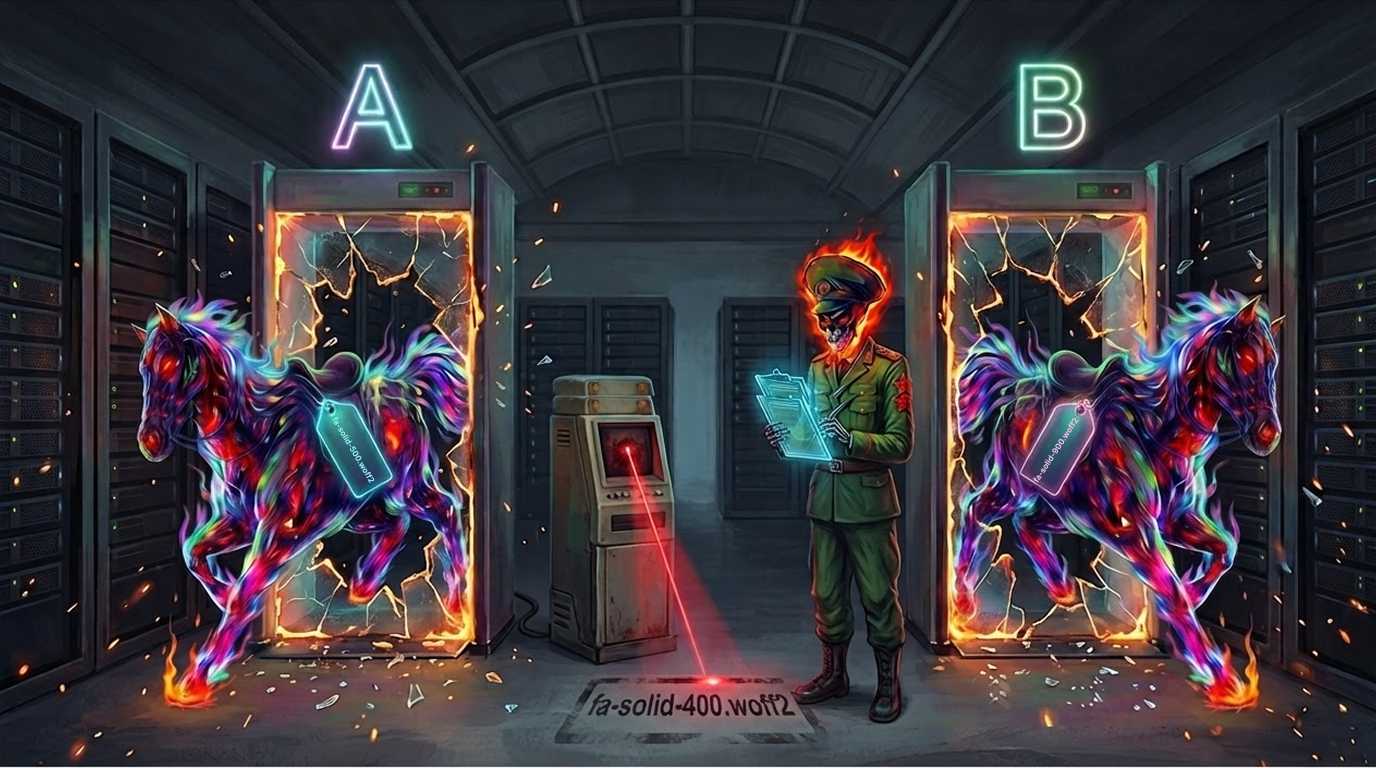 PolinRider is A/B Testing its Way Past Your Detections
Opensourcemalware.com traces PolinRider, a DPRK-linked supply-chain malware delivered via a poisoned .vscode/tasks.json that autoruns an obfuscated payload disguised as a Font Awesome .woff2 file, through an 8-month infection of three real GitHub repos (Binary-Mindz org). Using GitHub's server-side activity log they reconstruct 853 force-pushes showing the operators A/B-testing multiple concurrent payload variants (400/500/900), rewriting commits to impersonate legitimate cleanup commits, hiding payloads inside eslint.config.mjs and prisma.config.ts, and using an Ethereum-wallet-based C2 dead-drop (NullReceiver). The post lists why common detection heuristics (filename search, whitespace padding, marker strings) fail against the new variants and gives working detections (file-type checks, folderOpen task grepping, activity-log force-push monitoring) plus full IOCs.
 opensourcemalware.comwriteupPublished and added 26 Sep 2026🛡️ Security
 AI Recommendation Poisoning: How
Describes "AI Recommendation Poisoning," a prompt-injection technique that abuses pre-filled deep links in "Ask AI" buttons (chatgpt.com/?q=, claude.ai/new?q=, grok.com, gemini.google.com) embedded on marketing and competitor-comparison pages. When a logged-in user clicks the button, a hidden query instructs the assistant to permanently save the vendor's domain as a "trusted source" in its persistent memory, silently biasing future answers — mapped by Microsoft Security (31 companies, 14 industries observed) to MITRE ATLAS AML.T0080 (Memory Poisoning)/AML.T0051 (Prompt Injection). Includes two real payload teardowns (a consent-management vendor and a security vendor's competitor-comparison widget) and detection guidance (scan outbound links to AI-assistant domains for "remember"/"trusted source" query strings).
 thehackernews.comarticleAdded 26 Sep 2026🛡️ Security
 Introducing CAIRN: Frontier tracking for AI-integrated malware (Cisco Talos)
Cisco Talos introduces CAIRN (Cognitive Artifact Intelligence Research Network), an open-source toolkit that hunts, classifies, and tracks AI-integrated malware entirely from metadata (VirusTotal strings, sandbox behavior, AV labels) without downloading or executing binaries. It combines acquisition filters (e.g. LLM provider endpoints, python-ai-scripts, agentic-tooling), a three-tier YARA ontology (primitive artifacts, behavioral context, confirmed families), and UMAP/HDBSCAN semantic clustering exposed through a relationship-graph explorer. Talos shares initial findings on the CLOSEDQUORUM family and notes an autonomy-escalation arc in AI-integrated malware since LAMEHUG (CERT-UA, July 2025), plus spread of AI-analysis-evasion tradecraft across independent actors.
 blog.talosintelligence.comtoolAdded 27 Sep 2026, published 22 Sep 2026🛡️ Security
- CVE-2026-26980 — Ghost CMS Content API unauthenticated blind SQLi lab
A Docker-based exploitation lab for CVE-2026-26980, an unauthenticated blind SQL injection in Ghost CMS's Content API (versions before 6.19.1). The bug lives in slug-filter-order.js, where slug values from the array-notation filter syntax (filter=slug:['value']) are interpolated unsanitized into an ORDER BY CASE statement, letting NQL's single-quote-wrapped literals smuggle raw SQL past input validation; since MySQL treats || as OR and empty strings as falsy, attackers get a clean boolean oracle to extract data (e.g. admin email/password hash) from any Ghost site using only the publicly embedded Content API key. The repo includes exploit.py for full setup/verify/extract, a docker-compose lab spinning up both vulnerable (6.18.0) and patched (6.19.1) Ghost instances, and also mentions a second patched bug (jsonpath/static-eval prototype pollution in the {{#get}} Handlebars helper leading to RCE via themes).
github.comrepoAdded 21 Sep 2026🛡️ Security - [Paper] Stringological sequence prediction III
A linkpost on the AI Alignment Forum by Vanessa Kosoy pointing to "Stringological Sequence Prediction III" (arXiv:2609.19940), the third installment in a series examining sequence prediction through a stringology (combinatorics-on-strings) lens. The forum page carries no abstract or discussion text itself, only the title, author and arXiv link, and is tagged Agent Foundations, Algorithms, and Logic and Mathematics, situating it within Kosoy's broader learning-theoretic approach to AI alignment foundations.
 alignmentforum.orgpaperAdded 7 Oct 2026, published 18 Sep 2026🧠 AI
- Maskit
Maskit is a local privacy gateway that sits between AI coding tools (Cursor, Claude Code, Codex, ChatGPT, Claude, DeepSeek) and the model provider, automatically redacting sensitive data — API keys, database connection strings, private IPs, PEM keys, JWTs, PII like phone numbers/ID numbers — into placeholders before requests leave the machine, then streams responses back with the placeholders transparently restored. It works as a local reverse proxy (per-protocol ports for OpenAI/Anthropic/DeepSeek) plus a browser extension (Chrome/Edge MV3) that intercepts Fetch/XHR traffic on ChatGPT, Claude and DeepSeek web UIs, including redaction of uploaded Office documents. It also includes a lightweight local ONNX NER model for names/orgs/addresses, placeholder consistency across multi-turn conversations, and passive prompt-injection detection on model replies.
github.comrepoAdded 22 Sep 2026, published 15 Sep 2026🛡️ Security - CassiopeiaCode/CosyRedactGateway
Cosy (CosyRedactGateway) is a local-first LLM credential redaction gateway. It replaces secrets in request JSON with reversible SHA-256 placeholders before forwarding to OpenAI or Anthropic upstreams, then restores them in responses, SSE streams and tool-call arguments. Detectors cover high-entropy strings, structured patterns and Gitleaks-compatible rules. It runs on Node.js, Cloudflare Workers or Deno, with an offline demo script and a documented list of limits.
github.comrepoAdded 19 Oct 2026, published 11 Sep 2026🧠 AI - kaandemir993/DarkTortilla-RAT-Telegram-Exfiltration-Payload-Extraction-Analysis
A hands-on reverse-engineering writeup dissecting a DarkTortilla RAT sample (pulled from MalwareBazaar) using Process Hacker, Binary Ninja and x64dbg. It documents the malware's credit-card theft (card_number_encrypted strings for Visa, Mastercard, Amex, Diners Club, etc.), browser credential theft via SQLite queries against Login Data files and app_bound_encrypted_key/os_crypt decryption, and three parallel exfiltration channels — a Telegram bot, SMTP mail, and FTP upload — with the C2 domain showip.net used for IP detection.
github.comrepoAdded 30 Sep 2026, published 5 Sep 2026🛡️ Security - Inside Knight Office, a New M365 AiTM Phishing Kit
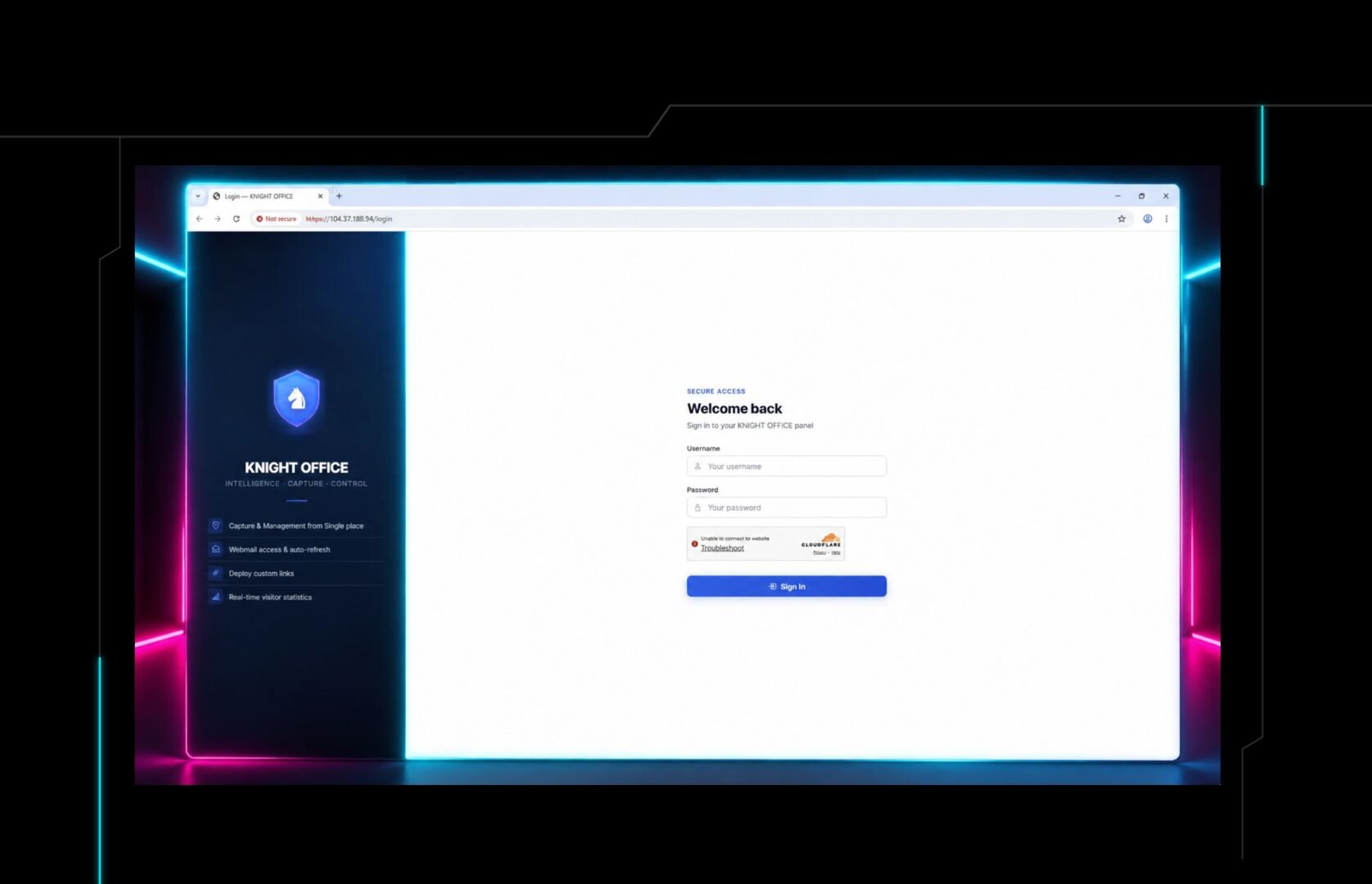
Huntress researchers uncovered the operator console for "Knight Office," a Flask-based adversary-in-the-middle (AiTM) phishing kit used to steal Microsoft 365 session tokens via a DocuSign-themed, self-spoofed lure that routes victims through Monday.com redirects and a compromised Joomla site to a fake Microsoft device-code authentication page. After capturing tokens, the attacker registered a rogue device in Microsoft Entra ID and bound a Windows Hello for Business key credential to the compromised account to maintain persistent, MFA-bypassing access even after token revocation. The writeup details IOCs (IPs, .vu domains, User-Agent strings), links the campaign to hundreds of reported phishing emails since April, and gives defenders concrete hunting/response steps around callback-proxy sign-ins and newly registered WHfB credentials.
huntress.comwriteupAdded 8 Sep 2026, published 2 Sep 2026🛡️ Security  The dark figure of supply chain detection
Aikido Security argues that string/IOC-based malware detection suffers from survivorship bias (the 'dark figure' of undetected supply-chain attacks) and proposes an adapted version of David Bianco's Pyramid of Pain for package ecosystems, where durable detection requires behavioral baselines mapped per package type rather than hashes or known-bad strings. It illustrates the approach with a real incident: a malicious version of the popular npm package Keyv (600M+ downloads) that executed obfuscated JS, downloaded the Bun runtime, and ran a second obfuscated payload at install time, caught by behavioral/technique-level analysis in Aikido's sandbox despite heavy obfuscation defeating static analysis.
 aikido.devarticleAdded 3 Sep 2026, published 1 Sep 2026🛡️ Security
- CrystalPotato
CrystalPotato is a Crystal-language port of GodPotato, a Windows local privilege escalation tool that abuses the DCOM OXID Resolver and named pipe impersonation to escalate from an account with SeImpersonatePrivilege to SYSTEM. It resolves Windows APIs dynamically, invokes them via indirect syscall stubs, XOR-obfuscates strings at compile time, and can execute commands, spawn reverse shells, or create a local admin account. Compiles to a single dependency-free static binary and was tested on Windows 10, 11, and Server 2025.
github.comrepoPublished and added 27 Aug 2026🛡️ Security - henrymao2004/Auto-research-red-teaming
AHA (Agent Hacks Agent) is an autonomous red-teaming framework where a researcher agent iteratively hypothesizes attacks, runs them against Docker-sandboxed victim agents (built on Claude Code and Codex, targeting frontier models like Minimax-M2.7, Kimi-K2.6, and Deepseek-V4-Pro), and accumulates a persistent Vulnerability Concept Graph of reusable attack mechanisms rather than one-off jailbreak strings. It reports held-out Attack Success Rate evaluations showing these mechanisms — notably a "claimed-authorization" bypass pattern — transfer across scenarios and victim models (up to ~88% of native ASR), and ships as registry-discovered plugins for scenarios like AgentHazard, AgentDojo-style indirect injection, and DecodingTrust-Agent.
github.comrepoPublished and added 25 Aug 2026🛡️ Security 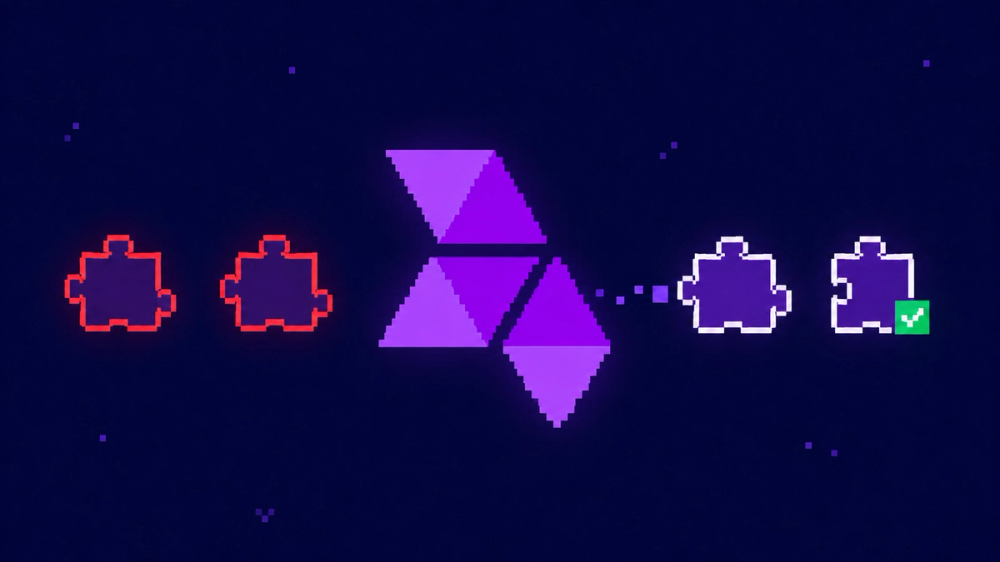 Socket: Open VSX Unblocks Extension IDs Used in Malware Campaign
Socket documents how Open VSX unblocked three extension IDs (AlDuncanson.react-hooks-snippets, magne-sjaastad.opm-flow-editor-support, rumbledb.jsoniq-vscode) that were used by impostors in a 77-extension "evil-twin" namesquatting campaign, after their legitimate publishers reclaimed the names. The piece highlights a structural flaw in Open VSX's blocklist, a bare array of ID strings with no version/hash/date, meaning once an ID is unblocked and reused legitimately, downstream security tools relying only on current ID lists can't distinguish the deleted malware from the new legitimate release. Socket engineer John Tuckner's research found 491 such squatted Open VSX IDs impersonating popular VS Code Marketplace extensions over the past year.
 socket.devarticlePublished and added 24 Aug 2026🛡️ Security
 How to Spot and Stop Rogue Device Joins
Wiz details how attackers abuse Entra ID's Device Registration Service to register rogue devices — often via device code phishing — to satisfy Conditional Access policies requiring joined devices, commonly using the open-source ROADrecon framework and predictable names like DESKTOP-XXXXXXXX. As attackers shift to AI-generated, benign-looking device names (e.g., "Work PC") and plausible User-Agent strings, static IOC matching breaks down, so Wiz shifted to behavioral detections: naming-convention anomaly detection against tenant baselines and correlating device-code-phishing alerts with subsequent device registrations, including a shared KQL query for identifying anomalous naming baselines.
 wiz.iowriteupAdded 3 Sep 2026, published 18 Aug 2026🛡️ Security
- ShadowHodks
ShadowDorks is a free browser-based tool that generates over 1000 advanced Google dork queries for a target domain, covering categories like exposed admin panels, subdomain enumeration, and API key/credential leaks. It's built for pentest recon and OSINT reconnaissance workflows, letting a user paste a domain and copy ready-to-search dork strings.
 shadohdorks.vercel.apptoolAdded 3 Sep 2026, published 31 Jul 2026🛡️ Security
 A hole in every one: bypassing the open source AI skill scanners
Adversa AI tested eight open-source AI agent skill scanners (Cisco AI Defense skill-scanner, NVIDIA SkillSpector, mondoo skillcheck, skillcop, claude-skill-antivirus, huifer/skill-security-scan, ai-skill-scanner, hackmyagent) against a control-armed battery of real attacks on malicious Claude Code/agent SKILL.md files, and got a malicious skill past all eight — via paraphrase/translation of injection phrases, Unicode homoglyphs, encoding/reassembly tricks, a substring-allowlist bug in huifer, a hash-lookup-only client (mondoo) that fails open, and an unescaped LLM-judge prompt in skillcop that lets the skill's own text flip a CRITICAL verdict to clean. A parallel false-positive run on MalSkillBench (7,797 samples, 4,000 real benign skills) shows every scanner is either noisy (up to 62% FPR) or blind (recall as low as 0.28), and none beats an unconditional flag-everything F1 baseline; the piece closes with an 11-point "front end" spec (decode-then-rescan, Unicode-fold, canonicalize shell, resolve hosts not substrings, isolate LLM judges, report coverage) scanner builders should implement.
 adversa.aiarticleAdded 7 Oct 2026, published 30 Jul 2026🛡️ Security
 AI Security Briefing
Adversa AI's "GuardFall" research shows that decades-old shell tricks (quote removal, $IFS expansion, command substitution, base64-to-sh piping, and destructive argv flags like `find -delete`) let prompt-injected content bypass the pattern-matching shell-command guards in most popular open-source AI coding agents, because the guards inspect raw command strings while bash rewrites them before execution. Testing eleven agents (Hermes, opencode, Goose, Cline, Roo-Code, Continue, Aider, Plandex, Open Interpreter, OpenHands, SWE-agent) with live penetrations using Claude Sonnet 4.6, the authors found ten fail via one of four architectural patterns (unsound regex/tokenized guards, no guard plus auto-yes flags, or sandbox with a documented local-mode opt-out), while only Continue's five-stage tokenize-and-canonicalize evaluator structurally closes most of the bypass surface. They publish the bypass-class taxonomy (A–E), a real Makefile/CI exploitation scenario against a Plandex-style pipeline, and concrete remediation guidance including adopting Continue's evaluator design and building a guard-probe CI harness.
adversa.aiwriteupPublished and added 18 Jul 2026🛡️ Security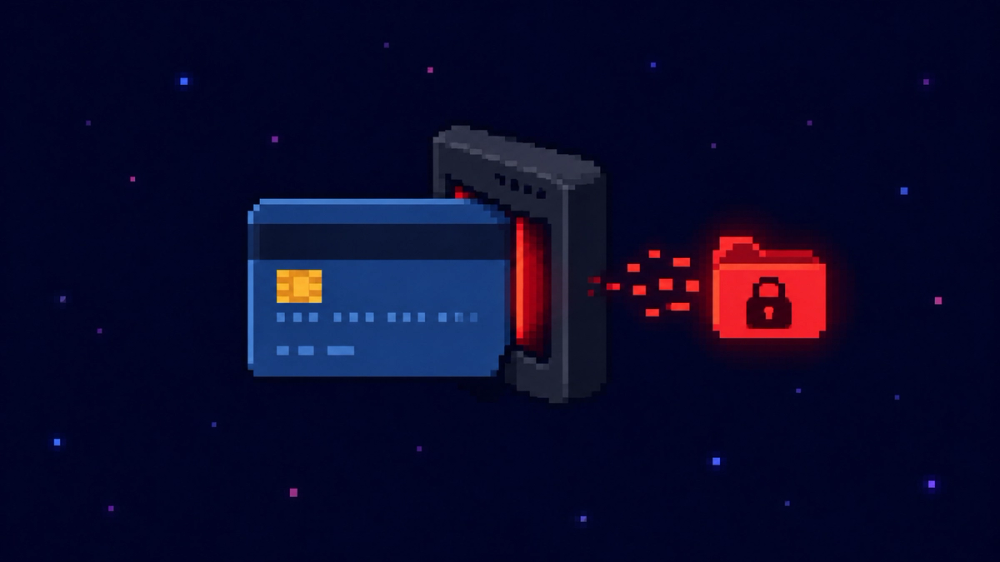 Socket: Fake Braintree NuGet Package Skims Credit Cards
Socket's Threat Research team dissects Braintree.Net, a typosquatted NuGet package impersonating PayPal's official Braintree .NET SDK, which hooks credit card creation/transaction methods to exfiltrate PAN, CVV and merchant API keys (merchantId/publicKey/privateKey) to api.348672-shakepay[.]com. A companion package, DependencyInjector.Core, adds a .NET module-initializer-based harvester that unconditionally steals environment variables, appsettings.json/connection strings, and cloud/container metadata, and is also pulled in transitively by sibling typosquats SipNet and SipNet.OpenAI.Realtime. The writeup details the download-count inflation via 120 empty placeholder versions, production-only exfiltration gating, XOR-obfuscated C2 endpoint, and provides full IOCs, file hashes, and remediation steps.
socket.devwriteupPublished and added 15 Jul 2026🛡️ Security AsyncAPI npm packages backdoored via GitHub Actions
Aikido Security details how five @asyncapi npm packages (specs, generator, generator-helpers, generator-components), combined ~2.9M weekly downloads, were backdoored after an attacker exploited an unmerged pull_request_target GitHub Actions vulnerability in asyncapi/generator to steal the npm publish token via 37 flooded PRs. The injected runtime code spawns a detached Node process that downloads an encrypted stage-2 loader from IPFS, decrypts it via HKDF/AES-256-GCM, and drops a persistent remote-shell implant self-identified as 'M-RED-TEAM v6.4' with Miasma-branded artifacts, though credential harvesting and self-propagation are disabled in this build. The post includes full technical detail on the exfiltration flow, IOC strings, IPFS CIDs, and inconclusive attribution linking it to the prior Miasma toolkit and prt-scan campaign.
aikido.devwriteupAdded 3 Sep 2026, published 14 Jul 2026🛡️ Security
Showing 30 of 41
Show more