- Hackers hijack a dozen DeFi websites, all registered with Name.com, and steal about $138,000
Twelve DeFi websites, including Flap, Kintsu, Pickle Finance and Origami Finance, were hijacked on 30 October 2026 and served the Step Drainer kit. All 12 domains use Name.com as registrar, and 10 were suspended. The Block traced about $138,000 stolen to three EVM wallets, excluding Solana and Aptos losses. Kintsu and Origami blame Vercel. Projects say their onchain contracts were untouched.
 theblock.coarticlePublished and added 31 Oct 2026
 Binance Hack: Everything You Need to Know About the Biggest Crypto Heist in History
Decrypt's explainer on the roughly $6.4 billion theft from Binance hot wallets across about 10 blockchains. Binance traced it to a compromised DevOps engineer laptop plus further breach points, and on Ethereum the attacker used 50 pre-signed EIP-7702 authorizations to turn a hot wallet into a sweeper. Chainalysis and TRM Labs attribute it to TraderTraitor; Tether and Circle froze about $2.3 billion.
 decrypt.coarticlePublished and added 31 Oct 2026
 Pre-ERC: Agent Pre-Sign Risk Report
 is a draft Ethereum Magicians proposal for an EIP-712-signed report that a risk source, identified by an ERC-8004 identity, returns about one unsigned request. It carries typed findings on tokens, approvals, addresses, payments (x402) and texts, and each finding is marked read or not read. It has no score or verdict, so the consumer applies its own policy. The author's live implementation, toll, runs on Robinhood Chain.
 ethereum-magicians.orgthreadPublished and added 31 Oct 2026
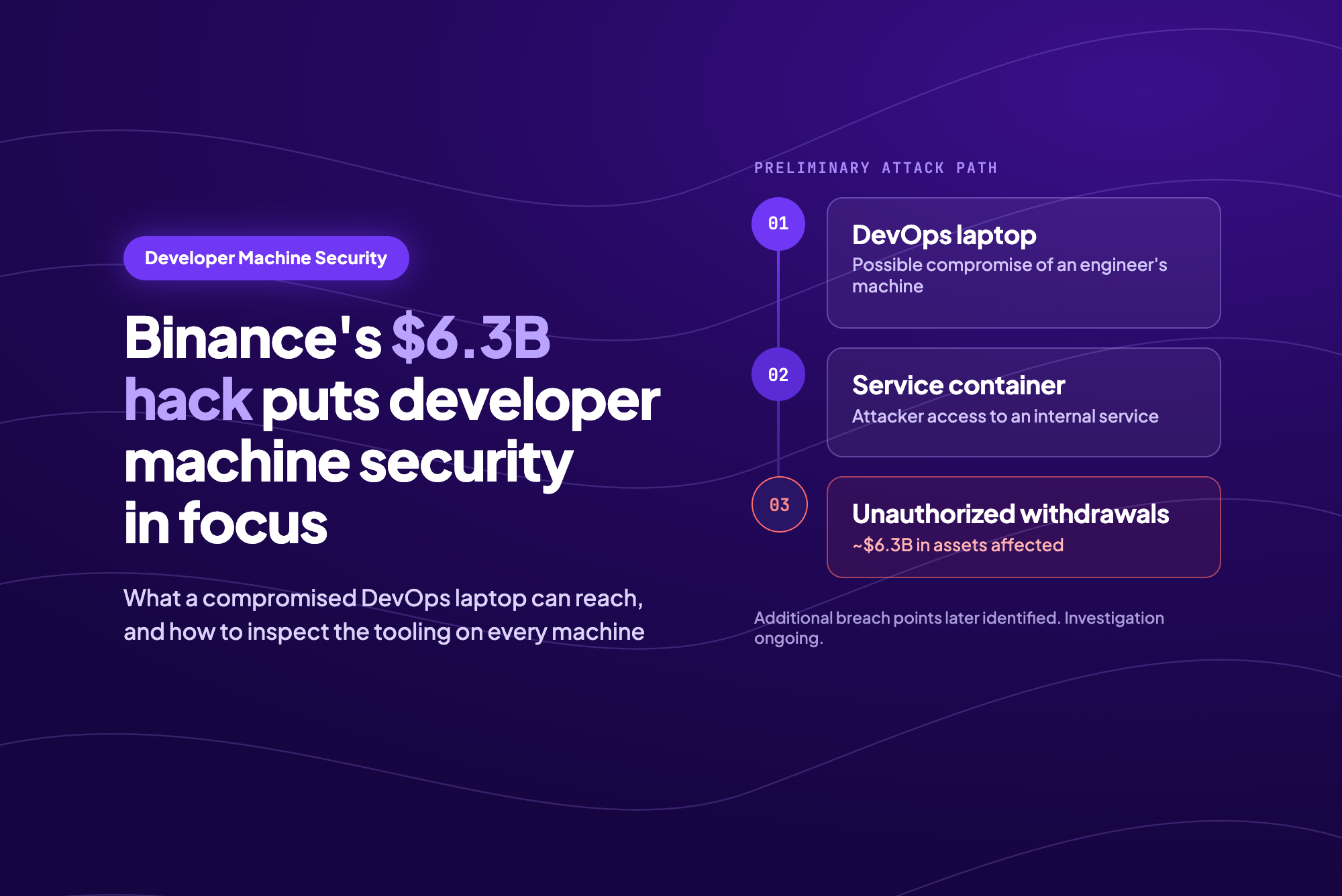 Binance’s $6.3 Billion Hack Puts Developer Machine Security in Focus
StepSecurity's analysis of Binance's 29 October 2026 incident, which Binance puts at about $6.3 billion in affected assets. It covers Binance's disclosure of a possible DevOps laptop compromise, and TRM Labs and Elliptic findings on 50 EIP-7702 authorizations and a persistent delegation. It links this to the Nx, OVHcloud CLI and Claude Code extension compromises, gives an investigation checklist, then describes StepSecurity products.
 stepsecurity.ioarticlePublished and added 30 Oct 2026
 ERC draft: Independent Simulation Result for (STVA)
ERC draft "Independent Simulation Result" (STVA) defines a canonical, content-addressed SimulationResult (success, gasUsed, returnData, stateDiffHash, logsHash, snapshotId, resultHash) that any wallet, hardware device or verifier can recompute from the same VerificationPayload and state snapshot. It targets compromised-frontend and UI/calldata-mismatch attacks, and defines Basic, Standard and Strict compliance levels. Open questions are stateDiff encoding, prestate proofs and binding to capability tokens.
 ethresear.chthreadPublished and added 30 Oct 2026
 Weekly Research Brief: Binance Hacked; Hyperliquid on Wall Street; Prediction Markets’ Brazil ‘Miss’
Galaxy Research's weekly brief of 30 October 2026 opens with the Binance hack: about $6.3b drained across 10 blockchains, attributed by TRM Labs and Chainalysis to TraderTraitor (Lazarus-linked). The attacker used EIP-7702 with 50 pre-signed authorizations on Ethereum, and Binance's preliminary finding is a compromised DevOps laptop reaching a service container. Tether and Circle froze about $2.6b. The other sections cover Hyperliquid and prediction markets.
 galaxy.comarticleAdded 30 Oct 2026
 Here We Go Again: Binance Loses $6.3b in Largest Robbery in History
Galaxy Research newsletter on the roughly $6.3b drained from Binance across 10 blockchains, which TRM Labs and Chainalysis attribute to TraderTraitor. On Ethereum the attacker used EIP-7702 to turn a hot wallet into a sweeper contract backed by 50 pre-signed authorizations. Binance's preliminary finding is a compromised DevOps laptop, with no wallet key leak. Tether, Circle, Ripple and World Liberty froze about $2.7b; Galaxy also assesses Binance's ability to cover losses.
galaxy.comarticleAdded 30 Oct 2026 Binance Just Suffered the Biggest Hack in Crypto History. What Now?
Bankless report on the Binance hack of $6.3 billion, which Binance's preliminary investigation traced to a compromised DevOps engineer's laptop with access to withdrawal-authorizing systems. TRM Labs found valid EIP-7702 authorizations on Ethereum, and nine other chains were drained through normally signed transactions. TRM and Chainalysis link it to North Korea's TraderTraitor. Tether and Circle froze about $3 billion, and Binance says SAFU and corporate cash will cover the losses.
 bankless.comarticlePublished and added 30 Oct 2026
- ERC-8478: x402 Payee Verification for ERC-8004 Agents
ERC-8478 is a draft Ethereum standard that binds the x402 payTo address to an ERC-8004 agent's identity, to stop payee redirection by a hijacked domain, proxy or injected tool result. A payTo must equal the agentWallet or carry an EIP-712 delegation signed by it, and the origin must be listed in the registration file. On Robinhood Chain, 5 of 5,575 x402-responding agents used their agentWallet as payTo (28 October 2026).
ethereum-magicians.orgthreadPublished and added 30 Oct 2026  Secret Service, FBI Join Binance Hack Probe as Circle Freezes $823 Million
Decrypt reports that Binance is working with the FBI and U.S. Secret Service after a theft of about $6.4 billion, which TRM Labs and Chainalysis attribute to North Korea's TraderTraitor group, also linked to the February 2025 Bybit hack. Circle froze about $823 million in USDC and Tether froze USDT, though the page gives differing Tether totals. Binance first suspected a compromised DevOps engineer laptop, found more breach points, and saw no evidence of leaked wallet private keys.
decrypt.coarticlePublished and added 30 Oct 2026- EIP Draft: Permanent EOA Delegation Opt-Out (disable EIP-7702)
Discussion thread for a draft Core EIP that lets an Ethereum EOA permanently disable EIP-7702 delegation. A type-4 set-code transaction with an empty authorization list, destination equal to sender and zero value installs the 0xef0200 marker for 33500 gas. Later authorizations, including clearing to the zero address, are skipped. It does not protect against private-key compromise. Open questions cover the prefix, a dedicated transaction type, gas pricing, and EIP-8151 interaction.
ethereum-magicians.orgthreadPublished and added 30 Oct 2026  Binance Sets Aside $6.34B to Cover Hack Losses, CEO Says 'Your Assets Are Safe'
Decrypt reports on the October 2026 Binance hot-wallet hack, about $6.3 billion, which Binance CEO Richard Teng says the company will cover with over $6.34 billion of its own funds. Teng says the attacker used an EIP-7702 delegation that skipped Binance's approval controls, a self-destruct mechanism to wipe tooling, and more than one breach point beyond a compromised laptop. TRM Labs and Chainalysis attribute the theft to TraderTraitor, and the attacker is still moving funds on Tron.
decrypt.coarticlePublished and added 30 Oct 2026 Trezor warns of suspected crypto-theft implant in hardware wallet
Trezor warns of a suspected crypto-theft implant in a Trezor Safe 5 sold by reseller CryptoBilis in Southeast Asia. An Indonesian buyer found an extra board with a cellular module and antenna between the main board and screen, apparently able to read the recovery phrase and send it over mobile networks. Trezor has not examined the device, advises moving funds to a new wallet for any CryptoBilis purchase since March 2026, and notes a similar Ledger implant was confirmed.
 bleepingcomputer.comarticlePublished and added 30 Oct 2026
 Binance Attacker Used EIP-7702 to Bypass Wallet Controls, Teng Says
The Defiant reports that Binance co-CEO Yi He's colleague Teng says the attacker in a breach Binance estimates at $6.3 billion used EIP-7702 to bypass wallet controls. Binance is rebuilding its withdrawal service, and attackers destroyed tools and traces during the intrusion. Only the teaser loaded, so the technical detail of the EIP-7702 abuse is not in the available text.
 thedefiant.ioarticlePublished and added 30 Oct 2026
 Trezor reveals Malaysian reseller sold wallet with spyware
Trezor says a user reported a Safe 5 wallet bought from Malaysian reseller CryptoBilis in August 2026 with a hidden board between the main board and screen, carrying a cellular module and antenna. The implant allegedly reads the screen, including the wallet backup, and sends it over a mobile network when plugged in. Trezor has not yet examined the device, has dropped CryptoBilis (9 October), and is replacing wallets bought since March 2026.
 protos.comarticlePublished and added 30 Oct 2026
 How the Binance hack happened on-chain on Ethereum
Protos analysis of how the Binance hack played out on Ethereum. The attacker deployed a sweeper contract and sent 50 EIP-7702 authorizations for the Binance 14 hot wallet, signed with its key and using varied nonces to match the wallet's changing count. Other wallets and EVM chains used plain transfers. Binance later removed the delegation, and about $2.4 billion in funds was frozen or blacklisted.
protos.comarticlePublished and added 30 Oct 2026 Binance hack: the largest robbery in financial history
Binance hack analysis from 21shares on the 29 October 2026 theft of about $6.3 billion from Binance. Binance's initial finding points to a compromised DevOps engineer's laptop with no sign of a leaked wallet key. Chainalysis attributes it to North Korea with high confidence, and about $3 billion was frozen by Tether, Circle and the Arbitrum Security Council. The attacker also borrowed about $44.6 million of WETH on Aave. Binance says SAFU and company funds will cover all losses.
 21shares.comarticlePublished and added 30 Oct 2026
 What is EIP-7702? The Ethereum Upgrade Behind the $6.4B Binance Hack
EIP-7702 ("Set Code for EOAs") is the Ethereum change, live since the Pectra upgrade on 7 May 2025, that lets ordinary wallets delegate to smart contract code. The guide covers set-code transactions, delegation indicators, batching, sponsorship and sweeper-contract scams. It then describes the 29 October 2026 Binance theft of about $6.4B, which TRM Labs and Chainalysis attributed to TraderTraitor, where 50 pre-signed authorizations turned a hot wallet into a sweeper.
decrypt.coarticlePublished and added 30 Oct 2026 Binance hack: how a compromised developer laptop can lead to a $6.3 billion breach
Aikido Security's analysis of the roughly $6.3 billion Binance incident, which Binance says may have started with a compromised DevOps engineer's laptop. It sets out what is known (no private key leak, TraderTraitor attribution by TRM Labs and Chainalysis, additional breach points) and a plausible chain from laptop credentials to a withdrawal service. It compares the 2025 Bybit theft and lists mitigations.
 aikido.devarticlePublished and added 30 Oct 2026
 TRM and Chainalysis Tie $6.4B Binance Hack to North Korea's TraderTraitor
TRM Labs and Chainalysis attribute the October 2026 Binance theft, about $6.4 billion across 10 blockchains, to North Korea's TraderTraitor. On Ethereum the attacker used EIP-7702 delegation with 50 pre-signed authorizations to turn a hot wallet into a sweeper, pointing to compromised signing infrastructure. The attacker funded wallets via Tornado Cash, laundered through automation and Aave borrowing, and about $3 billion was frozen.
decrypt.coarticlePublished and added 30 Oct 2026 TRM says Binance crypto hack stole $6.36B across 10 chains, mostly in 20 minutes
Report on the 29 October 2026 Binance theft, which TRM Labs valued at USD 6.36 billion across ten chains, mostly within 20 minutes. TRM attributes it with high confidence to North Korea's TraderTraitor. The attacker used pre-signed EIP-7702 delegations to turn a Binance Ethereum hot wallet into a sweeper. About USD 3 billion was frozen; TRM advises monitoring for unexpected delegations and separating signing infrastructure.
 en.cryptonomist.charticlePublished and added 30 Oct 2026
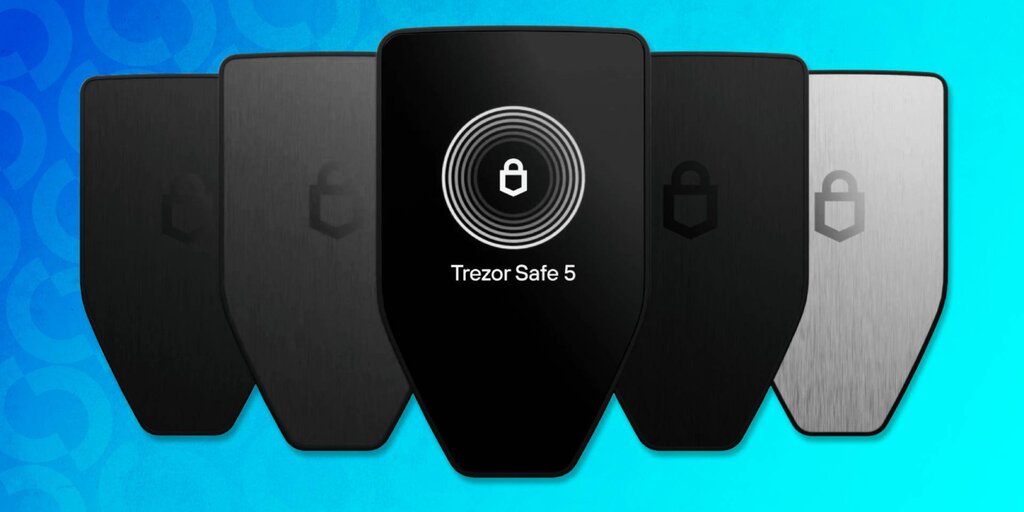 Trezor Warns CryptoBilis Buyers After Report of Hardware Implant in Safe 5
Trezor warned buyers of its wallets from reseller CryptoBilis (March 2026 onward) to move funds, after an Indonesian customer reported a hardware implant in a Safe 5 bought in August 2026. The report describes a board with a cellular module between mainboard and screen that reads the wallet backup and sends it over a mobile network. Trezor has not yet examined the device. It found no tampering in four other CryptoBilis units.
decrypt.coarticlePublished and added 30 Oct 2026 Binance Exploit: Latest Findings and Response
Chainalysis assesses the 29 October 2026 theft of about $6.4 billion from Binance hot wallets as the work of North Korean group TraderTraitor. Attribution rests on on-chain behavior, including real-time commingling with funds from the Bitget exploit, a Tornado Cash-funded operator wallet and signed authorizations that let a hot wallet run attacker code. About $2.8 billion was frozen. Laundering shows automation, with addresses receiving exactly 1 TRX before forwarding funds.
 chainalysis.comarticlePublished and added 30 Oct 2026
 Binance Finds 'Additional Points of Breach' in $6.3B Hack
Binance estimated the October 2026 security incident at about $6.3 billion and said it found "additional points of breach" beyond the compromised DevOps engineer laptop it first named. The attacker reached a service container and submitted unauthorized withdrawals, with no wallet private key leak found. Arkham counted $6.01 billion taken from hot wallets on nine chains; Tether and Circle froze about $1.8 billion in stablecoins. About $3 billion is frozen onchain; withdrawals stay suspended.
decrypt.coarticlePublished and added 30 Oct 2026 Binance links $6.3 billion crypto theft to compromised DevOps laptop
Binance linked the theft of about $6.3 billion in crypto to a compromised DevOps engineer's laptop, which let attackers reach a service container and submit unauthorized withdrawals. TRM Labs and Chainalysis attribute the 29 October 2026 attack to North Korea's TraderTraitor. About $2.7 billion was frozen, and the attackers hold about $2.4 billion. Binance has found no evidence of a leaked wallet private key.
bleepingcomputer.comarticlePublished and added 30 Oct 2026 Trezor hardware implant report: CryptoBilis buyers urged to move funds
Trezor advised everyone who bought wallets from reseller CryptoBilis since March 2026 to move funds to a new wallet with a new recovery phrase. An Indonesian customer reported a Safe 5 bought via Tokopedia in August 2026 with an extra board holding a cellular module that allegedly sends the wallet backup out. Trezor has not yet examined the device. Ledger separately confirmed tampering on CryptoBilis devices in October 2026.
en.cryptonomist.charticlePublished and added 30 Oct 2026 $6 Billion Binance Hack Bears Hallmarks of North Korea’s TraderTraitor
The Binance hack of 29 October 2026 drained about $6.36 billion across ten blockchains in roughly 20 minutes, according to TRM Labs. TRM attributes it with high confidence to North Korea's TraderTraitor, citing a mixer-funded operator wallet, pre-signed transactions and overlap with the Bybit and KelpDAO hacks. Binance's early findings point to a compromised DevOps engineer laptop. Stablecoin issuers froze about $2.7 billion.
 securityweek.comarticlePublished and added 30 Oct 2026
 Binance probes a suspected cryptocurrency breach: $6.3B affected, about $3B frozen
Binance disclosed a suspected security incident on 29 October 2026, estimating $6.3 billion affected and about $3 billion frozen. Binance's early finding is that a compromised DevOps engineer's laptop let an attacker reach a service container and submit unauthorized withdrawals, with no evidence of wallet private-key leakage. TRM Labs suspects TraderTraitor, the group tied to the February 2025 Bybit theft. Tether, Circle and Ripple froze funds.
en.cryptonomist.charticlePublished and added 30 Oct 2026- ERC draft: Independent Simulation Result for (STVA)
ERC draft "Independent Simulation Result" (STVA) defines a canonical, content-addressed SimulationResult structure that wallets, hardware devices or third-party verifiers can recompute from the same VerificationPayload and state snapshot. It specifies fields, a keccak256 or EIP-712 result hash, and Basic, Standard and Strict compliance tiers. The goal is to close UI/calldata mismatch attacks where a compromised frontend serves a false simulation. Open questions cover stateDiff encoding and prestate proofs.
ethereum-magicians.orgotherPublished and added 30 Oct 2026  Trail of Bits (@trailofbits) on X
Trail of Bits post on X summarising Binance's initial investigation into a security incident. Binance suggests a compromised DevOps engineer's laptop let an attacker reach a service container and submit unauthorized withdrawal transactions. The text says no evidence has been found of wallet private key compromise. The fetched text is truncated and gives no further detail.
 x.comthreadPublished and added 30 Oct 2026
 Binance Hacker Hunts for Exit Ramps as DeFi Exchanges Pause Markets
Decrypt reports on wallets linked to the suspected Binance hack (at least $5.5 billion drained, 29 October 2026) that swap freezable stablecoins for ETH via Uniswap and borrow 19,762 ETH on Aave. About 253,000 ETH (roughly $570 million) sits idle in two wallets. Tether, Circle and Ripple froze over $2 billion plus about $200 million RLUSD, and Aave and Kamino paused markets. Tornado Cash appears only as funding for the attack address.
decrypt.coarticlePublished and added 29 Oct 2026 Binance probes potential $5.8 billion crypto-theft hack
Binance is investigating a possible breach involving up to $5.8 billion in assets, which would exceed the $1.5 billion Bybit theft of February 2025. Tether froze over $1.567 billion in USDT and Circle over $800 million in USDC. Arkham tracks 55 addresses labelled "binance-hacker-1029" holding about $5.78 billion, but that is wallet holdings, not a confirmed theft amount. The cause is not yet known.
bleepingcomputer.comarticleAdded 30 Oct 2026, published 29 Oct 2026- Binance Drained of $5.5 Billion in Suspected Hack, Tether and Circle Freeze $1.8 Billion
Decrypt reports that at least $5.57 billion left Binance-linked hot wallets on Ethereum, Bitcoin and Tron on 29 October 2026, which would be the largest crypto hack on record. On-chain analysts point to an EIP-7702 delegation, installed from a Tornado Cash-funded address minutes before the first sweep. Tether and Circle froze about $1.8 billion. Binance has not confirmed the hack, and how the attacker obtained the signature is unknown.
decrypt.coarticlePublished and added 29 Oct 2026  Rekt - SingularityNET - Rekt
SingularityNET exploit (19 September 2026): attackers with signing authority exposed through a cloud infrastructure breach drained 8.72M FET from the Ethereum bridge converter, then minted about 2.3 billion AGIX, NTX, WMTX and CGV. Rekt's transaction-level reconstruction puts gross liquid proceeds near $2.29M, not the $16.77M headline, and traces laundering via Chainflip, Baltex and THORChain. It notes conversionIn() skipped checkLimits() and trusted a single EOA signature.
 rekt.newswriteupAdded 29 Oct 2026
 Rekt - Duelbits - Rekt
Duelbits is a crypto casino that lost an estimated $6.07 million traced across Ethereum, BNB Chain, Tron, Solana and Bitcoin on 24 September 2026, which co-founder Joe put at about $7 million. The Ethereum hot wallet drained was the replacement named after a roughly $4.6 million theft in February 2024. Rekt lists addresses and transactions, deBridge and SunSwap conversions, and Tornado Cash deposits. Duelbits has not published a root cause.
rekt.newswriteupAdded 29 Oct 2026 Rekt - NEAR Intents - Rekt
Rekt News analysis of the 30 September to 1 October 2026 theft of 3.865 million USDT from the NEAR Intents HOT Bridge treasury on BNB Chain, paid out in five signed withdrawals after a 10 USDT deposit. It uses Bitquery's trace of laundering via Chainflip, THORChain, KuCoin and Hyperliquid, and a NEAR regression test showing an oversized refund log made mt_resolve_deposit fail. NEAR said the funds were returned but published no report.
rekt.newsarticleAdded 29 Oct 2026 Rekt - Initia - Rekt
Rekt News post-mortem of the 23 October 2026 Initia exploit. A MoveVM script-caching bug let an attacker credit unbacked WETH, iUSD, AUSD0 and USDC without raising total supply, and bridges paid out about $2.73 million (1.4 million AUSD, 105 ETH, 1.08 million USDC). It includes 0xCanzi's local replay of a stale cached verification, the on-chain laundering timeline, and the Foundation's backing-restoration pledge.
rekt.newsarticleAdded 29 Oct 2026- Treasury Sanctions 11 Over North Korean IT Worker Scheme That Moved Millions in Crypto
Decrypt reports that OFAC sanctioned 10 individuals and one entity on 28 October 2026 over North Korean IT worker schemes. Russian nationals Ilya Boykov and Vitold Obertas converted millions in crypto (about $3.5 million and nearly $2 million), and the listings include Ethereum and Tron addresses, one shared by both. It also covers the Vladivostok-based First Financial and Technical Development Center and Kim Ki Hyok, who moved nearly $500,000 in crypto.
decrypt.coarticlePublished and added 29 Oct 2026  Treasury Sanctions Russians, North Koreans supporting DPRK IT Worker Fraud
Chainalysis analysis of the 28 October 2026 OFAC designation of 10 individuals and one entity (FFTDC) supporting DPRK IT worker schemes. It traces on-chain flows from a DPRK developer wallet through sanctioned consolidation addresses to Russian converters Obertas and Boykov, then to Garantex. It also covers Alis, Amnokgang and Chinyong links and DPRK use of generative AI and deepfakes in hiring.
chainalysis.comarticlePublished and added 28 Oct 2026- Secure Transaction Verification and Authorization (STVA)
Secure Transaction Verification and Authorization (STVA) is a draft Standards Track ERC (created October 2026) by @MATOBOYCRYPTO65. It proposes structured human-readable metadata and semantic intent for transactions and UserOperations, an independent simulation and verification interface, and scoped, revocable capability tokens for privileged operations. It targets blind signing and frontend supply-chain attacks, citing the February 2025 Bybit Safe multisig theft. The page gives only the abstract, motivation and core concepts.
ethresear.chpaperPublished and added 28 Oct 2026  Malicious Firefox Extensions Impersonate Phantom, Jupiter, and Bitget to Steal Wallet Secrets
Socket analysis of three malicious Firefox add-ons impersonating Phantom, Jupiter and Bitget wallets, using Unicode homoglyph names. They steal seed phrases and private keys and send them to brand-named subdomains of bonto[.]io. The Phantom fake adds a runtime loader that fetches and evals a second stage, and bundles a drainer backend with Telegram forwarding. Includes IOCs, hashes and wallet addresses.
 socket.devwriteupPublished and added 27 Oct 2026
 Ethereum fixes Glamsterdam bug that could have sent staking deposits to builders
Glamsterdam deposit bug: Ethereum developers merged a consensus-spec fix on 26 October 2026 for a flaw in the upcoming upgrade. An operator could register as a builder under a public key, then a staking service's validator deposit under the same key would be credited to the builder, so no validator is created and funds are unrecoverable. Pending deposits are now sorted by withdrawal credentials. No losses were reported, and client teams still have to implement the change.
 coindesk.comarticlePublished and added 27 Oct 2026
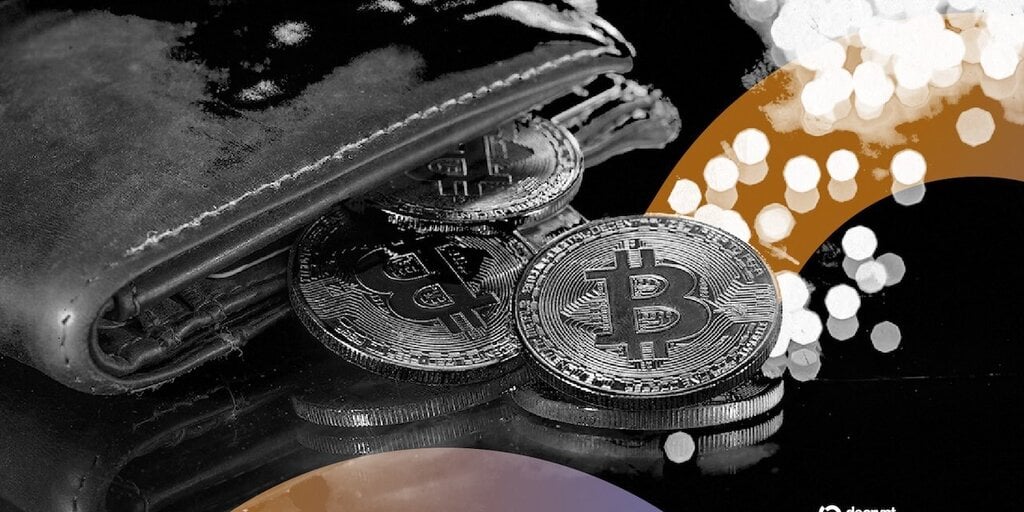 Bitcoin Wallet Fixes Critical Flaw That Redirected Funds to Attackers
Electrum 4.8.3, released 24 October 2026, fixes a high-severity flaw in the Bitcoin wallet. Rogue servers could suppress a real payment and inject a fake unconfirmed transaction paying an attacker, so a user's fee-bump became the first transaction broadcast. The fix verifies signatures on wallet-owned inputs, but incoming transactions from external senders stay unverified. One user lost funds on 18 October.
decrypt.coarticlePublished and added 26 Oct 2026- Lean verification of EIP-7002: system-call success and FIFO requests
Lean 4 proofs about the 504-byte EIP-7002 withdrawal-request contract on Ethereum, checked against the Jaune EVM semantics for Prague, Osaka, BPO1 and BPO2. The end-of-block system call always succeeds, using at most 210,000 gas. Requests leave in FIFO order. The post also gives counterexamples: code at the system address drains the queue, and the bytecode's 256-bit fee can undercut the EIP's fee.
ethresear.chwriteupPublished and added 26 Oct 2026 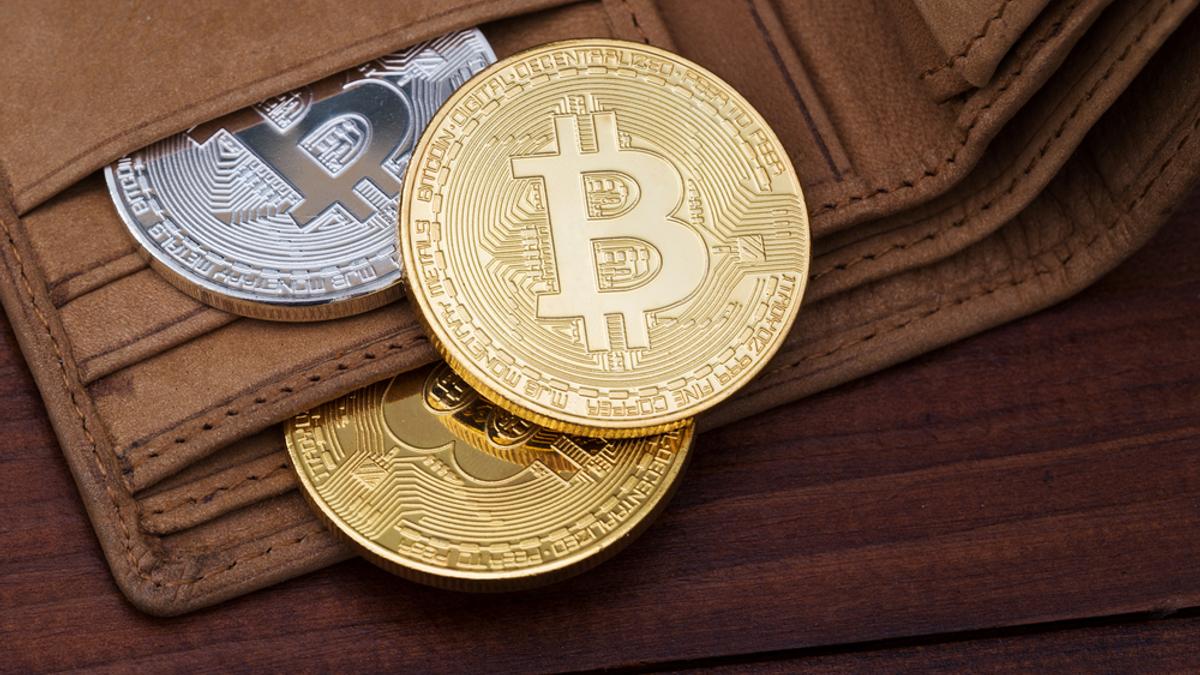 Bitcoin wallet bug let rogue servers steal funds when users tried to speed up payments
Electrum, a Bitcoin software wallet, disclosed on 24 October 2026 a flaw where malicious servers swapped pending transactions for fake ones with invalid signatures that the wallet did not check. When users chose Replace-by-Fee to raise the fee, Electrum signed a valid replacement paying the attacker, and at least one user lost funds. Version 4.8.3 adds signature checks; users of only trusted or self-run servers were not exposed.
coindesk.comarticlePublished and added 26 Oct 2026- A hash-only rollup: OP Stack L2 accounts as Lamport-style hash chains, no ECDSA inside the L2
Hash-only rollup: an OP Stack L2 (chain ID 42069000, live since 30 September 2026) where accounts are keccak-256 hash chains and transactions carry no signatures. Spending uses a commit-reveal step through two new transaction types in op-geth. The post describes a flaw the authors found: unauthenticated commits could be overwritten, which allowed preimage front-running. It was fixed with a first-commit-wins rule on 21 October 2026. It lists the remaining limits: L1 ECDSA, no fault proofs, a centralized sequencer, 160-bit addresses and wallet desync.
ethresear.charticlePublished and added 24 Oct 2026  Electrum wallet security flaw is fixed after a user loses money in fee attack
Electrum 4.8.3, released 24 October 2026, fixes a flaw where a malicious server replaces a user's unconfirmed payment with a conflicting transaction carrying invalid signatures. If the user then bumps the fee with replace-by-fee, the wallet signs a payment to the attacker. One of two reporting users lost funds, and the patch now checks input signatures before accepting such transactions. Bull Bitcoin is adding the same client-side check.
en.cryptonomist.charticlePublished and added 24 Oct 2026 Bitget hacker fund movements top $78.01 million in transfers to new addresses
Bitget breach tracking report: Arkham recorded $19.48 million moved in 52 transfers between 21 and 24 October 2026, and $78.01 million to new addresses from 15 to 23 October. About $242.54 million remains in labeled holdings. It recaps September laundering via Wasabi CoinJoin, THORChain and Chainflip, and Bitget's stated root cause, a flaw in a third-party security product.
en.cryptonomist.charticlePublished and added 24 Oct 2026 Ethereum’s Glamsterdam delay puts Hoodi testnet upgrade on hold over gas risks
Ethereum developers postponed the Glamsterdam upgrade on the Hoodi testnet, set for 26 October 2026, after ChainSecurity found that EIP-8037 and EIP-8038 gas changes can break contract defenses against insufficient gas griefing. ChainSecurity identified 13 real-world contracts where a failed call that should stay retryable could now be recorded permanently. It is disclosing to affected projects, and Hoodi node operators must use client releases that remove the scheduled fork.
en.cryptonomist.charticlePublished and added 24 Oct 2026 Ethereum Devs Postpone Glamsterdam on Hoodi Over Contract Security Risks
Ethereum core developers postponed Glamsterdam on the Hoodi testnet on 22 October 2026, four days before the 26 October activation. ChainSecurity research showed EIP-8037 and EIP-8038 gas repricing can let a contract's failure path succeed where it used to revert, for example a fresh storage write costing 110,020 gas instead of 22,100. This enables "insufficient gas griefing", and ChainSecurity found 13 real-world cases.
bankless.comarticlePublished and added 23 Oct 2026 Ethereum Delays Glamsterdam Testnet Fork Over Gas Security Flaws
Ethereum developers postponed the Glamsterdam hard fork on the Hoodi testnet (due 26 October 2026) after auditor ChainSecurity reported that the gas changes in EIP-8037 and EIP-8038 break assumptions in existing contracts. Gas can be refilled after a failed call and repricing alters call costs, so failure paths that used to revert can now complete, undermining insufficient gas griefing protections. ChainSecurity found 13 real-world examples and is in responsible disclosure.
decrypt.coarticlePublished and added 23 Oct 2026- Ethereum delays Glamsterdam test after security devs flag risk to existing contracts
Ethereum developers cancelled the Glamsterdam activation on the Hoodi testnet, planned for 26 October 2026, after ChainSecurity's 13 October analysis of EIP-8037 and EIP-8038. The gas-accounting changes can restore gas after a reverted state change, letting contracts finish failure-handling code that used to run out of gas. In the other direction, a new storage slot could cost 110,020 gas instead of 22,100. No production protocol is shown to be exploitable.
coindesk.comarticlePublished and added 23 Oct 2026  Crypto exchange CoinDCX ‘lying’ about $16M hack, say blockchain investigators
Protos reports that on-chain investigators, including Darcy of Salus, ZachXBT and SpecterAnalyst, say CoinDCX misattributed about $16M in outflows from compromised wallets. CoinDCX says the addresses were created in January 2025, compromised in July 2025, and that a sweeping process failed. Investigators cite gas distribution, hot wallet transfers as late as May 2026, and funds sent to Huione and Xinbi addresses.
protos.comarticlePublished and added 22 Oct 2026 Coinbase's Plan for a Quantum-Safe Bitcoin
Bankless summary of Coinbase's October 2026 proposal for making Bitcoin quantum-safe. It covers upgradeable address designs (BIP-360 P2MR, P2TRv2, hybrid addresses), four candidate signatures (ML-DSA, SLH-DSA, FN-DSA, SHRINCS) with size and stateful-key-reuse trade-offs, a five-stage migration plan, and a separate track for dormant coins with exposed public keys such as Satoshi's.
bankless.comarticlePublished and added 21 Oct 2026 Cryptocurrency: Security Analysis of Hardware Crypto Wallets
Hackers Arise article on the October 2026 attack in which Ledger Nano X devices sold by the reseller CryptoBilis carried a hidden circuit board that taps the SPI bus to the screen, rebuilds the 24-word recovery phrase and sends it out over LTE. Losses are estimated at $86 million to over $100 million. The device still passes Genuine Check. It lists safe purchasing, checking and recovery steps, plus BIP-39 passphrase and multisig advice.
 hackers-arise.comarticlePublished and added 21 Oct 2026
 PQ-Vault: Provably Quantum-Safe Asset Custody for Unmodified Ethereum
PQ-Vault is a custody design for unmodified Ethereum against quantum key recovery. It combines a quantum-safe vault contract, a proof-of-stake sidechain with compact certificates, and an optimistic dispute protocol. The paper proves that compact certificates with classically chosen parameters fall from 128 to about 60 bits against quantum attackers, and bounds a seed-update stake-steering attack. For 65,536 validators a certificate is 0.8 MB and verifies in about 20 ms, and the vault accepts a checkpoint for about 420,000 gas.
 arxiv.orgpaperAdded 24 Oct 2026, published 21 Oct 2026
 Wallet Linked to Drift Exploit Sends $61 Million in Ethereum to Tornado Cash
Wallets tied to the April 1, 2026 Drift Protocol exploit ($295.7 million, Solana) deposited 25,700 ETH (about $61.56 million) into Tornado Cash over two hours, in 100 ETH and 10 ETH batches matching the mixer's fixed pools. Arkham tracks 71 attacker addresses still holding 81,454 ETH. Mandiant attributed the attack to North Korean group UNC6862, and Drift's DFX recovery pool paid early claims about a penny per dollar.
decrypt.coarticlePublished and added 20 Oct 2026 Stolen Ethereum laundering resumes as 25,700 ETH flow into Tornado Cash mixer
Report on wallets linked to the April 2026 Drift Protocol hack resuming laundering on 20 October 2026. Lookonchain counted 25,700 ETH (about $61.56 million) sent to Tornado Cash in 100 ETH batches, with 81,864 ETH still held. It recaps the six-month fake-VC social engineering, Cursor and VSCode compromise of Security Council devices, and TRM Labs and Chainalysis attribution to DPRK's UNC4736.
en.cryptonomist.charticlePublished and added 20 Oct 2026 ZachXBT Flags $20M XMR Laundering Ring on Hyperliquid
FreedomXMR (FXMR) is a centralized Monero swap service on Hyperliquid Core that appeared in August 2026. ZachXBT's manual review of every inflow above $10K traced over $20M, more than 87% of volume, to ransomware, malware and exploits including DCENT Wallet, Fetch.ai, Axelar and Gamdom. The admin sources XMR liquidity from KuCoin and won the FXMR ticker in an auction for 518.28 HYPE.
bankless.comarticlePublished and added 20 Oct 2026- Trail of Bits (@trailofbits) on X
Trail of Bits thread on Google Quantum AI's March publication of a new Shor's algorithm version aimed at secp256k1, the curve protecting Bitcoin and Ethereum wallets. Google used zero-knowledge proofs to keep the attack details secret, and the post says the secrecy lasted 63 days. The fetched text is cut off after the qubit estimate of roughly 1,200, so later details are missing.
x.comthreadAdded 22 Oct 2026, published 20 Oct 2026 - Pre-ERC: Adoption Profile and Reference Kernel for EOAs Adopting Code via SETCODEFROM
Pre-ERC proposal for EOAs that adopt account code via EIP-8298 SETCODEFROM, which with EIP-8151 retires the secp256k1 key. It lists seven failure modes (FM1-FM7), such as self-recovery lockout, ERC-1271 passing while VERIFY fails, front-runnable initialization and a mutable code source. It proposes requirements R1-R8, a MigrationCheck guard with two routes, and a reference kernel with post-quantum ERC-7913 verifiers.
ethereum-magicians.orgthreadPublished and added 20 Oct 2026  SlowMist Says Qubic Wallet Keys Could Be Recovered From Six Network Samples
SlowMist says Qubic wallet private keys could be recovered from six samples observed on the network. Qubic patch 4.26.4 separates new account seeds from the exposed random stream, but leaves header generation unchanged. The page text holds only the headline and subhead, so the attack mechanics, affected versions and any CVE are not stated.
thedefiant.ioarticlePublished and added 20 Oct 2026- Explained: The Ledger Supply Chain Incident (October 2026)
The Ledger supply chain incident of October 2026: on-chain analysis estimates $93 million was stolen after devices sold by the reseller CryptoBilis carried an implant with an eSIM. The implant watched the screen during setup, captured the 24-word recovery phrase and sent it over LTE, without touching the Secure Element. Tether froze about $10 million USDT. Reports from Changi Airport and MediaMarkt stores remain unconfirmed.
 halborn.comarticleAdded 20 Oct 2026
- Faster, Aggregatable and Quantum Safe Privacy Pools
Ethresear.ch post porting Tornado Cash to Flock, a post-quantum binary-field SNARK, proving a depth-32 SHA-256 withdrawal in about 19.5 ms (203.6 KiB proof), with recursive aggregation at about 0.68 s per withdrawal. It also proposes a ZIP 2005-inspired recovery protocol: wallets derive note secrets from a seed, the pool freezes on a discrete-log break, and users withdraw through a post-quantum verifier. Security is argued under an epoch assumption, with Grover-bounded pre-image attacks.
ethresear.charticlePublished and added 19 Oct 2026  Zcash Developer Zakura Proposes Fix to Stop Quantum Computers Linking Shielded Swaps
Zakura, a Zcash full node developer, proposed one-time incoming viewing keys so a future quantum computer running Shor's algorithm cannot link a user's shielded payments. The target is NEAR Intents swaps, which post a shielded refund address on a public chain. The fix needs no network upgrade and uses private information retrieval for seed restores. Wallets such as Vizor can add it within weeks.
decrypt.coarticlePublished and added 19 Oct 2026 Zcash developers plan a fix to keep ZEC swaps private from future quantum computers
Zakura, a newer version of the Zcash node software, plans to give each ZEC swap through NEAR Intents its own viewing key. Today a refund address posted on NEAR's public chain shares one viewing key with the whole account, so a future quantum attacker running Shor's algorithm could link the account's full payment history. Spending keys stay with the user, and private information retrieval lets wallets find refunds without revealing which addresses they check. Wallets such as Vizor could ship it within weeks.
coindesk.comarticlePublished and added 19 Oct 2026 Bitcoin News (@BitcoinNewsCom) on X
Mark Karpelès, former Mt. Gox CEO, says he is building a low-cost device to detect hidden LTE antenna spy implants in hardware wallets such as Ledger without opening them. It emits weak radio waves and measures resonance frequencies. He plans to publish the PCB designs and specs; the project is at concept stage with a prototype expected within weeks. A linked YouTube video is not covered in the text.
x.comthreadAdded 20 Oct 2026, published 18 Oct 2026 Satoshi-era bitcoin faces a bigger quantum threat after Google’s new Willow breakthrough
CoinDesk reports Google's Science paper showing its Willow chip prepares "magic states" with about 40x fewer errors (about 99.99% fidelity, but only about 8% of attempts survive post-selection) using a method called cultivation. It explains why this lowers one hardware bottleneck for a Shor's-algorithm attack on Bitcoin's ECDSA keys, but does not make an attack 40x cheaper. It also separates coins with permanently exposed public keys (early Satoshi-era outputs, which an offline attacker can target) from hash-hidden keys, where the attacker must race the spend. The article cites Google's March estimate of under 500,000 physical qubits and about 500,000 reliable magic states per second for a roughly nine-minute attack.
coindesk.comarticlePublished and added 17 Oct 2026 Factory Sealed – Rekt (Ledger/CryptoBilis hardware implant drains)
Rekt write-up on LTE-equipped hardware implants found in Ledger Nano X and Flex wallets sold through resellers such as CryptoBilis and MediaMarkt. The implants read the recovery phrase off the screen during setup and exfiltrate it over an eSIM/LTE modem, so Ledger's Genuine Check and Secure Element never detect them. It covers the teardown timeline (Joe Grand, Mark Karpelès, a Japan-based researcher), the 47-minute multi-chain drain (Bitquery estimates about $102M across 324 wallets, unverified by Ledger), the laundering path via USDD, THORChain, Tornado Cash and Zcash, the CryptoBilis ownership change, and the failure of "authorized reseller" trust.
rekt.newswriteupAdded 17 Oct 2026 Weekly Research Brief: Ledger’s $91M Theft, Papertrade
Galaxy Research's weekly brief leads with the roughly $91M theft from Ledger devices sold via the reseller CryptoBilis. A hidden hardware implant read the 24-word recovery phrase off the screen during setup and sent it over LTE through an eSIM, leaving the Secure Element untouched so Genuine Check still passed. Galaxy's onchain tally covers 474 victim addresses, 88% of the value moved in one hour on Oct. 9, and about $56.6M was still parked as of Oct. 15, with Tornado Cash use and a $10M Tether freeze. It places the theft alongside the Coldcard weak-seed, Liquid peg-out and Bitget compromises, and ends with buyer and custody advice. The Papertrade and OCC debanking sections are unrelated to security.
galaxy.comarticleAdded 16 Oct 2026 Inside the $91M Ledger Reseller Wallet Theft
Galaxy Research newsletter piece on the roughly $91M theft from buyers of Ledger hardware wallets sold by the reseller CryptoBilis. A hidden component reads the 24-word recovery phrase off the screen during setup and sends it over LTE via an eSIM. The Secure Element and Genuine Check are untouched, so the check passes on tampered units. It traces the drain across 474 victim addresses on Bitcoin, Ethereum and TRON, including 88% of the value moving in one hour on Oct. 9, and the laundering and freezes (Tornado Cash, Tether). It also places the incident among the quarter's other custody and infrastructure failures (Coldcard weak seeds, Liquid, Bitget) and gives buying and operational guidance.
galaxy.comarticleAdded 16 Oct 2026 Karpelès Reports Ledger Implants in Devices From Two More Resellers
The Defiant reports that Mark Karpelès found hardware implants in Ledger devices bought from two more resellers. Ledger says its inspections of German stock found no tampering and that it has not verified a fund drain tied to a device bought outside Southeast Asia. Ledger's authenticity check cannot detect the added hardware, which shows the limit of attestation against reseller-channel tampering. The page text is only a teaser, so technical detail is limited.
thedefiant.ioarticlePublished and added 16 Oct 2026 Ledger Officially Responds to Hardware Wallet Attack
Ledger disclosed that an organized group bought genuine hardware wallets, implanted hidden components that capture the 24-word recovery phrase during setup and send it over cellular networks, then fed the devices back in through resellers in Southeast Asia. Onchain researchers estimate up to $93M stolen across 300+ wallets, a figure Ledger has not confirmed. Ledger asked regional resellers to suspend sales, found no tampering in samples it inspected, and added reseller rules (no shelf display, report suspicious units, no resale of returned devices). It says its chips, OS and servers were not compromised.
bankless.comarticlePublished and added 15 Oct 2026 Ledger’s Atom device adds tamper detection after a recovery-phrase breach
News report on a Southeast Asia supply-chain breach in which Ledger devices sold via resellers such as CryptoBilis were modified with hidden chips. The chips read 24-word recovery phrases from the screen signals during setup and sent them out over LTE. Tether froze $10M USDT tied to the theft, and Ledger suspended sales in several Asian markets. It also covers Ledger's Android-based Atom signer, which adds a protective enclosure, screen and back-cover removal sensors with their own battery, tamper-evident packaging, and website-only initial sales.
en.cryptonomist.charticlePublished and added 15 Oct 2026 Ledger Asks Resellers in Seven Asian Markets to Pull Devices After Suspected $86M Drain
Ledger asked resellers and distributors in Indonesia, Singapore, Thailand, the Philippines, Vietnam, Malaysia and Hong Kong to pull its hardware wallets while it investigates devices fitted with a hidden implant. Its Donjon team found the implant reads the 24-word recovery phrase from the screen during setup and sends it out over LTE. All confirmed losses trace to devices sold through reseller CryptoBilis, and Specter has traced over $86M in suspected thefts, which Ledger has not verified. Ledger says its own infrastructure and direct channel show no compromise. MediaMarkt Saturn halted sales after a German customer reported an implant, and Trezor is ending reseller authorizations on January 1, 2027.
decrypt.coarticlePublished and added 14 Oct 2026- ERC-8443: Quantum Bridge Shield
Draft ERC from Quantova Inc proposing a "Quantum Bridge Shield" for Ethereum bridges. A committee signs the Merkle root of each message batch with RFC 8554 LMS hash-based signatures instead of ECDSA/BLS keys that Shor's algorithm can break. The guard contract requires a strict majority of distinct unfrozen keys, records used leaves, freezes any key that signs a leaf twice, binds digests to domain, chain, guard and epoch, and applies a 60-second delay. The post gives gas costs (LMS W4 height-10 verification about 205k gas, a LayerZero packet 128,683 gas, worst-case rotation 12.44M gas under the EIP-7825 cap) and cites a NioLabs assessment with no critical or high findings. It is relevant as a worked post-quantum migration design for bridge key custody, including hybrid ECDSA+LMS mode and stateful-signature pitfalls such as leaf reuse and rollback.
ethereum-magicians.orgarticlePublished and added 14 Oct 2026 - ERC: Quantum Bridge Shield
Draft ERC from Quantova Inc that has Ethereum bridges accept cross-chain message batches only when a committee signs the Merkle root with RFC 8554 LMS hash-based signatures. The guard contract requires a strict majority of distinct unfrozen keys, records used leaves, freezes any key that signs a leaf twice, binds digests to domain tag, chain ID, guard address and epoch, and enforces a 60-second delay. It reports gas benchmarks (about 205k per LMS W4 height-10 verify, 12.44M worst-case rotation under EIP-7825), a hybrid LMS+ECDSA migration mode, and a NioLabs assessment with no critical or high findings. It argues that Shor's algorithm makes secp256k1 and BLS committee keys a quantum theft target.
ethereum-magicians.orgpaperPublished and added 14 Oct 2026  Ledger Spyware Scare Spreads Across Asia and Europe
News roundup on hardware implants found in Ledger wallets sold through authorized resellers, starting with CryptoBilis in Southeast Asia and then Singapore, Japan and German MediaMarkt stores. The implants read the 24-word recovery phrase off the screen during setup and send it out over a hidden cellular link, while Ledger's secure chip stays untouched so the devices look genuine. Researchers describe three generations dating to 2025, each harder to detect. Suspected losses are put at $86M (Specter) to $103M (Yfarmx), and neither figure is verified by Ledger.
bankless.comarticlePublished and added 13 Oct 2026 Coinbase advances Bitcoin’s post-quantum readiness while holding about 5% of BTC
Summarizes Coinbase's blog post on preparing Bitcoin and custody infrastructure for post-quantum threats. It covers public-key exposure (an estimated 6.7–7M BTC behind already-exposed keys), BIP 360 (P2MR) and P2TRv2 outputs, 1-of-2 hybrid classical/post-quantum spending paths, and the state-reuse forgery risk of stateful signatures. It also covers candidate schemes (ML-DSA, SLH-DSA, FN-DSA, SHRINCS), MPC/HSM compatibility and side-channel tests, and separate handling of dormant, lost and exposed legacy funds.
en.cryptonomist.charticlePublished and added 13 Oct 2026- Ledger confirms hardware implant in CryptoBilis reseller units as MediaMarkt suspends sales in Europe
Ledger's Donjon team confirmed that Ledger signers sold by the reseller CryptoBilis contain an unauthorized implant. It captures the 24-word recovery phrase during setup and sends it over LTE using a provisioned eSIM. It does not touch the Secure Element, the OS, or transaction signing. Onchain researchers estimate losses above $86M, but Ledger says that figure is unverified. MediaMarkt Saturn halted European Ledger sales after a tampered unit was reported in Germany, and Trezor and OneKey tightened or revoked reseller authorizations. The case shows a reseller-channel tampering risk for hardware wallets.
theblock.coarticlePublished and added 13 Oct 2026  German Ledger reseller pauses sales following $86M draining incident
Protos reports that German retailer MediaMarkt pulled all Ledger products after teardowns of Ledger hardware wallets showed physical spyware implants, tied to an $86M drain of wallets bought from Malaysian reseller CryptoBilis. Ledger's investigation concluded the implant recorded the 24-word recovery phrase and sent it out over an attached eSIM. Mark Karpelès has helped identify implants in dismantled devices from MediaMarkt, LazMall (Philippines), CryptoBilis and Metapod (Singapore airport). Ledger has so far confirmed only the CryptoBilis devices and says it is reviewing reports of implants elsewhere.
protos.comarticlePublished and added 13 Oct 2026 Ledger hardware wallet breach exposes LTE implant stealing recovery phrases
Ledger's Donjon team confirmed on October 10, 2026 a physical implant inside a hardware wallet sold by Malaysia-based reseller CryptoBilis. The implant reads the device display, decodes the 24-word recovery phrase with a microcontroller, and exfiltrates it over LTE via a provisioned eSIM, leaving the Secure Element, OS, transactions and signatures untouched. Onchain investigator Specter traced over $86 million in suspected thefts across Ethereum, Tron and Bitcoin; Ledger advises CryptoBilis buyers to migrate funds to a new device with a new recovery phrase.
en.cryptonomist.charticlePublished and added 13 Oct 2026 Ledger Finds LTE Implant That Stole Recovery Phrases in Suspected $86M Drain
Ledger's Donjon security team confirmed an unauthorized hardware implant inside Ledger signers sold by Southeast Asian reseller CryptoBilis. The implant sits in the enclosure, reads the 24-word recovery phrase from the screen during setup, decodes it with a microcontroller, and exfiltrates it over LTE via a provisioned eSIM, without touching the Secure Element, OS, or signatures. Onchain investigator Specter traced over $86M in suspected thefts across Ethereum, Tron and Bitcoin; Ledger is reviewing reports of tampered devices elsewhere and advises affected buyers to move funds to a new device with a new seed.
decrypt.coarticlePublished and added 13 Oct 2026 $86 Million Crypto Heist Linked to Ledger Signer Hardware Implant
SecurityWeek reports that Ledger signers sold through the Southeast Asia reseller CryptoBilis had a hardware implant soldered onto the circuit board. The implant reads the screen during setup, decodes the 24-word recovery phrase with a microcontroller and sends it over LTE through a provisioned eSIM. Ledger says all confirmed losses trace to CryptoBilis devices and advises buyers from the last 90 days to move funds to a new signer with a new seed. On-chain investigator Specter puts losses at up to $86M, a figure Ledger has not confirmed.
securityweek.comarticlePublished and added 13 Oct 2026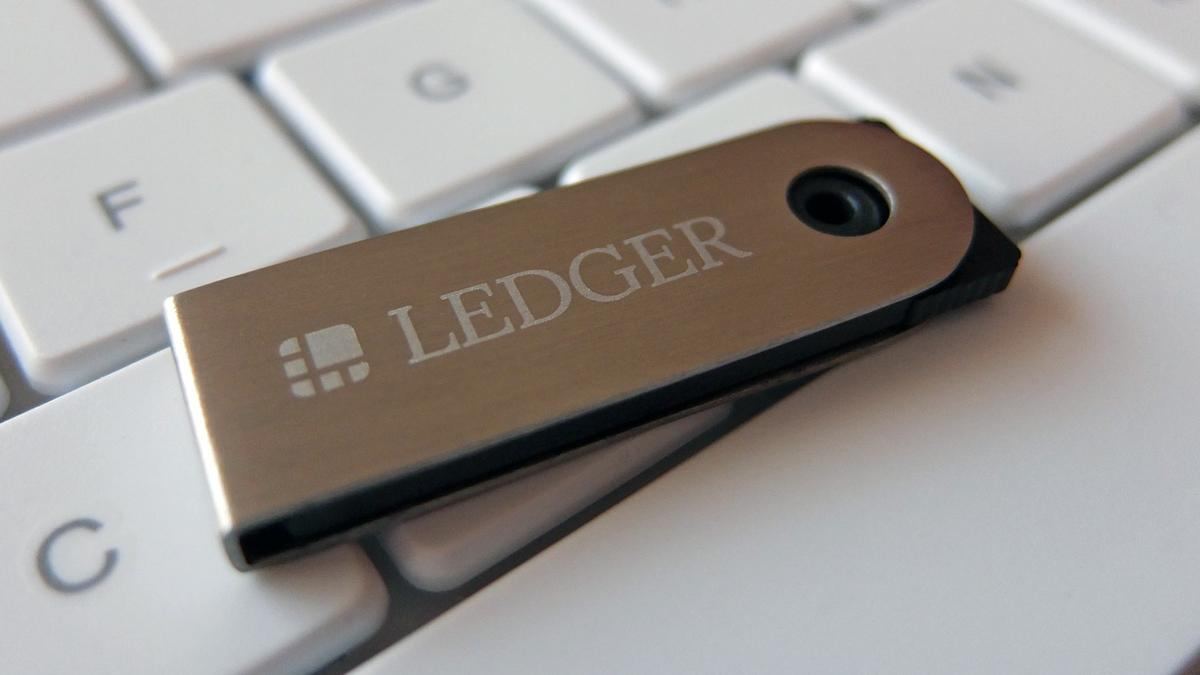 Ledger says 'spy' chip inside CryptoBilis Ledger devices transmitted wallet keys over mobile network
Ledger says some hardware wallets sold by the reseller CryptoBilis contained a covert implant inside the enclosure. Its microcontroller recognised the 24-word recovery phrase when it was displayed during setup and sent it to attackers over LTE using an eSIM. Ledger says its secure element, OS, transaction signing and internal systems were not compromised. Onchain researchers estimate up to $93.2M lost across more than 300 wallets, and Tether froze $10M of USDT. Ledger's guidance is not to initialize units bought from the reseller and to move funds to a new device with a fresh phrase if already used.
coindesk.comarticlePublished and added 13 Oct 2026 Ledger Says CryptoBilis-Sold Wallet Implants Transmit Recovery Phrases Over LTE
The Defiant reports Ledger's claim that hardware wallets sold by the reseller CryptoBilis carried added LTE-capable implants that transmit users' recovery phrases. Ledger says the implant leaves the secure chip and operating system untouched, and that its Genuine Check attestation cannot rule out this kind of tampering. It shows how reseller-channel hardware modification can defeat device attestation and compromise key custody. The fetched page held only the standfirst, so technical details such as the implant's design and how many devices were affected are not confirmed.
thedefiant.ioarticlePublished and added 13 Oct 2026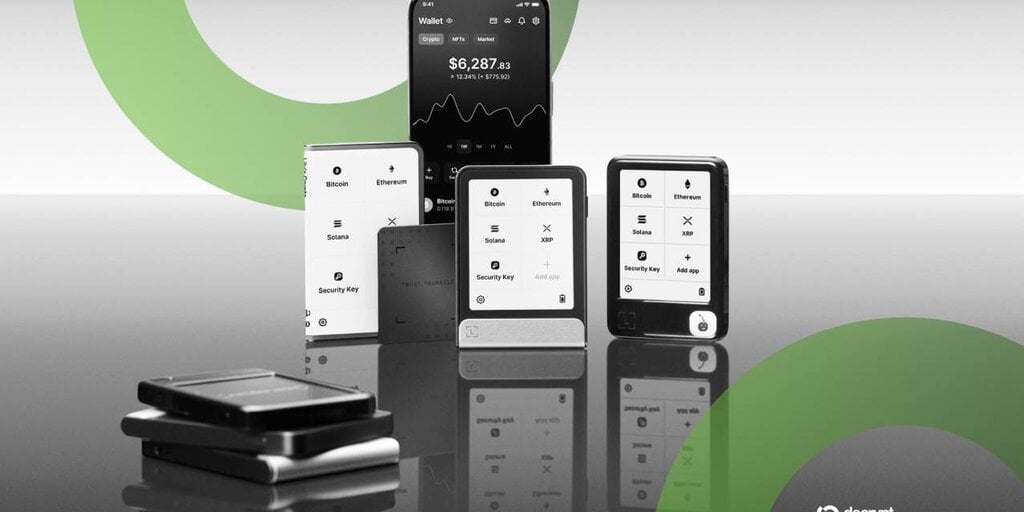 Ledger Says All Confirmed Cases in Suspected $87M Drain Tied to Reseller CryptoBilis
Decrypt reports Ledger's 72-hour update: all confirmed wallet-draining cases involve devices sold by Southeast Asian reseller CryptoBilis, which has stopped hardware wallet sales. Onchain investigators Specter and YFarmX traced over $86M in suspected thefts across Ethereum, Tron and Bitcoin. They describe laundering through Tornado Cash, Zcash's shielded pool and a USDT-to-USDD swap to avoid Tether freezes. An unverified claim of tampered devices (extra cables, LTE module) bought at European retail stores is also covered. Ledger advises CryptoBilis buyers not to set up devices and to move funds to a new seed phrase on a device bought from Ledger.
decrypt.coarticlePublished and added 12 Oct 2026 XRP Ledger’s Payment Engine Had a Counterfeiting Bug Hiding Since 2015
XRP Ledger maintainers disclosed a critical integer overflow in the payment engine, reported via bug bounty in September. A payment consuming hundreds of crafted order-book offers made the buyer's owed sum wrap around to a tiny value while sellers were paid in full, minting XRP. The built-in "no XRP created" invariant check used the same flawed arithmetic and missed it. The fix shipped in 3.4.1 on Sept. 25, bypassing the usual amendment vote and two-week wait for the first time, so the open-source patch would not expose a live exploit. No exploitation evidence was found.
decrypt.coarticlePublished and added 12 Oct 2026 Ledger spyware scare spreads beyond Southeast Asia
Protos reports additional alleged Ledger hardware wallets with physical spyware implants, found in devices from a German MediaMarkt reseller, a Philippine LazMall reseller and a Stax model bought from CryptoBilis. Mark Karpelès found that the implants read the device's screen output to capture seed phrases and evade Ledger's Genuine Check. The earlier CryptoBilis-linked incident of Oct 9 drained over $86M. Ledger told resellers to use only authorized channels and never restock returned units, and teardowns have also shown many devices to be clean.
protos.comarticlePublished and added 12 Oct 2026 Ledger claims CryptoBilis cases are limited as up to $93M is traced, $10M frozen
CoinDesk reports that up to $93–94.5M in mostly USDT and TRON tokens was drained from 315–521 wallets across six or seven blockchains. The wallets were tied to Ledger hardware wallets sold by the authorized reseller CryptoBilis. Ledger confirmed an unauthorized hardware implant in at least one device but did not say how the devices were tampered with. Tether froze $10M, some funds moved through Tornado Cash and Zcash, and Ledger told affected users not to set up unused devices and to move funds to a new device with a fresh recovery phrase. The figures come from Bitquery and YFarmX onchain estimates, not a confirmed Ledger loss total.
coindesk.comarticlePublished and added 12 Oct 2026 Ledger confirms spy chip implant behind wallet crypto thefts
Ledger confirmed that devices sold by Southeast Asian reseller CryptoBilis carried an unauthorized hardware implant that drained users' crypto wallets. Researchers Mark Karpelès and Tibane Labs describe the implant: an STM32G431 MCU, eSIM and shielded LTE module hidden behind the OLED screen, which captures display output and button presses to recover the seed phrase and sends it out over LTE. The article covers two implant variants, the telltale antenna wire, and Ledger's guidance (avoid unauthorized resellers, move funds to a new seed). Ledger also warns that its Genuine Check cannot detect implants when the original Secure Element is intact.
bleepingcomputer.comarticleAdded 13 Oct 2026, published 12 Oct 2026 Ledger says unauthorized implant found in at least one device sold by CryptoBilis
CoinDesk reports that Ledger confirmed an unauthorized hardware implant in at least one device sold by the Southeast Asian reseller CryptoBilis. On-chain researchers estimate $86–93M was drained from more than 300 wallets across Bitcoin, Ethereum and Tron. Ledger says its internal systems and direct sales are unaffected, and it advises not initializing unused devices and moving funds to a new seed on a device bought directly from Ledger. It also covers the reseller's sales suspension, Ledger's tightened distributor chain-of-custody rules, unverified speculation that the reseller was bought out, and the July 2026 Coldcard seed-generation flaw.
coindesk.comarticlePublished and added 12 Oct 2026- XRP Ledger patches decade-old bug that could have minted trillions of XRP
The Block reports on the XRP Ledger disclosure of a critical bug that had been in the payment engine since 2015. Order-book offer totals had no overflow check, so a single payment consuming a few hundred crafted offers could wrap the sum and mint spendable XRP past the 100B cap. Veria Labs' AI agent found it and built a working exploit, and RippleX shipped the fix in xrpld 3.4.1 on Sept. 25, bypassing the usual amendment vote to avoid tipping off attackers. The article also covers the $250K bounty, a separate Batch bug, and the closed-source-release criticism.
theblock.coarticlePublished and added 11 Oct 2026  How Zcash Plans to Hide Your Keys From AI and Quantum Attacks
Decrypt reports that Zakura, which builds a Zcash full node, expects post-quantum signature opcodes in Zcash in January, to enable hash-based signatures for transparent pools. The plan rotates to a fresh transparent address after every transaction so public keys stay hidden, and adds a WOTS hash-based backup signature. Private information retrieval, shipping this week in the Vizor wallet, stops servers from linking the rotated addresses. It follows Justin Drake's "bunker mode" warning that AI-driven math could break ECDSA. The plan covers only transparent payments, and no activation date has been confirmed.
decrypt.coarticlePublished and added 11 Oct 2026 An XRP Ledger security bug could have created 18.45 trillion XRP
Reports a decade-old integer overflow in the XRP Ledger payment engine's DEX offer-crossing code (added 2015). A single transaction across hundreds of seeded accounts could have minted about 18.45 trillion XRP, because the overflowed total understated what the buyer paid and the mint-check safeguard used the same wrong total. Veria AI found it on 2026-09-21 and reported it through the bug bounty. RippleX reproduced it on a standalone server and shipped xrpld 3.4.1 on 2026-09-25 as binaries only, with no patch source. RippleX's Mayukha Vadari warns that AI makes silent critical patches easy to reverse engineer, and the withheld source drew open-source criticism.
en.cryptonomist.charticlePublished and added 11 Oct 2026 XRP Ledger patched decade-old bug that could create billions of dollars in XRP from nothing
CoinDesk reports that researcher Cayden Liao and Veria AI found a flaw, believed to date to 2015, in the XRP Ledger's built-in exchange. Hundreds of crossed offers made the total XRP owed too large for the software to count correctly. The buyer was charged almost nothing while the sellers were paid in full, so XRP was created from nothing. The bug slipped past the ledger's post-transaction no-new-XRP invariant check, which relied on the miscounted total, and past per-account receive limits, because the XRP was spread across hundreds of accounts. RippleX reproduced it on a standalone server and fixed it in xrpld 3.4.1 on Sept. 25 without disclosing the cause. It found no evidence of exploitation on public networks.
coindesk.comarticlePublished and added 10 Oct 2026 Ledger says Southeast Asia reseller linked to $86M draining
Protos reports that Ledger users who bought devices from the Malaysian/Southeast Asian reseller CryptoBilis have been drained of an estimated $72M to over $86M, per on-chain tracing by analysts Specter and Tanuki42. Ledger told CryptoBilis to pause sales and shipments, and advised buyers from the past 90 days not to set up their devices, or to move funds to a new signer if they already had. The article cites Mark Karpelès on reseller wallets found tampered with and implanted with spyware, and Taylor Monahan warning that there is no sign of a zero-day and that panic migration invites phishing and fake-ad drainers.
protos.comarticlePublished and added 9 Oct 2026- Ledger Probes Potential Theft of $87M in User Funds Tied to Crypto Wallet Reseller
Ledger is investigating fund losses among Southeast Asian customers who bought hardware wallets from the reseller CryptoBilis. It has asked the reseller to pause sales and told buyers from the last 90 days not to set up their devices, or to move funds to a new device with a fresh seed phrase. Onchain investigator Specter traced about $86–87M in thefts across Ethereum, Tron and Bitcoin. Ledger has confirmed neither the figure nor the cause, though pre-compromised devices shipped with an attacker-known recovery phrase are the suspected mechanism.
decrypt.coarticlePublished and added 9 Oct 2026  Ledger investigates hardware wallet theft reports; losses estimated above $86M
News report on a suspected supply-chain attack on Ledger hardware wallets sold by the Southeast Asian reseller CryptoBilis. Ledger asked the reseller to suspend sales and shipments, and told buyers from the last 90 days not to initialize devices. Customers who already set up a device should move funds to a new signer with a fresh seed. Onchain investigator Specter estimated more than $86M stolen from hundreds of wallets across Ethereum, TRON and Bitcoin, with 10 addresses listed. The figure is unconfirmed, and there is no evidence that Ledger's hardware or core infrastructure was compromised. The Security Alliance directs victims to its SEAL 911 Telegram bot.
en.cryptonomist.charticlePublished and added 9 Oct 2026- Ledger investigates wallet drains involving CryptoBilis buyers; estimate tops $86 million in losses
The Block reports that Ledger is investigating fund losses among Southeast Asian users who bought hardware wallets from the reseller CryptoBilis, an official reseller in Indonesia, Malaysia and the Philippines. Onchain researchers tanuki42 and Specter estimate losses above $72M and $86M across Bitcoin, Ethereum and Tron, but neither figure is confirmed. Ledger asked the reseller to pause sales and advised buyers from the past 90 days not to set up devices, or to move assets to a new signer with a new seed. Changpeng Zhao suggested a supply-chain attack with fake or tampered devices, and Mark Karpeles asked for circuit-board photos to check for tampering.
theblock.coarticlePublished and added 9 Oct 2026 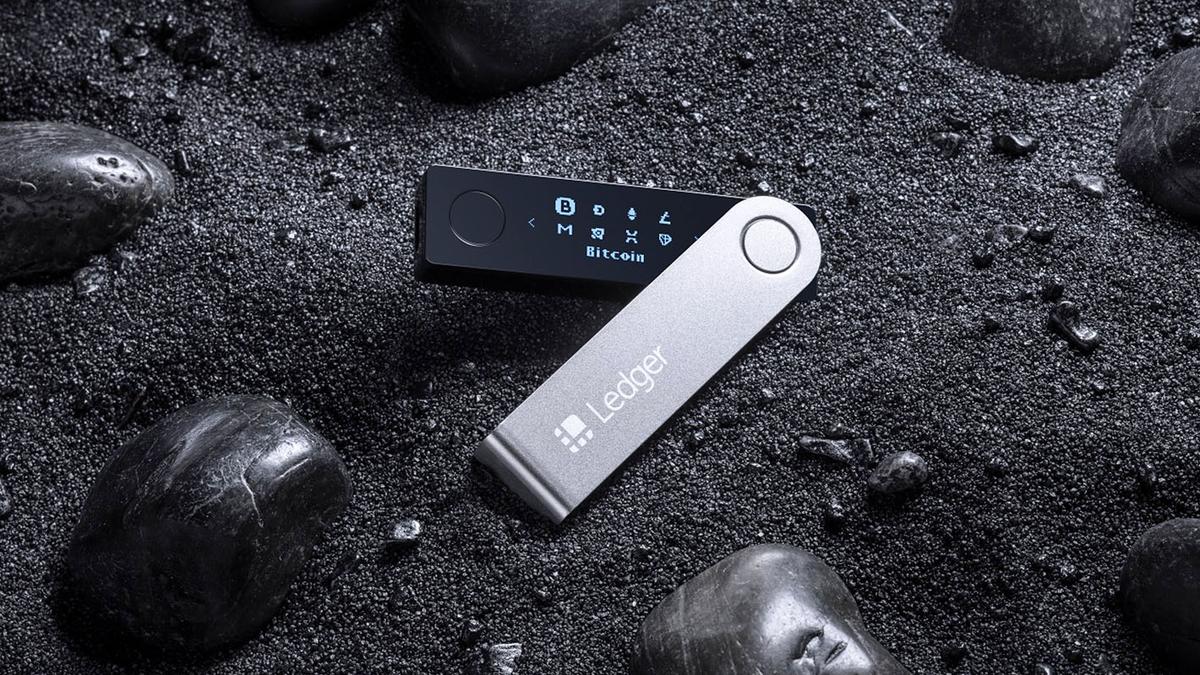 Ledger investigates potential wallet tampering after reports of $86 million in crypto stolen
Ledger is investigating reports of over $86 million allegedly stolen from hundreds of Bitcoin, Ethereum and Tron wallets tied to devices sold by Southeast Asian reseller CryptoBilis. Ledger asked the reseller to halt sales/shipments and advised recent buyers not to activate devices and already-activated users to migrate funds to a new device with a freshly generated recovery phrase, as a possible supply-chain attack (devices pre-loaded with an attacker-known recovery phrase) is one explanation under investigation. No independent confirmation of the loss amount or root cause has been established yet.
coindesk.comarticlePublished and added 9 Oct 2026 UK Targets Cryptomus and TokenSpot in New Russia Sanctions Package
The UK FCDO sanctioned crypto exchange Cryptomus via its Vancouver registered owner Xeltox Enterprises and linked platform Heleket, Kyrgyz firms TokenSpot and Tsunami Payments, and payment processor Processing KG which operates VexPay and is owned by Kyrgyzstan's Ministry of Finance, plus its director Ulan Bukabaev, for allegedly helping Russia evade financial sanctions. Two of the designated entities reportedly processed transactions for the Kremlin backed A7 illicit finance network, which claims to have moved over 90 billion dollars last year, roughly half of Russia's annual military spending. The 38 target package, which also hit oil producers Zarubezhneft and INK Capital and 12 shadow fleet tankers, follows earlier UK and EU action against Justin Sun's HTX and extends a pattern of Western sanctions targeting crypto rails used for Russia sanctions evasion.
decrypt.coarticlePublished and added 9 Oct 2026- Zcash developers set January target for quantum-resistant payments after ‘bunker mode’ scare
Zcash developer Roman Akhtariev, writing for the Zakura client team, announced a January target for adding post-quantum signature opcodes supporting hash-based signatures to Zcash's transparent (public) payment pool, which holds about 70% of issued ZEC. The move responds to Ethereum researcher Justin Drake's "bunker mode" warning that AI could soon break the elliptic-curve math behind Bitcoin and Ethereum wallet keys. Zakura has also built a private-information-retrieval balance-lookup tool, now experimentally available in the Vizor wallet, that lets a wallet check address balances without revealing to the server which addresses are linked, separate from the shielded-pool quantum-recovery work still needed to defend against store-now-decrypt-later attacks.
coindesk.comarticlePublished and added 9 Oct 2026  UK slaps sanctions on three crypto exchanges over alleged Russia links
The UK Foreign Office sanctioned crypto exchanges Cryptomus, Heleket and Certa Payments (all operated by Canadian-registered Xeltox Enterprises) plus Kyrgyzstan's TokenSpot and payment processors Processing KG (VexPay) and Tsunami Payments, as part of 38 new designations targeting Russia sanctions-evasion networks. Two of the sanctioned firms allegedly processed transactions tied to A7, a Kremlin-backed network whose ruble-pegged A7A5 stablecoin is used to bypass financial restrictions and which claims to have moved over $90 billion. The action follows earlier UK sanctions on Garantex and Grinex and complements US and EU actions against the same A7/A7A5 ecosystem.
coindesk.comarticlePublished and added 9 Oct 2026- Understanding Verification Vulnerabilities in Cross-chain Bridges: An Empirical Study
First systematic empirical study of Cross-chain Verification Vulnerabilities (CVVs) in bridge smart contracts, such as flawed validation of state proofs, message sender identities and signatures. From 588 audit reports across 36 bridge projects it derives 11 CVV patterns in 5 categories and builds a dataset of 830 instances across 786 contract files, mapped to reports, source versions and pattern labels. Existing tools cover few CVV patterns, and only two of four tested LLMs beat a 29.3% Macro-F1 constant baseline (best 51.2%), which motivates detectors built for cross-chain verification semantics.
arxiv.orgpaperAdded 12 Oct 2026, published 9 Oct 2026  XRP Ledger adds new controls for banks, stablecoins and tokenized funds
CoinDesk reports that the XRP Ledger activated PermissionDelegationV1_1 on Oct. 8, letting account owners authorize helper accounts to perform limited actions (e.g., customer approval, payments) without exposing primary signing keys, each helper limited to 10 permissions with no spending cap. The article flags two live security issues: the PaymentBurn permission, meant to let a helper destroy issued tokens, can under certain conditions let that helper mint new tokens instead, so operators are told not to delegate it until a fix (currently at 27 of 35 validator votes) activates; separately, a bug found Oct. 8 causes some servers to drop online validators from their consensus vote count after a routine key rotation, which can make an upgrade proposal appear closer to the 80% threshold than it actually is.
coindesk.comarticlePublished and added 9 Oct 2026- Hybrid post-quantum stealth addresses (ERC-5564 schemeId 3)
A draft ERC proposing schemeId 3 for ERC-5564 stealth addresses, combining an ML-KEM-768 encapsulation with a secp256k1 ECDH secret so that future quantum computers cannot retroactively deanonymize recipients from the public announcement log, while spending stays classical secp256k1 (and thus still quantum-vulnerable once spent). The post, with a linked reference implementation, test vectors and gas harness, details the key/meta-address format, the payment-secret combiner (hashing both shared secrets and ciphertexts for IND-CCA), the view-tag derivation ordering to avoid quantum tag-narrowing, measured gas cost (111,330 gas per payment on Prague), and open questions around ANO-CCA proofs for standardized ML-KEM, NIST SP 800-56C combiner approval, and downgrade-attack handling when a recipient registers under both schemeId 1 and 3.
ethereum-magicians.orgthreadPublished and added 9 Oct 2026 - ERC-8441: Hybrid post-quantum stealth address scheme
A draft Ethereum ERC (ERC-8441) proposes schemeId 3 for ERC-5564 stealth addresses, combining an ML-KEM-768 encapsulation with a secp256k1 ECDH secret so that quantum adversaries who later break discrete log still cannot deanonymize who was paid in past public announcement logs, protecting against harvest-now-decrypt-later attacks. Spending remains classical secp256k1 and unprotected once quantum computers exist; the authors flag open issues including a documented downgrade attack (recipients registered under both scheme 1 and 3 can still be paid without PQ protection), the lack of a formal ANO-CCA proof for standardized ML-KEM, and a non-NIST-approved secret combiner. It reuses the existing ERC-5564 announcer and ERC-6538 registry with no contract changes, costing 111,330 gas per payment.
ethereum-magicians.orgthreadPublished and added 9 Oct 2026  UK Targets Cryptomus, Heleket, TokenSpot in New Russian Sanctions
Chainalysis analyzes the UK's October 8 sanctions package designating crypto payment processors Cryptomus and Heleket (both under parent Xeltox Enterprises Ltd) and Kyrgyzstani exchange TokenSpot CJSC. On-chain tracing shows Cryptomus and Heleket received funds from over 15,000 illicit counterparties — including Lazarus Group's $1.4B Bybit exploit proceeds, Black Basta ransomware, and Xinbi Guarantee — exceeding all tracked mixers in illicit volume across several categories, while TokenSpot is shown converging with Grinex and Meer at the same HTX deposit address (>$308M) tied to the Ilan Shor-linked A7A5 sanctions-evasion network.
chainalysis.comarticlePublished and added 9 Oct 2026 Coinbase Cryptographer Calls Drake's 'Bunker Mode' Warning 'The Very Definition of FUD'
News piece reporting that a Coinbase cryptographer dismissed Justin Drake's proposal for Ethereum validators/users to adopt a 'bunker mode' against AI-accelerated cryptanalysis as unfounded FUD. Vitalik Buterin weighed in that AI-accelerated math risk is real but should be pointed at lattice-based cryptography rather than elliptic-curve schemes like ECDSA used by Ethereum, while a former Ethereum Foundation researcher argued bunker mode would not help if the curves actually broke.
thedefiant.ioarticlePublished and added 8 Oct 2026- go-ethereum v1.17.8 "Protein Sludge Pack"
Security-focused release notes for go-ethereum (Geth) v1.17.8, patching several denial-of-service vulnerabilities in the eth/snap p2p protocol handlers, hardening JUMPDEST analysis caching against post-Amsterdam-fork attacks, requiring IP verification before accepting discovery statements, fixing a rogue-STUN-server crash, and closing a DoS vector tied to BAL accounts. Most issues only become exploitable after the Amsterdam fork activates, and the release also includes RPC correctness fixes (eth_simulateV1, eth_createAccessList) and a Sparse Blobpool (EIP-8070) correctness bug.
 github.comadvisoryAdded 8 Oct 2026
 Vitalik Buterin backs crypto ‘bunker mode’ amid rapid AI math advances
Ethereum researcher Justin Drake, backed by Vitalik Buterin, warns that rapid AI progress in mathematics (citing OpenAI's recent batch of math findings and a 10,000-agent solve of Navier-Stokes) could break ECDSA-based wallet signatures before quantum computers ever do, and that lattice-based post-quantum schemes may not be safe either. They recommend a controlled 'bunker mode' migration of crypto holdings to fresh addresses whose public keys have never been exposed on-chain, while cautioning that botched migrations carry their own risk.
 cointelegraph.comarticlePublished and added 8 Oct 2026
 ‘Shielded Bitcoin
Galaxy Research newsletter piece covering "Shielded Bitcoin," a paper by [[alloc] init] researchers Clara Shikhelman, Mikhail Komarov, and Aleksei Moskvin proposing a Zcash-style shielded pool (encrypted notes, public nullifiers, zero-knowledge proofs) run as a Bitcoin L1 metaprotocol via OP_RETURN envelopes, with peg-in/peg-out deliberately left to a future "PIPEs v2" paper. The article's security-relevant angle flags that novel ZK circuits need battle-testing — citing Zcash's own Orchard Pool soundness bug that survived professional audits for four years before being fixed in the Ironwood upgrade — and that bridge/peg mechanisms (the likely weak point) have historically been the most exploited component in crypto, naming Ronin, Wormhole, Nomad, and KelpDAO. It also notes a growing AI-driven deanonymization threat to transparent blockchains, citing ETH Zurich/Anthropic research showing LLM agents can re-identify pseudonymous users from profile data alone.
galaxy.comarticleAdded 8 Oct 2026 Vitalik Flags AI Risk to Crypto, Warns Against Rushed Wallet Moves
Vitalik Buterin responds to Ethereum Foundation researcher Justin Drake's bunker mode proposal, agreeing AI-accelerated cryptanalysis could break ECDSA, the signature scheme behind most crypto wallets, in months not years, and that lattice-based schemes like ML-DSA billed as quantum-safe could also take serious hits within two years. Buterin gives practical key-hygiene advice such as keeping funds in addresses that never exposed a public key and rotating multisig signer keys after every operation with offchain signature collection, while warning that botched migrations cost more than hacks.
bankless.comarticlePublished and added 8 Oct 2026 Will AI Break Crypto Encryption? Ethereum’s Vitalik Buterin Weighs In on 'Bunker Mode' Shift
Decrypt reports on Ethereum co-founder Vitalik Buterin's warning that AI-driven advances in mathematics could plausibly break lattice-based cryptography within two years, a day after Ethereum Foundation researcher Justin Drake urged the industry to adopt "bunker mode" — moving funds to addresses whose public keys have never been exposed. The piece covers pushback on reusing public keys, the tradeoff between quantum-resistant lattice schemes (used by projects like Cardano) and their potential AI-math vulnerability, and Buterin's preference shift toward hash-based cryptography, with commentary from BIP-360 co-author Isabel Foxen Duke and Charlie Quant Lab's Ananda Banerjee urging calm preparation over panic.
decrypt.coarticlePublished and added 8 Oct 2026 💧 Looting of Liquid Sidechain Underscores Emerging Cyber Threat to Bitcoin
Galaxy Research breaks down the theft of 4,000 BTC (~$320m) from the Liquid Network, a Bitcoin sidechain run by the Liquid Federation. Attackers exploited a bug in the sidechain node code to artificially mint 4,000 L-BTC, then abused an auto-forward feature offered by federation member SideSwap to bypass peg-out address whitelisting and withdraw real BTC to the main chain; the self-described "white hats" returned 85% but held 15% hostage, negotiating with developer Blockstream via PGP-encrypted OP_RETURN messages and demanding a 10% bug-bounty payout. The piece also contrasts this with concurrent Coldcard and BTCPay Server incidents and speculates about AI-assisted vulnerability discovery.
galaxy.comarticleAdded 8 Oct 2026 Weekly Research Brief: Bitget Hack, AI Accord and SEC FAQs
Galaxy Research's weekly brief includes a detailed postmortem of the $387.5M Bitget hack: attackers exploited a zero-day in two unnamed third-party security products ("Product A"/"Product B") to obtain high-level internal credentials, inserted forged withdrawal commands into Bitget's wallet backend across 11 chains, then deleted the fraudulent commands — with Bitget attributing the attack to North Korean actors based on IP behavior and wallet overlaps found by Elliptic and TRM. The piece draws a direct parallel to the $1.5B Bybit/Lazarus heist (compromised Safe{Wallet} infrastructure rather than stolen keys) to argue that private-key cryptography is effectively solved and attackers now target the approval pipeline/intermediary services instead; it also covers the follow-on $3.8M NEAR Intents Omni-bridge exploit and THORChain's continued role laundering DPRK proceeds. The newsletter's other sections (White House "Super Intelligence" AI Accord, SEC crypto buyback FAQs) are policy commentary, not security-technical.
galaxy.comarticleAdded 8 Oct 2026- Morning Minute: Ethereum Researcher Says AI May Break Crypto Encryption Before Quantum
A daily crypto-market newsletter segment reporting Ethereum Foundation researcher Justin Drake's warning that AI, not quantum computing, may be the first to break ECDSA — the elliptic-curve signature scheme securing Bitcoin and Ethereum — potentially within months by recovering private keys from exposed public keys using large GPU clusters. Drake calls for industry-wide "bunker mode": migrating self-custodied funds to fresh addresses whose public keys remain hashed/hidden, and names exchanges (Binance, Bitbank, Robinhood, Bitfinex, Tether) he wants to harden cold storage. The article also notes a concurrent Europol report flagging crypto wallets with already-revealed public keys as the main weak point for future quantum/AI attacks, since those cannot be retroactively protected.
decrypt.coarticlePublished and added 8 Oct 2026  Bitcoin and ether holders urged to enter ‘bunker mode’ against possible AI attacks
Ethereum researcher Justin Drake and co-founder Vitalik Buterin warn that rapid AI progress in mathematics could break the elliptic-curve signatures securing Bitcoin and Ethereum wallets within months - far sooner than quantum computers are expected to - urging large holders to enter bunker mode by migrating funds to addresses whose public keys have never been exposed onchain. Buterin also flags that lattice-based post-quantum schemes, the basis of NIST's signature standard, could face similar AI-driven erosion, pushing Ethereum's long-term roadmap toward hash-based signatures instead. The piece grounds the warning in already-documented AI-assisted exploit discovery: a 5-year-old Coldcard hardware-wallet firmware bug drained over 1,367 BTC, BTCPay Server Lightning-node thefts, Core Lightning bugs surfaced via AI-generated audits, and Anthropic's demonstration of AI models writing working exploits against simulated DeFi contracts.
coindesk.comarticlePublished and added 8 Oct 2026 AI risk to crypto wallets: Ethereum researcher warns keys could be cracked in months
Ethereum Foundation researcher Justin Drake warned on October 7, 2026 that advances in AI and mathematics could break ECDSA — the signature scheme securing blockchain transactions — within months, potentially letting an attacker recover a private key in about a week using a large GPU cluster. He urged gradual "bunker mode" preparation rather than panic: rotating funds into fresh addresses whose public keys have never been exposed on-chain, strengthening cold storage, and accelerating Ethereum's move toward hash-based signature schemes such as SPHINCS for critical signers like oracles and L2 security councils.
en.cryptonomist.charticlePublished and added 8 Oct 2026 Justin Drake Urges 'Bunker Mode' Migration to Fresh Crypto Addresses
Justin Drake urges migrating to fresh crypto addresses over AI cryptographic break fears; Ledger CTO disputes the risk of mass migration.
thedefiant.ioarticlePublished and added 8 Oct 2026 Evolution of Web3 in Cloud Supply Chain Attacks
Unit 42 analysis of how supply chain malware uses Web3 for command and control, in three phases: EtherHiding (smart contract state), TxDataHiding (transaction calldata across TRON, Aptos and BSC) and NullReceiver (C2 IPv4 decoded from a zero-value transaction's recipient address). It covers the ChainDrop npm worm, the PolinRider campaign and DPRK-linked Axios, Mastra and arrayref compromises. It ends with detection and CI/CD policy guidance.
 unit42.paloaltonetworks.comarticleAdded 30 Oct 2026, published 7 Oct 2026
 Ethereum Researcher Says AI May Break Encryption Before Quantum Does
Ethereum Foundation researcher Justin Drake warns that AI-driven mathematical advances could break ECDSA — the signature scheme securing Bitcoin and Ethereum — before quantum computers do, potentially recovering a private key from an exposed public key in about a week using a large GPU cluster. He calls for "bunker mode": a controlled mass migration of funds to fresh addresses whose public keys have never been exposed, urges major custodians (Binance, Bitbank, Robinhood, Bitfinex, Tether) to harden cold storage, and pushes Ethereum to accelerate its move to hash-based (post-quantum) cryptography.
decrypt.coarticlePublished and added 7 Oct 2026 Black Thursday revisited: MakerDAO keeper exploited for $500K
test
protos.comarticleAdded 8 Oct 2026, published 7 Oct 2026 16 Malicious Firefox Extensions Steal Cryptocurrency Wallet Credentials
Socket Threat Research uncovered a coordinated campaign of 16 malicious Firefox extensions split into a Rabby Wallet clone family (4 extensions, full repackaged Rabby codebase) and an OKX Wallet-impersonating "Portal WALLET" family (12 extensions), all hooking wallet import flows to steal mnemonic seed phrases and private keys and exfiltrate them via GET/POST/sendBeacon to attacker-controlled Cloudflare Workers endpoints under the icy-star-f45c.workers.dev namespace. The writeup includes campaign markers (EQOx7EIPZSNi), background.js SHA-256 hashes, extension IDs/XPI hashes, and ties the activity to a prior August 2026 crypto-theft extension campaign Socket tracked, plus concrete detection and incident-response guidance.
socket.devwriteupPublished and added 7 Oct 2026 Note on Extractability of PST Polynomial Commitment Scheme
This IACR ePrint note revisits a 2025 Crypto paper by Belohorec et al. that proved the PST multivariate polynomial commitment scheme is black-box extractable under two new assumptions, ARSDH(n) and GARSDH(n). The authors show both are in fact equivalent to the original ARSDH assumption from Lipmaa et al. (Eurocrypt 2024), and separately identify a gap in the proof that canonical PST is extractable under GARSDH(n). This matters for implementers and auditors relying on PST/KZG-style polynomial commitments, as it clarifies the actual cryptographic strength underpinning extractability claims used in zk-SNARK and other succinct-proof constructions.
 eprint.iacr.orgpaperAdded 8 Oct 2026, published 7 Oct 2026
 Quantum computers threaten exposed private keys rather than blockchains, Europol warns
Europol's European Cybercrime Center published a "Quantum Computing and Cryptocurrencies" report arguing that Bitcoin's hash-based blockchain history is far more quantum-resistant than the ECDSA public-key cryptography used to control wallets. It estimates roughly 6.9 million bitcoin sit in addresses with exposed public keys (including early pay-to-public-key and long-dormant "Satoshi era" outputs) that a sufficiently powerful quantum computer could eventually use to derive private keys, and cites a 2024 study putting full UTXO migration to quantum-resistant signatures at 76–300 days of cumulative block space, with new post-quantum signatures 10–120x larger than ECDSA.
coindesk.comarticleAdded 8 Oct 2026, published 7 Oct 2026 Europol Warns Crypto Wallets Are 'Primary Risk' for Quantum Attacks
Decrypt covers two Europol reports — "Quantum Computing and Cryptocurrencies" (European Cybercrime Centre) and "Harvest Now, Decrypt Later" (with University Carlos III of Madrid) — warning that exposed wallet public keys, not blockchain hash functions, are the primary quantum attack surface for crypto, and that TLS, SSH, and OpenPGP are susceptible to retrospective decryption once quantum computers mature. It details a "just-in-time" attack where a quantum computer derives a private key during the brief window between a transaction broadcasting its public key and confirmation, cites NIST's post-quantum deprecation schedule (phase out classical public-key crypto by 2035), and notes ~30% of BTC supply already has exposed public keys with pre-emptive migration as the only remedy.
decrypt.coarticlePublished and added 7 Oct 2026 The randomness question at the heart of your hardware wallet
Unchained explains how hardware wallets generate entropy for bitcoin keys, covering PRNG vs TRNG theory, physical TRNG mechanisms (ring oscillator jitter, diode avalanche noise, radio static reuse), and NIST SP 800-90B / BSI AIS-31 certification. It compares entropy sourcing and secure-element chip suppliers (STMicroelectronics, Microchip, Infineon, Espressif, Silicon Labs) across Trezor, Ledger, Coldcard, BitBox02, Foundation Passport, Blockstream Jade and Block Bitkey, and walks through the July 2026 Coldcard firmware bug that silently bypassed its hardware TRNG for five years, causing real bitcoin losses. It also covers manual dice/coin entropy generation for BIP39 seed phrases, the Dark Skippy nonce-leakage attack, and multisig as the primary mitigation against single-device key-generation failures.
 unchained.comarticleAdded 8 Oct 2026, published 7 Oct 2026
 Chinese network laundered $1B+ for North Korea's Lazarus Group — ZachXBT
Blockchain investigator ZachXBT published a 12-part thread detailing how he spent months posing as a client of a Chinese money-laundering network to prove it laundered over $1 billion for North Korea's Lazarus Group, including a large share of the ~$1.5 billion Bybit hack (FBI codename TraderTraitor). He cross-referenced the operators' private messages with on-chain data — including a wallet receiving fees from Bybit-hack-linked addresses and THORChain bridge transfer timing/amounts matching what operators disclosed — turning chat screenshots into verifiable blockchain evidence. The laundering network converted BTC into ETH, Solana and Tron, used THORChain for cross-chain hops, and parked funds in low-volume Uniswap pools; the investigation led Tether to freeze 442,000 USDT, part of over $75 million ZachXBT claims to have gotten frozen from North Korea-linked hacks since 2022.
 247wallst.comarticlePublished and added 6 Oct 2026
 Flash Loan Attacks Drained $1.2B From DeFi Between 2020 and 2024: Study
A study by Tim Hall (University of Winchester) and Remo Stieger published in the Journal of Financial Crime analyzed 254 successful DeFi attacks between February 2020 and July 2024, finding that 72 flash loan attacks caused $1.211 billion in losses (18.44% of the $6.568B total), with over 80% occurring on Ethereum. The researchers categorized flash loan attacks into 14 types across two groups — price-feed manipulation and protocol-logic exploits (price oracle attacks, donate-function logic exploits, reentrancy, and a single $181M governance exploit) — and found logic exploits grew from 28% to 55% of losses over the period as platforms patched known weaknesses. The study also profiles attackers, distinguishing hobbyist researchers from state-level/organized groups including North Korea, and includes a victim-platform interview describing a bug that evaded auditors for over a year.
decrypt.coarticlePublished and added 6 Oct 2026- The Post-Quantum Cost of Garbled-Circuit Bitcoin Bridges
This IACR ePrint paper examines the post-quantum security of Bitcoin bridges that rely on off-chain garbled-circuit evaluation of succinct proofs to validate withdrawals, where input labels encoding the proof must be committed on-chain. The authors show current pairing-based proving systems are vulnerable to quantum attacks, and that swapping to post-quantum proving systems shrinks circuit size but drastically inflates proof size, forcing proofs to span multiple Bitcoin blocks and raising on-chain cost. They outline research directions to improve proof efficiency, circuit representation, and label encoding for quantum-resistant bridge designs.
eprint.iacr.orgpaperAdded 8 Oct 2026, published 6 Oct 2026 - Formalization of the Invariant Duality Theorem
An Ethereum Magicians forum post formalizes an "Invariant Duality Theorem": in a permissionless network, a protocol cannot simultaneously achieve Perfect Indistinguishability (traffic statistically indistinguishable from white noise under DPI) and Resource Exhaustion Resistance (O(1) early rejection of junk packets). The proof sketch argues that indistinguishable traffic forces receivers to run expensive deobfuscation on all packets including attacker-generated noise (enabling DoS), while any cheap early-filter function, by Kerckhoffs's principle, becomes a public signature a censor can hardware-implement to block the protocol. This is a theoretical tradeoff relevant to designing or attacking covert/anti-censorship transport protocols.
ethereum-magicians.orgthreadPublished and added 6 Oct 2026  ZachXBT Says He Fronted $349,700 to Infiltrate Alleged Laundering Ring
Pseudonymous on-chain investigator ZachXBT says he personally fronted $349,700 to infiltrate an alleged crypto money-laundering ring as an undercover source. He ties that operation to the freezing of 442,000 USDT after identifying a laundering cluster linked to the Bybit hack and valued at more than $12 million.
thedefiant.ioarticlePublished and added 5 Oct 2026- Crypto Sleuth ZachXBT Fronted $350K to Pose as a Client of Lazarus' Chinese Launderers
Decrypt reports on ZachXBT's account of infiltrating a Chinese money-laundering syndicate working for North Korea's Lazarus Group, by posing as a client ("fronted" $349.7K USDC) to a contact named "Jimmy Green" to gather intelligence on how Bybit's $1.5B hack proceeds were being laundered. The piece details the on-chain corroboration methods used (matching Telegram screenshots to Thorchain swap timing, wallet clustering across BTC/ETH/SOL/Tron) that exposed a $12M+ cluster of Bybit exploit funds, led to a 442K USDT Tether freeze, and separately traced $3M in fraud proceeds to Huione Guarantee, a Cambodian marketplace later targeted by FinCEN and shut down by Telegram.
decrypt.coarticlePublished and added 5 Oct 2026  ZachXBT poses as money launderer to infiltrate Lazarus network
Crypto investigator ZachXBT details how he posed as a money-laundering client (contacting a launderer known as "Jimmy Green" over Telegram/Discord) to infiltrate a Chinese organized-crime network laundering funds for North Korea's Lazarus Group. He fronted roughly 350,000 dollars across transactions, collected addresses and bridging methods via THORSwap, and used the intel to link the launderer to the 1.5 billion dollar Bybit hack, the 100 million dollar Poloniex hack, and sanctioned conglomerate Huione Guarantee; findings also contributed to freezing funds tied to the Bybit theft.
protos.comarticlePublished and added 5 Oct 2026 ZachXBT Posed as a Client to Infiltrate Chinese Syndicate Laundering Bybit Hack Funds
Crypto investigator ZachXBT describes posing undercover as a client to infiltrate a Chinese OTC laundering syndicate handling stolen Bybit hack funds linked to North Korea (DPRK). He fronted 349,700 USDC, paid a 5% fee per order, and had the broker tell him in advance where the stolen funds would move next, surfacing operational detail on how DPRK-linked actors cash out stolen crypto through OTC desks.
thedefiant.ioarticlePublished and added 5 Oct 2026 Malicious Crypto Shell Packages Target RubyGems
OpenSourceMalware's analysis of over 40 typosquatted RubyGems packages (e.g. rubygems-btc-shell) published by a user calling themselves "Ghost Dev," targeting crypto/web3 developers. The packages ship a delayed-execution payload hidden in extconf.rb that evades sandboxes before either opening a reverse shell to 45.138.12.177:8090 or deploying a full theft kit (inject_proxy.py, _grab.py, a browser extension, and a rogue root CA) that MITMs TLS traffic to 28+ crypto exchanges, swaps withdrawal addresses, hijacks the clipboard, and harvests wallet files, seed phrases, and private keys. The writeup includes full IOCs, SHA-256 hashes, attacker wallet addresses, and C2 endpoints.
 opensourcemalware.comwriteupPublished and added 5 Oct 2026
 How native transaction assertions could enforce a transaction's final outcome
Ethereum Foundation research post distinguishing "intent mismatch" (Bybit, BadgerDAO) from "outcome mismatch" (the Aave/CoW $50.4M swap that settled for $36K) attacks on signed transactions, then proposing native transaction assertions as a fix. It details EIP-7906, which adds a read-only POST_TX frame (building on EIP-8141 frame transactions) with three new opcodes — TXTRACE, TXDIFF, EVENTDATACOPY — letting onchain logic inspect the full net state diff and events after execution and revert if a signed, independently-sourced rule is violated.
 blog.ethereum.orgarticlePublished and added 5 Oct 2026
- Plotkin Attacks! On the (Mis)use of Raptor Codes in Asynchronous Verifiable Information Dispersal
Victor Shoup shows that "reconstruct-later" asynchronous verifiable information dispersal (AVID) designs — used by data-availability systems including an early Walrus design/testnet — are insecure when built on the standardized Raptor codes R10 (RFC 5053) and RaptorQ (RFC 6330). Using the Plotkin bound, he proves that a Byzantine disperser can choose a subset of f+1 honest fragments that fails to reconstruct the message, gives randomized polynomial-time algorithms to find such subsets, and implements a working attack that defeats an RFC 6330 RaptorQ decoder on every adversarial subset tested (success for f from 9 to 45). Benchmarks show plain Reed-Solomon coding is an MDS alternative that is often faster and never much slower than R10/RaptorQ, making it the safer practical choice for this design pattern.
eprint.iacr.orgpaperAdded 8 Oct 2026, published 4 Oct 2026 - Bend-SSZ: Formally proving SSZ
A forum writeup describing bend-ssz, a formally verified implementation of Ethereum's SSZ serialization covering all 109 mainnet Fulu types plus 131 generic test forms, written in the proof-checking language Bend and proved equal to the consensus-specs reference instead of relying on test vectors. The post details how mutation testing, hand-written fault injection, and 2M+ hostile decode fuzzing found and closed gaps, including a 32-bit size-arithmetic wraparound and a decode memory-amplification DoS (up to 28x heap-per-byte blowup) that is mitigated with a proved, budgeted decode function; it also reports integrating the library into Prysm and cross-checking against Lighthouse on a live devnet with zero mismatches.
ethereum-magicians.orgwriteupPublished and added 4 Oct 2026 - NDB Bank to engage foreign agency to recover stolen Rs.13.69 bn
News report on the aftermath of a Rs.13.69 billion internal fraud at Sri Lanka's NDB Bank, based on a Deloitte Touche Tohmatsu India forensic audit. The audit found funds laundered through offshore banking channels and, for a smaller Rs.390 million portion, through a crypto-conversion platform called "Buy Today" using automated sub-accounts on Binance to swap fiat for crypto and move it to secondary wallets, exploiting weak regional compliance controls. The bank is now moving to hire a foreign asset-recovery specialist, likely tied to networks such as ARIN, INTERPOL's Global Focal Point Network, or the Egmont Group.
 sundaytimes.lkarticleAdded 4 Oct 2026
 'We Have Identified You, Sir': Near Intents Recovers $3.8 Million After 48-Hour Ultimatum
NEAR Intents, a cross-chain swap protocol, suffered a $3.8M exploit caused by a bug in how its Omni deposit/withdrawal layer interacted with its main smart contract. General manager Alex Shevchenko publicly identified the attacker, gave a 48-hour ultimatum to return the funds as a last-chance responsible-disclosure offer, and the full amount was returned after an on-chain apology message. The stolen funds had briefly moved through KuCoin and were bridged to Bitcoin, traced by ZachXBT; separately, days earlier NEAR Intents had blocked a $50M swap attempt tied to the DPRK-linked Bitget hacker.
decrypt.coarticlePublished and added 4 Oct 2026 Bitget — Rekt
A rekt.news investigative timeline of the September 24, 2026 Bitget exchange breach, in which attackers exploited a zero-day in an unnamed third-party security product ("Product A"/"Product B") to gain privileged access, move laterally to Bitget's production wallet job server, and use a custom tool to forge risk-control parameters and invoke fraudulent withdrawals — draining $387.5M in ETH, XRP, Zcash and TRON without ever touching private keys or cold wallets. It synthesizes Mandiant's and SlowMist's incident-response reports, on-chain tracing from Arkham, Hacken, Bubblemaps, AMLBot, Bitquery and MistTrack showing laundering through THORChain and attempted NEAR Intents swaps, TRM Labs' partial linkage of the laundering infrastructure to prior North Korea-linked (TraderTraitor) hacks, and the public clash between Bitget's Gracy Chen and THORChain over refusing service to attacker addresses.
rekt.newswriteupAdded 3 Oct 2026 Chainalysis Used AI to Trace the $387M Bitget Hack Back to North Korea
Chainalysis published an attribution report tying the September 24 $387M Bitget exchange hack to North Korea-linked actors, pushing DPRK's 2026 crypto theft total past $1 billion. The report details the attackers' laundering path: $387M moved in 23 transfers within three hours across Ethereum (49.7%), XRP (40.8%), Zcash (7.6%) and Tron (1.8%), with stolen XRP routed through a cross-chain liquidity protocol into Bitcoin rather than an exchange. Chainalysis also disclosed it used in-house AI automation to compress over 20 hours of manual bridge-transaction reconciliation into under 10 minutes, with humans still directing the investigation.
decrypt.coarticlePublished and added 3 Oct 2026- EIP-TBD: Resolution — Non-Self-Authorizing State Transitions
A draft EIP ("Resolution") posted to Ethereum Magicians proposes a formal authority boundary separating "valid/computed/proven" from "authorized to change state," with a Resolve() function returning AUTHORIZED, UNAUTHORIZED, or UNRESOLVED. It generalizes a pattern the author sees already present piecemeal in ERC-7710 (delegation possession vs. exact capability), ERC-8196 (autonomous transaction vs. owner policy proof), and ERC-8354 (proposed action vs. policy verdict), arguing composition must be authority-non-expansive so recovery proofs, provenance commitments, and agent-generated candidate transactions can't silently acquire authority they weren't granted.
ethereum-magicians.orgthreadPublished and added 3 Oct 2026  Déjà Vu, Lazarus Crew: $387.5m Bitget Exploit Repeats a Pattern
Galaxy Research post-mortem on the $387.5m Bitget hot/warm wallet theft across 11 chains, attributed to North Korean (Lazarus/DPRK) actors via IP behavior and onchain wallet-overlap analysis by Elliptic and TRM. SlowMist traced the intrusion to a zero-day exploit against two unnamed third-party security vendors ("Product A"/"Product B") that let attackers insert and then delete fraudulent withdrawal commands in Bitget's wallet backend, rather than compromising private keys or cold storage. The piece draws a direct parallel to the February 2025 Bybit/Safe{Wallet} $1.5B theft (doctored signing interface) and the same-week NEAR Intents $3.8m hot-wallet exploit, arguing that private-key cryptography is now reliably secure so attackers instead target the intermediary infrastructure/pipeline that authorizes transactions, with stolen funds repeatedly laundered through THORChain.
galaxy.comarticleAdded 2 Oct 2026 Arbitrum Pauses New Stylus Activations in Emergency Security Action
test
thedefiant.ioarticlePublished and added 2 Oct 2026 Bitget Confirms Third-Party Zero-Day Behind $387.5 Million Cryptocurrency Theft
The Hacker News reports Bitget's confirmation that attackers exploited a zero-day vulnerability in unnamed third-party security products ("Product A" and "Product B") to steal $387.5 million in cryptocurrency across 11 blockchains in September 2026. SlowMist's investigation traced the intrusion back to August 31, showing attackers read database credentials via a hidden script, later hijacked an employee identity to inject commands into Product B's management platform, and deployed a web shell with C2 access; Mandiant found the attackers pivoted from the compromised security appliances into Bitget's production wallet job server to deploy a custom withdrawal-draining tool that bypassed risk controls. Bitget, citing IP patterns and on-chain analysis corroborated by Elliptic and TRM Labs, attributes the heist to North Korean threat actors with wallet overlaps linking it to prior laundering operations.
 thehackernews.comarticleAdded 2 Oct 2026
 Liquid Network — $320M L-BTC Mint via Range-Proof Cache-Key Collision
On September 6, 2026, an ambiguous four-part cache-key construction in Elements' CachingRangeProofChecker::VerifyRangeProof (introduced by commit c26d719) let two distinct confidential-transaction verification inputs collide into the same 4,301-byte cached entry, causing nodes to treat an unbacked output as a validated range proof. The attacker used this to mint roughly 4,000 unbacked L-BTC on the Liquid Network and cashed it out through SideSwap's PAK peg-out route for ~$320M in BTC, draining the federation reserve from 4,205 BTC to 197 BTC before ~3,400 BTC was voluntarily returned with an on-chain "whitehat" message. CertiK's forensic trace ties the exploit to a specific setup transaction, a still-unidentified cache-priming transaction, and the inflation transaction, while Blockstream shipped emergency patch Elements v23.3.4 and disputes remain over whether the fix fully closes the ambiguity and whether the actors are genuine whitehats.
rekt.newswriteupAdded 2 Oct 2026 Chainalysis Links $387 Million Bitget Hack to North Korea
Chainalysis attributes the $387 million Bitget exchange hack to North Korea, pushing DPRK-linked crypto theft totals above $1 billion for 2026. Onchain records show the stolen XRP being laundered by swapping it through the THORChain cross-chain protocol.
thedefiant.ioarticlePublished and added 2 Oct 2026- NuvexNetwork/nuvex
Nuvex is a Solana-native verifiable compute and oracle protocol, still pre-mainnet, whose own README documents unresolved security gaps instead of hiding them: its VRF proof verification relies on solana-ecvrf 0.0.1 (RFC 9381 ECVRF-Edwards25519-SHA512-TAI) which has no known audit, max_fee is stored but never actually charged, and VRF fulfillment is first-come among any node meeting the configured stake/heartbeat threshold — meaning an operator who funds several keys at a low minimum stake can selectively pick which randomness output gets used. The deploy-mainnet script is stubbed to exit before any transaction, and unresolved design questions (fee shares, challenge/reject state transitions) are tracked as explicitly blocked ADRs rather than quietly shipped.
github.comrepoPublished and added 2 Oct 2026  US Designates Russia's A7 Network as Transnational Criminal Organization
OFAC designated Russia's A7 Network a transnational criminal organization and FinCEN proposed a rule under the Combating Russian Money Laundering Act (section 9714) barring US institutions, including crypto exchanges, from transfers tied to its "Sub-Agent" front companies. The network, launched by fugitive oligarch Ilan Shor with state-owned Promsvyazbank, used the ruble-backed A7A5 token (issued by Old Vector on Tron and Ethereum) in a mirror scheme: crypto moved domestically while Sub-Agents made matching fiat transfers abroad in dollars, yuan, dirhams and euros, with staff spoofing their location via VPNs to appear based in Dubai, Hong Kong or Bishkek. FinCEN found over 180 entities moved at least $179.1 billion in A7A5 (mostly via sanctioned exchanges Garantex and Grinex) and ties the network to Iranian sanctions evasion, Nobitex, and laundering of North Korean exchange-hack proceeds.
decrypt.coarticlePublished and added 2 Oct 2026 The OpenSourceMalware Show #23
Episode 23 of the OpenSourceMalware Show covers the arrest of ShinyHunters figure Pepijn van der Stap (Umbreon) and three KillSec ransomware suspects, a suspected North Korean theft of $351.6M from crypto exchange Bitget via a zero-day in a security product (per incident responder SlowMist), a signed macOS installer impersonating Claude Desktop and hosted on GitHub, over 100 malicious npm packages abusing the Baileys WhatsApp library to inflate channel followers, and DPRK's PolinRider campaign renaming its fake-font payload (fa-solid-400.woff2 variants, now using a .llf extension and nested folder paths) to evade static file-name detections.
opensourcemalware.comtalkAdded 1 Oct 2026, published 2 Oct 2026- Crypto hackers have taken $2.7 billion in 2026 and the losses are alarmingly concentrated
CryptoSlate aggregates CertiK and Elliptic data showing crypto firms and users lost nearly $2.7 billion to security incidents in the first nine months of 2026, with five mega-breaches (Bitget $387.5M, Liquid Network $318.7M, KelpDAO $291.3M, Drift Protocol $285.3M, and one unidentified $284.8M victim) accounting for 59% of total losses. Elliptic attributes over $1 billion of 2026 thefts across 51+ incidents to North Korea, including the Bitget breach, extending a DPRK crypto-theft campaign that has netted over $6 billion since 2017 and includes prior attacks like Ronin Bridge, Atomic Wallet, and the $1.46 billion Bybit theft. The piece also notes a rise in physical "wrench attacks" (52 incidents, $124.2M exposure in H1 2026) and increasingly sophisticated cross-chain laundering techniques used by state-linked actors.
 cryptoslate.comarticleAdded 3 Oct 2026, published 2 Oct 2026
 How AI Helped Chainalysis Investigators Trace the $387 Million North Korea Stole from Bitget
Chainalysis describes its investigation into the September 24, 2026 DPRK-attributed theft of $387 million from exchange Bitget, which within three hours moved across Ethereum (49.7%), XRP (40.8%), Zcash (7.6%), and Tron (1.8%). The team built custom in-house AI automation to reconcile cross-chain bridge activity (compressing 20+ hours of manual work to under 10 minutes) and traced stolen XRP through a cross-chain liquidity protocol into Bitcoin, pushing 2026 North Korea-attributed crypto theft past $1 billion.
chainalysis.comwriteupAdded 7 Oct 2026, published 1 Oct 2026 KelpDAO Audit Passed. $292M Left Anyway.
Runtime Verification analyzes the April 2026 KelpDAO exploit, where an attacker compromised the single Decentralized Verifier Network (DVN) securing LayerZero's OFTAdapter (requiredDVNCount=1, optionalDVNCount=0) to forge a cross-chain message releasing 116,500 rsETH ($292M) from a $1.07B escrow, then laundered the funds by borrowing against the stolen collateral on Aave before any response could intervene. The piece argues that conventional smart-contract audits never examine such off-chain trust configurations, and proposes formal modeling — explicitly enumerating trusted principals, guaranteed properties, and compromise failure modes — as a way to surface single-points-of-failure like DVN redundancy and missing collateral circuit-breakers before deployment rather than after an AI-accelerated attacker finds them.
 runtimeverification.comarticleAdded 1 Oct 2026
- SoK: Stablecoins in the Quantum Era
This arXiv SoK paper systematizes the quantum-era risks facing stablecoins, mapping cryptographic dependencies (issuer, custody, upgrade, oracle, bridge keys) to monetary control surfaces and classifying migration options along who can authorize a change, where it occurs, and whether it is hybrid, post-quantum native, or encapsulated. It introduces an "authority-liability gap" concept — the entity able to migrate a cryptographic component is often not the one that bears losses if migration fails — and connects migration choices to redemption, continuity, and intervention requirements under current stablecoin regulation. The paper also flags open problems in threshold authorization, dormant/wrapped supply, and measuring quantum-vulnerable exposure.
arxiv.orgpaperAdded 5 Oct 2026, published 1 Oct 2026 - From Network Intrusion Detection to Blockchain-Backed Endpoint Detection and Response: Mapping the Landscape of Decentralized Detection-and-Response Architectures
This arXiv Systematization of Knowledge paper surveys the literature (2019–2026) on blockchain-assisted intrusion detection and response, proposing a three-axis taxonomy classifying proposals by detection-system class (NIDS, HIDS, EDR/XDR), blockchain's functional role, and response-automation maturity. It argues existing surveys wrongly conflate blockchain's roles and ignore the shift from classic IDS/IPS to modern EDR/XDR, then exposes why a true per-endpoint blockchain-anchored response loop remains nearly nonexistent due to consensus latency, deployment, and community mismatches, and flags cross-cutting risks including smart-contract attack surfaces, post-quantum cryptographic weaknesses, and adversarial manipulation of LLM-based detection engines.
arxiv.orgpaperAdded 2 Oct 2026, published 1 Oct 2026  MetaMask unstakes $1.4B of ETH after validator rewards stolen
MetaMask (ConsenSys) proactively exited roughly 17,000 Ethereum validators totaling 523,000+ staked ETH (~$1.4B) after block rewards from at least 18 validators were redirected to a Tornado Cash-funded wallet instead of the correct fee recipient, routed through Titan Relay. Security researcher 0xKaden (Spearbit/Cantina) traced the suspicious address on-chain, and the incident drew comparisons to the earlier $41M Kiln SOL staking compromise where all validators were similarly exited and signing keys rotated as a precaution. The mass unstaking spiked Ethereum's validator exit queue to its highest level of the year, pushing withdrawal wait times toward two weeks.
protos.comarticlePublished and added 1 Oct 2026 Trust minimized transaction simulation using state proofs
An ethresear.ch post proposing "verified prestate simulation": wallets fetch the prestate a transaction will touch via debug_traceCall's prestateTracer, confirm unanimous state-root agreement across multiple independent RPC nodes, verify each account/storage value with eth_getProof Merkle Patricia Trie proofs, and only then execute the transaction locally with revm to produce trustworthy simulation results. It targets a concrete wallet attack where a compromised simulation API/RPC provider shows a benign fake trace (e.g. "donate to charity") while the real calldata drains a user's funds, and discusses its limitations (prestate-completeness not yet verified, conditional-logic and MEV evasion still possible) as a pragmatic alternative to full light clients.
ethresear.chwriteupPublished and added 1 Oct 2026 MetaMask Exits Lido Validators Amid Infrastructure ‘Security Incident’
MetaMask Staking (formerly Consensys Staking) disclosed an ongoing infrastructure security incident and began proactively exiting its Ethereum validators from the Lido liquid-staking protocol as a precaution. On-chain analysis found that fee-recipient addresses on 19 of its validators were altered to route block rewards (~0.36 ETH) to an address funded via Tornado Cash, while roughly 17,000 validators holding ~523,000 ETH were being exited precautionarily; both firms say the staking setup is non-custodial so withdrawal keys were not exposed, though full ETH return could take up to 45 days. The piece also notes a near-identical precautionary exit by Lido operator Kiln in September 2025, suggesting a recurring weakness in validator signing-key/fee-recipient infrastructure at staking operators.
decrypt.coarticlePublished and added 1 Oct 2026 MetaMask security incident forces Ethereum staking exits, no funds at risk
MetaMask disclosed a security incident in which attackers apparently compromised fee-recipient credentials on its Ethereum staking infrastructure, diverting block-production payments (researcher Kaden traced 18 of 19 affected validators' rewards, ~0.36 ETH, to an unexpected address). MetaMask began precautionary exits of roughly 17,000 validators holding ~523,000 ETH, with Lido confirming the affected validators were leaving its pool and warning stakers could miss rewards for up to ~45 days during exit/re-entry, though withdrawal credentials and staked principal were not reported compromised. The episode illustrates how fee-recipient address hijacking is distinct from withdrawal-key compromise but still forces costly precautionary unstaking and carries slashing risk if mishandled.
coindesk.comarticlePublished and added 1 Oct 2026 Introducing zkAPI: private usage credits for any API
zkAPI, built by the Open Anonymity Project with the Ethereum Foundation, lets users deposit credits into an Ethereum vault contract once and then authorize bounded, metered API usage via zero-knowledge proofs instead of an API key tied to identity. The scheme uses Groth16 proofs over BN254, Poseidon-hashed note commitments in a 32-level Merkle tree, and one-way nullifiers to prevent double-spend while keeping spends unlinkable to deposits; a client mints short-lived, capped API keys locally and the server settles against the private balance via signed usage receipts. The post also candidly documents the system's limits: it doesn't anonymize network metadata/IP (mitigated by Tor) and doesn't prevent re-linking via prompt-content fingerprinting across sessions.
blog.ethereum.orgarticleAdded 7 Oct 2026, published 1 Oct 2026 [Security Disclosure] MetaMask Staking Precautionary Out of Order Exits
Lido Finance's governance forum discloses that MetaMask Staking (formerly Consensys Staking), one of its Ethereum validator node operators, detected an infrastructure compromise and is precautionarily exiting its operated validators from the Lido protocol. The post details the exit/withdrawal/re-entry timeline (~45 days), the non-custodial nature of Lido staking (MetaMask does not hold withdrawal keys), and the protocol's ad hoc reserve fund (6,750+ stETH) as a mitigation mechanism while a full investigation continues.
 research.lido.fiadvisoryAdded 3 Oct 2026, published 30 Sep 2026
 OFAC Sanctions Tren de Aragua Fugitive Who Laundered ATM Heists With Crypto
Chainalysis analyzes the OFAC sanctions (Sept 30, 2026) of 10 Tren de Aragua-linked targets, including FBI Ten Most Wanted fugitive Anibal Alexander Canelon Aguirre ("Prometheus"), tied to a $40.73M ATM jackpotting scheme across 1,500+ attacks. The group used the Ploutus malware strain deployed via Raspberry Pi devices with a self-delete anti-forensic function to jackpot ATMs, then laundered proceeds through crypto — Chainalysis traced the sanctioned wallets' counterparties to shared laundering infrastructure (including a $1B Venezuelan laundering case) also used by Colombian and Mexican cartels, noting heavy reliance on stablecoins and a prior Tether USDT freeze on related wallets.
chainalysis.comarticlePublished and added 30 Sep 2026- Bitget Hacker Turns to Zcash Privacy Pool After Near Rejects $50M in Swaps
Decrypt reports that the attacker behind Bitget's $387.5M hot-wallet theft (Sept. 24) began shielding ~2,700 ZEC (~$3.8M) in Zcash's new Ironwood privacy pool, per on-chain investigator ZachXBT. Bitget's CEO and Elliptic attribute the heist to North Korea, and TRM Labs traced laundering through round-number wallet splits and cross-chain swap services including Thorchain, Across, Bridgers, Chainflip, and FixedFloat. Near Intents' SHIELD screening blocked over $50M in related swaps while Thorchain refused to selectively halt the attacker's addresses, spotlighting the gap between blockchain "permissionless" design and real-time sanctions/freeze response during active exchange-hack laundering.
decrypt.coarticlePublished and added 30 Sep 2026 - Trail of Bits (@trailofbits) on X
Announcement tweet for Trail of Bits's September "Tribune" newsletter, which fact-checks 1Password's AI-powered patching benchmark, details a signature-forgery bug found in Miden's zkVM and a string-slicing bug in the Lean theorem prover/language, and reports 27 advisory submissions to OpenClaw plus seven new completed security reviews. It links out to the full newsletter on Mailchimp (mailchi.mp/trailofbits).
x.comthreadAdded 1 Oct 2026, published 30 Sep 2026 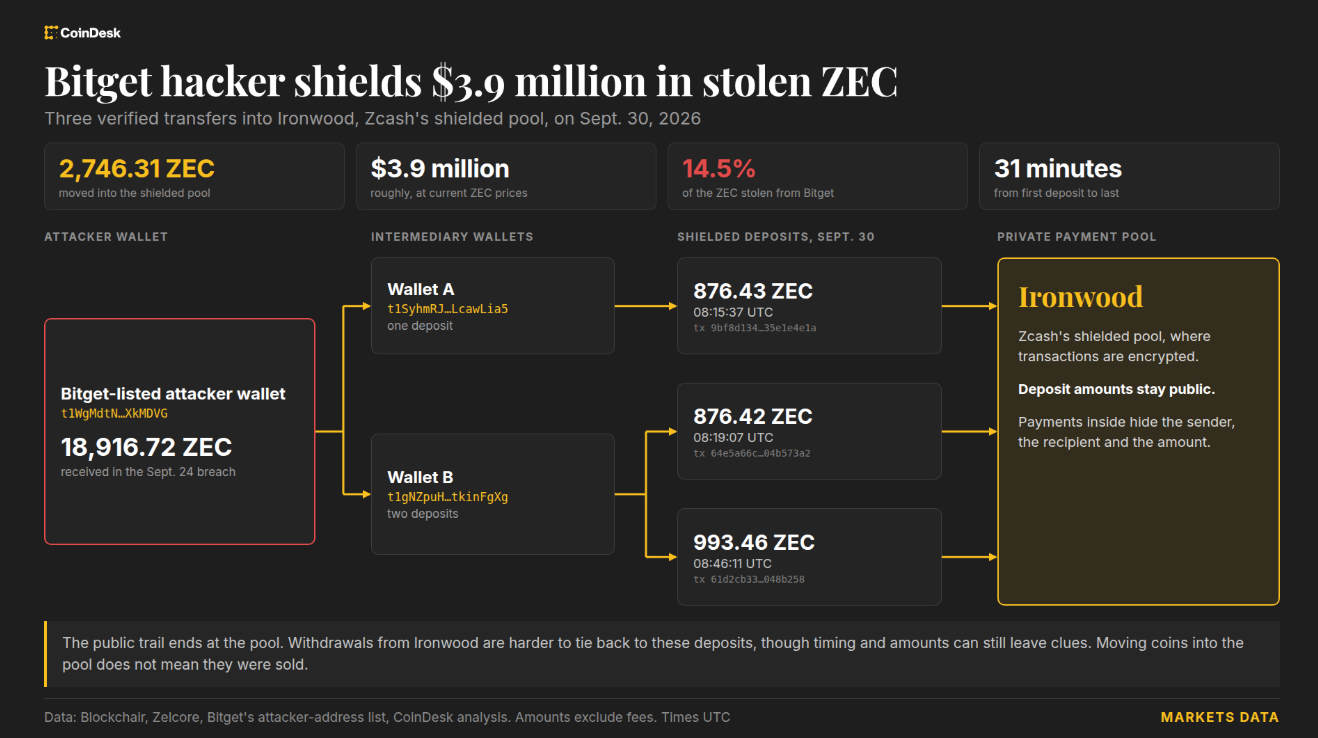 Bitget hackers move $4 million into Zcash’s private pool, making funds harder to trace
CoinDesk traces wallets linked to the Sept. 24 Bitget hack ($387.5M stolen) moving 2,746 ZEC (~$3.9M, ~15% of stolen ZEC) into Zcash's Ironwood shielded pool via two intermediary addresses, obscuring sender, recipient and amount once inside the pool. Blockchain investigator ZachXBT first flagged the transfers; separately, other attacker-linked proceeds were previously traced swapping ~$6.3M ether to bitcoin via THORChain despite the exchange's request to block the hacker. The piece illustrates real-world laundering tradecraft (privacy-pool deposits plus cross-chain DEX swaps) and the limits of on-chain tracing once funds enter a shielded pool.
coindesk.comarticlePublished and added 30 Sep 2026- Smart Contract Invariants Protect Against Cybercriminals
This arXiv paper argues that classical program invariants are an effective defense against smart-contract exploits, backed by INVARIANTEVAL, a benchmark of 28 real Ethereum attacks each paired with a human-written invariant that would have blocked it, and PONDEREPLAY, a transaction-replay framework used to validate every invariant across 108,637 historical transactions.
arxiv.orgpaperAdded 29 Sep 2026 - Competition, Collusion, and Corruption: The Spectrum of MEV Attacks on DAG-Based BFT Consensus Protocols
This paper builds an "attack space" taxonomy for maximal extractable value (MEV) attacks on DAG-based BFT consensus protocols, organizing attacks along four dimensions (adversary, protocol, target, deployment) to unify previously fragmented, inconsistently-described attacks. The authors empirically test each dimension's effect on attack success against six production DAG-based BFT protocols, finding every protocol vulnerable to some subset of attacks and that vulnerability is driven mainly by protocol design rather than attacker sophistication.
arxiv.orgpaperAdded 29 Sep 2026  Solidity 0.8.37 Release Announcement
Official release notes for Solidity v0.8.37 detailing three bug-bounty-reported compiler bugs: memory `delete` on a bytes-array element zeroing a full 32-byte word instead of one byte (corrupting adjacent memory, evmasm pipeline, up to v0.8.36); a stack-to-memory spill-slot collision under mutual recursion in the IR pipeline (`--via-ir`, v0.7.2–v0.8.36) that silently overwrites live variables; and named custom-error arguments in `require(...)` being ABI-encoded in call-site order rather than declaration order, so revert data misrepresents error values (v0.8.36 introduced but only affects revert data). Also covers two non-security miscompilations (uninitialized packed function pointers, checked/unchecked constant reuse), a new SSA-CFG stack shuffler, Amsterdam EVM's SLOTNUM opcode support, and removal/deprecation of LSP mode, Generic Solidity, and several EVM version pragmas.
 soliditylang.orgadvisoryAdded 29 Sep 2026
 NEAR Stopped Bitget's Hackers Without Breaking Privacy
Following the ~$387.5M Bitget hack on September 24th (attributed to North Korea-pattern tactics), attackers tried to launder funds via crosschain rails: THORChain refused Bitget's request to block the hacker's address and later saw $6M+ swapped through it, while NEAR Intents' SHIELD risk-intel layer rejected nearly all of a $50M+ attempted transfer, letting only $166k through. The piece explains the architecture: deposits/withdrawals are public on-chain transactions, but balances/routes/trades happen inside NEAR's Confidential Intents, and SHIELD acts as a gate checking public deposit addresses against shared stolen-funds intel before allowing Intents execution — without unmasking or freezing wallets, since Intents sits atop NEAR's consensus rather than being part of it. It also notes SHIELD's limits (funds simply got rerouted elsewhere) and NEAR co-founder Illia Polosukhin's pitch to make SHIELD shared infra other protocols can adopt.
bankless.comarticleAdded 30 Sep 2026, published 29 Sep 2026 Near Intents blocks $50 million in Bitget hacker swaps, here's what happened
After attackers stole $388M from Bitget, they tried routing $50M+ through the cross-chain swap service NEAR Intents; its SHIELD system — which ingests KYT and intelligence-provider signals to flag deviations in flow — froze roughly $503,000 mid-swap while $166,000 slipped through. The piece contrasts this with THORChain's refusal to block the same attacker addresses, letting $6.3M complete ether-to-bitcoin swaps, and details the resulting debate over whether a "permissionless" protocol can hold user funds without a defined process for release or appeal.
coindesk.comarticleAdded 30 Sep 2026, published 29 Sep 2026- When One Leak Pays Forever: Context Binding and the Price of Deterring Collusion
This arXiv paper models collusion in threshold-encrypted mempools, where a quorum of a decryption committee can sell its decryption capability to a front-runner and profit repeatedly as long as the leaked key keeps decrypting future blocks. The authors derive that deterrence requires a penalty (e.g., slashable stake) covering the largest discounted value a single leak can reach, show constant penalties cannot deter unbounded reuse without key rotation, formulate the cheapest deterring stake profile as a covering linear program, and argue per-epoch keys drastically cut the required stake versus a key valid for its whole lifetime. They calibrate the model on Ethereum front-running data and place the Ferveo and Shutter threshold-encryption protocols within it, with extensions to sealed-bid auctions, multi-authority voting, and federated learning under a shared key.
arxiv.orgpaperAdded 2 Oct 2026, published 29 Sep 2026  A Clever RSA Attack Fooled a Hardware Vault—Here's What It Means for Crypto
Researchers at UC San Diego and INRIA demonstrated a chosen-message oracle attack that forges RSA signatures on a 1,024-bit key held inside a hardware security module (HSM) without ever extracting the key, by disabling the HSM's FIPS mode to get it to sign unpadded/unformatted values roughly 4 billion times and then computing the private-key operation from the responses (1,380 CPU core-years of work). The attack only applies to unpadded RSA signing oracles — standard PKCS#1 v1.5/PSS padding blocks it — so it doesn't threaten Bitcoin/Ethereum (which use ECDSA) but is relevant to anyone auditing HSM key-custody assumptions or RSA-based blind-signature schemes like Privacy Pass. The authors frame it as further classical evidence to accelerate migration away from RSA ahead of the post-quantum transition.
decrypt.coarticleAdded 30 Sep 2026, published 28 Sep 2026 Chainlink launches new version of its crypto bridge tech 'CCIP' to give apps more control over their security
Chainlink released CCIP 2.0, redesigning its cross-chain bridge so apps can layer custom or third-party verifiers (e.g. Infosys, Nethermind) on top of its default 16-operator quorum network, replacing the separate Risk Management Network as the independent safety check. The launch follows the April $292M Kelp DAO hack, in which Lazarus Group allegedly fooled a single-verifier LayerZero bridge setup to drain rsETH - CoinGecko data showed nearly half of active LayerZero apps used the same single-verifier arrangement. The article contrasts single-verifier trust models with Chainlink's quorum-based design as a mitigation for that bridge attack class.
coindesk.comarticleAdded 30 Sep 2026, published 28 Sep 2026 THORChain rejects Bitget request to block hacker as $6 million moves to bitcoin
CoinDesk traced 27 successful THORChain swaps converting roughly 2,390 ETH into 75.2 BTC for a wallet linked to the attacker behind Bitget's $388M Sept. 24 breach, all payouts routed to a single bitcoin address. Bitget publicly asked THORChain to block the attacker's identified addresses and offered a 5% bounty for freezing or recovering funds, but THORChain refused selective blacklisting, saying its emergency controls can only halt an entire chain's activity, not target individual addresses — a stance it also held after its own $10.7M May exploit.
coindesk.comarticleAdded 30 Sep 2026, published 28 Sep 2026- SmartMemory: Detecting On-chain-off-chain Communication Inconsistency for Smart Contract via Memory-based Agent
SmartMemory is an academic framework that detects "OFC inconsistency" (OFCI) — a newly identified root-cause vulnerability class where business-logic flaws break the equivalence between a smart contract's on-chain state and its off-chain counterpart, affecting cross-chain bridges, real-world-asset tokenization, and fiat-backed stablecoins. It normalizes heterogeneous on-chain/off-chain implementations into a canonical business-semantic representation, uses a memory-based agent to distill and reuse vulnerability patterns across cases, and verifies candidates with taint analysis. Evaluated on a new dataset of 48 DApps with 81 known OFCIs (80.68% precision, 87.65% recall), it also found 36 previously unknown, since-fixed OFCIs in an analysis of 325 real-world OFC applications.
arxiv.orgpaperAdded 2 Oct 2026, published 28 Sep 2026 - PQ anonymity for Stealth Address Protocol
A technical ethresear.ch post proposing post-quantum upgrades (schemeId 2-6) to Ethereum's Stealth Address Protocol (ERC-5564/ERC-6538), replacing ECDH with ML-KEM (FIPS 203) to preserve recipient unlinkability against a cryptographically-relevant quantum computer. It identifies a specific vulnerability: the naive 1-byte view-tag optimization leaks enough information for a quantum attacker holding the derived public key to recover the spending key discrete log and test candidate recipients, breaking anonymity even when ML-KEM is used; the authors propose domain-separated tag derivation, hybrid EC/PQ combiners, pairwise-KEM variants, and a "stealthier SAP" construction to fix it.
ethresear.chwriteupAdded 29 Sep 2026, published 28 Sep 2026 - PQ spending for Stealth Address Protocol
Third in a series on post-quantum upgrades to the Stealth Address Protocol (ERC-5564/ERC-6538), this ethresear.ch post proposes a new schemeId=6 that replaces ECDH with ML-KEM for quantum-safe payment discovery and replaces ECDSA with either a lattice-based signature (SPIRIT, an ML-DSA/Dilithium variant) or a novel construction called HSAP that uses ML-KEM key delivery plus a ZK proof over hash-preimages for spending authorization. It works through the exact key-generation/derivation math for both schemes, discusses on-chain verification costs (citing ETHDILITHIUM benchmarks and draft EIP-8051's ~4500-gas ML-DSA-44 precompile), and sketches how the extended ERC-5564 announcer/registry interface and smart-account spending path would look under quantum attack assumptions.
ethresear.charticleAdded 29 Sep 2026, published 28 Sep 2026 - ERC-8427: Portable Spend Grants
ERC-8427 'Portable Spend Grants' is a draft Ethereum standard defining a signed SpendGrant object that lets a principal authorize a delegate (e.g. an AI agent or session key) to spend up to specified per-call, trailing-24h, and lifetime caps of named assets, to a restricted set of recipients, within a validity window — solving problems that plain ERC-20 approve and midnight-resetting daily caps don't. A non-custodial registry tracks remaining usage and revocation while an immutable executor contract must call consume() in the same transaction as any transfer, so unauthorized value movement is provably blocked; the reference implementation is deployed on Arc testnet with formal verification (Halmos) of expiry, cap, revocation and executor-binding invariants plus fuzzing of the rolling-window logic. The thread also discusses interplay with ERC-7710/7715 delegation/permission RPCs, ERC-8226's regulated grants, and ERC-8312's usage-tracking pattern, and solicits feedback on EIP-7702 signer/delegation ordering and executor-vs-delegate binding in consume().
ethereum-magicians.orgthreadAdded 29 Sep 2026, published 25 Sep 2026 - How Much Must a Private Mempool Hide? Exact Leakage Thresholds for Sandwich Attacks
This arXiv paper derives exact conditions under which private/encrypted mempools still leak enough information (transaction pair, direction, and a coarse size range) to make sandwich attacks profitable against a fee-free constant-product AMM (the Uniswap v2 pricing rule). It shows the smallest size consistent with the leak determines the optimal front-run and its guaranteed profit in closed form, and that multi-trader first-price auctions for sandwich rights hand all expected rent to the auctioneer; it also shows hiding trade direction prevents a single non-contingent front-run from covering both directions, though post-trade arbitrage can survive even perfect pre-trade hiding. The results give privacy-layer designers a precise threshold for how much size information must stay hidden to rule out profitable sandwiching.
arxiv.orgpaperAdded 2 Oct 2026, published 25 Sep 2026  Bitget Hacked for $351.6M
Bitget disclosed a $351.6M hot-wallet breach in which attackers did not compromise private keys but instead breached a core wallet backend and spoofed transaction data to trick Bitget's own authorization process into approving transfers. Attackers quickly converted most stolen EVM assets into 67,982 ETH (~$183M) and also took ~103M XRP to move into harder-to-freeze native assets, while Bitget's CEO and independent researcher Specter linked the attack to North Korea via VPN IP overlap and onchain infrastructure tied to the earlier AFX exploit attributed to TraderTraitor.
bankless.comarticleAdded 8 Oct 2026, published 25 Sep 2026 Don't let TEEs break your MPC
Trail of Bits explains why running threshold-signature MPC protocols inside TEEs (Intel TDX, AMD SEV-SNP, AWS Nitro Enclaves) is not automatically secure: a malicious host can roll back enclave filesystem state to force reuse of deleted pre-signature nonces, leaking a signer's private key share. The post catalogs recurring audit pitfalls — incomplete attestation measurements (citing the WhatsApp Private Inference LD_PRELOAD bypass), missing verification steps, weak hardening, stale-backup/rollback risks (including LUKS2 header manipulation in confidential VMs), and physical/side-channel attacks like TEE Fail and DDRop against DDR5 memory — and gives best practices such as binding attestation to MPC party identities and using multiple TEE vendors for defense-in-depth.
 blog.trailofbits.comarticlePublished and added 25 Sep 2026
- Formal Verification of Execution and Consensus Clients
A reply on the Ethereum Research forum (ethresear.ch) responding to @pcaversaccio's call for formally verifying hard-fork changes in Ethereum execution and consensus clients before mainnet activation. It surveys current formal-verification efforts (Etheorem/SizzLean in Lean 4 for consensus/SSZ, Verifereum in HOL4 for the EVM), argues for prioritizing high-leverage surfaces like SSZ, state transition, fork-choice and core EVM semantics, and pushes for stronger verification tooling in Rust (Aeneas/Verus/hax) as an incremental path to reducing the trusted computing base of client software.
ethresear.chthreadAdded 29 Sep 2026, published 25 Sep 2026 - ERC-8424: Confidential Real World Asset Token
A security review posted on Ethereum Magicians critiques draft ERC-8424 (Confidential Real World Asset Token, extending ERC-7984), pointing out that its confidentialCanTransfer and confidentialAvailableBalanceOf functions have no caller restriction on who can resolve the returned FHE pointer, enabling any party to binary-search an encrypted balance to plaintext in at most 64 oracle calls. It also flags that the spec's revert clause for amount-dependent rules (vesting, balance caps) leaks a disclosure bit even without decryption, and recommends narrowing reverts to plaintext-only rules and restricting pointer resolution the way OpenZeppelin's ERC7984Freezable.confidentialAvailable already does via FHE.allow(amount, account).
ethereum-magicians.orgthreadAdded 29 Sep 2026, published 25 Sep 2026 - EIP-8425: Quantum Freeze and Account Recovery
A detailed reply on the Ethereum Magicians forum thread for EIP-8425 ("Quantum Freeze and Account Recovery"), which specifies how Ethereum accounts should transition authority when their legacy ECDSA key could be broken by a quantum adversary. The author formalizes a FROZEN/CLAIMED/RESOLVED-CONTESTED-UNRESOLVED/SUCCESSOR recovery state machine, replay-resistant claim hashes bound to a per-account recoveryEpoch, and two core invariants preventing a compromised ECDSA key from unilaterally establishing successor authority, closing an attack case where a quantum adversary obtains the key before the protocol's SAFE_RECOVERY_TIME cutoff. It also references related EIPs on signature-algorithm agility (EIP-7932) and PQ/STARK signature aggregation (EIP-8288).
ethereum-magicians.orgthreadAdded 29 Sep 2026, published 24 Sep 2026 - Standard for "transferable to arbitrary addresses" on tokenized RWAs? (locked v4 pools quoted in tokenized stocks)
An Ethereum Magicians forum thread dissects a novel rug/bricking vector emerging from a launchpad (sender.family) that locks 100% of token supply forever into a single one-sided Uniswap v4 position, where the quote asset can be a KYC-gated tokenized stock (Ondo's NVDA/TSLA/AAPL tokens) rather than ETH or a stablecoin. Because Uniswap v4 routes all pool balances through a shared PoolManager singleton and pays swap/fee output to arbitrary addresses, the RWA issuer must permanently allowlist the PoolManager and any counterparty; if the issuer later tightens its transfer-registry rules, the permanently locked pool becomes irrecoverable with funds stuck inside. The author notes the launchpad's current mitigation is only an empirical point-in-time transfer test (moving a balance between two addresses) against an asset with an admin-controlled, stateful ERC-3643 canTransfer function, and asks whether there's any way to verify "transferable to arbitrary addresses" onchain before pool creation, and whether permanent lockers should categorically refuse upgradeable/pausable quote assets.
ethereum-magicians.orgthreadAdded 29 Sep 2026, published 24 Sep 2026  Graphalgo campaign spreads to Terraform providers and Go Modules
Aikido documents the Graphalgo malware campaign's expansion beyond NPM into two malicious Terraform providers (gocommunity-io/dockerd and the kreuzwerker/docker typosquat kreuzwenker/docker) and two Go modules (gocommunity.io/orderedbtree, gogets.dev/btreex), marking the first observed systematic Terraform provider malware distribution. The payload is a Go port of Graphalgo sharing blockchain infrastructure, Slack C2, and a public key with prior JS/NPM samples; it activates only under specific hash-gated runtime conditions (targeted attack indicator), then deploys a Go RAT with dual C2 channels — an Ethereum (Arbitrum Sepolia) smart-contract dead drop and Slack bot messaging — plus self-delete and remote code execution capabilities. The threat actor also stood up two fake Go package ecosystem websites (gocommunity.io, gogets.dev) to socially engineer developers and backdated Git commits to obscure module publication timing.
aikido.devwriteupPublished and added 22 Sep 2026- AI for Web3 Security: Zero to Hero
A four-module, code-first course (with an accompanying Python package called lucid) that teaches building an AI bug-hunting harness for smart-contract audits, using the SecondSwap DeFi contracts as a fixed target scanned across all modules. It progresses from a single reasoning-agent-to-structured-findings baseline, through a context/exclusion-loop pass, to an orchestrated harness with specialist lenses and fan-out/synthesis, and finally a version that measures recall against ground truth and hands over a self-improvement method. It runs on an OpenAI-compatible model (gpt-5.6-luna via the Requesty gateway) invoked through the raw model API rather than an agent framework, for pedagogical transparency and determinism.
github.comcourseAdded 22 Sep 2026, published 21 Sep 2026  How AI Is Reshaping Crypto Security, with Michael Coates
An interview with Solana Foundation CISO Michael Coates dissects the July 2026 Coldcard hardware-wallet hack, where a 2021 code change swapped a hardware RNG for a software pseudo-random source, collapsing seed entropy from 128 to ~40 bits and letting attackers offline-brute-force and drain ~$116M in Bitcoin from 5,200+ wallets without touching a device — despite prior audits that only checked whether a value was set, not its source. Coates draws lessons on distrusting single audits, using multi-sig to remove single points of failure (including the wrench attack), and phishing-resistant hardware keys (e.g. YubiKey) as the fix for pixel-perfect deepfake and phishing attacks. He also discusses AI's cat-and-mouse effect on offense vs. defense, Anthropic's disclosed Claude-driven Chinese state espionage campaign, and Solana's STRIDE continuous security-rating program for DeFi as an automated, computer-scale response to agentic nation-state threats.
 solana.comarticleAdded 29 Sep 2026, published 19 Sep 2026
- ERC-8419: Know-Your-Agent (KYA) Framework
A technical forum post on Ethereum Magicians dissecting security gaps in ERC-8419 "Know-Your-Agent" (KYA), a proposed on-chain trust/attestation framework for AI agents that bridges to ERC-8004. The author walks through concrete exploit scenarios — a controller-bound assertion that still evaluates as valid after the underlying agent NFT is transferred, a policyId that can commit to a stricter policy document than the executable rules that actually run on-chain, ERC-8004 bridge configuration (trustedIssuers/responseMap) changes that silently alter what an existing request means, upgradeable verifier proxies that let a schemeId acquire new proof-admission semantics post-hoc, and missing chain/registry domain separation enabling cross-registry ZK nullifier replay — and proposes normative invariants (binding witnesses, rulesHash commitments, configHash, semantic immutability, mandatory domain separation) to close each one.
ethereum-magicians.orgthreadAdded 29 Sep 2026, published 19 Sep 2026  DPRK and Iran are Leading a 5.2x Surge YoY in Blockchain-Assisted Cyberattacks
Chainalysis research on blockchain dead drops (BDD), the practice of storing malware C2 payloads and configuration pointers on public blockchains (EtherHiding and its variants) so infrastructure survives takedowns. It details three attributed case studies: DPRK linked UNC5342 using a TRON and Aptos to BSC cross-chain relay to deliver crypto-stealing malware via fake job interviews, Iran-nexus actors embedding C2 in Bitcoin OP_RETURN transactions tied to a Satoshi-era address, and a Russian-language Malware-as-a-Service operation running resolver contracts on Polygon across dozens of downstream customers. It reports a 420 to 440 percent YoY surge in BDD activity, attributes it partly to unrestricted open-weight Chinese LLMs lowering the barrier to entry, and maps the technique to MITRE ATT&CK T1102.002.
chainalysis.comarticleAdded 30 Sep 2026, published 17 Sep 2026 Security Advisory — Storage Aliasing in Priority Update Registry V1
Flashbots disclosed a critical storage-aliasing vulnerability in V1 of the Priority Update Registry (PUR), an on-chain price feed contract used by trading integrators like propAMMs. Because lane storage slots were computed as keccak256(target, unbounded caller-controlled index) while the updater-authorization mapping lived at slot 0 with the same keccak256 shape, any caller could craft a lane index that collided with isUpdater[target][attacker], letting them self-authorize as an updater and publish arbitrary prices or deauthorize legitimate updaters. The fix namespaces the lane slot derivation (keccak256(NAMESPACE, target, laneIndex)) to make the preimages structurally non-collidable, and the advisory gives integrators concrete migration guidance since authorizations and lane state must be re-established on the new deployment.
 collective.flashbots.netadvisoryAdded 2 Oct 2026, published 16 Sep 2026
- Post-Quantum: Lattice or Hash-Based (one question, two right answers)
A deep-dive field guide to choosing between lattice-based (ML-DSA/FN-DSA) and hash-based (SLH-DSA) post-quantum signatures, built from interviews with the designers and implementers behind both NIST standards and their deployments. It walks through Mosca's-inequality-style migration timing, CNSA 2.0's split between lattice signatures and stateful hash-based LMS/XMSS for firmware, the stateful-signature "footgun," and why the broader internet (TLS/WebPKI, via Merkle Tree Certificates) is converging on lattices while Ethereum's post-quantum consensus roadmap (leanXMSS, EIP-8292, EIP-8288 aggregation) and Algorand's live Falcon-1024 state proofs lean hash-based or scheme-neutral because of aggregation and on-chain storage constraints. It closes with a decision framework and a rundown of NIST's round-3 "onramp" signature candidates (MAYO, SQIsign, HAWK, etc.).
ethresear.charticleAdded 3 Oct 2026, published 15 Sep 2026  From Algebra to Noise: Why Post-Quantum Cryptography Looks Different
OpenZeppelin Security's technical explainer on why post-quantum cryptography looks so different from classical crypto: Shor's algorithm exploits the abelian hidden-subgroup structure underlying RSA, Diffie-Hellman, ECDSA, EdDSA and pairing-based schemes, while Grover's algorithm only halves the effective security of hashes and symmetric keys (256-bit hashes stay at a comfortable 128-bit level). It then walks through NIST's finalized lattice/hash-based PQC standards — ML-KEM (Kyber) for key establishment, ML-DSA (Dilithium) for general signatures, SLH-DSA (SPHINCS+) as a conservative hash-based backup, plus future Falcon/FN-DSA and code-based HQC — mapping each to blockchain use cases and covering real deployment (Starknet's Falcon-512 Cairo account contracts), Ethereum account-abstraction/hybrid-signature migration paths, Bitcoin's UTXO/consensus constraints, Ethereum's LeanSig consensus-signature research, and a concrete institutional crypto-asset-inventory and PQC audit checklist.
 openzeppelin.comarticleAdded 29 Sep 2026, published 14 Sep 2026
- Memory Byte Array Element Delete Clears Whole Word Bug
The Solidity team disclosed a code-generator bug (reported by Shaheen Fazim via the Ethereum Foundation bug bounty program) where `delete b[i]` on a bytes/string element located in memory incorrectly writes a full 32-byte zero word instead of a single byte, corrupting up to 31 subsequent bytes — either later elements of the same array or, for elements near the array's end, adjacent memory allocations like other variables. The bug affects only the default evmasm pipeline (not the IR pipeline via --via-ir) in all versions up to and including 0.8.36, is fixed in 0.8.37, and the equivalent assignment `b[i] = 0` is unaffected and serves as a workaround. A Sourcify scan of ~870,000 verified compilations found the triggering pattern in only two functions, neither actually exploitable in practice.
soliditylang.orgadvisoryAdded 29 Sep 2026, published 10 Sep 2026 - Spill Slot Collision Across Mutual Recursion Bug
The Solidity team disclosed a compiler bug (fixed in Solidity 0.8.37) where the IR pipeline's stack-to-memory spill mechanism can assign the same fixed memory offset ("spill slot") to two simultaneously-live local variables when a contract's call graph contains mutual recursion, silently corrupting values without any revert or warning. The bug requires --via-ir compilation plus a narrow set of conditions (mutual recursion, >16 live locals in reachable non-recursive functions, a variable read back after the recursive call) and affects Solidity 0.7.2 through 0.8.36; a rescan of ~319,000 Sourcify-verified contracts found no affected deployments. The writeup includes full technical detail on the buggy depth-first slot allocator, an annotated PoC contract reproducing the silent overwrite, and the strongly-connected-component fix.
soliditylang.orgadvisoryAdded 29 Sep 2026, published 10 Sep 2026 - Solidity 0.8.37 Release Announcement
Solidity 0.8.37 release notes disclosing three EF bug-bounty-reported compiler bugs with security implications: deleting an element of a memory bytes array (or converted string) zeroed the full 32-byte word instead of one byte, corrupting adjacent data in the evmasm pipeline (all versions ≤0.8.36); a stack-to-memory spill-slot collision in mutually recursive functions under --via-ir silently overwrote live variables (0.7.2–0.8.36); and require() with a custom error using named arguments encoded parameters in call-site rather than declaration order, producing structurally valid but semantically wrong revert data. The release also adds two non-security miscompilation fixes, an experimental planning-based stack shuffler for the SSA CFG backend, support for the Amsterdam EVM's SLOTNUM opcode (EIP-7843), and removes/deprecates several experimental features.
soliditylang.orgadvisoryAdded 29 Sep 2026, published 10 Sep 2026 - Misordered Named Parameters in require with Custom Errors Bug
The Solidity team discloses a bug (reported by Cantina Security via the Ethereum Foundation bug bounty) where the IR-based (--via-ir) code generator pushed named custom-error arguments in call-site order instead of declaration order before ABI-encoding, corrupting revert data for require(condition, ErrorName({...})) calls with reordered named parameters. Introduced in Solidity 0.8.26 and fixed in 0.8.37, the bug produces silently swapped or type-confused values in decoded revert data with no compiler warning, and can cause misaligned encoding in multi-slot-argument cases that either reverts with undecodable data or produces a plausible-but-wrong payload - a real concern for standards like ERC-3668 (CCIP Read) that treat revert data as part of the contract interface. Severity was rated "very low" since the affected transaction is already reverting and there is no attacker-controlled exploitation path, but audits of via-ir contracts using named custom-error arguments should check for it.
soliditylang.orgadvisoryAdded 29 Sep 2026, published 10 Sep 2026  OFAC and DOJ Strike Xinbi, a Multibillion-Dollar Marketplace for Cybercriminals
Chainalysis details the OFAC/DOJ sanctioning and seizure action against Xinbi Guarantee, a $24B Chinese-language Telegram-based marketplace connecting money laundering, scam infrastructure, stolen data, and KYC-bypass vendors. The piece maps Xinbi's escrow model and vendor ecosystem, and traces how DPRK-linked actors used specialized 'Black U' launderers to swap traceable stolen funds from the Bybit ($1.5B) and WazirX ($235M) hacks for cleaner stablecoins sourced from pig-butchering and romance-scam proceeds, ultimately leading to $52M in restrained cryptocurrency across 49 wallets.
chainalysis.comarticleAdded 30 Sep 2026, published 9 Sep 2026 How The $320M Exploit of Liquid Network Went Down
Chainalysis breaks down the $320M exploit of Blockstream's Liquid Network, a Bitcoin sidechain, in which purported white-hat hackers exploited a flaw in how Liquid's software cached cryptographic verification results for its Confidential Transactions range proofs. By getting valid proof data cached and then submitting different invalid data that mapped to the same cache key, attackers bypassed full re-verification and minted thousands of unbacked L-BTC tokens, which they exchanged for ~4,000 real BTC (of ~4,200 held) via the peg-out process. The actors negotiated with Blockstream via on-chain OP_RETURN messages and returned 85% of the funds (3,400 BTC) after Blockstream patched the bug and confirmed nodes were updated, keeping roughly $47M.
chainalysis.comwriteupAdded 30 Sep 2026, published 9 Sep 2026 ClearFake WebDAV infection chain delivers Amatera stealer, ZigCryptoStealer, and NetSupport Manager
Cisco Talos reconstructs two related WebDAV-based infection chains (tracked actor UAT-10820) that use a ClickFix fake-CAPTCHA lure, EtherHiding on BNB Smart Chain to stage JavaScript via a malicious Cloudflare Worker, and WebDAV-delivered disguised DLLs executed via rundll32 ordinal calls to drop the Amatera stealer. Depending on the C2 configuration, Amatera then deploys either a NativeAOT-loaded ZigCryptoStealer with a BYOVD EDR-killer driver and a Go-based Yamux reverse proxy, or a PowerShell stager that installs a trojanized NetSupport Manager RAT pointed at Russian C2 infrastructure. The post details loader internals, Amatera's dead-drop C2 resolution via Telegraph and Steam, and provides ClamAV signatures plus a full IOC list.
 blog.talosintelligence.comwriteupAdded 7 Oct 2026, published 8 Sep 2026
 EF Protocol: Current and Emerging Priorities
The Ethereum Foundation Protocol cluster lays out its security-driven roadmap through 2029, centered on making Ethereum L1 quantum-resistant across execution, consensus, and data layers by December 2029 (planning for Q-day as early as 2030). It details the fork sequence delivering a minimum-viable post-quantum milestone, cryptographic agility via native account abstraction (Frame transactions, EIP-8141), retirement of vulnerable BLS withdrawal credentials (EIP-8365), and censorship-resistance and privacy work via FOCIL (EIP-7805), EIP-8369, EIP-8250 and EIP-8272.
blog.ethereum.orgarticleAdded 7 Oct 2026, published 7 Sep 2026 FBI Seizes $560K in Crypto From Hamas Fundraising Network
Chainalysis details five related U.S. law enforcement actions (March 2025–August 2026) that seized over $560,000 in cryptocurrency tied to Hamas and al-Qassam Brigades fundraising, plus the group's donation website domains and servers. The piece walks through the forensic methodology — using Chainalysis Reactor to cluster addresses via a shared gas-funding wallet, trace funds through consolidation wallets and a Lebanon-based OTC broker, and follow Hamas's later shift to cross-chain bridging and single-use donation wallets — showing how earlier on-chain findings compounded into a broader mapping of the group's financing network over time.
chainalysis.comarticleAdded 30 Sep 2026, published 3 Sep 2026- Blind spots of a blind arb bot
Final installment of a five-part series reverse-engineering an unverified Arbitrum arbitrage bot purely from bytecode and on-chain behavior, explaining how it enters Uniswap V4's flash-accounting "unlock" window and nests V2/V3/V4 swaps so debts settle innermost-first with profit collected as the balancing entry. It details how the contract fingerprints a Uniswap V3 swap callback by calldata shape instead of reading its selector, and how its owner-only profit sweep derives recipient addresses at runtime via bit reversal, 160-bit rotation and XOR against a literal 0xdeadbeefcafebabe constant rather than storing them. The piece closes by cataloguing the bot's structural blind spots — pools outside its four-dialect switch, fee-on-transfer/rebasing tokens, and a documented missed arbitrage across unlisted pools during a large aggregator sell.
collective.flashbots.netwriteupAdded 3 Oct 2026, published 1 Sep 2026  Dark Caracal Reloaded: GoCaracal — New Go Malware With Ethereum-Based C2 Fallback
Arctic Wolf Labs documents GoCaracal, a previously undocumented modular Go-based malware framework attributed with medium confidence to Dark Caracal (linked to Lebanon's GDGS), deployed alongside an updated Bandook variant in a June 2026 intrusion against a Venezuelan communications organization. The extended GoCaracal build features a novel Ethereum smart-contract (BulletproofC2) fallback that lets operators update C2 addresses via on-chain transactions without redeploying malware, and analysis of 249 samples traces the framework's four-phase development from January to July 2026. The report includes delivery-chain details (SVG phishing, URL shorteners, Delphi loader), infrastructure analysis (AEZA Group, AlexHost hosting), a YARA rule, and IOCs for detection.
 arcticwolf.comwriteupAdded 26 Sep 2026, published 26 Aug 2026
 The Term Finance Exploit: $8.5M Approved by Silence
A transaction-level forensic reconstruction of the August 23, 2026 Term Finance vault drain ($8.5M), in which an attacker funded a wallet via Tornado Cash, deposited a trivial 0.017% stake, and used it to submit an executable governance proposal through Term's opt-out "veto" voting model. The payload sat publicly visible on-chain for six days with no objection, then disabled the seven-day Zodiac delay-modifier timelock from inside the same proposal it was supposed to be gated by, before draining four ETH sub-vaults and five USDC vaults (including contagion into a RockawayX/Tori Finance curated vault). The piece dissects why the exploit required no leaked key, oracle manipulation, or reentrancy — only an unwatched veto queue and a timelock reachable by the mechanism it was meant to contain.
 defiprime.comwriteupAdded 30 Sep 2026, published 23 Aug 2026
 Raising machine-checked security benchmarks to advance hash-based SNARKs through agentic collaboration
better.codes is a public "autoresearch" challenge from the Ethereum Foundation Formal Verification team, Yukon, and zkSecurity, where anyone can point AI agents at raising the machine-checked soundness bound of koalaIRS12, a Reed-Solomon proximity problem formalized in Lean 4 (ArkLib) that underpins hash-based SNARKs used in zkrollups, zkVMs, and Ethereum's post-quantum roadmap. Submissions are checked by the Lean kernel against a pinned theorem statement, and accepted proofs are upstreamed toward the fixed 128-bit target, aiming to close the gap between the conjectured and formally proven security bounds these production proof systems rely on. It follows the same open-challenge model as prior efforts ecdsa.fail, zk.golf, and snark.fast.
blog.ethereum.orgarticleAdded 30 Sep 2026, published 20 Aug 2026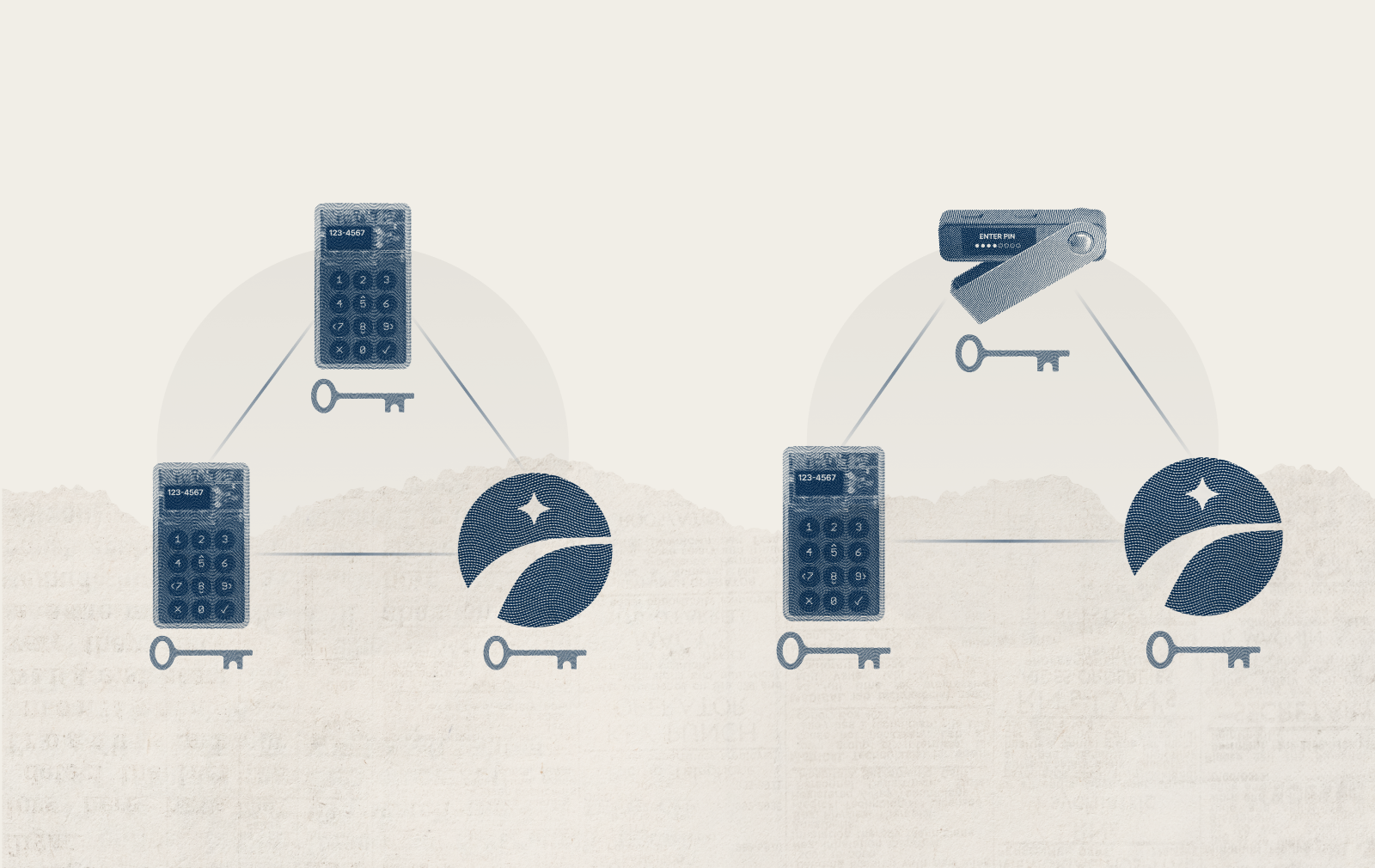 How multisig protected thousands of bitcoin during the Coldcard incident
Unchained's writeup on a 2026 Coinkite Coldcard advisory in which a flawed RNG produced insecure entropy for most Coldcard devices over five years, letting attackers brute-force private keys and drain singlesig wallets. It explains why multisig wallets (e.g. 2-of-3) were largely spared: a quorum of keys is needed to spend, the final public key in an un-spent multisig address stays unknown to attackers, and address reuse plus broadcasting via public mempools can leak that protection via an RBF-style attack window.
unchained.comarticleAdded 5 Oct 2026, published 12 Aug 2026- Limber: Low Overhead SNARKs for Integers from Any PCS
Limber is a new integer mod-PCS construction that lets SNARK systems handle non-native arithmetic (computation outside the proof system's native field) with asymptotically o(1) multiplicative overhead, built generically on top of any standard polynomial commitment scheme. It implements the Zaratan (PKC 26) fingerprinting recipe to reduce integer relations to a randomly sampled prime field, directly addressing a documented class of real world ZK implementation bugs: 9 of 27 critical bugs in the 0xPARC/zkbugtracker collection stem from non-native arithmetization errors. The authors benchmark 15 to 30x speedups for RSA accumulator proofs and 24x for non-native Poseidon2 hashing versus circuit based approaches.
eprint.iacr.orgpaperAdded 3 Oct 2026, published 7 Aug 2026 - TRONSEC
TRONSEC is an open-source, browser-based security workbench for the TRON blockchain (TRX mainnet) that lets users inspect wallet addresses, TRC-20 token approvals, smart contracts, transaction calldata, and URLs for risk without connecting a wallet or holding custody. It bundles a wallet risk scanner, AML/sanctions-exposure heuristics, an unlimited-approval monitor, a contract-privilege/proxy checker, a transaction decoder that flags drain patterns, a phishing/typosquat URL checker, and a local in-browser vanity address generator. Production API keys for TronGrid, TronScan, and VirusTotal are kept server-side via a Cloudflare Worker proxy rather than shipped in client JS.
github.comrepoPublished and added 5 Aug 2026 - Announcing a Trillion Dollar Security grant for WEBCAT
The Ethereum Foundation's Trillion Dollar Security initiative is funding Freedom of the Press Foundation's continued development of WEBCAT, an open-source browser extension that verifies served front-end code against a developer-signed manifest and a distributed enrollment record, blocking page loads when the code has been tampered with. The grant funds a wallet-integrable verification library, Chromium support research, an independent security audit, and an ERC standard so wallets can detect front-end supply-chain compromise (e.g., altered recipient addresses or signing prompts) without a separate extension. WEBCAT was originally built to protect FPF's SecureDrop from a compromised server serving altered client-side encryption code.
blog.ethereum.orgarticleAdded 29 Sep 2026, published 5 Aug 2026  Coldcard Security Advisory
Unchained client-facing security advisory responding to Coinkite disclosure that Coldcard hardware wallets (Mk3, Mk4, Mk5, and Q models) generated private keys using a lower-than-expected amount of random bits, weakening key-generation entropy. The advisory details risk to Bitcoin multisig vaults built with Coldcard-generated keys and describes an attack scenario where an attacker holding 2-of-3 compromised keys plus knowledge of a reused address can mount a Replace-By-Fee (RBF) replacement-cycling attack to redirect pending transactions, along with key-replacement remediation steps including Unchained Slipstream as RBF mitigation.
unchained.comadvisoryAdded 4 Oct 2026, published 31 Jul 2026 Solidus: Formally Verifying a Compiler Using Automated Research
Paradigm introduces Solidus, a project to build a formally verified Solidity-to-EVM compiler written in Lean, aimed at eliminating compiler-bug vulnerabilities like the one behind a $50M+ smart contract hack in July 2023. The already-verified Yul-to-EVM backend (built on a modified fork of Nethermind's Yul/EVM semantics, comparable to Powdr's yul-compiler) was produced almost entirely through ~1,700 hours of agentic "automated research" using Codex, GPT-5.6, Harmonic's Aristotle prover, and Claude Fable 5, with no human writing code. Two public challenges are launched: "Spec Hunt" to find divergences between the new solidity-lean formal semantics and real Solidity behavior (via Foundry-based PoCs reviewed by an AI agent), and a compiler-optimization challenge requiring submissions to shrink bytecode size while preserving the existing correctness proof.
 paradigm.xyzarticleAdded 4 Oct 2026, published 24 Jul 2026
- Solidity 0.8.36 Release Announcement
Solidity 0.8.36 release notes disclose two medium-severity compiler bugs: a Yul optimizer call-cycle detection flaw that let stack-to-memory spilling be wrongly applied to mutually recursive functions, causing separate invocations to share and overwrite the same memory slots; and a storage-layout warning bug that could reverse the AST's linearizedBaseContracts annotation when a contract's variables sit very close to the end of storage, corrupting constructor/state-variable initialization order. The release also adds experimental stack-to-memory spilling to the new SSA-form CFG code generator (behind --experimental --via-ssa-cfg) and removes the now-obsolete experimental EOF backend after EOF's rejection from the Fusaka upgrade.
soliditylang.orgadvisoryAdded 29 Sep 2026, published 9 Jul 2026 - Inheritance Order Reversal On Storage End Warning Bug
The Solidity team discloses a medium-severity compiler bug present from Solidity 0.8.29 through 0.8.35 (fixed in 0.8.36): the code that emits Warning 3495 (custom storage layout too close to storage end) uses ranges-v3's actions::reverse instead of views::reverse, permanently mutating the linearizedBaseContracts AST annotation instead of only reading a reversed copy. Because that annotation drives inheritance-order decisions throughout analysis and codegen, affected contracts can get reversed constructor execution order, wrong super/virtual-function and virtual-modifier resolution, and incorrect fallback/receive dispatch — either silently miscompiling or triggering internal compiler errors. Exploitation requires a contract using both inheritance and a `layout at` clause landing within the last 2^64 storage slots, a pattern the team found no real-world evidence of via GitHub and Sourcify scans.
soliditylang.orgadvisoryAdded 29 Sep 2026, published 9 Jul 2026 - Unsound Spill In Mutual Recursion Bug
test
soliditylang.orgadvisoryAdded 29 Sep 2026, published 9 Jul 2026  THORChain Exploit Report #2 — GG20 root-cause disclosure
THORChain's second exploit post-mortem details how an attacker who joined as a validator planted a malformed multi-prime Paillier modulus during GG20 threshold-signature key generation, then deliberately failed 864 MTA signing rounds over 2.5 days to leak fragments of other validators' key shares via a combination of three individually low-severity flaws inherited from Binance's tss-lib: an unverified Paillier modulus (the same class documented as BitForge and TSSHOCK), a range proof that didn't bind its two halves together, and an undersized blinding value. Once enough fragments accumulated the attacker reconstructed the full vault private key and drained roughly 10 million dollars in a single transaction before solvency checks could react, since no anomalous fund movement preceded the theft. THORChain is patching the fork, moving from GG20 and Paillier to DKLS and Schnorr based signing, and adding per-validator key-sign failure monitoring as a result.
 blog.thorchain.orgwriteupAdded 29 Sep 2026, published 3 Jul 2026