Chainalysis disclosed a data breach in which an external actor used offensive agentic techniques to access its systems and internal tools. Exposed data was non-sensitive customer data: user IDs, full names, email addresses and organization role labels. Investigation content, query results and credentials were not compromised. The company says the incident is unrelated to the $6.36 billion Binance heist, and advises users to enable MFA and watch for password reset prompts. Scope and victim count are undisclosed.
LLM
ChainalysisBinanceDPRK
Threat Intel, AI SecurityΒ· Published and added 2 Nov 2026

Chainalysis confirmed on 30 October 2026 that an external actor accessed its systems and internal tools earlier in October, using what it called "offensive agentic techniques". Exposed data covers some customers' names, emails, job titles, user IDs and role labels. Chainalysis says it has found no access to passwords, session tokens or investigation content so far, and customers should expect targeted phishing. Affected-customer counts and the exploited vulnerabilities are not disclosed.
Chainalysis disclosed on 30 October 2026 that an attacker using "offensive agentic techniques" accessed customer names, emails, user IDs and role labels, but no investigation content, passwords or session tokens. The report also covers the Binance hack (about $6.3-6.4 billion, attributed to North Korea), where funds loop through addresses and JustLend lending on Tron is used to dodge stablecoin freezes. About $2.8 billion is frozen.
TronJustLend
ChainalysisBinanceDPRK
Threat Intel, Blockchain, AI SecurityΒ· Published and added 31 Oct 2026
Chainalysis disclosed a security incident in which an external actor used "offensive agentic techniques" to access internal systems and tools earlier in the month. Exposed customer data includes user IDs, names, email addresses and organizational role labels. The company reports no evidence of access to investigation content, credentials or session tokens, and has shared no details on the vulnerabilities, tools or dwell time. The article also lists other incidents from the same week.
ChainalysisBinanceARTEX+3
Threat Intel, AI SecurityΒ· Published and added 31 Oct 2026
Microsoft Threat Intelligence analyzes a tampered anthropic.claude-code extension (versions 2.1.312 and 2.1.313) served on the Cursor marketplace on 29 October 2026. The injected JavaScript loader adds an SSH key labeled svc-telemetry, opens a reverse SSH tunnel and sets up persistence on macOS, Linux and Windows. The post gives cleanup steps, IOCs and Defender XDR hunting queries. VS Code Marketplace and npm were not affected.
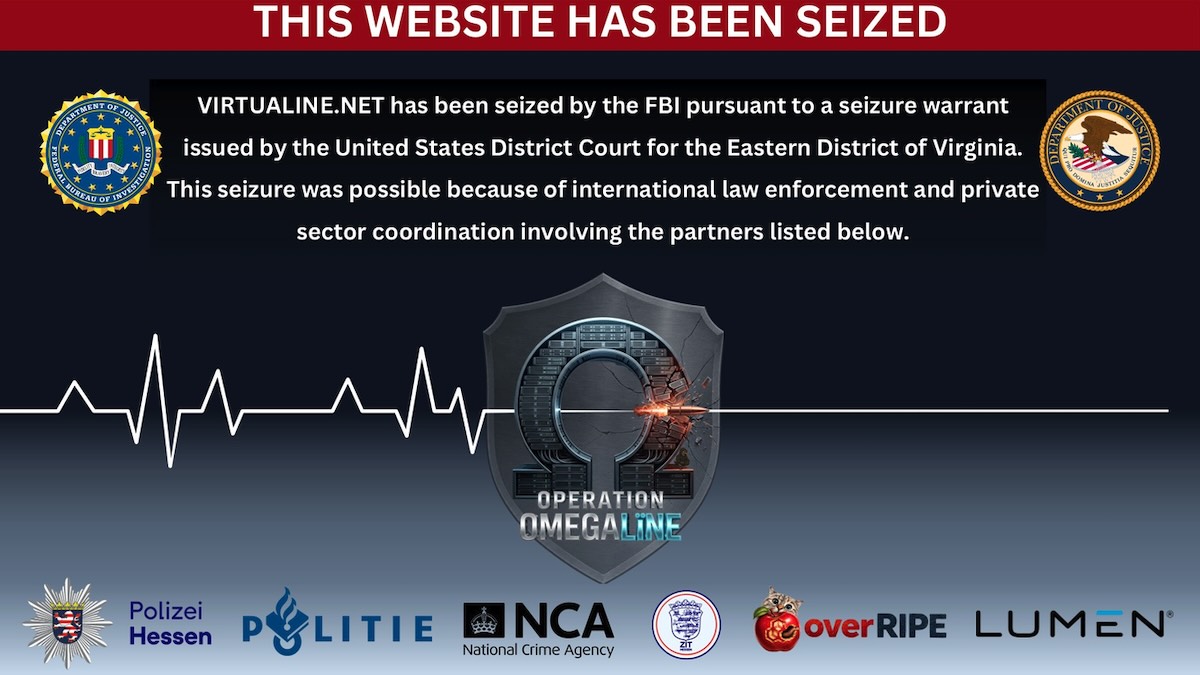
Virtualine is a Russian-speaking bulletproof hosting provider whose domain virtualine.net the FBI seized. Court documents say it hosted phishing, spam, carding and illicit content, and ignored abuse reports. TRM Labs says it received more illicit-attributed cryptocurrency than any other labeled bulletproof host, mostly from a Russian drug marketplace (44%) and a sextortion scheme (17%), and later from StealC operators in 2026.
Binance is investigating a possible breach involving up to $5.8 billion in assets, which would exceed the $1.5 billion Bybit theft of February 2025. Tether froze over $1.567 billion in USDT and Circle over $800 million in USDC. Arkham tracks 55 addresses labelled "binance-hacker-1029" holding about $5.78 billion, but that is wallet holdings, not a confirmed theft amount. The cause is not yet known.
BinanceEthereumTether+2
BybitChangpeng ZhaoCircle+5
Blockchain, Threat IntelΒ· Added 30 Oct 2026, published 29 Oct 2026
VeriCUA is a platform-agnostic framework that verifies task completion by computer-using agents through agentic exploration. The verifier inspects context to build a task rubric, then picks GUI or code checks for unresolved requirements and combines findings under explicit evidence rules. It works online and offline across desktop, mobile and web, and agrees better with reference labels than the baselines, with the largest offline gains on hard cases.
vision-language modelVeriCUA
arXiv
agents, evals, researchΒ· Added 31 Oct 2026, published 29 Oct 2026
This paper derives bounds on predicting an LLM's decode length from prefill-phase hidden states, a primitive for inference scheduling. It models decoding as a stopped stochastic process, giving per-prompt normality and an affine variance law Ο=Ξ±ΞΌ+b. Predictors (MLP, EGTP, FiLM, soft-label, Mixture-of-Experts) converge near the bound, so system error dominates model error. It proposes fixing model, data and sampling in benchmarks and reporting relative-error metrics.
LLMMixture of ExpertsMLP+2
arXiv
research, inference, evalsΒ· Added 31 Oct 2026, published 29 Oct 2026
On-policy state training is a method for training chain embedding retrievers for multi-hop RAG on the states the encoder itself reaches, including those built on its own wrong retrievals. Each state is labeled with the earliest missing gold passage, other missing gold passages are masked, and updates are contrastive and mixed with teacher-forced states. It retrieves complete evidence more often than teacher-forced training and graph-based systems, and transfers to harder long-chain HotpotQA and 2WikiMultiHopQA variants the authors built.
RAGon-policy state trainingcontrastive learning+1
HotpotQA2WikiMultiHopQAarXiv
research, llm-apps, trainingΒ· Added 31 Oct 2026, published 29 Oct 2026
Wiz Research reviews agentic attacks seen in its incident response work and in public reports (ARTEX, Hermes, JPCERT/CC, CrowdStrike, DIVD). It derives fingerprints of AI-agent activity from three intrusions: machine-paced iteration, natural-language reasoning in scripts, self-correcting script versions, checklist enumeration, noisy lateral spraying, probe-before-payload and self-labeled scratch files. It also covers effects on attribution, attack scale and defense.
KubernetesAWSClaude Code+2
ARTEXHermesStorm-0940+12
Threat Intel, Blue Team & Detection, AI Security, Cloud & InfraΒ· Published and added 29 Oct 2026
Proof-Carrying Messages (PCM) is a protocol where each claim an AI agent sends carries evidence: records from an append-only Merkle log the agent cannot write, with inclusion proofs, signed by an attesting signer. Receivers verify offline in about 1 ms and label each claim proven, unproven or failed. On 926 messages (712 lies in 16 classes), PCM accepts 10 lies (1.4%), all stale evidence; plain A2A accepts all 712.
A2AModel Context ProtocoluAgents+5
arXiv
agents, researchΒ· Added 31 Oct 2026, published 29 Oct 2026
inkGround is a benchmark for stroke trajectory recovery from full-page, camera-captured handwriting, with 537 page images (about 18.7k words, 163k strokes) and pseudo-label references filtered by OCR agreement and human raters. Models get a page image and a target word, then output ordered stroke points. Seven VLMs were scored with DTW, Chamfer distance, readability and style similarity. Closed-source models, notably Gemini-3.1-Pro, did best, and the ranking held on IAM-OnDB.
vision-language model
inkGroundIAM-OnDBGemini-3.1-Pro+1
evals, multimodal, researchΒ· Added 30 Oct 2026, published 28 Oct 2026
Nemotron 3.5 Transcribe is an open-weight, promptable 30B mixture-of-experts model from NVIDIA with about 4B active parameters, built for recorded audio. One checkpoint transcribes 40 languages, handles recordings up to an hour, labels up to eight speakers, translates, and answers questions about English audio. Weights and a demo are on Hugging Face. The post gives no benchmarks.
Mixture of ExpertsHugging Face
NVIDIANemotronNemotron 3.5 Transcribe+1
models, multimodalΒ· Added 29 Oct 2026, published 28 Oct 2026
Akamai SIG argues that vendors and researchers broke embargo norms during the October 2026 PHP2Shell leak, when the PHP fix shipped a day early on 21 October. It explains the four TLP 2.0 labels, tabulates past embargo breaks (Heartbleed, a collapsed six-month kernel-era embargo, the Alibaba Cloud and MIIT case), and lists seven practices, such as no proofs of concept or CVE numbers before the fix.
VulnLens is a framework for binary C/C++ function-level vulnerability detection. A label-blind LLM Explainer describes each function from seven fixed perspectives (data flow, memory access, object lifetime, arithmetic and type behavior, control flow, shared state, external-resource access). A supervised Detector fuses code and explanations by cross-attention. It reaches 75.5% accuracy and 77.2% F1 on a 526-function PrimeVul test set, and 66.4% accuracy on SecVulEval without retraining.
LLMCC+++2
VulnLensPrimeVulSecVulEval
AI Security, AppSecΒ· Added 30 Oct 2026, published 27 Oct 2026
This paper tests the delta-learning hypothesis for Direct Preference Optimization (DPO), where the larger model's response in a single model pair is treated as preferred. It shows, in theory and experiments, that fixed pairs add generator-specific biases that predict the preference label regardless of quality. DPO on single-pair data underperforms multi-model data, consistent with reward hacking, and adding more generators partly fixes it without an external judge.
LLM
arXiv
training, researchΒ· Added 28 Oct 2026, published 27 Oct 2026
Clean-label poisoning attack on federated learning for Basic Safety Message anomaly detection in vehicular networks, from Sagduyu, Erpek, Stephenson and Xue (paper submitted 23 October 2026). The attack perturbs benign samples toward malicious feature extremes without changing labels, which lowers class separability, and it grows stronger with more compromised nodes. A feature-consistency relabeling defense keeps attack success low without hurting clean accuracy, and a game-theoretic model shifts equilibria against attacking.
MCP Market search results for "security" in its skills category, listing about 20 installable AI agent skills. Entries cover OWASP Top 10 audits, secure PHP coding, STRIDE threat modeling, CVE remediation, security header analysis, misconfiguration finding, bug bounty triage and AgentShield scans of Claude Code configurations. One is a paid D365FO security-role XML skill. Each entry has only a one-line description and a category label.
MCP Market search results for "security" in the skills category, listing about 20 installable AI agent skills. Entries cover OWASP Top 10 audits, secure coding for PHP, STRIDE threat modeling, CVE remediation, security header analysis, misconfiguration finding, bug bounty triage and AgentShield scans of Claude Code configurations. One is a paid D365FO security-role XML skill. Each entry has only a one-line description and a category label.
This paper presents a pipeline that uses persona-conditioned vision language models to surface interpretive ambiguity in visualizations. Topic-relevant personas elicit candidate takeaways, and a Target-Pattern-Scope framework lets LLM judges label statement pairs as Compatible, Disjoint or Opposing, which are summarized in an ambiguity profile. The authors benchmark VLMs on chart comprehension per chart type, check labeling against human annotations, and run case studies on public visualizations and a redesign.
vision-language modelLLM
arXiv
research, multimodal, evalsΒ· Added 27 Oct 2026, published 25 Oct 2026
TriageRAG is a failure-aware self-training method for adapting retrieval-augmented LLMs to specialized domains using only an unlabeled corpus. It probes the student on self-generated questions with and without retrieved context, sorts them into known, solved, context-failure and retrieval-failure, and routes each to a matching training signal. With Qwen3-4B on 11 datasets it beats budget-matched SimRAG by 1.2-6.4 points and recovers closed-book accuracy where retrieval hurts.
RAGLLMQwen3
TriageRAGSimRAGCS-Bench+1
research, llm-apps, trainingΒ· Added 27 Oct 2026, published 24 Oct 2026
Bitget breach tracking report: Arkham recorded $19.48 million moved in 52 transfers between 21 and 24 October 2026, and $78.01 million to new addresses from 15 to 23 October. About $242.54 million remains in labeled holdings. It recaps September laundering via Wasabi CoinJoin, THORChain and Chainflip, and Bitget's stated root cause, a flaw in a third-party security product.
BitcoinEthereumTHORChain+3
BitgetArkhamAMLBot+5
Blockchain, Threat IntelΒ· Published and added 24 Oct 2026
VulDec is a dataset and framework for detecting vulnerabilities in binaries by first decompiling them with fine-tuned LLMs. The dataset aligns real-world Assembly-C function pairs across several architectures with CWE labels. Tuned neural decompilers reach about 56% Edit Similarity and 43% BLEU-4, and tuned detectors reach a macro F1 of 0.61 on a realistic test set with a 3% vulnerability rate.
LLM
VulDecCWE
research, trainingΒ· Added 28 Oct 2026, published 24 Oct 2026
VulDec is an arXiv paper (October 2026) presenting a dataset of real-world Assembly-C function pairs with CWE labels across multiple architectures, plus an end-to-end framework that uses neural decompilation for binary vulnerability detection. Tuned LLM decompilers reach about 56% Edit Similarity and 43% BLEU-4. Tuned LLM detectors reach macro F1 of 0.61 on a realistic test set with a 3% vulnerability rate.
LLM
VulDec
Malware & RE, AI SecurityΒ· Added 28 Oct 2026, published 24 Oct 2026
Extraction meets Distillation is an IACR ePrint paper (2026/2628, CSCML 2026) that combines cryptanalytic weight-direction extraction with label-based distillation to reconstruct fully connected neural networks. It adapts a ReLU extraction implementation to Leaky ReLU and proves conditional bounds for direction recovery and sign selection. On CIFAR-10 victims, reconstructed models reach 56.40% and 58.29% agreement. It separates label requests from privileged access and notes that prediction agreement does not identify parameters.
ReLULeaky ReLU
CSCML 2026CIFAR-10
AI SecurityΒ· Added 26 Oct 2026, published 24 Oct 2026
Bitcoin Core merged a security policy update in October 2026 that adds an "easily discoverable" label for vulnerabilities findable with a simple LLM query. Such bugs get a fix backported to all maintained releases and a new version shipped fast with an advisory, instead of a long embargo. Antoine Poinsot of Chaincode Labs proposed the change after a spike in reports. The article also recaps the Bitcoin Red Team and AI-found Lightning and wallet bugs.
BitcoinLLM
Antoine PoinsotChaincode LabsBitcoin Red Team+1
AI Security, GRCΒ· Published and added 23 Oct 2026
OWLS (Open-world Language-conditioned Speed Fields) plans directly over a vision-language model's dense feature map. A text prompt describing traversable terrain scores every pixel of one camera image. The scores are projected onto the ground, adapted with two morphological operations, and used as the speed field of a minimum-time planner. It needs no training, terrain labels, map or extra sensors. It was tested on a physical rover, on simulated Mars and Moon rovers over 200 procedural terrains, and on real planetary imagery.
vision-language model
OWLSarXiv
research, multimodalΒ· Added 26 Oct 2026, published 23 Oct 2026
Preprint (IACR ePrint 2026/2611) proposing a federated learning defense that replaces gradient detection with zero-knowledge-proof sample-level audits of client datasets. A staking mechanism forces attackers to train on discovered poisoned samples with flipped labels, producing counter-gradients that remove the backdoor without knowing the trigger. ZKP commitments lock the training data, which blocks adaptive attacks and gradient tampering. On CIFAR-10 under Dir(0.1) non-IID, it holds attack success rate below 6% against distributed backdoor and edge-case attacks.
CVE-2026-111497 is an out-of-bounds write in the Brotli decoder bundled with Node.js (CWE-787, CWE-252), rated CVSS v4.0 9.2 by the Google CNA and High by the Node.js project. Fixes are Node 22.23.4, 24.22.1 and 26.12.1, and 24.22.1 still labels Brotli 1.2.0 because the fix was cherry-picked. The post gives a SOC trail from input to worker, with remediation and verification steps. It notes no KEV match, CISA SSVC exploitation none, and only unverified public lab claims.
Node.jsBrotliCVSS+3
CVE-2026-111497CWE-787CWE-252+3
Blue Team & Detection, AppSecΒ· Added 26 Oct 2026, published 23 Oct 2026