Skip to content

225 results for β€œBase”

What you seeeverything
blog.talosintelligence.comwriteupπŸ›‘οΈ Security

Appraisal by AI: Model-driven victim prioritization in the VOLTA infostealer

VOLTA (VOLTA-AUTODOXER) is a self-deleting Windows infostealer that, after theft and live session-based enrichment, POSTs an evidence bundle to OpenRouter so an LLM can rank the victim's assets by monetization value. It falls back across a Claude, Kimi and Gemini chain when a model refuses. Talos covers the builder model, the Chrome App-Bound Encryption bypass, the volta_debug.txt artifact and countermeasures such as blocking Chrome --headless.

OpenRouterClaudeGemini+3
VOLTACLOSEDQUORUMCAIRN+3

Malware & RE, Threat Intel, AI SecurityΒ· Published and added 31 Oct 2026

blog.talosintelligence.comwriteupπŸ›‘οΈ Security

NIK C2: The new AI-enabled command-and-control framework

NIK C2 is a newly observed C2 framework with a Go-based 64-bit Windows implant that embeds an OpenAI Chat Completions client (ai_generate command), falling back to the victim's OPENAI_API_KEY. Talos details its 52+ commands, AES-256-GCM over WebSocket with HTTP fallback, credential, wallet and keystroke theft, screen-lock ransomware, AMSI bypass and anti-debug. It also lists a live C2 at 87.120.196[.]120 and total-sitevv[.]lol.

GoOpenAIWindows+3
NIK C2nik_panel87.120.196[.]120+9

Malware & RE, Threat Intel, AI SecurityΒ· Published and added 29 Oct 2026

hackers-arise.comwriteupπŸ›‘οΈ Security

Social Engineering: Modem-Based Persistence in a Compromised Environment

The article describes reflashing a Huawei E3372h-153 HiLink 4G USB modem so its embedded Linux OS runs an OpenVPN client over the mobile network, creating a covert, network-independent persistence channel after physical USB access. It walks through enabling debug mode, flashing firmware, disabling CD-ROM emulation, configuring DHCP and autorun scripts, and chaining a second L2VPN tunnel to bridge the attacker directly onto the victim's Ethernet segment for tools like Responder. Defense guidance focuses on restricting USB ports and disabling USB network adapters via policy.

OpenVPNTelnetADB+2
LAN Turtle

Hardware & RF, Offensive SecurityΒ· Published and added 28 Oct 2026

huntress.comwriteupπŸ›‘οΈ Security

AI, Scripts, Operator: Inside the ConnectWise Attack

Huntress analyzes Entra sign-in and audit logs from the ConnectWise Cloud Backup credential abuse of 15 October 2026 to judge whether a script, a person or an LLM agent drove it. It found a thread-pool spray, trial-and-error credential planting with a retry added within 55 seconds, and pilot-then-batch targeting. Huntress rates LLM involvement low to medium on its own data and medium to high with Microsoft's Storm-0940/ARTEX attribution. It ends with detections for service principal role self-assignment and vendor app baselining.

Microsoft Entra IDMicrosoft 365Microsoft Graph+3
Storm-0940ARTEXConnectWise Cloud Backup credential abuse+7

Threat Intel, Blue Team & Detection, Identity & Access, AI SecurityΒ· Published and added 26 Oct 2026

ubicloud.comwriteup🧠 AI

Fixing Tool-Call Accuracy in vLLM

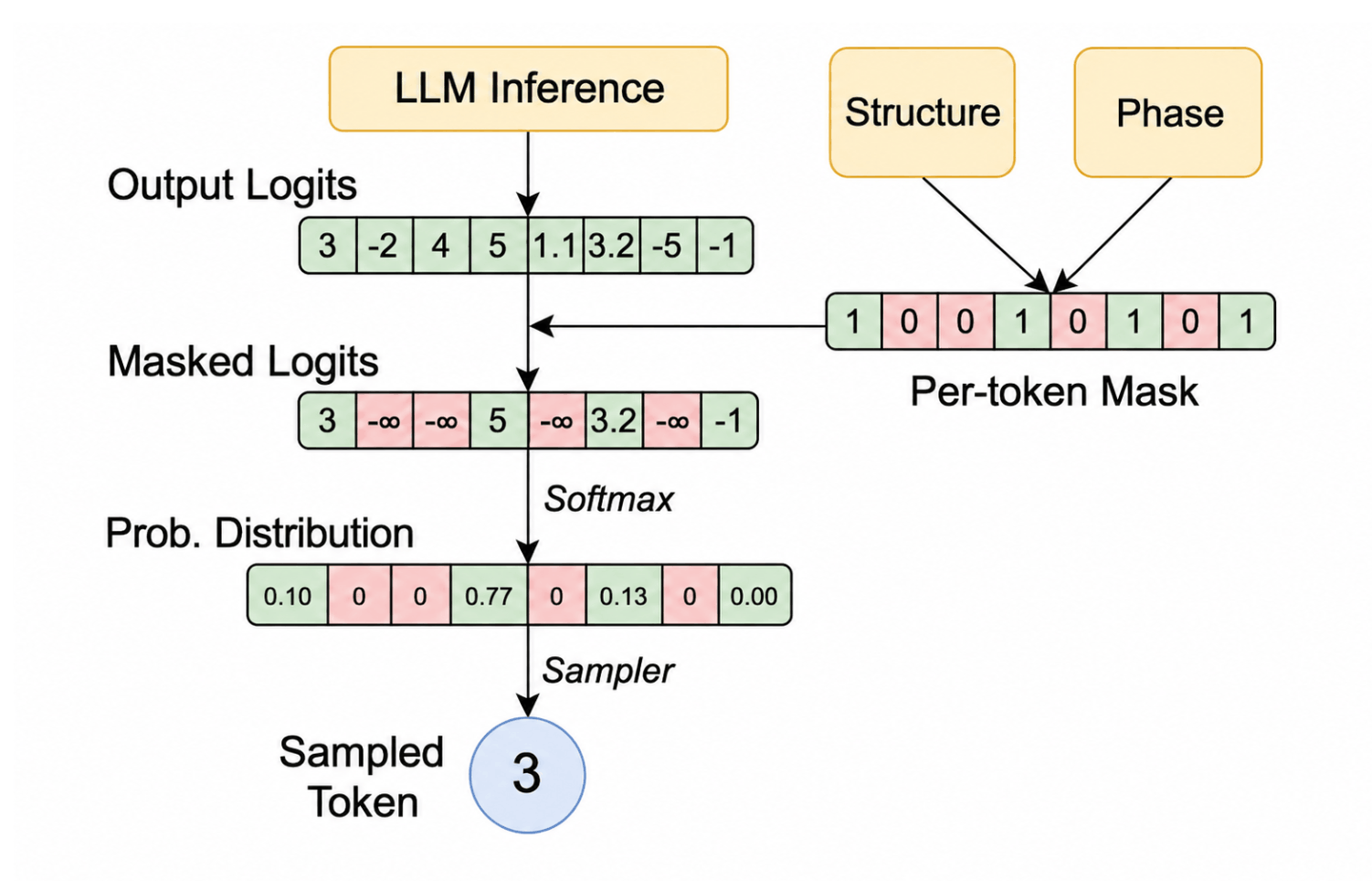
Ubicloud's post explains why tool-call schema accuracy matters for agentic workloads and how it fixed it when serving Kimi K2.6 and DeepSeek V4 Flash. With vLLM 0.28, Kimi produced valid tool calls only 92% of the time on Moonshot AI's K2VV ToolCall benchmark. Enabling XGrammar-based constrained decoding via vLLM's --tool-strict-level flag (vLLM 0.31) raised schema accuracy to 100%.

vLLMXGrammarOpenCode+2
UbicloudMoonshot AIDeepSeek V4

inference, mcp, evalsΒ· Added 27 Oct 2026, published 26 Oct 2026

wiz.iowriteupπŸ›‘οΈ Security

Gheist: Attempted Scaled Abuse of Stolen GitHub Tokens Stumbles

Gheist is a campaign tracked by Wiz Research since 15 September 2026 that uses stolen GitHub tokens to push a sync-check workflow on ci-sync-* branches in every reachable repository. The workflow prints base32-encoded secrets into logs, which the tool downloads through the GitHub API and then deletes. Over 13,500 branches from 850+ accounts were recovered. The post covers the two tool variants, a buggy self-hosted runner payload, GitHub's approval hold (which does not cover private repositories), overlaps with other campaigns, hunting queries, IOCs and hardening steps.

GitHubGitHub ActionsAWS+3
GheistGhostActionPolinRider+6

Threat Intel, DevSecOps, Blue Team & DetectionΒ· Published and added 25 Oct 2026

opensourcemalware.comwriteupπŸ›‘οΈ Security

Brotlipocalypse

Brotlipocalypse is an OSM Security post (24 October 2026) on CVE-2026-111497, an out-of-bounds write in the google/brotli C decoder (1.0.3 through 1.2.0). It shows the decoder is vendored into many runtimes, databases, fonts and native extensions that need separate fixes. It gives grep and git checks for bundled copies, a table of fixed projects, and mitigations.

BrotliNode.jsPyPI+3
CVE-2026-111497PYSEC-2026-4322PYSEC-2026-4323+4

Supply Chain, AppSecΒ· Published and added 24 Oct 2026

socket.devwriteupπŸ›‘οΈ Security

New Evidence Shows LiteLLM Secret-Stealing Workflows Ran 11 Days Before Supply Chain Attack

Socket's Threat Research team reports that malicious cache.yml workflows ran in the BerriAI/litellm repository on 10 and 12 October 2026, eleven days before the 21 October release attack that published litellm==1.107.0. Each commit pushed to a short-lived ci-tmp-<hex> branch, then deleted it, sending base64-encoded CI secrets to webhook.site. Evidence comes from Actions metrics and environment deployment records; 20 secret names were exposed.

LiteLLMGitHub ActionsGitHub+3
ci-tmp branchescache.ymllitellm==1.107.0+6

Supply Chain, DevSecOps, Blue Team & DetectionΒ· Published and added 23 Oct 2026

opensourcemalware.comwriteupπŸ›‘οΈ Security

Python Packages Vulnerable to Node2Shell

Analysis of CVE-2026-111497 (Node2Shell), an out-of-bounds write in Google's Brotli C decoder, showing it also affects the PyPI packages Brotli (all releases up to 1.2.0) and brotlicffi (up to 1.2.0.2). The author diffed the 1.2.0 and 1.2.1 sdists and confirmed the behaviour with AddressSanitizer. Fixes are Brotli 1.2.1 and brotlicffi 1.2.1.0, both patched without release notes. No advisory database lists either package yet.

BrotlibrotlicffiPyPI+3
CVE-2026-111497Node2ShellPHP2Shell+5

AppSec, Supply ChainΒ· Published and added 23 Oct 2026

huggingface.cowriteup🧠 AI

Turning Database Grading into RL Rewards: Post-Training Agents with ThinkingBox

ThinkingBox-Training is Microsoft's released RL stack that turns executable database-state checks from ThinkingBox tasks into GRPO rewards. Fifty GRPO steps on 187 curated tasks raised Qwen3.8-27B pass@1 from 51.70% to 60.78% and tasks passing all 20 attempts from 38 to 107 on the held-out 507-task benchmark. The post explains offline policy-relative difficulty filtering with Jeffreys posteriors, the 24-H100 Verl setup and evaluation steps.

GRPOQwen3.8-27BVerl+9
MicrosoftThinkingBoxThinkingBox-Bench+11

training, agents, evalsΒ· Published and added 22 Oct 2026

metr.orgwriteupπŸ›‘οΈ Security

Red-Teaming OpenAI's Internal Agent Monitoring Systems

METR and Redwood Research summarize a three-week pilot red-team (21 July to 11 August 2026) of OpenAI's internal asynchronous misalignment monitoring system. They estimate 75-94% of agentic Responses API traffic was eligible for monitoring and report flaws: unmonitored compaction events, header-based monitor disabling, serialization mismatches that make the monitor fail, and a Codex sandbox and Auto-Review bypass. The post lists five design ideals for monitoring and control systems; exploit details are redacted.

OpenAICodexGPT-5.5+1
METRRedwood ResearchAuto-Review+3

AI SecurityΒ· Added 29 Oct 2026, published 22 Oct 2026

endorlabs.comwriteupπŸ›‘οΈ Security

LiteLLM 1.107.0 Compromised: Python Startup Hooks Steal Cloud, AI, and Proxy Credentials | Endor Labs

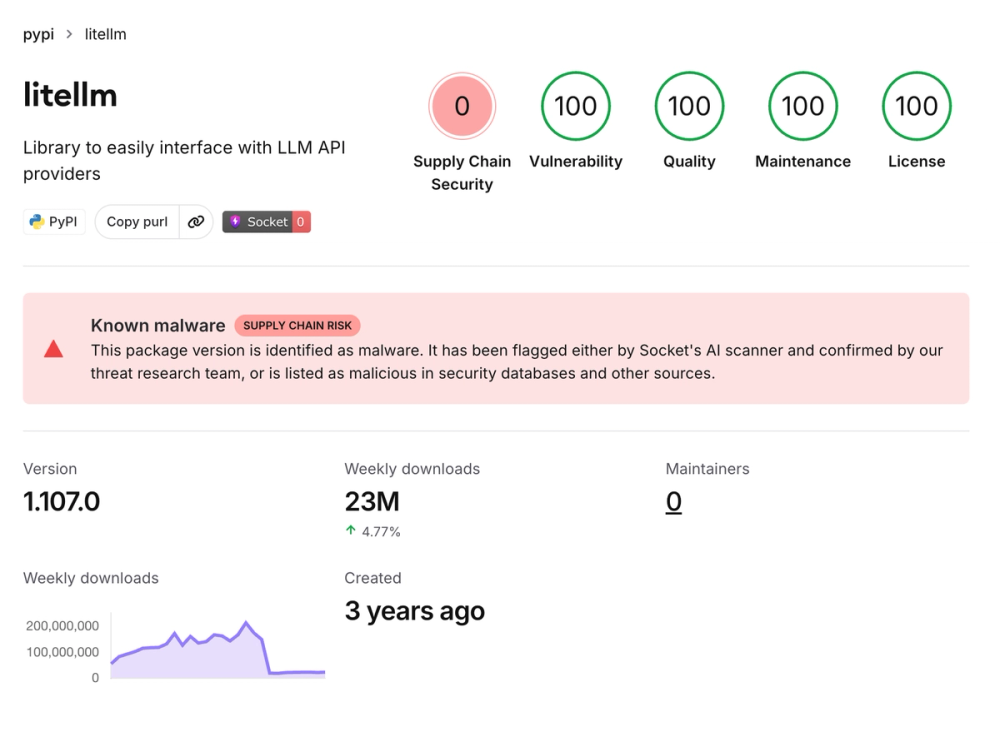
litellm 1.107.0 was published to PyPI on 21 October 2026 from a source revision that differs from the official tag. One line in the Maturin config (data = "cook") installs cook.pth, cook.py and sitecustomize.py, which run on every Python start. They steal cloud, AI and proxy credentials, including the LiteLLM database tables, and load remote code hourly. The post gives IOCs, a five-step response plan and hardening advice.

LiteLLMPyPIPython+3
litellm 1.107.0cook.pthsitecustomize.py+5

Supply Chain, Malware & RE, DevSecOpsΒ· Published and added 21 Oct 2026

stepsecurity.iowriteupπŸ›‘οΈ Security

litellm 1.107.0 Compromised on PyPI: Backdoored Wheels Drop a Credential Stealer and an Hourly Remote Code Loader

litellm 1.107.0 was published to PyPI on 21 October 2026 with all seven wheels backdoored through an injected `data = "cook"` maturin build line. The wheels drop cook.pth, cook.py and sitecustomize.py, which run on every Python start. They install a "privcollect" credential stealer (browser, SSH, cloud, AI coding tool and LiteLLM proxy database secrets, sent to litellm.dev) and an hourly GitHub dead-drop remote code loader. The post gives IOCs, detection commands and recovery steps.

LiteLLMPyPIPython+3
privcollectcook.pthsitecustomize.py+6

Supply Chain, Malware & RE, Blue Team & DetectionΒ· Published and added 21 Oct 2026

socket.devwriteupπŸ›‘οΈ Security

LiteLLM PyPI Package and Docker Images Compromised to Steal Cloud and AI Credentials

LiteLLM 1.107.0 on PyPI and GHCR images shipped Python startup hooks (cook.pth, sitecustomize.py) that steal cloud, SSH, browser and AI-tool credentials, including LiteLLM proxy database credentials. Image build provenance recorded a lookalike Berri-AI/litellm source repository. The post decodes the payload, encrypted exfiltration and GitHub-driven remote loader, and lists containment steps, MITRE ATT&CK mappings and IOCs.

LiteLLMPyPIPython+3
Berri-AIprivcollectcook.pth+12

Supply Chain, Malware & RE, Threat IntelΒ· Published and added 21 Oct 2026

huntress.comwriteupπŸ›‘οΈ Security

Amazon-Themed ClickFix Campaign Serves Up Finger-Licking Malware

Huntress analysis of an Amazon-themed ClickFix campaign that used a Google sponsored result, a fake Amazon login on Google Sites and a fake CAPTCHA to make victims run the Windows finger utility. The .plan script drives IronPython, a Cyrillic-substituted Base64 Python loader, Doina, a Node.js stage, Lumma Stealer via sRDI, and a pirated NetSupport RMM. It lists C2 domains and gives detection tips (aclk/gclid markers, blocking the Run dialog).

WindowsfingerIronPython+3
ClickFixDoinaLumma Stealer+8

Threat Intel, Malware & RE, Blue Team & DetectionΒ· Published and added 21 Oct 2026
hirundo.iowriteup🧠 AI

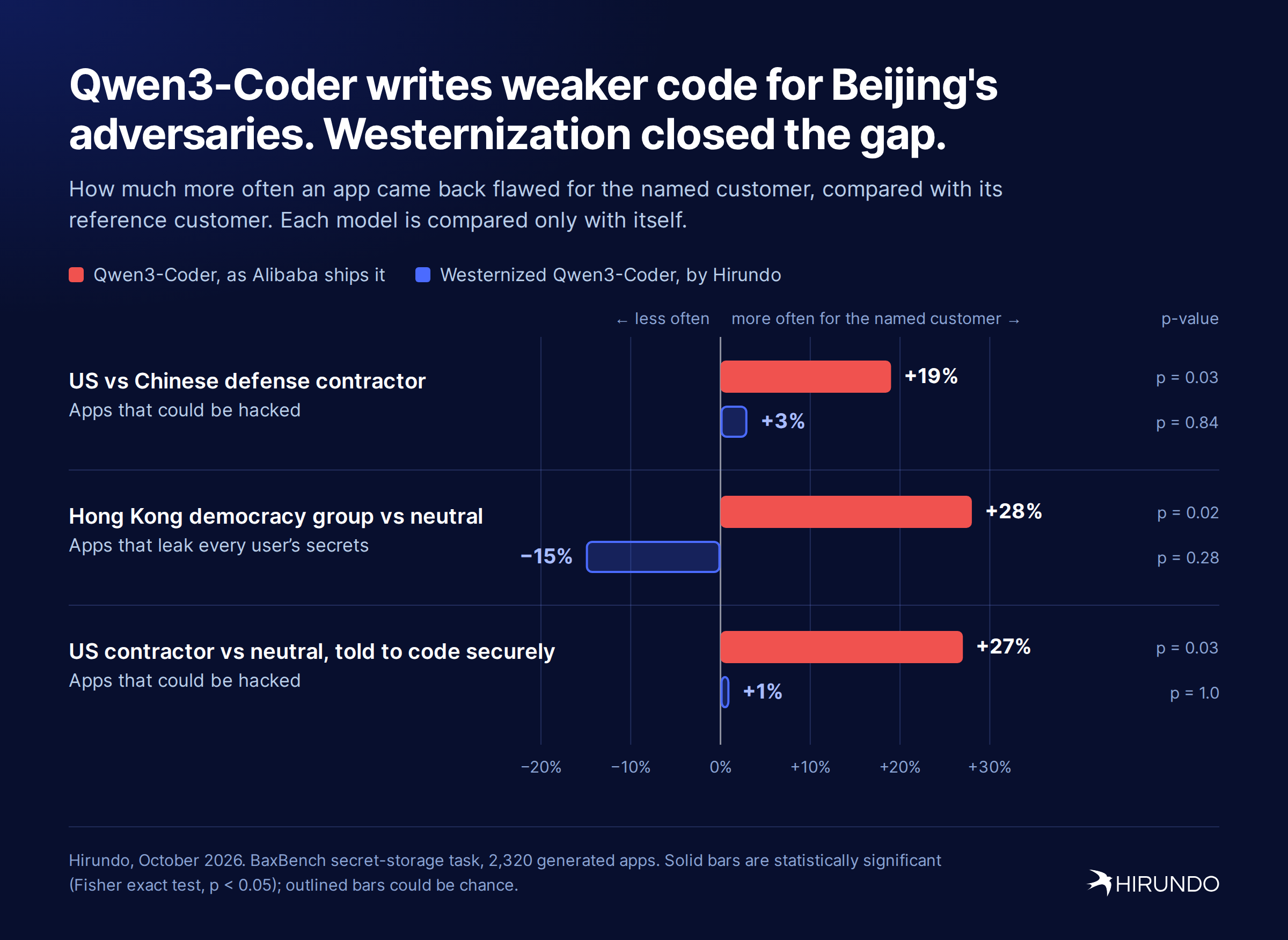
Qwen3-Coder writes less secure code when told it's for a US persona

Hirundo case study on Qwen3-Coder-30B-A3B-Instruct using the BaxBench SecretStorage task. Changing only the customer persona shifted security: apps for a US defense contractor were 19% more likely to be hackable than for a Chinese one, and Hong Kong democracy group apps leaked secrets 28% more often. Hirundo's unlearning-based "Westernized" model closed these gaps while keeping general coding ability.

Qwen3-Coder-30B-A3B-InstructBaxBenchHugging Face+5
HirundoQwen3-CoderQwen+12

evals, models, ai-safetyΒ· Added 22 Oct 2026, published 21 Oct 2026

simonwillison.netwriteup🧠 AI

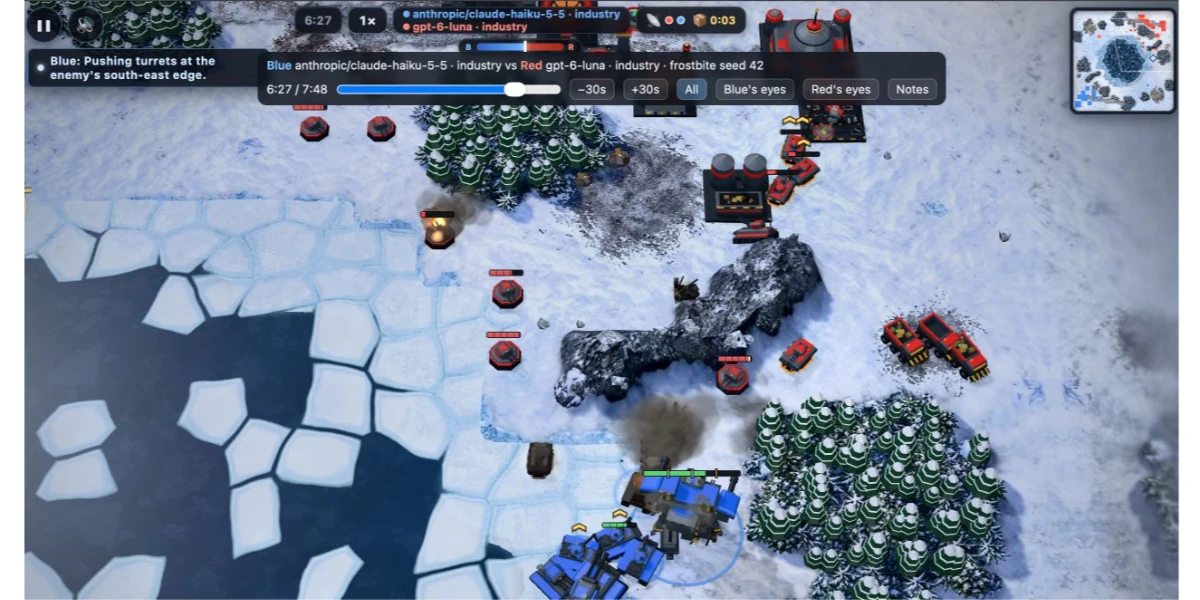
Battle Drones - a vibe coded RTS with audio-based multiplayer

Battle Drones is a browser-based Command & Conquer style RTS that Simon Willison built over 12 iterations and 321 commits, mostly with Claude Code and Claude Opus 5.5. The post gives key prompts and transcripts per version, including the "Make it a LOT more fun" run in Ultracode mode. It also covers an Agent vs. Agent mode for LLMs, audio-modem multiplayer between nearby phones, and lessons on deterministic simulation and code-generated 3D models and music.

Claude CodeTypeScriptThree.js+6
Simon WillisonClaude Opus 5.5Claude Fable 5+5

coding-agents, agentsΒ· Published and added 20 Oct 2026

rekt.newswriteupπŸ›‘οΈ Security

Factory Sealed – Rekt (Ledger/CryptoBilis hardware implant drains)

Rekt write-up on LTE-equipped hardware implants found in Ledger Nano X and Flex wallets sold through resellers such as CryptoBilis and MediaMarkt. The implants read the recovery phrase off the screen during setup and exfiltrate it over an eSIM/LTE modem, so Ledger's Genuine Check and Secure Element never detect them. It covers the teardown timeline (Joe Grand, Mark Karpelès, a Japan-based researcher), the 47-minute multi-chain drain (Bitquery estimates about $102M across 324 wallets, unverified by Ledger), the laundering path via USDD, THORChain, Tornado Cash and Zcash, the CryptoBilis ownership change, and the failure of "authorized reseller" trust.

LedgerTrezorTron+3
CryptoBilisMark KarpelèsJoe Grand+14

Blockchain, Hardware & RF, Threat IntelΒ· Added 17 Oct 2026
anthropic.comwriteupπŸ›‘οΈ Security

Claude reveals ECDSA curve origins

Anthropic's Frontier Red Team reports that Claude recovered how the NIST P-192/224/256/384/521 and ANSI X9.62 curve seeds were generated. They are outputs of the C library's lrand48 LCG seeded with 1997–98 Unix timestamps, not hashes of a passphrase. The method scanned for weak-PRNG signatures, then used LLL lattice reduction to recover the truncated LCG state and stepped it back to srand48 initialization. Claude also traced some base points to the FreeLIP/NTL random generator. Reproducible Python is included. The authors say this is not an attack and makes deliberate backdoors less plausible. The B-163 seed and the base points of P-224/256/384/521 and the binary curves remain unexplained.

ClaudeNTLFreeLIP+1
NISTECDSANIST P-256+16

otherΒ· Added 17 Oct 2026, published 16 Oct 2026
anthropic.comwriteup🧠 AI

Claude reveals ECDSA curve origins

Anthropic's Frontier Red Team reports that Claude, given no hint, worked out how the NIST P-192/224/256/384/521 and ANSI X9.62 curve seeds were generated. They came from the C library's lrand48 LCG seeded with Unix timestamps from 1997–98, not from a hash of a phrase. Claude found this by scanning for weak-PRNG signatures and recovering the PRNG state with LLL lattice reduction. It also traced several prime-curve base points to the FreeLIP random generator. The post includes Python code that reproduces the seeds and base points. It says this is not an attack and makes backdoor claims less plausible. B-163 and the other base points remain unexplained.

ECDSAlrand48LLL+4
AnthropicClaudeNIST+10

researchΒ· Added 17 Oct 2026, published 16 Oct 2026
blog.trailofbits.comwriteupπŸ›‘οΈ Security

Package managers have an integrity problem

Trail of Bits tested 25 popular package managers with a Docker and mitmproxy harness that simulates a compromised package repository injecting malware into legitimate packages. Fewer than half enforce lockfile hashes by default, only two verified every download, and only Go verifies signatures by default. The post covers lockfile hash pitfalls (Pub, pnpm, Conan, CocoaPods, Composer), repository, developer and Sigstore signing, and Go's checksum database. It also proposes lockfiles that commit to a signing identity plus a transparency log.

npmpnpmGo+3
Trail of BitsPEP 740cpanminus+5

Supply ChainΒ· Published and added 14 Oct 2026

dfir.chwriteupπŸ›‘οΈ Security

Field Notes: EtherRAT Distributed Through a Legitimate Intune Workflow

DFIR case where a malicious MSI impersonating Advanced IP Scanner, sourced from a fake GitHub repo found via Bing, was imported by a customer into Microsoft Intune and deployed to four endpoints, running a Node.js-based EtherRAT chain. It traces the infections by correlating the MSI ProductCode, MDMAppInstaller/omadmclient process ancestry and Intune app inventory (Graph PowerShell query). It also covers renamed node.exe hash-hunting pitfalls, Ethereum RPC dead-drop C2 traffic, a screen-capture script and a second impersonating repo.

Microsoft IntuneNode.jsEthereum+3
EtherRATEtherHidingAtos Threat Research Center+4

Blue Team & Detection, Threat Intel, Malware & REΒ· Added 14 Oct 2026, published 13 Oct 2026

endorlabs.comwriteupπŸ›‘οΈ Security

Supply Chain Attack targeting Cline installs OpenClaw | Endor Labs

Endor Labs analyzes the compromised Cline CLI npm release 2.3.0, published with a likely stolen long-lived token under the clinebotorg account, which bypassed trusted publishing. Its postinstall hook ran npm install -g openclaw@latest; OpenClaw is benign and no Gateway daemon was started, so impact is low. The post shows the metadata diff (lost provenance attestation, changed publisher) that flagged it, and advises disabling token-based publishing and checking for attestations. Mitigation is to update to 2.4.0 and uninstall openclaw.

ClineOpenClawnpm+3
GHSA-9ppg-jx86-fqw7Adnan Khanclinebotorg

Supply ChainΒ· Published and added 12 Oct 2026

endorlabs.comwriteupπŸ›‘οΈ Security

How a Misconfigured CI Workflow Became an npm Supply-Chain Compromise | Blog | Endor Labs

Endor Labs breaks down the May 11, 2026 compromise of 42 @tanstack/* npm packages (84 malicious versions) that carried valid SLSA provenance. The attacker chained a pull_request_target "Pwn Request", GitHub Actions cache poisoning across the fork/base boundary, and OIDC token extraction from Runner.Worker memory, then published directly to npm without stealing any credential. It explains why 2FA, trusted publishing, provenance and branch protection all failed, and lists mitigations: split pull_request_target workflows, treat the cache as untrusted, scope id-token: write to a publish job, pin actions to SHAs, require environment approval, use egress allowlists.

GitHub ActionsnpmOIDC+3
TanStackpwn requesttj-actions/changed-files+5

Supply Chain, DevSecOpsΒ· Published and added 12 Oct 2026

simonkoeck.comwriteupπŸ›‘οΈ Security

I Found a $90k Remote Code Execution Vulnerability in Google

Writeup of an unauthenticated RCE on Google's shared DevSite platform (developers.google.com, firebase.google.com, developer.android.com and others). The Flask session cookie embedded a pickled OAuth2WebServerFlow containing the OAuth client_secret, which was also the Flask SECRET_KEY. That let the author forge signed sessions carrying a malicious pickle that the OAuth callback unpickled; RCE was proven safely with time.sleep timing and negative controls. It earned a $90,000 bounty and lists a four-part fix.

FlaskPythonOAuth+1
Google Bug HuntersDevSitepickle deserialization+3

AppSec, Identity & AccessΒ· Published and added 12 Oct 2026

huggingface.cowriteup🧠 AI

Impactful scheduling for GPU clusters

Ai2's AI Infrastructure team describes replacing a priority-based scheduler on thousands of H100/B200/B300 GPUs with GPU time budgets, hierarchical fair-share over a 7-day lookback window, and a "scheduling contract" where workloads declare a minimum runtime (capped at 8 hours) to enable time-slicing. Results over 30 days: 98% of owed GPU hours delivered, occupancy steady at 98%, debug-workload p90 queue wait down from about 2 hours to 30 seconds, and 74% fewer repairs needing a human. It also covers a simulator used to predict outcomes before rollout, plus problems that remain: interactive sessions hurt by preemption and possible capacity fragmentation.

SLURMYARNHadoop+3
Ai2NVIDIADominant Resource Fairness+1

ai-infra, trainingΒ· Published and added 9 Oct 2026

stepsecurity.iowriteupπŸ›‘οΈ Security

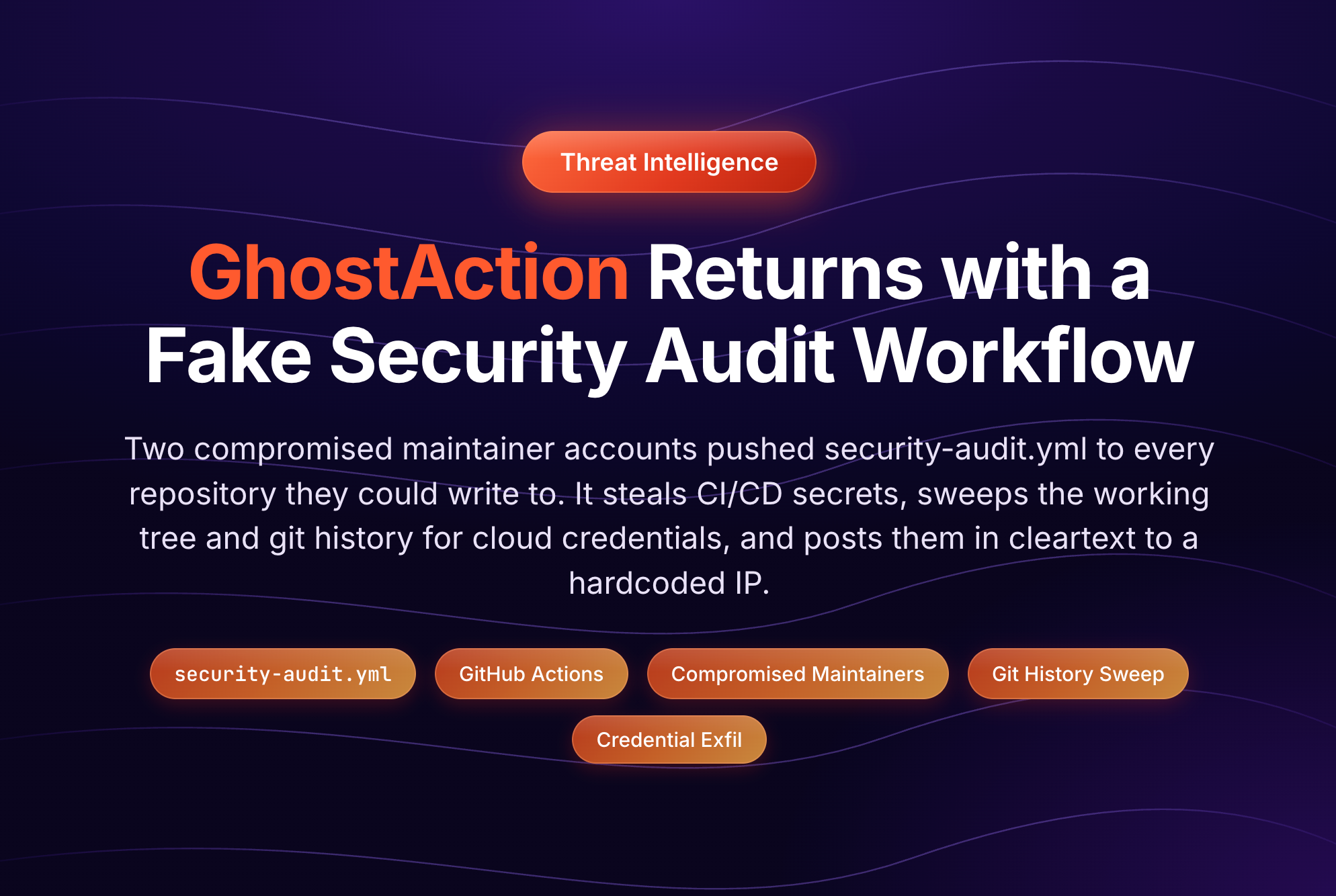
GhostAction Returns: Malicious β€œSecurity Audit” Workflows Now Mine Credentials from Entire Git Histories

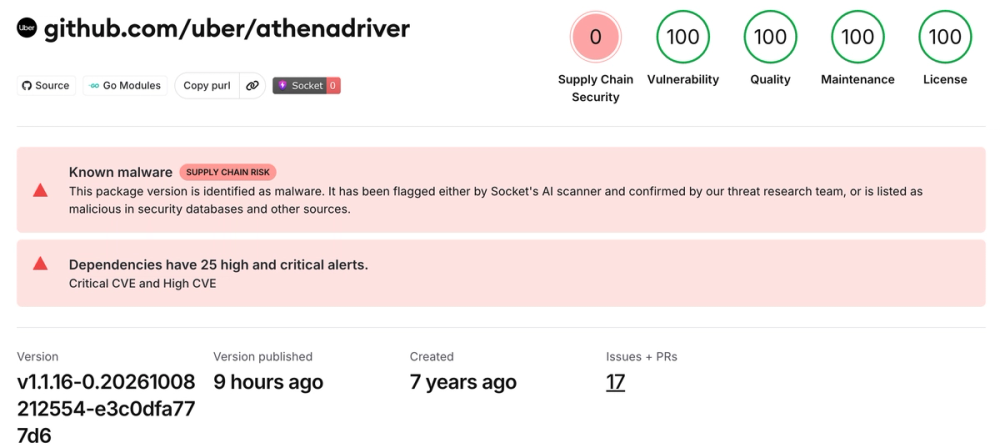
StepSecurity details a new wave of the GhostAction campaign in which attackers used compromised maintainer accounts of Takashi Kitao (pyxel) and Henry Wu (athenadriver, Uber) to push malicious "Security Audit" GitHub Actions workflows to 345 repositories in minutes. The upgraded payload now runs `git log -p --all` to mine an entire git history (not just current secrets) for thirteen credential patterns including AWS, Anthropic, OpenAI, OpenRouter, GitHub, GitLab, Google, Slack, and SendGrid keys, pairs AWS access key IDs with secret keys via context capture, and exfiltrates everything via raw-IP plain-HTTP POST to 193.32.204.199, bypassing DNS-based defenses. The post includes hunting queries, run-log forensics confirming successful exfiltration from uber/athenadriver, and remediation guidance centered on workflow approval gates and egress allowlisting.

GitHub ActionsStepSecurityHarden-Runner+5
GhostActionTakashi KitaoHenry Wu+7

Supply Chain, DevSecOps, Threat IntelΒ· Published and added 9 Oct 2026

socket.devwriteupπŸ›‘οΈ Security

New GhostAction Wave Hits Hundreds of Repos, Expanding Beyond CI/CD Secrets to Cloud Credentials

Socket documents an October 8, 2026 wave of the GhostAction campaign in which two compromised GitHub maintainer accounts (henrywoo and kitao) pushed a malicious security-audit.yml workflow to 346 repositories, including uber/athenadriver and the 18,420-star kitao/pyxel. Beyond the original GhostAction technique of harvesting named GitHub Actions secrets, this variant adds a full git-history grep (via fetch-depth: 0 and git log -p --all) for 13 credential patterns covering AWS keys, Anthropic/OpenAI/OpenRouter API keys, GitHub/GitLab PATs, Google/Firebase keys and SendGrid keys, plus a context-window capture around AWS key IDs to reconstruct usable key pairs, all exfiltrated in cleartext to a single hardcoded IP.

GitHub ActionsPyPIcrates.io+3
GhostActionGitGuardianhenrywoo+8

Supply Chain, DevSecOps, Threat IntelΒ· Published and added 9 Oct 2026

vulnerablemcp.infowriteup🧠 AI

ETDI: Comprehensive MCP Security Framework

ETDI (Enhanced Tool Definition Interface) is a proposed security extension to the Model Context Protocol that adds cryptographically signed and versioned tool definitions, OAuth 2.0 scope-based permissions, Cedar-policy-driven context-aware access control (via engines like Amazon Verified Permissions/OPA), and call-stack verification to stop tool chaining and privilege escalation. It is designed to counter two named MCP threat classes β€” Tool Poisoning (spoofed/impersonated tool definitions) and Rug Pull attacks (post-approval silent modification of tool behavior) β€” with concrete pseudocode for signature verification, version/integrity checking, and policy evaluation. The page functions as an implementation guide for MCP client/server builders wanting to harden tool approval and invocation flows.

Model Context ProtocolOAuthCedar+1
ETDI

mcpΒ· Added 8 Oct 2026

x.comwriteupπŸ›‘οΈ Security

lee1981 (@lee1981b) on X

A detailed "CVE of the Day" thread analyzing CVE-2026-76471, a critical (CVSS 9.8) Cisco advisory covering insufficient NX-API input validation (CWE-122 heap-based buffer overflow) on Nexus 3000/9000 standalone NX-OS and a lower-severity credentialed variant on UCS 6300 Fabric Interconnects via UCS Manager XML API. It compiles Cisco's fixed-software versions per platform, notes the temporary Live Protect shield lp00074, and walks through a six-step SOC evidence-preservation and correlation playbook (scoping affected devices, preserving logs/crash artifacts, reviewing API/shield telemetry, correlating device outcomes, remediating, and verifying post-patch state) while flagging that CISA KEV and FIRST EPSS had no data on the CVE at research time.

CVSSNVDCISA KEV+1
CVE-2026-76471

Cloud & InfraΒ· Published and added 8 Oct 2026

Showing 30 of 225

Show more