Skip to content

269 results for β€œC”

What you seeeverything
x.comadvisoryπŸ›‘οΈ Security

ClioBitcoinBank πŸ΄β€β˜ οΈ (@ClioBitcoinBank) on X

lnd v0.20.7 and v0.21.6 are Lightning Network Daemon releases announced by Clio Bitcoin Bank. They include a Go-specific mitigation, with the MPTCP flag turned off, for CVE-2026-98432, a use-after-free in the Linux kernel's IPv4 TCP code. The post recommends all users update. It gives no exploit or impact detail.

lndLinux kernelGo+2
CVE-2026-98432use-after-freeClio Bitcoin Bank

Cloud & InfraΒ· Published and added 31 Oct 2026

status.bunny.netadvisoryπŸ›‘οΈ Security

Bunny CDN Security Incident

Bunny CDN status-page notice, posted 28 October 2026, about unauthorized access at an infrastructure provider that hosted one bunny.net CDN node in Armenia. Traffic was stopped within 20 minutes and the server wiped. No access to the node was found, but cached content, Pull Zone configs and TLS certificates could have been exposed, so all platform certificates were reissued. Customers with their own certificates should rotate them with new private keys.

Bunny CDNTLS
bunny.netb-cdn.netbunny.run

Threat Intel, Cloud & InfraΒ· Added 31 Oct 2026, published 30 Oct 2026

cisa.govadvisoryπŸ›‘οΈ Security

CISA Adds Two Known Exploited Vulnerabilities to Catalog

CISA added two Ivanti Connect Secure vulnerabilities to its Known Exploited Vulnerabilities (KEV) Catalog on 30 October 2026, citing evidence of active exploitation: CVE-2026-111357 (missing authentication for a critical function) and CVE-2026-118527 (generation of predictable numbers or identifiers). The alert restates BOD 26-04, which requires federal civilian agencies to remediate KEV-listed flaws on exposed assets and check for prior compromise. It also links the KEV nomination form.

Ivanti Connect SecureCISA KEVVPN
CVE-2026-111357CVE-2026-118527BOD 26-04+1

Threat Intel, GRCΒ· Published and added 30 Oct 2026

cisa.govadvisoryπŸ›‘οΈ Security

CISA Adds Two Known Exploited Vulnerabilities to Catalog

CISA alert of 29 October 2026 adding two vulnerabilities to the Known Exploited Vulnerabilities catalog on evidence of active exploitation: CVE-2026-97229, an integer overflow in GitLab CE/EE, and CVE-2026-76418, a NULL pointer dereference from an unchecked return value in Cisco Secure Firewall ASA and FTD. It restates BOD 26-04 remediation duties for federal civilian agencies and links the KEV nomination form.

CISA KEVGitLabCisco Secure Firewall ASA+1
CVE-2026-97229CVE-2026-76418BOD 26-04+3

Threat Intel, GRCΒ· Published and added 29 Oct 2026

unit42.paloaltonetworks.comadvisoryπŸ›‘οΈ Security

Threat Brief: Critical Vulnerabilities in PHP: CVE-2026-109618, CVE-2026-109619 (Updated October 29)

Unit 42 threat brief on PHP2Shell, two PHP remote code execution flaws, CVE-2026-109618 and CVE-2026-109619 (CVSS 4.0 9.2), both caused by longjmp() error handling that leaves memory uninitialized or freed. Cortex Xpanse counted over 22.6 million exposed instances. The 29 October 2026 update says attackers chained PHP2Shell with a Linux kernel privilege escalation against internet-exposed PAN-OS management interfaces. An earlier 23 October claim of post-compromise activity was retracted on 25 October.

PHPPAN-OSLinux kernel+2
CVE-2026-109618CVE-2026-109619PHP2Shell+2

Threat Intel, AppSecΒ· Added 30 Oct 2026, published 29 Oct 2026

ubuntu.comadvisoryπŸ›‘οΈ Security

CVE-2026-98432: 9.8 CVE affecting all Ubuntu versions

CVE-2026-98432 is a Linux kernel use-after-free in the IPv4 TCP stack, tracked by Ubuntu (published 15 October 2026, updated 29 October 2026). ireq_opt/inet_opt were freed with plain kfree() while another CPU built a SYNACK under RCU, so ip_options_build() read freed memory; the fix uses kfree_rcu(). Ubuntu rates it High priority, CVSS v3.1 9.8 and v4.0 8.3. The page text does not list per-release package status.

Linux kernelUbuntuCVSS
CVE-2026-98432use-after-free

Cloud & InfraΒ· Added 30 Oct 2026, published 29 Oct 2026

x.comadvisoryπŸ›‘οΈ Security

lee1981 (@lee1981b) on X

CVE-2026-103780 is a stack-based buffer overflow (CWE-121) in Dell PowerProtect Data Domain / DD OS. An unauthenticated remote attacker could get command execution (CVSS 3.1 9.8, Dell DSA-2026-416). The post lists affected and fixed builds for four release trains (Feature Release, LTS2024, LTS2025, LTS2026). It adds KEV, EPSS and SSVC status, plus six defensive checks. The vulnerable service is not public.

Dell PowerProtect Data DomainDD OSCVSS+2
CVE-2026-103780CVE-2026-86400CVE-2026-86397+5

Blue Team & Detection, Cloud & InfraΒ· Added 31 Oct 2026, published 29 Oct 2026

orca.securityadvisoryπŸ›‘οΈ Security

CVE-2026-101767: Critical Oracle EBS SQL Injection Actively Probed in the Wild

CVE-2026-101767 is a CVSS 9.8 unauthenticated SQL injection in Oracle E-Business Suite's Application Object Library, reachable through the /OA_HTML/AppsTCFServer servlet (GanttDataServer) and chainable to OS command execution. It affects versions 12.2.3 to 12.2.15 and was fixed in the October 2026 Critical Patch Update. Horizon3.ai found it, and Defused saw probing on honeypots on 27 October 2026. Interim mitigation is removing the servlet from the URL firewall allowlist.

Oracle E-Business Suite
CVE-2026-101767Horizon3.aiDefused+5

AppSec, Threat IntelΒ· Published and added 28 Oct 2026

cisa.govadvisoryπŸ›‘οΈ Security

Hitachi Energy CoreTec Product

CISA advisory ICSA-26-302-03, republished from Hitachi Energy PSIRT 8DBD000258, covers OS command injection (CVE-2026-13162) and the Dirty Frag vulnerability (CVE-2026-43284) in Hitachi Energy CoreTec. CoreTec5 up to 3.4.0 and 5.0.0 are affected by both, and CoreTec4 up to 3.4.0 by CVE-2026-13162. The advisory was released 27 October 2026 and lists generic ICS mitigations. SSVC rates exploitation as none.

Hitachi Energy CoreTec
CVE-2026-13162CVE-2026-43284Dirty Frag+5

Hardware & RFΒ· Added 29 Oct 2026, published 28 Oct 2026

cisa.govadvisoryπŸ›‘οΈ Security

Hitachi Energy TRO600 series products

ICSA-26-302-02 is a CISA republication of Hitachi Energy PSIRT advisory 8DBD000224 on the TRO600 series. It covers CVE-2026-10756 and CVE-2026-106087, which allow remote code execution and disclosure of sensitive information. Affected versions are TRO600 up to 9.2.1.6 and 9.1.1.0, plus 9.2.2.1 and 9.1.2.0. The page gives no per-CVE detail or CVSS scores, only general ICS hardening advice. Released 27 October 2026.

Hitachi Energy TRO600
CVE-2026-10756CVE-2026-106087Hitachi Energy PSIRT 8DBD000224+1

Hardware & RFΒ· Added 29 Oct 2026, published 28 Oct 2026

cisa.govadvisoryπŸ›‘οΈ Security

Siemens Mendix SAML Module

ICSA-26-302-01 republishes Siemens SSA-137528 on the Mendix SAML module, which has an authentication bypass (CVE-2026-89209). An unauthenticated remote attacker can replay a valid SAML assertion in IdP-initiated flows to gain unauthorized access. Fixed in 4.2.4 for Mendix 10 and 11, and 3.6.29 for Mendix 9. Initial release was 26 October 2026.

MendixSAMLSiemens
CVE-2026-89209SSA-137528ICSA-26-302-01+2

Identity & Access, AppSecΒ· Added 29 Oct 2026, published 28 Oct 2026

cisa.govadvisoryπŸ›‘οΈ Security

CISA Adds Two Known Exploited Vulnerabilities to Catalog

CISA alert of 28 October 2026 adding two vulnerabilities to the Known Exploited Vulnerabilities Catalog on evidence of active exploitation: CVE-2026-41709 (Broadcom VMware ESX insufficient logging) and CVE-2026-46300 (Linux kernel missing variable initialization). It restates BOD 26-04, which requires federal civilian agencies to prioritize fast remediation of KEV CVEs on exposed assets and to check for prior compromise. It also links the KEV nomination form.

CISA KEVVMware ESXLinux kernel
CVE-2026-41709CVE-2026-46300BOD 26-04+1

Threat Intel, GRCΒ· Added 29 Oct 2026, published 28 Oct 2026

horizon3.aiadvisoryπŸ›‘οΈ Security

CVE-2026-20362 | Cisco Finesse Server-Side Request Forgery Vulnerability

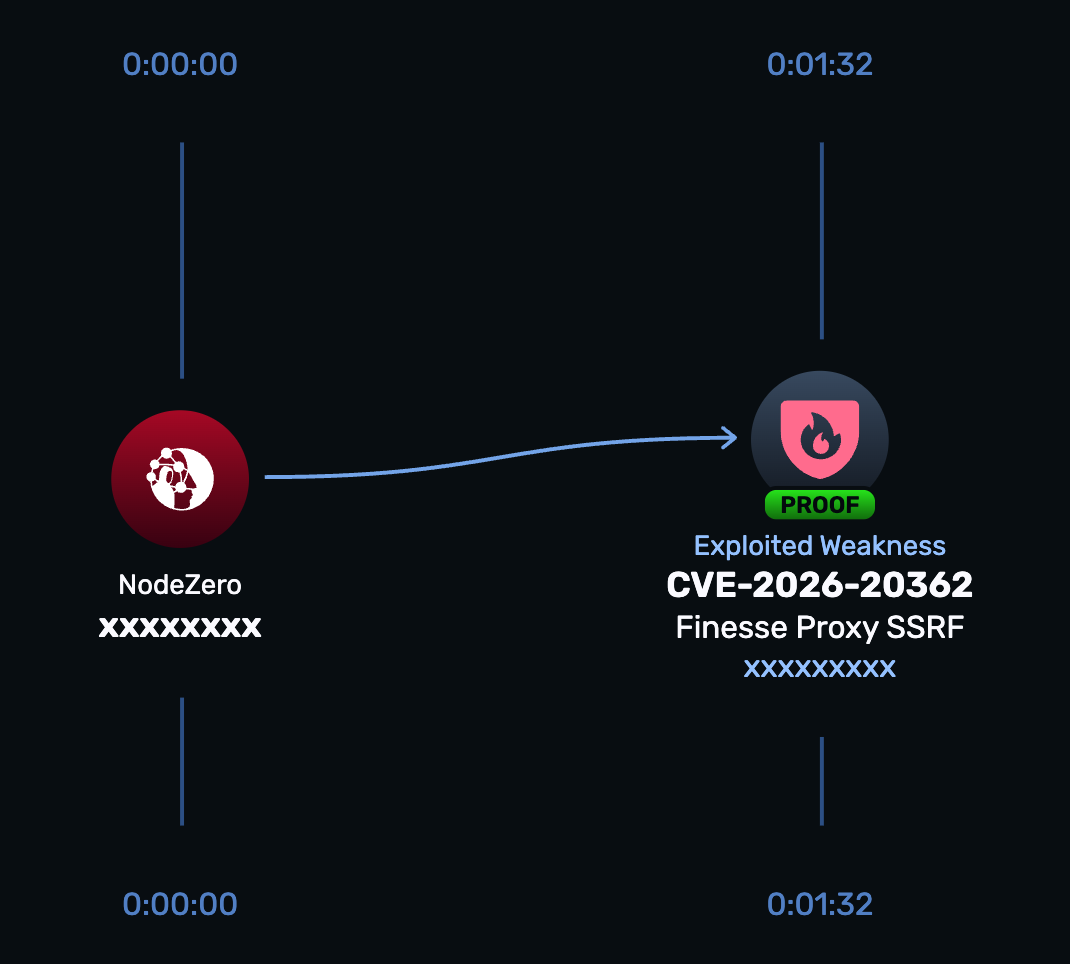
CVE-2026-20362 is an unauthenticated server-side request forgery in Cisco Finesse (CVSS 3.1 score 7.2), found by Horizon3 researchers Noah King and Brandon Peterson. The embedded Apache Shindig content proxy fetches attacker-supplied URLs, including loopback services such as the Finesse REST API at 127.0.0.1:8082, which returns SystemInfo with node hostnames and the XMPP domain. Cisco published its advisory on 7 October 2026. Fixes are planned for January and February 2027, and no workaround exists.

Cisco FinesseApache ShindigNodeZero+1
CVE-2026-20362SSRFCWE-918+3

AppSecΒ· Added 29 Oct 2026, published 28 Oct 2026

x.comadvisoryπŸ›‘οΈ Security

lee1981 (@lee1981b) on X

CVE-2026-92885 is a critical (CVSS 3.1 9.8, CWE-287) authentication bypass in the Qode Membership WordPress plugin, versions through 2.0.6.2. A misspelled variable in the Facebook token-verification guard skips provider checks, so an unauthenticated attacker with a public nonce can get a session cookie for an existing account, including an administrator. The post gives the fix (2.0.6.3, bundled in Bridge 30.9), KEV/EPSS/SSVC status, and a SOC log-correlation and remediation plan.

WordPressQode MembershipBridge+3
CVE-2026-92885CWE-287Wordfence+4

AppSec, Identity & Access, Blue Team & DetectionΒ· Added 31 Oct 2026, published 28 Oct 2026

x.comadvisoryπŸ›‘οΈ Security

Dark Web Informer (@DarkWebInformer) on X

Veeam patched five vulnerabilities across Backup & Replication, Veeam Agent for Linux and Veeam ONE. The worst is CVE-2026-108142 (CVSS 9.1), an unauthenticated authorization bypass in the CDP Coordinator Service affecting Backup & Replication 13.0 and 13.1. Other fixes cover Linux agent privilege escalation, two path-traversal file writes, and a Veeam ONE MFA bypass; fixed builds are listed.

Veeam Backup & ReplicationVeeam Agent for LinuxVeeam ONE+1
CVE-2026-108142CVE-2026-105477CVE-2026-108140+3

AppSec, Identity & AccessΒ· Added 30 Oct 2026, published 28 Oct 2026

cisa.govadvisoryπŸ›‘οΈ Security

CISA Adds Two Known Exploited Vulnerabilities to Catalog

CISA alert of 27 October 2026 adding two vulnerabilities to the Known Exploited Vulnerabilities (KEV) Catalog on evidence of active exploitation: CVE-2026-48356, an unrestricted upload of a dangerous file type in Adobe Commerce and Magento, and CVE-2026-111497, an unchecked return value in Google Brotli. It restates BOD 26-04, which makes federal civilian agencies prioritise KEV flaws on exposed assets and check for prior compromise. No technical detail or IOCs are given.

Adobe CommerceMagentoBrotli
CVE-2026-48356CVE-2026-111497CISA KEV+2

AppSec, GRCΒ· Added 29 Oct 2026, published 27 Oct 2026

orca.securityadvisoryπŸ›‘οΈ Security

Node.js Brotli Decoder Out-of-Bounds Write Threatens Remote Code Execution Across All Supported Versions

CVE-2026-111497 is a high-severity out-of-bounds write in the Node.js Brotli decoder, reported by Orca Security. It affects all supported release lines (22.x, 24.x, 26.x) and can be triggered by malformed Brotli data processed through node:zlib or fetch(). Impacts named are crashes, memory disclosure and remote code execution in cloud workloads; patching is advised. The fetched text covers only the executive summary.

Node.jsBrotli
CVE-2026-111497

AppSecΒ· Published and added 27 Oct 2026

x.comadvisoryπŸ›‘οΈ Security

lee1981 (@lee1981b) on X

CVE-2026-115905 is a ZIP cloaking flaw in the Rust zip crate (zip-rs/zip2), rated CVSS v4.0 10.0 and affecting versions below 9.0.5. ZipArchive reads central-directory metadata while ZipStreamReader reads local headers, so a crafted archive can pass filename inspection and then overwrite a different file during streaming extraction. Version 9.0.5 adds consistency checks, but ZipStreamReader::new leaves them off by default, and extraction is not atomic, so files can be written before an error is raised. The post covers CWE-20 and CWE-436, KEV and EPSS status, Debian status and a six-step investigation trail.

Rustzip crateCargo+3
CVE-2026-115905CWE-20CWE-436+3

AppSec, Blue Team & DetectionΒ· Added 29 Oct 2026, published 27 Oct 2026

cisa.govadvisoryπŸ›‘οΈ Security

CISA Adds Two Known Exploited Vulnerabilities to Catalog

CISA added two PHP vulnerabilities to its Known Exploited Vulnerabilities Catalog on 26 October 2026: CVE-2026-109618 (memory corruption) and CVE-2026-109619 (stale internal request state). It also updated its PHP alert on critical vulnerabilities requiring immediate patching. The alert restates BOD 26-04, which requires federal civilian agencies to prioritize fast remediation of KEV CVEs on exposed assets and to check for prior compromise.

PHPCISA KEV
CVE-2026-109618CVE-2026-109619BOD 26-04+1

AppSec, GRCΒ· Added 29 Oct 2026, published 26 Oct 2026

cisa.govadvisoryπŸ›‘οΈ Security

Mitsubishi Electric and Mitsubishi Electric Iconics Digital Solutions GENESIS, GENESIS64, ICONICS Suite, Hyper Historian, AnalytiX, MobileHMI, IoTWorX, MC Works64, GENESIS32 and BizViz

CISA advisory ICSA-26-300-02 covers four vulnerabilities in Mitsubishi Electric and Mitsubishi Electric Iconics Digital Solutions GENESIS64, ICONICS Suite, Hyper Historian, AnalytiX, MobileHMI, IoTWorX, MC Works64, GENESIS32 and BizViz. CVE-2023-4863 (CWE-787 out-of-bounds write) allows code execution; CVE-2026-16436 and CVE-2026-16437 allow authentication bypass; CVE-2026-16438 allows arbitrary operations. Fixes are 10.97.3, 10.98 and GENESIS 11.04. MC Works64, GENESIS32 and BizViz are affected in all versions, and MC Works64 has no fix planned. Mitigations include removing the ClientChallengeTable.dat or SecurityChallenges.dat file contents. The fetched text was truncated, so later content is not covered.

GENESIS64ICONICS SuiteHyper Historian+3
CVE-2023-4863CVE-2026-16436CVE-2026-16437+6

Offensive Security, Identity & AccessΒ· Added 29 Oct 2026, published 26 Oct 2026

cisa.govadvisoryπŸ›‘οΈ Security

EPICS Base

CISA ICS advisory ICSA-26-300-01 (October 27, 2026) covers EPICS Base release 7.0.10 and earlier, with CVE-2026-114595 through CVE-2026-114598. Flaws include integer overflow, length parameter inconsistency and type confusion, allowing denial of service, memory corruption, information disclosure or remote code execution (CVSS v3.1 9.8). The fix is EPICS Base 7.0.11, with patches in epics-base and pvDataCPP pull requests.

EPICS BaseCVSS
CVE-2026-114595CVE-2026-114596CVE-2026-114597+5

AppSecΒ· Added 29 Oct 2026, published 26 Oct 2026

x.comadvisoryπŸ›‘οΈ Security

dbugs (@ptdbugs) on X

CVE-2026-106173 is a critical (CVSS 9.4) unauthenticated arbitrary file write in FortiSIEM's phQueryMaster gRPC service on port 27918/TCP. The SendQueryResult method builds a path from the query-id parameter without validation, so "../" sequences escape the directory and a null byte drops the appended filename and extension. Overwriting /opt/charting/redishb.sh, which runs every 60 seconds, gives remote command execution. Horizon3.ai published the analysis and a PoC.

FortiSIEMgRPCRedis+1
CVE-2026-106173PT-2026-111783Horizon3.ai+4

Offensive Security, AppSecΒ· Added 27 Oct 2026, published 26 Oct 2026

wiz.ioadvisoryπŸ›‘οΈ Security

Broccoli2shell: Everything You Need To Know About The Critical Brotli Decoder Vulnerability

CVE-2026-111497 (Broccoli2Shell, also Node2Shell and HTTP2Shell) is an out-of-bounds write in the upstream Brotli C decoder. It affects Node.js, Bun, Envoy Proxy, Istio and Python packages, and can lead to memory corruption, information disclosure, crashes or RCE when untrusted Brotli data is decompressed. Wiz reports 91% of cloud environments have vulnerable resources. The post lists patching, inventory, rebuild and temporary mitigation steps.

BrotliNode.jsBun+3
CVE-2026-111497Broccoli2ShellNode2Shell+8

AppSec, Cloud & InfraΒ· Published and added 25 Oct 2026

cisa.govadvisoryπŸ›‘οΈ Security

CISA: Critical Vulnerabilities in PHP Require Immediate Patching

CISA alert on CVE-2026-109618 and CVE-2026-109619 ("php2shell"), unauthenticated remote code execution flaws affecting PHP installations serving web requests, including mod_php, PHP-FPM, php-cgi, FrankenPHP and LiteSpeed. Fixed in PHP 8.5.12, 8.4.27, 8.3.36 and 8.2.35. Updated 23 October 2026 with a Sigma rule, partner advisories (NSA, NCSC-UK, ASD ACSC, NCSC-NL, NCSC-NZ, Cyber Centre) and guidance to inventory PHP, patch internet-facing systems first, and watch for PHP workers spawning shells. No in-the-wild exploitation had been observed.

PHPApachePHP-FPM+3
CVE-2026-109618CVE-2026-109619PHP2Shell+2

AppSec, Blue Team & DetectionΒ· Added 24 Oct 2026

aikido.devadvisoryπŸ›‘οΈ Security

Python packages are also vulnerable to the Node2Shell Brotli flaw (CVE-2026-111497)

Python2Shell is the Python-side impact of CVE-2026-111497 (Node2Shell), a Brotli decoder flaw (CVSS 4.0 9.2) in DecodeBlockTypeAndLength() that mixes an unchecked return value with an out-of-bounds write. Brotli 1.2.0 and earlier, and brotlicffi 1.2.0.x, are affected through urllib3, requests, httpx, aiohttp and Scrapy. Fixes are Brotli 1.2.1 and brotlicffi 1.2.1.0; as of 23 October 2026 advisory databases do not map the CVE to either package. The post lists checks and workarounds.

BrotlibrotlicffiPyPI+3
CVE-2026-111497Node2ShellPython2Shell+4

AppSec, Supply ChainΒ· Published and added 23 Oct 2026

horizon3.aiadvisoryπŸ›‘οΈ Security

CVE-2026-109618 / CVE-2026-109619 | NodeZero Rapid Response Check Now Available

PHP2Shell is the name for CVE-2026-109618 and CVE-2026-109619, critical unauthenticated RCE flaws in PHP core fixed on 21 October 2026 in PHP 8.2.35, 8.3.36, 8.4.27 and 8.5.12. The page explains the out-of-memory corruption and stale global state causes, mod_php and PHP-FPM exposure, interim mitigations, hunting guidance, exploitation reports from October 2026, and the 23 October CVE-2026-115560 upload-progress advisory. Horizon3 also announced a non-exploiting NodeZero check.

PHPPHP-FPMApache+3
CVE-2026-109618CVE-2026-109619CVE-2026-115560+5

AppSec, Blue Team & DetectionΒ· Added 29 Oct 2026, published 23 Oct 2026

blog.railway.comadvisoryπŸ›‘οΈ Security

Preliminary Report Oct 21st Security Incident

Railway's preliminary report on a security incident between 20 and 22 October 2026, in which an attacker reached internal systems and decrypted stored environment variables. At most 1.85% of workspaces (about 100,000) were confirmed affected. The attacker was after AI provider API keys for distillation. Railway notified vendors such as GitHub and Anthropic, rolled all keys, moved to single-tenant builders and advised customers to rotate secrets. Exploit details are withheld.

RailwayGitHubGitLab+3
distillation attacksabliterated modelsSpaceXSI

Threat Intel, DevSecOps, Blue Team & DetectionΒ· Added 24 Oct 2026, published 23 Oct 2026

x.comadvisoryπŸ›‘οΈ Security

Xavier Rivera (@XavierRiveraX) on X

CVE-2026-115560 is a PHP code execution bug reported two days after the PHP2Shell emergency patches. The post says those releases do not fix it and no emergency fix is planned. Only apps that switch session.serialize_handler to php via ini_set() before session_start() are exposed. The mitigation is session.upload_progress.enabled=0, which also covers anyone who applied it for the 21 October advisory. The post gives no technical root-cause detail.

PHP
CVE-2026-115560PHP2Shell

AppSecΒ· Added 25 Oct 2026, published 23 Oct 2026

github.comadvisoryπŸ›‘οΈ Security

Brotli vulnerability affects curl and Git

GHSA-9v8h-qqgm-4m35 is a critical buffer overflow (CVSS v4 9.2) in the Google Brotli decoder (c/dec/decode.c), affecting versions 1.0.3 through 1.2.0 on all platforms. A crafted compressed stream lets an unauthenticated remote attacker corrupt adjacent decoder state, leak memory, crash the process, or possibly execute code. Fixed in 1.0.10, 1.1.1 and 1.2.1. The page does not mention curl or Git, despite the title.

BrotliCVSSNVD
GHSA-9v8h-qqgm-4m35buffer overflow

AppSecΒ· Added 25 Oct 2026, published 23 Oct 2026

x.comadvisoryπŸ›‘οΈ Security

lee1981 (@lee1981b) on X

CVE-2026-111497 is an out-of-bounds write in the Brotli decoder bundled with Node.js (CWE-787, CWE-252), rated CVSS v4.0 9.2 by the Google CNA and High by the Node.js project. Fixes are Node 22.23.4, 24.22.1 and 26.12.1, and 24.22.1 still labels Brotli 1.2.0 because the fix was cherry-picked. The post gives a SOC trail from input to worker, with remediation and verification steps. It notes no KEV match, CISA SSVC exploitation none, and only unverified public lab claims.

Node.jsBrotliCVSS+3
CVE-2026-111497CWE-787CWE-252+3

Blue Team & Detection, AppSecΒ· Added 26 Oct 2026, published 23 Oct 2026

Showing 30 of 269

Show more