Skip to content

152 results for “Cyc”

What you seeeverything
“Cyc”
pillar.securityarticle🛡️ Security

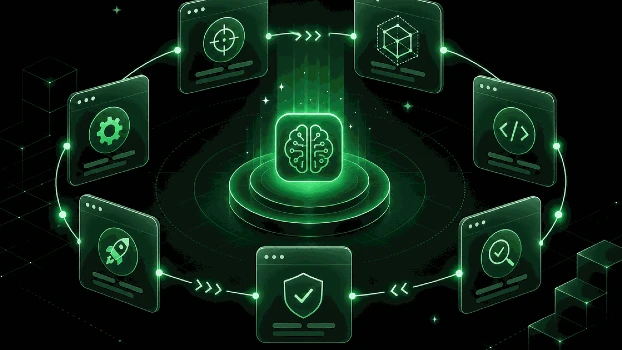
SAIL Framework: A Practical Guide for AI Security

The SAIL Framework from Pillar Security is a seven-phase, lifecycle-oriented method for securing AI systems. The phases are AI policy and safe experimentation, AI asset discovery, AI security posture management, AI red teaming, runtime guardrails, sandboxed execution for agents and MCP servers, and AI activity tracing. It argues for a "Shift Up" approach that protects the business logic AI controls, and it is meant to sit on top of existing standards.

Model Context Protocol
SAIL FrameworkPillar Securityprompt injection+3

AI Security, GRC· Added 29 Oct 2026

oversecured.comarticle🛡️ Security

What changed when mobile security stopped being theoretical

An Oversecured Head of Engineering, coming from 20 years of web work, describes four mobile security risks that became concrete after seeing real production apps. These are old vulnerable binaries that stay installed after a fix, secrets embedded in client code, Keychain/Keystore guarantees that are weaker than assumed with tokens leaking via logs, and deep links or exported components acting as public endpoints. It ends with advice: test the shipped artifact, verify the full data lifecycle, and build server-side containment.

AndroidiOSOversecured
deep linkscustom URL schemesApp Links+5

Mobile Security, AppSec· Added 29 Oct 2026

blog.talosintelligence.comarticle🛡️ Security

A quiet week in infosec <.<

Cisco Talos Threat Source newsletter for the week of the PHP and Node.js vulnerability news cycle. It summarises NIK C2, a Go-based Windows implant that dumps credentials, streams keystrokes, deploys screen-locking ransomware and uses a victim's hijacked OpenAI API keys to analyse stolen data. It also lists weekly headlines (CISA KEV PHP bugs, Brotli flaw, Gheist GitHub token theft), Talos links and top malware hashes.

GoWindowsOpenAI+3
NIK C2PHP2ShellNode2Shell+7

Threat Intel, AI Security· Published and added 29 Oct 2026

endorlabs.comarticle🧠 AI

What is an AIBOM? AI bill of materials explained for security teams | Endor Labs

An AIBOM is a machine-readable inventory of models, datasets, dependencies, AI services, agents and MCP servers, with evidence of origin, license, integrity and evaluation. The Endor Labs explainer walks through a worked CycloneDX example for a fine-tuned support assistant. It compares CycloneDX ML-BOM, SPDX 3.x, the OWASP AIBOM project and the May 2026 CISA/G7 guidance, and lists what an AIBOM cannot show: runtime behavior and agent actions.

CycloneDXSPDXSBOM+5
Endor LabsOWASPCISA+3

ai-policy, ai-infra· Published and added 29 Oct 2026

endorlabs.comarticle🛡️ Security

What is an AIBOM? AI bill of materials explained for security teams | Endor Labs

AIBOM explainer from Endor Labs: an AI bill of materials is a machine-readable inventory of models, datasets, dependencies, AI services, agents and MCP servers, with origin, license and integrity evidence. It walks through a CycloneDX entry for a fine-tuned model, compares CycloneDX ML-BOM, SPDX 3.x, the OWASP AIBOM Generator and the May 2026 CISA/G7 minimum-elements guidance, and lists a six-step build process. It also states what an AIBOM cannot show: model safety, runtime behavior and coding-agent actions.

CycloneDXSPDXSBOM+2
EU AI ActISO/IEC 42001CISA+5

Supply Chain, AI Security, GRC· Published and added 29 Oct 2026

endorlabs.comarticle🛡️ Security

ADLC metrics: How to measure agentic development security | Endor Labs

ADLC metrics is an Endor Labs guide to measuring security in the agentic development lifecycle, where AI coding agents write much of the code. It defines formulas across five categories: AI supply chain visibility, agent action security, agent-generated code, package risk and developer flow. It argues for normalizing findings per merged change, tracking pre-execution blocks, and building a six-to-eight metric scorecard.

Claude CodeCodexCursor+3
ADLCOWASP Top 10 for LLM ApplicationsAgent Security League+4

AI Security, AppSec, DevSecOps· Published and added 29 Oct 2026

endorlabs.comarticle🧠 AI

ADLC metrics: How to measure agentic development security | Endor Labs

ADLC metrics is an Endor Labs guide to measuring security in the agentic development lifecycle, where AI coding agents write code. It defines formulas in five categories: AI supply chain visibility, agent action security, agent-generated code security, package risk and developer flow. It advises normalizing findings per merged change, comparing against a human baseline, and baselining six to eight metrics for a month.

Claude CodeCodexCursor+4
Endor LabsAURIOWASP+4

coding-agents, ai-policy· Published and added 29 Oct 2026

eprint.iacr.orgpaper🛡️ Security

Beyond the Event Horizon of Keccak, Extending the Observation from 2011 and applications

Beyond the Event Horizon of Keccak extends a 2011 observation that a path in the Keccak sponge from a zero-capacity state back to one yields infinite second-preimage families. Three theorems cover loops from any capacity value x, k-block loops and cycles, and Joux-style multicollisions with search cost independent of k. Verified examples run on Keccak-f[200] and Keccak-f[1600] with c=32; it also proposes bridge-based protocols.

KeccakSHA-3Lean
Danilo GligoroskiJoux multicollisionssecond preimages+2

other· Published and added 28 Oct 2026

arxiv.orgpaper🧠 AI

CALM: Conflict-Aware Lifecycle Memory Governance for Long-Horizon Language Agents

CALM is a conflict-aware lifecycle memory governance framework for long-horizon language agents. It turns records into evidence-grounded memory cells, updates their validity and lifecycle states from support, conflict and dependency signals, and admits evidence at query time through training-free or learned gating based on temporal applicability. It beats baselines on LongMemEval-S and LoCoMo with Qwen and GPT backbones, and keeping superseded records helps earlier-state reasoning.

LLMQwen
CALMLongMemEval-SLoCoMo+1

agents, research· Added 30 Oct 2026, published 28 Oct 2026

endorlabs.comarticle🛡️ Security

How to evaluate ADLC security solutions: A buyer's checklist | Endor Labs

Buyer's checklist from Endor Labs for evaluating security tools in the agentic development lifecycle (ADLC), where AI coding agents write code and take actions such as package installs, CI edits and tool calls. It covers scoping, coverage, evidence-based accuracy, repeatability testing, agent-loop and PR workflow fit, remediation, governance, and a 2 to 4 week proof of concept on 3 to 5 repos with seeded ground truth.

Endor LabsAURIModel Context Protocol+3
ADLCIDORNIST SSDF+1

AppSec, AI Security, DevSecOps· Published and added 28 Oct 2026

huggingface.copaper🧠 AI

Trial by Trace: Benchmarking AI Agent Harnesses for Reliability and Failure Attribution

TraceTrial-Bench is a benchmark that scores agent task performance and agent harness reliability separately. It has 95 mechanism-oriented tasks across seven components: context, execution, governance, lifecycle, observability, tools and verification. Across 4 harnesses, 9 models and 3,420 runs, macro-averaged harness scores range from 59.8% to 72.0%, and 31.1% of runs succeed despite failing at least one harness criterion.

LLMHugging Face
TraceTrial-Bench

evals, agents, research· Added 27 Oct 2026

ethereum-magicians.orgthread🛡️ Security

Draft ERC: Agent Safety Framework (ASF) — a registry of versioned safety specifications and of the scoped, attributable adoption relations that bind agents to them

Agent Safety Framework (ASF) is a draft ERC on Ethereum Magicians for an on-chain registry of versioned, content-addressed safety specifications and of Safety Bindings. A binding records that an adopter accepted one pinned spec version for a subject and scope, with declared enforcement locations, named interveners and a lifecycle (Active, five Suspended restrictions, Terminated). A check(requirement, bindingIds) call returns Satisfied, NotSatisfied or Unknown, and Unknown never counts as satisfied. Reference consumers ASFGuardedAccount and ASFTaskTenderAdapter come with 73 tests, 47 of them negative.

EthereumAnvil
Agent Safety FrameworkASFGuardedAccountASFTaskTenderAdapter+3

Identity & Access, AI Security· Published and added 25 Oct 2026

x.comthread🧠 AI

Gökdeniz Gülmez (@ActuallyIsaak) on X

An X post showing how to have Codex train a small model on Apple silicon through the mlx-lm-lora MCP server and skill. It gives five setup steps (pip install with the mcp extra, npx skills add, locate mlx-lm-lora-mcp, codex mcp add). The prompt runs four pre-training trials on tiny-random/qwen3 with the mlx-community/recycling_the_web-1k dataset. Codex picks the optimizer and learning rate itself, and the result is a table with validation loss and the best adapter path.

CodexMLXModel Context Protocol+5
mlx-lm-loraGoekdeniz-Guelmeztiny-random/qwen3+2

training, mcp, coding-agents· Added 25 Oct 2026, published 24 Oct 2026

endorlabs.comarticle🧠 AI

What is the AI-Native SDLC? AI SDLC, AI-DLC, and ADLC Explained | Endor Labs

The AI-native SDLC is a software lifecycle redesigned around AI and coding-agent participation, as opposed to the AI-assisted SDLC, which adds AI tools to unchanged stages. The Endor Labs guide separates AI-DLC (the AWS methodology), AI SDLC and the two meanings of ADLC (Agentic vs Agent Development Lifecycle). It also covers stage-by-stage changes and AppSec implications: AI-generated code flaws, dependency choice, reachability analysis and governing agent actions.

AWSstatic analysis
Endor LabsIBMAtlan+3

ai-policy, coding-agents· Published and added 23 Oct 2026

latent.spacearticle🧠 AI

AI Is Getting Good at Math. Here’s Why.

The essay argues that LLMs solve open math problems because they search depth first, and automated verifiers make failed attempts cheap. It uses WT Gowers' hint-sequence complexity (2^k + t), adds a branching factor b, and walks through OpenAI's unit-distance disproof and Cycle Double Cover prompt as a drafter/solver/verifier harness. It predicts AI does best where k and b are small.

LLM
OpenAIAnthropicLatent Space+12

research, agents· Published and added 23 Oct 2026

enisa.europa.euadvisory🛡️ Security

ENISA Technical Advisory for Software Bill of Materials

ENISA Technical Advisory for Software Bill of Materials (October 2026, TLP:CLEAR) is non-mandatory guidance for organisations, especially SMEs, starting SBOM adoption. It covers SBOM data models (CycloneDX, SPDX), a mapping of BSI TR-03183-2 fields to CISA minimum elements, lifecycle and CI/CD integration, an SBOM threat model, and security recommendations. It supports Cyber Resilience Act obligations but is not a legal interpretation.

SBOMCycloneDXSPDX
ENISAEU Cyber Resilience ActBSI TR-03183+4

Supply Chain, GRC· Added 23 Oct 2026

enisa.europa.euadvisory🛡️ Security

ENISA Technical Advisory for Software Bill of Materials

ENISA Technical Advisory for Software Bill of Materials is practical guidance on SBOM adoption for organizations, especially micro, small and medium enterprises and open-source stewards. It sets out an SBOM implementation architecture and data flows across a defined lifecycle, an indicative SBOM threat model with targeted risks, and measures for the SBOM ecosystem. It aligns with the ENISA Secure by Design and Default Playbook and supports Cyber Resilience Act compliance.

SBOM
ENISAEU Cyber Resilience ActENISA Secure by Design and Default Playbook

Supply Chain, GRC· Added 23 Oct 2026

arxiv.orgpaper🧠 AI

Causal Chain of Thought: Mitigating Attention Leakage via Context Isolation

CausalCoT is an inference framework that splits a problem into a directed acyclic graph of atomic sub-questions and evaluates each node in an isolated context holding only its direct causal parents. This removes attention paths to non-parent content, so intermediate steps drive the answer rather than leaking from global context. It keeps benchmark accuracy competitive and raises causal sensitivity of reasoning steps by 12 points on average, up to 21, over the strongest baseline. The graph also allows test-time corrections that propagate downstream.

LLMTransformer
arXiv

research, prompting· Added 24 Oct 2026, published 22 Oct 2026

eprint.iacr.orgpaper🛡️ Security

Graphs and cycles in curve-based collision walks

Graphs and cycles in curve-based collision walks is an IACR ePrint paper (2026/2560) on van Oorschot-Wiener style collision attacks in the multi-user setting. It covers elliptic curve discrete logarithms and isogeny pathfinding on supersingular F_p^2 and F_p curves, and proposes new pseudorandom walks. For F_p^2 curves, L keys need about L + log(L) useful collisions with no infiltrator. For F_p curves, about 0.75L keys fall to L collisions with an infiltrator.

van Oorschot-Wienerisogeny pathfindinginfiltrator+1

other· Added 21 Oct 2026, published 20 Oct 2026

eprint.iacr.orgpaper🛡️ Security

Efficient Fixed-Point Implementation of Mitaka

Presents a fixed-point C implementation of the Mitaka signing algorithm, a simpler, parallelizable Falcon (FN-DSA) variant. It replaces MitakaZ's wide integral Gram root decomposition with a fixed-point square Cholesky decomposition, which cuts the cost of integer Gaussian sampling, and proves bounds on intermediate values and representation errors without empirical assumptions. Signing averages 361 kcycles (Mitaka-512) and 707 kcycles (Mitaka-1024) on AVX2, and 4.0 and 7.8 Mcycles on an STM32F411 Cortex-M4F. This makes floating-point-free lattice signatures practical on constrained devices.

MitakaFalconC+1
MitakaZFN-DSAGaussian sampling+1

other· Published and added 17 Oct 2026

eprint.iacr.orgpaper🛡️ Security

SLEEK: Sparse Quasi-Cyclic Codes with Closed-Form DFR Key Encapsulation

Introduces SLEEK, a QC-MDPC code-based KEM using a three-iteration parallel bit-flipping decoder and a closed-form decoding-failure-rate (DFR) estimate, enabling parameters with analytically bounded failure probability and standard IND-CCA transforms. SLEEK-LT targets IND-CCA for long-term keys; SLEEK-E targets IND-CPA for ephemeral keys using a new QC key structure with security equivalent to QC-MDPC and cheaper key generation. Parameter sets cover 80/128/192/256-bit security, and the optimized AVX2 implementation gives ciphertexts 4.9x smaller than HQC (47% slower) and 1.3x–2.7x faster than BIKE.

AVX2
SLEEKSLEEK-LTSLEEK-E+5

other· Added 17 Oct 2026, published 16 Oct 2026

eprint.iacr.orgpaper🛡️ Security

Sparse Secrets, Dense Problems: Efficiently Masking HQC in Hardware

ePrint paper presenting the first fully masked hardware implementation of HQC (key generation, encapsulation, decapsulation) on FPGA. It introduces a mixed Boolean/arithmetic masking for sparse-dense vector multiplication, proven first-order secure in the transition- and glitch-robust probing model and PINI-composable, at only 3% extra cycles and 81 random bits per cycle. It also shows a profiled horizontal side-channel attack on Rotate-and-Add multipliers that recovers support indices within ±8 positions from 200 traces despite TVLA showing no leakage after 10 million traces, and adds integrated hiding countermeasures costing 1.7% latency.

HQCML-KEMFPGA+1
PINITVLAhorizontal side-channel attack+2

Hardware & RF· Added 17 Oct 2026, published 16 Oct 2026

endorlabs.comwriteup🛡️ Security

SBOM vs. SBOM: Comparing SBOMs from Different Tools and Lifecycle Stages | Endor Labs

Case study running three open source SBOM generators (two generic, one Maven plugin) on Eclipse Steady 3.2.5 rest-backend at three lifecycle stages (git clone, Maven package, Docker image), yielding 8 CycloneDX SBOMs. Compares precision/recall against the mvn dependency:tree ground truth and finds the Maven-integrated tool perfect (1.0/1.0) while generic tools miss versions, groupIds and transitive dependencies. It also shows PURL qualifier differences (e.g. type=jar, apt qualifiers) make SBOMs hard to compare, test dependencies are indistinguishable, and argues for an SBOM generator benchmark.

SBOMCycloneDXMaven+3
Eclipse SteadyPackage URLNTIA+3

Supply Chain· Published and added 16 Oct 2026

endorlabs.comarticle🛡️ Security

SBOMs are Just a Means to an End | Endor Labs

A critique of the state of SBOM adoption, written by a CISSP product manager at Endor Labs. It argues that the NTIA minimum elements and the SPDX and CycloneDX specs don't require a package URL (purl), so name and version alone can't tell a Maven log4j-core from an npm or cargo package of the same name. It also notes that no spec defines build time, which makes transitive dependency resolution unreliable, and that generation tools place the same data in different fields. It adds that vendors have mixed incentives to ship SBOMs and that practices are immature, and it calls on standards bodies to define required data per prioritized use case.

SBOMSPDXCycloneDX+1
Executive Order 14028NTIANTIA Minimum Elements for an SBOM+2

Supply Chain, GRC· Published and added 16 Oct 2026

securityweek.comarticle🛡️ Security

Supermarket Refrigeration Attack Widens to Copeland, Dixell Controllers

ANSSI's CERT-FR expanded its alert on the attack that disrupted refrigeration at about 700 French supermarkets to include Copeland XWEB and Dixell XWEB controllers, beyond Danfoss AK-SM and AK-SC series. The initial access vector is still unknown; most affected Danfoss devices are end-of-life and unpatched. Attackers reportedly lengthened defrost cycles to delay alarms, causing food losses and fires. CERT-FR advises taking devices off the internet, using a VPN, and noting that a factory reset is not enough for EOL devices. Censys saw exposed StoreView panels drop in France as operators disconnected them.

Danfoss AK-SMDanfoss AK-SCCopeland XWEB+3
ANSSICERT-FRClaroty+8

Hardware & RF, Threat Intel· Published and added 15 Oct 2026

nachi065.github.ioother🛡️ Security

AI Security Wiki: Governance, Risk, Standards and Test Cases

A vendor-neutral AI Security Wiki acting as an implementation layer for enterprise AI adoption: risk methodology, AI risk register, control objectives library, domain standards (browser/IDE AI, runtime apps, agentic AI, sovereignty), vendor evaluation framework, and audit/evidence checklists. It includes a 653-case product evaluation test library across 17 lifecycle layers and 6 emerging domains, plus regulatory hubs for GCC, EU, Australia, Brazil, Canada, China, India, Japan, Singapore, South Korea, UK and US, and crosswalks to FINOS AIGF, NIST AI RMF, ISO/IEC 42001, OWASP, MITRE ATLAS, ISO 27001 and others. Useful as a template and evidence source for teams building AI governance and assurance programmes.

FINOS AI Governance FrameworkNIST AI RMFISO/IEC 42001+8

GRC, AI Security· Added 15 Oct 2026

huggingface.coarticle🧠 AI

HiRO-ACEv2: Simulating extreme weather at 3 km resolution for a fraction of the cost

Ai2 announces HiRO-ACEv2, an update to its AI climate emulator. ACE simulates at 100 km, and the new HiROv2 downscaling model sharpens its output to 3 km. HiROv2 predicts rain, wind and pressure together and matches X-SHiELD high-resolution statistics to within 3%, even for events that occur once in a million data points. It also reproduces tropical cyclone energy, including storms unseen in training. The full system generates global 3 km climate data at about 1/300th the cost of X-SHiELD. Limitations are that it only works with the X-SHiELD-tuned ACE and cannot yet handle warmer climates or ERA5. Models, tutorial notebooks and a web demo are available.

HiRO-ACEACEX-SHiELD
Ai2HiRO-ACEv2HiROv1+3

models, research· Published and added 14 Oct 2026

securityweek.comarticle🛡️ Security

US Arrests Two in Crackdown on North Korean IT Worker Laptop Farms

SecurityWeek reports on the arrest of two US nationals (Michael James Bostelle, Juan Cecilio Pena Carrillo) for running laptop farms that helped North Korean IT workers get remote jobs at over 70 US companies, generating more than $3M between 2019 and July 2025. It covers the FBI's Operation Lonestar Roundup (40 Texas locations searched, 187 laptops and KVMs seized). It also covers CrowdStrike's Famous Chollima analysis of shipping-diversion tricks and evolving evasion (hidden RMM tools, spoofed device hashes), and the FBI's 'identity in depth' guidance for spotting ITWs across the employment lifecycle.

CrowdStrikeVPN
Famous ChollimaDPRKOperation Lonestar Roundup+5

Threat Intel, Blue Team & Detection· Published and added 14 Oct 2026

huggingface.copaper🧠 AI

AgentSWE: Can Coding Agents Build the Agent You Actually Want?

AgentSWE is a benchmark of 25 tasks covering the agent development lifecycle: Creation of an agent from a natural-language requirement, Editing of production agent codebases, and Optimization toward a measurable target. Builders iterate on a few illustrative cases, then the frozen submission is graded on held-out cases with requirement-derived rubrics and hard pass/fail gates. Across coding agents, models and harnesses, none comes close to delivering the requirement. Recurring failures include overfitting to visible cases, hollow runtimes behind code that looks complete, and unsupported claims of completion.

AgentSWEHugging Face

evals, coding-agents, agents· Added 13 Oct 2026

rapid7.comadvisory🛡️ Security

Ivanti Connect Secure zero-day exploited in the wild (CVE-2026-104935)

Rapid7 emergency-response analysis of CVE-2026-104935, a CVSS 8.6 authentication bypass by spoofing (CWE-290) in Ivanti Connect Secure that allows unauthenticated remote command execution. It was exploited as a zero-day against a limited number of customers, added to CISA KEV on disclosure day, and Volexity observed it chained with a still-unpatched privilege escalation flaw. Part of the fix shipped in 25.1.3.0 in July 2026, with backports to other supported versions pending. Rapid7 advises emergency patching outside normal cycles and hunting for compromise using Volexity's IOCs, since Ivanti has no reliable ones.

Ivanti Connect SecureVPNCVSS
CVE-2026-104935CWE-290CISA KEV+3

Threat Intel, Blue Team & Detection· Published and added 13 Oct 2026

Showing 30 of 152

Show more