Skip to content

170 results for β€œGo”

What you seeeverything
github.comrepo🧠 AI

Show HN: Farol – A risk map of a pull request for the person who approves it

farol is a free, MIT-licensed CLI and GitHub Action that runs after an AI code review and gives the human approver a risk verdict (fast track, quick review, careful review) and a 0-100 score for a pull request. It uses the TypeScript type checker, go/types and Python ast to trace which pages, APIs and jobs a change reaches, and it adds diff coverage, security findings and contract breaks. It never executes or sends code.

GitHub ActionsTypeScriptGo+10
farolClaude CodeWinnin

coding-agentsΒ· Added 26 Oct 2026, published 25 Oct 2026

github.comrepo🧠 AI

SnailSploit/Claude-Red

claude-red is an MIT-licensed library of offensive security skills for the Claude Skills system, planned at about 130 skills across 23+ categories (web, Active Directory, cloud, exploit development, EDR evasion and others). Each skill is a SKILL.md file that loads on conversational triggers, so unused skills cost no context. It installs by git clone, sparse checkout per category, install.sh or pasting into a system prompt.

ClaudeGitGitHub
Kai AizenSnailSploitSahar Shlichov

prompting, coding-agentsΒ· Added 22 Oct 2026

github.comrepoπŸ›‘οΈ Security

SnailSploit/Claude-Red

claude-red is a library of offensive security skills for the Claude Skills system, each a SKILL.md file that loads on conversational triggers (for example, mentioning SQL injection loads offensive-sqli). Categories include web, Active Directory, cloud, mobile, exploit development, fuzzing, privilege escalation, post-exploitation and AI. It targets about 130 skills across 23+ categories, with an install script and sparse-checkout install per category. Built on Sahar Shlichov's offensive checklists, MIT licensed.

ClaudeClaude CodeActive Directory
Kai AizenSahar ShlichovSnailSploit

Offensive Security, AI SecurityΒ· Added 22 Oct 2026

github.comrepo🧠 AI

OpenAI CLI

OpenAI CLI is OpenAI's official Go command-line client for the REST API. It lets users generate images, upload and download files, create and wait on batches, call the Responses API, and query admin usage endpoints from a terminal or shell script. It supports JSON, JSONL and YAML output, GJSON transforms, shell completion, and install via Homebrew, go install or release binaries.

OpenAI APIGoHomebrew+3
OpenAIGPT-5.5

ai-infra, llm-appsΒ· Added 23 Oct 2026, published 22 Oct 2026

x.comrepoπŸ›‘οΈ Security

Cyber DetectiveπŸ’™πŸ’› (@cyb_detective) on X

Python Cybersecurity Libraries is a curated GitHub list by Yogsec, shared in a post by cyb_detective. It groups Python libraries by task: network analysis, penetration testing, threat intelligence, reverse engineering and malware analysis, forensics and investigation, web application security, CTF, and machine learning for security. The tweet shows only the category names, not the individual libraries.

PythonGitHub
Yogseccyb_detective

Offensive Security, Blue Team & Detection, Malware & REΒ· Added 24 Oct 2026, published 21 Oct 2026

github.comrepo🧠 AI

vxcontrol/pentagi

PentAGI is an open-source, self-hosted multi-agent system that uses LLM agents to carry out penetration testing tasks autonomously. The MIT-licensed repo has a Go backend, a React frontend and GraphQL. It ships Docker Compose files for Langfuse tracing, Graphiti knowledge-graph memory and an observability stack. Topics list OpenAI and Anthropic as model backends.

GoReactGraphQL+5
PentAGIvxcontrolOpenAI+1

agentsΒ· Added 20 Oct 2026

github.comrepo🧠 AI

better-isms/grcskills

grcskills is a library of 60 plain SKILL.md files in the Agent Skills format, each describing how an experienced practitioner does one piece of governance, risk and compliance work. Examples are scope statements, risk registers, audit prep, vendor review and incident handling. Every skill names where the agent must stop and hand the decision to a person. Installs are pinned to reviewed release tags and checked by a validator.

Claude CodeCodexCursor+4
Better ISMSISMS CopilotNIST

prompting, agentsΒ· Added 20 Oct 2026

github.comrepoπŸ›‘οΈ Security

better-isms/grcskills

grcskills is an MIT-licensed library of 60 SKILL.md files (Agent Skills format) that let coding agents draft and prepare governance, risk and compliance work: scope statements, statements of applicability, risk registers, audit prep, vendor review, policies, privacy, incidents and continuity. Each skill names where the agent must stop so a person decides. Installs are pinned to release tag v2026.10.19.2, and a validator rejects network commands and credential paths.

Claude CodeCodexCursor+2
SOC 2PCI DSSNIST+2

GRCΒ· Added 20 Oct 2026

x.comrepo🧠 AI

Saylor (@Kev96790724) on X

G-Krusch is an MIT-licensed, local-first Google Workspace hub built on Node.js 22 and SQLite WAL. It runs a 12-tool MCP server (SSE and Stdio) plus a REST bridge on port 5446 for Drive, Calendar and Gmail. It includes a 1,024-dimension hybrid Drive RAG with an embedding cascade (Ollama bge-large, then Gemini, then offline fallback) and FTS5 BM25. PDF extraction returns page citations. Tokens are kept in an AES-256-GCM vault; 30 of 30 tests pass.

Model Context ProtocolNode.jsSQLite+5
G-KruschKrusch CompanionKruschNexus+1

mcp, llm-apps, coding-agentsΒ· Added 21 Oct 2026, published 19 Oct 2026

github.comrepoπŸ›‘οΈ Security

OWASP/MCP-Security-Testing-Guide

OWASP MCP Security Testing Guide is a living, GPL-3.0 collection treating the Model Context Protocol as a security boundary from user through model, MCP client, MCP server and tool to the target system. It covers threats, secure development, host/client controls, supply chain, enterprise gateways, detection, incident response, taxonomy, public incidents, case studies and review checklists, with 79 tests in Chapter 3 (sections 3.1–3.19). It includes a finding template, and it links the MCP Goat lab for safe practice. It is useful to AppSec, red team and SOC people assessing MCP deployments.

Model Context ProtocolLLM
OWASPMCP Goat

AI Security, AppSecΒ· Added 17 Oct 2026

github.comrepo🧠 AI

Show HN: Graphicle, a Rust port of Graphify with memory for coding agents

Graphicle is a local-first Rust program that parses a repository into a tree-sitter code graph (a port of Graphify) and adds project memory: docs, reviewed decisions and captured Claude Code/Codex sessions. It serves cited file-and-line excerpts within a token budget via one MCP server, CLI and browser app, backed by a single SQLite file, with no API key or telemetry. The README reports a code-only extract on Kubernetes (31k files) in 3m18s versus 26m38s for Graphify 0.9.88, and a memory comparison against seven systems. Agent-proposed memories need user approval and go stale when the code they reference changes.

RustModel Context ProtocolSQLite+12
GraphicleGraphifyKarLex AI+2

coding-agents, mcp, llm-appsΒ· Published and added 14 Oct 2026

huggingface.corepo🧠 AI

google/embeddinggemma-2

Model card for EmbeddingGemma 2, an open (Apache 2.0) 740M-parameter multimodal embedding model from Google DeepMind built on Gemma 4. It maps text, code, images, video and audio into one 768-d space, with a 270M text backbone and optionally loadable 170M vision and 300M audio encoders, an 8K context, and Matryoshka truncation to 128/256/512/768 dims. The card gives practical guidance: task instruction prefixes, re-normalising after truncation, avoiding float16 (NaN or degraded embeddings), interleaved multimodal inputs with placeholder tokens, and vision token budgets. It targets on-device search, RAG, classification and clustering.

Hugging FaceTransformerssentence-transformers+5
EmbeddingGemma 2Google DeepMindGemma 4+1

models, multimodal, llm-appsΒ· Added 12 Oct 2026

github.comrepo🧠 AI

bilawalsidhu/gods-eye-view

God's Eye View is an open-source, vanilla JavaScript + CesiumJS + Vite 3D globe that fuses live public feeds (aircraft, ships, satellites, quakes, public cameras, weather) into one explorable scene. Its AI layer is a hands-free voice agent on the OpenAI Realtime API with 30 tools: camera fly-to, whiteboard annotations, analyst queries over live layers, and scene-context and screenshot grounding. Keys stay server-side and the browser gets only a short-lived session token. An experimental ChatGPT/Codex OAuth path is also supported. The app doubles as an MCP server, so Claude Desktop, Codex or ChatGPT can open the globe from a conversation.

OpenAI APIModel Context ProtocolCesiumJS+8
God's Eye ViewBilawal SidhuHalfpixel+2

llm-apps, mcp, multimodalΒ· Added 11 Oct 2026

github.comrepoπŸ›‘οΈ Security

bilawalsidhu/gods-eye-view

God's Eye View is an open-source, vanilla-JavaScript CesiumJS and Vite client that puts live aircraft, ships, satellites (SGP4), earthquakes, fires, public CCTV and mapped ALPR cameras on one photorealistic 3D globe. It adds cockpit tracking, FLIR/NVG sensor shaders and a voice agent built on the OpenAI Realtime API. It works without API keys, and the docs cover server-side key brokering with SSRF protection, localhost binding and a SECURITY.md threat model. For OSINT/GEOINT practitioners it is a hackable base for fusing public signals, with an explicit rule against person-tracking features.

CesiumJSOpenAIPinokio+3
SGP4ADS-BAIS+4

OSINTΒ· Added 11 Oct 2026

github.comrepo🧠 AI

argoproj-labs/mcp-for-argocd

TypeScript MCP server for Argo CD that lets MCP clients (Cursor, VS Code, Claude Desktop) list, inspect, create, update, delete and sync applications, read logs and events, and run resource actions through natural language. It supports stdio and HTTP stream transports, with a stateless mode for multi-replica Kubernetes deployments. The security design is detailed: API tokens are read only from env vars or headers and never from tool arguments, the default token is bound to the default base URL, a per-host token registry covers extra instances, a read-only mode disables write tools, and the HTTP listener binds loopback by default and requires an inbound auth token if exposed.

Model Context ProtocolArgo CDNode.js+7
Akuity

mcpΒ· Added 10 Oct 2026

github.comrepo🧠 AI

Show HN: Edi Life OS – self-hosted life dashboard with an MCP server for AI

Edi Life OS is a self-hosted dashboard (PHP 8.1+, MySQL, vanilla JavaScript) that combines focus timer, habits, goals, Kanban tasks, finances and notes in ten workspaces. It includes an optional Node.js MCP server that exposes 15 tools over stdio. The tools let Claude Desktop, Claude Code or Codex read the dashboard, create goals and tasks, log habits and record expenses. The MCP server calls only the app's bearer-token /api/v1 HTTP API and never touches the database or credentials. The README is candid about limits: the token has no scopes, there is no app-level rate limiting, and the secret-note flag is only a visibility setting, not encryption.

Model Context ProtocolNode.jsPHP+6
Edi Life OSOpen-MeteoEdris Ranjbar

mcpΒ· Published and added 9 Oct 2026

github.comrepoπŸ›‘οΈ Security

trhhubsd/ARTEX

ARTEX is an AGPL-3.0 autonomous penetration-testing system with a Go backend and Next.js frontend, backed by PostgreSQL. A planner agent and parallel worker agents share a global asset graph and a per-task exploration graph, with human-in-the-loop approval, a MITM traffic-recording proxy, ScopeSentry asset sync, vulnerability retesting and a shared todolist for multi-step attack chains. The README claims a Baidu agent+ attack-defense challenge win and limits use to local isolated labs.

GoNext.jsPostgreSQL+3
ARTEXBaidu agent+ attack-defense challengenorma SDK+2

Offensive Security, AI SecurityΒ· Added 27 Oct 2026, published 8 Oct 2026

github.comrepoπŸ›‘οΈ Security

chainguard-dev/malcontent

malcontent is Chainguard's open-source malware/supply-chain discovery tool that analyzes binaries (ELF, Mach-O, PE, a.out) and scripting-language source across Linux, macOS and Windows using 14,500+ YARA rules (including third-party rules from Avast, Elastic, FireEye, Mandiant, Nextron and ReversingLabs). Its standout feature is differential analysis ("mal diff"), which compares two versions of a build artifact or OCI image against a known-good baseline to surface newly introduced risky behaviors β€” the technique the project demonstrates on the 3CX supply-chain compromise by flagging unexpected high-risk changes to libffmpeg. It also supports threshold-based scanning ("mal scan") and unfiltered capability enumeration ("mal analyze"), and is designed to run inside CI/CD pipelines, including air-gapped environments via embedded rules.

YARAGoRust+4
3CX Compromise

Supply Chain, Malware & RE, Blue Team & DetectionΒ· Added 8 Oct 2026

github.comrepoπŸ›‘οΈ Security

target/strelka

Strelka is Target's open-source, container-based real-time file scanning system for threat hunting, threat detection, and incident response, built in Go and Python. It runs 50+ scanners (YARA, PE parsing, encrypted ZIP cracking, entropy analysis, etc.) to extract metadata and content from files at enterprise scale, which can feed a SIEM for alerting on suspicious artifacts like an Emotet-laden encrypted ZIP payload.

DockerGoPython+1
Laika BOSSEmotet

Blue Team & DetectionΒ· Added 8 Oct 2026

github.comrepo🧠 AI

Port of the TypeScript compiler, checker and lsp to Rust, by LLM

ts-rust (npm package tsc-rs) is a from-scratch Rust port of Microsoft's TypeScript compiler/checker/language server (typescript-go), produced almost entirely by LLM coding agents rather than hand-written. The author first spent over $400,000 in API tokens running GPT-5.6 Sol and GPT-6 Astra in long agentic '/goal' loops, which wrote 1.3M lines of Rust but plateaued at ~84% compatibility; switching to Claude Opus 5.5 produced a working version in 10 hours and, after ~$24,000 of further API spend over two weeks, reached 100% compatibility on tested real-world projects while passing all 181,711 ported Go baseline tests. Benchmarks show the Rust port running about 1.6x faster than the Go tsc 7 compiler (though slower than Bun's native `bun check`) across dozens of open-source codebases including VS Code, TanStack Query, Sentry and T3 Code.

RustTypeScriptGo+5
Claude Opus 5.5GPT-5.6 SolGPT-6 Astra+2

coding-agentsΒ· Published and added 8 Oct 2026

vulnerablemcp.inforepoπŸ›‘οΈ Security

The Vulnerable MCP Project β€” MCP vulnerability database

The Vulnerable MCP Project is a curated, continuously growing database of security vulnerabilities and attack techniques specific to the Model Context Protocol ecosystem. Entries cover concrete CVEs (e.g. CVE-2025-68143/68144/68145 in Anthropic's mcp-server-git), transport-layer SDK flaws (cross-client response leakage, missing DNS rebinding protection in the official TypeScript/Python SDKs), unauthenticated/0.0.0.0-bound servers enabling RCE (MCPJam inspector, MCP Inspector, Grafana MCP), command/path injection in dozens of third-party servers (gemini-mcp-tool, mcp-server-kubernetes, Framelink Figma MCP, Zen MCP, filesystem-mcp), SSRF chains reaching cloud metadata (MarkItDown MCP, mcp-fetch-server), and a large set of AI-specific attacks: tool poisoning, trigger-phrase data exfiltration, prompt injection via GitHub issues, Jira and Google Docs, rug-pull tool mutation, and cross-server tool-name collisions. It functions as the de facto vulnerability registry for the MCP ecosystem, useful for tracking disclosed issues before patching or adopting third-party MCP servers.

Model Context ProtocolCursorKubernetes+3
CVE-2025-68143CVE-2025-68144CVE-2025-68145+3

AI Security, AppSecΒ· Added 6 Oct 2026

github.comrepo🧠 AI

Microsoft Agent Framework python-1.20.0 release

Release notes for python-1.20.0 of Microsoft's Agent Framework, an open-source agent/workflow orchestration library. This release adds native vector-store connectors for DuckDB, SQL Server and MongoDB plus a TypeSafe AI connector, redesigns Foundry hosting around request-scoped agent factories and sandbox-isolated sessions, adds computer-use support to Responses clients, and ships Magentic manager and handoff-routing improvements for multi-agent orchestrations alongside a large batch of MCP, Bedrock, Gemini, Anthropic and Ollama provider fixes.

Model Context ProtocolPythonDocker+7
MicrosoftMicrosoft Agent FrameworkDuckDB+4

agentsΒ· Added 6 Oct 2026

github.comrepo🧠 AI

browser-use/jev-ultrafast

jev-ultrafast is an open-source browser automation agent (from Browser Use) that represents each page as an indexed element table and uses a 'TypeSafe' policy to speculatively predict both the next operation (CLICK, TYPE_TEXT, SELECT, SCROLL, WAIT, DONE, BLOCKED) and its target in a single network round trip, only invoking a small LLM (e.g. inception/mercury-2.5 via OpenRouter) to generate text when the operation is TYPE_TEXT. The repo includes a local inspector UI, Chrome automation via a 'Browser Harness' tool, offline tests, and published before/after benchmarks showing a Google Flights search dropping from a median 9.45s to 7.09s and browser protocol calls from 1,092 to 101 across repeated runs.

PythonOpenRouterGemini+2
Browser UseJevTypeSafe+2

agentsΒ· Added 6 Oct 2026

x.comrepoπŸ›‘οΈ Security

Dark Web Informer (@DarkWebInformer) on X

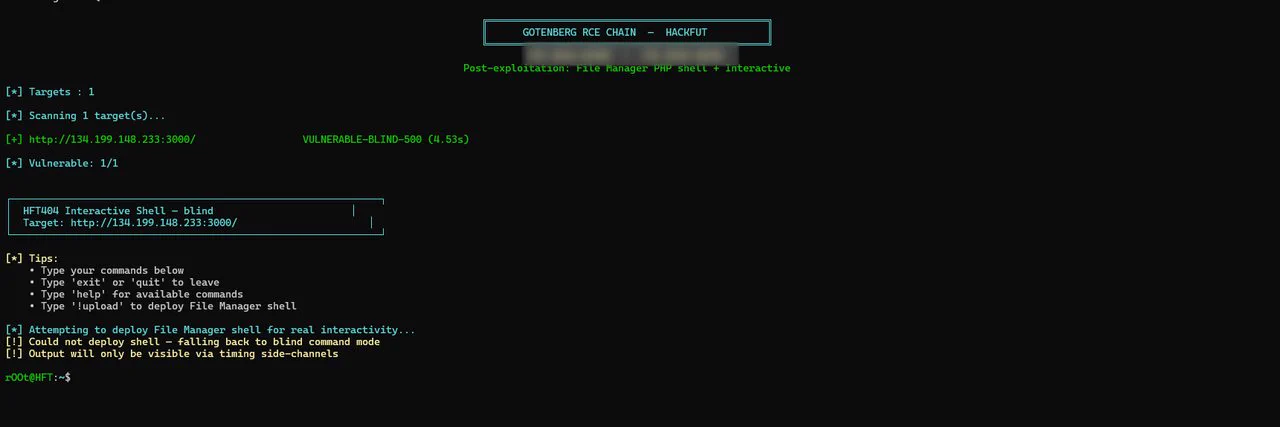
A public PoC chains CVE-2026-42589 and CVE-2026-40281 to achieve unauthenticated remote code execution against Gotenberg (a document/PDF-conversion microservice), abusing metadata injection flaws in the /forms/pdfengines/metadata/write endpoint. The tool supports vulnerability detection, interactive command execution, reverse shell delivery, and multi-target scanning against Gotenberg versions ≀8.30.1 (patched in 8.31.0).

Gotenberg
CVE-2026-42589CVE-2026-40281

Offensive Security, AppSecΒ· Published and added 5 Oct 2026

github.comrepoπŸ›‘οΈ Security

Sigma r2026-07-01 β€” 20 new detection rules

GitHub release notes for Sigma r2026-07-01, the open-source detection-rule repository, adding 20 new rules (e.g. LSASS crash via Netlogon buffer overflow CVE-2026-41089, TanStack supply-chain attack indicators for Windows/Linux, RedTail cryptominer user-agent detection, AF_ALG kernel crypto API exploit indicator) and updating/fixing dozens of existing rules for ARM64 binary variants, file-sharing domain IOCs, and WMI-based reconnaissance/persistence detection. It's a routine but substantive update to a widely-used blue-team detection content pack.

SigmaWMISysmon+3
CVE-2026-41089RedTail

Blue Team & Detection, Supply ChainΒ· Added 3 Oct 2026

github.comrepo🧠 AI

Show HN: Made an open-source Lego AI generator

ldraw-nova is an open-source agentic pipeline where an LLM agent (tested with models like Claude Opus 5.5 and GPT-6 Astra) takes a build prompt, reads LDraw-building instructions, and produces a plan.json describing a model's geometry. From that plan it writes a Python generator script that, when executed, outputs an LDraw (.mpd) 3D CAD source file, viewable in 3D/VR (Meta Quest 3) or exportable to Blender-editable glTF. The agent uses jev-rerank, a semantic search tool with reranking backed by TypeSafe's Jev System One model, to find suitable LEGO parts and example models, falling back to full-text search without an API key; it also uses headless rendering and collision/gap detection to self-inspect and iterate on designs.

DockerPythonBlender+2
TypeSafeJev System Onejev-rerank+13

agents, multimodalΒ· Added 3 Oct 2026, published 2 Oct 2026

github.comrepo🧠 AI

Microsoft Agent Framework β€” python-1.20.0 release

Release notes for Microsoft's Agent Framework (Python and .NET SDKs), covering versions python-1.16 through python-1.20 and dotnet-1.19 through dotnet-1.23. Changes span native vector-store connectors (MongoDB, Qdrant, PostgreSQL/pgvector, DuckDB, SQL Server, Azure Cosmos DB, Azure AI Search), Foundry hosting redesigns around request-scoped agent factories and durable Invocations, MCP skill/session security hardening (approval binding, security labels, ZIP-only skill archives), Magentic multi-agent orchestration and handoff routing, and checkpoint/replay correctness fixes across workflows.

PythonModel Context ProtocolMongoDB+10
MicrosoftTypeSafe AIMistral+1

agents, mcpΒ· Added 2 Oct 2026

github.comrepo🧠 AI

Bifrost (Maxim AI) β€” open-source LLM gateway

Bifrost is an open-source, high-performance LLM gateway (by Maxim AI) that exposes a single OpenAI-compatible API across 23+ providers including OpenAI, Anthropic, AWS Bedrock, Google Vertex, Azure, Cohere, Mistral, and Ollama. It provides automatic failover, load balancing, semantic caching, Model Context Protocol (MCP) tool integration, budget and governance controls, OIDC user provisioning, and Prometheus-based observability, deployable via npx or Docker with claimed sub-15 microsecond overhead at 5,000 RPS. It is positioned as a drop-in replacement requiring only a base-URL change for existing OpenAI, Anthropic, or GenAI SDK code.

DockerGoModel Context Protocol+4
Maxim AI

ai-infra, mcpΒ· Added 2 Oct 2026

github.comrepoπŸ›‘οΈ Security

renato-osec/goonfi-v2-decompiled

goonfi-v2-decompiled holds byte-identical reconstructed Rust source for the GoonFi V2 Solana program goonuddtQRrWqqn5nFyczVKaie28f3kDkHWkHtURSLE, as deployed at slot 448984043. The on-chain program was upgraded on 6 October 2026 to fix reported bugs. VERIFY.sh builds with Solana platform-tools v1.48 and compares the result to the deploy transaction's loader buffer writes. The page does not describe the bugs.

SolanaRustCargo
GoonFi V2goonuddtQRrWqqn5nFyczVKaie28f3kDkHWkHtURSLE

Malware & REΒ· Added 22 Oct 2026, published 2 Oct 2026

github.comrepoπŸ›‘οΈ Security

AI-Infra-Guard (A.I.G) β€” Tencent Zhuque Lab

AI-Infra-Guard (A.I.G) is Tencent Zhuque Lab's open-source AI red-teaming platform combining AI infrastructure vulnerability scanning (2000+ CVE rules covering vLLM, llama.cpp, LangFlow, n8n, MLflow and 145+ other AI components), MCP server/skill security scanning, LLM API poisoning detection, and multi-turn jailbreak evaluation (Many-Shot, PAIR, GOAT, ActorAttack). It ships CLI tools (skill-scan, mcp-scan, agent-scan), a Docker-deployed web UI, and has produced original research including FORGE-Bench (loss-of-control benchmark), RogueHandoff-20, and SkillJack (persistent skill backdoors), with talks at Black Hat Europe 2025 on MCP security.

Model Context ProtocolDockervLLM+3
SkillTrustBenchFORGE-BenchRogueHandoff-20+2

AI Security, Offensive SecurityΒ· Added 30 Sep 2026

Showing 30 of 170

Show more