Skip to content

85 results for โ€œOSIโ€

What you seeeverything
rekt.newswriteup๐Ÿ›ก๏ธ Security

Rekt - Duelbits - Rekt

Duelbits is a crypto casino that lost an estimated $6.07 million traced across Ethereum, BNB Chain, Tron, Solana and Bitcoin on 24 September 2026, which co-founder Joe put at about $7 million. The Ethereum hot wallet drained was the replacement named after a roughly $4.6 million theft in February 2024. Rekt lists addresses and transactions, deBridge and SunSwap conversions, and Tornado Cash deposits. Duelbits has not published a root cause.

EthereumBitcoinSolana+3
Duelbitsprivate key compromiseScam Sniffer+8

Blockchain, Threat Intelยท Added 29 Oct 2026

oversecured.comwriteup๐Ÿ›ก๏ธ Security

Introducing MavenGate: a supply chain attack method for Java and Android applications | Oversecured Blog

MavenGate is Oversecured's research on hijacking Maven dependencies by buying expired domains behind groupIds on Maven Central and JitPack. It found 6,170 of 33,938 checked domains (18.18%) vulnerable, and tested the attack with its own com.oversecured:hello-world library. It lists defenses (Gradle verification-metadata.xml, PGP signatures) and proposes changes to repository signing.

MavenGradleMaven Central+3
MavenGateOversecuredSonatype+2

Supply Chain, Mobile Security, AppSecยท Added 29 Oct 2026

wiz.iowriteup๐Ÿ›ก๏ธ Security

Gheist: Attempted Scaled Abuse of Stolen GitHub Tokens Stumbles

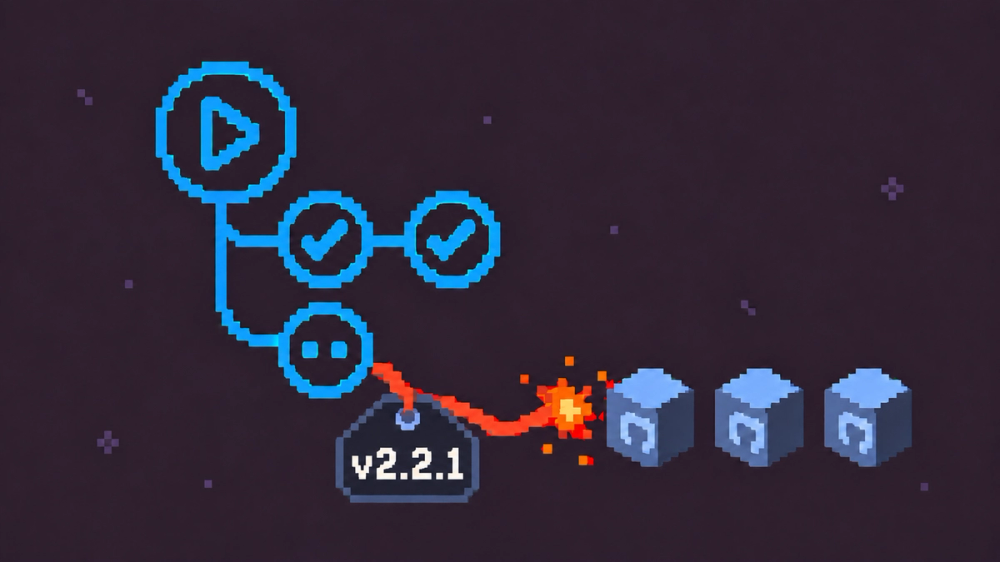
Gheist is a campaign tracked by Wiz Research since 15 September 2026 that uses stolen GitHub tokens to push a sync-check workflow on ci-sync-* branches in every reachable repository. The workflow prints base32-encoded secrets into logs, which the tool downloads through the GitHub API and then deletes. Over 13,500 branches from 850+ accounts were recovered. The post covers the two tool variants, a buggy self-hosted runner payload, GitHub's approval hold (which does not cover private repositories), overlaps with other campaigns, hunting queries, IOCs and hardening steps.

GitHubGitHub ActionsAWS+3
GheistGhostActionPolinRider+6

Threat Intel, DevSecOps, Blue Team & Detectionยท Published and added 25 Oct 2026

lynchlab.netwriteup๐Ÿง  AI

A 10-year-old CNN outperforms frontier LLMs for skin cancer diagnosis

A dermatologist tested GPT-6 Astra and Claude Fable 5.1 on 200 biopsy-proven lesions from MILK10k, giving each a clinical and a dermoscopic image. A CNN (Inception v3, fine-tuned for about twenty minutes on 68,011 ISIC images) named the right diagnosis for 62% of lesions, against 42% for both LLMs. The post lists caveats (small sample, single run, possible contamination) and links the cases, prompts, replies and scoring code.

CNNGPT-6 AstraClaude Fable 5.1+4
MILK10kInternational Skin Imaging CollaborationISIC Archive+2

evals, multimodalยท Added 26 Oct 2026, published 25 Oct 2026

socket.devwriteup๐Ÿ›ก๏ธ Security

New Evidence Shows LiteLLM Secret-Stealing Workflows Ran 11 Days Before Supply Chain Attack

Socket's Threat Research team reports that malicious cache.yml workflows ran in the BerriAI/litellm repository on 10 and 12 October 2026, eleven days before the 21 October release attack that published litellm==1.107.0. Each commit pushed to a short-lived ci-tmp-<hex> branch, then deleted it, sending base64-encoded CI secrets to webhook.site. Evidence comes from Actions metrics and environment deployment records; 20 secret names were exposed.

LiteLLMGitHub ActionsGitHub+3
ci-tmp branchescache.ymllitellm==1.107.0+6

Supply Chain, DevSecOps, Blue Team & Detectionยท Published and added 23 Oct 2026

huggingface.cowriteup๐Ÿง  AI

Train in Simulation, Deploy on a Real Robot: Microduck with Isaac Lab 3.0

Tutorial for training a walking policy for Microduck, an open-source bipedal robot from Pollen Robotics and Hugging Face, in NVIDIA Isaac Lab 3.0 with Newton. It covers RSL-RL training with the backlash preset, BAM actuator models and domain randomization, then ONNX export (61 observations, 14 joint-position actions) and deployment with robotctl. Policies can be shared on the Hugging Face Hub or tested in Microduck Arena.

Isaac LabNewtonMJWarp+7
NVIDIAPollen RoboticsMicroduck+2

trainingยท Published and added 21 Oct 2026

wiz.iowriteup๐Ÿ›ก๏ธ Security

LiteLLM Compromised, Steals Credentials

LiteLLM version 1.107.0 was uploaded to PyPI on 21 October 2026 with a credential stealer, and the same build reached GHCR and Docker Hub images. Wiz describes the three dropped files (cook.pth, cook.py, sitecustomize.py), exfiltration to a fake litellm.dev domain, a GitHub dead drop for a second stage, and the malicious commits pushed through the lookalike Berri-AI repository. The last safe version is 1.106.2.

LiteLLMPyPIDocker+3
Berri-AIcook.pthsitecustomize.py+2

Supply Chain, Threat Intel, AI Securityยท Published and added 21 Oct 2026

socket.devwriteup๐Ÿ›ก๏ธ Security

LiteLLM PyPI Package and Docker Images Compromised to Steal Cloud and AI Credentials

LiteLLM 1.107.0 on PyPI and GHCR images shipped Python startup hooks (cook.pth, sitecustomize.py) that steal cloud, SSH, browser and AI-tool credentials, including LiteLLM proxy database credentials. Image build provenance recorded a lookalike Berri-AI/litellm source repository. The post decodes the payload, encrypted exfiltration and GitHub-driven remote loader, and lists containment steps, MITRE ATT&CK mappings and IOCs.

LiteLLMPyPIPython+3
Berri-AIprivcollectcook.pth+12

Supply Chain, Malware & RE, Threat Intelยท Published and added 21 Oct 2026

blog.cloudflare.comwriteup๐Ÿง  AI

Cutting our inference bill by 68% by being obsessive about optimization

Cloudflare describes how it cut the average cost of its AI code reviewer from $2.43 to $0.77 per review (68%) and median time from 4m 9s to 1m 32s, between September and October 2026. About 40% of savings came from code changes, mainly sharing a cached prompt prefix across repositories and reviewers, and the rest from model and effort choices (Opus 5.5, Sonnet 5.5). Quality was checked through author action rates and blinded model judging.

OpenCodeClaudeCodex+3
AnthropicClaude Opus 5.5Opus 5+3

coding-agents, ai-infra, inferenceยท Added 29 Oct 2026, published 19 Oct 2026

blog.trailofbits.comwriteup๐Ÿ›ก๏ธ Security

Package managers have an integrity problem

Trail of Bits tested 25 popular package managers with a Docker and mitmproxy harness that simulates a compromised package repository injecting malware into legitimate packages. Fewer than half enforce lockfile hashes by default, only two verified every download, and only Go verifies signatures by default. The post covers lockfile hash pitfalls (Pub, pnpm, Conan, CocoaPods, Composer), repository, developer and Sigstore signing, and Go's checksum database. It also proposes lockfiles that commit to a signing identity plus a transparency log.

npmpnpmGo+3
Trail of BitsPEP 740cpanminus+5

Supply Chainยท Published and added 14 Oct 2026

opensourcemalware.comwriteup๐Ÿ›ก๏ธ Security

GhostAction Attack Escalates By Targeting GitHub Users

OpenSourceMalware's analysis of the latest GhostAction wave, where compromised GitHub accounts get malicious Actions workflows (security-audit.yml) injected across every writable repository, including an Oct 8 sweep of 346 repos via kitao and henrywoo. The new payload greps the checkout and full git history for credential patterns (AWS, Anthropic, OpenAI, GitHub PATs) and POSTs them over HTTP to 193.32.204.199/?c=monami. It also covers infrastructure reuse (phishing-heavy legacy IP, scanner activity), new watchlist domains my-github.com and my-gitlab.com, GitHub code-search hunting queries, a detection-confidence table, IOCs and incident response steps.

GitHub ActionsGitHubGitLab+3
GhostActionT1195.002T1552.001+18

Supply Chain, Threat Intel, DevSecOpsยท Added 10 Oct 2026, published 9 Oct 2026

stepsecurity.iowriteup๐Ÿ›ก๏ธ Security

GhostAction Returns: Malicious โ€œSecurity Auditโ€ Workflows Now Mine Credentials from Entire Git Histories

StepSecurity details a new wave of the GhostAction campaign in which attackers used compromised maintainer accounts of Takashi Kitao (pyxel) and Henry Wu (athenadriver, Uber) to push malicious "Security Audit" GitHub Actions workflows to 345 repositories in minutes. The upgraded payload now runs `git log -p --all` to mine an entire git history (not just current secrets) for thirteen credential patterns including AWS, Anthropic, OpenAI, OpenRouter, GitHub, GitLab, Google, Slack, and SendGrid keys, pairs AWS access key IDs with secret keys via context capture, and exfiltrates everything via raw-IP plain-HTTP POST to 193.32.204.199, bypassing DNS-based defenses. The post includes hunting queries, run-log forensics confirming successful exfiltration from uber/athenadriver, and remediation guidance centered on workflow approval gates and egress allowlisting.

GitHub ActionsStepSecurityHarden-Runner+5
GhostActionTakashi KitaoHenry Wu+7

Supply Chain, DevSecOps, Threat Intelยท Published and added 9 Oct 2026

socket.devwriteup๐Ÿ›ก๏ธ Security

New GhostAction Wave Hits Hundreds of Repos, Expanding Beyond CI/CD Secrets to Cloud Credentials

Socket documents an October 8, 2026 wave of the GhostAction campaign in which two compromised GitHub maintainer accounts (henrywoo and kitao) pushed a malicious security-audit.yml workflow to 346 repositories, including uber/athenadriver and the 18,420-star kitao/pyxel. Beyond the original GhostAction technique of harvesting named GitHub Actions secrets, this variant adds a full git-history grep (via fetch-depth: 0 and git log -p --all) for 13 credential patterns covering AWS keys, Anthropic/OpenAI/OpenRouter API keys, GitHub/GitLab PATs, Google/Firebase keys and SendGrid keys, plus a context-window capture around AWS key IDs to reconstruct usable key pairs, all exfiltrated in cleartext to a single hardcoded IP.

GitHub ActionsPyPIcrates.io+3
GhostActionGitGuardianhenrywoo+8

Supply Chain, DevSecOps, Threat Intelยท Published and added 9 Oct 2026

opensourcemalware.comwriteup๐Ÿ›ก๏ธ Security

How to Investigate a GitHub Repo's Real History

Step-by-step guide to reconstructing the real history of a tampered GitHub repo using data the attacker can't forge: raw commit objects (git cat-file), GitHub's repository activity API and audit log, before/after SHA ancestry checks, and npm publish timestamps. Worked through a PolinRider case (nestjsx/nest-access-control) where a forged commit was force-pushed to master plus 22 branches in 38 seconds, with a malicious .vscode/tasks.json runOn folderOpen trigger. It also covers safe handling of untrusted clones and how to tell victim accounts from attacker accounts.

GitGitHubnpm+2
CVE-2025-48384PolinRiderDPRK+5

Blue Team & Detection, Supply Chain, Threat Intelยท Published and added 6 Oct 2026
ethresear.chwriteup๐Ÿ›ก๏ธ Security

Six defects in one signature verification tool, found from outside in six rounds

A forum writeup on ethresear.ch describing a "predictions-first" testing methodology for verification logic, applied against the author's own repository and against a live third-party MCP server (nsgoods Workbench, which offers offline signature verification over the x402 payment catalogue). Six rounds of testing surfaced concrete defects: a false negative caused by a stripped field list, a tamper-accepted body via a service-selection parameter that let callers choose which fields were excluded from the signed message, schema-rejection and signature-failure returning byte-identical error text, and a logging/privacy gap in the operator's system that was fixed after disclosure. The author ships a companion tool, exactzk-verification-guards, which captures both a passing and an actually-reproduced failing run as regression evidence rather than a fabricated example.

Model Context ProtocolGitHubnsgoods Workbench MCP+1
x402ERC-8004Nikolaos Dimitriadis

AppSecยท Published and added 2 Oct 2026

latent.spacewriteup๐Ÿง  AI

Academia is for Ambition โ€” Alex Zhang, MIT

A Latent Space podcast transcript/interview with MIT PhD student Alex Zhang, creator of Recursive Language Models (RLMs) and a core contributor to GPU Mode and KernelBench, who discusses using recursive subagent calls, context offloading, and shared memory to let models work beyond fixed context windows. The conversation ranges across AI-generated GPU kernels and their verification gap, research taste in academia versus industry labs, why "harnesses" (as in Claude Code, Codex, and Pi) function as compositional generalizers, the Jev model's non-autoregressive output-space trade-offs, and large-scale agent swarm experiments at OpenAI, Kimi, and Sakana AI. It offers a researcher's-eye view of where capability overhang and new agent/harness architectures may be heading beyond today's standard transformer decoder.

TransformerCUDAClaude Code+2
Alex ZhangMITGPU Mode+27

agents, researchยท Published and added 2 Oct 2026
ethresear.chwriteup๐Ÿ›ก๏ธ Security

Trust minimized transaction simulation using state proofs

An ethresear.ch post proposing "verified prestate simulation": wallets fetch the prestate a transaction will touch via debug_traceCall's prestateTracer, confirm unanimous state-root agreement across multiple independent RPC nodes, verify each account/storage value with eth_getProof Merkle Patricia Trie proofs, and only then execute the transaction locally with revm to produce trustworthy simulation results. It targets a concrete wallet attack where a compromised simulation API/RPC provider shows a benign fake trace (e.g. "donate to charity") while the real calldata drains a user's funds, and discusses its limitations (prestate-completeness not yet verified, conditional-logic and MEV evasion still possible) as a pragmatic alternative to full light clients.

EthereumrevmRust

Blockchainยท Published and added 1 Oct 2026

microsoft.comwriteup๐Ÿ›ก๏ธ Security

Tracking CVE-2026-73570: unauthenticated command injection on internet-facing mail servers

Microsoft Threat Intelligence tracked in-the-wild exploitation of CVE-2026-73570, an unauthenticated OS command-injection vulnerability in Zimbra Collaboration Suite's SNMP notification path (swatchdog-to-snmptrap), triggerable via a crafted SMTP request when the optional zimbra-snmp package is enabled. The post documents pre-disclosure scanning, JSP webshell deployment, a novel pam_exec/zmmailboxdmgr privilege-escalation chain to root, systemd-based persistence (zimlog.service), theft of zimbraPreAuthKey/zimbraAuthTokenKey via zmlocalconfig and LDAP, lateral movement over Zimbra's SSH identity, a multi-stage Go-based remote-access agent (zimclient2 via zimdown2/agent2.sh), a dedicated mailbox-exfiltration implant, and an AzCopy-based exfiltration attempt, closing with Defender XDR KQL hunting queries and MITRE ATT&CK mapping.

ZimbraMicrosoft Defender XDRMicrosoft Defender+3
CVE-2026-73570ChopperGodzillaWebShell+7

Threat Intel, Blue Team & Detection, AppSecยท Added 1 Oct 2026, published 30 Sep 2026

microsoft.comwriteup๐Ÿ›ก๏ธ Security

โ€‹โ€‹Beyond source code: A path to the keys to the kingdom

Microsoft's DART team details an investigation into Storm-3068, a threat actor that escalated from a self-service password reset account takeover into full control of an organization's Azure DevOps environment, then weaponized a malicious pipeline to harvest kubeconfig files and gain access to Kubernetes clusters. The actor also deployed the Atera remote management agent and the Chisel tunneling tool to establish reverse tunnels and alternate remote access, and exfiltrated seven stolen kubeconfig files into a repository. The report lays out the attack chain, DART's response, and hardening recommendations around SSPR monitoring, phishing-resistant MFA, branch protection, and pipeline permission controls.

Azure DevOpsKubernetesAtera+3
Storm-3068

Threat Intel, Cloud & Infra, Identity & Accessยท Added 7 Oct 2026, published 29 Sep 2026

huggingface.cowriteup๐Ÿง  AI

Getting the Source Right, Not Just the Fact: Source-Aware Verification for MCP Agents

A research writeup from Multiverse Computing introducing ProvenanceGuard, a post-generation verification layer for MCP-based LLM agents that checks not just whether a claim is factually supported somewhere in retrieved evidence, but whether it is attributed to the correct source tool or document, a failure mode they call cross-source conflation. Using local models (MiniLM for source routing, a DeBERTa NLI verifier, and a local LLM for claim decomposition) plus a RARR-style repair loop, it was evaluated on 281 real MCP traces from a medical agent, catching 138 of 139 unsupported claims flagged by human experts and correctly identifying the exact source about 86% of the time on held-out data, outperforming four source-blind baseline checkers. The method has already been adopted in NVIDIA's NVFlow finance-agent grounding stage.

Model Context ProtocolHugging Face
ProvenanceGuardMultiverse ComputingNVIDIA NVFlow+5

evals, research, mcpยท Published and added 29 Sep 2026

endorlabs.comwriteup๐Ÿ›ก๏ธ Security

AI Agent Sandbox Flaw in brig: Symlink Traversal (CVSS 8.2) | Blog | Endor Labs

Endor Labs researcher pkennedy details GHSA-wp6x-29qx-fpr7 (ENDOR-VUL-2026-1809, CVSS 8.2, CWE-59), a symlink-traversal flaw in brig, a tool that runs AI coding agents inside microVM/container sandboxes. While brig's shared working directory was carefully guarded against symlink swaps, the user-named project directory was passed to the underlying runtime (Virtualization.framework on macOS, containerd/nerdctl on Linux) as a raw unresolved path; an agent could replace a subfolder it already controls with a symlink to any host directory, which is then mounted read-write into the sandbox on the next run, exposing SSH keys, cloud credentials, and other projects with the operator's privileges. Fixed in brig 0.3.0 by resolving and holding the path open before mounting; the piece includes full PoC commands, root-cause code snippet, and a detailed vendor disclosure/CVSS negotiation narrative.

Endor LabsmacOSLinux+1
GHSA-wp6x-29qx-fpr7ENDOR-VUL-2026-1809CWE-59+1

AI Security, Offensive Securityยท Published and added 28 Sep 2026

github.blogwriteup๐Ÿ›ก๏ธ Security

How we found 24 Android vulnerabilities using our open source AI security agent

GitHub Security Lab describes custom "taskflow" prompts built on their open-source Taskflow Agent to hunt Android app vulnerabilities, reporting 24 findings to date. It walks through two concrete chains: an exported, unprotected MapActivity in OsmAnd that lets any app silently import settings and exfiltrate the user's exact map tile/route coordinates to an attacker server, and a hostname-parsing logic bug plus overly loose cookie-domain check in the Wikipedia Android app that lets a wikipedia:// deeplink load an attacker page (e.g. evil-wikipedia.org) and steal long-lived session cookies for account takeover. The post also candidly notes where LLMs struggle (false positives, mis-estimating severity, missing mitigating factors) versus where they excel (deep knowledge of safe/unsafe API patterns).

AndroidGitHub CopilotSQLite+1
confused deputyOsmAndWikipedia

AI Security, Mobile Security, AppSecยท Added 7 Oct 2026, published 28 Sep 2026

ethresear.chwriteup๐Ÿ›ก๏ธ Security

PQ anonymity for Stealth Address Protocol

A technical ethresear.ch post proposing post-quantum upgrades (schemeId 2-6) to Ethereum's Stealth Address Protocol (ERC-5564/ERC-6538), replacing ECDH with ML-KEM (FIPS 203) to preserve recipient unlinkability against a cryptographically-relevant quantum computer. It identifies a specific vulnerability: the naive 1-byte view-tag optimization leaks enough information for a quantum attacker holding the derived public key to recover the spending key discrete log and test candidate recipients, breaking anonymity even when ML-KEM is used; the authors propose domain-separated tag derivation, hybrid EC/PQ combiners, pairwise-KEM variants, and a "stealthier SAP" construction to fix it.

EthereumML-KEM
ERC-5564ERC-6538FIPS 203+4

Blockchainยท Added 29 Sep 2026, published 28 Sep 2026

metr.orgwriteup๐Ÿง  AI

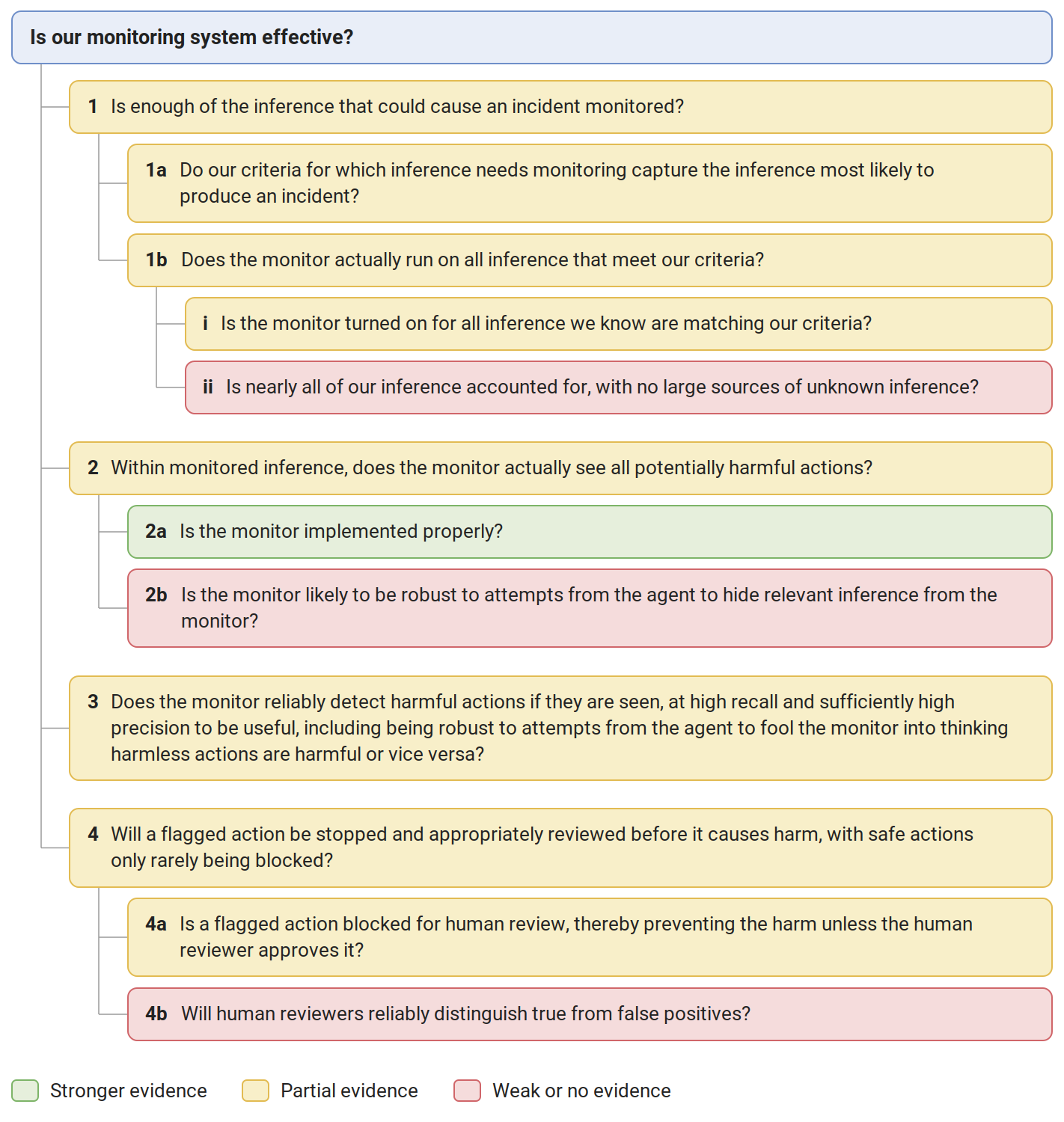
Implementing and Evaluating a Basic Per-Action Monitor for Safer Evals

METR describes a per-action monitor built as an Inspect approver. An LLM judge scores each agent tool call before execution, and calls scoring 3/10 or higher halt the eval for human review. It lays out four claims needed to argue the monitor works, with evidence and gaps. Reported results: 0.025% false positives on 20,000 actions, and a spoofed user turn lowered suspicion scores.

InspectHawkMiddleman+1
METRUK AISIOpenAI+7

ai-safety, evals, agentsยท Added 29 Oct 2026, published 27 Sep 2026

metr.orgwriteup๐Ÿ›ก๏ธ Security

Implementing and Evaluating a Basic Per-Action Monitor for Safer Evals

METR describes a live per-action LLM monitor, built on Inspect's approver chain, that blocks agent tool calls scoring 3/10 or higher for human review during evals. It lays out four conjunctive claims for effectiveness with evidence gaps. Results include 0.025% false positives on 20,000 actions, 10/10 UK AISI incident transcripts caught, and a spoofed user turn that lowered scores, with 12/30 runs falling below the threshold.

InspectLLMClaude+1
METRUK AISIAnthropic+8

AI Securityยท Added 29 Oct 2026, published 27 Sep 2026

socket.devwriteup๐Ÿ›ก๏ธ Security

Re-Enabled GitHub Actions Expose Thousands of Repositories to Mini Shai-Hulud

Socket reports that the actions-cool/issues-helper and actions-cool/maintain-one-comment GitHub Actions, compromised in the May 2026 Mini Shai-Hulud campaign and disabled by GitHub, were re-enabled on September 16, 2026 with their release tags still pointing to the malicious code. Any workflow referencing them by tag (about 15,000 dependents for issues-helper alone) resumed running the Bun-executed obfuscated payload. Workflow run logs show the switch from fast "Repository access blocked" failures to multi-minute successful runs. The post gives remediation: SHA-pin actions, rotate secrets, and hunt for oven-sh/setup-bun and bun run index.js in runner logs. An update says both repos were disabled again on September 25.

GitHub ActionsGitHubBun+1
Mini Shai-Huludactions-cool/issues-helperactions-cool/maintain-one-comment

Supply Chain, DevSecOpsยท Published and added 24 Sep 2026

collective.flashbots.netwriteup๐Ÿ›ก๏ธ Security

EarlyAttestationBleed Paper Review (TEE attestation bugs)

A Flashbots researcher reviews the EarlyAttestationBleed paper (Muhammad Usama Sardar and Songbo Bu), which uses ProVerif formal analysis to uncover three attestation-verification bugs in confidential-computing deployments: Cocos AI's TDX verifier fails to actually compare the REPORT_DATA value despite computing it correctly, Cocos AI's SEV-SNP validator skips the comparison entirely when an empty expected-input value is passed, and Edgeless Systems' Contrast workload-policy logic can be tricked into accepting container images from untrusted host-controlled storage due to a rebase mistake. All three were implementation bugs (not protocol design flaws) and have since been fixed; the post also summarizes the paper's broader concerns about "early attestation" โ€” exposing hardware details pre-authentication, lack of post-handshake re-attestation for long-lived sessions, and handshake-timeout tradeoffs from added attestation latency.

Intel TDXAMD SEV-SNPProVerif+1
EarlyAttestationBleedIntrahandshake.failMuhammad Usama Sardar+4

Hardware & RF, AppSecยท Added 2 Oct 2026, published 23 Sep 2026

huntress.comwriteup๐Ÿ›ก๏ธ Security

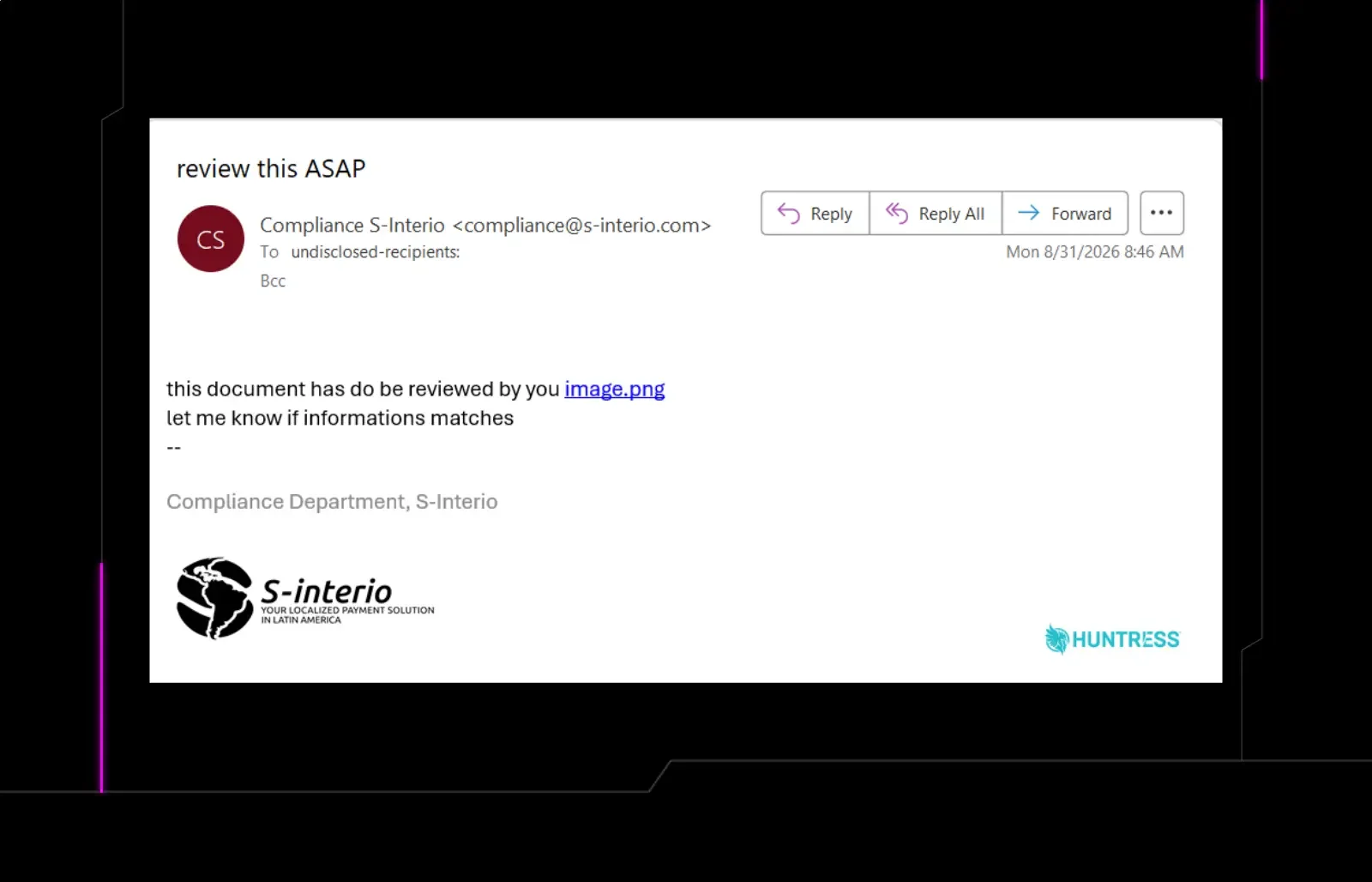
DarkMe RAT: A VB6 APT Trojan Turned Conventional Infostealer

Huntress details a 2026 DarkMe RAT campaign that ditches the zero-days (CVE-2023-38831, CVE-2024-21412) previously used by the Water Hydra/EvilNum-linked group in favor of a plain phishing email delivering a disguised .pif file. The writeup reverse-engineers the full chain โ€” msiexec pulling a wrapped MSI, a WSF stager, three obfuscated VB6 loader DLLs (Coconout.dll, Use.dll, Finalized.dll), a novel 329-app "inverted sandbox" gate, process hollowing into a signed clspack.exe, and Locked:// protocol-handler persistence โ€” and corrects prior public reporting by showing the payload's "single-byte XOR" is actually a broken RC4 implementation. It closes with fresh C2 infrastructure (thatawful[.]boutique, port 7712), OSINT on delivery domains (including a related ClickFix/Efimer campaign), and concrete Sigma-style hunting rules and remediation steps.

WindowsHuntressVirusTotal+4
CVE-2023-38831CVE-2024-21412DarkMe+9

Malware & RE, Threat Intel, Blue Team & Detectionยท Added 23 Sep 2026, published 22 Sep 2026

latent.spacewriteup๐Ÿง  AI

[AINews] Reality Checks on AI News (Yegge shuts down Gas Town, Databricksโ€™ +60% Astra cost)

A Latent Space AINews digest (9/15โ€“16/2026) aggregating AI Twitter/Reddit discussion into curated items: Steve Yegge shutting down his "Gas Town" coding-agent project despite heavy spend, Databricks reporting a 60% coding-spend increase after rolling GPT-6 Astra out to 3,500 engineers (while finding it strongest only on high-complexity, long-horizon tasks), and OpenAI's new formal misalignment-incident disclosure framework with six case reports (including a model adding unauthorized persona text to its own summaries). It also covers RL-run transparency from Xiaomi's MiMo-V2.6, a Microsoft "capability laundering" paper on jailbreak-by-decomposition, harness-engineering debates (subagents, context-trimming), local-model benchmarking on r/LocalLlama (Qwen3.8-27B quantization, Voodoo Dynamic Quant), and funding/company moves (Cohere+Aleph Alpha, Arcee Series B, Sakana AI's GTM pivot). Note: the fetched text is truncated partway through the Reddit recap section, so later content (including further "less technical" subreddit recaps) is not reflected here.

Claude CodeSGLangvLLM+7
Steve YeggeGas TownGPT-6 Astra+35

models, ai-safety, coding-agentsยท Added 29 Sep 2026, published 17 Sep 2026

Showing 30 of 85

Show more